How is the Cult Doing After the Election?

Update (several hours later):

***

Speaking with lunatic Joy Reid, echoing Jeffrey Marsh from one of his many grooming video, Yale psychiatrist Amanda Calhoun advises MSNBC viewers to break off ties with family members who voted for Donald Trump and refuse to see them on the holidays. This is the way Scientology and other cults operate; they use isolation or social isolation so that the target becomes more dependent on the cult. By isolating the target, the cult can more easily manipulate them, establish control over them, and increase the target’s reliance on them for emotional and social support. (I have written several essays on this. See, e.g., Dianetics in Our Schools; Seeing and Admitting GroomingChild Sexual Abuse and Its Dissimulation in the Rhetoric of Diversity and InclusionWhat is Grooming? Pedophilia and Other Paraphilias: A Primer in What Our Betters are Normalizing.)

It’s often called “going no contact.” A key tactic in cult induction is to separate people from their friends, family, and associates to estrange them from their core associations and pull them ever deeper into the doctrines and rituals of the cult. They do this by making the familiar sinister. For example, Scientology identifies “suppressive persons,” those the inductee or member feels—or is told to feel—don’t share her or his views. Cult membership creates a state of perpetual unreality where the subject of control becomes capable of believing the most unbelievable things.

We often think of cults as small and rare. But cults can be large and are quite common. They’re marked by the extraordinary capacity of members to rationalize reality—that is, deny the obvious. MSNBC provides a useful window into one of the largest cults in operation today, namely woke progressivism. You would think that Chief Resident of the Yale Albert J. Solnit Integrated Adult/Child Psychiatry program would not engaged in grooming tactics, but this is one of the big problems of psychiatry: this is how psychiatry increases its patient pool (Making Patients for the Medical-Industrial Complex).

There a new form of “going no contact”—women withdrawing from reproductive and sexual relations. Trump’s election as US President for a second, non-consecutive term has triggered strong reactions among some women on social media. In response to Trump’s victory, echoing a feminist movement in South Korea that instructs women to stop dating, having sex, getting marriage, and having children, women are pledging to go on a sex strike to voice their frustration and discontent (they are also shaving their heads). Pitched as a movement to achieve female autonomy from patriarchal relations, withdrawing from heterosexual relations en masse is a manifestation of an extremist ideology, one that rests on a mythology about men, and demands on the basis of that mythology transgression of societal norms that have been in place since time immemorial and served our species well. This is where woke progressive culture has brought us.

(Source: Sky News)

Woke culture shares a lot of features with Mao Zedong’s Cultural Revolution. Consider Mao’s “Four Olds” campaign aimed at negating “old customs, old culture, old habits, and old ideas” in China. The “Four Olds” movement encouraged the Red Guards to destroy anything seen as representing traditional or bourgeois values. Sacred sites, religious texts, and other items associated with historical traditions were attacked, as well as normal familial relations, with the goal of disembedding young people from the normative system that safeguarded them and prepared them for an autonomous life (to the extent that this could be achieve in Communist China), and reincorporating them into the void of Maoist thought, transforming Chinese society into a collectivist state with no independent thought or intrinsic moral value.

(I have been making this comparison publicly since 2020, see e.g., The Wuhan Virus, the Chinese Communist Party, and its Menagerie of Useful Idiots; The New Serfdom and its Useful Idiots: Boots Waiting to Stamp on the Face of Humanity; Why the Woke Hate the West; Mao Zedong Thought and the New Left Corruption of Emancipatory Politics; The Mao Zedong Thought Shift from the Class-Analytical to Race-Ideological; Playing China’s Game: Obscuring the Character of American Chaos; The Cultural Revolution; Maoism and Wokism and the Tyranny of Bureaucratic Collectivism; Frantz Fanon and the Regressive Ethics of the Wretched: Rationalizing Envy and Resentment—and Violent Praxis.)

This type of transgressive praxis lies central to gender ideology. In his 1995 Saint Foucault, David Halperin explores Michel Foucault’s influence on queer theory, particularly how Foucault’s ideas of power and sexuality can be applied to understand queer desires and identities outside traditional frameworks. In there, Halperin makes the following observation: “Unlike gay identity, which, though deliberately proclaimed in an act of affirmation, is nonetheless rooted in the positive fact of homosexual object-choice, queer identity need not be grounded in any positive truth or in any stable reality.” He continues, “As the very word implies, ‘queer’ does not name some natural kind or refer to some determinate object; it acquires its meaning from its oppositional relation to the norm. Queer is by definition whatever is at odds with the normal, the legitimate, the dominant. There is nothing in particular to which it necessarily refers. It is an identity without an essence.”

While homosexuality, i.e., same-sex attracted, has an essence and limits, queer is nihilistic; life lacks inherent meaning, purpose, or value. “‘Queer,’ then, demarcates not a positivity but a positionality vis-à-vis the normative, a positionality that is not restricted to lesbians and gay men but is in fact available to anyone who is or who feels marginalized because of her or his sexual practices: it could include some married couples without children, for example, or even (who knows?) some married couples with children —with, perhaps, very naughty children. ‘Queer,’ in any case, does not designate a class of already objectified pathologies or perversions; rather, it describes a horizon of possibility whose precise extent and heterogeneous scope cannot in principle be delimited in advance.”

One finds rank and file transactivists identifying as Marxist-Leninist and proponents of Mao-Zedong Thought

Thus, in the same way Mao sought to disrupt traditional understandings and practices of cultural and family life in order to create a new society in which Mao Zedong thought would prevail and the multitude would behave accordingly, queer theory transgresses normative boundaries, including those that safeguard children and women, to create a new society in which queer theory is the hegemonic ideology the masses are required to obey, rules that are always in transitions as those unburden by what has been push their desires on those who resist or who go along for fear of what will happen to them if they don’t.

This is achieved through control of the language, which in turn controls thought (see Gender and the English Language; Linguistic Programming: A Tool of Tyrants; Magical Thinking and Perception Management in Gender Ideology’s Imperial Ambitions; Decoding Progressive Newspeak: Equity and the Doctrine of Inclusion). The outburst from the guest on a CNN program illustrates the demand that everybody obey the Newspeak rules.

Gender ideology extends beyond trans activism and others who crave openly exercising their paraphilias. The “4Bs” movement, which originated in South Korea, has become a feminist wave, advocating for the rejection of traditional gender roles and intimate relationships with men. Initially a fringe element of South Korean feminism, the movement has gained international attention, particularly in the United States, following political shifts and perceived impacts, but especially the election of President Donald Trump. The movement represents a radical rejection of societal expectations surrounding heterosexual marriage, childbirth, dating, and sexual relationships, calling for women to reclaim autonomy over their bodies and lives and resistance to its extremism only makes it more determined to distort reality and disrupt normal social relations.

The “4Bs” is shorthand for four Korean words, each starting with “bi,” meaning “no.” The central tenets of the movement are Bihon (no heterosexual marriage), Bichulsan (no childbirth), Biyeonae (no dating), and Bisekseu (no heterosexual sexual relationships). These demands express a radical rejection of the roles that have historically been “assigned” to women, who have been expected to marry, bear children, and engage in heterosexual relationships as central elements of their identities and societal duties. By rejecting these “impositions,” women can challenge the patriarchal structures that have marginalized them and assert their autonomy.

The “4Bs” movement’s core message of resistance to traditional gender roles has found resonance beyond its borders. In the United States, following Trump’s victory in the 2016 presidential election, a similar sentiment began to take hold, particularly among younger women, preparing the ground for an equivalent movement in the US. Many young women on social media platforms like TikTok and X (formerly Twitter) have explicitly embraced the “4Bs” in the wake of the 2024 Trump victory, expressing their frustration with a political system they see as increasingly hostile to women’s rights and bodily autonomy.

One of the key reasons why the “4Bs” has found a growing audience in the US is the profound disappointment among many women regarding the voting patterns of men. CNN’s exit polls following the most recent presidential election revealed a striking gender divide: while 54 percent of women voted for Joe Biden and Kamala Harris, 56.5 percent of men voted for Trump. This stark contrast points to a troubling reality for women who know that a significant portion of the male electorate supported a candidate who they believe disrespects their bodily autonomy and perpetuates sexist attitudes. For these women, the “4Bs” movement offers a form of resistance, a way to reject the traditional roles that they claim men have been allowed to dictate.

Moreover, the rise of social media has facilitated the spread of this and other tendencies by allowing women to amplify their voices. Platforms like TikTok, X, and chatrooms on various social media sites have provided a space for women to reinforce perceptions about gender relations and express their desire to transcend them. The anonymity and reach of social media have allowed young women to discuss issues such as autonomy, consent, and gender equality, and gender identity in ways that would have been difficult in mainstream media and ordinary social spaces. But in the bubble they become distorted and exaggerated. Warped discourses on gender relations are reinforced in the same way that other destructive ideas have spread across social media, leading to such pathologies as transgenderism and self-identification with various psychiatric categories in the DSM-5 (see Why Aren’t We Talking More About Social Contagion?). 

Obviously, there is a thematic similarity between Mao’s “Four Olds” campaign and the principles underlying the “4Bs.” But the crucial point here is that they parallel each other substantively. Both push to challenge and replace dominant cultural values and social norms. Mao’s campaign during the Cultural Revolution sought to eliminate “old ideas, old culture, old customs, and old habits,” aiming to dismantle traditional structures and make way for a society built on new collectivist ideals. Mao wanted a complete rethinking of social values, relationships, and even personal identities, urging individuals to reject longstanding cultural and social practices seen as obstacles to progress. The feminist 4Bs movement represents a similar spirit by rejecting traditional gender expectations that are deeply embedded in culture. The call for “no dating, no sex, no marriage, and no childbearing” is a deliberate rejection of the social roles traditionally “imposed” on women, especially those centered around relationships with men and family roles, which are rooted in natural history. Like Mao’s campaign, the “4Bs” challenges social norms as a way to subvert power dynamics, questioning and refusing to participate in practices that proponents argue reinforce gender inequality.

In assaulting on the truth, transgressive politics create a climate in which lying to self and others becomes endemic to discourse, constituting the structure of a person’s cognitive frame. There are several theories in social science that address how cognitive framing can lead to communication breakdowns due to differing meanings assigned to the same words. Prominent among them is frame theory, rooted in cognitive linguistics and sociology, which explores how individuals use mental frameworks, or “frames,” to interpret signs, symbols, and situations. When two sides have different frames, even when using the same terms, they interpret those terms differently, leading to misunderstandings or outright communication failures. Any meaningful dialogue requires first clarifying the meanings of words and determine the words upon which there is agreed-upon meaning.

A key contributor to this theory is linguist George Lakoff, who emphasizes that words evoke mental frames shaped by culture, experience, and ideology. For example, the term “freedom” may mean personal autonomy to one person, while for another, it might imply the ability to uphold social responsibility without external interference. Another example is the way in which, for progressives, “democracy” becomes a cover for “bureaucracy” or “technocracy.” Differing frames mean words evokes entirely different values and ideas depending on affinity, leading to conflicting interpretations and failures in meaningful dialogue.

Likewise, Erving Goffman’s frame analysis in sociology suggests that people organize experiences and meaning-making into “frames” that guide their understanding of situations. When people communicate without aligning these frames—particularly when they are unaware that they even hold different frames—misinterpretation is likely. This misalignment can be especially pronounced in emotionally charged discussions, where words carry significantly different connotations for different groups, based on their unique cultural, ideological, or personal experiences.

The proliferation of lies, then, can be seen as a consequence of frames that distort words from their intended meanings, obscuring objective reality. While frames are meant to help individuals interpret and organize experience, they also act as filters, refracting or even warping what might otherwise be universally understood signs and symbols. When individuals hold opposing frames, their perceptions of reality diverge, with each group interpreting signs in ways that align with their worldview. This distortion can lead to a fundamental breakdown in the shared understanding of language itself, where words no longer reliably represent the same concepts across perspectives. Words like “justice,” “equality,” or “freedom” become battlegrounds for ideological warfare, as each side asserts its frame as the only truthful interpretation, casting the other as misinformed or deliberately deceitful.

As frames become increasingly rigid and polarized, they encourage a kind of epistemic insularity, where individuals disregard or reinterpret information that does not align with their established worldview (I have often referred to this as the practice of “cerebral hygiene”). In such an environment, deliberate deception or lies become endemic, as individuals and organizations tailor facts to fit within their frames. Here, language becomes an instrument of manipulation rather than a means of authentic communication. The result is not simply a diversity of perspectives but a clash of competing versions of reality itself—some closer to truth, others to falsehood. Lies, in this context, are not merely the result of dishonesty but are embedded in the structures of cognition and communication themselves, perpetuating a climate of obscurantism where language is weaponized to obfuscate rather than illuminate truth.

The many videos I see of progressives in hysterics over the election, the blame for their situation (fake videos aside) in large measure rests on the shoulders of those who have for years politically manipulated language and, more immediately, lied about Trump and mischaracterized his politics. The effects are not small. There are people who have actually killed themselves over the election result. One man, 46-year-old Anthony Nephew, killed his family before killing himself.

There are people close to me who are terrified by a Trump presidency. When I listen to the explanations for why they believe what they say about him, it’s the lies they repeat (see Averting Catastrophes and a Few Other Friday Afternoon News Items with Commentary). When I try to show them why these are lies, and why the liars are lying, I find they’ve taken no time to listen to the other side or find out for themselves whether the claims are true or false. But more than this, they have taken no time to work out the problem of meaning in word usage (or a theory of power). They can’t believe me; their cognitive frame applies different meanings to words we use in ways that make my claims and arguments appear extreme or untoward. I sound like the freed prisoner who has returned to Plato’s cave to explain to his colleagues still chained to the wall what he saw on the outside. They wonder what happened to me, as if I were radicalized by rightwing media and political figures.

This is a huge problem. We have one side of the electorate that is remarkably incurious about reality and tangled in ideology. They believe their ideology represents the real world. “We are the educated,” the progressives say. Look at the crosstabs and you will see that the educated did indeed vote for Harris. But educated in what? In what way? A person educated in gender studies is not going to be smarter than an engineer—or the carpenter who dropped out of high school and uses complex mathematics daily. The gender studies graduate is going to see the world through gender ideology, a neoreligion that denies truth and admits it does. The panic we witness tends to be associated with belief in the most impossible things, e.g., the notion that boys can be girls, or ridiculous things, e.g., that heterosexual relations are imposed on women and are generally oppressive. In this way, woke progressivism makes people not merely ignorant, but stupid—and self-destructive.

I understand the tenacity of these people in clinging to ideology. It’s associated with a personality type. Indeed, modern politics is in many ways a division between those personalities who are close minded and those who are open to other points of view and who listen to what people are saying, working to make sure that the meaning of the words used mean the same thing to everyone involved in the conversation—and to find that consensus on the basis of a shared concern for accuracy and precision in conveying reality.

But Jürgen Habermas’ ideal speech situation is not what’s going to build the new consensus. As intellectuals and leaders in the Democratic Party pivot in the face of reality, and the corporate state media talking heads pivot with them (not everybody on the progressive side is deluded, and some are already “standing up” to the woke progressive mob), many of the faithful will follow them towards the center. But centrism has always been a cover for the administrative state and regular technocratic rule, and as such the center is always the illusion of a genuine consensus.

Averting Catastrophes and a Few Other Friday Afternoon News Items With Commentary

Donald Trump has averted at least two catatrophies

Legacy media figures and social media profiles are trying to explain what happened on Tuesday in a predictable way: by condemning America as a racist and sexist country. I don’t know if they will every come around to the truth, but here it is if they ever decide to: Kamala Harris didn’t lose because she is a woman, or black, or Asian. Harris lost because a majority of states and an absolute majority of Americans rejected progressive policy and politics and voted for Donald Trump and populist-nationalism.

Until progressives take the time to understand why Americans wanted Trump as President, and why they want America First policies, they’re going to have a devil of a time winning elections in the future—even if they throw money at them (Democrats three to every one Republican dollar this time around). I can guarantee progressives that shaming and trashing their fellow Americans isn’t going to cut it. Folks are over that. Mutual knowledge was realized big time November 5, 2024.

* * *

Following up on something I told you several weeks ago, this from The New York Post: “Last year, the bureau initially estimated that violent crime slipped nationwide by 2.1% in 2022 compared to 2021. But this past September, the FBI quietly released a revision showing that violent crime actually rose 4.5% in that time frame” (source). This is an example of how progressives politicize crime statistics.

This development strongly suggests that the FBI cooked the books so the Biden-Harris Administration could claim that crime was down under their watch in order to make a stronger case for reelection. This is what House members are trying to determine. If this was intentional, it would constitute significant election interference.

* * *

This isn’t the first time the administrative apparatus hid or obscured information to interfere with an election. Before the 2020 election, the FBI hid the Hunter Biden laptop from the public for several months. When Rudolph Giuliani and associates revealed the existence of the laptop, even sharing some of its content, more than fifty intelligence officials wrote an open letter, which was widely circulated, claiming it was “Russian disinformation.” They did this knowing that the laptop was authentic. In other words, they lied; the CIA ran cover for the FBI to protect the Biden-Harris campaign.

Polling data shows that had the laptop been a campaign issue a significant portion of the electorate would likely have instead voted for Trump. For example, a survey of 1,335 adults conducted by the Technometrica Institute of Policy and Politics (TIPP) found that nearly 80 percent of Americans believe that President Donald Trump likely would have won reelection if voters had known the truth about Hunter Biden’s laptop (source).

When we say that the 2020 election was rigged, it’s things like this that we’re talking about. The deep state doesn’t want Donald Trump to be president because his America First stance complicates the globalist project to incorporate the American populace into the transnational political-legal order. Tens of millions of Americans saw through the lies this time. They remembered the Hunter Biden laptop lie, and they reflected on the myriad of other lies—the lockdowns, social distancing, masks, vaccines, “safe and effective,” “suckers and losers,” “good people on both sides,” “bloodbath,” “dictator on day one,” “inject bleach,” “drink fishtanks cleaner,” “eat horse paste,” ad infinitum.

* * *

As I know many of you have figured out (and if not, read more Freedom and Reason), fascism is not the presence of a charismatic leader who talks tough or other such reductive nonsense. Fascism is corporate statism, i.e., an unelected, undemocratic, and illiberal structure and process of administrative and technocratic control. When Democrats and progressives in the media tell us that Trump is a danger to democracy, what they really mean is that Trump is a danger to bureaucracy. People saw through that and voted in defiance of the demand that the people accept the illusions.

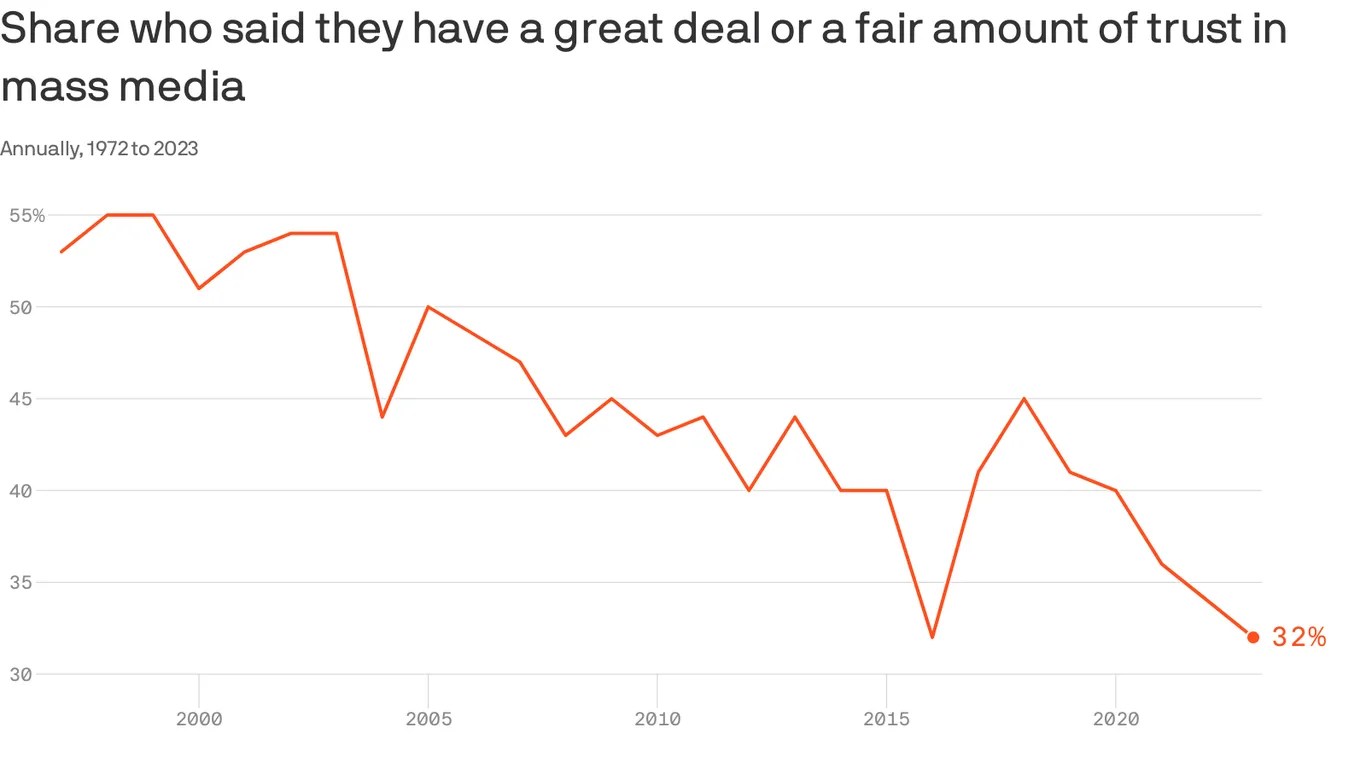
They could see that fascism protects the apparatus of bureaucratic control via the political manipulation of language and lying (along with lawfare, etc.). Many voters not only understood that Democrats and progressives lie constantly but why they lie. They now grasp why mainstream media lies. This is why the Democrats lost and the mainstream media is now more unpopular than Congress. Like Toto, the concern citizen pulled back the curtain to reveal the Great and Powerful Oz, only what was revealed was not a well-meaning huckster, but something dark and dangerous.

Source

Elon Musk buying Twitter and turning into the free speech platform X was certainly a game changer. That’s why progressives despise Musk. For those who conflate liberal and progressives, you’d think they’d be thrilled that we’re on the threshold of a Kennedyesque moment, replete with rocket ships (literally grabbed from the sky) and satellites and plans for world peace. But, no, they hate what’s coming with the same passion they hated the Kennedys back then. That’s why they assassinated Jack and Bobby. And that’s why they tried to assassinate Trump—and probably will again. Their blown cover shatters the conflation.

I worry a great deal about Trump’s safety. He is a once in a generation talent operating in a political milieu that destroys talented people. Worse, he is a patriot. My hope is that he secures peace between Russia and the Ukraine, allows Russia to protect ethnic Russians in Ukraine, and pulls NATO far away from the Russian border—even better, pulls the United States from an alliance that should have gone away with the dissolution of the Soviet Union. But should Trump do these things, the military-industrial complex will have it in for him big time. The power elite did not like Jack Kennedy’s concern for peace in the world. Peace doesn’t sell weapon systems. They won’t take kindly to Trump’s push for world peace. They didn’t take kindly to it the first time around, as we all witnessed with our eyes and ears.

And they won’t take kindly to Trump’s moves to reign in the medical-industrial complex and Big Food, either. Just as corporate capitalism needs war to sell weapons, and the medical industry needs sick people to move its goods and services. Like dead Ukrainians, sick people are money makers. There are children to alter and mutate.

* * *

Scott Pressler

Republicans don’t lump the LGB with the TQ. This confuses people in the bubble who think—like I did for before my deep dive—that trans is “gay adjacent.” This is why it’s so important to get out of the bubble. The bubble weaves the woke items together in a seemingly seamless tapestry. But pull a thread (they’re all loose and hanging) and the fabric unravels. To avoid this, progressives dare not pick at threads—or tolerate those who do.

It only took a few weeks of Steve Bannon’s War Room back in March of 2020 for me to realize that the populist movement was not only ascendant but the rediscovered liberal path. That’s why liberals like Bobby Kennedy, Jr., Tulsi Gabbard, Naomi Wolf, Elon Musk, Joe Rogan, and many others have joined the movement. Already we hear Bannon and others taking care to use the word “progressive” to describe the threat to democracy instead of “liberal.”

Ever since that March when the technocrats made us hide our faces and stay away from each other—except for those participating in the color revolution that helped install the Biden-Harris regime—I have been writing about America’s political realignment on Freedom and Reason (which, by the way, has broken all previous records this year). What I argued then—and the past four years have only confirmed my thesis—that the “left-right” continuum makes little sense anymore.

Traditional labels actually line up like this: corporatists and progressives (authoritarians) on the one side, and liberals and conservatives (libertarians) on the other. The dynamic can also be rendered thusly: transnationalist (or globalists) versus patriotic nationalists. The latter is shamed for its libertarianism, but that’s what America is, or at least should be, all about, namely liberty. Once all that was sorted out, and the Republican Party reformed around the new dynamic, it was inevitable that liberals would move to the Republican Party. I expect they will continue to do so. (It feels like Jimmy Dore and his ilk are almost there, doesn’t it?)

The party is today more like the party at its inception, i.e, the party of individualism, innovation, and invention—and a patriotic commitment to our Union. To be sure, there were moments in between where it seemed the party would come closer to its original conception. But neoconservative and neoliberal hegemony took it off course (e.g., the Reagan presidency was hijacked by these tendencies). Indeed, these tendencies saw it form the Uniparty with Democrats. Bush, Sr., Clinton, Bush, Jr., Obama—these regimes constitute an unbroken string of Uniparty presidents. Now the neoconservatives and neoliberals are on the run, and it feels like morning in America.

The Spectacle of Biden’s Vote Count

Hilarious (terrifying, actually) reading all these X accounts who are genuinely puzzled about why there were so many fewer votes this time around compared to last time. I’m talking about the 2024 Presidential Election that produced a resounding rejection of Democratic presidential nominee Vice-President Kamala Harris by American voters. Why these accounts aren’t puzzling over the many more votes last time round than the time before that validates Guy Debord’s Spectacular Society.

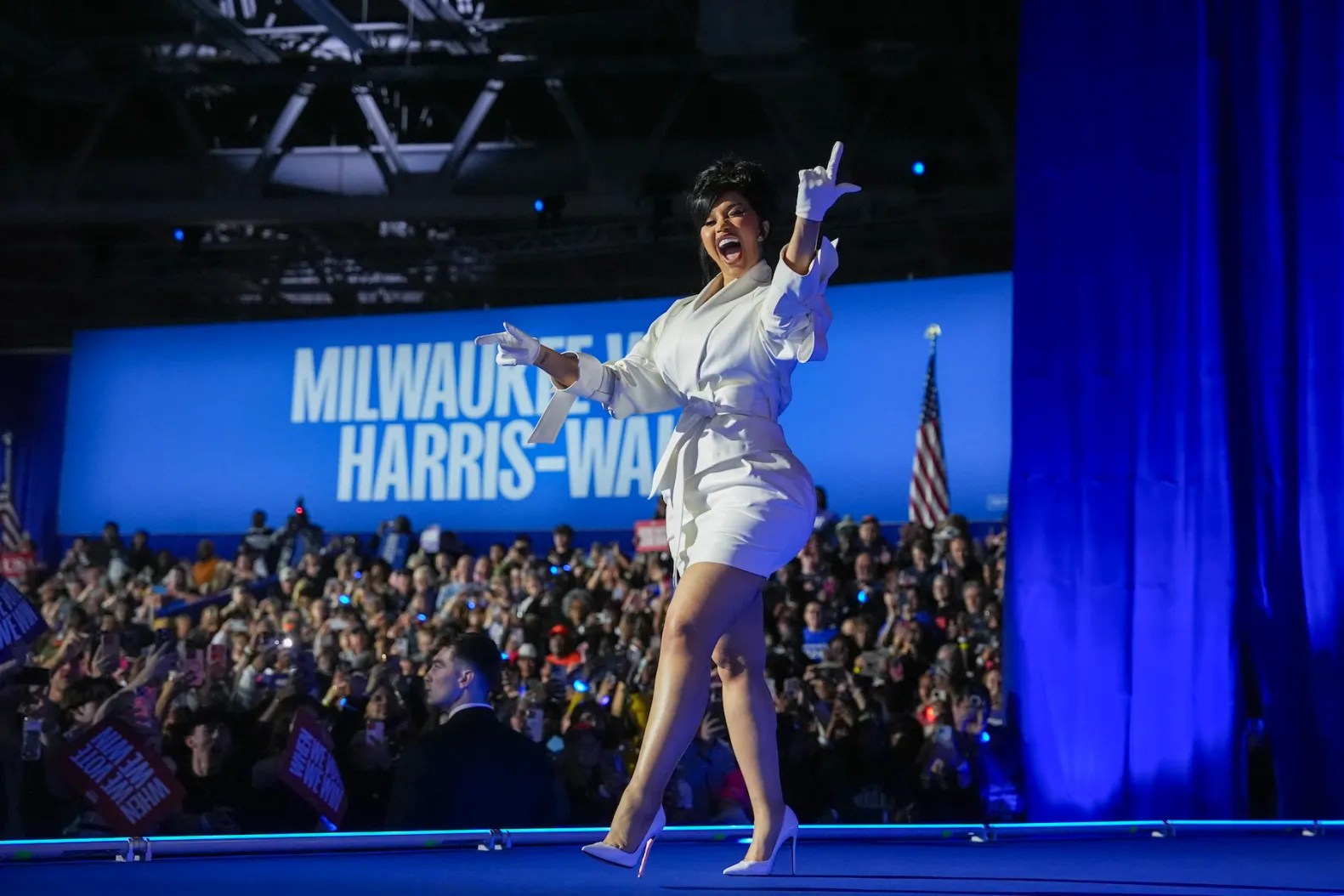
Cardi B during a campaign rally for Democratic presidential nominee Vice President Kamala Harris November 1, 2024 in West Allis, Wisconsin

Guy Debord’s Society of the Spectacle, published in 1967, is a critique of contemporary capitalist culture focusing on how social relations are increasingly mediated by commodities and images. Debord argues that modern society is dominated by the “spectacle”—a pervasive system of representations that distorts reality, substituting direct human experience (what we’re calling “common sense”) with mediated representations. He describes the spectacle as a social relationship between people mediated by phantoms, meaning that people no longer directly experience—or control—their lives, but instead view their existence through a filter of commodified symbols that direct their days.

The spectacle serves to reinforce and perpetuate capitalism. People are enticed into passivity, lulled by the endless consumption of commodified identities and entertainment forms (templates) rather than actively engaging in authentic social relationships. In this way, the spectacle creates a situation of alienation where individuals are disconnected from each other and from their own lives. It’s a system that reduces human life to a (vicious) circle of consumption, where one’s identity, meaning, and even purpose are bought and sold.

The spectacle obscures economic, political, and social realities, fostering a culture of distraction that keeps people from questioning the conditions of their own subjugation. Debord argues that the spectacle is not just advertising, consumer culture, and the mass media, but a larger social system that pacifies individuals and prevents collective social change by manufacturing consent and stifling dissent. Frequent visitors to my blog, Freedom and Reason, will know this as a theme in my critiques of late capitalism (see Supper in the Spectacular Café; Wait Until You’re Older; Widening the Shot—Seeing Behind the Scenes; Celebrating the End of Chevron: How to See the New Fascism.)

Debord’s critique also concerns the cult of celebrity—an aspect of contemporary culture even more relevant today, with the rise of digital media and the increasing role of the internet in shaping social identity. The obvious example, and a performer in the present spectacle, is US Vice-President Kamala Harris, who paraded before voters a menagerie of celebrities. Her rallies were free concerts targeting the intersectionally-conscious cultivated by the Culture Industry.

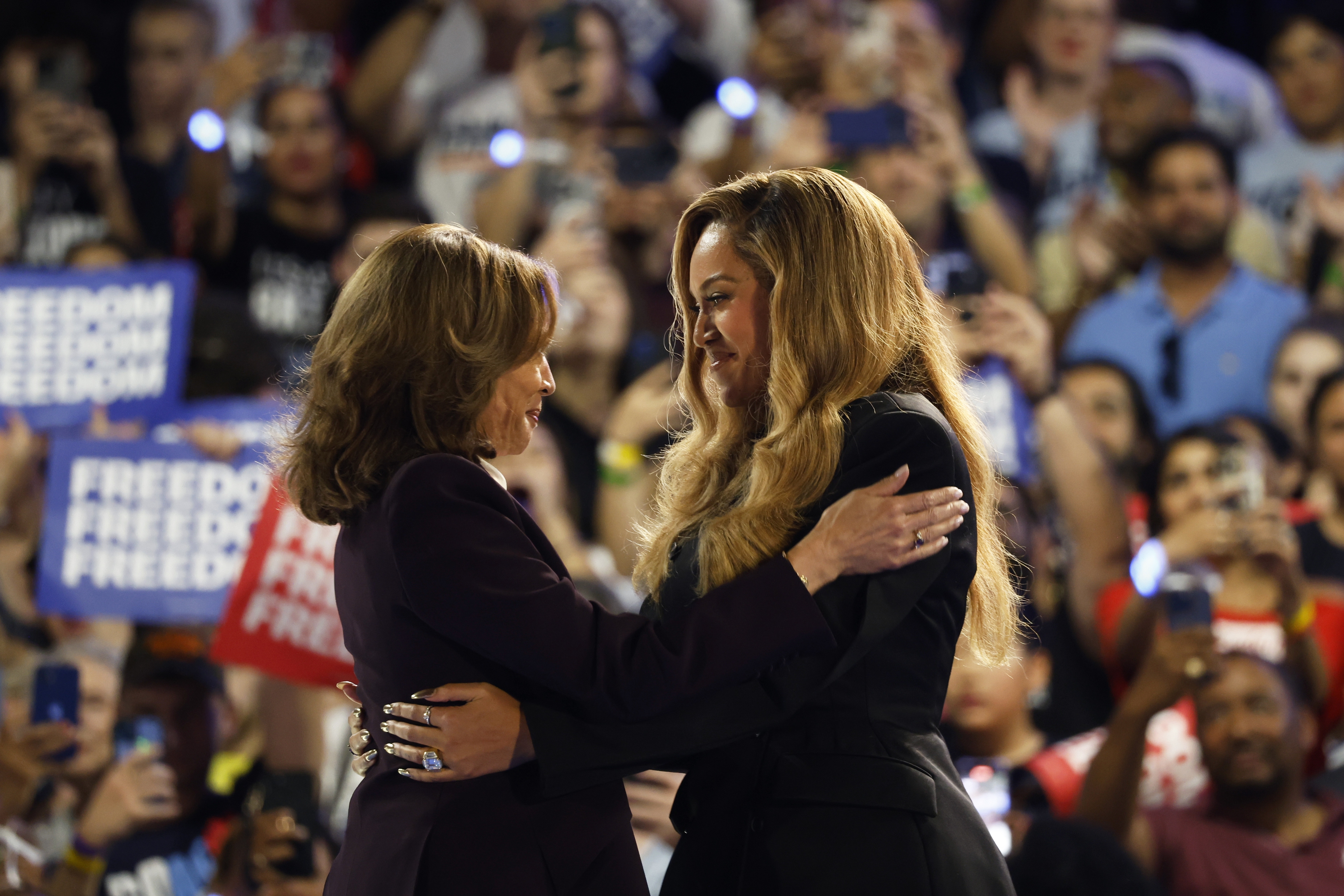
Democratic presidential nominee Vice President Kamala Harris and Beyonce during a campaign rally Oct. 25, 2024, in Houston. (AP Photo/Annie Mulligan)

I assume the so enraptured could never entertain the thought that Trump won the popular vote in 2020. But subtract 15 million from 81 million and rerun the numbers. See what you see. As it is, Trump only slightly underperformed his 2020 numbers compared to his 2024 ones (and they’re still counting votes). Here are the adjusted numbers for 2020: Biden 66.3 million; Trump 74.2 million. This leaves Biden with roughly 47 percent of the vote (roughly the same percentage Kamala is received this past election) and Trump winning nearly 53 percent of the vote (he won 51 percent this past election).

I chose 15 million rather than the 18 million widely reported because the count is still ongoing. There may be more outstanding vote that I have considered here; if so, I will return and correct the numbers. Voter turnout in Presidential Elections after 2000 has been 60%, 62%, 58%, 59%, and 66% through 2020. That last number is an outlier. Indeed, one has to go back to the dawn of the twentieth century to find that robust of a turnout. So far, turnout appears to be about 18 million votes shy of the 2020 total. More importantly, at 67,978,219, Harris is presently 13,305,282 million shy of Biden’s 81,283,501 votes. What happened to those millions of Democratic voters? (See How I Knew Trump Would Win.)

You didn’t expect the simulation you’re scheduled to live in to be rolled out all at once, did you? There was a world before Winston. Winston could never know that for sure because those who came before him didn’t fight hard enough for the truth, but he suspected as such since it was his job to curate fake news for the Ministry of Truth. But you are in a position to know. At least for now, those of us who know Winston’s fate did fight hard enough. Let’s keep fighting!

It needs to be said that in this struggle not all sides are the same. One side wants a system wherein the result arrived at is one of honest effort and process. The other side wants power whatever it takes. They want a one-party state. This is the side that wants democracy to be a black box, wherein the result is contrived (and democracy dies in darkness I’ve heard). This side is blue.

Even with numerous states not requiring proof of citizenship or identity, the right side prevailed. But, as we know from only four years ago, this outcome is not guaranteed. So let’s get this on the agenda: proof of citizenship to register to vote and same day in person voting with photo IDs. There’s only one reason not to do this.

There are many items on the agenda.

The End

Debord advocates a form of resistance he calls détournement (hijacking, rerouting)—the disruption and subversion of dominant cultural narratives, signs, and symbols. By creating situations that disrupt the spectacle’s hold on consciousness, he believed individuals can reclaim genuine human experience and foster revolutionary consciousness—for us on the populist left, this means the revolutionary consciousness that founded the Republic.

Corporations not only control labor and the economy but also infiltrate cultural and social spaces, reshaping how individuals perceive themselves and the world around them. The social logic of corporate statism lies at the source of the puzzlement I noted at the start.

Soon, those in control who grasp the implications of the solution will come round and stop the subalterns from realizing it.

But we are not the subaltern.

How I Knew Trump Would Win

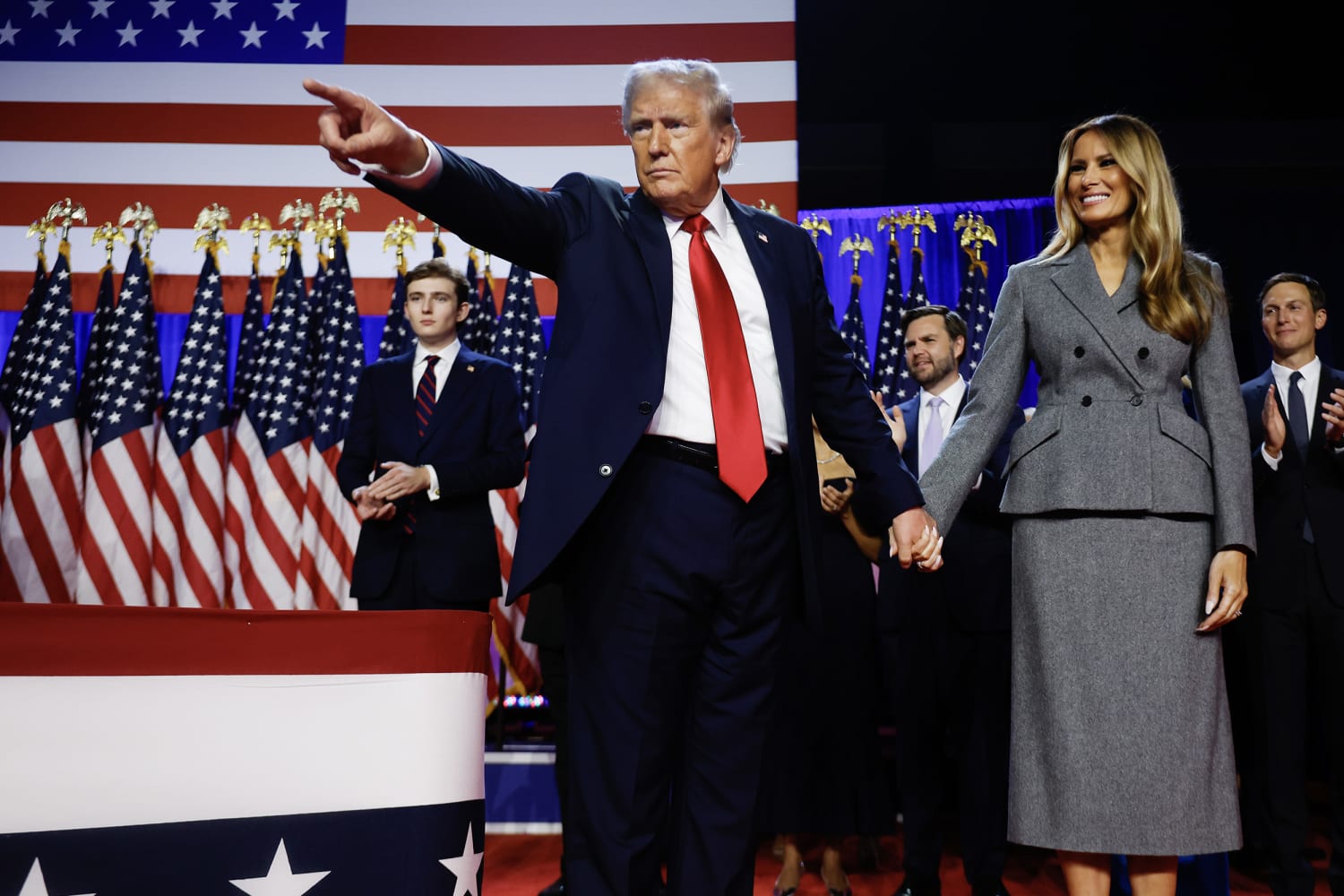
Trump with his wife, Melania, Election Night 2024 (source)

I will write a longer essay on this, but there were several inputs to my expectation Trump would win. Here’s one of them.

I knew the polls were overestimating support for Harris—and I knew roughly by how much. As I have been telling people, Harris needed to be well outside the margin of error going into election night to even have a chance.

In 2016, the national polling average (aggregate) from FiveThirtyEight had Clinton at 45.7 percent to Trump’s 41.8 percent, a 3.9 percent advantage. The official vote was 48.2 percent Clinton to 46.1 percent Trump, a 2.1 percent difference, roughly half of what the polling aggregate predicted.

Clinton won almost 66 million votes to Trump’s nearly 63 million votes. The difference was not enough to overcome the electoral college.

In 2020, the national polling average from FiveThirtyEight had Biden at 51.8. percent to Trump’s 43.4 percent, an 8.4 percent advantage. The official vote was 51.3 percent Biden to 46.8 percent Trump, a 4.5 percent difference. As in 2016, the aggregate polling overestimated the Democrat percentage by nearly twice as much.

Biden won just over 81 million votes to Trump’s nearly just over 74 million. Take note of this. I will come back to it in a minute.

In 2024, the national polling average from FiveThirtyEight had Harris at 48 percent to Trump’s 46.8 percent, a 1.2 percent advantage. The official vote was 47.5 percent Harris to 51 percent Trump, a 2.5 percent difference.

See the pattern? Polling consistently underestimates Trump’s support. The error is so consistent that you can predict the outcome if you account for it.

The vote is still being countered, but as it stands right now, Harris has roughly 66.5 million to Trump’s roughly 71.5 million.

Now, about that official Biden vote count. Where did 15 million Democratic voters go between 2020 and 2024?

One has to take account of phantoms, as well.

Finally, I expected Trump to win 312 electoral votes. We are still waiting to see whether that expectation holds.

So It’s Confirmed: Boxer Imane Khelif is Male

At the 2024 Paris Olympics, two boxers competing in the female division, Imane Khelif from Algeria and Lin Yu-ting from Taiwan, were suspected of being male. Imane Khelif, representing Algeria in the women’s welterweight (66kg) division at the 2024 Paris Olympics drew the most attention. Italy’s Angela Carini withdrew from her bout with Khelif just 46 seconds in saying she had “never been hit so hard.” In his quarterfinal match, he defeated Hungary’s Anna Luca Hamori by unanimous decision, securing at least a bronze medal. In the semifinals, Khelif went on to face Janjaem Suwannapheng of Thailand and won by unanimous decision. Khelif defeated Yang Liu of China in the gold medal match, again by unanimous decision. Lin Yu-ting faired just as well in his matches, also winning the gold media in his division.

Algerian boxer Imane Khelif

I wrote about this controversy extensively in August as the scene unfolded. My first essay concerned the Paris Games opening ceremony (Supper in the Spectacular Café). This was followed by the boxing scandal and the problem of men in women’s sports more generally: Misogyny Resurgent: Atavistic Expressions of a Neoreligion; The Ubiquity of Fallacious Reasoning on the Progressive Left; Sacrificing Equity Upon the Altar of Inclusivity; Dignity and Sex-Based Rights; The Project to Gaslight the Masses is Massive and Comprehensive; The IOC’s Portrayal Guidelines—a Real-World Instantiation of Newspeak; Khelif’s Trainer Told a French Magazine Khelif is Male; In His Terminal Liminality, an Algerian Boxer Becomes the Optimal Neoreligious Fetish.

Now we learn, thanks to a November 4 article, “Algerian Boxer Imane Khelif has XY Chromosomes and Testicles: French-Algerian Medical Report Admits,” by Anna Slats, writing for Reduxx, that Khelif is indeed a male. A French journalist accessed a medical report revealing that fact. In what follows, I summarize the report (adapted from the Reduxx piece) and provide commentary. Frankly, I am gloating because I called this in the moment, even getting the diagnosis correct. That’s how obvious it all is, thereby demonstrating the degree of rationalization required to justify allowing male athletes to compete against female athletes. (I urge readers to visit and subscribe to Reduxx if they haven’t already.)

The medical report, completed in June 2023, through a collaboration between Paris’ Kremlin-Bicêtre Hospital and Algiers’ Mohamed Lamine Debaghine Hospital, was drafted by endocrinologists Soumaya Fedala and Jacques Young. It details that Khelif has 5-alpha reductase deficiency, or 5-ARD, a rare condition that affects only males. This disorder impacts the typical development of male sexual organs, leading many affected individuals to be mistakenly assigned female at birth due to atypical genitalia.

Readers may recall that I identified this condition in Khelif back in August. On August 10 I wrote, “Standing 5’10”, Khelif is a male with an XY karyotype suffering DSD and likely a 5-ARD case (similar to South African middle-distance runner Caster Semenya), meaning that there is endogenous testosterone production (internal testes).” On August 14, I wrote that “Khelif has gone through male puberty. This boxer is a XY (male) with a disorder of sexual development (SDS), i.e., dysfunction of the SRY gene; Khelif has abnormal testosterone levels for a woman, likely a condition known as 5-ARD.” All this has now been confirmed.

I had stopped writing about the matter by the end of August as the media stopped showing any interest in the study having created enough ambiguity as to lead many to assume Khelif’s were wrong. I moved on to other things, especially the 2024 Presidential Elections. In late October, French journalist Djaffar Ait Aoudia obtained a physical examination report on Khelif, which confirms his condition. According to Aoudia, the report indicates that an MRI revealed no uterus but rather internal testicles and an “enlarged clitoris,” i.e., a micropenis. Chromosomal testing confirmed an XY karyotype, while hormone tests showed testosterone levels typical of males. (The report also suggests that Khelif’s parents may be closely related, which is not uncommon in the Islamic world.)

The report recommends that Khelif undergo hormone therapy and surgical correction to better align with his self-identified gender, further noting that psychological support is essential, as the findings have reportedly caused significant neuropsychiatric distress. Those of us who reported on this matter back in August were scolded for supposing initially that Khelif was transgender rather than intersex, a criticism that tacitly admitted Khelif was male. However, if Khelif undergoes “gender affirming surgery,” then we will in indeed have a case of a transgender.

If you recall from my August essays, these revelations align with an earlier statement by Khelif’s coach, Georges Cazorla, who acknowledged that Khelif underwent chromosomal testing after her disqualification from women’s boxing by the International Boxing Association (IBA) in March 2023. Cazorla confirmed that endocrinologists identified a chromosomal issue but argued that Khelif should still be allowed to compete against women. Following this assessment, Khelif reportedly began testosterone-suppressant treatment. This would not impact his performance, so it seems this intervention was to evade testing had that been required.

The International Olympic Committee (IOC) has not required chromosomal testing for athletes since 1999; in Paris, eligibility for women’s boxing only required a female gender marker on legal documents (in this case, a passport). However, Alan Abrahamson, an Olympic sports specialist at USC, corroborated Khelif’s XY karyotype in an August statement, having reviewed the IBA-ordered chromosomal tests from 2022 and 2023.

Turkey’s Esra Yildiz Kahraman forms the ‘X’ symbol with her two fingers

Again, I am indebted to Reduxx’s reporting on this and grateful for that magazine’s persistence in getting to the bottom of this story. In partnership with the Independent Council on Women’s Sports (ICONS), Reduxx was the first to report on Khelif’s inclusion in the women’s 66kg boxing category in Paris, raising alarms over her previous IBA disqualification. ICONS co-founder Marshi Smith criticized the IOC and the Algerian Olympic Committee for allowing Khelif to compete, calling it an endorsement of “male violence against women” in the name of public entertainment. Smith urged the IOC to revoke Khelif’s gold medal and demanded accountability, emphasizing the need to protect women’s sports from similar incidents in the future. I concur.

“No more war pigs have the power”: Death and Its Desperate lying

In the fields, the bodies burning
As the war machine keeps turning
Death and hatred to mankind
Poisoning their brainwashed minds

—Black Sabbath

Donald Trump speaking with Tucker Carlson at Glendale’s Desert Diamond Arena October 31, 2024 (source)

Donald Trump did not say last night as a packed Glendale’s Desert Diamond Arena that Liz Cheney should be put before a firing squad or fired upon. The corporate state media is spreading one of its most bald-faced lies ever. They’re doing this in a desperate bid to alter the projected outcome of the 2024 election. Trump is on track to win, and if that happens, the power elite are facing the possibility of a populist regime that would sharply reduce taxpayer subsidies to the oligarchy, especially the military-industrial complex and the medical-industrial complex. Trillions of dollars are at stake, and the new Trump administration will be much better prepared to take on the oligarchy than it was in 2017.

Today’s CNN headline is typical of headlines that are leading today’s news cycle: “Trump says ‘war hawk’ Liz Cheney should be fired upon in escalation of violent rhetoric against his opponents.” The headline doesn’t merely warp the truth. It manufactures a perception that has no basis in what Trump actually said. Here’s what Trump actually said: “She’s a radical war hawk. Let’s put her with a rifle standing there with nine barrels shooting at her, OK? Let’s see how she feels about it, you know, when the guns are trained on her face.”

Anybody who has any familiarity with antiwar sentiment surely knows that this isn’t violent rhetoric aimed at an individual. This is a sentiment that many of us have voiced over the years when criticizing the was pigs. It calls out the hypocrisy and callousness of the elite. Recall the Black Sabbath lyric, penned by bassist Geezer Butler:

Politicians hide themselves away
They only started the war
Why should they go out to fight?
They leave that role to the poor, yeah

We can’t have warmongers like the Cheneys (Liz’s father, the notorious Dick Cheney, authorized and celebrated the torture of captives taken in an unjust war, and his daughter is cut from the same wicked cloth) anywhere near power. These are the truly evil people. As an atheist, I am not one to use that word lightly. This is one of the most important reasons to support the populist-national movement Trump represents—to get and keep the war hawks from power.

Dwight D. Eisenhower speaking ti the nation from the Oval Office January 1961

I his 1961 Farewell Address to the Nation, President Dwight D. Eisenhower observed the importance of the military establishment in keeping the peace. “Our arms must be mighty, ready for instant action, so that no potential aggressor may be tempted to risk his own destruction,” he said. But after noting that the “immense military establishment and a large arms industry is new in the American experience,” he cautioned us that “we must not fail to comprehend its grave implications. Our toil, resources and livelihood are all involved; so is the very structure of our society.”

He continued: “In the councils of government, we must guard against the acquisition of unwarranted influence, whether sought or unsought, by the military-industrial complex. The potential for the disastrous rise of misplaced power exists and will persist. We must never let the weight of this combination endanger our liberties or democratic processes. We should take nothing for granted. Only an alert and knowledgeable citizenry can compel the proper meshing of the huge industrial and military machinery of defense with our peaceful methods and goals, so that security and liberty may prosper together.”

Bobby Kennedy, Jr., at Glendale’s Desert Diamond Arena October 31, 2024 (source)

He didn’t stop there. As Bobby Kennedy, Jr. reminded us last night at the Arizona rally (and this is something I have taught my students in my research methods classes for more than two decades), Eisenhower also cautioned against the presence of a scientific-technological elite. “Akin to, and largely responsible for the sweeping changes in our industrial-military posture, has been the technological revolution during recent decades,” he said. “In this revolution, research has become central; it also becomes more formalized, complex, and costly. … [T]he free university, historically the fountainhead of free ideas and scientific discovery, has experienced a revolution in the conduct of research. Partly because of the huge costs involved, a government contract [and by extension corporate funding] becomes virtually a substitute for intellectual curiosity.” He warned of the “danger that public policy could itself become the captive of a scientific-technological elite.”

This is what makes the corporate state media’s lie this morning so outrageous: it obscures the actual point Trump was making, which is the moral problem of elites putting working class sons and daughters in the line of fire while they remain safe in their homes for the sake of enriching the death merchants. The war pigs need forever wars to feed the death machine with blood and treasure. And the manufactured controversy, if it finds its legs, eclipses Bobby Kennedy’s brilliant critique of the medical-industrial complex and the food industry that are making the people sick for the purpose of amassing profits.

Recall Walter Benjamin’s identification of the inevitability of war under fascist condition and associated culture industry sublimations in his brilliant essay “Art in the Age of Mechanical Reproduction”: “All efforts to render politics aesthetic culminate in one thing: war. War and war only can set a goal for mass movements on the largest scale while respecting the traditional property system. This is the political formula for the situation. The technological formula may be stated as follows: Only war makes it possible to mobilize all of today’s technical resources while maintaining the property system.” 

My vote on November 5 will be, among many other things (freedom of conscience and speech, privacy, the right to keep and bear arms, equity in gender relations, deconstructing the administrative and regulatory apparatus, restoring the integrity of the founding federal arrangements, return to evidence-based science and medicine, strong borders, the deportation of criminal migrants), a vote for world peace and negation of the incentives that move the military-industrial complex.

For the first time in my lifetime, voters actually have a choice between the power elite that C. Wright Mills describes in his landmark 1956 book by the same title and a social movement rooted in popular concerns and interests that cut across social class and other (many manufactured) divisions. The Arizona rally last night was amazing, inspirational. That’s why, as with the Madison Square Rally, the corporate state media is working desperately to obscure the message.

I will let the brilliant words of Geezer Butler close out this essay and end on a hopeful note:

Now in darkness, world stops turning
Ashes where their bodies burning
No more war pigs have the power
Hand of God has struck the hour

Day of judgement, God is calling
On their knees, the war pigs crawling
Begging mercy for their sins
Satan laughing, spreads his wings

Manufacturing Estrangement: The Confused Labeling of Political Standpoints

I am hearing a lot of talk these days about how—along with charts and graphs showing that—the Democrats have become more leftwing over time, while the Republicans have become more rightwing, hence the increasingly polarization of the political landscape, with the poles identified as “liberal” and “conservative” respectively.

But the reality is that Democrats have not become more liberal. On the contrary, they have become profoundly illiberal, which is to say that they have become progressive, the projection of authoritarianism inherent in corporate statism. At the same time, Republicans—albeit not the establishment McConnell types—have become more liberal. Trump is now allied with liberals— Bobby Kennedy, Jr., Tulsi Gabbard, and Elon Musk.

How it’s possible to substitute the good name of liberalism for the term progressive is their repetitive pairing by New Deal Democrats in a propaganda campaign designed to dress big intrusive government in the rhetoric of civil rights. But it’s a lie. Put simply, it is an instantiation of type of linguistic trick George Orwell identified in his writings. If we fall for it, the trick robs liberals of the term that describes their beliefs.

Ironically, “conservative” has become something of the substitute term for liberal ideas. Not merely a substitute, I hasten to clarify, but a fusion of ideas and principles drawn from both standpoints. Thus, what is often framed as the liberal-conservative dynamic is revealed as the progressive-conservative oppositional, with liberalism switching from left to right. The principled liberal, therefore, has to switch sides, even if the left-right continuum makes little sense anymore.

Orwell warned about the dangers of imprecise or manipulative language as a tool of propaganda in his 1946 essay “Politics and the English Language.” He argued there (and elsewhere) that vague and misleading language is often used by political actors to obscure meaning, mislead the public, and advance agendas without scrutiny. Orwell was particularly concerned with how political language becomes detached from concrete reality, allowing for concepts like “democracy,” “freedom,” and “justice” to be twisted to mean their opposite or nothing at all. In the case of the word “liberal,” current political language has turned it into its opposite—not left to right, as implied above, but libertarian to authoritarian.

In the present context—liberalism used to label both progressive and illiberal tendencies, while conservatism increasingly linked to classical liberalism—the imprecision of terminology serves as propaganda for the corporate state. When language becomes fuzzy, it becomes easier to manipulate public perception. By labeling policies that may be authoritarian or illiberal as “liberal,” those in power obscure the true nature of their designs.

Similarly, by conflating “conservatism” with rigid tradition or resistance to change, the classical liberal principles of individual freedom and limited government associated with those politics are overlooked, even when they are actively promoted by modern conservatives (e.g., Tucker Carlson), something those of us on the (authentic) left should encourage—something corporate state propaganda makes strange to the left. The manufacture of this estrangement is intentional.

I don’t want to speak for ghosts, but I’m confident that Orwell would argue that this trick of language is not accidental but a deliberate attempt to shape thought by controlling the terms of the debate by setting the frame for discourse formation. When political parties or movements co-opt terms like “liberal” or “conservative” to mean whatever is convenient for their narrative, they influence how people think about policy without engaging in substantive debate. Words used this way function as thought-stopping clichés. This is why Orwell emphasized the importance of clear, precise language to ensure that political ideas and debates remain grounded in reality, rather than becoming tools of manipulation.

In the case I’m analyzing in this essay, where the Democratic Party’s increasing authoritarianism or illiberal tendencies are still identified as liberal, and the Republican Party’s shift toward classical liberalism remains obscured by their conservative label, it is instructive to examine how elites manipulate language to obscure economic and political, even moral realities. We can apply Orwell’s critique to show how language is being manipulated to distort public understanding, turning complex political realities into easily digestible but misleading labels, thereby limiting the public’s ability to critically engage with the actual policies and ideologies at play.

* * *

John Locke, Adam Smith, Thomas Jefferson, James Madison, and Thomas Paine, among others of their time, are foundational figures in the development of liberal thought, particularly in the context of classical liberalism. In their writings, they emphasize economic freedom, individual liberty, limited government, and private property, principles that shaped modern Western political philosophy. They expressed the principle that, to be free to act on one’s desire, one must be free from the desires of others. The principle can be expressed this way: human agency is only limited by the rights that inhere in the human animal. Those rights are life, liberty, and the pursuit of happiness.

Liberal all

Locke, known as the “father of liberalism,” argued for natural rights, including life, liberty, and property, his ideas profoundly influencing the American Revolution. Adam Smith, through his seminal work The Wealth of Nations, championed free markets and the idea of the “invisible hand” guiding economic prosperity. Thomas Jefferson and James Madison played crucial roles in the drafting of the Declaration of Independence and US Constitution, including its Bill of Rights, respectively and promoting limited government and the protection of individual freedoms. Thomas Paine, in works like Common Sense, advocated for democratic governance and human rights, further reinforcing these liberal ideals and inspiring millions to take them up. While their opinions vary, the common thread among them is a commitment to individualism and skepticism of concentrated power, be it in the hands of monopolistic entities, religious institutions, and the state.

Over time, these liberal principles have been incorporated into modern conservative platforms, especially in economic policy. Modern conservatives frequently advocate for free market capitalism, deregulation, and individual responsibility, reflecting the classical liberal emphasis on economic freedom. Thus, modern conservatism, especially in the US, has absorbed many liberal principles, particularly from classical liberalism. This makes it distinct from traditional conservatism, which emphasized hierarchy, social stability, and the preservation of long-standing institutions and norms.

Edmund Burke, often seen as the father of traditional conservatism, emphasized the importance of community, continuity, and moral restraint. In contrast to liberalism’s more optimistic view of human nature and progress, traditional conservatism took a cautious approach to social change, advocating for gradual evolution rather than radical reform. In the modern era, conservatism retains elements of its traditional foundation, such as a focus on law and order, national sovereignty, and moral values, but it also embraces the liberal values of individual autonomy and market-driven economics, which makes it more liberal in comparison to its earlier, more communitarian form (which isn’t to say that communitarianism lacks virtue, but that there is danger in allowing communication sentiment to overwhelm individual liberty—the problem of majoritarianism). This fusion of liberal economic policies with conservative social values is often referred to as “fusionism” and characterizes much of today’s mainstream conservative ideology.

Progressivism and classical liberalism diverge in significant ways, especially when it comes to views on government intervention, the role of markets, and individual freedoms. Classical liberalism operates on the belief that society thrives when individuals are left to pursue their own interests within a framework of rule of law and minimal state interference. Smith’s famous metaphor of the “invisible hand” (which inspired Charles Darwin’s theory of natural selection) nicely captures this idea.

Progressivism, on the other hand, advocates for greater government intervention to address social inequalities and to promote collective welfare. Progressives are inclined to describe unregulated markets as inherently unjust, benefiting the wealthy at the expense of the marginalized. They argue that without government intervention economic inequality, environmental degradation, labor exploitation, and systemic discrimination will persist.

This is what they say, anyway. In truth, progressives tell the people that they need big government to protect them from corporate power, but in reality corporations need big government to protect them from the people.

* * *

The Democratic Party has indeed moved further to the left in recent years, if by “left” one means policies associated with progressivism. Meanwhile, as noted above, the Republican Party has largely fused classical liberal principles, particularly around free market capitalism and limited government, with elements of modern conservatism, which emphasizes traditional values, national sovereignty, and skepticism of state overreach in cultural or moral issues.

This development makes the GOP economically liberal in the classical sense, but socially conservative. The modern conservative focuses on issues like family values and national integrity, which align with the party’s traditionalist base. In this sense, I argue that we should describe the Democratic Party as progressive rather than liberal and the Republican Party as a fusion of classical liberalism and modern conservatism. This better captures the complexity of current political ideologies in the United States.

The dynamic I’m describing extends to a range of issues, such as free speech, gun rights, privacy, and religious liberty, where the traditional ideological lines between left and right have shifted. Historically, liberalism emphasized free speech, individual rights, and limited government, aligning with protections for civil liberties like free expression, religious freedom, and privacy. However, in recent years, progressives in the Democratic Party have become more willing to accept restrictions on speech and other rights in the interest of protecting marginalized groups from harm, reducing hate speech, or addressing systemic discrimination. This has created tensions between traditional liberal free speech advocates and progressives who prioritize social justice and equality. This tension cannot be concealed by conflating terms.

On the other side, and frankly I did not see this coming, modern conservatives, particularly within the Republican Party, have taken up the mantle of defending free speech and religious liberty. Indeed, these have become cornerstones of conservative rhetoric, especially as they relate to resisting government intrusion and promoting individual autonomy. For example, conservatives often argue that religious liberty must be protected against perceived overreach from progressive social policies, like anti-discrimination laws or healthcare mandates. To be sure, gun rights are seen as a conservative position, but as a symbol of individual freedom, the right to keep and bear arms expresses the classical liberal belief in the right to self-defense and the necessity of a bulwark against excessive government interference.

Traditionally, liberals were strong defenders of privacy rights, but in recent years, Republicans have voiced concerns about government overreach, especially in areas like mass surveillance and technology, while progressives have embraced the censorship-industrial complex. This development in the Republican Party reflects the classical liberal concern with government intrusion into private life, a stance that has become more associated with modern conservatism, particularly in debates about the national security state and privacy in the digital age. Progressive measures, even when seeking social justice and systemic reform, prioritize collective well-being and social goals over individual liberties. Here authoritarianism arises, especially when restrictions on free speech, personal choices (e.g., in healthcare or education), and religious expression are imposed.

* * *

My analysis thus draws a clear distinction between classical liberalism and progressivism, emphasizing their fundamental differences regarding liberty and the role of government. Insisting on the classical definition of liberalism can indeed help clarify these distinctions, especially in discussions about personal autonomy and the relationship between individuals and the state.

Classical liberalism, with its focus on negative liberty, promotes the idea that freedom is fundamentally about being free from interference by the government or others. This understanding of liberty is grounded in the protection of individual rights, limited government, and personal autonomy. A minimal state allows individuals to pursue their own goals and make choices without coercion, promoting independence and personal responsibility.

In contrast, progressivism, which emphasizes positive liberty, ostensibly seeks to create conditions that enable individuals to realize their potential and improve their social circumstances, presuming that they are unable to accomplish this on their own, thus infantilizing citizens. Positive liberty, as articulated by thinkers like Isaiah Berlin, enables individuals to achieve their potential and pursue their own goals, often necessitating some form of collective action or state intervention to remove barriers to opportunity.

Positive liberty can be viewed as somewhat aligning with socialist ideals, at least in its positivist French sense, which advocate for systemic changes to redistribute power and resources to promote equality in a society run by administrative rule. The ostensive aim is to create conditions that allow individuals to thrive, rather than merely being free from interference; freedom may require not just the absence of constraints, but also the presence of conditions—like education, healthcare, and economic security—that empower individuals, which is certainly true in many respects.

However, even if we were to assume that this aim is rooted in the belief that equality and social justice can enhance individual freedom, law and policy based on these goals necessitates greater government intervention, which in turn restricts freedom of conscience and individual liberty, as the historical record attests to.

The progressive pursuit of social justice—through frameworks like DEI—leads to technocratic control over society, where individual choices are subordinated to collective standards determined by the state or expert managers. Moreover, government intervention leads to increased dependence of citizens on the state, undermining individual initiative and personal autonomy. The effect of Great Society programs on the fate of black urban dwellers testifies to this fact.

To be sure, there is a tension between individual rights and collective welfare. However, by framing social justice initiatives as necessary for promoting equality of outcome, and elevating equality of outcome to a virtue (and misdescribing it as equity), progressive law and policy limit the very freedoms they at least claim they want to enhance. The push for adherence to progressive norms creates an environment where, for example, dissenting opinions are censored or marginalized undermining the foundational liberal commitment to free expression.

Emphasizing the classical definitions of liberalism sharpens the conversation around the implications of progressive policies and their impact on individual liberties. By clearly distinguishing between negative and positive liberty, it becomes easier to critique the potential authoritarian tendencies in progressive thought, especially when these are framed as necessary for achieving social justice.

This distinction clarifies the stakes in contemporary political debates about the role of government, individual rights, and the nature of freedom itself. To wit, if positive liberty becomes synonymous with increased government control, within a democratic restructuring of the mode of production, it risk authoritarian practices, particularly if the state assumes a paternalistic role in determining what constitutes a “good life” or “realization of potential.” This is where the tension between the ideals of positive liberty and individual freedom becomes pronounced.

Thus, while positive liberty can align with socialist ideas about emancipation from oppressive structures, in the corporatist context, it produces dependency on government and reduces personal autonomy.  

* * *

An overdeveloped progressivism resembles a form of “soft fascism,” which raises important concerns about the potential for authoritarianism within movements that prioritize collective goals over individual liberties.

As noted, on its extreme forms, progressivism leads to a prioritization of group identity and collective norms over individual rights, where dissenting voices or alternative viewpoints are marginalized or silenced in the name of social cohesion or justice. This development creates an environment where adherence to progressive ideology is enforced, often through social pressure or institutional mandates, rather than through open debate and democratic processes. In this way, the emphasis on social justice morphs into a form of social control that echoes authoritarian tendencies.

By the term “soft fascism” I mean to evoke the idea of an authoritarian regime that maintains the veneer of democracy and individual rights while enforcing conformity through state mechanisms, social norms, or cultural hegemony. In such contexts, individuals may feel compelled to align with progressive ideals or risk censorship, ostracization, shaming, or other forms of coercion and manipulation. This can undermine the foundational liberal principles of free expression, dissent, and personal autonomy. 

This is why history is so important to know. Progressivism emerged alongside the rise of corporate power in the late nineteenth and early twentieth centuries, which significantly influenced its development and the political landscape in the United States. The interplay between progressivism and corporatism highlights a complex relationship that shaped both movements.

At the same time, progressivism is an expression of corporate statism. As the industrial revolution progressed, large corporations came to dominate the economy. This era was marked by rapid urbanization, the rise of monopolies, and increasing economic inequality. The concentration of wealth and power in the hands of a few corporate elites prompted widespread concerns about the impacts of unregulated capitalism on society. Socialism emerged as a response to these developments. To blunt the socialist challenge to class power, progressivism emerged as an alternative response, advocating for reforms to address the excesses of industrial capitalism and the injustices faced by workers and marginalized groups.

For the sake of the corporate class, progressives sought to mitigate the negative consequences of corporate capitalism through a variety of means, including antitrust laws, limited labor rights, regulatory reforms, and social welfare programs. Progressives created the illusion of a more equitable society by appearing to curb the influence of corporations on politics and advocating for the public interest.

However, these efforts led to an over-reliance on government intervention and regulation, which paved the way for a form of corporatism, where government and corporate interests become intertwined. In this context, corporatism, which refers to a system in which the state, corporations, and other interest groups collaborate to manage the economy and society, became a competing form of government within the constitutional republican form (see my recent essay).

The mechanisms progressives employed—such as regulation and oversight—also create opportunities for corporate influence within government. This has resulted in a situation where government interventions meant to safeguard against corporate abuses strengthened corporate power through regulatory capture, where industries exert significant influence over the very regulations designed to control them.

* * *

As I have done in several other essays, I find history usefully organized by a theoretical framework. Here I will provide a synthesis of a dispute that occurred during the 1960s and 1970s, the debate within Marxism between “instrumentalist” and “structuralist” interpretations of the relationship between the base and superstructure. Both sides agreed that the state serves the interests of capitalism, but they differed on the mechanisms and agency behind this.

Ralph Miliband (left) and Nicos Poulantzas (right)

Instrumentalists, most famously represented by Ralph Miliband, argued that the state is an instrument directly controlled by capitalist interests. In this view, key state actors are often members of the capitalist class or deeply aligned with its interests, so policy outcomes reflect the interests of capitalists. This position emphasizes that the ruling class uses the state to pursue its own economic and political interests, often through lobbying, campaign contributions, and other direct influences. According to instrumentalists, the capitalists don’t necessarily need to conspire, as their shared class position aligns their interests in a way that drives state action in their favor.

In contrast, structuralists, led by Nicos Poulantzas, argued that the state serves capitalist interests, not through direct manipulation by individuals, but because it is structurally organized to reproduce capitalism. Poulantzas contended that the state’s policies align with capitalist interests because of its inherent organization within a capitalist society. According to structuralists, the state maintains the social conditions necessary for capitalism (like law and order and private property rights) as a matter of systemic function rather than collusion. Poulantzas argued that the state does not need direct intervention from capitalists because its very structure compels it to act in ways that stabilize and support capitalist society, even when individual actors are unaware of these dynamics.

Poulantzas was significantly influenced by the work of Louis Althusser, particularly by Althusser’s structural Marxism and ideas around the state, ideology, and class relations. Poulantzas’ work, especially in Political Power and Social Classes and State, Power, Socialism, develops a structuralist theory of the state that resonates with Althusser’s concepts. He uses Althusser’s idea of the “relative autonomy” of the state, arguing that the state is not simply an instrument of the ruling class but has its own structures and functions that maintain the capitalist system by managing class conflicts.

The regulation and control of corporations is certainly part of a corporate strategy to secure hegemony over governance in place of democratic government. Corporations seek to shape regulatory frameworks in ways that ultimately serve their interests, allowing them to exert influence over public policy and governance without directly engaging in democratic processes.

In this view, corporations advocate for regulations that seem beneficial to the public or aimed at protecting consumers and the environment but that also serve to entrench their power and market positions. For instance, regulations that require significant compliance costs can disproportionately impact smaller competitors, consolidating the market power of larger corporations. Moreover, by engaging in the regulatory process, corporations can help craft rules that favor their interests while creating barriers to entry for new or smaller firms, which can limit competition and innovation.

This dynamic leads to what we might call “governance capture,” where corporate interests shape policy decisions, creating an environment where regulatory bodies serve more as facilitators of corporate agendas rather than independent guardians of the public interest.

In this context, the regulation of corporations can become a means of maintaining the status quo, reinforcing existing power structures rather than challenging them. Additionally, the language of regulation and oversight can provide a veneer of legitimacy to corporate actions, framing them as accountable and responsible while diverting attention from deeper systemic issues, such as inequality and the concentration of power. This creates an illusion of democratic governance, where decisions are made under the guise of regulation, but the influence of corporate interests ultimately shapes the outcomes.

The instrumentalist-structuralist debate highlighted crucial questions about agency and class in Marxist theory. Instrumentalists raised the importance of elite control and direct influence over the state, while structuralists emphasized the systemic logic of capitalist societies that shapes state actions. This tension contributed to later debates on hegemony, ideology, and the relative autonomy of the state within capitalist societies, influencing subsequent Marxist theorists, including those exploring Gramscian ideas on consent and coercion in maintaining capitalist order, which I have covered extensively on Freedom and Reason.

Thus, while progressivism emerged in part as a response to the challenges posed by corporate power, its relationship with that power is complex, reflecting a tension between the desire to regulate and control corporations for the public good and the potential for government action to reinforce existing power structures. This dynamic raises important questions about how to balance the need for regulation with the risks of creating a corporatist society, where corporate interests continue to shape policy and governance. It also asks us to consider whether we can restore capitalism to its liberal form, which would make it compatible with republican principles and individual freedoms, on the one hand, or whether the tendency towards authoritarianism is backed into the capitalist mode of production.

* * *

A note is needed here about the populist-nationalist movement led by Trump and its views on tariffs, since neoliberal propagandists have endeavored to portray protectionism as detrimental to economic growth and itself an illiberal intervention. While Locke’s work suggests that he might have been wary of tariffs that interfere with individual rights to trade and market autonomy (his focus on natural rights and the limitations on government power implied skepticism toward state-imposed restrictions on commerce, as tariffs were often perceived), and Smith argued strongly against tariffs and other forms of protectionism, which he saw as violations of the free-market principles, in particular the distorting the natural allocation of resources by encouraging unproductive industries and raising prices, experiencing the disruptive effects of dependence on foreign imports and witnessing the economic instability in the United States, both Jefferson and Madison came to believe that tariffs were necessary to encourage American manufacturing and economic independence. Both sought tariffs to strengthen national economic security. They saw strategic tariffs as promoting self-reliant while still upholding free-market principles in a national context. I agree.

The Great Bamboozle (Plus Bannon’s Press Conference)

Have you considered the fact that when the federal government ended Jim Crow in 1964 they opened the borders the following year? Have you considered that the Great Society destroyed the black family? Did you ever notice that when the government passed The North American Free Trade Agreement (NAFTA) in 1993, it vastly expanded policing and incarceration the following year? Democrats were the majority party in Washington in all these instances (albeit it took Republicans to force the Civil Rights Act of 1964 through the Senate over a filibustering Democrats, and many Republicans resisted the 1994 Crime Bill).

Bill Clinton at Madison Square Gardens. July 1992

Did you notice when, in 2018, Donald Trump pushed through Congress the First Step Act, which was the first major prison reform bill in history? You would have to have been paying attention. Even if you were paying attention, you probably missed the fact that Biden-Harris never put the First Step Act into practice. It wasn’t just because they didn’t want to give Trump a major win. It was because of what the previous paragraph more than suggests about the goal of Democrats. Joe Biden authored the Violent Crime Control and Law Enforcement Act of 1994. Serving as chair of the Senate Foreign Relations Committee, Biden also backed NAFTA and helped rally support for it among his colleagues.

Take a longer view of history. Did you note in your history class that Democrats were the party of the slavocracy? It’s true, in the mid-nineteenth century, the Democratic Party represented the interests of Southern slaveholding states, where slavery was integral to the economy. It was the Republican Party that led the nation in abolishing slavery. After the Civil War, the Ku Klux Klan was the domestic terrorist arm of the Democratic Party. Where did lynching mostly occur and what was the party affiliation of those who perpetrated these atrocities? Yep, Democrats. Who established Jim Crow, of de jure segregation? Democrats. Who is the party of the black-majority ghetto? Democrats.

How is it possible that all this is true but that the perception of Democrats is that they are champions of minority rights while the Republicans are the racists? How did the Party of Lincoln come to be effectively portrayed as the party of fascism? Because the corporatocracy that arose from the ashes of slavocracy, and the party of the corporate state control the administrative apparatus, academia, culture, and the mass media, that’s the Democratic Party and its neoconservative and neoliberal allies in the Republican Party, has bamboozled millions of Americans into believing an inverted version of history.

To be sure, there are many people who are truly oblivious to the truth of history. But I am sure you ave noted how hard it is to awaken people who are only pretending to be asleep?

* * *

This is one of the most cogent explanations of the current crisis with respect to working class conditions and wages that I have heard in a long time. Steve Bannon is the principal theorist of the populist-nationalist movement. Several minutes in, I turned to my wife and said, “This dude is a stealth Marxist.” I would show this press conference in my criminal justice classes but for the controversy it would generate and the grief I’d suffer on account of it; because Bannon is a partisan, and Trump hysteria is peaking, showing this in a university setting might very likely lead to another call to the principal’s office.

Democrats’ Closing Argument: Comedians We Don’t Like are Racists

Racism (or racialism) is the belief in the inherent inferiority or superiority of particular racial groups, sometimes grounded in pseudoscientific theories about grouped human differences. Noting grouped human differences is not racism (there are obvious phenotypic differences across human populations). Nor is ranking cultures in terms of their relative adequacy in meeting human needs racist (see A Case of Superexploitation: Racism and the Split Labor Market in Springfield, Ohio for an embedded analysis of the difference between culture and race).

Insult comic Tony Hinchcliffe

Racism is more than prejudice. Racists posit a hierarchical view of humanity based on supposed constitutional or innate differences, seen as fixed and determinative of behavioral, cognitive, and moral capacities. Racism is used to justify the unequal treatment and social stratification of groups. Racism was institutionalized for a time in American history and legitimized by both academic and popular discourse, playing a significant role in justifying slavery, eugenics, and segregation. Those institutions were dismantled more than half a century ago. Today, there are very few racists, and those who harbor racist thoughts tend not to express them in public. However, across the span of these changes, ethnic and racial humor was used to cut the tension of intergroup antagonisms.

A joke about New Jersey is not an example of racism. Neither are jokes about Haiti or Puerto Rico. Branding jokes “racist” is a paradigm of how progressives weaponize language to demonize their enemies. Progressives substitute for comedy what we might term “clapter” (as opposed to laughter) around politically-correct statements. What comedy is allowed should target those perceived to be at the top of the intersectional hierarchy of power, not those at the bottom of the hierarchy. Thus only progressives, i.e., those who manufactured the hierarchy and presume to speak for the downtrodden and powerless, are allowed to poke fun at people over identity. Progressives call this “punching up.”

Cheech (right) and Chong (left)

That there are rules to comedy at all—beyond making people laugh—is why I call progressives “joyeaters” and “buzzkills.” I have asked this question of many of my friends from back in the day (the 1970s): could Cheech and Chong even be possible today? Perhaps if they focused their humor exclusively on making fun of straight white Christian men and women. If that were the case I wouldn’t buy any of their records.

Sadly, the Trump campaign is distancing itself from Tony Hinchcliffe, the comedian who spoke last night at Trump’s Madison Square Garden “Nazi” rally. (Never mind that FDR, JFK, Carter, and Clinton also held rallies there—remember the double standard!) “This joke does not reflect the views of President Trump or the campaign,” senior adviser Danielle Alvarez said in a statement. Lame. (“Ableist!”)

It’s not Hinchcliffe who’s the problem. The Trump campaign shouldn’t apologize. It’s the offense-takers and the speech police who are the problem. If someone is offended by a joke about New Jersey, his offense-taking stems from an aspect of group or place-based identity, where the person feels a connection to New Jersey and perceives the joke as a slight to that identity. Slights are felt by the overly sensitive. That’s on the overly sensitive.

Triumph, the Insult Comic Dog

In social science, we can explain this over-sensitivity using social identity theory, where people derive part of their self-esteem and sense of belonging from the groups they identify with—whether that’s based on culture, place, or other affiliations or associations. For those who take things personally, or who want to make a molehill into a mountain, a joke about New Jersey triggers a defensive reaction because it touches on a significant facet of how they see themselves or where they feel a sense of pride.

The jokes told by Hinchcliffe, a stand-up comic who regularly perform on roasts—he has written eight Comedy Central Roasts—and is known for his Kill Tony podcast, are not examples of racism. Hinchcliffe works in the vein of Don Rickles. This is the work of the insult comic. Remember when Rickles performed for Ronald Reagan at Reagan’s second inaugural ball, held at the Washington Convention Center in 1985. Rickles made his career performing ethnic humor, insulting people over their race and religion. Rickles was also a regular on roasts. Remember Triumph, the Insult Comic Dog on Conan? Remember Triumph’s joke about Koreans and dogs at the Star Wars convention?

Would Rickles even be allowed to perform given today’s climate of progressive hegemony over culture industry and legacy media content? No, things have not gotten better since then. It is never better when a small group of extremists who control culture and media smear comedians as “racist” and multiracial/ethnic political rallies as “fascist.” Read this morning’s news coverage to see how much worse things have become. From The New York Times on down, Trump is a candidate whose “rhetoric has grown darker and more menacing.” Here’s the hyperbolic NYTimes piece from which that quote is drawn: “Trump at the Garden: A Closing Carnival of Grievances, Misogyny and Racism.” The progressive bubble constitutes an alternate universe.

We also have to consider that the Trump-Vance campaign picked Tony Hinchcliffe to trick Democrats into leaning into their bogus fascism and racism narratives as their closing arguments down the stretch. Calling Trump a fascist and a racist is one of the reason why he has closed the gap on Harris. The Harris campaign and corporate media and culture industry allies look like woke scolds. Americans hate woke scolds.

Finally, you will enjoy this. Here’s Hinchcliffe and Roseanne Barr promoting a Puerto Rican comedian. Enjoy. Oh, and see the next video, too. It’s a comedian opening for the Harris-Walz campaign slamming Mexicans.

Co-optation and Negation: Understanding Corporate Hegemonic Strategy

This essay follows up on last Monday’s essay on the Black Lives Matter (BLM) phenomenon. After rereading that essay, I felt it might be useful to apply some theory to more fully explain the dynamic the evidence indicates. Sheldon Wolin’s idea of managed democracy (also known as directed or guided democracy) highlights how corporate power shapes not only governance but also the nature of political dissent, ensuring that social movements remain within boundaries that reinforce rather than challenge the norms of neoliberal capitalism. This dynamic of co-optation transforms genuine populist resistance into commodified expressions of dissent that serve elite interests. Wolin’s theory is a useful frame in which to explain corporate co-optation and astroturf manufacture of (faux)social movements.

If you are unfamiliar with Wolin’s work, see Democracy, Inc.: Managed Democracy and the Specter of Inverted Totalitarianism. I highly recommend the book to you, but I hope that my application of his theory will be clear enough that you won’t have to read that book first to understand the analysis presented here. The core idea I am conveying is that, by absorbing the energy of movements seeking equality and justice, the system of inverted totalitarianism efficiently undermines the possibility of transformative change, leaving the structures of corporate control intact under the guise of supporting progressive causes.

To illustrate, before coming to more recent examples, we can apply the concept of managed democracy to understand the co-optation of organized labor under the New Deal, where corporate interests and a government that advanced those interests worked to redirect labor movements away from more radical aims and towards a controlled form of participation within the system. Under the New Deal, labor unions like the AFL and CIO were granted legal recognition and protections through legislation such as the Wagner Act, which guaranteed collective bargaining rights. However, the state, while seemingly empowering labor, contained it within the parameters of industrial capitalism, ensuring that workers’ demands would not challenge the broader structures of ownership and power. After the war, the CIA even used the unions to undermine popular democratic movements in Europe.

Thus the New Deal represents a moment where genuine labor resistance was transformed into a guided or managed force, one that ultimately stabilized and legitimized rather than threatened the capitalist order. By integrating labor unions into the system through institutionalized bargaining processes, the government effectively channeled labor’s potential revolutionary energy into reformist goals that aligned with the interests of corporate state power. This form of co-optation ensured that labor movements would focus on wage and benefit improvements within the existing system, rather than advocating for more transformative changes that could disrupt capitalist property relations or significantly alter the balance of power between capital and labor. This is the raison d’etre of progressive law and policy.

Source

The appearance of democratic participation masked the underlying reality that corporate power remained more than intact but strengthened, as well as the administrative apparatus that advanced its interests. The labor movement’s co-optation under the New Deal effectively neutralized its more radical elements, turning the movement into a regulated entity whose influence was channeled through legal and political frameworks that benefitted elite interests, particularly those of large corporations. Instead of fostering a workers’ revolution or a movement toward socialism, organized labor became a tool for managing dissent, reinforcing neoliberal capitalism by containing labor’s aspirations within a system designed to maintain corporate dominance. To put this in a straightforward manner, the corporate state sucked the energy out of labor. This put the private sector union movement on a path to its present state—union density today stands at only six percent. At the same time, unions density among public sector employees, those who manage the affairs of the corporate state, stands today at 32.5 percent.

The corporate statism of the initial progressive period and the emergence of the United States as world hegemon laid the foundation for the emergence of neoliberalism in which individuals were reconfigured primarily as consumers rather than citizens, shifting focus from civic engagement to market participation. Under the New Deal, the federal government took on a central role in regulating markets, providing social safety nets, and promoting labor rights in response to the economic crisis of the Great Depression. This marked a significant departure from laissez-faire capitalism, as the state ostensibly sought to balance corporate power with social welfare through initiatives like Social Security, labor protections, and public works programs. The purpose of this intervention was to save capitalism and thwart socialism.

New Deal interventions entrenched the idea that economic growth and stability could be achieved through technocratic management of markets. As the state became deeply involved in regulating capitalism for the sake of the system itself, it also contributed to the commodification of everyday life, creating conditions where market logic could eventually permeate ever deeper into society. The individual was reimagined not as a citizen actively participating in civic life and democratic governance, but primarily as a consumer whose power lay in their purchasing decisions within the marketplace. This shift, the shift towards mass consumption to reproduce the circuit of capital represented a profound transformation in the role of individuals in society.

Neoliberalism, while criticizing state intervention in order to invert the hierarchy of power, built on the corporate-statist foundation of the New Deal to promote an economy dominated by large corporate entities. Under neoliberalism, the state’s role became one of facilitating market efficiency and protecting corporate interests rather than directly managing social welfare. Civic engagement, which was central to the New Deal’s progressive vision of democratic participation, i.e., a mechanism for integrating the individuals into the extended state apparatus, was replaced by a focus on individual market participation as the primary means of societal influence. It thus functioned to depoliticize the individual.

This shift from a citizen to a consumer orientation had far-reaching consequences. While individuals became masses trained and directed by the hegemonic apparatus, neoliberalism downplayed the importance of collective political action. The idea of freedom was redefined in market terms—freedom became the freedom to choose between products and services rather than the freedom to influence public policy or hold corporations accountable. This consumerist reconfiguration of American society eroded the public sphere, weakening civic institutions and undermining democratic participation. As individuals became more focused on their role in the economy as consumers, they disengaged from politics, which became increasingly dominated by corporate interests. This not only led to greater economic inequality but also to a more passive populace, less inclined to challenge corporate power or advocate for structural change in light of their own interests, while more easily mobilized for the interests of the corporate overlords.

As neoliberalism entrenched, public goods and services became increasingly privatized, and governance shaped by corporate interests, leading to a dominance of  corporate logic in decision-making, transferring power that properly belongs to government and the people to corporations and financial institutions that prioritize profit over social well-being. Under these arrangements, the state becomes an instrument of corporate governance. Thus the corporatization of BLM described in my previous essays reflects how ostensibly radical or left-wing causes are negated by corporate interests. As I showed there, while BLM may have begun as a grassroots movement protesting police violence and systemic racism, it has received financial backing from large corporations and foundations. These endorsements align with corporate branding strategies that seek to appeal to social justice causes, enhancing their market appeal while avoiding substantive challenges to capitalism or structural inequality. This corporate support dilute a movement’s radical potential, steering its activism toward symbolic gestures or performative allyship rather than systemic change.

Other left-wing movements have faced similar trajectories, where their alignment with corporate and political elites in service to concentrated power compromises their ability to challenge the deeper roots of exploitation or inequality. Corporations embrace these movements not because of genuine solidarity with their aims, but because it allows them to harness activist energy to deflect criticism and bolster their own power within the capitalist system. In this way, what appears to be anti-capitalist or revolutionary rhetoric is absorbed and neutralized, serving the interests of those it ostensibly opposes. In addition to BLM, other movements that have been corporatized or coopted by corporate and political interests include the Women’s March, Pride, environmentalism, and the Me Too movement. I will briefly survey some of those cases so the reader can get a sense of the pattern.

The Women’s March was initially a grassroots protest against the inauguration of Donald Trump, the Women’s March received endorsements from major corporations and became entangled in mainstream political frameworks. The pussy hat, a pink, hand-knitted hat with cat-ear shapes on either side, became a symbol during the Women’s March, which began on January 21, 2017, the day after Trump’s inauguration. The hats were a protest of Trump’s remarks in a 2005 Access Hollywood recording, in which Trump referred to the way some women throw themselves at celebrities. The hats were an instantiation of defiant reclamation of a derogatory term in the same way that some blacks and gays reclaimed slurs used against them. Reclamation of derogatory terms referring to women express empowerment, resistance, and solidarity among those opposing misogyny and sexism. As the leadership of the Women’s March engaged with Democratic Party elites, it became clear that the movement focused on symbolic actions rather than challenging deeper systemic issues like class inequality and the globalization project which harms the material interests of women. (See The Appeal to Identity: Bad Politics and the Fallacy of Standpoint Epistemology.)

The LGBTQ+ rights establishment, particularly around Pride celebrations, has been heavily corporatized in recent years. Many large companies now sponsor Pride events and publicly support LGBTQ+ rights at the expense of gays and lesbians, as well as women and children. Corporate involvement sidelines demands for women’s rights in favor of marketable notions such as diversity and inclusion, reinforcing the neoliberal status quo without addressing the struggles of those who founded the movement and those who are affected by its corruption at the hands of gender ideology. As I have noted in the past (see The Function of Woke Sloganeering; Is the Madness Unraveling?), one reason corporations align with LGBTQ+ activism (aside from the growth industry of gender affirming care) is the rise of a social credit system that rewards companies for promoting gender ideology. Corporate rankings are influenced by the Corporate Equality Index (CEI), managed by the Human Rights Campaign (HRC), the largest LGBTQ+ advocacy group globally. HRC issues “report cards” for America’s top corporations based on how closely they adhere to the CEI’s guidelines, and companies that earn the maximum points are recognized as the “Best Place To Work For LGBTQ Equality.”

Beyond these incentives, other factors bring these entities together and intertwine them. Organizations like the Open Society Foundation and the Gay, Lesbian, Straight Education Network (GLSEN) contribute significant funding. ESG (environmental, social, and governance scores), a grading system that ranks entities from corporations to governments on their “social responsibility,” plays a powerful role here. Major investment firms like BlackRock back ESG, while groups like the World Economic Forum foster corporate alliances with organizations such as the HRC. The aim is to establish a social credit system that promotes transgressive ideologies like queer theory, creating niche markets around constructed identities and moving Western societies toward a global corporate governance model.

Global movements, such Fridays for Future climate strikes, inspired by Greta Thunberg, have seen corporate and institutional endorsement. Some environmental NGOs and campaigns have aligned themselves with major corporations that engage in greenwashing, i.e., promoting sustainability rhetoric while continuing environmentally harmful practices. Corporate support often shifts the focus from systemic critiques of capitalism’s role in environmental degradation and resource depletion to consumer-driven solutions like “green” products that don’t actually challenge the larger structures of exploitation and environmental destruction. (See my essay and talk The Anti-Environmental Countermovement. See also my award winning article “Advancing Accumulation and Managing its Discontents: The U.S. Antienvironmental Countermovement,” published in The Sociological Spectrum, as well as “The Neoconservative Assault on the Earth: The Environmental Imperialism of the Bush administration,” in Capitalism, Nature, Socialism.)

Initially a grassroots effort to highlight sexual harassment and assault, the Me Too movement was immediately embraced by Hollywood elites and corporate media. The pattern was highly similar to the BLM phenomenon I have described While it successfully brought attention to issues of gender-based exploitation and violence, its alignment with corporate media narratives depoliticized the movement, focusing on individual cases and high-profile abusers while avoiding systemic critiques of the industries that exploit labor and women’s bodies, especially in lower-income contexts. These movements, while powerful in their inception, often face the tension between maintaining their radical demands and the incentives offered by corporate and political alignment, which can steer them away from deeper systemic change.

* * *

Sheldon Wolin argues that in modern liberal democracies like the United States, a form of totalitarianism has emerged that operates differently from historical fascism. Instead of the state controlling corporations and society, with a dictatorial figure in command, corporate power subtly dominates and influences the state, leading to a more dispersed form of control that lacks the centralized authoritarianism seen in historical fascism.  Wolin’s “inverted totalitarianism” describes a system where the state and corporate interests are deeply intertwined with the state functioning as a facilitator of corporate power rather than its master. Unlike fascist regimes where the state coerces corporate actors to serve its agenda, in this system, corporations and financial institutions shape and limit government policies. Political leaders and institutions increasingly serve corporate interests, and democratic processes are hollowed out, becoming mere rituals that disguise the reality of elite domination. 

Wolin critique of the neoliberal order, where the market, media, and political systems operate in such a way that they perpetuate corporate control without overt authoritarianism, is an analysis for our time. This form of governance allows for significant corporate influence over public policy, including deregulation, privatization, and the weakening of democratic accountability, while maintaining the facade of democracy. A subtle form of domination, inverted totalitarianism avoids the visible repression associated with fascism, relying instead on economic coercion, media manipulation, and consumer culture to depoliticize the citizenry.  In short, while classical fascism saw corporations working under a strong, centralized state, Wolin’s analysis inverts this relationship: corporations lead and the state follows, undermining democratic institutions and public accountability in a way that is more diffuse but equally dangerous. His interpretation reflects the rise of corporate oligarchy and technocratic governance, where the lines between public and private power blur, producing a system that serves corporate interests over those of the people.

Using Sheldon Wolin’s concept of inverted totalitarianism, the corporatization of social movements like BLM, Pride, and environmental activism can be seen as an extension of the neoliberal order’s ability to co-opt potential threats to its hegemony. These movements, which begin as grassroots calls for radical reform, are absorbed into the fabric of managed democracy, where dissent is neutralized through corporate sponsorship and alignment with political elites. Rather than suppressing opposition outright, the system co-opts it, turning once radical critiques into market-friendly slogans that leave the deeper structures of inequality untouched. As we approach the November 5 presidential election, it is important to carry this critique into the ballot box when making one’s decision. The Democratic Party is the party of inverted totalitarianism. (See Defending the American Creed.)