Fiction writer and political commentator Lionel Shriver, in conversation with philosopher Peter Boghossian, framed immigration policy as a choice between societal benefit and charity. But that framing depends entirely on how “benefit” and “charity” are defined. Definitions matter because they set the boundaries of a concept and determine what conclusions follow logically. If terms are used loosely, an argument can shift meaning midstream without anyone noticing.
This is the problem of equivocation. It risks the illusion of a valid conclusion. Once the meanings are clearly distinguished, the reasoning falls apart. I like Shriver a lot, but what she said to Boghossian is a bad formulation of the dilemma (albeit one may suppose that something can be simultaneously beneficial and charitable, and there is really no dilemma here) because she is uncharacteristically careless with her words.
In this essay, I illustrate the importance of using precise definitions in making claims and arguments. At the same time, I use this opportunity to once more advance my position on immigration. My critique here does not undo the overall argument I know Shriver makes in this conversation. I know the argument she makes because I have watched several interviews with her on this topic (Triggernometry, The Winston Marshall Show, and a previous appearance on Conversations with Peter Boghossian). However, since Boghossian uses her dilemma as a clip hook, I couldn’t get past it without opening a blank page on Freedom and Reason and critiquing her use of words.
Framing immigration in terms of what “benefits society” is imprecise because society is not a single experiencing subject but a collection of individuals and groups with divergent interests. Like all capitalist societies, the United States is structured by social class and its dynamics. It may be the case that what benefits the bourgeoisie also benefits the proletariat, but their interests are intrinsically antithetical in myriad ways. Chiefly, the motive of capitalist production is to minimize the costs of variable capital (labor), which conflicts with workers’ interest in securing remunerative employment. What counts as a social benefit often consists of aggregate gains that conceal uneven distribution.
An influx of cheaper foreign labor can lower business costs and reduce consumer prices while simultaneously depressing wages or weakening the bargaining power of native-born workers. Critics might counter that workers benefit as consumers or that net social gains justify the practice. But lower prices rarely offset wage losses for low- and middle-income workers. This is why free trade can produce a downward spiral toward greater inequality, which is associated with a falling rate of profit, which ultimately destabilizes the capitalist mode of production. Framing immigration purely in terms of societal benefit implicitly prioritizes certain interests—usually those of business (even to the detriment of this class)—over others, leaving the normative question of justice unaddressed: what about the worker?
While the question of societal benefit can be debated, the matter of charity cannot. This is to be dismissed entirely. Charity is the voluntary act of an individual—or a voluntary group—giving one’s own resources to those in need without expectation of return. Voluntariness is not incidental; it defines charity. Some may argue that governments, acting democratically, can perform acts analogous to charity. Yet, even when democratically authorized, government action is coercive: citizens do not freely choose the recipient, timing, or transfer. If a man were to give up a room in his house to a homeless person, then he has performed a charitable act. But if the government were to provide housing to those without homes, however much support such a policy would enjoy from the population, it is not charity.
Put another way, moral virtue in policy—compassion, solidarity, welfare—remains distinct from charity, which requires personal choice. Appeals to “collective compassion” dissolve when translated into individual obligation: people may endorse generous immigration policies in principle, but defer responsibility to the state, as we see when pro-immigrant progressives are asked to personally house an immigrant. The reality is that few Americans would allow a stranger to live in their homes. If they are obligated to do so, it would not be voluntary and therefore constitute state coercion.
In both cases, Shriver’s dilemma—again, taking it as such, since it was framed this way—is misleading. One horn relies on a distributively opaque notion of social benefit; the other rests on a moral concept that loses its defining feature under coercion.
A clearer debate requires abandoning these imprecise categories and confronting the concrete trade-offs directly. With charity off the table, the question reduces to benefit, and with competing interests, further narrows to whose interests society prioritizes—businesses or workers. The consumer perspective is often invoked, but workers are frequently consumers themselves; without a remunerative wage, they are impoverished regardless of how cheap goods may be. Moreover, because workers pay taxes, and because those taxes disproportionately burden workers relative to their wages, workers effectively bear a heavier share of the economic costs of immigration.
As I said, the formulation of this dilemma does not negate Shriver’s overall argument. Her arguments regarding cultural and national integrity are correct ones. A nation is not merely a territory; it is a people. If the population of Japan were replaced by Nigerians, Japan would cease to exist as Japan and become Nigeria. The territory might retain the name Japan, but it would no longer be Japanese. This problem exists alongside the consequences for proletarian life chances. Social disorganization and impoverishment are reasons enough to restrict immigration.
Shriver is making appearances on various podcasts to promote her new book, A Better Life, a tale about a Brooklyn family that participates in a government program encouraging residents to host migrants in their homes. The story centers on Gloria Bonaventura, a well-meaning progressive mother who volunteers to take in a Honduran asylum seeker, Martine Salgado. Martine initially appears grateful and industrious, quickly winning over Gloria and her daughters. Gloria’s adult son, Nico—an unemployed engineering graduate still living at home—narrates much of the story and remains skeptical of both the hosting program and Martine herself. As time passes, Martine’s relationships and obligations begin to complicate the household, particularly when members of her extended network start appearing, creating tension within the family.
In this story, a government program and Bonaventura’s charity intersect. Perhaps this is why Shriver put the dilemma as she did. But in a world where consumption of social media content is constrained by time, Boghossian’s choice of clip hook was unfortunate. At any rate, it allowed me to riff about the importance of definitions and reflect once more on the problem of immigration.
The widespread adoption of compulsory, or at least strongly encouraged, use of preferred pronouns emerged prominently in the mid-to-late 2010s in the US, in academia, corporate media, and workplaces, as well as mass media and popular culture. It was not a gradual but rather a rapid cultural and institutional shift driven by evolving interpretations of anti-discrimination laws. That was the cover, in any case. The charge was that accurately sexing a person was “misgendering” them, an Orwellian inversion that, in a hegemonic context, manufactured a reality that people could actually be a different sex than they were. The science is clear on the matter: they can’t.
People should pause and consider the significance of widespread mandatory actual misgendering, that is, referring to men using feminine pronouns and women using masculine pronouns. It was as if someone flipped a switch, and suddenly all the major sense-making institutions began referring to men with feminine pronouns—and women with masculine pronouns. A thing like that doesn’t happen by accident, and the claim that it was rooted in anti-discrimination laws is not a compelling explanation. Powerful people met in rooms and talked about something. Organizations drafted and disseminated directives and memos, instructing administrators and employees to use preferred pronouns that contradicted biological sex. Those who refused to comply with the falsehood were shamed and disciplined. Before we knew it, newspapers were referring to male serial killers as women if they identified themselves as such. Men who said they were women were sent to women’s prisons. (See Why We Must Resist Neologisms like “Cisgender”.)
This was not the first time that elites engaged in a systematic, comprehensive program to reeducate the population at the flip of a switch. The widespread adoption of “Ms.” in the 1970s closely parallels the rise of preferred pronouns. To people living through the change, it felt abrupt, yet decades of debates about marital-status titles, women in the workforce, and legal equality had quietly laid the groundwork. An even clearer example is the singular “they.” The singular they had been discouraged in formal grammar for centuries. In the 2010s, style guides began endorsing it. It changed so rapidly that, in 2019, Merriam-Webster named it “Word of the Year.” Shortly before then, I was scolded in a meeting for correcting a document that used “they” as singular. I sat there thinking: I missed the memo on this.
George Orwell captures the technique in his novel Nineteen Eighty-Four with the phrase “Oceania was at war with Eastasia. Oceania had always been at war with Eastasia.” In the story, the world is divided into three totalitarian superstates that are locked in a state of perpetual war: Oceania, Eurasia, and Eastasia. The ruling Party of Oceania maintains control by manipulating the truth through “doublethink,” propaganda, and surveillance. During Hate Week, a massive public rally where citizens are whipped into frenzy against the current enemy, it is reinforced that Oceania, allied with Eastasia, is officially at war with Eurasia. Mid-speech, during a fiery denunciation of Eurasia, the speaker receives a note from the Party leadership announcing a sudden switch: the war is now with Eastasia, and Eurasia is the ally. Without acknowledging the change, the speaker continues the rant, now directed at Eastasia, while the crowd cheers as if nothing has shifted.
The Party in Orwell’s nightmare retroactively alters all records, newspapers, and history itself to claim that Oceania has always been at war with Eastasia and never with Eurasia. Any evidence or memory to the contrary is erased or dismissed as “thoughtcrime.” This Orwellian revisionism—or “rectification” in the novel’s terms—speaks to the Party’s power to control the past, and thus to control the present and future. The people have been conditioned in doublethink, the ability to accept two contradictory realities at once (e.g., knowing the enemy changed yesterday but believing it has always been this way). Orwell is describing gaslighting on a societal scale: The regime forces the population to deny their own memories—and their common sense—and accept fabricated history, eroding independent thought. (See When Thinking Becomes Unthinkable: Motivated Reasoning and the Memory Hole; Industrial Strength Gaslighting; The Project to Gaslight the Masses is Massive and Comprehensive.)
Today, while a majority of Americans never fully accepted the lie that mammals, the class to which humans belong, can change their gender, recent surveys show that a concerning portion of those under 30 still hold related misconceptions about biology. This makes it more important than ever to declare the truth: sex is binary and immutable. It falls to all of us to help deprogram those still caught in the lie. We’re seeing the effects of this deprogramming across the Western world, as more medical institutions move away from so-called gender-affirming care. The Orwellian euphemisms are collapsing. But we must not rest on our laurels. Madness has a way of adapting to conditions. That it has to still adapt is promising.
And madness it is. The switch that flipped gender justified—and still does—altering physiology and performing irreversible surgeries in the medical-industrial complex, pushing gender-identity doctrine in public education. The scope of the gender project is astonishing. And while we’re making progress in reclaiming truth and common sense, that only means trans activists will become even more militant in demanding acceptance of their claims (the ACLU is suing the state of Kansas to restore the power of transgender individuals to falsify official documents). The reason for our progress is simple: people began speaking up despite intense pressure to conform. As soon as I recognized it was a lie, I had to speak out—I didn’t want to look back years later and regret my silence. Courage is contagious, they say. The more people speak up, the more others feel empowered to stand on the ground of truth. (The same dynamic applies to DEI and other forms of identitarianism.) Progress will be retarded if we take our foot off the gas. (See The Emperor is Naked: The Problems of Mutual Knowledge and Free Feelings; Wokism and the Naked Truth.)
Today, thankfully, woke progressivism is on the run, which is why Democrats are desperate to block election-integrity efforts. They look ever more ridiculous as they cling to their big lies. But it bears repeating: we can never underestimate their power. After all, consider what they accomplished. It will take decades to unwind the damage. I feel deep sympathy for those drawn into the vortex of this lie, now unable to undo the drastic, irreversible alterations done to their bodies. It is a crime against humanity, reminiscent of the Nazi doctors’ experiments, which is why I continue calling for a new round of Nuremberg-style trials. Stopping the madness and pretending everything is fine is not enough. Those responsible must be held accountable to ensure it never happens again. That we have not put the officials who imposed the COVID-19 pandemic controls on trial is a travesty of justice. They will pull that stunt again.
Critics will no doubt respond that all of this—the mandatory pronoun usage, the reclassification of male criminals in official records, the institutional insistence on affirming self-identified gender—is merely an expression of the simple, humane command to “be kind” (see The Problem of Empathy and the Pathology of “Be Kind”). Yet this very objection is itself a familiar tactic of rectification: by framing dissent as unkindness, the Party shifts the debate from truth to tone, from biological reality to emotional etiquette. To question the decree becomes not an appeal to evidence or reason, but an act of cruelty; to notice the contradiction is to lack compassion. (See In Exposing the Counterrevolution, Grasping Strategy is as Important to Debunking Ideas.)
In this way, the demand for kindness functions as a shield for the underlying mechanism of control, discouraging scrutiny of the rapid, top-down rewriting of language, law, and common sense. Far from being an innocent plea for courtesy, it is the latest euphemism deployed to silence those who refuse to participate in the manufacture of a new, state-sanctioned reality—one that requires us all to deny what our eyes and biology plainly show. True kindness, in the end, does not demand that we lie to one another; it demands that we tell the truth, even when the truth is uncomfortable. Even if truth-telling necessitates ridicule. (See Mocking Nonsense: A Defense of Ridicule in an Age of Bad Faith.)
A joint Israel–US attack on Iran began on Saturday, February 28, 2026 (for my initial response and context, see The Red-Green Ruse: Clerical Fascism in Post-Colonial Garb). Defenders of the operation argue it was necessary to protect allied and regional security by pre-empting a constellation of serious threats. Targeting Iran’s expanding nuclear and ballistic missile capabilities is intended to prevent Tehran from acquiring a bomb and the means to deliver it. More broadly, the strikes aim to degrade Iran’s capacity to attack US and allied interests, both directly and through regional militant Islamist groups.
Explosions on February 28 in Tehran, Iran (source)
Beyond weakening Iran’s overall military capacity and deterring future aggression, the operation is also a response to the regime’s brutal repression of its own people. In early January, widespread protests broke out across Iran amid anger at the ruling system over economic hardship and political repression. Iranian security forces, including units of the Islamic Revolutionary Guard Corps and other state forces, responded with aggressive crowd-control tactics, including the use of live ammunition, resulting in significant casualties and injuries. Authorities carried out mass arrests, detained activists and journalists, and imposed harsh sentences on some protesters. The crackdown was one of the most intense episodes of domestic repression in recent Iranian history.
US officials have stressed that the objective is not an open-ended war but the dismantling of specific threats, the reduction of risks to Americans and their allies, and the restoration of deterrence. Secretary of State Marco Rubio suggested in a press conference yesterday that the irrationalism of clerical fascism also played a role in the decision to strike. “Imagine a year from now or a year and a half from now, the capabilities they would have to inflict damage on us. It’s an unacceptable risk, especially in the hands of a regime that’s run by radical clerics. The ayatollah is a radical—was a radical cleric. That entire regime is led by radical clerics who don’t make geopolitical decisions; they make decisions on the basis of theology—their view of theology, which is an apocalyptic one.” Secretary of Defense Peter Hegseth put it this way: “Crazy regimes like Iran, hellbent on prophetic Islamist delusions, cannot have nuclear weapons.” Indeed.
Furthermore, while this is not said explicitly, one may reasonably situate the operation within a broader strategic geopolitical framework: countering Iran’s alignment with rival great powers and limiting the expansion of Chinese influence in critical regions, which suggests another reason for recent actions in Venezuela and renewed assertion of American leadership in the Western Hemisphere (see The New World Order as Given; Monroe Doctrine 2.0; Countering China’s Influence). Beijing must be rethinking its ambitions in the face of demonstrated American military prowess and technological superiority.
In the wake of the attack, obnoxious memes from the left began flowing like corked wine. The memes depict MAGA supporting Trump in 2024 because he told them “no more wars.” In the second panel, Trump uses the military, a chip gets swapped out in the MAGA brain, and MAGA is now for endless war. If one didn’t know any better, he might think that the left had something. But the left, having departed the plane of reason, never does these days. Like everything else, the memes depend on something Trump didn’t do or a version of Trump that never existed.
Indeed, Trump frequently presented himself as strongly opposed to what he called “endless wars.” However, he never claimed he would categorically refuse to use military force to obtain critical objectives in the pursuit of peace and security. Instead, his position focused on opposing large-scale, long-term nation-building efforts, particularly the Iraq War, which he correctly criticized as costly and ineffective (see War Hawks and the Ugly American: The Origins of Bush’s Middle East Policy), but also Afghanistan (see Sowing the Seeds of Terrorism? Capitalist Intrigue and Adventurism in Afghanistan). At the same time, Trump has consistently supported targeted military action when he believed it served American strategic interests. His approach emphasizes decisive action, deterrence, strength, and the element of surprise, while avoiding prolonged military occupations—at least so far.
It seems conveniently forgotten, but during his first term, Trump authorized several significant military operations. One of the most prominent occurred in January 2020, when the United States carried out a drone strike that killed Qasem Soleimani, a senior Iranian military commander, in Iraq. Soleimani was a key leader in Iran’s regional military operations. The strike brought the two countries close to open conflict. Trump defended the action as necessary to prevent future attacks against American personnel and interests, rather than as the beginning of a new war. Iran backed down.
Trump ordered missile strikes against the government of Syria in 2017 and 2018 in response to the use of chemical weapons. These strikes targeted Syrian military facilities and were designed to deter further chemical attacks. They were limited in scope and did not lead to a broader military campaign against the Syrian government. Meanwhile, US forces continued combat operations in Afghanistan throughout Trump’s presidency. Trump initially increased troop levels to pressure insurgent forces to pursue negotiations to reduce American military involvement while avoiding the disaster the world witnessed with Biden’s abrupt withdrawal of forces on August 30, 2021. Moreover, the Trump administration intensified the fight against the Islamic State (ISIS), particularly in Iraq and Syria. ISIS lost most of its remaining territorial control during Trump’s presidency. The administration relied on airpower, special operations forces, and local allied troops to defeat ISIS without committing large numbers of conventional American ground forces.
In his second term, Trump has authorized even more direct and consequential military actions. In early February 2025, Trump ordered US airstrikes against Islamic State affiliates in Somalia, targeting militants in the Golis Mountains. This marked one of the first major military actions of his second term and aimed to degrade Islamist fighters in the region. In June 2025, he ordered US airstrikes on Iran’s major nuclear facilities at Fordow, Isfahan, and Natanz. These strikes used advanced weapons, including bunker-busters and cruise missiles, to damage underground uranium enrichment infrastructure. The objective was to prevent Iran from developing nuclear weapons and to reduce the threat posed by its nuclear program. On December 25, US forces carried out airstrikes against Islamist militant camps in northwest Nigeria. These were a response to jihadist violence, carried out in coordination with Nigerian authorities.
These actions were followed by Trump ordering a major military intervention in Venezuela in January 2026. US airstrikes targeted military installations in the capital city of Caracas, and American special operations forces entered the country and captured Venezuelan President Nicolás Maduro. The operation involved combat with Venezuelan security forces and represented a direct US intervention in the leadership of a sovereign nation. Trump stated that the goal of the operation was to remove an authoritarian leader and oversee a political transition toward a new government. Maduro had a warrant for his arrest.
This brings us to the present moment, with Trump authorizing a broader military campaign against Iran known as Operation Epic Fury, which involved hundreds of strikes against Iranian leadership targets, missile systems, and military installations. The free and rational nations of America and Israel pounded a stake into the heart of an authoritarian theocratic vampire, while leaving the civilian leadership in place. This action separates the secular Iranians from the religious fanatics. It makes the difference between them plain, and it forces civilian leadership to think about how it survives: does it side with the people or does it double down on Islamism? If the latter, then more pounding is in order.
In addition to these major operations, Trump expanded counterterrorism and military activities in several other countries during his second term, including Iraq, Nigeria, Somalia, Syria, and Yemen. His administration authorized airstrikes, drone attacks, and special operations missions targeting militant organizations and hostile forces. These actions reflected a continued reliance on limited, targeted military force rather than large-scale invasions or long-term military occupations. It remains to be seen whether the joint Israel-US action in Iran involves troops on the ground and an occupation similar to the one witnessed in Iraq.
My hope is that Iran does not become a quagmire. But, at this point, Trump’s record demonstrates a clear distinction between prolonged, large-scale wars and using military force aggressively and selectively when he believed it was necessary. He has not launched a full-scale invasion comparable to the Iraq War of 2003. He has instead authorized aerial assaults, drone strikes, special operations missions, and targeted campaigns against foreign governments and militant groups. His approach emphasizes precision, speed, and strategic impact, rather than long-term occupation or nation-building. Trump’s presidency illustrates how a leader can oppose extended wars while still relying heavily on military force as a central tool of foreign policy. Even if in the end the Iran affair resembles “Operation Iraqi Freedom,” it does not change the character of Trump’s past military actions.
One must keep in mind that Trump has done all this while settling several conflicts around the world, including normalization agreements between Israel and multiple Arab states such as the United Arab Emirates, Bahrain, Morocco, and Sudan; the aforementioned negotiations with the Taliban to facilitate US withdrawal from Afghanistan (Biden’s blunder notwithstanding); diplomatic engagement with North Korea aimed at reducing nuclear tensions; mediation efforts between Serbia and Kosovo; and ceasefire arrangements involving Turkey and Kurdish forces in Syria.
The meme swarm on social media portraying chip swapping in MAGA brains means to plant a false premise in the public mind that Trump ran for president on a promise not to wield US military might as a means to foreign policy ends. He never promised that. His first term saw several instances of large-scale military action, and more than 11 million more people voted for him the next time around—and more than three million more in 2024. What Trump has not done is commit the United States to ground operations the way Bush and Cheney did in Afghanistan and Iraq. Trump’s approach is to use America’s vast intelligence apparatus and technological superiority to achieve US objectives while avoiding putting boots on the ground.
To settle the matter succinctly, the memes rest on a false premise. They mean to obscure a sensible yet muscular approach to foreign policy. Trump never said he would not use America’s military might. He said he was averse to large-scale war, and so far, he has not gotten the United States into one. In the end, he may commit ground troops to Iran. If he does, as always, I reserve the right to change my views. So far, so good.
* * *
Update (later in the day): I want to emphasize that my support for Trump’s action in Iran is not only because of national security concerns and threats to allies but also due to my antipathy towards Islam and the threat clerical fascism poses to the world. After centuries of marginalization, Islam has been on the rise for decades, sweeping across the MENA zone, driving out Christians and Jews, and now Islamizing the West. It is better to confront Islam now rather than later, and no Muslim nation represents the threat to human freedom more than Iran.
Hitler made intervention relatively easy because of his direct attacks on other European nations, which should have moved the United States to intervene earlier than it did. The attacks Iran is now making on other nations after the joint Israeli-US action might likely have occurred at some point in the future before intervention was deemed necessary—if future leaders intervened at all. But until Saturday’s action, the threat Iran posed to the world was not obvious to many. It was potential, albeit real.
The possibility of a Democratic majority in Congress and a future Democratic president, especially with a compliant Republican Party, would make the failure to act in a timely fashion even more likely, and maybe even cause the US to fail to intervene at all if objectively necessary.
As with Nazi Germany, failure to confront Iran would have allowed that Islamic state to deepen and expand its military capability, resulting in the loss of more lives in the future (I find Marco Rubio’s analysis here compelling). Loss of life is not the only peril. The future of Western civilization is at stake.
There is a parallel here that is crucial to grasp. Democrats are condemning Trump’s actions in Iran in clear view of the failure of the Roosevelt Administration to intervene earlier in the case of German aggression. As I said in the previous essay, “Never Again” should mean something lest it become an empty slogan. The rise of left-wing antisemitism has already hollowed out that slogan, which is why the historical case, while recognized, is ignored or denied as analogous. The latter signals that many observers do not grasp the threat Islamism poses to the world.
However, the failure to grasp the significance of the threat is feigned. Thus, more darkly, it signals two things. First, the persistent antipathy towards the Jews is crossing once more into eliminationist desire. The rhetoric implies the sentiment that Israel has no legitimate concerns about Islam. Consider that Hamas, which is a proxy for Iraq, is viewed by the left sympathetically. The Intifada has been globalized. Second, the apparent tolerance of Islamism is strategic: the spread of Islam, especially to the West, is a major element in the transnational corporate state project.
In sum, opposition to Trump’s actions has behind it not a failure to grasp the danger Islam poses, but a recognition of the usefulness of Islamism in advancing the ambitions of world elites who seek the dissolution of the nation-state system and the subjugation of the world population.
One last observation. Christopher Hitchens was highly critical of the Islamic Republic of Iran, seeing it as a theocratic dictatorship that oppressed its people and destabilized the region. While he distinguished between the Iranian government and its people—whom he found often cosmopolitan and relatively freedom-minded—he viewed the regime’s rhetoric, particularly its hostility toward Israel and potential pursuit of nuclear weapons, as a serious threat that could not be contained through diplomacy alone.
Unlike Iraq, where he supported US intervention (I did not), Hitchens did not advocate immediate military action against Iran. However, he argued that if the regime developed nuclear capabilities and continued to flout international norms, force might become necessary. Iran has crossed that threshold.
Hitchens’ commentary on Iran was consistent with his broader opposition to authoritarianism and theocracy, emphasizing that the problem lay with the ruling clerics rather than the Iranian populace, which is Trump’s view. It therefore seems likely, were Hitchens alive today (he would be turning 77 next month), he would support Trump’s actions—assuming that his reasoning was not, as it is for many on the left, dethroned by Trump derangement syndrome.
The critique of Christianity as a “morality of weakness” is most sharply articulated by Friedrich Nietzsche in On the Genealogy of Morality (1887), targeting the emphasis on virtues like forgiveness, humility, and “turning the other cheek” (Matthew 5:39). Such teachings, Nietzsche argues, arose from ressentiment among the powerless, transforming meekness, passivity, and self-denial into exalted “goodness” while demonizing assertiveness, prude, and strength as “evil.” This he characterized as a “slave morality” that tames the noble and life-affirming instincts of man.
Nietzsche regarded the emergence of slave morality not as a cynical invention or deliberate distortion imposed by powerful elites to subdue and pacify the masses, but as something intrinsic to the religion’s very origins. He traced its roots to the priestly class among the ancient Jews under foreign domination—unable to overcome their oppressors through strength, they instead inverted the values of the noble and powerful. What the strong had celebrated as good, the priests recast as evil, while exalting their submission as virtuous. This reactive transvaluation, born from the powerless’s need for spiritual revenge (where they had no real power), became the foundation of Christian doctrine itself, embedding a morality of weakness directly into its core rather than layering it on later as a tool of control.
For Nietzsche, the pacifying effect on life’s affirmative instincts was thus no accident of manipulation by the mighty, but the natural and inevitable consequence of the faith’s genesis among the defeated and resentful. While there may be something to this rationalization in the face of marginalization, today the slave morality is a technique of control by powerful forces to keep the masses subservient to corporate state power and eager to defend the advance of collective denationalization amid globalization. This is how we see in today’s progressive appeal to Christianity an interpretation of the Gospel, amplified in modern pacifist readings of the scriptures, that emasculates the faith by memory-holing or marginalizing its militant dimensions—while more recently elevating a militancy based on a secular ideology that presents as a quasireligious system, what we call “woke.” Such a reading, if embraced by the majority and legitimized by the corporate state apparatus, leaves Christian civilization vulnerable to erasure by barbarians from without and the machinations of elite power from within.
One can demonstrate by appealing to scripture that this is a false reading—or at least a reading narrowed by the elites and propagandists who wish to weaponize the Christian faith against Christians to achieve a transnational corporate world order. The Gospels themselves contain explicit counterpoints to pacifism, such as Jesus’ instruction in Luke 22:36 to “sell your cloak and buy a sword,” which—despite being rationalized as symbolic rather than a call to collective self-defense—acknowledges the need for force and violence amid hostility. This understanding saved Christian civilization from the barbarism of Islam in the Middle Ages, finding vivid expression in medieval military orders, such as the Knights Hospitaller (Order of St. John), who combined monastic devotion with armed resistance. Originally founded in Jerusalem in 1099 to care for pilgrims, the Hospitallers evolved into warrior-monks who fought fiercely in the Crusades, defended Rhodes against Ottoman advances for centuries, and later held Malta in the 1565 siege, playing a pivotal role in halting Islamic expansion into Europe and preserving Christian civilization through martial vigor. Christians did not then submit to the existential threat posed by Muslims. But we should be concerned that today they will not.
Far from embodying weakness, Christianity has in the past fused spiritual ideals with the sword when existential threats demanded it, challenging any one-sided portrayal as inherently emasculating or pacifist. What we see today on the progressive side is not principled pacifism, but a selective rhetoric of passivity coupled with a tolerance of the mob. The rank and file are supposed to presume the good in Muslim immigrants and in those citizens with sacral identities (these determined by woke ideology) who harm and prey upon other citizens. Unconditional positive regard for the worst of the worst. Yet, at the same time, they obstruct and even resort to violence against the Christians and patriots who rise against the alien invaders and domestic predators in their midst. Woke progressivism only feigns empathy while demanding it from its adversaries.
This Janus-faced perversion of Christian teachings exemplifies the enduring contradiction at the heart of slave morality—preaching meekness and forgiveness toward existential perils, be they invading barbarians or predatory criminals—while unleashing vitriol and even violence against those who embody the faith’s historical militancy in defense of civilization.
Progressive interpretations, amplified by emasculated elites—or at least elites preaching emasculinity, seen in the damning of so-called “toxic masculinity”—invert the Gospel’s call to both mercy and the sword, fostering a culture where the faithful are urged to “turn the other cheek” to threats that disorder their culture, disorganize their nation, and erode their heritage, while demonizing as bigots or extremists those who rise to defend and preserve it. This is how a laudable goal embedded in the phrase “Make America Great Again” is reduced to a racist slogan. Wearing a hat with the slogan can provoke punishment and even violence by those preaching empathy and inclusivity.
Concomitant with this hypocrisy is the tragic abandonment by progressive women of their traditional role as guardians of the family, redirecting their protective instincts from their children toward aliens and outlaws who undermine societal order, thus accelerating the very dissolution they purport to heal through misguided compassion—or something darker. Wokism is a powerfully disordering force in the West.
We see this, as well, in the double standard in the policing of speech. Those who condemn Islam and gender identity doctrine, who call out the violence and madness, are scolded for “demonizing” those whose beliefs they find disagreeable and obstructive. Their appeal to tolerance is obnoxious. Meanwhile, those who criticize and condemn the pernicious ideologies are called various names: bigot, fascist, Islamophobe, racist, transphobe. We saw this recently when Robert De Niro, pushing through tears, talked about “raising each other up,” and “coming together” to defend the country against the tens of millions he had just demonized as the “enemies of the nation.”
To save Christian civilization from this self-inflicted vulnerability, believers must reclaim the robust, life-affirming ethos of their forebears—the Hospitallers’ sword alongside the cross—lest the ressentiment of the weak consign the noble to oblivion. Christians need to stand with broad shoulders and face the threat to Western Civilization, and if they need me to put that call in the language of Christendom, I am more than happy to accommodate.
As many readers know, I am not a Christian, but I am eager to stand with Christians who don’t want their children to be crucified upon a cross of suicidal empathy. If Islam prevails, human freedom is lost. And it is not just the Muslims who threaten democracy. Behind them lurks the transnational corporate state. Indeed, the globalists use the Muslim as a weapon to weaken nations. Nations are an obstacle to their vision of a New World Order where proletarians become serfs in a planetary neo-feudalist structure. Christians should recognize that, from their worldview, this is not only a struggle over material stuff, but a spiritual fight for their lives.
Remember when the chief indictment of Donald Trump was that he was an isolationist? He never was. He was never a racist, either—though that charge will cling to him forever in the minds of those who need him to be one. Now he stands revealed as an interventionist. So which label sticks? The West is at war with Iran, with the opening strikes delivered by Israel and the United States. Supreme Leader Ali Khamenei is dead, along with dozens of the regime’s top elites. The Arab world has mobilized. The United Kingdom has entered the fight. Anti-war protests are already swelling in American streets; their dominant current is anti-Israeli. Yet this time something is different: pro-regime-change forces are also in the streets across the West—and inside Iran itself. The Persian lion is roaring.
I have written extensively on the Islamic Republic of Iran on this platform. (See Who’s Responsible for Iran’s Theocratic State?Israel and the Existential Threat of a Determined Iran; Iran, Nukes, and the Realities of Military Power: A Constitutional Perspective; US Strikes Iran’s Nuclear Facilities; Facing Down Evil.) I confess that my opinion on Iran has been troubled. On one hand, I oppose regime-change wars—they nearly always devolve into quagmires, and their moral justification is often tenuous. On the other hand, I sympathize deeply with the Iranian people, who have endured nearly half a century under theocratic authoritarianism. I have also pondered America’s failure to intervene earlier in other crises, most notoriously the rise of Nazism in Europe. When a nation possesses the power to end tyranny, should it not wield that power to liberate the oppressed? And in Iran’s case, what of its aggression against the United States and our ally Israel, the region’s bulwark of reason? At what point does that demand retaliation? How long should the United States tolerate a monstrous entity like the Islamic Republic?
Gallup poll | 2/2-2/16
In the Middle East situation, are your sympathies more with the Israelis or more with the Palestinians?
As noted, much of the energy on the streets today is driven by a hatred of Israel. I recently opened the Google newsfeed to find a distressing headline from The Times of Israel: “For 1st time, Gallup poll shows Americans more sympathetic to Palestinians than to Israel.” Overall, 41 percent of Americans sympathize more with the Palestinians, and 36 percent sided with Israel, with the rest undecided or saying they favored both or neither. Digging into the crosstabs, 65 percent of Democrats sympathized with the Palestinians and only 17 percent with Israel. Younger adults—those 18 to 34—have become especially sympathetic toward the Palestinians. The poll also found, for the first time, that middle-aged Americans, those 35 to 54, expressed more sympathy for the Palestinians than the Israelis—a reversal from only last year. Americans over 55 remain more sympathetic toward Israel, but that gap has narrowed as well. Meanwhile, 57 percent of US adults favor the establishment of an independent Palestinian state in the West Bank and the Gaza Strip, even though there is no historical reason that the lumpenproletariat of the Arab world should have a country.
Pondering these numbers, I suppose a historical counterfactual: World War II ending in a ceasefire that preserved fascist rule in Europe. The Nazis were not defeated. No denazification occurred. Then I imagined that, decades later—at the same relative distance from that war as we are today from Israel’s founding—polls showed that most Americans, except those old enough to remember the conflict, were more sympathetic to fascist states than to the Jewish national cause. Such a result seems remote, but in light of Gallup’s findings, the improbable becomes possible.
The predictable objection to my counterfactual is that, given American public opinion and democratic constraints, earlier entry into what would become WWII was politically unrealistic. We were in an isolationist mood then; WWI had taken much out of us. Why should Americans lose more lives for the sake of Europeans who, at this point, were establishing a pattern of belligerence? Pearl Harbor was the decisive event that made full mobilization possible. But by then, the devastation of the war was terrible, and millions of lives were lost.
Reflecting on this a day ago on social media, I rhetorically asked whether people remembered when the world used to say, “Never again?” The Islamic Republic has ruled Iran for 47 years. Imagine putting up with Hitler for 47 years. Hitler was in power for 12 years. That was too long. I anticipated another objection: “You can’t compare the Islamic Republic to Nazi Germany!” Maybe at scale. But the Islamic Republic is authoritarian and violently repressive. It is the most fascistic state on the planet.
One need only check the inventory of fascistic traits to determine this. The Islamic state possesses the authority to veto candidates and override legislation it finds objectionable. Security forces and Islamic courts suppress political opposition and protests. Iran makes extensive use of the death penalty, carrying out large numbers of executions each year—including hundreds annually in recent years, often without due process. Ethnic and religious minorities suffer imprisonment and property confiscation. The state enforces an Islamic framework. The Guidance Patrol (or the morality police) oppresses gays and women.
At the center of the system is (or at least was) the Supreme Leader, Ali Khamenei, an unelected authority who exercises sweeping control over a vast military and intelligence apparatus, the judiciary, key government appointments, and major national decisions involving foreign policy and war. “But doesn’t Trump also enjoy these powers?” Yes, but Trump was elected. This is why we must put up with him (even if Democrats don’t want to). But why did the West put up with Ali Khamenei for 37 years? And why did we put up with the man who came before him, Ruhollah Khomeini?
The Islamic Republic is an instantiation of clerical fascism—the worst instantiation of it in the modern period (Hamas is a lesser instance of clerical fascism). If the regime falls, Iranians will be liberated from an oppressive authoritarian nightmare. And the world will see a significant threat to freedom and safety evaporate—presuming the West finishes the job. There can be no ceasefire. “Never again” should mean something (it should have meant something in the Gaza war). Yet Democrats (not all but most) are dropping statements all over social media condemning Trump for joining with Israel to remove the Islamic regime.
What moral authority do Democrats have anymore? They watched as the Islamic Republic slaughtered tens of thousands of Iranians who rose up in the millions in more than 187 cities across all 31 provinces in December 2025, an uprising likely inspired by the wake of Operation Midnight Hammer in June of last year, in which the United States degraded Iran’s capacity to develop a nuclear weapon. Democrats objected to this, too. It’s as if they have found affinity with the slogans Marg bar Amrika and Marg bar Israel, and the 1983 law forcing Iranian women to cover their hair. Indeed, Ruhollah Khomeini describes the hijab as the “flag” of the Islamic movement and the imposition of Sharia. Does this explain the left’s tolerance for Sharia in the West?
One might think that the turn against Israel in the West illustrates how historical distance can reshape public moral perception, and that this is how we might, at first blush, entertain my historical counterfactual. But historical distance cannot explain the shift we see in the polls on the question of respective sympathy. I doubt that a majority of Americans would ever come to sympathize with National Socialism over time (not consciously, in any case). Rather, the shift in sympathy is the work of propagandists who move from a deep anti-semitism fed by the myth that Jews in Israel are “white settler colonialists” who have displaced an imagined indigenous population in Palestine. The reality is that Palestinians are a disfavored group in the MENA region. Arab support for Palestinian statehood has always been more about antipathy towards the Jewish state—and finding a place where Palestinians can be kept away from the rest of the Arab world.
The charge of white settler colonialism (which has led some Jews to deny their whiteness) is a cover for antisemitism. Jews do not deserve a state in the mind of the progressive, especially in Israel, the nation established on the territory where Jews have dwelled for millennia. Indeed, it is the Jews who are indigenous to this land, and their culture and religion comprise the foundation (however perverted and devolved by the latter) of Christianity and Islam. Modern Israel is the world’s only Jewish-majority state. It exists as a small sovereign country amid a wide arc of Muslim-majority nations, including Egypt, Iran, Iraq, Jordan, Lebanon, Syria, and Saudi Arabia, as well as the Palestinian territories of the Gaza Strip and the West Bank (which Israel should annex). Jews have been forced into the space by widespread antisemitic sentiment in the Arab world.
The religious landscape of this region has not always been what it is today. In late antiquity and the early medieval period, many of these lands were predominantly Christian under Byzantine rule, before gradually becoming Muslim-majority in the centuries following the Arab conquests. In these times, Jews lived continuously across these societies for millennia—as minorities in cities such as Aleppo, Baghdad, and Cairo—central to commercial, cultural, and intellectual life until the upheavals of the twentieth century led most of these ancient Jewish communities to disappear.
The present map reflects not only contemporary political realities but also the outcome of profound demographic and religious transformations over time. And this would have been Europe’s fate had it not been for the Knights Hospitallers and other Christians who took up swords to drive the Muslims from the West (the subject of my next essay). But the threat of Islam remains, as we can see by the Islamization of Europe’s major cities—and even in cities in the United States. It is hoped that the toppling of the Islamic state in Iran and a US President prepared to defend Western Civilization will weaken Jihad and contain the Muslim threat to humanity. Perhaps even the people of the Muslim world will seek to throw off the yoke of clerical fascism altogether and de-Islamize their lives.
🚨 BREAKING: This Austin CBS reporter is being praised nationwide for REFUSING to follow orders from a higherup to IGNORE massive support for Trump and Israel obliterating Khamenei
If you still don’t believe that the corporate media is globalist propaganda, then you don’t have your head in the real world. Here is CBS news producers telling a reporter not to cover the rallies praising Trump and Israel for liberating the Iranian people. This is not just about avoiding reporting news favorable to the President. There’s a reason why such news must be buried or spun. Trump represents the reclaimation of the American Republic in the face of transnational elite desire. The nation-state is an obstacle to elite ambitions to establish a new world order based on corporate power. Islam is a weapon global elites wield to weaken Western nations. The fall of the Islamic regime in Iran emboldens the masses to more broadly reject Islam. It stirs the nationalist spirit. The corporate media is the propaganda arm of the project to degrade American greatness. This is the more serious threat readers of this platform need to understand. Muslim migration and Islamization are not merely organic phenomena. They are instruments of the agenda to extinguish human freedom.
“The thing I’ve been most appalled by is the sense of so many psychotherapists … that their job is to confirm their patients’ delusions rather than help them find out what really has happened. It took a long time to convince myself that’s what’s happening, but it certainly is happening. I don’t know whether it’s more likely among social workers than PhDs in psychology, or more likely among the PhDs than the psychiatrists, who have medical training.
“But I do find it astonishing that anybody in psychology should be ignorant of the most elementary precepts of skeptical scientific scrutiny. As someone who spent a lot of time reading Freud and his followers, I am also distressed by the absence of a systematic effort to demonstrate that psychoanalysis is more useful than going to your priest or rabbi.” —Carl Sagan, Psychology Today (1996)
The progressive complaint about ridicule is Janus-faced. It is, to be sure, duplicitous, but for dark objectives. Ridicule on that side inverts the proper purpose of ridicule. Progressives ridicule normal and sane people to project the source of ridiculous beliefs onto their enemies. The responsible use of ridicule, however, is to attack a belief where reason cannot reach the believer. Progressives subvert ridicule to thwart reason, since their beliefs are unreasonable. The reasonable mock the unreasonable to save reason from irrationalism.
Regarding ridicule and offense-taking: the primary target is the absurd belief—one so empirically baseless, logically incoherent, or morally grotesque that it warrants being laughed out of the room rather than endlessly debated in good-faith circles. Progressives do not argue in good faith. They’re sophists—often not even clever enough to deserve the label. As I’m fond of saying, stupid ideas make smart people stupid. Last night, I read one of the stupidest things I have ever encountered. The person is smart, yet has become profoundly stupid under the weight of irrational thoughts. I will not reveal his name, but his acquired stupidity inspires this post.
Ridicule functions like a social immune response: it tags something as unworthy of serious deference, lowering its status and making it harder for it to spread unchallenged. Beliefs, like culture, are not floating in the ether. Just as an immigrant bears the culture of his homeland, a believer bears the ridiculous beliefs of his tribe. When commitment to the belief is stubborn, ridicule becomes the only peaceful option. Absurdity resides in the heads of humans, corrupts their judgment, and guides their behavior. The human animal is tied to communities that shape identities; beliefs result from socialization—often indoctrination. It’s lodged in the deranged brain and needs to be knocked out.
When I throw sharp mockery at the stream of bad ideas, it almost inevitably splashes onto the persons holding them. “That’s absurd; how could anyone think X?” often becomes “How could you think X?”—at least to the hearer. The believer experiences it as a personal attack, even if the intent was idea-focused. But often it is directed at the person. The spillover is usually inevitable because people are emotionally invested in their worldviews. Such a person is characteristically tribal and thus often impervious to reason. He must be separated from the herd before he can be deprogrammed, and shame is thus instrumental. Progressives love to shame the clear-headed man. The man must shame them back—because he loves people.
Some ideas—e.g., denial of the gender binary and its entailments, such as factual birth certificates and driver’s licenses, and the necessity of exclusive female spaces—are so detached from reality that polite engagement only dignifies them. Ridicule signals: “This ridiculous notion doesn’t deserve oxygen.” It can jolt the believer into reevaluation when rational discourse is futile. By ridiculing him, we ridicule the tribe that deranged him. Hopefully, this provokes a genuine crisis, prompting him to wonder whether he has played the fool. We hope he leaves the herd, pursues an internal critique, and becomes a more fully autonomous, self-actualized person on the other side of madness. If he does, he will thank us later.
Christopher Hitchens argued that certain religious or ideological claims are inherently contemptible and that withholding scorn is a form of false civility. Hitchens’ razor—“What can be asserted without evidence can also be dismissed without evidence”—is a powerful heuristic for cutting through nonsense, especially online or in public discourse. Hitchens was not above ridiculing his interlocutors. Carl Sagan’s standard—“Extraordinary claims require extraordinary evidence”—is also worth keeping in mind. Are we going to drag Hitchens and Sagan? If you want to drag wise men, go ahead, but know that it’s a sign of desperation.
Richard Dawkins: Do you really believe that Muhammad flew to heaven on a winged-horse? pic.twitter.com/QIcNXSBMvI
Another wise man, Richard Dawkins, in an exchange with the ridiculous man, Medi Hasan, mocked the notion that Muhammad flew to heaven on a winged horse. Hasan habitually demonstrates the type of mind that cannot be reasoned with. In the face of having to prove such a ridiculous claim, he demanded Dawkins prove Muhammad didn’t ascend to heaven on a winged horse. Hasan shifted the onus to the skeptic rather than defending his extraordinary assertion. Confronted by a mind that doesn’t understand the fallacy of shifting the burden of proof, Dawkins could only ridicule. It is obvious to any rational brain that Hasan provided a textbook instantiation of sophistry, treating the absence of disproof as positive support for his belief. Dawkins rightly laughed at the absurdity, underscoring how faith in winged horses (or thetans, or gender fluidity untethered from biology) thrives precisely because it evades rational scrutiny. When reason fails to penetrate, ridicule remains the appropriate response—polite deference only emboldens the unreasonable.
Let’s appeal to the method of wise men. Consider the claims of gender identity doctrine: that a man can be or become a woman. If gender is objective, the claim is easily falsified. Does the person have an XX karyotype? Large gametes? If not, he is a man. If gender is subjective, the substance of the doctrine of gender identity, then the claim is unfalsifiable and can be dismissed out of hand as an article of faith. A person may believe it, of course, but no one else is obligated to take it on faith—or to take it seriously. Freedom of conscience means we do not have to accept others’ faith-beliefs. Freedom of speech means we have the right, I dare say obligation, to ridicule those beliefs—and their bearers.
Some ideas are so absurd that they deserve mockery. L. Ron Hubbard’s Dianetics and its cosmology—the notion that each of us harbors an alien being called a “thetan” waiting to be discovered through “auditing”—is so extraordinary that no extraordinary evidence is required. Hubbard’s cosmology is structured as a faith-belief; no such evidence can be presented. Gender identity doctrine is of precisely the same quality. It should have been dismissed without consideration. It should be submitted to an audience with the hope that it will draw laughter. Unlike Hubbard’s, however, gender identity doctrine has institutional power behind it. The belief is fading, but it would have faded faster if ridiculed from the start. And if it isn’t relentlessly ridiculed from this moment forward, it might return at full strength and persist. If that happens, hundreds of thousands of bodies will be broken for ideology and profit.
I have proudly ridiculed Hubbard and Scientology for decades. It should be obvious to all that the notion that an alien being resides in each of us should be a ridiculous idea. But it isn’t for too many people. The Scientologist should feel embarrassed at believing Hubbard’s ham-handed attempt at religious-making. So should the followers of John Money and Robert Stoller—ridiculous people with degrees attached to their names. We must have no qualms about mocking them, because our ridicule stems from reason and protection. We are trying to save people from accepting the idea of a thetan or gender identity, only to find themselves conned out of money—and, in the case of gender identity, with mutilated bodies to boot. Reason won’t reach them. Ridicule becomes necessary. When South Park ridiculed Scientology, it liberated people trapped in its gravitational pull. Ridiculing trans ideology carries the same effect.
For progressives, however, ridicule serves a different purpose: it makes normal and sane ideas—and people—look backward and bigoted. Their complaint about being ridiculed is an attempt to claim victimhood, wrapped in the toxic rhetoric of “kindness.” But they are not kind. Progressives do not hesitate to ridicule the normal and sane, because this is their method of suppressing attention to facts and reliance on reason. This is why their brand of ridicule is cruel. Demonization is rooted in hate. We must therefore consider the relative purpose of ridicule: if it frees people from ridiculous ideas or prevents them from adopting them, then ridicule is a vital tool; if it aims to prevent normal and sane ideas from prevailing, then it is a weapon of darkness.
The sides are not the same. Equating them is like saying the status of National Socialism is no different from the beliefs of those who died to stop the Nazis. Anything wrong with ridiculing Nazis? You’d have to be a Nazi or Nazi sympathizer to object.
When crazy people appear reasonable, it is only because power makes them seem so. That is the core problem behind phenomena like National Socialism and gender identity doctrine. Sanity requires the ability to identify, describe, and resist such power. Ridicule is a necessary means to that end.
Thursday’s essay on a double standard (Stop Walking on Eggshells, Patriots) inspires today’s essay. There is an asymmetry in our political culture that I can’t ignore (nor should you), and I confess that I was not immune to its power. I have reflected on this before, in other essays and posts (which I will reference as the essay unfolds, but here’s an example: A Critique of My Younger Self), but I have more to say. It was a significant moment, or more accurately, a series of moments, in my life, and I think others may find value in my experience.
Imagine someone learning that a colleague voted for Kamala Harris and exclaiming, “Oh my God, you voted for Kamala Harris? What’s wrong with you? Don’t you know she’s a communist?” I can imagine the sentence grammatically, but I have never heard it uttered with moral panic. Now contrast that with the reaction I have personally witnessed when someone says they voted for Donald Trump: “Oh my God, you voted for Donald Trump? He’s a fascist. How could you vote for that man?”
The asymmetry extends beyond private conversation. It is difficult to imagine someone calling an employer to report that an employee voted for Kamala Harris and suggesting this reflects poorly on the company. It is much easier to imagine—because it has happened—someone contacting an employer to say, “Do you know your employee supports Donald Trump? Not a good look for your firm.”
This double standard works because of what I would call a “terrain of assumptions” (see The Manufactured Perception of Moral High Ground). Supporting the Democratic Party is widely treated in the world of higher education, which is where I dwell, and even beyond that cloistered environment, as morally neutral at worst and morally commendable at best. Supporting Donald Trump and populist Republicans, by contrast, is often treated as prima facie immoral and dangerous. The moral verdict precedes the argument.
When Kamala Harris lost, the narrative was not that Americans rejected Democratic politics so much as that she lacked charisma, was thrown into the role, or that voters were not prepared to elect a black woman. Her loss was thrown back onto those who opposed her. But when Donald Trump won, the lament was that millions of Americans were willing to vote for a fascist or a racist—labels routinely deployed and only lately softened for political expediency (the midterm elections are looming, and the economy is booming). The assumption was not that voters made a prudential judgment; it was that their votes revealed a moral defect.
This environment affected me more than I care to admit. But I know many others are in the position I was once in, and so I share my shame to help them with theirs.
In 2016, I voted for Jill Stein. I said publicly that the “lesser of two evils” argument did not persuade me in that election; I believed Hillary Clinton would be worse than Trump, yet I could not vote for the businessman from Queens. So I endorsed Stein and voted Green. When Clinton lost, I received grief—not for voting for Trump, but for failing to vote for Clinton. The logic was simple: if you did not vote for Hillary, you effectively voted for Trump. That’s the function of the lesser of two evils argument.
At a university full of progressive Democrats (this is true across higher education and even K-12), I felt the pressure. I worried about my job, my reputation, and my standing among colleagues. So in 2020, after the backlash of 2016, I announced that I would not disclose my vote. Only my wife and a close friend would know.
Everyone knew anyway. If they read this essay and want to be snarky and say I’m not telling the world anything they don’t already know, that’s fine. I know that will give them a sense of satisfaction at my expense. But confession is not really the point of this essay. The point of this essay is to share the shame I feel for not publicly endorsing Trump in 2020—and regret for not voting for him in 2016—and why it appears that I moved from left to right. I know this is a cliché, but the left left me (see my November 2020 essay, How to Find Your Way Out of the Left—or How to Help Left Find Its Way Back There).
So determined was I to signal my 2020 vote without opening declaring it, I even borrowed a line from Glenn Loury of Brown University, who said on his podcast that if he told certain people he was voting for Joe Biden, they would have reason not to believe him (see Warmongering, It Can’t Happen Here, and Lying to Pollsters). I used that clever formulation to soothe my timidity. It gave intellectual cover to what was, at bottom, fear of the consequences of what would happen if I openly supported Trump. (Obviously, Loury was feeling it, too. At least then.)
I regret not openly declaring my support for Donald Trump in 2020, but that earlier failure in 2016 revealed something more troubling: I had been caught in what I can only characterize as a progressive vortex. At the time, I believed I was thinking independently. In reality, I was operating within a constrained moral universe whose boundaries I had not fully examined. I read posts I made in 2016-2017 and cringe (more on that in a moment).
My eventual break from the delusional side of American politics came gradually—through engagement with other thoughts, travel to Europe to see for myself the wreckage left by the 2015 migration crisis (Observations from Sweden; The Immigration Situation), the migrant crisis in my own country, the manufactured resistance to it, and the upheavals of COVID-19 (too many essays on these topics to list here). I began to reconsider not only policies but the moral narratives attached to them.
The pandemic, in particular, forced me to reevaluate claims about authoritarianism. If Trump were truly a fascist, I thought, the COVID crisis would have provided an unparalleled opportunity to consolidate power. Instead, many of the most sweeping mandates—lockdowns, vaccine passports, extended emergency authorities—were championed elsewhere, often by those who most loudly warned of fascism. Trump wanted to keep the country open, only to be told by his advisors to shut down the booming economy his policies had delivered.
I have been thinking a great deal about how to establish a timeline of my intellectual and political development. I write about these themes often, but when I sat down to write today’s essay, I thought this would be a good moment to bring together previous reflections.
I was born in 1962. My father was a Church of Christ preacher, so I grew up steeped in Protestant Christian ethics. He was a liberal Democrat in the mold of John F. Kennedy—but also aligned with the progressive legacy of Franklin D. Roosevelt and its continuation with Lyndon B. Johnson. That combination—religious seriousness and New Deal liberalism—formed the moral atmosphere of my childhood. It also set down a core belief system that, in the end, allowed me to escape the progressive vortex.
Growing up in Tennessee added another layer of complexity. Southern politics in the decades after the Civil Rights Act cannot be reduced to an easy formulation about “party flips.” My extended family was, for the most part, New Deal Democrats who have remained Democrats. As should be obvious, the New Deal Democrats in the South were not ideologically aligned with the segregationists who eventually migrated to the Republican Party after the Civil Rights Act of 1964.
However, the idea that the parties simply switched ideologies wholesale is more propaganda than history (see History as Ideology: The Myth that the Democrats Became the Party of Lincoln; Republicanism and the Meaning of Small Government). The Democrats who gravitated to the Republican Party were always skeptical of centralized power and culturally Southern, which was out of step with urban progressivism. At the same time, the progressive wing of the Democratic Party, which over the decades purged liberalism from its ideology, dragged those who remained loyal to the party into corporate statism. And, to some extent, it dragged me along with this.
My early political reflex was simple: Democrats good, Republicans bad. I voted accordingly. I voted for Bill Clintonin 1992. It felt natural, almost tribal.
But things began to shift in the mid-1990s when I entered graduate school. During my master’s program in 1994–95, I took a course on theories of development and underdevelopment. That was my serious introduction to Marxist political economy. Later, in my PhD program, I studied under scholars deeply influenced by Marxism, critical theory, and radical critiques of globalization. I found Marx compelling, particularly on the analytical side—class, capital flows, the dynamics of international political economy, the power of transnational corporations.
I was always critical of postmodernism in the abstract; it struck me as philosophically absurd. Yet I did not fully grasp how deeply postmodern currents had fused with neo-Marxist critical theory in the rise of what later became critical race theory and queer theory. In fact, in my dissertation, I attempted to synthesize a Marxist class analysis with critical race theory. It was an ambitious project—too ambitious. My advisor encouraged me to publish it, though it would have required multiple volumes. But almost as soon as I completed it, I began to doubt whether the theoretical synthesis at its core was truly viable.
In 2000, as noted earlier, I was hired into a university environment where progressive Democratic orthodoxy was dominant. The social pressure to conform was real. Humans are social animals, and I was not immune to the tribal pull. However, with the 2001 terrorist attacks on the United States, I began to rethink my politics. However, even before that, cracks had begun to appear. In 1996, I refused to vote for Clinton again, largely because of NAFTA, the WTO, and the broader globalization agenda. At the time, I also opposed welfare reform and the 1994 crime bill—positions I have since reconsidered. But the globalization problem stuck.
I voted for John Kerry in 2004, but that was the last time I reflexively supported a Democratic presidential candidate. I did not vote for Barack Obama, nor for Hillary Clinton. By then, something deeper was shifting.
After 9/11, I began listening closely to the New Atheists, especially Christopher Hitchens. I had been a lifelong atheist, assuming I simply lacked whatever “gene” made belief possible. Hitchens’ fierce critique of religion—particularly Islam—resonated with me. He supported the Iraq War not because he had become a neoconservative (albeit those who felt betrayed by him attempted to portray him as such), but because he saw radical Islam as a totalitarian political system. That reframed the global struggle for me. It forced me to reconsider simplistic narratives about Western power and victimhood.
Over time, I experienced moments in the classroom—epistemological shocks, really—that made me question assumptions I had long held (see Freedom, Control, and the Lessons of Openness in Teaching: A Personal Reflection). By 2016–2017, I felt divided against myself. It was as if half my brain was trying to defend progressive orthodoxies about race and gender, while the other half recognized deep philosophical contradictions in standpoints rooted in the very postmodernism I had always criticized.
During this period, I encountered the arguments of Jordan Peterson and the broader critique of “cultural Marxism.” Initially, I tried to defend the academic traditions I had been trained in by writing a long critique of the Peterson interpretation. But as I dug more deeply into the intellectual history—especially the Marcusean turn in critical theory—I began to see that the synthesis I had once attempted was not merely unstable; it was conceptually incoherent. It was, in fact, no neo-Marxist at all, but neo-Hegelian.
Looking back at Facebook posts I wrote in 2016 and 2017, I read them and wonder, “How could I have believed that?” During the controversy over including men in women’s boxing at the Paris Olympics, a student reminded me of one such post (I hint at it here: The Ubiquity of Fallacious Reasoning on the Progressive Left; see also In His Terminal Liminality, an Algerian Boxer Becomes the Optimal Neoreligious Fetish). Revisiting it was embarrassing. In fact, I did not even recognize it as my own writing. When I mock others for holding views I once held myself, I ridicule my former self.
As the race framework fell, then the gender framework, before them assumptions about immigration and Islam, something older resurfaced. The classical liberalism embedded in my upbringing—combined with Christian ethical formation (I remain an atheist) and my training in critical political economy—reasserted itself. I began to see that liberalism in the Democratic Party had irretrievably faded, leaving behind a monolithic progressivism rooted in utilitarianism, intertwined with corporate globalization and statism (see Epistemic Foundations, Deontological Liberalism, and the Grounding of Rights; Moral Authority Without Foundations: Progressivism, Utilitarianism, and the Eclipse of Argument). Since many of my colleagues, family, and friends remain committed to the Party, my abandonment of those politics was unsettling to them. For me, it was liberating.
I did not so much become something new as recover something older: a classical liberal sensibility informed by Christian morality and sharpened by a serious critique of global corporate power. The seeds had been planted decades earlier. It just took time—and no small amount of intellectual struggle—for them to grow.
Reflecting on this always brings me back to the work of Antonio Gramsci and his idea of cultural hegemony (see Gramsci’s Prison Notebooks). Gramsci argued that ruling classes maintain power not merely by coercion but by shaping what counts as common sense. They construct a social logic that appears natural and inevitable. Under such conditions, dissent does not feel merely wrong; it feels immoral. The double standard I noted at the outset tells us who is in a position to manufacture the new common sense.
That is the terrain of assumptions I inhabited. Ordinarily, people love their country and want what they believe is best for it. Yet within the hegemonic frame, supporting Trump was recoded as evidence of racism or authoritarian longing. The moral script was prewritten. And even someone who prided himself on independent thinking—someone like me—was not immune to that script.
One can only deprogram oneself if there remains some rational core capable of recognizing contradiction. If that core is absent, correction must come from outside. I am grateful that I retained the requisite independence of thought to reconsider without intervention. I attribute this to my early socialization in a Christian ethics rooted in deontological liberalism and my admiration for the Founding Fathers.
But the shame remains. Here is the confession piece. I am ashamed that I shrank from openly stating my political convictions in 2020. And I am ashamed that in 2016 I was, if only partially, captured by a framework I now reject. Those vulnerabilities taught me something essential: none of us is beyond the reach of social pressure, especially when it is dressed up as moral certainty.
I want to connect my experience to the importance of challenging beliefs asserted with scientific certainty. This has general applicability. Following the Hungarian philosopher of science Imre Lakatos, I understand scientific work as often proceeding through research programs. At the center of such a program sits a “hard core” of theoretical commitments that researchers are reluctant to abandon—the negative heuristic tells scientists not to give up this core too quickly.
Around that core sits a “protective belt” of auxiliary hypotheses and adjustments that can be modified when evidence appears to contradict predictions. Sometimes these adjustments are legitimate refinements in response to new evidence; other times, they become rationalizations that protect a theory even as it loses explanatory power. (I expound on Lakotas’ view here: Postmodernism, Nihilism, and Deception—and the Dialectical Antidote.)
My reflections on my experience in Europe in 2018—which was the beginning of the end of presence on woke progressive terrain—fit well with this framework. I was in the midst of trying to reconcile my classical liberal commitments with the progressive orientation dominant in contemporary sociology, while also drafting a critique of what I saw as exaggerated claims about cultural Marxism coming from the populist or alt-right milieu. During my research travels in Scandinavia—particularly while observing social tensions surrounding migration—I encountered facts and experiences that sometimes seemed to align with claims I had initially dismissed. In effect, I found myself adjusting the “protective belt” around my own theoretical and political commitments to preserve my original argument.
At some point, though, I recognized that these adjustments were becoming strained. Instead of merely refining my position, I was rationalizing away inconvenient evidence, and this realization forced a deeper reconsideration of my assumptions.
An essay I was writing at the time—the first after stepping down as chair of my department to turn over the reins of administrative power to a younger colleague—stalled because the intellectual shift was happening in real time; the argument I began with no longer fully reflected what I was coming to think. So I abandoned it. Perhaps I will finally post it with commentary. Seen in retrospect, this moment of tension could serve as a critical reflection—one that documents not just a political or theoretical position, but the internal process of transformation itself. We shall see.
Properly understood, exceptions don’t automatically destroy generalizations; they force us to refine them. Finding a black swan doesn’t show that generalization is useless—it shows that the rule must be reformulated. But when exceptions pile up, the problem may lie not in the data but in the core assumptions. My experience illustrates precisely that moment when refinement gives way to reconsideration—a deeply Lakatosian turning point in intellectual life.
Since then, I have endeavored in my writing to expose that double standard—to show others how easily one can be pulled into the progressive vortex spinning on the terrain of assumptions, a whirlwind they mistake for common sense. My aim is not merely partisan. It’s moral. People should not be deterred from saying what they believe is true or voting as they judge best because they fear being smeared with labels whose meanings are rarely examined.
In essays on this platform (e.g., Wokedom and the Problem of Lethal Altruism; “Assault Me, Motherfucker!” Suicidal Altruism and the Politics of Suicide Contagion), I have explored the problem of altruistic suicide using Émile Durkheim’s typology from his landmark 1897 work Suicide. Durkheim’s concept of altruistic suicide emphasizes the power of social integration over individual pathology. In the French sociologist’s framework, suicide is not primarily a psychological disorder but a product of social forces.
In this note, I suggest a connection between Durkheim’s conceptualization and individual psychology, highlighting variation in susceptibility to embracing such a role. This includes an observation about the mechanisms required to overcome the natural, evolutionarily ingrained proclivity for self-preservation.
I stress that I am only sketching a special theory—one that requires further elaboration, which I may pursue in the near future. In any case, such an explanation must be proposed in light of recent events in which individuals associated with moral panic over immigration control have martyred themselves. Those who celebrate the death of activists—while remaining passive in the face of citizen deaths at the hands of criminal aliens—must recognize their role in priming, as well as manufacturing, disordered personalities prepared to sacrifice their lives in service of narratives that seek to negate the rule of law in America, an expression of suicidal empathy (a term coined by Canadian psychologist Gaad Sad).
Durkheim defines suicide as encompassing “all cases of death resulting directly or indirectly from a positive or negative act of the victim himself, which he knows will produce this result.” He stresses that it is intentional and observable, enabling a sociological analysis that transcends moral or psychological explanations.
As I have previously explained, altruistic suicide occurs when individuals are so deeply enmeshed in a collective or group cause that the group’s needs and values outweigh personal survival. Durkheim’s examples include soldiers sacrificing themselves in battle or members of religious communities engaging in ritual suicide, the latter often occurring without universal voluntarism, as we saw in the case of the Peoples Temple at Jonestown, Guyana, in November 1978.
I have suggested this framework to account for the actions of Renée Good and Alex Pretti in Minneapolis. In separate incidents weeks apart, they sacrificed themselves to protest the rule of law, elevating their status to that of martyrs. The core insight in Durkheim is that social forces shape the meaning of death, rendering self-sacrifice honorable or necessary. Good and Pretti illustrate this observation. Coupled with Black Panther Party co-founder Huey P. Newton’s “revolutionary suicide,” a political philosophy encouraging struggle against (supposed) oppressive systems despite the high risk of death, rather than submitting to conditions that cause despair (or “reactionary suicide”), one sees a more complete understanding of the phenomenon. Newton advocates dying for the “cause of liberation,” and it would appear that Newton’s calling lives in the modern Progressive movement.
However, when examining phenomena such as suicide bombings or efforts to obstruct the rule of law with an expectation of fatality, it strikes the rational person that ideology alone cannot compel everyone to act in such a manner. Even most true believers do not behave this way and likely struggle to understand why anyone would—even if they leverage the cases to advance the movement. It follows that some individuals are more susceptible or predisposed to extreme altruistic behavior due to preexisting traits, such as heightened suggestibility and impulsivity, which make them more receptive to narratives that glorify self-sacrifice. Newton’s calling recruits disordered personalities.
Accounting for such traits is perhaps essential because Durkheim’s framework does not explicitly address the natural historical baseline against self-annihilation—a trait present across mammals, the class to which humans belong. From an evolutionary perspective, organisms are wired for survival, so acts of suicide are exceptions that must overcome this innate instinct. This override can occur at a sociological level, as on the battlefield, or at the psychological level in cases of individual pathologies (e.g., depression). Thus, the phenomenon of sacrificing one’s life for political or religious movements may require a special theory. Here, the intersection of the sociological and the psychological draws susceptible individuals into roles involving self-harm that others would avoid due to self-preservation instincts. In other words, while ideology supplies the framework and justification for altruistic death, psychological predispositions determine who is most likely to internalize and act on it.
These predispositions often signal a disordered personality, especially in the cases that bring me to this note. As we have seen, woke progressivism is a unique gravitational force that draws disordered personalities into its orbit. And that force is itself the force of a disordered body. Indeed, as Arkansas governor Sarah Huckabee Sanders put it in the wake of Donald Trump’s February 24 State of the Union address, “The difference today isn’t between right and left. It’s normal versus crazy.” We saw the craziness on display during Trump’s speech, when Democrats refused to acknowledge the victims of criminal alien violence; at the same time, Representative Norma Torres of California held up photos of Good and Pretti.
In this special theory, altruistic suicide emerges from the intersection of collective consciousness, over-integration, and disordered personalities. Social structures and ideology provide meaning and expectation, while individual susceptibility lowers the threshold for overriding the instinct for self-preservation. There is moreover an element of fatalistic suicide, another type identified by Durkheim, in which a person is subjected to excessive regulation and oppressive discipline, resulting in feelings of hopelessness and a sense that their future is blocked or strictly controlled. In the moral panic over Trump’s authoritarianism and the looming specter of fascism, this fatalism stems from a delusional worldview manufactured by progressive hegemony.
The interactionist perspective I am suggesting preserves Durkheim’s insight that social forces are central yet explains why only some individuals enact extreme self-sacrificial behavior, showing how collective and individual factors combine to produce acts such as we witnessed in the cases of Good and Pretti. Ideological narratives, social structures, and overly integrative groups create contexts in which self-sacrifice is valorized, while psychological traits—the desire for martyrdom, and escape from perceived oppressive circumstances—determine which individuals are primed to respond with extreme action. Understanding the phenomenon of progressive martyrdom through this lens enables a more nuanced analysis.
Theorizing the dynamic interplay between collective meaning and individual predisposition allows the observer to grasp that both social and psychological forces are necessary to explain why some people take the ultimate step of sacrificing their lives for a cause. However, even without a detailed theory, the observed pattern that demands such an explanation already condemns those who either exploit disordered personalities or manufacture them for political ends.
In earlier editions of the Diagnostic and Statistical Manual of Mental Disorders, Third Edition (DSM-III) and later the Fourth Edition (DSM-IV), the American Psychiatric Association (APA) classified transgender-related experiences under the diagnosis “Gender Identity Disorder” (or GID), which framed the identity itself as a mental disorder. GID was first recognized by the APA in 1980, framing identifying with a gender different from one’s assigned sex as a psychiatric condition.
Before the DSM-III introduced the diagnosis GID, earlier editions used different terminology. The First Edition did not include a specific diagnosis for transgender identity at all. The Second Edition introduced the category “Transvestism,” defined primarily as cross-dressing associated with sexual arousal in heterosexual males, and grouped it under “Sexual Deviations.” This diagnosis focused on behavior rather than gender identity itself and did not clearly distinguish between cross-dressing, gender identity, and what would later be recognized as transgender identity.
As the queer movement gathered steam and the medical-industrial complex saw in gender confusion a profitable path, this diagnosis was increasingly criticized for pathologizing transgender people rather than focusing on distress felt at being “born in the wrong body.” Labeling gender identity as a disorder reinforced patterns of discrimination, social marginalization, and stigma, activists and the industry argued. A person’s subjective claim should be affirmed, not pathologized. Paradoxically, by depathologizing the disorder, the APA would affirm its existence as an actual thing.
In the Fifth Edition (DSM-5), published in 2013, the diagnosis was changed to “Gender Dysphoria,” shifting the emphasis away from identity and toward the psychological distress that may arise from the mismatch between one’s “experienced gender” and “assigned sex.” This change expanded access to medical care and insurance coverage for those experiencing clinically significant distress. Additionally, it changed the character of care. Instead of helping the afflicted overcome a delusional belief, care shifted to altering the body to simulate the gender identity supposed by the patient and his doctor. Clinicians and policymakers recognized a practical need to retain a diagnosis to ensure access to medical treatment and insurance coverage. The APA claimed it was reducing stigma while maintaining clinical utility, reflecting both growing social acceptance and ongoing political debates about anti-discrimination law, civil rights protections, and healthcare access.
That the queer movement and the medical industry influenced professional organizations to reconsider how diagnostic language affects social attitudes raises questions about the scientific status of psychiatry. It illustrates a quirk in the discipline: namely, that it occupies a philosophically unique position among the sciences because it evaluates beliefs not solely on empirical grounds, but also within corporate, cultural, political, and social frameworks. While science is a universal method used to determine reality, psychiatry is, at its core, relativistic and subjectivistic; yet it asserts its status as a field in medical science.
Let’s problematize this by considering two claims. First, the claim “I am God.” It is inherently unfalsifiable, since the concept of God is defined as transcendent and beyond empirical verification. Second, consider the claim “I am made of glass.” Though empirically falsifiable, if it’s supported by a subculture and industry that accepts it as true, is it, for all intents and purposes, true from the standpoint of psychiatry? If readers believe that psychiatry is solely about diagnosing and treating mental illness, they may be mistaken; psychiatry appears to normalize certain pathologies—and this character seems baked into the field.
I begin with the concept of delusion. One might think that a man who falsely believes he is a woman is in a delusional state of mind. His claim is unfalsifiable and therefore has no possible scientific status. However, psychiatry does not ultimately distinguish delusion from non-delusion purely on the criterion of falsifiability (the objective scientific test), but rather on the relationship among belief, shared reality, and social consensus.
The modern clinical definition of delusion, as articulated by the APA in its diagnostic framework, emphasizes that delusions are (1) fixed beliefs that are not amenable to change in light of conflicting evidence and (2) are inconsistent with cultural or religious norms. This definition asserts that social context plays a central role in determining reality. Psychiatry, therefore, does not claim the authority to determine metaphysical truth. Instead, it assesses whether a belief reflects a breakdown in the individual’s capacity to participate in a shared social world.
Many widely accepted religious beliefs—such as belief in divine providence and purpose, God, the soul, etc.—are unfalsifiable in principle. By definition, a transcendent being cannot be falsified or verified through empirical observation. The construct makes itself immune to empirical demonstration. Therefore, psychiatry cannot rely on scientific falsification to evaluate such a claim. Psychiatry does not classify these beliefs as delusional when they are culturally shared and do not impair functioning. This would put the field at odds with religion and faith-belief.
Instead, psychiatry evaluates whether the belief is idiosyncratic or socially shared. If an individual alone maintains a belief in defiance of their entire cultural environment, it may indicate a disruption in personal alignment with shared reality. The man who claims to be God suffers from a grandiose delusion only if others do not affirm his claim. If the belief is accepted within a religious community or cultural tradition, it ceases to function as a marker of psychopathology. Jesus claimed to be God. Christians believe him. Therefore, neither Jesus nor his followers is delusional.
Sigmund Freud makes this point in his 1927 monograph The Future of an Illusion. Freud is not concerned with adjudicating the metaphysical claim, but rather why man comes to believe such a thing. He argues that belief in God arises primarily from psychological needs rather than rational evidence. Humans feel helpless in the face of death, natural forces, and suffering, and therefore create the idea of a powerful, protective father figure to provide comfort and a sense of order. Additionally, religion reinforces moral rules by presenting them as divine commands, making them more authoritative. Freud views belief in God as an “illusion”—not necessarily false, but rooted in wish fulfillment, especially the desire for justice, meaning, and protection in an uncertain and threatening world. It is not a delusion.
Belief itself does not change in its logical structure or evidentiary status; what changes is its social validation—or affirmation. But what of falsifiable claims? Consider the second thought experiment: the man who claims to be made of glass. This case reveals even more starkly than religion that psychiatric classification depends on social context. In ordinary circumstances, the man who believes he is made of glass would be considered delusional because it is empirically falsifiable and contradicted by common experience. The physical properties of glass differ clearly from those of human tissue, and such a belief would isolate the individual from shared reality. However, if an entire culture were to accept that certain individuals are literally made of glass, the belief would no longer isolate the individual socially. It would instead form part of the culture’s shared ontology, or model of reality.
Would psychiatry operating within a culture where people believed glass men walked the planet refuse to diagnose the belief as a delusion because believing men can be made of glass would not represent a deviation from shared understanding? It is objectively impossible for a man to be made of glass, but it’s not delusional to believe this because the culture believes there are men made of glass. The claim is falsifiable. As an objective matter, there are no glass men. Yet a psychiatrist would assume there are such things, at least pragmatically, because people believe it’s true?
If so, and this is the stance of the field, it follows that psychiatry is an ideology that tolerates beliefs that not only have no basis in reality but that directly contradict reality. This reveals a profound epistemological truth about a field that claims to rest on medical science: psychiatry relies on intersubjective consensus rather than objective falsifiability as its operational standard. Intersubjective consensus means that beliefs are stabilized through mutual agreement among members of a social group. Humans do not experience reality purely as isolated individuals; they experience it through socially reinforced frameworks of meaning. Psychiatry is therefore unscientific.
There is a long tradition in the social sciences of supposing reality is intersubjective in character. American sociologist William Thomas’ “definition of a situation,” often referred to as the “Thomas Theorem” (although it is not a theorem), states: “If men define situations as real, they are real in the consequences.” The sociologist Émile Durkheim argued that social reality is constituted by collective belief and shared symbolic systems. The postmodernist philosopher and “Godfather of Queer Theory” Michel Foucault argued that the boundary between madness and sanity has historically shifted with changes in the institutional and social forces, rather than purely scientific discovery.
In his 1979 essay “Male and Female Created He Them,” Thomas Szasz writes, “Like much of the medical‐psychiatric mendacity characteristic of our day, the official definition ‘transsexualism’ as a disease comes down to the strategic abuse of language—epitomized by confusing and equating biological phenomena with social roles.” Szasz puts his finger on a very real problem. A man who believes he was born in the wrong body, if science is to accept this claim, and the man seeks treatment, becomes medicalized. This is the paradox I earlier identified: the claim to normalize the belief by accepting the truth of the unfalsifiable claim subjects the person to medical intervention.
Szasz saw early on the implications of accepting gender identity as a thing in itself. In that same essay, he writes, “Because ‘transsexualism’ involves, is indeed virtually synonymous with, extensive surgical alterations of the ‘normal’ human body, we might ask what would happen, say, to a man who went to an orthopedic surgeon, told him that he felt like a right‐handed person trapped in an ambidextrous body and asked the doctor to cut off his perfectly healthy left arm?” (See my essay, Thomas Szasz, Medical Freedom, and the Tyranny of Gender Ideology for a lengthy discussion of this.)
From a modern clinical perspective, the primary concern is not whether a belief corresponds to ultimate metaphysical truth, but whether it reflects a breakdown in the individual’s ability to function within their shared social environment. Human cognition is fundamentally relational; our sense of reality is stabilized through agreement with others. When an individual holds a belief that isolates him from this shared framework, it may signal a disruption in cognitive integration. Conversely, when a belief is socially supported, it reinforces rather than disrupts the individual’s relationship with their community.
Thus, psychiatry avoids asserting that culturally shared beliefs are objectively true. Rather, the field adopts a pragmatic stance: its purpose is to maintain psychological functioning and social coherence, not adjudicate metaphysical reality. The distinction between delusion and accepted belief is therefore grounded not in empirical falsifiability, but in the social function of belief. A belief becomes clinically relevant when it isolates the individual, impairs functioning, or reflects a broader breakdown in cognitive organization. Psychiatry does not care whether a person believes in an impossible thing as long as everybody else believes the thing along with him.
We know psychiatry retains the same stance in the case of falsifiable claims as it does with respect to unfalsifiable beliefs because, in the case of the man who believes he is a woman, his gender can be confirmed by examination of gametes (large or small), karyotype (XX/XY), and reproductive anatomy. One can determine with absolute certitude whether a person is a man or a woman. Gender is not an unfalsifiable matter. A man can no more be a woman than he can be made of glass. To get around this, after repurposing sex’s synonym gender (John Money performed the groundwork here in the 1940s-50s), psychiatrists in the 1960s (Robert Stoller most notoriously) invented the construct “gender identity,” which is by definition subjective and therefore unfalsifiable—like God. They made a falsifiable claim unfalsifiable by redefining gender, turning it from an objective fact to a subjective belief. (Did this trick even need to be performed?)
Yet, even here, if the culture rejects the subjective claim, the man is not a woman. Would it not? In a culture where gender identity is not recognized, would the embedded psychiatrist diagnose the man with a mental disorder? If the culture believes a man can be a woman, then the man who claims to be one can be one. He is not delusional because everybody else is delusional with him. This is captured by the philosophical aphorism: If everybody is delusional, then nobody is. But if the culture rejects the claim, then he would be delusional, since he believes a thing that everybody sees as plainly false.
What about the person who refuses to go along with the crowd? Suppose a man who insists on remaining grounded in reality despite those around him taking flight from it. Does he now become delusional? Is he not the victim of gaslighting? The answer to the first question is yes, since he denies something everybody believes is true. He believes that gender is binary and immutable, when everybody else believes that gender is on a spectrum and changeable, and so the man is delusional. This follows from the psychiatric definition: he holds a fixed belief that is not amenable to change in light of conflicting evidence that is inconsistent with cultural or religious norms. As for the second question, yes, he is being gaslit, since if every single person denies that gender is binary and immutable, they would be objectively wrong—and those who misled them about the gender binary know they are. Indeed, it was the aim of the sense-making institutions to lead the people to a false belief.
Does the reader now understand the point of compelled speech about gender, e.g., obligatory preferred pronouns? Forcing people to accept an ideology that makes real the claim that men can be women is a project to make a delusional belief common sense, to normalize the falsehood, in which case the belief is no longer delusional, but intersubjectively real, and thus amenable to the production of simulated sexual identities (see Simulated Sexual Identities: Trans as Bad Copy).
In this situation, the man who refuses to accept the normalization of the abnormal and self-evidently false claims about gender becomes the delusional one, as well as an oppressor. The goal of queer theory is to negate a delusion by making everybody delusional. It makes the crazy person sane by making sane people crazy. Queer activists and the medical industry hypostatize gender identity—treating an abstraction as if it were a real, concrete thing that exists independently—and use the reification of gender identity to justify medical atrocities.
Here’s where the Democrats are. This tells you almost everything you need to know. Donald Trump collected hundreds of billions of dollars in tariffs while resetting the world trade system to an America First default. If he is forced to give those hundreds of billions of dollars back, he won’t be giving them to American citizens. He will be shoveling that money into the gaping maw of the very corporations he tariffed. If that happens, it will mean the courts have forced the administration to take revenue that belongs in the Treasury and transfer it to soulless entities that have ever wanted only one thing: everything.
Do you remember when Democrats used to talk about the one percent and the 99 percent? Do you remember all the warnings about how dangerous it was to allow the rich to grow fat and powerful on corporate welfare? I’m not saying they ever truly believed it. Now you know they don’t. It was a slogan to rile up the rank and file. The Democrats are the party of the corporate state. They are the party of transnational capitalism. They are the political functionaries of the wealthy who fund their campaigns and reap the returns on their investment.
Democrats blow their cover when they go on television and celebrate the fact that hundreds of billions of dollars—money that could reduce the deficit, lower federal interest payments, and free up resources for the American people—will instead be handed back to corporations. Corporations will not use that money to strengthen the nation. They will use it to further consolidate their power, automate away jobs, offshore production, and deny millions of Americans the opportunity to work and provide for their families.
I have demonstrated in numerous essays that the Democratic Party is the party of transnational corporate power. They have long aligned themselves with global capital over the American worker. They oversaw the decimation of American manufacturing. They presided over the destruction of private-sector labor unions. They facilitated the erosion of wages for working Americans—not only by enabling offshoring, but by supporting policies that increase labor competition at home.
Democrats do not believe this country belongs uniquely to its citizens. To them, you are not a stakeholder in a national project. You are an interchangeable unit of labor in a global production system. Your value is purely instrumental. Your purpose is to generate surplus value for corporations so that executives and investors can enrich themselves in global markets. You are not really a citizen. You’re an input. You are not a participant in sovereignty. You are a factor of production.
That is why Democrats celebrate when policies that strengthen national economic sovereignty are dismantled. Trump’s attempt to revive a nationalist political economy—rooted in the industrial strategy associated with Alexander Hamilton and the early development of the United States—threatened the world system from which their donors profit. They are jubilant at its destruction because their patrons benefit from America’s subordination to global capital.
Although Democrats do not advocate communism, their policies produce outcomes that echo insights articulated by Karl Marx and Friedrich Engels in The Communist Manifesto. Marx supported free trade because he believed it would immiserate workers and destabilize national systems. Marx and Engels believed workers would ultimately overthrow capitalism. They would be the gravediggers who would bury the corpse of the old system. Today’s transnational corporate order offers no such resolution. Instead, it points toward something older and more hierarchical: neofeudalism. Workers are to dig their own graves.
The most frustrating part is that the dynamics behind this transformation are neither invisible nor inexplicable. They are the predictable result of identifiable political and economic choices. Yet the public is never educated about political economy or America’s true economic history. The media, owned by the same corporate forces that benefit from these policies, shape the narrative. They daily pump out propaganda, and the propaganda they pump out is that anything that appears to hurt Trump is good for America. And half the nation—with eyes wide shut—laps it up like dogs eat sick.
What the corporate media are really doing is providing cover for policies that weaken the American worker and strengthen transnational capital. And the party that represents those forces—the party that facilitates this transfer of power—is the Democratic Party.
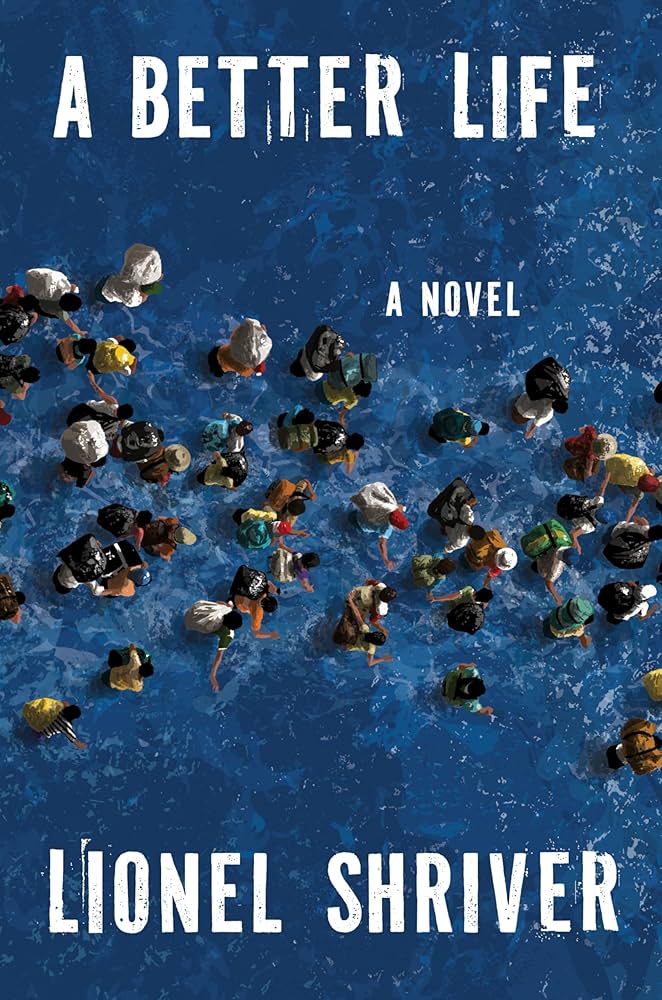
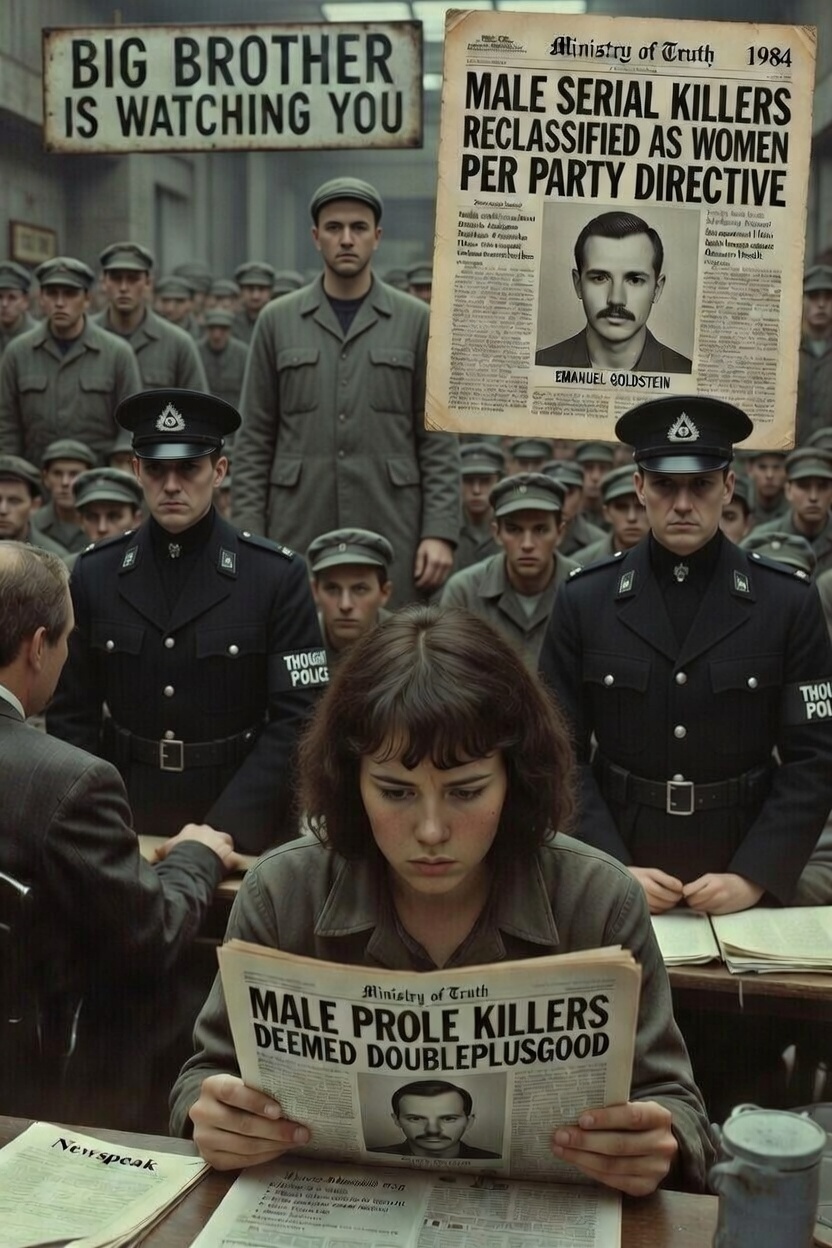

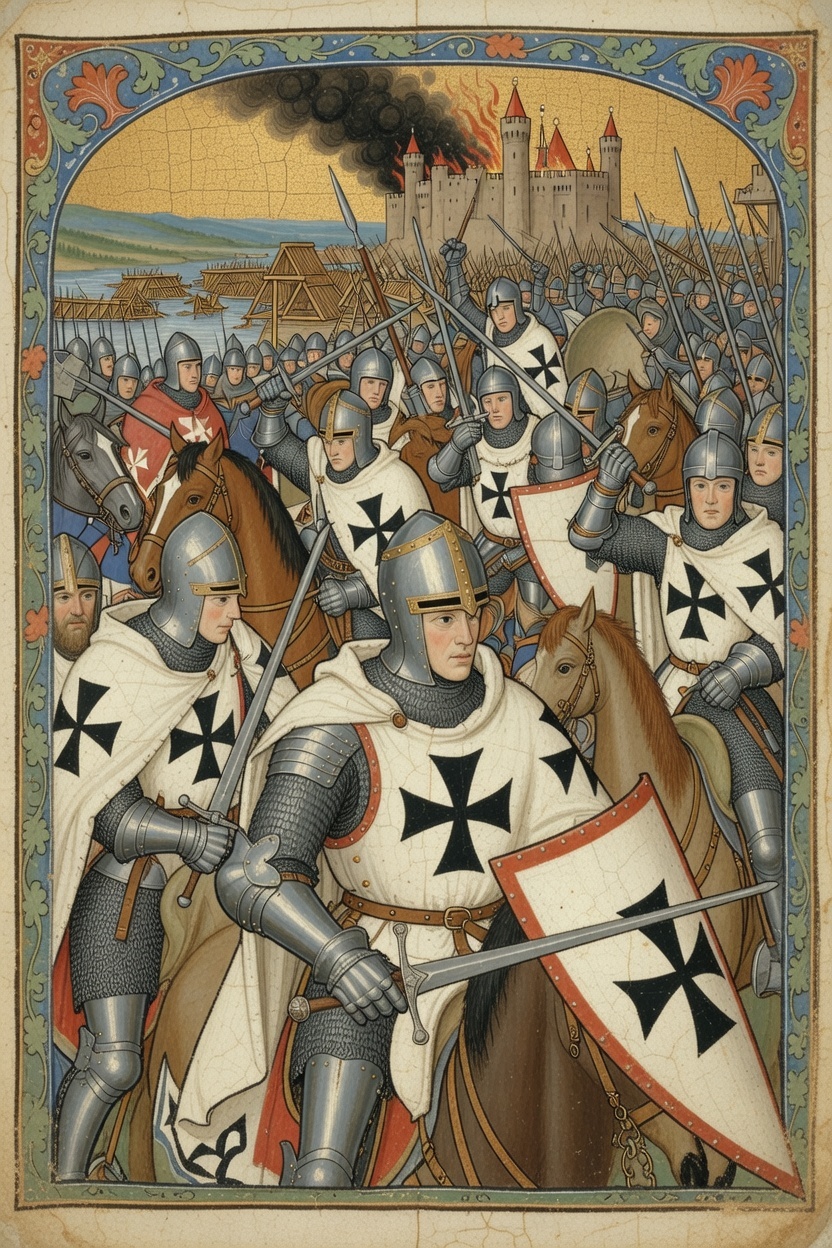

 freedom and reason