Smearing Amy Wax and The Fallacy of Cultural Racism

Under cover of the interview format, Isaac Chotiner’s The New Yorker piece, “A Penn Law Professor Wants to Make America White Again,” attempts to assassinate the reputation of Penn law professor Amy Wax by portraying her as a white nationalist. (His is not the only media attempt to wreck Wax’s career using the smear of racism. Google it.) Wax easily handles him, but I fear confusion and willful ignorance over what racism is and what it is not will make it difficult for an interested public to grasp her points.

Anchor pic
Amy Wax, law professor under fire for valuing western culture

The subject of the Chotiner’s piece is Wax’s recent National Conservatism Conference talk in which she discussed the idea of “cultural-distance nationalism,” which is, in Wax’s words, the belief that “we are better off if our country is dominated numerically, demographically, politically, at least in fact if not formally, by people from the first world, from the West, than by people from countries that had failed to advance.” She is unapologetically making an argument in favor of preserving western culture, which she believes is at least preferable to other cultures.

In her talk, she laments that the ubiquity of leftwing political correctness probably means that conservatives will not advocate restricting immigration from non-Western countries because whites are still the majority in the West and, therefore, advocacy of immigration restrictions will appear to favor white people, which would lead to accusations of racism. Wax’s disclaimer is uncharitably omitted in most media accounts. The dean of Penn Law School, Theodore Ruger, is likewise uncharitable, declaring Wax’s views “repugnant to the core values and institutional practices” of the institution.

Shorn of its disclaimer, Wax’s words do look bad. “Let us be candid,” she said in her talk, “Europe and the first world, to which the United States belongs, remain mostly white, for now; and the third world, although mixed, contains a lot of non-white people. Embracing cultural distance, cultural-distance nationalism, means, in effect, taking the position that our country will be better off with more whites and fewer non-whites.” Those in attendance report that the audience did not hear her words in the way it is portrayed in the media. Why should that matter? Wretched from its context, the quote is useful for smearing as racist not just Wax, but all those who oppose mass immigration from nonwestern countries. 

There is nothing subtle about Chotiner’s approach. In the introduction to the interview, he describes Wax as “the academic who perhaps best represents the ideology of the Trump Administration’s immigration restrictionists.” Since Trump is widely assumed to be a racist for his immigration policy, Wax becomes the essence of Trump’s racist regime. Chotiner writes that Wax “promotes” the idea of cultural-distance nationalism. “Promotes.”

When given a chance to respond, Wax clarifies: “I think there is something to be said for it, and I think that we should at least be talking about it. And, if you read the rest of my talk, from start to finish, and you read it carefully, then you will see me saying that. I am saying this is a neglected dimension that gets no attention, no discussion.” Noting she was speaking with fellow conservatives, she makes the disclaimer explicit: “I was saying, ‘Well, if you do discuss it or you even advocate for it, people are going to say, “Oh, you are saying we are better off with more whites than non-whites.” That is the equivalent of the position you are taking, and that is going to spook conservatives.’” She suggests she should have been more careful since “the media and people on the left are going to interpret your neutral criterion as a racial one, or at least they will be upset that it has racial effects, and you will be tarred with that.” This is indeed the attitude of the culture industry and the progressive establishment. The smear of racism is applied liberally in order to reduce the immigration debate to a popular reflex for open borders. (I have written extensively on this subject here on Freedom and Reason. Browse the table of contents.)

The rest of The New Yorker Q&A returns again and again to racism, with Chotiner’s agenda explicit: he wants Wax to admit her argument is racist, or at least that it properly viewed as such, and to extract from her some form of apology which, if you are at all familiar with Amy Wax, is highly unlikely.

On the smear, Wax ties Chotiner into knots and provides substance for the dialogue. Here’s an example: “You have to understand that I come to this whole question of immigration with an unanswered question in my mind, something I got interested in years ago, and I have tried to get people to answer it: Why are successful, peaceful, orderly, prosperous, technologically advanced, democratically sound countries so rare and so few, and why do they clump up in one tiny corner of the globe, namely Europe, the Anglosphere?” She notes Japan and Taiwan as exceptions outside of the West and continues: —And why is the rest of the world essentially consisting of, in various degrees, failed states? Why do we have a post-Enlightenment portion of the world and a pre-Enlightenment portion of the world?” Never reluctant to state what she knows the audience is thinking, Wax puts the matter bluntly: “I guess, to be really crude about it, you would use Trump’s succinct phrase: Why are there so many shithole countries? Of course, the moment you say that, people just get outraged: Oh, my God, you are a racist for saying that. And that, of course, lets them off the hook; they don’t have to answer the question, which is convenient.”

She laments the reluctance to explore the question. “I have asked many sophisticated, knowledgeable people that question, and I have never gotten anything close to a plausible answer, because of course any answer has to be subject to the strictures of political correctness. I have had a couple of really smart people, people on the left, say, to me, Hey, you have a point: we don’t have an answer, and we are not allowed to think about it rigorously and realistically because there is a code of things you do say and things you don’t say.”

As a member of the academy, I can tell you from my own experience Wax hits the nail on the head here. We are taught in the social sciences to practice cultural relativism and avoid ethnocentrism—judging other cultures by western standards. Cultures are not bad or good, better or worse, superior or inferior, just different. Morality, since it is the product of a cultural worldview, is also relative. In the functionalist tradition, which lies at the core of anthropology and much of sociology, cultural traditions are theorized to have evolved to suit the “needs” of the people.

There is a double standard here. While social science students are encouraged to consider power in western culture, for example, in the patriarchal diminishment of women, they are discouraged from considering the problem of power in nonwestern cultures. That would be ethnocentric. Indeed, given the ethic of diversity, the nonwestern patriarchal diminishment of women is perversely celebrated in academic circles. For example, the hijab is touted as a progressive expression of cultural and political identity, a form of resistance to the assimilationist pressures of the Islamophobic West. Events are held on university campuses showing American college students how to wear the hijab.

Seeking racism, Chotiner asks Wax if she thinks culture is something innate or the result of history and experience. Chotiner wants self-reported confirmation for what he and his media colleagues have asserted. Wax responds, “I think the word ‘innate’ is terribly mischievous.” When asked why, she notes that “‘innate’ is a term that looks to heritable, or genetic factors.” She adds that she “not saying anything about biology.” She stresses that her question “is not a race-realist question or point of view.” Instead, she is asking: “What is it about cultures that hold people back?”

I have made the point that explaining cultural differences by reference to race is an element of racism. It has always struck me as a curious thing that left identitarians reflexively pair culture and race in their charge of “cultural appropriation,” such as a white man wearing dreadlocks, or a white woman wearing a kimono. From this standpoint, only blacks can wear dreadlocks and only Asian women can wear kimonos. That Chotiner wants Wax to admit to an innate or biological cause telegraphs the assumption that this is what racism is really about. Chotiner is not up to rehearsing the logic of cultural racism, which is the assumption lying behind this controversy. Perhaps he knows there will be no consensus here.

Chotiner tries to find a contrast by noting leftwing explanations about culture as a function of experience and history with colonialism. She argues that colonialism is a nonstarter, since it came late on the scene. This is a powerful and provocative observation. By the period of colonization, the West had already developed the foundational norms and values that made it a powerful cultural and historical agent. Indeed, to use Wax’s words, colonialism took “advantage of these discrepancies in sophistication and modernity, in advancement in technology, in science.” This is Max Weber’s observation. It was the unique character of the West that produced and caused capitalism to spread across the planet. And to suppose that what we call the Third World would look like the West without colonization is an odd suggestion. Wax hears this and wonders rhetorically, “if it weren’t for colonialism, Malaysia would be Denmark?” If anything, in light of the corruption of indigenous cultures around the world wrought by western colonialism, history should be a warning to those eager to open their countries to foreign cultural elements.

Wax also dismissed the role of geography in societal development, giving examples of nations with disadvantageous geography that have achieved high level of development because of their western cultural orientation. (Crediting western cultural orientation to one side, a leftwing social geographer once made the same point to me about the false assumption of geographical advantage in explaining more advanced societies.) It’s cultural. To be sure, it is other things. But it’s cultural. But, again, as with power, there is a double standard about who can appeal to cultural factors in their explanations. 

At one point, Chotiner attempts to hang Enoch Powell like an albatross around Wax’s neck. But if one takes the time to look at Powell’s position, despite his rather incautious use of the word “white” (one can make the same criticism of Douglas Murray and other cultural conservatives who use white as a description of the Anglosphere), whether he is racist or, to use the term questioners usually used in putting this question to him, “racialist,” depends on, to use Powell’s own words, whether one defines racialist as “being conscious of the differences between men and nations, and from that, races” or “a man who despises a human being because he belongs to another race, or a man who believes that one race is inherently superior to another.” If the term meant the latter, then Powell’s answer was always “emphatically no.”

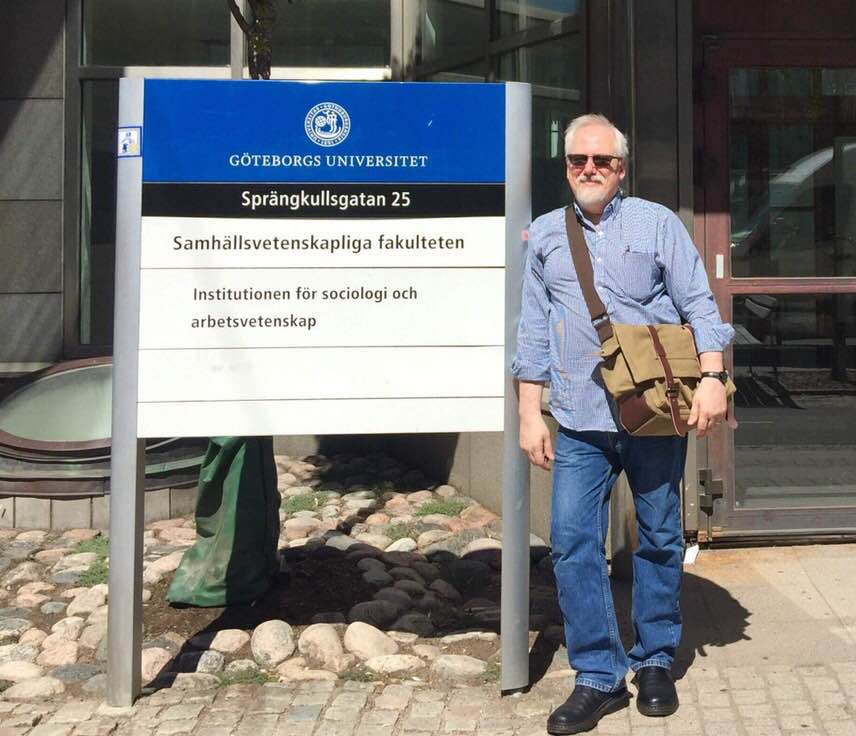
When discussing these matters with colleagues and students, I note people are culture bearers. This is rarely remarked upon in the social sciences. By culture bearer I mean that an individual brings with him his socialization and his worldview. My children speak my language, share many of the same values, and perpetuate in action norms learned in childhood. Their mother is Swedish. Had my children grown up in Sweden, they would speak Swedish, know the national traditions, reflect the national attitude. But they grew up here in America. They bring their American culture with them when they travel to Sweden. Wax asks, “How do little Swiss people become big Swiss people? Because we do associate a certain profile, a certain type, a certain set of priorities and orientations and behaviors and beliefs to Swiss people. Swiss people are radically different from, let’s say, Somali people or Indonesian people.” Despite it not being discussed in the immigration debate, this is a basic anthropological and sociological point of immense importance. Only some cultural differences are trivial.

Wax asks, “I’m Jewish. Why are Jews so Jewy? How did that happen? Why do French women, at least until recently, look so French? I mean, what is going on? I have a friend who’s Dutch, a Dutch artist, and he’s very well off, and, every morning, he gets up and cleans the front window of his house. It sparkles. I said, ‘Why are you doing that?’ He said, ‘Because I’m Dutch.’ So people do differ, there are these differences, and we just take them for granted. We don’t really interrogate them and examine them, we don’t look closely at their origins, once again, because a lot of it isn’t big-think stuff; it’s the little stuff that goes on in the family or civil society. How is the persona of each nationality preserved? That’s the question that has fascinated me for a very long time.”

Swedes have a particular persona. When I visit Sweden, I am always struck by how different the Swedish persona is from the persona I acquired growing up in the American South (my persona is different from the persona of the Midwest where I now live and work). Swedes are likewise struck by the difference. The last time I was in Sweden (summer 2018), the recent and very large influx of immigrants from Muslim-majority countries made for a stark cultural contrast. Sweden is having a lot of problems because of this situation (homelessness, vagrancy, crime, violence). Cultural personas matter.

Why is it controversial to admit to the difficulty large influxes of immigrants from very different cultures present to a particular way of life? Assimilation (which is not racist) is a slow process. If immigration occurs in large numbers and too quickly, then cultures clash, ethnic enclaves emerge, split labor markets form, and these forces make assimilation almost impossible. That’s not good. Over time, the culture of the host country shifts, in part through accommodation, and the native born see their traditional way of life diminished. And if that way of life was better for individuals, better for securing liberty and for achieving self-actualization, then a great tragedy occurred, both for the native born and for the newcomers who could have otherwise benefitted from emancipation from the personally-limiting norms and values of the culture they brought with them. If immigration is needed because there are jobs for which the native population do not possess skills (and if this is a systemic problem then it indicates that the educational system needs investment and reform), then it is prudent for a government that represents its citizens to consider the culture immigrants bring with them. It is not racist to ask, “How compatible are their norms and values with our society?” Citizens are not xenophobic to worry about this.

Not only are such concerns not racist or xenophobic, but the suggestion that they are deserves to be met with suspicion. The smear indicates an agenda. The accusation is meant to shame into silence those who would ask voice such concerns. It is this agenda that is putting Amy Wax through the ringer. Wax’s situation is representative of a greater problem. Wax is a cultural conservative. Is cultural conservatism therefore racist? Many leftwing identitarians would say “Yes.” This is why so many Americans are alienated by today’s left; the progressive worldview is a Manichean one, a black and white world organized by racism and antiracism. You are either on board with mass immigration or your are a nativist, racist, or xenophobe. (The agenda helps explain mission creep over at the Southern Poverty Law Center.)

Wax is an intellectual. She knows where Chotiner is getting his agenda. She flips the conversation and puts Chotiner on the spot. “Whether or not something is ‘racist’—I put it in heavy quotes, because I think it is a protean term, it is a promiscuous term, it is a term that’s trotted out as a mindless bludgeon, whatever. The question is, is it true? And, in fact, it’s emblematic of sliding toward Third Worldism that we now have this dominant idea that to notice a reality that might be quote-unquote ‘racist’ is impermissible. It can’t be true.”

Third Worldism runs throughout the identitarian left. The argument is that the West is responsible for the social problems of the rest of the world (poverty, sickness, crime, even terrorism) and therefore open borders is reparations the West owes the rest of the world (see “Reparations and Open Borders”). Because colonialism. The argument codes the West as “white” and the nonwestern world as “brown.” “Whiteness” is the bane of world existence and must be dismantled (while other cultures are encouraged to defend their cultural integrity). The structure of the global economy, without access to the nations of the West, is portrayed as a system of global apartheid (see the work of Harsha Walia and her notion of “border imperialism”). The goal is to disempower the West and expropriate its wealth, said to come not from the ingenuity of its culture, but from its ruthlessness. Third Worldism is why it is so easy for progressives to portray border control efforts as “racist” and “xenophobic,” immigration detention and processing centers as “concentration camps,” and a government that enforces the law as “fascist” and the agents of enforcement as “brown shirts.”

Chotiner raises the specter of anti-Semitism by noting the claim that Jews control much of Hollywood. Maybe, because Wax is Jewish, she can relate. Or at least be made to look like a hypocrite. Wax responds that “there are a tremendous number of Jews, out of proportion to their numbers in the population within the universities, within the media, in the professions. We can ask all of these questions, and you know what? They admit of an answer. But essentially what the left is saying is: We can’t even answer the question. We can’t. Once we’ve labelled something racist, the conversation stops. It comes to a halt, and we are the arbiters of what can be discussed and what can’t be discussed. We are the arbiters of the words that can be used, of the things that can be said.” 

When Neil DeGrasse Tyson made the observation that there are only about fifteen million Jews in the world, yet they have received 25 percent of science Nobel prizes, while Islamic scientists have won just three of the 609 science Nobel prizes so far issued, even though they account for about 1.6 billion of the global population, he wasn’t criticized by Jews (that I know of). He did, however, face the wrath of Muslims and progressives. Was he saying that the difference is biological? Of course not. First, Jews and Muslims aren’t races. Second, race is not a biological reality. Clearly, their respective outlooks on science are the product of cultural differences. It is a relevant sociological question to ask: What is it about Jewish culture that produces individuals who excel in certain avenues of economic and social life?

Chotiner retreats: “I’m just trying to make a point about how something could be true but still racist or used in a racist manner.” This is so obvious it makes one wonder why Chotiner himself did not incorporate this understanding in the first place. It is his agenda. Relentless, Wax analogizes: there are differences between men and women. Is it “sexist” to say so? Chotiner asks, “What about saying, ‘I don’t like the way black people look, and so I don’t want this black person marrying my daughter?’ Is that racist?” Wax responds, “I guess it’s racist, but I think people are entitled to have preferences about who they marry. It’s on a basis of race, and it’s a broad generalization on the basis of race.”

Chotiner tries to get Wax to say Trump is racist because the president suggested Obama wasn’t born in the US and questioned whether a judge of Mexican heritage could make a fair judicial decision. Wax points out that Mexican is a national identity, not a race. Frustrated, Chotiner says, “We’re both smart people, Amy, or at least I’m somewhat smart. You know what he was saying. Come on.” To which she responds: “O.K., but you’re patronizing me because you’re trying to use the word ‘racist’ where race is not the operant category. You see, you’re saying, ‘Oh, you have to expect that, when you say something about a Mexican, it’s something about race.’”

Wax is brilliantly using the interview to show how the racism smear works in today’s political-ideological environment. The word is overapplied. She says, “I think we’re now having a discussion about the content of what he said, and we can’t have that discussion if you just go off on this ridiculous heresy hunt: ‘Is he a racist? Isn’t he a racist? Is that racist? Is this racist?’ That’s really, as far as I can tell, eighty-five per cent of what the discussion now is about on the progressive left. It is so pointless, and it’s so shallow. O.K.?” Chotiner attempts again to make her view appear as racist, suggesting that she sees culture as “hardwired.” He attempts this even though Wax earlier told him, in no uncertain terms, that she was not making a race-realist argument. Wax gets Chotiner to admit that “hardwired” is his word, not hers. And so the interview concludes, providing us with an excellent illustration of the problem with the contemporary discourse about immigration and race.

I noted earlier that what lies in back of the overapplication of the racism charge is construct of cultural racism. Cultural racism (the new racism or neo-racism) is a recent invention used to characterize judgments based on perceived or imagined differences in norms and values between nationalities, ethnicities, and races. For example, if one argues that western culture is superior to nonwestern cultures because the norms and values of the West uniquely emphasize critical thought and open inquiry, democracy, equality (for women, homosexuals, etc.), personal freedoms, such as freedom of association, opinion, and speech, scientific reasoning (rationalism, empiricism), and secularism (separation of church and state), and especially if one believes that native inhabitants of the West ought to be skeptical and wary of foreign norms and values that may threaten the integrity of their culture, one may be accused of cultural racism. Cultural racism is a weaponized version of the charge of ethnocentrism in a worldview where everything—ethnicity, nationalism, even religion—is reduced to race. It’s an example of terminological creep, the practice of repurposing a term to cover phenomena that exists beyond its parameters, phenomena that are qualitatively different from the phenomena initially covered by the meaning of the term. Cultural racism bears little resemblance to the term it seeks to qualify. (This is also true of symbolic racism, the other “new racism.”)

What is racism? I have defined the term many times on this blog (see, e.g., “Race, Ethnicity, Religion, and the Problem of Conceptual Conflation and Inflation” and “Prejudice and Discrimination: There are Many Sorts and We Mustn’t Confuse or Conflate them”). Racism is the belief that individuals can be differentiated into groups based on innate abilities and dispositions and that these groups can be rank ordered into superior and inferior types of humans. The term itself appears in the earlier twentieth century (interchangeable with the term “racialism” appearing around the same time). The ideology of racism emerges with the enlightenment, tangled with the development of science. Because of the latter’s self-correcting method, the core tenets of racism—chief among them that there actually is such a thing as biological race—have been debunked. But not before justifying some of the worst deeds in history, the ideology reaching its zenith in Nazi Germany, whose ideologues couched ethnicity and nationality in the language of natural history.

Heavily influenced by the postmodern turn in the social sciences in the 1980s and 1990s, the concept of cultural racism emerges in the aftermath of the collapse of scientific racism, the dismantling of de jure segregation in the United States, and the resumption of mass immigration to the West by nonwestern people. Thus, it was when the force of racism—law and policy, thought and practice, justified by widespread belief in innate racial differences—had been either eliminated or marginalized that the term was given a new lease on life by the political left for their own political purposes. Exploiting the differences and amplifying slight ambiguities in the concept of race between European cultures (which are, in his eyes, manufactured by state power), French philosopher Étienne Balibar argues that racism is always evolving and therefore is always “neo-racism.” This is a clever trick. In this way of thinking, racism becomes an eternally useful accusation by merely changing its meaning. And the left is doing this.

Étienne Balibar, advocate for the cultural racism concept

In “Racists and Anti-racists,” Balibar writes that “we have passed from biological racism to cultural racism.” That is not what has happened. What has happened is that we have marginalized the racists and produced a more just society in the West, an accomplishment that itself speaks to the power of the western cultural orientation. And, with the ethic of human rights, which is of western origin, people around the world have a chance to raise their moral standards and live better lives, to emancipate themselves from the oppression and poverty their culture generates and perpetuates. However, there are traditional powers that seek to prevent this (which is why there is such a thing as the Cairo Declaration on Human Rights in Islam) and it is not racist to identify those forces and condemn them.

Squaring the Panic over Misogyny with World Hijab Day

I have been criticized for mocking the burqa and niqab. I commented on a widely circulated image of a women in a niqab taking a selfie (the image is shared below). I asked, Whats the point? Some expressed surprise that a man of the left would post such a thing. Im not a good social justice warrior.

I am always a little surprised that anybody who knows me even a little—or who cares about women, frankly—would be surprised or dismayed by my criticism of Islam. To be clear, I understand why progressives think this way. Defending the Islamic way of life is how leftwing identitarians establish their progressive bona fides. Its still always a little surprising. Disheartening is probably a better word to use here.

I am a vocal antitheist. Have been for most of my life. An antitheist is not merely an apostate or an atheist, but someone who has become convinced by reason and evidence that religion is a malevolent force in history and society. An antitheist openly advocates disbelief in supernatural things in order to save human beings from the oppression and violence that follows from such beliefs. Religious ideologies—in particular Catholicism and Islam in our time—are analogous to fascism and racism. They run on similar social logics and are responsible for widespread pain and misery.

One commentator asked me how, as an academic, that I could engage in such a crude act as mocking the niqab. But the conclusion I draw about modesty dress is the product of critical historical social science reflection. I wouldnt be using my sociological training to proper ends if I allowed myself to participate in an ideological project to mainstream irrational belief systems by denying the reality of the structure and function of religion. Moreover, I have a responsibility as an moral person to criticize oppressive ideas and practices.

As a humanist, I dont just reject religious belief for myself; I want to see religion marginalized to the point where it does not affect any significant number of people (ideally, the point at which it affects no one). Irreligious criticism and ridicule is central to the secular humanist project. And, as a feminist, I abhor the erasure of women. I would be a hypocrite if I remained silent in the face of such blatant oppression of my sisters. What do progressives say about the effect of failing to stand against oppression? Well, I know what a liberal said about it: There are times when silence becomes an accomplice to injustice, said apostate Ayaan Hirsi Ali. Or, as Leonardo Da Vinci put it, He who does not oppose evil, commands it to be done. It is not always true that silence is consent, but in the case of Islams treatment of women it is.

And its not just straight women who suffer under Islam. Watch the video below by Ex-Muslims of North America concerning the predicament of gay ex-Muslims. The video focuses on Omar (not his real name) and his story of growing up in a country where both homosexuality and apostasy are met by death (this is true of many Muslim-majority countries).

It has always troubled me that progressives selectively condemn religious systems that subordinate girls and women and persecute homosexuals. When it comes to Christian oppression of these groups, progressives are eager to criticize, mock, and ridicule. But when Muslims engage in oppression of these groups, they not only fall silent on the injustice, but attack those who speak out. Why do so many on the left resist extending to others the blessings of liberty and protections of rights they enjoy for themselves? We do they attempt to marginalize and suppress the voices of atheists, feminists, and homosexual activists who criticize Islam? It is a bizarre expression of racism that I analyze in my essay Whats Racist About Islamophobia? Not What You Think.

A Truly Awful Commentary on Gun Control and the Value of Life

Kentucky Governor Matt Bevin starts off sounding like he is going to make a compelling point, then drives his train off the rails by blaming gun violence on things that have absolutely nothing to do with gun violence: pornography, video games, movies, song lyrics (see video below). Really? Song lyrics?

Kentucky Governor Matt Bevin goes completely off the rails on guns and violence

The increase of hard-core pornography and violence-themed video games, movies, music, and lyrics are actually associated with historic decreases in interpersonal violence across Western societies. This claim is among the most robust findings in all of social science.

Sorry governor, mass shooters are not motivated by movies or video games or pornography. If anything, these materials substitute for aggression and violence. There is scientific evidence showing that these materials demotivate those who consume them. Isn’t this the complaint? That we can’t get our kids to go outside? And when they’re playing violent-themed video games for hours on end, they’re not perpetrating acts of violence. 

Whether pornography motivates masturbation and sexual intercourse or merely aids these activities is unclear. Maybe it’s both. But who cares? Why is photographing, filming, or video recording anal play, coitus, cunnilingus, fellatio, etc., degrading? People enjoy doing those things. Some even get paid doing something they enjoy. There’s nothing wrong with any of these things. Why is the governor talking about them? It’s silly.

As for this claim about abortion, if we agree that the frequency of abortion increased after Roe v Wade, we have to agree that this increase is associated with a historic decrease in interpersonal violence. What would be the causal link anyway? Seung-Hui Cho killed 32 people on the Virginia Tech campus in 2007 because women gained more control over their reproductive capacity in 1973?

You know what else is associated with a substantial decrease in violence in Western society? Growing secularism. That’s right, declining religiosity is associated with a safer (and more moral) society. As people have moved away from organized religion and the Judeo-Christian god, violence has declined. The progressive disappearance of corporal punishment, the practice of physically punishing children, is also associated with a decrease in violence. So is increasing sexual equality and female empowerment. So is the institution of civil rights laws and policies—those changes that recognizes the dignity and worth of all human beings regardless of the color of their skin. And greater tolerance of gay and lesbian rights. 

All of these things—many of them things conservatives (publicly) don’t like—are associated with not more but less killing and violence. That these developments are associated with less violence is not merely empirical fact; it’s common sense. We are civilizing ourselves. What do you expect? This is good news. Share this gospel with everybody you meet. More people need to know about it, so they don’t fall for the nonsense folks like Governor Bevin peddle.

But, alas, we do have this problem of mass shootings, which is really a problem of large casualty counts associated with mass shootings. What’s behind this? Easy availability of high-powered military grade weaponry and an industry that fosters and enables gun fetishism are among the greatest sources of the problem. 

The governor talked about the widespread ownership of guns in our society in his childhood. Guns were in my childhood, too. I have been around guns my whole life. But we didn’t have the types of weapons used in mass shootings when I was growing up. We had rifles and shotguns. Maybe a pistol in the family. It’s hard to pull off Virginia Tech with the stuff we carried around with us. Not that there weren’t murders. There were actually more murders back then! But we did not see mass shooting events routinely taking the lives of dozens of people. Not in the United States.

The governor said there are fewer households with guns. True. He’s been reading. But he forgot to tell his audience that there are more guns than ever, which means that many of the households have become, in effect, armories. Isn’t this what police and the FBI find when they search the homes of these mass shooters? Many of them have a lot of military-grade weaponry and lots—and I mean lots—of ammo. And they have all sorts of gun paraphernalia. It’s a fascination. Cult-like. Typically, a cult of one. A person has lots of guns designed for one purpose—killing human beings—for what reason? I’m always suspicious. We hope the purpose of this technology is never realized. So why allow it?

There are other things associated with mass killing. The glorification of military culture and the pathology of violent masculinity. After all, look at how so many of these killers are dressed. They’re obsessed with military and paramilitary fashion. They’re literally dressed to kill. (Of course clothes aren’t a source of violence. In this case, they are an outward manifestation of personal disposition.) The rise of violent religious fundamentalism, both Christianist and Islamist ideologies, that is, theistic tribalism, motivates a lot of these events. You see the source of violence in their rhetoric and in their targets. It’s not movies and video games that inspire violence but ideology. In our central cities, mass violence, for example gang-related shootings, is driven by structural inequality, hopelessness, tribalism, and, again, easy access to high-powered military-grade weaponry. These are cultures of violence.

Given all the facts, how do we combat mass killing in an optimistic era of declining crime and violence? Many of these sources will take a while to diminish or remove. But one of the sources we could ameliorate almost immediately and achieve the greatest effect: remove the means to perpetrate mass death. Comprehensive gun control and bans on most types of weapons and ammo.

At the National Rifle Association’s 148th Annual Meeting in Indianapolis, the gun lobby thanked Bevin for his “unwavering support of the Second Amendment!” 

The woman who asked the question that got the governor going was accused of eye-rolling and smugness. The governor thought she was being disrespectful. No, Governor, she just wasn’t buying the nonsense falling from your mouth. Bevin’s attempt to take the moral high road was in reality an exercise in rehearsing a failed doctrine masquerading as morality. He is merely feigning an ethical stance. In actuality, he’s a tool of the gun lobby.

Ideal Types and the Really-Existing

Ideal types don’t exist in reality. They are heuristics developed via abstraction from actual evidence and discernment of the structural logic explaining relationships in the data that are then used to explore the empirical world. There is only “actually-existing” or historical feudalism, capitalism, or socialism. There is no “pure this” or “pure that.” Purity is always an abstraction. 

Max Weber’s ideal types of authority

Moreover, an ideal type must never be applied to the data in a superficial manner, such as the way people talk about this or that thing or person being “fascist” on the basis of an appearance of a handful of (often highly selective and stretched) analogical points of contact. There is “actually-existing,” i.e., historical fascism, and there are sociopolitical systems that are fascistic in character but are not fascism actually-existing. 

Conceptual systems are never exactly the things they conceptualize (in part because things are always changing), but they come very close when they enjoy validity (such as in their predictive power) and their application is empirically sound (that is, supported by the facts). Still, we have to avoid reifying concepts such that they stand in place of the reality we are striving to grasp. 

To suppose that the ideal type of capitalism exists anywhere in the world is absurd. To suppose one may use this absurdity to defend or rationalize capitalism marks ideology. Capitalism is an actual concrete historical system that comes in many varieties. There are characteristics of capitalism that distinguish it from other social forms, and central to these are its social relations and mode of exploitation.

Against White Privilege: Clarifying the Critique of a Problematic Term

My critique of “white privilege” rhetoric (for example, here: “Debunking a Sacred Text in the Church of Identitarianism”) concerns the practice of using the term to describe prevailing racial inequality. It is not a denial of the problems of race prejudice, race discrimination, or racial inequality. These are very real problems to be addressed. But the vast majority of Americans are not racists nor do Americans live in a nation that runs on racism.

Cartoon America

I reject the white privilege discourse not because of “white fragility” but because the discourse misuses language and meaning. Race privilege has been abolished in the United States. Continuing to speak as if a problem the nation overcame decades ago is still a problem is more that unhelpful. It divides the working class (which is likely the reason so many bourgeois institutions push the rhetoric in rules and training). Instead of founding a proletarian movement on the basis of common material interests, the rhetoric of race privilege fragments class consciousness and worker solidarity. It leaves the impression that the nation has accomplished very little with respect to the problem of racism and white people are the reason. By mischaracterizing the contemporary situation, the rhetoric denies progress while recycling grievances long ago addressed.

President Lyndon Johnson signs the historic Civil Rights Act of 1964

It is, moreover, fallacious—and racially discriminatory if it informs treatment—to attribute to individuals group averages based on skin color. Individuals are not statistical averages. Persons are concrete entities with biographies. One cannot explain a person’s successes (or failures) on the grounds that he allegedly possesses a group advantage “revealed” by aggregated statistical differences. This is the problem of making claims about racial differences in aptitude and intelligence tests based on aggregated data, “findings” that are at best correlative even generously granting the validity of such instruments. The chart presented below from Richard Herrnstein and Charles Murray’s notorious The Bell Curve (1994), is not explanatory. It is illogical to infer causality from statistical averages drawn from passive demographic categories (unlike aggregate analysis based on shared belief systems, for example religious groups). It’s stereotyping. It turns people into cartoon abstractions: villains, victims, allies, and heroes. It is the reification of demographic categories that allows for the production of mythology, of monolithic standpoints labeled “oppressor perspective” and “victim perspective.”

A chart from Richard Herrnstein and Charles Murray’s infamous The Bell Curve (1994) positing that racial inequality across a range of social categories are attributable to innate cognitive differences between blacks and whites as revealed by IQ tests.

When I discuss this matter with people, they often raise the problem of redlining, the practice of selectively granting loans or selling homes to buyers on the basis of their race. Doesn’t redlining prove white privilege? Depends on the historical context. The fact that corporations and banks engage in discriminatory and illegal practices today does not substantiate a claim that we live in a society that operates on the basis of race privilege.

There were several landmark changes made in the United States that ended race privilege in the form of de jure housing discrimination. The Fair Housing Act of 1968 made it “unlawful to discriminate in the terms, conditions, or privileges of sale of a dwelling because of race or national origin.” FHA also made it “unlawful for any person or other entity whose business includes residential real estate-related transactions to discriminate against any person in making available such a transaction, or in the terms or conditions of such a transaction, because of race.” Congress strengthened the law in 1977 with the Community Reinvestment Act.

President Lyndon Johnson signs the Fair Housing Act of 1968

While financial institution do engage in these practices, they do not do so with impunity. Just in the last five years, enforcement actions have been brought against, to identify but a few examples, Associated, Community State, Evans Bank, First United Security, and Hudson Bank (banks in the northeast, midwest, and deep south). Far from establishing privilege for whites who get loans, banks are punished for discriminating against non-whites. A society operating on the basis of white privilege does not make it illegal to discriminate against non-whites. Whites do not enjoy special rights or immunities—the meaning of privilege—on the basis of discriminatory action by financial institutions.

To draw a contrast, we live in a capitalist society where economic exploitation is legal. There is a very real class privilege reinforced by law. Under socialism, exploitation would be illegal; class privilege would be abolished. It may very well be that under socialism labor will be exploited here and there. But such instances would—or at least should—be addressed through government action. These instances of exploitation under socialism could not be said to establish class privilege, as they are deviations from the law that makes exploitation illegal. The failure to enforce the law is also not an instance of privilege. By analogy, a person who gets away with murder is not privileged. The law failed to hold him accountable. Nor is an innocent man privileged because the system failed to convict him of a murder he did not commit.

I recently wrote about racial disparities in criminal offending (see “Mapping the Junctures of Social Class and Racial Caste: An Analytical Model for Theorizing Crime and Punishment in US History”). The rhetoric of white privilege is often attached to these disparities, as well. The sources of violent crime in the black community are chiefly structural inequality, culture, and easy availability of guns. As I have explained, these problem emerge in part from de facto patterns of occupational and residential segregation shaped by legal and economic history. Furthermore, the problem with white privilege rhetoric, as well as the claim that the problems of black people are the result of an ongoing web of structural oppression, is the denial of human agency and dignity. It treats black people like puppets on a string. It makes a black man killing a black man the fault of white people. Whites get all the agency; they’re responsible for their actions and more. Blacks are infantilized; they’re victims. It’s more than an error to blame the social problems associated with black neighborhoods on “white privilege.” It undermines human dignity.

What about inherited and cumulative advantages and disadvantages? These are certainly explanatory. The explanation moves the call for reparations. Whatever one thinks about reparations (and I believe they are a bad idea “For the Good of Your Soul: Tribal Stigma and the God of Reparations”), reparations have already occurred. As the call for more reparations ramps up, we’re again hearing the slogan “forty acres and a mule.” Forty acres and a mule was a feature of Special Field Orders 15, a declaration by Union General Sherman in 1865 in the context of a civil war. Because this never happened, the story goes, nothing was ever done about the material foundation of post-slavery racial inequality. But in the Civil Rights period, reparations did indeed take place, they just took a different form: public investments, expansion of the social welfare system, public housing, affirmative action, and other policies and programs. Forty acres and mule no longer made sense in an advanced industrial society.

Today, Americans live in one of the freest and most open societies in world history. The United States is a multiracial and multiethnic democratic-republic with legally protected access to educational, occupational, and residential institutions. We no longer live in a nation that operates on white supremacy and race privilege. Of course, as I said at the outset, race prejudice, race discrimination, and racial inequality persist. But we must emphasize that these problems do not establish the presence of white privilege. Legal structures granting privileges on the basis of race that function to systematically advantage whites are required to indicate white privilege. Moreover, white privilege is unnecessary for race discrimination and racial inequality. It is wrong to claim, as we hear people say all the time, that every black person experiences discrimination or that every white person benefits from discrimination or that every white person is racist or that white people cannot suffer discrimination. This is the rhetoric of a grievance industry that denies the progress this nation has made in righting the wrongs of history and power.

Death by Cop Redux: Trying to Save the Narrative in the Era of Trump

Yesterday, The Los Angeles Times (“Getting shot by police is a leading cause of death for black men in America”) reported that about 1 in 1,000 black men and boys in America can expect to die at the hands of police. Black men and boys are 2.5 times more likely than white men and boys to die during a police encounter. It is important for readers to know that more white men and boys will die at the hands of police in the United States than will black men and boys. Black men and boys, while representing a minority of those killed in police encounters, are overrepresented among those killed in an encounter with a police officer. The question for scientists and policymakers is what explains this disparity.

Officer Philip Brailsford aiming his rifle at Daniel Shaver in a Mesa, Arizona hotel in 2016. Brailsford was acquitted of second degree murder and manslaughter. He retired in 2018 with a pension. Both Brailsford and Shaver were white.

Through the prism of left identitarian politics, racial disproportionality in police shootings indicates racism. It’s a sign of a civilization built upon white supremacy. A social movement—Black Lives Matters—has emerged to address the problem of racist police shootings. However, those pushing this line neglect one crucial fact: independent of ethnic and racial bias, the overrepresentation of blacks in serious crime increases the likelihood that police will encounter black men and boys under circumstances that represent a threat to the themselves and to others, circumstances that make it more likely that police will discharge their firearm or take some other action that increases the likelihood that a fatality or serious injury will occur. 

As I document in “Mapping the Junctures of Social Class and Racial Caste”: “In 2017, according to the Uniform Crime Report (FBI), blacks were responsible for 33 percent of aggravated assaults, 30 percent of burglaries, 53 percent of homicides, and 54 percent of robberies.” Most of these offenders were men and black men account for less than six percent of the United States population. Thus, black males are significantly overrepresented in serious crime. One finds ethnic and racial disproportionality in police shootings with respect to other demographic groups, as well. Black women and girls, as well as Latino men and boys (about 1.4 times more likely to die at the hands of a police that non-Hispanic white men and boys) are also killed by police at higher rates than their white peers. These groups are also overrepresented in those types of crime that are more likely to bring them into serious encounters with the police.

A headline framing police shootings as “a leading cause of death” for black men and boys, inspired by Frank Edwards, the Rutgers sociologist who produced the study informing the LA Times story, in this case conceals the leading source of death of black men and boys: black men and boys. According to the website Mapping Police Violence, police killed 1,147 people in 2017. Blacks were 25 percent of that total, or around 286 persons. That same year, according to the FBI, there were 15,129 homicides. Black victims accounted for 52 percent of them, or 7,851 persons. More than 86 percent of those victims were male. In approximately 90 percent of black homicide deaths, the perpetrator is also black. In other words, a black person is more than 27 times more likely to be killed by a black civilian than by a police officer (black or white). Edwards compares the odds of getting shot and killed by a cop to winning “a lot of scratch-off lottery games.” Of course, the lottery is random. But applying this metaphor to peer-to-peer shootings, the odds of a black person being shot and killed by another black person are much higher than a black man being shot and killed by a police officer.

I know many of you will object to this comparison. You question its relevance. Is it not changing the subject to bring in black-on-black killing? Isn’t there an agenda at work? I am guilty of making this very complaint. On July 20, 2016, I published a piece in Truthout titled, “Changing the Subject From the Realities of Death by Cop,” in which I criticized Heather Mac Donald of committing this very offense. I then appeared on the Project Censored show on KPFA Berkeley 94.1 to talk to Mickey Huff and Peter Phillips about it (you can listen to the program here: Black Lives Matter) and tied my argument to an appreciation of the BLM movement, which I felt at the time was making an important contribution to the problem of death by cop. Since that time, I have taken another look at the problem and come to a different conclusion (you can read my argument here “The Problematic Premise of Black Lives Matter”). In fact, police shootings and violence in America’s central cities are rooted in the same context and are directly associated.

The media systematically downplays the crisis of life in poor inner city neighborhoods, disproportionately black and brown, where the experience of murder and serious crime has become routine. Mass shootings perpetrated by white men serves as spectacle (the “real problem”), while shootings perpetrated by black and brown men in Baltimore, St. Louis, New Orleans, and other major cities, if reported at all, do not enter the media echo chamber where they might be amplified. As a consequence, one of the most serious social problem in the United States is little more than background noise. When one ventures to note it, he risks being accused of racism. The keepers of the narratives either portray the crisis of crime and violence in inner city black and brown communities as something akin to a natural phenomenon, inevitable and automatic, or treat black and brown people as if they are victims with no agency, as if they’re marionettes whose wires dangle from the fingertips of an invisible white marionettist.

I no longer see the phenomenon of shootings during police encounters as a problem of police officers operating on implicit racial bias (although bias needs to be confronted and eliminated where it is found) as much as the general problem of the function of law and order in a capitalist society. The United States is a business-run society with a pathological ethos of rugged individualism. As such, economic security for the majority is precarious and social supports are sorely lacking. The alienating conditions produced by a system that relegates a large proportion of its population to lives of economic uncertainty and material deprivation is associated with several serious problems: neighborhood disorganization and social disorder, high levels of crime and violence, and a large segment of the proletariat living beyond the routine means of control and discipline attached to the industrial system.

New York City Police Officers

The capitalist state and interested private forces developed the criminal justice system to manage those persons who experience and to a significant degree cause these problems. The police and the system of jails and prisons are functions of industrial capitalism and are stamped with the character of British and Northeastern United States rational Protestant culture with its emphasis on efficiency, calculability, predictability, and uniformity. It was inevitable that a crime control system in the context of a society at this stage of development and with this ethos would clash with the due process spirit of the U.S. Bill of Rights when crime and disorder, along with the enlargement of the industrial reserve, became widespread problems. Contemporary society, with most of the population now living in urban areas, experiences more crime than the framers of the Constitution could have possibility anticipated.

The need for a comprehensive crime control apparatus is real. Citizens of a democratic-republic rightly expect public safety. Living in safe communities is a human right. The crime control emphasis emerging from the 1960s addressing the drastic increase in crime and disorder throughout the United States during that decade played a major role in promoting general lawfulness forty years down the pike. We live in a much safer society today than previous generations. Despite this progress, high levels of crime and violence persist in our central cities. And the ills disproportionately impact black and brown people. Not addressing crime and violence in these communities is to abandon them to chaos. Studies find high levels of mental health problems, such as depression and emotional issues, in the black population of states where urban conditions make police shootings more likely. As The LA Times points out, living in a state of constant fear can lead to chronic stress. Far more fear inducing than the presence of law enforcement is the presence of armed civilians assaulting, killing, and robbing members of their own community (the article spins this reality in a way that pins chronic stress on the actions of the police).

The most effective way of reducing potentially lethal or harmful police encounters is to reduce the frequency of those encounters. Ending the drug war would help reduce the number of police-civilian encounters. We’re making some progress in this area. More broadly, ameliorating the conditions that give rise to crime and violence in the first place would drastically reduce these types of encounters and transform the experience of policing. Thus a state-organized industrial system of employment, along with social democratic reforms in education, housing, and policing, is needed to ameliorate the conditions that give rise to crime, disorder, and violence. These approaches will also help reduce the frequency of police-civilian encounters among white populations, whose members comprise the largest number of those shot or injured during police encounters. Blacks are overrepresented in the circumstances that put them disproportionately at risk because of historic patterns of occupational and residential segregation shaped by legal and economic history. The potential for criminality inheres in blacks no more than it inheres in whites. More than reducing lethal encounters with the police, combating criminogenic conditions will reduce the risk of aggravated assault, homicide, and robbery.

These are political questions, and unless those representing the general interests eschew the divisive practice of racal politics and organize instead around common class interests, no broad-based social movement will emerge with the power to put leaders into positions from where they may address this problem in ways that don’t pit working people against each other. Left identitarianism is a morass of competing interests based largely on demographic constructions. If one were to imagine what a bourgeoisie strategy to fragment working class consciousness on the left, it would look just like leftwing identity politics. Movements like Black Lives Matter are too narrow, too exclusive, too dismissive of whites. And they are too extreme, calling for the abolition of the police and prisons, blaming police shootings on such rhetorical constructions as “white privilege.” As such, these politics are alienating to the majority of working class people. And they are based upon a false premise: that the main cause of racial disparities is white supremacy.

Debunking a Sacred Text in the Church of Identitarianism

I have written about the problem of “white privilege” rhetoric before. I want to review two errors committed by Peggy McIntosh’s “White Privilege: Unpacking the Invisible Knapsack,” which has become something of a sacred text in Church of Identiarianism. I have covered both in some fashion on this blog, but I want to go a little deeper into them here.

I am inspired to do this by the almost unquestioned assumption across higher education and the Democratic Party that this rhetoric is valid and useful. It is neither. Indeed, the rhetoric of white privilege and the framework in which it operates is harmful to liberty and democracy. (For my past writings on this see “The Rhetoric of White Privilege: Progressivism’s Play for Political Paralysis,” “You are Broken. We Will Fix You,” “Race and Democracy,” and “Demographics and People.”)

Peggy McIntosh, author of “White Privilege: Unpacking the Invisible Knapsack” (1989)

The first error is McIntosh’s neglect of demographic information and ignorance of facts to make claims about the underrepresentation of minority wants and needs in capitalist markets. For example, accepting the premise of the following item for a moment, if I, as a white person “can easily buy posters, postcards, picture books, greeting cards, dolls, toys and children’s magazines featuring people of my race,” how much does this have to do with the simple fact that 80 percent of the U.S. population was white when McIntosh penned her essay (three-quarters of the population today)? White people prefer to purchase culturally familiar items. There are more white people in American than nonwhites (who we will assume do not want or need the products white people use). It makes sense that the items would be readily available in a society where the vast majority of people are white. One can consider this apart from race. Halal foods are not readily available in the United States. Is this “Christian privilege”? (What does the abundance of Kosher products tell us?) My musical tastes are not well represented at Walmart. What sort of privilege is this? A great deal of her essay depends upon this faulty logic.

But it’s worse than that. The premise of McIntosh’s example isn’t really even true. For decades, capitalists have been keen on tapping the African-American market. Capitalist firms have an army of designers and marketers to develop, engineering, and push products for black Americans. They cultivate consumers and advertise specifically to them. It’s a vast industry. When I was a kid (a long time ago) there was a television show called Soul Train that was a vehicle for products that my family would never use (I watched it for the “black music,” which was, and still is, oddly, ubiquitous in American culture). Remember Afro Sheen products? They were available at the department stores in Murfreesboro, Tennessee. Some of my white friends in high school in the 1970s wore afros. They bought these products. They carried black power hair picks in their back pockets. They were cool. Blacks represent more than a tenth of the United States population. And blacks are not evenly distributed throughout the country. Half of all blacks live in the South. Capitalists aren’t stupid. So maybe McIntosh is not very culturally savvy. That’s the kindest thing I can say about this aspect of her essay.

The second error is McIntosh’s systematic misuse of language and meaning, specifically the deployment of linguistic tricks that work to manufacture the perception of a reality with a different set of rules (these tricks are central to the reality manufactured by critical race theorists). McIntosh writes that “not all of the privileges on my list are inevitably damaging.” For example, “the expectation…that your race will not count against you in court should be the norm in a just society.” She describes the “privilege” of being treated in a racially-neutral fashion in court as an “unearned entitlement” that, because “only a few have it” (presumably she wrote that in error, since whites are a majority and all whites are privileged), “is an unearned advantage.”

But the expectation that one’s race will not be used against them in police stops or court rooms (or college admissions) is not a privilege. That’s the wrong word. As I have explained before on my blog, a privilege is a special right, advantage, or immunity granted or available only to a particular person or group of persons. It is illegal to grant or make available on a racial basis special rights, advantages or immunities in the United States of America. What she is talking about is not privilege but right. It is an individual right in the form of equal treatment before the law to not have one’s race uses against him in a court of law. When that expectation is not met, then discrimination is suspected. 

My son is white. He is not regularly stopped by the police when he is out in the neighborhood doing nothing wrong. That’s not a privilege. Cops are not instructed to avoid stopping him because he is white. Think about how absurd this notion is. Then think about how an entire nation is in the thrall of such an absurd notion. (Stop laughing at the 43 percent of Americans who believe in demons. Or the 64 percent who believe in angels.) My son enjoys a right to go about his daily affairs unmolested by the state. Read the U.S. Bill of Rights to understand this right. If my son were stopped by the police because he is white, then his rights would be violated. 

I will give you a real-world example disproving McIntosh’s claim: “If a traffic cop pulls me over…, I can be sure I haven’t been singled out because of my race.” My cousin and I were driving through a black-majority neighborhood in Miami because it was the shortest route to our destination. When the cops stopped us, I asked them why. They said, “Because you’re white boys driving through a black neighborhood.” So? I asked. “White people don’t ordinarily drive through this neighborhood unless they’re buying drugs.” I asserted my rights. They laughed at me and proceeded to take my car apart. Literally. Parts were strewn all over the sidewalk and the road. Finding nothing, they left us to put my car back together. We were late for our appointment. My rights were violated on the basis of race. That was the only reason they stopped us. We were racially profiled. Had this not happened it would not have indicated white privilege. It would merely would have meant that our right to travel unmolested by the state would have been observed.

McIntosh’s argument simply doesn’t work. It’s nonsense. Absent a system of segregation where institutions are legally permitted to exclude black people, the entire white privilege fleet crashes on these shores. In his essay “Critical Reflections on Three Popular Tropes in the Study of Whiteness” (from George Yancy’s What White Looks Like), Lewis Gordon writes, “A privilege is something that not everyone needs, but a right is the opposite. Given this distinction, an insidious dimension of the white-privilege argument emerges. It requires condemning whites for possessing, in the concrete, features of contemporary life that should be available to all, and if this is correct, how can whites be expected to give up such things?” We hear all the time that if we are going to have racial equality whites need to “check their privilege.” But they’re talking about our rights. And we aren’t going to check them. We are going to keep and assert them. 

Lewis Gordon, American philosopher

Despite the absurdity of her argument, McIntosh’s essay is used in universities across the country to accuse white students of enjoying “white skin privilege,” a term developed in the 1960s by labor activist Theodore Allen (Allen writes that for justice to occur white Americans must “begin by first repudiating their white skin privileges”) and embraced by the New Left, many of whom went into academia and became teachers. When white students resist the accusation, they’re accused of a second offense, something resembling a psychiatric disorder, something called “white fragility.” So, either they confess to having something they cannot possibly have that makes them inherently racist—an original sin that birthed them broken—or they are in denial about being a racist—and can never be a proper “ally.” Of course, an ally is the best whites can ever be because there is no escaping the privilege they are born with by virtue of their skin color. They are, therefore, permanently morally inferior. (At least they have access to a psychological wage by virtue signaling.)

Aufstehen: Stand Up or “Pop-Up Populism”?

Aufstehen, which translates to “Stand up,” is a left collective movement founded in the summer of 2018 by, among others, Sahra Wagenknecht, a leader in the political party die Linke (“the Left”). Die Linke is left populist in character, the result of a merger of the Partei des Demokratischen Sozialismus (“Party of Democratic Socialism,” or PDS) and Arbeit und soziale Gerechtigkeit—Die Wahlalternative (“Electoral Alternative for Labor and Social Justice,” or WASG). PDS emerged from a Marxist-Leninist orientation but was retooled for current historical conditions. WASG emerged in 2005 in opposition to neoliberalism, criticizing both center-left and center-right politics. Within two years WASG had merged with PDS to form die LinkeAufstehenlinks die Linke with two other left-oriented parties Sozialdemokratische Partei Deutschlands (“Social Democratic Party of Germany,” or SPD) and Die Grünenor Grüne (“Greens”). 

Aufstehen is a collective in the spirit of Momentum, founded to support the Jeremy Corbyn tack of the British Labor Party, as well as the Jean-Luc Mélenchon movement, represented by the ecosocialist party La France Insoumise (“Unsubdued France”), founded in 2016. Aufstehen is a response to right populism, represented in Germany, for example, by Alternative für Deutschland (“Alternative for Germany” or AfD). Prominent voices in Aufstehen are Wolgang Streeck, an economic sociologist who argues that late capitalism is marked by several problems portending its demise (such as austerity, declining growth, and oligarchy), Bernd Stegemann, a dramatuge, Andrea Nahles, who served as leader of the SPD, as well as Wagenknecht and her husband, Oskar Lafontaine, who served as fiancé minister under Social Democratic chancellor Gerhard Schröder. Aufstehen’s left populism prioritizes Germany’s working class, opposing corporate strategies that undermine labor’s power, for example, the exploitation of immigrant labor as a strategy to drive down wages in order to raise the profit rate. Aufstehen opposes or at least seeks to modify transnational capitalists relations. The attitude is similar to Brexit in that regional and global economic linkages are theorized to disadvantage the proletariat of the advanced state economies of Europe (and North America) and undermine national sovereignty. Readers of my blog will know that these are politics I associate very much with my own. 

The summer edition of Dissent magazine has published an article, “Pop-Up Populism: The Failure of Left-Wing Nationalism in Germany,” announcing Aufstehen’s death (as everything is tensed in the past, the entire essay is in the form of an obituary). “Aufstehen’s leaders insisted that their movement was not defined by its opposition to migrants,” write Quinn Slobadian (a historian of modern Germany) and William Callison (a PhD student of political science at Berkeley). “But they consistently cast migrants as either pawns in the game of finance capital or as the phony poster children of misguided urban idealists.” The mood of the piece immediately apparent, the authors blow several opening paragraphs describing key players as if this were the first chapter of a snarky novel. Bernd Stegemann was “a large man in wire-framed glasses with the slumped mien of an eternal graduate student.” Streeck was “a partisan of earth-tone sweaters with a paintbrush mustache.” And so on.

The upshot of the article is that populism is good politics no more and that Aufstehen is an anti-immigrant tendency in the trans-Atlantic community that has infected the right and the left. Hardly unexpected. This is a general take by multiculturalist intellectuals who find concern for native-born workers, ecological overshoot, overpopulation, religious fanaticism, and cultural disorganization to be contemptible no matter from what point along the political spectrum they hail. Slobadian and Callison quote Wagenknecht: “Cosmopolitanism, anti-racism, and protection of minorities are feel-good labels to conceal crude upward redistribution and to preserve a good conscience for the beneficiaries.” The authors lament that “Streeck went further, calling the use of taxpayer euros for migrant resettlement ‘morally obligatory expropriation’ and casting doubt on the motives of the refugees coming to Germany.” The doubt expressed was over whether refugees entering Germany were actually refugees or economic migrants traveling under cover of humanitarian crises and taking advantage of the lax borders of the European Union. Anybody who took even a cursory look at the composition of those pouring into Europe during the migrant crisis had no difficulty doubting the official narrative. Anybody familiar with the work of Streeck knows that the looks he takes are more than cursory.

Stegemann, to use the authors’ words, “casts ‘neoliberalism’ and ‘postmodernism’ as the dramatis personae of our time. It was this twin menace, he argues, that decimated the welfare state, exterminated class consciousness, and transformed race, gender, and class into matters of mere ‘social construction.’” Those who read my writings on this blog know that I am largely in accord with Stegemann’s opinion on this matter. Slobadian and Callison continue (cleverly): “To reclaim power, left populists need to Make Class Hegemonic Again, thereby blurring established lines between right and left.” The way they frame the argument, it would seem that the authors do not agree that neoliberalism and postmodernism are a twin menace. And while I would disagree that the effect of postmodernism has been merely to transform the structures of social reality into constituents of discourse (the effect has rather been the essentializing of such social construction as gender and race), I do agree that moving the focus to social class is how those who speak for the working class regain an authentic left politics and, moreover, that left populism, class solidarity, cultural unity, and civic nationalism are the necessary ingredients for such a politics. 

The authors write, “The first step, it would seem, is casting opponents of immigration as the designated representatives of ‘the people.’” Here, the reader is supposed to scoff along with the authors. But, given that the proponents of immigration scheme in opposition to working class interests, this formulation makes qualified sense—qualified in that one should consider the political sentiments of the opponent in question. Indeed, the authors worry that the approach “cater[s] to AfD voters, who studies have shown tend to be of average or above-average income, disproportionately male, over thirty, of average education, and skeptical of not only immigration but also gender equality and the human provenance of climate change.” But the authors invert the causal order. Aufstehen does not reflect the AfD tendency, but rather AfD attempts to fill its ranks with those abandoned by the left on this very issue. Indeed, this is the point of Aufstehen: to pull disaffected workers back into the sphere of leftwing politics; not only to build solidarity, but to weaken the rightwing tendencies that oppose gender equality, homosexual rights, and environmentalism. Does the left really want to give up on these folks?

As for Slobadian and Callison’s concern about marginalizing Muslims, stifling the Islamization of European societies is key to keeping secular society, the political, legal, and cultural basis for progress for women, gays and lesbians, and other historically marginalized groups. Islam is an ideology, like Christianity and Nazism. I am doubtful the authors of this piece would worry about marginalizing those ideologies. (People give quite a lot away with their concern over the minimization of Islam in Europe.)

The authors note that observers compare “Stegemann’s polemics against the German left to Mark Lilla’s denunciations of American liberals.” In 2017, Lilla, a political scientist at Columbia University, published The Once and Future Liberal: After Identity Politics, in which he argues for a politics that emphasizes what citizens have in common rather than a politics that emphasizes the differences of identity. (A man after my own heart.) “Both trace the breakdown of the center and the rise of the right to the evils of identity politics,” the authors write, “and both envision center-left coalitions reforming around concepts like border security, national citizenship, the traditional family, and the homeland.” I seriously doubt either Stegemann or Lilla would accept the authors’ wording here, phrasing apparently designed to call to mind the rhetoric of white nationalism (if not national socialism). Stegemann and Lilla would almost certainly put the matter differently, namely that national integrity and integrated communities, organized around shared economic and environmental concerns, and a politics operating in the liberal secular framework of democratic-republicanism, would represent an authentic working-class politics. At least that’s the way I would put it. 

I do agree with the authors when they write: “Giving up on the young and urban, the educated but underemployed, the paperless and the stateless means falling back to the same problems that sank the old left: seeking salvation only from the factory floor when the material base for that kind of politics no longer exists.” However, giving up on the young and urban does not explain the failures of socialism in the West. The Old Left did not just merely give up on the youth. The Old Left abandoned the youth to the corruption of postmodernism and identity politics of the New Left. As co-editor of Dissent, Michael Kazin, once noted, persons usually do not become aware of historical pivots until decades after history has already pivoted. Perhaps it is unfair to lay the failure to combat the anti-proletarian anti-Enlightenment notions of the postmodern turn in culture and politics at the Old Left’s doorstep. But what it did not see then, surely we can see now. 

Mapping the Junctures of Social Class and Racial Caste: An Analytical Model for Theorizing Crime and Punishment in US History

Perhaps no case illustrates the necessity of theorizing the junctures of social class and race more obviously than the character of crime and punishment in the United States.

Examining patterns of mass incarceration, one find that prisoners typically hail from the poorer strata of the working class. Studies consistently find that approximately two-thirds of prisoners were unemployed or earning poverty wages at the time they committed the crime that ultimately sent them to prison.

Also striking is the degree of racial disparity in US prisons. According to the Bureau of Prison Statistics, in 2017, 38 percent of male prisoners were black despite black males comprising less than six percent of the US population. At yearend 2017, the imprisonment rate for sentenced black men (2,336 per 100,000 black male residents) was almost six times that of sentenced white men (at 397 per 100,000 white male residents).

These patterns are largely explained by the demographics of serious street crime. More than half of the 1.3 million inmates in state prisons are there for violent offenses (aggravated assault, murder, rape, and robbery) and many tens of thousands more are incarcerated for burglary or other significant larceny and theft.

In 2017, according to the Uniform Crime Report (FBI), blacks were responsible for 33 percent of aggravated assaults, 30 percent of burglaries, 53 percent of homicides, and 54 percent of robberies.

Given these numbers, it does not appear that blacks are overrepresented among prisoners relative to their involvement in serious crime. (The moral necessity of ending the drug war accepted, racial disparities in the enforcement of drug prohibition only minimally skew this pattern.)

The fundamental explanatory problem, then, is determining what lies behind patterns of street criminality. But that takes us beyond the scope of this essay. I am interested in this essay exploring the class and caste character the punishment system. However, because of the relationship between crime and punishment, the former must at points enter a discussion of the latter.

Much scholarly attention, as well as popular discourse, has focused on the problem of race in patterns of mass incarceration. The political culture of the United States amplifies concerns about race, in particular bias in the criminal justice process, while minimizing awareness of the role economic circumstances play in criminogenesis by marginalizing analyses of production relations and the structure of social class.

However, no scholar or layman who carefully and honestly looks at the problem of mass incarceration can deny the association of class and the logic of capitalist accumulation with the patterns of crime and punishment. Statistics showing racial disparity are explained more directly by political economy and the way in which it shapes and is shaped by historical patterns of residential and occupational segmentation than by race ideology, understood here as the belief that all members of a race possess abilities and proclivities specific to that race, as well as antagonism and prejudice towards members of that race based on a belief in racial superiority.

In this essay, accepting the materialist conception of history as the analytical frame for theorizing the intersection of class structure and other forms of oppression, I consider theories of race ideology and the relation of ideology to the underlying social class structure and dynamics of late capitalism. I conceptualize the intersection of class and race to adumbrate a method for theorizing patterns of crime and punishment in US society.

I conclude that, since claims of implicit racial bias in law enforcement and court behavior are difficult to sustain in the face of the demographics of crime, racial disparities in crime and criminal justice processes are more usefully sought in the workings of the capitalist economy and the attendant culture systematically generating them. I urge policymakers to pursue programs that promote economic justice for everybody regardless of race, maintain a robust criminal justice response to serious crime, and deploy penological strategies emphasizing rehabilitation while reducing isolation practices that promote prisonization.

* * *

The capitalist mode of production is based upon the exploitation of labor power, or the human capacity to do work.

Under capitalist arrangements, labor power is commodified and exchanged for wages and wages-in-kind. Wages are thus the price of labor power. During the working day, workers produce the value of their wages, or variable capital (investment in labor power), plus surplus value (value added in the labor process), which the capitalist appropriates. Variable capital is the socially necessary labor input in that it pays for the reproduction of labor power.

Surplus value is the source of profit, which capitalists realize by selling the commodities labor produces. Profits are a source of income for the capitalist. Capitalists also invest profits to expand production to increase the profit potential of their assets. This dynamic is the foundation of capitalist accumulation. The modern structure of social class rests on the capitalist mode of production and this dynamic is the primary source of economic inequality.

Capitalists maximize surplus value by reducing the amount of socially necessary labor contained in commodities. Business firms accomplish this in a variety of ways, including wage suppression, mechanization, automation, and bureaucratic rationalization.

Labor costs are suppressed by enlarging the unemployed pool of labor through various mechanisms, such as immigration, offshoring, and monetary policy. Since the capitalist mode of production commodifies labor, subjecting workers to the lever of supply and demand, without a governmental guarantee of work or income, heightens competition as a surplus of workers drives down the price of the labor commodity.

The strategy of raising the organic composition of capital, with the introduction and intensification of labor-saving machinery and organizational efficiencies, increases output per worker thus requiring fewer of them, forcing workers into low-wage labor-intensive industries and service sector work, a situation subjecting them to high levels of economic insecurity.

Over the course of history, this system has effectively rendered segments of the population redundant, relegating human beings to a ghettoized or otherwise marginalized and precarious existence.

Those who live by selling labor, while at times able to collectively organize and marginally control the terms under which their labor-power is sold, are structurally disadvantaged in the wage-labor system. This has been particularly true in the post-WWII period, when, as a result of the class war on the proletariat and its political organizations, as well as the emergence of the transnational phase of capitalist globalization, the working class suffered a diminishment of class power.

Capitalist strategies to raise profit levels and undercut labor increase income inequality and worker marginalization. The same processes that create wealth and secure power for some segments of society, impoverish and peripheralize other segments of society.

The production of socioeconomic inequality and its associated occupation and residential patterns links capitalist accumulation to criminogenic conditions. For the proletariat, exploitation spawns greater levels of street crime by demoralizing segments of the working class living under impoverished conditions.

On the capitalist side, great inequalities of wealth, indicating a failure of democratic control over the distribution of the social surplus, breed corporate crime and abuses of power. Capitalist practices are socially injurious and many capitalists would be properly subject to criminalization under a fair rule of law, but control over the state apparatus by the bourgeoisie means that their criminalization will be muted.

Private control of property gives the capitalist class the political capacity to ultimately determine the direction of the law and its enforcement. Put another way, the dominant mode of justice under capitalism primarily reflects the needs and interests of dominant social classes.

The socially disruptive effects of capitalist accumulation shape the character of the criminal justice response. In addition to its repressive role, punishment in a capitalist society performs a productive role in maintaining the conditions that maximize the production of surplus value. The penal structure of modern capitalist society is thus a structure attendant to the needs of capitalist accumulation.

The historical development of bourgeois society and the structural imperatives of the capitalist mode of production stamp state, law, and justice with a bourgeois character. In sum, crime and punishment constitute a double movement in capitalism.

* * *

We may begin the process of theorizing the race-class connection and its effects on crime and the structure of punishment by conceptualizing social class. Here, mainstream social science is of little value. Popular classification systems that arbitrarily group income distributions, differentiate occupations, or describe economic differences in cultural terms allow social scientists to draw distinctions where little or none meaningfully exist. More useful is the Marxist approach of organizing theory around objective and consequential material relations. Marx thought of his approach as the “materialist conception of history.” Others have dubbed this historical materialism.

From a historical materialist standpoint, social class grows out of the motion of accumulation and, at any given point, reflects the structure of production. To put this in technical terms, social class is a system of property relations and objective social-structural positions in relation to the forces of production and a system of exploitation where categories associated with these relations determine the class position of people occupying those categories (although not necessarily determining their consciousness or their political activity). Thinking of social class this way allows for the recognition that material relations are only relatively stable, as the transformation of accumulation over time transforms the structure of class. Nonetheless, the dynamic processes underlying social class provide broad continuity in inequality. 

While there are several ways to think about class within the parameters of this basic scheme, class is most simply categorized in terms of property and control. For the sake of analytical clarity, we can divide the class structure into four basic categories: the capitalist class, the professional-managerial class, the proletariat or working class, and the industrial reserve.

  • The capitalist class owns productive capital, seeks profit, buys labor-power, and controls labor.
  • The professional-managerial class, the most privileged group of the employee classes, which, because of investments often occupy a contradictory class location (which nonetheless benefits them), may own capital and controls labor, but does not buy labor-power.
  • The working class, which may be skilled or unskilled, sells labor-power, owns little or no capital, and has little or no control over labor (even less today because of the war on labor organizing and collective bargaining, or industrial democracy).
  • The industrial reserve are workers who cannot sell their labor. The industrial reserve is the source of most prisoners.

As we move towards concrete levels of analysis, things become more complicated. Each class category has multiple internal levels, or class fractions or strata. Classes, while their interests are objectively determined, are never monolithic, hence there is guaranteed considerable intraclass conflict and interclass cohesion.

The capitalist class is divided into large employers, small employers, and the petty bourgeois. The professional-managerial class is divided into skilled professionals, managers, and supervisors. The interests of large employers are often at odds with those of small businesses, while managers may find their interests in part coinciding with those of their employers.

Moreover, concrete levels of power and privilege are highly variable within and without social classes. The professional-managerial and working classes may own capital (as stocks). The working class may marginally control the conditions under which they sell their labor-power; they may even have some control over aspects of the use of the labor-power. Some skilled workers make more money than petty capitalists — some professionals make considerably more than smaller employers. 

Because the class structure is fluid and internally complex, it is difficult to assign percentages to these categories. A close approximation of the current US system, not including the industrial reserve, find around 50-60 percent in the working class, with some 40 or so percent being unskilled employees, and around 15 percent in the owner class, with capitalists employing 10 or more people representing some 1-2 percent. The remaining percentages are divided among the various professional-managerial class fractions. 

The proportion of the general population that might be considered located in the industrial reserve depends on how the industrial reserve is conceptualized. It also depends on the needs of production at any given moment. Although under capitalism the market is structurally constrained in utilizing all the labor in the system, at different times in the business cycle and in different regions of the economy a greater or lesser number of workers will find themselves in the industrial reserve.

Official estimates of cyclical unemployment, the most common measure used in America, usually underreport unemployment. Complicating matters further is that the cyclical nature of underemployment means that many workers float between the working class and industrial reserve categories, making the notion of a “permanent underclass” problematic.

What is important for the present analysis is not the exact apportionment of people to the various class locations, but the recognition that social class is a major source of inequality in wealth and power in capitalist societies.

* * *

Although this method of theorizing social class is superior to others, as we have seen already, social class does not exist independent of some sort of race-ethnic segregation in capitalist economies, at least not historically, and all current perspectives have difficulty dealing with this fact. Many scholars, including self-described Marxists, agree that even historical materialism, at least as it is articulated in the literature, is inadequate for studying race conflict. Marxists tend to reduce race to class dynamics, treating racism as an ideology of justification for situations rather than as an objective social structure that racializes and oppresses humans.

The work of Oliver C. Cox represents one of the earliest explicit attempts to understand the class-race nexus. Cox argues that racism is an economic strategy to maximize the production of surplus-value. He emphasizes that, historically, skin color was not the reason for black subjection. Rather, it was the labor needs of the capitalist class that enslaved Africans. The need for cheap labor created a system of racial subordination. This hierarchy of domination became defined in racial terms—that is, it became ideologically racialized. Race prejudice emerged out of economic arrangements as a culture-ideology legitimating class domination.

Before Cox, W.E.B. Du Bois employed a variant of Marxist class analysis to explore the problem of race in the United States. Like Cox, he argues that economic exploitation and racial oppression are intrinsically linked. Unlike Cox, Du Bois avoids reducing racism to economic imperatives, theorizing instead that class struggle is carried out in racialized categories that exist across the class structure. Along with the fact that blacks struggle within class categories, all workers struggle within racialized categories.

Du Bois emphasizes the role white workers played in producing and reproducing racism. Capitalists do not simply manipulate white workers into racial antagonisms. Whiteness provides both a psychological wage and (relative) material advantages.

Both scholars stress the importance of social class and the material needs and interests of the ruling economic class in analyzing modes of racial domination. By locating racism in the structure of capitalist society, both Cox and Du Bois avoid seeing race as a free-floating culture-ideology, as backwardness, as a species of primordial communal affiliation, or as differentiated human nature, that is reifying and essentializing race as something intrinsic to those who are racialized.

The strength of Du Bois work is avoiding assuming too strong an instrumentalist view of racism, i.e. seeing racial stratification as a capitalist plot to divide and conquer or that racism benefits only elites. Problematic are functionalist explanations in which the system of exploitation is theorized to call forth the existence of other systems of domination to fracture the working class and maintain superexploitable labor. Both instrumentalism and functionalism haunt Marxist explanations of criminal justice; punishment is either used by capitalists as a conscious weapon of class warfare or functions to control labor as a function of the capitalist mode of production.

David Roediger raises objections to those Marxist approaches that seek to reduce racism to capitalists’ interests.

He criticizes the claim that racism is an elite creation used to blunt the worker movement. In contrast, Marxists like Cox argue that racism is “the socio-attitudinal concomitant of the racial exploitative practice of a ruling class in a capitalistic society.” Recent labor historiography, Roediger points out, “should help us call into question any theory that holds that racism simply trickles down the class structure from the commanding heights at which it is created.” Rather, “workers, even during periods of firm ruling class hegemony, are historical actors who make (constrained) choices and create their own cultural forms.” “There is no denying that racist attitudes and practices are deeply embedded in the working class,” writes Melvin Leiman, “even in the rank and file of labor unions.” The second objection Roediger raises, and this is linked to the first, is the treatment of racism as mere ideological phenomenon.

Here, Barbara Fields comes in for criticism for her theory of race as a form of “false consciousness.” Fields contends that race is “a notion that is profoundly and in its very essence ideological.” From this perspective, contends Roediger, “Race disappears into the ‘reality’ of class.” (Obviously, this depends the conceptualization of ideology. at play. 

Howard Winant criticizes Fields for her treatment of race as illusion. Winant argues that Fields sets up a false paradox where “race is either an illusion that does ideological work or an objective biological fact.” At best, Fields’ theory may account for the origins of racial thinking, but not the racial structure of bourgeois society. Her model excludes such an explanation a priori: “Race cannot take on a life of its own; it is pure ideology, an illusion.”

According to Winant, Fields’ thinking misses two important and closely-related features of race. 

First, it neglects the salience of social constructs: whereas biological race may be a fiction, people globally have been racialized for so long that it does not much matter whether it is a fiction. Social constructions are part of real systems that structure people’s lives. 

Second, Fields fails to acknowledge the importance of racial identity: “society is so thoroughly racialized,” Winant writes, “that to be without racial identity is to be in danger of having no identity. To be raceless is akin to being genderless.”

At this point in the development of the racial system, race-ethnic identity has become so organic to mass consciousness that to describe it as “ideological”—a term which from a Marxist perspective is defined as systematically distorted representations of reality—undermines the ability of oppressed groups to fight racial oppression by asserting their ethnic identity and using it as a weapon in their struggle.

Both Roediger and Winant, despite having made important contributions to the way we think about race, miss an opportunity to explain race in objective social relational terms, that is, in a fashion similar to the realist conceptions of social class that lay at the heart of the historical materialist approach.

Understanding the objective character of race relations and thereby putting Marxian ontology to work in organizing knowledge about race-ethnic formation is the key to integrating concepts about racial caste and social class for the task of theoretically revealing a system which, independent of the mind, dialectically unifies class and race and structurally divides the population by race. To put this more simply, blacks are oppressed not only because of what whites think about them and how whites act towards them, but because people sociohistorically constructed as black move in historically racialized social spaces that reproduce race oppression automatically. 

Roediger accepts Field’s argument that whereas social class has objective dimensions (he puts “objective” in quotes), race does not possess analogs to these material class characteristics. This is not to suggest that Roediger or Fields believe racism has no real effects; it is to say that they to not subscribe to the view of the double character of racism as an objective set of structural relations and, probably only secondarily, a complex ideational phenomenon.

Winant, after advancing a useful critique of Fields’ views, commits the same error Roediger makes by arguing that it is “problematic to assign objectivity to the race concept.” By this he apparently not only means the problems associated with treating race as a biological reality, but also those sociological explanations for race differences involving what he calls a “creeping objectivism of race.” What is missing, according to Winant, is a conception of “racial formation.”

Yet what Winant misses is that the features he finds with his concept of racial formation are features of the objective structure of race as a social category. Winant seems to be unnecessarily making room for his conception of race formation by asserting that a position advancing the objectivity of race is a position that cannot account for racial formation and the historicity of racial identity.

There are objectivist definitions of race that do not sacrifice the intersubjective and formative dimension. “Racism,” writes Faye V. Harrison, “must be understood to be a nexus of material relations within which social and discursive practices perpetuate oppressive power relations between populations presumed to be essentially different.” It may therefore be more accurate to conceptualize the racial system as, along with its ideological dimensions, an objective (or material) system of relations and interactions. Racism is not only a mental event or a set of shared beliefs that structures behavior, but a mind-independent structure that imposes itself on human behavior. (See my discussion of Richard Thompson Ford’s work in the essay “Race and Democracy.”)

Understanding how racial stratification works to divide human beings into groups requires in-depth analysis of social relations as really existing things. Many features of racial oppression have been, and probably remain to be discovered. This method of understanding and explaining racism involves our readjusting consciousness to uncover the hidden and naturalized mechanisms of power in white bourgeois society. At the material level, racialized groups comprise an objective hierarchically-organized social structure. Dialectically, the ideological-cultural system reproduces the objective racial hierarchy at the same time the racial hierarchy reproduces the ideological-cultural system. Seeing race in this way returns analysis of racism to the objective work of historical materialism.

Against class reductionist models, I argue that the racial system in the United States is a caste system in contrast to a class system. Caste is based on ascription. Birth to a particular group virtually guarantees that a person will live out his life identified with a particular caste grouping. Life-chances are shaped by caste identity. A social system based on socioeconomic class is theoretically open. An individual’s class location changes when a new position in the structure of production is assumed (albeit in the concrete this can be messy, since people may occupy more than one category simultaneously).

* * *

A caste system is an exclusive system of social groupings wherein those defined as one race cannot simply become a member of another race by changing social class locations. Features of racial systems change over time, and sometimes change rapidly (such as following the Civil War or during the 1960s). However, the basic structure of racial caste has shown a remarkable stability and persistence over the past several hundred years. 

The concept of caste has a long history of general use in the sociology. In Economy and Society, Max Weber writes that a “caste structure transforms the horizontal and unconnected coexistences of ethnically segregated groups into a vertical social system of super- and subordination.” Applying Weber’s definition to the history of capitalist development, we can show how different ethnic groups were brought into relation with one another during the global spread of capitalism and organized into a social hierarchy, or caste structure, which in the European world-system involved racialization. 

The use of caste specific to the US context was developed in the 1940s when W. Lloyd Warner and others organized the so-called “caste school of race relations.” This perspective issued from criticisms of perspectives that focused on race prejudice as the sin qua non of racism.

The caste school focused instead on institutional and structural discrimination, manifest in occupational and residential segregation, imposed by law. The caste school applied the concept narrowly to the southern United States under Jim Crow.

In accord with the work of Warner, Allison Davis, Burleigh and Mary Gardner, Gunner Myrdal, John Dollard and others, Robert Park put the historical matter this way: “the social order which emerged with the abolition of slavery was a system of caste—caste based on race and color.”

Observers of the racial situation in the United States recognized that the interracial inequality was qualitatively different from intraracial inequality. In American Dilemma, Gunnar Myrdal wrote, “A man born a Negro or a white is not allowed to pass from the one status to the other as he can pass from one class to another. In this important respect, the caste system of America is closed and rigid, while the class system is, in a measure, always open and mobile.”

The caste school focused on the endogamous character of the caste system and the severe restrictions on social mobility that the racial structure imposed. Prohibitions, formal and informal, against miscegenation were the focal point of early theorists. In the view of the caste school, this rule virtually guaranteed that blacks could not move into white society, no matter what their economic and intellectual achievements were. According to Davis, Gardner, and Gardner, in Deep South, “The two in-marrying groups are perpetuated as castes whose differences are regarded as inherent, ‘in the very nature of things’.” Caste scholars distinguished this from class where, while there are usually in-group marriage patterns, individuals from different social classes can marry and often do, and thus can elevate their status.

In the post-Jim Crow era, the system of de jure segregation, the caste system has loosened considerably. But the past shapes the present patterns. The United States remains de facto occupationally and residentially segregated. However, thesis not institutionalized racism.

An important assumption running through these early formulations is that caste is a form of racial segmentation characterized by accommodation and that it functions to promote social stability, along with structural and institutional coercion, an elaborate culture-ideological system that legitimates racial subordination and superordination. Many researchers in the caste school observed (quoting from Deep South) “a commonly shared body of beliefs about the status and capabilities of Negroes. This body of beliefs constitutes an ideological system that is used to justify the social relationships between the superordinate whites and the subordinate Negroes.”

This is racism and it persists throughout much of the United States. Thus, while de jure system of segregation has been dismantled, there persists structured racial patterns (which may operate beyond consciousness) in work and housing, as well as the ideological system that was developed to establish, perpetuate, and rationalize these patterns.

* * *

Having put both class and race on similar ontological planes, we can now begin to see a way to synthesize the constructs without reducing one to the other, class and race as material relations with attendant subjectivities that are crosscutting.

The distribution of racialized groups is uneven across class locations. Whereas the capitalist class is almost exclusively white, and the professional-managerial and petty bourgeois classes are predominantly white, the working class is more “evenly” divided among white and nonwhite groups, and the so-called “underclass” is disproportionately nonwhite (albeit while remaining a minority).

Because the system of racial caste cuts across class, class locations are internally racially stratified. This has the consequence of whites and blacks occupying the same class position yet moving in different cultural-ideological worlds, living out unequal political-legal and socioeconomic lives, with blacks suffering in racially subordinated positions and whites enjoying relatively higher socioeconomic fortunes.

Because class cuts across racial caste, racial locations are internally class stratified. This leads to affluent strata of African Americans supporting the legitimacy of prevailing class relations.

For the working class, this differentiation of the race-class structure involves the combination of occupation-based and racialized labor markets in such a manner that binds a privileged sector of the working class to the capitalist class. The occupation-based system, or dual-labor market, is based on the division between labor-intensive and capital/knowledge-intensive industries.

Labor-intensive industries are low-wage industries by necessity: since surplus-value is derived from the variable exercising of human labor, labor-intensive industries have high labor costs and therefore aggressively impose downward pressure on the price of labor (one of the ways of accomplishing this is immigration).

Capital and knowledge-intensive industries, because of automation and mechanization and costs in the skilled labor commodity, generate a greater amount of surplus-value given labor inputs and therefore tend towards higher wages, but also require fewer laborers and thus increase the size of the industrial reserve.

The racialized system, or split-labor market, divides the working population into racial groups, with whites on average enjoying higher wages and greater job security, and blacks and Latinos on average working for lower wages in unstable labor markets. Thus when we examine industrial organization we find that whereas whites dominate positions of leadership and wealth, minorities occupy subordinate positions.

With this in mind, we can readily identify two relatively distinct patterns of existence created by the combination of these sets of relations.

The enrichment/inclusion pattern of existence is the region of economic, political, and cultural privilege that includes capitalists, most managers, a significant portion of the petty bourgeoisie and capital and knowledge intensive workers. This region is disproportionately white, especially among the more affluent sectors. Racialization processes that code in-coming groups “white” direct racial “acceptables” into the ranks of the enriched and included. The structure becomes “whiter” or “lighter” the more we move towards the capitalist class and upper echelon of the professional-managerial class.

The impoverishment/exclusion pattern is something of a mirror image of the first region. It includes those groups defined and structured as non-white (black, nonwhite Hispanics, American Indian) and poor, uneducated/unskilled whites (who, through the language of “white trash,” are the victims of attempted racialization). Here, the process of racialization codes incoming groups “non-white,” directing stigmatized individuals into the ranks of the impoverished and excluded. Categories on this end of the continuum become “blacker” or “darker” the more we move towards the industrial reserve. At the same time, these must be reckoned in proportions, as whites remain the majority in America. For example, presently there are approximately 40 million poor people. Nine million of them are black. So while blacks comprise roughly 22 percent of those living in poverty, a large majority of those living in poverty are white.

I emphasize that the twin-dynamic of accumulation and racialization causes both of these patterns. Blacks are in an economic sense underdeveloped as a group because the class structure excludes them. Blacks, as Marable points out, are the victims of the process of development and underdevelopment wherein the interpenetration of the two poles causes wealth to accumulate at one and poverty to amass at the other.

In this system—the consequence of racial structuring emerging from the dynamic of colonialism—racialized populations exist at the US domestic periphery of the capitalist world-economy and the American sociocultural order.

Therefore racialization not only divides the working class ideologically, but also structurally. The centrality of wealth accumulation in the capitalist world-economy and the dependency of the ruling class and privileged sectors of the working class on a system of racialized labor to maximize economic surplus, control the mass of workers, and defend advantaged statuses, makes these determinations inevitable.

This is the dynamic that shapes patterns of crime and punishment described at the outset of this essay.

Misogyny, Religion, and Capitalism: Among the Many Causes of Mass Shootings

The initial posting of Monday’s blog entry “Everything Progressives Say About Mass Shootings is Wrong…and Racist” contained several paragraphs at the end about sources of mass shooting. I wrote these anticipating a complaint about failing to provide an explanation for the phenomenon after debunking the claim that the demographic intersection of white and male explains mass shootings. Latter that evening, I removed them to keep the focus of my essay on the fallacies of the progressive left. I include these paragraphs in the present entry as they are particularly relevant in light of article published in Tuesdays USA Today.

Despite being factually wrong, the left identitarian effort to make an intersection of demographic categories—white male—responsible for mass murder distracts the public from grasping the actual sources of mass murder. Even if we put the race question to one side and focus on gender, progressives and pundits still get it wrong. Many use sex and gender as stand-ins for particular forms of culture and ideology implicated in the production of oppression and violence. This move represents a leftwing form of sexism. Even when they shift their attention to the problem of misogyny and patriarchal structures, such as religion, they obscure its sources.

To be sure, misogyny is a source of mass shootings. Although the majority of men who assault their wives, girlfriends, and families do not perpetrate mass shootings or terrorist actions, nor do all mass shooters and terrorists have a history of assaulting wives or girlfriends, an association between the misogyny and mass violence makes theoretical sense and is indicated by the evidence. Mother Jones analyzed 22 mass shootings since 2011 and found that 32 percent had a history of stalking and harassment of women, 50 percent specifically targeted women, and 86 percent had a history of domestic abuse. Patriarchy in its extreme forms demands the strict subordination of women and children to men. But even in its basic form it normalizes gender hierarchies in which men enjoy a superordinate position over women and children. Patriarchal ideologies tend to generate misogyny, subjecting women and children to the risk of violence, often coded as “discipline.” Moreover, masculinist ideologies associated with patriarchal relations expose men to the risk of violence. Indeed, men and boys are more often the victims of masculinist violence and humiliation than are women and girls. Therefore, it is in the interests of males and females alike to eliminate patriarchal structures from human societies.

From yesterday morning’s USA Todays article “Mass Shootings and Misogyny: The Violent Ideology We Can’t Ignore”: “In the past week, three separate mass shootings have led to national discussions about racism, xenophobia and white supremacy. The other violent ideology animating these attacks has gotten less attention: misogyny.” Citing sexism and the construct of “toxic masculinity,” the article correctly notes that “gun violence is disproportionately committed by men,” and acknowledged the body of research that “misogyny can be a precursor to other forms of extremism.” According to the piece, shooters in Dayton, El Paso, and Gilroy “explicitly expressed hatred for women or embraced forms of extremism connected to a disdain for them.” There are other examples, most notably the 2017 Sutherland Springs, Texas shooting perpetrated by Devin Patrick Kelley, a young man with a history of abusive behavior towards women and children, that left more than two dozen churchgoers dead, and Elliot Rodger, who, in 2014, killed six and injured fourteen because he sought retribution against women for rejecting him and other men because he envied them.

Elliot Rodger, perpetrator of the 2014 Isla Vista massacre
Motive: retribution for “enforced celibacy.”

The construct of toxic masculinity refers to norms that form the basis of a traditional culture of masculinity emphasizing aggression and violence. Toxic masculinity is said to underpin misogyny and heterosexism (more often called “homophobia,” a term I don’t much care for, as it suggests a mental disorder rather than an oppressive ideology). Its results are seen in domestic violence and sexual assault. I find the construct of toxic masculinity problematic because it is often used in a vague way to substitute for explicit identification of the culture or ideology in question. In my work, I endeavor to identify the ideological systems that generate and perpetuate malignant forms of masculinity, which tend to be essentially misogynistic, attitudes marked by the desire to belittle, control, dominate, and humiliate women and girls. Misogyny is indicated by jealousy, suspicion, and violence. It is a dangerous presence.

The USA Today article cites useful sources in constructing its argument. An analysis by Everytown for Gun Safety finds that the majority of mass shootings between January 2009 and December 2017 were related to domestic or family violence. Jennifer Carlson, a sociology professor at the University of Arizona, explains: “Some of these murderers explicitly detail hatred toward women in their manifestos; for others, a sense of gendered aggrievement centered on masculine entitlement—what some call the ‘real men get revenge’ attitude—is clear in the way these mass killings unfold.” Carlson notes that “this is often intertwined with racism and white supremacy—a number of active shooters have explicitly linked their misogynist views about women to racist resentments regarding other men’s access to women’s bodies.”

Also noting this link is Keegan Hanks of the Southern Poverty Law Center. She says, “Leaders should be condemning all of these toxic ideologies that are part of an inter-connected belief system that leads to these tragedies.” I agree, which is why it is disappointing that nowhere in the USA Today article is religion mentioned. The role of misogyny in mass shooting is not only empirically incomplete when the influence of religious faith is omitted, but the omission also leaves the relationship between misogyny and ideology undertheorized. Like white supremacy, Islam, for example, represents an extreme culture of traditional masculinity, with attendant heterosexism, that seeks the subordination of women to men, advocates violence against women (see “Verse 4:34 of the Qur’an”), and fuels the persecution of gays. As we will see, Islam is not the only religion that provides a source of masculine entitlement.

The absence of any mention of Islam in an article about misogyny and mass killing is conspicuous in light of the evidence. Islamic violence and the threat of violence has become a serious problem in the West. Sexism and heterosexism are indicated in several incidents. In 2004, Dutch filmmaker Theo van Gogh was assassinated for his film Submission, the killer leaving a note on the knife pinned to van Gogh’s chest threatening Ayaan Hirsi Ali, the feminist author of such works as Heretic and Infidel, and script writer for Submission, with death. In 2011, Islamist Linda Sarsour tweeted of Ali and Brigitte Gabriel: “I wish I could take their vaginas away—they don’t deserve to be women.” In 2016, in a gay nightclub in Orlando, Florida, a Muslim killed 49 people and wounded 58 others. In 2017, Salman Abedi targeted a concert by Ariana Grande, attended by mostly young women and girls, killing 22 and injuring hundreds. (For further evidence of the violent character of Islam, you can turn to several entries on this blog. Here are some of them: Threat-Minimization and Ecumenical Demobilization; Assert Your Right to Tell the Truth; The Courage to Name the Problem; Leveraging the ChristChurch Massacre to Marginalize Concerns About Islam and Immigration.)

Working in the area of men’s studies, sociologists Michael Kimmel and Cliff Leek, in an essay titled “‘There is a GunMAN on Campus’: Including Identity in Mass Shooting Discourse” (published in the 2014 book Gun Violence and Public Life, by critical theorist Ben Agger), write that the slogan “Guns don’t kill people; people kill people” would be better revised as “Guns don’t kill people; men and boys kill people.” This appeal supposes that the original slogan, from a bumpersticker popular with gun enthusiasts, carries any validity in the first place. While it is true that shootings are perpetrated by people (what other entity would shoot people?), the slogan does not tell us why some people shoot people and others do not. So, while the first part is true (guns have no agency), the second part tells us nothing (people is not a motive). The hole is not filled by revising it in the way Kimmel and Leek suggest. A man is an adult male and a boy is an immature male of the species Homo sapiens. If you tell me you’re a man I only know your chromosomes and, very generally, your anatomy. I know nothing about your attitudes, beliefs, or behaviors. Prostate cancer is a male problem. Mass shooting isn’t. Kimmel and Leek’s rhetoric represents the peril of identity politics in academic production. Unfortunately, I see this reduction to identity everywhere in progressive rhetoric.

It does worse than obscure the source of misogyny to assign agency to sex and gender. Men and boys are not inherently misogynistic. It is sexist to suppose or suggest that patterns of male domination are baked into our species in the same way that the notion that racial differences result from natural history constitute the very definition of racism. Put another way, to say that males are dangerous is analogous to saying that whites are dangerous. A reflex in radical feminism that has worked its way into academic and popular cultures blinds progressives to this obvious truth. Once it is acknowledged that white males are not overrepresented in mass shootings (see Monday’s blog entry), some will drop the race piece and jump on the fact that males are overrepresented in mass shootings. But consider if we hold gender constant and then ask why blacks are six times more likely to commit homicide than whites. If we were to conclude that homicide is a “race problem,” then we risk being accused of racism. Rightly so. Being XY is simply not a causal agent in the production of violence.

From a sociological point of view, males of our species are born in patriarchal systems and socialized by culture and ideologically indoctrinated to reproduce the gender hierarchy, part of which may involve misogyny. Elsewhere, Kimmel does a good job on this score, writing in Misframing Men (2010) that American culture rooted in evangelical Christianity, chauvinistic and intolerant, is marked by “sanctimonious superiority, traditional gender norms, and a belief in violence as restorative,” producing a condition he labels “aggrieved entitlement,” in which mass murder is justified as revenge against those who hurt or are perceived to have hurt the perpetrator. He cites Columbine and Virginia Tech as paradigmatic of “restorative masculinity.” One can see how aggrieved gender entitlement can link with aggrieved race entitlement. Violence against blacks or Jews can be meaningful to a person who believes his misfortune are explained by the absence of race privilege in the wake of the successes of the civil rights movement. This is what Carlson and Hanks are talking about. If you have spent any time poking around the rightwing end of the social media spectrum, you know that misogyny and racism often go hand-in-hand.

Why do progressives include white supremacy as force often attendant to misogyny but omit Islam in discussions of criminal motivation? Kimmel implicating evangelical Christianity is refreshing (and he is drawing from the work of Ralph Larkin, so he is not the only one). Why should those trying to grasp this problem neglect the other Abrahamic tradition? The problem is not simply the theoretical paucity of going only part of the way to an explanation. When I suggest considering the role that Islam, or religion more broadly, play in the phenomenon of mass violence, I risk being called names. It’s fine to blame passive demographic categories, ideologies one thinks smears his political enemies, even the dominant faith belief of the trans-Atlantic world, but when the concrete problem of a really-existing patriarchal religion is identified, it leaves the objective observer vulnerable to the charge of bigotry. Or, as a sympathetic comrade noted today, it may spark a “what-about-ism.” That is, “Why are you bringing up Islam?” To lean on the thematic of my previous entry, the omission suggests an agenda. It makes mass shootings look to be the work of WASPs.

The failure to acknowledge the role of Islam in masculinist violence is a very real problem on the left. The parallel should be obvious, but progressive ideology is adept at producing double consciousness. In an interview with David Cohen in the Evening Standard (February 7, 1997), Ayaan Hirsi Ali is quoted as saying, “Just like Nazism started with Hitler’s vision, the Islamic vision is a caliphate—a society ruled by Sharia law—in which women who have sex before marriage are stoned to death [misogyny], homosexuals are beaten [heterosexism], and apostates like me are killed. Sharia law is as inimical to liberal democracy as Nazism.” These words have been used repeatedly to attack Ali, a woman whose genitalia was militated by proponents of Islam and escaped an arranged marriage, as suffering from the psychological condition “Islamophobia.” Moving beyond ad hominem, Ali is making a rational comparison between two ideologies with a similar character. Like Nazism, or fascism more generally, Islam is a source of violence. Progressives are quick to attribute violence to fascism, but not to its religious cousins.

The Southern Poverty Law Institute, noted earlier, works to prevent this understanding. As I write in a blog entry of October 27, 2018, “The Irony of the Southern Poverty Law Center’s Authoritarian Desire”: “One sees this very obviously in their practice of labeling criticism of Islam—including even Muslims and ex-Muslims—‘anti-Muslim extremism.’ As the Abrahamic traditions are responsible for centuries of pain and suffering, and as Islam, especially as currently practiced throughout the world, limits and oppresses women, gays, and free thinkers, critics of Islam and religion are desperately needed for the advancement of human rights. Such voices of freedom and reason as Ayaan Hirsi Ali and Maajid Nawaz should be supported, not smeared, by organizations claiming to represent the struggle against hateful and divisive ideologies.” As I noted in that entry, the SPLC finally relented and removed Ali and Nawaz from the list, but it continues to smear critics of Islam as “extremists.”

The mass shooting in El Paso, Texas by Patrick Crusius, whose actions appear to have been motivated by loathing of race and ethnic groups with which he does not identity, is a manifestation of a problem in American life: white nationalism. The media has covered this matter extensively, most at the exclusion of other sources of mass shooting. I have identified some of the many mass shootings motivated by religious ideology to help fill in the picture. But white nationalism and religion and their attendant misogyny do not exhaust the constellation of sources that make mass shootings more likely. Among Crusius’ complaints in his manifesto were corporate strategies of automation and immigration and government action to facilitate the strategies, which are very real problems confronting working class American, albeit, in Crusius’ case, wrapped in a pathological interpretation resting on white ethnicism and entitlement. We see in Crusius’ thoughts anxieties about losing status in his own country.

It is easy to infer these anxieties from acts of workplace violence (review, for instances, the cases of Craddock and Martin). Alienation and white supremacy only sometimes intersect, but many of those who take up extremist ideologies or who take drastic action are broken by the chaotic insecurity of global capitalism, broken by the failure of capitalist society to consistently make available opportunities for people to live a comfortable, even enriching life. It must be understood that mental illness and religious fundamentalism or racist nationalism or capitalist alienation are not mutually exclusive categories. They are qualitatively different things that often overlap. When progressives complain that white nationalists are being excused on account of mental illness, they are ignoring the evidence. Bereft of class consciousness, progressives portray economic frustration and angst as racism and xenophobia. The modern left has abandoned class struggle. Identitarian thought, right and left, is a form of false consciousness filling the gap in understanding left by the absence of an authentic working class politics. Racism and sexism are no longer the exclusive territory of the political right. The identitarian left also feeds racial and gender divisions.

We must not ignore the problem of easy access to the means of easy death and wounding. In a culture where people are estranged from fraternal relations and guns are fetishized, tied to masculinity, and easily available, mass shooting or analogous forms of violence are more likely. Guns are a means to manifest belief and frustration in action. USA Today quotes Adam Lankford, a professor at the University of Alabama: “There are cultures that are far worse in their misogyny and treatment of women than the United States … places where spousal rape is not illegal, genital mutilation is common, women don’t have equal rights. But they have less access to firearms, so far fewer public mass shootings.” There is an obvious need to step up our demands for stricter control over the distribution and possession of guns. As I remarked to a comrade today, “A society with weak solidarity produce solitary agents of violence. The firearms industry is eager to put guns in their hands. And the government does little stop them.”

Mass shootings are a problem where religious fundamentalism, white nationalism, and guns have a safe purchase—and where class solidarity is strained and the class struggle languishes. Identitarians on the right feed the religious and racist sources of misogynistic motive. Identitarians on the left enable patriarchal culture and ideology by denying or downplaying the malignant character of religion. Both sides ignore the alienating conditions of capitalism. Those who believe in a free and rational society can no longer tolerate those who preach the message that race and sex indicate anything about what people believe or what people do. Society should judge people based on what they believe and do, not on the color of their skin or their chromosomes. I say this not only for the sake of justice, but for epistemic reasons. If belief and action are the subject of theory and analysis, then we can hope to explain mass shootings and do something about it. But if ideology is to stand in for the critical historical scientific work to be done, and if a return to class politics is not forthcoming, then we can expect to see the continuation of the political and social divisions that prepare the ground for extremist violence.