In the late 19th and early 20th centuries, in response to popular pressures, nation-states began more deliberately regulating the flow of people and things across their borders. In the United States, the Immigration Act of 1924 (the Johnson-Reed Act) sharply restricted entry into the United States, effecting an 80 percent reduction in volume, incorporating and extending quotas from earlier legislation, and establishing the consular control system. Aliens seeking to enter the US were now required obtain visas from US consular offices outside the United States. These restrictions were not desired by industrialists and the urban elite—the bourgeoisie—and in their resistance to populist sentiment they sought to shape the popular meaning of the nation-state, to move collective sentiment away from the nationalist sense and towards a more cultural-pluralist sensibility, to shift the American creed from “melting pot” to “salad bowl.”
The bourgeoisie had resisted because large numbers of immigrants coming to the US on steam ships had reversed the fall in the rate of profit that marked the post-Civil War period (see below chart). The surplus of low wage labor had successful pushed down wages for industrial workers. The industrialist wanted to keep that going. Moreover, persons from different cultures speaking different languages functioned to disorganize the proletariat. Opposition from powerful sectors of the propertied classes notwithstanding, the restrictive law, enjoying broad popular support, passed Congress by wide margins and was signed into law by President Calvin Coolidge. According to the US Office of the Historian, “In all of its parts, the most basic purpose of the 1924 Immigration Act was to preserve the ideal of U.S. homogeneity.” This is what the people wanted. And so a blow for democracy was struck.
Michael Roberts and Guglielmo Carchedi. 2018. World in Crisis: Marxist Perspectives on Crash & Crisis. Chart from Bruce Lerro’s Marxian Global Analysis of Capitalist Crisis. In Flashpoints, Planning Beyond Capitalism. September 8, 2018.
In back of this development is the dynamic of class struggle. The capitalist’s interest of maximizing surplus value production via the increased exploitation of human labor power, accomplished either by wage repression or by augmenting and replacing workers with machines and efficiency regimes, is opposed to the proletariat’s interest to keep a larger share of the surplus value produced by its labor and, moreover, to enjoy protection from unemployment and economic insecurity. Hence, nation-states are associated with organized proletarian movements seeking to democratize the labor process either through unions and collective bargaining or through the socialist transformation of society.
By 1920, over half of manufacturing workers were immigrants or their immediate offspring, and the standard of living of native-born workers was in decline, as was their political power. However, in the absence of a sophisticated ideological response to unionism and socialism, union density had grown from less than 10 percent in 1910 to nearly 20 percent by the early 1920s (see below chart). Labor was organizing its power, and it targeted the strategy of capitalists to undermine their solidarity through mass immigration. The 1924 immigration law was thus a triumph of democracy over what would become known as globalism. Proletarian victory came in the face of capitalist resistance to labor power. After a decline in union density during the prosperity years of the 1920s, the Great Depression sparked a rapid rise in unionism, reaching one quarter of the workforce in the late 1930s and peaking at a third of labor during the 1940s-late 1950s.
Colin Gordon. “State of the Unions.” Dissent. February 12, 2019.
After the immigration restrictions of the 1920s, industrialists recruited native-born workers from the South, millions of whom where black, enticing them to leave the backwards and violent region of their birth for northeastern and midwestern urban centers (see below chart). In 1920, around 85 percent of blacks lived in the South. By 1970, this figure had fallen to nearly 50 percent (it started to tick up after the 1980s). While industrialists were seeking cheap labor through the strategy of internal migration, black Americans were provided opportunities to improve their lives and escape poverty and racial oppression.
Sources: Gibson, Campbell, and Kay Jung. Historical Census Statistics on Population Totals by Race, 1790 to 1990, and by Hispanic Origin, 1970 to 1990, for the United States, Regions, Divisions, and States. Washington, DC: U.S. Census Bureau, September 2002.
This development necessitated efforts to combat racism among the ranks of workers to build a more unified working class and increase union density. In the Cold War context, this struggle was aided by the perceived advantage among elites of projecting an image of a just America to the world to refute communist propaganda that was spreading through the Third World. Moreover, to gain and deepen popular support for capitalist arrangements and for propagandistic reasons, the nation-state progressively granted civil, political, and social rights to the general population. These developments were accelerated by growing unionization of the workforce and rising expectations among blacks and women for the expansion of rights and greater social opportunity. The result was higher wages, expanded personal liberty, and limited sharing of the social surplus in the form of income support, antipoverty measures, and medical care, as well as a significant degree of industrial democracy, especially in unionized spaces. At the same time, the share of income going to the top 10 percent dropped sharply. tracking the rise of union membership.
Will Kimball and Lawrence Michel. “Unions’ Decline and Rise of the Top 10 Percent’s Share of Income.” Economic Policy Institute, February 3, 105.
After World War Two, the trans-Atlantic capitalist elite fashioned a framework for world commerce, finance, and monetary activity, governed by a network of international and transnational institutions in order to entrench capitalist arrangements. Part of the imperative to create this world order was the global struggle between capitalism and socialism, the latter embodied by the Soviet Union and China and their satellites. Global restructuring accelerated the trends of delocalization, regionalization, and globalization. The social democratic developments associated with securing capitalist hegemony appeared to set western society on an evolutionary path to socialism or at least significant degrees of social democracy. Indeed, the rapid development of socialist countries fostered the development of popular democratic ambitions worldwide.
However, the emergence of social democracy was associated with a at first stagnant and then falling rate of profit. Compensation was keeping pace with productivity and public investments were being financed largely by the wealthy. To restore the rate of profit would require weakening organized labor and finding a different way of financing the public sector or a different way of carrying out its functions. Thus, beginning in the 1960s, the capitalist class in the United States collected its energies to undermine organized proletarian movements by changing the structure of taxation to concentrate wealth and income in the upper class, opening the nation to cheap foreign products, and abolishing immigration quotas. These changes came on the heels of Europe’s creation of the common market in the 1950s.
The emergence of containerization, new forms of communication, and other technological innovations increased capital and knowledge exchanges. The world was becoming smaller and the possibility that a global proletariat movement could emerge and exploit a smaller world greatly concerned the capitalist establishment. The means to achieve this lay in national-level union power capable of cooperating with labor worldwide. Union density in the United States was approaching 40 percent in the private sector and the public sector was unionizing. Union power was such that wage gains where tied to production gains leaving little room for surpluses to be used to globalize production. Tax cuts and open borders triggered a downward spiral for labor at home and abroad.
By the 1970s, a trilateral relationship between the US, Europe (Germany primarily), and Japan was directing the transnational capitalist economy and labor unions were under duress. Political realignment in the United States saw conservatives leaving the Democratic Party for the Republican Party and the Democratic Party becoming increasingly subservient to corporate interest over against the interests of labor. With these changes there was a shift in political consciousness. The left abandoned the politics of equality and working class concern for the corporate bureaucratic politics of diversity and identity. Gone was the struggle against capitalist exploitation; it was undermined by a corporate-driven culture industry that splintered the proletariat into sophisticated consumers organized by identitarian marketing.
The promise of making the world smaller was the cultural, economic, and scientific enrichment of the world population. Capitalist globalization was sold as the solution to the world’s problems. International and transnational institutions predicted the eradication of poverty in the 21st century. Of course, this did not happen. Indeed, investment of foreign capital in developing countries and the introduction of new technologies exacerbated local and global inequalities. Open markets facilitated the movement of capital from developed nations to developing countries simultaneously undermining standards of living in both. Open borders facilitated the movement of populations from developing countries to developed nations with the same effects. Austerity, globalization, and neoliberal restructuring did not solve the problems of poverty and economic uncertainty in the developed world. It also did not solve the problem of falling profit rates (see below chart).
Accompanying the spread of capitalism and technology was a rapid increase in world population. Rapid growth in world population over the second half of the 20th century, from 3 billion in 1960 to more than 7 billion by the end of the century, was a harbinger of a growing ecological catastrophe. As noted earlier, the world population is approaching 8 billion people, threatening to exceed the earth’s carrying capacity. Capitalist globalization thus creates the pressures and avenues for large-scale migration of human populations. Open borders have become a mechanism for depressurizing overpopulated regions. This does not fix the problem, but rather moves the problem around. Indeed, it makes the problem worse, as those migrating from underdeveloped parts of the world to the developed parts increase the number of those who consume a disproportionate share of resources and leave a disproportionate share of the waste. Spontaneous migration of large numbers of people affects labor markets, presses public budgets, and undermines social cohesion.
The humanitarian response, shorn of concern for native-born populations, or for environmental sustainability, is to open the borders even more. To the extent that has response has been manifest in policy and practice, disaster has been the result (Europe is the paradigm). The other response is to increase restrictions on the movement of people, increased screening of those seeking to enter countries, vetting flight manifests, more police, more checkpoints, more surveillance, the deployment of biometrics and other human tracking technology, and more border walls and fences. Indeed, the latter response is as much to what the developed world can anticipate as it is to address current problems.
With more than 320 million people, the U.S. is already the third largest country in the world. Many of its citizens consume resources at levels necessary for a rewarding yet modest life. Globalization has imperiled these, but the United States remains an affluent country. At the same time, millions of its citizens are living in poverty and without work. The possibility of raising everybody out of poverty and providing them with the dignity of work, while avoiding overshoot and collapse, is rapidly receding. If the nation were smaller population-wise, then more people could consume at the level of a comfortable family without increasing human environmental impact. If the US population were half of what it currently is, and resources were equitably redistributed across the population, standards of living would dramatically improve while reducing the nation’s ecological footprint. For the sake of progress towards these goals, we should promote negative fertility rates simultaneous with sharp reductions in immigration, including legal immigration.
It is no accident that an article would appear in the midst of the current border crisis with this title: “US fertility rate is below level needed to replace population, study says.” It has been advanced by capitalist establishments throughout the West that immigration is necessary to provide the necessary support for aging populations in societies with low fertility rates. Or this article: “These U.S. industries can’t work without illegal immigrants.” It’s as if inner-city blacks and Appalachian whites and the desperate situations so many of them find themselves don’t exist. It’s as if everybody who should know better has forgotten that when immigration was restricted in 1924 millions of black people left the backwards and violent South for northeastern and midwestern urban centers. It’s as if a national effort to help connect millions of unemployed Americans with jobs in America is something that is inconceivable—so inconceivable that it doesn’t even occur to most minds. It’s as if the nation has accepted that there should be a permanently unemployed/underemployed segment of the population, disproportionately black, living in desperate conditions. Could it be that economic empowerment of black Americans might bring with it rising expectations and renewed political movements of the character that emerged from the Great Migration? We know it is an economic strategy, but is it also a political strategy to super-exploit illegal immigrants rather than tap the labor of black America?
The evidence suggests that the answer is yes. Tragically, the transformation of leftwing consciousness from rational class-based politics to irrational postmodern paralysis, a transformation shaped by cultural managers in the academy and the media working at the behest of the capitalist establishment, precludes a genuinely progressive vision, let alone the realization of this vision in a workable politics. At this point, the socialist dream is dead. The left is no longer capable of recognizing the paramount necessity of organizing the proletariat at a national level and raising standard of living to the point where expectations are high enough and consciousness is deep enough to see the benefit to transcending capital.
Still, objectively, we must transcend capital. For here is the problem we face: The tendency of the rate of profit to fall requires expansion of capitalist markets to restore the volume of profit. Barriers to expansion result in crisis. Overcoming crisis requires innovation. Innovation itself becomes a source of crisis. Thus capitalism must expand and innovate to overcome (but not transcend) contradictions that result in periodic crises of various sorts (e.g. realization). Innovation is driven by desire for efficiency. Efficiency means progressive elimination of jobs. Capitalism means that the efficiency gains are not popularly shared. Global capitalism is not a system that will provide for people displaced by automation. At best, capitalists are only interested in meeting the needs of people to extent that doing so perpetuates their hegemony—and they don’t need to elevate all the people to do that. Moreover, wage gains and productively gains are decoupled in the current phase of globalization via the war on labor. Capital seeks to eliminate necessary labor in production in order to maximize surplus value. What are people going to do to earn a living when robots and automated systems produce most things? They are going to be looking for food and other necessities of life. And they will take from those who have them.
Capitalism is ultimately incapable of solving the problem of its internal and external contradictions. A market-based system with an imperative to maximize surplus value will always in the end disemploy the vast majority of the population. That we can see no technological limits to achieving this, we can be absolutely certain of the conclusion. A system that requires growth to overcome crisis is a cancer to the planet. Only replacing capitalism with a rational mode of production that simultaneously meets the needs of the people and insists on a sustainable ecological footprint can transcend these contradictions.
Capitalism will end in one of three possible ways: (1) it will eliminate the very basis of commodity markets through the end of work (though automation and robotization); (2) it will exhaust the planet’s carrying capacity; or (3) it will be overthrown in a proletarian revolution. (2) may come first at the current pace of environmental calamity. (3) seems hopeless with a left obsessed with and paralyzed by identity. (1) is inevitable—if (2) doesn’t come first. Thus globalization has reached a terminal point in the capitalist epoch and misplaced humanitarian concern and postmodern anti-class politics have negated the socialist possibility. Socialism was our only way out. And the left abandoned it.
In light of the impeachment trial of the populist president Donald Trump by the establishment and the role neonservative John Bolton is clamoring to play in thwarting the popular desire for an end to endless war, I thought it would be helpful to readers to remind themselves—or learn about if they didn’t know—the character of the establishment. This is my 2004 analysis of George W. Bush’s Middle East policy, published in Devastating Society: The Neo-Conservative Assault on Democracy and Justice, with Pluto Press and the University of Michigan Press.
Joined by British military forces, the US invaded the Central Asian country of Afghanistan on 7 October 2001. In what was tagged “Operation Enduring Freedom” (originally “Operation Infinite Justice”), the US overthrew the ruling clique, the Taliban, and destroyed training camps of the terrorist organization al Qaeda located in the mountains of Tora Bora. The US emplaced an interim government led by Hamid Karzai, weapons financier for anti-Soviet moujahedeen and close associate of the Central Intelligence Agency (CIA).
On 17 March 2003, again in concert with British forces, the US military invaded Iraq. Operation Iraqi Freedom resulted in the overthrow of Saddam Hussein and the Ba’ath Party. The US formed an interim national government, the Iraqi Governing Council, led by Ahmad Chalabi. Chalabi, a US-educated banker and leading member of the Iraqi National Congress (a London-based nationalist group), is a protégé of current high-ranking Pentagon officials.
Baghdad after it was hit with a missile during the start of the Iraq War.
On 7 September 2003, President Bush asked Congress for 87 billion dollars to cover costs of operations in Central Asia and the Middle East and reconstruction of Iraq. This was in addition to 79 billion dollars Congress already budgeted for the military campaigns. These expenditures would come against the backdrop of the largest federal budget deficit in US history, projected to be 500 billion dollars in 2004 (with an accumulated national debt forecasted to be in the 5-6 trillion dollar range over the next decade), a national economy mired in recession, and thirty-five million Americans living in poverty. Despite this, Congress approved Bush’s request less than two months later.
Marc Herold, a professor at the University of New Hampshire estimates civilian Afghan deaths to be between 3,125 to 3,620 persons. Afghan fighters and fratricide have killed several dozen US troops and injured many more. As of 27 September 2003, the independent organization Iraq Body Count estimates civilian casualties from Operation Iraqi Freedom to be between 7,352 and 9,152. On January 19, the number of US soldiers killed surpassed 500, representing the most casualties in any US-involved conflict since the Vietnam War. The official number of US soldiers wounded total more than one thousand.[1] How many Iraqi military personnel US and British forces have killed or injured is unknown, but observers suspect it is in the several thousands.
The Bush administration justified the military invasion of Afghanistan on the grounds that the terrorist organization believed to have masterminded attacks on the United States on 11 September, al Qaeda, enjoyed the protection of the Taliban. The government defended its invasion of Iraq based on two claims: Iraq possessed weapons of mass destruction and the Ba’ath party had ties to al Qaeda.
The principled basis for these interventions was set forth in the September 2000 report, The National Security Strategy of the US of America. This document detailed a preemptive strike policy appealing to the principle of anticipatory self-defense. Preemption represents a dramatic departure from America’s previous defense posture. Historically, a grave and imminent danger to national security triggered the right to self-defense. While a justifiable anticipatory self-defensive action must indicate a credible and imminent threat to national security, preemptive self-defense need indicate only a potentiality or probable eventuality. Under the new policy, official belief that a nation desires to acquire weapons of mass destruction is enough to justify the use of force. “We cannot let our enemies strike first,” the document averred.
The authors of the report, led by National Security Advisor (NSA) Condoleezza Rice, characterized the new defense philosophy as “a distinctly American internationalism.” The report pledges the use of military force to encourage “free and open societies,” to fight for American ideals and values, especially private property, and to win the “battle for the future of the Muslim world.” Policymakers tied the doctrine of preemption to imperatives of regime change and nation building in a “post 9-11 world.” A solution to the alleged problems “rogue states” present for national security is the possibility the government may have to unilaterally overthrow an existing government.
In the current world order, law on the use of armed force, the jus ad bellum, prohibits discretionary and unilateral military force and tightly constrains use of reactive force of arms to self-defense or a collective decision by the UN community to prevent unlawful aggression. Moreover, any retaliatory action by a country should be proportional. It is also a recognized principle in international law that while self-defense is a legitimate response while under attack, it is not legitimate post facto—once an attack has ended, self-defense is prohibited.
Bush’s justification for invading Afghanistan based on the 11 September 2001 attack is deeply problematic with respect to jus ad bellum. The administration never adequately explained why destruction of government buildings, infrastructure, towns and villages, resulting in the deaths of thousands of civilians, was necessary to apprehend bin Laden and dismantle al Qaeda. Harboring terrorists may have made the Taliban complicit in the criminal behavior of al Qaeda, but it is insufficient for determining direct responsibility necessary to warrant retaliatory military action. That the US promised the UN “surgical strikes” against Taliban targets to minimize “collateral damage” (military language for harming innocent civilians) does not negate Bush’s tragic moral lapse and his flaunting of international law. In any case, targeting was poor, targets were misidentified, bombing was often indiscriminate, and weapons used, such as cluster bombs, led to numerous civilian casualties. Military action has thus far failed to bring bin Laden and many of his top lieutenants to justice.
Justification for launching an invasion of Iraq was equally problematic. The policy of regime change is, from the point of view of the White House, a corollary to preemptive self-defense. If there is a regime pursuing weapons of mass destruction and delivery systems capable of threatening America at some distant, albeit uncertain future point, then a preemptive self-defensive action would be regarded as a means of preventing this eventuality. While instances of anticipatory self-defense are numerous in history, historical instances of preemptive self-defense are not.[2] It is widely regarded as necessary for the international community, operating through the UN, to consent to the use of preemptive force. International law prohibits unilateralism in preemptive self-defensive action. Therefore, the US was obliged to secure UN sanction for a military strike against Baghdad. The US, joined by a small number of other countries, defied the consensus of the international community and invaded Iraq without UN authorization.
Even if we set aside international law, evidentiary reasons given for preemptive action in Iraq were insufficient, incomplete, and, in many cases, fabricated. Authorities have found neither weapons of mass destruction nor effective delivery systems in Iraq. And, in any case, credible evidence for WMD would have to exist beforemilitary action. The consensus of the international intelligence community is Saddam destroyed such weapons at the conclusion of the US-Iraq war in 1991. And any claim the US invaded Iraq in retaliation for 9-11, however illegitimate according to international law, had no evidentiary basis. The administration admitted during a meeting with congressional leaders on 17 September 2003 that it never had evidence connecting Saddam to 9-11.
If the Bush administration’s reasons for invading and occupying two countries seem irrational, it is only because observers have failed to identify the real reasons behind war. The ulterior motives for going to war are to (1) control gas and oil supplies in two regions and (2) reshape power in the Middle East, particularly to create conditions for a resolution to the Israeli-Palestinian conflict.
* * *
No understanding of Bush’s foreign policy ambitions is adequate without a grasp of the central importance of US’ dependency on fossil fuels. The chief sources of energy in America are petroleum (30 percent), natural gas (24 percent), and coal (23 percent). North Americans consume over 21 million barrels of oil per day, the largest amount of oil used by any other region in the world. Domestic oil and gas production cannot meet public demand. Given this situation, securing cheap and available sources of fossil fuels is an imperative, particularly for an administration beholden to gas and oil companies—many Bush administration officials are part of the fossil fuels industry.
US interest in gas and oil in Central Asia became clear with the pullout of the Russian military from Afghanistan in 1989 and the sudden collapse of the Soviet system in 1991. By 1992, mostly US-based companies, Amoco, ARCO, British Petroleum, Exxon-Mobil, Pennzoil, Phillips, TexacoChevron, and Unocal, controlled half of all gas and oil investments in the Caspian region. The industry acquired several high profile political figures to advise company operations in the region. Former NSA under President Carter Zbigniew Brzezinski was a consultant for Amoco. Bush’s vice-president Cheney advised Halliburton. Former Secretary of State under presidents Nixon and Ford, Henry Kissinger, and former State Department counterterrorism official, Robert Oakley, were consultants for Unocal. NSA under Bush Junior, Rice served on the board of TexacoChevron. The industry sought to develop the “Stands” (Azerbaijan, Kazakhstan, Turkmenistan and Uzbekistan), with their some ten trillion cubic meters of gas and 115 billion barrels of proven oil reserves, permitting the west to undermine the hegemony of OPEC (Organization of the Petroleum Exporting Countries).
Within less than five years of the fall of the Soviet Union, Unocal, in association with Delta Oil (Saudi Arabia), Gazprom (Russia), and Turkmenrozgas (Turkey), began negotiating with various Afghan factions to secure the right to construct a trans-Afghan pipeline to move fossil fuels from the Caspian Sea basin to the Arabian Sea. Outside of the Middle East, the Caspian Sea region contains the largest proven natural gas and oil reserves in the world (Central Asia has almost 40 percent of the world’s gas reserves and 6 percent of its oil reserves). The US has long desired not only to secure these reserves for its increasing energy appetite, but it is also seen as an imperative US companies control transport, as this permits control over prices. The desired routes are through Turkey to the Mediterranean and through Afghanistan to Pakistan, thus bypassing routes through Russia, Azerbaijan and Iran.
Unocal worked closely with the Taliban in developing plans for the pipeline. In 1997, Unocal met with Taliban leaders to “educate them about the benefits such a pipeline would bring this desperately poor and war-torn country.” However, Unocal withdrew from the consortium in December 1998. A 21 August 1998 Unocal statement cited “sharply deteriorating political conditions in the region” and the reluctance of the US and the UN to recognize the Taliban as the legitimate government of Afghanistan as reasons for pulling out. Unocal denied their association with the Taliban in the days following 9-11. In a press release dated 14 September 2001 Unocal averred, “The company is not supporting the Taliban in Afghanistan in any way whatsoever. Nor do we have any project or involvement in Afghanistan.”
After the US invaded Afghanistan, toppled the Taliban regime, and emplaced an interim government, oil companies and interim ruler Hamid Karzai and Mohammad Alim Razim, minister for Mines and Industries, restarted the pipeline project talks in the spring 2002. Razim stated that Unocal was the frontrunner to obtain contracts to construct the pipeline with funds from the reconstruction of Afghanistan, funds supplied by the US taxpayer.
Crucial to these negotiations is the presence of US envoy to Kabul, Afghanistan-born Zalmay Khalilzad, formerly a lobbyist for the Taliban and the oil companies. As special envoy, he ostensibly reports to Secretary of State Colin Powell. However, as a National Security Council (NSC) official and Special Assistant to the President for Southwest Asia, Near East and North Africa, he reports to NSC chief Condoleezza Rice. Khalilzad has a long history working in Republican governments. He headed the Bush-Cheney transition team for the Department of Defense. He served as Counselor to Secretary of Defense Donald Rumsfeld. Under George Bush Senior, Khalilzad served as Assistant Under Secretary of Defense for Policy Planning. He served under Reagan from 1985 to 1989 at the Department of State, where he advised the White House on the Iran-Iraq War and the Soviet War in Afghanistan.
In August 1998, the US embassies in Kenya and Tanzania were bombed and Khalilzad promptly changed his position on the Taliban. In a widely read article, he presented what would become key elements of the Bush policy on Afghanistan. He wrote that administration officials under Clinton in 1994 and 1995 underestimated “the threat [the Taliban] posed to regional stability and US interests.” He noted Afghanistan’s importance “may grow in the coming years, as Central Asia’s oil and gas reserves, which are estimated to rival those of the North Sea, begin to play a major role in the world energy market.” Afghanistan would serve as a “corridor for this energy.”[3] He impressed the Bush administration, becoming an advisor to the president, and enjoying appointment to the NSC. The US has indeed established a military presence throughout the Caspian Sea region. The trans-Afghanistan gas pipeline currently being negotiated will stretch 1,650 kilometers.
The second largest proven oil reserves in the world are in Iraq (only Saudi Arabia has a larger reserve). In 1978, Saddam Hussein, then vice chairman of Iraq, boasted, “One of the last two barrels produced in the world must come from Iraq.” As late as spring 2002, the US was obtaining from Iraq 800,000 barrels per day, making that country the sixth most important source of oil for North American consumption. As Bush rattled sabers over its differences with the regime of Saddam Hussein, petroleum companies switched to other sources, cutting Iraq exports by some 70 percent. Petroleum companies anticipated the oil would flow again after tensions subsided, and possibly after UN sanctions were concluded, thus reducing oil prices.
The possibility of a massive and cheap source of fossil fuel moved Russian, European, and Chinese companies to secure contracts with Saddam’s regime. Lukoil (Russia) negotiated a 4 billion dollar deal with Iraq in 1997 to develop the West Qurna field in south Iraq. As late as 2001, Total Fina Elf (France) was negotiating to develop the Majnoon field near the border of Iran. The regime of Saddam Hussein, once a dependable client state in the region, had become uncooperative with US interests, and the US sought a new client state in Iraq. The need to control Iraq became even more important after Saudi Arabia became less dependable to the US. By overthrowing Saddam Hussein and the Ba’ath Party, the Bush regime nullified the contracts negotiated by other countries. Former CIA directory James Woolsey noted, “If they throw in their lot with Saddam,” he warned, “it will be difficult to the point of impossible to persuade the new Iraqi government to work with them.”[4]
Prior to the invasion of Iraq, Faisal Qaraghoil, the director of the London office of the INC, maintained the new Iraqi government would not be beholden to any previously negotiated contracts. INC leader, Ahmed Chalabi, stated that a US-led consortium would develop Iraq’s oil fields. All this coincided with revelations that Iran and Russia were negotiating a 40 billion dollar economic cooperation deal and that Iraq was selling oil to Syria in contradiction to the OFF program. To make matters worse, crude oil prices were rising from a low of 10 dollars a barrel in 1997 to 30 dollars a barrel by 2000. Projections indicated prices would remain at that level without a change in the structure of the world oil markets. From the standpoint of energy interests, the war was necessary to establish US control over Iraqi oil and to stabilize world oil prices.
* * *
The Jerusalem Post has described the neoconservatives in the Bush White House as “Arik’s American Front.”[5] Neoconservatives Paul Wolfowitz and Richard Perle are identified in particular as principle members of Sharon’s organization in Washington. Wolfowitz has a long history of public service in the United States. He served as Deputy Assistant Secretary of Defense for Regional Programs from 1977-1980 under Carter. He was head of the State Department’s Policy Planning Staff from 1981-82 under Reagan, where he played a major role in shaping Reagan’s Cold War strategy. From 1989-93, he served as Undersecretary of Defense for Policy under Bush Senior. Wolfowitz is the current Deputy Secretary of Defense under Bush Junior. A Pentagon special unit, the Office of Special Plans (OSP), headed by Wolfowitz, developed much of the initial information that found its way into Powell’s controversial script of his testimony before the UN Security Council. Wolfowitz organized OSP to counter doubts about CIA’s Iraqi intelligence.
In 2002, Wolfowitz received the Henry M. “Scoop” Jackson Distinguished Service Award from JINSA. Senator Jackson was the Democrat’s preeminent hawk in the 1970s and early 1980s. So dedicated was he to the military industrial complex that his colleagues nicknamed him the “Senator from Boeing.” His understanding of Israel’s war against the Palestinians shaped his foreign policy thinking. In 1979, at the Conference on International Terrorism, sponsored by the Jonathan Institute, Jackson characterized terrorism as “a modern form of warfare against liberal democracies.” The goal of this warfare, he said, “is to destroy the very fabric of democracy.” Jackson praised Israel’s suppression of Palestinian terrorists. “In providing for her own defense against terrorism, Israeli courage has inspired those who love freedom around the world.” He rejected the premise that the targets of terrorism should negotiate with terrorists. Referring to the ambitions of the PLO, Jackson said, “To insist that free nations negotiate with terrorist organizations can only strengthen the latter and weaken the former.” He also rejected the premise of Palestinian statehood. “To crown with statehood a movement based on terrorism,” he said, “would devastate the moral authority that rightly lies behind the effort of free states everywhere to combat terrorism.”
Democrats had moved away from confrontation with terrorism, seeking instead to defuse the source of the conflict they believed spawned terrorists. The Party’s position, according to the hawks, inevitably meant laying blame on those states that had become the terrorists’ targets. More “realist” Democrats saw the broad anti-war stance of their party as a “blame America first” approach, since it forced the public to consider the possibility terrorism was a reaction by oppressed people to colonialism and imperialism. This shift in the party forced many of Jackson’s aides, including Elliot Abrams, Douglas Feith, Frank Gaffney, Jeane Kirkpatrick, Perle, and, most importantly, Wolfowitz, to switch to the Republican side of the aisle, obtaining offices in the Reagan and Bush administrations. No figure in Washington was therefore more deserving of the JINSA Distinguished Service Award than Wolfowitz.
Wolfowitz used the JINSA awards ceremony as an opportunity to show that Bush was following in the footsteps of Jackson. Describing Bush as a leader “determined to move forward strategically, pragmatic step after pragmatic step toward a goal that the faint hearted deride as visionary,” Wolfowitz said Jackson “would have been proud and pleased to know our President.” The Deputy Defense Secretary admonished media characterizations of Bush’s inner circle as “hawks,” noting that Jackson rejected the label. “I just don’t want my country to be a pigeon,” Jackson reportedly once remarked. Wolfowitz joined him in condemning appeasement. “Freedom cannot be defended, much less advanced by the faint hearted who shun all risks,” said Wolfowitz. “And it cannot be advanced if we believe that evil dictators can be brought around to peaceful ways without at least the threat of force.”
In 1992, Secretary of Defense Dick Cheney requested versions of the Defense Planning Guidance (DPG) directive from Colin Powell, the Chairman of the Joint Chiefs of Staff, and Wolfowitz. The grandness of Wolfowitz’s thinking presented in his version of the document enthralled Cheney. Wolfowitz was critical of the way Bush Senior handled the 1991 Iraq War. He believed the continuing presence of Saddam Hussein clearly indicated Bush had ended the war prematurely. Wolfowitz proposed that the US militarily intervene in Iraq to guarantee the US access to raw materials, especially oil, and to remove the threats of terrorism and weapons of mass destruction. Wolfowitz “proposed that with the demise of the Soviet Union, American doctrine should be to assure that no new superpower arose to rival the US’ enlightened domination of the world.” To achieve this goal, Wolfowitz “called for preemptive attacks and ad hoc coalitions.” Moreover, the US must be prepared to go it alone when “collective action cannot be orchestrated.”[6] Not coincidentally, much of Bush Junior’s current national security strategy embodies the principles Wolfowitz laid down in his version of the DPG. Although Bush Senior went with Powell’s more pragmatic plan, Cheney and Wolfowitz believed they were on the verge of realizing their dream of Pax Americana. However, a long and deep economic downturn erased Bush’s wartime popularity. To their dismay, the electorate selected Arkansas governor Bill Clinton for president in 1992. The neoconservatives were out of power.
In 1997, Wolfowitz and several other intellectuals formed a think tank, the Project for a New American Century (PNAC). They did so “to make the case and rally support for American global leadership,” a task at which they felt Bill Clinton was failing. Top corporate, military and political figures aligned themselves with PNAC, including Elliot Abrams (Reagan State Department), Cheney, Frank Gaffney (president of the Center for Security Policy), William Kristol (Dan Quayle’s chief of staff and editor of the conservative publication Weekly Standard), and Rumsfeld. Powerful economic interests threw their support behind PNAC. PNAC’s list of contributors includes the John M. Olin Foundation, (munitions and chemicals interests, with Samuel Huntington directing its Institute for Strategic Studies), the Sarah Scaife Foundation (big oil), and The Lynde and Harry Bradley Foundation (Reagan’s Star Wars project). PNACemerged wielding a document calling for the US to “take its place in history as the dominant global force and achieve greatness by being bold and purposeful.” PNAC asked in their statement of principles, “Does the US have the resolve to shape a new century favorable to American principles and interests?” This they doubted. “We seem to have forgotten the essential elements of the Reagan administration’s success,” they wrote. Those successful elements were a “military that is strong and ready to meet both present and future challenges; a foreign policy that boldly and purposefully promotes American principles abroad; and national leadership that accepts the US’ global responsibilities.”
In 2000, PNAC released the report Rebuilding America’s Defenses. This document would become the blueprint for Bush’s National Security Strategydiscussed above. According to Rebuilding America’s Defenses, America “has for decades sought to play a more permanent role in the Gulf regional security. While the unresolved conflict with Iraq provides the immediate justification, the need for a substantial American force presence in the Gulf transcends the issue of the regime of Saddam Hussein.” Subduing the region required more stable launching points into the various countries. Saudi Arabia had become, PNAC argued, problematic as a staging area because of its “domestic sensibilities.” Moreover, after removing Saddam from power, “Iran may well prove as large a threat.”
The judicial coup of 2000 that led to the Bush presidency provided the opening the neoconservatives had been waiting for: an ideological president receptive to their ideas. The administration appointed Wolfowitz to his current post. Under the direction of Donald Rumsfeld, the Pentagon created the Defense Policy Board (DPB), an ostensibly informal working group composed of former government officials and military experts serving as an advisory body to the Pentagon on defense issues, put Perle in charge, and plugged the Project for the New American Century directly into executive power.[7] Not taking a second Bush term for granted, Wolfowitz, according to Time magazine, pressed the White House to go to war with Iraq just four days after the terrorist attacks on the World Trade Center and the Pentagon.[8] He would have to wait until after the invasion of Afghanistan, but, in the end, he got what he had long desired: the overthrow of Saddam Hussein, the occupation of Iraq, and the removal of US military bases from Saudi Arabia.
In 2002, The Jerusalem Postreflected on Wolfowitz’s JINSA Distinguished Service Award:
Wolfowitz, who is now one of the principle architects of the US war against Islamic terrorism, comes from a pedigree of successful strategists schooled by Henry Jackson…. They acknowledge realistically that as the land of freedom and liberty, the US is locked in a constant and never-ending struggle against movements and ideologies that would murder innocents and blot out freedom. As their teacher, Henry Jackson made clear, the inspiration for much of what they stand for comes from watching and emulating Israel. It is the legacy of the Jewish state, indeed of the Jewish people as the solitary fighter combating terrorism against innocent civilians that captivated these men’s attention thirty years ago. It was Israel’s struggle that made them recognize that terrorism, like Communism—the major threat of that day—must be fought without compromise.[9]
Thirty years lurking in the shadows, Perle, tagged by comrades and enemies alike as the “Prince of Darkness,” has been at the forefront of foreign policy thinking about the Middle East. Like Wolfowitz, Perle was among those Jackson devotees who hitched their political career to the conservative Republican wagon, serving as Assistant Secretary of Defense for International Security Policy from 1981-1987 under Reagan. During the 1980s, Perle criticized the Reagan and Bush administrations for their support of Saddam during the Iraq-Iran war in the 1980s, and as early as 1991 he advocated overthrowing the regime of Saddam Hussein. Until recently, he was chairman of the DPB. Due to conflicts of interest, Perle resigned that position. However, he remains a board member and directs Bush’s foreign policy from the wings. Additionally, he has served in non-governmental elite organizations, such as the Council on Foreign Relations (CFR), the American Enterprise Institute (AEI), and the Jewish Institute for National Security Affairs (JINSA).
Perle has pursued his Middle East vision by working for countries on both sides of the Atlantic Ocean. In 1996, while serving with the prominent Israeli think tank, The Institute for Advanced Strategic and Political Studies (IASPS), Perle, along with Douglas Feith, the current Undersecretary of Defense for the US, and David Wurmser, current Special Assistant in the State Department, authored the report, A Clean Break: A New Strategy for Securing the Realm, for the Likud Party of Israel, Israel’s leading right wing party. The document advised then-prime minister, Benjamin Netanyahu, to walk away from the Oslo accord. In 1997, in A Strategy for Israel, Douglas Feith followed up on the report and argued Israel should re-occupy the areas under the control of the Palestinian Authority. “The price in blood would be high,” he wrote, but such a move would be a necessary “detoxification” of the situation. This was, in Feith’s view, “the only way out of Oslo’s web.” In the report, Feith linked Israel’s rejection of the peace process to the neoconservatives’ obsession with the rule of Saddam Hussein and the Ba’ath regime. “Removing Saddam from power,” Feith wrote, is “an important Israeli strategic objective.”
In an open letter to President Clinton, dated 19 February 1998, Perle, Feith, and Wurmser were joined by Rumsfeld, Wolfowitz, Abrams, Kristol, John Bolton (current Undersecretary for International Security), Frank Carlucci (Reagan Defense Secretary), Richard Armitage (current Deputy Secretary of State), and others to make the argument that “Saddam must be overpowered.” The letter asserted that the “danger” imposed by Saddam, “cannot be eliminated as long as objective is simply ‘containment,’ and the means of achieving it are limited to sanctions and exhortations.” They urged the White House to “provide the leadership necessary to save ourselves and the world from the scourge of Saddam and the weapons of mass destruction that he refuses to relinquish.” Years later, as we have seen, with many of these authors in official positions and advisory roles for the Bush White House, this became official policy.
Together, Wolfowitz and Perle advised the White House to jettison the theory that reducing Jewish-Muslim antagonism would garner support for an attack on Iraq. They advocated going after regimes aiding and abetting terrorism in a unilateral fashion. They linked Saddam with terrorist groups operating in Palestine, claiming, “as long as Saddam is in power, terrorists will have a place to hide.”[10] A major US paper reported that Perle told the administration to “give Sharon full support” in his suppression of Palestine. “We need to bring the maximum pressure to bear on Arafat, not Israel,” Perle said.[11] Support for the Sharon approach was therefore a causein the Bush policy shift towards Iraq not a result of it.
Sharon and his advisors aggressively lobbied Washington to expand the definition of terrorism to include groups and states bent on Israel’s destruction.[12] In meetings Bush and Sharon “shared their mutual concerns about the threats posed by terrorism and the development of advanced weapons by Iraq and Iran.” This tactic was clever, the Israeli press noted at the time. It gave Bush the room he needed to pursue his Middle East policy while maintaining an ostensive “hands-off” policy on the Israel-Palestinian conflict. The strategy allowed for the manipulation of liberals who would aid in the perception that Bush was disengaged by complaining about disengagement. Couched in this fashion, Sharon’s message “could lead to victory for the Wolfowitz camp,” wrote Zacharia in the Jerusalem Post.[13]
With a green light from Washington, Israel not only intensified operations in Palestinian territory, but also stepped up hostilities towards Lebanon and Syria. This is what the neoconservatives had hoped for. As early as December 2001, Perle called on Israel to bomb the Bekaa Valley and the Hamas headquarters in Damascus. By the US stepping back from Israel, Sharon could not only take Arafat out, but could also enlarge the conflict in areas surrounding Israel. Indeed, Sharon had come into office with a well-conceived strategy for thwarting the Middle East peace process. This was not initially apparent to US observers who saw Sharon’s pre-election belligerence as the acts of a crude anti-Palestinian bigot. Sharon had in fact created the conditions to justify heightened levels of repression in the occupied territories by visiting Jerusalem’s al-Aqsa mosque at the Temple Mount. This controversial action sparked the Second Intifada, touching off a wave of intense violence lasting for years. The Israel government would pull out of the peace process and launch a massive military campaign against Palestinians under this pretext. What was viewed at the time as an act of ignorance and intolerance was in fact a brilliant strategic move by a hard-line right-winger bent on erasing the Oslo blunder.
In 2002, Frances Fitzgerald noted “for years before the Bush administration took office Rumsfeld and Wolfowitz were calling for [Saddam’s] overthrow on the grounds that he posed a danger to the region, and in particular to Israel.”[14] FitzGerald cites apanel discussion at the Washington Institute in June 1999 where Wolfowitz clarified his views about the connection between Iraq and the peace process. He believed George Senior’s invasion of Iraq averted a nuclear war between Iraq and Israel and that “Yasser Arafat was forced to make peace once radical alternatives like Iraq had disappeared.” Wolfowitz continued, “The US needs to accelerate Saddam’s demise if it truly wants to help the peace process.” Perle has likewise been clear on this connection. “We shouldn’t wait,” he said.[15] “We should go after Iraq.” Why? “The removal of Saddam would be a tremendous step forward for the peace process. We need to take decisive action, and when we do and are successful, it will greatly strengthen our ability to do other things in the region.”
At an AIPAC conference held in the spring of 2002, “America and Israel Standing Together Against Terrorism,” attended by half of the US Senate and ninety members of the US House of Representatives, former Israeli Prime Minister Benyamin Netanyahu said, “There has never been a greater friend of Israel in the White House than President George W. Bush.” The conference saluted thirteen senior administration officials. Talking points AIPAC officials handed out to delegates echoed Sharon’s message that he is “waging his part of the war on terrorism.”[16] The talking points stated, among other things, that the US and Israel “are victims of well-organized and well-funded extremist organizations” and “Israel must defend against this terror just as surely as the USmust fight and destroy al Qaeda and other terrorist groups with global reach.”
President Bush and his team of advisors successfully reversed the Clinton peace strategy. The new Middle East policy shifted the emphasis towards the problems of Saddam Hussein and the Palestinian Authority. This required Bush and the State Department to back off the peace process and support Sharon’s refusal to negotiate with Palestinians in an environment of heightened conflict. At every opportunity, Sharon made a point to reiterate his position: he would never deal with Palestinians under fire. During their meetings, Bush and Sharon agreed that, until violence subsided, negotiations could not begin. Sharon did his part to make sure violence would not wane.
Why would Bush support all this? Opposition to the Oslo approach to Middle East peace reflects a particular brand of Christianity. Jerry Falwell, Pat Robertson, Oral Roberts, Ralph Reed, and others, as well as organizations such as the National Unity Coalition for Israel, have been vocal in opposing Palestinian statehood. In 1997, these groups launched a major public relations campaign, publishing an advertisement in The New York Times declaring, “Christians Call for a United Jerusalem.” According to the ad, Israel has a divine right to Jerusalem.
Numerous congressional figures also advance this position. Led by House Majority Leader Tom Delay of Texas, evangelical Christians in the government have contended that Washington must permit Israel to fulfill biblical prophecy. Senator James Inhofe said, from the floor of the Senate, “The Bible says that Abram removed his tent, and came and dwelt in the plain of Mamre, which is in Hebron, and built there an altar before the Lord.” “Hebron is in the West Bank,” the Senator from Oklahoma emphasized. “It is at this place where God appeared to Abram and said, ‘I am giving you this land.’” Inhofe then drew this startling conclusion: “This is not a political battle at all. It is a contest over whether or not the word of God is true.”
At the core of this brand of evangelical Christianity is the belief God endorses the American way of life. In his 2002 State of the Union address, Bush declared, “The liberty we prize is not America’s gift to the world; it is God’s gift to humanity.” In Bush’s view, no country is excused from accepting the heavenly present of “democratic capitalism.” “Events aren’t moved by blind change and chance,” Bush stated at the 2003 National Prayer Breakfast; rather, “the hand of a just and faithful God” determines all circumstances. Bush assured Americans they can “be confident in the ways of Providence, even when they are far from our understanding.” History, according to Bush, is the unfolding of God’s will. “Behind all of life and all of history, there’s a dedication and purpose.” It is in the context of a worldview that rests upon Providence that members of the Bush administration have interpreted recent events as celestial signs God has ordained Bush to lead America through the final hour of His divine plan.
Members of the Bush administration see the attacks on the World Trade Center and the Pentagon as signs God selected Bush to lead a crusade against evil. Insiders have revealed that war planners bring their strategies and tactics to the president where he and members of his administration pray over their vision and translate the text into articles of faith. Borger writes, “While most people saw the extraordinary circumstances of the 2000 election as a fluke, Bush and his closest supporters saw it as yet another sign he was chosen to lead. Later, September 11 ‘revealed’ what he was there for.”[17] Deborah Caldwell reports that, after his speech to Congress on 20 September 2001, Bush received a telephone call from speechwriter Mike Gerson, who said, “Mr. President, when I saw you on television, I thought—God wanted you there.”[18] Tim Goeglein, deputy director of the White House public liaison, remarked to a religious reporter, “I think President Bush is God’s man at this hour.” Ralph Reed, the former director of the Christian Coalition, said God chose George Bush to be President because “He knew George Bush had the ability to lead in this compelling way.” Religious leader Gary Bauer once remarked, “A man of God is in the White House.” Timereported, “Privately, Bush even talked of being chosen by the grace of God.” When he was Texas governor, Bush called Fort Worth televangelist James Robison and said, “I’ve heard the call. I believe God wants me to run for president.”[19]
David Frum, the speechwriter who coined the phrase “axis of evil,” exposed the depth of fundamentalism in the Bush administration in his book The Right Man. According to Frum, Bush and his advisors strive to create in each of their targets an enemy comparable to Reagan’s Evil Empire, a construct steeped in religious metaphor. During the writing of the 2002 State of the Union address, Gerson came to Frum and challenged him to “sum up in a sentence or two our best case for going after Iraq.” Frum came up with the phrase “axis of hatred,” which he felt “described the ominous but ill-defined links between Iraq and terrorism.” Gerson substituted the word “evil” for “hatred” because it made the slogan sound more “theological.” According to Frum, in an interview with Julian Borger, “It was the sort of language President Bush used.”[20]
Bush’s policies are based on extremist interpretations of Christian doctrine. A particular understanding of Christian eschatology—Apocalyptic Christianity—is his political guiding light. His religious beliefs have fused with a conviction that God chose him to fulfill a part of a divine plan. The type of evangelical faith that animates Bush’s ideology is Christian Zionism. Christian Zionists believe, for Jesus to return to Earth, Israel must be restored to its biblical boundaries. Much of the mainstream support for Israel’s colonial goals today comes from the Christian Zionist movement. In the battle between Christianity and Islam, the Jews occupy a central position between them. Christians today believe Jesus had to die to fulfill God’s plan for the Earth and that the Jews must have a homeland before Christ can return. The rise of this brand of fundamentalist Christianity explains why so many Americans would agree with Bush’s vision. The Bush vision resonates with so many of Bush’s followers because the faithful likely agree with the president and his advisors that he has been chosen by God to protect Israel and to repel Islam.
Linking war with Iraq to an eschatological view of history solves many problems for the Bush administration and its congregation. Neither the president nor supporters of the regime need to concern themselves with the justness of war and occupation, nor do they need to worry much about the consequences of war and occupation. As Jackson Lears points out in an 11 March 2003 New York Timeseditorial, Providence “sanitizes the messy actualities of war and its aftermath. Like the strategists’ faith in smart bombs, faith in Providence frees one from having to consider the role of chance in armed conflict, the least predictable of human affairs. Between divine will and American know-how, we have everything under control.”
* * *
A computer disc was found in Lafayette Park containing this advice from Bush principal advisor Karl Rove to his colleagues: “Focus on War.” When the Republican Party met in Austin, Texas in the winter of 2002, Rove told the devoted there to exploit the war in Afghanistan for political gain. Revelations of Rove’s marching orders confirm what critical observers have understood for a long time: Rove is the architect of the political side of the war strategy. Although the White House has endeavored to give the appearance of distancing Rove from foreign policy advising, desiring to portray him as playing no role in military decisions, he is still referred to as “General Rove.” Karl Rove is well aware of the perception among Americans that Republicans are stronger on national defense issues, and hammers the theme of Republican military prowess to the party faithful.
Rove has become deeply involved in Bush’s Middle East policy. When the White House considered pressuring Congress to back away from voting on a resolution in support of Israel, Rove convinced the White House not to. Rove is out front pushing the president’s rhetoric of Sharon as a “man of peace.” Fearful conservative Christians and Jews in the Republican Party were becoming disillusioned with Bush’s stance on the Israeli-Palestinian conflict, believed to be largely due to Powell’s disturbing concern with forging peace between the two peoples, Rove sent Wolfowitz to speak at a high-profile rally in support of Israel in April 2002.[21]
Rove is the principal architect of the Bush image. He runs the three main propaganda offices in the White House: the Office of Political Affairs, which runs polls and focus groups to develop strategies for shaping messages, the Office of Public Liaison, which promotes Bush priorities through outreach to constituencies and public interest groups, and the Office of Strategic Initiatives, which coordinates the planning and implementation of the overarching strategy for achieving Bush’s plans. It was Rove who picked Ellis Island, with the Statue of Liberty glowing in the background, as the site where Bush delivered his September 11 address to the nation. It was Rove who orchestrated the president’s “Top Gun” landing on the aircraft carrier with the banner heralding the end of the war in Iraq—“Mission Accomplished.” It was Rove who claimed Bush’s disappearance in the aftermath of 9-11 was because Air Force One was under attack. Rove timed the debate over Iraq in the fall of 2002 to benefit the Republicans by distracting the electorate from Bush’s dismal domestic record.
In one of the White House’s more audacious propaganda efforts, a film was released on Showtime, DC 9/11, depicting Bush not as that man who sat unconcerned before school children after being told the South Tower had been hit by a jet airliner, or as a confused president who was whisked away to an underground bunker in Nebraska for a crash course in how to act presidential in a military crisis, but rather as a take-charge genius cowboy. “If some tinhorn terrorist wants me, tell him to come and get me,” actor Timothy Bottoms, who plays Bush in the movie, thunders; “I’ll be at home. Waiting for the bastard.” A secret service agent says, “But Mister President—,” but is cut off by Bush: “Try ‘Commander-in-Chief’ whose present command is: Take the President home!” DC 9/11was written and produced by Lionel Chetwynd, a close associate of Bush, who worked with Rove to develop the “documentary.” Chetwynd once remarked, “I threw myself on the mercies of my friend Karl Rove.” Chetwynd, the founder of the Wednesday Morning Club, an organization of Hollywood conservatives organizing support for Bush, is a member of the White House Committee on the Arts and Humanities.
Regime change has become the central tenet in Bush’s foreign policy as an aggressive doctrine of intervention takes shape. The president has dedicated himself to materializing the doctrine of the “ugly American” he condemned at the Wake Forest University debate in October 2000. The Bush doctrine contains three basic principles, as outlined by PNAC:
The US shall develop the capacity to strike in a preemptive manner any country it deems as a threat. Bush argued in the 2002 State of the Union address that just as America’s “enemies view the entire world as a battlefield,” so must the US.
The US shall actively pursue regime change. Americans must dedicate themselves to the task of nation building. Countries targeted for intervention are “rogue states” and their “terrorist allies” that are “arming to threaten the peace of the world.”
The US shall promote liberal democratic principles around the world. In a 30 January 2003 memorandum to opinion leaders, PNAC wrote, “Because the US has a ‘greater objective’—a greater purpose—in the world, Bush sees in the war not just danger but an opportunity to spread American political principles, especially into the Muslim world.”
America’s shift towards a renewed imperialism is the work of age of Scoop Jackson’s protégés. Since the fall of the Soviet Union, members of the DPB-PNAC clique have believed they are entitled to a political moment comparable to 1949, when elite arrangements—the NSC, Bretton Woods, and NATO—shaped the post-WWII world. The invasion and occupation of Iraq has been for years the central element in their polyarchic designs. If the US can force Iraq to become a “democratic beacon” in the region, the neocons theorize, then other Middle Eastern countries will follow, touching off a “democratic tsunami.” Democracies in Syria, Iran, and other countries in the Middle East will diffuse anti-American anger and create a context leading to a resolution of the Israeli-Palestinian conflict, ushering in a new age of peace and liberal economic development in the region.
The doctrine of the preemptive strike is the ideological cover over the practice of conducting foreign policy via military means. Linking a people to “global terrorism” and manufacturing evidence of “weapons of mass destruction” are tactics that potentially demonize any country that exists as an obstacle to national interest. Now that the US is the world’s only super power, Washington feels more confident in deploying military means to conduct foreign affairs.
Why are Americans behind this president and his policies? Certainly the degree of religiosity expressed by Americans in public opinion surveys explains much of it. The most recent Gallup poll puts the number of born-again Christians at 41 percent. Among born-again Christians, Bush’s popularity stands at 74 percent. Another reason is found in the ignorance of Americans concerning basic facts about the official enemy. Nearly half of all Americans believe Saddam Hussein was part of the terrorist network that attacked the US on 11 September 2001. In a poll conducted by Steve Kull, an analyst for the Program on International Policy Attitudes (University of Maryland), one third of Americans believe US forces actually found WMD and 22 percent believe Saddam usedbiological and chemical weapons in the latest conflict. In fact, no WMD have been found or were used. Half of all Americans believed Iraqis were among the 19 hijackers. Another survey found only 17 percent of respondents knew no hijackers were Iraqi. In fact, none of the hijackers were Iraqi.
But at the root of Americans’ collective willingness to so readily fall for the administration’s propaganda is an overwhelming sense of fear and fatalism stemming from the 9-11 attacks and the government’s successful efforts to inject into the American psyche the threat of random terror. The color-coded terrorist alert system lights up when the administration needs a bit more support for White House policy and legislation. The president regularly warns Americans in high-profile events, “The enemy is wounded but still resourceful and actively recruiting and still dangerous. We cannot afford a moment of complacency.” The “servants of evil who plotted the attacks” are everywhere, lurking behind trees and under buildings. Fear is like a drug; its effect is the production of docile bodies. Terrorized by their government, Americans have stood by passively while the Bush regime expands the police state at home, through such mechanisms as the Patriot Acts,[22] and invaded and occupied two countries. The president and his troops have exploited every opportunity to justify their policy goals on the basis of 9-11. Americans have done little to resist them.
[1] US Central Command typically issues press releases with injuries only when there are deaths, so injuries are certainly higher.
[2] The most notable case was the 1981 Israeli attack on the Osirak reactor outside of Baghdad. The international community roundly condemned Israel for this action.
[4] Dan Morgan and David B. Ottaway, “In Iraq War Scenario, Oil is Key Issue: US Drillers Eye Huge Petroleum Pool,” The Washington Post, 15 September 2002, A-1.
[5] Janine Zacharia, “Arik’s American Front,” The Jerusalem Post, 5 January 2001, 4B.
[6]J. Zacharia, “Next Stop, Baghdad?” Jerusalem Post12 October 2001, 1B.
[7] When Bush entered the White House, he authorized Rumsfeld to create the DPB. Although Defense organized DPB as an independent advisory body, Rumsfeld appoints its members and they have access to classified information. Members of the board include former House Speaker Newt Gingrich, Nixon Secretary of State Henry Kissinger, and former CIA Director Jim Woolsey. The DPB’s role is to advise Rumsfeld and Wolfowitz, through former Reagan Defense Department official Douglas Feith, on security and defense issues.
[21]As Bush’s first term wears on, Rove has increasingly come to believe thatPowell is operating beyond the control of the White House and that the secretary of state is going about his business with a sense of entitlement. “It’s constantly, you know, ‘I’m in charge, and this is all politics, and I’m going to win the internecine political game,’” Rove mocked Powell privately.
[22] An acronym for “United and Strengthening America by Providing Appropriate Tools Required to Intercept and Obstruct Terrorism.”
Yesterday’s New York Times editorial “The Democrat’s Best Choices for President,” demonstrates as well as anything could the role the Times plays in managing establishment hegemony.
“The Democratic primary contest is often portrayed as a tussle between moderates and progressives,” writes the editorial board, while noting that “[n]early any of them would be the most progressive president in decades on issues like health care, the economy and government’s allocations of resources.”
To be sure, Sanders is still the only candidate in the running with some populist credibility (since Tulsi Gabbard has been effectively marginalized). But the Times gets Sanders comically wrong. “Senator Sanders has spent nearly four decades advocating revolutionary change for a nation whose politics often move with glacial slowness.” (It would seem that the glacier of nation’s politics is moving too fast for the Times!)
Actually, the implication is rather sinister. Sanders is not a revolutionary. But it’s more disappointing than this. He used to grasp the reality that the capitalist class was using immigration as a weapon to undermine the standard of living for Americans workers (see “Bernie Sanders Gets it on Open Borders Rhetoric—At Least He Did in 2015”). (Have you seen this business about the “Trumpianism” of Sanders? Is this what sacred him away from telling the truth about one of the most devastating aspects of globalization?)
The editorial board writes, “We are not veering away from the values we espouse, but we are rattled by the weakness of the institutions that we trusted to undergird those values.” The complaint here is not about institutions (which remain strong as long as the Senate can beat back the ambitions of House Democrats). It’s about establishment hegemony, the network of banks and corporations that grew comfortable steering the state in a manner than enriched them while marginalizing the masses, whom they see as racists and reactionary.
By “institutions,” the Times mean the status quo. (This is why too many Democrats miss George W. Bush.) By “stability” the editorial board mean a sleeping-walking public. The rebellion of the English working class has really rattled them. First Trump. Then Johnson. It must feel like the world is coming apart. Go back to sleep, proletarians. Democrats are for you. Labour is for you. Put your trust in “the institutions.” Hence back-to-back sentences like these two: “If there were ever a time to be open to new ideas, it is now. If there were ever a time to seek stability, now is it.” “We know you want change, but…”
The NYTimes describes Sander’s prescriptions as “overly rigid, untested and divisive.” The board writes: “Three years into the Trump administration, we see little advantage to exchanging one over-promising, divisive figure in Washington for another.”
“Good news, then, that Amy Klobuchar has emerged as a standard-bearer for the Democratic center.” (Oh joy.) “Her vision goes beyond the incremental.” (No, it doesn’t.) “Given the polarization in Washington and beyond, the best chance to enact many progressive plans could be under a Klobuchar administration.” (Remember what “progressive” means: reforms that humanize the systematic exploitation of human labor.) In a revealing touch, the Times tells us that we’re supposed to appreciate that Klobuchar “sponsored and voted on dozens of national defense measures, including military action in Libya and Syria.” That’s the type of moral leadership the Times craves.
“May the best woman win.” That ought to excite those who just want to vote for somebody “who looks like me.”
As required by law (every two years), the president has announced updates to federal guidance on school prayer (which hasn’t been done since 2003). The updated guidance states that school officials “may not lead their classes in prayer, devotional readings from the Bible, or other religious activities, nor may school officials use their authority to attempt to persuade or compel students to participate in prayer or other religious activities.” Not really an update. Solid foundational stuff.
Here’s the update that I would like to see to federal guidance on school prayer: Religious observances cannot be such as to
(a) impede the free movement of students in school and on school grounds. For example, devotional prostrations cannot hinder the ability of students to freely move through spaces normally free to move though. We cannot have people blocking hallways in religious observance. This not only interferes with free movement of persons, but also coerces them into participating in some fashion in religious observances, since they are being compelled to change their action for another person’s perceived obligation and doctrine. It also uses public resources for religious purposes. No student should ever be compelled in any fashion to participate in the religious practices of another person. It’s not just the government should not enable such interference in religious liberty; the government should take affirmative action to prevent such interference. Public resources should not be used for religious purposes.
(b) compromise safety or the learning environment. For example, no ceremonial weapons. If a person is exempted from a ban on religious grounds, then the ban must be lifted for everybody. If hoodies are to be banned because they interfere with learning, then hijabs should be banned. If ceremonial knives or hijabs can be excepted for religious reasons, then this means that reasons given for the bans on weapons and head coverings are arbitrary and invalid. If Sikhs can carry knives at school, then all kids can carry knives at school. If Muslims can wear head coverings at school, then all kids can wear head coverings at school. (See “The Injustices of Public School Dress Codes”; “The Kirpan and the Seax.”)
(c) deny any student the ability to engage in any practice granted to any another student on religious grounds. This is essentially point (b), but I want to generalize it because it is vital to liberty that people grasp this point. If a moment of prayer is allowed for any student, then the same amount of time must be given to all students who wish to observe a moment for any reason. My son is a secular humanist. He would like twenty minutes a day to reflect on his humanism in any manner he wishes. It’s not up to government to police the content of his observances, only the form, time, and place. The fact that he is under no religious obligation for the twenty minutes provided means he is free to do other things while religious people meet their obligations. If he wishes to spend his twenty minutes playing video games or listening to Black Sabbath, then that’s his business. Why should he be denied twenty minutes of his time because some students have been told to lie on the floor in religious devotion or huddle into groups with hands raised to the sky?
The problem with the present popular articulation of religious liberty is that it treats a personal freedom as a group privilege. Instead of making sure that individuals are not forced into the religious observations of other—freedom of religion necessarily means freedom from religion—the understanding many people hold is that holding a religious belief recognized by the government gives one the right to do things that people who do not share those religious views don’t get to do. That’s not liberty. That’s not equality before the law. That privilege.
Religious liberty does not mean a person can do whatever he wants by appealing to religion. Think about the crazy shit religious people do and ask whether anything goes at public school. We cannot have the government violating the principle of equal treatment on ideological grounds or facilitating the intrusion of religious traditions and rituals into student’s time and space at public schools. We cannot have government resources devoted to religious observances or rituals for any reason. We have got to turn this around for freedom’s sake.
This isn’t complicated. Religious liberty means that the government cannot stop individuals from doing anything on religious grounds in their private capacity. You cannot tell a Christian that he cannot pray on his time. It does not mean that religious doctrine or rituals negate government control of behavior. As Thomas Jefferson writes in an October 7, 1801 letter to the Danbury, Connecticut Baptist Church, informing the congregation that the government would not treat any particular sect as special, and clarifying that “the legitimate powers of government reach actions only and not opinions,”“I contemplate with sovereign reverence that act of the whole American people which declared that their legislature should ‘make no law respecting an establishment of religion, or prohibiting the free exercise thereof.’”
Globalization, broadly defined as the movement of human beings, social practices, and cultural attitudes over great distances through time, has been a phenomenon for millennia, beginning with the out-migration of peoples from Africa into West Asia and beyond, tens of thousands of years ago. The earliest out-migration of modern humans was around 70-50,000 years ago and spread across Europe by 40,000 years ago. By 5,000 years ago, human beings could be found on every continent.
For most of this history, people lived in egalitarian societies based on communal production. Around 10,000 BCE, what is known as the Neolithic Revolution, the development of agriculture would profoundly transform the human life-way. At that time there were between one to ten million people. Some five thousand years ago, in the Fertile Crescent, social segmentation, class and sex inequality, state and law, city life, writing, and religion emerged, and civilization was born. By the first century of the common epoch (2020 years ago), world population stood at probably no more than 350 million people.
Some 800 years ago (the thirteenth century), a radically different economic system began stirring in Europe, one in which private power captured the forces of production and commandeered the political and legal apparatus for the generation of profit. This elite, the bourgeoisie, or the capitalist class took command of Western civilization and became the ruling class. This development was aided by many changes, but two stand out: the emergence of the printing press mid-fifteenth century, which allowed for the distribution of subversive ideas, and the Protestant Reformation in the sixteenth century, which, by breaking up Catholic hegemony over culture, law, and family life, allowed for the emergence of secularism and the emancipation of economic activity from state control. By that time, world population had grown to around a billion people.
Within a few centuries, a new phase of globalization had emerged, eventually spreading across the planet, an economic system, and its attendant social logic, based on commodity production, pulling other civilizations into its sphere of influence and integrating their peoples in a global political and legal web of human and natural exploitation. By the twentieth century it was clear that a new phase of globalization was underway.
Today, capitalism is the primary economic system encountered by the vast majority of the world’s nearly eight billion people. This encounter turns most of them into proletarians (workers or employees), persons who, deprived of direct access to the means of production, must sell, at the expense of their liberty, their labor power to capitalists to obtain the means of consumption, of survival, in effect they live by renting their bodies and their minds to others who profit from these arrangements. Because their labor power usually comes with their bodies, the proletariat sacrifice their time to get by, time they could be spending on their own creative endeavors. In some parts of the world, thanks to the emergence of social democracy, many proletarians enjoy relatively comfortable lives. In other parts of the world, the life of the worker is quite precarious. But across all of these situations, the fruit of proletarian labor is appropriated by those who do not produce it, under conditions largely unchosen by the proletarian. This is why capitalism must be replaced by socialism.
Beginning in the latter eighteenth and nineteenth centuries, the capitalist class, allied with other social classes, established the system of modern nation-states. Following the conceptualization of anthropologist Robert Carneiro, I define the state as an autonomous political unit, encompassing many communities within a territory, and possessing a centralized government and a common legal system with coercive institutions to enforce the law. By nation-state, I mean a state as defined above marked by a common culture and language. The institutions that the various states organized during this period strived to establish a shared national identity, rooted in an organic national identities we now more commonly refer to as “ethnicity.” Shared identity provided a framework for building solidarity beyond familial and tribal identity. The nation-state detribalized Europe and, with the minimization of the monarchy, elevated persons from subjects to citizens.
In time, the modern nation-state replaced the feudal legal and political arrangements that had become fetters on the development of the capitalist mode of production. This development, which changed the character of life in many undesirable ways, also provided enormous benefits, the opportunity for emancipation from the shackles of primitive superstition and religious duty, from the oppressions of patriarchal sexual and heterosexual structures—that is, liberation from the backward norms and values limiting self-actualization.
For the first time in history, because of democratic-republicanism, ordinary people enjoyed conditions that made it possible to break the chain of elite rule. This development triggered democratic and libertarian movements, the worker movement to empower workers, the civil rights movement to emancipate individuals from racialized categories, the feminist movement to empower women, the movement for gay and lesbian rights, and the struggle for free speech and expression. All these movements culminated in the recognition of human rights, albeit their full recognition awaits and there is presently in the West a countermovement to thwart human rights by retribalizing populations along the artificial lines or race and religion.
Moreover, by putting science to work, the modern world generated the technological means to provide for needs of all persons. The aforementioned democratic and libertarian movements represent the struggle to more freely access these means. In turn, these developments challenge the bourgeois legal and political arrangements that mark the current epoch. This is why the working class needs a nation-state founded on the cultural values of secularism and individualism. Identity politics is the bourgeoisie means to preserve economic privileges for a few by disorganizing citizens. Citizens defeat this strategy by rejecting tribalism and demanding equality before the law.
In her 2016 book The War on Cops: How the Attack on Law and Order Makes Everyone Less Safe, Heather Mac Donald examines the “Ferguson effect,” a phenomenon identified in 2014 by St. Louis police chief Doyle Sam Dotson III following the police shooting of Michael Brown (the event spawning the myth and the slogan “Hands up, don’t shoot”). In a St. Louis Dispatch story (“Crime Up After Ferguson”), Dotson notes that police officers, cowed by popular antipolice rhetoric, had become reluctant to fully engage their duties, emboldening lawbreakers already encouraged by popular delegitimization of law and order. Mac Donald had first broached the subject in a May 2015 Wall Street Journal op-ed, “The New Nationwide Crime Wave.” She expanded her argument in The War on Cops.
Heath Mac Donald’s The War on Cops
The release of The War on Cops in the context of Black Lives Matter upset progressives, their anger manifest in mob action threatening Mac Donald’s person at Claremont McKenna College (five students were suspended in the aftermath), and disrupting an event at UCLA at which she was the featured speaker, both events occurring in 2017. Black Lives Matter, which began in 2013 after the acquittal of George Zimmerman in the shooting death of Trayvon Martin in 2012, had reached its zenith in 2016, but was still a powerful popular force on the identitarian left in 2017. As one can see in the embedded video, the passions are still young (albeit students continue to disrupt Mac Donald’s lectures).
Protestors disrupt Heather Mac Donald’s talk at Claremont McKenna College on April 6, 2017, blocking entrances and exits. Those interested in hearing the talk were thus denied their free speech right.
At the time of the book’s release, while not enraged and rioting, I was critical of Mac Donald’s arguments, in particular her July 2016 op-ed “The Myths of Black Lives Matter,” published in the Wall Street Journal. In an op-ed published in Truth Out, “Changing the Subject from the Realities of Death by Cop,” and in a radio interview with Project Censored (out of KPFA Berkeley), I accused Mac Donald of diverting attention from killer cops by raising the perennial problem of black-on-black homicide. I have since changed my opinion about Mac Donald’s thesis, as well as the motive behind asking the public to take a look at intra-racial violence. The latter concern is marked by a shocking statistic: half of all homicides are perpetrated by blacks on other blacks, the perpetrator overwhelming male, with black males comprising only around six percent of the US population. Moreover, in the period Mac Donald researched for her book, despite a decades-long decline in the rate of homicide, the percentage change for black victims of homicide had increased in by more than 15 percent.
An analysis of police shootings published the same year as Mac Donald’s book calls into question the premise of Black Lives Matter (henceforth BLM). Roland Fryer’s 2016 National Bureau of Economic Research (NBER) paper “An Empirical Analysis of Racial Differences in Police Use of Force” finds that, while blacks are better than fifty percent more likely to experience some force in police encounters (adding controls that account for contextual and civilian behavior reduces these disparities), for officer-involved shootings, racial differences do not appear in the raw data. Taking into account contextual factors and civilian behavior does not change those findings. Fryer’s research challenges a popular argument concerning police-civilian interaction, namely the alleged phenomenon of “implicit race bias,” a type of cognitive stereotyping discussed at length in this regard in Charles Epp, Steven Maynard-Moody, and Donald Haider-Markel’s 2014 Pulled Over: How Police Stops Define Race and Citizenship, a book I assign to my advanced criminal justice students.
The classic treatment of cognitive stereotyping in criminology is Jerome Skolnick’s 1966 “A Sketch of the Policeman’s Working Personality,” which undertakes an examination of police subculture in the context of widespread rioting in America’s ghettos amid accusations of police brutality and authoritarianism. A chief feature of the occupation is a milieu of danger, Skolnick observes, and this milieu fosters the construction of “symbolic assailants,” idealized threat types routinely confronting the officer. Stereotyping under these circumstances is a cognitive practice reducing the complexity of potentially dangerous but ambiguous situations via heightened awareness of and attention to various signs, such as attitude, body language, and dress, that may indicate potential threats. It follows that phenotypic markers used in the social construction of race would play a role in this phenomenon. Stereotypes are learned from training, peer socialization, and the greater cultural landscape, as much as from experience. Acquired stereotypes shape threat perception. It is how, for example, an officer can claim to see a weapon when no weapon is actually present.
There are other problems with the BLM narrative, which I discuss in the essay The Problematic Premise of Black Lives Matter, but to stay with the subject of implicit race bias for the moment, Mac Donald usefully summarizes the literature on this problem in an article “Are We All Unconscious Racists?” published in the City Journal in fall 2017. She cites Joshua Correll, a psychologist at the University of Colorado studying police decisions to discharge their weapon, who finds that officers are slightly quicker to identify an armed black target as armed than an armed white target and slower to identify an unarmed black target as unarmed than an unarmed white target. However, Correll does not find that officers are more likely to shoot an unarmed black target than an unarmed white one. In other words, Mac Donald summarizes, “faster cognitive processing speeds for stereotype-congruent targets (i.e., armed blacks and unarmed whites) do not result in officers shooting unarmed black targets at a higher rate than unarmed white ones.”
With respect to the different reaction times, Mac Donald wonders whether that might be attributable to the fact that “black males have made up 42 percent of all cop-killers over the last decade, though they are only 6 percent of the population” or the fact that “individuals involved in the daily drive-by shootings in American cities are overwhelmingly black.” For Mac Donald these are rhetorical questions. Indeed, as noted above, according to the Uniform Crime Report, published by the FBI, black males are responsible for roughly half of all homicides in the United States. Blacks are similarly overrepresented in other serious crime, such as robbery and burglary. In light of these statistics, I argued in my essay “Mapping the Junctures of Social Class and Racial Caste” that it is not police racism that causes black overrepresentation in crime, but rather black overrepresentation in police statistics is a consequence of black overrepresentation in the types of crime on which the police focus.
Even more damning to the implicit race bias claim than Correll’s failure to show that indications of bias explain police decisions to shoot civilians is Washington State professor Lois James’s finding that officers waited longer before shooting an armed black target than an armed white target and, moreover, were three times less likely to shoot an unarmed black target than an unarmed white target. James hypothesizes that, because of the contemporary racial climate surrounding policing, officers second-guess themselves when confronting black suspects. This finding provides evidence for Dotson’s Ferguson effect. Reflecting on his findings, in the NEBR research noted earlier, Ronald Fryer theorizes that the consequences of shooting suspects are sufficient to deter police officers from doing so to an extent that obviates any racial bias they may harbor.
It was more than merely digesting the research that supports Mac Donald’s argument that changed my mind (although, perhaps that should be sufficient). More broadly, I have reconsidered my attitudes about law and order in light of my humanist and socialist values. Thus readers will be happy to know that I have not jettisoned my leftwing values in this reconsideration but instead have more sharply focused them. I revisited the works of Karl Marx and Friedrich Engels, as well as those of the left realist approach in criminology, where I was reminded of my true choice of comrade—the proletarian worker—and the power of the historical materialist methodology.
This reappraisal led me away from the left idealism that underpins critical criminology (I have long identified myself as a critical criminologist) and towards a standpoint emphasizing the preconditions for decent communal interactions that indicate the need for the police function in a complex society—that is public safety. This standpoint is reflected in the scholarly and popular contributions by the proponents of left realism, to whom readers will soon be introduced, if they do not already know of them. I differentiate these perspectives in this essay and suggest a practical way forward on the vital challenge of meeting the security needs of working class families, one that involves engaging the work of secular conservatives such as Heather Mac Donald. Academics and policymakers must confront the alarming rate of homicide in black communities, for therein lies the explanation for crime and violence.
To this end, I argue, the left should cease rationalizing inner-city violence by reducing action solely to abstract social structure. The left treats black street criminals as if they have no or diminished agency, as if they have no or retarded capacity to choose not to violate the rights of others, as if they are not or lesser moral beings. I hear in contemporary leftist rhetoric echoes of elite white paternalism and black infantilization. I hear, “They can’t help it.” Moreover, progressives feed the public the lie that the problems of the black community are the result of white privilege and systemic racism, rhetoric that breeds race resentment and hatred rather than promotes the class solidarity necessary for changing the structures associated with the criminogenic conditions that disorder communities and breed interpersonal violence, what the realist Marxist literature describes as a process of “demoralization.”
Situating crime and violence in the desperate conditions of urban life under capitalism helps us understand why many feel they have no stake in conforming to the fundamental moral rules of decent human interaction. But it does not follow that the victims of criminal violence, disproportionately black residents of affected neighborhoods, are receiving their just deserts. This is at least of the implications of the rhetoric. In this, the left is engaged in its own version of victim blaming. Orthodox Marxism is in contrast unkind to those who respond to immiserative and oppressive conditions with interpersonal violence, making clear the correct choice of comrades. Progressive rhetoric, by denying or downplaying human agency, the result of reducing individuals to suspect abstract categories, substitutes for collective political action frustration and helplessness. Because of its failure to work from a class analytical framework, and instead from its penchant for putting race matters central to its politics, progressivism is not a way forward.
* * *
This past June, I noted on Freedom and Reason that the country received some good news in this year’s Uniform Crime Report by the FBI. After increases in crime and violence during 2014-2017, rates of murder, robbery, and aggravated assault—as well as rates of burglary, larceny-theft, and motor vehicle theft—all declined in 2018. I noted in that entry that rates dropped in cities of all sizes, covering 300 million Americans, and in all regions of the United States. I cautioned readers that it is too soon to tell whether the country is back on track with the record declines it enjoyed in the many years prior to 2014, but the news was welcome, as less crime is good for working people, especially those who live in high poverty areas.
I amend those observations here with the bad news that, despite the improvement in crime rates in the short term, America’s central cities continue to suffer from unacceptably high rates of violent crime. This fact makes the problem of popular action against law and order a pressing matter. Indeed, it is the significant increase in serious crime occurring during Barack Obama’s second presidential term that moved Mac Donald to produce The War on Cops. “The crime surge is reversing a two decades long decline,” she laments, “during which American cities vanquished a 1960s-era notion that had made urban life miserable for so many.”
Mac Donald identifies a line of thinking on the left that emerged in the 1960s that high rates of crime were “a symptom of social failure in the governmental neglect, or even an understandable expression of protest.” In this view, crime was the predictable result of “poverty and racism.” Mac Donald refers to this line of thinking as the “root causes” thesis and notes the New Left’s claim that “routine behaviors such as walking down the street, going to a park, or operating a store would necessarily remain fraught with fear and the possibility of violence” until society roots out the causes of crime.
Sixties radicals portrayed law and order—cops, courts, and corrections—as an element in the structure of oppression that perpetuates the criminogenic conditions of urban areas; the targeting and unequal treatment of racial minorities represented the authoritarian reflex of a racist society. In their view, it followed that reforming and curtailing the institutions of police, prosecution, and prison were necessary steps for achieving social justice. “Under the influence of this ‘root causes’ conceit,” Mac Donald writes, “acres of city space were ceded to thieves and thugs, to hustlers and graffiti artist. Disorder and decay became the urban norm.” Thus the result of liberalizing the criminal justice process was a drastic rise in crime and violence, which a review of Uniform Crime Reports from that period confirms, as least on the basis of police reports.
In patterns possibly reflecting the rhythms of American capitalism, rates of crime, especially criminal violence, increased drastically during the 1970s and remained high throughout the 1980s and into the early 1990s, at many points reaching record levels (see chart below).
Source: Uniform Crime Report (FBI)
The problem of crime in the post-civil rights period sparked a long national debate about the validity of the progressive domestic policy approach that had marked US politics in the post-WWII period. I will leave the details of that literature to one side and focus instead on a book published at the peak of violent crime in America that attempted to identify the character of the debate, Cornel West’s 1993 Race Matters. In this book, West distinguishes “conservative behaviorists,” i.e. those who emphasize cultural factors and personal responsibility, from “liberal structuralists,” i.e. those who identify patterns of economic inequality and occupational and residential segregation. Both suggest governmental solutions to the problem (police and prisons for the former, reparations and social welfare for the latter). However, in West’s view, both sides miss the core source of the problem, namely the nihilism eating at the heart of the black community, a condition evidenced by a widespread and profound personal despair and sense of collective worthlessness. For West, the problem of inner-city crime and violence is an existential one, brought about by a complex of historic and contemporary economic and social factors.
Falling into the camp of West’s “conservative behaviorist,” Mac Donald is too dismissive of the role structural inequality plays in weakening the moral integrity of urban areas. She has her own “root causes” thesis: urban crime is ultimately the result of the breakdown of the black family structure and the emergence of an oppositional culture that rejects bourgeois values of achievement, community, and lawfulness. There is something to this argument. However, ideological myopia notwithstanding, Mac Donald is right to criticize the standpoint—West’s “liberal structuralist”—that depicts inner city criminals as victims of racist oppression and therefore less accountable than others for wrongful action. Moreover, Mac Donald and I would agree that the claims of the New Left, however much empirical support they may enjoy, provide no cause for the police to stand down in the face of criminal violence.
Suffice to say, Mac Donald’s account—that the 1960s-era trend in depolicing and decarceration are implicated in rising crime rates—is compelling. And, in the end, the conservative behaviorists won the debate. By the 1990s, Democratic Party nominees for president and vice-president, Bill Clinton and Al Gore, built their 1992 campaign around promises to “get tough on crime” and “end welfare as we know it.” Perhaps in a cynical effort to secure a political base, Democrats moved to the right on social issues, explicitly preying on public anxieties about public disorder. They were a different kind of Democrat, they said in campaign stops marked by youthful energy. In high-profile media events, Clinton would break from campaign trail to return to Arkansas, where he was governor, to sign death warrants for condemned prisoners.
President Bill Clinton signs the Violent Crime Control and Law Enforcement Act of 1994
The rightward shift in the Democratic stance on crime was in part attributable to the fact that Republicans routinely polled high on the issue of crime, finding widespread popularity with conservative “get tough” policies, despite the failure of such policies to curb crime over their twelve years of executive power. Policy shifts in the Democratic Party also reflected the movement of the world economy towards open markets: a reaction to the social disintegration wrought by transnationalism. Identifying and controlling deviance was an ideological tool for maintaining social control at home, putting the finger on the usual suspects, polarizing public opinion, and marshaling popular support for a police state.
Crucially, the Democrats’ legislative initiative and policy changes built upon a foundation already established. “Starting in the late 1970s,” writes Mac Donald, “legislators demanded convicted criminals serve more their sentences; habitual felons were finally locked up for lengthy prison stays.” She contends that “police leaders challenged the ‘root causes’ concept with a countervailing idea: the police could actually prevent crime and in so doing we make civilized urban life possible again.” Mac Donald thus credits the historic drop in crime and violence the nation has enjoyed over the last two decades to the bipartisan expansion of the criminal justice apparatus and an emphasis on law and order. The cause of the historic drop in crime and violence is a complex of cultural trends, social forces, and law and policy changes. The emphasis on law and order certainly played a role.
* * *
As I have been arguing, there is a lot to the historical account Mac Donald presents. However, typically missing in theories about the combination of forces that led policymakers to reassert law and order is the role played by a community of criminologists in Great Britain that—from the left—bolstered Thatcherite law and order politics from the right. Among the founding works are Ian Taylor’s 1982 Law and Order: Arguments for Socialism, Jock Young and John Lea’s 1984 What is to Be Done About Law and Order, and Richard Kinsey, Lea and Young’s 1986 Losing the Fight Against Crime. (See “Marxist Theories of Criminal Justice and Criminogenesis” for an overview.) Their realism stood in stark contrast to the idealism of the New Left, represented the critical criminologists, such figures as Richard Quinney, William Chambliss, and Stephen Spitzer. Quinney’s 1970 The Social Reality of Crime arguably defined the genre. “Crime,” Quinney writes, “is a definition of human conduct in a politically organized society,” one characterized by segmentation and power asymmetries.
The message of the critical approach to understanding crime was for the police to stand down and for states to empty their prisons, as these represented the machinery of capitalist oppression. However, the left realist had not been seduced by Europe’s post-Marxist (postmodernist, poststructuralist) turn, articulated by such flamboyant French philosophers as Michel Foucault, or the social constructionism of sociology’s phenomenology school, represented by Peter Berger and Thomas Luckmann, methods that were increasingly dominating humanities and social science curricula of the nation’s universities. In contrast, the left realists reached back to the foundation of historiographical and social scientific thinking about the problems of inequality and disorder, ground tilled by Karl Marx and Friedrich Engels, the founders of the materialist conception of history, or historical materialism. I next turn to a summary of this foundation.
* * *
In the Communist Manifesto, Marx and Engels refer to the lumpenproletariat—usually translated as the “dangerous class”—in these rather derogatory terms: “the social scum, that passively rotting mass thrown off by the lowest layers of the old society.” (Marx and Engels anticipated the fascist method of recruiting from the most impoverished segments of the proletariat the disaffected to serve as instruments in authoritarian action.) They admit that the lumpenproletariat “may, here and there, be swept into the movement by a proletarian revolution,” but that the conditions under which they live “prepare it far more for the part of a bribed tool of reactionary intrigue.” The lumpenproletariat was thus identified as a problem not only for capitalism, but for the working class. Engels had earlier detailed proletarian life chances in Manchester in his 1845 The Conditions of the Working Class in England. There he identifies a segment of society excluded from the labor market, burdened by a low social status, lacking class consciousness, often hostile towards other members of his species. There was in this analysis recognition of the desperation that accompanies economic deprivation. Without a stable source of income, the lumpenproletariat turned to illegalities to survive. Thus crime results from deprivation.
What are we to make of these frank and rather harsh observations from the master theorists of the proletarian movement? In light of Engels’ portrait of city life—abject poverty, neighborhood overcrowding, substandard housing, vice industries and their corrosive effects (alcohol, gambling, prostitution)—the lumpenproletariat should be seen as those constituents of capitalist society alienated from mainstream normative expectations. This is the criminogenic link between structural inequality, life lived beyond the discipline of the workplace, and the social problems that fall to the state to police, an institution established to manage the dangerous class and the general disorder inequality systematically generated. Engels writes in the Conditions of the Working Class of the problem of a demoralization in which a stake in conformity is lost due to estrangement from hegemonic bourgeois and upright working-class values. The attitude of what-do-I-have-to-lose proves the inadequacy of the capitalist state to provide the preconditions for normal human existence.
In a 1853 New York Tribune article “Capital Punishment,” Marx rejects the theory of punishment presented by German idealists and instead blames crime on the societal conditions. At issue is Kant and Hegel’s contention that by depriving the victim of his rights, the criminal abdicates his own. Quoting Hegel: “Punishment is the right of the criminal. It is an act of his own will. The violation of right has been proclaimed by the criminal as his own right. His crime is the negation of right. Punishment is the negation of this negation, and consequently the affirmation of right, solicited and forced upon the criminal by himself.” However, Marx argues that, while this formula respects the criminal as a human being by honoring his agency, it does not provide an account of the criminal’s mental state and action. It is not, therefore, an explanation. The introduction of free will into criminal responsibility thus treats the problem abstractly rather than concretely. In doing so, society holds itself innocent of the conditions that ultimately cause crime, of the situation that systematically generates the criminogenic forces that imperil public safety. Society’s innocence perpetuates the status quo, and the status quo is criminogenic. Marx condemns a society that finds no other recourse against crime but the punishment response.
However, Marx and Engels do not romanticize the criminal in the manner of the left idealist. “Primitive rebellion”—a reaction to one’s conditions without any theoretical or authentic proletarian consciousness to guide it—is, as Marx and Engels make clear in The Communist Manifesto, a problem for working class politics. In The Conditions of the Working Class in England, Engels writes that of the many forms rebellion can take, “the first, the crudest, the most horrible form” is crime. Marx and Engels recognize that there were other avenues for paupers to change the conditions of their existence besides crime. They could, for instance, organize themselves politically for collective action (such as the Black Panther Party). So that, while the conditions explain it, they do not absolve society of the need to deal with it. Crime as an atomized revolt against the conditions of capitalism imperils those who should be the criminal’s comrades. Criminals are not working class heroes.
* * *
Fast forward to the recent past where we find left realism, having grown in favor alongside the Thatcherite mood, proving influential on the New Labor government of the mid-1990s (Tony Blair and Gordon Brown), which pursued a third way in accord with the New Democrats of the United States (the latter a “movement” organized by the Democratic Leadership Council, established in 1985, and the “radically pragmatic” Progressive Policy Institute, established in 1989). As with Clinton’s crime bill, New Labor’s 1998 Crime and Disorder Act promoted stiff punishments for wrongdoing while also going after the alleged problem of “social exclusion,” the view that denials of the opportunity to prosper and thrive is associated with higher rates of crime and violence, which in turn deters investments in communities that could address the problem of poverty and unemployment.
Jock Young was not convinced of this thesis, popular among Tories. For Young, the secular climb in crime rates defied an easy economic explanation. Young was skeptical of the deprivation thesis and instead latched onto Merton’s notion of anomie (or classic strain theory) that saw street crime produced in the disjuncture of cultural desire and structural means. It was not that those who committed crime did so because they existed outside mainstream culture, but rather because the structure of capitalist society was criminogenic. In his miserable state, the primitive rebel comes to see his antagonist not as the capitalist mode of production that fails to provide the means for his desire, but social control agents and rivals in his community—educators, police officers, gang members—who are oppressing him. His limited consciousness leaves him vulnerable to the lure of rhetoric blaming his circumstances on actors in his environment not on the structure of his situation.
The contemporary rhetoric of racial victimization and “white privilege” gives permission to some of those who struggle in these conditions to blame their problems on his brothers and sisters who do not suffer his situation but nonetheless his class position, workers living and working beyond the inner-city streets, fences, overpasses, and walls that corral the descendants of slaves, share croppers, and migrant agricultural workers. They do not see others exploited by the same system, but rather view them with resentment. Such rhetoric fractures the working class, dragging the worker’s attention away from his class problem and towards the identitarian politics of imagined communities—those of ethnicity, race, and religion—preparing him for retaliation against perceived antagonists, which most often includes those in his immediate environment. The street criminal disrespects public safety because he perceives authority as the cause of his misery and so he disrespects authority and its associated normative demands. This, combined with crime and violence as available sources of economic opportunities (the process of criminal embeddedness), according to criminologist John Hagan, “play a role in maintaining the inner city on the moral, as well as physical, periphery of the economic system.”
* * *
Claims of racial oppression fuel rebellion and resentment while misidentifying the actual enemy. The rebellion is primitive because its source (structural inequality) is real, but its solution (scientific class analysis and collective political action on this basis) lies beyond its consciousness. Tribalism stand in the place of praxis. As a consequence, the lumpenproletariat visits his anger and frustration upon his brothers and sisters instead of their common oppressor, and makes trouble for those who are tasked with improving the public safety of his neighborhood. This was illustrated with the demise of the Black Panther Party, as I discuss on my blog in “The Black Panthers: Black Radicalism and the New Left.” There I write about how the shattering of the truce the Panthers had negotiated among street gangs saw the gangs soon devolving to the self-destructive tradition of continual warfare. “With inner city conditions rapidly deteriorating amid the mounting crisis of late capitalism,” I write, “gang violence escalated over the next two decades.”
Poverty and its manifestation in tribal thinking and primitive rebellion are corrosive to class solidarity. Today, the identitarian left, the BLM progressive, contributes to the fracturing of the working class by pitting the lumpenproletariat against those forces whose function is to secure his would-be comrades from crime and violence. Left idealism harbors the sentiments of anarchism; it dulls the instruments of the proletariat, that is the machinery of the state, the legal structure that can provide the legitimate preconditions for adequate life, by attacking the legitimacy of the state-itself. From a left realist perspective, the fact that the lumpenproletariat takes out his anger and frustration on other members of the proletariat is not lost in an idealism that forgets the importance of class struggle over identity—i.e. ethnicity, race, religion—and the role that functioning government plays in improving the conditions of the working class, the true source of aspirations and access to the juridical and legal instruments to achieve those aspirations.
Left idealism reflects a culture that disrespects the values of the enlightenment, of liberalism and secularism, dismissing these as “bourgeois values,” and substitutes for them values that leave the central city dweller receptive to reactionary intrigue that comes not from the fascist right but from the progressive left. Meanwhile, there is a leftwing politics that would use the state to restore order to cities and produce an environment where workers of all ethnicities, races, and religions could come together and struggle collectively for a democratic socialist order. The question for the left is whether the tools of law and order should be ceded to rightwing authoritarians who would use them for purposes of entrenching capitalist power—or whether they should be used by the left to take political control of working class communities.
* * *
New York City mayor Rudolph Giuliani and police commissioner William Bratton were advocates of “broken windows policing,” a theory advanced by James Q. Wilson and George Kelling in the March 1982 edition of The Atlantic. Their thesis was that tolerating forms of disorder as graffiti, litter, public drunkenness, and rundown property signals that social control has collapsed. This thesis was reinforced by the observations of Harvard sociologist turned policymaker and politician Daniel Patrick Moynihan in a widely reprinted article “Defining Deviance Down,” first published in a 1993 issue of The American Scholar, in which he contends that treating non-serious offenses less seriously signals that serious offenses are not as serious. He writes that American society has “become accustomed to alarming levels of crime and destructive behavior.”
Government response to crime seems to have had a positive effect. The success of New York City in reducing crime saw “broken windows” become a model for other American cities. The drop in crime, Mac Donald contends, “revitalized cities across the country.” “The biggest beneficiaries of that crime decline with a law-abiding residents of minority neighborhoods,” she writes. “Senior citizens could go out to shop without fear getting mugged. Businesses moved into formally desolate areas. Children no longer had to sleep in bathtubs to avoid getting hit by stray bullets. And tens of thousands of individuals were spared premature death by homicide.” All this is true. Crime rates plummeted after the passage of the Violent Crime Control and Law Enforcement Act of 1994.
* * *
In contrast to the narrative that portrays the criminal justice system as merely an apparatus for controlling the proletariat, as the machinery of oppression, what I have identified in this entry as left realism, the Old Left attitude attributes crime to the conditions of capitalism, such as relative material deprivation, political marginalization, and demoralization. For the left idealist, the notion of a dangerous class is ideology. For the left realist, capitalism underpins conditions that are dangerous for working class people. Left realism is a response of the New Left’s failure to consider the suffering of working class at the hands of these dangers and for letting the right to monopolize law and order discourse.
To be sure, the left realists are not in the same camp as Mac Donald and her ilk. Mac Donald does not blame capitalism for the problem of crime and disorder. At the same time, the left realist argues for measures associated with conservative criminal justice policy. “Environmental and public precautions against crime are always dismissed by left idealists and reformers as not relating to the heart of the matter,” Lea and Young write in their 1984 What is to be Done About: Law and Order? “On the contrary, the organization of communities in an attempt to pre-empt crime is of the utmost importance.” What Heather Mac Donald’s The War on Cops brings into view is the failure of left idealism, and of leftwing progressivism generally, to grasp the need to reclaim the principle of law and order for the working class. It reminds us of our choice of comrades (I am borrowing this phrase from Ignazio Silone 1955 essay in Dissent).
Finally, Mac Donald registers concern over the future of the legitimacy of policing in the eyes of those who are most likely to encounter the police. In the preface to the paperback edition she writes, “Social norms, the legitimacy of authority, the rule of law—all are denigrated as the machinery of oppression, and the police are tarred as the most conspicuous embodiment of American injustice.” Elsewhere, she writes, “However much the recent crime increase threatens the vitality of American cities—and thousands of lives—it is not, in itself, the greatest danger in today’s war on cops. The greatest danger lies, rather, in the delegitimization of law and order itself.” “Riots are returning to the urban landscape,” she laments. “Police officers are regularly pelted with bricks and water bottles during the course of the duties.”
Antipolice rhetoric, especially the claim that policing is a manifestation of white supremacy, emboldens some members of society to be unjustifiably defiant. “Black criminals who have been told that the police are racist are more likely to resist arrest, requiring the arresting officer to use force and risk an even more violent encounter,” Mac Donald writes. This is not just a problem in inner city ghettos; anarchists in cities with progressive mayors are on the move, becoming more aggressive since the publication of The War on Cops, political elites telling commanders to order their officers to stand down.
“If the present lies about law enforcement continue,” writes MacDonald, “civilized urban life may once again break down.” While this may sound like hyperbole, the cost to those who live in neighborhoods where this attitude is prevalent suffer nonetheless. And it makes policing more dangerous. And that makes the police more dangerous.
Remember when President George W. Bush took the United States to full-scale aggressive war by lying to the public? American military personnel were killed, maimed, and traumatized in that affair. Thousands of innocent Iraqis were killed, maimed, traumatized. The war left a power vacuum filled by Islamists seeking to restore the Caliphate and impose the horrors of sharia on bewildered populations. Remember? How much money did you spend on that? You’re still paying for it. Iraqis are still paying for it.
In 2008, when it became obvious to nearly everybody that Bush had lied to lead the nation into an illegal war, Donald Trump, then a private citizen, expressed surprise that House Speaker Nancy Pelosi “didn’t do more in terms of Bush and going after Bush. It was almost—it just seemed like she was going to really look to impeach Bush and get him out of office, which personally I think would’ve been a wonderful thing.” “Impeaching him?” asked Wolf Blitzer, who was conducting the interview. “Absolutely,” Trump responded. “For the war. For the war. Well, he lied. He got us into the war with lies, and I mean, look at the trouble Bill Clinton got into with something that was totally unimportant, and they tried to impeach him, which was nonsense. And yet Bush got us into this horrible war with lies. By lying. By saying they had weapons of mass destruction. By saying all sorts of things that turned out not to be true.”
Check out this exchange I had with then private citizen @realDonaldTrump on Oct. 15, 2008. We spoke about House Speaker Nancy Pelosi and he then offered his thoughts about impeachment. pic.twitter.com/mXlsG9SjbB
But Pelosi couldn’t push to impeach Bush—Democrats green-lighted the war! Besides, aggressive war—and even torture—isn’t really a problem for Democrats. Barack Obama did nothing as president to hold members of the previous administration accountable for lying to the public or for perpetrating war crimes. He was too busy warmongering himself. Bombing Libya into the slave trade. Destabilizing Syria. And so on. For this and other actions, his administration has been declared “scandal-free” by the true believers. Michelle adores George. And Predator drones? Watch out Jonas Brothers. A Clinton presidency? Poor Qaddafi. “We came. We saw. He died.”
George W. Bush and Michelle Obama
Last night, along party lines, the House of Representatives impeached President Donald Trump over a suggestion of a quid pro quo with a Ukrainian official. The charges: “abuse of power” and “obstruction of Congress.” I watched the debate. It reminded me of just how mediocre Democrats are. At best. Republicans did better, but they should have hammered home the fact that witnesses called by Democrats could only testify to presuming there was a quid pro quo—an alleged arrangement that never happened, since military aid to Ukraine (half a billion dollars) was delivered before the deadline. And maybe they should have advised a member to not compare Trump to Jesus. Presumably the case now goes to the Senate, where Trump is expected to be acquitted.
On July 25, 2019, President Trump had a telephone conversation with Ukrainian president VolodymyrZelensky. Ukraine was scheduled to receive US money (some $400 billion) earmarked for security spending. Trump was concerned about corruption in Ukraine (an ongoing problem). Among the things they discussed was Trump’s concern that the Ukrainian government possessed information concerning criminal activities by US politicians, seemingly something the executive would be interested in, given that he oversees the Justice Department.
One item that interested Trump in particular was Joe Biden and his son Hunter. Joe could potentially be President of the United States. Hunter had accepted a board seat on Ukrainian natural gas company Burisma Holdings, which gave the appearance of a political favor to Joe, who was at the time the Vice-President of the United States. Biden admitted to an audience during a speech at the Council on Foreign Relations that he threatened to withhold military aid to Ukraine unless they fired a prosecutor he did not like. He bragged, “I said, you’re not getting the billion. I’m going to be leaving here in, I think it was about six hours. I looked at them and said: I’m leaving in six hours. If the prosecutor is not fired, you’re not getting the money. Well, son of a bitch. He got fired. And they put in place someone who was solid at the time.”
Joe Biden on Ukraine January 23, 2018
Democrats charged that Trump’s interest in this matter signaled an attempt to induce the Ukraine to interfere in the 2020 US election by publicly accounting an investigation into the Joe Biden, held by many in the US press to be the frontrunner for the Democratic Party nomination for president.
The nation does not need this impeachment. What it needs is a full-blown investigation into the machinations of the US intelligence apparatus in attempting to thwart the will of the people and what Democrats knew about what was going on and when they knew it. It looks all the world as if a rumor was planted among government officials purporting a quid pro quo so that witnesses could be produced who would “confirm” the existence of one. They were suckered. Once the pieces were in place, a “whistleblower” (a CIA operative) pulled the lever by alerting House Democrats, obsessed from the moment Trump assumed office to “impeach the motherfucker,” as Rashidi Tlaib put it.
Democrats either fell for the ruse or were part of the conspiracy (I’m sure most of them were suckered). No witnesses presented to Congress had any such knowledge. They all admitted under cross-examination to presuming there was a quid pro quo. It should have been embarrassing for Democrats, but the corporate media had their backs. For true believers, it really doesn’t matter what the excuse is for removing Trump from office. He was always an illegitimate president.
The Spirit of Impeachment
Before the Ukraine fiasco, the deep state tried to create an illusion that Trump was a Russia agent. As The Intercept and a handful of other sources told us, the story that Trump was a Russian agent was a hoax. The Ukraine Affair certainly looks like one, too. Behind all of it is an attempt to delegitimize if not remove a sitting president.
US intelligence agencies sought to compromise the Trump campaign and undermine his presidency from the very beginning. Glen Greenwald writes in “The Inspector General’s Report on the 2016 FBI Spying Reveals a Scandal of Historic Magnitude: Not Only for the FBI but Also the U.S. Media” that “the FBI’s gross abuse of its power—its serial deceit—is so grave and manifest that it requires little effort to demonstrate it. In sum, the IG Report documents multiple instances in which the FBI—in order to convince a FISA court to allow it spy on former Trump campaign operative Carter Page during the 2016 election—manipulated documents, concealed crucial exonerating evidence, and touted what it knew were unreliable if not outright false claims.”
The country should pause and reflect on this. FBI agents lied to a FISA court to spy on the Trump campaign. They manufactured a story that Trump was a Russian agent. When that proved to be a hoax, somebody (at the FBI? CIA?) orchestrated the Ukraine affair. Where are Democrats condemning this? The deep state is surveilling candidates for office—and once they are in office—and it’s Trump rigging the 2020 election. Who’s running this fucking country? Determined to keep up the charade, the Democrats pushed on with impeachment. They got what they wanted.
Tucker Carlson on FBI spying on Trump
Why would the establishment and the corporate media go to such great lengths to undermine a democratically-elected president? Because the globalist establishment then and now are terrified by what the Trump presidency represents: the possible curtailment of transnational economic integration, mass immigration, and the project to disorganize the population, and, by doing so, refocusing public consciousness on questions of popular sovereignty, national integrity, and social class. So they conspire to undermine a duly-elected president. The conspiracy includes the corporate media, including social media, the former refusing to report the name of the whistleblower, the latter hunting down and deleting any mention of the whistleblower by name. And in its reporting on the IG report, the establishment media is failing to alert the public to the truth that the nation’s intelligence agencies are working against the public interest.
The situation is so bad that the leader of the Democrats in the Senate, Chuck Schumer, confessed to Rachel Maddow on MSNBC that Donald Trump is “really dumb” for picking a fight with intelligence officials. “Let me tell you: You take on the intelligence community—they have six ways from Sunday at getting back at you.” He said that “even for a practical supposedly hard-nosed businessman, [Trump’s] being really dumb to do this.” Was Schumer recalling what happened to John F. Kennedy in 1963?
“You take on the intelligence community—they have six ways from Sunday at getting back at you.”
But the attempt to gaslight the masses is coming undone. Democrats are besmirching a president’s reputation in order to preserve the status quo, the agenda of the corporate neoliberal order that pays the piper. The globalists are terrified that they are losing sway. They have apparently lost the Republicans (we mustn’t completely rule out the possibility of a more sophisticated game being played). The Bush era is over—and it was Trump who told the truth about that dynasty. Surrounded by Republicans during the primary, Trump shamed them over that legacy. And with the fall of the House of Bush, so falls the House of Clinton. The power elite see their influence slipping away in Europe, as well. The conservatives just won in a landslide. Brexit is coming. The dominoes are lined up to fall. The European Union is fracturing, and with it the project of transnational economic integration. The elite are quaking before the movement to restore national integrity and faith in Western civilization. While the left pathetically hitches its wagon to the neoliberal elite, many driven by paranoia over fascism and racism, the fruit of identitarian framing.
It is crucial to understand that the capitalist class is not monolithic. There are different fractions. Trump hails from the nationalist wing. He always has been an economic nationalist. His politics are admitted and obvious. This is why Democrats are so eager to get him Bush, Clinton, Obama—these figures are functionaries of the global establishment, the transnationalists, the trilateralists. They must get rid of Trump or at the very least delegitimize him because he—like the Tories across the pond—throw a monkey wrench into global economic integration and the project to erase nation-states and diminish Western culture. Whatever you think of patriots, Trump is one—at least he is more patriotic than the globalists, who have other overriding loyalties. And Trump has done something astonishing: he has dragged Republicans out of the globalist circle. And while they are hardly the socialists we need in this moment, the right is the force defending Western civilization at the moment. Without the right, the West would be overrun with migrants and spiral headlong into an authoritarian world order run by technocrats.
Unless I am being bamboozled, this entire episode shows how ordinary in intelligence the power elite truly are. Convinced they’re always the smartest person in the room, the Davos crowd thinks the masses can’t see through the web of deceit they weaved. To be sure, it took time. But the worm is turning. That the progressive left follows the neoliberals in oblivious shows how vacuous the slogan of “democratic socialism” is. These aren’t socialists. They’re the handmaidens of corporate rule.
I did not vote for Trump. I will not vote for Trump. But seeing Democrats using the impeachment process for electoral advantage (a strategy almost certain to backfire) reinforces my decision, now more than a decade old, to withdraw consent from the two-party system by voting for candidates that lie outside of it—or not voting at all (although I have yet to exercise that option). It’s bad enough the Democrats don’t have an agenda I can support. It’s bad enough that that they enable the neoliberal dismantling of the Republic and the progressive deformation of our values, law, and culture. Today, Democrats misuse the Constitution to delegitimize a president they could not defeat at the polls—a president that a major party representing the authentic interests of the working class could have easily defeated.
Sunday is, for many in my culture, a day of religious observances. As many of my Facebook friends and acquaintances know, I often take this sacred moment to share a little antitheism. I do this to get folks to consider things in a different light, namely the light of secularism and, more broadly, human rights. Today’s bit of light is a hypothetical (albeit I lift some verbiage from a website of the character I mock here) that speaks to the secular foundations of the American Republic and the Establishment Clause, which forbids public institutions from promoting religion.
Is there a public relations outfit called “Book a Christian” (BAC) promoting Christianity by creating sympathy for persons persecuted as Christians, seeking to improve Christianity’s image by offering Christians who will talk about forgiveness, love, mercy, and tolerance?
If there were, I think some items on the “About” tab on its web page might look something like these:
“What is Book a Christian? BAC celebrates the talents, expertise, and stories found within the Christian American community. It takes pride in its diverse and engaging roster of speakers, performers, and artists. BAC strives to provide speakers and performers of high caliber.”
“Why Book a Christian? Christians are often talked about, but not always heard from, and we strive to change that. By giving Christians and their allies the opportunity to share their narratives, skills, and expertise, we are breaking down barriers, combating negative stereotypes, and giving voice to the diverse and authentic Christian American experiences.”
Imagine that one of BAC’s stars, let’s say his name is Norman Crosby, represents himself as the victim of widespread Christophobia, as well as the human face of Christianity. Imagine Crosby telling a harrowing story of surviving an attack by two terrorists at a Christmas Party in which fourteen Christians were killed. Injuries suffered in this event left Crosby permanently disabled. He tells a story of compassion, empathy, and forgiveness. These qualities, he will tell his audiences, represent the true spirit of Christianity. You can take his word for it. His identity is his proof.
Wouldn’t this sound to some folks like a project to spread Christian theology (an irrational, patriarchal, and heterosexist ideology responsible for a lot of pain and suffering in the world) by manufacturing the illusion that Christians were a persecuted lot in need of special consideration? Wouldn’t it sound like resistance to medievalism, atavistic desire, the child terrorizing myths of hell and eternal damnation, the imposition of Christian ideas in public spaces, and the other injustices of Christianity was being portrayed as the work of a hateful army of bigots and xenophobes, ignoramuses who don’t know what’s in the Bible, who are uninformed about all the wonderful things Christians have done throughout history? Have they even read the Bible? Do they even know what’s in it? Was it the English translation?
Certainly such a PR outfit is free to exist. But how should one feel if taxpayer dollars were spent on pro-Christian propaganda by booking BAC speakers, performers, and artists at public institutions, such as a university? Not a student group booking Crosby, but an initiative of the university itself. What if it were turned into an all day event in which other Christians were gathered to tell their stories before wide-eyed audiences desperate to signal their ecumenical virtue. What if students were led in Christian prayers and encouraged to express positive sentiments about Christian doctrine?
As most of you who read my blog know, I am not a Christian. I have never been a Christian. I never will be a Christian. Christianity is responsible for a lot of what is wrong in the world. I have personally suffered on its account. Others have suffered far worse than me. The good that advocates of Christianity purport to offer is found elsewhere, for example, in the rational ethics of secular humanism. It is not found in other religions. I would be personally offended if such an event were held at a public institution at my expense. My tax dollars already do too much work for religious institutions and practices.
This is not just a matter of my feelings. We live in a secular country, one that, at least in principle, separates church and state. The government, we are told in our foundational system of rights, explicitly enshrined in the first of these, shall never respect an establishment of religion. Teachers are not to lead students in prayers—not in our public spaces on our time and on our dime. What they do on their own time using their own money is their own business; those who subscribe to religious beliefs are free to exercise them in any manner than does not infringe on the liberty of any other persons. That’s the bargain: you get to believe in absurd things; I’m not forced to pay for it.
It’s wrong for the government to enlist the resources I provide with my labor in the promotion of religious ideas—whether I agree with them or not. My country is founded on this principle. Such an event as I describe here, if there ever were one, should be held in a church, or some other private space, funded by private interests.
If such an event happened at a public institution funded by tax dollars and I missed it, I would ask that it never happen again.
Brexit was a vote for sovereignty and democracy against neoliberalism and technocracy. Workers want their country back. They desire a return to the nation-state, to preserve their traditions, their culture, and their ability to make decisions for their families and communities. The globalists tried to deny the popular will. They thwarted Brexit in Parliament. Labour promised a do-over. Workers weren’t having it. Labour was crushed on December 12, 2019. The Conservative party claimed 364 seats. Labour could claim only 203, less than a third of the total. Conservatives smashed through Labour’s “red wall.” Conservatives were particularly strong in those Labour strongholds that voted to leave the European Union in 2016.
Brexit is Unstoppable Now
What happened in the election is not a mystery. One could see it coming with the rise of Donald Trump in the United States, the uprisings in France, and the right turn in Scandinavia. If Democrats and Labour are going to sell out the working class, if working people feel they have no way of protecting their interests in that arena with these parties, then the people will turn to defending their way of life, and if they believe that means voting conservative, then that’s what they’ll do. Europeans, as are Americans, are increasingly fed up with globalization, mass immigration, multiculturalism, the stifling of free thought, cosmopolitan gaslighting—as they should be. In this moment, it is the political right that is perceived to be at the ready to defend civilization. It is the degradation of the left that has created the vacuum filled by rightwing politics.
Predictably, the corporate media jumped on the election results. Desperate to push establishment Democrats in the US, NBC News carried the headline: “Corbyn’s UK Defeat was Bad News for Sanders, Warren and America’s Left.” The article went on to say, “A socialist or very left-leaning message—inspired to turn out young voters and unite the working class—simply didn’t work.” But that’s not what happened. This was not a rebellion against socialist messaging, but against globalism. Voters moved on the grounds of popular sovereignty. Indeed, the West is in a populist moment, a reaction to the rise of neoliberalism and technocracy. The left offers no realistic working-class alternative to globalism because they are part of it, integrated with the power elite, servants to the project of transnational economic integration, manifest at the political-ideological level as progressivism and identitarianism, using the language of diversity, equity, and justice to cover a betrayal of the class interests of those for whom they presume to speak. In light of this, the 2020 Sanders, if he were to secure the nomination, would likely lose, not because of his working class politics, but because he is increasingly burying them beneath the alienating rhetoric of the cultural elite. Sanders has likely moved too far in the direction of Ilhan Omar and Alexandria Ocasio-Cortez, progressives calling themselves socialists who paint a vision of the future workers don’t want to live in. The 2016 Sanders was a populist. That’s the Sanders who could win. At this point, it’s Trump election to lose. And it doesn’t look like anything he does is self-sabotaging. Like Boris Johnson, Trump doesn’t apologize at a time when people are tired of apologizing. He doubles-down with good effect. To be sure, he is himself an elite, but he speaks the language of the people, and he conveys their frustrations.
At the level of collective affect, working people are sick of elites trashing them. Calling them “bigots” and “racist” affirms the reason they voted for Trump. It’s part of the reason the British working class voted Conservative. They aren’t motivated by bigotry or racism. This is a bogus and tired narrative. Western civilization has largely overcome the racism of yesterday. Workers sick of seeing their standards of living erode while being shamed for it. They’re tired of their culture being depicted as backwards and illegitimate. They’re tired of a new racism (not one lefty academics talk about), where those who are of European descent (who haven’t managed yet to define themselves as “persons of color”) are depicted as the bane of the world, said to be responsible for crimes they couldn’t possibly have perpetrated. The truth of race is this: it is a category in the ideology of racism developed by capitalists to fracture and disorganize the proletariat. Perhaps they believed that it could be repurposed rather than disappeared. It appears this move guaranteed rightwing reaction, egged on by social justice warriors.
This is the situation: those who want out of the EU are being accused of racism to shame and marginalize them. The accusation of racism is now the standard delegitimizing tactic of neoliberal elites. The globalists and their cultural managers (those who run the university and mass media) racialize Western culture in order to undermine those elements thwarting their ambitions. Because Europe is full of Europeans, progressive identity politics finds it easy to racially stigmatize the majority—as long as good people participate in the big lie. Tragically, there is a good number of Europeans prepared to serve themselves up as sacrificial lambs, plaintively undeserving of their own cultural achievements which, objectively, stand as the greatest in human history. As self-loathers, eager to shame others, desperate to signal their warped sense of virtue, they function as useful idiots for globalizing elites.
At least that’s what the elites thought. But once the left became the party of identity politics, of tribalism, it set itself on a course of self-marginalization. Workers voted Tory because they are sick of being cast as “deplorables” (Hillary Clinton’s notorious characterization of them) who have no right to country and culture. A people are not racist for seeking popular sovereignty, cultural integrity, the rule of law, and limits to immigration. Free people have a right to determine their collective destiny. Workers sent a huge message in this election to the left and to the elite interests it serves. If workers are going to have to live under capitalism, they will opt for national autonomy over their life chances over seeing their fortunes determined by unaccountable bureaucrats doing the bidding of the society of the opulent. With their votes, workers are rejecting a global order run by technocrats. The British proletariat have struck a blow for democracy. And that’s good for socialism in long run. For, as Marx and Engels write in their little pamphlet, “The proletariat of each country naturally must first settle accounts with its own bourgeoisie.”
Everybody agrees that almost all the gods and their divine agents—angels, miracle workers, and all the rest of them—are fictional characters. Osiris, Romulus, Dionysus, Zalmoxis, Mithras—none of them are divine or even historical. I say “almost all” because, of course, for some gods and their agents people make an exception. These exceptions just happen to be the divine beings in which they believe. The ones in which they don’t believe are obviously false.
None actually existed
Jesus—like Osiris or Romulus—was a remarkable figure in history because of the remarkable acts he is said to have performed and that occurred around him. Some say that we must not attribute to him all those supernatural abilities; he was, after all, an itinerant preacher with a message, like so many preachers of his time and place. It was only later that the supernatural stuff got tacked on. That’s how myths grow, right? Like a game of telephone.
Actually, no. It often goes like this: Zoroaster hallucinates a conversation with the angel Vohu Manah; Muhammad hallucinates a conversation with the angel Gabriel; Joseph Smith hallucinates a conversation with the angel Moroni; Saul of Tarsus hallucinates a conversation with the angel Jesus; etcetera. It is only later that the myth is historicized and humanized, or, after the Greek mythologist Euhemerus, euhemerized—myth masquerading as history.
So Jesus was just a preacher among many with no particularly compelling message. The secular historians who are sure of his historicity insist on this. Stripped of all the impossibilities, this is what we’re left with. But surely he existed, right? The historians readily admit that the gospels that tell us his biography were written decades after he lived, without the benefit of any records, and that they are contradictory and wildly fictitious. Yet none of the other dozens of preachers’ lives were recorded or embellished. Like Jesus, they don’t appear in any contemporaneous historical records because they also were unremarkable. To be sure, they had friends and family, but it didn’t matter. They are lost to history along with nearly every other human being who actually lived.
Why would we know about somebody like Jesus so many decades after he died when we don’t know about the dozens of others of his time and location? Somebody would have to do something very remarkable to stand out from the pact. Like miracles. But, like real magic, miracles are impossible. People don’t walk on water or through cast spells whither fig trees. Demons don’t possess pigs. The sun doesn’t go out for three hours without somebody noticing. Ditto all the graves of Jerusalem opening up and spitting out the walking dead.
Sure, absence of evidence isn’t evidence of absence. By why would we know about this particular poor preacher and not others? We wouldn’t. That’s why we don’t know about them. If the myth comes first, and it is a myth this a dying and rising god that is very appealing to people of that day (and still to this day), then it is just a matter of historicizing the myth, creating a biography of a man and inserting him into history—like Osiris. That’s especially easy when there’s no records that could attest to him actually existing—like Osiris. All of this goes on without anybody noticing until almost a century after he supposedly lived. That’s ample time to manufacture a person to fit the myth, a myth that just happens to claim that the word was made flesh. Roswell. The Cargo Cults. But with state backing.
Euhemerus was a Greek mythographer at the court of Cassander, king of Macedon.
Robert Price put it this way: one builds a comic book around Superman not Clark Kent. You only know about Clark Kent because he’s Superman. Superman’s the draw. Clark Kent humanizes him. You put Superman in history to help the audience suspend their disbelief. He fits into the background until he stands out as a hero. The remarkable against the mundane. But Superman is fictional. Just like Clark Kent.
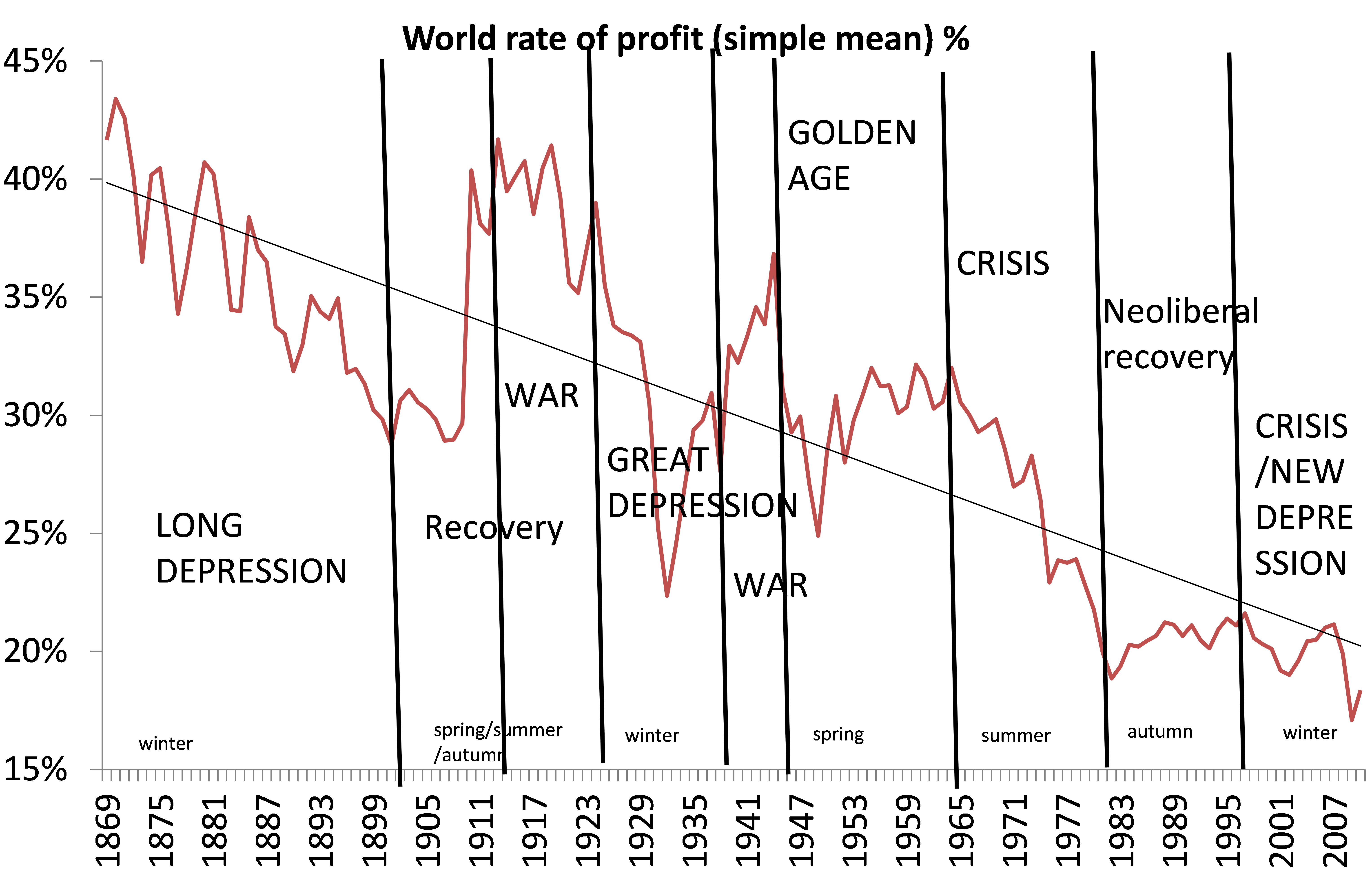


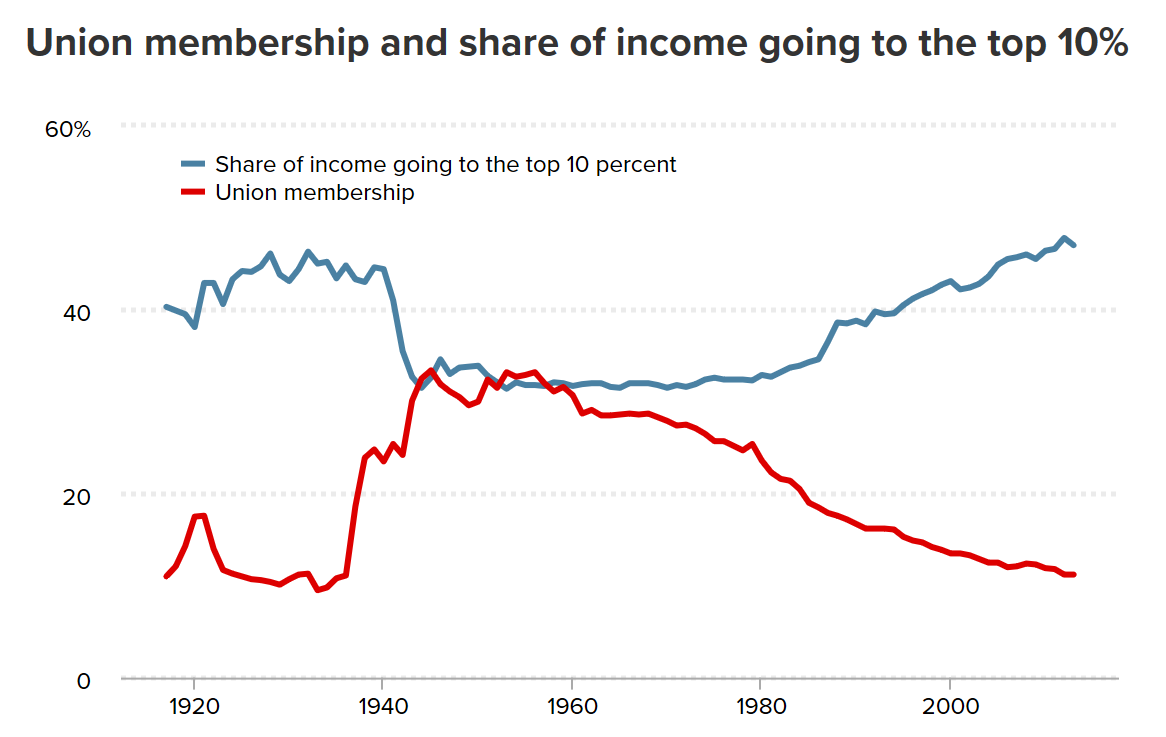


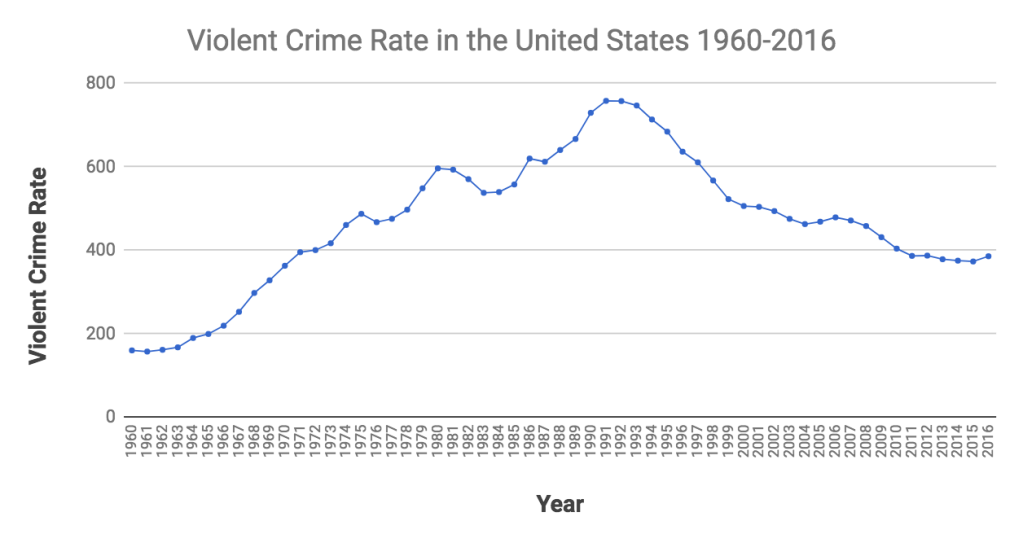



 freedom and reason