The Trump Administration Takes a Stand Against Genital Mutilation

In June of last year I published The Persistence of Medical Atrocities: Lobotomy, Nazi Doctors, and Gender Affirming Care. In addition to comparing gender affirming care (GAC) to lobotomy in that essay, I compared GAC to female genital mutilation (FGM). Concerning the latter, the federal government of the United States banned FGM as part of the Illegal Immigration Reform and Immigrant Responsibility Act of 1996. In 2021, the law was strengthened with the passage of the STOP FGM Act of 2020, increasing penalties and expanding jurisdiction to cover more situations, including acts performed outside the US that involve US residents. Moreover, FGM is illegal in many US states, with laws that provide additional penalties. The mutilation of girls and women, as well as boys and men, and that is what GAC is, should be banned across the United States and its territories. The double standard in this case is very troubling.

What I will say next will become significant when I turn to President Trump’s executive order of January 28, 2025, Protecting Children from Chemical and Surgical Mutilation. I want to return to the matter of lobotomy, a medical practice that was largely and quietly discontinued over a lengthy period of time, and contrast that with the prohibition of female genital mutilation (FGM). The prohibition on FGM contrasts sharply with the historical acceptance of lobotomy, despite both involving invasive and often non-consensual bodily harm. FGM, widely condemned as a human rights violation, has been outlawed in many countries due to its irreversible physical and psychological damage. This is also true of lobotomy in several countries across the globe. Even the Soviet Union banned lobotomy, making it one of the first countries to do so, proclaiming in 1950 that lobotomy was harmful and inhumane. Soviet psychiatrists criticized the procedure for its severe side effects, including deterioration in cognitive function and disorganization of the personality.

This stance stands in stark contrast to the widespread use of lobotomies in Western countries, particularly in the United States and Europe, during the mid-20th century. Lobotomy was widely practiced throughout the mid-twentieth century, often without patient consent, including on children who cannot consent due to their immaturity. Although lobotomies were eventually abandoned due to advancements in psychiatric treatment (I will leave the problematic character of these treatments to the side for this essay) and ethical concerns, they were never explicitly prohibited in the same legal and moral framework as FGM. This discrepancy highlights how societal and medical perceptions shape the regulation of bodily interventions, often influenced by cultural, gendered, and institutional biases. A key institutional bias comes in the corrupting force of the profit-motive, a force that drives the medical-industrial complex. The profitability of GAC overrides the same ethical standards that led to the eventual discontinuance of the lobotomy, the latter not nearly as profitable. Given the power of this corrupting force, it cannot be left to the medical-industrial complex to act on their obligation to medical ethics.

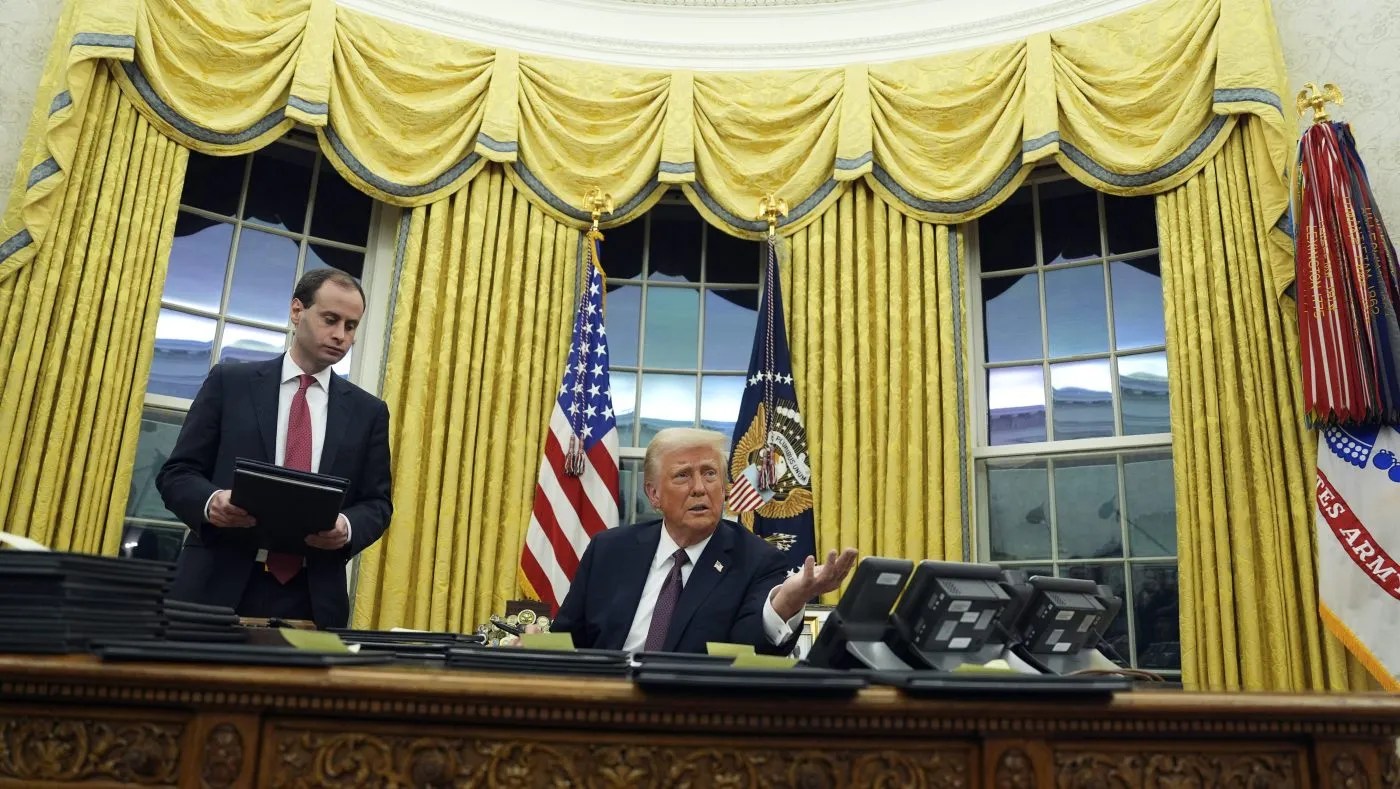
Trump continues his wave of executive orders

FGM is a deeply entrenched patriarchal practice that perpetuates the subjugation of girls and women by enforcing harmful beauty, purity standards, and gender stereotypes. The severe physical and psychological consequences, including chronic pain, childbirth complications, and trauma, underscore its oppressive nature. In the past, progressives were supportive of the prohibition on FGM, viewing the practice as a form of gender-based violence that violates the right of girls and women to live free from a harm caused by gender ideology. I want to make this clear: FGM is a practice governed by a gender ideology that see physically altering the body of girls and women as necessary to bring their bodies into alignment with the stereotypes of a patriarchal society. Progressives argued that cultural traditions cannot justify practices that inflict harm and reinforce gender stereotypes. I don’t see any distinction between the practices of FGM and GAC. Both accomplish the same thing and are motivated by parallel ideologies, not just in form but in substance. What happened in the case of GAC? When did genital mutilation become okay? Why the double standard?

I have explained this matter on Freedom and Reason. I document how it happened in Gender and the English Language. Why it happened is analyzed in several other essays (see, e.g., Fear and Loathing in the Village of Chamounix: Monstrosity and the Deceits of Trans Joy). I will leave the reader to those and other essays. Right now, I want to put on my sociology hat and discuss the power of culture and ideology in normalizing extreme and harmful action against girls and women.

From a sociological standpoint, cultural traditions refers to the beliefs, norms, and values that shape perceptions of reality and reinforce systems of power. Culture functions as a tool for maintaining dominant ideologies by normalizing certain worldviews while marginalizing others. Through institutions like education, media, and religion, cultural narratives legitimize social hierarchies while socializing individuals into accepting, often uncritically, beliefs, norms, and values that make likely certain ends, making those ends appear natural and inevitable, even necessary. This process influences everything from economic behavior to gender roles, dictating what is considered acceptable or deviant. Culture is thus not just a reflection of society but an active social force that delivers and perpetuates ideology, shaping how individuals understand their place in the world and interact with power structures. For progressives, GAC is acceptable while FGM is deviant, despite the fact that both are instantiations of genital mutilation demanded by ideology. Gender ideology and queer praxis underpins the double standard and misdirects public consciousness to uncritically accept one while rejecting the latter on reason. This is an instance of what George Orwell in Nineteen Eighty-Four calls “doublethink.”

If the principle that underpins the prohibition of FGM—the rejection of harmful cultural practices—were taken seriously by rational minds, then these same principles must be consistently applied across all forms of extreme body modification, including genital mutilation. Just as FGM has been recognized as a violation of human rights despite its cultural justifications, other medical interventions that permanently alter bodies in ways that reinforce ideological norms should be subject to the same scrutiny. GAC is driven by gender ideology, a set of beliefs, norms, and values that shape perceptions of reality and refinance systems power—while generate large and sustained profits for the medical-industrial complex. Culture has the power to shape what is considered abusive or ethical, and it should not be allowed to obscure the fundamental question of whether a practice truly serves individual well-being or simply reinforces existing power structures. The prohibition against FGM defies cultural demands, putting health and safety of girls and women above ideology. A society committed to protecting vulnerable individuals must critically examine all medical interventions through this lens, regardless of the prevailing cultural or political narratives that seek to legitimize them.

To this end, President Donald Trump signed an executive order doing just that, establishing a federal policy prohibiting the funding, promotion, and support of gender transition procedures for minors under 19 years old. It accurately defines these procedures as “chemical and surgical mutilation,” including puberty blockers, hormone treatments, and gender-affirming surgeries. The order asserts that such interventions cause harm and lack scientific integrity, the lack of which I demonstrate in numerous essays on this platform (more than this, disconfirmation of its claims), instructing the Department of Health and Human Services (HHS) to review and amend policies that rely on guidance from the World Professional Association for Transgender Health (WPATH). I discuss the WPATH in the essay “Fear and Loathing in the Village of Chamounix” cited above. Crucially, Trump’s order mandates the defunding of medical institutions that provide these treatments to minors by restricting federal research and education grants, research often aligning with WPATH assumptions.

There’s more. The Secretary of HHS is directed to take regulatory actions limiting access to gender-affirming care for children, including revising Medicare and Medicaid standards and rescinding previous federal protections. The order further directs the Department of Defense to exclude such procedures from TRICARE coverage, the Office of Personnel Management to ensure federal employee health insurance plans do not cover pediatric transition-related treatments, and the Department of Justice to prioritize enforcement against practices it deems deceptive or harmful. It also calls for new legal avenues for individuals seeking recourse against medical professionals involved in gender-affirming care, including reviewing Department of Justice enforcement of section 116 of title 18, United States Code, and prioritizing enforcement of protections against female genital mutilation. It calls for convening states’ attorneys general and other law enforcement officers to coordinate the enforcement of laws against female genital mutilation across all American states and territories. It moreover targets state laws and policies that remove custody from parents who oppose such treatments.

There is more still, so I encourage readers to following the link and read the order themselves. I will conclude by noting that Trump’s decisive action in strengthening protections against harmful medical interventions reflects a commitment to safeguarding the rights and well-being of vulnerable individuals and those who cannot consent to having their bodies medically altered by an for-profit industry. By reinforcing the prohibition of female genital mutilation by extending similar protections to minors facing the irreversible medical procedures covered by GAC, the administration has prioritized ethics, human dignity, and science over ideological pressures. The executive order ensures that federal resources are not used to promote treatments lacking scientific integrity. Through strong regulatory measures and a clear stance against coercive medical practices, the Trump administration has reaffirmed the government’s role in protecting children from harm. This stance should be expanded to cover adults, as well. Nonetheless, the policy underscores a broader commitment to defending fundamental human rights and resisting cultural narratives that seek to normalize irreversible medical interventions on minors.

Kennedy’s Confirmation Hearing Before the Functionaries of the Corporate State

I have voted for Ralph Nader in 2008. I regret not voting for him in 2000 and 2004. Why? Nader’s political commitments align with mine. Ralph Nader has been a longtime critic of America’s food system, condemning corporate control, unsafe food practices, and weak government regulation. He has argued that agencies like the FDA and USDA are too close to industry lobbyists, leading to lax oversight and frequent food contamination issues. Nader has also spoken out against factory farming, citing its environmental harm, poor animal welfare standards, and negative health effects. He has criticized agribusiness giants for monopolizing the industry, reducing competition, and squeezing out small farmers, ultimately limiting consumer choice and food quality.

Nader’s criticisms of the medical-industrial complex also align with my longstanding views on the matter. Nader has opposed the pharmaceutical industry, accusing it of prioritizing profit over public health. He has highlighted the patent abuses that block competition and misleading direct-to-consumer advertising that encourage overmedication. He has also criticized the close relationship between government regulators and pharmaceutical companies, as corporate influence weakens safety standards and allows unsafe drugs to reach the market.

Kennedy before the Senate Finance Committee

What I stated about Nader’s views and activism can also be attributed to Robert F. Kennedy Jr. Kennedy, who was my preference for president in the 2024 election because he was the most effective critic in the race of corporate control over the food system, the influence of industry lobbyists on regulatory agencies like the FDA and USDA, and the environmental and health consequences of industrial agriculture. Kennedy has campaigned against factory farming, highlighting its role in environmental degradation, animal cruelty, and the consolidation of power by agribusiness giants that harm small farmers and consumer choice. Like Nader, Kennedy is a critic of the pharmaceutical industry’s profit-driven practices, particularly its influence over government regulators and the high cost of prescription drugs. Like Nader, Kennedy has criticized Big Pharma for monopolistic practices, aggressive patent extensions that stifle competition, and misleading advertising that prioritizes profits over patient well-being.

The Democratic Party have aggressively sought for decades to marginalize Nader and Kennedy’s views and thwart their work, especially where they might enter the political sphere where they could have the greatest impact on food, medicine, and other industries that detrimentally impact the lives of working class American and their children. As you sit today and listen to Kennedy’s confirmation hearing today—or whenever you get a chance to sit and listen to it—you would have to be profoundly ignorant or profoundly ideological blinkered to not see how the statements and disagreements testify to the vital role of the Democratic Party in advancing the interests of the oligarchy, as well as the professional-managerial and the credential strata whose serve those interests, that together constitute the corporate state and the technocratic apparatus.

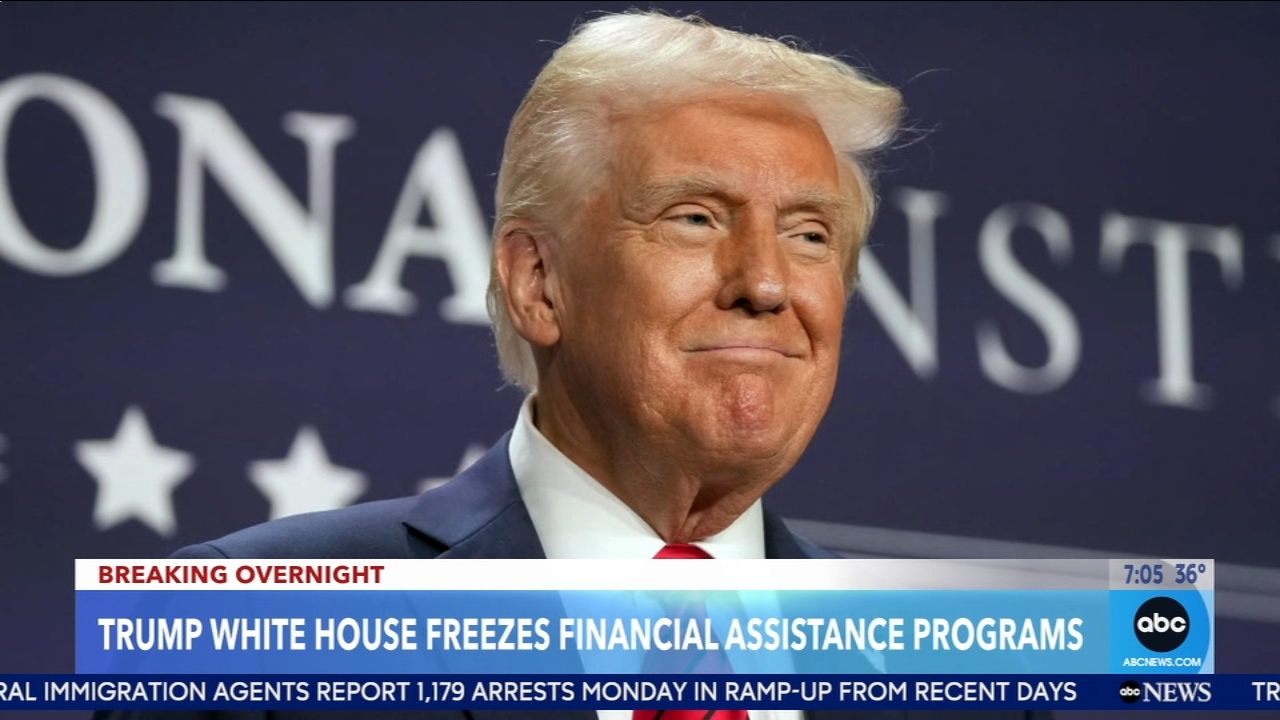
Trump Freezes Federal Grant and Loan Programs

The White House budget office has ordered a pause on all federal grant and loan programs, potentially affecting trillions in government spending. Predictably, there is opposition to this move by those affected by it. In this essay I will explain why the administration finds this necessary and why the credentialed and professional-managerial strata are panicked over it.

Source: CNN

How many trillions are we talking about? Three trillion dollar was spent last year on federal assistance programs to businesses, nonprofits, universities, businesses, and state and local government grants. To clarify, this is not assistance to individuals. Social Security and Medicare, the trust funds, are not included in the pause, although they stand to benefit from slashing the federal budget. 

That three trillion figure is mind blowing one. Leaving aside the trust funds, the two largest federal budget items are military and interest on the national debt. Department of Defense funding bill provides just over 824 billion dollars for 2024. It was increased several tens of billions in the 2025 budget. In 2024, interest on the national debt was $1.1 billion—$251 billion more than in 2023. Taken together with other discretionary spending, the 2024 budget was $2.7 trillion dollars. This means that spending on the programs Trump has paused exceeds all discretionary annual spending plus the cost of servicing the debt. The federal government has been stacking trillions upon trillions of dollars onto the national debt. The debt now exceeds $36 trillion, with approximately 1.7 trillion dollars added annually. 

Interest on the national debt goes into what accounts? Foreign and international investors, including countries like Japan ($1.1 trillion) and China ($749 billion), now hold $7.9 trillion (29 percent of publicly held debt). The Federal Reserve’s holdings have risen to $4.8 trillion due to monetary policy actions, while intra-governmental holdings, such as Social Security and Medicare, account for $7.1 trillion. That means that the government is borrowing from the trust funds generated by payroll taxes. Domestic private investors, including mutual funds ($3.8 trillion) and banks ($1.7 trillion), play a significant role. State and local governments hold approximately 2.1 trillion dollars of debt, largely for pension funds and reserves, while other domestic and international investors collectively hold about $6 trillion. Whoever owns it, the interest represents $1.2 trillion dollars that crowding out other investments.

Debt financing comes with another problem. When a government borrows money to finance its deficits, it issues bonds, which require interest payments. The amount of government borrowing can influence interest rates because, if the government issues large amounts of debt, it may need to offer higher interest rates to attract investors, particularly if there are concerns about the government’s ability to repay the debt. Borrowing demands push up the cost of money in the economy overall. As interest rates rise, it makes borrowing more expensive for the private sector. This is known as “crowding out. Thus private businesses that want to borrow for investment—such as to expand operations, build new facilities, or develop new products—find it more costly to do so. Consumers are also discouraged from taking out loans for things like homes or cars. As a result, government borrowing reduces the amount of investment in the private sector, stifling economic growth.

Therefore, apart from the government spending a significant portion of its budget on servicing debt, which results in less fiscal flexibility to invest in other important areas, such as education, infrastructure, or public services, as well as perpetuating a vicious cycle, increased demand for borrowing—both from the government and the private sector—pushes interest rates higher, making it more difficult for businesses to secure financing at affordable rates.

Those who think the government can print its way out of this, whether they want this or not, if they have their way, which they largely have, must know that risks turning us into a Third-World county. Combined with support for mass immigration from the Third World, this seems to be what they want. The historical examples of excessive money printings are many. These cases highlight the consequences of a practice that can lead to runaway inflation, eroding the value of currency and causing severe economic instability. I will review some of the worst cases so readers can get an idea of the problem. 

In the aftermath of WWI, to pay reparations under the Treaty of Versailles, the Weimar Republic printed money at an unsustainable rate, causing hyperinflation and a plummeting of the mark’s value. By 1923, the exchange rate reached 4.2 trillion marks to one US dollar.  In Hungary after World War II, the government printed money to cover wartime expenses, resulting in one of the worst instances of hyperinflation in history. By 1946, Hungary’s inflation rate was so severe that prices were doubling every fifteen hours, and the pengő became worthless.

There are more recent examples. In Argentina during the late 1980s, the government printed excessive amounts of money to finance budget deficits, leading to an inflation rate of 12,000 percent in 1989, destabilizing the Argentine peso. Bolivia faced a similar situation in the 1980s when economic crises prompted the government to print money, resulting in annual inflation of 24,000 percent by 1985. During the early 1990s, Yugoslavia experienced hyperinflation as the breakup of the country, war, and sanctions led the government to print money to fund its operations, driving inflation to 313 million percent by 1993. Zimbabwe began printing money to finance its budget deficit, sparking hyperinflation that peaked at 79.6 billion percent in 2008. The Zimbabwean dollar became worthless and the country abandoned its currency the following year. In Venezuela, beginning in the mid-2010s, the government printed money to deal with declining oil revenues and economic mismanagement, resulting in hyperinflation that reached over a million percent by 2018. This led to the collapse of the bolívar and widespread economic hardship.

Several factors influenced the inflation problem in the United States today, and the increase in the money supply during the COVID-19 pandemic is one of them. In response to the economic downturn caused by the pandemic, the federal government implemented large fiscal stimulus measures, including direct payments to individuals, unemployment benefits, and business relief programs, while the Federal Reserve kept interest rates low and engaged in large-scale asset purchases, known as “quantitative easing.” This combination of fiscal spending and monetary policy aimed to prop up the economy but led to a significant increase in the money supply. While this increase helped support demand during a time of economic shutdown, it also triggered inflationary pressures as supply chains were disrupted and labor shortages emerged. We can attribute the currently problem of inflation, particularly in goods and services, to this large influx of money into the economy without a corresponding increase in production. The scope of the problem is so big that it will take a while to wring inflation out of the system. 

Biden isn’t entirely to blame for this. Following the 2008 financial crisis, the Federal Reserve undertook a series of unconventional monetary policies, most notably quantitative easing, to stabilize the economy. The Fed purchased large amounts of government bonds and mortgage-backed securities to lower long-term interest rates and inject liquidity into the financial system. This monetary stimulus aimed to encourage borrowing, spending, and investment to help revive the economy. While inflation remained subdued during most of Obama’s presidency, the increase in the money supply during this period contributed to higher asset prices, such as stocks and real estate. The long-term effects of expansive monetary policies laid the ground for future inflationary pressures.

Part of undoing this involves a bottom-up review of the budget. the Trump administration can’t leave that review to the same people who put the nation in this situation. This is what folks mean when they talk about deconstructing the administrative state. A paradigm shift must happen at some point to save the republic. I will probably not agree entirely with the program array when it all comes back on line, but cut will have to be made. There will be pain. The pain is unavoidable.

There is some confusion about all this works. Congress holds the power of the purse, meaning it’s responsible for appropriating funds through the passage of laws, including budgets and spending bills. This appropriation determines how much money will be allocated to various government departments, programs, and initiatives. Once Congress has appropriated the funds, the Executive is responsible for managing and utilizing them, sometimes according to the guidelines set by the legislature, but which generally leaves management matters to the various agencies. Federal agencies and departments under the executive branch implement programs, ensuring that appropriated funds are spent effectively and in compliance with legal requirements. This arrangement reflects the principle of separation of powers.

Historically, the Executive has had the power to impound funds, i.e., delaying or withholding the spending of funds Congress has appropriated for specific purposes. This allows the executive branch to control the use of budgeted funds, either temporarily or permanently, rather than spending them as intended by Congress. The Impoundment Control Act of 1974 restricted the president’s ability to withhold funds without congressional approval. But the Executive still retains discretion in managing appropriated funds. Agencies can shift funds between accounts or purposes. The OMB still controls the timing and rate at which funds are distributed, in part to prevent overspending. Moreover, the Executive can determine how programs are administered or prioritized within the scope of legislative intent. If money is being spent in ways not intended by Congress, or within the scope of the Executive’s priorities, the Executive has a responsibility to address these matters. 

This idea is that Congress has control over appropriations while the president manages them. Trump paused certain programs to determine whether they’re being used appropriately and effectively. It’s part of the comprehensive review of the administrative state he promised during the campaign.

The administrative state, often referred to as the “fourth branch of government,” operates within the executive branch and is largely staffed by a credentialed class of professionals whose expertise drives the implementation of government policies. This class shares a natural affinity with the professional-managerial class found in academia, think tanks, and nongovernmental organizations, as both groups benefit from expansive government operations. Their professional interests are closely tied to the continuation of large budgets, sustained appropriations, and a steady flow of grants and loans, which fund their programs, secure their positions, and support their institutional objectives. This dynamic creates a vested interest in maintaining the status quo of big government and can lead to resistance against efforts by Congress or the Executive to curb spending or shift priorities. Such resistance arises from both practical concerns over job security and ideological commitments to the policies and projects they administer, presenting significant challenges to elected officials aiming to reform or restrain administrative practices.

Many in my line of work—I am an academic—identify as on the left and talk a good game about the working class, the interests of which they purport to advance and defend. However, this is not the class to which they belong, and their opposition to the grant and loan programs Trump has paused is rooted in the interests of their class, the new middle class, not in the interests of the working people they say they represent. In the way, the new middle class are the functionaries of the corporate state.

In his Prison Notebooks, written while in an Italian prison during the fascist period, Antonio Gramsci provided us with useful distinction that can help us understand the problem. Gramsci distinguishes between “organic intellectuals” and “traditional intellectuals.” Organic intellectuals emerge from or are tied to specific social classes. Depending on their class commitments, such intellectuals can either challenge or transform existing power structures, or they can defend the status quo and perpetuate the system. In either case, they articulate the interests and values of their class, helping to build its consciousness and capacity for political action. In contrast, traditional intellectuals are detached from class struggles and linked to long-standing institutions, such as academic or religious institutions. They consider themselves independent and perpetuate the status quo by remaining aloof from it. Gramsci argues that the distinction is not fixed; time can institutionalize organic intellectuals; traditional intellectuals can realign with new hegemonies.

One may conclude that the professional-managerial class within the administrative state operates as a modern iteration of Gramsci’s “traditional intellectuals,” ostensibly detached yet deeply invested in maintaining the systems that sustain their status and power. While their rhetoric often champions the working class, their actions and priorities reveal a closer alignment with their own class interests. This contradiction underscores the importance of identifying true “organic intellectuals,” those who represent the working class, challenging entrenched power structures rather than perpetuating them. Only through such realignment can the interests of the broader population take precedence over the self-preservation of an insulated elite.

At the same time, there can be organic intellectuals within academia, such as administrators drawn from corporate or political ranks, as well as business professors who embody and articulate the interests of the capitalist class. These individuals, while situated within educational institutions, often serve to reinforce and legitimize the values and priorities of the economic elites they represent. Their presence shows that organic intellectuals are not confined to popular movements but can emerge in institutional settings to advocate for dominant class interests. Understanding this dynamic is crucial to understanding how academia, like other institutions, can perpetuate hegemonic power.

The federal grant and loan programs in question often serve the interests of specific elites and professional classes rather than directly benefiting the working class. For instance, grants to universities fund research projects that may advance academic careers or institutional prestige but offer little immediate or tangible benefit to working-class communities. Most of the knowledge academics produce is esoteric and of no practical value to working people. At the same time, it can be of considerable value to those classes who exploit working people. Indeed, those who work in institutions of higher learning, many of whom proclaim solidarity with working people, are nearly unanimous in their defense of open borders, a policy that harms the interests of working people.

Similarly, loans and subsidies to businesses and nonprofits frequently bolster the corporate sector or professional-managerial institutions, reinforcing their dominance while leaving the material conditions of the working class largely unchanged. Even programs aimed at aiding state and local governments can disproportionately benefit administrative bureaucracies rather than addressing the pressing needs of working-class citizens. This allocation of resources reveals a misalignment between the stated goals of these programs and the realities of who benefit from them.

The Democratic Party, traditionally perceived as the party of labor, has undergone a significant transformation over the past several decades, aligning itself more closely with the interests of the credentialed and professional-managerial class, the class that serves as functionaries for the corporate state. This shift, exemplified by Clinton’s embrace of globalization and market liberalization, prioritized policies that benefited elites in academia, finance, and technology while leaving many working-class Americans behind. In contrast, the Trump presidency represents a populist reorientation of the Republican Party, challenging the corporate state’s dominance and addressing issues critical to the working class. Trump’s efforts to deconstruct the administrative state, reprioritize federal spending, limit immigration, and adopt a more nationalist economic agenda signal a break from the traditional Republican alignment with global corporations. This approach, while controversial among those seeking to sustain the status quo, reflects a genuine attempt to empower ordinary Americans and prioritize their economic and social well-being over the entrenched interests of the managerial and elite classes. Thus the pain imposed is not out of a desire to hurt working class citizens, but to establish the conditions in which they can regain control over their lives in the republic that was meant to serve their interests.

Capitalism isn’t going anywhere. The question for the left is what sort of capitalism will best serve the interests of the working people, which includes their ability to live their lives beyond the scope of an expansive and intrusive government. It also means that those made dependent on government by progressives will have a change to become more self-reliant and enjoy the dignity that comes with work. With mass deportations, there will be jobs that need to be filled. It’s time to transition the idled from their idled lives to lives lived productively. Everything follows from this, most importantly the reestablishment of the nuclear family among those most harmed by progressive social welfare and other policies. One of the consequences of getting Americans back to work is the amelioration of the criminogenic conditions that make citizens unsafe by generated the individuals who populate our prisons.

The Danger of Basing Public Policy on False Claims

Today on X, I ran across a conversation between a woman who wanted to know why women should be forced to undress in front of men in female-only spaces and a man who insisted that individuals identifying as the opposite gender are in fact the opposite gender. This is an obvious falsehood, and it is upon this falsehood that gender ideologues demand the inclusion of males in female-only activities and spaces. The man presented no argument not because he was not up to the task—nobody is up the task because there is no rational substance to marshal for it. However, defeating gender ideology requires not only insisting on biological truth, but on making sure public policy concerning gender-segregation in society is based on that truth and not on ideology that denies it.

The power of gender ideology in undermining the science of gender and women’s rights is part of a larger problem: science denialism. A rational secular society must be one that accepts science as a vital part of public policy and the delineation of rights. To delineate something means defining and describing something with clarity and precision. That involves drawing boundaries around or specifying the characteristics of a thing to distinguish it from other things. These boundaries and characteristics are objective, i.e., independent of the mind. Science is the superior way of determining the boundaries and characteristics of things that exist objectively.

Recognizing the role biological science plays in the determination of truth is not a presumption that scientific truths are fixed; science is an open system where claims are subject to scrutiny and disconfirmation. Rather, the establishment of science requires that the truth of the gender binary must be disconfirmed before policies based upon it are replaced. More than this, the claim that a man is a woman because he says he is must be supported by positive science. Given that such a claim is subjective, and that objective claims about gender that contradict science are easily disconfirmed, it is at present impossible to see how gender ideology can replace the science of gender. One can only do this by rejecting science.

Sal Grover’s commentary in the tweet I share below is thus on point. “If I was going to go on national television to say that women should accept men in women’s spaces, you better believe I’d make sure I had a good argument for it,” she writes. “But because there isn’t a good argument for it, everyone who does it ends up making a complete fool of themselves.” As a college professor, I am surrounded by administrators, faculty, and students who believe that women should accept men in women’s spaces. They justify this belief by asserting the same claim as the man in the video. But it is always only an assertion, asserted by someone who refuses to admit the science of the matter. Since the claim is false, and since I don’t want to simply assert something, I thought it would be useful to explain why.

Gender (or sex) determination in humans (and other mammals) is guided by chromosomal karyotypes, specifically XX and XY configurations. The presence of the Y chromosome plays a pivotal role, as it carries a critical gene called SRY (sex-determining region Y). This gene, when functional, directs the development of male reproductive tissues, leading to the production of small gametes known as sperm (or spermatozoa). In the absence of the Y chromosome, as in individuals with an XX karyotype, reproductive tissues develop to produce large gametes called eggs (or ovum). Occasionally, the SRY gene on the Y chromosome may not function properly. When this occurs, the reproductive tissues are unable to produce either sperm or eggs. Sometimes monotremes (echidnas and platypuses) are held up as examples of mammals that do not fit this model. However, even in monotremes, gender is binary; despite their unique system of gender-determining chromosomes, monotremes still produce individuals that develop as either male or female. There are no exceptions to the rule.

This is also true of birds, although sex determination operates through a different chromosomal system known as the ZZ/ZW system, the reverse of the system found in mammals. In the avian system, females are the heterogametic sex (ZW), while males are the homogametic sex (ZZ). The presence of the W chromosome determines female development, whereas its absence leads to male development. In birds, the DMRT1 (doublesex and mab-3 related transcription factor 1) gene, located on the Z chromosome, plays the critical role in male development. Because males have two Z chromosomes, they express more of this gene, which promotes the development of male characteristics. In females, who have only one Z chromosome, lower levels of DMRT1 and the presence of the W chromosome drive female differentiation. To be sure, there are complexities in avian biology. For instance, cases of sex reversal have been observed, typically influenced by environmental and hormonal factors rather than chromosomal anomalies. However, as with mammals, these exceptions do not negate the fundamentally binary nature of gender in birds.

A. The reconstructed evolutionary trajectory of sex chromosome differentiation in humans indicates that sex chromosomes evolved from autosomes that acquired a sex-determining role after diverging from monotremes. B. The extent of sex chromosome differentiation varies greatly across species, but the result is always binary. Source

In fact, the gamete system is fundamentally binary across all animals and plants (so I need not go through the reptile, fish, insects, and all the other varieties of life). In all sexually reproducing organisms, there are two types of gametes. This distinction defines the binary nature of gender at the gamete level and underpins the biological classification of male and female across species. This binary system arises in natural history (evolution) from the fundamental constraints of reproduction; small gametes are optimized for mobility and quantity, increasing the likelihood of fertilization, while large gametes are optimized for nutrient provision, ensuring the initial support of a developing zygote. This complementary strategy has evolved independently in many lineages because it is highly effective for sexual reproduction. Evolution is not intentional but it is remarkably rational.

Putting the matter simply, the gender binary is a feature of the chain of life across these kingdoms, whatever the variation in how these gametes are produced and distributed among individuals. Even in cases where secondary sex characteristics, reproductive roles, or chromosomal systems introduce complexity or variation within species gender remains binary.

This is an essential biological truth; it cannot be changed by ideology. Rejecting biological science only makes a person unscientific in his thinking. It does not change reality. It will not do to say that a man who claims he is a woman really is one and therefore should be allowed to participate in activities and be present in female-only spaces. If this demand proceeds on the ground of truth, then it must advocate for eliminating sex-segregated spaces altogether. Otherwise it is entirely arbitrary. Why women must accept men in their activities and spaces must proceed via a different argument, for example that individuals should have access to the same activities and spaces regardless of their gender. This argument proceeds on the grounds of strict equality of treatment, which must eschew recognition of grouped differences. If this is accepted, the principle of equity is abandoned. As it stands right now, the gender ideology crowd wants the have their cake and eat it, too.

Equity is why gender-segregated spaces exist in the first place. Gender-segregated spaces were established because they provide comfort, privacy, and safety in settings where material differences between males and females can have practical or social implications. In changing facilities, locker rooms, and restrooms, segregation generally ensures personal privacy during such activities as attending to hygiene needs. In sports, gender segregation allows for fair competition by accounting for physiological differences, such as muscle mass and strength, that can influence performance. In gender relations, it protects women from male violence, which has a profound and devastating impact on females. Male violence perpetuates gender inequality and undermines women’s autonomy, safety, and well-being. Victims may suffer long-term physical injuries, mental health challenges such as anxiety, depression, and trauma, and a diminished sense of self-worth. These effects perpetuate a cycle of fear and marginalization, as women feel and are unsafe in areas of life where they are especially vulnerable.

Even if there are women who don’t mind men in their spaces, the fact that there are women who do is sufficient for maintaining gender-segregated spaces. Likewise, the fact that not all men harass or perpetrate violence against women does not negate the fact that some do, including those men who claim to be women, and therefore the safety of women depends on the integrity of these spaces. The woman in the video makes several important points, one of which is the question of why it should be men who decide the fate of women. For that matter, why should some women decide the fate of all women?

Throughout this essay I have used gender and sex interchangeably. This is because, as I have shown in numerous essays on Freedom and Reason, they are synonyms and have been for eight centuries. I have shown on this platform that biologists still use the term gender in describing reproductive anatomy and processes. Moreover, I have documented the rise of gender ideology and the political project to falsely divorce gender from sex by arbitrarily changing the definition of the former and appealing to the subjective construct of gender identity. Disconfirmation requires identity to be an objective thing, this so we can determine what sort of thing it is.

There is no evidence in science that validates the claim that a person can be born in the wrong body, and it is difficult to imagine how this could even be possible given the fact that the brain of a male is by definition a male brain, this because the brain in question, like the heart, kidneys, and everything other organ and system, exists in a male body, however it may appear in a scan. That grouped differences come with trait variation in the myriad of attributes that delineate the gender binary does not obviate the qualitative differences inherent in sexual dimorphism. Moreover, altering physiology chemically or changing its appearance cosmetically through surgery doesn’t change what the organism is genetically. Those interventions only simulate gender. Simulations of things are not the things themselves. When they are not used to predict the working out of a theory, they are deceptions.

If reason and science were followed, there would be no controversy concerning gender since this whole thing would have been over before it started. But, over a period of decades, anti-science sentiment infected the thinking of those whose hands grasp the levers of power, and through this power an ideology has emerged that misleads people into believing impossible things. It is in this sense that I describe gender ideology as a religion. Unfortunately, it is a religion that state respects, which, considering the separation of religion and public policy articulated in the First Amendment to the United States Constitution, it should not. The relevant clause in the article is specifically worded this way: “Congress shall make no law respecting an establishment of religion, or prohibiting the free exercise thereof,” and the free exercise piece requires freedom from its exercise.

The other items in that same article, the rights to freely speak and publish, are necessary conditions for the advancement of science. The goal of establishing a secular republic for the advancement of science and technology was paramount in the intent of the Founders. If they were alive today and looked at the corruption of our sense-making, law-making, and policy-making institutions by gender ideology they’d ask when America lost the plot. My essays on Freedom and Reason explain how this happened. My commitment to science compels me to do this work. But I cannot alone push ideology out of our sense-making institutions and governmental agencies and set the nation back on the path of enlightenment. That will require those of us who work from reason to pull together. It’s not that a man should be punished for claiming he is a woman. It’s that women shouldn’t be punished because he does.

John Cleese Gets Wrong the Matter of Divine Intervention

John Cleese over on X, reacting to the claim that God saved Trump from death in Pennsylvania, asked “Why did God put the shooter on the roof in the first place?”

As you know, I’m an atheist—and, if you didn’t know, an admirer of John Cleese for his comic genius. Nobody can take away his body of work. But what Cleese says here grossly distorts the Judeo-Christian view on divine intervention. No, I don’t think Cleese is being funny here. He has established a pattern concerning matters of religion.

Contrary to Cleese’s straw man, Christians and Jews believe that man’s capacity for free will is a feature of creation. God didn’t need to put a shooter on the roof. The shooter, Thomas Matthew Crooks, had his own motivation—and he represented the will of a great many people, as we have seen in polling on the question. Indeed, we infer his motive based on popular sentiment, since Crooks cannot be questioned because of the fact that he is deceased, shot dead by a Secret Service sniper.

The actual question is why God prevented the shooter from accomplishing his goal, the very question Cleese is trying to avoid or obscure. That’s a question of divine intervention. Divine intervention is a species of miracle. Miracles are extraordinary events, not the routine force behind human action or natural processes. God set the universe in motion and only occasionally intervenes. Miracles are for major course corrections or assists. God leaves everything else to the unfolding, a big part of which depends on the successes and failings of men, which we know as history.

The Tree of the Knowledge of Good and Evil (AI generated)

Human agency is a vital part of God’s plan, and its importance is revealed straightway in the Bible. The first woman, Eve, transgresses God’s command that she and her mate, Adam, not partake of the Fruit of the Tree of the Knowledge of Good and Evil God planted in the Garden of Eden. God made Eve so that she could be deceived by a serpent. The meaning of the story is that it’s left to all of us to make good and right judgements, not be forced by God to do so. Eve should have resisted temptation. She didn’t, nor did Adam, and for that they were kicked out of Eden. Their wrongful deed was ultimately a good thing; as Erich Fromm notes in his 1941 Escape from Freedom, without transgression, human history would not be possible.

There is a scene in A Clockwork Orange where Alex, a juvenile delinquent who murdered a woman, is subjected to the Ludovico Technique, the name given to a form of aversion therapy, in which viewing scenes of crime and violence are paired with a nausea-inducing drug. In the process, he becomes a clockwork orange, a thing that seems outwardly normal and appealing, like a fresh orange, but internally controlled and mechanical in action, like clockwork. A clockwork orange represents a person stripped of free will and manipulated into behaving in a predetermined manner. The virtues of the therapy that made Alex such a thing are extolled by the Minister of the Interior as the future of prison reform.

After demonstrating the success of the procedure at a gathering of political elites and medical doctors, with Alex the experimental subject, the prison chaplain rises to object to the speech of the Minister of the Interior. “Choice!” the chaplain exclaims. “The boy has no real choice, has he? Self-interest, the fear of physical pain drove him to that grotesque act of self-abasement. Its insincerity was clearly to be seen. He ceases to be a wrongdoer. He ceases also to be a creature capable of moral choice.”

In this scene, the state, acting in God’s stead (the wet dream of every authoritarian), is objectionable because total power makes a bad god, one seeking to determine human action by stealing human agency. This is not God’s plan. At least not the Judeo-Christian God. His plan grants human agency, permitting humans to take matters where they wish to, hopefully pursuing good and right courses of action—and avoiding those that lead to bad ends.

This is why society punishes wrongful behavior: the actions are not determined by God (how could they be bad and wrong otherwise?) but by the free will of the wrongdoer. One must choose to be righteous—which literally means to be right in a moral way—not compelled to be such by the state or an omnipotent being. This is a sign of God’s love. God grants mankind liberty because he loves us. It’s no accident that this is the foundation of the American Republic and a free society.

Do I believe God intervened in Pennsylvania? No. Trump turned his head at the last moment to reference a chart on immigration. That is serendipity (albeit many find it unfortunate). Had Trump not turned his head when he did, he would not be our president. Moments like this happen all the time. How many times have you upon approaching an intersection where cars have crashed thought had you not been delayed in your travels you might have been among the dead or injured? “There but for the grace of God go I” is a powerful sentiment, to be sure, but it represents our reflection upon events and the need to make meaning of them.

If one is determined to criticize religious thinking and other forms of mystification, pummeling straw men will not do. Cleese didn’t think this one through carefully. A lot of those who express irreligious sentiment are guilty of this.

“Blatantly Unconstitutional”? Ending Birthright Citizenship for Illegal and Certain Other Aliens

Section One of the Fourteenth Amendment to the United States Constitution, passed by a Republican Congress in June of 1866 and ratified in July 1868, states “All persons born or naturalized in the United States, and subject to the jurisdiction thereof, are citizens of the United States and of the State wherein they reside. No State shall make or enforce any law which shall abridge the privileges or immunities of citizens of the United States; nor shall any State deprive any person of life, liberty, or property, without due process of law; nor deny to any person within its jurisdiction the equal protection of the laws.” The amendment is one of three ratified between 1865 and 1870 during Reconstruction to guarantee the rights of black Americans and end the political and social inequities forced upon under Democratic Party hegemony. For this reason the articles are known collectively as the “Reconstruction Amendments.”

President Trump has signed a flurry of executive orders

On January 20, 2025, Donald Trump signed an executive order Protecting the Meaning and Value of American Citizenship. The order recognizes the historical context of the Fourteenth Amendment, which pertained to the postbellum situation and the situation of recently freed slaves, recognizing their birth in the United States as sufficient for citizenship. Section One thus, to borrow language from Trump’s executive order, “rightly repudiated the Supreme Court of the United States’s shameful decision in Dred Scott v. Sandford, 60 U.S. (19 How.) 393 (1857), which misinterpreted the Constitution as permanently excluding people of African descent from eligibility for United States citizenship solely based on their race.”

Specifying categories not entitled to birthright citizenship, the order challenges the assumption of the blanket granting of citizenship to those born on American soil, a common law principle known as jus soli. “Among the categories of individuals born in the United States and not subject to the jurisdiction thereof, the privilege of United States citizenship does not automatically extend to persons born in the United States: (1) when that person’s mother was unlawfully present in the United States and the father was not a United States citizen or lawful permanent resident at the time of said person’s birth, or (2) when that person’s mother’s presence in the United States at the time of said person’s birth was lawful but temporary (such as, but not limited to, visiting the United States under the auspices of the Visa Waiver Program or visiting on a student, work, or tourist visa) and the father was not a United States citizen or lawful permanent resident at the time of said person’s birth.”

Jus soli, or “right of soil,” originates in English common law, elements of which the United States inherited at its founding. However, the English themselves significantly moved away from birthright citizenship with the introduction of the British Nationality Act of 1981. This legislation shifted the emphasis to jus sanguinis, or “right of blood,” meaning that citizenship is now largely determined by the nationality of one’s parents rather than merely being born on British soil. Jus sanguinis is the standard for determining citizenship for most of the human population. This change was driven by efforts to address immigration concerns stemming from the nation’s former colonial empire and the evolving demographics following the decline of the British Empire. In other words, there is nothing controversial about excluding from automatic citizenship those born on national soil to parents who are not.

As expected, in one court or another, a federal judge in Seattle, US District Court Judge John Coughenour, in a brief 25-minute hearing, ruled that Trump’s order on birthright citizenship is “blatantly unconstitutional” and blocked it with a temporary restraining order. “It boggles my mind,” Coughenour opined. The Executive Order is not obviously unconstitutional, so what exactly boggles Coughenour’s mind is not apparent.

If Section One meant to cover anybody born on American soil is a citizen, then why are there exceptions? A person born in the US to a foreign diplomatic officer cannot be considered a US citizen at birth under the amendment. That’s because such persons are not under the jurisdiction of the United States but the jurisdiction of the country in which they hold citizenship. American Indians born in the US didn’t have citizenship until 1924 with the passage of the Indian Citizenship Act (the Snyder Act), which was signed into law by President Calvin Coolidge. They were born on American soil; why weren’t they automatically counted as citizens under the amendment? The answer is obvious: they weren’t the race with which the legislators who wrote the amendment were concerned. Before the Snyder Act, the Supreme Court ruled, in United States v. Wong Kim Ark (1898), that a person born in the United States to Chinese citizens legally residing in America and under the jurisdiction of US law automatically becomes a US citizen. However, there has been no ruling concerning the status of children born to illegal aliens or to those holding temporary visas residing in the United States. The federal judge’s ruling thus goes beyond the scope of precedent, wrongly assuming the matter as settled.

I am encountering a great deal of panic over Trump’s executive order on birthright citizens (and more broadly his executive order Protecting the American People Against Invasion). One of the items panicking them is Elie Mystal’s absurd essay in The NationA Line-by-Line Breakdown of Trump’s Birthright Citizenship Executive Order.” Mystal falsely claims that the order “attempts to cancel the 14th Amendment to the US Constitution.” Adding, “Getting rid of constitutional amendments via executive order is new, and, for me at least, ‘the worst.’” This appears to be what caused a long-time friend of mind to declare on Facebook that Trump was canceling the Fourteenth Amendment and thus bringing about an end to the American Republic. Nothing could be further from the truth.

The subtitle of Mystal’s essay, a pull quote—“Almost every sentence of the order is wrong, misleading, or flagrantly unconstitutional”—is ironic. Nearly every sentence of Mystal’s essay presents no rebuttal, just goofy rambling. Perhaps this is to match his cultivated persona. Simply apply makeup and the man becomes full clown. Have I resorted to ad hominem? Listen to this take on Trump taking charge of the dire circumstances Biden left us with and judge for yourself: “In a flurry of lawless, unconstitutional, racist, bigoted, violent, and, in some cases, plainly stupid executive orders and pardons, Trump set his reign of terror in motion.” Reign of terror? This is the alternative clown universe in which progressives like Mystal dwell. If you don’t also dwell in that universe, then you’re a “mouth-breathing racist.” (Remember when those objecting to waring diapers on their faces during the COVID-19 pandemic was described as “mouth-breathers”? Etcetera.)

Of course, as I already indicated, it was inevitable that Trump’s order would trigger judicial review. Many if not all of Trump’s other orders will. But those panicking can relax; neither an executive order nor legislative action outside the amendment-making process can remove or change a constitutional amendment. Even Mystal, who purports to be an expert on constitutional matters, acknowledges this elsewhere in his essay. The US Constitution can only be amended through a two-thirds vote in both the House of Representatives and the Senate, or by a constitutional convention, which in turn requires ratification by two-thirds of the states (today that’s 38 of 50). That includes repeal of an amendment or any alteration to it, both of which require a new amendment (see the prohibition amendments that uglify an otherwise magnificent document). No president or legislature can remove a right from a constitutional amendment. That requires judicial review—which in principle is all of them.

Consider that the First Amendment rights to free speech and publishing have no trammels. You won’t find anywhere in that amendment language concerning defamation, i.e., libel or slander. However, through legislative action or judicial review (the latter occurs in testing the constitutionality of the former) speech and publishing have been fettered in the case of defamation. Perhaps there should be no exception, but defamation law is the law of the land. The Fourth Amendment protection against illegal searches and seizures has been specified through judicial review, as well. Because of conceptual difficulties, such as reasonable suspicion and probable cause, and other matters, it has come before the courts and precedents have been established. This is true of all constitutional amendments—all are subject to judicial review. Indeed, this is true of all law in a democratic society considering the legal principle of stare decisis.

This is the reason the Supreme Court and lower federal courts exist in the first place: to review laws with respect to the Constitution and determine their scope and validity. Section 2 of Article III states: “The judicial Power shall extend to all Cases, in Law and Equity, arising under this Constitution.” Trump’s executive order is now moving through the federal courts. It will almost certainly be argued before the Supreme Court to determine its constitutionality. But to be clear, the matter of whether children born on American soil to those classes described in Trump’s executive order remains an open question. There is precedent in Trump’s favor. In Chae Chan Ping v United States (1889), the Supreme Court upheld the Chinese Exclusion Act, affirming Congress’s authority to regulate immigration, in particular its power to set immigration policy and to pass new legislation even if it overrode the terms of previous international treaties (the matter concerned the Burlingame Treaty). As such, the ruling limited the role of the judiciary in shaping immigration to the United States. Considering this, Congressional Republicans have just introduced a bill to codify Trump’s birthright citizenship order.

The bottom line is that the order is not “blatantly unconstitutional.” The education of the public on this matter is urgent business. The media depends on widespread ignorance of constitutional law, separation of powers, and judicial review to mislead the public to save the globalist project to erase borders and advance the managed decline of the American Republic.

The Definition of the Situation: Elon Musk and the Gesture

“In this moment, all sides should give one another a bit of grace, perhaps even the benefit of the doubt, and take a breath. This is a new beginning.” —Anti-Defamation League

Democrats and others who see Nazis everywhere insist that Elon Musk gave a Nazi salute (the “Sieg Heil”) during a speech celebrating the inauguration of Donald Trump on Monday. Musk thanked the crowd for “making it happen,” before placing his right hand over his heart and then thrusting it out into air. He then turned to those sitting behind him and repeated the gesture. He then turned back to crowd and put his hand on his heart, thanking everybody for the support of Trump and the populist movement. This has generated the latest moral panic from the left. If it keeps going, we may see full-blown mass formation psychosis in the near future.

Elon Musk giving a “Nazi salute”

I wouldn’t be commenting on the matter if it weren’t for story having legs. It’s so very silly. But the left won’t let it go, despite the ADL tweeting on X, “It seems that @elonmusk made an awkward gesture in a moment of enthusiasm, not a Nazi salute.” For his part, Musk said, “Frankly, they need better dirty tricks. The ‘everyone is Hitler’ attack is sooo tired.” Musk mocked the accusation on X using references to prominent Nazi figures, which did finally draw the ire of the ADL.

Children salute the American flag in 1915

The image above is demonstration of the Bellamy salute. You can find lots of photographs of children giving the Bellamy salute on the Internet and in history books. James Upham developed the Bellamy salute in 1892 to accompany Pledge of Allegiance, written by Francis Bellamy. Bellamy was a socialist who advocated for worker rights and the equal distribution of economic resources, which he insisted were ideas intrinsic to the teachings of Jesus. The Bellamy salute was the way to address the US flag until 1942. The flag code was changed to avoid identification with the Nazis. Our monuments still retain the fasces, however (see the adornments in the House of Representatives or the Lincoln Memorial).

The Bellamy salute wasn’t the only symbol the Nazis appropriated. The swastika is another one. Originating in Eurasia, but found in many parts of the world, the swastika is one of mankind’s most ancient symbols, dating back thousands of years. It’s strikes me as odd when a people who win a war change the meaning of symbols or alter traditions because the people they defeated appropriated their elements. But then I think about the politics behind the manufacture of moral outrage and it makes sense.

You may remember a moral panic many years concerning handbags manufactured by an India supplier and sold by Spanish fashion chain Zara (owned by the world’s second largest fashion retailed Inditex) decorated with swastikas. The swastika is commonly used Hindu symbol conveying “well-being.” The customer complained. A British anti-fascism group claimed the bags were an attempt to legitimize fascism and the Daily Star ran a picture of Adolf Hitler next to its story headlined, “Fury over Nazi Fashion Bags.” Does anybody believe that nobody caught up in the panic didn’t know that the symbol carried no Nazi intent? I don’t. But truth doesn’t matter to anti-fascists—their goal is to panic the public to gain political advantage. Zara retired the handbags.

Recall the German phrase “Arbeit macht frei,” which translates to “Work sets you free,” was appropriated and used by the Nazis during their regime. The phrase is most famously associated with its appearance on the gates of several Nazi concentration camps, including Auschwitz and Dachau (the latter where the surgeon who pioneered vaginoplasty, Dr. Erwin Gohrbandt, carried out medical experiments on prisoners). The phrase was around long before then, originating in a 1872 novel by Lorenz Diefenbach, a German nationalist. Labor reform movements in German-speaking countries and territories advocating work-ethic principles adopted the phrase to promote the idea of self-reliance and redemption through honest labor. The phrase thus conveys a sentiment similar to that of the Protestant work ethic. Say it today and risk being condemned for insensitivity.

The pairing of Nazis with liberal and right-wing politics progressives and social democrats seek to delegitimize is commonplace today, and are articulated by elites at the highest levels of government. A day after Musk’s hand gesture, German Chancellor Olaf Scholz, speaking at the World Economic Forum, a gathering of transhumanists and transnationalists, said on Tuesday that Germany respects free speech but does not support freedom of speech when used to support extreme-right views. “We have the freedom of speech in Europe and in Germany. Everyone can say what he wants, even if he is a billionaire. And what we do not accept is if this is supporting extreme-right positions,” he said.

The paradox of his statement is rather obvious. You can say anything you want but you can’t saying everything you want. Why would Scholz say this? Because Alternative for Germany, or AfD, a right-wing populist political party that is Eurosceptic and opposes immigration into Germany, especially Muslim migrants, is more popular than Scholz’s Social Democratic Party (SPD). The power elite must find away to censor and delegitimize the AfD to advance the European project of transnational corporate statism. Scholz is the same man who urged the construction of a firewall against the right after the AfD had a tremendous showing in Thuringia and Saxony. Just as with speech, Germans can have their politics in Germany as long as it’s the politics chosen by the establishment.

Alice Weidel, leader of Alternative für Deutschland (AfD)

Alice Weidel, the leader of the AfD, an economist by training (having worked for Allianz Global Investors and Goldman Sachs), holding a doctorate in international development, is openly lesbian, living with her partner, Sarah Bossard, a Swiss filmmaker and producers, and their two sons (it is unclear whether they are legally married, as Switzerland only legalized same-sex marriage in 2022). Apparently her extremism is evidenced by her advocacy for mass deportations and dismantling wind farms. Surely it cannot be that, in a conversation with Elon Musk on X, she emphasized the importance of protecting Jewish communities from antisemitism, which attributed to immigration from Muslim-majority countries and said has become prevalent on the political left in Europe.

Weidel is correct, and one doesn’t have to work hard to see why presents a problem for the corporate state. Antisemitism is a central feature of the alignment of left-wing political groups (anti-colonial, progressive, and socialist) and Muslim organizations, particularly those supporting pro-Palestinian causes, and we see it not only in Germany, but in the United Kingdom and the United States. It’s the glue that holds the movement together—than and loathing of Western civilization. This is speech Chancellor Scholz is not seeking to restrict. Moreover, it sounds to me like Weidel is extreme because corporations who depend on what is effectively indentured servitude stand to lose profit if they can’t super-exploit immigrant labor and drive down the wages for native workers—and because she opposes the Islamization project and the crime it brings to Europe (rape has skyrocketed).

No symbol is immune from the project to delegitimize liberal and rightwing politics. You may remember Pepe the Frog, a cartoon character created by artist Matt Furie in 2005 for his comic series Boy’s Club. Pepe gained widespread popularity as an internet meme. By the mid-2010s, Pepe was appropriated by alt-right groups, and thus, in a media campaign and resulting moral panic, associated with hate speech and right-wing political propaganda. The ADL classified Pepe as a hate symbol. Furie launched efforts to reclaim Pepe’s original meaning, but to no avail. Today, a cartoon frog is forever associated with fascism. Again, it is very silly. But also serious.

Cartoonist Matt Furie killed off Pepe the Frog, only to latter attempt to resurrect him

When were Nazis allowed to spoil everything? It coincides with the ramping up of the corporatist transnationalist project to turn populism and nationalism into right wing fascist ideas to delegitimize opponents to the globalist agenda to erase nation states. Those of you who are my age (I am 62) remember that things were very different when we were kids. Gestures and symbols appropriated by the Nazis were not condemned in the same way as they are today. The punk movement used such symbology as a sign of their rejection of authority. We saw this as well in industrial music—and heavy metal, too. It was the same spirit that metal bands used Satanic imagery to convey a sense of evil (there was moral panic over that, as well). Skits with performers wearing Nazi uniforms were not deemed offensive but send-ups of the pomposity of authoritarian regimes. We even watched a TV show growing up that humanized Nazis, Hogan’s Heroes. You can still catch that show on some rerun channels, but can you imagine a reboot? I can’t.

I also find it curious that sporting a swastika is deemed today as horribly offensive, but waving the hammer and sickle is not generally seen as a problem, even though the Soviet Union was one of the most authoritarian and brutal regimes in world history, killing millions of their own citizens and sending millions more to the Gulag. Moreover, the hammer and sickle convey a similar sentiment to the German phrase the Nazis appropriated about freedom through work. A person wearing a Hitler or Mussolini shirt would be immediately suspect (it would likely get a person kicked out of a college classroom), but a Che Guevara shirt? No problem. When I was in Denmark in 1989, I bought such a shirt in Freetown Christiania and used to wear it around Green Bay. When I learned the truth about Che (suffice it to say that he was not a nice guy), I retired it. I still have it in a closet somewhere. But before I retired it, a young person asked me if the image was Charlie Manson. Knowing what I know today, I would have said, “No, worse. Much worse.”

George Orwell was troubled by this double standard long before I was. Orwell was an anti-fascist, but he chose to focus on communism in Animal Farm and Nineteen Eighty-Four not because he overlooked the horrors of fascism or Nazism—he took up arms against Franco’s fascists in the Spanish Civil War—but because he believed that the atrocities of Hitler and Mussolini were already well understood and condemned. He was alarmed by the widespread admiration for Soviet-style communism among Western intellectuals, despite its glaring abuses of power and suppression of liberty. Orwell saw this uncritical support as insidious, cloaking totalitarianism in the guise of justice and progress. His most well-known works are indictments of how authoritarian regimes manipulate ideology to control and oppress the people they claim to serve. Admiration for communism is still palpable on the left today. If I am being honest, I have in the past been guilty of this myself. You can find writings on Freedom and Reason (I started this platform in 2006), that are properly criticized as communist apologetics.

Ever heard of the Thomas theorem? It is also called the “definition of the situation.” It’s related to the concept of “framing.” The theorem goes like this: “If men define situations as real, they are real in“If men define situations as real, they are real in their consequences.” It was developed by sociologists William and Dorothy Thomas. The idea is central to symbolic interactionism. What the couple are saying is that people’s actions are based on their subjective interpretation of a situation not on objective reality. If they define things in a particular way, then they will see them and act towards them as if they are that way. This is how two people can look at the same thing and see it differently—and react to it differently. Here is French President Macron making the exact same gesture. Is Macron a Nazi?

Of course, the thing is one way actually. So the goal of the rational thinker is to see the thing as it really is. That’s hard for humans because they want to believe that the way they see the world is the way the world is. If it’s not, then a lot of other things they think about the world are probably wrong, too. This could lead to a change of frame. A change of frame risks alienating the tribe. Belonging is a powerful human impulse. So people stick with ideology. Ideology makes a man see what he wants to see.

Apparently Tim Walz is a Nazi.

Has the Era of Colorblindness Begun?

Predictably, I have been labeled a “bigot” for supporting Donald Trump’s executive order ending affirmative action in federal government and for federal contractors. It’s not as if my opposition to affirmative action is unknown. I turned against affirmative action fifteen years ago. My change of mind occurred in stages in the context of teaching upper-division college courses. I want to tell that story here. I provided a short version of the story in June 2021 (you can read it here) and elaborated the argument a few days later in Equity and Social Justice: Rationalizing Unjust Enrichment. I will expand upon the circumstances of transformation here (my ability to change my mind is explained in the essay I published yesterday) and then pivot to the problem of affirmative action, which, as I will show, is a species of racism, and the importance of Trump’s actions in ending it.

President Donald Trump signs the executive order ending affirmative action at the federal level

The first moment of my transformation on this issue came in the spring of 2010. I had assigned, among other books, Richard Delgado and Jean Stefancic’s Critical Race Theory: An Introduction in Law and Society (the forward penned by Angela Davis). When I went through the assigned texts on the first day of class, I told my students that we would not be do the classroom exercises suggested by the book. I said this because I wanted them to critically evaluate the arguments at hand—arguments I largely agreed with at the time—not engage in activities that would require a captive audience to participate in the transformation of consciousness such activities sought. I am a lifelong free speech advocate, and I understood that having students engage in ideological exercises constituted compelled speech. As we worked through those ideas during lecture and discussion, I came to regret having assigned the book for the same reason I would later regret having assigned another piece of ideological work, namely Michelle Alexander’s The New Jim Crow in my course Criminal Justice Process. Why? The problem of ideology. 

It was either during the during the summers of 2010-2011, or the spring of 2012, perhaps even before that (that earlier essay seems to imply that), in the context of my Foundations of Social Research class, while lecturing on the fallacy of misplaced concreteness and the related problem of reification, that I realized why Delgado and Stefancic’s book had troubled me so: critical race theory is built around those fallacies. To elaborate, the fallacy of misplaced concreteness refers to the error of treating an abstract concept or theoretical model as if it were a concrete, fully accurate representation of reality. Reification is the act of treating abstract concepts, such as relationships or social constructs, as though they are tangible and independently existing entities. While both involve a conflation of the abstract and the concrete, misplaced concreteness emphasizes the mistake of overvaluing simplifications, often in the guise of logical reasoning while leveraging group averages, whereas reification critiques the sociological tendency to treat abstractions, in this case “racial categories” as if they have agency or physical existence. Essentially, reification can be seen as a specific form of misplaced concreteness within broader contexts.

The rescission of affirmative action by actions taken by Donald Trump during the first days of his second term as president aligns with my longstanding concerns about the ideological underpinnings of racial preferences that reflection upon those fallacies had raised. It is one thing for an individual to question whether his race affected an opportunity, either acceptance at a university or employment or promotion at a private or public organization. But affirmative action asserts abstract racial categories—simplifications of complex, multifaceted human identities—as the basis for decision-making in education and employment. Thus affirmative action necessarily treats individuals as personifications of abstract and often arbitrary demographic groups (ever looked at a nineteenth century census form?), embodying historical narratives and statistical averages instead of recognizing the unique experiences, merits, talents, and potentials manifest in the flesh-and-blood person. 

Critical race theory, as outlined in Delgado and Stefancic’s work (their primer accurately captures the main arguments), exemplifies this problem. Moreover, the theory has played a central role in rationalizing affirmation action (as well as reparations), by supposing the deterministic role of race in shaping outcomes and experiences, effectively reifying racial categories as concrete, self-contained entities with intrinsic agency—advocating altering the opportunity structure on this basis. A reader might take issue with my characterization of this matter. Fine. But what weight can academic disagreement carry in the law? Anybody who studies the disciplines of history and sociology must admit the myriad accounts one finds there are interpretations and theories built upon or positing essentially contested concepts.

We see these fallacies in the notion of “white privilege,” which refers to the alleged unearned advantages or benefits those individuals identified as white enjoy in societies supposedly structured around racial hierarchies. Those alleged advantages and benefits are said to manifest in systemic ways, such as greater access to education, employment, and housing, as well as in everyday experiences, such as being less likely to face racial profiling by the police or discrimination in businesses. Here, prima facie evidence of disparity, ie the mere fact of group differences, becomes proof of systemic racism. Even if there were empirical evidence supporting these claims at the abstract structural level (I do not a priori rule it out), it is not true that every individual enjoys these privileges.

Moreover, in the legal context, privilege refers to a specific right or immunity granted to a person or group that protects them from certain legal obligations. Such privileges are rooted in statutes, common law, or constitutional protections and are designed to safeguard important relationships or rights. The fact is that laws and policies privileging whites were abolished in 1964, with the Civil Rights Act. There have been no racial privileges for sixty years—at least not for whites and those deemed white-adjacent (shorthand for those groups that on average have accomplished more, command higher incomes, live in better houses, etc.) CRT says difference is because of white supremacy, but that is a theory. (Some say it more crudely; Ibram X Kendi says either group inequality is explained by racism or the racist notion that they are not.) There are other theories, such as cultural traditions that promote academic excellence and hard work. At its core, affirmative action is justified by selective affirmation of particular historical interpretations and sociological theories. It is not the role of government to force us to operate according to particular interpretations and theories by historians and sociologists.

President Lyndon Johnson signs the 1964 Civil Rights Act

As such, affirmative action reestablishes in the wake of the 1964 Civil Rights Act a lawful system of racial discrimination by appealing to the argument that societal systems and institutions have historically been designed to favor white individuals, often at the expense of marginalized racial groups, and therefore government action is required to repair alleged harms. The cover is that white privilege is not about assigning personal blame or oppressing whites and white-adjacents but about understanding structural inequalities and how they perpetuate disparities across racial lines. But of course, blame must be assigned, after all there is an oppressor and the oppressed in this model, and to raise this supposed dynamic to the level of justice, the legal system must be put in the employ of primitive notions of collective and intergenerational guilt, primitive notions out of step with the modern and enlightened system of justice based on individualism. It is in the individual that rights reside, and equality demands that each individual, except in cases where there are intrinsic differences between groups (such as the case of gender, where equity is required), is equally entitled to those rights.

To put the matter bluntly, affirmative action is a system of discrimination based on race. This is why the US Supreme Court significantly restricted the use of affirmative action in college admissions in its June 2023 decision in Students for Fair Admissions v. Harvard (see Ending Patronage and Co-optation: The Death of Affirmative Action is a Start for details and analysis of the policies hegemonic function). The Court ruled that race-conscious admissions policies at these institutions violated the Equal Protection Clause of the Fourteenth Amendment. The decision effectively ended the longstanding practice of affirmative action as it had been used in higher education, emphasizing that admissions decisions must focus on individual merits and achievements rather than generalized considerations of race.

Trump’s rescission of Lyndon Johnson’s 1965 executive order 11246 establishing affirmative action follows the line of progress on civil rights law and policy the Court’s decision advanced. If social justice is to have any real meaning, it is found here. The practice of affirmative action undermines the dignity and individuality of persons, reducing them to vehicles of abstract constructs in a program to right the wrongs asserted by a particular historical interpretation and sociological theory. By ending affirmative action, policymakers have an opportunity to refocus on merit-based frameworks that evaluate individuals on their actual achievements and capacities, rather than perpetuating the flawed logic of racial essentialism inherent in reified group identities. There’s feedback loop: the interpretations and theories at work here lose their purpose. After all, one’s skin color is not an achievement, nor are we to prejudge the capacities of individuals on that basis. There’s a word for ideologies that do that, the word is racism

Hunter Biden’s Laptop, the Cult Mentality, and the Spirit of Free Thinking

As I have explained on Freedom and Reason, the label “conspiracy theorist” functions as an ad hominem attack and a thought-stopping device, dismissing an individual’s arguments without addressing their claims or accessing their merits. By reducing alternative and complex viewpoints to a stigmatized stereotype, the label discourages critical thinking and exploration of evidence. It shifts focus from the substance of the claims to the perceived credibility or rationality of the person presenting them, producing and perpetuating a culture where questioning mainstream narratives is reflexively ridiculed. As such, the label—and this is its intent—undermines open dialogue, creating a binary framework where ideas are either “approved” or relegated to the realm of irrationality, often without genuine examination. The label aims to silence legitimate concern and dissent, impeding the skeptical inquiry essential to a free and informed society.

Ideology also produces a binary framework—a rigid system of “in-group” versus “out-group” beliefs that determine membership within a collective. Ideological belief, which I shorthand as “cult mentality” in this essay, contrasts with the rational approach, that is the approach rooted in facts, logic, and principles that allows for flexibility and thus adaptation to new information. Ideology serves as a shortcut for group cohesion and shared identity that comes at the expense of open inquiry and individual critical thinking. From the ideological perspective, those who do not conform to its tenets are deplorable. This framing prevents genuine engagement with ideas outside the ideology’s boundaries and fosters a tribal mindset, where the primary concern is maintaining group identity over seeking truth. 

The rational person, working outside this framework, risks being misunderstood or maligned by ideologues because his motivations and conclusions do not align with the predefined ideological script. This creates a tension between open-minded rationality and the closed-system thinking that ideology enforces. Those who have attempted to raise awareness of the contents of Hunter Biden’s laptop and the role the deep state in portraying the laptop as “Russian disinformation” know very well the power of ideology, as well as the effect of dismissive labeling, in leaving people utterly incapable of entertaining the possibility that the 2020 Presidential Election was rigged to replace an outsider president with one compliant to the interests of the corporate state.

“The Marco Polo Report: Overview,” by Strauch Mahoney is where folks can begin to learn about the Biden crime family—if they haven’t already studied the matter. Most haven’t, I know, in part because they don’t care to; others because they can’t find it. I provide this link so you can experience for yourself how Internet nodes aggressively censor the report. Click the embedded links and you will be timed out or told that the site isn’t available. If you use the Tor browser that sends you to IPs around the world, then you may be able to find it. But I checked, and that probably won’t work for you. You will have to do that work, however (Hint: the Internet archives). I would publish the report myself, but then Freedom and Reason might likely be censored or the its ultimate owners deplatform me.

Mahoney published the overview back in October 2022. Why didn’t I talk about it then? I did. In fact, I talked about long before then (in October 2020 in New York Post Drops a Bombshell on the Biden Campaign). Why I’m back at it is because I was recently told that the laptop was bullshit after I posted a story about then-president Joe Biden issuing pardons to several close family members on Inauguration Day in the final minutes of his presidency. My family has been subjected to unrelenting attacks and threats, motivated solely by a desire to hurt me—the worst kind of partisan politics, Biden wrote in a statement. Unfortunately, I have no reason to believe these attacks will end. Because where there’s smoke there’s fire. He continued: That is why I am exercising my power under the Constitution to pardon James B. Biden, Sara Jones Biden, Valerie Biden Owens, John T. Owens, and Francis W. Biden. He then added, The issuance of these pardons should not be mistaken as an acknowledgment that they engaged in any wrongdoing, nor should acceptance be misconstrued as an admission of guilt for any offense. I checked. In Burdick v. United States (1915), the Supreme Court ruled that a pardon “carries an imputation of guilt; acceptance of a pardon is a confession of it.” Same goes for Biden’s son, Hunter, whom he pardoned on December of last year, the pardon exactly covering the decade of scandal.

The ignorance of those who cry bullshit frustrates me. I admit it. I need folks to come to terms with the existence of an establishment—a power elite, C. Wright Mills called it—that enjoys tremendous power to censor and deplatform. Before Zuckerberg’s change of policy, sharing the report would have been censored and Facebook might very well have deplatformed for telling you how to find this information. Twitter certainly would have. The laptop was heavily censored during the 2020 campaign and after. The New York Post, the nation’s oldest newspaper (founded by Alexander Hamilton) was censored and deplatformed for reporting it. Why would the establishment do this? Because the Establishment selected the fading compliant Joe Biden to be its figurehead, and the contents of the laptop—polling shows that this would have been the case—would likely have changed the outcome of the election. This wasn’t the only way the 2020 election was rigged (that was censored, too), but it played a major role.

Joe Biden and his song Hunter

The story of Hunter Biden’s is a useful example of what George Orwell identified in Nineteen Eighty-Four as memory-holing. Memory-holing refers to the deliberate suppression or erasure of information, often to manipulate public perception or rewrite historical narratives. memory holes were devices used to destroy documents and records deemed inconvenient or contrary to the ruling party’s agenda. In contemporary usage, it describes attempts to obscure or erase evidence of events, statements, or facts, often in digital contexts. This can include the removal of online content and the revision of records, all to shape collective memory. The practice did not exist only in Orwell’s imagination. Memory-holing was a practice by the Soviet Union. Memory-holing marks the presence of a totalitarian situation. Had Kamala Harris been elected, the United States would have continued down the path towards a totalitarian society.

By moving to revoke the security clearances of the intelligence officials who spearheaded the disinformation campaign to portray the laptop as Russian disinformation (see The Russia Fake News Narrative), Trump is raising consciousness about the existence of a deep state and the function of the mass media as an organ of corporate governance. The Establishment was desperate to stop Trump. It’s why Trump was outspent more than 3:1 during the 2024 election (which he never less won by 77-plus million votes). It’s also why the Biden regime waged lawfare against Trump at the federal level and in multiple state. And why there were two attempts made on Trump’s life (They Tried to Kill Donald Trump Yesterday; Progressives Losing Their Shit Over the Attempt on Trump’s Life; A Second Attempt on Trump’s Life). Yes, Virginia, the deep state is real. I have known it was real since I sat in front of the television set in the 1975 and watched the Church Committee hearings. this is why ignorance frustrates me.

* * *

For those firmly ensconced in a cult, a term that I will use here as shorthand for emersion in a belief system, an ideology, that rests on nonfalsifiable propositions, i.e., faith-belief, and that rejects facts that contradict doctrine, those who appear to leave the cult, an interpretation of the situation that rests on the presumption that they ever were in one, appear as if they have instead stepped into new one, that they have become brainwashed, a determination that presupposes that one is not in a cult. Ironically the act of condemning a presumed apostate is a sure sign that the condemner is in fact himself in a cult. If he weren’t, then somebody changing his mind would be the sign of a freethinker, a man not beholden to a cult. This is the essence of identity politics, which sees the world as a collection of cults. These are the people who have been running our society of late.

This interpretation of the situation is unavailable to those ensnared by cults because they have a particular cognitive style that inoculates them from reason. That’s why it’s nearly impossible—unless an unethical action such as deprogramming is pursued—for a cult member to be reasoned out of his beliefs. I have listened to quite a few people who were once in the cult of Scientology. To a man, they were not talked out of their situation. Rather, they found their way out on their own. And, to a man, once free of cult doctrine, they demonstrate the cognitive style that made that freedom possible. Listening to them, it becomes clear that they were never quite sure of doctrine or their place in the cult in the first place. Doubt left the door ajar just enough to allow their escape.

There is a lesson in this. Having doubts about what one believes is a prerequisite for escaping belief systems—and for accept beliefs on a factual and rational basis. As I have confess on Freedom and Reason, some of the positions I held in the past suggested that I was in a cult, namely the cult of woke progressivism. I used to believe things like global warming, black people are incapable of bring racist (except those who take up the views of white conservatives, you know, the proverbial “Uncle Tom”), systemic racism in the criminal justice system and, more generally society at large, transgenderism was gay-adjacent, and a few other beliefs. But I have also always moved from facts and logic. These were transient beliefs. However long I believed them (some longer than others), I remained a liberal throughout, even during graduate school (academia is something of a cult), open to disconfirmation of my ideas—seeking disconfirmation for the sake of being a reasonable person. The door was never closed for me. Once determined to open wide the door, escape was inevitable.

Others aren’t so fortunate. I have noted before on this platform before that quite a few people have wondered what happened to me. “What has happened to Andy?” Some of my Facebook friends have seen it for themselves. There are a few recent examples. One, a few months ago, involved a former student who, playing the game of “gotcha,” searched my Facebook history to find past statements he believed would trap me. When it only proved my investment in reason and the ability to change my mind, he resorted to ad hominem (I wrote a lengthy essay on this but never published it). More recently I encountered the rage of a friend I have known for decades. Freak outs are not unexpected. Whenever the political flow is disrupted, the likelihood of denouncing and shaming increases. When years ago I shifted the target of my irreligious criticism from Christianity to Islam, it upset a lot of progressives. Progressives are quite fond of Muslims, you may have noticed. Longtime Facebook friends unfriended me. When Trump was president the last time around, several of the Facebook folk caused quite a ruckus, condemning me, then unfriending me. How could I agree with Trump about anything? Some took parting shows on Messenger, essentially praying I would return to my previous positions, that I would “come home,” etc. (Only one ever apologized.)

The assumption is that the Trump column contains checkboxes that no good person would ever check. But I have never ordered my life around such columns. Those columns aren’t rationally ordered anyway. Not even close. They’re ideological and political constructions that simple-minded people, or more generously close-minded people, use to order their speech acts, a substitute for principle used to justify to themselves the act of blackening their social media profiles, or to unfollow, unfriend, block, contact your employer. There’s no reason why a liberal cannot oppose critical race theory, gender ideology, or mass immigration, or criticize the medical establishment, etc. The only things a liberal cannot oppose are those enumerated in the Bill of Rights. And I never have.

I will have to explain myself here since there are those who will counter that liberalism is itself a belief system. Perhaps. But for sure it’s not a cult. Nor is it a mental disease, as conservatives like to say (they’re talking about woke progressivism, not liberalism). Science is a system of beliefs, too. But unlike the belief systems of cults, liberalism and science are rational and based on the objective adjudication of facts. Indeed, they are systems determined by facts and logic. The notion that all belief systems—like all cultures, religions, etc.—are equal, or to be regarded as arbitrary or relative, is postmodernist (or post-truth) sensibilities. Proponents of this essentially nihilist view of the world attempt to delegitimize rational thinking by bringing it down to their level, ideas that appear to deny the possibility of facts and reason. But this genre of speaking and thinking is contradictory, since it’s inherent to the belief system that postmodernism and its various species—post colonialism, critical race theory, queer theory—are superior ways of grasping the world, which in turn leads to rejection of the Enlightenment and loathing of Western civilization, actually superior ways of grasping and living in the world.

This inherent contradiction returns us to the contest of ideas, the validity and invalidity of which are found in their relative fruits. Which ideas are better? That’s a useful question. Look around you. The answer to the question is everywhere. Liberalism and science have given us freedom and progress. Freedom is not subjective. Stealing the freedom of wolves and bears in cages by putting them in cages sickens their bodies and twists their minds (and clearly they do have minds since they act with intention and puzzle at things that escape their understanding). That I am able to convey my ideas on a computer terminal and the readers of this blog receive them validates science. One can argue about whether we should plant an American flag on Mars (I think we should). But if we do ever plant that flag (or somebody beats us to it), it will not be the result of cult mentality, but the fruit of free, and even unfree men, using reason to solve problems, working from falsifiable propositions.

Postmodernism is not the only problem when it comes to reason. What has conservatism brought the world? Where it is not a euphemism for liberalism (and these days it often is), atavisms and intolerance prevail. Both postmodernism and traditional conservatism (excluding the modern conservatism that aligns with the American constitutional principles and the spirit of the Enlightenment) have given the world backwardness and regression. Progress will always depend on freethinking or those who wield science under duress. However, freethinking alone is the unbridled spirit of open-mindedness, the ability to change one’s mind, and to pursue personal liberty based on facts and reason. This spirit is not uncompromising, to be sure. Sometimes one has to support a tendency in which there are some beliefs one would rather see excluded; compromise is part of working with other humans. This is where the liberal value of tolerance has great value. The columns with checkboxes don’t map the lay of the land. I cringe when a Republican appeals to God, even when the speech is the speech I want to hear. That was the case on Monday, January 20, 2025. As long as nobody tries to force me to worship this or that god, or make me live under the rules of this or that religion, I’m fine with it.

The Significance of Trump’s Executive Orders on Gender Ideology and DEI

Update! In a major win for those committed to the principles of a colorblind society, Donald Trump has revoked Lyndon Johnson’s Executive Order 11246 of September 24, 1965. The revocation of this and a myriad of other orders is detailed here: “Ending Illegal Discrimination and Restoring Merit-Based Opportunity.” To summarize, federal civil-rights laws protect Americans from discrimination based on race, color, religion, sex, or national origin, fostering equality of opportunity. Yet institutions across society, including the federal government and major industries, implement race- and sex-based preferences under the banner of “diversity, equity, and inclusion” (DEI) or “diversity, equity, inclusion, and accessibility” (DEIA). These practices often violate civil-rights laws, undermining national unity, individual merit, and traditional values like hard work and excellence. They also pose risks to safety by prioritizing identity over qualifications in critical sectors like government, medicine, and law enforcement. Trump’s order reaffirms and enforces civil-rights laws by eliminating unlawful discrimination and preferences. To put the matter succiently, affirmative action has been rescinded.

* * *

“The Party told you to reject the evidence of your eyes and ears. It was their final, most essential command.” ―George Orwell

I generally don’t like government assertions of the truth. Indeed, I have in the past been highly critical of state affirmation of particular historical interpretations, for example the official recognition of genocides in law. Such affirmations raise the problematic of historical revisionism, a problematic captured by George Orwell in Nineteen Eighty-Four, which was based on the actual practice in the Soviet Union under Stalin. However, considering the way its synonym “gender” has been repurposed by ideologues to deny its binary and immutability nature, Trump’s executive order affirming the scientific fact of gender, mandating the exclusive use of the term “sex” to refer to this reality in law and policy, is not merely affirming basic biology but affirming the empirical premise upon which such law and policy is formed and implemented. The executive order is therefore not analogous to an order affirming the status of Pluto as a plant or other astronomical disputes among physicists.

Donald Trump signs executive orders on the first day of his second term as President

Summarizing the order, “Defending Women From Gender Ideology Extremism and Restoring Biological Truth to the Federal Government” emphasizes the recognition of sex as a fundamental and immutable reality, explicitly rejecting the concept of “gender identity” as a basis for legal and policy decisions and forbidding the use of gender ideology in determine matters pertaining to gender. It declares the federal government’s commitment to protecting sex-based distinctions in American institutions, laws, and policies, arguing that such measures are necessary to safeguard women’s rights, dignity, and safety. The order mandates the enforcement of sex-based definitions for terms, namely “male,” “female,” “man,” and “woman,” while prohibiting the promotion or recognition of “gender ideology” in federal agencies.

It’s sad that gender ideology has become so pervasive that a president finds it necessary to assert the truth that there are only two genders. But it is necessary. In federal agencies, a demand is made upon free people that they misgender others based on gender ideology. As I document in my April 2023 essay NIH and the Tyranny of Compelled Speech, if a man says he’s a woman, then the NIH requires his mangers and colleagues to refer to him by feminine pronouns. From the Sexual & Gender Minority Research Office of the National Institutes of Health (NIH): “Intentional refusal to use someone’s correct pronouns is equivalent to harassment and a violation of one’s civil rights” (emphasis mine). This means that using objectively correct pronouns to refer to individuals is subject to disciplinary proceedings. The NIH rule sets usage and meaning on their heads and punishes individuals for refusing to comply with an Orwellian inversion. Because such a man is a male and cannot be a female, the NIH is ordering public employees to lie. This tyranny must end. It is an affront to free conscience, speech, and writing.

The order directs federal agencies to revise forms, guidance, and regulations to align with these definitions and rescind prior policies inconsistent with this approach, crucially including those supporting gender identity as a basis for discrimination protections. Additionally, the order prioritizes maintaining single-sex spaces, such as prisons and shelters, based on sex, and prohibits federal funding for medical procedures that alter appearance to conform to a different gender identity. The order thus restores the First Amendment and affirms the necessity of sex-based rights. Put another way, it affirms the basic civil rights of Americans working in public institutions.

President Donald Trump on Monday also signed an executive order proclaiming that the US government will end diversity, equity and inclusion (DEI) programs in federal agencies. “Initial Rescissions of Harmful Executive Orders and Actions” rescinds numerous directives and orders from the previous administration, which the Trump administration correctly determines promotes divisive and unlawful initiatives. The order emphasizes a return to principles of merit, equality, and common sense within the federal government. It directs agency heads to immediately end the implementation of DEI-related policies, mandates reviews of federal actions tied to the rescinded orders, and tasks the Domestic Policy Council, National Economic Council, and National Security Advisor with identifying additional measures to rescind or replace. Once more, President Trump has affirmed the basis civil rights of Americans working in public institutions.

The rescinding of executive orders related to DEI and those specifically addressing gender identity reflects a broader effort to reverse policies that incorporate principles of identity-based equity, which include gender ideology as a component of DEI. DEI frameworks typically emphasize addressing systemic inequities across various demographic factors, including race, gender, sexual orientation, and gender identity. By targeting DEI as a whole, the order inherently encompasses policies related to gender identity, as it is a key aspect of these frameworks. By removing both, the administration signals an intent to move away from policies promoting identity-based protections and accommodations in federal governance. This shift aligns with Trump’s stated purpose of prioritizing “merit” and “equality” over what his administration correctly views as divisive or preferential policies rooted in identity-based considerations. The linkage is thus conceptual and practical: eliminating DEI policies involves dismantling broader systems and protections for gender identity within federal practices.

The violation of Americans’ civil rights is what trans activists intend when they demand “trans rights.” The construct means that trans identifying persons claim a right—really a privilege—that supersedes the fundamental civil and human rights to conscience, speech, publishing, and association to which all Americans are entitled. It is on the assertion of this privilege that men claim a right to engage and enter female-only activities, occupations, and spaces. The fallacious construct of “gender identity” is thus a means by which boys and men violate the rights of girls and women. Nobody is entitled to privilege of this kind. Trans identifying people have the same rights as the rest of population. No more. No less. The elimination of DEI bears directly on the matter. DEI is the program that, among other things, socializes the lies that deny the truth of gender.

The path out of madness begins with the assertion of plain truths. To make these assertions, we must be free to speak and write them. It is the role of the Executive of the United States to make sure that our rights to conscience, speech, and writing are preserved. The Orwell quote at the top of this essay, taken from Nineteen Eighty-Four, underscores how the Party—today in America that is the Establishment, the Administrative State, represented primarily by the Democratic Party—seeks to obliterate objective truth—and seeks to accomplish this by requiring public employees to repeat the lies that gender is subjective and depends on the nonfalsifiable assertions of individuals. By clarifying that sex is a biological matter, Trump returns the determination of gender to the realm of the falsifiable. And by eliminating DEI, Trump keeps the promise of the Constitution that the individual will be judged on his merits and treated equally before the law, entitled to the rights he shares with his fellow citizens.