What the legacy media is telling Americans about the situation of the “Maryland man” Kilmar Abrego Garcia, describing him as an “innocent man” “wrongly deported” by the Trump Administration, adding to the frame an accusation that the Administration is defying the Supreme Court (and thus represents an authoritarian threat to America), grossly misrepresents the facts of the case.
Kilmar Abrego Garcia
The Washington Post describes Garcia as a “Maryland man mistakenly deported to a mega-prison,” emphasizing his family life and disabled child, while omitting Garcia’s lack of permanent residency and the Administration’s MS-13 allegations (Garcia is seeking asylum in American to protect him from Barrio 18, the bitter rival gang of MS-13). Similarly, NPR reporting has Trump defying a direct mandate to bring him back, ignoring the Supreme Court’s distinction between “facilitate” and “effectuate,” as well as the Court’s deference to executive authority.
The Supreme Court decision in Noem v. Garcia is not in fact a rebuke of Trump’s actions, albeit there are concerns about due process, but rather affirms Presidential powers and scolds the federal judge who ordered Garcia’s return, Judge Paula Xinis, for overstepping her authority.
The characterization of Garcia as a “Maryland man” obscures the fact that Garcia is an El Salvadorian citizen, and while a 2019 order allowed him to live and work in the US, it does not confer permanent residency or a path to citizenship. The Supreme Court did not order the Trump Administration to return Garcia to the United States. Instead, the Court ordered the Administration to facilitate Garcia’s release from Salvadoran custody and to ensure his case is handled as it would have been absent deportation—thus focusing on due process rather than mandating his return to the US.
The Court ruled 9-0 that the district court’s order that Trump “effectuate” the return of Garcia exceeded its authority. Moreover, the Court did not say that Trump had to facilitate the return of Garcia to the United States. Since Garcia is not a citizen, he has no right to return to the United States. The Court sent the order back to the district court to clarify the directive.
Judge Paula Xinis of the Maryland District Court
The Supreme Court two-page order (Noem v. Garcia) was in response to an emergency request to overturn a Maryland district court injunction. The April 4 injunction ordered the Administration to “facilitate and effectuate” the return of Garcia to the US by April 7, citing the need to restore due process after his “unlawful deportation” to El Salvador.
After failing to secure a stay from the Fourth Circuit, The Administration appealed to the Supreme Court, admitting Garcia’s deportation violated an order barring his removal to El Salvador, but that Garcia, an alleged MS-13 member, which the Trump Administration has designated a terrorist organization, was lawfully removable, albeit not to El Salvador. The Trump Administration also argued that Judge Xinis exceeded her authority by directing diplomatic efforts, which are reserved for the executive branch under Article II of the US Constitution.
The Supreme Court partially granted the Administration’s request, voiding the expired deadline but upholding the spirit of the injunction pending clarification. Crucially, the Court found the order to “facilitate” his release from prison appropriate but deemed the demand to “effectuate” his return vague and potentially beyond judicial authority. The Court ordered the district court judge to clarify the order while upholding the Executive’s foreign affairs powers.
Judge Xinis revised her order, removing “effectuate,” and directing the Administration to take “all available steps” to return Garcia. She also demanded a declaration by 11:30 am the next day detailing Garcia’s status and the Administration’s efforts to comply. The Administration, citing the order’s late issuance, missed the deadline arguing that foreign policy cannot be rushed. Unpersuaded, Judge Xinis found the government noncompliant and ordered daily declarations on Garcia’s status.
The media is making it appear as if Trump is defying the Supreme Court. But the Supreme Court did not rule that Trump was noncompliant—the district court judge whose order she was required to revise did.
Garcia’s legal team sought further relief, requesting his immediate release from Salvadoran custody, travel arrangements to the United States, discovery of US-El Salvador detention agreements, and contempt proceedings for the missed deadline. Judge Xinis has yet to rule on the new motion but given her strict stance and the Administration’s limited compliance may grant Garcia significant relief.
The Administration continues to insist that such judicial orders infringe on the President’s Article II powers. It nonetheless responded to the court and Garcia’s legal team by confirming Garcia’s detention in El Salvador’s Terrorism Confinement Center (CECOT). This was in keeping with the Supreme Court’s ruling, which directed to the Administration to “be prepared to share what it can” about steps taken implies an expectation of some action.
El Salvador’s president Nayib Bukele and US President Donald Trump during a meeting in the Oval Office of the White House in Washington, DC, US, on Monday, April 14, 2025.
El Salvador has made significant strides in reducing crime, particularly violent crime, transforming itself from one of the world’s most dangerous countries to a regional model for public safety. Long plagued by gang violence from groups like MS-13 and Barrio 18, El Salvador saw homicide rates peak at 103 per 100,000 people in 2015, earning it the label “murder capital of the world.” Since President Nayib Bukele took office in 2019, crime rates have plummeted.
Bukele’s response has put El Salvador at the top of the list of those countries with the highest rate of incarceration in the world. As a result, by 2024, the homicide rate dropped to 1.9 per 100,000, a 98 percent decrease from 2015 and the lowest in over 50 years. Polls show 80-90 percent approval for Bukele’s policies, driven by relief from gang terror.
Bukele’s refusal to release Garcia, citing his alleged MS-13 ties, aligns with his domestic anti-gang stance, complicating US judicial orders and highlighting the intersection of US immigration policy and El Salvador’s security model.
Readers may not recall the same hysteria during the 1990s, when President Bill Clinton administration addressed rising gang violence, including by MS-13, through a combination of domestic law enforcement and the deportation of gang members. I do (I have written about it).
The 1996 Illegal Immigration Reform and Immigrant Responsibility Act (IIRIRA), signed by Clinton, expanded grounds for deportation, lowered the threshold for crimes warranting removal, and mandated detention for noncitizens convicted of aggravated felonies, including gang-related offenses. The reason that these actions are largely forgotten is because Clinton is a Democrat.
The law facilitated the deportation of thousands of Central American gang members, particularly MS-13 members, to El Salvador and other countries. Many were US-raised Salvadoran immigrants who had joined MS-13 in cities like Los Angeles. These deportations fueled MS-13’s growth in Central America, as deportees, lacking reintegration support, reconstituted gangs in El Salvador, contributing to its high homicide rates by the 2000s.
Critics argue Clinton’s policies prioritized short-term US crime reduction over long-term regional stability, exacerbating violence abroad. But the result of Clinton’s actions compelled El Salvador to crack down on gang violence—rather than exporting their criminal element to America. It also sharply reduced crime in America.
Headlines calling Garcia a “Maryland man” and “wrongly deported father” who is detained in a notorious prison in a Third World country are designed to evoke sympathy and drive engagement by simplifying his status, emphasizing his family ties, and implying his mistreatment in El Salvador.
All this is for propaganda purposes. Legacy media outlets oppose Trump’s immigration policies (recall the moral panic manufactured during Trump’s first term), framing the case as evidence of executive overreach or cruelty to align with the media’s anti-Trump sentiment. We therefore must critically question whether the media’s focus on Garcia’s “innocence” ignores legitimate security concerns raised by the Administration—and obscures the President’s responsibility as chief magistrate to protect American citizens from criminal aliens.
I want to close by noting the April 7 ruling in the case J.G.G. v. Trump (April 7, 2025), where the Supreme Court, in a 5-4 decision, lifted a DC judge’s block on Trump’s use of the 1798 Alien Enemies Act to deport alleged Venezuelan Tren de Aragua gang members.
The district judge in question, James Boasberg, a noted anti-Trump figure, issued a temporary restraining order (TRO) blocking deportations under the Act and, usurping Article II powers, ordering flights to return—though two planes had already landed in El Salvador. The DC Circuit upheld Boasberg’s order on March 26, prompting the Trump administration to appeal to the Supreme Court, but the Supreme Court overruled the DC Circuit. The ruling allows deportations to continue, with detainees sent to El Salvador’s CECOT prison under a US agreement.
Noem v. Garcia and J.G.G. v. Trump are not directly linked but are thematically related in Trump’s focus on immigration enforcement and public safety. Both cases involve Trump’s 2025 deportation push, accusations of due process violations, and detentions in El Salvador’s CECOT prison. Garcia addresses an individual’s deportation under immigration law, while J.G.G. concerns mass deportations under the Alien Enemies Act.
Crucially, both Supreme Court rulings upheld executive power while emphasizing the importance of due process. Both cases represent victories for the Trump Administration and his efforts to deport criminal aliens.
The media is desperate to manufacture another hysteria over immigration, but so far, the President’s responsibility to the American public and his Article II powers are being upheld by the highest court in the land.
And this just in: Judge Xinis in Abrego Garcia case says there’s no evidence Trump administration is following her orders. Why is this judge making demands on the Trump Administration after the Supreme Court ruled 9-0 that demanding Trump return a citizen of El Salvador exceeds her authority and trespasses upon the President’s Article II powers?
This is a rank abuse of power. She acting as if she’s Queen of the Realm.
A few weeks ago I wrote an essay on the rise of the judicocracy (see The Judicocracy Problematic), which is a type of government where courts usurp the powers of legislatures and executives thus violating the separation of powers.
The attempt by judges to take over and thus effectively neutralize democracy has become an intolerable situation. Congress must act to reign in the judiciary. There must be legislation to curtail the use of universal injunctions and restraining orders. Congress needs to defund courts and act with haste to impeach judges that exceed their authority. This is not the rule of law, but tyranny under the cover of the law.
All this talk about a constitutional crisis? Judicial overreach is dragging the republic into one.
Janet Yellen, Treasury Secretary under Biden, said over the weekend that not only will Trump not be able to re-shore and near-shore high-wage value-producing manufacturing but that the goal is not even desirable. She called it a “pipe dream.”
“I really think that’s a pipe dream and not something that is likely to be accomplished,” she said. “We could even raise questions about whether or not, in a broad-based way, that’s a desirable goal.”
Of course re-shoring is not desirable from her standpoint. Yellen is a globalist. She and her ilk want China to be the manufacturing powerhouse and control global supply chains.
After a bump in the late 1990s, after a long period of decline, annual wages for 90 percent of the American population have been flat since 2000—while the income for the top one percent soared. This is the effect of offshoring high-wage value-added manufacturing, mass immigration, and rationalization of industry.
Why would Democrats say this? Because globalization benefits Wall Street and the transnational corporate elite and advances the managed decline of the American Republic—the marginalization of the American worker central to the plan. Among other things, globalization has crushed private-sector unions, sucking the value produced by labor into the pockets of the transnational elite.
Moreover, using US pension funds, invested in broad international indexes, which includes China’s state-owned/directed enterprises, investment of American’s dollars in China not only supports the economy of a totalitarian state, but fuels the expansion of the Chinese military apparatus by tying those investments to military production.
The facts are not in question here. We need not infer from the fact pattern the intent of the policy. The policy is explicit. The fact pattern is the result.
Jacking up tariffs incentivizes re-shoring and near-shoring. But it’s not just about tariffs. It’s about curtailing China’s strategy of unrestricted warfare on the United States and the West, including kinetic warfare.
The Democratic Party, joined by elements of the Republican Party, created this situation and fight to deepen it. China not only has a vast army of cheap obedient labor, but it has an approach to population control with elements in the West envy—and many are already installing (see the UK and Germany).
We are at a pivotal moments in world history. Either we preserve the liberal world order and restore the American System or permit the transformation of the planet into a global corporatist neo-feudal system under which the world’s population will become dependents in a New Serfdom.
Populism’s goal is to make the Democrat’s desire for a new world order the pipe dream.
Among of the influences shaping my sociohistorical approach is the French Annales school. Founded in the early twentieth century by such historians as Marc Bloch, Annales school historians revolutionized the study of their subject matter by emphasizing long-term cultural, economic, and social trends over short-term political events and personalities. The Annales school captured this idea with the concept of the longue durée (“long duration”) to conceptualize, among other things, the collective mentalities that shape human history over centuries. They criticized traditional historiography, which is typically focused on events and “great men,” seeking instead to uncover the deeper dynamics of everyday life, such as agricultural cycles or trade patterns—that is, the enduring material or social forces that underpin the historical process.
In this essay, which takes the long view, I argued that the slavocracy that ruled the US South and the emergence of the corporatocracy in the aftermath of the Civil War are related instantiations of world capitalist ambition. Indeed, the latter is the former’s offspring. The fact that the Democratic Party has represented both political economic configurations is an important feature of this history, one that explains the current situation. Some will tell you that the parties flipped at points. On the contrary, the parties have been remarkably consistent over the centuries. The essay will conclude with an analysis of Trump trade strategy using the frame of dependency theory and problematize the left’s opposition to it. As I see it, the choice is not between whether we will have capitalism or socialism, but what kind of capitalism we will have. More than this, in geopolitical terms, the choice before us whether we will preserve the Westphalian system of sovereign nation states or submit to a global neofeudalism under the command of a transnational corporate elite.
The Swearing of the Oath of Ratification of the Treaty of Münster, oil on copper by Gerard Terborch, 1648
The slavocracy constituted a new quasi-feudalistic order whose intellectuals and practitioners developed racialist thinking as means of dividing the working class to render the proletariat politically inert. At its core, the slavocracy was globalist, its elites seeking integration with the world capitalist system. To this end, advocates for the slavocracy pushed to overthrow the American System (which featured tariffs for revenue generation and to protect its industries and workers), which it saw as a barrier to opening the world to free trade, desired by the Democrats and the elites the party represented to sell primary commodities to England and France and fuel European industrialization—at the expense of American businesses and workers.
The slavocracy constituted a New Aristocracy—a continuation of the Ancien Régime in another form, the Old Aristocracy of Europe. As such, it was a moribund social formation. The rise of the populist Republican Party, reclaiming the ideas of the Founding, smashed the New Aristocracy, only to see it rise again as the corporatocracy after Reconstruction, the period the South called “Redemption.” The populist movement of today represents the second reclaiming of the Founders vision of an independent and free capitalist society based on liberal principles and governed by democratic-republican norms.
The corporatocracy fostered the development of a new governing philosophy, that of progressivism, establishing a technocratic order and widespread dependency on government. This system, rolled out in earnest in the early twentieth century under the administration of Woodrow Wilson, was fully institutionalized during the administration of Franklin Roosevelt, which normalized labor unions and integrated them in the emerging corporatist order. Both Wilson and Roosevelt were Democrats. After WWII, the Democrats effectively pursued, with great success, the world capitalist order they had sought during the slavocracy. They used globalization to smash the labor unions they had welcomed to the party only decades earlier.
There is a French phrase I have found useful over the years: Plus ça change, plus c’est la même chose. It translates literally to “The more it changes, the more it’s the same thing.” What it means it that, despite apparent transformations, underlying realities often remain constant. Appearances can be rather superficial. Adopting the Annales school’s concept of the longue durée is therefore useful for showing this.
This was my approach in my dissertation, which I never published because I had foolishly incorporated critical race theory in its analytical architecture; nonetheless, I was able to show that what persisted beneath all the apparent change over several centuries of history was the dynamic of capitalist production and racial caste—and analogous situations of unfreedom millions of American that persisted throughout.
There are other influences that shape my thinking that bear on the present question. Dependency theory, which emerged in the mid-twentieth century as a critique of mainstream economic development models (the modernization paradigm), argues that global economic structures perpetuate the underdevelopment of certain regions rather than fostering their progress. In this view, the poorer regions of the world are not poor because they are undeveloped but rather are underdeveloped because of their dependency on richer nations. This way of looking at the matter also helps us understand the underdevelopment of human populations within a nation who are made dependent on institutions operated by an administrative elite.
Dependency theory posits that poorer nations, referred to in the literature as the “Global South,” are kept in a state of dependency by wealthier nations in the “Global North.” The Global North exploits the Global South for resources and cheap labor while maintaining control over advanced industrial processes and profits. This dynamic, captured by the phrase “development of underdevelopment,” finds the prosperity of the core (or developed) countries directly tied to the impoverishment of the periphery (underdeveloped) countries by locking them into a cycle of exporting primary commodities without industrializing themselves.
One of the key theorists of the way of thinking is André Gunder Frank. He emphasized the historical roots of this exploitation in colonialism and the extraction of surplus value. Raúl Prebisch is another one key theorist. Through his work with the United Nations Economic Commission for Latin America (ECLA), Prebisch highlighted unequal trade relationships and advocated for import-substitution industrialization to break the dependency cycle. Other notable figures, such as Samir Amin and Immanuel Wallerstein, expanded the theory, integrating it with world-systems analysis to explore global capitalism’s structural inequalities.
This understanding can be applied to the period of slavocracy in the United States, which lasted from the seventieth to the mid-nineteenth centuries). The Southern US was a peripheral region within a broader transatlantic capitalist system, with England and France as major economic powers. Using enslaved labor, the South specialized in producing primary commodities—cotton, sugar, and tobacco—which it exported to fuel the textile industries of England and, to a lesser extent, France.
This analysis fits well in dependency theory’s core-periphery dynamic: the South remained underdeveloped industrially, lacking significant manufacturing capacity, while England and France reaped the benefits of processing raw cotton into finished goods, which were often sold back to the South (or elsewhere) at higher value. The South’s aristocracy grew wealthy via this arrangement, but this wealth was concentrated in that class and the strata that saw to its interests. What wealth was reinvested was sunk in the plantation system rather than towards diversification or industry and infrastructure, reinforcing its dependency on foreign industrial centers.
Trade policies, such as Britain’s demand for cheap cotton and reluctance to support Southern industrialization, furthered this imbalance. The South’s reliance on imported manufactured goods from Europe stifled local investment and innovation, entrenching the cycle of underdevelopment in the manner dependency theorists describe in colonized regions. This relationship illustrates how the “development of underdevelopment” operated even within a domestic context, shaped by global capitalist networks.
The South’s dependent economic relationship with Britain and France lie at the core of significant tension between the Southern aristocracy and the industrializing Northern states. The situation was a major contributor to the growing antagonisms that culminated in the Civil War. The South’s heavily reliance on exporting primary commodities to Europe fueled their textile industries, which locked the South into a classic dependency pattern, producing raw materials using superexploited labor while importing manufactured goods from Europe.
Meanwhile, the Northern states, developing their own industrial base, producing textiles, machinery, and other goods, sought to expand their domestic markets, including in the South. An internal economic rivalry was thus set in motion, as the North aimed to integrate the South into its growing industrial economy, while the South sought to maintain its lucrative, dependent ties with Europe.
The issue of tariffs became a flashpoint in this rivalry. Northern industrialists supported protective tariffs—such as the Tariff of 1828 (the “Tariff of Abominations”) and later the Morrill Tariff of 1861—to shield their nascent industries from European competition and encourage Southern consumption of Northern goods. These tariffs raised the cost of imported European manufactures, which the South relied on, and threatened its export-driven economy by risking retaliation from Britain and France, who might reduce cotton purchases.
The South saw tariffs as a direct attack on its economic model. Moreover, the South viewed the North’s push for tariffs (and later abolition) as an existential threat to its plantation system and way of life. The North rightly grew frustrated with the South’s resistance to national integration and industrial progress. Events like the Nullification Crisis of 1832-33, where South Carolina attempted to nullify federal tariffs, underscored how deeply economic dependency on Europe sharpened sectional conflict.
That the Democratic Party played a key role in opposing tariffs to preserve these dependent relations, a history obscured by the moral calamity of slavery, is crucial to grasp. During the antebellum period, Democrats—dominated by Southern planters and their allies—championed free trade policies that aligned with the South’s interests. They argued that low tariffs kept European markets open for cotton and ensured affordable access to foreign goods, sustaining the plantation economy’s profitability. Figures like John C. Calhoun and later Jefferson Davis even framed tariffs as Northern aggression, favoring industrial interests over agrarian interests—with its quasi-feudalist way of life.
In contrast, the Whig Party, and later Republicans, with strong Northern support, backed tariffs as part of a broader vision of economic nationalism, including infrastructure and manufacturing growth. The partisan divide over trade policy reflected and reinforced the sectional economic split: Democrats clung to a global dependency model benefiting the South, while Northern interests pushed for a self-sufficient, industrialized Union. Americans lived in a nation divided against itself.
By the 1850s, these economic disagreements—rooted in the South’s European ties—merged with the slavery debate, making compromise increasingly impossible and propelling the nation toward war, which the South triggered by attacking Fort Sumter on April 12, 1861. Fort Sumter was a federal installation located in Charleston Harbor, South Carolina. The Union garrison surrendered the next day.
The attack came after months of escalating tensions following Abraham Lincoln’s election in November 1860 and the secession of seven Southern states (later joined by four more) to form the Confederate States of America. Thus, the South’s dependent relationship with Europe not only strained its ties with the North but entrenched a political stance that led to a civil war that by the end had taken hundreds of thousands of lives.
In the aftermath of the Civil War and Reconstruction, particularly from the late 1870s onward, that the Southern slavocracy was transformed into a form of corporatocracy, with the Democratic Party serving as its political vehicle. This shift maintained key economic and social structures of the pre-war South under a new guise, and the free trade paradigm once championed by the slavocracy found a parallel in the corporatocracy’s agenda. To be sure, the end of slavery in 1865 dismantled the plantation system’s foundation of chattel slavery, but the Southern elite—former slaveholders and their allies—adapted by leveraging sharecropping, tenant farming, and debt peonage to bind freed black laborers (and poor whites) to the land in conditions eerily reminiscent of servitude. Simultaneously, they courted foreign capital to rebuild the region’s economy, often on terms that preserved their dominance, giving rise to a corporate-influenced power structure.
This history must be recognized and emphasized: this corporatocracy, dubbed the “New South” by its boosters, e.g., Henry Grady, saw the Democratic Party as its champion. The party, having regained control of Southern state governments during Redemption, aligned with emerging corporate interests—mining, railroads, textiles, and timber—while maintaining the agrarian elite’s influence. The free trade stance of the antebellum slavocracy, which prioritized exporting cotton to Europe and importing cheap goods, was not carried over the corporatocracy but was an imperative of globalism.
This explains why Democrats continued to oppose high tariffs, arguing they hurt agricultural exports still vital to the region’s economy and raised costs for manufactured goods supplied by foreign firms setting up in the South, as well as those from abroad. The Wilson-Gorman Tariff Act of 1894, passed under Democratic President Grover Cleveland, lowered tariffs significantly, reflecting the continuity of interests. This stance benefited both the agrarian elite and the new corporate players, like textile magnates, who wanted cheap inputs and access to global markets.
The parallels are striking. Just as the slavocracy relied on Europe to sustain its cotton empire, the corporatocracy sought to integrate the South into a global economy where it remained a supplier of raw materials (coal, cotton, and lumber) and a low-wage labor pool, rather than a hub of industrial innovation. Historian C. Vann Woodward argues that this reconstituted system kept the South economically dependent—now on corporate interests as much as on foreign markets—perpetuating underdevelopment akin to dependency theory’s critique.
By the late nineteenth and early twentieth centuries, industries like textiles, tobacco, and later manufacturing began to grow. Northern corporations, along with some foreign investors, saw the region as a potential source for profit. The South had a historically low rate of unionization compared to the industrialized North. This was partly due to the region’s agricultural roots and racial divisions that undermined worker solidarity by pitting white workers against black workers. State governments passed “right-to-work” laws and other anti-union legislation, making it harder for unions to organize. With fewer unions to negotiate better pay, Southern workers—both white and black—were paid significantly less than their Northern counterparts. Corporations established factories or mills in the South and keep labor costs down, maximizing surplus value. Northern companies, such as textile manufacturers, moved operations south to exploit cheap labor, as well as abundant and cheap raw materials.
By the early twentieth century, New England textile firms began relocating to states like North Carolina and South Carolina, where they faced little resistance from organized labor.Northern investors funded mills that employed entire families, including children, at wages far below Northern standards. By the 1930s, efforts to unionize Southern workers—like the General Textile Strike of 1934—met fierce resistance from both companies and local governments, often with violent crackdowns. Moreover, foreign corporations—especially in the post-World War II era—also tapped into the South’s low-union environment. Automakers like BMW (in South Carolina) and Nissan (in Tennessee) set up plants in the region, drawn by tax incentives, cheap labor, and a business-friendly climate with minimal union presence.
Thus, the Democratic Party’s dominance in the South, bolstered by disenfranchisement of black voters via Jim Crow laws, ensured this corporatocracy faced little political challenge, entrenching a free trade paradigm that echoed the slavocracy’s earlier goals. While early on the South industrialized to some extent (e.g., Birmingham’s steel industry), it did so unevenly, often as an appendage to foreign firms, overtime it became a production hub for the global economy. Its function as an export processing zone in an advanced industrial nation does not negate that fact but reinforces the point that the post-war power structure was less a break from the past than a reconfiguration of its dependent, extractive essence.
The connection between Southern Democrats and Northern Democrats in the late nineteenth and early twentieth centuries, particularly around a progressive transnationalist and culturally pluralist politics, topics I have written about extensively, represents a complex intersection of economic, ideology, and regional interests. It might strike observers as odd than such a political coalition was possible, but it is a fact of American history. While Southern Democrats were often associated with the conservative, agrarian corporatocracy that emerged post-Reconstruction, Northern Democrats—especially urban intellectuals and political machines—pushed a more progressive agenda that embraced cultural pluralism, globalist integration, and mass immigration. This unseemly coalition endured for decades, a fact that betrays the common interests: transnationalization of corporate power.
Horace Kallen, a philosopher and proponent of cultural pluralism, a man I have described in previous articles as an organic intellectual of the corporate class, exemplifies this Northern strain of thinking, advocating for a situation where diverse immigrant groups retained their identities within a unified American framework—an obvious impossibility that revealed the intent of the project: to divide the working class. Kallen’s vision aligned with a transnationalist outlook that saw the US as part of an interconnected global economy, indeed even world society, a stance that found synergy with Southern Democratic priorities despite their differing sociocultural bases.
Southern Democrats, rooted in the free trade legacy of the slavocracy and corporatocracy, supported policies that facilitated global economic ties—access to cheap labor, low tariffs, and open markets—which dovetailed with Northern Democrats’ embrace of mass immigration as a driver of industrial growth. Both sought to undermine the strength of labor. In the South, the post-war economy increasingly relied on exploiting black labor through sharecropping and later attracting foreign investment, while Northern industrial cities—Chicago and New York—depended on waves of European immigrants to fuel factories, railroads, and urban expansion.
Kallen’s 1915 essay “Democracy Versus the Melting Pot” rejected assimilationist pressures coming from the native working class, arguing instead for a pluralist society that could absorb diverse groups—a view that resonated with Democratic urban machines (e.g., Tammany Hall) that courted immigrant votes. Plus ça change, plus c’est la même chose. Progressive transnationalism found common ground with Southern Democrats’ globalism, as both saw benefits in an open, interconnected world: the South exported raw materials produced by superexploited labor, while the North imported foreign labor and capital. The Democratic Party thus became a coalition where Southern free trade advocates and Northern pluralists coexisted.
To be sure, there were tensions. Southern Democrats often resisted the cultural implications of immigration, clinging to white supremacy and opposing Northern-style diversity in their own region, yet they supported the broader economic framework that mass immigration enabled. But even here, there were more direct sympathies. For instance, during the late nineteenth century, Senator John Morgan of Alabama pushed for Chinese immigration to the South as a labor solution post-slavery, reflecting a pragmatic globalist streak despite racial anxieties.
This alliance peaked in figures like Woodrow Wilson, a Southern-born Democrat who, as president, blended Southern economic priorities, e.g., lowering tariffs via the Underwood Tariff of 1913, and even embracing segregation, with Northern progressive rhetoric, including support for immigrant-heavy urban constituencies. Remember, Wilson advocated for the forerunner of the United Nations, what he envisioned as a League of Nations. This aligned with the technocratic vision of Henri de Saint-Simon, who advanced the idea of a global council or federation of nations dedicated to fostering global cooperation.
Again, the connection wasn’t seamless—Southern Democrats’ racism clashed with Northern pluralism—but their shared a commitment to a globalist integration bridged the gap. Kallen’s ideas, while more intellectual than policy-driven, influenced Democratic rhetoric about America’s role in a pluralistic, interconnected world, complementing the South’s practical push for free trade and labor mobility.
This uneasy partnership shaped the party’s identity, advancing a transnationalist vision that balanced Southern economic dependency with Northern progressive ideals. Popular backlash, e.g., the 1924 Immigration Act, put the project, at least in part, on hold for several decades, but the 1960s would remove that barrier, in the process freeing the South of its racial commitments and prepared it for embracing the future return to populism by the Republican Party.
The Parties did not flip because Republicans appealed white supremacy. The Democratic Party didn’t change at all in its fundamental commitment to identity politics and globalization. And the Republican Party? After decades in the wilderness, where it at times merged with the interests animating the Democratic Party (the “Uniparty,” some have called it), the Republican Party eventually reclaimed the spirit that had called it into existence in the 1850s, a spirit that was born in 1776—and it found a willing base in the South among those who desired limited government, personal freedom, and strong communities and families.
A question Marxists like to ask is “What is to be done?” Staying with the analytical framework of this essay, dependency theorists advocate for “delinking” (think “decoupling”) as a strategy to break the cycle of underdevelopment and foster endogenous (internally driven) production. Delinking refers to reducing or severing economic dependence on the global core—wealthier, industrialized nations—by minimizing reliance on their capital, manufactured goods, and markets. The idea is that peripheral countries can redirect their resources and labor toward self-sustaining development, prioritizing domestic industries and local needs over export-oriented production of primary commodities and dependence on cheap imported goods.
Amin stresses that delinking doesn’t mean complete autarky or isolation but rather a strategic reorientation of economic policies to build national or regional autonomy. For example, instead of exporting raw materials to be processed abroad, a delinking approach might involve investing in local manufacturing to add value domestically, retaining profits and skills within the country. Prebisch’s push for import-substitution industrialization (ISI)—where nations produce goods they previously imported—aligns with Amin’s, aiming to bolster endogenous production and reduce unequal trade relationships.
Critics note that delinking can face challenges like limited capital, technological gaps, or retaliation from core countries, but these are problems to overcome with a national economic strategy, the solutions essential for escaping the structural trap of dependency.
In the modern era of globalization, parallels to dependency theory can indeed be observed in the United States, though, as expected, they manifest differently from the classic core-periphery dynamics of the theory’s original focus on the Global South. The US is a core nation, driving global capitalism through economic and technological development, as well as via military dominance. However, certain external and internal relationships are fraught with dependency-like patterns that echo the “development of underdevelopment” and raise questions about the potential relevance of delinking—even for a superpower.
Internally, regions within the US—such as parts of the rural South or the deindustrialized Rust Belt—exhibit characteristics of peripheral economies. These areas continue to rely on exporting raw or minimally processed goods or stand ready as low-wage labor pools for transnational corporations, while advanced production and wealth accumulation are concentrated in urban coastal hubs such Silicon Valley. Globalization has amplified this, with corporations outsourcing manufacturing to countries like China or Mexico, leaving behind communities dependent on volatile commodity markets or service jobs without fostering endogenous industrial capacity—service jobs that are themselves increasingly automated and outsourced. These developments mirror dependency theory’s critique of surplus extraction, where local economies stagnate as profits flow to corporate headquarters or foreign investors rather than being reinvested locally.
Externally (admittedly, the internal and external blur amid globalization), the US itself has become dependent on global supply chains, particularly for critical resources like rare earth minerals, electronics, manufactured goods, and pharmaceuticals, much of which are controlled by countries like China, which leave the US vulnerable during military conflicts, global pandemics, and trade wars.
This reliance parallels the periphery’s historical dependence on the core, albeit inverted in this way: the US exports capital and imports finished products, ceding industrial autonomy. For instance, during the COVID-19 pandemic, shortages of medical supplies highlighted how decades of offshoring production left the US vulnerable, prompting calls for “delinking” strategies, such as reshoring manufacturing to bolster endogenous production. Policies like the CHIPS Act and tariffs on Chinese goods reflect this shift, aiming to reduce reliance on foreign industry and rebuild domestic capacity—echoing Prebisch’s import-substitution logic.
However, the US context diverges from classic dependency theory because its global dominance allows it to shape the rules of globalization, unlike peripheral nations—if Democrats get out of the way and let Donald Trump and his team restructure the global economy.
America’s financial power, e.g., the dollar’s reserve currency status, and consumer market (which is vast and still relatively affluent, albeit with historic levels of debt accumulation) give it leverage that weaker countries lack. Still, the parallels lie in the risks of over-reliance on external systems and the uneven development within its borders. Delinking, in the American case, means prioritizing national or regional self-sufficiency over unfettered global integration, complicated by the US’s role as a globalization architect and the interdependence of modern economies. I have been for decades calling the US to quit its globalization efforts and end its interdependence with other nations when those relations make America vulnerable.
Although it is not a perfect fit, dependency theory offers a valuable lens to critique how globalization can undermine even a core nation’s sovereignty and equitable development. Indeed, it is a valuable lens through which to understand Trump’s restructuring of the global trade system to counteract the managed decline of the American Republic.
In dependency theory terms, the US under Trump’s trade policies can be seen as a nation undergoing peripheralization clawing its way out of a subordinated role in the global capitalist order. To be sure, the US is still a superpower, which makes this application feel unorthodox, but taking the long view, we can see the outcome of the managed decline of the American Republic—and the American people must learn long-term thinking if they want to maintain superpower status. The reality is that the US has shifted from being the industrial core post-WWII to outsourcing manufacturing to cheaper labor pools in places like China and Mexico over decades of globalization.
This deindustrialization mirrors the “development of underdevelopment” I have been describing, where the Global North’s prosperity (in this case, corporate profits) relied on hollowing out its own industrial base, leaving behind Rust Belt towns and a reliance on imported goods—akin to a periphery exporting raw materials (in this case, capital and demand) while losing control of production. Trump’s tariffs, especially the ten percent universal rate and the massive 125 percent rate on China, is something akin to a Prebisch-style import-substitution push: disrupt the unequal trade relationships that locked the US into buying finished goods from abroad and force a reorientation toward domestic production.
The application of the dependency model to the current situation is messy. Dependency theory assumes a clear core-periphery divide, with the Global North exploiting the South’s resources and labor. Trump’s gambit targets both the Global South (via broad tariffs) and nations in the Global North, as well as a core rival like China—while still operating from a position of economic and military dominance. The ninety-day tariff pause and negotiations with over 75 countries suggest he’s not just breaking dependency but also reasserting control over the terms of global trade.
Amin might see as a core power flexing to maintain hegemony rather than a periphery escaping exploitation. Today, the US isn’t fully peripheral, but its deindustrialized state echoes the surplus extraction Frank and others highlighted, with wealth flowing to multinational and transnational corporations and foreign manufacturers. The market’s wild swings reveal the tension: capital wants unfettered globalization, but Trump’s restructuring risks short-term chaos to shift the US back toward self-reliance. At the very least, he seeks a less trade-dependent posture. Whether this reverses the cycle of underdevelopment depends on if those tariffs stick and spark real reindustrialization. This is why it is important to play the long game.
A ten percent universal tariff that remains in place is not insignificant, and Trump’s announcement to temporarily drop tariff rates to that rate, while excluding China, for ninety days represents a notable shift in trade policy. The pause scales back from the steeper reciprocal tariffs he initially imposed on nearly ninety nations, ranging from eleven percent to fifty percent. The reciprocal tariffs were designed to bring those other nations to the table to negotiate a reduction on their tariff (and other) barriers to United States goods and services—and nations are coming to the table. The pause is in part a response to market turmoil, but it is also in response to pressure from over seventy-five countries reaching out to negotiate, and that pressure was an instigated response by the Trump policy.
The ninety-day window suggests Trump’s playing a strategic game—keeping pressure on while giving room for talks. Most countries get this breather, but China’s getting hammered with a 125 percent rate. The economic plan is obvious at this point and it is clearly also a foreign policy move that justifies the emergency use of the economic weapon of tariffs, doubling down on China, which has ruthlessly moved to take over global supply chains, goaded Xi into overcommitting on retaliatory tariffs. In Chinese culture, particularly the hard core of the Communist Party. Xi can’t lose face, so he is likely to push China’s already faltering economy into crisis to save face. Thus America’s chief superpower rival is weakened. It is also marginalized, as negotiations with other nations around world isolate China.
This occurs at the same time Trump seeks rapprochement with Russia, thus further separating nuclear powers on the Eurasian landmass. Trump’s belligerence towards Panama and Greenland had marginalizing China at its core. If negotiations on reciprocal tariffs falter by early July, those higher rates could return. It’s a calculated gamble, to be sure, but enough to push foreign governments to the table. The strategy so far has not cratered the US economy as the globalists predicted. Not even close. It puts the United States in the driver’s seat and the rest of the world in a defense position that requires them to lower their tariffs on American businesses, thus making the United States an attractive country for reshoring and foreign investment
Putting aside the hardcore lefties with their Maoist sympathies, to all the lefties who oppose totalitarian state socialism, particularly those who embraced dependency theory a quarter of a century ago, what happened to them? Can they not see that the agenda of the Trump administration comes as close—as messy as it is—to the agenda dependency theorists advanced decades ago as it can at this moment in the historical development of the world capitalist system—the agenda they advanced decades ago? Not even decades ago. Remember in 2015 when Bernie Sanders decried open borders as a Koch brothers scheme to undermine American workers? Open borders stand alongside offshoring as a key component of globalization. Now none other than Charles Koch himself (and all his stalworth allies) is suing the Trump administration over tariffs. Where is the left? Why aren’t they supporting Trump?
For that matter, given that the Republican Party was formed by pro-labor and even socialist activists and intellectuals, why is the left not allied with the Republican Party? Is it because Republicans are a bourgeois party? Reality check: world socialism is not in our future. As Christopher Hitchens pointed out several years ago, capitalism has more work to do.
Recall Karl Marx’s words from the 1859 Preface to A Contribution to the Critique of Political Economy: “No social order is ever destroyed before all the productive forces for which it is sufficient have been developed, and new superior relations of production never replace older ones before the material conditions for their existence have matured within the framework of the old society.” Marx’s point here is that revolutionary change, in the case the overthrow of capitalism, won’t happen until the system has fully played out its potential and contradictions ripen the conditions for a new order. Marx is not saying revolution is impossible until conditions are “perfect,” but rather that a truly lasting epochal transformation emerges organically when the status quo can no longer contain the contradictions that inhere in its developmental dynamic.
The choice of the left now and for the foreseeable future is not between capitalism and socialism but between two capitalisms: whether we will keep the international system of market capitalist nations led by the United States, its example of democratic-republic principle manifest in the US Constitution and the liberal freedoms enshrined in its Bill of Rights shining on the world, or a global corporatist system in which a transnational elite usurp the nation state and subordinate free people to a post-capitalist dystopia where individual liberties and popular politics are canceled.
The Peace of Westphalia in 1648, which occurs on the heels of capitalism’s consolidation, established a framework of international relations that is foundational to the modern nation-state and the principle of national sovereignty. The treaties signed in the peace set a precedent for a world order based on independent, sovereign states, each with the right to govern itself without outside interference.
At its core, the Westphalian system introduced these principles: sovereignty, where states have supreme authority within their own borders, free from external meddling; territorial integrity, where borders matter and states are defined by their geography, not just their rulers or religion; and equality of states, where, at least in theory, every state, big or small, gets the same legal standing (albeit power dynamics bend that in practice). Historically this arrangement marked a shift from the medieval patchwork of overlapping loyalties—feudal lords, the Church, and empires—to a cleaner map of distinct nations. To be sure, it has not been perfect. It didn’t stop wars. And colonialism later subjugated half the world. But it remains the backbone of international law. We came through wars. And we ended colonialism in its original form. The system is now under strain from globalization, in many ways a reconstituted colonialism, not by core powers, but by a transnational elite. Class struggle remains, but it is more than that. We are facing a new form of empire—one that is planetary in its character.
Globalization is eroding the Westphalian principles of sovereignty and territorial integrity by elevating a transnational elite— global financial institutions, multinational corporations, supranational bodies such as the IMF and the WTO or IMF—that effectively overrides national authority. I have (along with others) described this as a “neofeudalism” that mirrors medieval power structures, where a small, interconnected elite, hold sway over fragmented, less autonomous regions, dividing the world’s population into estates. Here is it bankers, CEOs, and technocrats instead of lords and clerics. In a Westphalian world, states determine matters within their borders and use diplomacy to defend the interests of their people; under globalization, capital flows and offshore supply chains dictate terms, in the long term breaking apart nations and reducing their regions to vassals of a borderless economic order.
The visions of the future presented by the two major parties governing the American polity could not be starker. Those who say there is no real difference between Democrats and Republicans could not be more wrong. To be sure, the parties have aligned from time to time. After all they have to represent to some extent popular opinion, even if that opinion is shaped and manipulated. But the differences between parties concerning the fate of the American Republic are fundamentally different. The ends sought are entirely incompatible. The choice is clear to those who believe in the modern nation-state and national sovereignty.
The Democratic Party is the party of transnational corporate capitalism. The push for global free trade is in their DNA. So is the desire for a technocratic form of administrative rule that sees citizens not as sovereign but as subjects to be made dependent on big intrusive government. The persistence of identity politics, especially along the lines of race, and the deconstruction of the family and the community, throughout the history of the party exposes the tactic of fracturing the working class to obtain these ends. The Republican Party at its inception, and in its reclamation in the present day, whatever its flaws and deviations, represents the vision that gave the world the American Republic. This is not a rightwing vision, but a vision that cuts across ideological lines.
As readers might expect, I get hassled a fair bit in private messages and anonymous emails. The motive of these communications is obvious in their tone—they don’t like the things I say and they want to shame me. That’s fine, but I would like to point out that, while I often don’t like things other people say, I don’t send them private messages and anonymous emails. If I think what somebody says is worth critiquing or responding to, I write an essay and publish it on Freedom and Reason, where it is not private or anonymous.
One anonymous email I received recently attacked me for not proceeding in a rigid academic manner, noting that I don’t cite sources. I bring shame to my discipline. I am a fraud. I thought this one was worthy of a response, since others might also be wondering why I write without a web of citations surrounding my sentences. The claim that I don’t cite sources is inaccurate. When I use the ideas of another scholar, I cite that scholar. When I based my essay on a news article, I cite the news article. When I object to a post on X, I share the post. But it is true that I don’t write in a rigid academic manner. This is on purpose. Freedom and Reason is for the general public, not specifically for other academics.
When I established this platform in 2006, I chose to write in the style of historians like J.M. Roberts and sociologist like C. Wright Mills, men of an earlier and better era of historiography and social studies. My goal on Freedom and Reason is to convey arguments and ideas in a way that is accessible to everybody, whether they have advanced degrees or not. I want to bring arguments and ideas to the people so they can ponder them and use them to advance their own arguments and ideas.
I also find academic writing to be obnoxious. The modern academic convention of providing a source for every claim not only complicates the text but it puts on airs; I find such writing to be a pretentious act, one of wrapping arguments in a convention that gives the text a false sense of legitimacy and self-importance. A lot of bad science comes with a lot of citations. If anybody doubts a claim I make, if they care enough about the matter at hand, it is as easy for them to find the sources of that knowledge as it is for me to find those sources when I need to refresh my memory or attain greater accuracy and precision in my writing. Every claim I make is fact checked, and every opinion I make is formed by an analysis of those facts.
One of the better world history books out there. This is the edition I have in my library.
Who is John Morris Roberts? If you don’t know his work, you should check it out. Roberts was a distinguished British historian and academic renown as a gifted conveyor of historical narrative. In 1976, he gained widespread recognition with History of the World, a fat paperback I picked up one day a long time ago at a bookstore. I was quickly absorbed into the story of mankind. At the same time, I was immediately struck by the absence of footnotes. “One can write history this way?” I thought to myself, then just an undergraduate studying psychology and anthropology at Middle Tennessee State University.
I am always interested to learn more about the man whose work I am reading, so I investigated who Roberts was and why he wrote this way. I learned that Roberts’ goal was to synthesize vast historical developments—the book covers the entirety of human history, as well as prehistory, so there’s a fair bit of archeology and anthropology early on—into a coherent story for general readers. This reflected his belief that history should serve as a tool for understanding the human experience. Roberts deliberately chose a narrative-driven approach over an academic one, thus prioritizing readability and synthesis over exhaustive documentation. I appreciated that. A lot.
As I do on Freedom and Reason, Roberts wrote the book for a general audience, not a strictly scholarly one, and he relied on the assumption that readers understood that much of the content drew from widely accepted historical knowledge accessible to anybody who cared enough to look for it (then, again, why would they, since it is right there in his book). After all, how many books had been written on the Roman Empire? Who would one cite? Everybody who touched the subject? Roberts understood that including detailed sources would bog down the text, disrupting its flow and making it less appealing to non-specialists. I learned that his choice reflects a stylistic decision common in popular history books of that era, where the author’s knowledge and interpretive skill were foregrounded. I said to myself: this is how it should be.
A must read book by C. Wright Mills
I was already becoming somewhat familiar with this stylistic choice in psychology and sociology produced by the best thinkers during mid-twentieth century American history. In my master’s program, where I studied social psychology, I learned that C. Wright Mills, in whom I developed a particular fascination, that his sparing use of citations was not atypical among sociologists. But it was Mills’ style that caught my eye, and I modeled myself after him in learning how to write (I tell students all the time to find somebody whose writing they like and emulate them—like I would with any beginning guitar player when I gave music lessons). Mills wrote with a bold, confident voice that leaned on his analytical prowess, while eschewing the dense web of references.
In works such as White Collar, The Power Elite, and The Sociological Imagination, Mills blends general knowledge with a plain Marxist critique, trusting readers to follow his reasoning without needing a citation for every claim. It was Mills himself who described his approach in this way. Mills includes an appendix in The Sociological Imagination titled “On Intellectual Craftsmanship.” There, Mills pulls back the curtain on his own process as a thinker and writer, offering advice to scholars and students alike on how to cultivate their sociological imagination. He reveals how he keeps files and journals, stuffing newspaper and magazine articles into folders, jotting down ideas, observations, and personal reflections. He urges readers to blend life experience with academic study. Mills is less concerned with formal rules—like heavy citation—and more with encouraging a creative, independent habit of mind. He corrupted me (as any good radical should); I found having to jump through the hoops of publishing in a modern academic journal to be frustrating—a straitjacket that added nothing but the cover of authority. Still, my PhD dissertation, a sprawling two volume tome, had hundreds of footnotes.
Roberts and Mills’ approach makes for a smoother read, emphasizing the author’s interpretive lens over a catalog of borrowed ideas—and there is nothing wrong with borrowing ideas. This is how culture has always worked: a man sees good ideas and approaches and incorporates them into his own. This is the mark of any intelligent man.
Consider how when somebody writes about general relativity or natural selection, while he may associate with these theories the names of their authors—Einstein and Darwin—he will rarely cite in the text or in a footnote the specific works and pages where these ideas were originally found. Indeed, he may have never read those original works but learned about their ideas from those who had—or from those who had learned them from another person who had at some point heard or read about them. General relativity and natural selection is the currency of their respective domains. One writes about heliocentrism and the spherical Earth without citing any sources. Etcetera. Otherwise, things would get tedious. And tediousness is an abundant element in the world.
It’s an odd argument to decry the reduction of government spending by scaling back or eliminating some of the many agencies and departments that determine so many aspects of our lives because it creates unemployment. Does that mean that all the lefties who at least say they oppose the military-industrial complex believe that it is wrong to cut military spending because people in the defense industry would lose their jobs? There are millions of workers in the defense industry. Suppose our leaders cut the Pentagon budget by twenty percent (I know, a pipe dream). Hundreds of thousands of workers would lose their jobs. So, we can never cut military spending?
The question of scaling back or eliminating government agencies and departments isn’t about jobs—it’s about priorities. We ask not about the jobs lost, but about the purpose of spending taxpayer money and enlarging the deficit. Is it on something we want? Is it something we need? Do we want or need government agencies that surveil citizens? Surveillance requires a large workforce. It is more important that spies have jobs than limiting government’s capacity to spy on us? Do we need so many administrators at our colleges and universities? Do we need DEI divisions that tell us how to think and act? Most every one of those employees is poster worthy. They’re people, after all. But it’s not about them. It’s about us. It’s about the People.
Those who generate sympathy for the government employee who lost his job because it was no longer wanted or needed are the same people who say next to nothing about the tens of millions of high-wage value-adding manufacturing jobs that were shipped to China and elsewhere in the world. No sympathy for them? You might get a rationalization, such as the necessity of cheap foreign-made commodities that allow the population to at least feel like their standard of living hasn’t plummeted. The rationalization comes more easily when an argument is needed to condemn Trump’s tariffs, since these will drive up prices. Sure, just as tens of millions of more high-wage value-adding jobs will make domestically produced commodities more expensive, a “burden” that comes with a rising standard of living and a lower likelihood of having to shoulder the burden of credit card debt. Imagine being able to buy a house and retire on a pension without only a high school education (or less). That’s the way it used to be in America. Oh, the horror.
There were protests in several America’s cities yesterday. The protesters were not demanding high-wage manufacturing jobs return to America. They were demanding more government. It’s as if they don’t want to work for a living but rather vote for a living—and they’re especially upset that the vote went the other way in November 2024. So they gathered in the streets and chanted slogans. “Hands off!”
Conservatives go to work, hang out with their families, boat, fish, and hunt. Go to church. Do charitable things. Every four years they don patriotic gear and rally for their candidate. After the election, they go back to their normal lives. Whatever the outcome.
Whatever else they do, when Democrats lose an election, they take to the streets. Even when it’s a president whose administration takes on Wall Street, Big Pharma, and the food industry, roots out waste, fraud, and corruption in government, keeps deadly drugs from crossing the border and killing their kids, even floats the idea of taxing billionaires to cut taxes on tips and social security, Democrats take to the streets with big character posters and carry on about “fascism” and “racism” and other figments of their imagination.
Conservatives and progressives are very different people. That’s a problem.
“This is what democracy looks like!” the throng chants. No, democracy looks like what happened on November 5, 2024, when 77 million Americans—more than the other side—voted for Donald Trump. Can they go back to their normal lives? “But this isn’t normal!” It’s normal to stand in the rain and shout at phantoms?
The parties attract different people. Democrats attract Hoffer’s true believer, those seeking synthetic communities because their party destroyed the organic ones. Republicans seek to save the communities they’ve always had.
Conservatives seek the better thing.
Let’s be real. Love for democracy wasn’t the motivation. The protestors oppose the reduction of the size of government because they have become dependent on big government. They love Big Brother. They won’t admit this, of course, so we hear instead the disingenuous argument that deconstructing the administrative state is bad because it disemploys those who produce no value—but rather feast on the value produced by those who do. The serfs want more serfdom.
But there is something else to all of this. I have written about this before, but it bears repeating: If you haven’t read Eric Hoffer’s 1951 The True Believer: Thoughts on the Nature of Mass Movements, then today would be good day to do so, especially if you want to understand yesterday’s protests at an organic level—or the protests the first time Trump was President—or the protests that will come around again. And again.
Putting aside for the moment that the protests have a substantial element of color revolution in them (the protests are organized by globalist and big government forces), what Hoffer helps us understand is the psychology behind fanaticism and mass movements that elites weaponize for their purposes—purposes antithetical to the interests of the working class. Individuals drawn to such movements—whether political or religious—share a sense of frustration, insecurity, or lack a personal identity. There’s attention-seeking and narcissism, as well. Indeed, attention-seeking and narcissism have at their core is insecurity and a lack of personal identity—when it’s not driven by antisocial impulse
What the protesters really seek is not change—most don’t know what’s at stake (“Vaginas unite!” “Trump is a fascist!” Really?)—but belonging and a sense of purpose, and they achieve this by surrendering themselves with others to what they perceive or convince themselves is a noble and worthy cause. Even if the cause is as absurd as what drew people to the streets yesterday, the true believer is eager and willing to sacrifice individuality for a sense of collective unity. This was true with Black Lives Matter. It’s what drives Trans Visibility Day.
Hoffer emphasizes that such movements thrive on discontent. Those who organize these moments draw to their goal the discontented and weaponize them against the people. Add to Hoffer’s insights Erich Fromm’s book about the authoritarian personality, Escape from Freedom, and you will the tools you need ready to understand and explain to others what’s going on, and thus grasp the design and danger of color revolution. The true believer’s hatred for Trump and Musk is irrational. But the forces weaponizing the personality type know what they’re doing. We can make fun of blue hair and nose rings, but we can’t ignore the very serious threat that the mob poses to democracy and freedom.
I want to conclude by following up on a comment a Facebook friend posted to one of my resent posts concerning the absurdity of suggesting that Elon Musk is an “idiot” and a “moron.” I would add to this absurdity the claim that Musk lacks business acumen. These characterizations are born of wishful thinking. I wrote much of this response late last night (really early this morning) and it ties in with what I posted moments ago on Facebook, which is what appears above about Hoffer’s true believer thesis. Looking over those posts, I decided to include them in this essay. The information I am sharing in the balance of this essay is publicly available on Bloomberg and Forbes.
Besides his brilliance at technological innovation and execution, Musk’s business approach is a model to be emulated. Vertical integration and genius lie at the core of Musk’s ability to establish and sustain multiple successful companies simultaneously. It’s what propelled him to the status as the richest man in the world—the true mark of an idiot and a moron with poor business acumen. For those who haven’t studied business models, vertical integration is an approach that puts as much of the supply chain and production process as possible under the direct control of the company. This allows Musk to cut out middlemen, reduce costs, and accelerate innovation.
As a result, Musk’s net worth is estimated at around 330 billion dollars, a fortune primarily driven by his stakes in Tesla and SpaceX, with Tesla’s stock performance and SpaceX’s valuation being key contributors to his net worth.
I will get to some of Musk’s various business ventures, but before I get into specifics, I want to juxtapose them to the claim that Musk erred in endorsing Trump and that this has caused his businesses to spiral into disaster. Since Trump is deeply unpopular, the narrative goes, Musk is struggling. The evidence doesn’t bear this out. Indeed, consider that, when Musk endorsed Trump in July 2024, his net worth was estimated at around 262 billion dollars. Note the number in the previous paragraph. In nine months, Musk has increased his net worth by 68 billion dollars. That sum alone would put him among the richest men in the world.
It’s true that, following Trump’s election victory, Musk’s wealth surged, driven largely by a significant increase in Tesla’s stock price, which rose nearly 90 percent from Election Day to mid-December. Since that peak, Tesla stock price has declined. This was in part because Tesla stock was overvalued. The market overall is in correction. But there are other reasons. Tesla’s stock price also declined due to market reactions to tariffs, which impacted Tesla’s supply chain and profitability (despite vertical integration, Musk still depends on suppliers, especially advanced chips), weakening global EV demand (something Musk can’t control), and increased competition from other EV makers (Musk can’t control this, either).
Despite fluctuations, Tesla remains a force in the automotive industry, its success due to its continued dominance of the EV market. Tesla is a remarkable product and people continue to buy its cars and trucks in droves (even if it triggers the vandals). Last year, Tesla delivered 1.79 million vehicles, slightly down from 1.81 million in 2023, while maintaining a revenue of 95 billion dollars for the year. According to the sources cited above, market capitalization of the company is fluctuating between 800 billion and 1 trillion dollars this year—massive numbers. The company is sound, despite all the noise.
Tesla’s valuation makes the company the cornerstone of Musk’s fortune. But Musk doesn’t have all his eggs in one basket. He is involved in multiple companies—SpaceX, Neuralink, xAI, and X, formerly Twitter. X is a special case, which I will come to.
SpaceX is Musk’s second biggest venture. This is the company that really excites me. I am a real nerd when it comes to space travel. Valued at 350 billion dollars, Space X generates an estimated at 8-10 billion dollars annually. The company’s revenue is amassed through government contracts (NASA, for example), Starlink (which is bringing Internet to world), and commercial launches (more than 90 percent of rockets launched in the world are Musk’s). Starlink alone is worth around 75 billion dollars.
Musk’s other ventures contribute far less to his wealth, but they’re worth mentioning because of their potential to change the world. For instance, Neuralink, a brain implant that makes it possible for quadriplegics to operate computers with their mind, will do a lot more than allow people to play video games telepathically (think about that—Musk has made telepathy a reality). It will help the blind to see and the paralyzed to walk. The company is valued at 3.5 billion dollars. It’s still in the R&D phase. There are yet no commercial products. But these will be coming. Biohacking is here.
The same is true for Musk’s Optimus humanoid robot project; no stand-alone company has been established for Optimus, but if the current model is commercialized at the price promised (20 thousand dollars a unit—cheaper than a car), this will be a huge revenue generator for Musk. Musk’s associated xAI venture raised 6 billion dollars last year and presently enjoys a 24-billion-dollar market valuation, but this venture, too, is still at an early stage of commercialization. Musk’s AI software will serve as the operating system for the Optimus robot. If you haven’t seen this thing yet, check it out. It’s mind blowing.
The special case is X, formally Twitter, which Musk bought for 44 billion dollars in 2022. It has seen its value drop to around 20 billion by late 2024. Much is made of this on the left. To be sure, X is a net loser for Musk (albeit the company was overvalued when he bought it). But he didn’t buy Twitter to make money, He bought the platform to liberate speech from the corporate state censorship-industrial complex.
Indeed, X may be Musk’s greatest contributions to humanity. One reason populism is ascendent is because Musk ended the suppression of conservative and liberal voices on the platform, which in turn allowed rational people to expose the irrationality of woke progressivism. Liberating Twitter from the woke scolds and corporate state censors had knock-on effects, compelling other platforms to follow suit. That Musk bought Twitter at a loss testifies to his devotion to free speech and democratic governance.
There is a lot of wishful thinking out there that Musk’s businesses are in free fall. In the minds of progressives, Musk has become a Trump-level boogeyman, and his detractors relish in forecasting his demise—which is far from imminent. Folks should expect this type of hyperbole from progressives. The rank and file are committed to the self-fulfilling prophecy—believe in something hard enough and it will become true—even if the desired outcome must be imagined.
We see that imagination hard at work when progressives take a single data point in a purple state—Susan Crawford’s victory over Brad Schimel in the race for the supreme court of Wisconsin—as proof that MAGA’s run is over. Never mind that Wisconsinites remained committed to democracy enough to put voter ID in the state constitution, a hammer blow to the progressive project to undermine the integrity of the electoral system. Okay, so they won an election. I guess we’ll have to wait and see.
For today’s left, there must always be an evil entity or force threatening whatever the left portrays as the good. If it’s not racist white police officers hunting down black men, ICE agents rounding up brown people, trans erasure, or Russia trying to take over the world, then it’s entrepreneurs trying to end Medicare and Social Security by identifying waste, fraud, and abuse in government (that overwhelmingly benefits Democrats) and advocate for getting government off the backs of those who add value to society.
What the left can’t acknowledge is the significance of catching rockets out of the sky, rescuing stranded astronauts, putting a civilian crew in orbit around the globe from north to south—for the first time in history. The left can’t acknowledge that Trump is taking on the globalists and Wall Street that only fifteen years was the (alleged) cause of the Occupy movement. Everything Trump and Musk do must be bad because this serves a performative end: that of resistance for resistance sake. For without resistance—to whatever—the left has no purpose. It lost whatever purpose it had when it abandoned the working class and common sense decades ago.
Remember in 1996 when Nancy Pelosi and Chuck Schumer advanced Donald Trump’s trade and tariffs policies and strategies to address trade imbalances? What so concerned Pelosi and Schumer at the team were the same unfair trade practices (especially with regards to China) that concerns Trump and the MAGA movement—and should concern every person who says he cares about working people.
See above Pelosi’s 1996 House floor speech where the congresswoman criticizes the trade relationship with China, highlighting the stark tariff disparity. She brings the receipts: US tariffs on Chinese goods averaged around two percent while China imposed tariffs averaging 35 percent on US goods. She notes that this imbalance is a big part of the reason for the growing trade deficit—projected to exceed 40 billion dollars that year (today, it is more than three times that amount in adjusted dollars). Pelosi claims that this has resulted in significant job losses, with China gaining at least 10 million jobs from the dynamic. She is right. And it has only gotten worse. In her speech, Pelosi even opposes granting China Most Favored Nation (MFN) status (now known as Permanent Normal Trade Relations, or PNTR). Yet China does enjoy MFN status.
As I pointed out in my last article on Freedom and Reason (see With Reciprocal Tariffs, Trump Triggers the Globalists), Democrats have historically been the party of world capitalism. Yet, here Pelosi is telling the truth about the problem of trade deficits. And she isn’t the only one. Schumer has also critical of free trade in the past. He praised Biden’s tariffs in 2024, saying “Today, President Biden announced he is taking new steps to protect US workers and put the Chinese Communist Party on notice with a new round of tariffs on goods vital for America’s economic future.” He is quoted by an X user (@The_Only_Kee) as saying as recently as this year: “China’s manipulating its currency and piling on tariffs against our goods—it’s a rigged game. We need tariffs to level the playing field, or we’re just handing our economic future over to them. They’re exploiting our openness, and it’s got to stop.” I have not verified this quote, but I do remember when Schumer told Trump in 2019 to “hang tough” on China tariffs.
Schumer also advanced the cause of fighting fraud in America, especially the problem of illegal aliens exploiting the Social Security card to take jobs from American workers. In the above clip from 1996, Schumer speaks on the House floor in favor of an amendment to address Social Security fraud in the context of illegal immigration. The legislation in question is the Illegal Immigration Reform and Immigrant Responsibility Act of 1996 (IIRIRA), which Bill Clinton signed into law in September of that year. Schumer’s argument that the availability of Social Security benefits incentivizes illegal immigration due to lax enforcement and fraud resonates with statements made by Antonio Gracias at Elon Musk’s recent town hall in Green Bay, Wisconsin. Gracias has been widely panned for his presentation. You have to hunt for Schumer’s speech (which I was unaware of until today when I found it accidentally).
Trump’s economic strategy uses tariffs to address trade deficits, protect domestic industries, and pressure other nations into reciprocal trade terms. This is the American System—the original operating system of the United States (again, see my yesterday’s article). Schumer and Pelosi’s critiques of trade imbalances and calls for corrective action shared a common thread with Trump’s approach—prioritizing American economic sovereignty over globalism. Schumer’s support for an anti-fraud amendment in the context of combating the knock-on effects of illegal immigration also resonates with Trump’s emphasis on controlling the border—again, to protect the interests of the American working class.
So what the happened to these Democrats? Pelosi is now criticizing Trump’s tariffs as “reckless” and a “tax hike” on Americans, arguing they’ll raise consumer prices and hurt families. But hasn’t it always been true that tariffs raise prices? In the above video clip, Schumer decries the tariffs as a burden on consumers (note his “populist” attack on billionaires, keeping in mind that the Democratic Party is the party of oligarchy). Did these progressives ever really mean to argue for tariffs? Or were they always just sheepdogs lying to keep working class Americans voting for Democrats—the original party of globalization?
Never forget things like this. You need to have a working memory of past statements in order to keep track of the way Democrats shift their positions on a dime when the oligarchy comes calling. We see the same thing with Bernie Sanders, who flipped on immigration (see here for video evidence), as well as on the problem of concentrated wealth and power in the pharmaceutical industry, which the public recently witnessed during the Robert F. Kennedy, Jr., confirmation hearing (before the Senate Committee on Health, Education, Labor, and Pensions) in Sanders defending his campaign for having received approximately 1.4 million dollars from the pharmaceuticals sector, making him the top recipient among sitting members of Congress that year for contributions from the industry—all the while sheep-dogging for the Democratic Party during his “Fighting Oligarchy” campus tour (with Alexandria Ocasio-Cortez and Tim Walz in tow).
History shows that Pelosi and Schumer publicly and passionately supported balancing trade through tariffs and protecting US jobs and businesses, their rhetoric paralleling that of the economic nationalism they condemn today. They were not wrong then. Not about this, at least. They are wrong now—wrong about almost everything.
The reality is that Democrats are no longer the party of the working class—if they ever were. “But Republicans are for capitalism!” I hear the objection from partisans. To be sure. But so are Democrats. That’s not the divide. America will never be a socialist country. The question is what kind of capitalism we will have. Will it be a transnational corporate capitalism that decimates the American working class and makes them dependent on big intrusive government rife with waste, fraud, and abuse? Or will it be a free market capitalism guided by economic nationalism that leverages the entrepreneurial spirit rooted in domestic industry to establish an economy where American workers will have a piece of the action while enjoying individual liberty and autonomy? Put simply: Will we have globalism? Or will we have the American System?
American workers didn’t really have a good political option before 2016. They do now. For decades, the progressive Democrat philosophy—neoconservatism, neoliberalism, and administrative management of populations—dominated American policy, with the Republican Party playing the part of the controlled opposition. Occasionally bones would be thrown to the public, but by and large the direction was one that undermined the interests of working class families for the sake of those of the transnational corporate elite. But Trump and the populist movement shattered the Uniparty.
The proof that Trump is on the side of economic freedom and worker interests and not only concerned with the interests of the billionaires is found in his trade and immigration policies, policies that are vigorously opposed by the establishment. The rational man does not toe the partisan political line. “Blue no matter who” and other slogans frankly express a form of stupidity. The rational man works from first principles and supports leaders and parties that represent those principles. One has to be prepared to stand for something rather than going with the flow. These are bourgeois parties. One cannot be loyal to such a thing and at the same time maintain his class commitments.
Do you know who else pursued reciprocal tariffs? Franklin Roosevelt and the Democrats during the Great Depression. What? You lie. Nope. I don’t lie. See the Reciprocal Trade Agreements Act of 1934. Under the law, the president—without prior congressional approval—had the authority to negotiate tariffs bilaterally.
Why on earth would America want reciprocal tariffs? Not a hard question to answer: to maintain a trade balance so billions of dollars (now trillions) don’t leave the United States buying cheap goods from overseas. But it more than this. Reciprocal tariffs protect American industry and workers from foreign competition. Remember, America had closed off mass immigration in the 1920s. All this is what built the affluent working class in America—and undergirded the Civil Rights Movement.
My social media feeds—and of course the feeds of the legacy media—are desperately attempting to gin up panic over tariffs. “Smoot-Hawley!” Hey, lefties, 1993 wants its cheap propaganda back. Somehow the barometer the left is using is Wall Street and the opinions of the big financiers and their simps in the media.
How did the left become so obsessed with the interests of Wall Street? Why are they siding with the elite who sold out the working class? Wasn’t it only a few years ago that there was a mass movement called “Occupy Wall Street”? Remember that? Obama moves in and clears their encampments, and knuckleheads go home to return advancing the utterly fallacious arguments by Black Lives Matter and trans activists? Do they not remember that it was Obama who bailed out Wall Street?
Tell us you don’t have a clue about how the world works without telling us you don’t have a clue about how the world works. This is why I call this “zombie politics.” Reality check: organic working class politics lie well outside of the faux-left (progressive) sphere. If you’re not following the thread, the faux-left is now fully a tool of the globalist elite.
George Washington and Alexander Hamilton (Source: National Heritage Museum, Lexington, MA.)
There is a long history of tariffs in the United States, stretching back to the nation’s founding. Tariffs were a core component of the American System. Alexander Hamilton, in his “Report on Manufactures” (1791), argued for government support of industry through infrastructure development and tariffs. Hamilton believed that diversifying the economy beyond agriculture would make the United States self-sufficient and less reliant on European imports. He was right.
The very first Congress of the newly minted American Republic, way back in 1789, passed the Tariff Act, signed by President George Washington on—wait for it—July 4. The purpose? Raising revenue for a fledgling government with no income tax (it should have stayed that way). Tariffs became the federal government’s primary revenue source, accounting for almost all of its income in the early years.
The Tariff of 1792 raised rates to fund military costs. During the War of 1812, which saw trade disrupted by British blockades, domestic manufacturing got a boost. After the war, the Tariff of 1816 became the first to explicitly protect domestic industry. Rates were considerable: 20-25 percent duties on manufactured goods like iron and textiles. The purpose was to protect American industries from British and other competition. Americans had learned the lessons of the War of 1812. Tariffs proved themselves as a tool in national economic development.
The Tariff of 1824 jacked up rates on cotton goods, iron, and wool. It was followed by the Tariff of 1828. As expected, the 1828 measure was adamantly opposed by the slavocracy, the oppressive exploitative system represented by the Democratic Party—globalists way back then. The measure raised duties to nearly 50 percent. This infuriated Southern exporters who decried retaliatory foreign tariffs. “Trade war!” This is what sparked the Nullification Crisis in 1832, when South Carolina tried to void the law. They failed.
The slavocracy was persistent. In 1846, the Democrat president James Polk slashed rates. The party pushed hard for free trade. This was followed by the 1857 Tariff Act, which dropped duties to about 20 percent—the lowest since 1816.
But the Civil War changed things rather dramatically (intentional understatement). With the South tossed from Congress, Republicans passed in 1861 the Morrill Tariff, raising rates to protect industry and fund the war. Rates climbed to nearly 40 percent by 1864. Post-war, they remained high—averaging 40-50 percent through the late nineteenth century. The McKinley Tariff of 1890 pushed duties even higher, hitting nearly 50 percent on dutiable goods. The purpose? Again, to shield American manufacturers from foreign competition.
Do readers see a pattern? Here are more data points. The Democrats, with the Wilson-Gorman Tariff of 1894, reduced rates, but Republicans restored high tariffs with the Dingley Act of 1897—pushing the rate to nearly 60 percent on some items. Protectionism remained until the early twentieth century. It is important to note that the Wilson-Gorman Tariff came at the same moment Democrats tried to impose an income tax on the American people, an attempt to shift revenues from external sources to internal sources. The Supreme Court struck down the law. (So Democrats pushed into the Constitution the Sixteenth Amendment, which established the income tax in America.)
With Republicans back in power after World War One, the Fordney-McCumber Tariff of 1922 raised rates again to protect farmers and industries battered by European recovery following World War One. This was followed by the Smoot-Hawley Tariff of 1930, signed by Herbert Hoover, which pushed duties to nearly 60 percent on tens of thousands of good.
In 1934, navigating the Great Depression, Franklin Roosevelt secured the Reciprocal Trade Agreements Act, which, as noted, let the president negotiate them down bilaterally. Negotiations with foreign countries allowed Roosevelt to push down the overall tariff rate by 1939.
The picture changes drastically post-World War Two. Global elites championed trade liberalization. The General Agreement on Tariffs and Trade (GATT), launched in 1947, saw the US slash tariffs. The Trade Act of 1974 further empowered presidents to negotiate reductions, and by the 1980s, average rates had plummeted to around five percent. In the 1990s, the North American Free Trade Agreement (NAFTA eliminated most tariffs with Canada and Mexico. Globally, under the World Trade Organization (WTO), US tariffs fell to an average of 2-3 percent by the 2000s.
In the post-World War II period, globalization accelerated with expanded trade and integrated markets through institutions like the GATT and later the WTO. This era, which is the era that eschewed tariffs to protect American industry and workers, saw multinational and transnational corporations gain tremendous power, allowing capital to flow freely across borders, with production shifting to lower-cost (wages, etc.) regions.
The falling rate of profit during this period (see above chart) is a consequence of globalization and the over-accumulation of capital (this was theorized by Marx, for the record). As firms invested heavily in technology and scale to stay competitive, the organic composition of capital (the ratio of constant to variable capital) increased, squeezing profit margins. Shifting production to areas with cheaper wages may have offset declining profits here and there, but in the long term eroded them further as surplus value extraction declined.
Decades later, after the hollowing out of America’s manufacturing core, the country finally had a president who understands the American System. Donald Trump shocked the pollsters by beating Hillary Clinton in the 2016 presidential election. In 2018, Trump, citing national security concerns (Section 232 of the Trade Expansion Act), imposed tariffs on aluminum and steel. Trump hit China with duties on billions in goods. These were scaled back somewhat under a 2020 deal with China, but many have remained in place.
Former Democrat Batya Ungar-Sargon may have delivered the most compelling explanation of Trump’s tariff policies I’ve seen—both logically sound and passionately delivered.👏👏👏 pic.twitter.com/4JTvE88YSn
This brings us to the present moment. Trump was tossed from office in 2020 under cover of a pandemic and a color revolution. But in one of the greatest political comebacks in American history, Trump blew out his Democratic opponent in 2024, and with his return, and with Republicans controlling both chambers of Congress, America sees the return of reciprocal tariffs.
The American System lives again. Predictably, global elites are in full meltdown. They don’t want an American System. They want a World System, one they control—one that enriches them at the expense of American workers. And their representatives in America, the Democrats, more unpopular today than at any point since pollsters have tracked such matters, are desperately trying to make what Trump calls “Liberation Day” out to be an existential threat to the future of the world economy. We’ll see. But based on history, I don’t think so.
Let’s cut through the noise. Your betters are telling you that your government can tax your income, tax your property, and tax the goods and services you buy, and use your money to expand government and its control over you and make you pay for the military adventures around the world that keep the world safe for corporate power, but that your government cannot tax the multinational and transnational corporations that shipped your high-paying manufacturing jobs overseas and hollowed out your working class communities.
The globalists control the legacy media. The propaganda they pump out about tariffs—which were a major component of the American System at its inception, before progressives got control over the institutions of the American Republic—is designed to continue the managed decline of the United States. Why would they do this? They’re globalists. They don’t want an international system of cooperative free nations. They want a transnational planetary order ruled by transnational corporations and world banks.
The global oligarchy is taking the West to a post-democracy/post-freedom world neofeudalism that will increasingly resemble the People’s Republic of China in the state management of populations—a tiny class of ruling elites with a vast technocratic apparatus managing every aspect of your life and you family.
Look at what’s happening in Europe. There’s the canary in the coal mine. The corporate elite and their political functionaries have flooded Europe with barbarian hordes—the barbarian is inside the gates—who bring with them a clerical fascism that resists assimilation with Western norms and values—and the governments of those countries insist they don’t assimilate.
They’re replacing indigenous populations of Europe and fracturing the national solidarity that formed the basis of free and open society. If you object to the project, then you’re condemned as a bigot and face arrest and imprisonment. Stand up for science and you’re censored, ostracized, even jailed. The Democrats under Biden were preparing the United States for the same project, opening the southern border and flooding the country with foreigners and establishing a regime of thought control.
Trump and the populist movement is at war with globalism. Trump closed the southern border to save American communities and jobs and protect national and cultural integrity. He imposed tariffs on multinational and transnational corporates to generate external sources of revenues and force the reshoring of manufacturing to begin the long process of rebuilding our nation and staving off the sovereign debt crisis that would put us in receivership to world banks. He has partnered not with the rent-seekers but with the entrepreneurs who are producing real value by advancing the frontiers of science and technology. You would think that the American media would celebrate Trump’s pro-America agenda. But it’s not the American media. The MSM is the propaganda arm of globalism.
For those who have known me for any length of time and who had any conversations with me about this matter, you know that I have always opposed globalism. I have for decades openly criticized the associations and organizations that advance and entrench the transnationalist agenda—the Trilateral Commission, the WTO, the IMF, the EU, NAFTA, NATO, and all the rest of it.
What happened to those who used to voice my concerns? Remember Michael Moore’s documentary Roger and Me? Remember when Bernie Sanders told Americans that corporations used foreign labor to smash the organizations and drive down the wages of American workers? Remember when the producers of PBS aired the Global Assembly Line documentary? What happened?
What passes for the left today is a captured mass reorganized to promote a culture antithetical to the one that made the Untied States the greatest country on earth. The left that holds hands with the clerical fascists are functionaries of the globalists. See what you see. Hear what you hear. They call us fascists because they are. It’s all projection.
Recall one of George Orwell’s most chilling lines from Nineteen Eighty-Four. O’Brien, a key figure of the totalitarian regime, tells Winston Smith in the Ministry of Love (Miniluv in Newspeak, i.e., the Ministry of Torture): “If you want a picture of the future, imagine a boot stamping on a human face—forever.” And then that last line, as chilling as the first: “He loved Big Brother.” Who loved Big Brother? Winston. They broke him.
Don’t let them break you. We’re on the road to serfdom. But that’s only one possible future. Human agency makes the future. The People have it in their power to make a different one. But they must know what’s going on. They must know what time it is.
Thomas Paine, in Common Sense (1776), wrote: “We have it in our power to begin the world over again.” Paine’s goal was to dismantle the old aristocracy. The man was a fierce advocate for equality (before the law) and republicanism, viewing the aristocracy as an unjust arrangement that put privilege over merit. In Common Sense, he attacked the British monarchy and aristocracy, arguing that they oppressed people through outdated traditions and unearned power. His vision was to establish a world where governance came from the consent of the governed, not the whims of the elite. Later, in Rights of Man, he criticized aristocratic systems across Europe and championed a new order based on natural rights and reason. He saw the American Revolution as humanity’s chances to sweep away that old order.
His words resonate today. But perhaps beginning the world over again is not exactly what we seek. Since Paine’s day, a new aristocracy has displaced the republic based on natural rights and reason. We don’t need to begin the world over again as much as we need to reclaim that republic Paine and his brethren established. We need to return to those founding principles, principles rooted in Enlightenment ideals and shaped by thinkers like James Madison and Alexander Hamilton, ideals emphasizing quality, liberty, and self-governance.
At their core, these principles express the belief that all individuals possess inherent, unalienable rights—life, liberty, and the pursuit of happiness (or property)—as articulated in the Declaration of Independence. The US Constitution further established popular sovereignty, where power derives from the People, not an aristocracy or monarch, alongside a system of checks and balances to prevent the return or rise of tyranny. Individual freedom, limited government, and the rule of law are central this vision: ensuring that government power is limited and justice applies equally. These ideas reflect a rejection of oppressive hierarchies, aiming to create a nation where citizens could shape their own destiny.
Requiring photo ID to vote in Wisconsin is now enshrined in its state constitution, making it much harder for Democrats to rescind this crucial piece of election integrity. Given the outcome of the Supreme Court race, putting this requirement in its constitution was an absolute must. Susan Crawford blew out Brad Schimel last night. Crawford’s victory is unfortunate on many levels (as I explain in an article two days ago, The Fate of Wisconsin’s Supreme Court and Election Integrity are on the Ballot Tomorrow), but had voters not wrapped the constitution around voter ID, it could have been much worse. Crawford has a documented history of opposing Wisconsin’s voter ID law.
As a private attorney, Crawford represented the League of Women Voters in a 2011 lawsuit challenging the state’s voter ID requirement. Her argument was absurd: that the law was akin to a “poll tax,” that is, that verifying a voter is who he says he is imposes an unfair burden akin to a literacy test during Jim Crow segregation. In 2012, Crawford lauded a temporary injunction on the voter ID law as “a great day for the citizens of Wisconsin.” In a 2018 column in the Capital Times (when she was running for Dane County judge), Crawford described the voter ID law as “draconian.” (Is it draconian to require a motorist to provide a police officer with a photo ID during a traffic stop? Or for a bank to see a photo ID before dispensing money?)
Crawford avoided questions about this during the campaign with the standard “I don’t take positions on issues that might come before the court.” But her past actions and statements clearly make her a threat to election integrity. Still, Wisconsin voters put her on the court, which is now 4-3 progressives. As I wrote in that article, this does not bode well for future Republican representation in Congress. But at least now voter ID is beyond her grasp.
Only two counties voted against voter ID. (Screen grab of The New York Times coverage of the election)
All the media attention today is not on voter ID, of course, but on Crawford’s resounding victory, which I will address in a moment. But I think there is a matter with respect to voter ID than needs more attention drawn to it—which counties voted against Question 1. Only two of Wisconsin’s 72 counties voted against putting election integrity in the state constitution: Dane and Milwaukee. Dane is home to Madison, our capital, and the flagship university of the UW System. Milwaukee is a near-chocolate city. Both Madison and Milwaukee are blue cities. The progressives who run those cities reach powerfully into the suburbs.
Dane and Milwaukee are outliers (source: The New York Times)
This highlights the divide between Republicans and Democrats on the matter of voter integrity, especially along the populist and progressive divide. The attitude against voter ID is especially pronounced among progressive intellectuals and cosmopolitan urban types who have considerable influence over discursive formation and access to the means of ideological production.
Perhaps it will not surprise you to learn that lax election rules greatly favor Democrats. The November 5, 2024 election bears this out. Kamala Harris only won 19 of 50 states, yet she won more popular votes than Trump did in 2020 even though Trump increased his popular vote total in 2020 over 2016 by some 11 million votes. No states shifted towards blue in 2024. They either shifted red or were status quo. Yet Trump won less than 50 percent of the popular vote. Of the states with strict photo ID, Trump won all 9. Of the state with strict non-photo ID, Trump won all 3. Of the states where photo ID is requested, Trump won 11 of 12. However, where ID is requested and photo not required, Trump won 6 of 12. And in states where no document required to vote in person, Trump won only 2 of 14.
I can imagine a world in which a theory for why Republicans run up their votes in white-majority rural areas (supposing this claim) is because of fraud, which would then be a reason for Democrats campaigning for strict voter ID rules. I can’t imagine a world in which Republicans would argue that white rural voters (much of Wisconsin’s populace) face barriers to voting and therefore voter IDs are discriminatory. One party has a monopoly on racialist thinking and uses arguments hailing from that standpoint for electoral advantage. Then again, given Democrat voters, maybe the party would be happy with a free-for-all all around. But I digress.
So why did Brad Schimel lose? I’m not going to do a thorough postmortem, but I think part of it is this narrative about the pernicious influence of oligarchs in American democracy. While the media drew massive attention to Elon Musk’s efforts in Wisconsin (as they did in last year’s national election), it downplayed the role played by billionaire venture capitalists George Soros and Reid Hoffman, as well as the super wealthy Illinois Governor J.B. Pritzker in promoting Crawford’s candidacy. The perception progressives have manufactured is that the influence of oligarchs on our politics is exclusively on the Republican side.
The reality is Democrats have outspent Republicans in recent election cycles—and much of that money comes from the oligarchy. Democrats are, after all, the party of the corporate state. In the 2024 presidential election cycle, data from AdImpact and other sources shows Democrats significantly outspent Republicans in advertising and overall campaign spending. For instance, between March 5 and October 7, 2024, Democrats spent 1.3 billion dollars compared to 768 million dollars spent by Republicans—a gap of over 500 million dollars. Across all federal races—presidential, congressional, and down-ballot—Democrats spent around 4.5 billion dollars compared to 3.5 billion dollars for Republicans (according to AdImpact).
This pattern isn’t limited to 2024. In the 2022 midterms, data from OpenSecrets indicates Democrats spent more on media and staff than Republicans. And even while Republicans focused heavily on fundraising, the party trailed in total expenditures. The sad fact is that Democrats have a stronger fundraising machine, which leverages the massive stores of money accumulated by corporations (big tech, medical groups) and private and public sector unions, as well as affluent professionals and cultural managers (academic, celebrities). Republicans have not been able to consistently match this spending. Despite this, Republicans have remained competitive recently—if there are tight rules governing the administration of elections. One equalizer is that Democrats are deeply unpopular among average American voters. But this only matters if Republicans go to the polls.
However, the advantages Democrat hold over Republicans prevailed in Wisconsin yesterday. Given the mediated and selectively channeled hysteria over the matter of moneyed power, many voters rebelled against what they perceive as one-sided elite interference in their elections. The outcome is a win for the power of the corporate state propaganda machine, demonstrating its efficacy in drawing attention away from a candidate whose politics and record are antithetical to the interests of the majority by marshaling and channeling emotional energy into the symbolic striking down of a boogyman, in this case an entrepreneur named Elon Musk. Meanwhile, Soros, Hoffman, and Pritzker lurked in the shadows.
There’s a crucial matter to be addressed here—the failure of low-information and low-propensity voters to turn out for Republicans when Trump is not on the ballot. Republicans are going to have to figure this out before the midterms in 2026. The rank and file need to see Trump not as a cult of personality but as the leader of a movement that has reformed the Republican Party, turning it from a major component of the neoliberal and neoconservative Uniparty and to steer it back to the Party of Lincoln (see History as Ideology: The Myth that the Democrats Became the Party of Lincoln).
We will see major confirmation of this return to the Grand Old Party today with the imposition of tariffs, a major component in the economic nationalism that established America as an industrial powerhouse (Alexander Hamilton’s American System) by protecting American industries and jobs from unfair foreign competition. This strategy will in turn spark the reshoring of production and services to states across America (we are already seeing this happening). We have to deal with the trade deficit if we are going to have an America conducive to thriving families and communities. (See Protectionism in the Face of Transnationalism: The Necessity of Tariffs in the Era of Capital Mobility.)
It needs to be explained to the rank and file Republican that the America First agenda will be severely hobbled if Wisconsin Democrats can gerrymander the state’s electoral map in their favor and send two Democrats to the House in place of the two Republicans presently there. I tried to explain this in Monday’s essays. I wasn’t the only one, of course. With all the noise, the signal didn’t penetrate. Republicans must make it a priority to teach the rank and file how to increase the signal-to-noise ratio in special and midterm elections. They need to stress the importance of supporting the party and not just the man, and to turn out in droves in all elections, since all elections have consequences.
There is a confusion on the left—whose support for free speech is sketchy anyway, and its confusion feigned—over the free speech right and whether foreigners in the United States are entitled to it. More precisely, the blanket and largely rhetorical appeal to free speech misses the point of revoking visas and deporting foreigners no longer welcome in the country. The deportation of a foreigner heretofore legally in the country is the consequence of his visa having been revoked. Somebody who is in the country without a visa has no right to remain in the country. Therefore, deportation is valid. Will this look ugly on camera? Of course. Will they have pregnant wives? Some, yes.
Visa document logo close up of the United States of America.
I want to begin with an analogy: If I invite somebody to my house and he is no longer welcome, for whatever reason, then I may ask him to leave. If he won’t leave, I can make him leave one way or another. It’s my house; I am exercising a fundamental right tied to private property: I can invite or eject anyone at my discretion (assuming no contractual obligations such as a lease). If my guest refuses to leave after being asked to do so, I can escalate matters—calling the police or (in some jurisdictions at least) using reasonable force to remove him.
The principle hinges on my authority over my domain. It’s not merely a matter of private property; more fundamentally it’s a power rooted in my sovereignty as a citizen—with private property an extension of my sovereignty.
Scaling this up to the national level, the principle shifts to the realm of a broader sovereignty. It is the same principle in operation, since the nation is the abode of the citizen. Yes, Virginia, my country is analogous to my house. A nation, like a private property owner, has the right, or if you prefer the authority (since governments have powers, while persons have rights), to determine who enters or remains within its borders.
Whether a person should be in the country is determined by the executive, the President, the one office representing the will of the people (since it is the one office all citizens can vote for), specifically the State Department and the Department of Homeland Security under his authority (whatever I thought of the creation of the latter at the time, DHS exists and will persist). A country issuing a visa is akin to an invitation; revoking it is like asking someone to leave my house.
If the foreigner’s actions—say, supporting a terrorist organization or some cause inimical to my country’s foreign policy—violate the terms of that invitation or threaten the host country’s security, then the government can demand their departure. Unlike a citizen, who has a legal claim to remain in his country, a visa holder’s presence is conditional and therefore revocable. This is the crucial difference between citizens and non-citizens. Citizens are analogous to homeowners. Non-citizens are analogous to guests in one’s house—or, if illegally present, a burglar.
Revoking a visa for speech acts, in this case advocating for terrorism, might be framed as a rights violation by some (namely the progressive), especially if the speech itself isn’t illegal in the host country. But the analogy holds: just as I’m not obligated to let a guest stay in my house while he champions the cause of my enemies, my country is not obligated to host a foreigner whose actions or utterances—speech or otherwise—are of the same sort.
Free speech doesn’t guarantee unrestricted residency for non-citizens. Citizens, by contrast, have constitutional protections that limit a state’s ability to exile them for similar behavior. This is among the immunities and privileges of citizenship. This is as it should be.
In the context of this furor over revoking the visas of those effectively voicing support for the terrorist organization Hamas, progressives have been sharing a meme on X and other social media platforms that former Justice Antonin Scalia recognized Fifth Amendment protections. But this is a red herring, since the question concerns the revocation of visa’s for speech and action supporting the enemies of America and their allies. What did Scalia say about that?
Scalia was a staunch defender of free speech in general (as I am). He believed this protection extended to a wide range of expressive activities, including flag burning (as seen in Texas v. Johnson, 1989). However, his views on whether and how these protections applied to aliens were shaped by his interpretation of constitutional limits and precedents. For aliens residing legally in the United States, Scalia generally acknowledged that they enjoyed some First Amendment protections, but he emphasized that these rights were not absolute and could be curtailed by the government’s plenary power over immigration. Scalia respected the precedent laid down in Harisiades v. Shaughnessy (1952), where the Court upheld the deportation of resident aliens for their Communist Party affiliations.
He also respected the precedent set in Kleindienst v. Mandel (1972), which held that the First Amendment did not extend to a foreign scholar denied a visa due to his communist advocacy. In Reno v. American-Arab Anti-Discrimination Committee (1999), in which Scalia wrote the majority opinion, the Court ruled that illegal aliens had no constitutional right to challenge selective deportation based on their political activities. Scalia argued that an alien unlawfully in the country “has no constitutional right to assert selective enforcement as a defense against his deportation,” effectively limiting the ability to claim First Amendment violations in such contexts. This opinion underscores Scalia’s view that immigration status overrides certain constitutional protections.
Scalia was an originalist (as I am). Originalism is the standpoint that believes the Constitution should be interpreted based on its original meaning at the time of its drafting. To be sure, the First Amendment’s text does not explicitly distinguish between citizens and noncitizens, referring only to “the freedom of speech.” However, historical practices, such as the Alien and Sedition Acts of 1798, which targeted noncitizens’ speech, suggests to originalists that the Founders did not intend to extend robust free speech rights to all aliens. So, while Scalia supported free speech as a fundamental right, he qualified that support when it came to aliens. He recognized that lawful resident aliens had some First Amendment protections, but these were subordinate to the government’s immigration authority. His approach was pragmatic, blending free speech advocacy with an originalist view of constitutional and governmental authority.
The equivalency supposed by those defending the free speech right of foreigners in my country is therefore lacking. My rights as a citizen are rooted in my membership in the polity; a foreigner’s presence is a conditional privilege. If the reason for revocation is tied to something as concrete as supporting a terrorist group (not just abstract speech), it’s not about punishing expression, but about managing risk. Courts have historically upheld this distinction—national security trumps individual speech claims for non-citizens. Scalia agreed.
The law in this area is was clear as law can be. In the US, visas, whether given to tourists, or for education or work, or whatever else, are governed by the Immigration and Nationality Act. The State Department and DHS can revoke a visa if the holder engages in activities that violate its terms—overstaying, working without authorization, or, crucially, posing a threat to national security. Supporting a terrorist organization or cause, whether in word or deed, falls under inadmissibility grounds (8 U.S.C. § 1182, see section 3), which includes affiliations with or advocacy of groups that undermine vital US interests or the interests of allies. No formal conviction is required in such cases; the government has broad discretion if it believes the individual’s actions or associations are dangerous.
One specific case progressives decry is the case of Rumeysa Ozturk, a Turkish doctoral student at Tufts University whose student visa was revoked. She was detained by Immigration and Customs Enforcement (ICE) on March 25, 2025, in Somerville, Massachusetts.
Ozturk co-authored an opinion piece in The Tufts Daily in March 2024. This case is a bit tricky since Ozturk was writing about Tufts Community Union Senate passing three out of four resolutions demanding, among other things, that the University acknowledge the Palestinian genocide (perhaps neither here nor there, but Israel’s action constitute a genocide no more than Allied bombing of Germany during WWII constituted genocide, a point so obvious that one may reasonably conclude that the rhetoric is to advance the aims of Hamas) and disclose its investments and divest from companies with direct or indirect ties to Israel, a demand inimical to the foreign policy of the United States. For its part, the university declined to actualize the resolutions passed by the Senate.
It may be argued, then, that the op-ed is about process rather than substance—that Ozturk is reporting on a matter. On the other hand, there is this from the op-ed: “These resolutions were the product of meaningful debate by the Senate and represent a sincere effort to hold Israel accountable for clear violations of international law. Credible accusations against Israel include accounts of deliberate starvation and indiscriminate slaughter of Palestinian civilians and plausible genocide.” To be as charitable as I can be, this is an opinion. At the same time, I don’t know everything the State Department or DHS knows, so I must reserve judgment on the government’s case until more information is available. My hesitancy on a factual matter does no violence to the principle upon which my argument rests. But the facts are not irrelevant.
The case of Mahmoud Khalil, a Columbia University graduate student, is a bit more straightforward. A Palestinian born in Syria, Khalil was detained by ICE on March 8, 2025, in New York City. Khalil entered the country on a student visa in 2022 and later applied for permanent residency in 2024 after marrying an American citizen. His detention follows his prominent role in organizing pro-Palestinian protests at Columbia in 2024, which I reported on Freedom and Reason last year.
The Trump administration has accused Khalil of supporting Hamas—which is a designated terrorist organization. The administration has not publicly detailed evidence beyond his activism, but a court filing alleges Khalil failed to disclose that he had previously worked for the Syria office of the British Embassy in Beirut. He also withheld his ties to the UNRWA (a UN agency for Palestinians), as well as other groups like Columbia University Apartheid Divest on his visa application, which is a problem. Khalil not being forthcoming with his political associations is what tripped him up. The Trump administration has moreover stated that Khalil poses a threat to US security, citing the law that allows noncitizens to be deported if their presence has “potentially serious adverse foreign policy consequences for the United States.”
The point I wish to make here is that the appeal to free speech in the case of visa revocation in instances where utterances are made in support of terrorists groups or actions, or that are inimical to the national security or foreign policy of the United States, or untruthfulness on a visa application form, is a red herring.
As noted at the outset, the deportation of the foreigner is the consequence of the visa being revoked. The bottom line here is that that somebody who in the country without a visa has no right to remain in the country, just as a guest in my house has not right to remain there if I have determined that he is no longer welcome. We can quibble about whether the revocation was made on rational grounds, and this will require more information, which may never be forthcoming, but the power of the government to revoke visas is a legitimate power.
Again, I don’t know what evidence the State Department or the DHS has on any of the actors progressives are defending, matters of national security that may remain classified. But I think we all know, and will admit if we are honest, that the pro-Hamas crowd defends these figures not out of support for free speech as a general principle but because they agree with their utterances and actions. This we know because, in the progressive worldview, appeal to principle is a rhetorical tool in the pursuit of political or ideological goals, which in this case are anti-American and anti-Israel—if not antisemitic.
It is vitally important to negate threats before they manifest, as well as to send a strong signal to those who wish to be guests in our country that they are not here to undermine our national interests but to do the things the visa very generously awarded to them specifies. I reserve my right to criticize the government if the reasons for revocation are objectionable. However, pragmatically, something needs to be done about the unrest on our campuses, which is often not justified by appeals to free speech (which goes for citizens, as well).
The distinction I am making, and this is really the point of this essay, also serves this end: to socialize for purposes of valorizing the immunities and privileges of citizenship in a democratic republic, something the open borders crowd dismisses (selectively, of course, as we can easily imagine that an ascribed fascist would not be afforded the same respect). The Bill of Rights simply doesn’t apply equitably given citizenship status. Otherwise, what would be the point of citizenship?
There is a process, and presently both cases cited are tied up in legal proceedings. These foreign nationals thus enjoy due process in the spirit of the Scalia pull quote. But the principle I am articulating is an important principle to acknowledge: a nation is for its citizens. I am not a guest in my own home. That fact counts for a lot.





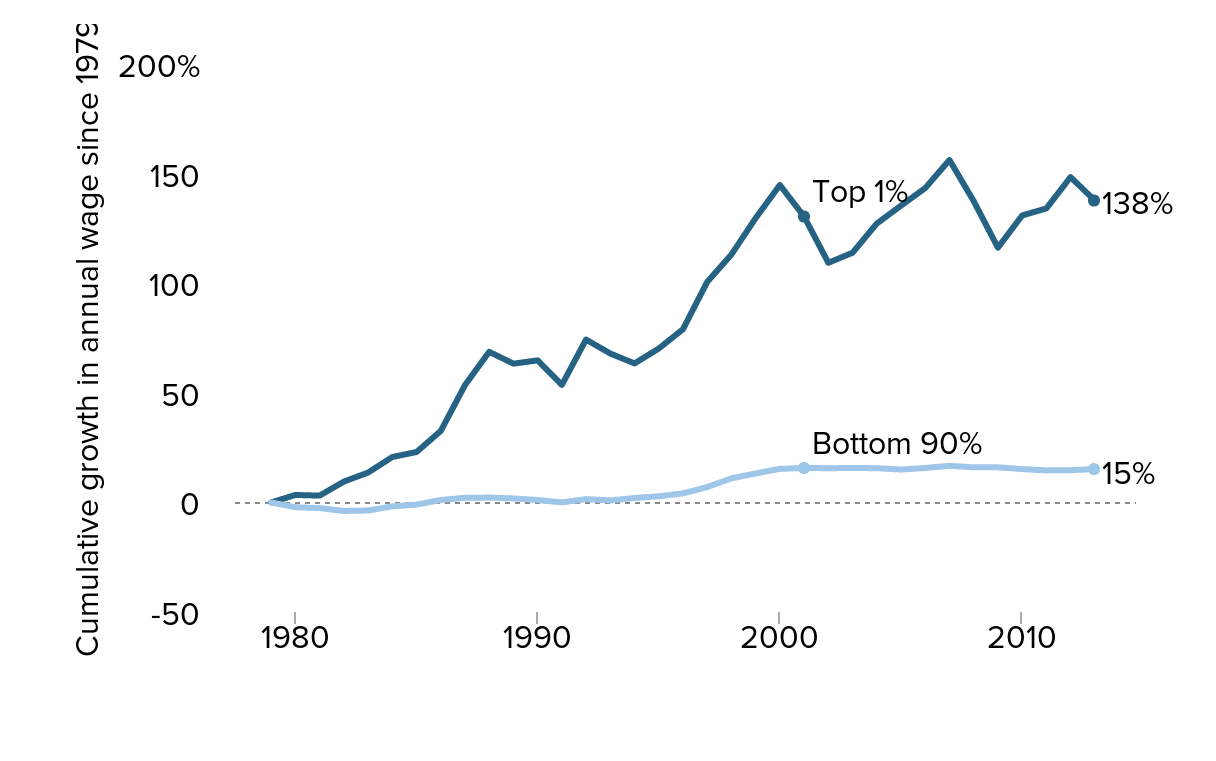


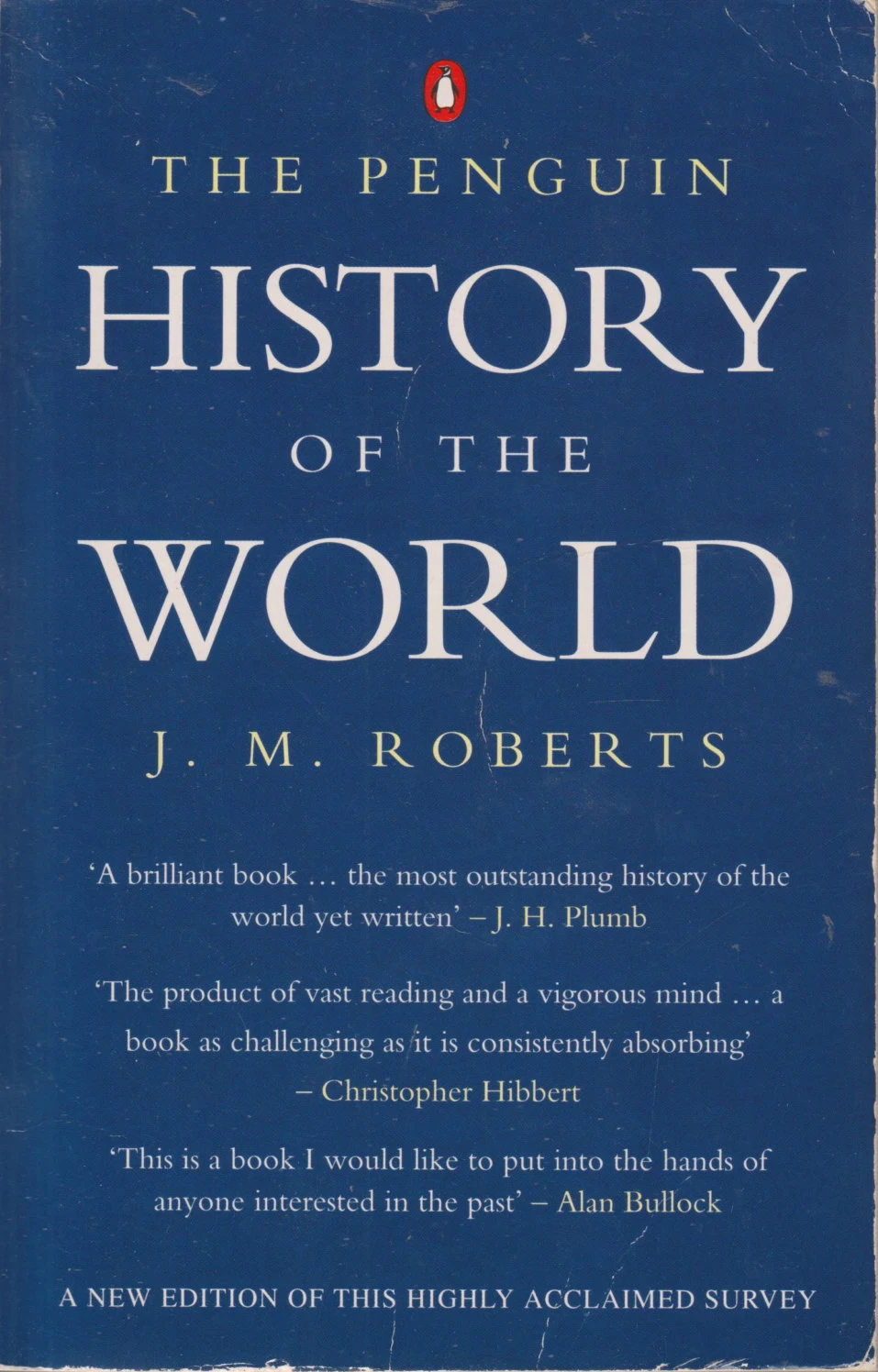


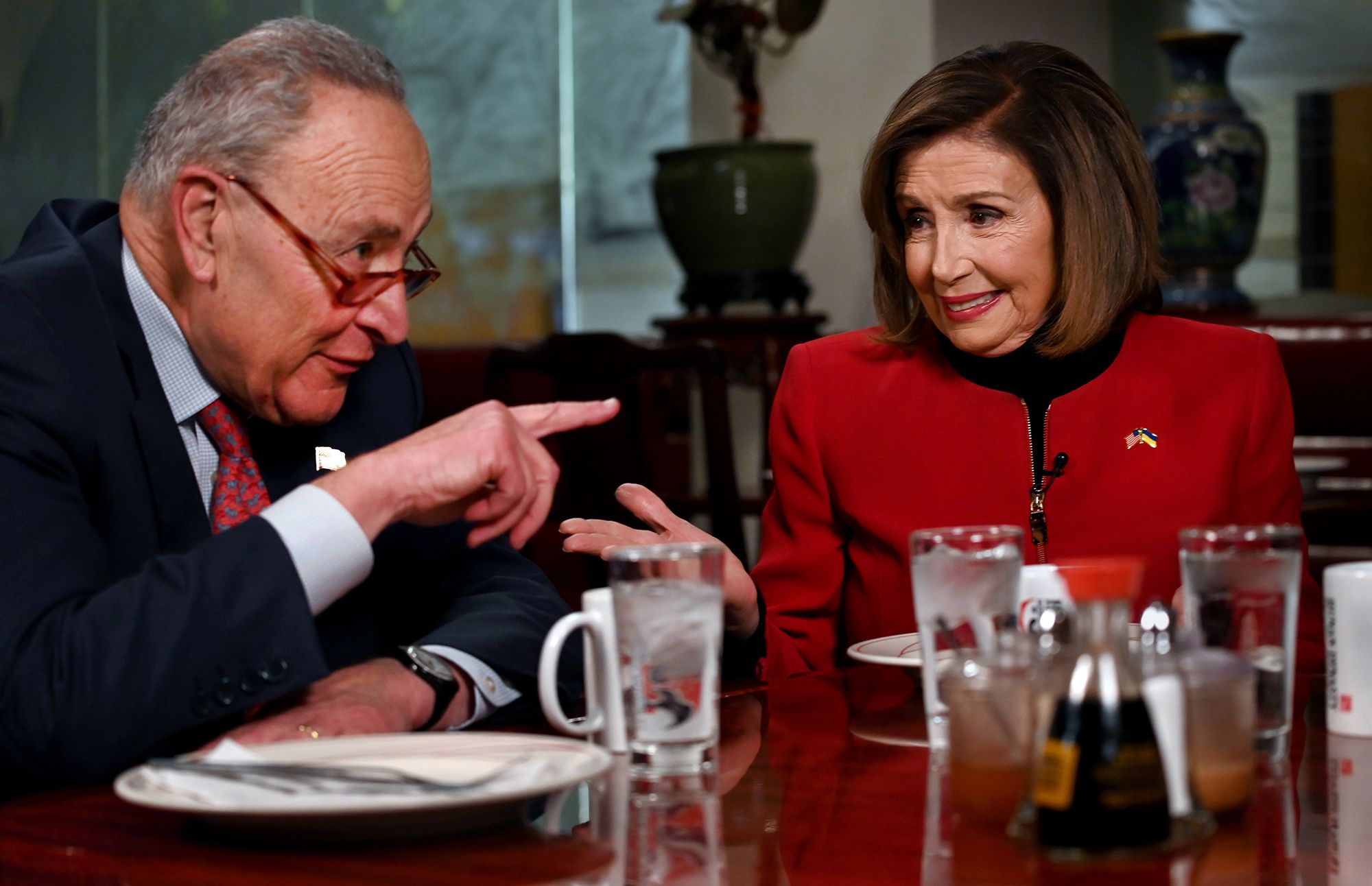
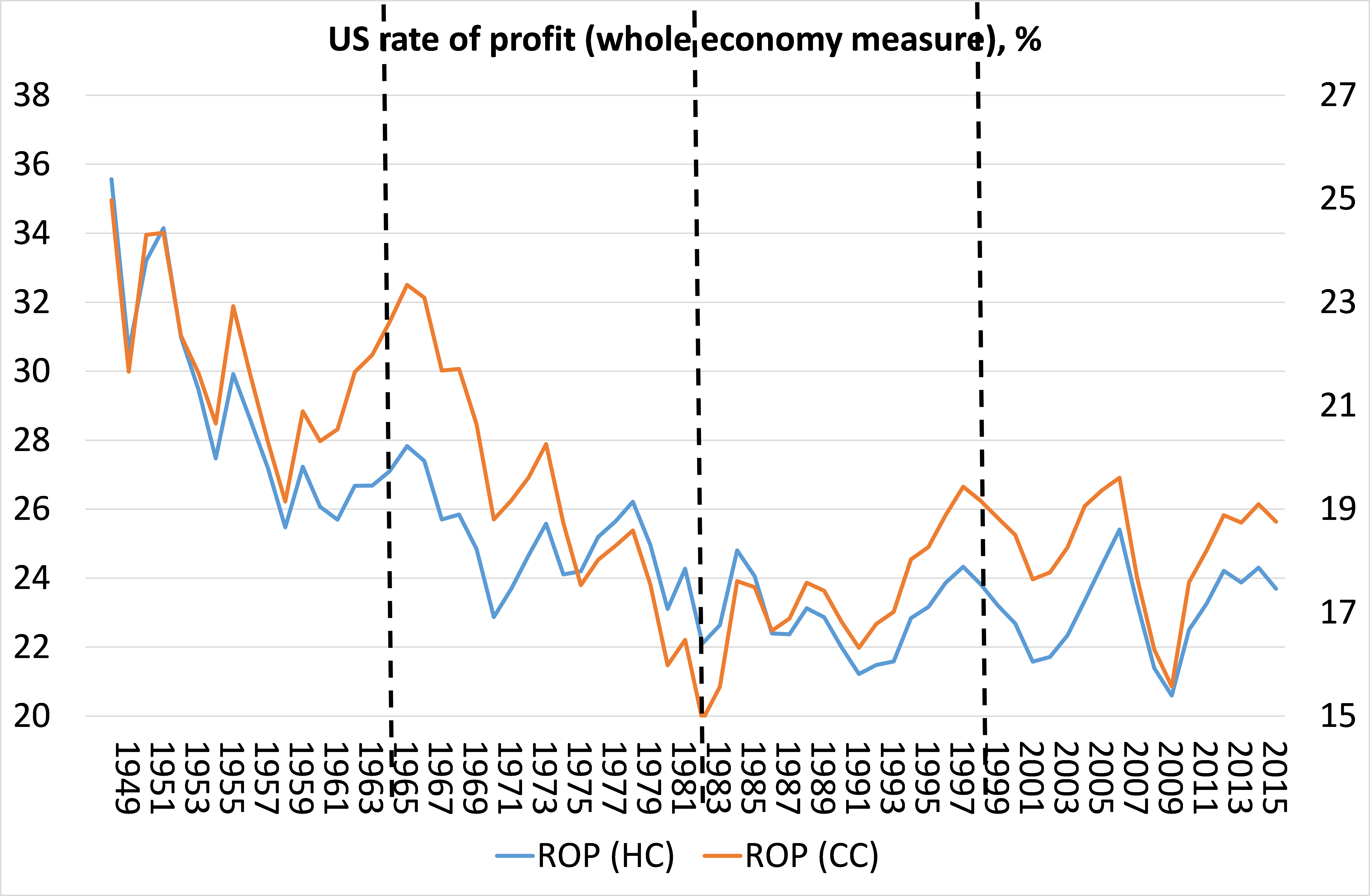
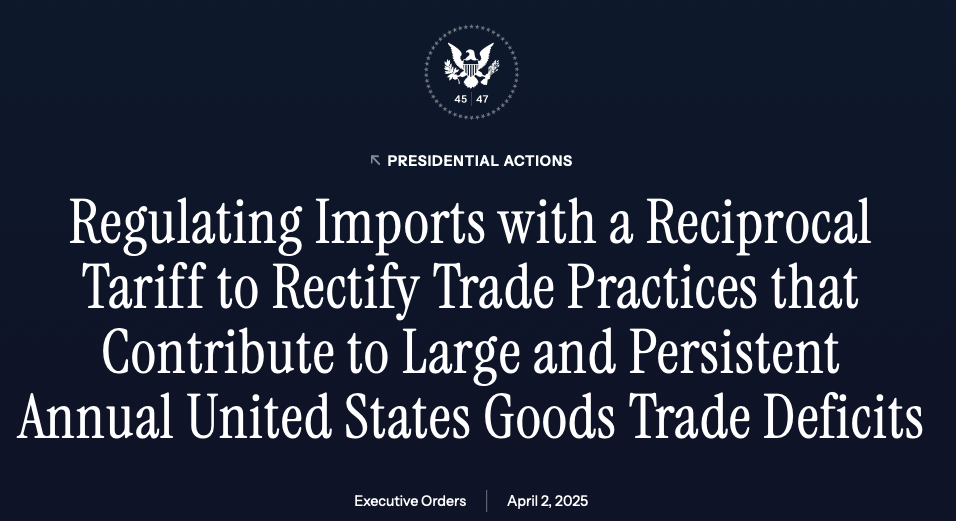

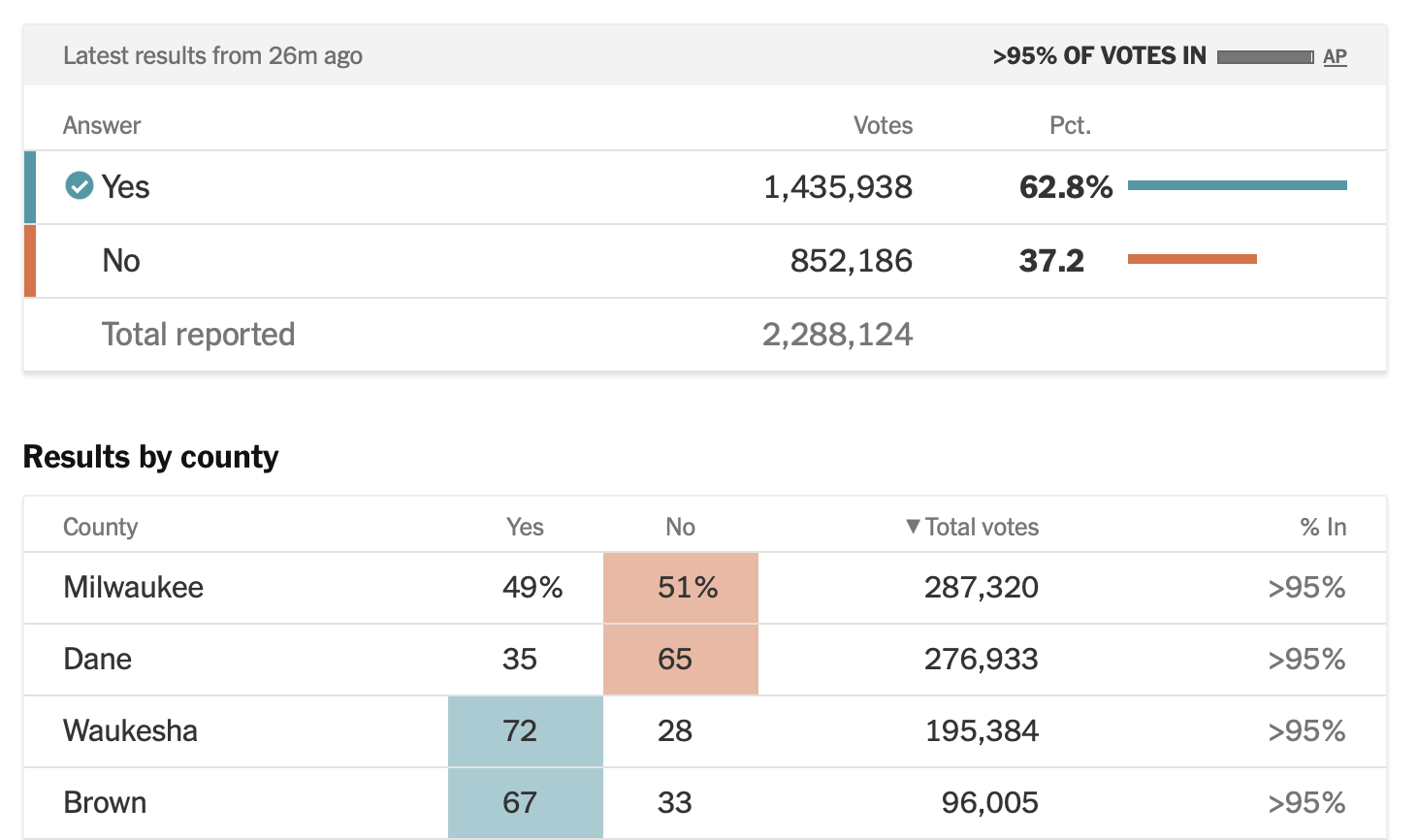

 freedom and reason