
Have you read the book How Fascism Works: The Politics of Us and Them by Jason Stanley? I haven’t. I don’t need to. I know what’s in this book because it’s standard progressive rhetoric. Stanley is a dyed-in-the-wool progressive, so the argument is predictable. I’ve read many reviews of the book (in deciding whether to buy it). But even better, I reviewed a piece the author himself published on Big Think that summarizes his thesis (https://bigthink.com/videos/what-is-fascism/). You can read that summary for yourself. I will latch onto the detailed overview posted on various book sellers. Here’s a section of the overview. Pay close attention to the language:
“As a scholar of philosophy and propaganda and the child of refugees of WWII Europe, Jason Stanley has long understood that democratic societies, including the United States, can be vulnerable to fascism. In How Fascism Works, he identifies ten pillars of fascist politics—an appeal to the mythic past, propaganda, anti-intellectualism, unreality, hierarchy, victimhood, law and order, sexual anxiety, favoring the ‘heartland,’ and a dismantling of public goods and unions—that amount to an urgent diagnosis of the tactics right-wing politicians use to break down democracies and a critical lens on the current moment.”
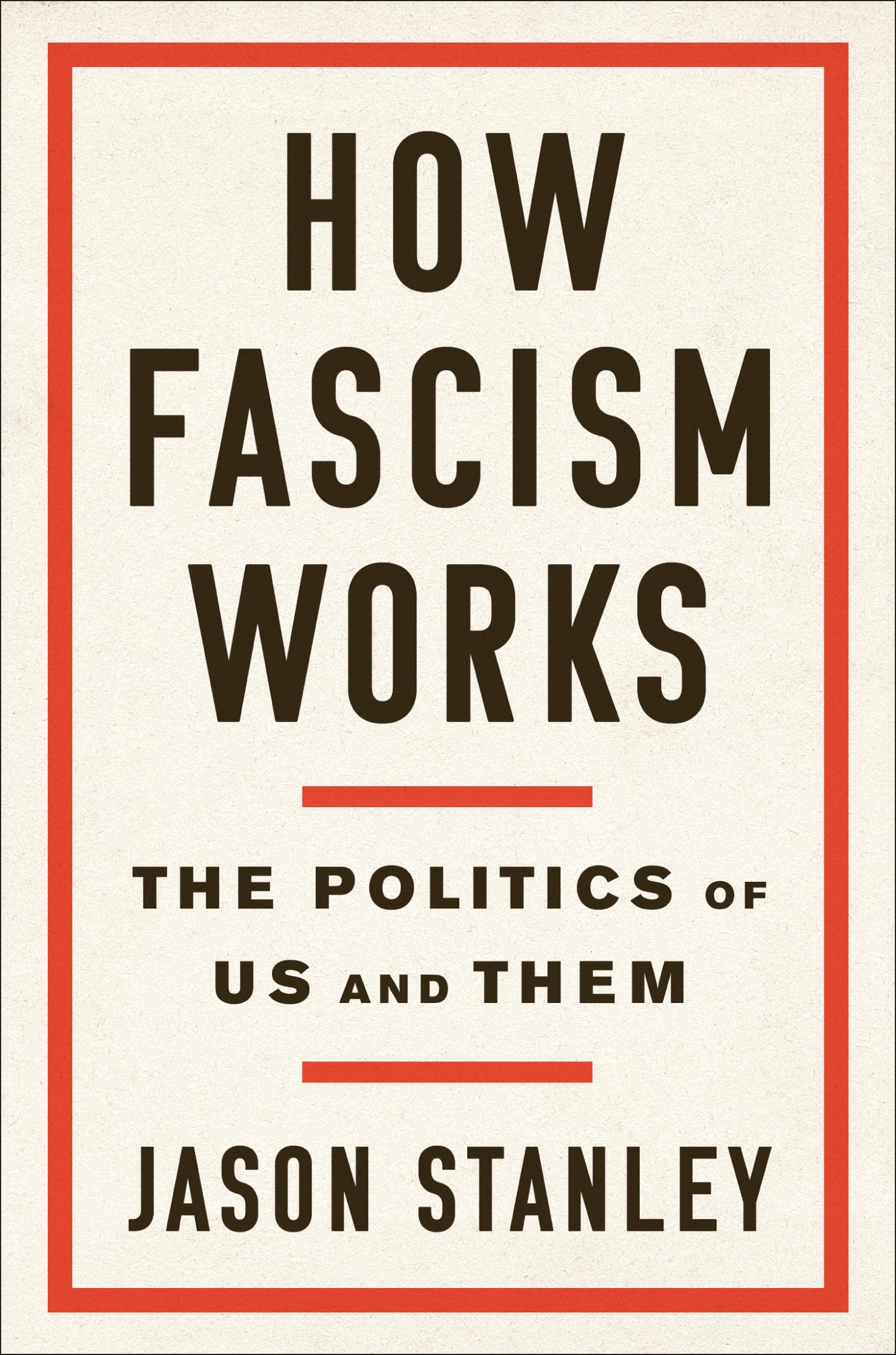
If one charitably reads the overview with a critical eye—particularly with attention to framing and language—an obvious question emerges: are these ten pillars uniquely fascist, or are they simply features of political rhetoric common across ideologies?
Stanley claims fascists appeal to a golden age that must be restored. Atavistic desire is hardly exclusive to fascism. Despite betraying these in action, progressives idealize the civil rights era, labor movements, or postwar social democracy. National myths are not inherently fascist—they’re a normal part of identity formation in any polity. What matters is how the myth is used, not whether one exists. When we celebrate the Founders and Declaration of Independence, the Constitution and its Bill of Rights, the American System, and all the other great things about America, are we manufacturing fascist myths? Of course not.
The American Republic endures because some of us care about its legacy. What purpose does it serve to characterize pride in one’s nation as fascist? Wouldn’t a person who wants to abandon a nation’s history say exactly this? Progressives want what the America patriots founded and fought for to be replaced by something else. That’s why they were out on the streets last Saturday. What do they say about people like me and you who defend the American Creed? Stanley wrote a book about it.
Most political communication contains some degree of simplification or emotional appeal. Does the make all such communication propaganda? Doesn’t a movement want to get people moving? As if progressivism isn’t drenched in emotionalism and histrionics! When Stanley uses “propaganda” to describe tactics on the right, he implicitly sets up his own narrative as truth, thus enacting the very dynamic he condemns. In democratic societies, essential concepts are contested, and claiming sole access to the truth—except for some obvious ones—can be anti-democratic and illiberal in its own right.
While fascist regimes have historically undermined intellectuals, skepticism toward academic and other elites is not inherently authoritarian. Indeed, it is required if we are to avoid technocratic governance. Populist movements—i.e., popular democratic sentiment and action—across the spectrum have criticized technocrats for being out of touch. And that’s because they often are! Framing all suspicion of intellectual authority as “fascist” fails to distinguish between anti-expert nihilism and legitimate critiques of epistemic overreach—and the masking of ideological ambition with pseudo-intellectual jargon.
Stanley warns that fascists flood the public with lies to dissolve trust in truth. But who defines truth? How about not those who tell us that men can be women or that America is systemically racist, two of many demonstrably false claims progressives insist on. With politically charged issues—class, gender, race—the line between truth and ideology is not always clear (that’s one reason to be skeptical of intellectuals). By insisting that only one side traffics in unreality—and elevate the one that consistently does—Stanley adopts a moralizing tone that preemptively delegitimizes disagreement and short-circuits democratic discourse—which is the goal of anti-fascist hysteria.
It is true that fascist ideologies embrace inegalitarian views. However, not all social hierarchies are authoritarian or oppressive. Merit-based and open systems inevitably function within hierarchical frameworks. Why? Because allowing people to operate freely produces inequality because not everybody has the same commitments and talents. Newsflash: individuals are different. A free and open competitive market will make them more unequal. How is that fascism? Flattening the concept of hierarchy into a fascist marker conflates emergent order and structure with tyranny.
Stanley argues that fascists manipulate feelings of victimhood, especially among dominant groups. But—does this even need to be said?—victimhood is the core of work progressive propaganda! Progressives are nonstop dwelling on (often imagined) historical injustices and systemic oppression. If victim narratives are dangerous when used by the right (rare), why not when used by the left (common)? The selective critique reflects a double standard rather than a neutral analysis. Easy bullshit call here.
Invoking “law and order” is seen by Stanley as a way to justify state violence. You are hearing this rhetoric big time in the current moment. Yet the desire for safety and stability is not inherently fascist—indeed, it’s foundational to the social contract. Do we really want a society without law and order? You know what that’s called, right? Anarchism. Citizens in high-crime areas support law enforcement without endorsing authoritarianism. They need the police. Big league. To equate law and order rhetoric with fascism is to misread a core democratic concern as a sign of tyranny. The hypocrisy here is so massive I need not dwell on it any further.
Stanley identifies anxiety over changing gender and sexual norms as a fascist tactic. While it’s true that authoritarian regimes often enforce traditional gender roles, it does not follow that all cultural conservatism or traditional beliefs and practices are fascist. But here’s the real problem: teaching sexual perversion to children. The desire to not sexualize children is fascist? Many cultural and religion traditions worldwide don’t share progressive views on sexuality. Stanley is painting deviation from progressive norms as dangerous. On the contrary, deviation from progressive norms is how we protect children and women. Progressives are transgressing boundaries that are essential for safety and innocence.
The romanticization of “the heartland” is presented as a fascist device. You know, “the Volk.” But valorizing rural communities over urban elites is a common populist trope—used by figures on both the left and right. What’ s wrong with rural people anyway, those folks Hillary Clinton called the “deplorables”? The salt of the earth? This framing reflects an elite cultural bias more than a diagnosis of fascism. Should every appeal to “ordinary people” be read as a step toward authoritarianism? Who is the republic for? Corporate elites and the bureaucrats and managerial strata? Or for the people? I say the people. What say you? (See No Gods. No kings. No elites. The People.)
Stanley includes efforts to privatize public services or weaken unions as fascist tactics. That’s neoliberalism, no? The weakening unions charge is ironic, since it was progressives who crushed private sector unions through globalization and mass immigration—and then established and built public sector unions to entrench the undemocratic administrative state (see Federal Employee Unions and the Entrenchment of Technocracy). To be sure, privatization has its problems, but the real question is whether privatizing does it better, more effectively and efficiently. Pragmatism demands an open mind on privatization. Many fiscal conservatives and libertarians advocate these positions from a principled, anti-authoritarian stance. Equating such policies with fascism collapses ideological diversity into a moral binary: right equals danger, left equals virtue.
I said at the start that I haven’t read the book. I have relied on reviews, the overview, and Stanley’s own summary of his book. I have read books like this, though. What these books have in common is that they exploit the anxieties of a moment when many are told to fear democratic backsliding. Why? Because Trump and the populist movement—a trans-Atlantic movement that threatens the rule of transnational corporations and governance bodies, i.e., inverted totalitarianism, the New Fascism.
Work like Stanley’s fulfills Orwell’s warning about language: the inflation of “fascism” into a catch-all term for political smearing. By casting a wide net and using emotionally charged language, Stanley (perhaps unwittingly—even smart people can be dumb) contributes to the polarization he seeks to diagnose. That’s why I choose to buy a collection of writings by George Orwell rather than squander my money on Stanley’s book (to add to my voluminous collection of books on fascism).
Here’s some advice to progressives: a better defense of democracy requires resisting the temptation to pathologize dissent. Political disagreement and ideological contestation are not threats to democracy—they are its lifeblood. To preserve liberal society, one must be willing to challenge all forms of ideology and propaganda—including the kind that comes cloaked in warnings about fascism, which, as best I can tell, Stanley’s contribution is a paradigm. Correct me if I’m wrong. Hey, gift me his book and I will read it cover to cover. Of course, progressives have no interest in preserving liberal democratic society. They desire something very different.

 freedom and reason