
The corruption of science by totalitarian regimes serves as a warning that the pursuit of truth must remain independent of political and moneyed power. As history shows, when science is subordinated to the interests of the state and the corporation, it can be used to justify the most horrific of policies. Therefore, it is essential to remain critical of scientific claims, especially when they align closely with state and corporate power, and to defend the independence of the scientific enterprise and the autonomy of scientists to vigorously interrogate the claims and conclusions made by others. Only by maintaining this autonomy can we ensure that science remains a force for good and progress, rather than a tool of exploitation and oppression.
Those of us who are skeptical of queer theory and gender ideology have often heard the line that there’s a broad scientific and medical consensus, supported by numerous professional bodies like the American Medical Association, the World Professional Association for Transgender Health (WPATH), and others, that gender-affirming care (GAC) is beneficial for those experiencing gender dysphoria (see Fear and Loathing in the Village of Chamounix: Monstrosity and the Deceits of Trans Joy). This care, based on crackpot psychological, endocrinological, and radical surgical interventions, are not universally seen as pseudoscientific, nor are the associated practices seen as atrocities, but rather as humane treatments for a recognized medical condition. What determines this false perception is the legitimacy of power in the present moment. It’s hard to see the corruption of science and medicine when one is inside the regime and believes the regime is good and its people free.
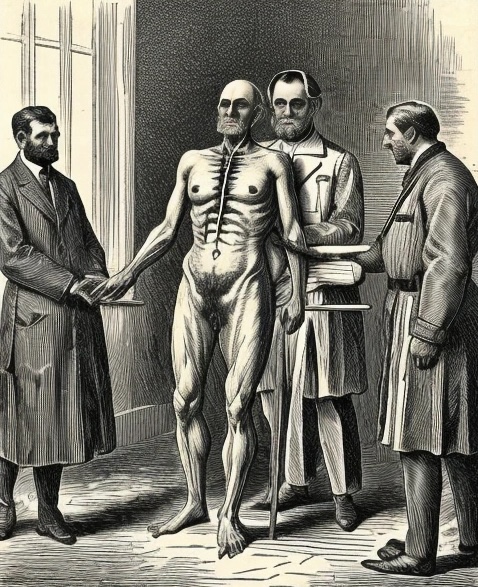
Antonio Gramsci noted that organic intellectuals play a crucial role in maintaining control over a population, not through force, but by engineering consent (to borrow a phrase from propagandist Edward Bernays) for the regime’s rule. The organic intellectual emerges from, or seeks to align himself with, specific social classes or groups, deeply rooted in the cultural, economic, and social conditions of that class or group. As leaders and organizers, organic intellectuals do more than just think about things; they actively work to articulate class interests and shape society around them.
In capitalist societies, where the primary concern is the accumulation of property and wealth, regime intellectuals produce and promote ideologies that justify and normalize exploitative structures. By framing these structures as natural or inevitable, good and necessary, they ensure that capitalist values permeate cultural norms and practices, influencing public opinion through cultural production, education of various types (i.e., indoctrination), and mass-mediated belief. Ideological hegemony makes things endorsed by the regime appear normal and participation in them voluntary, even desirable. Indeed, the fact of their normality proves they are legitimacy—that so many doctors and scientists defend GAC must mean that the practice is warranted and beneficial.
Throughout history, totalitarian regimes have co-opted and corrupted scientific inquiry to serve ideological ends. When one observes scientific inquiry serving these ends totalitarianism is indicated. Again, this is easy to see when the regime in question is not the one in which the observer resides. To be sure, some insiders see it—and some of those who see object. But, as Max Weber famously observed, legitimacy plays a significant role in covering power as authority and all that is required in mass thought control is a critical mass of believers. Authority is used to justify terrible things that many applaud and others fear to criticize. When scientific knowledge is distorted to align with the interests of those in power, the result is not only the suppression of truth but also the justification of atrocities in the name of progress; those who disagree are suppressed.
Nazi Germany stands as one of the most extreme examples, where the ideology of racial purity led to horrific practices justified under the guise of science. However, the manipulation of science by totalitarian regimes is not unique to the Nazis; similar patterns can be observed in the Soviet Union, Maoist China, and in contemporary contexts. This essay, which expands on an essay published earlier this week (Chicken Sexing—Science or Ideology?), explores how pseudoscience and medical atrocities indicate the presence of a totalitarian regime, emphasizing the need for skepticism and vigilance in the face of scientific authority that aligns too closely with political power.
Nazi Germany indeed provides a terrifying example of how science can be twisted to serve the most inhumane of ends. The regime’s obsession with advancing the species led to the widespread adoption of eugenics, a pseudoscience that sought to apply principles of selective breeding to human populations. Eugenics, which had already gained traction in other parts of the world, was taken to its most extreme in Nazi Germany. The regime used eugenic theories to justify euthanasia programs, forced sterilizations, and ultimately, the extermination of ethnic, political, and religious groups, as well as sexual minorities. The Nazis framed their atrocities as scientific research. In concentration camps, doctors conducted horrific experiments on prisoners, often under the pretense of advancing medical knowledge. These experiments, which included forced sterilizations and the testing of experimental drugs, were driven by a perverse ideological commitment to Aryan supremacy.
The Soviet Union under Stalin provides another stark example of the dangers of state-controlled science. Trofim Lysenko, a Soviet agronomist, rejected genetic science in favor of a pseudoscientific theory based on dialectical materialism, or dia-mat, which he claimed would revolutionize agriculture. Lysenko’s ideas were appealing to the Soviet leadership because they aligned with Marxist-Leninist ideology and the application of dia-may to all things. Lysenkoism was promoted as official state doctrine, despite its lack of empirical support. Soviet agriculture, already struggling under collectivization, suffered further as Lysenko’s methods were implemented on a large scale. Famine and crop failures followed, leading to the suffering and deaths of millions. Moreover, the suppression of genetics as a field of study in the Soviet Union, along with the persecution of scientists who opposed Lysenko, demonstrates how scientific discourse can be controlled by the state to impose ideological conformity. Lysenkoism illustrates how political power suppresses legitimate science in favor of pseudoscience that serves the regime’s interests.
In Maoist China, during the Great Leap Forward and the Cultural Revolution, ideological conformity was prioritized over empirical evidence. Mao’s insistence on unproven agricultural techniques led to widespread crop failures and famine. Like in the Soviet Union, these policies were justified by pseudoscientific claims that aligned with the regime’s ideological goals, leading to catastrophic human suffering. In the Cultural Revolution, the rejection of established knowledge extended beyond agriculture. Intellectuals and scientists were persecuted, and scientific research was subordinated to the whims of political leaders. The result was a further degradation of scientific integrity and a deepening of the regime’s control over the population.
In contemporary times, we see instances where scientific and medical knowledge is manipulated by authoritarian governments—and governments not widely perceived to be authoritarian. Whether it’s the suppression of information about pandemics or the appeal to medical science to justify human rights abuses, the pattern remains the same: pseudoscience becomes hegemonic under often inverted totalitarian rule, with scientific truth replaced by politically-ideologically narratives. When we see this, what we are seeing are the signs of totalitarianism’s presence. Under conditions of monopoly capitalism, corruption is deeply rooted in corporate state arrangements that are masked by an ideology of consumer choice and free markets. Here, in addition to the corruption of science by ideology, the profit motive and oligarchy pose a significant threat to the integrity of scientific inquiry.
In a profit-driven system, the pursuit of wealth distorts scientific research, as moneyed interests prioritize profits over truth. Corporations and powerful elites fund and disseminate pseudoscientific ideas that serve their material interests. Ideology serves as a veneer to justify these deeper materialist motives. Powerful interest groups are able to colonize the organizations and institutions of power, which corporate and state actors use to entrench power. Thus when pseudoscience and atrocities appear in such a system, they are not just indicators of ideological influence but also of the concentration of power in the hands of those who benefit from them. The interplay between ideology and profit demands we recognize when scientific authority is being wielded not in the pursuit of knowledge, but in the service of maintaining and expanding corporate power.
How are elites able to persuade so many people that pseudoscience, detectable by the common sense that precedes it, is legitimate? In part, by disrupting common sense through propaganda, what today we call advertising, marketing, and public relations. Blurring the line between persuasion and manipulation, advertisers wield immense power in shaping public perceptions, beliefs, and desires.
Bernays, noted earlier, understood this power and applied it to the art of propaganda. Bernays pioneered techniques that used psychological insights to craft messages that could subtly influence mass behavior, turning consumer goods into symbols of social status and personal identity—turning people themselves into commodities. Through strategic marketing, corporations manufacture consent for their ideas and products, embedding them into the cultural fabric as if they were natural or inevitable. This manipulation extends beyond consumerism; it influences public opinion on political and social issues, often serving the interests of those in power. Bernays’ work and its proven effectiveness reveal how propaganda can serve as a powerful tool in the hands of elites, shaping societal norms and values to align with their interests, while disguising these manipulations as organic expressions of public will.
Another factor is education, which when distorted into indoctrination, functions much like advertising, marketing, and public relations by systematically shaping perceptions, beliefs, and behaviors to create a generation of individuals with disordered common sense—people who are easily manipulable. Through centrally controlled curricula, the repetition of certain narratives, and the exclusion of critical perspectives, indoctrination instills in the population a narrow set of ideas and values, much like how advertising creates brand loyalty or how public relations shapes public opinion. Just as marketing tactics manipulate desires and choices, indoctrination distort the ability to think independently, making it difficult for individuals to question authority or recognize propaganda. This is why it is so important for elites to get control over textbooks and compel teachers to teach from them; elites decide what goes in and what stays out of texts and curricula. This process produces a populace that is not only susceptible to manipulation by those in power but also lacks the intellectual tools to challenge the status quo, thereby perpetuating systems of control.
The rhetoric of science enjoys a unique authority that legitimizes and drives the consumption of commodities and services, often by cloaking commercial interests in the guise of objective truth. By invoking scientific authority, endorsement, jargon, and studies, the corporate state manufactures a perception of credibility and reliability, making their products or services appear not only desirable but also necessary for health, well-being, and societal progress. This scientific veneer is frequently employed in marketing strategies, where phrases like “backed by research,” “clinically proven,” or “scientifically formulated” are used to persuade consumers of the efficacy and safety of a product.
In reality, these claims are often exaggeration and based on dubious or selectively reported studies, funded by the very industries that stand to profit from them. By leveraging the trust people place in science, in conditioned reliance on faith-belief and avoidance of critical thought, companies effectively manipulate consumers, transforming their goods and services into essential components of modern life. They control workers using the same methods.
In totalitarian regimes, science is not a means of discovery but a tool to legitimize authority and suppress dissent. When scientific inquiry is subordinated to the needs of the state or to the corporation, it loses its objectivity and becomes a vehicle for regime propaganda. This corruption of science is not just an academic concern; it has real-world consequences, from the justification of atrocities to the perpetuation of ignorance and suffering. Pseudoscience becomes hegemonic under totalitarian rule because it serves the regime’s interests. By promoting false or misleading scientific narratives, the regime creates a facade of legitimacy, presenting its policies as fact-based and rational. The hegemony of pseudoscience stifles dissent, as those who challenge the regime’s scientific orthodoxy are persecuted or silenced. We see this in the West in the atrocities public relations have euphemized as gender affirming care—and in the discipline, harassment, intimidation, ostracization, and punishment of those who question the practice and its ideological justification.
* * *
One of the developments over the last century has been the shift from transcendence of mundane life through traditional religious means to transcendence of bodies by mapping onto them technological advancements made possible by science. Fascism, particularly in its Italian and National Socialist forms, was deeply invested in the idea of human advancement through modification of bodies and the species, often through a lens that merged racial ideology with a belief in the power of science and technology to reshape humanity, especially in the case of the Nazis, but also in the case of Italian fascism. This belief is closely connected to transhumanist desires. As I have noted in previous essays, Italian fascism, under the leadership of Benito Mussolini, was heavily influenced by the Futurist movement, which celebrated the power of technology and the potential for human transformation through scientific and technological means.
Futurism glorified the idea of a hypermodernity and sought to break with the past, envisioning a future where humanity would evolve beyond its current state. The Futurists, led by figures like Filippo Tommaso Marinetti, embraced the idea that humans could be remade through technological advancement. Futurism’s fascination with technology and the idea of transcending human limitations aligned with Mussolini’s vision of a new Italian state, one organized around corporatism. An ethic justifying the modification of bodies was necessary to meet the possibilities inherent a modern, technologically advanced society. This vision of human advancement required the masses embracing the machine age and the possibilities it offered for transforming human existence.
National Socialism under Adolf Hitler took these ideas further, combining them with a pseudo-scientific belief in racial purity and superiority. The Nazi regime was deeply invested in eugenics, grounded in a perverse interpretation of Darwinian evolution, where the technocrats accelerate the process of human evolution by controlling reproduction. Eugenics in Nazi Germany involved programs aimed at promoting the reproduction of individuals considered racially superior while preventing those deemed inferior from reproducing. This included forced sterilizations, the euthanasia of individuals with disabilities, and the horrific medical experiments.
Transhumanism today, in the context of the corporate state, is focused on enhancing human capabilities through bioengineering and cybernetics. Transgenderism is a subset of transhumanism, where individuals are modified to produce simulated sexual identities, which is portrayed as progressive, even transcendent (The Selective Misanthropy and Essential Fascism of the Progressive Standpoint). The connection between these ideologies lies in their shared vision of human advancement and transformation. Fascist regimes sought to forcibly modify the human race to fit their ideological goals; transhumanism envisions a future where individuals are made to believe that they are freely choosing to enhance or liberate themselves through medicine and technology. The dark history of eugenics and medical atrocities in fascist regimes tells us a lot about contemporary transhumanism and the dangers of using science and technology to pursue an ideological vision of humanity. (See The Body as Primary Commodity: The Techno-Religious Cult of Transgenderism.)
* * *
The historical examples of Nazi Germany, the Soviet Union, and Maoist China serve as powerful reminders that the endorsement of an idea by scientific or medical authorities does not make it inherently true or ethical. In totalitarian regimes, the positions of doctors and scientists reflect the power structures of the regime, rather than objective truth. But we also see this corrupting power reflected in the science and medical practices in the West, power cloaked in authority no less manufactured as it was in the historical regimes, albeit more highly sophisticated.
This is why I push so hard the importance of skepticism when evaluating scientific claims, especially in politically charged and corporate controlled environments. Independent scientific inquiry is crucial to resisting the corruption of knowledge by political and moneyed power. When science is free from state control, it can serve as a check on authority, challenging false narratives and exposing the truth. However, when science becomes a tool of the state, it loses its ability to fulfill this role, leading to the distortion of knowledge and the justification of inhumane policies and practices.
In light of all this, something must be said about the power of religious ideology in shaping science. This is obvious in the Islamic world where religion and science are integrated in that scientific inquiry is conducted within a framework that is consistent with Islamic doctrine. This integration inevitably leads to the subordination of science to doctrine, where scientific practices are shaped by the pursuit of fiction rather than the pursuit of truth. The same is true for societies that fail to separate church and state; the state inevitably becomes subordinate to the dominant religion and its actors must seek direction from the clerics. In the Islamic tradition, the natural world is viewed as a creation of Allah, and understanding it is seen as a way to appreciate Allah’s creation. This is the apologetics. What this actually means is that scientific explanations that contradict Islamic teachings must be rejected or reinterpreted to fit religious narrative. When religious narrative guides scientific research, areas of inquiry become off-limits and drawing certain conclusions forbidden, and those who pursue and draw them punished.
I am closing with this case because what we see today is science operating within the confines of a corporate state-backed neoreligion and the laws that supports it. If an evolutionary biologist or geneticist stands in front of a classroom and lectures about the science of gender, and there are trans identifying individuals or trans allies in the lecture hall, they will object to the lecture, since it contradicts the doctrine of their ideology. They may speak up in class, or they may report the professor to her chair or to the dean. They may draw up and circulate a petition to see the professor disciplined or fired. The authorities may ask to speak with the professor about the content of her lecture and ask why she is not teaching the doctrine. If she defends herself, she will say that the doctrine contradicts the science of gender and, as a traditional intellectual, she has an obligation to teach what is known to be true. But those prosecuting the case are organic intellectuals. Their role is not to defend enlightenment and her freedom to pursue this end; their role is to advance the interests of the corporate state.
Somebody asked me yesterday why I would say that genderism is part and parcel of corporatism. I am always a bit astonished by such a question given how obvious the answer is. The pseudoscience of transgenderism generates billions of dollars annually for the medical-industrial complex. Many of the students attending colleges and universities will in some capacity serve the medical industry. Their faith in doctrine and institution is essential for obedience in and perpetuation of the system. Indeed, the reason they come to the university is to learn how to be an integral cog in a system that will reward them for their fealty. Even if our professor is not disciplined for her heresy, she will nevertheless feel the chill in the air and probably hesitate to present the lecture again, at least not in the same way. (See my fictional case: Kessler’s Cowardice in the Face of Transhumanism.) Others will see this and revise their lectures, as well, so as not to incur the wrath of administrators and students, who, as Hannah Arendt told us, is how power is actually manifested, namely through action. Grants, tenure and promotion—these are many other things are at stake. Most people police themselves and reform their own thought.
The chill is yet another sign of totalitarianism’s presence.

 freedom and reason