
There is an occupation one may take up determining the sex of chickens called “chick sexing.” The experts who perform the task are “chick sexers” or “poultry sexers.” They are very good at what they do, with accuracy rates typically ranging between 95-98 percent. This high level of accuracy comes from extensive training and experience. Crucially, chickens are not “assigned” a sex at hatching, but rather the chick sexer only identifies what nature has determined. Why it is necessary to sex chicks is because male chickens do not produce eggs but fertilize them, and since the egg industry seeks unfertilized eggs, all male chicks must be identified and disposed of.

Female and male chickens have gender roles, these roles determined by natural history. They also have a gender identity. Gender identity in all birds is determined by chromosomes, a system known as ZW, which is different from the XY system found in mammals. Female birds have two different sex chromosomes: ZW, with the W chromosome determining the female sex. Male birds have two identical sex chromosomes: ZZ. In this system, which is the opposite of mammals, the sex of the offspring is determined by the female, since she can pass on either a Z or a W chromosome, whereas the male can only pass on a Z chromosome. Since chickens do not have belief systems, the expectations and norms that establish the roles rooted in gender do not result from socialization and social pressure. Nor do chickens think they are the gender they are not.
As readers of Freedom and Reason know, I am always thinking about how we should understand and explain things. That’s my task as a social scientist employed by a comprehensive university. Crucially, enlightenment doesn’t ask us to disregard fiction. Rather it asks us to be able to distinguish fiction from fact, i.e., what is not real from what is real, and to teach our students how to do the same. For example, if one reads a story about talking chickens, one knows he is reading an allegory. Recall Animal Farm by George Orwell. When animals are used to personify human characteristics or societal roles, this technique is known as anthropomorphism. Children often think that animals can think and talk. Sometimes they think they are animals themselves (they are, but not the animals they pretend to be). In reality, the only animal who can have ideas are human beings. Only human beings can create religions and other systems based on fictional entities, relations, and situations. Only human beings can think they are something they are not. (See Judith Butler’s Gender Gibberish.)
The role of the scientist at the comprehensive university is three-fold: develop a curriculum and teach and evaluate students on the basis of it; make sure the university functions through committee work; and generate and evaluate ideas. As for generating and evaluating ideas, which involves analysis and synthesis, scientists write and rehearse lines to determine which are more compelling in light of fact and reason—not to advance or defend fictions. For administrators or colleagues to demand scientists toe certain lines obviates the autonomy and freedom required to make objective determinations concerning the validity and soundness of those and others lines. The scientist must enjoy autonomy to research and publish what interests him or else the task becomes corrupted. When administrators circumscribe the parameters of what the scientist can research and on what he may publish, they are asking not for enlightenment, but for the adherence to and dissemination of ideology. They do the same when they establish a committee to select textbooks, which is something that occurs all the time in k-12 education, but also occurs in some colleges and universities.

I recently had a back and forth on X with transactivists who insisted on sharing with me their college textbooks claiming that gender and sex are different things and that both are more complex than my describing of gender in chickens. I told them they were wasting their time since any college textbook that made these claims was corrupted by ideology. I have explained this several times on Freedom and Reason, but it might be helpful to summarize the problem of ideology in gender science here before critiquing ideology in science.
The standard version of the queer doctrine is that “sex” is biological, determined by physical attributes such as reproductive organs and chromosomes, while “gender” is cultural and cultural, involving identity and roles that may or may not align with an individual’s biological sex. More recently, sex itself has become a target of problematization, which is the postmodernist technique of undermining materialist science. As I have shown on Freedom and Reason, sex and gender are synonyms, both referring to sex chromosomes, gamete size, and reproductive anatomy. So a trick has been played here. The trick involves leaving out important words, namely “identity” and “role,” and then assuming them into the argument thereby avoiding defining them. It is not that there is no definition in operation. It is that the definition is not defensible when the assumption is made explicit.
Identity, according to ideology, is a deeply personal sense of one’s own gender that may or may not align with the person’s gender (or sex). It encompasses how individuals perceive themselves and what they call themselves—such as male, female, a blend of both, or neither. However, if we are working in the domain of facts, identity is not what a thing thinks of itself (almost nothing in the university possesses this capacity), but what the thing is. Only humans can be confused about this. A queen is not in possession of an ideology that will make her think she is a tom. She is not a tom because she is female and toms are male. Her gender identity is queen.
Roles refer to the expectations and norms that societies establish regarding the activities and attitudes deemed appropriate for individuals based on their gender. These roles are deeply ingrained in cultural, social, and historical contexts and can vary significantly across different societies and time periods. All this is true and general knowledge in anthropology, psychology, and sociology. However, these roles ultimately attach to the biological reality of gender, for example, in the fact that men cannot perform the role of carrying the fetus to term, or in the fact that men do not lactate. There are many facts like this that differentiate males from females. This is because our species, like every other mammalian species, is sexually dimorphic. (For more about this, see Gender and the English Language.)
What has happened here is that science has been corrupted by ideology. This is not a conspiracy theory, as the corruption of science has happened in many places and times and everybody accepts that this is a problem—just not when it is their favored doctrine on the operating table. In the Soviet Union, this phenomenon was most notably exemplified in the social sciences and biology, where Marxist-Leninist ideology imposed constraints on research and scientific development. Under the Soviet regime, scientific inquiry was expected to align with Marxist-Leninist ideology, which claimed that all social and natural phenomena could be understood through dialectical materialism. This framework, which emphasizes the dialectical process of thesis-antithesis-synthesis in historical and material conditions, was applied beyond the social sciences to the natural sciences, including biology and, to some extent, physics.
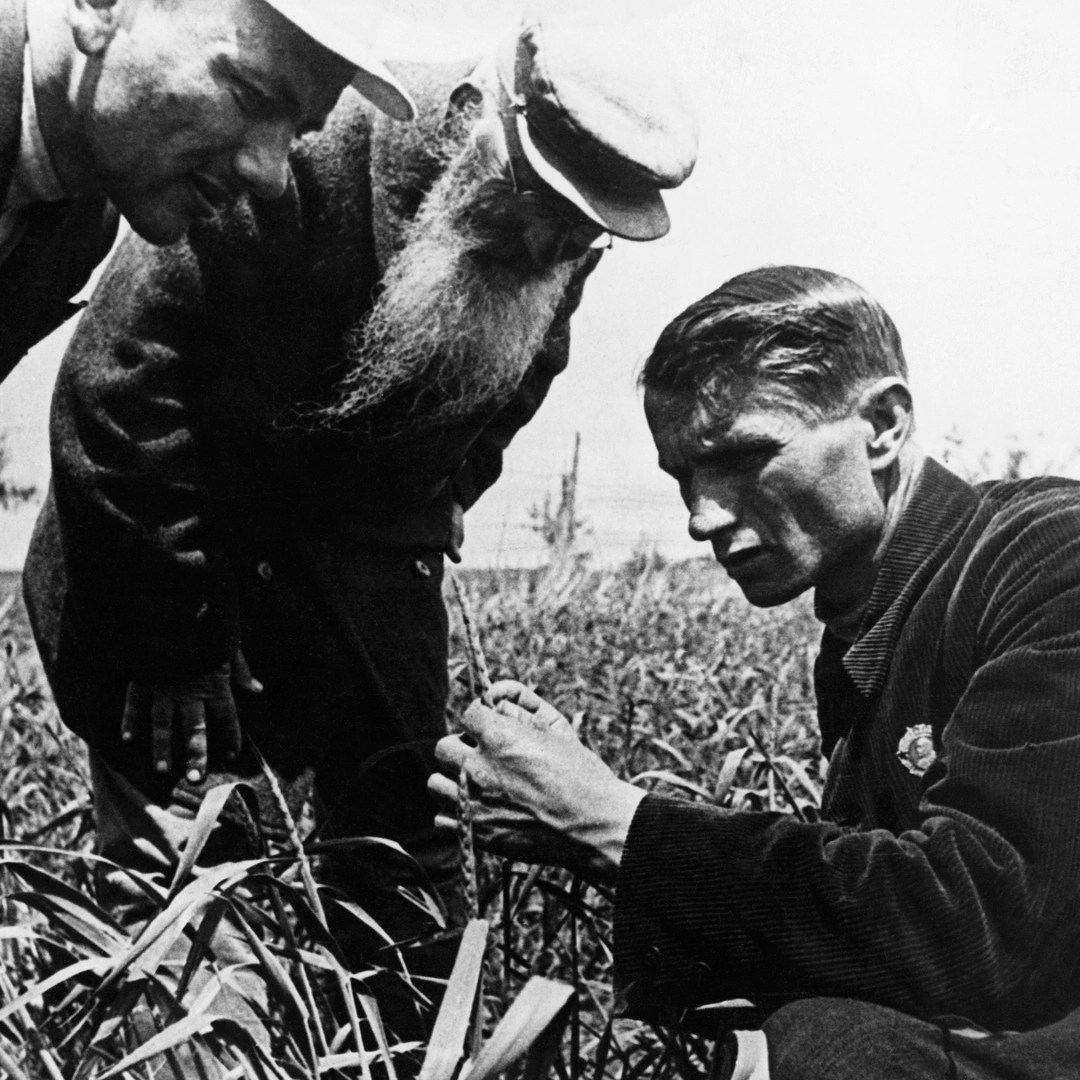
In biology, the most infamous example of this ideological corruption was Lysenkoism. Trofim Lysenko, an agronomist who rejected Mendelian genetics in favor of a theory that aligned more closely with Marxist principles, gained prominence under Stalin. Lysenko’s ideas, which included the inheritance of acquired characteristics and the rejection of genetic determinism, were embraced because they seemingly supported the Marxist belief in the malleability of human and natural conditions. The result was a devastating impact on Soviet agriculture and biological research, as Lysenko’s theories were implemented despite their scientific invalidity. Scientists who opposed Lysenko were persecuted, imprisoned, or even executed, illustrating how ideology can stifle dissent and lead to disastrous consequences for scientific progress. Physics, being more resistant to ideological distortion due to its empirical rigor, was less affected than the biological and social sciences. Nevertheless, the overarching ideological pressure sometimes led to constraints on scientific freedom, particularly in areas where research could potentially contradict state ideology.
The corruption of science by ideology is not unique to the Soviet Union; it has also occurred in corporate systems. In capitalist societies, the primary ideological force is often the market, where scientific research can be directed by corporate interests rather than pure inquiry. For example, pharmaceutical companies may suppress research that could harm their profits, or fund studies that promote their products, regardless of the potential harm to public health. The tobacco industry’s efforts to discredit research on the dangers of smoking is a notorious example of how capitalist interests can corrupt science. In fascist regimes, a more extreme form of corporatism, science was often subjugated to ideologies.
Nazi Germany is the most extreme example, where scientific research was distorted to support the ideology of racial purity and Aryan superiority. Eugenics, which sought to apply principles of selective breeding to human populations, was used to justify horrific practices, including forced sterilizations. The Nazi regime’s corruption of science illustrates how ideological goals can lead to the gross manipulation and misuse of scientific knowledge to justify inhumane policies. However, one must remember that eugenics was practiced in the United States long before the Nazis were in power (and don’t forget about lobotomies and other medical atrocities). There it was an expression of progressivism and technocratic desire, all signs of the corporate state. Today we see the corporate corruption of in gender affirming industry, which uses the pseudoscience of sexology beamed through the prism of queer theory to justify practices that generate billions of dollars annually.
It stands to reason, and this should be obvious (but its not because of the problem of ideological hegemony), if textbooks are corrupted by ideology or centralized power, then they may not be the most reliable sources of knowledge, especially in the natural sciences. Big textbook companies, such as Pearson, McGraw Hill, and Cengage, have increasingly aligned themselves with ESG (Environmental, Social, and Governance) criteria and other scoring organizations like HRC (Human Rights Campaign). These companies are not only evaluated on financial performance but also on their commitment to sustainability, social responsibility, and governance practices.The social piece of ESG emphasizes diversity, equity, and inclusion (DEI) in their hiring practices, content creation, and educational initiatives.
Textbook content is being updated to reflect more inclusive perspectives, aligning with broader social goals such as gender and racial equity. HRC metrics pertain to cultural alignment, that is how well a company’s culture aligns with societal expectations, including support for LGBTQ+ rights. Textbook content may be scrutinized to ensure it aligns with these cultural values. If a textbook presents the science of gender in a valid and sound way, because this contradicts queer theory, the company may receive a poor rating by HRC, and they need a high rating to draw investment. Thus textbook companies are under pressure to produce content that aligns with ESG and HRC criteria. This can result in the inclusion of topics like climate change, social justice, and diversity in curricula, sometimes leading to controversies over perceived biases or ideological slants. (See The Politics and Purpose of Affirming the Person; The Function of Woke Sloganeering; The Struggle for Gay Liberation and Threats to Its Achievements;
The science of gender is corrupted in other ways, as well. Several professors have faced significant challenges for teaching the biology of sex and gender in ways that conflict with queer theory, which emphasizes the fluidity and social construction of gender over biological determinism. Kathleen Stock, a professor of philosophy who left her position at the University of Sussex after being accused of transphobia for her views on gender. Stock argued for the importance of biological sex in understanding gender, which led to significant protests and her eventual resignation in 2021. David Bernstein, a law professor at Georgetown, faced backlash for questioning the legal implications of redefining sex and gender, particularly in relation to Title IX. While he was not fired, he was subject to considerable public criticism and student protests. Colin Wright, whose work I have cited on Freedom and Reason, was an assistant professor go evolutionary biology at Penn State. He publicly criticized the push to redefine gender in ways that downplay or deny the biological basis of sex, which led to intense backlash. As a result, Wright experienced ostracism from colleagues, lost research opportunities, and eventually felt he could no longer continue his academic career due to the increasingly hostile environment. (Visit his platform Reality’s Last Stand.)
Wright and many others are concerned about the definition of these terms because they can harm women in a myriad of ways. Most recently, Wright (and Your’s Truly) criticized the inclusion of males in women’s sports at the Olympic Games. (For my writings on this see The IOC’s Portrayal Guidelines—a Real-World Instantiation of Newspeak; Misogyny Resurgent: Atavistic Expressions of a Neoreligion; The Ubiquity of Fallacious Reasoning on the Progressive Left; Sacrificing Equity Upon the Altar of Exclusive Inclusivity; Dignity and Sex-Based Rights; Supper in the Spectacular Café.) In the following post on X, Kellie-Jay Keen explains why the propagandistic language around sex and gender by queer activists is so dangerous. She takes up the case of rape.
These aren’t abstract exercises. Those of us who are critical of gender ideology are concerned about the real effects on society when our language is corrupted by corporate and other elites with the power to disseminate manipulated definitions (see Manipulating Reality by Manipulating Words). When ideology, whether socialist or corporatist dictates what is included or excluded in scientific education, the integrity of the information presented is compromised. In the Soviet Union, biology textbooks were distorted by Lysenkoism, promoting scientifically invalid ideas that aligned with state ideology, while dissenting voices were silenced. Similarly, in corporatist societies, textbooks distort, downplay, and omit information that conflicts with moneyed interests. Therefore, telling someone to read such a textbook to “get their head on straight” is like asking them to read the Bible or Dianetics to find objective truth; if the source is known to be ideologically corrupted or is an ideological project, it cannot be considered authoritative—or really even useful except to demonstrate how corruption works. In this light, critical examination of arguments and texts is essential to avoid the pitfalls of indoctrination and to approach a more accurate understanding of scientific truths.

 freedom and reason