At the bottom of the page I update the blog with information on the minors at the event. I provide the flier to the event which readers can see does not announce any age restrictions. I am attempting to verify the age of the female who received the lap dance, but we do know that minors were stuffing dollar bills in the underwear of the performers and you can see children in the video.
* * *
This morning I shared on Facebook a Fox News story about a drag queen straddling what appears to be a girl at North Carolina public school in front of a crowd of adults and what appear to be (and sound like) teenagers. I thought I should share it here, as well, as my Facebook is for friends only. The school, Forsyth Technical Community Colleges, enrolls students as young as 14 years of age. You can read about the event here.
Drag queen at North Carolina community college (image from Forsyth Tech’s Facebook page)
If this were a man sexually touching a girl in front of other children, a lewd and lascivious act under the law of this state, would we all agree that this is inappropriate? Well, this is a man sexually touching a girl in front of other children. Why does it become something else when the man is portraying himself as a woman? It doesn’t.
Even if we assume this is a woman, it changes nothing legally. What would change matters legally is if the person in the chair were an adult in a room full of adults, albeit still not an event appropriate for a public school. Yet we do know that drag queens speaking and behaving provocatively in front of children can be found in public school classrooms and in public libraries. So this is not a one off affair. It’s an instantiation of a widespread practice.
What’s the point of sexual displays and touching children in front of children? You might be asking yourself what this is all about. I can tell you: it’s a transgressive act by those seeking to disrupt the normative rules concerning boundaries between adult sexual activity and children.
This is not an interpretation. First, it’s obvious what this is even if you are not well-versed in the doctrines of gender ideology and queer theory. Second, queer theory, its origins in anarchist politics and postmodernist epistemology, carries central to its praxis the transgression of societal rules it regards as oppressive. Age of consent laws are put in place by the oppressors—the white, heteronormative, cisgender majority. According to the doctrine of intersectionality, individuals who lie at the intersections of oppression enjoy a privilege to break the rules. This is a feature of postmodernist critical theory across the board.
This is what the drag queen controversy is about. Those who support the practice support the sexualization of children. In fact, for organizers, that’s their goal. Rank and file progressives are gullible followers seeking strokes (which doesn’t excuse their actions). The leaders of the project are open about what they are up to. In a video posted to social media, shared above, RuPaul calls on his followers to vote out “stunt queen” politicians (his term for those passing legislation protecting children from sexualization and indoctrination) while describing drag queens as the “Marines of the queer movement.” Let that last phase sink in. Let it sink in in light of what happened in Nashville, Tennessee earlier this week.
What you are witnessing in this video is framed by the adherents to queer theory as an act of social justice. Actually, it’s a paraphilia. The powers-that-be are normalizing and mainstreaming sexual fetishes performed on and in front of children. I shared this story on Facebook and a friend wondered if the man in drag got a hard on. “Or whether he got great joy over humiliating a girl whose desire for virtue made her an easy target of his misogyny,” I responded. Maybe both. I am sure misogynists get hard over humiliating girls and women in public.
* * *
Update: Invitations to the drag show hosted during Pride Fest at Forsyth Technical Community College went out to students as young as 14 years old. Fliers advertising the performance did not include any minimum-age requirement to attend. Two high schools are attached to Forsyth Technical (which is located in Winston-Salem, North Carolina). The school’s chief officer of student success, Paula Dibley, confessed: “Parents of children under 18 were not notified of this event in advance.” Witnesses have reported that minors were seen “tipping” drag performers during the event. As the video pans around the room, children no older than elementary school age can be seen in the crowd.
The corporate state media is reporting that Florida charter school principal has been forced to resign after a parent complained sixth graders were exposed to pornography during a lesson on Renaissance art that included Michelangelo’s David.
Michelangelo’s David
This framing does not accurately convey what happened. The principal stepped down because of a failure to properly notify parents about what their school was exposing children to. It was not just one parent who objected. Others objected to the failure to provide an opportunity for informed consent, a fundamental principle of ethics in free and open societies.
I believe the failure to inform was an error. But it happened. What else had the school failed to inform parents about? I don’t think the principal should have resigned. Parents were upset. This could have been a learning moment for the school. Instead, the school board punished the principal.
The statue of David is arguably the greatest instantiation of Renaissance sculpture and a projection of the humanist ideals I hold dear. It was created by the artist Michelangelo between 1501-1504. It depicts the biblical hero David who, with a stone from a sling, rendered unconscious the giant Philistine warrior Goliath and then beheaded him with his sword. The sculpture is renowned for its lifelike representation of the human form and its exquisite detail.
From its inception, the statue was controversial for its nudity. At the time of its creation, many people considered the depiction of nudity in art to be inappropriate and scandalous. Some believed that Michelangelo had gone too far and that it was an affront to public decency. Despite this, the statue of David was eventually placed in a public square in Florence, Italy, where it has been on display for more than half a millennium. The statue is still controversial for its nudity today. While many object to its nudity, others see it as a celebration of the human species. I hold the latter opinion. At the same time, I recognize the right of parents to make their own determination about whether their children see depictions of male genitalia.
It is important to understand that the objection to David is not exclusively a Christian phenomenon. There are Jewish parents who object to David because he is not circumcised. They find the imperialistic Christianization of a Jewish patriarch offensive and wish to shield their children and communities from seeing this. There are Muslim parents who object on the grounds that Islamic aniconism forbids the depiction of holy figures. Remember, David is also a patriarch in Islam (in this version of the myth Dawud defeats Jalut with a single stone from his slingshot). Singling out Christians represents a narrow understanding of the issue—and a deliberate one, as I will discuss in a moment.
As readers know, I am an atheist. As I intimated in a recent blog, I have in the past identified as an anti-theist. My lack of faith notwithstanding, in a free society, one that protects religious liberty, freedom of conscience, and recognizing the central role the family plays in civilizational matters, parents are within their rights to exercise authority over their children and complain about curricular matters and pedagogical techniques when these contradict the tenets of their faith (see here). It doesn’t mean that all their demands should be heeded. These are, after all, public schools in a secular society. But this isn’t a communist or fascist society where the state is the parent. Parents have a role to play in the development and practice of public instruction.
Because we live in a free society where informed and voluntary consent is a core value, parents are often confronted with permission slips making sure they know the nature and risks of activities their children may be involved in. At my children’s school, a progressive school, I had to sign a form allowing my youngest to participate in Junior Achievement (one of the many forms I signed concerning a variety of activities), which, because it was an exercise in pro-capitalist indoctrination, and given the number of lefty and socialist parents there, the school felt an important step. I appreciated that. At the same time, I was upset that Junior Achievement was allowed into my son’s second grade classroom in the first place. I know why second graders are targeted by corporate propaganda. Obviously not everybody agreed with me. And, so, the propaganda show went on. Without my kid. (You can read about this here.)
It is also important to understand that modesty is not something unique to Christians. The Chinese have modesty rules and pixelate and cover statues. Jerusalem has refused to accept as gifts certain statues because they are nude. Orthodox Jews have a strong sense of modesty and cover things. Muslims have strict modesty rules, as well. Christians aren’t any more prudish in this regard. There are busybodies to be found in most if not all religions. Christians are not the only ones concerned about the sexualization of children, either. As an authority on the problem of child sexual abuse, I have problems with the sexualization of children. It’s the level of anti-Christian bigotry that marks the current period that singles them out for special treatment. I say this as no lover of Christianity—or any religion or religious-like ideology.
We live in a religiously plural society. The Bill of Rights protects religious belief and expression. Perhaps we allow too much. We allow parents to surgically alter their male children’s genitalia (see here). We allow parents to force their female children into restrictive clothing early in life (see here and here). I get no traction in raising concerns about these practices. But parental concern about the sexualization of children seen in parents wanting to know what their children are being exposed to isn’t analogous to the things we allow that violate the child’s personal freedom in often permanent ways. There is plenty of time and opportunities in life to see nude statues, read books about gender ideology, and view pornography. And it was not as if in this case the kids couldn’t see David. Some parents simply wanted to be notified first. (See here, here, and here.)
Again, the issue here was the failure to properly notify parents. Indeed, this case would be unremarkable but for the current political climate. Progressives are endeavoring to make this incident about the alleged backwards and intolerant character of Christian conservatism in order to advance the project to make education a black box and proliferate spaces where the development of children is disrupted by exposure to age-inappropriate content (see here and here). This case is being linked to the legislation and policy being rolled out in states across American requiring schools to open to the public curricular content and pedagogical strategies, in particular the reforms of Ron DeSantis, the governor of the state of Florida. Progressives are weaponing this and other cases to thwart the parental rights movement.
I remember a time when liberals and leftists insisted on transparency in public institutions, and involvement of the community and parents in the education of their children (see here). This author of this blog, who is a liberal and a leftist, still does. However, liberals and leftists are in short supply these days. And so it is up to conservatives to take up the cause and reclaim and restore the proper relationship of the family to the state characteristic of a liberal republic. Far from being backwards and intolerant, the push by conservatives to restrict and even dismantle the administrative state and technocratic apparatus that progressives have captured and direct at the behest of corporate power reflects of the revival of democratic-republican desire and liberal values. The populist-nationalist aspirations this movement portends is a welcome development for those who love liberty and their children. Indeed, whether they know it or not, conservatives are preserving the traditions of the Enlightenment in their darkest hour.
“Decisions are always difficult when they involve conflicting needs and rights between different groups, but we continue to take the view that we must maintain fairness for female athletes above all other considerations. We will be guided in this by the science around physical performance and male advantage which will inevitably develop over the coming years. As more evidence becomes available, we will review our position, but we believe the integrity of the female category in athletics is paramount.” —Sebastian Coe, President of the World Athletics Council (WAC)
“The Party told you to reject the evidence of your eyes and ears. It was their final, most essential command.” —George Orwell, Nineteen Eighty-Four
WAC president Sebastian Coe during a press conference on March 23, 2023.
National Public Radio (NPR) reports that the governing body for international track and field will bar trans women athletes from elite competitions for women. The council’s policy, which goes into effect at the end of this month, focuses on athletes who “transitioned from male to female after going through puberty as a male.”
The false claim that individuals in our species can change their sex is typical of NPR’s anti-scientific standpoint, a standpoint we see has also affected Scientific America and other progressive-captured media outlets. Unfortunately, this language is also in the WAC’s verbiage. This is embarrassing given what Coe has said appealing to “the science around physical performance and male advantage.” However, presumed in the statement, the WAC recognizes that such persons remain male and retain those biological advantages regardless of their self-proclaimed gender identity.
NPR reports that the WAC plans to form a working group to consider the issue of “transgender inclusion” over the next year. The committee will speak with trans athletes to seek their perspective, review research on the matter, and submit recommendations to the council. Presumably, the working group will speak only with males who live as women, for reasons I explain in a moment, as well as the specific reference to “transgender women.”
“At the center of the issue is whether transgender women athletes have a physical advantage over other female competitors, even after lowering their testosterone levels. But there is limited scientific research involving elite transgender athletes — which the council also acknowledged,” opines Juliana Kim of NPR. After suggesting that the WAC is “without strong evidence of an advantage,” she continues, “World Athletics Council said that they have conducted their own research over the past decade and that they found there can be an impact in performance. Several international groups including the Human Rights Watch have called the council’s evidence flawed.”
What evidence could possibly negate the observation that, on average, males have many and obvious advantages over females in physical sports? (See Fair Play for Women for a comprehensive review of the differences.) Why is “inclusion” so important that we must deny what we can see with our eyes confirmed by every piece of scientific evidence that, while these are overlapping distributions, on every metric relevant to physical sports the average is widely disparate? We might need to remind the religious-minded that we are as a tenet of human rights free not to live in their worlds. However, we and they have to live in the real one.
Common sense matters, too. By this, I mean the obvious uncontroverted by some underlying fact. If there is so little difference between males and females, then we should expect to see that insignificance working in both directions. If being male provides no advantage in women’s sports, then being female provides nodisadvantage in men’s sports. So why aren’t females who live as men dominating men’s sports? Where are the trans men football players leading NFL teams to the Super Bowl? Where are the trans men boxing champions? Who really believes that will ever happen?
I am sure a reader will come back with a counter example in some sport. But anecdotes don’t contradict general truths. Moreover, on an ethical plane, and safety issues aside, the ability of a female to compete against men is different than males competing against females for the obvious reason that only one of these genotypes as an average advantage over the other.
Men can live as women. Most people don’t care (I do see in the face of compelled speech, harassment, suppression, and violence growing numbers of people reverting to an uneasy tolerance). But let’s not forsake fairness and thwart women in the pursuit of the dreams of a handful by pretending that trans women and women are the same thing in track and field and other sports. One is a male and the other is a female. That’s a result of natural history. The human species is a species of great ape and, like the other great apes, there is considerable sexual dimorphism between the the genotypes, which are always only two. Sex is not a social construct. Sex is a scientific reality. It exists independent of culture, politics, and social history.
There is a tricky issue when it comes to intersex conditions (e.g. Caster Semenya). But on the question of trans gender, this is not a complicated matter. One does not get to move from an average athlete to an exceptional one by changing genders. Or maybe one does, if the power elite decide that “transgender inclusion” is more important than fairness in athletic competition. What is the point of athletic competition? Why segregate sports at all? As I wrote a few days ago in the blog The Casual Use of Propagandistic Language Surrounding Sex and Gender “Maybe it’s time to end sex segregation in sports. If authorities are not going to recognize the biological differences between men and women, then why put women at a distinct competitive disadvantage in divisions that were created specifically for them in order to level the playing field? Just eliminate women’s sports altogether and let individuals compete regardless of sex. Why all the pretense about hormone levels and such? Abandon any pretense to science altogether and just throw individuals into the arena and let the best person win.”
The framing of NPR reporting reveals that state media (which should be public media) has been captured by progressives who are determined to push a cultural and ideological agenda rationalized by the crack pot theories of academic elites and political activists that have come to dominate popular discourse. Without the power of the corporate state behind them, these “theories” would remain outside the boundaries of acceptable scientific discourse. In light of the power of the corporate state, my greatest fear is that these ideas will corrupt science so thoroughly that it will become difficult for people to know what science is anymore, erasing centuries of progress in enlightenment. Elites will simply appeal to ideology that pretends to be science (scientism) and the masses will shrug their collective shoulders.
“To know and not to know, to be conscious of complete truthfulness while telling carefully constructed lies, to hold simultaneously two opinions which cancelled out, knowing them to be contradictory and believing in both of them, to use logic against logic, to repudiate morality while laying claim to it, to believe that democracy was impossible and that the Party was the guardian of democracy, to forget, whatever it was necessary to forget, then to draw it back into memory again at the moment when it was needed, and then promptly to forget it again: and above all, to apply the same process to the process itself.”—George Orwell (1949)
“Political language has to consist largely of euphemism, question-begging and sheer cloudy vagueness. Defenseless villages are bombarded from the air, the inhabitants driven out into the countryside, the cattle machine-gunned, the huts set on fire with incendiary bullets: this is called pacification. Millions of peasants are robbed of their farms and sent trudging along the roads with no more than they can carry: this is called transfer of population or rectification of frontiers. People are imprisoned for years without trial, or shot in the back of the neck or sent to die of scurvy in arctic lumber camps: this is called elimination of unreliable elements. Such phraseology is needed if one wants to name things without calling up mental pictures of them.”—George Orwell (1946)
“Doublethink” is a concept introduced by George Orwell in his 1949 novel Nineteen Eighty-Four. It refers to the ability of the citizens of Airstrip One, in Oceania, primarily members of the Inner and Outer Party, to hold two contradictory beliefs simultaneously and to express belief in both in what ego and alter perceive to be equivalent degrees of cogency. (I have discussed Orwell’s work before on Freedom and Reason, e.g., here, but in many other places, as well. The moral outrage that runs through his work should move every thinking person today.)
George Orwell (1903-1950)
Doublethink is a method of controlling the thoughts of the masses that allows the Party to change the “truth” without objection or resistance; citizens are taught to accept whatever the Party says, even if it contradicts what they can see with their own eyes. If the Party claims that war is peace, citizens must believe it to be true, even if they know that war is destructive and violent. Doublethink finds individuals believing that surrendering personal freedoms to the state frees them from the burdens of making decisions and taking responsibility for their own lives. Doublethink has individuals believing that by remaining ignorant of or not questioning the actions of states or other powerful entities, citizens are actually better prepare to live a good live and negotiate the world around them.
Examples of doublethink abound: the advocacy for universal basic income; the demand that people unquestioningly follow public health mandates; the conviction that all gods are mythic except the god in which they believe; the view that shutting down the speech of others is an expression of the free speech right; the view that individuals should be free from having to live according to the designs of others while believing that others should be compelled to live under their design.
With the release of video from the January 6, 2021 event at the Capitol, we are now being told to disbelieve what we can see with our own eyes.
Jacob Chansley was arrested January 9, 2021 and has been in custody ever since. He pleaded guilty in the District of Columbia on September 3, 2021 to obstruction of an official proceeding and was sentences to 41 months in prison. Judge Royce Lamberth also ordered him to pay 2,000 dollar in restitution. After his release from prison, he will also serve a period of three years of supervised release. However, the video kept from the public and from Chansley’s attorney shows two Capitol police officers escorting Chansley around the building.
The video also shows Officer Brian Sicknick, whom the public was told was beaten to death with a fire extinguisher, walking around the building unharmed. In fact, the five officers the public was told died that day did not in fact die that day. What we are witnessing is the remarkable ability of people to manage these facts alongside the belief that Chansley lead an insurrection on January 6 in which five police officers were killed. That’s doublethink.
Doublethink is facilitated in Nineteen Eighty-Four through the use of Newspeak, a language designed by the Party to limit the range of thought and expression making it effectively impossible to articulate and often to even think dissenting thoughts. In Orwell’s work, Newspeak eliminates words related to democracy, individuality, and liberty and instead promotes words that support the Party’s propaganda. The goal of Newspeak is to create a language in which all thoughts are pre-approved by the Party and dissenting ideas are difficult to express and to be understood. It is the way Newspeak works to limits discourse citizens are capable of having that makes it a useful metaphor for describing the current situation.
Newspeak is the work of the Ministry of Truth, one of the four ministries that make up the ruling government of Airstrip One. The Ministry of Truth is responsible for controlling the Party’s version of reality and maintaining the apparent integrity of its propaganda through the manipulation of historical records and the news. The ministry employs a staff of bureaucrats drawn from the Outer Party who are responsible for revising historical documents, newspapers, and other sources of information to conform to the Party’s current version of truth. By controlling the meanings and usages of words, Newspeak makes it easier for citizens to hold and express contradictory beliefs without realizing it.
One can see the idea of Newspeak percolating in Orwell’s mind in his 1946 essay “Politics and the English Language,” published in the literary magazine Horizon in April 1946. The second quote at the top of this blog is from that essay. Recall the last sentence of that passage: “Such phraseology is needed if one wants to name things without calling up mental pictures of them.” Now consider the construct “gender affirming care.” Consider this euphemism especially in light of the last sentence from the above passage and then search Google for images to see what the euphemism to which they mean to blind you. You will not be able to unsee the reality. (You may have to hunt for the images. Google has algorithms.)
Orwell writes, “Consider for instance some comfortable English professor defending Russian totalitarianism. He cannot say outright, ‘I believe in killing off your opponents when you can get good results by doing so.’ Probably, therefore, he will say something like this: ‘While freely conceding that the Soviet régime exhibits certain features which the humanitarian may be inclined to deplore, we must, I think, agree that a certain curtailment of the right to political opposition is an unavoidable concomitant of transitional periods, and that the rigors which the Russian people have been called upon to undergo have been amply justified in the sphere of concrete achievement.’”
For most citizens of Airstrip One, doublethink and the political use of language work as reflex action. Those for whom they don’t are sent to another of the four ministries of Airstrip One, the Ministry of Love. The Ministry of Love is a place of oppression and terror where people are imprisoned and tortured for “thoughtcrime,” i.e., independent or rebellious thoughts that challenge the Party’s authority and question the prevailing ideology. Through surveillance networks and a web of informants, the Ministry of Love maintains records of citizens’ thoughts and monitors their activities. (In our situation today records of citizens’ thoughts are monitored through their voluntary submissions of those thoughts to social media platforms. Because of the isolated nature of bureaucratic structures, this is the way we at the same time build mutual knowledge.)
Part of the reflex action manifests itself in the ritual of the “Two-Minute Hate” in which citizens watch a video that depicts the Party’s enemies, with a focus on Goldstein, a former member of the Inner Party who has now become a symbol of dissent. During the ritual, citizens are expected to express their hatred and anger towards Goldstein and the other enemies of the Party. The purpose of the Two-Minute Hate is to manipulate the emotions of the citizens and reinforce the Party’s control over their thoughts and feelings.
By encouraging the citizens to express their hatred and anger towards a common enemy, the Party is able to create a sense of unity and solidarity among its members, while also diverting attention away from the real problems and issues that affect their lives. We see this phenomenon in contemporary America in the outpouring of hate towards Donald Trump, what has been dubbed Trump derangement syndrome (TDS). But other enemies are also the focus of the ritual. Tucker Carlson of Fox News is the most common hate focus today. Carlson is in possession of the video evidence exposing the propaganda of the Party concerning the events of January 6. Citizens are not to believe the video he shows because they hate the messenger. This is the function of hate.
The concepts of Nineteen Eighty-Four serve as a warning about the dangers of totalitarianism and the importance of critical thinking and free thought in maintaining a free and democratic society. By not becoming caught up in irrational exercises, citizens can calmly and logically think their way through argument and evidence and arrive at reasonable positions.
As much as we might wish that the practice of doublethink exists only in Orwell’s dystopian world, it is in operation everywhere today. Below is a terrific example of doublethink in action. Be sure to take note of the man’s use of the word “accountability.” I will be discussing this matter in the balance of this blog entry.
Why is it acceptable to say someone can burn a Bible but if someone damages a Quran they should be punished?pic.twitter.com/v57xLe7Puj
I’m going to publish more blog entries critical of queer theory and trans-activism. These will be in the spirit of my critiques of critical race theory and anti-racism, so they’re sure to arouse passions. They will fall within the scope of several blog entries already penned and distributed. They should not therefore surprise anybody. But they will. This is because my thoughts represent independent or rebellious thoughts that challenge the Party’s authority and question the prevailing ideology. My speech is heretical, contradicting the prevailing doctrine. This makes me a bad person, a person worthy of bad names.
Without getting into the substance of my critiques presently, there’s a matter that needs addressing upfront if we’re to defend the principles that allow human beings to make critiques without fear of discipline and punishment—this word “accountability.” We may be bad people who deserves to be called bad names (from one or more standpoints I am one of those persons), but if we are not being disciplined or punished, we continue to live freely. However, there are those who wish to discipline and punish us for the things we say. They dress up their illiberal desires in the language of accountability in order to appear as if they are not in fact illiberal. This isn’t true of all the authoritarians out there. Some openly reject the principles of civil and human rights.
I’m sure readers have seen these memes that state in so many words “accountability is not cancel culture.” The memes are wrong. Accountability is cancel culture. We use that term all the time without defining it. So what is cancel culture?
The term “cancel culture” has its origins in Black Twitter, first used in the early 2010s to describe the practice of calling out individuals, typically public figures, for problematic behavior or statements and then boycotting or “canceling” them as a way of expressing disapproval. For those readers who don’t know what Black Twitter is, this is a community of black users who dwell on black culture and identity. This is the source of hashtags that have become—aggressively pushed out by corporate state media, the culture industry, and educational institutions—popular touchstones, e.g., #BlackLivesMatter. So you can already see that we have a problem.
Cancel culture gained broader purchase in society as social media became more widespread and enabled broader participation in the practice of calling out what busybodies and moral entrepreneurs identified as “problematic behavior,” thereby conflating speech with action. Cancel culture involves a variety of phenomena, including censoring, deplatforming, and the withdrawal of support from public figures. These actions are not only carried out by the users of popular culture, but are also carried out by the private and public sector entities that manage culture, produce knowledge, and control the flow of information.
“Accountability,” on the other hand, refers to the obligation or responsibility of an individual or organization to account for actions and decisions. Put simply, accountability involves being answerable and responsible for one’s behavior and to be willing to explain and justify them to others. However, the right of an individual to freely express his beliefs, observations, and opinions is not subject to accountability—at least not in a free society.
This equivalency is not merely an error. It is an indicator of authoritarian thinking. If I hurt somebody physically, then I can be held to account for my actions. The harm caused by my action is not entirely subjective, but to some significant extent objective—and it must be, or must have intended to be, to be actionable. On the other hand, if I hurt somebody’s feelings with an observation or remark, the effect is entirely subjective; the observation or remark lands differently depending on the person’s sensibilities, which I do not control and for which I am not responsible.
The above clip, where the young man defends the human right of those destroying a Bible yet finds it not only appropriate but it seems necessary to punish those who destroy a Koran, illustrates the distinction perfectly. The selective outrage proves the fact of subjectivity. There is no demonstrable objective harm. It depends entirely on a loyalties. We don’t defend the right to destroy a Bible on the basis of how we feel about Christianity. It is not up to the state or any other powerful entity to tell us how to feel about Christianity. We defend the right to destroy a Bible precisely because it is not up to the state or any other powerful entity to tell us how to feel about Christianity. What the young man is saying is that, depending on the ideology, a person may be punished for his expression—and smeared as a racist.
When speech is conflated with actions and decisions that actually affect people, accountability becomes a euphemism for cancel culture. This is the Newspeak function of reducing one’s capacity to think. Moreover, it allows for the content of speech to determine whether the person can speak not the principle that people can speak regardless of the content of their utterances. It means that there are people—commissars—who are appointed to determine what can and cannot be said.
* * *
For those who can’t get enough of formidable women’s & children’s advocate @MoiraDeemingMP, watch her go head-to-head with Greens Senator Janet Rice about the factual statement “transwomen are men” and the reality of biological sex (2022) 🔥🔥🔥 pic.twitter.com/AOBC02d6sC
I discussed this clip in a previous blog, A Mass Experiment in Gaslighting. I noted there that Deeming exposes Rice as engaged in doublethink. Rice finds it psychological abusive to permit a person to tell a biological fact without considering that it is psychological abusive to make a person deny a biological fact. Flip over her doublethink to get the gravity of her thinking. Imagine forcing a trans woman to say that she is a man. That would be wrong. Obviously. That would be an oppressive act. So why is it not also an oppressive act to force a woman to say that a trans woman is a woman?
What is at stake here is something of much greater concern than trans women not having to be confronted with psychological distressing facts. Equally applying the principle that would compel a woman to say that transwomen are women would mean that trans women would be compelled to say that they are men in order to save another person the psychological stress of hearing her say otherwise. If we are not to have the state determine for us what we must believe, and this is the essence of cognitive liberty, then those who believe a person cannot change their sex must be afforded the same right to do so as those who believe a person can.
Doublethink in this instance reveals a matter of substance we must note here. Those who would compel others to affirm their beliefs do so out of a desire to control the minds of those they seek to compel. This is a desire profoundly authoritarian in character. It is of the same character as the Muslim demanding the infidel affirm the truth of the Koran. Such a demand reflects the insecurity that underpins the demand for conformity—and the desire to destroy those who do not conform. As Erich Fromm pointed out in his Escape from Freedom, the conformity or destruction dynamic is a hallmark of the authoritarian personality.
According to Fromm, there is a pervasive fear of freedom in western societies, a result of the individual’s inability to cope with the uncertainty that comes with freedom. In order to escape this anxiety, individuals often adopt conformist attitudes and behaviors, and seek out conformity and sameness in others. Not all individuals, of course. But enough of them to have an effect. These are those who have not managed to cope with the situation of freedom. They cannot abide by the fact that others do not think as they do. So they lash out. We see this in the actions of Antifa, which is at its core a trans activist countermovement against liberal society. As Fromm points out, the demand for conformity among those who fear freedom is the root of many of the social and political problems that plague modern societies, including authoritarianism and totalitarianism.
Why is anybody compelled to affirm the trans woman? If the trans woman is a woman, she does not depends on others to affirm her gender. The tolerant Christian does not need those around him to affirm his belief in the soul and his religious commitments. The trans woman offended by those who do not affirm her belief depends on the affirmation of others. Here’s a person seeking to enlist others in validating her delusion—in the same way a Muslim unsure of the truth of his beliefs cannot tolerate the infidel. If this trans woman enjoys the force of the state at her back, just as the Muslim does in several theocratic countries, then nobody lives in a free society but a tyranny that demands everybody accept its doctrine. This situation is the diametric opposite of freedom.
* * *
President Thomas Jefferson, in a letter to the Danbury Baptist Association on News Year’s Day, 1802, recalling with “sovereign reverence that act of the whole American people which declared that their legislature should ‘make no law respecting an establishment of religion, or prohibiting the free exercise thereof,’” thus establishing a “wall of separation between Church & State,” notes “that the legitimate powers of government reach actions only, & not opinions.” Jefferson goes on to express his commitment to upholding the principles of the First Amendment, which he believes represents the “supreme will of the nation” regarding to protection of religious freedom. He specifically addresses the question of freedom of conscience, writing, “Adhering to this expression of the supreme will of the nation in behalf of the rights of conscience, I shall see with sincere satisfaction the progress of those sentiments which tend to restore to man all his natural rights, convinced he has no natural right in opposition to his social duties.”
To be sure, there are limits on utterances and religious exercise. But these concern utterances and religious exercise that interfere with the expression of these same rights by others. The claims that one is exercising free speech rights when disrupting a public gathering (the “heckler’s veto”) or that one is exercising freedom of conscience by forcing others into the scope of his religious activity (such as a teacher leading students in prayer at a public school) represent a rejection of one’s social duty to respect the natural rights of others. It is a paradox to claim that one negates the right to free speech by the exercise of free speech. Public school administrators should not allow Muslim students to clog the halls during Salah and claim to support religious liberty.
If I am held to account for demanding that public institutions at the very least respect cognitive liberty and freedom of conscience, and it takes no effort to imagine complaints that my references to Islam in forming examples with which to make my points represents acts of Islamophobia, then you will know accountability in this context is cancel culture. A few years ago on Facebook I had several people accuse me of Islamophobia before unfriending me for precisely my criticisms concerning the danger to cognitive liberty and freedom of conscience the practice of cultural pluralism presents—because it lets in Islam.
Of course, because of the long history of irreligious criticism in the West, and the protection of such criticism in the United States thanks to the First Amendment, I am sure that the administrators at my school would hesitate to ask to speak to me about it. In light of what has happened to others at other universities, maybe that’s just my good fortune. But why should it be any different when the criticisms are of the quasi-religions that have proliferated our academic, business, and cultural institutions? Why should one have to speak to an administrator for criticizing Black Lives Matter?
Of course, one shouldn’t—and wouldn’t if administrators upheld the foundational values of a free society. They would know that there is no obligation or responsibility of an individual to account for or to accept any consequences for his speech or his conscience. A free man is neither answerable nor responsible for his utterances. He has no obligation to explain and justify his belief or opinions—or the absence therefore—to anyone. His words are his to do with what he pleases. He is just as entitled to his silence. All this is secured and protected in the foundational law of western civilization.
Based on recent experience, I’m anticipating that administrators where I teach will receive demands to call me to account for things I will have said about queer theory and trans-activism. This has already happened for my criticism of Black Lives Matter and critical race theory. Twice, in fact. If I am being honest, the possibility of having to again meet an administrator does make me fearful; but I’m not going to let that stop me from speaking my mind. I am not going to let the threat of accountability stop me from sharing my views because I know that such demands are motivated by a desire to chill speech. The administration at my school and schools across the nation should recognize this and explain to those who raise complaints the paramount important of cognitive liberty, freedom of conscience, and academic freedom.
* * *
Academic freedom is the principle that members of the scholarly community—professors, researchers, and students—have the right to freely pursue and share knowledge and ideas without fear of censorship, repression, or retaliation. It’s a fundamental concept in modern higher education that supports the free exchange of ideas and the pursuit of truth, regardless of political, religious, or other considerations. Academic freedom enables students to learn about a variety of viewpoints and perspectives in an open and intellectually stimulating environment by protecting the right of teachers to challenge established ideas and beliefs, question authority, and engage in controversial or unpopular research.
I have in class, as I have on Freedom and Reason, criticized claims by activists, media, and other scholars that, for example, black males are overrepresented in fatal police encounters because of systemic racism. I have make this criticism based on the well established fact that the democratic patterns are explained by benchmarks (such as rates of serious crime and likelihood of police contact) and situational factors (presence of weapons and eminent threat to life or limb). That students would, on account of finding the facts objectionable and ill-fitted with what they think the aims of the program, seek to hold me accountable, is precisely what academic freedom protects. I am challenging established beliefs and ideas. I am questioning authority. I am engaged in controversial and unpopular research. To do otherwise would be to act as a clergyman. And the university is not a church.
To say that a criminologist should have to waste time meeting administrators over his criticisms of the anti-racist position is to say that Galileo Galilei was properly involved in a controversy with the Catholic Church over his support of the heliocentric model of the solar system over the Aristotelian view endorsed by the church. Recall that the Church, in 1616, issued a decree prohibiting the teaching or advocating of heliocentrism, and Galileo was warned not to support it publicly. The church sought to deter Galileo with its decree. Galileo was undeterred, publishing in 1632 his Dialogue Concerning the Two Chief World Systems, which presented arguments for both the heliocentric and geocentric models of the universe. Even giving both sides (which Galileo need not have done), the book was perceived by the Church as an attack on its authority, and Galileo was brought before the Inquisition the following year, charged with heresy and forced to recant his views. He was placed under house arrest for the rest of his life and his book was placed on the Index of Forbidden Books, where it remained for two centuries.
Galileo’s conflict with the Church has been seen as an example of the tension between science and religion and the struggle for intellectual freedom. It’s a cautionary tale about the dangers of challenging established beliefs and institutions. The Catholic Church has acknowledged its treatment of Galileo as a mistake. Will the university acknowledge its mistreatment of the many Galileos that it has sought to make accountable for their speech?
* * *
A chill is put in the air when when institutions take actions that discourage or punish the exercise of free thought. A law or policy that effectively criminalizes—or, more accurately or comprehensively, deviantizes—types of speech by imposing penalties for expressing certain opinions can cause people to self-censor.
Business firms and social media platforms develop policies that discourage the exercise of free speech, firing employees for expressing certain views and de-platforming users for violating community standards. This is happening in the public sector, as well. If we allow such threats to deter the exercise of free thought—free as in the absence of costs associated with speech acts—then we participate in our own repression.
The chill can follow something as minimal as letting an employee know that somebody has complained. I’m sure those administrators who talked to me felt they were being accountable to those who complained. The last time I was called to the principal’s office, the matter was framed as a concern with “retention.”
In recent years, universities and other institutions of higher education have come to believe that creating a more inclusive and diverse environment is not only important for promoting “social justice” and “equity,” but also for improving student retention and academic success, concerns that feel more relevant to the enterprise.
They base the push for “inclusivity” on the basis of research that indicating that students who feel a sense of belonging and community on campus are more likely to persist in their studies and complete their degrees. Conversely, students who feel marginalized or excluded are more likely to drop out or transfer to another institution. Thus the present of views that students say offend them or make them feel alienated or uncomfortable need to be curtailed.
Inclusivity takes the form of recruitment and retention initiatives. Universities are actively recruiting and supporting students from underrepresented groups. This is a laudable goal. But what comes with it are impacts on curriculum and pedagogy, Universities are rethinking their curriculum and teaching methods to be more “inclusive” and “culturally responsive.”
The positive spin on this is the inclusion of diverse perspectives and voices in course materials, creating opportunities for students to engage in dialogue and reflection about diversity and social justice issues, and implementing innovative teaching methods that promote active learning and engagement. But the practical reality of these changes is that knowledge is compromised by crackpot theories and students and faculty are forced into situations of compelled speech.
The same is true with initiatives concerning campus culture and climate. Universities are working to create a more welcoming and inclusive campus culture by promoting diversity and inclusion through events, programs, and initiatives that celebrate diversity and promote social justice. This can include cultural and heritage celebrations, diversity and inclusion training for faculty and staff, and other efforts to build a more inclusive community.
The effect of this is the balkanization and tribalization of social life and university programming, with the diminution of the individual the effect.
* * *
As with inclusivity and the goals of retention, accountability is a threat to free speech and freedom of conscience because it undermines the ability of individuals to engage in open and honest discourse and to express their beliefs and opinions without fear of retribution. It treats individuals are personifications of various identity groups. It silos opinions and drives wedges between students and faculty.
Tamping down controversy for the sake of inclusivity is damaging to the enterprise of higher education. Frank discourse is vital to the life of the university—and to society generally—for several reasons.
It allows people to express their opinions and ideas, even if they are unpopular or controversial. Controversy allows people to engage in meaningful dialogue and debate that pushes the envelop, opening up new avenues of thought, fosters intellectual curiosity, and promotes a healthy and vibrant democratic process.
Objectionable and offensive expressions and opinions encourage critical thinking. When we’re exposed to opinions that challenge our beliefs and opinions, we’re forced to think critically about why we hold those beliefs and whether they are worth holding. Being offended is often the first step towards enlightenment among intelligent men.
Hearing diverse opinions and perspectives can broaden our understanding of complex issues and help us appreciate the diversity of human experiences and viewpoints. It promotes tolerance and understanding. When we listen to unpopular and controversial opinions, if we are really listening, we gain a better understanding of the experiences and perspectives of people who are different from us. This can help promote empathy and tolerance towards others.
By better understanding our own opinions, we may be able to strengthen our own arguments.
A healthy democracy requires an engaged and informed citizenry. Hearing and debating diverse opinions helps to ensure that citizens are engaged and informed. Freedom from fear in expressing one’s perceptions helps build mutual knowledge. And that may expose the nakedness of the king.
* * *
The United States Republic was established with a strong emphasis on civil and human rights. Even before the Constitution and the Bill of Rights were penned (1787 and 1789 respectively), the colony’s declaration of independence from the United Kingdom, penned in 1776, emphasized foundational human rights, those rights that inhere in all human beings, regardless of their ethnicity, nationality, sex, or other characteristics, realized as such in victories against the forces of prejudice and discrimination, victories owing their success to debate and dialogue.
Human rights include equal treatment under the law, freedom of expression and thought, and security of person. The three identified in the Declaration of Independence (1776) as unalienable are life, liberty, and the pursuit of happiness. “We hold these truths to be self-evident,” the committee (comprised of Thomas Jefferson, John Adams, Benjamin Franklin, and a few others) wrote, “that all men are created equal, that they are endowed by their Creator with certain unalienable Rights, that among these are Life, Liberty and the pursuit of Happiness.”
The difference between “unalienable” and “inalienable” is subtle but important to clarify, especially in light of the fact that these terms are often used interchangeably. Unalienable rights are rights that cannot be taken away or denied. In contrast, inalienable rights are rights that cannot be transferred or surrendered to another person.
The committee used the term unalienable in the Declaration of Independence to emphasize the idea that these rights are inherent to every individual and cannot be negated by any government or other authority. Neither public nor private entity can deprive an individual of life, liberty, or the pursuit of happiness. These are fundamental and universal, not granted by any government, but rather recognized and protected by government. The document assert that these rights inhere in the laws of nature. They are organic to our species-being.
Closely related to human rights are civil rights. Civil rights are those rights that are specifically protected by law in a particular society or country. Civil rights may include guaranteeing among citizens equality of the right to vote (itself a political right), such as recognizing the right of women to effectively participate in political and civil life, the right to equal treatment in employment and housing, and the right to access public accommodations. Civil rights explicitly guaranteed in United State law and in precedent.
The foundational rights protected by the First Amendment are both human rights and civil rights in that they are essential to individual autonomy and freedom, and are protected by law in the United States. These rights are seen as fundamental to the functioning of a democratic society and are considered to be a cornerstone of the American system of government.
* * *
I speak often about cognitive liberty and freedom of conscience. Cognitive liberty refers to the idea that individuals have the right to control their own consciousness and to make decisions about what they put into their minds. This includes the right to engage in activities that alter one’s mental state, such as using psychoactive drugs or engaging in spiritual practices, without interference from the government or other authorities.
The idea of cognitive liberty is closely tied to the idea of personal autonomy and the right to privacy, which underpins the Fourth and Fifth Articles of the United States Bill of Rights.
Proponents of cognitive liberty argue that individuals have the right to make their own choices about how to use their minds and assert that this right is essential to personal freedom and well-being. The ability to think freely, make choices, and express oneself without fear of retribution is essential to personal growth and fulfillment.
Freedom of conscience is the right to hold and express one’s own beliefs and values without interference or coercion from the government or other authorities. It is closely related to the concept of religious freedom, but it can also extend to non-religious beliefs.
One of the earliest drafts of the First Amendment proposed by James Madison in the summer of 1789 reads as follows: “The civil rights of none shall be abridged on account of religious belief or worship, nor shall any national religion be established, nor shall the full and equal rights of conscience be in any manner, or on any pretext, infringed.”
The idea of freedom of conscience is rooted in the recognition of individual autonomy and the right of personal liberty. It acknowledges that people have the right to form their own beliefs and opinions, and to act on them, as long as they do not harm others or violate the rights of others.
In practice, freedom of conscience can take many different forms, such as the right to practice a particular religion, the right to express political opinions, or the right to engage in artistic or cultural expression. It also includes the right to refuse to participate in activities or actions that go against one’s deeply held beliefs, such as participating in military service or providing medical treatment that conflicts with one’s moral or religious values.
Freedom of conscience is enshrined in many national and international human rights documents, including the Universal Declaration of Human Rights (1948), which recognizes the right to freedom of conscience, religion, and thought as fundamental human rights. These rights are considered fundamental to the concept of individual autonomy and the ability to freely choose one’s own actions, beliefs, and values.
Article 18: “Everyone has the right to freedom of thought, conscience, and religion; this right includes freedom to change his religion or belief, and freedom, either alone or in community with others and in public or private, to manifest his religion or belief in teaching, practice, worship and observance.” Article 19: “Everyone has the right to freedom of opinion and expression; this right includes freedom to hold opinions without interference and to seek, receive and impart information and ideas through any media and regardless of frontiers.” Article 20: “Everyone has the right to freedom of peaceful assembly and association.” These articles recognize the importance of individual thought, expression, and conscience, and provide protections for individuals to express themselves freely and associate with others without fear of persecution or discrimination. These rights are essential for promoting democracy, transparency, and the exchange of ideas, which are all critical for the development and advancement of societies.
Cognitive liberty, in particular, is closely tied to the right to pursue happiness, which is one of the unalienable rights identified in the Declaration of Independence. The ability to control one’s own mental life and processes and to explore different states of consciousness is seen as essential to personal fulfillment.
Freedom of conscience is closely related to the right to life and liberty, which are also identified as unalienable rights in the Declaration of Independence. The right to hold and express one’s own beliefs and values is seen as essential to individual autonomy and personal liberty, and is a key component of a free and democratic society.
This goes to the vital importance and thus justifications for upholding the ethic of free speech, among these the value of democratic participation, wherein free speech is prerequisite for the ability of individuals to freely express their opinions, engage in political debate, and hold their leaders accountable (i.e., checking government power, where free speech is necessarily the protected ability to criticize and challenge authorities, policies, and practices essential for maintaining a free and democratic life); truth-seeking, wherein free speech is prerequisite for free and open debate, so that truth can emerge through a process of critical inquiry and discussion; and as a means of personal self-fulfillment where individuals have the right to express themselves creatively and intellectually, and to share their ideas with others—to grow as individuals and (hopefully) achieve self-actualization.
The First Amendment to the United States Constitution was formulated in 1789 by the First United States Congress. It was one of several amendments proposed in response to concerns about the lack of protections for individual liberties in the original Constitution—which implied freedom of conscience by forbidding the requirement of any office holder to take an oath respecting the establishment of religion. The First Amendment was intended to protect the fundamental rights of speech, religion, press, assembly, and petition. Along with the other ten rights in the Bill of Rights, the First Amendment was ratified by the required number of states in December, 1791. The ratification of the First Amendment marked an important milestone in the protection of individual liberties in the United States and helped to establish the United States as a leading democratic force in the world.
The First Amendment to the United States Constitution provides important protections for cognitive liberty and freedom of conscience. Specifically, the First Amendment guarantees several freedoms, including freedom of speech, freedom of the press, freedom of religion, freedom of assembly, and the right to petition the government for redress of grievances. Freedom of speech is a key component of both cognitive liberty and freedom of conscience. As I have explained, it allows individuals to express their thoughts and opinions freely, and to engage in creative and intellectual pursuits without fear of government censorship or punishment. This includes the right to explore and discuss controversial or unpopular ideas, and to challenge existing beliefs and norms. It is closely associated with freedom of conscience, which refers to the right to hold and express one’s own beliefs and values without interference from the government or other external forces.
Freedom of the press is also important for cognitive liberty and freedom of conscience. It ensures that individuals have access to a variety of viewpoints and perspectives, and can make informed decisions that bear on their beliefs and values. It protects the right to engage in investigative journalism and to hold those in power accountable for their actions. Freedom of religion guarantees individuals the right to practice their own religious beliefs, or to have no religious beliefs at all, without fear of discrimination or persecution. This includes the right to engage in spiritual practices and to explore alternative belief systems. The right to assemble and petition the government is an important component of both cognitive liberty and freedom of conscience. It allows individuals to come together to express their beliefs and values, and to advocate for their interests. It also ensures that the government is accountable to the people and that citizens have a voice in the political process.
Freedom of association is an implicit right protected by the First Amendment to the United States Constitution. While the term “freedom of association” is not explicitly mentioned in the First Amendment, it is generally considered to be closely tied to the freedom of assembly, which is one of the explicitly stated freedoms in the First Amendment. The freedom of assembly clause of the First Amendment guarantees that individuals have the right to come together in groups, whether for associative and expressive purposes, without fear of government interference. This includes the right to participate in demonstrations and protests, to form political and social clubs, and to engage in other forms of collective action. The freedom of assembly and freedom of association are closely related because both involve the right to come together with others for a common purpose. The right to freedom of association allows individuals to form and join associations, groups, and organizations, and to advocate for their shared beliefs and interests. It also includes the right to not associate with others, meaning that individuals have the right to refuse to join certain groups or organizations.
Other amendments in the Bill of Rights near on the question of cognitive liberty. The Fifth Amendment provides protection against self-incrimination. The Fifth Amendment’s protection against self-incrimination can be seen as associated with cognitive liberty. Since cognitive liberty is the principle that individuals should have the freedom to control their own consciousness and thought processes, including the ability to freely express their beliefs and ideas without fear of punishment or coercion, the protection against self-incrimination is one of the ways in which the Constitution protects an individual’s cognitive liberty. The protection against self-incrimination means that an individual cannot be compelled to give testimony that might incriminate them in a criminal case. This protection is based on the idea that an individual’s thoughts and beliefs should be protected from government intrusion, and that individuals should have the right to control what they say and what information they disclose.
The Fourth Amendment protects the right of the people to be secure in their persons, houses, papers, and effects, and guards against unreasonable searches and seizures. It is also connected to the concept of cognitive liberty, as individuals have the freedom to control their own consciousness and thought processes, including the ability to privately explore their own thoughts and ideas. The Fourth Amendment’s protections against unreasonable searches and seizures can be seen as supporting this concept of cognitive liberty by ensuring that individuals have a right to privacy in their own personal spaces and effects. The Fourth Amendment helps to protect against unreasonable government intrusion into an individual’s private spaces, such as their home, office, or personal property. This protection can be seen as an important safeguard against government overreach and abuse of power, which can have a chilling effect on an individual’s ability to explore their own thoughts and ideas freely.
I have the right as a citizen of a free republic with a constitution that enshrines religious liberty and freedom of speech, press, to petition government, to publicly assemble, and association to criticize anything or anybody, nothing or nobody has a right to not be criticized. This includes me, of course. But efforts to compel government institutions to punish me in some fashion for my utterances, whether disciplinary trainings requirements, demotion, withholding promotion, pay raises, termination must be exposed for what they are—authoritarian and illiberal attitudes and actions that are harmful the foundations of the republic. And if the government institutions allow themselves to be compelled to such thing—or if the institutions take it upon themselves to censor speech and punish faculty for utterances, then they are violating my constitutional and human rights. Moreover, the religious character of these ideologies is obvious. But it is not enough that these ideologies enjoy religious liberty. They do not want me to be free from their religious beliefs and rituals. And this is a violation of my rights.
Free speech is generally considered to be a good thing for several other reasons. It encourages creativity and innovation. When people have the freedom to express themselves, they are more likely to come up with new and innovative ideas—and others are more likely to learn about these news and innovative ideas. This can lead to advancements in art, science, technology, etc. As a fundamental human right, free speech ensures that individuals are able to express themselves without fear of retaliation or persecution. Thus defending free speech is protecting individual rights. Free speech allows citizens to holds accountable those in power—this is the real accountability culture we should be pursuing. When people are free to criticize the government or other powerful entities, they can challenge and prevent abuses of power and corruption. By discouraging the free expression of thought, the chilling effect limits the diversity of ideas and opinions possible in a society. This prevents important issues from being debated and resolved in a consensual and democratic manner.
“If you are a libertarian you may find some nourishment in my book Letters to a Young Contrarian where I say that in the same breath as I mourn the decay of some of my socialist allegiances that deep down I’ve always been a sympathizer of the libertarian anti-statist point of view. And one of the things that attracted me to socialism in the beginning was the idea of withering away of the state.” —Christopher Hitchens (2001)
Recently, I have taken to telling people that, while I am no longer identifying as a socialist, I remain a Marxist. I was teetering on that formulation for a number of years when, watching Christopher Hitchens being interviewed about his ideas one day, he pushed me off the fence by putting it almost precisely that way. In 2006, in a town hall meeting in Pennsylvania, Hitchens stated, “I am no longer a socialist, but I still am a Marxist.” (I had not seen this interview until recently.)
Christopher Hitchens (1949–2011)
Hitchens passed away on December 15, 2011, but he still feels near. Hitchens is well remembered by many of us for his opinions on a range of topics, including the three I want to talk about in this essay: atheism, socialism, and totalitarianism. In Hitchens’ mind, these concerns intersect in profound ways that not only reflect their historical reality but the principles underpinning his thought.
Hitchens was a committed atheist, sometimes describing himself as an antitheist, arguing that religion is a dangerous and irrational force in society. He believed that religion stifled free speech and open inquiry, oppressed various categories of humans, and was responsible for many of the world’s conflicts. In contrast, atheism was for him a liberating force, freeing people from the constraints of dogma and superstition, and opening minds to the force of reason and the benefits of science.
Hitchens was a self-proclaimed Marxist and, for most of his life, a dedicated socialist, believing in the ideals of economic and social justice. In the 1960s and 1970s, he was a member of several far-left organizations that identified with the tradition of Leon Trotsky, the Bolshevik revolutionary who opposed Joseph Stalin and advocated for a more democratic and internationalist strain of socialism. As a Trotskyist, Hitchens believed in the revolutionary potential of the working class. He was critical of the Soviet Union and other socialist countries as having abandoned the principles of the Bolshevik revolution in favor of authoritarianism and bureaucratic collectivism.
Over time, Hitchens moved away from Trotskyism and towards a more general form of democratic socialism, one that lay heavy emphasis on the liberal freedoms of assembly, association, conscience, press, and speech and expression. Hitchens became increasingly critical of some of the more dogmatic and sectarian elements of the leftwing political scene. By the time of his death, Hitchens had developed a democratic socialist position that, informed by his humanism and observations about actually-existing socialism, emphasized civil liberties, individual freedom, and democratic practices and institutions.
Here we see the influence of George Orwell, a figure Hitchens greatly admired and covered in-depth in his 2003 book Why Orwell Matters. Unlike many socialists of his time, Orwell was deeply skeptical of the Soviet-style command economies and centralized political systems. He believed these systems were authoritarian and undemocratic (which they were), and that they led to the suppression of individual freedom and civil liberties, as well as the brutalization and extermination of “enemies of the state.”
In his 1946 essay “Politics and the English Language,” a masterful critique of the propaganda style that conceals authoritarian thinking, Orwell took to task the “comfortable English professor” who cannot admit to the awful facts of “Russian totalitarianism” rationalizing those facts with constructions “something like this: ‘While freely conceding that the Soviet régime exhibits certain features which the humanitarian may be inclined to deplore, we must, I think, agree that a certain curtailment of the right to political opposition is an unavoidable concomitant of transitional periods, and that the rigors which the Russian people have been called upon to undergo have been amply justified in the sphere of concrete achievement.’”
In his landmark 1949 novel Nineteen Eighty-Four, Orwell put as an instantiation of the irrationalism that pervaded the political-ideological culture of the dystopian Airstrip One, Oceania, the “Two-Minute Hate,” a ritual in which citizens watch video that depicts the Party’s archenemy Immanuel Goldstein, the mysterious former member of the Inner Party, symbolic of dissent. During the ritual, citizens are expected to express their hatred and anger towards Goldstein and the other enemies of the Party. The purpose of the ritual is to manipulate the emotions of the citizens and reinforce the Party’s control over their feelings and thoughts. It is widely believed that Orwell very likely had in mind Leon Trotsky when constructing the Goldstein character.
In contrast to the socialism of Russian totalitarianism, Orwell was a democratic socialist who believed in a mixed economy, a democratic system with nationalized industries and a comprehensive welfare state, but also one emphasizing the importance of civil rights and individual liberty. Orwell believed that capitalism, with its emphasis on competition and obsession with profit making, led to exploitation and impoverishment of the many. He believed that the state had a responsibility to provide for the basic needs of its citizens, including education, healthcare, housing, and other social services. He also believed that individuals should be free to make their own choices and to live their lives as they see fit. These, too, are among man’s basic needs.
Characterized by a commitment to social and economic justice, combined with a deep appreciation for democratic institutions, civil liberties, and individual freedom, Orwell’s brand of democratic socialism profoundly influenced Hitchens’ conception of socialism. Like Orwell, for most of his life anyway, Hitchens believed that socialism was the best means of achieving humanist objectives of the Enlightenment. But history told both of them that the road to socialism was fraught with challenges and obstacles, and that achieving a truly just and equitable society would require a commitment to democratic values and keeping a vigilant eye open for slippage into authoritarian arrangements and attitudes. Indeed, Hitchens’ leaned into the critique of socialism presented in Orwell’s Nineteen Eighty-Four, which he saw as a warning against the dangers of totalitarianism. Hitchens agreed with Orwell that the Soviet model was a perversion of socialism.
Hitchens’ view of capitalism changed over time, as well. Later in life, he moved away from his commitment to socialism and advanced opinions favorable of capitalism. He described capitalism as a truly revolutionary force with the potential to lift millions of people out of poverty and create greater opportunities for individuals, while, at the same time, writing and speaking critically of the excesses of capitalism—income inequality, environmental degradation, and the exploitation of workers. He believed that the state had an important role to play in regulating the excesses of capitalism and ensuring that its benefits were shared more equitably.
After 2005, Hitchens became open about his belief that capitalism is a dynamic force for economic growth and innovation and that socialism had failed to deliver on its promises of greater social and economic equality. Hitchens’ critique of socialism was influenced in part by his opposition to totalitarianism and authoritarianism, which, as noted earlier, he saw as inherent dangers of socialist systems. He believed that socialism, when taken to its extreme, had the potential to become as oppressive and repressive as right-wing dictatorships. Hitchens also argued that socialism was a utopian and unrealistic ideal; capitalism, while imperfect, was a more pragmatic and realistic and system, better able to deliver on the aspirations and needs of individuals.
Yet, despite his criticisms of socialism, Hitchens continued to see himself as a Marxist until late in life and remained committed to the ideals of equality and social justice. Although he argued in his 2007 God is Not Great that he had given up his religious-like faith in Marxism, in a June 2010 interview with The New York Times he stated, “I still think like a Marxist in many ways. I think the materialist conception of history is valid. I consider myself a very conservative Marxist.”
Hitchens saw Marxism as a way of understanding and critiquing the inequalities and injustices of capitalism, even as he came to see the limitations of socialist systems. He saw in historical materialism a powerful and comprehensive critique of capitalist society. He believed that Marxism provided a framework for understanding the underlying economic and social forces that shape our world, and that it offered a way of thinking about how society could be organized in a more just and equitable manner.
Hitchens was impressed by Marxism’s historical and analytical approach to understanding social and economic systems. He saw Marxism as a way of understanding the deep structures and inherent contradictions of capitalist society, and as a way of identifying the underlying causes of inequality and social unrest. Hitchens was particularly drawn to Marxism’s emphasis on social and economic justice. Marxism offered a vision of a society where resources and opportunities were more fairly distributed, and where the needs of the many were prioritized over the needs of the few.
Not that I needed Hitchens’ permission to confess the position he himself took at the end of his life; I am indebted to his demonstration of courage and commitment to self-criticism and self-development and find in the man a ready model for how to live one’s life. If I could only be half as talented a writer . . . .
I have always believed in parent’s rights in education. I do not coparent my children with the public school system. If something is going on with my child, I must be informed. Whether my son expresses a desire to live as a girl or has taken up Christianity, this is not something a public school can keep from me. They must be proactive in alerting me to life-altering changes in my child’s life—cognitive, emotional, physical. I need to see the curricula of his school, and I need to understand the pedagogy employed in delivering that curricula. This is not because my knowledge of things as a college professor outstrips the minimal education and understanding of most public school teachers and administrators (even though it does). It is because I am the parent of my children. I also need to know what books are in the library and whether these books are age-appropriate, or whether they were selected to serve an agenda that works contrary to the interests of my family.
I have many times confronted teachers and administrators over the way they were misleading and mishandling my kids (I have curated example here and here). My experience with teachers and administrators when I was coming through school provided me with a front row seat to the mediocrity of public education. That experience told me that I could not uncritically and without diligent oversight put my children in the hands of public school teachers and administrators. While adequate public school teachers are not unicorns, they are quite rare. They were just as rare when I was coming up as they are now. However, there is an additional problem with the today’s situations: curricula and classroom have been corrupted by postmodernism and crackpot theory. Anti-white bigotry and trans flags were not items in my schools growing up.
I have supported public education all these years from principle. But that is not enough to cause me to defend the curricula and quality of instruction in today’s public schools. Indeed, I’m thinking we may need to tear it all down and start over. This is why I am supporting the massive expansion of Florida’s school choice program that would make all students eligible for vouchers. The measure is headed to Ron DeSantis after the Republican-controlled Senate passed the measure Thursday. In a 26-12 vote along straight party lines, senators gave final approval to the measure. The House passed the measure last week. DeSantis has pledged to sign the proposal, which includes removing income-eligibility requirements that are part of current voucher program.
Former House Speaker Nancy Pelosi and House Minority Leader Hakeem Jeffries
Note the party line vote. The single greatest obstacle to reforming public education is the Democratic Party. In the past, I have picked my spots with this party. With the Republican Party increasingly embracing the democratic-republican beliefs and liberal values that animate my politics, and with the Democratic Party completely out of touch with anything remotely resembling an acceptable way forward, I have an entirely different outlook moving forward. If I were on the fence about all this, I wouldn’t be after learning that every single Democrat voted against the Parents Bill of Rights Act, which passed the House without a single Democrat voting for it. But I confess to having climbed down off that fence for a few years now. The Democratic Party is not merely a lost cause. The party is destructive to the American republic.
As if Democrats voting in lockstep against parents rights weren’t bad enough, party members took to their microphones to argue that the bill promotes “fascism” and the “extreme” views of Republicans. Like the Parental Rights in Education signed into law in Florida last March, the House bill is aimed at allowing parents to have greater control over what their children learn in schools, including the ability to remove age-inappropriate books from public school libraries and requiring teachers and administrators to tell parents when their child is questioning his gender or sexual orientation (see Why It Harms the Liberty of Neither Teachers Nor Students to Restrict Ideology in the Classroom). You might ask why, if public schools were not pursuing an agenda of indoctrination that favors progressive politics and the Democratic Party, Democrats would oppose the bill, let alone smear Republicans for standing up for parents.
Gov. Ron DeSantis displays the signed Parental Rights in Education, March 28, 2022
The House bill is a response to growing concerns across the country about school curricula, safety policies, and the prevalence of gender ideology and critical race theory in classrooms. Such concerns have been portrayed as a far right phenomenon. Recent protests and angry school board meetings were used by the Biden administration’s Justice Department to justify mobilizing the national security state apparatus against parents.
First, the government has no business treating citizens as if they are domestic terrorists. Second, the characterization of the objection to the hijacking of public schools by progressive activists as “far right” obscures the point that many of those parents are on the political left. I am one of those leftwing parents who finds the development over the last several years in public schools to be entirely contrary to the interests of the social class with which I stand, the proletariat.
Just to be clear, @AOC is arguing that it's "fascism" for parents to want to know what the government is teaching their kids. Holding the government accountable, and demanding transparency, is "fascism." https://t.co/Fw3wFSi5qA
So the House Republicans have approved the Parents Bill of Rights Act, which would give parents access to school curricula and reading lists and require schools to inform parents if staff begin encouraging or promoting their child’s gender transition. These are necessary reforms. Tragically, there is little hope for the bill in the Senate. Moreover, we find ourselves in a historic moment where the party of the administrative state and the technocratic apparatus is pulling us into one of the most undemocratic situation this nation has ever experienced These are the developments that make it necessary to vote Republican this year and next.
The governor of my state, Tony Evers, is pushing a petition to support his proposal for automatic voter registration for Wisconsin drivers. Check it out:
Automatic voter registration comes with a major push to provide driver’s licenses for illegal immigrants. Part of Gov. Tony Evers’ 2023-25 budget proposal includes restoring driver’s licenses to all adults regardless of immigration status. Maybe you’re good at rationalizing your way out of the obvious conclusions. I’m not.
Apart from affecting voting behavior and patterns, there is no reason to make voter registration automatic or tying registration to driver licenses. It is not the role of the government to affect voting attitudes or behavior but to make sure elections are free and fair.
In Wisconsin, the only barrier to voting is that convicted felons cannot vote while they’re incarcerated (I disagree with this restriction, but it is standard across the United States). However, individuals convicted of a felony automatically regain their right to vote upon completion of their entire sentence.
It is very simple: If you want to register to vote, then get registered and go to the polls. If voting is important to you, you will do the things necessary to make it possible. Individuals need to use their agency. We need to return to the ethic of individual responsibility and self-reliance. If you want to participate in political life, you must make the effort.
On the immigration question, this is very simple, too. Don’t give illegal immigrants drivers licenses. Detain and deport them instead. Millions have crossed the border under Joe Biden. They join millions already here. We won’t have a country if this continues.
While the common term “trans woman” appears in the Fox News headline and article covering this story, the construct “transgender female” also appears in the piece, and is used to distinguish Tiffany Thomas from the “biological females” with whom Thomas competes in elite-level cycling. This is propagandistic language, which readers might find surprising coming from Fox News, since the language favors gender ideology by creating the false impression that there is a class of female in the human species other than biological; one would expect, given Fox News’ political bias, that the editors there would avoid leaving such an impression. At the same time, Fox News is deploying unscientific language, which is unsurprising.
Referring to females, the qualifiers “transgender” and “biological” function to indicate that there is are such things as nonbiological females. There are no such things. Female is a genotype, a category of natural history; as such, to speak about females presumes biology. Even if we were to agree with the theory that the category “woman” is a sociocultural construct that males can appropriate, we cannot do so with the category “female.” (Nor can we with the category “male.”) Anomalies aside, humans are not the only species of animal—or plant, for that matter—composed of two distinct genotypes. The classification “female” is not a sociocultural construct. It is a scientific term that refers to an objectively-existing thing.
USA Cycling follows the Union Cycliste Internationale (UCI) rules regarding transgender athletes at the elite level of competition. Under questioning, USA Cycling points to the “main points” on its website, referencing Policy VII: “Those who transition from female to male (FTM) are eligible to compete in the male category upon providing a written and signed declaration acceptable to the UCI Medical Manager. It is the responsibility of athletes to be aware of current WADA/USADA [World Anti-Doping Agency/US Anti-Doping Agency] policies and to file for appropriate therapeutic use exemptions.”
The policy states: “Those who transition from male to female (MTF) are eligible to compete in the female category under the following conditions: The athlete has declared that their gender identity is female. The athlete must demonstrate that their total testosterone level in serum has been below 2.5 nmol/L for a period of at least 24 months. The athlete’s total testosterone level in serum must remain below 2.5 nmol/L throughout the period of desired eligibility to compete in the female category.”
One wonders why the athlete needs to declare that their gender identity is female. There is nothing objective about such a declaration. It changes nothing. Moreover, the athlete would be declaring a nonsensical status, since “female” is not a gender identity. Gender identity is different from biological sex, which is determined by a person’s chromosomes and gametes. (It is also different from sexual orientation, i.e., an individual’s romantic or attraction to others based on genotype.)
There is no such thing as FTM or MTF transition in our species. While there are some animal species that can change their sex (examples of sequential hermaphrodites include bluehead and leopard wrasse, clownfish, green sea turtles, and parrotfish), humans cannot. No mammal species can change its sex or can be classified as a different sex on the basis of hormones or the appearance of external genitalia or secondary sex characteristics (that the female spotted hyena is dominant over her male counterpart and has higher levels of testosterone, which can causes her to develop male-like genitalia and behaviors, doesn’t obviate her sex).
The USA Cycling and the UCI are denying basic science in policy. The attempt to bring science in with the reference to testosterone levels serves only to manufacture an appearance. Male and female genotype cannot be reduced to testosterone or any other isolated interval- or ratio-level variable. Genotype is a constellation of qualitative and quantitative variables. There are many differences between males and females that put girls and women at a distinct competitive disadvantage to boys and men. To be sure, some of these differences are influenced by testosterone, such as muscle mass, bone density, and red blood production. But these factors are irreducible to testosterone and, once developed during puberty, remain despite testosterone levels.
Compared to females, on average, males have a larger build than females; males typically have broader shoulders, narrower hips, and a more muscular physique, inducing more muscle mass and different mixes of muscle types. These differences give males advantages in activities that require physical strength, e.g., cycling, swimming, and weightlifting. Females tend to have a higher percentage of body fat compared to males, which can make it more difficult to perform certain physical activities that require endurance, e.g., cycling, running, and swimming. Females generally have wider hips and a narrower ribcage compared to males, and a different center of gravity, which can affect balance and stability. Men are on average taller than women, which gives them advantage in sports where height is an asset, such as basketball and volleyball. The male physique puts females at a distinct disadvantage in contact powers.
These overlapping distribution of factors are accompanied by qualitative differences between the sexes. Females are the only sex capable of becoming pregnant and giving birth, which can result in time away from work or other activities and can put them at a disadvantage in competitive environments. Pregnancy and child birth change the body in ways that affect a woman’s capacity to compete. Furthermore, the reproductive capacity comes with menstruation. Only women can experience the cycles that can cause discomfort and pain that affect physical and mental performance. Women are not men with less testosterone. Women and men are qualitatively different things.
Tiffany Thomas, a male dominating women’s cycling.
Why don’t articles like this just specify that the subject of the story is a male who lives as a woman? Why obscure the reality that a male is competing in the female division of the sport and therefore enjoys an unfair physical advantage in competition? After all, that’s the reason why competitive sports are segregated by genotype. Honest language is not used because that would change the way the reader reacts to the story. Why should men who choose to live as women be allowed to compete in women’s sports? How is that fair? Those questions are less likely to come to mind if the “right” language is used. At a minimum, why not consistently use the construct “trans woman”? The controversy over gender ideology aside, at least that construct confuses only those with a cursory knowledge of gender ideology.
Maybe it’s time to end sex segregation in sports. If authorities are not going to recognize the biological differences between men and women, then why put women at a distinct competitive disadvantage in divisions that were created specifically for them in order to level the playing field? Just eliminate women’s sports altogether and let individuals compete regardless of sex. Why all the pretense about hormone levels and such? Abandon any pretense to science altogether and just throw individuals into the arena and let the best person win.
Neil deGrasse Tyson recently appeared on The Ben Shapiro Show Sunday Special and suggested to the host that we don’t specify whether it is a male or female sport but rather make divisions based on the “hormonal balances.” This proposition ignores every other difference between males and females noted above, differences that mean that, even if society allowed for this, men would across sports dominate every division based on testosterone.
You could blind observers to the sex and gender of the athletes, but a visitor from another planet could not help but notice that those with XY chromosomes seemed destined to be elite athletes, whereas those with XX chromosomes, in light of the futility of it competing against males, had given up on professional sports altogether. In this case, the science would work itself out whether humans believed in science anymore. In such a world, accepting there really are such things, women would never win. But there is no such thing as women really if being a woman is really only a sociocultural construct men can appropriate.
Why do we segregate men and women in certain areas of life? Is it really on the basis of gender identity, that is how one identifies gender-wise? If gender identity is subjective, which is obviously is, it has no objective reality. But competitive sports is about objectivephysicalreality. It seems, then, that all this is an agenda to push thinking away from the objective scientific materialist basis and towards something resembling a religious mode of thought, an ideology comprised of subjective categories, called “gender identities,” which can be anything at all.
This move not only calls sex and gender into question; it also calls into question the objectivity of natural and physical reality altogether. Thus, more broadly, this is a backwards atavistic enterprise—a desire to leave the Enlightenment, to escape scientific reality. It is a desire for a pre-scientific world, a world of myths and rituals. Why do elites want this?
I have been saying this among my circle of friends for several years now: gender ideology and the emphasis on transition from one thing to another is an expression of transhumanist desire. Transhumanism is a cultural movement that advocates for the use of science and technology to enhance human cognitive and physical abilities beyond what is currently possible. Transhumanists believe that humans can and should strive to overcome the limitations of biology and achieve a post-human future in which people are able to transcend their current abilities and limitations.
Transhumanists advocate for the application of artificial Intelligence, to augment human cognitive abilities, biotechnology, including genetic engineering, gene therapy, and other methods for modifying the genetic makeup of humans to enhance physical or cognitive abilities, and cybernetics, i.e., the integration of machines and technology with the human body to create synthetic beings or enhanced humans. It may seem paradoxical for a movement dependent on science to deny scientific truth, but transhumanism represents not science but scientism, a new religion that pulls from science the stuff from which it builds up its myths and rituals.
What lies at the core of the transhumanist movement is the desire to transcend human being, which is achieved by instilling in young people a type of alienation characterized as self-loathing. Just as the young woman who amputates her breasts, injects testosterone, and allows surgeons to remove her forearm skin to fashion a faux-penis has internalized the loathing of girls and women that inheres in patriarchal relations, young people generally loathe their bodies and seek to transcend them in some fashion. Many young men hate their bodies and wish to move from that body into the body the young man finds beautiful, a body that can grow breast and is allowed to disguise its ugliness in makeup and wigs. The young man also disappears himself into the virtual worlds he finds online. This is why so many of our young people modify their bodies out of recognition—with the medical-industrial complex there to assist (see Disordering Bodies for Disordered Minds; Making Patients for the Medical-Industrial Complex).
At the popular level, gender ideology and transhumanism are thus manifestations of a religious seeking of the transcendent experience. The way out of gender dysphoria—what is sought in its stead—is gender euphoria, the ecstasy of transcending what they were given. The avoidance of puberty is a way to achieve mastery over the body one is born with. Such dysphoria is created by a cause that needs young people to hate their bodies to serve instead as servants in the new world transnationalists are constructing. Pushing male bodies into women’s sports is just one method of disrupting the ordinary understanding of people that thwarts the next steps from being taken.
The elites are coming not only for science and secularism; they’re coming for humanism. What does that mean? Humanism is the ethical and philosophical stance that emphasizes the agency and value of human beings, individually and collectively. Humanism promotes dignity, freedom, welfare, and well-being for humans. Humanism is rooted in the belief that humans have the capacity for creativity, empathy, and reason, and that these qualities can improve our lives and the world around us. At its core, humanism affirms the intrinsic value and worth of human beings, regardless of their race, gender, ethnicity, religion, or other characteristics. It emphasizes the importance of individual freedom, human rights, and social justice, and seeks to promote these values through education and civic engagement.
The elite are preparing the world’s population for incorporation into a transnational corporatist state system by canceling the Enlightenment and overthrowing humanism while incorporating people conditioned to no longer recognize their species being, no longer capable of thinking in the realist terms of natural history, into a technocratic order in which they will
This isn’t only a struggle over whether males who identify as women can compete in women’s sports, which will result in profoundly unfair outcomes for girls and women if finally resolved in favor of those males. This is a struggle over whether scientific truth prevails as a core value of human civilization.
It is, moreover, a struggle over women’s rights—and this requires recognizing that men and women are different. Because of the physical differences between men and women, there are situations where accommodations are necessary to ensure equal access and opportunities for women. In athletic competitions, women require separate categories to account for differences in physical ability and performance. The practice of sex segregation is not to give women an unfair advantage, or a privilege or special right, but rather to create a fair and level playing field where everyone can compete on equal terms.
Physical differences between men and women require accommodations and adjustments in other situations, as well, and the focus of women’s rights advocacy and gender equality efforts concerns removing barriers and creating equal opportunities for all individuals regardless of their sex and gender. Women cannot be regarded as individuals standing equally before the law while ignoring the many differences that exist between women and men. Indeed, sex-related differences must be recognized in order to treat women and men equally. Sex segregation is a recognition of objective reality. Tearing down the institutions that were designed to remove barriers to equality for women by treating males who claim to be women as women denies that objective reality.
Recently, I blogged about the second anniversary of the death of Rush Limbaugh from lung cancer (The Second Anniversary of the Great One’s Passing). In that blog, I discussed Limbaugh’s contribution to AM radio and my relationship to that media. In the same breath I celebrated Chuck Harder, the left-populist radio host for the pro-labor/anti-globalist For the People. Some may have thought it odd that I linked the two. One reason I did so was explicit: these two figures were part of the AM radio continuum at the time and this blog was in part an autobiographic note. But the other reason had to do with the left-right convergence in the gathering populist-nationalist movement.
Chuck Harder (1942-2018), leftwing populist and pro-labor radio host
I will say a bit more about the movement in a moment. But before I get to that, I asked just now Open AI’s ChatGPT to tell me about Chuck Harder. I didn’t know whether the chatbot would even know who Harder was. I was pleased to discover that Harder made enough of an impact to come to the attention of the chatbot during the period it was scraping data across the Internet. However, I was displeased to see, until challenged, the chatbot portrayed Harder as a conservative, pro-business voice!
Here’s the initial prompt:
Here is the chatbot’s initial response:
Here is my challenge to the initial response:
Here is the chatbot’s mea culpa:
I don’t believe the false portrayal is an accident. For decades, Harder waged a war of resistance against the transnationalist’s agenda of establishing a one-world government and, to wage this war, he gave a platform to economic nationalists. Harder fought for the people the power elite consider the rabble, i.e., the average American worker who was—and is—losing his jobs to foreigners thanks to the globe-trotting of powerful corporations and industries. Harder opposed the outsourcing and exporting of jobs, plant closings and foreign relocations, mass immigration, especially the influx of illegals and porous borders.
Harder was a forerunner of Steve Bannon and the MAGA crowd (see The Economic Nationalism of Steven K. Bannon). To be sure, Bannon is a rightwing populist, but Harder’s anti-globalist politics prefigured the present-day convergence of left and right wing populism in the revival of democratic-republican and liberal values and practices currently challenging corporate state power and its transnationalist ambitions (see Bridging the Left-Right Divide to Confront the New World Order).
We see this convergence in the appearance of Tulsi Gabbard, former Democratic Party member, at the Vision 2024 National Conservative Forum (held on March 18, 2023). We see this also in Naomi Wolf’s apology to conservatives for believing the legacy media coverage of the events of January 6, 2021 at the U.S. Capitol after Fox News host Tucker Carlson aired previously unreleased footage.
We can also see the chatbot’s politics at work in the portrayal of Harder as “anti-tax” and a “conspiracy theorist.” On the matter of conspiracy theory, Harder’s opinion regarding the assassination of President John F. Kennedy was cited as the example. In fact, the US House Select Committee on Assassinations (HSCA) concluded that President John F. Kennedy’s assassination was likely the result of a conspiracy and that the lone gunman theory presented in the Warren Commission Report was implausible. The HSCA was established in 1976 to investigate the assassination of Kennedy (as well as the assassination of Martin Luther King Jr.) and released its findings in 1979. In the final report, the HSCA stated that it believed Kennedy was probably assassinated as the result of a conspiracy, although it was unable to identify the specific individuals or groups involved. The Warren Commission’s conclusion that Lee Harvey Oswald acted alone in shooting Kennedy was not supported by the evidence.
Then there is this (spoiler alert: it was the CIA):
The French executive invoked Article 49.3 of the Constitution to push through the National Assembly a bill raising the retirement age without a vote. Article 49.3 was passed in 1958 to give the government the ability to pass legislation in the face of opposition by using the power of. something the French call “engagement of responsibility,” which means that the government declares the bill a matter of confidence and that, without its passing, the government will fall.
By giving the government more power to push through bills, the provision was intended to make the legislative process more efficient and effective. Defenders argue that it is a necessary tool for the government to push through important reforms in a timely manner. In other words, it’s a technocratic end-run around the democratic process. It is an undemocratic tool that undermines the role of the National Assembly and limits public debate and scrutiny of proposed legislation.
Article 49.3 has been used several times in French political history, often when the government faces significant opposition in the National Assembly. You may remember that Article 49.3 was used in the passage of controversial labor reforms in 2016, which led to widespread protests and strikes. Or maybe you don’t remember this because the corporate state media in the United States hardly reported it.
This matters to you, my fellow Americans. Elites will (again) be coming after pensions in the United States. They’ve spent our retirement on globalization and war-making. We are entitled to that money. They are as I write this scheming a way to not have to give it to us.

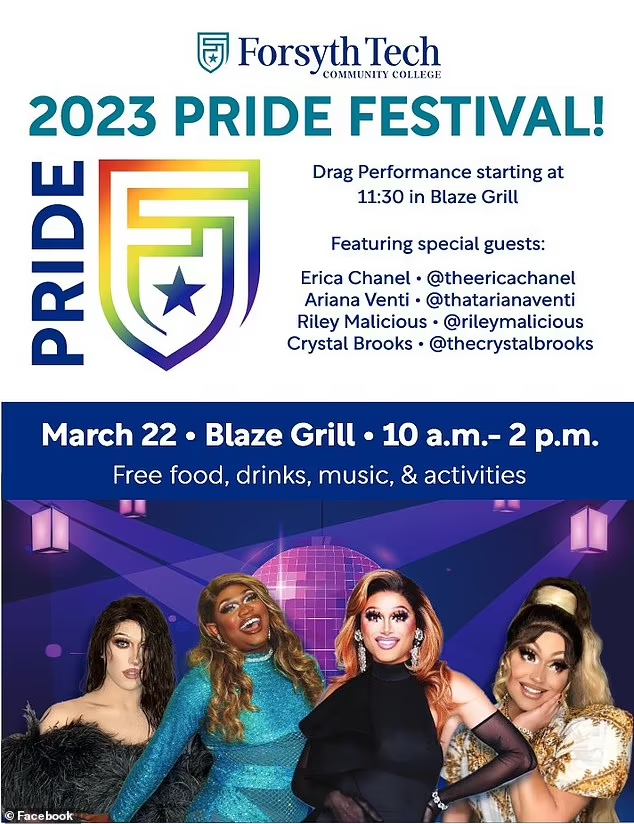




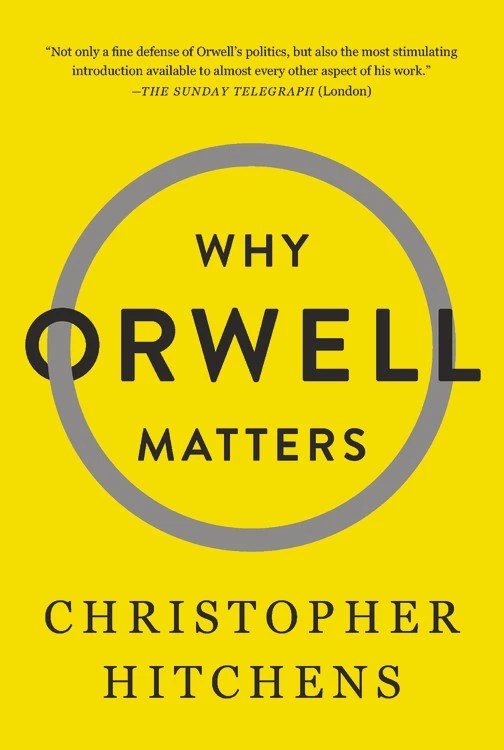









 freedom and reason