Republicanism and the Meaning of Small Government

“Plus ça change, plus c’est la même chose” (“The more things change, the more they stay the same”)—Jean-Baptiste Alphonse Karr (1849)

Florida governor Ron DeSantis launched his presidential campaign Wednesday and it didn’t go well. His Twitter conference with CEO Elon Musk was plagued by glitches, a mess front-runner Donald Trump had a field day with, posting a devastating meme readers won’t have much trouble finding (for a sampling of the many memes that followed, see here). The most recent surveys finds that Trump continues to rise in the polls, while DeSantis continues to fall. At this point, it appears DeSantis picked the wrong time to enter the race for president.
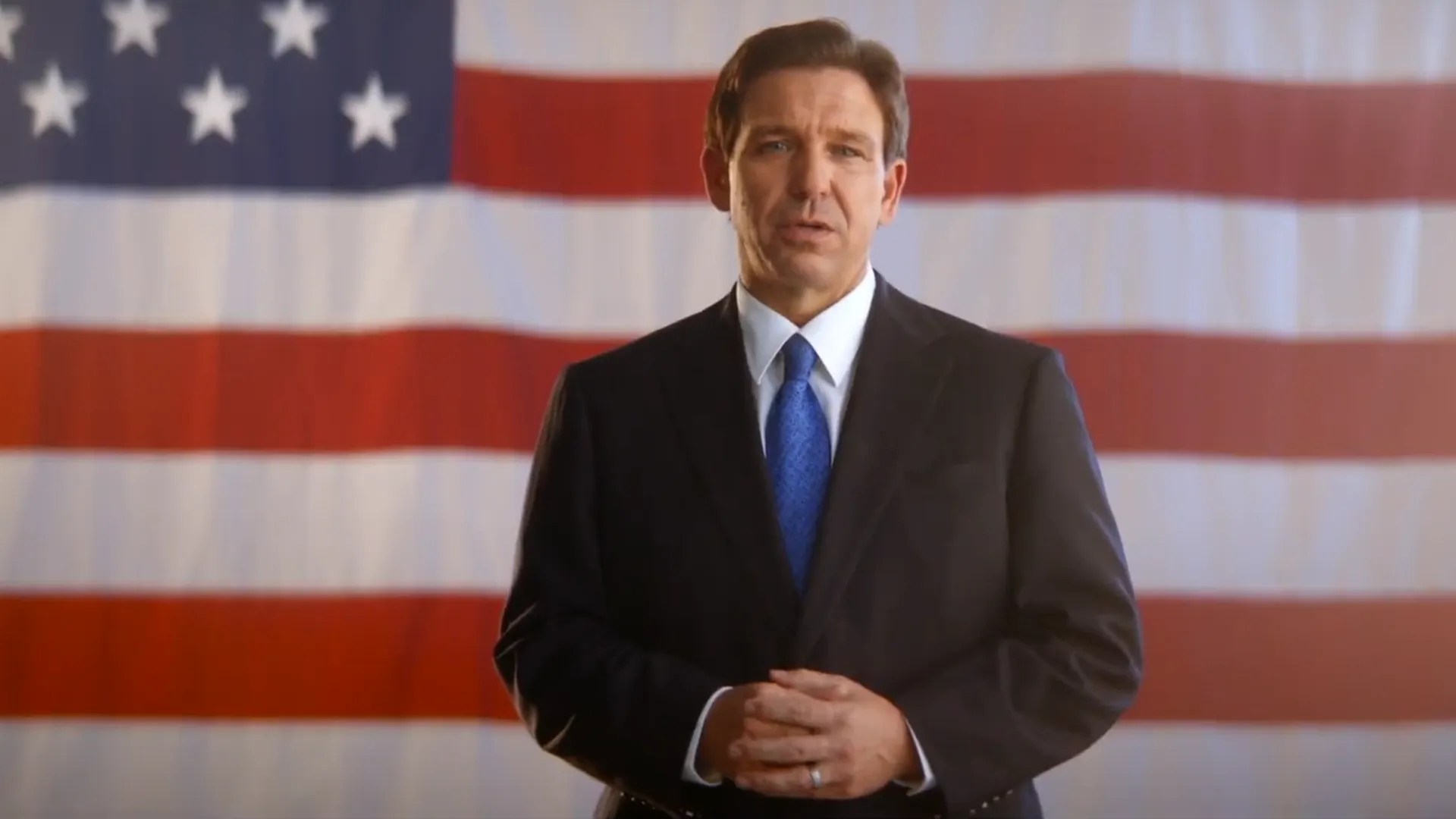
Governor Ron DeSantis of Florida has put the interests of Floridians above the profits of Disney infuriating progressives

But I am not blogging about political theater today. I want to talk about political philosophy instead, in particular this question I’m seeing from progressives about why DeSantas is hassling Disney if Republicans believe in small government. This appeal to hypocrisy, presuming it’s not disingenuous, reveals an ignorance of what it means to be a r/Republican—both the principle and the party (hence the r/R). “Big government” is a popular label for competing governing philosophies.

When Republicans talk about the problem of “big government,” they are expressing concern about intrusive government. Republicans desire effective and responsible government that doesn’t trample the rights of individuals or interfere with family life for the sake of a political-ideological agenda or maximizing corporate profits. However, they also believe in safeguarding children from sexualization, which is sometimes, tragically, perpetrated on children by their own parents, and this necessitates limiting what parents can do to their children. The pragmatics of Republican politics stems from the foundational belief that the proper role of the government is not to control people but to promote virtue in citizens and protect them from illegitimate power and unscrupulous actors.

History is important here. During a period when the established parties were succumbing to the pressures of southern slaveholders and their powerful backers (which include capitalists in foreign countries), the Republican Party emerged as a radical force determined to disrupt the nation’s political landscape and return the nation to its original intent as a constitutional republic. The Republican Party originated in the mid-1850s in the United States as a response to the mounting tensions over the abomination of slavery and the power of the slavocracy over the nation. Comprised of various factions, Republicans united under the practical goal of opposing the expansion of slavery into new territories. The New York Tribune, a prominent newspaper founded by Horace Greeley, played a significant role in promoting Republican ideals and providing a platform for influential voices.

One such voice was Karl Marx, who contributed articles to The New York Tribune during the 1850s, helping to shape Republican Party philosophy. Marx, a renowned economist, legal, and political theorist, used the paper as a platform to express his views on American politics and social issues, as well as plugging Americans into the European scene. While not directly involved in the party, Marx’s writings for the Tribune nonetheless influenced intellectual debates and provided insights into the political climate of the time. American readers of readers of the news were not ignorant of the arguments and the platform of the Communist Manifesto, which Marx, along with his colleague Frederich Engels, had pinned at the end of the 1840s to elevate the struggle of labor against capital. Greeley himself advocated the importance of working-class interests and advocated for land reform and public education as means to uplift the laboring classes, a major plank of the Communist Party.

Marx’s writings were not out of place in the Republican movement. Nor was Greeley alone in the party in his pro-worker politics. Many in the party were strong advocates of labor rights and securing the material interests of workers. Socialists and labor activists found a place in the party, particularly during the late 19th century when the influence of these groups grew. The Republican Party associated with the International Working Men’s Association, also known as the First International. This organization aimed to unite working-class movements worldwide. Abraham Lincoln, the first Republican president, recognizing the importance of labor in the development of the nation, spoke before the New York chapter of the association. This was not a one-off. In a 1861 speech to the Wisconsin State Agricultural Society, Lincoln acknowledged the value of labor, emphasizing its contribution to society and expressing support for workers’ rights—a speech that was carried in the nation’s major papers. The party’s opposition to the expansion of slavery further escalated tensions between the North and the South, ultimately culminating in the American Civil War. In the midst of war the Lincoln Administration and the International Working Men’s Association corresponded over the importance of Lincoln’s reelection and the war against slavery. (For more on this, see my July 4, 2020 podcast and blog The FAR Podcast Episode # 21 Marx and Americanism: From One Revolutionary to Another.)

What republicanism recognizes is that, once the government becomes integrated with corporate and other forms of concentrated power, citizens become subjects, losing their power to govern their own affairs. Corporate governance, or corporatism, may appear as progressive, and speak about “social democracy,” but it is, as I have shown in many blogs on Freedom and Reason, fascistic in character (it is out of this character that the current leftwing authoritarianism emanates). For the same reason that principled Republicans such as Steve Bannon and Donald Trump oppose the administrative state and technocratic apparatus that manages the affairs of monopoly capitalism, an apparatus they seek to deconstruct, past republicans opposed the monarchy and the slavocracy. This is what Republicans mean by “small government,” namely opposition to concentrated and illegitimate forms of power.

This is why, when the Civil Rights Act of 1964 passed, with overwhelming support by the Republican Party, it was only a matter of time before the South became Republican. With Jim Crow a lost cause, southerners soon embraced the party of individualism, populism, and virtue, leading them to leave the Democratic Party in droves. However, through their control of the means of ideological production, progressives have manufactured a lie about this history. They tell you that the parties flipped—if they admit the actual history of the Democratic Party at all. But it takes only a little knowledge to realize that the claim that this is because Republicans is a racist party makes no sense. The fact is that Democrats stood for concentrated unelected government ever since the days of the slavocracy—all the way through Wilson and Roosevelt to today. It’s no problem for them to tell men and women that they shouldn’t marry, that they will be taken care of by the state, that the children belong to the master, and to organize society along racial lines.

Embracing a corporation like Disney is second nature to Democrats. Fealty to state and corporate apparatus should surprise no one in light of the fact that this is a party founded in slavery and shaped by the logic that inheres in governing philosophies that derive from that abominable system. Racism comes easy to Democrats. Indeed, racism 2.0—Affirmative Action, the custodial state, critical race theory, DEI, and anti-white bigotry—is the product of the Democratic Party and the progressive ideas that have colonized American institutions over the twentieth century. So it is to be expected that Democrats would be upset when a Republican governor elevates the interests of the people over the interests of a woke corporation like Disney or the programs of woke colleges and universities.

* * *

I want to say a bit more on the myth that the Democratic and Republican parties swapped places as the racist party of America because my own family misled me about this thanks to their deep and uncritical loyalty to the Democratic Party. To be sure, they admitted that the Democrats may have long ago been the party of racism, but reassured me that they are now the antiracists (which I have sense learned doesn’t mean what it sounds like it means). The Democratic Party is the home of progressivism, which, concerned with social justice, is a forward-looking standpoint (also a misleading claim). Republicans are the party of backwardness, bigotry, and racism, not Democrats. These are all untruths.

You won’t be taught this in public schools, but respective voting records of the two parties on the 1964 Civil Rights Act explode the deception. A higher percentage of Republicans than Democrats voted in favor of the Civil Rights Act. The legislation aligned with the Republican Party platform of promoting equal rights and opposing racial discrimination. In fact, Republican votes were critical in securing the passage of the Act, as they provided critical support to offset the opposition from southern Democrats. While the majority of Democrats supported the Civil Rights Act, there was a significant opposition from southern Democrats who hailed from states in the South where segregation and racial discrimination were deeply entrenched. They sought to maintain the status quo and prevent the federal government from interfering in racial matters.

The vote tally on the original House version was 290 for to 130 against (69–31%). The Senate version was 73 for to 27 against (73–27%). The Senate version, voted on by the House, won 289–126 (70–30%). The original House version broken down by party: Democratic 152–96 (61–39%); Republican 138–34 (80–20%). Republicans were even more likely to support civil rights in the Senate, with the Democratic Party voting 46–21 (69–31%) and Republicans voting 27–6 (82–18%). The Senate version voted on by the House found the Democratic Party voting 153–91 (63–37%) while the Republican Party voted 136–35 (that’s 80–20%). So while a majority of both parties voted for the legislation, significantly more Democrats, both in frequency and in proportion relative to party, voted against the bill.

The majority of Republicans also supported the Voting Rights Act of 1965. Similar to the Civil Rights Act, Republicans played a significant role in securing the passage of the Act, providing crucial support to offset opposition. Again, while the majority of Democrats supported the Act of 1965, and notable opposition within the party was relatively limited compared to the opposition seen in the Civil Rights Act of 1964, there were still dissenting voices among southern Democrats. A similar pattern was seen with the Fair Housing Act, aka Title VIII of the Civil Rights Act of 1968. Here, reflecting Republican concern about big government, there was some opposition within the party over concerns related to federal intervention, property rights, and the potential impact on private housing decisions. There was similar opposition to the Voting Rights Act given that the Constitution leavings electoral matters up to the states. But neither oppositional moment was driven by racism, but rather from principle.

The story progressives tell American youth in public schools is very different. After the vote, the story goes, southerners switched to the Republican Party because Democrats pushed the Civil Rights Act and, since southerners were racist, they rebelled against the party that had protected their white privilege. That’s just how racist white southerners are. The Democrats, which had become more progressive over the years, had seen the light and the racists needed a new party, so they fled to the Republican Party. Of course, this necessarily assumes that the Republican Party was a racist party that would welcome the segregationists. That’s the story I was told growing up in a Democratic family only later to learn it was nonsense. As I noted above, Republicans overwhelmingly supported Civil Rights. Why, if Southerners are so motivated by racism, would they switch their loyalty to the less racist party—to the party that guaranteed the destruction of Jim Crow? Aren’t Southerners stuck in the past? Backwards bigots who can’t think beyond heritage? Didn’t Republicans abolish slavery, pass the Thirteenth, Fourteenth, and Fifteenth Amendments, and occupy and humiliate the South?How could racists side with the Party of Lincoln?

President Dwight Eisenhower, a Republican president, federalized the National Guard in Little Rock and turned them against the Democratic administration of Arkansas Governor Orval Eugene Faubus. Lyndon Johnson, the same president who signed the Civil Rights Act into law, preaching law and order, organized the war on crime and drugs, which disproportionately impacted the black community. Republican president Richard Nixon established Affirmative Action as the official policy of the United States. Republican president Ronald Reagan thwarted the more punitive criminal justice bills pushed by the Democratic Party led by Joe Biden in the Senate. The Clinton Administration ran on a law and order platform and passed into law Joe Biden’s draconian criminal justice bill. This raises a related question: why would blacks switch their loyalty to the Democrats?

In the absence of explicit racism in the Republican Party, progressives claim that conservatives blow their racism through dog whistles. “They aren’t explicitly racist,” we’re told. “They hide it in coded language.” No, Republicans aren’t racists, which is why you can’t hear the whistle. “What about Reagan’s ‘welfare queen’?” What about the reality that the idled welfare recipients in America’s impoverished inner cities is a result of the progressivism that lies at the heart of Democratic Party policymaking? Is the custodial state that robs black Americans of their dignity and sinks their communities into pathologies—fatherlessness, joblessness, and violent crime—the work of populist Republicans? Or is it the work of progressive Democrats? Today, 27 of the 30 most violent cities are run by progressive Democrats. It’s not a hard question to answer.

What explains the upside-down ideology? This requires a much longer blog, but I Shelby Steele, who distinguishes between “poetic truth” and objective truth in civil rights discourse and politics, gives us a big part of the answer. Social justice types use poetic truth to push replacing equality with equity. Equality means every individual is treated the same before the law; equity, in contrast, means that every individual is treated as a member of a group. If a group is different than another group on some statistical metric, let’s say poverty, then members of that group are supposed to receive a privilege. Even if some members of that group are richer than members of the other group, each will enjoy the privilege. Social justice types argue that equality is unjust because members of despised groups on average do better than the beloved groups.

Poetic justice is a strategy used by those seeking power. It establishes a new hierarchy in the place of the one it claim exists. Victimhood and its claims of oppression have become a source of power in a society where guilt has become widespread. But objective reality refutes the claims of social justice types and reveals the position as racist. The Democratic Party is racist because it roots politics in racial difference, a tactic that artificially divides individuals into arbitrary groups based on selected phenotypic features, and not in our common humanity as a species. Progressives pursue a politics of identity. They see social relations not in economic classes and individuals (material and physical realities) but in imagined communities (subjectivities)—categories kept alive by ideology. Progressives see justice in terms of which groups get what things. They do this instead of defending justice as the principle of equality before the law. As such the Democratic Party is also profoundly illiberal. You hear it in their rhetoric of equity and practice of tokenism, which is disguised in the language of diversity and inclusion.

The Democratic Party was the party of slavery, the party of the Ku Klux Klan, the party of Jim Crow and segregation, and now the party of antiracism. Progressives pushed eugenics. Woodrow Wilson, the progressive, was a racist president. The Roosevelt Administration institutionalized red lining across the nation. The Democratic Party continues as the party of racial identity. Democrats and progressives never overcame their racist past but have rather redefined it. Moreover, the Democratic Party is misnamed. Democrats do not really believe in the deliberative work of the republic—in nation-states that represent the sovereign people. They’re globalists. When they talk about democracy they mean technocracy. Democrats don’t believe in foundational law, the Constitution and other founding documents and the common law that inspires our basic liberties and rights. They see good government as policy developed and implemented by experts and specialists who adhere to progressive doctrine.

Southerners were drawn to Republicans not out of racism, but because they found their small government philosophy attractive to their beliefs in individualism and personal liberty, as well as their commitment to virtue. Globalism, multiculturalism, regulation, transnationalism, welfarism, and other progressive and social democratic ideas and policies, as well as hostility towards Christianity, alienated southerners who found republican values more to their tastes. There they found support for religious liberty, individualism, patriotism, populism, and sense of nationalism. With the race question out of the way, there was no reason to remain in the Democratic Party. And now that the Democrat Party has reengineered racism as anti-white bigotry, there is no reason to return.

Offense-Taking: A Method of Social Control

“People who wish to be offended will always find some occasion for taking offense.” —John Wesley

When a person says to you that you have offended her with an argument or observation (I am not referring to personal insults or disparaging remarks), what she is saying is that what you have said has hurt her in some way and, since it’s wrong to hurt other people, you’re a bad person for having done so. But what she is doing is something far more insidious: she is trying to punish you for thinking out loud and silence you going forward. It’s not the character flaw Wesley thinks is; it’s a method of social control.

She can’t believe you said that!

Offensive-taking, alongside emotional blackmail, guilt-tripping, name calling, and other tactics, is a technique used to discredit speech by appealing to collective sentiment or injury. It’s an ad hominem tactic that avoids confronting the content of the speech uttered while simultaneously attempting to negate the argument or observation by delegitimizing the person making it. It’s part of a strategy of social control designed to suppress arguments and observations. This tactic can actually damage careers and reputations, and may even expose a person to physical harm. Offense-takers don’t just want you walking on eggshells around them; they want you to believe the ground is littered with eggshells. Offensive takers don’t just speak for themselves; they speak for others.

For example, if I criticize Islam, a Muslim or his ally might say that what I said about a man’s religion offends him, that my speech is harming him, that I am a bad person for making a criticism. If I want to be a good person, then I should say nothing critical of the man’s deeply held beliefs. I should be respectful of his religion and sensitive to his feelings. Otherwise, I’m “Islamophobic” and “mean.” By making them hateful, my arguments and observations are not met with any counterargument—they don’t need to be—but rather are dismissed by questioning my character and motives. Offense-taking appears similar to anger, and, like anger, the reaction of taking offense is a moralistic emotion; but it is also tactical.

Those who say they are offended don’t want people to hear speech critical of the things they believe because it interferes with their desire to push their own beliefs about the subject in question without resistance. They mean to shut you up and shut you down so they can spread their ideas more freely and widely. If nobody is criticizing their beliefs, then they believe others will be more likely to accept them—and more reluctant to criticism them themselves. To continue with the example, Islamization is an agenda pushed by some Muslims in the West; they desire an islamic West or at least communities governed by sharia. Islam is a proselytizing ideology.

When you criticize Islam as an idea system (and there is a lot to criticize), you are interfering with the agenda to spread Islam. You can tell who is pushing an agenda by whether they are “offended” by what you say. You will likely not only be called an “Islamophobe” (an attempt to make a smear appear to have some clinical heft), but also accused of “paranoia” for even thinking that there is an agenda (again, a clinical-sounding word). Another accusation that might be leveled at you is “conspiracist” or “conspiracy theory.” Sometimes offense-takers push the argument in a threatening direction, making those who say offensive things aware that, sometimes, Muslims who are offended by the things others say kill themselves—sometimes they take others with them when they go. Contradicting the beliefs and feelings of some people cause self-harm and harm to others. This is peak emotional blackmail.

What is true of Islamization is also true of the colonization of Western culture by gender ideology. Take what I have written above and swap out words in the example. Being accused of “transphobia” is not really different from being accused of “Islamophobia.” The functions of the one are the functions of the other: shut critics up and forge ahead with the agenda. Individuals critical of gender ideology and queer theory are smeared to delegitimize their argument so a religion can grow its congregation. If you resist its spread, you may find yourself accused of inducing suicide in the adherent.

There is an important lesson here: people who are offended by arguments and observations are using an irrational method of dealing with arguments and observations that threaten their agenda. Don’t be afraid to speak up. Speaking up lets others know that they are not alone in thinking what they were thinking. Mutual knowledge builds effective resistance to bad ideas. We have enough bad ideas in the world. We have to start standing up to them. A big part of this is exposing the the method of social control we call “offense-taking.”

The Tyranny of Rules Governing Speech

Ideology refers to a set of beliefs, principles, and values that shape one’s attitudes, behavior, and motives. It provides a framework for interpreting the world and guides individuals’ actions and decisions. It also distorts reality in that its shoehorns the facts it does not invent or manufacture into its worldview in order to advance its goals (whatever these are) and sustain its legitimacy.

Religion is an example of an ideology. Like other ideologies, religion provides a framework for understanding the world, shaping one’s behaviors, beliefs, and values. It involves a set of ideas and practices that are shared by a community of believers and can have a significant impact on the culture and society in which it is practiced. Religion provides guidance on ethical and moral matters that, if allowed, shapes political and social interactions, relations, and structures.

Western society is distinguished by religious pluralism. Religious pluralism is the belief that multiple religions can and should coexist within a society. It recognizes that there are many different religious beliefs and practices, and that individuals have the right to follow their conscience. Religious pluralism promotes tolerance of other faiths, and encourages dialogue and cooperation between different religious communities. It does not require this, to be sure, but it admits that no one religion has a monopoly on truth.

Since the various religious are instantiations of the broad category of ideology, the ethic of religious pluralism applies to all ideology. Pluralism broadly recognizes that there are many different ideologies and that individuals have the right to freely subscribe to and change ideologies and not be punished for their commitment to ideas—unless these interfere with the freedom of others. A man enjoys the freedom to practice a religion or to reject religion altogether.

Source: jcgwakefield

The right to freely subscribe to, change, or reject ideological views is what we know as freedom of conscience. A man who enjoy freedom of conscience is a man who free to act in accordance with his beliefs without fear of persecution or coercion as long as his actions do not violate the rights of others. It neither limits nor tramples the liberty and rights of others to criticize, deny, or refuse to affirm the beliefs of religious men—or any type of men. As long as men are allowed to believe as they wish without consequence, they remain free and secure within those rights.

Compelled speech refers to the practice of forcing an individual to express certain views or opinions, even if he disagrees with them. This can take the form of laws or policies that require individuals to use certain pronouns or language, for example, or to express support for certain political positions. Compelled speech is wrong because it is a violation of free speech and individual autonomy, and can create a hostile or uncomfortable environment for those who are forced to express views with which they disagree.

Imagine a law compelling a Muslim to give up Islam and to convert to Christianity or accept a life of disbelief. Imagine laws punishing men for being homosexual or women seeking to control their reproductive capacity. In those two latter cases, one need not imagine. Gays and lesbians have been persecuted for centuries, even in enlightened society, and reproductive rights recently suffered a setback when the Supreme Court reversed Roe v Wade. Several states has effectively eliminated the ability of girls and woman to obtain an abortion.

If I enjoy freedom of conscience and thought, I cannot be compelled to agree with a Muslim regarding his religious beliefs. I cannot be compelled to speak in a manner that is consistent with his ideological worldview, that affirms his beliefs, beliefs to which I do not subscribe and which I may in fact find disagreeable (I do in fact find them disagreeable). And while my criticisms of Islam may draw the accusation of Islamophobia, there can be no mechanisms for punishing me for the alleged offense.

The same is true with those who who would compel me to speak in a manner consistent with Queer Theory. I have no obligation to affirm the ideas of Queer Theory, either. And while my criticisms of Queer Theory may draw the accusation of transphobia, there can be no mechanisms for punishing me for the alleged offense, since no such offense should exist in law or policy, as it violates my freedoms of conscience and thought.

There is no difference between forcing an employee to speak in a manner consistent with Queer Theory, speech that forces the employee into bad faith to avoid consequences, and forcing an employee to speak in a manner consistent with Islam. Yet, as I showed on NIH and the Tyranny of Compelled Speech, there are firms and organizations punishing employees for resisting demands that they use chosen or preferred pronouns.

If it is discriminatory to compel a gay man to undergo training in sensitivity to the beliefs and norms of straight men, or for a firm to hire a white man over a black man on the basis of his race, then the inverse of all these (and one could produce a long list of such items) must also be discriminatory.

If, in admitting that these examples do in fact illustrate discrimination (since they contradict the First Amendment, the Fourteenth Amendment, and the 1964 Civil Rights Act), the argument is made that what differentiates them from discrimination as popularly (albeit falsely) understood is an abstract theory of power that alleges a system that, without institutional intervention, naturally privileges straights over gays, whites over blacks, etc., then we run into another problem: the fate of individuals in a constitutional republic with a bill of rights being determined by an abstract theory with the force of law in back of it.

This is an entirely illegitimate thing and should be an intolerable situation. No abstract theory should ever determine the fate of concrete individuals. These are things to which individuals must be able decide for themselves whether to believe, and they must remain free to abandon such beliefs whenever they wish. This is freedom of conscience and thought, the most fundamental all human rights.

The idea that the rules that govern our actions should be derived from such abstract theories, religious or quasi-religious systems, as Critical Race Theory and Queer Theory—and by rules I mean systems imposed by or allowed by law—reveals an authoritarian impulse in our society that is too dangerous to ignore. It tells us that an unelected power stands over us. And that should tell us, if we cannot find relief in the courts, to rebel against the conditions.

January 6 and the Weaponization of the Department of Justice

Most of the people who entered the Capitol on January 6 did only that: they entered the Capitol. They walked around and then left. But Matthew Graves, the US attorney for the District of Columbia, is determined to destroy their lives anyway. 

Matthew Perna’s family: “the justice system killed his spirit and his zest for life.” Source.

Matthew Perna was a graduate of Pennsylvania State University. He spent time traveling in Asia, Europe, India, and South America. He died at 37 years of age, hanging himself in his garage.

Perna plead guilty to charges stemming from the attack on the Capitol on January 6. Graves who prosecuted his case, argued for extending the time Perna would spend in prison. Prison. For what? Entering the Capitol building and hanging inside for about 20 minutes taking video of the crowd. Prison. For that.

While the homicide rate—including for children—is skyrocketing in Washington DC, all Graves is interested in is arresting nonviolent misdemeanants with disagreeable politics. And Graves is promising another 1000 arrests. He is expanding the net of those who can be so targeted from those who entered the Capitol to those who were outside the Capitol a certain distance from the building. 

Graves is the authoritarian asshole who, to placate progressives complaining about why there weren’t more convictions, dusted off a Civil War era law, namely “seditious conspiracy,” a ridiculous charge that was laughed out of court on the rare cases where a prosecutor was desperate enough to bring it, and managed to get a few politically-motivated convictions against the Proud Boys, a goof created by a provocative comedian named Gavin McInnes.

That people find January 6 so serious tells you that they are not serious people. At least they don’t think you are. 

Why Are There Sex-Segregated Spaces Anyway?

If a man identifies as a woman, and is recognized as such, that is the slogan “trans women are women” is assumed as true, then a male has access to female-only spaces, such as bathrooms and locker-rooms, which means that sex-segregated arrangements are effectively erased since the trans woman remains objective a male.

There are many reason why a male presenting as a woman may seek to access exclusively women’s spaces. Some of these have to do with gender identity. There is also the fetish autogynephilia, where a man derives sexual gratification by identifying a woman. Whatever the reasons, we’re now seeing men being housed in public facilities, such as the Washington Corrections Center for Women, sharing cells with women.

As with bathrooms and locker-rooms, there’s a reason prisons are sex-segregated. Historically, segregating prisons by sex had nothing to do with construct of gender identity, which is a fairly recent ideological invention (I will have a blog on the history of this construct soon). After you meet Tiffany Scott, I will tell you why.

This is Tiffany Scott.

Prisons have been segregated by sex for much of their history, with separate facilities for men and women. The origins of this segregation can be traced back to societal beliefs about gender roles and the differences between men and women. In the early days of the prison system (the penitentiary emerged it the late eighteenth century in the trans-Atlantic context), men and women were often housed together in the same facilities. However, as concerns about safety and morality grew, separate facilities were established for men and women. These facilities were often designed to reflect the differences between men and women, with men’s prisons characterized as harsh and punitive, while women’s prisons designed to be more rehabilitative and focused on nurturing and caring. At least initially.

One of the main reasons for segregating prisons by sex was to protect female inmates from sexual assault and other forms of abuse by male inmates and prison staff. It was obvious to prison reformers in the nineteenth century that male exploitation of females is a perennial risk. They did not need modern statistical analysis or radical feminist theory to know that (a) males are far more likely than females to engage in sexual predation, a fact observed in most, if not all, societies, independent of cultural and societal contexts; and (b) females are far more likely to be victims of sexual offenses compared to males. To some degree, they understood the multiple factors that contribute to gender disparity in victimization: gender-based inequalities, objectification, and asymmetrical power relations all play a role in creating environments where females are more vulnerable to sexual violence. As prisoners are a literal captive audience, male predation on women was seen as a particular concern given the power dynamics and gendered norms that existed within the prison system.

Another reason for the segregation of prisons by sex was to provide gender-specific programming and services that were tailored to the unique needs and experiences of male and female inmates. For example, women’s prisons often provided programs and services focused on issues such as domestic violence, parenting, and substance abuse, which were more common among female inmates. The segregation of prisons by sex became more widespread in the 20th century, as the prison system grew and became more institutionalized. Today, most prisons around the world are segregated by sex.

Relatedly, it was not until the 19th and 20th centuries that age segregation in prisons became institutionalized and common. Prior to this time, prisons often housed inmates of all ages together, regardless of their offense or criminal history. The emergence of age-segregated prisons can also be traced back to the growth of the prison system in the nineteenth century, which led to overcrowding and the need for more specialized facilities. In response, prisons began to establish separate facilities for different types of inmates, including those who were considered too young or too old to be housed with the general prison population. Today, most prisons around the world have separate facilities for juvenile offenders, elderly inmates, and other special populations. The aim of age-segregated prisons is to provide a more appropriate and effective environment for these populations, with programs and services tailored to their specific needs and circumstances.

In other words, the segregation of prisons by sex and age is based on the recognition that women and different from men and girls are different from women. If a man claimed to be a different age than he was, it would not allow him to be housed in a juvenile facility. That would pose a risk to the juveniles there. So why is a man claiming to be a different gender than he is a legitimate reason to house him with women? The selective denial of reality and harm are curious phenomena in contemporary Western culture. And if you aren’t wondering why prisons aren’t segregated by race, good for you for intrinsically understanding that race is different from the hard biological realities of sex and age.

* * *

It’s not just sex-segregation in prisoners that is challenged by the crackpot theories of gender ideology. I don’t need to inform readers that sex-segregation in sports is unraveling. There is pushback, but the dismantling of structures protecting women from unfair competition continues. (I have blogged about this topic before. See NPR, State Propaganda Organ, Reveals Who and What have Captured the State Apparatus; Is Title IX Kaput? Or Was it Always Incomprehensible?; The Casual Use of Propagandistic Language Surrounding Sex and Gender.)

As will prisons, the origins of sex-segregated sports can be traced back to cultural and societal beliefs about gender roles and physical differences between men and women. These beliefs led to the assumption that men and women were naturally suited to different types of physical activity, with men being viewed as have a range of advantages over women. On the basis of these beliefs, much of which are supported by science, sports were divided into separate categories for men and women, with men’s sports typically receiving more attention and resources. At first, women were often excluded from participating in sports altogether or were relegated to second-class status with limited access to facilities and equipment. Over time, these assumptions and beliefs were challenged by women who wanted to participate in sports and compete at the same level as men, which the aggregate average differences between male and female continued the need for sex segregation.

The emergence of women’s sports in the 20th century challenged the notion that women were not capable of competing at a high level and helped to break down the barriers that had prevented women from participating in sports. However, to achieve equality in this area, it was recognized that the biological differences must be taken into account. In the United States, the passage of Title IX in 1972 was a significant turning point in the development of women’s sports. Title IX is a federal law that prohibits sex discrimination in education, including athletics. This law required schools to provide equal opportunities for male and female athletes, which led to a surge in the number of women’s sports programs and increased funding for female athletes.

While sex-segregated sports remain the norm, the reasons for this concern physical differences between men and women, such as differences in strength and body composition, as determinable by science, rather than assumptions about gender roles and abilities. All this was due in part to the growing influence of feminism and the civil rights movement, which challenged traditional gender roles and advocated for equal opportunities for women. The movement to desegregate sports by sex is an assault on the decades of progress women have made in Western society.

* * *

The point of these examples is to show that equality before the law requires taking account of grouped and qualitative differences between classes of people. Men and woman are not the same. Nor are adults and children. To treat individuals from these categories equally, and to avoid injustices, the fact that they are not the same must be taken into account. If a man is defined as a woman and treated like a woman, the distinction between two objectively different groups is erased in practice and women—not trans women nor men—are disadvantaged. The same is true when children are treated as adults. If age of consent rules were abolished, children would be put a greater risk of sexual exploitation by adults since children are not as a matter of developmental status capable of voluntarily consenting to sex. This is what it is so important to maintain objective categories that accurately convey the relevant facts, in this case correctly gendering a person to avoid disadvantaging women and putting their health and safety at risk.

As for men performing as women, believing the individual to be the opposite sex opens opportunities and spaces to men that are principally reserved for women. The honest way to open those opportunities and spaces is to eliminate sex-segregated spaces and erase sex-based rights, not require individuals to appear as things they are not. Whatever differences there are will sort themselves out in competition. And society won’t have to manipulate gay boys into thinking they’re girls. However, when an ideology results in rapists being able to identify as women and transfer to cells with the class of persons who represent their primary victim pool, then something has gone profoundly wrong in society.

Ideology in Public Schools—What Can We Do About It?

Yesterday, FIRE tweeted the following (note the reference about the “book police”):

I responded. “I like you guys a lot, I really do, but keeping pornographic and ideological materials away from children is not a free speech issue. You know as well as anybody the difference between free speech and indoctrination.” I intervenes because I am concerned that FIRE is going the way of the ACLU, which has become an advocacy group for some of the most crackpot ideas ever devised by man, among them critical race theory and gender ideology. When FIRE appeared, it promised to be a neutral arbiter of free speech. Defending the practice in public schools of making accessible to children works of pornography and extreme ideological ideas is not being a neutral arbiter. It also ignores the democratic and traditional role of the community and family in determining or at least shaping the determination of curricular materials and pedagogical approaches.

From the Book Gender Queer by Maia Kobabe, available at many public schools

User @DirtyHalt responded to my tweet: “Keeping pornography away from children isn’t, but ideological materials away is. It’s established precedent that it’s against the first ammendment [sic] for public schools to restrict books on ideological grounds.” I rebutted “Are third parties allowed to place bibles in public schools? Can taxpayer dollars be used to buy bibles? Can children tell whether a bible in the classroom is private religious speech or state endorsed speech?”

My rebuttal was not entirely rhetorical. I was looking for a conversation. So far, nothing. But I was in asking these questions also alluding to the imperative of freedom of conscience and thought and the problem of the captive audience. Teachers have kids for a good part of the day and, unlike colleges and universities, where teachers enjoy academic freedom and can explore ideological matters if relevant to the subject matter, k-12 institutions are compulsory and totalistic; the students there are immature and easily influenced by authority figures. A public school classroom can easily cross over into a reeducation camp where children’s consciences are reformed in ways contrary to the desire of their parents. Children cannot consent to receiving pornographic and extreme ideological content.

One objection I had expected from @DirtyHalt or somebody else reading the thread was a note about the First Amendment concerning the religious specifically and not ideology more generally. Read strictly, some might argue, any restrictions on ideology in the article refer to religious ideologies. It’s hard to imagine that an ideology instructing its followers to believe that gendered souls enter wrong bodies, which is one of the tenets of Queer Theory, doesn’t count as a religion. Scientology is a recognized religion and its doctrine is almost identical in form to Queer Theory. Would any public school allow the teaching of Scientology in the classroom? Are public school libraries likely to have a copy of L. Ron Hubbard’s Dianetics on the shelf? Like Scientology, Queer Theory is a faith-based system.

Indeed, Dianetics has been the subject of controversies with respect to its presence in public libraries. These controversies stem from the association of the book with the Church of Scientology, a religious organization Hubbard founded in 1953. The Church of Scientology has been involved in various legal and public controversies over the years, which have contributed to concerns and debates regarding the presence of materials associated with Scientology in public libraries. Some individuals and organizations have raised questions about the appropriateness of stocking the book in public libraries due to the controversial nature of Scientology as a religious movement, its practices, and allegations of harmful or coercive practices within the organization. Different public libraries and school districts may have varying policies and perspectives on the inclusion of materials associated with Scientology or any other religious or controversial group. Imagine if Scientology were being push in schools the way Queer Theory is. (See my recent blog Dianetics in Our Schools for such an imagining.)

Moreover, determining what is and is not a religion is really the business of social science, not the government. This is true for other areas of social life, as well. The American criminologist Edwin Sutherland advanced the idea of “analogous social injury,” challenging the legalistic definition of crime and arguing instead for a broader understanding of harmful behaviors in society. He observed that legal definitions of crime did not capture the full range of harmful behaviors—behaviors that matched the conceptual definition of crime but were not defined as such by the state. By expanding the definition of crime to include analogous social injuries, Sutherland highlighted the significance of acts such as corporate fraud, white-collar crimes, and other forms of offenses that have profound negative effects on society. We can apply Sutherland’s insight to ideological systems. If an ideology meets the terms of a religion, as conceptualized by social science, then it is a religion. After all, we don’t decide what constitutes the products and processes of natural history based on whether the government endorses these as such.

But I don’t have to reduce the First Amendment to religious liberty to argue for the exclusion of ideological materials in public school libraries and classrooms. I can appeal to freedom of conscience, of which religious liberty is a subset. When the First Amendment was drafted, the framers of the US Constitution had this liberty in mind. The framers, influenced by Enlightenment ideals, sought to establish a government that would protect individual liberties and prevent the government from establishing a national religion or interfering with people’s beliefs and practices. They recognized the importance of allowing individuals to exercise their own conscience in matters of faith, free from government coercion or establishment of a state religion. The freedom of conscience encompasses the right to hold and express one’s religious beliefs or to choose not to adhere to any religious beliefs at all. It extends beyond religious freedom to include personal beliefs and convictions in general. The framers aimed to create a society where individuals could freely exercise their conscience and practice their chosen religion without fear of persecution or government intrusion. A public school teacher peddling the ideas of Queer Theory is clearly an act of government interfering with people’s beliefs and practices.

Returning to my questions in my response to @DirtyHalt, I asked whether the state can buy Christian bibles to place in school libraries. The Supreme Court has ruled that public schools may include religious texts, including the Bible, in their libraries as part of a diverse collection of materials. Crucially, the acquisition of religious texts must serve an educational purpose rather than promote or endorse a particular religion. This is one of the key difference between education and indoctrination: the appearance of alternative materials and contrary and critical views presented in an ideologically-neutral manner in an ideologically-neutral context (see my recent blog Civic Spaces and the Illiberal Desire to Subvert Them). If the Bible is acquired and displayed alongside other religious and secular texts, it is less likely to be seen as an endorsement of Christianity, but teachers also have an obligation to not favor the Bible over the other religious texts—or religions over atheism or irreligious beliefs and opinions. Nor should the plan of the library or classroom and the arrangement of materials therein be such as to steer children towards one over another.

Christianity is central to world history, so it stands to reason that the Bible may appear in the teaching of that history. However, it cannot be used in any way that suggests that teachers or the building endorses Christianity, and for younger children religion is a subject that should probably not be part of public school instruction. Since the selection of materials is a deliberative affair, what materials appear, when and where, should be part of that discussion. Teaching Christianity or Islam may undermine a child’s home instruction in matters of conscience, something that should be left to families; as a matter of principle, state institutions in a religiously-plural mass society should avoid intruding on this realm. It is difficult for a child to differentiate between a historical text being presented as such in an objective way and the presentation of Christianity as state endorsed speech. This is why the Christian Bible must appear, if it appears as all, alongside other religious text, such as the Koran. This is why the substance of religious thought should be avoided altogether. It’s one thing to note as a historical fact when the Roman Empire adopted Christianity. It’s quite another thing to teach or even suggest Christianity as a preferred belief system. The idea of eternal life in heaven is an attractive one, and teaching the Gospels may influence a student to adopt the Christian faith.

Perhaps a book based on the religious (or quasi-religious) doctrines of Queer Theory can appear in the same way as the Bible, but, as with Christianity, it cannot be used in a manner that suggests the building endorses Queer Theory. Moreover, if such books do appear, books critical of gender ideology should also appears alongside them. Of course, while this would improve the situation, we know that resistance to the inclusion of such materials would be fierce, with claims of anti-trans bigotry and transphobia flying. Such books would be labeled as hate speech and, if not excluded outright, disappear in short order by those convinced that it is their mission in life to safeguard queer children from criticisms of gender ideology—a move that in reality uses children to defend an ideology the teachers wish to continue pushing the ideology on children. (If activist teachers actually cared about safeguarding children, they would not expose them to pornographic and extreme ideological content.)

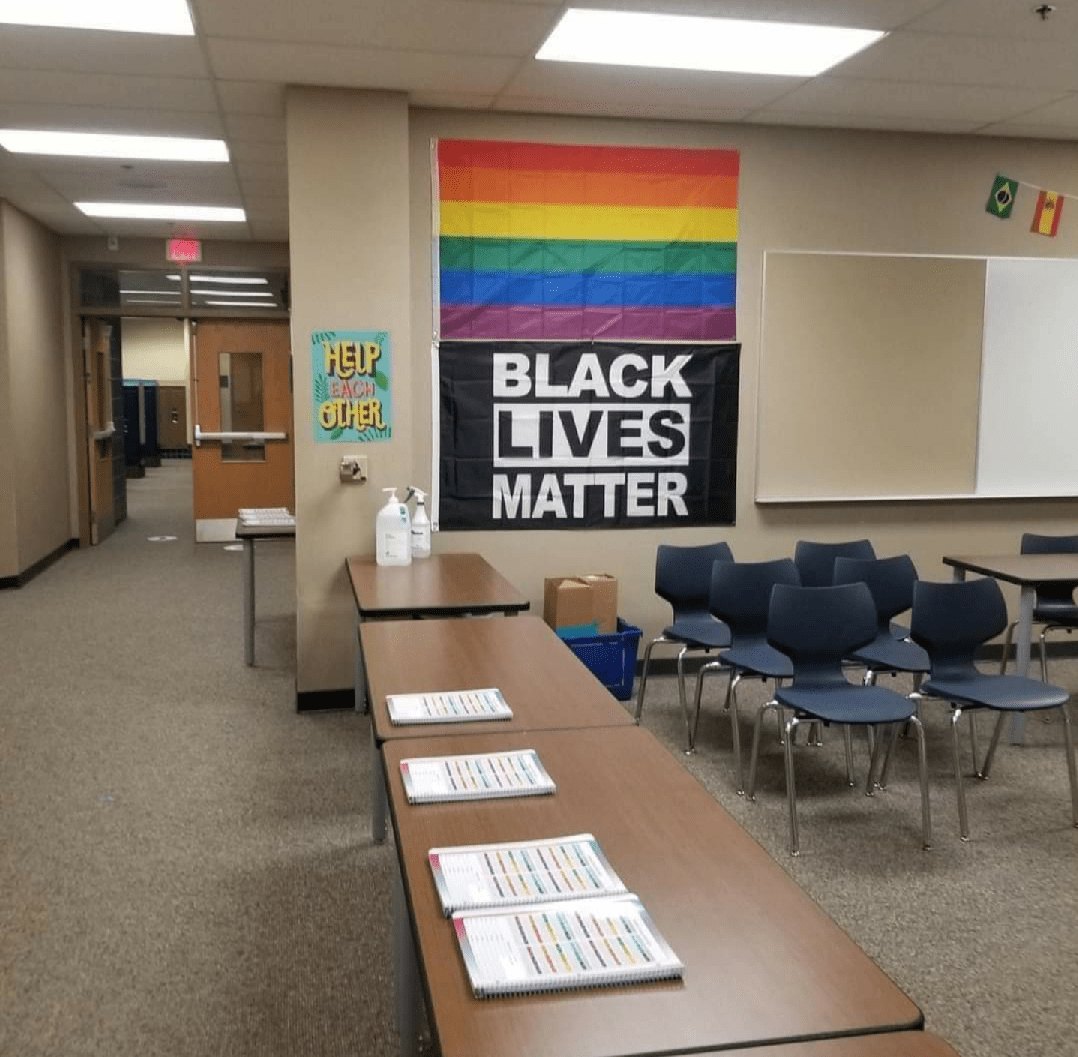
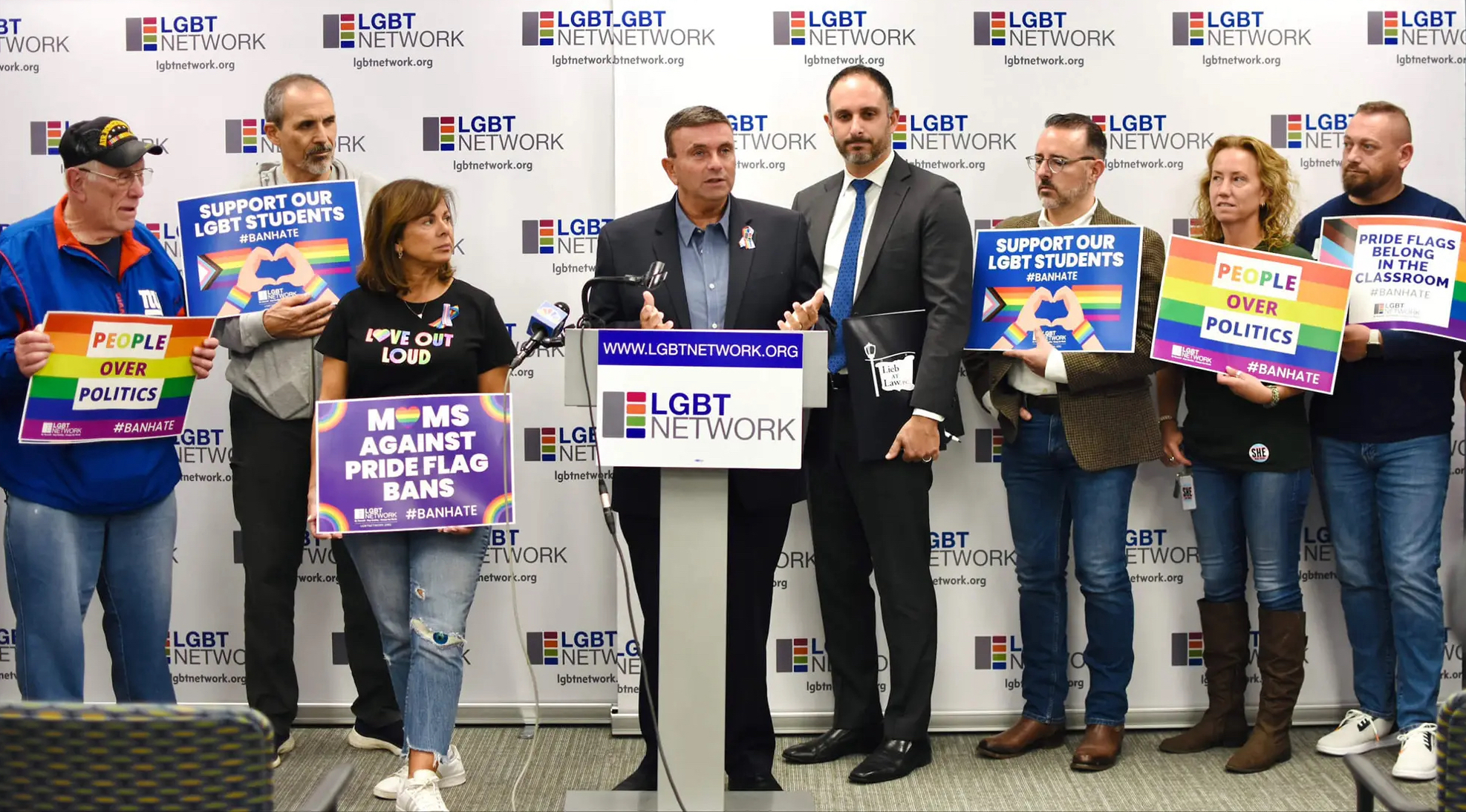
This is why intent is so important to consider in such matters. It would be naïve in the extreme to fail to grasp the reality that books rooted in Queer Theory are presented to students in a way that strongly indicates an endorsement. Indeed, this is why such books appear in the first place: activists teachers and community members want to influence children to take up the ideology and apply it to their lives. Like other proselytizing religions, Queer Theory comes with a praxis of transgression, which involves disrupting the evolved understanding of some thing in order to prepare the ground for an ideological one. The desire to indoctrinate is conveyed by flags and posters advocating the ideology. Classrooms are today explicitly designated safe spaces for queer children in the same way a classroom might be designated a safe space for Christian children but for Supreme Court rulings. Access to safe spaces necessarily comes with deference to the purpose of designating a space as such. Any child entering that space would have to agree with the ideology governing that space. This is a violation of the child’s freedom of conscience. (See Why It Harms the Liberty of Neither Teachers Nor Students to Restrict Ideology in the Classroom.)

Ideology in the classroom

I also asked whether third parties can buy Christian bibles for the school library. Public schools generally have the discretion to accept donated materials, including religious texts. However, the same principle as presented above applies here: the acceptance of religious texts must be part of a broader collection of materials and not used to promote or endorse a specific religion. Because third parties donations may undermine religious diversity, care should be taken to ensure balance in the materials. This is true for ideological diversity more broadly. If trans activists donate books advocating or assuming the validity of Queer Theory, then books offering alternative views on gender, including books critical of gender ideology, must also be included in the collection. If this cannot be accomplished, then the materials with ideological treatments of the subject of gender should be refused or removed.

I might also have asked whether teachers can put Christian messages in the classroom, which is to ask whether they should advocate ideological and political opinions in the capacity as teachers. I have blogged on this matter before (see Faith Belief and Flag Flying; Whose Spaces Are These Anyway? Political Advocacy in Public Schools). The answer is very clear. Public school teachers, as representatives of the state, must adhere to the First Amendment’s Establishment Clause. Therefore, they should not promote or endorse any specific religion, including Christianity, while acting in their official capacity. However, teachers may discuss religion objectively in an educational context, as long as it serves an academic purpose, such as teaching about different religions as part of a social studies curriculum. The same rules should apply to any ideology or philosophy. In discussing the ideas of Karl Marx and his advocacy of communism, teachers should present Frederich Hayek and his advocacy of capitalism. If the Communist Manifesto appears in the school library, then so should the Road to Serfdom. Teachers must avoid indicating, and the layout of the library and the classroom should not be so arranged as to indicate, a preference for either the ideas of Marx or Hayek.

However, most children do not have the capacity to grasp the arguments of Marx and Hayek, so one should ask whether these materials are really relevant for a public school library or classroom. One might simplify these ideas of course, but for what purpose? Is the debate between communism and capitalism age-appropriate for most school children? To be sure, in the teaching of history, the subjects of communism and capitalism may come up, and a teacher can summarize the ideologies that animate both systems, but to endorse one system over the other would constitute an act of indoctrination not education. There are many areas like this. In teaching environmental matters, are children really in a position to determine whether they are justifiably panicked about global warming based on the science? Do they understand that science? Can they? Will alternative arguments be presented?

The same is true for Queer Theory. In what context would it be relevant to teach children extreme and controversial ideas about gender? If this were to occur, then the arguments against the tenets of Queer Theory should also appear, and the teacher should avoid appearing to endorse one view over another. A teacher should be allowed to teach Queer Theory as if it is uncontroversial. But the question of why such ideas need to be covered in the first place should be at the center of this controversy. Claiming that queer children need the ideas taught for their own benefit presupposes that they would seek these ideas or benefit from them before being taught them—indeed, that all children would desire to know these things or benefit from them. If such are argument were made about Christianity, it would be obvious that the practice ran afoul of the First Amendment. It is no less obvious that teaching Queer Theory to children contradicts freedom of conscience and thought when one operates from principle rather than politics.

Maoism and Wokism and the Tyranny of Bureaucratic Collectivism

Fox News headline: “Colorado teacher calls for ‘FORCEFUL cultural revolution’ targeted at ‘whiteness’: ‘This is sacred’” (see tweet below). “I am absolutely advocating for a cultural revolution,” said Aurora Public Schools teacher Tim Hernandez. At a speech in May, in which he cosplayed a generic civil rights leader, even affecting a black accident and the cadence of a street preacher, he told an audience there were Marxists and Leninists among the AFT union affiliate in Colorado. He did this in plain view of the media organizations present at the rally.

The comparison of Mao’s cultural revolution and Wokism’s color revolution is obvious. Both are what political sociologist call “revolutions-from-above,” a concept I will discuss in a moment. But Fox News is leaving out the most fundamental truth in all this: neither Maoism nor Wokism was/is Marxist. Maybe Hernandez’s audience thinks they’re Marxists, but one is not a Marxist because he says or thinks he is; a man is a Marxist depending on what he says and thinks—and what he does.

Marxism is rooted in class politics and seeks the transformation of the economy from one based on the exploitation of man by man to the exploitation of the environment for the benefit of all with the goal of liberating individuals from the limitations of tribal relations. This teacher obsession with white supremacy tells us that this is not his project. He’s angry at Hannah Grossman for amplifying his tribal obsessions because he, like other progressive teachers, want the media to obscure their activities for the good of the agenda. Most corporate media organizations protect the progressive agenda. Fox News doesn’t.

We recently got another taste of the Maoist character of woke progressivism in the case of the death of a man with a well-known reputation for violence and a lengthy rap sheet who was threatening people on the F train in Manhattan on the New York City Subway. On May 1, 2023, Daniel Penny, a 24-year-old marine, assisted by two other passengers, restrained a career criminal named Jordan Neely. At some point during the event, Neely died. See my May 7 blog The Failure of the State to Protect its Citizens to read my initial thoughts about this case and its implications. You can also read there some of the details of Neely’s extensive record of criminal violence, violence often directed towards children and the elderly. Neely was a menace.

What caused Penny to retrain Neely? According to police, witnesses reported that Neely was behaving in a “hostile and erratic” manner and threatening passengers on the train with violence. He expressed a lack of concern about going to jail for what he about to do, announcing that he was “ready to die.” Witnesses reported that Neely was throwing objects at passengers. The police initially questioned Penny but released him without charges a few hours later. Manhattan District Attorney Alvin Bragg initiated an investigation into the incident. On May 3, the medical examiner’s office ruled Neely’s death as a homicide, attributing it to “compression of neck (chokehold).” On May 12, Penny was charged with second-degree manslaughter. If convicted, Penny could face a maximum sentence of 15 years in prison.

In that previous blog, I compare the Neely case to the George Floyd case. The comparison hasn’t escaped the attention of others, for example Twitter profile End Wokeness (see above). This is what we call “left idealism” in Marxist criminology (see my December 2019 blog Demoralization and the Ferguson Effect, as well as my September blog of that same year Marxist Theories of Criminal Justice and Criminogenesis for more). Left idealists make martyrs out of criminals to serve as propaganda props in the project to delegitimize public safety. The desire for chaos is rooted in anarchism and the praxis of transgression. This attitude emerges with the New Left during the 1960s with the postmodernist corruption of critical theory and the adoption of Maoist ideas in the West (see my September 2020 blog The Mao Zedong Thought Shift from the Class-Analytical to Race-Ideological).

To facilitate the woke progressive projects, CNN tells the Neely story this way:

So if Maoism and Wokism aren’t Marxist what are they? They are totalitarian tendencies that use chaos to entrench their respective ideologies. Both Maoism and the Wokism are rooted in bureaucratic collectivism, characteristic of both modern China and the modern West, and, at various points, sow confusion and disorder in order to entrench the ideological assumptions that weaken opposition to authoritarian and illiberal culture and politics. The dynamic of bureaucratic collectivism deindividuates the population, sharply restricting personal autonomy and charisma, deforming the personality. German sociologist Max Weber warned more than century ago that the corporate bureaucratic organization of human activity depersonalizes society, thus leading to mass society. It reduces people to cogs in machines, robbing them of their agency. As Weber put it, bureaucracy is destructive to “individually differentiated conduct.”

You can read more about Weber’s ideas on bureaucracy in his early twentieth century work Economy and Society. To briefly summarize, Weber held that bureaucracies are organizational structures characterized by a hierarchical division of labor, a chain of command with rigidly defined roles and responsibilities, as well as explicit rules and regulations, and a system of impersonal authority—or of which are rarely the result of democratic processes. Weber argued that the bureaucratic organization of mass human action tends to depersonalize individuals. In bureaucratic systems, individuals are expected to conform to predefined roles, follow standardized procedures, and prioritize organizational goals over personal preferences or aspirations. Depersonalization occurs as people become mere functionaries within the bureaucratic apparatus, their individuality and personal autonomy suppressed and negated. They become embedded in ritual systems without spirit or transcendence.

Weber identifies this as the problem of the “iron cage,” a metaphorical concept representing the restrictive nature of bureaucratic organization, the form of organization characteristic of corporate capitalism, wherein the rationalization and bureaucratization of society impose a system of rules and regulations limit creativity, individual freedom, and personal initiative. The iron cage metaphor emphasizes the loss of human agency and freedom within the rigid structures of bureaucracy. Weber highlighted the phenomenon of “disenchantment,” where traditional beliefs and values, as well as charismatic forms of authority, are displaced by rationalized bureaucratic structures. The rise of bureaucracy is seen as a rationalizing force that undermines the enchantment, personal connection, and charismatic authority that individuals may experience in more traditional or pre-bureaucratic social arrangements. These arrangements are soul-stealing.

This is a common theme in the sociology of the late-nineteenth and early-twentieth centuries. The French sociologist Émile Durkheim, in his 1893 book Division of Labor in Society, theorized the shift from pre-modern societies, where individuals are integrated in society through shared beliefs, values, and collective rituals, to the functional and impersonal interdependence characteristic of modern bureaucratic societies, where individuals become socially disconnected, making it challenging for individuals to interact in a shared moral framework. Durkheim argued that as societies become more complex and specialized, traditional moral and social bonds weaken, leading to a sense of normlessness and moral confusion. Sit back for a moment and reflect on what is happening today in the West. Like Weber, Durkheim understood very clearly where modern societies would take us if we allowed bureaucratic rationalization to direct our lives.

Durkheim’s argument borrows much from German sociologist Ferdinand Tönnies, whose 1887 century book Community and Society also analyzed the effects of modernity on social order, comparing modern society (i.e., Gesellschaft), marked by contractual arrangements, individual interests, impersonal social relationships, and a weak sense of community, with traditional communities (i.e., Gemeinschaft), which are based on strong personal bonds, shared values, and a collective sense of belonging. The crucial finding of these researches, emphasized in Weber and Durkheim’s work, is that the growing complexity of human society undermines the moral order, by shifts control from integration, which is marked by strong and internalized social bonds, to regulation, which is external and typically appears as coercive forms of control. The trajectory of sociocultural evolution in modernity bends towards authoritarian. The progressivism of the so-called left greases the wheels of the train and stops those who would brake it.

China is very must central to the problem. The chaos of Mao’s Cultural Revolution prepared the ground for the bureaucratic collectivism that follow Mao’s death. As I will show in this essay, western transnational corporations (TNCs) have been busy establishing and deepening global economic arrangements with the People’s Republic of China (PRC), not only because of opportunities to maximize the production of surplus value through the super-exploitation of captive populations, but also because the Chinese Communist Party (CCP) has perfected the bureaucratic corporate state machinery and is far down the road of rationalizing all aspects of social life—even to the point where, in the social credit system, desired behavior is quantified and reinforced using the technique of applied behavioral analysis or operant conditioning (behaviorism).

Facial recognition is one element of China’s expanding tracking efforts in the development of the social credit system

The social credit system is a scoring system that assesses individuals based on their behaviors and activities. It collects and integrates data from various sources, including business firms, government agencies, financial institutions, and social media platforms. This data is then used to generate a social credit score for each individual, reflecting his trustworthiness and compliance with societal norms and regulations. The system operates through a combination of rewards and penalties. Individuals and entities with high social credit scores enjoy privileges and benefits, such as easier access to loans, expedited bureaucratic processes, and preferential treatment. On the other hand, those with low social credit scores face restrictions and are disadvantaged, suffering limited access to certain services, public shaming, or difficulties in obtaining loans or employment.

I will discuss all this in the next section, but before I do, I also want to define what is meant by “revolutions-from-above,” as well as by the term “color revolutions.” The former term was popularized by the American political sociologist Barrington Moore Jr. in his 1966 book Social Origins of Dictatorship and Democracy. Moore examined the historical development of different political systems and analyzed the conditions under which authoritarian regimes or democracies emerged. He used the term to refer to a process of significant political and societal transformation initiated and implemented by those in power, typically the ruling elite. Moore argued that revolution-from-above was a distinct path of societal change or development, contrasting it with other modes, such as revolutions-from-below, which involve popular uprising and grassroots movements.

The concept of revolution-from-above has since been used by scholars and analysts to describe and analyze various historical and contemporary cases of top-down transformations, including state-led modernization efforts, political reforms, and policy changes implemented by authoritarian regimes. Often these top-down transformations are carried out under cover of manufactured populist uprisings, what are known as “color revolutions,” which mass media organizations and political elites portray as popular protests or political movements that aim to overthrow existing governments or regimes, typically in what those sources portray as authoritarian states. Color revolutions get their name from the propagandistic use of specific colors to represent the purported populist movements. These colors are visible in flags, banners, and clothing worn by protesters. Color revolutions can be thought of as societal-wide AstroTurf operations.

Color revolutions generally characterized by large-scale protests and demonstrations that emphasize nonviolent means of resistance. Participants employ high-profile acts of civil disobedience, sit-ins, marches, and other forms of apparent peaceful protest to express their discontent and demand political change. However, color revolutions are also often violent, which those steering the disinformation campaign censor, downplay, or reframe. These movements typically involve students, intellectuals, civil society organizations, and disaffected elements of the population. Legacy and social media and other forms of communication play a crucial role in organizing and mobilizing participants, defining the terms of the “struggle” in ways that avoid class analysis so as to not threaten the actual structure of power, i.e., class power. Color revolutions often use the rhetoric of democratic reforms, but the regimes installed in their names are typically administrative and technocratic. The actual aim of color revolution is therefore to install or entrench authoritarian regimes by portraying opponents as corrupt, illegitimate, or fascist.

The public is told that color revolutions are complex political and social movements that arise from a combination of domestic grievances, political disassociation, popular aspirations, and socio-economic factors. They involve the agency and participation of diverse local actors, including civil society organizations, student groups, opposition parties, and ordinary citizens. However, the CIA or other Western intelligence agencies organize or support color revolutions to advance corporate and geopolitical interests and influence the political outcomes of countries deemed problematic. The Ukraine was one of those sites (see my History and Sides-Taking in the Russo-Ukrainian War; see also The US is Not Provoking Russia—And Other Tall Tales). The popular uprisings associated with color revolutions are often orchestrated or manipulated by external actors as a means of regime change; TNCs and Western governments and organizations develop and finance civil society groups that serve as propaganda hubs for Western interests.

Sometimes the civil society groups stood up by the authoritarians implode, such as we are witnessing with the principle movement involved in the 2020 color revolution that installed Joe Biden as president of the Untied States. But the revolution-from-above has in the wings new groups ready awaiting mobilization.

* * *

Mao Zedong’s Cultural Revolution, which took place in China from 1966 to 1976, was a revolution-from-above aimed at reasserting Mao’s authority and transforming Chinese society. What Mao envisioned in a transformed society were not explicit. Much of what was promulgated was Marx-ish jargon mixed with traditional Chinese thought, including elements of the communitarian philosophy of Confucius. However, Mao’s actions, such as mass mobilization and purges, were aimed at controlling and manipulating the people to suppress dissent and maintain dominance of Community Party. Mao used ideological indoctrination and mass movements to ensure loyalty to doctrine and obedience to the dictatorship. His policies, such as the Great Leap Forward and the Cultural Revolution, were motivated by a desire to consolidate power within the party.

Mao emphasized the concept of the “mass line,” which feigned seeking truth from the masses, appearing to integrate popular perspectives into decision-making processes. This approach drew on traditional Chinese ideas of collectivism and harmony (as opposed to solidarity), reflecting Confucian and communitarian influences. Mao exploited Confucian ethics and moral principles to promote discipline, loyalty, and respect for authority. He emphasized the virtue of dedication to the collective cause. However, while Confucius advocated for strong family relationships as a foundational element of a well-ordered society, placing great emphasis on filial piety (loyalty, obedience, and respect), which he believed individuals owe their parents and elders within the family, Mao sought to undermine the family structure. Confucius emphasized the hierarchical structure of the family, with obedience flowing from children to parents and from younger generations to older generations. Confucius taught that individuals should fulfill their familial roles and responsibilities with sincerity and devotion. Mao sought to replace the family with the state, conditioning the population to be obedient to the Communist Party—the state as father.

Mao’s Cultural Revolution

Mao’s policies and the actions of the Red Guards fomented strained relationships between children and their elders. This was seen in the actions of Red Guards and the campaign of youth mobilization. Mao mobilized radical youth groups known as Red Guards during the Cultural Revolution. The youth were encouraged to challenge and criticize authority figures, including parents and teachers, and the elderly more broadly, portrayed as representing the old order or “bourgeois elements.” Red Guards encouraged their peers to view their elders with suspicion, as potential sources of “counter-revolutionary” influence. The Cultural Revolution aggressively promoted the idea of overthrowing established hierarchies, including familial and intergenerational relationships. Influenced by Mao’s rhetoric and the prevailing atmosphere of the Cultural Revolution, youth rebelled against traditional values and authority figures. Conflicts arose when older generations held onto traditional beliefs and practices; if they weren’t “counter-revolutionary,” then they lack revolutionary fervor.

In his rhetoric, Mao sought the revolution to rid the party of “bourgeois” elements that he believed threatened socialist ideals. By “bourgeois,” Mao was referring to the liberal secular emphasis on free speech and thought, individualism, and scientific materialism (in contrast, Marx and Engels use the term to describe the ruling class, its historical trajectory, and the character of the law that sustained it rule). Mao mobilized the Red Guards to challenge party officials, intellectuals, and anyone perceived as a threat to Maoism. Red Guards engaged in acts of harassment, public humiliation, destruction of cultural artifacts and desecration of historical monuments, and physical violence. It should not escape the reader that the corporate state and the Democratic Party used the same approach during the 2020 presidential campaign to disrupt democracy and shape the outcome. Indeed, they continue pursuing these tactics. Antifa, Black Lives Matter, and trans activists represent America’s Red Guard and, like the Red Guard, engage in acts of harassment, public humiliation, destruction of cultural artifacts and desecration of historical monuments, and physical violence, condemning the liberal values of free speech and conscience, individualism, and scientific materialism, while preaching animosity towards the older generation and traditional values. “OK Boomer.”

You might wonder how the youth of America could be so enthusiastic about the elderly Joe Biden, who was 76 years old when he announced his candidacy for president in April 2019. But he wasn’t much older than Mao Zedong when the latter launched the Cultural Revolution n 1966. Mao was 72 years of age when China’s lost decade began. Turns out, as with race, young woke progressive types are not as committed to identity as they are to ideology. “Vote blue no matter who.”

The personality cult surrounding Mao reached its peak during the Cultural Revolution. His Little Red Book, which contained selected quotations from his writings, became a symbol of loyalty to Maoism. It was widely distributed and memorized by millions of people (you can see it displayed in the above picture). Classrooms were disrupted, schools and universities shut down, curricula subverted. Intellectuals and academics were targeted, with many sent through reeducation programs or subjected to public humiliation. The power struggles and purges resulted in a significant loss of institutional stability and hindered effective governance. The Cultural Revolution caused significant economic disruptions and setbacks. Industrial production declined, agricultural productivity suffered, and infrastructure development slowed down. Economic instability and mismanagement during this period resulted in widespread poverty and economic hardship. Again, all this should feel familiar to the Western observer. The chaos and decline function as if designed to clear the path for a deeper, more thoroughgoing system of control.

The Cultural Revolution ended with Mao’s death in 1976. In its aftermath, the Chinese government launched economic reforms under Deng Xiaoping. Xiaoping, who held power from the late 1970s until the early 1990s, is associated with the ideology of “Deng Xiaoping Theory” (theory used here to give the ideology the feel of something scientific) or Dengism. Dengism focused on the modernization of China’s economy while maintaining the political dominance of the Communist Party. Dengism parlayed the chaos of the Cultural Revolution to entrench totalitarianism. It was Deng who conjured the propaganda slogan “Socialism with Chinese Characteristics,” which he told the world was a system combining communist ideals with market-oriented reforms and economic liberalization, i.e., the development of corporate capitalism and global economic ties. His commitment to socialism was betrayed by another of his sayings: “It doesn’t matter whether a cat is black or white, as long as it catches mice.”

The interrelations between China and the West since the Cultural Revolution have been marked by a complex interplay of business, economic, and geopolitical factors. So it is imperative to examine China’s economic transformation, its integration with the Western economies, and the ensuing geopolitical implications to understand why the transnational corporate and political elite have pursued elements of the Chinese model. This is also what lies beneath the chaos and decline of the West. It is not just the work of the Chinese to destroy the enlightened West. The managed decline of the American Republic and the democratic systems liberal values that have long marked the trans-Atlantic is also the work of Western elites. The Democratic Party is central to this project.

Since the late 1970s, China has embarked on a path of economic reform and liberalization. The introduction of market-oriented policies, such as the establishment of special economic zones (SEZs), the same as the export processing zones (EPZs) that proliferate throughout the third world, allowed for increased foreign investment, export-oriented manufacturing, and gradual integration into the global economy. China’s economic transformation and its vast labor force attracted significant Western investment. Western TNCs recognized the potential of China’s large market and low-cost production capabilities. This led to the establishment of numerous joint ventures and manufacturing facilities, enabling the transfer of technology and knowledge to China. China emerged as the world’s factory, supplying cheap goods to Western markets. China’s integration into the global economy was facilitated by its accession to the World Trade Organization (WTO) in 2001. Additionally, China’s growing importance in global finance is evident in its increasing participation in international financial institutions and the internationalization of the Chinese yuan.

As US senator, Joe Biden played a significant role in the normalization of relations between the United States and China. Beginning in the late 1970s, Biden, as a member of the Senate Foreign Relations Committee, was actively engaged in shaping US policy towards China. During this time, the United States was transitioning from recognizing Taiwan as the sole representative of China to establishing diplomatic relations with the People’s Republic of China (PRC). Biden, along with other senators and policymakers, played a part in paving the way for this normalization process. Biden visited China in 1979 just months after diplomatic relations were established between the US and China. Biden aggressively advocated for increased economic exchange and engagement to foster better relations between the two countries. As Vice-President, Biden once more played a key role in promoting economic ties between the United States and China. He participated in high-level economic dialogues and trade talks. Biden has bragged about his deep personal relationship with current dictator Xi Jinping, Biden supported efforts to promote cultural, educational, and people-to-people exchanges between the United States and China. All this with a nation that any rational observer understands is repressive of a totalitarian state with global ambitions.

China was granted Most Favored Nation (MFN) status by the United States in 1980. The decision to grant MFN status to China was supported and advocated by several individuals and groups within the United States. One notable figure who played a key role in advocating for granting MFN status to China was President Jimmy Carter. During his administration in the late 1970s, Carter pursued a policy of engagement with China and worked to normalize relations between the two countries. His administration recognized the potential benefits of engaging with China economically and strategically. Both Carter’s National Security Advisor and Secretary of State were involved in negotiations with China during his presidency. Carter’s National Security Advisor, Zbigniew Brzezinski, formerly the director of the Trilateral Corporations, played a significant role in shaping the administration’s foreign policy towards China. Carter’s Secretary of State, Cyrus Vance, also a trilateralist, played a key role in diplomatic relations with China. He was involved in negotiations and discussions with Chinese officials, working towards strengthening bilateral relations and addressing various issues of mutual concern during his tenure. The business community, particularly TNCs, also played a role in advocating for closer economic ties with China. Their influence and lobbying efforts supported the case for granting MFN status. In 2001, culminating a decade of transnationalization under the Clinton Administration, China’s MFN status was converted to Permanent Normal Trade Relations (PNTR) with the United States.

China’s rapid economic growth and its transformation into the world’s second-largest economy, which could not have happened with the concerted effort of the West documented above, have had profound geopolitical implications. Think about it. Why doesn’t the MSM dwell on treatment of the Uyghurs, a large ethnic group in China. Xinjiang, officially known as the Xinjiang Uyghur Autonomous Region (XUAR), is home to approximately 12 million Uyghurs, primarily Muslims. The Uyghurs are not immigrants. They have lived in XUAR since ancient times. The Uyghurs have their distinct language, which bears similarities to Turkish, and they identify themselves as being culturally and ethnically connected to Central Asian countries. They have a rich cultural heritage and history that reflects their interactions with neighboring Central Asian nations. Multiple investigations have turned up numerous reports of disturbing practices and policies targeting Uyghurs, including mass detentions, surveillance, and forced labor. Perhaps the most alarming aspect of the situation is the existence of re-education camps or “vocational training centers.” These facilities are reported to hold a significant number of Uyghurs, where they are subjected to indoctrination and forced labor.

Re-education camps in China’s ‘no-rights zone’ 

Why doesn’t the MSM report the spread of Chinese influence throughout the West? China has significantly increased its outward foreign direct investments (outbound FDI) to Western countries. Chinese companies have made investments across sectors, including automotive, energy, infrastructure, real estate, and technology industries. Chinese state-owned enterprises (SOEs) and private companies have acquired foreign assets, formed joint ventures, and invested in start-ups in Western nations. China has engaged in strategic acquisitions of Western companies, aiming to acquire advanced technology, expertise, and established brands. Notable examples include Chinese investments in the automotive sector, where Chinese companies have acquired European car manufacturers, facilitating the transfer of technology and market access. China’s Belt and Road Initiative (BRI) has extended its influence into Western countries through infrastructure investments. Chinese firms have participated in the construction of ports, railways, and telecommunications networks, promoting connectivity and trade between China and the West.

China has strengthened economic ties with African and South American countries through trade agreements, preferential loans, and “development aid.” These are the markers of neo-imperialism activities. China has invested significantly in Africa and South America to secure access to natural resources. Chinese SOEs operate agricultural, mining, and oil exploration and extraction projects, often involving long-term contracts and joint ventures. Through the BRI, China has invested heavily in infrastructure projects in Africa and South America. These investments aim to enhance regional connectivity and promote economic growth. Projects such as roads, railways, ports, and power plants have been undertaken, exploiting cheap sources of labor, and improving infrastructure for business operations. Critics of China’s investments in the Third World raise concerns about debt sustainability, environmental impact, labor standards, and local economic autonomy—typical concerns about neo-imperialist activities. Indeed, there is worry that Chinese investments will lead to debt dependency and limited technology transfer, while others express concerns about environmental degradation resulting from resource extraction. Recently, Western governments have discovered network of Chinese police stations operating globally, including North America.

Do you see now why you hear very little about China in the MSM? You know that Western journalists and news executives know this information. If they were worried about the threat posed to the world by a totalitarian communist power, why wouldn’t they report on the matter? Because they’re not worried about. They’re not worried about it because these developments are in the interests of the powers the MSM serves. The MSM’s function is to facilitate the construction of one world government, and China’s slave labor and governing model is ideal for the plan.

* * *

This is the New Fascism, and the Democratic Party is the principle domestic political force devolving democratic-republicanism at home and replacing it with the ideas and systems developed in the wake Mao’s cultural revolution—and accomplishing this with the same tactics used to create that path. This is what lies behind critical race theory and gender ideology and their anti-epistemic foundation of postmodernism and the corruption of critical theory. The purpose of these crackpot ideas is to disrupt the thinking and politics of the people by dividing the population by race, promoting anti-white bigotry, confusing the youth about reality, and alienating children from their parents in order to reincorporate America more fully in a corporate state system of control.

It is not that Communist China is taking over the world. It doesn’t have to. Its ideas will win because Western transnational power is seeking the same ends. (See Totalitarian Monopoly Capitalism: Fascism Yesterday, Today, and Tomorrow; Physical Capital, Human Capital, Technology, and Productive Work—These Drive the Real Economy; The New Serfdom and its Useful Idiots: Boots Waiting to Stamp on the Face of Humanity; The Future of a Delusion: Mass Formation Psychosis and the Fetish of Corporate Statism; China Represents the Existential Threat of our Time—and the Democratic Party is a Chief Enabler; The Behemoth Returns: The Nazis Racialized Everything. So Do CRTs.)

I know it feels like a conspiracy when the administrative state and the attendant technocracy—the academia, the culture industry, mass media, the medical-industrial complex, the public education system, even many churches—are aligned and organized around an ideology that is objectively absurd. That this is happening is obvious simply by observing and empirically describing the system. You are told to deny what you can see with your own eyes, but millions of people across the West see things for what they are. The bizarre things our youth believe today—just like the youth in Maoist China or the youth in Nazi Germany—didn’t happen by accident. It happened because an elite have captured our institutions. The adults in the room fell asleep at their screens. Moreover, the elite don’t believe any of the nonsense the professional-managerial class, the functionaries of the corporate state, embrace and push into the heads of their captive audiences.

You may ask, For what? To what ends? What’s the agenda? What I just said. The elite know that tens of million in the United States—and billions around the world—will resist the global neo-feudalist order and the transnational extended state they are standing up. The populist-nationalist uprising across the West tell them they won’t have it so easy. The people are awakening. So they have to double down on changing what the masses think. And to do this, they have to destroy the family. Like Mao, they have get our children. They have to delegitimize our culture and our institutions. They are doing a damn good job of it. (To read my earlier writings on this, see my July 2020 blogs Mao Zedong Thought and the New Left Corruption of Emancipatory Politics and The Mao Zedong Thought Shift from the Class-Analytical to Race-Ideological. Also, from April 2023: The Cultural Revolution.)

In contrast to the transnational corporatist project, Marxism is a project to realize more fully the principles of the Enlightenment by resolving the internal contradictions that inhere in bourgeois society, which have grown ever more pathological with the rise of corporate personhood and an unaccountable administrative apparatus that serves the desire of an immoral elite (this is the source of the perversions that mark our culture). (See Bridging the Left-Right Divide to Confront the New World Order). Anti-racism gets in the way of that project. Anti-racism has folks thinking about the wrong thing. Identity politics, of which anti-racism is a major element, disrupts working class consciousness by substituting ideological concerns for materialist analysis. Wokism is neo-Maoism, and its function is the same as it was with the old Maoism, and that had little to do with Marxism.

Civic Spaces and the Illiberal Desire to Subvert Them

Update (May 22): I am updating the blog to share a real-world example of the hypothetical I posed in this blog. My hypothetical involves the required revision of a proposal in a team-taught class because the student ran afoul of the teachers’ antiracism. The project was deemed “white supremacist” because it rejected the assumptions embedded in critical race theory. In this real-world case, the teacher gave the student a zero on her final project proposal because she used the construct “biological woman.” Follow the thread on Twitter, as there more videos of this student explaining the situation. Then come back here for my analysis, which follows the posted tweet.

From a strictly grammatical standpoint, the phrase “biological woman” can be seen as tautological or redundant, as the term “woman” inherently refers to an adult human female, which is a biological category. The adjective “biological” does not add any new information or modify the term in a meaningful way because womanhood is already understood to necessarily contain a biological component. Of course, language and terminology are not solely defined by strict grammatical rules. In certain contexts, people may use the term “biological woman” to emphasize or distinguish the biological aspect from other considerations, such as gender identity or social roles. It can be used to contrast with the concept of a “trans woman” (a male who identifies as a woman), which is what this student did here. If this were my student, I would have let that slide and approved the project.

However, the teacher said that the term “biological women” is “exclusionary” and further “reinforces heteronormativity” and is therefore not allowed in the class. The syllabus for the class says that students will not be graded on their opinion as long as opinions “do not create emotional or mental harm to your diverse classmates or espouse bigoted or anti-scientific views,” a ridiculous rule since, by emotional and mental harm, the teacher means offensive speech, and that could refer to the unanticipated effects of an array of opinions that could be uttered the parameters of which will likely always be undetermined—and because, as the student points out, it’s the teachers who is being anti-scientific in her views.

Heteronormativity refers to the norms and practices that assume heterosexuality as the default sexual orientation, an obvious default since mammalian species ares dioecious, meaning that individuals are either distinctly male or female (anomalies aside), and sexual reproduction requires the contribution of gametes (reproductive cells) from both sexes. Without heteronormativity, the species does not effectively propagate the genome and risks extinction. (This has no bearing one the reality of homosexuality, which appears in nature across many mammalian species. Rather heteronormativity means that the normative pairing is heterosexual and that this is reflected in culture and history.) As the student notes, the teacher is the one apparently assuming the anti-scientific standpoint by punishing a student for differentiating between a biological category and a social construct produced by a quasi religious ideology.

The classroom of a math teacher at High School in NewYork, a Pride flag and a Progress Pride flag visible.

Last fall, a Long Island teacher was forced to remove two Pride flags from her classroom after students complained that one of them, the Progress Pride flag (that’s the one on the far wall in the above photo), left them “feeling uncomfortable.” Why? It had more colors that the traditional Pride flag. Sarah Ecke, a math teacher at Connetquot High School in Bohemia, refused to take down the flags. In response, the district issued a directive banning all flags except the US and state flags, citing its policy that employees should not engage in political activities in school.

The LGBT Network speaking about the incident.

The problem of public school teachers engaged in political activities at school isn’t the actual problem. Teachers should be able to engage in political activities at school as long as those activities don’t involve proselytizing children. While they don’t have the authority to indoctrinate child, they do enjoy the same right to free speech and conscience as the rest of their fellow citizens. If a student can wear a “Let’s Go Brandon” shirt, which he should be able to, then a teacher can wear a pink and blue decal somewhere on her body. Rather, the problem is a public facility appearing to endorse an ideological position. If flags or other movement symbols appeared on the teacher’s body or belongings, or maybe even her desk, that’d be one thing; but, as you can see, the symbols appear on the walls of a civic space—and that’s another thing altogether: in light of the First Amendment, public schools should maintain classrooms and hallways as spaces free of political-ideological symbology and inducements.

A civic space is a physical or virtual place where individuals and groups come together to engage in public discussions, exchange ideas, learn new things, and participate in democratic processes. Civic spaces take many forms including community centers, libraries, public parks and squares, and social media platforms. Crucially, public schools and universities are civic spaces—indeed, in many respects, these represent paradigms of such spaces. Yet, today, across the nation, these civic spaces are festooned in movement flags and other symbology. Alongside the visible symbols of ideological commitments, official endorsements of particular political positions, administrators and teachers have been busy developing and implementing a constellation of rules that constrain the range of the discussable and thinkable. These rules have spawned a pervasive culture that makes thinking certain thoughts automatic, punishable, or unthinkable.

I will illustrate my point with a hypothetical. Suppose a team-taught class at a public university designed to encourage students to develop, refine, and articulate political opinions within the theme of democracy and justice. To these ends, students are required to produce a final project, which is submitted to the class for discussion, asking them to work from a particular position. Suppose one student is of the opinion that the criminal justice system is not racist, contradicting claims made by the instructors of his class. The faculty looks down on the project because it assumes what they regard as a bigoted and reactionary position. One faculty member objects on the grounds that the language in the proposal expresses “white supremacy” by raising the problem of black-on-black crime. The professor demands the student revise the project. The other faculty members agree.

The student might not think to ask whether there is any way the language of the project could be revised to engage the controversy without risking being labeled a white supremacist. If he did think to ask, and he was to discover there was not, then we may conclude that there can be no debate about this topic in the class. The side claiming that the criminal justice system is racist and that blacks are an oppressed group is the only side allowed. A consensus over the validity of critical race theory and the antiracist standpoint it informs has become so valorized that contrary opinions become racist. It would be the same if hegemonic white supremacy were the character of the university and anti-racist opinion disallowed. When did society decide that a crackpot postmodernist theory of race relations represents the intellectual foundation of civil rights? It didn’t. But the university is a space siloed from society, and the clerics there work as if they charged with protecting the sacred doctrine from contradiction.

There is the obvious problem that the facts the student wishes to make known not only contradict the lectures delivered by the professor but also reveal that either the professors know these facts and want to censor them or don’t know these facts and are therefore in need of educating. Put another way, either the professors knows they have no argument, or they don’t know enough to make one, and so they answers with disreputational smears which ensues continuation of both. The faculty do this to avoid having to give up their position, which is sustained only by tenacity to doctrine, and to avoid appearing to not know what they’re talking about (the egos of university professors are massive). So the student is censored and shamed. (Professors bully students in this way more often than one might think. See The State of Cognitive Liberty at Today’s Universities; Science Politics at the University of Wisconsin—Deliberate Ignorance About the State of Cognitive Liberty and Viewpoint Diversity on College Campuses; Death of the Traditional Intellectual: The Progressive Corruption of US Colleges and Universities.)

If faculty set the parameters of an assignment such that the project must support critical race theory, or gender ideology and queer theory, multiculturalism, transnationalism, or whatever, while excluding opposing viewpoints, smearing contrary opinion as bigoted, etc., then faculty are no longer engaged in the practice of teaching but rather have rigged the situation in such a way as to facilitate the pushing of an agenda and the indoctrination of students. This is the opposite of what’s supposed to happen in public university. The university system is rooted in the Enlightenment and liberal values of freedom of speech and conscience. These values demand that contrary opinions get a hearing in civic spaces, which the university is supposed to be the paradigm. Yet the illiberal desire to exclude unfavorable opinions prevails. Rights are violated and civic spaces corrupted.

Civic spaces are crucial for advancing democratic values, fostering social cohesion, and promoting civic engagement. The reengineering of these spaces to accomplish the opposite—to undermine democracy, disrupt solidarity, and redirect student energies—should strike those who care about human freedom as a truly distressing development. Civic spaces should provide opportunities for citizens to connect with one another, learn about the issues that affect their communities, and work together to address common challenges. By creating an open and inclusive environment, civic spaces promise to reduce social tensions, promote understanding and tolerance, and build a sense of shared identity and purpose. Instead, they have become spaces of ideological warfare where what is discussable and thinkable is determined by those controlling those spaces. Those who should be protecting our civic spaces from ideological conformity have become instead the commissars. Instead of upholding their duties as defenders of liberty and democracy, they have become the gatekeepers of the corporate state.

This is especially troubling because civic spaces are not always freely available or accessible to everyone. Often, those who seek them have to pay to enter. For students having to encumber debt to obtain the college degree they’re told they must have to enjoy a decent standard of living, finding that the space to which they have gained access is not always ideologically-neutral, not only in the political actions of administrators and teachers, but in the very architecture of the spaces themselves, can be quite demoralizing. The threats to the liberal purpose of civic spaces are found everywhere: corporate control over information, government censorship, and social marginalization. Ensuring that civic spaces remain open and accessible to all is essential for maintaining a healthy democracy and promoting social progress. And this can only be accomplished by establishing and enforcing rules protecting free expression and conscience and promoting a culture in which free expression and heterodox thinking is encouraged.

However, a competing narrative has emerged characterizing freedom of speech and conscience as the political-ideological projection of white Christian men, who use their power to legitimize and protect the speech they use to oppress others. “All knowledge systems, including those of modern science,” writes postmodernist philosopher Sandra Harding in her 1992 essay “After the Neutrality Ideal: Science, Politics, and ’Strong Objectivity,’” published in the academic journal Social Research, “are local ones.” The dominance of Western science across the planet is “not because of the greater purported rationality of Westerners or the purported commitment of their sciences to the pursuit of disinterested truth,” but “because of the military, economic and political power of European cultures.” Harding casts science and ideologically-neutral spaces as “politics by other means.”

For thinkers of Harding’s ilk, the content of Western civilization—liberalism, rationalism, secularism—is an imposition on the rest of the world; its ideas have not won because they are better, but because those who espouse them—white Christian men—are imperialist. Debates and discussions about critical race theory, queer theory, etc., are portrayed as hateful speech perpetuating oppressive systems that bigots justify by wrapping themselves in the First Amendment. CRT, queer theory, and other critical theories are, in contrast, essentially correct on account of the “epistemic privilege of the oppressed”—and it they’re not entirely correct, it is not up to white Christian men to correct them; that is a bigoted act that those with power impose on those without power. Only those who are have asserted an oppressed status, based on a particular theory of power, can debate amongst themselves questions concerning the nature of their oppression, with one definite premise determining their conclusion: white Christian men are the bane of human existence. Given this, there is no reason to proceed with the ethic of neutrality. Indeed, it must be rejected since it “depoliticizes science” by “dissimulating power.” This basic idea, these notions of sociological relativism and the epistemic privileges it affords those who make claims about their marginalized status in a university that accepts the terms that accompany the religion, is what animates Wokism.

When asked by John McWhorter to define Wokism on a recent episode of the Glenn Loury Show, Mark Goldblatt did so in this manner: “I think that Wokism in generous terms is a cluster of advocacy positions that are designed to promote an understanding of and equity for historically marginalized people historically marginalized communities and I think on that level it’s impossible to object to it. It’s the methodology by which that promotion proceeds that is the problem with Wokism because Wokism is a religion.” He explained: “Fundamentally, the methodology employed by the woke it is a sort of direct assault on the Enlightenment values of rational inquiry, socio-religious tolerance, and individual rights. Doing that puts it in a kind of position of bullying, for lack of a better term, when you have decided that reason, that evidence, objective evidence and rational inquiry and standard modes of logic are not decisive in public discourse, then you are in a position of ‘I’m more powerful than you are therefore I can take what I believe to be true and impose it upon you’ and I think that that’s the sort of underside of Wokism, it’s the problematic side far more problematic side.” 

McWhorter wondered, “Why are these people fighting the Enlightenment? Who does this? What makes them feel like they’re on the side of the Angels, these parishioners, which is indeed what they are? Why are they doing this?”

“I think because arguing on the basis of empirical evidence and logic is hard and your side will not win if you don’t have the best evidence and if you don’t have a coherent logical approach,” Goldblatt responded. “On the other hand, if sentiment is raised as a methodology to counter empirical evidence and standard logical modes and anybody can play and, more importantly, I think what that position, what the woke position does, is it changes the nature of the search for truth. That is, it posits that the identity of the person making a truth claim not only influences but can guarantee the truth of the claim itself, that the truth value of a proposition is related to or a function of the identity of the speaker makes the claim.”

What underpins Wokism is the postmodernist epistemic (closely related to deconstructionism). I am in agreement with the German philosopher and sociologist Jürgen Habermas concerning the problem with the postmodernist standpoint (if it can even be described as such). Habermas sees as a threat to the Enlightenment values of reason and human emancipation. Habermas argues that postmodernism is characterized by a rejection of universal truth claims and a skepticism toward metanarratives or grand theories of history and society. According to Habermas, this skepticism leads to a fragmentation of knowledge and a loss of faith in the possibility of rational, critical inquiry. Habermas also criticizes postmodernism for its emphasis on language and discourse, which he sees as leading to a relativism that undermines the possibility of universal moral standards and objective truth. He argues that postmodernism ignores the role of intersubjective communication and social interaction in creating shared norms and values. Predictably, the postmodernists criticize Habermas for his appeal to Enlightenment values and his faith in the power of critical rational inquiry to achieve social progress.

To be sure, the concept of neutrality is problematic and rightly contested. Even the most neutral-seeming spaces are influenced by implicit biases and power dynamics that can shape who is included and who is excluded from the conversation, as well as how people see the world. These corrupting forces must be taken into account to maintain maximally objective spaces.

However, following Harding, there are those who argue because of this that civic spaces should actively work to promote certain values, such as human rights (as they define them) and social justice (as they define it). Some see civic spaces as opportunities to transgress the social logic that underpin these spaces (ignoring the possibility that that social logic roots in the norms of human rights and social justice). They see opportunities the subvert the norms of free expression and inquiry, as they see them as excuses for bigotry and hate. For them, a college classroom is not a space where students learn how to hone their arguments and better express their opinions, but a space in which deviant student thought is reformed, purged of opinions that reflect oppressive sentiments as theorized by the clergy.

Consider an analogy I have used before: the appropriateness of hanging a Christian nationalist flag in a civic space. To be sure, this depends on the context and purpose of the space, as well as the ethical and legal considerations surrounding the display of such flags. If the flag is displayed to talk about the ideology of Christian nationalism, and those involved are allowed to criticize that ideology, then the educational purpose of such a display is explicit. If ethical and legal considerations surrounding the display of the flag is consistent with the First Amendment and universal human rights, then the result at which those defending that civic space arrive should be valid.

In general, civic spaces are intended to be inclusive and welcoming to all members of the community, regardless of their religious or political affiliations. Displaying a flag that promotes a specific religious or political ideology may be seen as exclusionary or divisive, and could potentially create a hostile or unwelcoming environment for those who do not share those beliefs. There needs to be a legitimate purpose, then, for displaying the flag.

Christian nationalism is a controversial and polarizing ideology that has been associated with authoritarianism, white supremacy, and xenophobia. If this ideology is accurately conveyed and those participating in the discussion are permitted to criticize that ideology, then there is educational value. Otherwise, promoting such an ideology in a civic space is a violation of the principles of democracy and human rights. The same is true of the Pride and Progress Pride flags.

The difference between hanging the United States flag and hanging a Christian nationalist flag or a Pride flag in a civic space is significant in terms of the values and meanings that are associated with each flag. The United States flag is a national symbol that represents the nation as a whole, including its culture, history, and ideals—among these the rights to conscience and speech. While there may be different interpretations of what those ideals are, the flag is generally seen as a unifying symbol that represents the diversity and unity of the American people.

On the other hand, the Christian nationalist flag, or the Pride flag, represents a specific religious and political ideology that is associated with a particular segment of the population. This ideology promotes the idea that the United States is a Christian nation, or that there is a consensus on the matter of gender ideology and seeks to impose certain values and beliefs on the country’s laws and institutions. These ideologies have been associated with exclusionary and discriminatory practices towards individuals who do not subscribe to Christian nationalism or gender ideology. In discussing either flag, those in that space must have a robust discussion that allows without consequence relevant and contrary opinions.

The town hall of a city or the capitol of a state can be considered civic spaces, as they are public buildings that are intended to serve the community and provide a platform for democratic engagement and participation. Town halls are often the seat of local government, where elected officials and administrators conduct public business and make decisions that affect the community. They may also serve as venues for public meetings, hearings, and other events where residents can voice their opinions and concerns, and engage in dialogue with their elected representatives. Similarly, state capitols are the seat of state government, where lawmakers and officials make decisions and conduct business on behalf of the state. They may also serve as venues for public events, rallies, and protests, as well as for public education and historical exhibits. Here, flags other than the state or national flag should not be allowed to fly.

Civic spaces are supposed to be neutral in the sense that they should allow all people to participate, regardless of their gender, political, or religious affiliation. However, civic spaces are created by people and people come with biases. As a result, it is impossible for any civic space to be completely neutral in practice. But there are some things that civic spaces can do to promote neutrality. They can make sure that all voices are heard and that no one is discriminated against.

One model for defending the purpose of civic spaces was developed by Habermas. Habermas introduced the concept of the “ideal speech situation” in his 1981 two-volume Theory of Communicative Action. Habermas argues that social order is created through communicative processes that involve the exchange of reasons rather than through the exercise of authority and power. The ideal speech situation is a necessary condition for communicative action to be genuine and undistorted by power imbalances or other forms of social inequality.

The ideal speech situation is a construct Habermas developed to describe conditions necessary for genuine, free and open communication to take place. Here, all participants are free to express their opinions and ideas, and they do so in a way that is not influenced by power dynamics. All participants are assumed to be equally knowledgeable about the topic being discussed, and they are all committed to the pursuit of truth and understanding.

In an educational setting, not everybody will always be equally knowledgeable. Here the person organizing dialogue in the space must take special care to uphold the commitment to the pursuit of truth and understanding in enlightenment. It’s cliche, but the idea is to teach people how to think, not what to think.

Habermas was no idealist. He understood that the ideal speech situation can only be approximated in real-life communicative contexts; however, the model provides a useful ideal to aspire to in order to promote genuine dialogue and democratic deliberation. The idea is that by striving for the ideal speech situation, participants create a more open and inclusive public sphere, where all voices are heard and all perspectives are taken into account. Indeed, civic spaces should be open to all people, regardless of their ideology.

When a civic space is organized ideologically, it can create a hostile environment for people who do not share the same beliefs. This can make it difficult for people to participate in civic life and to share ideas. Civic spaces are not meant to be echo chambers; they are meant to be places where people can come together to discuss different ideas and to learn from each other. When civic spaces are organized ideologically, they stifle debate and prevent people from hearing different perspectives.

We need to create civic spaces that are open and truly inclusive—which requires viewpoint diversity. We need to make sure that everyone feels welcome and safe, regardless of their opinions, not by excluding or punishing opinions. We need spaces where people can come together to discuss different ideas to build a more just and equitable society.

Magneto, Soros, and Musk

Magneto is a fictional character in the Marvel Comics universe. Magneto first appeared in X-Men #1 in 1963. He was created by writer Stan Lee and artist Jack Kirby. Magneto is the leader of the mutant supremacist group the Brotherhood of Mutants. Magneto’s name is Max Eisenhardt, aka Erik Magnus Lehnsherr. He is a Holocaust survivor, an experience that (somehow) shaped his belief that mutants are the next step in human evolution and that they should assert their dominance over humanity. He is a villain in the comics, albeit his cause is righteous.

Magneto is revealed as Jewish in X-Men #150 written by Chris Claremont.

However, Magneto’s Jewish heritage was not a part of his original backstory. In the beginning, and for many years after, he was pretty much a stock supervillain. The “revelation” of his Jewish identity and his experiences during the Holocaust were added to his character’s history in 1981 in X-Men #150. Writer Chris Claremont, whose mother was Jewish, provided Magneto with his Jewish ethnicity because he wanted more Jewish characters in Marvel Comics and to give Magneto a compelling backstory. The idea was to help readers understand Magneto’s intense determination to protect mutants from the same kind of persecution he experienced as a child. In the years following, Magneto’s Jewish heritage became an ever more significant aspect of his character. The transition from Erik Lehnsherr to Max Eisenhardt as Magneto’s actual name occurred in 1991, in a story also written by Claremont.

On May 15, Elon Musk of Tesla, Twitter, and other business endeavors, tweeted this:

Musk was immediately attacked by the corporate media as an “antisemite.” CNN: “Elon Musk claims George Soros ‘hates humanity.’ The ADL says Musk’s attacks ‘will embolden extremists’” In his Atlantic essay Elon Musk Among the Anti-Semites, Yair Rosenberg writes, “Criticizing George Soros is not inherently anti-Semitic. But casting him as an avatar of evil is.” The Washington Post: “Musk says George Soros ‘hates humanity,’ compares him to Jewish supervillain.” The story’s subtitle: “The CEO of the Anti-Defamation League condemned Elon Musk’s comparison of Soros to Magneto—a Marvel villain who opposes humanity.” The New Republic: “Elon Musk Goes Full Antisemite After George Soros Dumps Tesla Shares.” The Daily Beast: “ADL CEO Says Musk’s Soros Tweet ‘Will Embolden Extremists.’” Forbes: “Musk Fans Conspiracies About George Soros After Billionaire’s Fund Dumps All Tesla Holdings.” The Jerusalem Post: “Elon Musk says Soros ‘hates humanity’ and likens him to a comic book villain Holocaust survivor.”

Did Elon Musk know Magneto was Jewish? More importantly, does it matter? What is the logic that gets us from a tweet comparing two villains to “Elon Musk is antisemitic”? I can’t find the logic in these (and many other) accounts of the scandal. I have written about this before (see See George Soros and the Cudgel of Antisemitism; George Soros, Philanthrocapitalism, and the Coming Era of Global Neo-Feudalism) and I have not yet found a compelling explanation for how one Jew can signify an entire ethnicity such that to compare him to another man (in this case, a fictional man) makes one guilty of disparaging an entire ethnicity. I asked a form of this question in previous blogs, but would it be Teutophobia to compare Klaus Schwab to Red Skull? Does Red Skull represent all ethic Germans? Does the Magneto character represent a Jewish stereotype? Or does the character represent a champion of the downtrodden and dispossessed? Isn’t that what Claremont was after in reconstructing the villain’s biography? Isn’t that how progressives see Soros?

In November 2021, I wrote this about claims that criticizing Soros were antisemitic: “To gain some perspective, compare the characterization of criticisms of Soros with progressive complaints about the Koch brothers, Charles and the late David Koch, two billionaires who fund conservative political causes. Their father, Fred Koch, was the son of a Dutch immigrant. You might ask what that has to do with anything. Good question. What does George Soros’ ethnicity have to do with anything? George Soros is no more the personification of world Jewry than Fred Koch was the leader of a Dutch cabal to change American attitudes towards the fossil fuel industry. Moreover, if you know anything about Jewish politics and opinion, you’d know that Soros doesn’t speak for world Jewry. Indeed, a great many Jews do not like George Soros.” In April of this year I wrote this: “Alan Dershowitz is a high-profile critic of Soros. Dershowitz is a Jew. Does Dershowitz advance anti-semitic conspiracy theories? Or is he a ‘self-hating’ Jew?”

Antisemitism refers to discrimination, hostility, or prejudice specifically directed against Jewish individuals as a religious, ethnic, or cultural group. It involves the perpetuation of stereotypes, conspiracy theories, and hatred towards Jews based solely on their Jewish identity, rather than their actions or behaviors. If criticisms of a Jewish individual’s financial activities are based on evidence, facts, and specific actions, without invoking negative stereotypes or generalizations about Jewish people as a whole, then it can be seen as a critique of an individual’s conduct rather than an expression of antisemitism.

George Soros, a billionaire investor and philanthropist, has been involved in various political activities and initiatives over the last several decades. Soros is well known for his support of progressive causes and outsized capability of moving the transnational project forward. Soros established the Open Society Foundations, which is a network of organizations that operate in over 120 countries providing grants and supporting various groups in advancing woke progressivism. Soros has made substantial political contributions to support candidates and causes aligned with his progressive values, his donations primarily focused on Democrat Party candidates and initiatives related to criminal justice reform, immigration, and social justice issues. Soros has funded media organizations and journalism initiatives that promote these issues. Certainly Soros has the right to donate money to those causes he supports where not restricted by law, but others also have the right to criticize his activities and their consequences. And while there is a free speech right to mischaracterize the sentiments of those who oppose Soros and his activities, those who know these to be misrepresentations must step and call it out.

What I argue in those blogs I argue here: the power elite are reinforcing the notion that one must not criticize a man who funds progressive causes if he is also Jewish or else one is a special kind of racist. Magneto is not a Jewish stereotype. Marvel Comics did not reimagine Magneto to entrench antisemitism. This is a necessary and false assumption. Elon Musk’s tweet is being used to put a chill in the air—to frighten the public into silence about a billionaire aggressively influencing progressive causes. But it’s more than this. It’s yet another opportunity for elites to delegitimize the owner of a powerful social media platform who allows speech that disrupts the progressive narrative. Musk is being labeled a racist because elites want to drive away his business and break him so they can assume greater control over the propaganda apparatus they have used for decades to disrupt political consciousness.

It is crucial that in the days to come that Elon Musk refuses to apologize for this tweet. For to do so would obscure the fallacy that criticizing George Soros is antisemitic. Soros is a powerful force in the world of progressive politics. People must be free to criticize those with power. Musk is not criticizing Jews. He is criticizing George Soros.

The Problem with Parental Rights

Straw man arguments irritate me. As I write this, there are a number of threads over at Twitter about big government and parental rights mocking Republicans for their alleged hypocrisy of on the subject of gender affirming care (GAC). What inspires the threads are the many states rolling out laws protecting children from medical-industrial project to physically alter the bodies of vulnerable children from profit.

The recent actions of Florida Republicans have especially enraged woke progressives; Governor Ron DeSantis, a principal demon in the religion of Wokism, is uniquely triggering to the faithful. Like Trump, DeSantis’ existence robs folks of their capacity for reason. If parents have rights, the progressive argument goes, then don’t they have the right to submit their children to life-altering hormonal treatments and surgical procedures? Who is the government to tell parents they cannot submit their daughters to doctors for breast bud amputation or their sons for castration?

The argument is not only offered in bad faith; the problem is misrepresented. This is illustrated by a person wondering how GAC could be construed as killing or injuring a person, which was a question put to me recently.

We can look at the clinical data. There is the case of physicians killing Nathan Verhelst who begged them to on the grounds of “unbearable psychological suffering” after gender affirming surgery turned him a “monster” (his words, not mine). There is the case of the death from infection of one of the study participants in the Dutch transgender experiment, a 16-year-old who underwent vaginoplasty surgery (this is a procedure to create a faux-vagina) using part of his intestines, which were infected with E. coli.

The tools of female circumcision

But we could more generally ask, first, using an exact analogy, whether the practice of female genital mutilation (FGM) constitutes an injury to the body, and, second, whether FGM is an injury depends on the ideological perspective that a priori legitimizes forms of injury by denying the injury.

To test the latter proposition, one should ask oneself if the practice of FGM is justified by ideological claims (cultural/religious) to which one does not subscribe. In other words, is FGM only an injury when one does not subscribe to the ideology justifying it?

The reality is that, depending on who is asked, FGM is not only a perfectly legitimate practice, but necessary. The practice of FGM, also known as female genital cutting or female circumcision, which involves the alteration or removal of female genitalia or some part thereof for cultural or religious reasons, reasons its opponents quickly note are non-medical, thus illustrates the problem.

FGM is practiced in many countries across Africa, the Middle East, and Asia, as well as in some immigrant communities in Europe and North America. Although the practice can be performed on women of any age, FGM is most commonly performed on girls between infancy and during and through puberty.

Some cultures see FGM as a rite of passage. Others see FGM as a way for women to conform to traditional gender roles. Crucially, it is the mothers and other members of the community of women in the society who often carry out the procedure. Many of those on whom the procedure is performed look forward to the moment their status will be elevated.

Those who oppose FGM insist that there are no health benefits to the procedure and, moreover, the procedure can cause a range of short- and long-term health problems, including severe pain, bleeding, infection, difficulty urinating, menstrual problems, infertility, and complications during childbirth. In some cases, FGM can lead to death.

For those who have any awareness of the realities of GAC, all of the problems with FGM will sound familiar. So is opposition to FGM condemned by prefix or suffix? Is it an “anti” or a “phobia”? Or is it a recognition that belief can be so powerful that it moves people to cut off parts of a girl’s genitalia, not only putting her at risk of health problems but also possibly robbing her of the ability to fully enjoy sex for the remainder of her life?

As the reader knows, FGM is widely recognized as a human rights violation and a form of gender-based violence. The United Nations and many governments, as well as numerous nongovernmental organizations (NGOs), have launched campaigns to raise awareness of the harms of FGM and to work with communities to end the practice.

Those who oppose this practice are quick to stress that an understanding the cultural context of FGM is vital not for legitimizing the practice but for developing effective interventions to prevent the practice. Indeed. This is why I share the cultural and religious reasons those who claim to care about those they mutilate continue to mutilate them: I want to make the obvious point that it is equally as important to understand the cultural context of GAC.

After all, so-called medical science is a cultural practice. It is a cultural practice underpinned by the imperative of the medical-industrial complex to generate profits for its shareholders and the high salaries commanded by those who administer the service. If you study the reason GAC is “necessary,” you will see that the ideology behind the practice is as sketchy as the ideology behind FGM.

There are many other examples testifying to this reality. Swishing out or disconnecting the frontal lobe of a child to calm him (a procedure called lobotomy) is no different than the practice of boring a hole in a man’s skull to release the demon that makes him wild (a procedure called trephining). Both are justified by ideology. Slapping the label “medicine” on the practice doesn’t change anything.

It is vital that those thinking about the world recognize that there is only one form of knowledge about the world that is objective, and this is the rational and empirical practices of scientific humanism. Don’t be confused by the jargon of so-called “medical science.” Medical science is a form of scientism, meaning that it is ideology that dresses itself in scientific jargon. It is primarily the expression of corporate power.

In the capitalist context, “medicine” is not based on science but shaped by the pursuit of profits, which means that justifications surrounding its practice are tailored to the imperative of capitalist accumulation. This is why I call it the “medical-industrial complex” in my writings: just as the military-industrial complex uses the rhetoric of national defense a cover for making money, so the medical-industrial complex uses the rhetoric of health case as a cover for making money. One finds the same thing with extractive industries, and so forth. The imperative to accumulate capitalism bends knowledge to its needs—that is, the profit motive, rooted in the exploitation of human beings, their labor and their desire (which is manufactured), corrupts knowledge.

To be sure, there are other ways of knowing that are unscientific, even antiscientific. Religion is unscientific. Quasi-religious ideologies, such a queer theory, are also unscientific. Queer theory is derived from the postmodernist epistemic, which depicts science not merely as one way of knowing, but as a no more valid way of knowing than, say, indigenous ways of knowing. More than this, science is a work of evil, as Western civilization raised it to its highest level and Western civilization is white supremacist.

Once science is made to stand equally or in an inferior position to other ways of knowing, then crackpot notions of gender as advanced by queer theory become perceived as viable. The medical-industrial complex, the type of system always on the prowl for legitimizing ideologies, has no problem with taking up the ideas of queer theory to build its transgender services.

One might complain that GAC is no more valid than FGM, but they will be reminded that no knowledge system is valid because there are just a myriad ways of knowing. Given that any way of knowing is at least just as valid, the lived experience of a person suffering from a personality disorder becomes a valid mode of knowledge production and practice based in that production. This explains why the Internet is chockfull of individuals celebrating their disorders. The medical-industrial complex is all too eager to take advantage of disordered individuals.

There is a lot of tweeting about how parents could transition their children. Some diagnose the problem as Munchausen’s-by-proxy. Munchausen’s syndrome is psychological condition in which a person fabricates or induces symptoms of illness in themselves for attention and for project virtue in the sick role. Munchausen’s-by-proxy is where the mother develops the condition and fabricates or induces symptoms of illness in her child. The mother of reality TV star Jazz Jennings is held up as an example of this. But why does this have to be a disorder? Are Muslims disordered? They mutilate the penises of their boys. Do those who practice FGM mutilate the genitalia of there girls because they are disordered? They do it because they are signaling virtue. They are marking the body for tribal identification. It’s a primitive impulse. The religion of Queer Theory apes Islam.

I don’t know a single Republican who believes government should play no role to play in protecting children. Maybe these people exist, but they are too few to be detectable and, if detectable, too few to matter. Certainly the polls don’t indicate this.

The actual question is not whether the government should have a role to play vis-à-vis children but what the nature of that role should be. Should parents be the primary guardians of their children? Or should the state raise children?

That’s the broad question—and if you’re in favor of the latter, then ask yourself who put the fascist in your head. Indeed, the state already plays a major role in socializing children, and the failure to see the problem with that suggests an inadequate concern about the problem of totalitarianism.

We do indeed find parents who believe the government should stay out of some medical decisions, such as the routine vaccination of their children. They are often portrayed as viewing vaccine mandates as a violation of individual freedom and choice (which of course they are) and arguing that parents should have the right to make certain medical decisions for their children without government interference. However, the desire to protect children from vaccine mandates is a safeguarding action that is quite different from the desire of parents to submit their children to unnecessary and potentially harmful medical intervention.

Despite the anthropological fact that the concrete or empirical form of family and its role in society has varied across time and cultures, the family has been since time immemorial the foundation of the social order. In ancient societies, the family was the basic unit of social organization. In Rome, the family or “gens” was an extended kinship group that formed the basis of economic, political, and social life. In ancient Greece, as well as in traditional Chinese society, the family, albeit more narrowly conceived, was the primary unit of social organization. During the Middle Ages in Europe, the family was the unit of economic production, with each family responsible for producing goods and services for their own use and for trade with others. In modernity, the family has continued to play a central role in society. Industrialization and urbanization led to the nuclear family becoming the dominant form of family organization in many societies, a development that only made the role of the immediate family more central to the upbringing of children as individuals, albeit the functional specialization of institutions, such as the system of public education, undermining this primary function, bringing us to the problem we are today facing. In all these cases, however, the family was the primary source of social and emotional support—as it should be.

Despite the centrality of the family in history, there are those who argue for the abolition of the family on the grounds that it is an oppressive system. Abolishing the nuclear family was part of the now deleted manifesto of the Black Lives Matter movement (see Disrupting the Western-Prescribed Nuclear Family Requirement for my discussion of this). And Black Lives Matter, as is Antifa, a trans activist organization.

Queer theorists have long criticized the family as a coercive heteronormative institution that restricts individual freedom and reinforces social inequalities. Judith Butler argues in her book Gender Trouble that the belief that the family is a natural and universal social institution is ahistorical; the family is a historically contingent and culturally specific institution (Butler has a gift for presenting the obvious as discovery). Butler’s argument echoes Michel Foucault, who was more explicit in depicting the family as a manifestation of oppressive power relations. Likewise, in her book, Epistemology of the Closet, Eve Kosofsky Sedgwick emphasizes that the family is a mechanism for enforcing heteronormative ideals, as if heteronormativity is relative and an imposition, rather than an expression of species-being.

These views have not remained contained in the realm of crackpot academic theory. The controversy over gender-affirming care, a form of medical treatment said to support the physical and psychological well-being of transgender individuals, which includes a range of interventions, from hormone therapy and surgery, represents the struggle between progressive forces seeking to legitimize the control of children by the state over against parents who mean to protect their children from harm.

Parents object to gender-affirming care for a variety of reasons, not only for religious or cultural reasons, but out of concern for the efficacy and safety of these interventions. However, governments in the West, including the United States, Canada, and some European countries, amid increasing recognition of the rights of transgender individuals, including the right to gender-affirming care, establish laws and policies using the language of human rights and social justice, while skirting questions of medical ethics, that prohibit discrimination based on gender identity, which in turn are used to undermine parental authority.

The parental rights movement is not an objection to public safety, the safeguarding of children, etc. It is an objection to the imposition of an expansive notion of the state as parens patriae, i.e., the state as father, beyond its duty to defend the nation from external threats and to protect those who cannot protect themselves. I have yet to meet an advocate of parental rights who thinks, for example, that FGM is appropriate.

The belief that the state and its administrators and technocrats should keep vital information about their children’s health from parents is one of the chief indicators that the totalitarian logic of bureaucratic collectivism has substantially colonized the lifeworld of the people of the West. The parental rights movement has emerged to reestablish the proper boundaries around the state. As a libertarian, I am all for that. As a morally decent human being, I must be for safeguarding children. Where are you?