Will Smith slapped Chris Rock at the Oscar’s last night. Rock, well-known for his acerbic wit, was preparing to present the nominees for the Academy Award for Best Documentary. The camera focused on Smith and his wife Jada Pinkett Smith just as Rock quipped, “Jada, love you. GI Jane 2, can’t wait to see it.” The reference was to the 1997 film starring Demi Moore, her role as special forces requiring her to shave her head. Pinkett Smith suffers from alopecia, am autoimmune condition that causes hair loss. Pinkett Smith rolled her eyes at the joke. Her husband laughed. Then, realizing what he (Smith) had done, he walked up to Rock and assaulted him.
Will Smith slapped Chris Rock at the Oscar’s last night.
Did this really happen? Or was it a simulation? It looked real enough. Planned or not, the strike was genuine. If it was staged, what was the point? I can see none. Neither Smith nor Rock had anything to gain from the stunt. It tarnishes Smith’s image. If he comes out later and claims it was a ruse, which requires Rock either admitting the same or lying for Smith (thus tarnishing his image, as well), it will appear either as a factitious act without purpose (it’s not as if Smith needed to Jussie Smollett his career) or an attempt to dissimulate the reality of unjustified violence. How could this not be real?
Let’s proceed as if it were real. Despite having violently assaulted Rock, Smith was not arrested. Those who justified his actions claimed that he was defending his wife’s honor. (Odd to see those first in line to condemn the patriarchy find Smith’s actions chivalrous.) Does speech ever justify violence? No. If you disagree with the words that come out of a person’s mouth or hand (pen, gesture), and the situation permits open debate and dissent, then you may engage the speaker in kind—i.e. with words. Otherwise, you may either sit quietly and listen or leave the presence of the speaker and the audience. Speech is never a justification for violence.
Violence is justifiable only under three conditions: (1) defense of self against on-going or imminent physical assault; (2) defense of innocents (those who cannot defend themselves) against on-going or imminent physical assault; (3) abolition of tyranny, i.e. situation of illegitimate oppression or violence. These conditions obtain at individual and collective levels. Had Rock met Smith’s violent actions with physical force, this would likely have been justified action. Rock could not be sure Smith only had in mind a single blow. But Smith’s action has no justification legally or morally. Rock has declined to press charges. He should.
I know people are already sick of this. Two privileged entertainers living lives working people can only imagine. Why waste time blogging about it? Because the moment is an instantiation of the pathology of wokeness. It signals an erosion of liberal values of free speech and the ethic of non-violence in dispute resolution. Only last year, when asked about the possibility of a political career, Smith ranted about “systemic racism,” a central notion in the ideology that inspired rampant violence during the summer and fall months of 2020 and continues to motivate and justify violent behavior. Physically assaulting others over their speech acts—a comedian, no less—is no longer the sole expression of rightwing reactionary impulse (if it ever was). In today’s political climate, the progressive is all to eager to commit violence against others for some offense or another. Taking offense is the spirit of woke progressivism.
“Sticks and stones may break bones, but words can never hurt you.” Remember that slogan from our childhood? There is a reason why we were taught to say that. First, it builds resilience. The world is a place were people say things to get a reaction. The child who is prepared to take in stride offensive speech grows into a well-adjusted and reasonable adult; cognitive health depends on honing one’s skills to resist the impulses of the id. Second, the slogan articulates a principle foundational to a free, open, and tolerant society. Words apart from action don’t inflict injury. Words don’t work that way. As Frank Zappa insisted, they are words. Check your anger and jealousy and keep your hands to yourself. But Biden threatens to take people out behind the shed. And Robert De Niro wants to punch them in the face.
What about “fighting words”? In successive decisions, the Supreme Court has sharply curtailed Chaplinsky v New Hampshire (1942) to the point of effectively overturning it (Chaplinsky was a ridiculous decision given the circumstances.) Brandenburg v Ohio (1969), four rulings in 1972 (Gooding v Wilson, Rosenfeld v New Jersey, Lewis v New Orleans, and Brown v Oklahoma), and Collin v Smith (1978) narrowed fighting words to “a direct personal insult or an invitation to exchange fisticuffs,” as articulated in Texas v Johnson (1989). Smith, attempting to save face after laughing at a joke about his wife’s medical condition, can hardly claim to have been the subject of a direct personal insult. Rock’s utterance was clearly a joke. Rock is an insult comic. This is the essence of his routine. On the other hand, Rock could reasonably interpret Smith’s actions and works as an invitation to exchange fisticuffs. To his credit, Rock showed remarkable restraint. And poise. After a moment of dismay, he continued with his assigned duties.
Comedians are given special leeway in a free society—even in societies that are not so free (recall the court jester)—to say the things that others are thinking but too afraid to say. Humor is a way to acknowledge the inner thoughts of the audience, to create mutual knowledge, and to release tension. Comedy makes a society honest. Indeed, we are so entertained by comedians is because they safely function as a release for notions we keep bottled up. So we have collectively agreed to let them say the uncomfortable things for us. They occupy a ceremonial or liminal space that serves to reduce the anxieties aroused by social interaction and uncomfortable thoughts. Comedians are, in an anthropological sense, the universal shaman, independent of this or that doctrine. As we have seen, the woke are joy eaters. For them humor is not what makes people laugh—everybody laughed at Rock’s joke because it was funny—but rather what produces clapter. And clapter is just another manifestation of virtue signaling.
One last thing. Folks are qualifying their criticism of Smith by criticizing Rock’s joke. The hedge typically takes this form: “Smith’s wrong doesn’t make Rock right. Both things can be true.” But if Chris Rock was wrong, then Will Smith wouldn’t have laughed. Just because a joke is personal doesn’t make it unfunny. Both of those things can be true.
“Now is a time when things are shifting. We’re going to—there’s going to be a new world order out there, and we’ve got to lead it. And we’ve got to unite the rest of the free world in doing it.” President Joe Biden addressing the Business Roundtable’s CEO Quarterly Meeting.
Citizen journalist and popular podcaster Tim Pool had it exactly right several weeks ago when he noted that, if you advance the interests of working class and individual freedom, then you risk being called a fascist and a racist. This is certainly the case with Steve Bannon, the populist Republican strategist who stands with working people against corporate power and transnationalism—a right-wing Catholic who calls for, among other things, nationalizing Big Pharma and Big Tech and turning them into public utilities. Accused of being a “conspiracy theorist,” Bannon delivers his arguments six days a week sitting before a placard that reads: “There are no conspiracies, but there are no coincidences.”
Sick in bed from what may very have been my first go around with SARS-CoV-2, I started listening to Steve Bannon’s War Room in the early days of the COVID-19 pandemic. “Let’s see what all this is about,” I said to my lovely wife. At first, Bannon offered two hours of programming six days a week on various outlets. He then added an evening hour. With the 2022 election season ramping up, he’s now added a fourth hour. I listen to his program live (on America’s Voice at Pluto TV) or via Apple podcast. It was finding the podcast that introduced me to the podcast universe, where I found Triggernometry and The Glenn Loury Show, among others. (I first write about Bannon in May 2020 in The Economic Nationalism of Steven K. Bannon. There I note some of the things I do not agree with Bannon on. Those points of disagreement haven’t changed.) With COVID mass hysteria at peak madness, the War Room became a rock.
It didn’t take long before before it became obvious that those who had tried to warn me away from Bannon were either ignorant or lying about the man’s political-ideological standpoint. To be sure, rank-and-file Democrats (and this includes academics) don’t really know anything about the man except that he was the mastermind behind Donald Trump’s trouncing of Hillary Clinton in 2016. For them, that made him bad enough. If they didn’t believe Clinton was owed White House residency, they were sure that she was the lesser of the two evils. Political and media elites, on the other hand, deployed the standard propaganda tactic of sowing mass prejudice (this piece in Mother Jones is typical). Beyond ignorance, accusations of fascism and racism are rarely meant to be truthful; they are designed to confuse, deceive, and marginalize. The corporate state understands that it has to keep people away from Bannon and, for those who might give him a listen, instill trepidation of reputational costs if they ever post a positive review.
But Bannon is neither the fascist nor racist progressive portray him to be (and I am not longer afraid of reputational costs). I’ve been listening to the War Room hardcore for two years now and I have yet to detect even a whiff of fascism or racism in Bannon’s speech or that of those around him. I have to tell the truth about this. A major element in the deception is to distract the public from the actual fascism that is controlling them—the fascism of the transnationalizing corporate state. It’s not as if I am confused about the content and form of fascism and racism. A professional political sociologist, I’ve been lecturing in college classrooms, giving talks at academic conferences, and publishing in scholarly outlets about these subjects for decades. Numerous essays on fascism and racism appear here on Freedom and Reason if you care to know what I think about these problems.
Steve Bannon, host of the War Room and architect of Donald Trump’s surprise victory in the 2016 president election that saved America from an unbroken continuation of the globalist Washington establishment
Bannon has been warning populists, in a sentiment echoed (likely unknowingly and perhaps regretfully if known) by linguist and public intellectual John McWhorter during a recent conversation with Loury, to paraphrase: if you’re going to tell the truth about the world, the progressives are going to call you a racist for it. You’re just going to have get over being called names, says McWhorter. Bannon has put the matter more dramatically. “Let them call you racist,” he told a gathering of French populists (far rightwingers in establishment media accounts) in March of 2018. “Let them call you xenophobes. Let them call you nativists.” He continued, “Wear it as a badge of honor. Because every day, we get stronger and they get weaker.” Why xenophobes and nativists? Because nationalists believe in borders (as does every progressive when it comes to the integrity of Ukraine) and understand that people are culture bearers. Why racists? Because populists are nationalists of the wrong sort, i.e., they defend the integrity of the West.
In elaborating his comment to Loury, McWhorter observed that, as racists, the heretics of today are the equivalents of witches of yesteryear, which is to say that, just as there were no witches, there are no racists—at least not those who are accused as such. The basis of the accusation is supernatural in either case (and, at least in the case of racism, so is the category upon which it supposedly based). Karen and Barbara Field’s observations in Racecraft are useful here. They argue that the practice rationalizes inequality. McWhorter pursues the analogy in his recent book Woke Racism. Both works condemn a politics founded upon reification. But here I will excuse the Fields and McWhorter from my full argument, as I believe they would feel I have extended the point too far (for sure, McWhorter would); for the woke, globalist in orientation, nationalists are by definition racist because patriotism and nationalism form the anti-Christ in globalist theology. This is why progressives loathe those who made the American Republic with such zeal: the founders were nationalists. But the campaign to portray nationalism as a bad thing exposes globalist ambition; the accusation of fascism is projection: transnationalism is the New Fascism (Totalitarian Monopoly Capitalism: Fascism Yesterday, Today, and Tomorrow).
Nationalism is the basis of modern western civilization and the Westphalian arrangement that produce modern international law and state relations. Democracy, liberalism, and secularism are possible, at least in the concrete historical record, only in the context of nation-states and republican forms of government. The nation-state and its philosophy carries over the power of the sovereign to bring corporate power to heel. Nationalism is the basis of universal human rights, which reflects the secular ethical system of humanism. Nationalism—and we are here talking about civic nationalism not ethnonationalism (or race nationalism)—is the context in which the individual, not the group or the elite, becomes the focus of government. The values of autonomy and liberty and human rights flow from the humanist ethic of individualism. (See The Individual, the Nation-State, and Left-Libertarianism and Populism and Nationalism.)
Transnationalism, in contrast, allows for, indeed encourages, the flourishing of ethnic, racial, and other identify group formation and politics. This explains a paradox my dissertation advisor Asafa Jalata used to point out in his hallway debates in McClung Tower at the University of Tennessee with William Robinson (now at UC-Santa Barbara): the paradox of ethnic antagonisms, or balkanization, amid the economic homogenization produced by capitalist arrangements. Why was it that the more deeply the transnational capitalists sank their hooks into world intercourse, the more homogeneous economic relations and market pulls become, the more fractured the world becomes politically? It seems the dismantling of the political and juridical structure of modern nation states releases latent hatreds, nations in the old sense of that word desiring to wrap around themselves their own state, with transnational power licking its chops at sight of weaker prey. This is ethnonationalism. We are witnessing the dynamic play out in eastern Europe right now. It’s why Nazis play such a central role in the present Ukrainian resistance to Russian invasion. Crucially, identitarianism gives this fracturing conscious purpose. That’s why the CIA trained Ukrainian Nazis to provoke Russian intervention. (See History and Sides-Taking in the Russo-Ukrainian War and The US is Not Provoking Russia—And Other Tall Tales. )
I told readers of Freedom and Reason years ago that the struggle for democracy and liberty is no longer left versus right. The ascendency of corporate power negates that continuum by dressing its authoritarianism in leftwing ideals. The so-called left, that which claims the principles of progressivism as its lights, has become destructive to the ends the left originally emerged to defend and extend. Originally, the left represented radicals against aristocracy and top-down administration, the latter represented by the right. The right was conservative in the absolutist sense, pining for the Ancien Régime, the political system that existed before the French Revolution. Real leftwing thought and practice is humanist, liberal, rationalist, scientific, and secularist. While progressives say this is what they’re up to, big government interventions have resulted in ever greater corporate power and concentration of capital and wealth in fewer hands. Indeed, the present order is more rightwing in this sense than that of the Ancien Régime where at least the king had the power to call the corporation to answer before it.
As I intimated in my first essay on Bannon, as someone who specializes in international political economy (speaking of myself here), Bannon’s breadth of knowledge about global corporate capitalism is an oasis in a desert of otherwise impoverished popular and faux-expert pundit understandings. Bannon knowledge of history is quite impressive. And he gets the importance of grasping political economy as the motor force of history. Bannon’s worldview is compelling. (It’s part of the reason instinctive liberals like Tim Pool, Naomi Wolff, Tulsi Gabbard, and dozens of others are leaving the progressive side and gravitating towards the populist movement. Wolf now regularly appears on Bannon’s War Room.) Bannon is a dialectical thinker, a rare animal these days. There are others who still deploy this critical methodology. The Marxist geographer David Harvey is one. But there are not many more. And our numbers have been dwindling. I mustn’t let it pass that only a few weeks ago we commemorated the ten-year anniversary of the death of an exemplary practitioner of the method, the brilliant essayist and orator Christopher Hitchens. Bannon’s presence is resurrecting the method. To be sure, it’s of a Hegelian tack, but crucially one in opposition to the leftwing Hegelianism one sees among the woke and racist progressivism manifest in critical race theory.
Indeed, against the populist dialectic is a religious consciousness that threatens the foundations of the Enlightenment. Wokeness is a religion for the leftwing professional-managerial strata, the administrative class, and the cultural manager—moral entrepreneurs looking down on the working man and woman, whom they see as infidels. Gas lighting the masses with successive moral panics, the rank and file having internalized corporate loathing for the “proles,” and wicked in the ways of psychological warfare, the progressive blows up the traditions of the West in a project to reorganize the world as a vast network of corporate estates. Progressives control the institutions of society. This is why, if your wondering, the ideology of intersectionality is about everything but social class, even if some of their shock troops portray themselves as “trained Marxists,” handsomely rewarded for their efforts with prime real estate.
In dialectical fashion, the great realignment occurring in the West comes with resistance. The thesis (the Enlightenment) is pitched as reactionary by advocates of its antithesis (the corporate state), but it is not so. The antithesis is totalitarian. In plain language, the world is dividing into two warring factions: the globalist and the nationalist. Just as the globalist faction incorporates left and rightwing elements, so does the nationalist faction. The power elite cannot vanquish a thinker like Steve Bannon merely on the basis of his rightwing identity (largely nominal albeit with definite traits present). The moral dimension of the struggle is punctuated by elite disdain for ordinary Americans in the heartland, the people Hillary Clinton smeared as the “deplorables,” a smear that, at Bannon’s insistence, has become a badge of honor for America’s heartland. The path forward for those on the left who stand with working people is to forge a coalition with populists on the right and unite against transnational capitalist power. We cannot expect the professional-managerial class to join us in this struggle.
Jamelle Bouie writes for The New York Times. Bouie was praised by David Uberti in the Columbia Journalism Review as “one of the defining commentators on politics and race in the Trump era.” So it is a bit surprising that, in a November 2021 op-ed for the Times, “What ‘Structural Racism’ Really Means,” Bouie leverages his misunderstandings of the work of Oliver C. Cox to imply that racism is endemic to capitalism, and therefore structural, and thus cannot be exorcised from American society without confronting the problem of capitalism. Bouie is not alone in making this argument. In a September 2019 appearance on Democracy Now! Ibram X Kendi characterized capitalism and racism as “conjoined twins” and asserted that “the life of capitalism cannot be separated from the life of racism.”
Oliver C. Cox
Bouie is not exactly clear about what all is involved in the confrontation he suggests but I assume, if he is following Martin Luther King, Jr.’s opposition to the capitalist mode of production, and the great civil rights leader is where Bouie winds up in his essay, that means getting rid of it. Bouie appears to believe that Oliver C. Cox work will lend his argument oomph. His essay is a paradigm of a journalist dropping an obscure name to give an argument gravity. He could not have picked a more opaque thinker than Cox. Perhaps that was the idea.
Cox is widely regarded as one of the most important theorists of race relations in the United States. Yet, despite authoring half a dozen scholarly books and more than forty scholarly articles, Cox remains an enigma. A Chicago School graduate, which is usually indicative of a particular style and approach, Cox’s work departed substantially from that of his institutional alums working in the same field, such as E. Franklin Frazier and Charles S. Johnson. Often classified as a Marxist scholar, Cox resisted the label, and rightly so, as not much of Marx’s materialist conception of history appears in his work. To his credit, Cox encouraged scholars to ignore the political pressure that pushes Marxist thinking to the periphery of mainstream thought and to engage historical materialist arguments. One might say that Cox was “Marx adjacent.”
Cox founded his scholarship on race relations on the premise that an adequate account of racism in the United States requires a firm grasp of social class and capitalist economics. I agree with the premise. I would find it trivial but for the great number of writers who proceed as if this is not axiomatic. Can we understand any large-scale phenomena without a firm grasp of class and economics? Yet, Cox’s portrayal of black radicals and solutions for overcoming racial inequality often aligned more with popular progressive opinion than it did with the radical cause suggested by his scholarly analysis. This is to say that his solutions tended to take a rather classist and elitist tack.
One of a cohort of notable Trinidad-born social thinkers—C. L. R James, George Padmore, and, albeit a decade younger than the others, Eric Williams—Cox was born at the dawn of the twentieth century in the Port of Spain, Trinidad and Tobago, to an affluent middle-class family. The intersections of biography and history are apparent throughout Cox’s life. I don’t want to get in the weeds on the biographical piece, but I think it’s important to make a few points about it where it determines his scholarship and politics. Crucially, Cox’s early socialization in colonial society shaped his thinking about the correlation between agency and structure; the personal experience of seeing colonial subjects striving to enhance their life chances by modeling white middle class status arrangements and behaviors predisposed him to assume the merits of assimilationist values, for which he became a strident lifelong advocate. It may already be apparent to readers that Bouie has picked the wrong sociologist to give his argument the heft he thinks it deserves.
Jamelle Bouie. (Source: CBS Broadcasting Inc.)
During the latter 1930s and early 1940s Cox developed the argument for which he is best known: his brief against the caste school of race relations. Cox’s first major treatment of the subject of social caste is an essay published in Social Forces in 1942. He follows this with two essays in 1944 in which he endeavors to clarify the distinction between caste and class. He criticizes the prevailing scholarly view of race advanced by luminaries Ruth Benedict and Robert Park (under whom he had studied), accusing them of unduly abstracting ethnocentrism and racism from historical context and treating these as transhistorical proclivities. Not a bad critique as it goes. Over the next few years, he published numerous essays clarifying his views on race relations. In 1948, Cox collected his arguments in his first and most well-known book, Caste, Class, and Race. Bouie cites this (and only this) book as the basis of his argument.
Caste, Class, and Race was the first major analysis of US race relations since Gunnar Myrdal published his An American Dilemma in 1944. With most published reviews negative, the book rarely cited, the Cold War political environment inhospitable to left-wing scholarship, Doubleday let the book go out of print. Monthly Review Press, a well-known leftwing publishing house, picked up the book in 1959. It is with this later edition that Cox’s argument generated renewed interest. It became useful in the context of a civil rights movement that was pivoting to a more radical tack. To those members of the Old Left sensing radicalism in the air and unsure of what form that would take, Cox seemed to be speaking in a radical register they recognized.
Caste, Class, and Race represented Cox’s desire to refute the core premise of the caste school of race relations, a theory Cox had characterized in Social Forces as both “fad” and “old wine in new bottles” that lacked a “sociological tradition.” The theory was advanced by a prominent group of scholars that included Gunnar Myrdal, Lloyd Warner, and John Dollars. This put Cox in the position of challenging the academic establishment. He did not shrink from the challenge, even if he was at the time largely ignored. For Cox, the caste school noted significant differences between structures of racial caste and those of social class, especially in the comparative degrees of social mobility, which suggested a relative independence of the two categories. In this way of thinking, race relations does not reduce to social class and economics. Cox believed it did.
Cox’s theory, decidedly reductionistic, conceptualized racial antagonisms as an ideological strategy used by capitalist elites to maintain populations for exploitation, one that was intrinsic to the system. Cox charged the caste school with having wrongly appropriated the concept of social hierarchy from the Indian caste system. Boule notes that “Cox was writing at a time when mainstream analysis of race in the United States made liberal use of an analogy to the Indian caste system in order to illustrate the vast gulf of experience that lay between Black and white Americans. His book was a rebuttal to this idea as well as an original argument in its own right.” Unlike the Indian system, which Cox characterizes as substantially rooted in shared values, the US system of racial oppression was founded and maintained through coercion. Yet the concept of caste remains just as applicable to racialized systems of control established during colonization and afterwards and Cox provides no compelling reason to abandon this usage. Moreover, Cox ignores the role of law in reinforcing the hierarchy of the Indian caste system (for example, under the British Raj).
Isabel Wilkerson, author of Caste: The Origins of Our Discontents
It is of some interest that the idea of caste has been resurrected by Isabel Wilkerson in her book Caste: The Origins of Our Discontents, which imagines caste relations in a society that abolished such relations more than half a century ago. As do many trying (it feels desperately to me) to keep alive a social construct that no longer exists in the law, Wilkerson divines an “invisible scaffolding, a caste system with ancient rules and assumptions.” She sees this in the death of George Floyd (see her piece in The New York Times Magazine, America’s Enduring Caste System, and read my critique of it here). Even if we agree that describing race relations in US history as a caste system is valid, no scientific sociological understanding of that theoretical construct could use it to explain race relations in contemporary United States society. Blacks do not constitute a caste anywhere in the West. That does not mean they did not at some point and for a considerable period of time constitute a caste.
Proponents of Cox’s arguments applaud his critique of those methods that abstracted race from the context of class dynamics and history (assuming that this is an error). At the same time, there was considerable opposition to Cox’s arguments. My own critique concerns what amounts to rationalization of history in order to stake out a contrary position. The term “caste,” from the Portuguese casta, meaning “lineage,” was originally used to describe social segmentation based on heredity, a conceptualization that did indeed capture aspects of the racial system. Whereas one could, with some difficulty, escape one’s social class status, it was much more difficult, if not practically impossible, to escape one’s racial status. A leading sociologist, Kingsley Davis, argued that race serves as a basis for caste because the traits that mark one racially are inherited and do not change during a person’s lifetime.
Reviews of Caste, Class, and Race by such prominent scholars as Williston Lofton and Henry Fairchild accused Cox of misrepresenting the Indian caste system and using self-serving definitions. Govind Ghurye, a leading expert on the Indian caste system at the time, characterized Cox’s analysis as “one-sided and inadequate.” Cox’s use of the Indian system was curious given that he recognized the long-standing caste relations in the western hemisphere, while stating at the outset that he would not examine those, and then subsequently suggested that there were no caste relations beyond the Indian system. The assumption that social stratification of the sort described as caste in the Indian system rested on consensuses among the different castes seemed particularly problematic, especially for a scholar who explicitly described his approach as materialist.
At the heart of Cox’s critique was a desire to advance a positive theory of race relations that explained his economic-historical account of the origins of racial antagonisms, a force he denied existed prior to the emergence of the European world system. Advancing a historically situated account of racism, the central proposition in Cox’s argument was that “racial exploitation and race prejudice developed among Europeans with the rise of capitalism and nationalism, and that because of the world-wide ramifications of capitalism, all racial antagonisms can be traced to the policies and attitudes of the leading capitalist people, the white people of Europe and North America.”
For Cox, the economic function of racism was obvious and this explained its existence and character. “Race prejudice in the United States is the socio-attitudinal matrix supporting a calculated and determined effort of a white ruling class to keep some people or peoples of color and their resources exploitable,” he writes. White elites had constructed the matrix deliberately, using it to legitimize a legal infrastructure and social arrangements designed to secure capitalist property relations and advance the accumulation of capital. In Cox’s theory, the materiality of the racial system is denied and racism is reduced to an ideological justification for class segmentation and the exploitation of proletarian labor.
Cox’s conclusion that “racial exploitation is merely one aspect of the problem of the proletarianization of labor, regardless of the color of the laborer” (which is consonant with Marx’s observations) stands uncomfortably alongside the emphasis on the machinations of the “white ruling class” to keep exploitable “peoples of color.” As noted in the previous paragraph, Cox argues that “all racial antagonisms can be traced to the policies and attitudes of the leading capitalist people, the white people of Europe and North America.” Thus the reasoning appears circular: racial antagonisms do not exist prior to the emergence of the capitalist system, yet the capitalist system is created by white people for white people, an intrinsically race-antagonistic system. Put another way, capitalism is a system designed to perpetuate race privilege. That sounds like caste to me.
Cox’s conceptualization of racism as a strategy constructed and wielded by the while capitalist class implies that the proletariat cannot be racist. In his landmark The Wages of Whiteness, David Roediger remarked upon Cox’s famous characterizations of racism as “the socio-attitudinal concomitant of the racially exploitative practice of a ruling class in a capitalistic society.” By reducing racism to an ideology furthering the accumulation of capital, Roediger contended, Cox rendered inorganic any link between the agency of the working class and the culture of white supremacy. “The workers, in this view, largely receive and occasionally resist racist ideas and practices but have no role in creating those practices.” But is Cox really doing this? Why did he say “racially exploitative practice” instead of a construction indicating class exploitation?
The failure of the worker movement to leverage the crisis of capitalism during the Great Depression motivated Cox to expand the scope of his study to the world economic system. Cox published several books on the subject, including The Foundations of Capitalism (1959) and Capitalism as a System (1964). These efforts mark Cox as an early proponent of what would become recognized as world-systems theory. He challenged arguments theorizing the origins of capitalism in the reorganization of agriculture, revolutionary changes in the mode of domestic production, and the eventual rise of industrialism in Western Europe, and theorized that capitalism began in the medieval city-states of the Mediterranean world-system, resulting from the slave trade, transformations in commercial markets, and facilitating technologies, principally shipbuilding. This is Cox’s best work in my estimation.
Cox theory that capitalism upsets theories of indigenous capitalist development rooted in the reorganization of agriculture and the rise of industrialism in Western Europe, theories often accused of Eurocentrism. Cox theorized that the structural foundation of capitalism was not the domestic European economy but colonialism and imperialism. In this view, commercial and political transregional reorganization of domestic producers into a system based on profit established the essence of capitalism. Merchant capital is not antediluvian, as Marxist had suggested. Cox argued that merchant capital was capitalism’s original form. On the basis of this view, Cox dates capitalism’s origins to the early thirteenth century. Anticipating arguments advanced by Immanuel Wallerstein and other world-system theorists, Cox dated capitalism’s origins to the early thirteenth century.
(Cox is not the only scholar to locate capitalism this early. Michael Tigar’s 1978 book Law and the Rise of Capitalism also describes an eight century trajectory. However, Tigar, working from a critical legal studies standpoint that casts the bourgeoisie as an insurgent force, develops a theory of jurisprudence and legal development that centers the role of lawyers in advocating for the interests of the European bourgeoisie. Tigar’s work also contradicts Max Weber’s thesis of the pivotal role of the Protestant Reformation in the emergence and elaboration of the capitalist mode of production. I have been roughing out a synopsis of Tigar’s arguments for a blog essay, so stay tuned. It is this work that inspires me to make this note.)
In other work, Cox addressed more directly the matter of politics. Capitalism and American Leadership (1962), a polemic on the racialized capitalist exploitation that underpinned domestic production system and the imperialist attitude that marked US foreign policy, is representative of his style of scholarship in this arena. His Race Relations (1976) is perhaps most revealing of his political thinking. There, he assails the Black Power movement and speaks of the lumpenproletariat in terms reminiscent of the attitudes of Marx and Engels. He argues that black ghetto culture perpetuates the legacy of slave culture, reflected in such allegedly pathological features as deviance and irresponsibility. Instead of rebelling against the conditions, Cox argued, inner-city blacks should aspire to join the American middle class. Here, his early socialization is perhaps most apparent.
Bouie would have benefitted from Christopher McAuley’s The Mind of Oliver C. Cox, published in 2004 McAuley’s objectivity is commendable given his open admiration of Cox’s scholarship. McAuley portrays Cox as an unyielding ideologue who frequently sacrificed the search for truth to a deeply held conservatism. McAuley doesn’t miss much, and I recommend the book not only to Bouie but to any one who wishes to reach for Cox’s reputation to argue his case. What McAuley does overlook, namely the depth of Cox’s problematical conceptualization of racism, is conspicuous in its absence.
Christopher McAuley, Professor in the Department of Black Studies at UC-Santa Barbara
To his credit, McAuley notes the criticisms of Cox’s inattention to working class racism, voiced by Roediger, among others. McAuley is correct in stating that, according to Cox’s definition of racism, the proletariat cannot be such. There is no explanation why, whatever the function of racism, members of the working class cannot abide in it. Here we find another element of Cox’s thinking that exposes Bouie’ superficial interpretation.
It is McAuley critique of Cox’s politics that is most useful here. He focuses on Cox’s response to the black power movement in the 1960s, a phenomenon that Cox’s thinking about colonialism and race played a major role in shaping. Far from embracing the movement, Cox returned to his middle-class cultural conservatism and assailed the Black Nationalism and dumped on the lumpenproletariat. In Race Relations, Cox contends that black ghetto culture issues from the unfortunate retention of key elements of slave culture, including irrationality, irresponsibility, and deviance. Cox felt that blacks should instead strive to assimilate with middle-class America. In the end, Cox had come full circle to his colonial socialization, a conservatism wrapped in socialist pretense.
Such attitudes undermine Bouie’s argument. Indeed, Cox often reads like Glenn Loury and other liberal black intellectuals who challenge the progressive assumptions of critical race theory. Contrary to Bouie’s argument, Cox winds up arguing that the situation of blacks is cultural. One would never know this just by relying on the image of Cox conveyed by radicals. Cox’s appeal to culture to explain inequality and his embrace of bourgeois values as a way out of the ghetto is an odd praxis for those groups seeking to mobilize the working class. Why would black radicals cite Cox as one of their lights? Frankly, I don’t think many radicals have bothered to read Cox. He is an icon whose work has been effectively locked away in a vault. Cox has become a simulacrum of a radical black thinker useful to black activists who proceed by appeal to authority.
I argued in a 2010 review of McAuley’s book that his analysis fails to link his critique to Cox’s ideological attack on the caste school of race relations where Cox’s procedure was to examine in needless and tedious detail the caste system in India and, predictably, finding the racial situation in the United States different than the religiously legitimated system of stratification in India, conclude that caste is a useless analytical category for understanding the racial situation in the United States. This is a big thing to miss. Arguably, no social scientist ever misunderstood a concept more than Cox misunderstands the problem of racial caste in Caste, Class, and Race. It is not the case that the caste school was applying a scheme borrowed from the Indian case. Cox for the most part simply asserts this, thus constructing a straw man, one that he uses strategically, as noted above, to overemphasize the extent to which the Indian system is based on consensus in order to overemphasize the degree to which caste in America was based on coercion.
Contrary to Cox’s critique, the generally understood social scientific definition of caste is an accurate empirical description of racism in the capitalist world. According to Max Weber, in Economy and Society, “caste structure transforms the horizontal and unconnected coexistences of ethnically segregated groups into a vertical social system of super- and subordination.” Moreover, as noted above, the Portuguese word casta was originally applied to racial groupings during the colonial period. It is ironic that Cox himself was exposed to the reality of caste in his home country of Trinidad and his adopted one of the United States yet pursued a strident critique of the ground-breaking theoretical framework developed to explain this reality.
Uncritical acceptance of Cox’s attack on the caste school, and his conception of race prejudice as the sin qua non of racism proper, pushes to the periphery the advance in thinking the caste school brought to social science, namely the focus on institutional and structural discrimination rather than reliance on attitudinal models of racism. It is therefore unfortunate that McAuley perpetuates a myth about Cox scholarship namely that his critique of the caste school was substantive and successful. Moreover, it follows from McAuley’s own analysis that Cox’s conservatism and reductionism prevented him from accepting a definition of caste that describes material and cultural conditions relatively independent of class exploitation.
After telling readers that he spent much of the weekend rereading Cox’s Caste, Class, and Race, Bouie writes, “If there is a reason to revisit this specific book at this particular moment, it is to remind oneself that the challenge of racism is primarily structural and material, not cultural and linguistic, and that a disproportionate focus on the latter can too often obscure the former.” This is a remarkable thing to say in light of the fact that Cox does not argue that racism is structural or material. To say that racism is structural is to argue that it is caste-like. On the contrary, Cox argues that racism is ideological but with a curious twist—this ideology is an imperative for a system without a functional alternative.
Barbara Fields is right, racism is not a material phenomenon but an ideological one. But it is not a necessary one. Nor is it structural. Not any more, at least. And when it was, the structure was organized by the logic of a legal system that privileged race. That system was dismantled more than half a century ago and discrimination against blacks on the basis of race was banned (and discrimination against whites was rationalized as “social justice”). So, while it is true that that system produced a subjectivity, that subjectivity could not survive the smashing of its foundation (Marx would have predicted that). Racism is indeed cultural and linguistic, but only in the sense that race is a social construct, a construct activists keep alive linguistically, what Fields calls “racecraft.”
All this is an odd argument for Bouie to make, since, as noted, Cox conceptualized racial antagonisms as an ideological strategy used by capitalist elites to maintain populations for exploitation. Yet Bouie uses Cox to support his claim that racism is material and structural.
Bouie is impressed by Cox’s observation that racial antagonism, to quote Cox (and Bouie quotes this very passage), “is part and parcel of this class struggle, because it developed within the capitalist system as one of its fundamental traits.” This is half true. Racism did develop within the capitalist system. As I explain in my essay “Race, Ethnicity, Religion, and the Problem of Conceptual Conflation and Inflation,” the term “race” first occurs in the late sixteenth century and refers to breeding stocks of animals and plants. At its inception it referred to biology and was increasingly applied to people with the development of scientific rationalism. By the seventeenth century, race was used to refer to physical or phenotypical traits, as well as associated capacities and proclivities, as a core concept in the developing science of evolutionary biology. The terms racism and racialism appear in the early twentieth century and they center biology in their meanings (which are the same—they are synonyms). Race is thus a product of the practical science of animal husbandry caught up in the context of the modern scientific revolution and used by bourgeois elites to fracture the proletariat for economic and political advantage.
Once race was debunked by population genetics research that should have been the end of it. Science is always overcoming its own errors, and to describe racism as a trait is to suggest a permanence that does not exist. Bouie puts the matter in a way that only punctuates the error of this style of thinking: “to the extent that Cox had a single problem with the caste analysis of American racism, it was that it abstracted racial conflict away from its origins in the development of American capitalism. The effect was to treat racism as a timeless force, outside the logic of history.” Would Bouie claim that describing the social arrangement in India as a caste system abstracts intergroup conflict away from its origins in the development of Hinduism and effectively treats that ideology as a timeless force that lies outside the logic of history? (And what is the “logic of history”? Is Bouie a vulgar Hegelian.) Indians never referred to the system as a “caste system.” That term was taken from the language of Western racial relations and reimposed on the Indian system.
This the thing that everybody misses: Cox got it exactly backwards. The caste school wasn’t borrowing a term from the Indian experience. Sociologists borrowed the concept of caste from Western race relations and used it to conceptualized the Indian system. The one thing Wilkerson has going for her work is that her use of the term enjoys some historical and sociological accuracy, whether the thing the word describes is still in force. (It’s not, for the record.)
Bouie selects a quote that works against Cox’s argument. “We may reiterate that the caste school of race relations is laboring under the illusion of a simple but vicious truism,” Cox writes in criticizing Myrdal’s famous study An American Dilemma: The Negro Problem and Modern Democracy. “One man is white, another is black; the cultural opportunities of these two men may be the same, but since the black man cannot become white, there will always be a white caste and a black caste.” But this is self-evidently true as long as race is treated as a thing that survives its debunking in science and dismantling in the law. What could explain such a thing? Wilkerson tells us that it is “invisible scaffolding” built and operated “with ancient rules and assumptions.” Wilkerson calls this scaffolding “caste.”
Bouie writes, “In Cox’s reading of Myrdal, caste exists as an independent force, directing the energies and activities of Black and white people alike.” Wilkerson would agree with Myrdal. “The solution to the ‘race problem,’ in this vision,” writes Bouie, “is to shake whites from their psychological commitment to the caste system.” (Again, this was accomplished more than half a century ago.) Bouie quotes Cox: “If the ‘race problem’ in the United States is pre-eminently a moral question, it must naturally be resolved by moral means.” He notes that, for Cox, this is nonsense. “We cannot defeat race prejudice by proving that it is wrong,” Cox contends. “The reason for this is that race prejudice is only a symptom of a materialistic social fact.” What is that social fact? Capitalism. “Race prejudice,” Cox writes, “developed gradually in Western society as capitalism and nationalism developed. It is a divisive attitude seeking to alienate dominant group sympathy from an ‘inferior’ race, a whole people, for the purpose of facilitating its exploitation.” Here we have Cox apparently proposing the forceful overthrow of capitalism, or at least suggesting that such a collective act is the only thing that will eliminate racism: “Race prejudice is supported by a peculiar socioeconomic need which guarantees force in its protection; and, as a consequence, it is likely that at its centers of initiation force alone will defeat it.”
This is not an aside. It is quite revealing that Bouie capitalizes the word “black” but not “white.” Capitalizing both would indicate that what was heretofore a description of phenotypic traits associated with or at least so assumed is to be treated as a national or religious identity, or a political party. Capitalize one and not the other is a symbolic act of status elevation for blacks which at the same time represents a degradation of status for whites. If your choice of comrades is the proletariat (or just a concern for objective reality) capitalizing both or one and not the other is class-disruptive action of bourgeois elites taking a historic term and falsely raising it to the status of partisan political party-like construct when no such attribution can be made. By formalizing the term, the bourgeoisie means to socialize a false and racist assumption that all blacks have the same interests and share the same values. They don’t. To claim they do is to commit the fallacy of misplaced concreteness.
“Although Cox was writing in an era very different from our own—Jim Crow ruled the American South, and the dismantling of colonial empires was only just beginning—his insights still matter,” writes Bouie. “We must remember that the problem of racism—of the denial of personhood and of the differential exposure to exploitation and death—will not be resolved by saying the right words or thinking the right thoughts. That’s because racism does not survive, in the main, because of personal belief and prejudice. It survives because it is inscribed and reinscribed by the relationships and dynamics that structure our society, from segregation and exclusion to inequality and the degradation of labor.”
It sounds like Bouie is describing a caste system. Why, then, the appeal to Cox? But, also, why close with MLK Jr.’s solution, what King called a “revolution of values” that will “look uneasily on the glaring contrast of poverty and wealth” and see that “an edifice which produces beggars needs restructuring”? “If democracy is to have breadth of meaning,” King declared, “it is necessary to adjust this inequity. It is not only moral, but it is also intelligent. We are wasting and degrading human life by clinging to archaic thinking.” King acknowledges the moral imperative. He also recognizes that race thinking is “archaic thinking.” Why are we still thinking this way? And why are we not talking about the revolution of values with respect to the injustices of social class. Achieving a colorblind society does not eliminate “the glaring contrast of poverty and wealth.” It only means that blacks are able to exploit whites and other blacks alongside their white capitalist counterparts.
Here’s how to hide a dark and terrible truth. Get a news outlet to publish a story with a headline that tells readers that the Biden White House was thinking about training Ukrainians in guerrilla warfare but decided not to for fear that it would provoke Russia. Don’t tell readers is that, under the Obama White House, the CIA trained Ukrainians in guerrilla warfare to provoke Russia. Don’t remind readers that Biden, neck deep in the swamp of Ukrainian corruption, was Obama’s point man on Ukraine. Here’s an instantiation of the tactic from Fox News: “White House axed plan to train Ukrainians in guerrilla warfare fearing it may provoke Russia.” According to the reporting, when questioned, the White House, adding a pinch of confusion to the mix, denied any such plans were ever presented to the White House or the National Security Council.
The way the story is being told is designed to hide the significant piece of the truth by drawing attention to an irrelevant fact. This is what disinformation looks like. In History and Sides-Taking in the Russo-Ukrainian War, I tell you about the reporting of Branko Marcetic, writing for Jacobin, revealing that the CIA began working with far right elements in 2015 as part of the campaign of Western belligerence towards Russia. Is the CIA still there? Of course they are (the CIA is everywhere). But it doesn’t matter. Once trained, leadership of the proxy army, as well as irregulars, trains new recruits. In Ukraine, this has included thousands of Nazis, especially prized by the deep state for their pathological hatred of ethnic Russians. The deep state has been working with Eastern European Nazis at least since the end of WWII, when the Truman White House established the CIA and the NSA. It is a well documented fact that organizations recruited Nazis for the Cold War.
This piece of war propaganda was tweeted by NATO leveraging International Women’s Day to promote the virtue Ukrainian military. I do know whether NATO knows the meaning of the medallion the soldier is wearing. It is the sonnenrad (or sunwheel) insignia of the Banderists, fascists who collaborated with the Nazis during WWII. It is of note that President Zelensky’s slogan “Glory to Ukraine, Glory to the Heroes” was the slogan of the wartime fascists in Ukraine. The current government revived the slogan and made the country’s national motto. Hat tip to Stephen Harper, founding member of FLAF, for the info.
Why provoke Russia now? For the same reason the CIA trained Afghanis in guerrilla warfare in the late 1970s and 1980s to provoke the Soviet Union into sending troops to Afghanistan: regime change. (See Sowing the Seeds of Terrorism? Capitalist Intrigue and Adventurism in Afghanistan.) The aim of the Ukraine project is to undermine Putin’s government. Why do this? Transnationalists seek to establish hegemony across the Eurasian landmass. This is part of the quest to establish a New World Order based on transnational corporate power. As I have written about on Freedom and Reason, the New World Order will transition the world population from the international system of nation-states where they are citizens to a global neofeudalism where they will become serfs.
Without big picture understanding, it might puzzle one to hear somebody of the stature of Michael McFaul, appearing the other night on the Rachel Maddow show, say, “One difference between Putin and Hitler is that Hitler didn’t kill ethnic Germans, German-speaking people. Putin slaughters the very people he said he has come to liberate.” (His comment prompted Tablet Magazine’s Noam Blum to tweet “’Ethnic Germans’ is a really weird way to get around the wholesale murder of German Jews.”) McFaul is a professor in international studies in the Department of Political Science at Stanford University. He is also the director of the Freeman Spogli Institute for International Studies, as well as a senior fellow at the Hoover Institution. More than this, he served as ambassador to Moscow under the Obama administration. A man like McFaul doesn’t get history this wrong accidentally. Nor does somebody like McFaul intend to rehabilitate Hitler by denying that German speaking people living in Europe during Hitler’s reign of terror were not among his victims (not just German Jews, but German homosexuals, German communists, and a myriad of others). His over-the-top rhetoric was designed to promote regime change by painting Putin as a threat worse than Hitler.
McFaul is aligning his rhetoric with that of Ukrainian President Volodymyr Zelensky. Such hyperbole is warmongering. When Zelensky tells the West that, if he falls then we all fall, he is attempting to mislead the peoples of the West by distorting Putin’s motives—indeed, by making them appear as Hitler’s desire for world conquest. But Putin’s Russia is not Nazi Germany. Putin’s actions are not animated by any Hitlerian motive. Zelensky is trying to draw the West into war. My sons owe Ukraine nothing.
Biden in 1997 saying that the only thing that could provoke a "vigorous and hostile" Russian response would be if NATO expanded as far as the Baltic states
Senator Biden understood in 1997 that NATO expansion would provoke a response from Russia. In the meantime, powerful actors convinced Biden to join them in that provocation. At least by the time became Vice-President under Barack Obama, Biden was determined to get close to powerful actors in Ukraine. This was driven as much for personal financial reasons as transnational interests.
In a recent Facebook post, Peter Philips, author of Giants: The Global Power Elite, provided a succinct analysis of the current situation: “The Atlantic Council (NATO’s Elite Policy Group) called for regime change in Russia 5 years ago. They engineered (using billions US $) the 2014 coup that put a pro-West government in Ukraine. The resulting pro-west government in Ukraine has been militarily engaged with pro-Russian separatist forces in low level warfare for the past five years. The CIA knew that Russia would never give up the warm water ports on the Black Sea and this would lead to an inevitable conflict between Ukraine and Russia, especially as right wing neo-nazi elements in Ukraine accepted NATO weapons and military advisors (Blackwater) taking increasingly stronger actions challenging the pro-Russians elements in Eastern Ukraine. Putin realizes that the West’s goal was to eliminate him and open Russia to capital investments from the Global Power elite. In order to prevent this threatened western takeover of all the Black Sea ports Putin moved on Ukraine seeking to reinstate a Russia friendly government.”
One can quibble with some of this (substituting CIA for Blackwater aligns with the reporting, and Putin’s motives may be a bit misspecified), but in the main it’s an accurate depiction of the situation. Philips goes on to write, “The entire situation is exactly what the US/CIA/NATO forces wanted to happen. Using the corporate media as an anti-Putin propaganda machine many folks now see Putin as a crazy new Hitler. The US/NATO strategy is the creation of an increasingly dangerous war (expensive for Russia and profitable for western military weapons producers) that undermines the Russian economy resulting in civilian challenges to Putin’s government. The danger of course is the inevitable use of tactical nukes by Russia and or the US that could lead to human extinction.” No quibbling with this. It’s spot on.
One of the more horrifying developments in the unfolding Russo-Ukrainian saga is the discovery of US-funded biological laboratories in Ukraine located near the Russian border. According to the International Business Times, Russia discovered anthrax, tularemia, and other lethal agents there (see also this article). In light of US-funded gains-of-function research in Wuhan, China, one must wonder where else in the world has the United States established biological laboratories. While the urge to say the Russians are lying about this is palpable, a high-ranking official for the Biden administration recently revealed in testimony before the US Senate that there are indeed US-funded bio labs in Ukraine.
Undersecretary of State for Political Affairs Victoria Nuland testifies before a Senate Foreign Relation Committee hearing on Ukraine on March 08, 2022 in Washington, DC. Source: Glenn Greenwald.
In responding to a question by senator Marco Rubio, Undersecretary of State for Political Affairs Victoria Nuland contradicted two weeks of corporate state disinformation concerning the labs (disinformation depicting the claim as “conspiracy theory”). Rubio and Nuland engaged in a colloquy to preemptively portray any biological weapons attack as certainly perpetrated by Putin, but the cat was out of the bag.
I hasten to note here that Nuland is Robert Kagan’s wife. This is not to diminish Nuland; she is a force on her own. It is rather to simply note that these two constitute a power couple associated with the Project for a New American Century (PNAC) crowd. PNAC staffed the Bush-Cheney regime. Now PNAC is a Biden Administration thing. If that doesn’t tell you something about the permanent ruling class in Washington DC, then I don’t know what does. (If you want to learn more about PNAC, a version of my essay “War Hawks and the Ugly American: The Origins of Bush’s Middle East Policy,” first published in English in 2005 in Devastating Society: The Neo-Conservative Assault on Democracy and Justice by Pluto Press and the University of Michigan Press, is available here.)
I also hasten to remind readers about the relationships between Joe Biden, his son Hunter, and Ukrainian government officials and oligarchs. Recall the quid pro quo between the Obama regime and the Ukrainian government brokered by Biden, admitted to during a speech to the Council of Foreign Relations, to fire a prospector the US government didn’t like. Consider why the Democrats were so eager to remove Trump from office for asking questions about Biden’s activities in Ukraine. They impeached him over it. What did they not want Americans to see? (See The Conspiracy to Overthrow an American President.)
I want to close with an observation about the ramifications of all of this for Americans. War in Ukraine can seem so remote, even while the media is trying to make Zelensky an every-man. But as the situation in the Ukraine is a part of a grand project that affects the world, Americans are necessarily impacted. In addition to dismantling nation-states and integrating working people into a transnational system of capitalist exploitation, a major element of the New World Order is the desire to bring military sensibilities to the domestic front—to regiment the would-be-serf according to the disciplinary style of the military. This is characteristic of the New Fascism.
George H. W. Bush promotes the idea of a New World Order to Congress on September 11, 1991. This occurred shortly after Operation Desert Storm ended.
In the above speech (and in other speeches), President GHW Bush tells the nation about the plan of the power elite. We saw the plan unfolding with the militarization of the police in the 1990s, followed by a vast surveillance network established in the first decade of the 2000s. With COVID-19, we saw another leap forward in the New World Order: citizens obeying the irrational dictates of the state. Indeed, the domestic plan unfolds in the service of the larger goal of globalization of corporate capitalism—not just capitalism as a planetary system (this was achieved in the twentieth century), but the deepening of the social logic of bureaucratic collectivism everywhere.
We are transitioning to global neofeudalism. In this New World Order you will be serfs. This is the slogan of the World Economic Forum: “You will own nothing and be happy.” (See If We Allow This, We are Over.)
“All the great dictatorial movements of our times were (and are) based on irrational authority. Its driving forces were the submissive individual’s feeling of powerlessness, fear, and admiration for the ‘leader.’ All the great and fruitful cultures are founded on the existence of rational authority: on people, who are able to muster the given functions intellectually and socially and have therefore no need to appeal to irrational desires.”—Erich Fromm, “The Authoritarian Personality” (1957)
The COVID-19 pandemic feels over. Kind of. States and countries are suspending vaccine mandates. The masks are coming off. Not everywhere. But in a lot of places. Most places, it seems. And confessions are starting to appear. On Thursday, in St. Louis, Rochelle Walensky, director of the CDC, acknowledged that the agency showed “too little caution and too much optimism” concerning vaccine efficacy. She admitted that nobody was asking whether the immunity the vaccine was claimed to produce would wear off or whether it could work in the face of new variants. And she acknowledged what some of us knew over a year ago: “We’ll have a coronavirus that will lead to death in every season, that we will tolerate in some way.”
The pandemic may not be over, of course. A pandemic is largely a definition of a situation. When cases were lower than they are today and for a longer period of time, back in the late fall and early summer of 2021, officials did not call off the pandemic. There is no reason to believe that coronavirus won’t return in the fall of 2022. Will the vaccine mandates return? Perhaps Pfizer and Moderna will have engineered a vaccine with the next variation of the spike protein by then. Maybe, as has been suggested, it will be combined with the seasonal flu vaccine. Will mask mandates return? Will postal voting? Hundreds of millions across the world have been successfully conditioned to accept these demands if and when they are made again. Many millions of them didn’t need to be conditioned. These were the progressives. They were eager for masks and vaccines. And they were eager for others to be eager, as well. They still are both these things.
I am not the only one who has observed the uncritical attitude of the progressives towards government mandates and, more specifically, vaccines. Dr. Richard Moskowitz, a practitioner of family medicine since 1967, writes in his review of Robert F. Kennedy, Jr.’sThe Real Anthony Fauci, “During my 53 years of practice as a family doctor, I came to know and care for large numbers of vaccine-injured children, an experience that obliged me to re-examine the basic sciences that I’d been taught, and to write and speak out against vaccinating people without their consent since the early 1980s.” He then makes this observation: “After two years of the global pandemic, with no end in sight, despite vaccines and boosters being foisted on everyone willing to take them, or afraid not to, I still find it hard to believe that the vast majority of my friends and allies on the left, though well aware of the criminal wrongdoing of the drug industry, nevertheless buy into its insistence that vaccines are our only safe and effective response to the virus.”
RFK, Jr.’s The Real Anthony Fauci: Bill Gates, Big Pharma, and the Global War on Democracy and Public Health
I urge readers to read his review, which is a highly detailed summary of Kennedy’s book. I urge readers to buy Kennedy’s book, as well. In this blog, I want to take up Dr. Moskowitz’s implied question about why the left aggressively pushes vaccines. There is an explanation for why progressives fell in line with mandatory vaccination—more than this, enthusiastically called for it: progressives have come to profess a faith, the faith of scientism, an ideological expression of technocratic desire that apes the norms of science. Science proper requires constant challenging and vigorous debate of claims made. Scientism, cloaking its religious-like character in such earnest-sounding pursuits as correcting “misinformation” and combating “disinformation,” resists challenges to authority and stifles debate about its claims.
Such scientistic pretense is a marker of authoritarianism. As a mentality, then, scientism closely aligns with traits associated with the authoritarian personality identified by Erich Fromm. At the core of the authoritarian personality is a tendency, or trait, if you will, present in many people right and left, to fear freedom and risk, and to seek control over others—and to be controlled themselves. The authoritarian personality projects its anxieties onto the population and expects the masses to conform to the ritual adaptations it has made to escape or minimize its insecurities. Fromm presents his analysis of these traits in various works. The two I take up here are his 1957 essay “The Authoritarian Personality,” published in Deutsche Universitätszeitung, and his landmark Escape from Freedom (alternatively titled The Fear of Freedom), published in 1941.
Erich Fromm, author of “The Authoritarian Personality” (1957) and Escape from Freedom (1941)
It it important to note at the outset that it takes certain social conditions to organize and elaborate tendency into type and to align a type common to many around a collective endeavor. At present, the corporate state sets social conditions such that those who self-identify politically as “on the left” are susceptible to the elaboration of the authoritarian tendency and find common cause with like minds. This tendency is mixed with those exhibiting signs of cluster-B personality types, marked by anxious, fearful thinking and behavior, and particularly associated with dependent personality disorder. The pandemic was (at least functionally) an exercise in rapid organization of the authoritarian and other types around corporate state objectives. (I explore cluster B types for the first time in my essay “Living at the Borderline—You are Free to Repeat After Me.”)
In his essay “The Authoritarian Personality,” Erich Fromm writes, “We usually see a clear difference between the individual who wants to rule, control, or restrain others and the individual who tends to submit, obey, or to be humiliated.” The initial approximation, then, identifies two types or forms of persons. But it’s more complicated than this. “As natural as the difference between the ruling and the ruled might—in many ways—be, we also have to admit that these two types, or as we can also say, these two forms of authoritarian personality, are actually tightly bound together.” He characterizes this situation as “the symbiotic tendency.” It is also often, indeed to some degree always the case that these two types reside in the same person and are differentially expressed across variable circumstances. Fromm notes the man who is a tyrant to his family at home but become a submissive at work.
It should be emphasized that in fully developed systems of managed democracy, what Sheldon Wolin in Democracy, Inc. characterizes as “inverted totalitarianism,” the leader need not be a personal figure, such as a Hitler and a Stalin. The leader can be the state apparatus itself—or even an abstract idea (although such a situation urges us to reveal the power that behind the abstraction). Indeed, with respect to the state, totalitarianism is more effectively and efficiently obtained when the locus of power is dissimulated by a comprehensive juridical-political apparatus that simulates democracy. This is not a departure from Fromm but a specification of his thesis. Fromm himself notes that the object to which one desires self-submission may be a person but may also be a system or an abstraction. (For discussions concerning the fascist state, see From Inverted to Naked Totalitarianism: The West in Crisis; Totalitarian Monopoly Capitalism: Fascism Yesterday, Today, and Tomorrow.)
In the current situation facing the United States, the leader appears as all three, with Dr. Anthony Fauci representing the personal figure of the authoritarian, the corporate state representing the fascist order of things, and scientism as the abstraction, a new religion for a secular society. The elevation of Fauci’s expertise to a status of oracle justifying the administration of people at the expense of personal liberty and civil and human rights is paradigmatic of an authoritarian leader. It must be emphasized here that the authoritarian situation need not be total in character to substantially impact human freedom. Moreover, whatever the manifest degree of coercive control over the population, the reality remains that a significant proportion of the population is prepared to submit to that authority—and wants the rest of us to, as well. And with the quieting of the pandemic hysteria, the authoritarian desire of the progressive may lie latent in the population. But it is not gone.
The authoritarian personality simultaneously desires control over others, this from a desire to impose order on the world, while at the same time wishes to submit the self to authority. For Fromm, then, the authoritarian personality contains both sadistic and masochistic elements. In other words, the “active-authoritarian” and the “passive-authoritarian.” “When I speak of sadism as the active side of the authoritarian personality, many people may be surprised because sadism is usually understood as the tendency to torment and to cause pain,” writes Fromm. “But actually, this is not the point of sadism. The different forms of sadism which we can observe have their root in a striving, which is to master and control another individual, to make him a helpless object of one’s will, to become his ruler, to dispose over him as one sees fit and without limitations. Humiliation and enslavement are just means to this purpose, and the most radical means to this is to make him suffer; as there is no greater power over a person than to make him suffer, to force him to endure pains without resistance.” The passive-authoritarian enjoys the suffering vicariously and rationalizes the pain of his own “sacrifices” as virtue.
In Escape from Freedom, penned in the context of fascistic terror and total war, Fromm explains that the desire to control others is associated with destructiveness in that not everybody accedes to the demands of the authoritarian and this motivates the authoritarian to remove from awareness any force resisting control. For this reason, destructiveness is not quite the sadistic tendency described above; the sadist seeks control, and thus searches out the masochist; the destructive desire is aroused by those who refuse to take on the masochist role—even in the face of pain—since he is resisting authority. One sees this tendency playing out in cancel culture and the politics of personal and reputational destruction, seen, for example, in efforts, successful in numerous cases, to bring physicians before tribunals on disciplinary charges for “spreading vaccine misinformation.” Revoking a doctor’s license to practice medicine on the grounds that he pursues courses of treatments that stand at odds with those established by corporate-captured medical boards and regulatory agencies is a manifestation of destructiveness.
Finally, conformity to rules articulated by authority, that is obedience to prevailing normative expectations, which, in capitalist society, are established through socialization in institutional arrangements under the command of money-power, affords the masochist the opportunity to avoid the anxiety of having to think for himself. “The opposite of the authoritarian character is the mature person: a person who does not need to cling to others because he actively embraces and grasps the world, the people, and the things around him,” Fromm explains. “Children could not exist without the mother’s help. However, they grow and develop. They learn to walk, to talk, and find their way around the world which becomes their world.” Some children grow up. Others are the victims of arrested development.
Fromm identifies two skills vital to the emergence of an autonomous and potentially self-actualized person, namely love and reason, that, while inherent to the individual, are developed through proper maturation. “Love is the bond and the feeling of being one with the world while keeping one’s own independence and integrity,” Fromm writes. “The loving individual is connected with the world. He is not frightened since the world is his home. He can lose himself because he is certain of himself.” By “reason” Fromm means something different than intelligence. Intelligence is using the mind to reach certain goals (sometimes referred to as instrumental rationality). Authoritarians may be highly intelligent (albeit some are stupid). “Reason is something else,” Fromm explains. “Reason is the activity of the mind which attempts to get through the surface to reach the core of things, to grasp what really lies behind these things, what the forces and drives are that—themselves invisible—operate and determine the manifestations.” Authoritarians are unreasonable however intelligent they are.
“I have given this description of the mature, i.e. the loving and reasoning individual to better define the essence of the authoritarian personality,” Fromm writes. “The authoritarian character has not reached maturity; he can neither love nor make use of reason. As a result, he is extremely alone which means that he is gripped by a deeply rooted fear. He needs to feel a bond, which requires neither love nor reason—and he finds it in the symbiotic relationship, in feeling one with others; not by reserving his own identity, but rather by fusing, by destroying his own identity. The authoritarian character needs another person to fuse with because he cannot endure his own aloneness and fear.” He continues, “The paradox of this passive form of the authoritarian character is: the individual belittles himself so that he can—as part of something greater—become great himself.”
This action is manifest in what we today call “virtue signaling.” Virtual signally is symbolic indications of action or support for the actions of others. During the pandemic, this was manifest in badges and banners, images of mask wearing, presentation of vaccine cards, and other items shared on social media. Some actions did involve coercion, such as parents posting on social media images and video of them vaccinating their children. In these instances, the aim of the action was to signal submission to authority. There were even memes projecting subconscious recognition of self-belittling by asserting—and thus trying to skit the paradox of—healthy skepticism of power while also boasting of ones vaccinated status. “The individual wants to receive commands, so that he does not have the necessity to make decisions and carry responsibility,” Fromm writes. “This masochistic individual looking for dependency is in his depth frightened—often only subconsciously—a feeling of inferiority, powerlessness, aloneness.” What responsibility is the virtue signaler trying to avoid carrying? The responsibility to stand up to power in defense of autonomy, democracy, and liberty.
The subconscious character of the phenomenon is crucial to note, as those who follow orders perceive their own actions as virtuous. Hence the obnoxious virtue signaling. The authoritarian is not submitting to power, but acting out of solidarity, as part of a supposed organic whole. “Subconsciously, he feels his own powerlessness and needs the leader to control this feeling,” writes Fromm. “This masochistic and submissive individual, who fears freedom and escapes into idolatry, is the person on which the authoritarian systems—Nazism and Stalinism—rest.” (Remember when Fromm was writing. Again, the essay was published in 1957 and Escape from Freedom in 1941. As with all useful theories, update with examples as needed.)
What Fromm sees in the followers, he sees also in the leader: “To his followers he seems self-confident and powerful but yet he is as frightened and alone as the masochistic character. While the masochist feels strong because he is a small part of something greater, the sadist feels strong because he has incorporated others—if possible many others; he has devoured them, so to speak. The sadistic-authoritarian character is as dependent on the ruled as the masochistic-authoritarian character on the ruler. However the image is misleading. As long as he holds power, the leader appears—to himself and to others—strong and powerful. His powerlessness becomes only apparent when he has lost his power, when he can no longer devour others, when he is on his own.”
Over the last quarter century, I have watched my progressive friends become ever more strident in their commitment to the administrative state and the technocratic apparatus—that is, to Big Government. So when the pandemic hit they reflexively turned to Big Government to protect them. It was at this point that progressives finally left me and many others alone to practice what Max Weber usefully referred to “individually differentiated conduct.” Put another way, left libertarianism and leftwing progressive ideology no longer reside in the same world. This situation was prepared a long time ago. The pandemic clarified the matter once and for all.
It is not that humanity had never before confronted pandemics. In past episodes of the man versus nature story, progressives took the hits in stride. But because of the depth of the transformation of their collective consciousness amid the elaboration of transnational capitalist power, progressives came to see a virus as a novel problem. Their panic when the virus appeared was so intense that they reflexively sought the protection of a father, which, in the progressive worldview, is the corporate state. The pandemic was the moment that revealed that the consciousness of rank-and-file progressives had already been organized and elaborated in manner described above. This is the character of New Fascism—promethean faith in the technocratic arrangements that organize the authoritarian personality.
Cautioning the reader against really all of this as pathology, Fromm distinguishes between rational authority and irrational authority. “Rational authority is the recognition of authority based on critical evaluation of competences. When a student recognizes the teacher’s authority to know more than him, then this a reasonable evaluation of his competence,” writes Fromm. “Rational authority is not based on excluding my reason and critique but rather assumes it as a prerequisite. This does not make me small and the authority great but allows authority to be superior where and as long it possesses competence.” Irrational authority has a different character. “It is based on emotional submission of my person to another person: I believe in him being right, not because he is, objectively speaking, competent nor because I rationally recognize his competence. In the bonds to the irrational authority, there exists a masochistic submission by making myself small and the authority great. I have to make it great, so that I can—as one of its particles—also become great.”
As this point in the essay, Fromm has a remarkable insight: “The rational authority tends to negate itself, because the more I understand the smaller the distance to the authority becomes. The irrational authority tends to deepen and to prolong itself. The longer and the more dependent I am the weaker I will become and the more I will need to cling to the irrational authority and submit.” The negation of authority is triggering for authorities with weak egos. He sees it as an opportunity but as a threat. Rather than engaging with those who competence is growing in a given area, which he should desire if his motive were rational and democratic, the insecure authority seeks instead to discredit, exclude, marginalize, or minimize challenges to his authority—as do his devotees.
In The Unpleasantness of Viruses versus the Tyranny of Technocracy, I write that one common feature of authoritarianism irrespective of its ideological stripe is acquiescence of the rank-and-file citizens that enables governments and organizations to implement policies that violate democratic freedoms and human rights. Authoritarianism is not just a character flaw of the elites who would oppress a population, I argue, but those who seek such oppression and moreover desire that this oppression to be visited upon others. This is why, in We are Standing at the Gates of Authoritarian Hell, I argue that the authoritarian personality is not only the possession of the tyrant. The authoritarian personality is the possession of all those who assent to tyranny. Why they assent is crucial to understand if we wish to save democracy from the authoritarian tendency organized by the corporate state. Tyranny is steeled by the popular support of those who fail at love and reason—who fail at autonomy, who lack the ability to rely on self, to be independent, or, as Fromm put it, “to endure freedom.” We have to find a way to get them to put on the armor of love and reason.
In concluding his 1957 essay, Fromm writes that he does “not want to close without emphasizing that the individual’s goal must be to become his own authority; i.e. to have a consciousness in moral issues, conviction in questions of intellect, and fidelity in emotional matters. However, the individual can only have such an inner authority if he has matured enough to understand the world with reason and love. The development of these characteristics is the basis for one’s own authority and therefore the basis for political democracy.”
Fromm provides a piece of the road map for the journey before us. But without negating or substantially altering the social situation that organizes those with authoritarian tendencies into a political force, we will continue to see the waves of panics and hysterias that mark the present landscape and threaten to push us into a postmodern condition. In my essay The Future of a Delusion: Mass Formation Psychosis and the Fetish of Corporate Statism I discuss the myriad social forces that are driving the problem by focusing on its most extreme manifestation, namely the phenomenon of mass formation psychosis. I invite you read that essay if you haven’t and explore my other writings on this topic. Until next time.
Update (March 6, 2022): On March 1st, Broken Anthem shared Ukraine on Fire, a documentary by Igor Lopatonok, which provides a historical perspective for the conflicts in the region that lead to the 2004 Orange Revolution, 2014 uprisings in Ukraine, and the violent overthrow of democratically-elected Ukrainian president, Viktor Yanukovych. I had thought of watching this documentary for some time but never got around to it. Given recent events in Ukraine and a convenient link appearing on one of my social media platforms to which I am subscribed reminding me of its existence, I sat down and watched it last night. If you have not watched this, you should.
“Among the calamities of war may be jointly numbered the diminution of the love of truth by the falsehoods which interest dictates and credulity encourages.”—Samuel Johnson, The Idler, 1758
“There was a near universal understanding among diplomats and political leaders at the time [1989] that any attempt to expand NATO was foolish, an unwarranted provocation against Russia that would obliterate the ties and bonds that happily emerged at the end of the Cold War.”—Chris Hedges, “Russia, Ukraine, and the Chronicle of a War Foretold,” MPN News, February 25, 2022.
Less than a week ago, Russian president Vladimir Putin ordered troops into Donetsk and Luhansk, which have declared themselves no longer part of Ukraine. Meeting with leaders of the rebel forces, the Russian president officially pledged aid and cooperation. Having already established Russian military presence in Donetsk some eight years earlier, Putin sent more troops to carry out “peacekeeping” operations there. Biden and Putin agreed to keep diplomatic lines open even while Washington pushed the narrative that all this is pretext for a full-scale invasion of Ukraine. Now Putin is conducting large-scale military operations in Ukraine and the United States has imposed sanctions. Biden seemed to have understood better than I—and Ukrainian president Volodymyr Zelensky, as well—the consequences of United States weakness and the fruit of its labors.
The question has been put to me: Do I agree with Putin’s actions in Ukraine? No. I am very rarely for war. But, if an observer wants to understand why something is happening, then he needs to look at history, politics, and situation. Whether you agreed with GHW Bush’s decision to invade Iraq in January 1991, Saddam Hussein had reasons for invading Kuwait in August of 1990. The questions of US military action is on the table in the current crisis. Do I support US involvement in the Russian-Ukraine conflict? No. This is not my fight. I disagreed with GHW Bush’s intervention in Iraq. I disagreed with Clinton and NATO intervention in Yugoslavia. Slobodan Milošević had reasons for his actions, as well. Examining the reasons that justify in Putin’s mind the invasion of Ukraine, does not make one a supporter of the invasion and whatever follows. There is a history here that needs knowing. And we need to know it to determine whose side to take—or whether to take no side at all.
It is clear that the public is not really interested in the exercise of rational sides-taking. Heroization of Zelensky and the Ukrainian people in contrast to demonization of Putin and the Russian military is ubiquitous in the West. Westerners have eagerly organized their allegiances in terms of the official narrative. You have no doubt seen the “I stand with Ukraine” slogans and stickers on social media. If you didn’t know what the flag of Ukraine looked like before, you do now. One saw nothing like this when Saudi Arabia launched its military campaign in Yemen in March 2015. Had Saudi Arabia intervened on behalf of the Houthi movement over against Yemen president Abdrabbuh Mansur Hadi would that have made a difference? No. Saudi Arabia is an American ally. Russia, on the other hand, is a perennial boogieman. Reflexive fear and loathing of Russia, and its earlier configuration as the Soviet Union, has justified trillions of military spending and proxy wars around the planet. The corporate media, Democrats, and the permanent security establishment were able to hoax tens of millions of Americans for so long with ridiculous claims that Trump was a Russian agent because of deep life-long conditioning in Russophobia.
Given that how Western influencers have pitched the conflict may in the end be leveraged to justify kinetic war between the United States and Russia (at present economic sanctions are the order of the day, which will likely hurt ordinary Americans as much as ordinary Russians), it is important to determine what lies behind all this. A war with Russia would be a disaster for humanity.
If we pause to examine Putin’s position, we find there are reasons that, if given in other contexts, complicate matters. Among Putin’s justifications is the claim that the objective of military intervention is to defend the safety and rights of ethnic Russians in Ukraine, especially those living and working in Donetsk and Luhansk, which declared their independence from Ukraine in the chaos of 2014. Putin characterized Russia’s “special military operation” as the “denazification” of Ukraine. “Its goal is to protect people who have been subjected to bullying and genocide,” he said of years since Donetsk and Luhansk declared their independence. “And for this we will strive for the demilitarization and denazification of Ukraine.” Although the Western media feigns a puzzled look at the mention of Nazis in Ukraine, Putin is not wrong—and the media knows that. Donetsk and Luhansk have large populations of ethnic Russians who seek Putin’s help; there are extremist groups in Ukraine who mean them grave harm.
Putin is also concerned about NATO expansion, viewing the prospect of Ukraine joining the Western military alliance as an hostile act. Consideration of Ukraine’s inclusion in NATO dates to 2009 and incorporation looks rather certain in light of the pattern of the last few decades. The US militarization of Ukraine looks like the cultivation of a proxy to antagonize Russia. In December of last year, Putin demanded from US and NATO guarantee that Ukraine remain outside NATO’s security sphere and that the alliance quit its ambitions in Central and Eastern Europe. The United States and its allies did not concede to Putin’s demands and continued the provocation. This left the problem of the independence of Donetsk and Luhansk, with the Ukrainian government seeking to return those regions to its sphere of control, in the lurch. More generally, Putin has argued, Ukraine is a construct, not an integral nation-state. “We have every reason to say it’s Bolsheviks and Vladimir Lenin that created Ukraine,” Putin explained, asserting that “modern Ukraine was completely created by Russia.” For this reason, Putin finds an independent Ukraine (Ukraine declared its independence in 1991 with the collapse of the Soviet Union) a sign of the disintegration of greater Russia.
It may have surprised many to read a November 2017 op-ed by Lev Golinkin, published in The Hill, providing support for Putin’s claim that Ukraine is a nest of Nazis. Golinkin was writing in the context of Trump mulling sending weapons to Ukraine. The author thought it useful to make his audience aware of “the far-right forces employed by the Kiev government,” taking issue with Kristofer Harrison’s op-ed in the same publication a month earlier. “Some Western observers claim that there are no neo-Nazi elements in Ukraine, chalking the assertion up to propaganda from Moscow,” writes Golinkin. “Unfortunately, they are sadly mistaken.” Fascism of the rankest kind (which serves the interests of the more sophisticated sort of the emerging transnational corporate state) is a very real problem in Ukraine and, as noted, this fact is well known among those who pay attention to such things. However, there an awful lot of people who know this awful truth who do not want others to know about it. Golinkin opines, “The fact that analysts are able to dismiss it as propaganda disseminated by Moscow is profoundly disturbing.” Indeed.
The Azov Battalion with their flag bearing the wolfsangel, a Nazi symbol
Zelensky, his Jewish heritage suggesting he could not abide by Nazi presence in his government and country (certainly the press is making something of Zelensky’s ethnicity, suggesting that it somehow makes Nazism an impossibility in Ukraine, as if a man’s ethnicity subsumes and negates untoward cultural and political tendencies), has, to put the matter charitably, nonetheless been struggling to disentangle Nazis from Ukraine’s military establishment. This entanglement is a long and storied one and one has to understand the throw of a century to grasp its significance. For example, the Azov Battalion, founded in 2014, has integrated with the National Guard. Its commander, Andriy Biletsky, was the leader of the neo-Nazi group Patriot of Ukraine. Several members of that organization followed Biletsky into Azov. To give you a sense of Biletsky’s mindset, the man believes the mission of Ukraine is to, in his own words, “lead the White Races of the world in a final crusade for their survival against the Semite-led Untermenschen.” Azov’s logo is a combination of two neo-Nazi symbols, the wolfsangel and the Sonnenrad. The Sonnenrad was displayed among those marching in Charlottesville, prompting Trump to categorically condemn neo-Nazism and white supremacy (a condemnation that, despite being preserved on video, the establishment media flipped in their reporting).
Golinkin notes that Ukraine’s far right encompasses more than Azov. There’s the Democratic Axe, the Right Sector, and the Resistance Movement Against Capitulation. Alerting his audience to the fact that the Nazis movement “regularly stages torchlight marches in honor of World War II-era Nazi collaborators,” Golinkin asks readers to imagine Charlottesville but with thousands of participants. Radio Free Europe (RFE) reported twenty thousand marchers at an event honoring the Ukrainian Insurgent Army, which, according to RFE (remarkable given their history of rationalizing rightwing ambition), “carried out vicious acts of ethnic cleansing in which tens of thousands of ethnic Poles in the region were killed.” RFE reports that with the torches were also Nazi salutes.
While few Americans know much of anything about this, those whose experiences with Nazis are a matter of the worst atrocities in history are well aware of the rise of rank-and-file fascism in Europe and are highly concerned about it. “Kiev’s rehabilitation of Nazi collaborators—a hallmark of European far right movements—has been condemned by Jewish organizations including the United States Holocaust Memorial Museum, the Simon Wiesenthal Center, the National Coalition Supporting Eurasian Jewry, Yad Vashem, and the World Jewish Congress,” writes Golinkin. Golinkin wonders why, if American pundits and politicians eagerly condemn Charlottesville, they appear willing to disregard fascism and white supremacy in Ukraine? “It’s difficult, if not impossible,” he writes, “to imagine mainstream media describing reports on Charlottesville as propaganda and questioning the motives of lawmakers who try to counter today’s alarming surge of white supremacy. Why shouldn’t we view Ukraine—a nation to which we send billions in foreign aid—in light of the same standards?”
Why does Zelensky have so much troubling dealing with the Nazi threat in his midsts? For one thing, Ukraine is a loose confederation of regions, several of which, as we have seen, consider themselves as autonomous and semi-autonomous, and many of them are majority ethnic Russians. Ukraine also has a thriving Jewish population (among the largest in Europe). Ukrainian Nazis loath ethnic Russians and Jews, and they’ve been terrorizing these populations for years. Putin is a student of history. He knows the perils of tolerating Nazi aggression—especially against his people. The Russians lost tens of millions to Hitler and the military forces under his command, the ranks of which organized ethnic groups from across Eastern Europe against the Russian people. The Ukrainian Nazis, as did the Croatian Ustashi, represented the most virulent strain of rank-and-file Nazism. Numerous scholars of the Holocaust have documented the grim fact that even the German SS were taken aback by the barbarity of their Eastern European counterparts during the Holocaust.
For another thing, Zelensky, who has been in power since May 2019, replacing the far-right Poroshenko government, the result of the 2014 US-backed coup that toppled the pro-Russian government, often finds the far right useful to push his anti-Russian line, which is supported by the United States and global elites. Moreover, Zelensky is a bit of an authoritarian himself. The United Nations Human Rights Council reported in December, in a document covering nearly two years of Ukrainian state action, that “fundamental freedoms in Ukraine have been squeezed” under the Zelensky regime. According to Nada Al-Nashif, Deputy High Commissioner for Human Rights at the United Nations, “restrictions on the free expression of critical or unpopular opinions, and on participation in peaceful assemblies on sensitive topics, as well as the safety of human rights defenders in Ukraine were of concern.”
The report states: “Political and legislative developments resulted in restrictions on civic space, and attacks against opposition political parties, their members and staff impacted freedoms of expression, peaceful assembly and association, and the right to participate. Government sanctions in February and August of 2021, which led to the closure of television channels and online media outlets, were not in line with international human rights law as they limited public access to information and undermined critical journalism.”
The report documents numerous incidence targeting bloggers, journalists, and media professionals expressing opinions critical of the government and mainstream narratives. “Of particular concern is the lack of accountability for threats and violence targeting human rights defenders, media workers, and individuals who expose corruption, express opinions online, or attempt to participate in policy-making.” This included criticisms of COVID-19 restrictions. According to reporting by Jason Melanovski, of the World Socialist Web Site in February 2021 (WSWS is a publication of the Trotskyite International Committee of the Fourth International), Zelensky shut down three popular television stations associated with pro-Russian opposition leader Viktor Medvedchuk. Medvedchuk was not the only prominent target of government repression.
The Donbas region shares it border with Russia and the Azov Sea.
Moreover, Melanovski reports, on December 2, Zelensky introduced several bills into the Ukrainian parliament that would be used to deny Donbas residents citizenship and voting rights. Donbas is the region where Donetsk and Luhansk have established independent republics. These measures put the lie to government denials that no coercive actions have been taken to pull the region back into the sphere of Ukrainian control. Melanovski continues, “Such anti-democratic measures could easily be used to deny citizenship and voting rights to not only separatists in the Donbass, but any Ukrainian who opposes the right-wing nationalist and war-mongering policies of the Zelensky government.” The measures would also strip citizenship from Ukrainians with Russian passports. The working class of the Donbas region have relatives living in Russia and use those passports to travel across the border to see family.
All this is not disconnected to US machinations in the region. As reported by Branko Marcetic, writing for Jacobin in mid-January of this year, the CIA has been working at least since 2015 with far right elements as part of the campaign of Western belligerence towards Russia. Putin is well aware that the West is using military and irregular forces in Ukraine against his country and that the most ready troops for such a campaign are those carrying in their marrow their hatred of Russians. This was the same strategy the CIA used in Afghanistan in developing the mujahideen there to launch attacks against the former Soviet Union (see Sowing the Seeds of Terrorism? Capitalist Intrigue and Adventurism in Afghanistan).
Also in 2015, to facilitate its clandestine work, Congress passed a spending bill with hundreds of millions of dollars in economic and military aid to Ukraine, “one that was expressly modified to allow that support to flow to the country’s resident neo-Nazi militia, the Azov Regiment.” Why would the United States support a neo-Nazi organizations? Because, as Marcetic suggests, “its effectiveness in fighting Russian separatists.” Ukraine has become a proxy for a cold war against Russia. Speaking of President Biden, Marcetic writes, “The US alliance with Nazi-infected Ukraine has already proven awkward for a president who is both trying to strike a contrast with his far-right predecessor and establish the United States as the leader of a global effort to strengthen democracy.” Late last year,” writes Marcetic, “in a vote that went completely unreported in the press, the United States was one of just two countries (the other being Ukraine) to vote against a UN draft resolution ‘combating glorification of Nazism, neo-Nazism and other practices that contribute to fueling contemporary forms of racism.”’
In place of a record of diplomacy attempting to foment peace instead of war in the region, the evidence makes clear that Zelensky, leveraging his ties to the far right, and the United States, along with its allies, have worked hard to scuttle peace efforts; indeed, Zelensky has encouraged right-wing organizations to take up arms against Russia, with the United States supplying military aid and logistical support. Zelensky has made clear his steadfastness in his commitment to the proposition that there will be no compromise with Russia. So here we are, with Russian troops advancing on Kiev and Zelensky telling the media that “the fate of Ukraine is being decided right now.”
“In reality,” Melanovski concludes, “imperialism has been systematically building up a rabidly right-wing oligarchic regime and neo-fascist forces in Kiev in order to prepare both for a military conflict with Russia and the violent suppression of the working class.” All this is twisted by such organizations as the Atlantic Council (the same group that played a prominent role in the color revolution that saw the ousting of Trump from the White House), which recently claimed that it is not NATO expansion that concerns Putin but “Ukrainian democracy”—as if the purpose of organizations like the Atlantic Council is not to undermine democracy around the planet to prepare world proletariat for incorporation into a global neo-feudalist order. And there’s this: “Since taking office,” Marcetic writes, “Biden has launched an incipient domestic ‘war on terror’ on the basis of combating far-right extremism” in the United States. “Yet at the same time, three separate administrations, Biden’s included, have been providing training, weapons, and equipment to the very far-right movement that’s inspiring and even training those same white supremacists.”
* * *
The NATO piece is covered well by Chris Hedges in the article I cited at the top of this essay (I will cite it again here for your convenience). I do want to share an additional quote by from that article as it punctuates my own: “The war state needs enemies to sustain itself. When an enemy can’t be found, an enemy is manufactured. Putin has become, in the words of Senator Angus King, the new Hitler, out to grab Ukraine and the rest of Eastern Europe. The full-throated cries for war, echoed shamelessly by the press, are justified by draining the conflict of historical context, by elevating ourselves as the saviors and whoever we oppose, from Saddam Hussein to Putin, as the new Nazi leader.”
Also, with respect to the NATO question, I want to direct the reader’s attention to Norman Solomon’s “Bob Dylan, Masters of War, and the Ukraine Crisis,” published in Common Dreams. Solomon quotes Jeffrey Sachs, from his essay “The US should compromise on Nato to save Ukraine,” which lies behind the dense paywall of the Financial Times, “Putin has repeatedly demanded that the US forswear NATO’s enlargement into Ukraine, while Biden has repeatedly asserted that membership of the alliance is Ukraine’s choice.” Sachs notes, “Many insist that NATO enlargement is not the real issue for Putin and that he wants to recreate the Russian empire, pure and simple. Everything else, including NATO enlargement, they claim, is a mere distraction. This is utterly mistaken. Russia has adamantly opposed NATO expansion towards the east for 30 years, first under Boris Yeltsin and now Putin.” Sachs continues, “Neither the US nor Russia wants the other’s military on their doorstep. Pledging no NATO enlargement is not appeasement. It does not cede Ukrainian territory. It does not undermine Ukraine’s sovereignty.”
As Hedges correctly points out, the appetite of the war machine sabotaged the post-Cold War context. “The war industry did not intend to shrink its power or its profits. It set out almost immediately to recruit the former Communist Bloc countries into the European Union and NATO. Countries that joined NATO, which now include Poland, Hungary, the Czech Republic, Bulgaria, Estonia, Latvia, Lithuania, Romania, Slovakia, Slovenia, Albania, Croatia, Montenegro, and North Macedonia were forced to reconfigure their militaries, often through hefty loans, to become compatible with NATO military hardware.” He continues, “There would be no peace dividend. The expansion of NATO swiftly became a multi-billion-dollar bonanza for the corporations that had profited from the Cold War. (Poland, for example, just agreed to spend $6 billion on M1 Abrams tanks and other US military equipment.) If Russia would not acquiesce to again being the enemy, then Russia would be pressured into becoming the enemy. And here we are.”
In the next section, I will take up the question of Ukrainian fascism, a subject that is not a tired as those in the know make it out to be (since they are the only ones who know about it, maybe it feels that way to them, but there are also other motives in the dismissal). Raising the matter of Ukrainian fascism is not an exercise in whataboutism, either. The role of fascism in US foreign policy is a crucial one to grasp if one wants to more fully understand the present situation. Before I turn directly to that, I want to briefly explain how I came to know about this and how it shaped my understanding of geopolitics, hence the purpose of a separate section.
In the second academic publication of my career, “The US and NATO in the Balkans,” appearing in 1999 in the Australia-based journal New Interventions (now defunct, so I have blogged the article here), I write about the US and NATO assault on Serbia in the context of the destruction of Yugoslavia. In that article, I discuss the network of fascists associated with the Washington establishment to shine light on the logic of sides-taking in that conflict. That’s right, the association of globalists and Nazis didn’t recently appear in the Ukraine; this is a decades-long association.
For that section of the article, I leaned heavily on a book with the provocative title: Old Nazis, the New Right, and the Republican Party. The book was the work of investigative journalism by Russ Bellant published in 1991. (Bellant is associated with Political Research Associates, which has published my work in the past in the pages of its journal Public Eye.) Bellant’s reporting concerned the association of the Republic National Committee with Nazis during the Reagan-Bush administration as well as with GWH Bush’s successful presidential run in 1988. It has become even more obvious in the years unfolding, as the foregoing demonstrates, that the network of Eastern European fascists plays a continuing role in actualizing, indeed in shaping US foreign policy in the region (indeed, around the world). This is a history with deep roots in relations between the US national security apparatus and émigré Nazi groups.
There are similarities with the US and NATO’s involvement in this present situation with how Clinton and NATO orchestrated the disintegration of the Yugoslavia. In the drive to globalization, which on the Eurasian landmass involves NATO expansion (an organization that frankly should no longer exist in light of the collapse of the Soviet Union, which was its raison d’être), the corporate state and media conveniently left out of the narrative terrorist actions against ethnic Serbs, primarily in Kosovo, carried out by Albanian separatists as part of the strategy to further Balkanize the region. This is typical of deep state work on behalf of imperialist ambition. Facing parallel circumstances, Putin’s motives are threefold: (1) defend ethnic Russians in territories formerly under Soviet authority; (2) resist the expansion of NATO; and (3) disrupt the project to weaken the integrity of Russia. Similar motives are easily inferred from the actions of Slobodan Milošević in the Balkan crisis. (In addition to my 1999 articles, see Michael Parenti’s review of Louis Sell’s Slobodan Milosevic and the Destruction of Yugoslavia, published in the Fall 2002 edition of Mediterranean Quarterly. Noting that Sell is a former U.S. Foreign Service officer, Parenti correctly locates the book in the propaganda tradition of demonizing the democratically-elected leaders of countries scheduled for regime-change.)
The purpose of the next section is to alert readers to a a few works in the literature of US association with Nazis over the last several decades. Before I move on to that, I want to save a little time by alerting the reader to a synopsis of Bellant’s book in form of quotes I shared years ago on a listserv in a post unearthed by SourceWatch and used as the primary source in their entry on the American Security Council. I wrote this post in the early days of the Internet when listservs were essentially our blog platforms. The University of Colorado hosted several of them, and while I am not exactly sure which listserv this post initially appeared, I suspect it’s the Progressive Sociology Network (it was here that my first academic publication originated). SourceWatch describes my post as “a public email” and dates it 1996, which sounds about right. That was around the time the third edition of Bellant’s book appeared and I remember being quite keen on making sure that those around me were aware of the book and its findings.
That SourceWatch, maintained by the Center for Media and Democracy, recovered this post testifies to the investigative skills of those running that wiki; those listservs were pulled down years ago. I wrote extensively across listservs but have never found the time to dig into the Internet archives to recover them. How SourceWatch came to do so I have no idea. No matter; it may serve as a useful synopsis of Bellant’s findings, keeping in mind that no synopsis is a substitute for the original text.
* * *
It was Russ Bellant’s discovery that Eastern European fascists were working for the 1988 Bush presidential campaign, nine of whom resigned, including two from the Ukraine, that compelled Bellant to dive deeper into the connections between fascists and the Republican Party establishment. His research was the first time I learned about how deep the association ran (albeit I knew something about the early history of this, as I discuss below). The can of worms Bellant opened provides insights into the nature of deep state that, in turn, shed light on what we see unfolding today. For this reason, I want to spend some time highlighting some findings of Bellant’s work.
Christopher Simpson (left) and Russ Bellant (right) have produce useful accounts of the US-Nazi Associations that are shaping policy in East Europe (indeed, around the world).
With respect to the earlier history, arguably the best source for that is Christopher Simpson, a professor at American University, and his 1989 book Blowback: America’s Recruitment of Nazis and Its Disastrous Effect on The Cold War, Our Domestic, and Foreign Policy, and the follow up in 1995, The Splendid Blond Beast: Money, Law and Genocide in the Twentieth Century. In Blowback, Simpson, as the subtitle indicates, details the US government’s recruitment of former Nazis and the role of the far right in US foreign policy. It should be noted, given Bellant’s antipathy towards the Republican Party, that the national security apparatus, which includes the Central Intelligence Agency, was established in September 1947 when President Harry Truman signed the National Security Act into law. The National Security Agency, established in November 1952, was also Truman’s work. It was during the Truman presidency in the aftermath of Germany’s defeat that US intelligence services recruited Nazis to the United States. In The Splendid Blond Beast, Simpson’s reveals the role CIA chief Allen Dulles, a Truman appointment organized the escape of the highest-ranking SS officer, along with several of his senior aides. (Others besides Simpson has looked into this, as well. Investigative journalist Jack Anderson, for example, reported on the pro-Nazi backgrounds of some of the ethnic advisors in the Nixon administration back in 1971.)
What Simpson’s research finds is that, from early on, indeed at its birth in the aftermath of World War II, the US security state cultivated and maintained a close working relationship with fascists, and one of the primary purposes of this relationship was the geopolitical strategy of containment of the world communism, a doctrine articulated by George Kennan and executed by Truman. This was the foundation of the Cold War. And so Russians found themselves once more facing reactionary forces from the West. And they were, once more, Nazis. This relationship is the background that explains how GHW Bush, head of the RNC under Nixon, director of the CIA under Ford, and Vice-President under Reagan could be so comfortable with fascists working for his presidential campaign. Before the objection is raised that Bush was a torpedo bomber pilot in WWII, dramatically fished out of the water after being shot down by the Japanese in 1944 (a film camera at the ready), a bona fide war hero, it’s worth noting that Bush’s father, Prescott Bush, was found guilty of trading with enemy during World War II. Like father, like son.
Not all Republican administrations were intimate with the Easter European racist contingent. The Eisenhower, Reagan, and the Trump presidencies are remarkable for the fact that they break the continuity of elite machinations organizing and leveraging such associations. (I throw Reagan in there because, despite Bellant’s suggestive reporting, I find it difficult to believe the former New Dealer and Goldwater conservative would knowingly truck with Nazis. However, I have no problem believing the Head Spook of the CIA would.) The émigré Nazi groups Bellant identify in his book have been a fixture of the deep state all along and have exerted influence—and have been used—by numerous administrations across the alleged partisan divide (more public relations that anything, especially when it comes to economics and geopolitics). Americans had the best chance to learn about this when Bellant’s story broke. It got a fair amount of attention at the time. But it was quickly buried and forgotten; today, hardly anybody knows who Bellant is or what he found.
Of course, not everybody had forgotten Bellant’s contributions. In early March 2014, Paul Rosenberg interviewed Bellant for the activist publication Foreign Policy in Focus (a project of the Institute for Policy Studies) to discuss points of historical contact related to US reaction to Crimea’s declaration of independence from the Ukraine and Russia’s intervention in that dispute, which had the Obama Administration rattling sabers. The interview carried the title “Seven Decades of Nazi Collaboration: America’s Dirty Little Ukraine Secret”and was published on the day Russia annexed the Republic of Crimea and the federal city of Sevastopol. (Realizing its significance, the The Nation picked up the interview ten days later, where the story pretty much died.)
Rosenberg prefaces the interview with this: “As the Ukrainian crisis has unfolded over the past few weeks, it’s hard for Americans not to see Vladimir Putin as the big villain. But the history of the region is a history of competing villains vying against one another; and one school of villains—the Nazis—have a long history of engagement with the United States, mostly below the radar, but occasionally exposed.” I will let the audience read the piece for itself, but I want to give you a flavor of the exchange and make some connections. The interview is useful because it focuses on the Ukrainian contingent.
In the interview, Bellant explains that the Organization of Ukrainian Nationalists (OUN), a specific branch of it known as the Banderas (OUN-B), are behind the Svoboda party, which had received a number of key positions in the new interim regime. Remember, at the time of the interview, Ukraine was in the middle of a revolution (a US-backed coup, as many would have it), with Ukraine’s president Viktor Yanukovych removed from office and fleeing the country in February of that year. Within days, the European Commission recognized Oleksandr Turchynov as Ukraine’s interim president. The popularity of the Svoboda party has since faded, but the Ukrainian fascist movement is a persistent network of far rightwing groups that move in and out of each other.
Bellant tells Rosenberg: “The OUN goes back to the 1920s, when they split off from other groups, and, especially in the 1930s began a campaign of assassinating and otherwise terrorizing people who didn’t agree with them. As World War II approached, they made an alliance with the Nazi powers, they formed several military formations, so that when Germany invaded the Soviet Union in June 1941, they had several battalions that went into the main city at the time, where their base was, Lvov.” He describes “a documented history of them participating in the identification and rounding up Jews in that city, and assisting in executing several thousand citizens almost immediately. There were also involved in liquidating Polish group populations in other parts of Ukraine during the war.”
Bellant notes that the OUN were backers of the 14th Waffen SS Division, the First Ukrainian division, all-Ukrainian division that became an armed element of the German military, OUN continues to defend its wartime role; indeed, members glorify that history. “If you look, insignia being worn in Kiev in the street demonstrations and marches, the SS division insignia still being worn. In fact, I was looking at photographs last night of it [again, the interview was conducted in March 2014] and there was a whole formation marching, not with 14th Division, but with the Second Division, it was a large division that did major battle around the Ukraine, and these marchers were wearing the insignia on the armbands of the Second Division.” Bellant notes that “current leaders of Svoboda have made blatantly anti-Semitic remarks that call for getting rid of Muscovite Jews and so forth. They use this very coarse threatening language that anybody knowing the history of World War II would tremble at.”
Much of the rest of the interview details about how the Ukrainian fascists came to occupy a central position in the association between Washington and the Eastern European émigré community, which also includes émigrés from Belarus, Bulgaria, Croatia, Hungary, and Romania, those same ethnic groups that comprised the multinational alliance on behalf of the Germans. In the United States, the groups organized as Captive Nations Committees, depicting themselves as oppressed peoples of Eastern Europe, oppressed by the Soviet Union, thus speaking for the Warsaw Pact nations. Bellant fudges a bit here to lay the blame on the Eisenhower administration, who, he claims, “made the policy decision in the early 1950s” to bring Nazis into the apparatus. But, as Simpson’s work makes clear, this occurred under Truman and through leadership appointed by Truman. Nonetheless, the Captive Nations Committee gravitated towards the RNC and mobilized their communities for the Republicans. Bellant notes a special relationship with Nixon who “in 1960s actually had close direct ties to some of the leaders like the Romanian Iron Guard, and some of these other groups.”
“When Richard Nixon ran for president in 1968,” Bellant explains, “he made a promise to these leaders that they would, if he won the presidency, he would make them the ethnic outreach arm of the Republican National Committee on a permanent basis, so they wouldn’t be a quadrennial presence, but a continuing presence in the Republican Party. And he made that promise through a guy named Laszlo Pasztor, who served five years in prison after World War II for crimes against humanity.” Emphasizing the particular ethnic groups involves, Bellant tells Rosenberg: “They didn’t have a Russian affiliate because they hated all Russians of all political stripes.” There were no Jewish affiliates, either. He notes that “for a while they had a German affiliate but some exposure of the Nazi character of the German affiliate caused it to be quietly removed, but other [Nazi] elements were retained.” Crucially, the RNC protected the émigré groups from the Office of Special Investigation (OSI), which was “investigating the presence of Nazi war criminals in the United States.”
Bellant usefully explains how all this worked its way into contemporary European politics. The OUN was also “embedded in a variety of ways in Europe as well, like Radio Free Europe which is headquartered in Munich. A lot of these groups in the ABN were headquartered in Munich under the sponsorship of Radio Free Europe. From there they ran various kinds of operations where they were trying to do work inside the Warsaw Pact countries. When the Soviet Union collapsed in 1991, a number of them moved back into the Ukraine as well as the other respective countries, and began setting up operations there, and organizing political parties. They reconstituted the veterans group of the Waffen SS, they held marches in the 1990s in the Ukraine, and organized political parties, in alliance with the United States, and became part of what was called the Orange Revolution in 2004, when they won the election there.” It was clear that the United States government favored the far-right elements there. “The United States was very aggressive in trying to keep the nationalists in power,” Bellant tells Rosenberg. “The United States was spending money through the National Endowment for Democracy, which was pumping money into various Ukrainian organizations.”
I encourage the audience to read the Rosenberg-Bellant exchange and consult the other sources I have referenced here. This is a deep rabbit hole and I cannot begin to cover it all in this blog. But I want to share enough to substantiate the claims I am along in this essay. Since so much good work has been performed by others, I will leave the reader to that body of work if they so choose to follow up on all of this.
I want to emphasize that, given the title of Bellant’s book and those associations he emphasizes in his interview, the linkages between the United States and Eastern European rightwing extremists are bipartisan and represent a persistent element in the establishment project to weaken those nations considered obstacles to standing up a new world order organized around transnational corporate governance and financial control. Establishing hegemony, as Antonio Gramsci told us from his cell in Mussolini’s prison, requires marginalizing ones enemy while at the same time pulling the enemy of ones enemy into the sphere of ones power. All this depends on manufacturing consent around the interests and goals of the hegemonic elite, in this case the transnationalist corporate class. It is this dynamic that finds majorities throughout the West reflexively taking one side over another in a conflict they know little to nothing about.
I find it troubling to see the rightwing in America neglect the Ukrainian fascism problem on account of pathological anti-communism. That stance misses the point both ways. Constituents of the populist right need to be careful or else they will find themselves making common cause with that brand of rightwing ideology from which they have for decades endeavored to distinguish themselves—and progressive Democrats have sought to make an automatic association. This is unhelpful for the populist project to transcend the left-right divide to build a mass-based popular movement against the corporatocracy.
This is why this is such important political work for readers of Freedom and Reason to do. The establishment has convinced the vast majority across the trans-Atlantic sphere of influence that we should all regard Russia as the enemy. Indeed, for those who read this blog and feel like its slighting the other side, they should admit that, even if they know nothing about the facts of the case, they’re well aware that the other side suffers no shortage of oxygen. The establishment is powerful; it can fend for itself. The situation needs counterpoint.
* * *
The corporate state uses different tactics at different levels at different times and in different places. Rank-and-file Nazis are the shock troops of a much larger force seeking to dominate the world. Deep state actors in the West have been cultivating the forces of extremism on the ground in Ukraine and elsewhere in order to expand and entrench the transnational corporate order. Corporate power has never had a problem with national socialism per se, which is not really socialism at all, but an instantiation of corporatism in a particular time and place. The greater logic of corporatism underpins the European Union (the fascist origins of which will be the subject of a future blog entry) and the transnational world order.
World War II was waged because Germany, late to the imperialism game, pursued territorial expansion rather than the emerging neoimperialism paradigm. Walter Benjamin and Franz Neumann suggests that war is the only outcome of this particular brand of corporatism. Perhaps. My view is that, had Nazi Germany pursued a different path, had they avoided total war, transnational corporatism would be much further along than it is presently. The transnationalist project has been unfolding for more than a century and one might consider world war as something of a stress test for the emerging world order. Democracy and liberalism are once more suffocating amid the totalization of corporate statism. The current conflict may prove to be the same sort of thing—hopefully at a much smaller scale. The point is that all of this is connected. Think relationally, not categorically, if you want to understand the longue durée.
Those who suffer in all of this—as in every war—are ordinary folk. Elements of the US government I have opposed my entire life have brought this to the peoples of Ukraine at least as much as Russia has. Zelensky and Putin need to talk to bring an end to hostilities and address the misery they have wrought. The announcement coming from the Zelensky’s office that a delegation would meet with Russian officials for talks near the Belarus border is hopeful news. At the same time, Russia has put its nuclear forces on high alert, returning to consciousness a fact we don’t like to think about: Russia is still armed to the teeth with civilization-ending weaponry (as is the United States and a handful of other nations). Another piece of hopeful news, reported by USA Today, is that a senior Defense Department official told journalists that Russia is under no threat from the United States and its NATO allies. Enlarging the conflict would only serve the interests of no one whose interests matter from the standpoint of humanity. The suffering of ordinary folk would only be enlarged by either NATO military strikes on Russia or Americans fighting Russians side-by-side with Ukrainians on the ground. That’s a nightmare scenario I would rather not even work out in my head. I shutter as I write it.
Again, this was never our fight, and the US having prepared Ukrainians for war does not obligate Americans to wage that war (although it may obligate those who seek justice to prosecute those who put folks in this situation or at least remove them from power). My sons owe nothing to Ukraine. Even if I thought they had a duty to fight on the grounds of honoring a commitment to an alliance, even if I could convince myself that none of this were part of a grand plan by the global elite, I could never be comfortable with my sons choosing comradeship with fascists and upholding an alliance forged by leaders who do not represent the interests of the American republic. Ukraine has done nothing to deserve the loyalty of my family. Nor has the Biden regime. The Ukrainian flag is not my flag. And Americans need to take their flag back from the globalists who took it from them.
As noted in a previous blog entry (Disordering Bodies for Disordered Minds), there is a robust social psychology in the discipline where I hold advanced degrees. George Herbert Mead, a principal founder of the perspective Herbert Blumer tagged “symbolic interactionism,” describes his own views as “social behaviorism.” Erving Goffman writes powerfully on mental life, as you will see below, as does Peter Berger and Thomas Luckmann (social constructionism). Howard Becker and his cohort pioneered labeling theory. There is also a robust tradition in sociology of critical examination of the institution and practice of medicine, including psychiatry, while clarifying and deepening understandings of the latter. This essay is yet another instantiation of that tradition, leveraged here to throw some light on the controversy over Texas examining the practice of “gender-affirming care” (see also A Fact-Proof Screen: Black Lives Matter and Hoffer’s True Believerand Living at the Borderline—You are Free to Repeat After Me).
Executive and legislative action in Texas concerning medical interventions for minors suffering from gender dysphoria is rooted in state law that prevents the sterilization (surgical and chemical) of minors. A person in Texas must be 21 years of age to consent to sterilization. Surgical procedures and cross-sex hormones used in “gender-affirming care” can and do result in sterilization. Thus, the question of whether such procedures constitute child abuse is a reasonable one. These procedures must be examined to see if they square with state law.
One needs to understand history to understand why such laws are in place and the establishment media is doing a very poor job of helping the public understand history. The United States has a long and storied past of those in authority, aided and often pushed by medical authorities, who profit from their participation, altering the reproductive capacity of both females and males to reduce social problems and shape demographic patterns reducing subpopulation numbers. For more than a century, progressives pushed an ideology of eugenics that used medical interventions to disrupt reproduction for the purpose of social engineering.
marketing the pseudoscience of eugenics
You may have missed my blogs on this (the principle ones: The principle that sustains compulsory vaccination is broad enough to cover cutting the fallopian tubes; On the Ethics of Compulsory Vaccination; Biden’s Biofascist Regime), but an early version of the mandatory vaccination law (smallpox) that progressives are keen on seeing instituted everywhere, a desire that includes requiring shots in arms for children, was cited by the Supreme Court back in the 1920s to justify state laws mandating tubal ligation and, by extension, other procedures, such as hysterectomy, partial and total. This decision was made even though the precedent established by the previous court sharply limited the ruling to one vaccine and, moreover, to the question of state not federal power.
Nazi doctors on trial at Nuremberg after the war.
It was after the Nazi medical experiments in which bodies were altered in various ways by doctors interested in various things that the horror of allowing the medical-industrial complex to “treat” those who cannot consent to “treatment” shook the world, however unevenly. This led to states passing laws (not quickly nor broadly enough) that not only eliminated mandatory sterilization programs (nearly thirty states had such laws at one point, as did Canada, Great Britain, Sweden, and many other European countries), but passed laws recognizing the special vulnerability of those under the ages of 18-21, thereby forbidding medical authorities, including psychiatrists and clinical psychologists, as well as the social engineers, from taking advantage of immaturity to obtain “consent” for unnecessary or questionable medical interventions. (For a discussion of Nuremberg see above links as well as The Immorality of Vaccine Passports and the Demands of Nuremberg.)
With respect to minors, in order to make medical decisions for them, the question turns on whether a medical intervention is necessary and reasonable (safe and effective) to prevent or treat a legitimate physiological illness or a severe psychological malady that roots in physiology. Psychiatric interventions that involve pharmaceuticals and surgery are troubling given the problems with the validity of diagnostic categories in this field. I have examined the Diagnostic and Statistical Manual of Mental Disorders (the DSM) across its many editions and what cannot escape such an exercise if one is critical is how categories change over time, as well as come and go, and the overarching drive to medicalize what are, as Thomas Szasz in The Myth of Mental Illness described as “problems in living” and “indirect forms of communication.” (Szasz went on to document the horrors of psychiatry in The Manufacture of Madness, after taking up the question of ethics in, among other works, Law, Liberty, and Psychiatry.) It may be one thing for a consenting adult to agree to radical body modification (this is not itself a settled question), but the rules must be different for those who cannot reasonably be considered capable of consenting to life-altering chemical and surgical interventions. Consent in medical treatment is essential to human rights, and consent requires the capacity to reason—and an objective ad verifiable reason for putting a person in such a situation.
Howard Dully undergoing transorbital lobotomy, Dec. 16, 1960. He was twelve years old.
It is an easy matter to find out what moved Szasz to criticize his own profession. The conscientious student of history will find alongside the horrors of eugenics the horror of chemical and surgical interventions in the realm of psychiatry. I will spare readers the details of psychic surgery (the above image should serve the purpose of horrifying you). But I do need to emphasize the long-standing association supposed among medical professionals between the reproductive parts of human beings and emotional and psychological function. It is no accident that the terms “hysterectomy” and “hysteria” both find their root in the Greek word for uterus: hystera. Theories of the association continue into the twenty-first century.
J. Marion Sims preparing to perform gynecological experiments on a slave woman (on of many he operated on without anatheisa).
The medical-industrial establishment has a long history of altering brains and uteruses to remedy emotional and psychological maladies. It could be expected that doctors would move to altering other parts of bodies to achieve these ends. Surgeons have moved well beyond facelifts, rhinoplasty, and breast augmentation to radically altering human bodies to fit the delusions and desires of their patients (see Disordering Bodies for Disordered Minds). And where doctors won’t go, tattooists and piercers will—ear-pointing, injecting dye in eyes, tongue splitting, subdermal and transdermal implants, whatever, it seems. It’s only a matter of time before doctors get in on all the action. There’s money to be made and they have the power to declare such modifications the domain of their profession. And why not? If complete removal of a person’s genitalia is not the paradigm of extreme, it is hard to imagine what else could be. The arm is an appendage, too.
The law in this area needs to be sorted out. It is understood that, as a general rule, body modification is illegal without informed consent, and that would necessarily make it illegal to modify the body of a minor without an objective and verifiable medical reason, the intervention necessarily reasonable, who cannot consent to such a procedure. Even then it is a tricky matter. We should not suppose that a mother suffering from Munchausen syndrome by proxy should be allowed to have her daughter surgically altered for the mother’s esteem and reputation. We certainly would not think it okay for a mother to mutilate the genitalia of her daughter for cultural or religious reasons. Do we? (Yet we allow the father to mutilate his son in the same way.) Other areas of the law are murkier. Consent alone doesn’t necessarily make a procedure legal. As this article on FindLaw notes, for example, “sadomasochism that results in bodily harm” is “recognized as neither socially useful nor morally acceptable, and therefore cannot be legalized by consent, even if the person is an adult.” (Given what one can see for free on Pornhub, this must not be the rule in every state.) With respect to the moves Texas is making, the point of the exercise seems to be to shed some light on some of the murkier areas of the law.
As I suggested in my previous blog entry, beyond sorting out the law, what the world needs is not only a healthy dose of anti-psychiatry (which is not to say there isn’t madness, Munchausen by proxy being an instantiate of such), but more broadly a healthy skepticism of the promethean confidence of the medical profession. In the age of technocracy, the study of the world of things has moved beyond science into scientism. The nightmares of Mary Shelley are upon us. One must therefore consider the sociology of all this (even if my discipline has gone to the dogs, the sociological is real). The desire to transcend one’s physical body may be a manifestation of the trans-humanism that seems all to eager to ushering out of the theater of man his human right to bodily integrity. Progressives notions of consent are a jumble. Sometimes the world needs to take a deep breath. As it should have before it let Walter Jackson Freeman drive his icepick into the brains of his patients.
With Pfizer conducting trials of an omicron-specific mRNA product, it’s imperative we educate the public about the science surrounding SARS-CoV-2 and the so-called vaccines being pushed on the public.
The mRNA and viral vector COVID shots are therapeutics not vaccines. Health authorities admit this now (they are even now claiming that these products were meant to be therapeutics all along). These products reduce symptoms of disease without immunizing people from disease. There is no such thing as “breakthrough cases” (which is why the term is almost always in quotes in the medical literature as it always in on Freedom and Reason); people contract and spread the virus whether or not they are vaccinated.
Dr. David Kessler, chief science officer of the White House Covid-19 response team, and Dr. Rochelle Walensky, director of the Centers for Disease Control and Prevention. (Source: The New York Times)
The mass vaccination program thus comes with a (let’s assume this is the case) unintended consequence: many of those who have been vaccinated carry more virulent mutants (or variants, as they are popularly known) of the virus but feel well enough to go out into public and spread those mutants; by enhancing the ability of sick people to interact with others, these products disrupt the natural process of the virus, which is to mutate towards greater transmissibility and diminished virulence. Omicron notwithstanding (Omicron originated in the least vaccinated population in the world), technology affords more virulent mutants an unfair competitive advantage.
As noted, Pfizer is now conducting trials of the omicron-specific mRNA therapeutic. If this product is released before omicron completely subsides (it has already substantially subsided, as you can see below), and the company can get enough people to take it—or persuade other companies and governments to mandate it—we will see the likely a continuation of the pandemic, with possible mutants more virulent than omicron (which isn’t particularly virulent) emerging, possibly more virulent than delta and earlier mutants. Indeed, as I write this, public health authorities have detected an Omicron mutant hat may be more virulent. They are reporting that it has arrived on America’s east coast.
COVID-19 cases have fallen by more than 90 percent.
In light of the history of these technologies (mRNA and viral-vector), the campaign to inject tens of millions of children with mRNA technology is especially troubling. Thankfully, Pfizer has back off seeking authorization from the FDA for its mRNA platform for administration to children under five years of age (“need more data”). But it is still shooting spike protein into the bodies of children five and older.
On Sunday, the busiest day of the news cycle, The New York Times published a blockbuster: “The C.D.C. Isn’t Publishing Large Portions of the Covid Data It Collects.” The subtitle: “The agency has withheld critical data on boosters, hospitalizations and, until recently, wastewater analyses.” The opening paragraph is a bombshell: “For more than a year, the Centers for Disease Control and Prevention has collected data on hospitalizations for Covid-19 in the United States and broken it down by age, race and vaccination status. But it has not made most of the information public.”
Why? There are actually two “whys” here. Why is the CDC withholding data and why is the NYTimes now reporting this fact? The CDC says it’s withholding data because they they are worried about vaccine hesitancy. According to the NYTimes, “The agency has been reluctant to make those figures public, the official said, because they might be misinterpreted as the vaccines being ineffective.” How could misinterpretation be a possibility given how successful the government and the media have portrayed these vaccines? Are we to understand that the claims of efficacy are not beyond reproach? Are we really prepared to accept that the government is withholding evidence for our own good? What is in these data?
We know that the data the CDC is particularly worried about concerns the booster they pushed on 18- to 49-year-olds. Severe COVID for this very large age cohort is rare. Excepting those with metabolic disorder (obesity) and immune deficiency, boosters are really unnecessary for these individuals. Public health has never been the reason for pushing boosters on younger Americans. This cohort is targeted for profit and to rationalize expansion of the biosecurity state. Do the data show little or no benefit? (Any benefit would likely only be statistically marginal in light of cohort size.) Do the data indicate poor safety profile for the technology? Do the risks of death and injury from these therapeutics outweigh their marginal benefits? Otherwise, why worry about hesitancy (i.e., reluctance to justify the government transferring billions of dollars into the pockets of Big Pharma)?
The second “why” strongly suggests a desire to get out ahead of the story—which was always waiting to be written—that the CDC and FDA have been lying about the threat of COVID-19 and the safety of these products. The Biden regime turned to the NYTimes to soften the blow. When in the future references are made to the CDC coverup, it can be dismissed as “old news.” It is up to us to continue pushing the story out there.
The desire of the power elite to limit the ability to push out news like this, as well as the wealth of research and the army of experts who contradict the official narrative, California Assemblyman Evan Low (Democrat) introduced Assembly Bill 2098 on Feb. 15 that would prevent licensed physicians and surgeons from “spreading COVID-19 misinformation.” If passed, the law would sanction disciplinary actions by the Medical Board of California and the Osteopathic Medical Board of California to those who promote alleged misinformation. What is COVID-19 misinformation? As suggested above, any scientific position that is at odds with the narrative established by corporate-captured doctors and scientists and their institutions. Such censorship is contrary to the norms of science—and make no mistake, this bill is an attempt to formalize corporate state censorship using the legitimacy of the law. Even rightwing libertarians would have to concede that this is censorship. If passed, this law would serve as a model for other state legislatures.
This Friday past (the slowest of day of the news cycle), the White House released its Notice on the Continuation of the National Emergency Concerning the Coronavirus Disease 2019 (COVID-19) Pandemic. (I am sure all of my readers are aware of the vote in the Canadian parliament that affirmed Prime Minister Justice Trudeau’s declaration of the state of emergency.) Biden’s notice extends the national emergency beyond March 1: “Therefore, in accordance with section 202(d) of the National Emergencies Act (50 U.S.C. 1622(d)), I am continuing the national emergency declared in Proclamation 9994 concerning the COVID-19 pandemic.” Therefore what? The pandemic is over. The biofascist regime persists despite the fact that the pandemic is over.
One suspects that part of this is a scheme to give secretaries of state reason to override state constitutions and pursue another round of postal voting, which will help Democrats in the upcoming primaries and elections that are sure to go sideways unless progressives perpetrate another act of massive voter fraud.
I want to close with a reality check. I know the reservoir of good will towards doctors and appreciation of scientists and technologists runs deep. But doctors, scientists, and technologists are human, and as humans they are corruptible and can be greedy and self-serving and often are. President Eisenhower warned us about what would happen when the corporate state captured the experts. Developments in the meantime have fulfilled that prophecy.
Remember, as I reported recently on Freedom and Reason, the third leading cause of death in America is medical error. This is an industry that is comfortable with death and injury. They know the likelihood of being punished for following orders, let alone criminally charged for harming patients, is next to nil. Do you really think the “side effects” of these vaccines bother doctors and scientists captured by the system? To them, you’re a consumer (in many ways, you are a commodity, one that is already worked by the food industry). It’s not personal. Their bed-side manner and pretense to beneficence are a charade. That’s public relations. You are manipulated into trusting them for business.
No notion is more indicative of the technocratic mindset and of the anti-principle of profit over people than that we should let doctors and scientists determine our freedom.
Under cover of and enabled by Prime Minister Justin Trudeau’s declaration of a state of emergency in Canada (the last Canadian leader to assume emergency powers was Pierre Trudeau, Trudeau’s father, in 1970), Ottawa police are now arresting peaceful protestors at gunpoint, zip tying their wrists and ankles and hauling them off to jail. Arriving in armored vehicles, with drones flying overhead and snipers positioned on rooftops, highly-militarized officers with batons have descended on protestors in the streets, blinding them with pepper spray and tear gas, tossing stun grenades into and driving horses through crowds with children, disabled, and elderly people present. The scenes are horrific. We mustn’t deny what this is. This is tyranny.
Canadian Mounted Police trample protestors in Ottawa Friday
The protestors—our fellow Americans to our north—are demanding with nonviolent acts of resistance an end to the authoritarian controls the state has unjustly imposed on their lives—and the state is meeting those just demands with more and greater violations of basic liberties and rights, using the same tools against citizens they have used against foreign terrorists. And now the state has turned to open violence. Justin Trudeau’s authoritarianism has sanctioned the exercise of naked power.
Ottawa police: “If you are involved in this protest, we will actively look to identify you and follow up with financial sanctions and criminal charges, absolutely.”
We are witnessing extraordinary political action perpetrated by a nominally democratic government on those it is in principle organized to represent, whose liberties and rights its officials are sworn to defend and protect. We must recognize this for what it is: an instantiation of the new fascism that is sweeping the West. This is the end of democracy. And, at a human level, while state violence is not unexpected given the irrational moment we are suffering through, it should nonetheless shock the conscience of anybody whose empathetic circuitry has not been disabled by fear or corrupted by ideology.
Police move in with batons and stun grenades to clear downtown Ottawa Saturday
This moment demands we testify to our choice of comrades. I am posting this today not only to alert you to the situation but to make publicly known with whom I stand and for what I stand. I stand with the protesters and for their cause. I condemn the actions of the Canadian government and call on the police to stand down and respect the human rights of those they are sworn to protect. And I call on Justin Trudeau to resign. He has betrayed Canada.
In George Orwell’s Nineteen Eighty-Four, O’Brien shows Winston the future: “There will be no curiosity, no enjoyment of the process of life. All competing pleasures will be destroyed. But always—do not forget this, Winston—always there will be the intoxication of power, constantly increasing and constantly growing subtler. Always, at every moment, there will be the thrill of victory, the sensation of trampling on an enemy who is helpless.” He then tells Winston, frighteningly: “If you want a picture of the future, imagine a boot stamping on a human face—forever.”
But it doesn’t have to be this way. Humanity has agency. So I leave you with these words from the Declaration of Independence by the British colonists in 1776, what Karl Marx correctly identifies in his sensational letter to Abraham Lincoln (on the occasion of Lincoln’s re-election to the US presidency 1864) as the first declaration of the Rights of Man:
“We hold these truths to be self-evident, that all men are created equal, that they are endowed by their Creator with certain unalienable Rights, that among these are Life, Liberty and the pursuit of Happiness. —That to secure these rights, Governments are instituted among Men, deriving their just powers from the consent of the governed, —That whenever any Form of Government becomes destructive of these ends, it is the Right of the People to alter or to abolish it, and to institute new Government, laying its foundation on such principles and organizing its powers in such form, as to them shall seem most likely to effect their Safety and Happiness. Prudence, indeed, will dictate that Governments long established should not be changed for light and transient causes; and accordingly all experience hath shewn, that mankind are more disposed to suffer, while evils are sufferable, than to right themselves by abolishing the forms to which they are accustomed. But when a long train of abuses and usurpations, pursuing invariably the same Object evinces a design to reduce them under absolute Despotism, it is their right, it is their duty, to throw off such Government, and to provide new Guards for their future security.”
From a public health standpoint, mandating masking for those who have not been vaccinated, while allowing those who have been vaccinated to choose whether to wear a mask, is irrational. Vaccination does not prevent the transmission of this virus. That’s a scientific fact. If you are vaccinated, you are just as likely to get the virus from a vaccinated person as from a person who is not vaccinated. And if you or the other person with whom you are interacting is not wearing a properly-fitted respirator, you have near-zero protection from exposure to the virus. The masks that are mandated will not protect you. Again, that’s a scientific fact.
Further adding to irrationalism of such a policy from a scientific standpoint is the fact the majority of population has had and recovered from this virus (multiply the number of documented cases by at least a factor of four and look at the number). Moreover, having the virus is better than a vaccine in every respect. Demanding that those with natural immunity who have foregone the vaccine is demanding those who are less likely to spread the virus wear a mask. It makes no sense from a public health standpoint.
Let’s be truthful about what this policy is about: stigmatizing those who have not submitted to vaccination is not because they represent any threat to others but is an authoritarian tactic intended to punish those who have not followed the commands of those in power. As with the symbol Hester Prynne was compelled to wear in Nathaniel Hawthorne’s Scarlet Letter to publicly mark her as an adulterer, the mask is wearable stigmata intended to shame those who choose not to or cannot subject their bodies to the unreasonable demands of corporations and governments. Stigmatization is a medieval practice. It’s an expression of neo-Puritanism. Neo-Puritanism, alongside censorship (for heresy) and cancelling (or excommunication), is a feature of the New Fascist attitude. It’s a sign of biofascist desire.
I have only worn a mask in public where it is required that everybody wear a mask regardless of vaccination status. I have always recognized that doing so was participating in an irrational practice, but I did so to avoid being punished. There was also a degree of solidarity in there, I must admit. That fellow-feeling kept me from fighting the matter to the extent I probably should have. So many of my comrades were willing to sign up to mandatory mask-wearing. But to punish some and not others is a matter of fundamental justice. That is a matter of discrimination. To be separated from others via the imposition of stigmata is destructive to solidarity. This we must reject.
Show your solidarity with those who are subjected to such irrational demands by writing letters of protests to their places of business. If the corporation where you work has this policy, write me and let me know. I will write a letter and encourage others to do so.



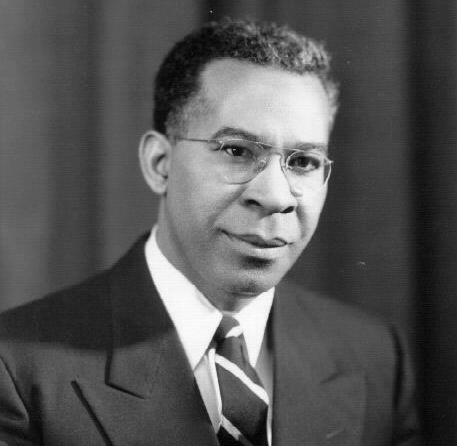
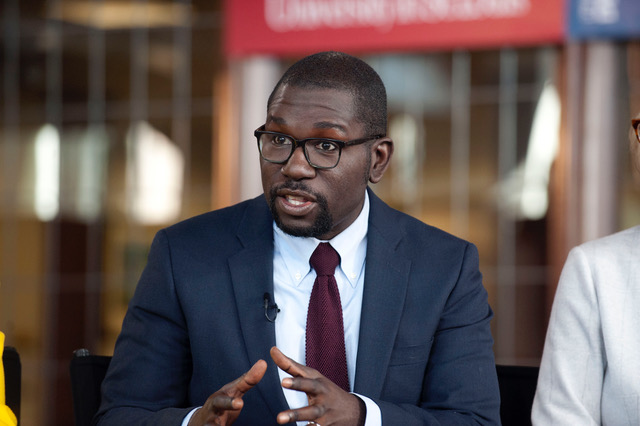
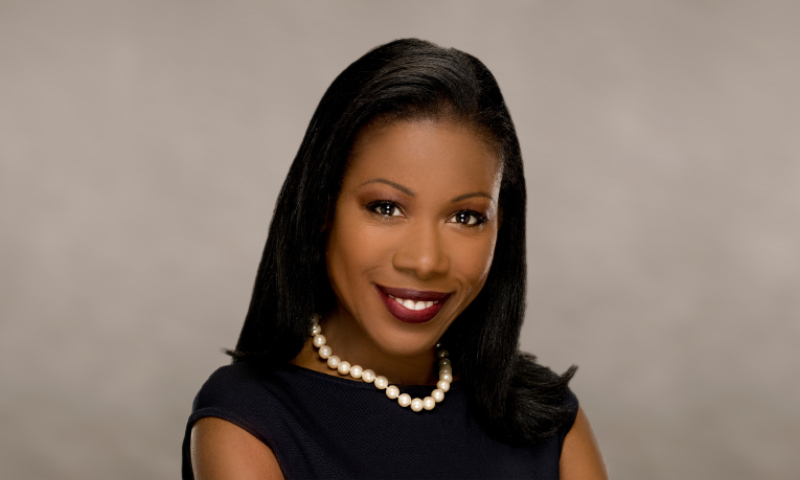
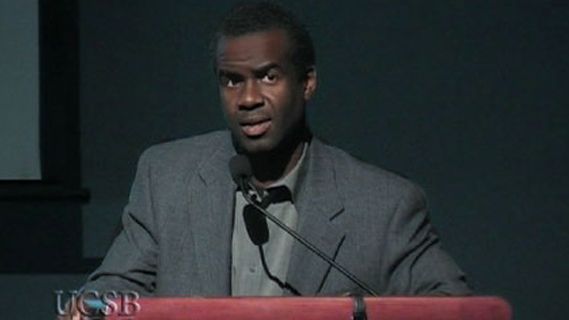

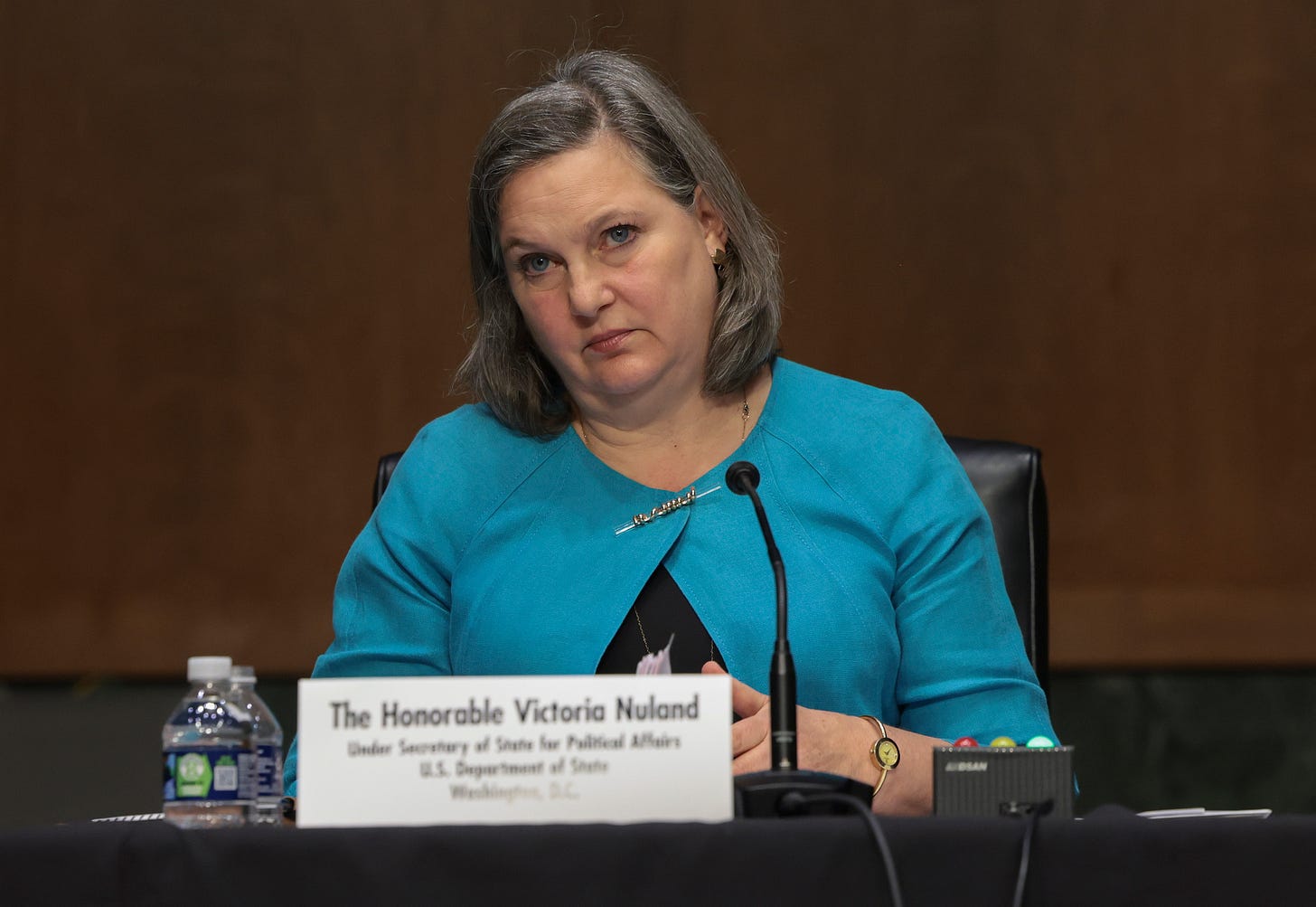


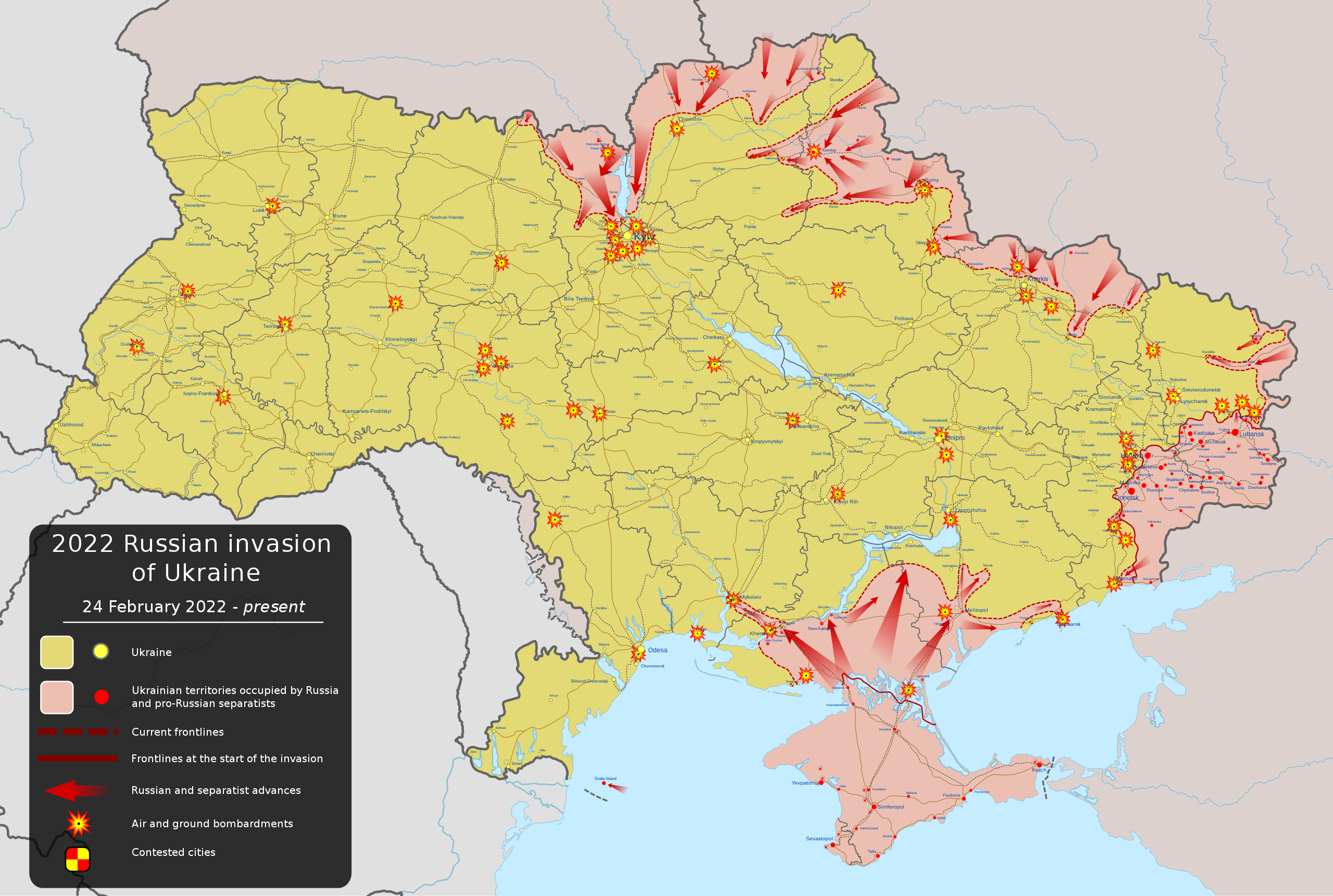


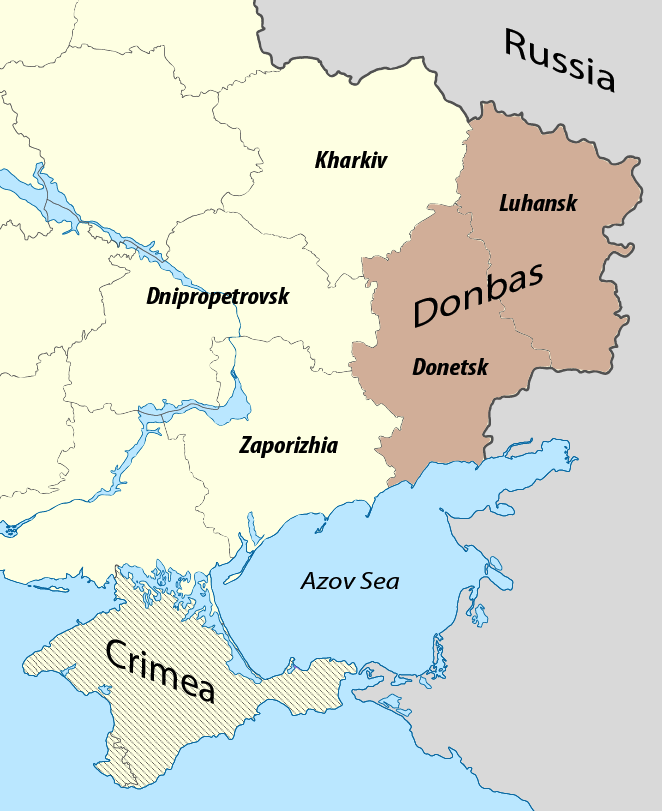
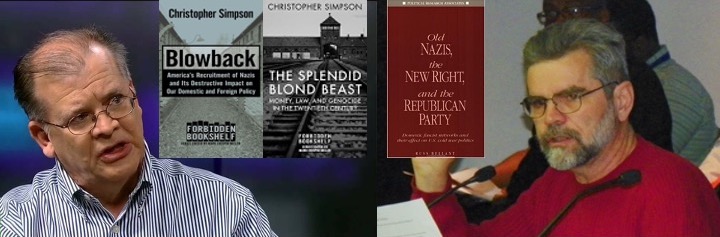



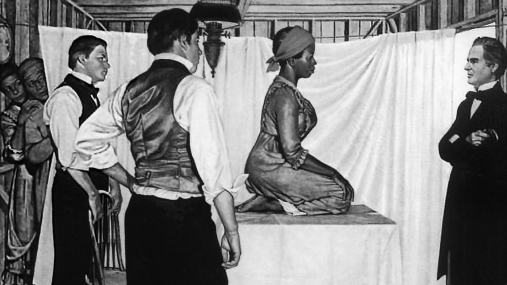

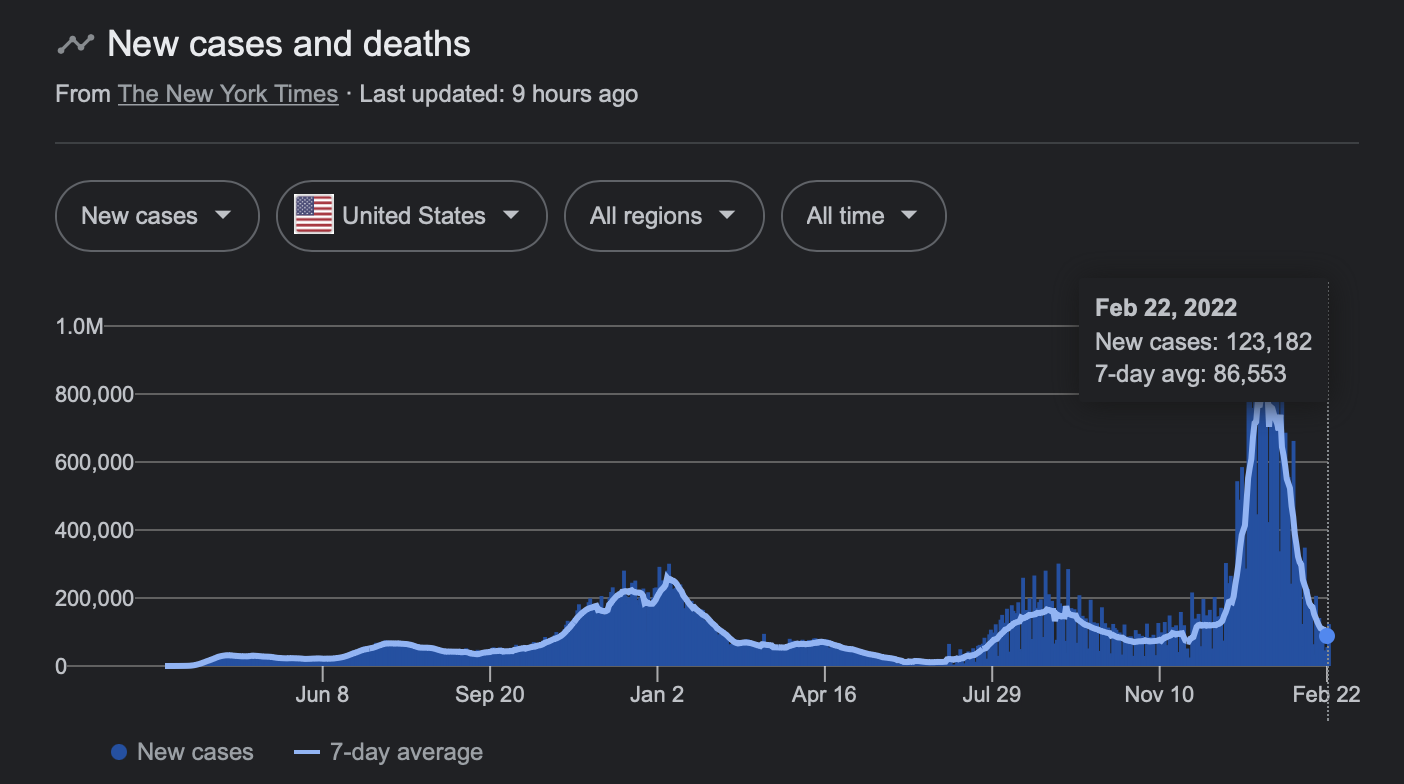


 freedom and reason
