Here’s the Democrat Party plan (establishment Republicans are complicit). Open borders accomplishes a number of things that enlarge and entrench the corporate state and weaken the working class economically and politically. First, illegal aliens displace native-born workers, thus providing corporations with a pliable and super exploitable labor source. Second, mass immigration drives down wages for the native born working class by increasing the labor supply. Third, open borders provides housekeepers and groundskeepers for the affluent classes, while perpetuating the ghettoization of black Americans, an arrangement that keeps that population at arms lengths. Fourth, by creating more government dependents, open borders enlarges those segments of the population that vote for a living. Fifth, it exacerbates the antagonistic contradictions that culturally, politically, and socially disorganize the working class.
The corporate state and its media mouthpieces report that GDP is growing. This is expected. Immigration increases the size of the labor force. More workers mean more production output, which contributes to GDP growth. Like everybody else, immigrants are consumers; they contribute to demand for goods and services, thereby stimulating economic activity and GDP growth. Increased consumer spending may also lead to higher production levels. In countries with aging populations or low birth rates, immigration replenishes the workforce, supporting economic growth. Immigrants tend to be younger on average than native populations, which mitigates the economic burden associated with an aging workforce (such as increased dependency ratios).
All that may sound good, but increasing the labor supply puts downward pressure on the price of labor (wages and salaries), which increases the rate of surplus value, realized in the market by the production of private and government debt. Government debt in turn increases inflation. Inflation is a tax on working people. Wage gains are eroded by higher living costs; the slight increases in wage growth of late are offset by persistently high inflation (greater than 3 percent annually), resulting in a decline in real wage growth. Low wages are weak incentive to pull native born labor from the industrial reserve. Unemployment rates are made to appear low because workers aren’t job seeking. Meanwhile, because of the excess hundreds of billions of dollars transferred from the working class to the corporate class, the top 1% increased their wealth from $30 trillion to $45 trillion under Biden. Mass immigration is a big swindle.
* * *
Update (April 7, 2024)! Today I listen to Bari Weiss’ podcast from this past Tuesday and felt the need to share this will readers of Freedom and Reason.
“When your base is the college-educated elites and the dependent poor—neither of whom are competing with working-class people or with illegal aliens for jobs—you then create policy that caters to their economic needs. That’s what the Democrats have effectively done by shifting from an agenda based on labor to an agenda based around the things college-educated people care about, which, by and large, are things like climate change.” —Batya Ungar-Sargon
Over the past eight years, Newsweek opinion editor Batya Ungar-Sargon embarked on a quest to unravel the enigma of Trump’s 2016 victory and elite misapprehensions regarding the American working class. Her journey led her to this realization: the most significant division in American society isn’t merely political but more economic—the gaping chasm between the college-educated and the working class. Traditionally, Democrats have been champions of the working class. At least that’s the standard narrative. However, in recent years, support for Democrats in the working class has eroded. Despite predictions of a diverse, working-class coalition shaping the future of the Party, this prophecy failed to materialize. Instead, Democrats have become the party of the affluent credentialed classes and strata, those who enjoy actual privileges.
In the 2016 election, Trump captured significant portions of the working class vote, including 54 percent of those with family incomes of $30,000 to $50,000, 44 percent of those with incomes under $50,000, and nearly 40 percent of union workers—the highest for a Republican since Reagan in 1984. By 2022, Democrats faced a 15-point deficit among working-class voters but enjoyed a 14-point advantage among college-educated voters.
Ungar-Sargon’s new book, Second Class: How the Elites Betrayed America’s Working Men and Women, conveys the pervasive sense of disillusionment among many working-class individuals, who feel that the American dream had become an unattainable fantasy. The discussion I am sharing below covers the matter in depth. Not unexpectedly, mass immigration and offshoring lie at the core of the economic woes of those Hillary Clinton referred to during the 2016 campaign as a “Basket of deplorables.” These are the dynamics that find popular support for a second Trump term growing.
As reported in the New York Post, Seattle Public Schools is dismantling its gifted and talented program because it is “oversaturated” with white and Asian students. They will replace it with a more “inclusive, equitable and culturally sensitive program.” A little DEI will fix it!
Under the new program, dubbed the Highly Capable Neighborhood School Model, teachers will be required to come up with individualized learning programs for all 20 to 30 of their students.
This is what the New Racism looks like. Governments are in explicit fashion discriminating against white and Asian students. This isn’t de facto or indirect racism. This is de jure and institutional racism. This is systemic racism. This is what lies at the heart of DEI: anti-white and anti-Asian prejudice. Why do I say that? Because they’re making educational choices on the basis of race and it’s hurting white and Asian children.
Nearly 70 percent of the students in the gifted program are white. That’s the problem. The majority takes a majority of the seats. “Numbers would suggest that within our city…predominantly white children are more gifted than other cultures and races, and we know that is absolutely not true,” Kari Hanson, the district’s director of student support services, says. How does Hanson know this is not true? Because 3.7 percent of Hispanic and just 1.6 percent black. Washington’s population is 72 percent white. Let that sink in.
This is the Democrat agenda. The Democratic Party, the party of the Slavocracy, the party of Jim Crow, is now the party of New Racism. These policies not only discriminate against whites and Asians but against any black kid who might qualify for gifted and talented programming. They’re literally holding everybody back because white and Asian kids do better academically. The white and Asian kids shouldn’t work so hard. Hard work is a white supremacist value.
This is Kurt Vonnegut’s “Harrison Bergeron” in living color. Literally. Washington’s children are living in a dystopian nightmare world. They’re not the only ones. This is coming to a city near you. Vote accordingly.
“The force said complaints had been received but no action would be taken,” reports the BBC, referring to a statement released by Scotland Police letting the public know that JK Rowling tweets describing several transgender women as men were not criminal.
The Hate Crime and Public Order (Scotland) Act makes it an offense to stir up hatred with absusive or threatening behavior on the basis of characteristics including religion, sexual orientation and transgender identity. The maximum sentence is seven years in prison. (Racial hatred was banned under a 1986 law. A law against misogyny is forthcoming.)
JK Rowling
“I hope every woman in Scotland who wishes to speak up for the reality and importance of biological sex will be reassured by this announcement, and I trust that all women—irrespective of profile or financial means—will be treated equally under the law,” Rowling tweeted, adding, “If they go after any woman for simply calling a man a man, I’ll repeat that woman’s words and they can charge us both at once.”
I hope every woman in Scotland who wishes to speak up for the reality and importance of biological sex will be reassured by this announcement, and I trust that all women – irrespective of profile or financial means – will be treated equally under the law.https://t.co/CsgehF2a5d
Why is JK Rowling’s defiance of Scottish law so important? Because there is nothing more fundamental to freedom than the rights to speak the truth and not have to tell lies. The United Declaration of Universal Human Rights and the International Covenant on Civil And Political Rights affirm the right to conscience and speech. It’s affront to human dignity that the Scottish law exists, even if the police have declined to arrest charge Rowling with a hate crime.
But the influence of the queer lobby has proved itself powerful. The gender ideologue hates correct gendering because it represents active resistance to the demand that others participate in deception or affirm delusion. Since a man knows, or at least suspects, that he is not nor can ever be a woman, he depends on others to suspend their disbelief for his sake—whatever his motive (gain access to women’s spaces, sexual gratification, etc.). He demands others live in his world by his rules. If he cannot count on the emotional blackmail of dysphoria or suicide, he attempts to arrange for the state to punish dissenters.
This is why Rowling’s defiance is so moving and powerful—and necessary. Just as we must openly defy demands that we accept the doctrines of Christianity and Islam, we must openly defy the demand that we accept the doctrine of the queer religion. Rowling is a role model.
Perhaps the gender ideologue might consider respecting the right of others to speak freely and be free from compelled speech. After all, freedom of speech and conscience are fundamental human rights. But the gender ideologue cannot respect the rights to speech and conscience because, like Islam, the techno-religious cult of gender ideology is a fundamentally authoritarian.
And like Islam, gender ideology is nonsense through and through. There is no gender identity apart from gender itself (which is the same thing as sex)—or at least the believer must be forced to admit that there is no evidence for such a thing beyond his subjective feeling. How could a man know how it feels to be a woman? The brain of a man is a man’s brain—just as are his hands and every other part of him. Gender is binary and immutable.
* * *
The White House was in for some criticism on March 31 for proclaiming on Easter Day “Trans Day of Visibility.” Biden later denied he did that. But he did. In his defense, we are told, the trans holiday was established in 2009. You’d think, though, that one would check to see, since it is a floating holiday, whether Easter would fall on the last day of March. Or maybe that was known and intended. Whatever. I am not one to get too worked up over religious days of remembrance.
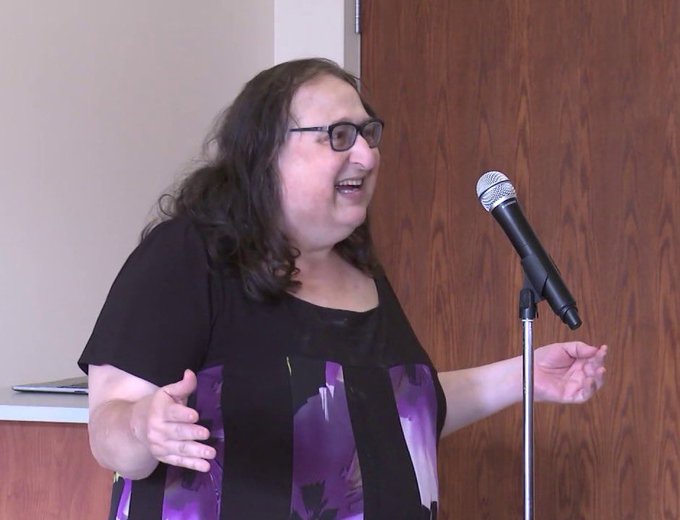
Rachel Crandall-Crocker, the person who founded “Trans Day of Visibility.”
More interesting is the fact that there are nearly thirty days devoted to sexual minorities in the United States. Indeed, there are entire months devoted to LGBTQ causes or commemorations: Pride Month in June, LGBTQ History Month in October, and Transgender Awareness Month in November. The queer agenda is pursued in public institutions across the nation, its flags flown over government buildings. Streets are painted in queer colors. DEI training at universities and in corporate offices conditions students, employees, administrators and managers in the doctrine and encourages—sometimes demands—they rehearse the slogans and perform the conventions. The queer agenda is pushed out by the culture industry and embraced by the health care industry.
America’s culture and institutions have been commandeered by the queer movement. Either that or elites have coopted the queer movement to disorganize society and disorder the public mind—albeit these are not mutually exclusive developments. Either way, society is being disorganized and the public mind disordered. If the former, then the motive is not hard to discern—it’s a desire to depathologize what has heretofore been regarded as sexual deviancy, enlarge the congregation of the queer church, and use the institutional apparatus to force everybody to obey the dictates of the new (state sanctioned) religion. If it is the latter, then the motive becomes perhaps a little harder to infer, or at least explain, as it goes to the elite imperative to remake the world in the image of the queer agenda. Why would they want to do that?
* * *
NOW responded to the news that several former and current college athletes are suing the NCAA for violating their Title IX rights. The law suit concerns the NCAA’s decision to let Lia Thomas compete in the 2022 national championships.
“Repeat after us: Weaponizing womenhood against other women is white supremacist patriarchy at work,” the post from NOW said. “Making people believe there isn’t enough space for trans women in sports is white supremacist patriarchy at work.”
Factcheck: Trans women are men. There is no room in women’s sports for men. The National Organization of Women is part of the establishment disorganizing Western civilization.
* * *
And there is this:
BREAKING: I just vetoed Republicans’ anti-LGBTQ bill to ban trans and gender nonconforming kids from participating in school sports teams that align with their gender identity.
Axios worries that “Trump’s Justice Department would push to eliminate or upend programs in government and corporate America that are designed to counter racism that has favored whites.” (See Exclusive: Trump allies plot anti-racism protections—for white people.) Translation: “Trump’s Justice Department would push to eliminate or upend programs in government and corporate America that discriminate against whites on the basis of their race.” The magazine says that this is “anti-racist protections for white people.” Seems so. And that’s bad why?
What is the racism that favors whites? If it’s the fact that blacks-as-a-group trail whites-as-a-group in nearly every significant category of economic and social life, this confuses results with causes. Racial disparities is not evidence of racism. That 36-38 percent of prisoners are black men, whereas black men only comprise 6 percent of the population, does not indicate racism. It could be that black men are drastically overrepresented in serious crime that lands individuals in prison. Indeed, this is the case. Authorities aren’t locking up black men without cause, after all.
There is a fundamental epistemic responsibility here: the party making an assertion or a claim has the obligation to provide evidence or justification for that claim. This principle is fundamental in debate, law, logic, philosophy and science. If the claim is that racism is the cause of racial disparities, or that there is a law or policy in place that systematically benefits or disadvantages individuals on the basis of race, then this must be shown. First, let’s see the evidence—evidence independent of the result—or evidence of a law or policy that does or would likely produce that result. Second, show that evidence to a court of law and convince a judge or jury that a concrete person was the victim of it.
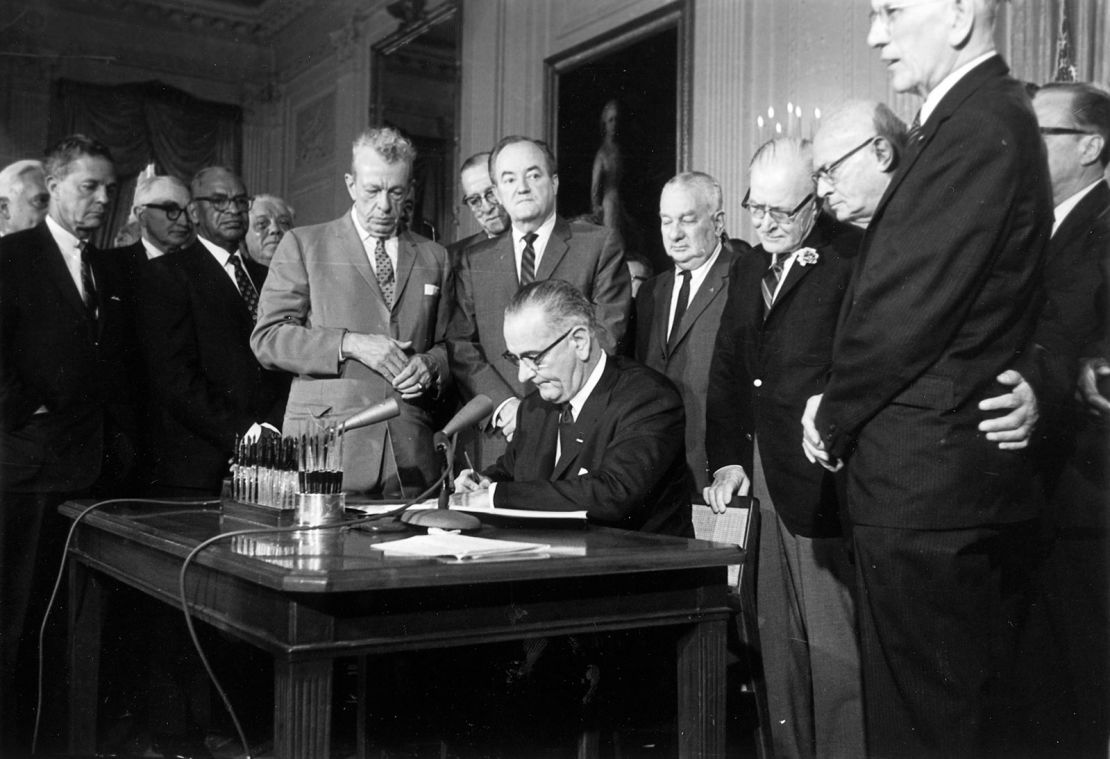
President Lyndon Baines Johnson signs the Civil Rights Act on July 2, 1964. The law made it illegal to discriminate, among other things, on the basis of race and color, and barred unequal application of voter registration requirements.
The 1964 Civil Rights Act banned racial discrimination against blacks in public accommodations. However, soon after passage of that law, affirmative action programs were implemented that disadvantaged whites on the basis of race—and you were a racist if you complained about it. In June of last year, the Supreme Court effectively ended race-conscious admissions practices in higher education. In a 6-3 ruling, the majority appealed to the equal protection clause of the Fourteenth Amendment—created to rectify the inequality faced by black Americans—to end the practice of race-conscious admissions. Now Diversity, equity and inclusion (DEI) programming disadvantages whites. The work to end racial preferences continues.
I can hear readers object with the fallacy of white privilege. The homeless white people in San Fransisco, Los Angeles, and elsewhere? Those whites? The white people working at Walmart? We don’t need to dwell on the fact that most poor and disadvantaged citizens in America are white. It’s enough to note that it is racism to discriminate against individuals on the basis of their group membership. Why? Because it treats individuals as personifications of abstract demographic groups. Whites aren’t privileged because their group averages are better on most measures. Averages aren’t people. They’re statistics. America is a colorblind society rooted in individualism. We are to judge individuals without regard to the color of their skin—not on the basis of tribal stigma.
The Trump campaign’s Steven Cheung said, “President Trump is committed to weeding out discriminatory programs and racist ideology across the federal government.” Axios thinks this “plot” is a bad thing. Actually, it’s a good reason to vote for the man.
Former US president Barack Obama is on the campaign trail to marshal the troops for Joe Biden’s re-election bid. Biden is a deeply unpopular president due to declining standards of living and increasing public disorder. Crime, inflation, mass immigration, war, and woke progressive social engineering are key issues on the public mind. Biden is sinking in the polls and those groups whose votes he previously counted on are looking at alternatives to the Democratic Party.
Biden’s record stands in stark contrast to Trump’s. Under Trump, the country experienced significant economic growth, with expanding GDP and unemployment reaching historically low levels, especially for black and brown workers. Prior to the onset of the COVID-19 pandemic, the economy saw strong job creation and rising wages. Moreover, an increasing number of citizens are doubting that the outcome of the 2020 election was legitimate, and their growing incredulity threatens to give Trump another term.
Three of the four Democrat Party presidents at a fundraising event with Stephen Colbert at Radio City Music Hall, New York, Thursday, March 28, 2024. The event racked in 26 million dollars.
With contrast and developments in mind, and with Obama remaining a popular figure among Democrats and many independent, the Biden campaign needs Obama—and Obama needs Biden to continue the neoliberal and neoconservative project that selected Obama to be president. It was only a matter of time before Obama returned (some suggest he never left). With Bill Clinton in tow, the forty-fourth president appeared at a fundraiser held at Radio City Music Hall, New York, hosted by Stephen Colbert. The event, replete with rock concert lighting and smoke machines, took in a record 26 million dollars.
Earlier in the day, on Long Island, Donald Trump, along with hundreds of police officers and family members, stood outside a funeral home to observe the wake of a New York City police officer who was killed in the line of duty only days earlier. Officer Jonathan Tiller leaves a widow and an infant son behind. He was murdered by a man, Guy Rivera, who had a least 21 prior arrests. Rivera should have been in jail but wasn’t in large measure because of the progressive criminal justice policies Obama and the Democratic Party champion.
Obama’s adoration is undeserved. On the domestic front, among other things, his presidency was marked by increasing income and wealth inequality. This contrast to the Trump years flies in the face of the deep reservoir of good will Obama enjoys, as economic conditions tend to shape public feelings about presidencies.
According to data from the US Census Bureau, the Gini coefficient, a common measure of income inequality, rose during the Obama period. The wealthiest households continued to accumulate a larger share of the nation’s wealth, while lower- and middle-income households experienced stagnant wealth growth. While the economy had recovered from the Great Recession (2008-2009), wage growth remained modest or stagnant for most workers. Meanwhile, high-income earners, particularly those in finance and technology sectors, saw significant increases in compensation.
There are many other things one might talk about concerning the Obama years, but I want to focus in this essay on matters of war and imperial adventure. Obama’s presidency, which spanned two terms (2009-2017), saw numerous military actions and interventions. His use of the United States vast military capacity was brutal and reckless. It was also in the service of the transnational corporate project to put the planet under the command of a global elite.
Obama was a particularly cruel warmonger. Remember when, in 2010, President Obama joked about sending a predator drone after the Jonas Brothers? “Sasha and Malia are huge fans,” he said during the May Day White House Correspondents Association Dinner. “But boys, don’t get any ideas. Two words for you: predator drones. You will never see it coming.” He then added, with a serious look, “You think I am joking.” He wasn’t. A year later he killed 16-year-old American Abdulrahman Anwar al-Awlaki, along with the boy’s 17-year-old cousin and several other innocent Yemenis in a Predator drone strike, one of more than 500 carried out in various countries, primarily in Afghanistan, Pakistan, Somalia, and Yemen.
Obama continued major military operations in Afghanistan and Iraq, conflicts started by his predecessors from both parties. Afghanistan was an ongoing operation traceable to the Carter regime, who green lit a project devised by National Security Advisor and former director of the Trilateral Commission Zbigniew Brzezinski to destabilize that country to compel the Soviet Union to honor a defense agreement and thus mire that social country in a long military campaign against asymmetrical forces organized by the US deep state.
In 2019, I dusted off an analysis I wrote in the early 2010s and shared it on Freedom and Reason: Sowing the Seeds of Terrorism? Capitalist Intrigue and Adventurism in Afghanistan. Long story short, what occurred between the enactment of the Carter-Brzezinski scheme and the terrorist attacks on New York and Washington DC on September 11, 2001, played a key role in fomenting those attacks, which in turn were exploited by George W. Bush and his neoconservative to shift from covert action to an open military campaign followed by a lengthy occupation, all while covering up the deep state’s role in creating the crisis.
The Iraqi operation also had a long history. During the Reagan Administration, the US government provided support to Iraq, including intelligence sharing and the supply of dual-use technology, such as agricultural and chemical materials. This support was primarily motivated by the containment of Iran, at least ostensibly, although the vice-president at the time, former CIA director George H. W. Bush, ran a shadow government during this period that also supplied Iran with intelligence and weaponry (and trafficked in cocaine to fund it; see Contras and Cocaine). As president, in January 1990, in what is now known as the First Gulf War, Bush invaded Iraq, but left its leader Saddam Hussein in power. In a mop up operation, the junior Bush used the 9-11 terrorist attacks as a pretext for invading Iraq a second time. (See my essay War Hawks and the Ugly American: The Origins of Bush’s Middle East Policy for a detailed analysis of this.)
For his part, while eventually following through with the junior Bush’s scheduled withdrawal of US combat troops from Iraq by the end of 2011, Obama increased troop levels in Afghanistan by 30,000 at the end of 2009. At the NATO Summit in Chicago, in the fall of 2012, Obama and NATO allies endorsed a plan to transition full security responsibility to Afghan forces by the end of 2014. This never happened.
Hundreds of people run alongside a US Air Force transport plane as it moves down a runway during the disastrous US withdrawal from Afghanistan, August 16, 2021.
During the Trump administration, the rise of belligerent Islamism across the Eurasian landmass in the context of regional instability caused by the Bush and Obama wars in the Middle East and Central Asia compelled the Trump Administration to ramp up counterterrorism operations. Having prevailed in these struggles and having secured a peace agreement between parties in Afghanistan, plans were made to pull troops from that country. Actions by the Biden regime in executing this plan resulted in a disastrous final act that recalled the scenes of the US withdrawal from Vietnam.
Even before the withdrawal from Iraq in 2011, Obama, along with NATO allies, transitioned to a new war in Libya, providing intelligence and logistical support to rebel forces in globalist efforts to overthrow Libyan leader Muammar Gaddafi. These efforts proved successful—at least for the aims of the globalists who planned it. Briefly, in March 2011, the United Nations Security Council authorized the use of military force in Libya. The operation began in March 2011 with a series of airstrikes targeting Libyan government forces and military infrastructure. The operation involved a coalition of NATO members and regional partners, including the United States, France, the United Kingdom, Canada, Italy, and others.
Gaddafi was captured, tortured, and killed by rebel forces in October 2011, a war crime which Secretary of State Clinton notoriously mocked (for a discussion of Clinton’s 2016 presidential run see How Bad Would a Democrat Have to Be? Because Clinton is About as Bad as it Can Get). The intervention caused a power vacuum and produced ongoing instability in Libya as various factions vied for control in the post-Gaddafi era. There were scores of civilian casualties, widespread destruction of infrastructure, and the destabilization of Libya.
Thanks to significant oil reserves and relatively small population, Libya had been an affluent nation compared to many other African countries. Under Gaddafi’s regime, Libya experienced periods of significant economic growth and development. The country’s oil wealth allowed the government to invest in infrastructure, education, and social welfare programs. After the fall of Gaddafi’s regime, and subsequent civil war, Libya experienced significant economic challenges and political instability. The country’s economy suffered due to disruptions in oil production and export, as well as ongoing conflict and insecurity. As a result, Libya’s socioeconomic situation deteriorated, with widespread poverty, unemployment, and humanitarian concerns affecting large segments of the population.
Libya wasn’t the only front Obama opened in the neoconservative project of continuous warfare. Obama and other elites used reports that Bashar al-Assad regime deployed chemical weapons against civilians (echos of propaganda used in the build up to the Iraq war) as a pretext to carry out a proxy war using rebel troops—which gave rise to the Islamist threats Trump was compelled to address during his presidency. The Syrian Civil War that began in March 2011 as part of the wider wave of uprisings known as the Arab Spring, a multi-nation color revolution, proved useful to the establishment. The Obama regime armed and trained rebels to overthrow Assad and launched air strikes ostensibly against ISIS, although the rebels and ISIS were hard to distinguish—because they were often the same people.
Trump once told the public, “I am especially proud to be the first President in decades who has started no new wars.” In my book, perhaps the most important thing a president can do is not mire the country in unnecessary war. Trump pulled us out of Syria. He sought peace with North Korea and in the Middle East. Obama was a disaster in this regard. Hillary Clinton would have been as bad or worse.
In 2009, in a journal published by the American Sociological Association, Teaching Sociology, I reviewed the documentary Banished, by Marcos Williams (see a version of that review here). It just crossed my mind in the current furor over squatters’ rights; today, Florida governor Ron DeSantas signed into law a bill that allows property owners to immediately evict squatters from homes and other structures. What Williams shows in his documentary is that, during the nineteenth and twentieth century, squatters’ rights, or adverse possession, was used as a means to dispossess black communities of their homes and property, particularly in the context of racial violence and systemic discrimination. While adverse possession laws have historically been intended to address issues of land abandonment or neglected properties, that they have been exploited in ways that disproportionately harm marginalized communities, including black Americans, is not the topic of discussion in the ongoing controversy over squatters’ rights is odd. It should be.
In the United States, during periods of racial discrimination and segregation, de jure and de facto, black communities often faced intimidation and violence, as well as legal barriers that restricted their access to housing and property ownership. In some cases, white supremacist groups and racist individuals engaged in violent action, including arson and bombing attacks, targeting black-owned homes and businesses in order to drive residents out of predominantly white neighborhoods. In the aftermath of such violence, opportunistic whites would take advantage of adverse possession laws to claim ownership of abandoned or vacant properties left behind by displaced black families. This practice effectively facilitated the transfer of property from black to white ownership, entrenching patterns of racial segregation and enlarging the scope of economic and political disenfranchisement of black Americans.
The evidence indicates that this was not an emergent or happenstance phenomenon but a concerted strategy by whites to achieve white-only communities. Adverse possession laws were thus used as a tool of racial dispossession and displacement, perpetuating inequalities and reinforcing patterns of racial segregation and discrimination in housing and property ownership. This historical context underscores the ways in which legal mechanisms, ostensibly neutral on the surface, can be manipulated to perpetuate systemic injustices and uphold structures of power and privilege. Understanding the role of adverse possession and similar legal mechanisms in the context of racial violence and discrimination is therefore crucial for advancing efforts toward equity in housing and property rights. It also highlights the importance of critically examining the broader social and historical contexts in which laws and legal practices operate.
“The white race deems itself to be the dominant race in this country. And so it is in prestige, in achievements, in education, in wealth and in power. So, I doubt not, it will continue to be for all time if it remains true to its great heritage and holds fast to the principles of constitutional liberty. But in view of the Constitution, in the eye of the law, there is in this country no superior, dominant, ruling class of citizens. There is no caste here. Our Constitution is color-blind, and neither knows nor tolerates classes among citizens. In respect of civil rights, all citizens are equal before the law. The humblest is the peer of the most powerful. The law regards man as man, and takes no account of his surroundings or of his color when his civil rights as guaranteed by the supreme law of the land are involved. It is therefore to be regretted that this high tribunal, the final expositor of the fundamental law of the land, has reached the conclusion that it is competent for a State to regulate the enjoyment by citizens of their civil rights solely upon the basis of race.” —Supreme Court Justice John Marshall Harlan, Dissent, Plessy v Ferguson (1896).
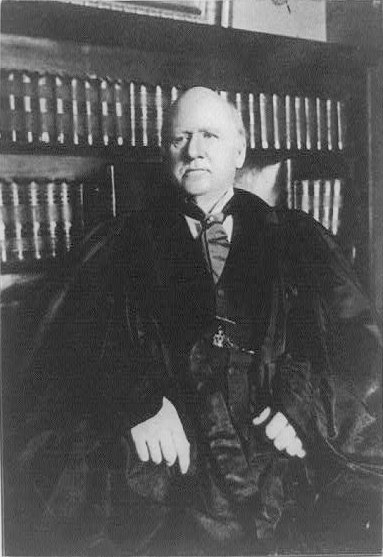
John Marshall Harlan’s most famous dissent was in the landmark “separate but equal” segregation case, Plessy v. Ferguson (1896).
Colorblindness is not about whether or not you see race. To be sure those who keep racial preferences alive want you to think this way. But the meaning of the term is unambiguous: Colorblindness is the principle that institutions should not privilege individuals on the basis of skin color. Put another way, decisions in law should be made without reference to race. To do otherwise is to engage in racial discrimination. And racial discrimination is wrong.
It’s disappointing that there are members of our Supreme Court who, when the matter of racial preferences comes up, argue that we are not a colorblind society and therefore we must keep on making life-altering decisions on the basis of skin color. If they believe this, then they have been made dumb by antiracism. They posit an impossible contingency. We cannot wait for people to stop seeing color to practice the colorblindness that lies at the heart of our constitutional system. I promise you that you will never live in a society that does not take note of skin color. It is moreover guaranteed that neither your children and grandchildren will not see color—for sure as long as we continue to keep in place policy that allows institutional actors to make decisions on that basis.
Does race matter? Yes. Progressive urban policy that results in racially selective underprotection of blacks in impoverished inner-city neighborhood is the outstanding instance of racism in today’s America. Knowing, for example, that the presence of police officers is the single most effective deterrent to criminal perpetration, policies that de-police at-risk communities weaken public safety and put black lives in danger. The rates of homicide in blue cities are truly horrifying and the overwhelming proportion of victims are black people.
This example is the paradigm of why failing to work from colorblind principle is so wrongheaded. These communities are de-policed because of antiracism, i.e., the new racism. Critical race theory has it that the disproportionality of blacks, especially young black men, in arrest, conviction, and prison statistics is due to white supremacy, the negation of which is to reduce police patrols in black communities. They would have use believe that overrepresentation of blacks in serious crime is the result of white people over-controlling black people. It’s the “New Jim Crow,” we’re told by Michele Alexander.
This conclusion misses a crucial step. The police don’t usually take an individual into custody without an associated criminal offense. In fact, they almost never do this. The same is true for prosecution, conviction, and incarceration. The legal system forbids arbitrary arrest, detention, conviction, and confinement. If an innocent person ever finds himself in such a situation it is an error—and there are very few errors given the vastness of the system and civilian involvement in it. The reality is that the disproportionality in these statistics is because of the drastic overrepresentation of blacks in serious criminal offending.
Why are black overrepresented in serious criminal offending? This is where you will find some of the racism that persists in America. This situation is the consequence of progressive policymakers in the Democratic Party disorganizing neighborhoods where blacks live by disrupting the black family system and idling individuals through public assistance and transnationalism, i.e., off shoring of jobs and replacing native black workers with cheap foreign labor.
I have said this before, but it bears repeating: the white majority who is blamed for racism in America doesn’t run the blue cities. The white majority runs the red parts of America where families are integral and crime is low. The white majority is not the cause of the overrepresentation of blacks in serious crime. Progressive elites are the cause of the problem.
It should not be lost on us, then, that white conservatives are the ones most devoted to colorblindness in law and social policy. That’s not ironic. The modern white conservative, essentially a classical liberal with religious commitments, is at heart an individualist. They have made their peace with existence in a multiracial society. In the South, this has always been a white person’s experience. What they oppose is the continuing injustice of racial preferences—the other place you find some of the racism that persists in America—because they are individualists.
Perhaps, if progressives recognized the injustice of antiracism, they could recognize the problems that plague working class Americans who live in impoverished inner-city neighborhoods and solve those problems rather than exacerbate them. They should consider beginning with closing our borders and abolishing the custodial arrangements their predecessors created that they maintain. Instead of sending military aid to Ukraine, they would send jobs to the American ghetto. But progressives are aligned with the corporate state, and corporate state imperative is at odds with making America safe and secure and prosperous. The project they advance is managed decline. Black people are a subpopulation whose lives require administering in the meantime. And Democrats need the votes.
This is why the masses are misdirected on the question of colorblindness. You need to be tribalized culturally and socially in order to be disorganized politically. It’s a political-economic project.
“If you want a picture of the future, imagine a boot stamping on a human face—forever.” —George Orwell, Nineteen-Eighty Four
As many people know, I’m an atheist. This means I don’t believe there is a soul that shapes and defines me. But even if I did believe in a soul, I’m at liberty in a free society to not follow the conception of the soul posited by another religion. I don’t have to affirm another religion’s dogma, follow its rules, or rehearse its slogans. So why am I expected to affirm the dogma, follow the rules, and rehearse the slogans of gender ideology, which is in every way a species of religious faith? Gender identity is the construct of a soul of a new religion. How did it come to be in a secular nation that I risk discipline or punishment for refusing to address a man as if he were a woman? Why must my wife tolerate men in spaces established and policed to safeguard her?
It is just as offensive (in the second and more serious usage of that word) to a man who believes in the soul of a particular religion as it is to the man who believes in no soul to be forced to believe in one chosen by the state. Yet this is our situation today. We are living at a time in America where in places a state religion has been established in clear violation of the First Amendment of the United States Bill of Rights, its religious character (poorly attempted) dissimulated by medical and psychological jargon. The United States is established as a secular nation, one in which citizens are free to believe in a religion or believe in no religion at all. We cannot be legitimately compelled to believe supernatural things that are antithetical to our own spiritual beliefs or to the nonspiritual life, which, by definition, means the rejection of supernatural things.
Imagine a world in which we are compelled to affirm the dogma, follow the rules, and rehearse the slogans of Islam. Imagine a world in which parents are required, because the clerics of this religion interpret their scripture to require it, to surgically alter the genitals of their male children, and in many places their female children, as well. Imagine a world in which their daughters, upon reaching puberty, have to cover their heads. Imagine being told you can not criticize Islamic doctrine and practice because that is blasphemy. Imagine being compelled to rehearse, or at least appear to not disdain, the slogan “There is no God but Allah and Muhammad is His messenger, peace be upon.”
You don’t have to imagine something like this. You are currently living in such a world. It’s not the religion of Islam dictating the terms of your existence, but the religion of gender ideology, which demands you believe the slogan “Trans women [men] are women.” today, parents are required to submit their children to ritual procedures because the clerics of this religion sanction the altering of physiology and genitalia based upon the detection of a construct they themselves admit is not scientifically discoverable. To be sure, they claim, just as the Muslim cleric does about the soul in Islam, that gender identity is an existing thing. But, like the soul in Islam, the ontology of the soul in gender ideology must be taken on faith—it is an entirely subjective thing. One must believe the religion to be true to accept the supernatural things it posits are real. Like Islam in so many places and times, gender ideology enjoys the force of the state at its back. The state can remove your children from your home because you don’t accept the queer religion.
When I write about “near-future totalitarianism” on this blog, I use that modifier because elements of the total system of control are already present in our culture, institutions, and systems. To be sure, the establishment of the queer religion is not everywhere complete. There is a growing resistance movement. The religion of gender ideology is in its absurdity revealing itself for what it is, a more destructive religious notion designed along the lines of Scientology does some of this work itself (gender identity is the thetan analog, gender affirming care auditing—and millions pour into the bank accounts of both camps). Moreover, while many of today’s youth have found their religion, there are enough people alive who cling to the old-time religion. The atheists have allies.
To be sure, resistance to gender ideology has come too late and is not yet forceful enough to save scores of children from being mutilated and sterilized. To repel the New Dark Ages that the techno-religion of gender ideology brings, we will have to become more strident in our opposition to it. Here, in America, the Constitution provides the torches to force this religion out of public institutions and out of our family life. Elsewhere torches in the Universal Declaration of Human Rights and the International Covenant on Civil and Political Liberties await their lighting. But we must light them up. Otherwise, Orwell’s prophecy will become our reality. Driving the religion out of the medical-industrial complex will be more difficult. Here we will have to do more than assert our right to be free from religion imposition. Here we will have to use the force of positive law against the cleric.
We hear this term “passive-aggressive” used a lot in conversation, but I rarely hear or see it used correctly except in the literature I receive from those organizations that assume that because I was once chair of my department I am an administrator—and of course in the organizational/industrial psychology literature. I receive tutorials every other day, informed by psychology, on how to deal with the “passive-aggressive employee.” I think you will find the actual meaning of the term interesting—and, I hope, maddening.
The concept emerges from the concept of “soldiering,” which has its origins in the work of early industrial psychologists, particularly Frederick Winslow Taylor, considered the father of scientific management (“Taylorism”). Taylor conducted studies on worker productivity and efficiency in factories during the late nineteenth and early twentieth centuries.
Taylor observed that some workers deliberately slow down their work pace or withhold effort to avoid being given more tasks and as a protest against what they perceived as unreasonable demands from management. They even encourage other workers to do the same, shaming those who work at a fast pace as “rate busters.” Taylor came up with the term “soldiering” to refer to this phenomenon, likening it to soldiers who would appear to be working diligently but who were actually avoiding exerting themselves fully.
Taylor’s observations were later redescribed and expanded by psychologists and psychiatrists in the mid-20th century using the concept of passive-aggressive behavior, which involves expressing negative feelings indirectly through actions such as intentional inefficiency, procrastination, quarrelsomeness, resentment, and stubbornness.
It was inevitable that psychiatrists and psychologists would explore how passive-aggressive behavior manifest in various contexts beyond the workplace to include everyday interactions and relationships. Thus, while Taylor’s original concept focused primarily on productivity in industrial settings, the shrinks expanded the notion to explain the motives of individuals who resist authority or express dissatisfaction in less overt ways.
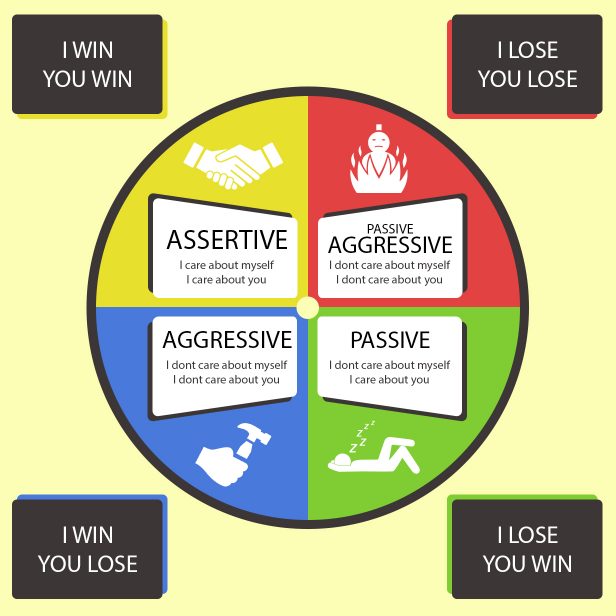
Typical presentation of passive-aggressive behavior and other “pathologies”
Passive-aggressive continues not merely in its afterlife as a popular term. The notion of passive-aggressive behavior is still used by organizational psychologists to describe and explain interpersonal dynamics. The shrinks will tell you that it highlights the complexities of human behavior and the various ways individuals may respond to perceived pressures or conflicts in their social environments.
What you need to consider, then, is how psychologists in the service of the capitalist and managerial classes have effectively medicalized class conflict as a depoliticizing maneuver, delegitimizing the reason workers resist exploitation and oppressive control by psychologizing their motive, i.e., by dissimulating the social antagonisms that lie at the heart of the capitalist mode of production.
There is a disturbing parallel here in the work of nineteenth century physician Samuel Cartwright who identified a disorder he termed “dysaesthesia aethiopica,” previously known as “rascality,” which described a neurological disease that caused laziness and sluggishness among black people. (Cartwright also identified as disease he termed “drapetomania,” which he described as a mental illness characterized by the desire of slaves to escape captivity.)
I want to add that the dissimulation of exploitative and oppressive power—redescribed as authority based on assumed legitimacy or validity—is not just aimed at extracting more value from the labor of blue collar workers. The labor of the professional-managerial class has also been Taylorized and legitimized by depoliticizing the cause of resistance among those ranks.
We see this in the university system with the quantification of academic publishing, not just with numbers of publications, but also in attention to journal rankings and number of citations. Chairs, deans, provosts, and chancellors don’t actually read faculty scholarship. They review the metrics and make determinations on this basis. In this way, through calculability, bureaucratic logic undermines quality of scholarship by fetishizing quantity of publications. They want large numbers of pubs so they can brag about how productive their faculty is. Those who operate with academic freedom in mind become passive-aggressive.
There are many other rationalizations to explore here beyond efficiency regimes (productivity). There’s uniformity, credentialism, and so on, but I think I’ve given you enough to chew on for today.
To be sure, there are interesting things about gender, such as how genotype and phenotype work in tandem and the developmental malfunctions that can occur that dynamic. The anomalies are the proper subject of medical practice. Also, the cultural and historical variability of social roles associated with it, mass mediated stereotyping, and so on. This is the work anthropologists and sociologists do (although I’ve stopped lecturing on sex and gender in my introductory class out of a desire to narrow the lane of offense taking). But as a basic fact of plant and animal biology, like death, it’s one of those few incontrovertible truths. Only postmodernist nihilism “problematizes” gender as an excuse to transgress social boundaries and depathologize/normalize paraphilias—i.e., mainstream disruptive fetishes and kinks. To be sure, this has corrupted some scientists (and doctors, along with huge sums of money); but this only means they have abandoned their calling and have crossed over into ideology.
Judith Butler (AI-generated image)
The occasion of Jessica Bennett’s piece is Butler’s new book Who’s Afraid of Gender? Frankly, I have never fully understand why Butler garners so much attention. Yes, those whose desire to disorder society need arguments. But her work is unimpressive and often gibberish (Bennett describes her as “notorious esoteric philosopher turned pop celebrity”). Even her misrepresentations of what the opponents of queer theory are against in the interview lack sophistication. She feigns ignorance about the association of queer theory and pedophilia. “Some woman came at me with a big trolley and she was screaming about pedophilia. I could not understand why.” Then she says, “I figured out later that the way that the anti-gender ideology movement works is to say: If you break down the taboo against homosexuality, if you allow gay and lesbian marriage, if you allow sex reassignment, then you’ve departed from all the laws of nature that keep the laws of morality in tact—which means it’s a Pandora’s box; the whole panoply of perversions will emerge.”
The question of homosexuality and marriage equality, once essentially a settled question, is becoming problematic once more because of association with and tolerance for the fallacy of gender identity and the politics associated with it, politics rooted in sexual perversion. The perversions—pedophilia, transsexualism, etc.—come first, not after. In a recent essay on this blog, Fear and Loathing in the Village of Chamounix: Monstrosity and the Deceits of Trans Joy, I talk about the history of sexology, which clarifies the order of things (see also Thomas Szasz, Medical Freedom, and the Tyranny of Gender Ideology). Queer theory is indeed built upon the desire to transgress boundaries. But it is wrong to put gays and lesbians into Pandora’s box along with autogynephiles and the like. This is what Butler means by “gender,” namely trans-affirming, i.e., the project to normalize “sex reassignment surgery,” a medical euphemism for genital mutilation, and intentional endocrine disruption.
Once again, I give you Derrick Jenson on pedophilia, anarchism, and queer theory. Add knowledge about Cluster B and you now understand Trantifa.









 freedom and reason