False Charge of Hypocrisy in the Abortion Debate and its Context

Those who know me know I support reproductive freedom. I clarify this not so much to avoid arguing with those who oppose abortion, but to remind those who support the right of women to control their reproductive capacity that I do, too. (Some of my essays on the subject: The Fetus is a Person. Now What?; Abortion is Really About Freedom; Liberty is America’s raison d’être: Preserving Reproductive Freedom for the Sake of Preserving the Republic; George Richard Tiller (1941–2009); Protecting the Lives of Women: Addressing Counterarguments Concerning Reproductive Freedom; The Supreme Court Affirms the Tyranny of MajoritiesAbortion is Not Murder. At Least According to the Bible. It’s Not Even CriminalSegregating Liberty by Sex and the Matter of Religious Freedom; The End of Roe and Beginning Again.)

Having gotten that out of the way, the point of this essay is to critique a cartoon that has crossed my eyes over the years (there are a few variations on the theme), in which white conservatives are depicted holding signs demanding the protection of fetuses while snubbing poor and homeless children. In the one I saw yesterday, which I share below, one child is black (he is begging for handouts, a depiction telling us already that the cartoonist hadn’t completely thought through the implication of his composition). Another child is behind him sleeping in what appears to be a broken cardboard box. Those representing the “pro-life” movement are white. One of them is wearing a crucifix and they all have angry faces. I want to use this cartoon as a vehicle for criticizing progressive urban social policy. Think of this essay as yet another installment in my campaign to delegitimize the Democratic Party.
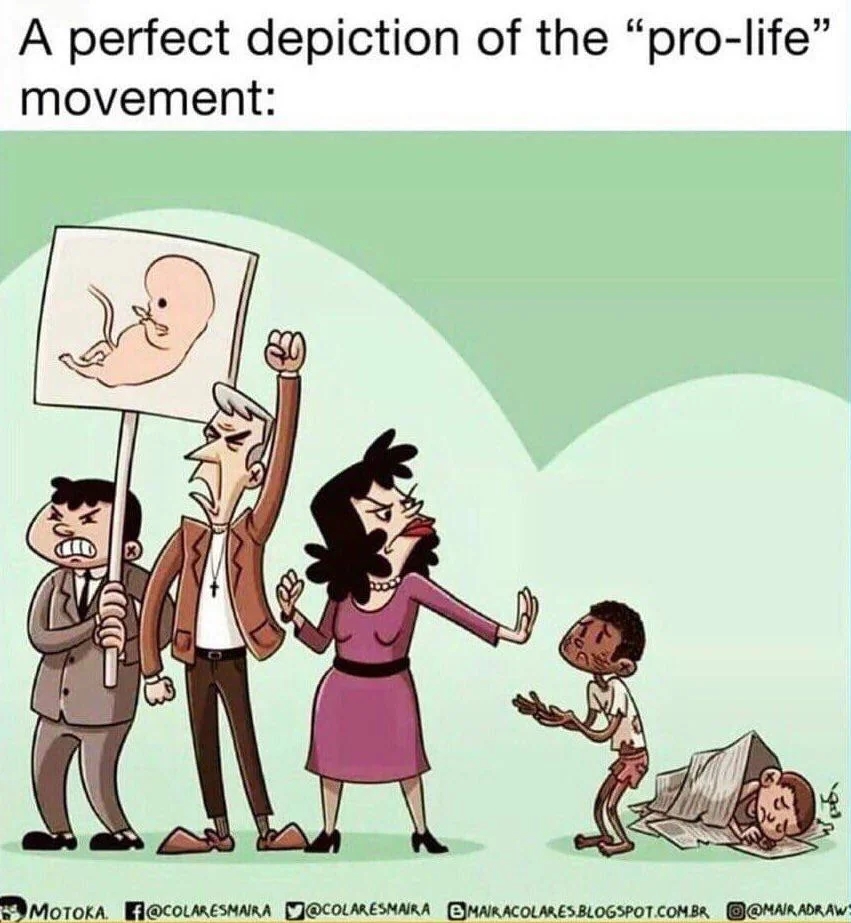
The cartoon

The premise behind the cartoon is fallacious for a few reasons. First, it assumes conservatives who oppose abortion don’t care about children. I’m sure there are conservatives who want to force women carry the fetus to term as punishment for having sex and have no interests in the fetus beyond that, but most conservatives will say (and I believe them) that their opposition to abortion is because the procedure takes the life of a child (I agree that it does, but I have a different reason for my support for a woman’s right to an abortion, as the essays linked to earlier explain). Second, the cartoonist cites child poverty as a reason abortions should be allowed (a cartoon I share below assumes this is a more obvious way). A rational person would ask whether killing born children is an acceptable response to poverty. If not, then why is it okay to kill unborn children? Third, the cartoon implies that conservatives are the cause of child poverty; not only because conservatives oppose anti-poverty programming, but also because a major cause of poverty is children.

It’s worth noting that Planned Parenthood clinics are overrepresented in areas with higher concentrations of poverty and minority populations, partly due to the organization’s mission to provide accessible healthcare to underserved communities. However, there appears to be another reason for this. Margaret Sanger played a major role in founding the precursor of Planned Parenthood, the Birth Control Federation of America. A eugenicist, Sanger promoted birth control as a means of improving the quality of the population and to reduce poverty. In 1939, the Birth Control Federation of America initiated the Negro Project. In a letter she wrote to Dr. Clarence Gamble in 1939, Sanger writes, “We do not want word to go out that we want to exterminate the Negro population, and the minister is the man who can straighten out that idea if it ever occurs to any of their more rebellious members.” Defenders of Sanger often try to rationalize her aims and attitudes, but the body of her work makes it difficult. In any case, the cartoon in question implies an affinity between the artist and Sanger’s aims and methods.

Approximately 78 percent of poor people in the United States live in urban areas, highlighting a significant concentration of poverty within cities. Urban poverty is a particularly challenging social problem due to the high costs associated with housing, transportation, and basic goods and services. In these areas, job opportunities are limited, making it difficult for residents to secure stable employment. Additionally, urban poor populations often contend with a host of social issues, such as high crime rates, overcrowded living conditions, and inadequate public services, including subpar education and healthcare systems. Racial minorities, especially black Americans, are disproportionately affected, frequently residing in disorganized and under-resourced inner-city neighborhoods. This concentration in impoverished urban environments exacerbates social inequalities and creates persistent barriers to economic mobility and overall quality of life.

Who runs these cities? Conservatives? No. These are blue cities. They’re run by progressives. Democrats dominate politics there. Progressives designed and implemented the policies that have, for example, drastically increased the number of children in single-parent households, three-quarters of which are female-headed, a situation that especially affects boys due to father absence. The percentage of children are born to unmarried black women now exceeds 70 percent. For white non-Hispanic children, the percentages is less than 30 percent. The desire to distract from the destruction of the black family is ultimately what lies behind the recent attacks on Florida congressman Byron Donalds (a black man), who condemned progressive urban policy by pointing out that the black family had to that point even survived Jim Crow segregation, a fact confirmed by no less of a historian of the black experience than Herbert Gutman. In his 1977 book The Black Family in Slavery and Freedom, 1750-1925, Gutman examined the resilience of African American family structures from slavery through the Jim Crow period, challenging notions that slavery had destroyed black family life, instead showing that blacks maintained strong familial ties despite the oppressive conditions of slavery and later, the harsh realities of Jim Crow. 

What explains the situation of urban black families today? The problems stem from urban policies devised and deployed by progressives over the course of the twentieth century as blacks, during what has been dubbed the “Great Migration,” moved from the rural South to urban centers in the North, Midwest, and West between the 1910s and 1970. Driven by the search for better economic opportunities and to escape from the oppressive conditions of Jim Crow segregation, millions of black Americans left the agrarian South for industrial jobs in cities like Chicago, Detroit, and New York. The Great Migration fundamentally reshaped the demographic and cultural landscape of the United States, fostering the growth of vibrant black urban communities and contributing to significant cultural movements, such as the Harlem Renaissance. (I write about this and many other things in dissertation Caste, Class, and Justice: Segregation, Accumulation, and Criminalization in the United States, published in August of 2000.)

Franklin Roosevelt’s urban policy during the New Deal era (1930s-40s) had profound and lasting impacts on American cities. Through the Home Owners’ Loan Corporation (HOLC) and the Federal Housing Administration (FHA), the federal government implemented practices that systematically denied mortgages to residents of predominantly black American neighborhoods, a tactic known as redlining. This policy entrenched racial segregation and economic disparities by disinvesting in urban areas deemed “risky” due to their racial composition. Discriminatory housing policies perpetuated inequality and segregation, shaping the urban landscape by promoting suburban growth for white families while confining black families to underfunded, marginalized urban neighborhoods. The legacy of these policies contributed to the entrenched racial and economic divides that continue to affect American cities today. This is the period Richard Grossman identifies as the consolidation and institutionalization of progressivism in federal and city governments in the United States (see Richard Grossman on Corporate Law and Lore).

Douglas Massey discusses these issues extensively in his 1993 book American Apartheid: Segregation and the Making of the Underclass, co-authored with Nancy Denton. The book examines the systematic racial segregation enforced by policies such as redlining and how these practices have created and perpetuated an urban underclass. Massey and Denton analyze how government actions, including those during the New Deal era, contributed to the spatial separation of black and white Americans, leading to significant disparities in wealth, education, and overall quality of life. They argue that these policies institutionalized racial segregation and entrenched the socio-economic disadvantages faced by black Americans, shaping the enduring patterns of urban poverty and segregation observed in contemporary America.

Lyndon Johnson’s Great Society regime, launched in the mid-1960s, ostensibly aimed at combatting poverty and racial injustice through ambitious social welfare initiatives, accelerated the destruction of the black family while establishing the system dynamics maintaining a permanent and racialized underclass. The War on Poverty, a key component of the Great Society, proved unable to eradicate poverty as initially promised, and the expansion of federal programs led to bureaucratic inefficiencies and perverse consequences. Welfare benefits disincentivized work, as individuals received comparable or higher income from welfare compared to low-wage jobs. Welfare thus discouraged job-seeking and weakened labor force attachment. If individuals did work and transition off welfare, they faced higher effective marginal tax rates and regressive sales taxes; the loss of benefits outweighed the gains from work. Moreover, in areas where there was significant capital out-migration, often the result of crime and disorder, but also the consequences of the pull of globalization organized by the corporate state, low-wage jobs become scarce.

The permanent underclass is thus perpetuated by a vicious circle. Long-term reliance on welfare benefits fosters dependency on government, where individuals and families across generations rely on public assistance instead of seeking employment and self-sufficiency. The availability of welfare benefits thus undermines the work ethic, leading to a decreased willingness to engage in the labor market and a diminished sense of personal responsibility, complicating all the problem identified in the previous paragraph. Welfare programs perpetuate poverty by creating environments where individuals do not experience the necessity to seek employment, thus remaining trapped in a cycle of dependency. This dependency can be further exacerbated by the erosion of traditional family structures, where welfare benefits discourage marriage by incentivizing single parenthood. Urban policies, such as child welfare, cash supports, and housing programs, create a culture of dependency by disincentivizing work, fostering generational reliance on government assistance, leading to adverse social consequences, for example high rates of crime and violence (which I have covered extensively on Freedom and Reason).

The conservatives holding those signs in that cartoon are not responsible for these consequences. They didn’t formulate and implement the policies that produce and perpetuate poverty. Democrats held majority control of both the House of Representatives and the Senate for much of the time from the 1930s to the 1980s when this dynamic was established. Cities during this period were for the most part strongholds of Democratic power and influence. This trend was reinforced by demographic shifts and the rise of social welfare programs under Democratic administrations and major initiatives such as Roosevelt’s New Deal and Johnson’s Great Society. Indeed, conservatives and Republicans long opposed the policies formulated and implement by Democrats because they believed and continue to believe, correctly, that two parents are better than one and boys need fathers and that the best social welfare program is a job. Standing there with that sign demanding the protection of fetuses, those depicted in the cartoon also stand there believing not only that the solution to reducing poverty is the two-parent family, but that, moreover, even if poor, a two-parent household provides the stable environment conducive to law abidingness, personal responsibility, and a successful life.
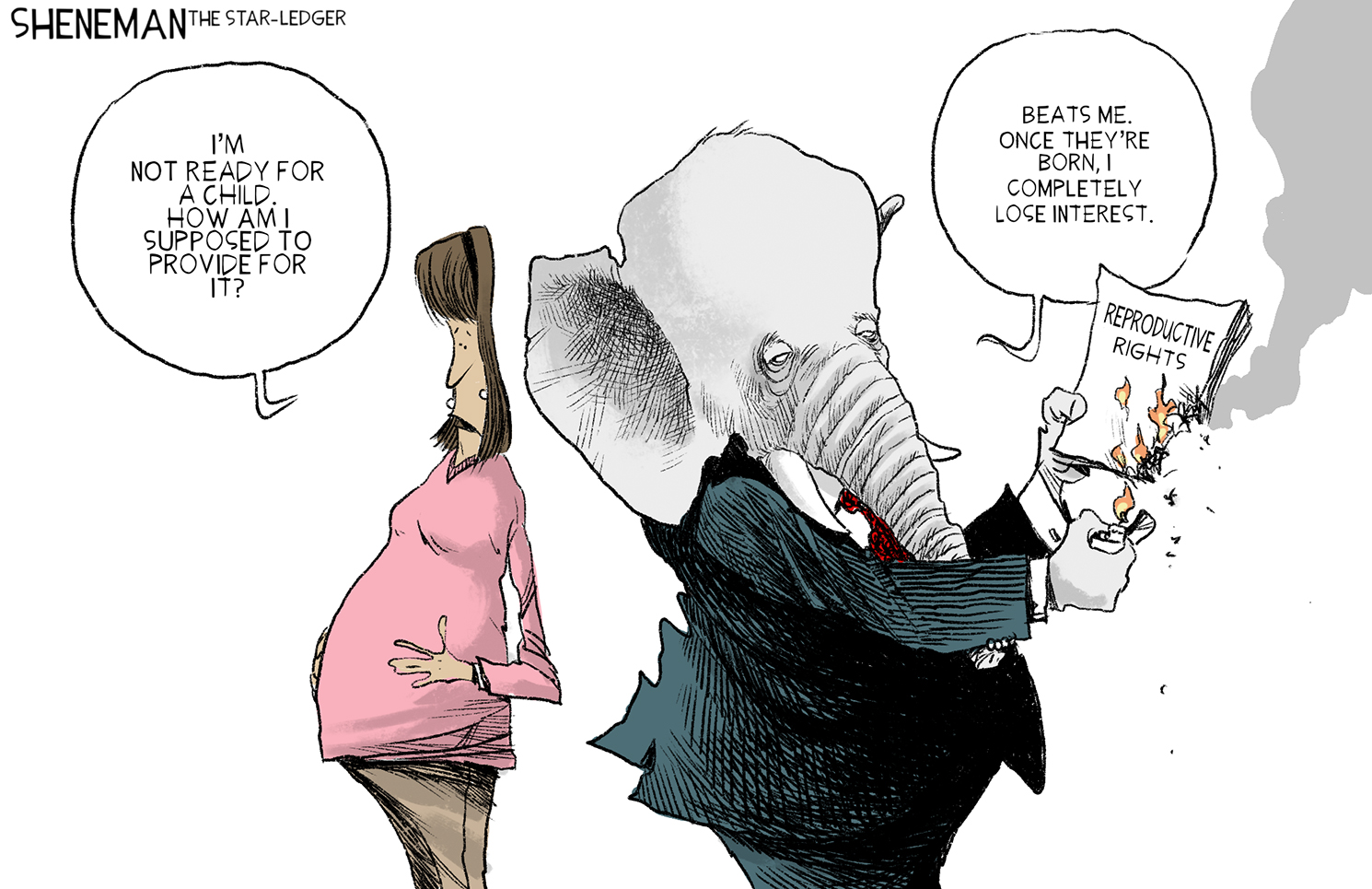
Another cartoon, same theme

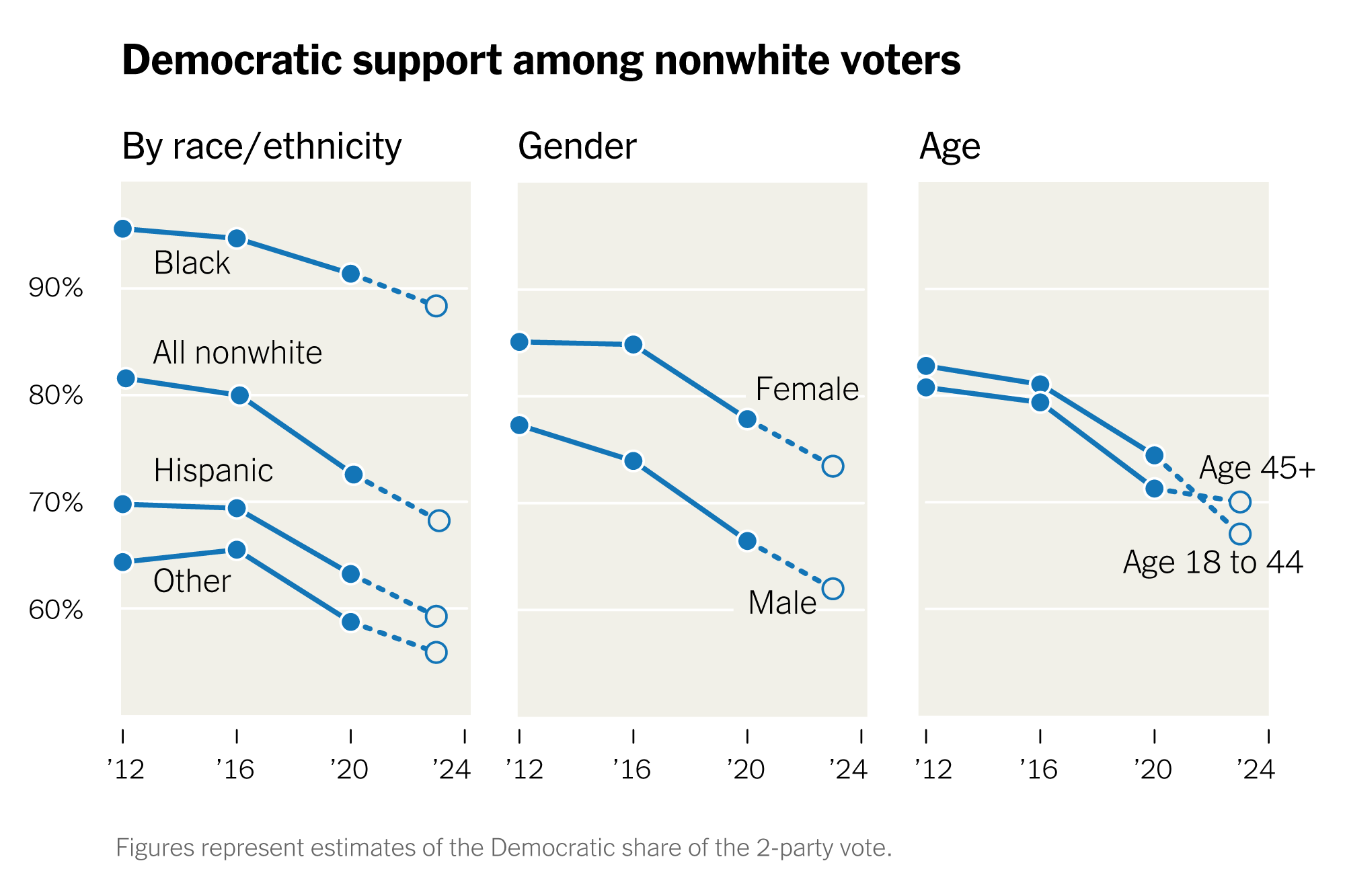
What the cartoon is really saying, then, is that progressives would rather poor people abort their fetuses than see children born into the poverty that progressives themselves created while signaling that they’re not going to do anything about, that this is the status quo. It is becoming all too obvious that progressives aren’t going to do anything about it because poverty is functional to the credentialed class that is the Democratic Party base. Perhaps this explains the erosion of support for the Democratic Party about non-whites over over the last dozen years; urban dwellers are waking up to the fact that their lumpenproletariat status was not so much the result of a system abolished over 160 years ago, but the work of the politicians they have been voting for over the last several decades—politicians belonging to the same political party that represented the slavocracy all those years ago.
What do I mean when I say that poverty is functional? Sociologist Herbert Gans, in his essay, “The Positive Functions of Poverty,” published in 1972, noted several functions of poverty that explain its persistence. On the economic front, poverty ensures a cheap and vulnerable labor pool that can perform low-wage, undesirable jobs that are essential for the functioning of the capitalist economy. These jobs often involve hard, dangerous, and dirty work that affluent individuals typically avoid. The existence of poverty allows for the availability of cheap goods and services, which subsidizes the lifestyle of the more affluent. Poor people work in industries that provide low-cost labor for wealthier consumers, such as agriculture, domestic work, and service sectors. Poverty generates a range of economic activities that might not otherwise exist. The poor often create informal markets and economies, which can lead to innovative survival strategies and business practices that foster and take advantage of them (e.g., the laundering of stolen vehicle parts).

Some of the functions of poverty in the mid-twentieth century when Democrats created the urban racialized ghetto are not longer functional. In the past, those who did this work, mostly black men and women, have been replaced by foreign labor abroad and at home. Capitalist flight and cheap immigrant labor means that, today, unemployment rates among black Americans living in urban areas is extraordinarily high even during times of economic expansion. Under normal conditions, high-poverty urban areas have unemployment rates significantly higher than the national average; in recent history, certain urban neighborhoods have experienced unemployment rates three and four times greater than the national average. High unemployment in these areas contributes to a cycle of poverty, where lack of jobs leads to further economic decline, which in turn leads to even fewer job opportunities.

There are also political functions. Poverty contribute to political stability by providing a population that is less likely to challenge the status quo—except when organized into riotous action to benefit the Democratic Parry, such as during the 2020 election with the death of George Floyd. Poor people, who often have fewer resources and less access to political power, may have limited capacity to organize and advocate for significant changes that may result in a trend towards collective prosperity. As I explain in The Black Panthers: Black Radicalism and the New Left the successful war waged against the black movement in the 1960s and 1970s by the CIA and FBI (COINTELPRO) devolved the black community to gang warfare. At the same time, Democrats perpetuate poverty to maintain a reliable voting base. By providing extensive social welfare programs and support systems in place of gainful employment, Democrats incentivize dependency on government assistance among those living in these communities. This dependency ensures continued electoral support from urban voters who rely on these programs for their livelihoods. Put simply, a demographic that works for a living has been replaced with a demographic that votes for a living.

As we have seen, Democratic policies create a cycle of poverty by disincentivizing work and fostering reliance on welfare benefits. Focusing on expanding welfare programs rather than promoting economic growth and individual responsibility, Democrats perpetuate conditions where individuals are more likely to vote based on securing government support rather than economic policies that promote job creation and self-sufficiency. Democratic governance in urban areas leads to a reliance on government handouts instead of fostering an environment conducive to economic empowerment and upward mobility. By emphasizing entitlements over economic opportunities, Democrats cultivate a political allegiance rooted in maintaining dependency rather than achieving long-term economic prosperity. Democratic urban policies hinder socioeconomic progress and perpetuates divisions by promoting identity politics and victimhood narratives among minority communities. By keeping urban populations reliant on government assistance and distracted by grievances, Democrats secure electoral support based on promises of continued welfare benefits rather than policies that encourage independence, economic growth, and broader societal integration.

Conservatives are not responsible for this situation. Indeed, they are vocally opposed to it. And for their principled opposition to policies that maintain the permanent racialized underclass, they are smeared as bigots and racists. The smear sticks because progressive Democrats control the academy, culture industry, mass media, and administrative apparatus. That’s the same hegemony that thwarts efforts by populist Republicans to make widespread their alternative for America—a national economic strategy built upon self-reliance and sovereignty, the restoration of a national culture rooted in the values of classical liberalism, and a return to the democratic-republican machinery necessary to actualize that culture in sustained prosperity.

The New Feudalism and the Fascism of Compelled Speech

“As bad as it is to tell people what they can’t say, it’s even worse to tell them what they must say. Freedom of conscience and individual autonomy mean freedom to refuse to say anything that runs counter to our values and beliefs, no matter how badly those in power want us to express views and ideas they support.” —FIRE, “Pronouns, free speech, and the First Amendment

The pattern of close elections in Wisconsin over the last several years having made plain the power of citizens in determining their outcomes, I have changed my opinion on how much my vote matters in the election of US presidents. Here’s why I will cast my vote on November 5 not based on my aspirations, but to maximize the opportunity to prevent Democrats from holding public office: the Democratic Party is bent on imposing gender ideology of the nation and compelling citizens to think and speak in falsehoods. I am a citizen of a republic with a bill of rights that protects conscience, speech, and press. I refuse to live as a serf in the New Feudalism that the Party is establishing by, among other things, compelling citizens to adopt performances of devotion prescribed by gender ideology. It’s a slow creep we must get on top of before we find ourselves living in a world where we have to refer to men as women. It matters not whether our objection and resistance to such falsehoods is religious or scientific; it’s a matter of dignity and truth.

Congress, established in Article I of the United States Constitution, and granted by that article all legislative powers, is forbidden to make any law that interferes with a citizen’s rights to conscience, speech, and press. The executive is established by Article II of the Constitution, and the President is charged with taking care that the laws of the United States are faithfully executed. This includes the fundamental law of the United States as articulated by the Declaration, Constitution, and the Bill of Rights. The power to determine whether laws are constitutional, both in content and execution, resides in the judiciary, established by Article III, in one Supreme Court and inferior courts as Congress may establish. Alongside these three branches has grown up a fourth, the Administrative State, rendered here as a proper noun, not because it’s institutional validity, but because, despite being unconstitutional, unelected, and unacceptable, it has become the most intrusive in our daily lives. It is the agencies and offices of this monstrosity, captured by progressive ideologues, that seek the changes Biden is making in the law he is obligated to administer.

As the author of the Declaration of Independence, a founding document that clarifies the fundamental rights justifying the act of throwing off a monarchy and establishing a republic in its stead, the rights to life, liberty, and the pursuit of happiness, Thomas Jefferson, in his official capacity as US President, told the Danbury Baptist Church of Connecticut, in a 1802 letter, that “the legitimate powers of government reach actions only and not opinions.” Citing the prohibition the Constitution placed on Congress from intruding on matters of conscience, Jefferson wrote that, given that “the Executive [is] authorized only to execute their acts, I have refrained from prescribing even those occasional performances of devotion.” Now, in his official capacity as US President, Biden is implementing reinterpreted Title IX regulations that contradict fundamental law by threatening to compel citizens to speak and write in ways they otherwise would not by requiring them to adhere to prescribed doctrine and performances of devotion, not those of other Christian sects, but those of gender ideology. The Danbury Baptists had written to Jefferson worried about the establishment of a national religion. In light of the imperialist ambition of gender ideology, their concern is once more relevant. Compelling employees of public institutions to affirm gender ideology and its alchemic doctrines and accompanying ritual performances, such as referring to men as women by using “preferred pronouns” in speech or in writing, not only forces citizens to act in bad faith by intentionally misgendering others, it’s a blatant of citizens’ First Amendment rights. Anybody who wants this is a fascist.

The Biden administration published its new Title IX Rule in the Federal Register on April 29. It is a massive document that takes some time going through. It includes concerns and objections from those who responded during the public comment phase required of federal rule changes. Numerous alarm bell were rung. The new rule removes the due process protections established by former education secretary and imposes gender identity policies in schools. But there were also commenters who expressed a desire that the rule changes do more to compel employee and student speech. The National Association of Scholars (NAS) has warned that gender activists are expected to use the rule to compel speech, specifically requiring the use of preferred pronouns, which the Biden administration has been mandating for its agencies despite concerns about legality and constitutionality. (I published several essays on the matter of compelled speech last year on Freedom and Reason. See NIH and the Tyranny of Compelled Speech; The War on Fact and Reason: More on the Problem of Compelled Speech; The Tyranny of Rules Governing Speech; Punishment and Discipline in Today’s Workplace.) The new Title IX regulations include provisions related to gender identity, which can influence how schools address the use of preferred pronouns. 

Source: FIRE

“While the final regulations do not purport to identify all of the circumstances that could constitute sex-based harassment under Title IX, a stray remark, such as a misuse of language, would not constitute harassment under this standard,” new rule states. The “misuse of language” directly refers to concerns voiced by commenters who “believe that misgendering is one form of sex-based harassment.” In light of the definition of harassment in the document, which is standard, as “unwelcome, subjectively and objectively offensive, and sufficiently severe or pervasive to limit or deny a student’s ability to participate in or benefit from a recipient’s education program or activity (i.e., creates a hostile environment),” one expects that persistent “misgendering,” as paradoxically conveyed by gender ideology, would fall under the scope of harassment by those determined to police thought and speech. As a consequence, an individual who does not obey doctrine will be compelled to misgender individuals against his instinct to accurately and truthfully apply pronouns.

Fortunately, numerous lawsuits have been filed against the Biden administration challenging this Title IX overreach, with 26 state attorneys general leading the most significant legal actions. These challenges are bearing fruit. A Texas federal judge has blocked the Biden administration’s efforts to extend federal anti-discrimination protections to trans identifying students. In his ruling Tuesday, Judge Reed O’Connor said the Biden administration lacked the authority to make the changes, accusing it of pushing “an agenda wholly divorced from the text, structure, and contemporary context of Title IX.” Title IX is the 1972 law that prohibits discrimination based on sex in educational settings, which I will come to in a moment. “To allow [the Biden administration’s] unlawful action to stand would be to functionally rewrite Title IX in a way that shockingly transforms American education and usurps a major question from Congress,” wrote O’Connor. “That is not how our democratic system functions.” Indeed, but Democrats, as recent history makes clear, are anti-democratic and the rule of law. “Threatening to withhold education funding by forcing states to accept ‘transgender’ policies that put women in danger was plainly illegal,” Texas Attorney General Ken Paxton said in a statement applauding Tuesday’s ruling. The Education Department said in a statement that it stands by its revised guidelines. “Every student deserves the right to feel safe in school,” the statement reads. In the progressive worldview “safe” means not only having to hear objectionable or truthful things, but also not being able to count on others to affirm the delusion of others. This illiberal desire is called “safetyism.”

Richard Nixon signed into law Title IX in June 1972. The law states: “No person in the United States shall, on the basis of sex, be excluded from participation in, be denied the benefits of, or be subjected to discrimination under any education program or activity receiving Federal financial assistance.” This legislation was deemed necessary in realizing the spirit of the 1964 Civil Acts, which aimed to end discrimination based on several protected classes. Sex was one of these categories. Of all the categories, it was the one most rooted in natural history. Sex was used in civil rights language because the propagandistic use of gender had not yet been widely socialized (see my essay Gender and the English Language). Because of the inherent and immutable differences between sexes, equity demanded sex-segregated opportunities and spaces where these differences precluded the application of strict equality resulting in disparate impact.

Central to these developments, and crucial to realizing the fundamental rights identified in the Declaration of Independence and in the Bill of Rights, is a proper understanding of discrimination and its application in the law. Discrimination in law is understood as occurring in the following forms: disparate treatment (intentional discrimination where individuals are treated less favorably because of their membership in a protected class); disparate impact (policies or practices that appear neutral on their face but have a disproportionate negative impact on members of a protected class); harassment (unwelcome conduct based on a protected characteristic that creates a hostile, intimidating, or offensive environment); retaliation (adverse actions taken against an individual because they have engaged in protected activities). As noted earlier, the mechanism progressives will likely use in compelling speech is discrimination in the form of harassment. However, any attempt to repurpose the definition of harassment to violate First Amendment principle is inherently authoritarian.

Freedom of conscience, speech, and press are fundamental rights that protect individuals from being compelled to express beliefs with which they disagree. This includes beliefs about gender identity and instinctive pronoun use. For United States citizens and those residing in the country, these rights are explicitly protected by the Constitution. I am free to believe, speak, and publish what I will. That also means that I do not have to believe, speak, or publish what I won’t. Speech and writing convey opinions, which, as a matter of conscience, all free men are allowed to hold and express or reject. Speech may be restricted if it incites imminent lawless action, constitutes true threats, or involves defamation or obscenity. Speech that is considered a form of harassment or violates privacy rights can also be limited. But limiting speech in this manner must be for rational cause and based upon clear and compelling evidence. Likewise, time, place, and manner restrictions are permissible as long as they are content-neutral, narrowly tailored to serve a significant governmental interest, and leave open ample alternative channels for communication.

In many jurisdictions and institutional settings, policies and laws have been developed or are in development to protect individuals from discrimination based on gender identity. Refusal to use preferred pronouns is said to contribute to an environment that marginalizes and harms transgender and non-binary individuals, potentially violating their rights to dignity and equal treatment. Discussions around freedom of conscience acknowledge the importance of respecting individual beliefs and convictions, but in the progressive worldview, these must be juxtaposed to the interests of those who subscribe to gender ideology. It’s typically put in these apparent innocuous terms: striking a balance between sides involves considering the rights and well-being of all parties involved. Organizations and jurisdictions have sought to accomplish this through inclusive practices that respect diverse beliefs while upholding anti-discrimination standards. Ultimately, we are told, navigating these situations requires empathy, sensitivity, and a commitment to fostering environments where all individuals can feel safe, respected, and valued.

But the tension here is not between two rational concerns, but between ideology and control on one side, and freedom and reason on the other. As somebody who doesn’t subscribe to gender ideology, who for rational reasons recognizes the doctrines as constituting a quasi-religious of neo-religious worldview, which, as an atheist I reject, how am I supposed to respond when I am unsafe, or not respected or valued? Isn’t a key part of human dignity the right to freely think and speak as one wishes as long as it doesn’t run afoul of the limits described above? Why should gender ideology trump the fundamental rights of persons that are unalienable, which means they stand outside ideology and politics as the birthright of every human beings? The check on this is to ask about whether, recognizing that Christians are a protected class in the Civil Rights Act of 1964, those who work around the Christian are required to express articles of faith indigenous to the Christian faith. To be sure, he is permitted his gold cross and armband asking, “What would Jesus do?” But he is not permitted to make me affirm his doctrines or participate in his rituals.

Of the forms of discrimination that Biden’s Title IX change, the one most likely to be used against employees is the charge of harassment. Harassment is behavior that is unwanted (not consented to) by the recipient. The conduct is based on a protected characteristic, which Biden is attempting to establish by including in the definition of sex the construct “gender identity,” the invention of a sexologist in the late 1960s (who also believed in dream telepathy). The behavior must be severe or pervasive enough to create an hostile, intimidating, or offensive environment that interferes with an individual’s ability to work or learn effectively—and it must be based on a legally recognized protected class, which in turn must represent an real and organic category. Harassment can take various forms, including verbal (such as slurs or derogatory remarks), non-verbal (such as gestures or displays), physical (such as unwanted touching), or electronic (such as cyberbullying or sending harassing emails). It can occur in workplaces, schools, public spaces, or online environments. Legal protections against harassment aim to ensure that individuals are treated with dignity and respect, and that they can learn, participate, or work in society without fear of discriminatory or hostile treatment based on their protected characteristics. It is one thing to harass a man because he wears a dress. It is quite another thing to regard that man as a woman because he desires that you affirm his gender identity.

Biden and the progressives were emboldened by a Supreme Court decision that approved the inclusion of “gender identity” within the meaning of the term “sex” is Bostock v. Clayton County (2020). In this case (which combined three cases, one involving a claim to gender identity), the Supreme Court ruled that Title VII of the Civil Rights Act of 1964, which prohibits discrimination because of sex, extends to protect employees from discrimination based on their sexual orientation or gender identity. The Court held that discriminating against an individual because of their sexual orientation or transgender status inherently involves treating them differently based on their sex. Justice Neil Gorsuch, writing for the majority, tortured language and logic in sating that “it is impossible to discriminate against a person for being homosexual or transgender without discriminating against that individual based on sex.” Three justices dissented. Justice Samuel Alito wrote a dissenting opinion, joined by Justice Clarence Thomas. Alito argued that the majority’s interpretation of Title VII was inconsistent with the understanding of the law at the time of its enactment in 1964. He contended that discrimination because of sexual orientation or gender identity is a separate issue from discrimination based on sex as traditionally understood. Justice Brett Kavanaugh also wrote a dissenting opinion wherein he acknowledged the significance of the issues at stake but argued that it was Congress’s role, not the Court’s, to amend Title VII to include protections for sexual orientation and gender identity explicitly. He expressed concern about the potential implications of the Court’s decision for other areas of law and urged Congress to address the issue through legislation. As John Marshall Harlan’s lone dissent in Plessy v. Ferguson (1896), history has shown is that those in the minority are sometimes right to dissent.

There is a lot at stake here and November 5, 2024 can change the direction of history. The Democratic Party is imposing on the citizens of a free republic an ideology to which most citizens do not subscribe (see Mouth Breathers in the Democratic Party). A majority of Americans believe that gender is determined at birth and is immutable. But even if no one believed that, it would be wrong to use civil rights law as a vehicle to impose upon the citizenry the ideological belief that gender is assigned at birth and can be changed. It is authoritarian to impose upon the citizens of a democratic republic any ideological system. Compelling a man to use preferred pronouns is identical in form to compelling a man to refer to the founder of Islam as the “prophet Muhammad” when speaking about him to Muslims or about Muslims.

In George Orwell’s Nineteen Eighty-Four, the Party employs extensive and pervasive techniques to compel citizens to believe whatever it dictates, regardless of reality. Through mechanisms such as propaganda, psychological manipulation, and surveillance, the Party enforces loyalty and orthodoxy. Central to this control is the concept of “doublethink,” which requires individuals to accept two contradictory beliefs simultaneously, erasing the distinction between truth and falsehood. The Ministry of Truth changes the meaning of words, revises history, and disseminates false information to ensure that the Party’s version of events is accepted as the sole reality. This relentless manipulation of truth and memory—the mass deployment of gaslighting—eradicates independent thought and reinforces the Party’s dominance, leaving citizens unable to question or resist its authority. This is the society Democrats seek. This is why my vote will be cast in the manner most likely to stop them from achieving the New Feudalism.

Mouth Breathers in the Democratic Party

I hope to start rolling out the essays promised in yesterday’s blog tomorrow (we will see where students are in their final exam and discussion forum). But a recent poll has come to my attention and I want to say a few things about it on Freedom and Reason.

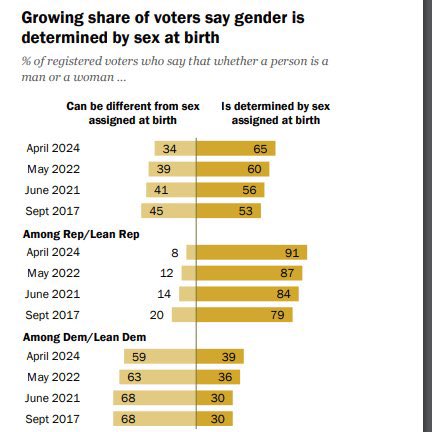
On June 6, the Pew Research Center published the report Cultural Issues and the 2024 Election which covers among other things gender identity, immigration, and racial diversity (see the full report). I begin with gender identity. Everybody is obsessed with this topic. What the results find is that, at least on a matter where nearly everybody is intimate with the truth (for how long should concern you), the organized propaganda machine can confuse and manipulate the public for only so long before people find their way back to it.

Source: Pew Research Center, June 6, 2024.

“The share of voters who say that sex at birth determines whether someone is a man or a woman has increased since 2017, and this increase has occurred within both parties.” Not that you need public opinion to know that gender is a natural historical fact. This is established by hard science. But it is important politically for the public to come around to that fact—if we are to push back the ideology that is confusing so many young people and the medical practice that are destroying so many young lives. “In 2017, 53% of voters said sex assigned at birth determines gender; 65% express this view today.”

That 35 percent still believe that gender is “assigned at birth,” a charm that double-functions as neo-religious slogan and medical industry marketing, is very troubling. How so many millions of people could get something so simple so wrong is an indictment of our educational system, especially in light of the fact that the system itself is what partly explains the distortion of what otherwise would be common knowledge. It was for millennia.

Looking at the cross tabs, we see that the greatest progress has been made among Republican and Republican-leaning voters, who say that “sex at birth determines gender identity” has grown from 79 percent in 2017 to 91 percent today. We might understand this in this way: Republican and Republican-leaning voters are inoculated against the neo-religion of queer theory because of their firm roots in Christianity, which provides an alternative faith-based system that functions as a bulwark against gender ideology. The faith is moreover rooted in heteronormativity and child safeguarding.

The share of Democratic and Democratic-leaning voters who say agree with the statement has also increased during this period, from 30 percent to 39 percent. This means that a majority of Democratic and Democratic-leaning voters believe in that gender is “assigned at birth.” While the tenets of faith in Christianity are nonfalsifiable, gender identity is easily falsified, since gender is determined by reproductive anatomy and gamete size. We should note that while 61 percent of Democrats believe gender is assigned at birth, only 34 percent of black Democrats agree with this statement. Seventy-two percent of white Democrats believe gender is assigned at birth.

Really, this isn’t surprising. It’s well known that Democratic and Democratic-leaning voters are prone to expressing bizarre beliefs, illustrated by a Franklin Templeton-Gallup study in December 2020 that found that 41 percent of Democrats believed that half or more of all people infected with COVID-19 were hospitalized, a jaw-dropping level of ignorance. But it gets worse. Combined with those who believed that between 20-49 percent of those infected by the virus were hospitalized, the total number exceeds 68 percent. This is roughly the proportion of white Democrats who believe gender is assigned at birth.

Democrats pride themselves on being more informed than the mouth breathers in the Republican Party But believing that COVID-19 produced extraordinarily high hospitalization rates that were easily debunked by a few minutes on the CDC website is truly embarrassing. It means the people who were masked and jabbed thought a coronavirus was as bad as ebola. As we learned earlier, they also believe that one of the most fundamental fact about animals and plants is “assigned.”

On some other numbers, it’s heartening to see a majority of Republicans agreeing that religion should be separate from government policies, that the gains women have made have not come at the expense of men, and that slavery, abolished over 160 years ago, does not significantly affect black Americans in today’s society (79 percent of Democrats believe this).

The poll also shows that Americans have become far more likely to say that undocumented immigrants currently living in the United States should not be allowed to stay in the country legally. Two-thirds of Republicans and those who lean Republican agree with deporting those illegally in the country. Working class Americans are feeling the effects of globalization.

Source: How Informed are Americans about Race and Policing? Research Report CUPES-007 | February 20, 2021

I will close by sharing the findings of a story concerning the number of unarmed black men killed by police in 2019. In a year where estimates ranged from 12 (the Washington Post database) and 27 (the Mapping Police Violence database), over 31 percent of those identifying as “very liberal” (i.e., progressive), thought that police killed about a 1,000 unarmed black men. A thousand is around the number the police kill in total in a year (most of whom are white). Nearly 27 percent of those identifying as “liberal” also think the number is about 1,000. Compare that to those on the right, where roughly half of those identifying as “conservative ”and “very conservative” come close to accurately estimating the number of unarmed black men killed by the police. The Post says it’s 12. The conservative says ten.

When “Twice-Born” Goes Wrong: The Crisis of Personality Among Rebellious Youth

I have been working on some lengthy essays for readers, but these are taking more time than expected and I wanted to deliver a Thursday afternoon blog as I usually do (which will be late anyway). I have had it mind for some time to write about William James, a pioneering figure in pragmatic American philosophy, psychology, and theology and his seminal 1902 work The Varieties of Religious Experience, which deeply impressed me as a child. Central to his exploration of religious experience are the contrasting concepts of the “once-born” and the “twice-born,” which illuminate different paths individuals may take not only in their religious or spiritual lives, but in their pursuit of knowledge more generally. As an atheist, I am more interested in the latter.

A young William James

I discuss James in Social Theory, a senior level class I teach at the university, There I cover his conceptualization of the problem of the “self” (James defines several types). I used James’ dichotomy in an April of 2020 essay, Striving to Be Twice Born in a World of Partisan Ideology, written as I was checking objectivity amid the mass hysteria of the coronavirus pandemic. Today I provide a more general treatment which will serve as a prelude to the aforementioned essays in production (these concern fascism and the necessity of republican governance frameworks for human freedom and thriving).

James introduces the term “once-born” to describe individuals whose religious experiences unfold in a relatively straightforward manner. For them, faith and spirituality are integrated into their lives harmoniously and without significant conflict. Their religious beliefs provide a stable framework that aligns with their personal values and worldview. They may adhere to religious practices and teachings without undergoing profound crises of faith or intense emotional upheaval. James portrays these individuals as enjoying a sense of continuity in their religious experience, where faith serves as a source of comfort and moral guidance rather than a catalyst for radical personal transformation. One might associated the “once-born” with traditional expressions of religious faith.

In contrast, James uses the term “twice-born” to characterize those who undergo profound spiritual or religious transformations—and who use these experiences to radically transform their identities. These individuals experience periods of intense emotional turmoil, moral crises, or existential doubt that challenge their existing beliefs and values. Their religious or spiritual journey is marked by moments of internal conflict and profound struggle, often leading to a reevaluation of their worldview and identity, but not always, I will be discussed below. The metaphor of being “twice-born” suggests a metaphorical rebirth or renewal, where individuals emerge from their spiritual crises with a deeper understanding of themselves and a transformed perspective on life and faith. But they may also emerge from their crisis profoundly at odds with reality and self-interests.

James’ distinction between the “once-born” and the “twice-born” reflects his broader interest in the diversity of human religious experiences and the psychological dynamics at play. He suggests that while some individuals may find solace and spiritual fulfillment through a more conventional and stable religious path, others undergo profound inner struggles that ultimately lead to deeper spiritual insights and personal growth—as well as angst and trepidation. Many studies have found a positive correlation between happiness and well-being and traditional religious and cultural involvement. These associations are attributable to several factors. Traditional beliefs and communities provide strong social networks and support systems, impart a sense of meaning and purpose in life, and provide coping mechanisms during times of stress or adversity. Crucially, then, the study of religious experiences goes beyond theological doctrines or institutional practices; it encompasses the subjective and deeply personal dimensions of faith and spirituality, highlighting the complexity of human spiritual experiences and the transformative potential inherent in religious crises and rebirths.

While in graduate school, I picked up a copy of Jürgen Habermas’ 1973 Legitimation Crisis and found in there a quote by Kenneth Kenniston, known for his work on adolescence, youth culture, and social change, that adapts James’ dichotomy. He uses James to illustrate the meaning of an unconventional outcome of the adolescent crisis, which was the subject of considerable discussion given the radical student youth movement during the latter years of the Vietnam War (a concern that the current turmoil once again makes relevant), by pointing, Habermas notes, “to the reflective attitude toward socially tendered patterns of interpretation which the youth acquires and which allows him, in coming to terms with these cultural interpretations, to work out his definition of identity for himself.”

Jürgen Habermas

Kenniston writes: “We will need to distinguish more sharply than we have done so far between attitudes and belief systems on the one hand and the cognitive frameworks or developmental levels within which any given attitude or belief is held. William James long ago contrasted the once-born and the twice-born; the once-born are those who unreflectively and ‘innocently’ accept the convictions of their childhoods; the twice-born are those who may adhere to exactly the same convictions, but who do so in a different way after a protracted period of doubt, criticism, and examination of those beliefs. Viewed as attitudes, the beliefs of the once-born and the twice-born may be identical, but the mind-set, cognitive framework, or developmental level of the once- and twice-born are extremely different. In other words, we need to examine not only the beliefs men hold, but the way they hold them-the complexity, richness, and structure of their views of the world. Politically and socially, it may be more important that members of a given subculture possess a relativistic view of truth than that they are conservatives or liberals.”

This line about the need “to examine not only the beliefs men hold, but the way they hold them-the complexity, richness, and structure of their views of the world” is a vitally important one point to grasp. Habermas found in this clarification of his purpose in writing Legitimation Crisis: “With the help of this distinction, I can express my thesis as follows: the components of the cultural tradition that are today dominant (and dysfunctional in their working) are more likely to be reflected at the level of the personality system, the more frequently the form of development of the adolescent crisis forces a ‘second birth’ and prevents a conventional outcome of adolescence. For logical reasons, universalistic value systems and countercultural experiential complexes most readily withstand the explicit testing of tradition.”

Habermas is arguing that the dysfunctional components of today’s dominant cultural traditions have a significant impact on shaping individual personality development. This influence is particularly pronounced when adolescents experience a transformative crisis, akin to a “second birth,” rather than following a conventional path of adolescent development. The thesis posits that dysfunctional cultural elements, such as we saw with the emergence of globalization, are more likely to shape personality traits under these circumstances. Habermas argues that value systems that are universalistic and experiential that challenge conventional norms are more resilient against explicit testing of tradition, highlighting their potential to withstand and critique prevailing cultural norms effectively. These value systems often provide broader perspectives, alternative frameworks, or deeper insights that can critique and potentially reform prevailing cultural norms more effectively than more rigid or narrowly defined traditions, the function of which is to perpetuate conventional norms. In other words, these values offer a resilience against uncritical acceptance of tradition and encourage ongoing dialogue and reflection on cultural values and practices.

Returning to Habermas: “That the probability of a conventional form of development of the adolescent crisis is decreasing can be supported by the following indicators: expansion of the educational system is lengthening training periods and making possible for increasing proportions of the population a psycho-social moratorium in early adolescence (from the thirteenth to the sixteenth year) and an extension of this phase (in extreme cases, to the age of 30); improved formal schooling of cognitive capacities increases the probability that dissonances between proffered patterns of interpretation and perceived social reality will arise and intensify the problem of identity; development of egalitarian family structures and spread of childrearing techniques typical of the middle classes [that] promote processes of socialization that tend to burden youth with adolescent problems; loosening of sexual prohibitions made possible by pharmaceutics [that] works itself out (as does the temporary liberation—differentiated according to strata—from directly economic pressures) in such a way that socialization processes free of anxiety, with an expanded scope of experimentation, become more probable for adolescents.”

“Furthermore,” Habermas continues, “it can be inferred from the presently attained degree of complexity of the role system that in advanced-capitalist societies more and more members have at their disposal basic universalistic qualifications for action within roles. Since a morality based on principle can be credibly offered by tradition only in the form of communicative ethics, which cannot function without conflict in the political-economic system, two outcomes are to be expected from a non-conventional form of development of the adolescent crisis: (1) withdrawal as a reaction to an overloading of personality resources (a behavioral syndrome that Kenniston has observed and examined in the ‘alienated’) and (2) protest as a result of an autonomous ego organization that cannot be stabilized under the given conditions.”

There is a lot here that I will take up in the pending essays I noted at the outset. However, I want to make one point here before leaving the present essay. While I agree with the testing of convention—and throughout my writings I appeal to universalistic principles and values as means to this end—the argument overlooks potential risks associated with questioning convention, especially among youth, today guided by the transgressive methodology associated with woke progressivism, most obviously in the method of queering, i.e., the challenging of normative boundaries (such as those involved in child safeguarding), transformation of public spaces according to the doctrines of a neo-religion, and the normalization of compelled speech in the face of the fundamental human rights to free conscience and speech. As I will discuss in those pending essays, this constitutes a neo-fascist standpoint that threatens the future of constitutional republics across the transatlantic space. Radical disjunctures in the collective personality of youth in mass societies do not always yield progressive results, as Mao’s Cultural Revolution makes plain.

Indeed, while universalistic and experiential value systems can offer valuable critiques of prevailing norms, the assumption that they inherently lead to constructive reform ignores the variability in youths’ reflective capacities and maturity levels. For many young individuals, questioning tradition without sufficient understanding or guidance can result in confusion, identity crises, or even disillusionment. The process may leave them adrift without a solid foundation to navigate life’s complexities, potentially leading to feelings of alienation or detachment from societal norms altogether. Moreover, while challenging mainstream norms can foster critical thinking and innovation, it also risks undermining essential societal structures that provide stability and continuity, which are crucial for social cohesion and individual well-being.

Therefore, while encouraging critical reflection on cultural values is important, it must be balanced with nurturing a nuanced understanding of tradition and providing supportive frameworks for young people to develop their identities and moral compasses responsibly. How is this possible when young people are at war with their elders? We are, comrades, in a new legitimation crisis. I wish to leave you with these passages early in Habermas’ book, which touches on many things that concern me on the pages of Freedom and Reason:

“Prior to its employment as a social-scientific term, the concept of crisis was familiar to us from its medical usage. In that context it refers to the phase of an illness in which it is decided whether or not the organism’s self-healing powers are sufficient for recovery. The critical process, the illness, appears as something objective. A contagious disease, for example, is contracted through external influences on the organism; and the deviations of the affected organism from its goal state [Sollzustand]—the normal, healthy state—can be observed and measured with the aid of empirical parameters. The patient’s consciousness plays no role in this; how he feels, how he experiences his illness, is at most a symptom of a process that he himself can scarcely influence at all. Nevertheless, we would not speak of a crisis, when it is medically a question of life and death, if it were only a matter of an objective process viewed from the outside, if the patient were not also subjectively involved in this process. The crisis cannot be separated from the viewpoint of the one who is undergoing it—the patient experiences his powerlessness vis-a-vis the objectivity of the illness only because he is a subject condemned to passivity and temporarily deprived of the possibility of being a subject in full possession of his powers.

“We therefore associate with crises the idea of an objective force that deprives a subject of some part of his normal sovereignty. To conceive of a process as a crisis is tacitly to give it a normative meaning—the resolution of the crisis effects a liberation of the subject caught up in it.”

The Pelvis Tells the Story: Archeology and Physical Anthropology are Most Unkind

A narcissist named Elise Verona, who goes by DaylightElise on X, peddling his trans identity for gifts and money, took issue with a meme shared by Troonphobia Central that debunked the slogan “trans women are women” by simply noting the fact that an archeologist would look at a 1000-year-old skeleton and identify it as belonging to a man whatever gender identity the skeleton had asserted when there were flesh on his bones. DaylightElise writes, “Unknown fact but I have two degrees, one in archaeology and it actually doesn’t work like this at all.”

I didn’t bother tracking down this person to the depth that I could verifying his degrees. Whatever they were, where they were obtained would be the most telling. However, as somebody who has advanced degrees in sociology with a specialization in criminology (a subfield of sociology, not psychology, although one can still find some useful ideas there), and as someone with extensive knowledge of anthropology, I responded: “I’m a professional criminologist. If [sic] actually does work like that. That’s why forensic anthropology is so important to our profession.” This comment, which I made only yesterday, had 3.3 thousand likes last time I checked.

I slayed in the thread that followed, clarifying for users that anthropology is a four-field approach—archeology, cultural anthropology, linguistics, and physical anthropology—with archeology and physical anthropology often associated with criminology programs. As some of you will know, the disciplines of sociology and anthropology are often housed within one department. My master’s degree is associated with such a department (Middle Tennessee State University), and I am on the faculty of Sociology and Anthropology at the University of Wisconsin-Green Bay. The faculty at UWGB are currently rebuilding the program, but, at one time, the anthropology major enjoyed faculty from every field in the discipline. Moreover, UWGB just established a criminal justice major, and the emerging program will likely look like other programs across the nation.

Human remains

I had to clarify matters on X because many users didn’t know that archaeology was relevant to criminology. Others thought they were clever by noting that cultural anthropology accepts the fallacious distinction between gender and sex, synonyms referring to reproductive anatomy in both animal and plant biology. To be sure, cultural anthropology has, as has sociology, accepted the woke nonsense that trans identifying men are women, but physical anthropology hasn’t been completely captured by the neo-religion of woke progressivism. Neither has archeology. Not yet, anyway. Hopefully, this won’t happen, since both are useful to criminology, as well as criminalistics, which is why they are routinely included in criminology programs. Once woke, disciplines become pretty much useless.

Many stupid comments were made in the ensuing debate. But there is one I want to curate here because it shows how trans ideology leans into gender stereotypes, reifying and treating the blue and the pink as real at the expense of, well, everything. User Cailey | Semi said, “as someone who studied forensic anthropology and osteology in college, OP [another user] is right in that context is important. if you find a missing person dressed in womens [sic] clothes and identify the person as male based on their skeleton alone, you’re doing the deceased + family a disservice.”

See how this works? Men who wear women’s clothes should not be identified as male because this might upset those who wish to believe the deceased man is a woman—as if wearing a dress changes a man’s gender (why the dead man cares escapes this atheist). I asked the user whether jeans and a t-shirt, short hair and no makeup, etc., makes a woman a man. Is gender really about apparel and cosmetics? I asked this question because this is the superficiality that pressures tom boys to take testosterone and undergo phalloplasty (presently, girls and young women are drastically overrepresented those seeking gender affirming care). And we know the medical-industrial complex is eager to help make that happen—for a price.

Well, this type of probing and the popularity of my comment was too much for Elise Verona. He changed his DaylightElise account to only allow comments from those he follows or mentions.

I can no longer rebut comments on the thread I initiated.

Alas, I can no longer respond to those who disagree with me on the DaylightElise intervention. But I made my point. It’s a simple one: as a matter of science, men are not women and cannot be and this is a scientific fact. Gender is binary and immutable. It is, of course, tragic that so many people refuse to accept this. But it is also tragic for the rest of us, as well; for the sake of the feelings and delusions of others, and for those who invest in the medical corporations that exploit the disordered and vulnerable, we’re supposed to deny scientific reality. At the very least, we are expected to act in bad faith. This is why students at my university organized a petition to get me fired: they don’t like it that I won’t go along with all this nonsense. Worse than that, I debunk it. Having a scientific materialist uncorrupted by woke progressivism debunk gender ideology is the nightmare par excellence.

Peter Berger tells us why in his 1967 tour de force in the sociology of religion, The Sacred Canopy: Elements of a Sociological Theory of Religion:

“The socially established nomos may thus be understood, perhaps in its most important aspect, as a shield against terror. Put differently, the most important function of society is nomization. The anthropological presupposition for this is a human craving for meaning that appears to have the force of instinct. Men are congenitally compelled to impose a meaningful order upon reality. This order, however, presupposes the social enterprise of ordering world-construction. To be separated from society exposes the individual to a multiplicity of dangers with which he is unable to cope by himself, in the extreme case to the danger of imminent extinction. Separation from society also inflicts unbearable psychological tensions upon the individual, tensions that are grounded in the root anthropological fact of sociality. The ultimate danger of such separation, however, is the danger of meaninglessness. This danger is the nightmare par excellence, in which the individual is submerged in a world of disorder, senselessness and madness. Reality and identity are malignantly transformed into meaningless figures of horror. To be in society is to be ‘sane’ precisely in the sense of being shielded from the ultimate ‘insanity’ of such anomic terror. Anomy is unbearable to the point where the individual may seek death in preference to it. Conversely, existence within a nomic world may be sought at the cost of all sorts of sacrifice and suffering—and even at the cost of life itself, if the individual believes that this ultimate sacrifice has nomic significance.”

For those unfamiliar with phenomenology, the nomos is the socially constructed order or framework within which individuals and societies interpret and make sense of reality. Those who are confused about their gender, a rapidly growing segment of the population, are the result of a society that has walked away from truth and selected among the many choices a mythology that feels right to them. Society has not taken this walk on purpose. Rather, for economic and political purposes, the elites who organize society have compelled those under their command to take this walk for them by disrupting the nomos and making them stand and move on shaky legs.

Thanks to the post-truth spectacle of corporate culture, bereft of a meaning system that supports natural development across the life-course, those thrown into anomic circumstances are alienated from everything—including their own bodies. Not left there to suffer, they are given an elite established nomos that diagnoses their alienation as “gender dysphoria.” At the same time, elites provide the solution: not one that would turn society back towards the road to healthy childhood development, but rather a solution that puts individuals on the path to metamorphosis, a transformation the rest of society must affirm and promote for legitimation’s sake—and to avoid the mob. But doubt is lurking, and reality almost always intrudes, and so the death sought in preference to unbearable anomie on one side of the transition finds death as preferable on its other side. It is a dark universe the elite have created for our children.

Berger also said this: “Society is a dialectic phenomenon in that it is a human product, and nothing but a human product, that yet continuously acts back upon its producer. Society is a product of man. It has no other being except that which is bestowed upon it by human activity and consciousness. There can be no social reality apart from man. Yet it may also be stated that man is a product of society. Every individual biography is an episode within the history of society, which both precedes and survives it. Society was there before the individual was born and it will be there after he has died. What is more, it is within society, and as a result of social processes, that the individual becomes a person, that he attains and holds onto an identity, and that he carries out the various projects that constitute his life. Man cannot exist apart from society. The two statements, that society is the product of man and that man is the product of society, are not contradictory. They rather reflect the inherently dialectic character of the societal phenomenon. Only if this character is recognized will society be understood in terms that are adequate to its empirical reality.” I am going to ask readers to hold this in their mind as they read the next few paragraphs.

The chant of gender cultists—“trans women are women”—works the way prayer works, which is to say that it doesn’t work at all. Not in any objective sense. To be sure, we exist in a social reality. But we also exist in a natural world. We are natural beings. We live in a social world that denies that, or we live in one that embraces it. There are, of course, degrees between; but, if we are to fully realize the potential within a natural being, we must strive for the latter. Prayer does nothing but make a man feel like he is control. People who pray believe it does something because they want it to so badly, and they want this so badly because, without a realistic grasp of the world, they cannot actually control their life situation. Those who cannot accept their gender do not have a realistic grasp on the world. And so they resort to magical thinking. Magical thinking has always existed in man, and species of magical thinking are all alike in this regard.

Chants like “trans women are women” do a couple of things. The first is that is that they are incantations uttered, or are comprised of a set of ritual steps, to induce transubstantiation. That means they desire to call into existence something that doesn’t actually exist, or to transform something into something else (for example alchemy). The second is that they work as Orwellian paradoxes, like “war is peace” in Nineteen Eighty-Four. In the case of the present slogan, a little extra bit is added in there so that it becomes something like “trans peace is peace,” where “trans peace” means war. There is a third piece to this in our specific case that involves the resurrection of the word “validation” rendered now as “affirmation.” (Everybody caught on to the hokum of validation and the trick needed a synonym to work again. Yet another example of progressive Newspeak.)

Affirmation is especially successful this time around because, first, it is necessary, since a man is not really a woman and he knows it so he depends on everybody around him to keep agreeing with him that he is whatever he says he is. Keeping alive the illusion requires constant and ubiquitous chanting. It’s like how the slogan “God is great” calls forth the response: “All the time.” This is the “Amen” effect. Corporations and governments help here by punishing those who refuse to say “Amen.” Second, on a faux-moral level, those who don’t affirm the man’s delusion are bad people. This is the role performed by support slogans, such as “love is love” and “be kind,” appearing on yard signs, placards in classrooms, and billboards. Failing to rehearse the slogans often and robustly reminds the man who says he is a woman that he is not really one by not affirming his delusion (or deception), by refusing to use the wrong pronouns, that is by correctly gendering him, which, through another Orwellian maneuver, is turned into its opposite. An authentic morality would tell him the truth.

* * *

Yahoo Sports is reporting that the Court of Arbitration for Sport panel of three judges has dismissed Thomas’ request for arbitration with the World Aquatics governing body, in a ruling released today. I’m pressed for time, so I will crib the language of the article, “Transgender swimmer Lia Thomas fails in challenge to rules that bar her from elite women’s races.”

In 2022, World Aquatics banned transgender women who have been through male puberty from competing in women’s races (why puberty matters is rather irrational, given the many other fundamental differences between the genders).

“Blanket bans preventing trans women from competing are discriminatory and deprive us of valuable athletic opportunities that are central to our identities.” Thomas said the decision should be viewed as a call to action for trans women to “fight for our dignity and human rights.” Thomas’ argument is so bogus on every level that is could be taken as parody. It is not discriminatory to permit men to compared against women in women’s sports. Indeed, it is the opposite.

As I showed on Monday (see Decoding Progressive Newspeak: Equity and the Doctrine of Inclusion) women’s sports were created in order to make it possible for women to have an equal opportunity to participate in sports given the vast advantages men have over women. On average, males have greater muscle mass, larger bone structure, and higher levels of testosterone, contributing to their advantage in strength and power-based activities. Differences in muscle fiber composition, with males typically having a higher proportion of fast-twitch muscle fibers, can lead to enhanced explosive strength and speed. Physiological factors such as lung capacity and cardiovascular endurance also exhibit variations between sexes, with males often having larger lung volumes and higher aerobic capacity. These differences can influence performance in endurance-based activities, where oxygen delivery and utilization play crucial roles.

Thomas is a man. He enjoys all these advantages. Of course, he does not have the advantages against the elite in men’s swimming. Competing as a man he wouldn’t make it to the elite stage—as it should be because he isn’t good enough. The unfair advantage he seeks is grossly unfair to women, and if he going to claim he is one, then he should at least have the decency to recognize this fact and not use his unfair advantages to harm women’s sports. He even cites the “valuable athletic opportunities that are central to our identities.” Presumably he means by identity the category woman. So why on earth would intrude upon the valuable athletic opportunities finally afforded to the category with which he identifies knowing that he is not actually a woman?

The usual voices are speaking in his favor. Athlete Ally founder and executive director Hudson Taylor called it a “sad day for sports and for anyone who believes that trans athletes should have the opportunity for their experiences of discrimination to be heard and adjudicated like everyone else.” Okay. So there are people who believe that trans athletes (what a weird concept) should have the opportunity for their experiences of discrimination to be heard and adjudicated like everyone else. But the panel determined he did not have standing. Why is that? I haven’t read the decision, but if I were a judge on the panel, it would be enough to state the obvious: because this is women’s sports and you’re a man.

Gay & Lesbian Alliance Against Defamation (GLAAD) president Sarah Kate Ellis said that Thomas deserves a chance to participate in his sport like all human beings who work hard and follow their dream. “World Aquatics continues to spread disinformation about transgender people as a distorted way to ‘protect women,’” Ellis said. “Transgender women are women and all athletes who want to play and follow the rules should have a chance to do so.” But transgender women are self-evidently men, and if you want to spend time falsifying the claim, that’s easy enough to do (I’ve done it several times on Freedom and Reason).

There is no reason why Thomas can’t participate in his sport except that he is not competitive and he doesn’t like that. This isn’t about whether he can compete in men’s sports. It’s about whether a man should be allowed to compete against women in women’s sports. No. Of course not. It’s madness. And why is an organization that defends the rights of lesbians, who are necessarily women, defending a man who wants to trespass upon women’s spaces? What happened to these organizations? Why are they undermining the very groups they claim to support? Are they scared? Or is it that, since gays and lesbians have achieved equality, they need another struggle to keep the donations pouring in? Is it the case that organizations struggling for civil rights are incapable of packing it in once they have won those rights? If so, that is a kind of madness in itself.

Magical Thinking and Perception Management in Gender Ideology’s Imperial Ambitions

A Florida law banning gender-affirming health care for transgender minors and restricting access to care for certain adults is unconstitutional, a federal judge ruled today. The decision by US District Court Judge Robert Hinkle permanently blocks a law supported by Republican state lawmakers and Florida Governor Ron DeSantis, as well as rules adopted by the state’s medical boards in 2022 that prevent minors from accessing treatments such as puberty blockers and hormones. According to Brooke Migdon writing for the The Hill, “Gender-affirming health care for transgender adults and minors is considered medically necessary by every major medical organization, though not every trans person chooses to medically transition or has access to care.” 

Hinkle, a Clinton appointee, who temporarily blocked enforcement of the law last June, added that the law was motivated by state lawmakers’ “anti-transgender animus” and a “deeply flawed, bias-driven” report from Florida’s Agency for Health Care Administration that determined gender-affirming care for minors is experimental and should be excluded from Medicaid coverage. Florida’s medical boards, for their part, “imposed requirements that have no medical justification and were plainly intended to prevent or impede patients from receiving gender-affirming care,” Hinkle wrote.

Clearly Hinkle is all in on the atrocities being perpetrated by the medical-industrial complex. “Transgender opponents are of course free to hold their beliefs,” he continued. “But they are not free to discriminate against transgender individuals just for being transgender,” Hinkle wrote in Tuesday’s ruling. “In time, discrimination against transgender individuals will diminish, just as racism and misogyny have diminished. To paraphrase a civil-rights advocate from an earlier time, the arc of the moral universe is long, but it bends toward justice.” 

“In the meantime, the federal courts have a role to play in upholding the Constitution and laws,” Hinkle wrote. “The State of Florida can regulate as needed but cannot flatly deny transgender individuals safe and effective medical treatment—treatment with medications routinely provided to others with the state’s full approval so long as the purpose is not to support the patient’s transgender identity.” 

Transgender vector flag with black health care medical sign

I had planned another essay for today’s blog, but when this came across my screen, I pulled up another essay I had been working on a few days ago because it bears on the matter of how we should think about the abdication of child safeguarding by government officials in deference to the associations that have grown up around corporate medicine. It is bizarre for a judge to find in the Constitution a right for the medical corporation to drastically alter human bodies through drugs, hormones, and surgeries—alterations that have no medical necessity beyond the one that associations grown up around the industry defined into existence. Comparing the protectors of children to racists and misogynists—especially when trans ideology is itself an expression of misogyny—is not merely bizarre but contemptible. This is not a judge but an ideologue. A very dangerous ideologue. (see my recent essay The Persistence of Medical Atrocities: Lobotomy, Nazi Doctors, and Gender Affirming Care.)

Females have an expectation that there will be spaces where they don’t have to be around males. But not just females have this expectation. There is almost universal agreement that males should not be in female sports, changing rooms, locker rooms, bath rooms, rape crisis centers, domestic violence shelters, prisons, or any other facility or opportunity segregated by gender. There are reasons sex segregation exists (see my latest, Decoding Progressive Newspeak: Equity and the Doctrine of Inclusion), and recognition of these is why there is no movement to dismantle sex segregation across a range of activities, opportunities, and spaces. Yet, if a man says he is a woman, then he is treated as such and permitted to participate in those activities, take advantage of those opportunities, and enter those spaces as if he really were woman. “Transwomen are women” is the incantation uttered to manifest the doctrine of transubstantiation in the neo-religion of gender ideology, which tragically enjoys sway beyond the confines of the ideology.

In addition to the general problem of faith-based belief in a rational secular society, there is the special problem of determining whether a charm works or not. Of course charms don’t work. Nevertheless, given how widespread faith belief is among human populations, it’s a useful exercise to work through illusion to expose the absurdity of magical thinking or, more charitably put, the problem of the nonfalsifiable claim or proposition.

Suppose a man who says he is a woman and uses that identity to access women’s spaces because he finds being around naked women sexually arousing, or because doing the things women do is sexually arousing (a pathology Ray Blanchard identifies as “autogynephilia”), or because he knows women are vulnerable in those spaces and he’s a predator. It’s also possible that he is a misogynist, participating in women’s sports out of a strong desire to humiliate women. Now suppose another man who says he is a woman because he really believes he is, and, for the sake of argument, let’s suppose that matters. He wants access to women’s spaces because he feels vulnerable in male spaces. After all, the reason men aren’t allowed into women’s spaces is because women are vulnerable and, according to doctrine, he is one.

The special problem is that the trans woman is indistinguishable from the predatory man or the misogynist. Deceptive mimicry deceives self or others either way, of course, but there is no check to see if the spell worked (this is the same problem with prayer). We have an individual’s claim of an identity, and people who say they believe him, and moreover say that this is enough for them to prevent others from refusing him access to activities, opportunities, and spaces exclusive to women. However, it’s absurd to suppose that a person’s identity is whatever he thinks of himself, since people identify as many things, and the only identity we usually and should accept is what the person really is.

It is just as absurd to suppose that others can affirm his identity based solely on what he thinks of himself. A white woman who claims to be black cannot expect others to affirm her blackness—absent some ancestry contrary to her phenotypic traits, which she would have to in any case explain. Indeed, the appeal to ancestry in claims-making would have to be verifiable in some way (there are many ways to do this). Thus all this is made all the more absurd in light of the fact that all the objective indicators of a man’s gender falsify the claim that he is the other gender. As it turns out, the spell doesn’t work because there is no such thing as magic. Gender incongruence is an illusion.

Sexologists in the second half of the twentieth century believed they could solve the problem of subjectivity by inventing a psychological concept they termed “gender identity.” In other words, by doubling down. Many psychological conditions are disorders are subjective like this. Gender identity is conceptualized as a person’s deeply held or innate sense of their gender. This admits that there is no objective test that can confirm the motive for men identifying as women, while at the same time represents an attempt to cloak that fact in an appeal to the popular acceptance of subjectivity or imagined entities (like the soul).

One might object (and many do) that a psychiatrist, an expert in his field (a medical doctor with psychiatric residency), relying on diagnostic criteria developed by other psychiatrists, has made an expert determination; but, since gender identity is entirely subjective, a feeling, which no behaviors to infer a latent variable (say the way one would with instinct), the diagnosis is only an interpretation based on what the man tells the doctor. The doctor has only determined that the man says he is a woman, a determination that requires no expertise. It is of the same quality as the man who claims he was abducted by aliens (which is, at least, a possibility).

Nonfalsifiability not withstanding, deploying professional and movement jargon, psychiatrists conjure a thing called “gender identity,” which is said to potentially differ from the “gender/sex assigned at birth.” Incongruence lies at the heart of the dysphoria, the theory holds. To relieve this distress, the medical industry has developed gender-affirming therapy (GAC), which includes medical interventions like hormone therapy and surgeries.

Traditionally, access to these interventions has required a psychiatric consultation. Although referral to a gender clinic is almost certainly guaranteed, there is a growing movement to sidestep the psychiatrist and go straight to the endocrinologist and surgeon. Since movement ideology holds that gender identity is not a psychiatric disorder, but a normal way of being, trans activists argue that there should be no gatekeepers to GAC. It doesn’t matter what a psychiatrist says; gender identity, an article of faith, need not be validated in any scientific or medical way (because it can’t). A person who says he is a woman is a woman. That’s good enough. Yet movement doctrine bears a remarkable similarity to the psychiatric theory and those who seek metamorphosis will need doctors to become butterflies.

It will help to understand this by summarizing the traditional approach to accessing what the industry calls gender-affirming care and contrast it with what the trans activist demand. The model necessitating psychiatric evaluation or referral from a mental health professional rests on three pillars: (1) clinical assessment to ensure the individual is experiencing gender dysphoria, thus validating the need for medical intervention (putting aside for the moment the history of this crackpot theory); (2) mental health support to help individuals navigate the complexities of their gender identity and the transition process (which, for the most part, is a rationalization for referral to a gender clinic); (3) informed consent to ensure that individuals are fully aware of the implications and risks associated with medical interventions. This last point remains a part of the emerging model that rejects the previous requirements; with the historic devolution of medical ethics (the lessons of Nuremberg fading), informed consent is a mere formality and so there no bottleneck.

Emphasizing bodily autonomy, activists argue that transgender individuals have the right to make decisions about their bodies without unnecessary barriers. Gatekeeping creates significant barriers to care, such as long wait times, limited availability of knowledgeable providers, and additional costs, which can exacerbate dysphoria and negatively impact mental health. What is being asserted here is that individuals should have access to medicine without having to demonstrate condition or disease. According to movement ideology, citing the World Health Organization’s ICD-11, which has reclassified “gender incongruence” from a mental disorder to a condition related to sexual health, psychiatric evaluation before accessing a radical medical progress is unnecessary. A variation on the claim is that the requirement for psychiatric evaluation contributes to the stigmatization of transgender individuals, implying that their identities are inherently pathological.

In response to movement politics, various professional organizations, including the World Professional Association for Transgender Health (WPATH), have updated their guidelines to reflect what practitioners consider a more flexible approach (it’s difficult to disentangle how much WPATH bends to the movement or represents the movement). WPATH’s Standards of Care emphasize informed consent and the importance of individualized care, while recognizing that not all transgender individuals require or benefit from extensive psychiatric evaluations before accessing gender-affirming treatments.

The appeal to WPATH Standards of Care is odd. If psychiatric definitions don’t matter when asserting something, then they shouldn’t matter when denying something. (The appeal to WPATH is odd for other reasons. For more on this, see Fear and Loathing in the Village of Chamounix: Monstrosity and the Deceits of Trans Joy; The Gender Hoax and the Betrayal of Children by the Adults in Their Lives; Since it is Not Possible to Change the Soul, the Body Must be Changed—Manifestations of Clerical Fascism; Anti-Minotaur: Reclaiming The Truth of Gender From the Labyrinth of Lies.)

The argument concerning bodily autonomy is fallacious. Bodily autonomy involves the right to make decisions about one’s own body without external coercion. This includes choosing to accept or refuse medical treatments, like drugs, surgeries, or vaccines, and deciding who can touch or interact with one’s body and under what circumstances. Bodily autonomy does not give a person the right to demand others provide him with drugs and perform surgeries on him. Forcing someone to take a medication against their will is a violation of bodily autonomy and is generally considered unethical and often illegal. This is a very different matter than asking somebody to perform unwarranted medical treatments almost certain to result in harm to the individual making the ask.

When it comes to the desire to be harmed, even with consent, those who carry out the harm may be liable for the harm caused. We might consider that this would be true for medical procedures without medical necessity, something that I am coming to. But if associations are erected to define standards of care justifying medical procedures by defining into existence a medical necessity. I want to begin, however, with an example different enough but of the same genre to make obvious the general principle, the example of persons seeking pain for pleasure. I hope the reason for this become clear when I come more specifically to the question of medical ethics.

There are scenarios where individuals seek out pain consensually, such as in certain BDSM practices, where both parties agree to the interaction with full knowledge of the potential harm. At the same time, there are cases where a desire for harm might indicate underlying psychological issues. The same problem emerges here as we saw with gender identity: it is impossible to differentiate between the two. One might consider that anybody who wishes to be beaten, cut, or tortured is mentally disordered and therefore anybody who beats, cuts, or tortures them is guilty of harming a vulnerable person. But even if the person is not disordered, there is still an ethical question as to whether a person should be permitted to harm them. To be sure, there are potential harms people undertake in tradeoffs concerning benefits, such as in a surgery to remove a brain tumor. But is deriving sexual pleasure from being beaten a reasonable benefit allowing harm?

The person one asks to harm him has his own moral and ethical responsibilities. Many ethical frameworks emphasize the duty to avoid causing harm to others, a principle often reflected in professional codes, such as those for medical practitioners who adhere to the principle of “do no harm.” Ensuring informed consent is crucial in scenarios governed by the principle of voluntary participation, meaning that the person requesting harm must fully understand the implications and consequences. Even with consent, some acts of harm might be illegal or unethical, posing legal and moral risks to the person performing the act. While a person might desire harm for various reasons, the person he asks to harm him must consider the ethical implications, including the potential for lasting damage, legal consequences, and transgression of personal ethical standards. Bodily autonomy allows an individual to make decisions about his body; it doesn’t necessarily impose a moral obligation on others to comply with requests that might harm him. The balance between consent and ethical responsibility is crucial in these discussions.

It is true that there are domains of medical treatment that do not require the presence of disorder or disease. Gender affirming care is necessarily one of them since, as I argued earlier, there is no evidence of a disorder or a disease, beyond the person possibly actually believing they are not the gender they are (again, which can not actually be determined).

Cosmetic or plastic surgery is another area where individuals seek surgical procedures without having a medical condition. While obesity is conceivably a medical condition, old and ugly aren’t, except in the case of ugly if there is a deformity society stigmatizes, what Erving Goffman calls “abominations of the body” in his book 1966 Stigma: Notes on the Management of Spoiled Identity. Procedures such as breast augmentation, liposuction, facelifts, and rhinoplasty are typically performed to enhance appearance rather than to treat a medical issue. Patients usually undergo these surgeries based on personal desires and informed consent rather than a medical diagnosis. However, cosmetic surgery is not a benign practice. While such surgery may provide psychological benefits, such as increased confidence and self-esteem, there are problems with the practice.

One major concern in cosmetic surgery is the physical risks and complications associated with any surgical intervention, including infection, scarring, anesthesia complications, and unsatisfactory results that may necessitate further surgeries. Beyond the physical risks, the psychological impacts of cosmetic surgery can be mixed. While some individuals report enhanced satisfaction and self-esteem post-surgery, others face disappointment, depression, or exacerbation of body dysmorphic disorder if the results do not align with their expectations. The pursuit of physical perfection can lead to a cycle of dissatisfaction and repeated surgeries, impacting mental health and financial stability. An addiction may result in which the person routinely seeks out procedures, or the seeking of such procedures indicates an addiction.

If the reader is wondering about my position on cosmetic surgery, I am not not sure it should be allowed except in the case of deformity and disfigurement, such as in the cases of disorders of sexual development or reconstructive surgery following a mastectomy or a car accident. Societal pressures and unrealistic beauty standards drive individuals to seek such procedures electively. Some seek cosmetic surgery from insecurity. Others from vanity. Whatever the motivation, these surgeries perpetuate harmful norms and body image issues—norms pushed by the culture industry. Ethically and morally, we have to question the appropriateness of medical professionals exploiting insecurities.

What of authenticity? Altering one’s appearance through surgery undermines the acceptance of natural, diverse forms of beauty. There are ethical concerns regarding the commercialization of beauty and the manipulation of vulnerable people to conform to certain aesthetic standards by seeking surgeons who are allowed by the system to exploit their insecurities for profit. We know that commercialization perpetuates unrealistic and narrow beauty ideals, contributing to widespread body image issues. Additionally, the trend towards cosmetic surgery can contribute to the medicalization of normal aging and natural bodily variations, promoting the idea that these should be corrected rather than accepted.

Stepping back, is cosmetic surgery really distinct from gender affirming care? Cosmetic surgery and GAC share numerous procedural similarities. Both involve surgical interventions aimed at altering physical appearance, often utilizing techniques such as breast augmentation, facial contouring, and liposuction. Surgeons employ skills, technologies, and recovery protocols common to both domains. The major difference, the activist and practitioner will tell us, concerns the underlying motivation and patient experience. Cosmetic surgery aims to enhance or modify aesthetic features for personal or social reasons, driven by a desire to meet certain beauty standards or achieve a specific look. Gender-affirming care, on the other hand, is fundamentally about aligning an individual’s physical characteristics with their gender identity (assumed to be a real thing), thus addressing psychological and emotional well-being alongside physical transformation. This type of care is touted as critical to the individual’s mental health and overall quality of life, reflecting a deeply rooted need for congruence between one’s body and gender identity.

All this strikes me as a distinction without a difference (which is expected in light of the fallacious distinction made between gender and sex in this domain). Even the matter of motivation seems the same in both cases. Phalloplasty, vaginoplasty, mastectomy, when performed for non-medical reasons, all represent forms of radical cosmetic surgery in which the person seeks to correct what they wrongly believe is a mistake of nature or to present themselves to others as something they are not. Cosmetic surgery apart from some medical need aids in the practice of deceptive mimicry, where the person seeks a simulation to either deceive themselves or deceive others.

Circumcision, which I am certainly opposed to absent some medical condition, is another relevant example. This involves the surgical removal of the foreskin of the penis, and is performed for various cultural, religious, and medical reasons. One primary critique of circumcision, particularly when performed on infants or young children, is the lack of consent. This raises significant ethical concerns about bodily autonomy and the rights of individuals to make decisions about their own bodies. Cultural and religious pressures often drive the practice of circumcision, leading individuals to feel pressured to conform to these practices without considering their personal preferences or beliefs. (For more on bodily autonomy and medical freedom see Thomas Szasz, Medical Freedom, and the Tyranny of Gender Ideology.)

Critics argue that the circumcision is not medically necessary for most individuals and that the risks may outweigh the benefits. Circumcision can be painful and traumatic, especially for infants who cannot understand or cope with the pain. Even with anesthesia, there are concerns about the immediate and long-term psychological impact of the procedure. As with any surgical intervention, circumcision carries risks, including infection, excessive bleeding, and potential damage to the penis, which can have lasting effects on health and well-being. Circumcision can reduce sexual pleasure and sensitivity due to the removal of the foreskin, which contains a significant number of nerve endings.

Gender affirming care is highly similar to circumcision in all these regards. When done for religious reasons, circumcision not only alters the genitalia, but also marks the child as a member of a faith he did not choose for himself. Chemicals and surgeries in the context of GAC mark the subject as a member of a tribe, the “transgender community” (The Body as Primary Commodity: The Techno-Religious Cult of Transgenderism). Surgeries carry risks, including infection, excessive bleeding, and damage the body, which carries lasting effects on health and well-being. Circumcision can reduce sexual pleasure and sensitivity due to the removal of the foreskin, which contains a significant number of nerve endings. The practice of circumcision, particularly when performed on minors, raises ethical questions about human rights and the protection of children’s bodily integrity. I discussed this matter in my previous essay, The Persistence of Medical Atrocities: Lobotomy, Nazi Doctors, and Gender Affirming Care.

The normalization of circumcision is profitable for the medical industry. Therefore, the industry has found ways of promoting a medically unnecessary and potentially harmful practice. If a circumcised penis is portrayed as standard and normal, it encourages more parents to opt for it, thus generating revenue for healthcare providers and related industries (for example, the cosmetic industry). The construct “uncircumcised penis” thus implies that being intact is an aberrant state that deviates from the norm. This is paired with claims about hygiene and social acceptance. The foreskin is an organ with evolutionary functions, including protective and sensory roles. Since the foreskin has these functions, it should not be viewed as an anomaly, a deficiency, or an optional part of the body. Instead, it should be considered the natural and normal state. Given this we should use terms that reflect the natural and intact state of the foreskin.

A shift in terminology would help reshape perceptions, recognizing the foreskin’s natural and functional role in human anatomy. The construct “cisgender” functions the same way. Just as “uncircumcised” implies that being intact is an abnormal state, reinforcing the idea that circumcision is the norm, thus normalizing circumcision and perpetuating its practice, “cisgender” reinforces the notion that gender is not necessary the default or normative state. The term suggests that being transgender is equally standard, thus normalizing gender-affirming care and making the typical alignment of gender identity with assigned sex seem less typical, not normative. It thus disrupts the ordinary in ways that make alterations of the natural state desirable. The normalizes transgender identities by framing them as one of the many possible states of being, rather than a disorder. This language helps to make gender-affirming care more accepted as a valid and necessary medical practice.

Both cosmetic surgery and circumcision involve altering the body, often without a direct medical necessity. The critiques of both practices highlight concerns about consent, potential risks, cultural pressures, and ethical considerations. While cosmetic surgery is typically sought by adults for aesthetic reasons, circumcision is typically performed on infants or children, raising additional issues about autonomy and rights. But even in the case of cosmetic surgery in adulthood, the surgeon still has a moral obligation to not perform procedures where there is no compelling medical reason to do so. It is not only that a person who feels the desire to alter themselves to fit stereotypes is suffering from a delusion or the victim of cultural and peer pressure, but that the physician is ethically obligated to do not harm and not take advantage of individuals.

All of this applies to gender affirming care. The judge put ideology above principle and reason. Gender affirming care for minors should be banned except in the case of disorders of sexual development. Moreover, the practice of GAC on adults has to be openly examined, unconstrained by a language of bigotry calculated to prevent honest discussion of radical medical intervention for an alleged condition that does not enjoy the evidence necessary to justify the practice. For those who read this and wish to provide the list of medical associations that the judge alluded to, know that I have no faith in corporate medicine or any other corporate bureaucracy. That there are associations that shill for and attempt to legitimize corporate bureaucracies has never helped me find that faith and never will.

Decoding Progressive Newspeak: Equity and the Doctrine of Inclusion

Recently, on social media, I wrote that “I can accept that word usages and meanings change. What I can’t accept is you changing the usages and meanings of words.” I had been arguing about gender and sex and the history and contemporary usages and meanings of these words and needed a concise way to rebut the objection that usages and meanings change over time. I accept what is an obvious point: word usages and meanings evolve. Let me add to it a sociological truism: the evolution of words reflects broader societal changes. But radical changes in the usage and meaning of words, especially over a short period of time, are not evolutionary; they are revolutionary, in that such radical change is the work of a transformative political-ideological agenda.”

In 2019, Jamaican-American hurdler, CeCé Telfer, is the first man to win a NCAA title in the Division II women’s championship. 

In his 1949 novel Eighteen Eighty-Four, George Orwell introduces the concept of “Newspeak,” an intentional strategy in the use of language where existing words are given new, often narrower, meanings that align with the ideologies of the Party. In the case of the totalitarian superstate Orwell imagines, Oceania (composed of the Americas, the British Isles, Australasia, and the southern portion of Africa), the linguistic revolution can be understood in sociological terms using the typology Barrington Moore, Jr., devised in his 1966 Social Origins of Dictatorship and Democracy. In this typology, he differentiates between “revolution from above” and “revolution from below.”

Revolution from above describes a form of social and political transformation orchestrated by elite groups within a society, typically those in positions of power. This contrasts with revolution from below, which emerges from grassroots movements or popular uprisings. Elite transformations are often attempts to preempt or counter potential revolutionary movements from below. Although Moore focuses on social, economic, and political factors, it follows that strategies and mechanisms employed by ruling elites to consolidate power include various forms of ideological control and manipulation, including the shaping of language and discourse. For Orwell, whose focus is more concerned with linguistic manipulation as a tactic, Newspeak ensures that language only supports orthodox views and eliminates any possibility of unorthodox thoughts.

The usages and meanings of sex and gender provide a ready example. Concerning language around gender and sex, the use of “sex” to mean sexual intercourse began to appear in English in the late nineteenth and early twentieth centuries. By the 1920s and 1930s, this usage had become more common, albeit still considered somewhat euphemistic and informal. The term “sex” had entered the English language centuries early to denote male and female. It continues to be used this way. The word’s evolution to encompass multiple meanings reflects broader societal changes, including shifts in attitudes towards discussing sexuality more openly. Here the change in usage and meaning comes from below, that is from the people, at first as indirect speech. Widespread use of the word this way was promoted by the sexual revolution of the second half of the twentieth century.

In contrast, the usage and meaning of “gender” in academia and politics is the product of elite manipulation, designed to manufacture a myth that gender is not a description of reproductive anatomy and a product of nature; instead, it is a sociocultural construct used to straitjacket people. The categories of men and women were conceptualized as the result of socialization and enculturation into masculinity and femininity, rather than as a result of natural history and inevitable sexual development. This use stems from a shortening of two other terms: “gender role” (a synonym for sociology’s “sex role”) and “gender identity.” The first refer to social roles organized around gender, making it a valid social science concept, which is to say one can observe social roles and infer their normative expectations and associated values. The second construct, a psychiatric concept, pertains to the internal subjective perception of gender, which is theorized to occasionally diverge from one’s biological sex, thereby making obsolete the centuries-long usage of “gender” as synonymous with reproductive anatomy. This is an instance of Newspeak.

In Nineteen Eighty-Four, the individuals responsible for creating and propagating Newspeak are members of the ruling Party’s elite inner circle. Specifically, the organization responsible for language manipulation and control is the Ministry of Truth. In the Ministry of Truth, there is a department called the Records Department, which is responsible for the creation and dissemination of Newspeak. Today, in the United States the analog to Orwell’s Party is the Democratic Party and allies popularly known as RINOs, or “Republicans in Name Only,” which is the face of the corporate state, The corporate state controls the cultural, educational, and media apparatuses. This is Orwell’s Ministry of Truth in America (this is true for Europe, as well). The content projected by these sense-making institutions has a progressive character. Progressives are relentless corrupters of language.

In his Prison Notebooks, produced while in confinement under the Italian fascists, political theorist Antonio Gramsci introduced the concept of “hegemony” to explain how dominant ideologies and ruling classes maintain power in society. According to Gramsci, hegemony involves the control over both the economic base and the cultural superstructure of society. This control extends beyond coercion and physical force; it encompasses the ability of the ruling class to shape the beliefs, norms, and values of society, thereby manufacturing consent and legitimacy for their rule.

Gramsci argued that the ruling class achieves hegemony through the construction of a complex network of ideologies and institutions, what I have referred to as the extended state apparatus. This apparatus includes not only traditional state institutions, such as government and law enforcement, but also civil society organizations, educational institutions, media outlets, and cultural producers. Through these institutions, the ruling class disseminates its worldview, promotes its interests, and marginalizes alternative perspectives. Gramsci’s model of hegemonic control elaborates Moore’s “revolution from above” thesis, as well as Orwell’s conceptions of power in Nineteen Eighty-Four.

In several essays on Freedom and Reason, I have illustrated progressive hegemony by focusing on the propagandistic uses of gender and sex, which I have summarized above (see, e.g., Gender and the English Language, which also covered the propagandistic exploitation of racial disparities). For the balance of this essay, I will focus on the redefinition of the concept of “equity” and the pairing of the redefinition with the doctrine of “inclusion” in current institutional practices concerning matters of gender and sex. For general purposes, progressives redefine equity to thwart the ethic of individual merit and intentionally reengineer the composition of institutions and relations to serve their ideological and political purposes, which are functional to the expansion and deepening of the corporate state. Women’s rights provides us with the paradigm of progressive reengineering, so this will be the concrete example used. As I have done with concepts associated with sex and gender, I will accurately define the word “equity” then show how progressivism perverts it meaning.

When individuals are in some way substantively different from other individuals, as in the case of women and men, if the law treats them irrespective of their group differences, equality under the law may result in substantively and unjust disparities. Women’s rights therefore seeks equity, which, in this case, is properly understood as the pursuit of justice rooted in objective observations that men and women are different and immutable, the result of millions of years of primate evolution governed by the universal principles of natural and sexual selection, as well as normal sexual development.

Progressives violate the principle of equity by allowing men to access and participate in activities and spaces reserved for girls and women since men as a group have significant advantages over women, which is why those activities and spaces were segregated by sex in the first place. The inclusion of men in sports, for example, at least in a just and rational society, is a practice that can’t be negated by magical incantations, such as the paradoxical slogan “Trans women are women,” since trans women are as a matter of biological fact men, i.e., adult male humans. That this oxymoron governs access to activities and spaces established for women is a chief indicator that our society is neither just nor rational, governed not by fact and reason, but by progressive ideology.

Progressives disguise the violation of the equity principle by misconstruing the term to mean “equality of outcomes,” thereby robbing opponents of male inclusion in female activities and spaces of the relevant term covering the principle at hand. Moreover, this fallacious interpretation of equity as recommending or justifying practices ensuring that everyone ends up with the same results, regardless of their starting point or individual circumstances, is an ideological cover for an authoritarian reengineering of the social order. I want to spend a few moments elaborating the second purpose of progressive Newspeak.

The idea behind policies seeking outcome equality is that true fairness is achieved when everyone reaches the same level of success or well-being. The problem with the pursuit of equity defined in this way is that it requires significant intervention in social life that inevitably takes the form of redistribution of resources and stations to achieve equal outcomes, thus perpetrating injustice in itself by undermining autonomy, individual merit, and the principle of fair competition, potentially leading to widespread inefficiencies and popular resentments. Indeed, by denying the fact of individual and grouped differences, pursuit of equal outcomes is totalitarian in its consequences. As such, it is destructive to progress.

One way of helping others understand this is by having them read Kurt Vonnegut’s short story “Harrison Bergeron,” published in the October 1961 issue of The Magazine of Fantasy and Science Fiction. There, Vonnegut tells the tale of a government that enforces extreme measures to ensure that everyone is equal in every possible way, not just in terms of opportunity but in terms of outcomes as well. The government accomplished this by imposing handicaps on individuals who possess above-average abilities. Intelligent people are forced to wear devices that disrupt their thoughts. Strong people must carry weights to limit their physical abilities. Beautiful people are required to wear masks to hide their attractiveness. And so on. This forced equality results in a society where mediocrity is the norm, and exceptional talents and abilities are suppressed.

If this is what is popularly known as equity, then a free people who wish to advance as a society over time must reject the principle. But, in reality, progressives don’t really seek these ends. Policies aimed at achieving equality of outcome are not about ensuring that everyone ends up with the same results but is a cover for an ideology that justifies practices that redistribute resources and opportunities to particular groups favored by those in power. It is a cover for favoritism, where resources are directed not based on objective needs but on subjective preferences and political calculations. The aim is to re-stack a supposed hierarchy by recruiting members of groups organized politically on the basis of grievance in order to achieve hegemony over the whole population, who are controlled through an extended state apparatus. Progressives thus repurpose equity for the identitarian strategy of tokenism, typical of substantively authoritarian systems, however nominally democratic. When those unfairly disadvantaged by such redistributions object, they are smeared as “bigots,” “racists,” “transphobes,” and “xenophobes,” the meaning of these words also controlled by progressive-capture institutions.

If accuracy and precision in language is valued, if we want to avoid confusion in communication and debate, equity actually means equality of opportunity. In other words, the goal of equity is to provide everyone with the necessary resources and support to have a fair chance of achieving similar outcomes. Equity is differentiated from equality, or perhaps more precisely it is a type of equality, where, instead of treating everyone the same, systems recognize that different people have different circumstances and that the allocation of resources and opportunities requires careful attention so individuals can potentially reach an equal outcome. This means providing varying levels of support based on individual needs and group differences to ensure fair treatment. Strict equality cannot account for differences; as a result, it sometimes perpetuates existing disparities for those who would otherwise thrive. To cite an obvious example, equality would mean giving everyone the same set of stairs, regardless of their ability to use them, whereas equity would require providing a wheelchair ramp for those who cannot use stairs, ensuring that everyone can access the same building.

I want to emphasize that equality of opportunity does not guarantee equality of outcome. People differ in effort and talents. We can see this in the National Football League (NFL), where some players work harder and have more talent than other players. League performance is raised in competition because those who cannot complete at the elite level are cut from the team independent of their race, ethnicity, religion, sexual orientation, etc. Those whose contracts are determinate or who are benched are replaced by those who excel, and the sport becomes ever more demanding and exciting as new standards are established and higher levels are achieved. The sport progresses in this way. To maximize the pool of outstanding athletes, society creates opportunities for young men to participate in sports and removes any barriers that might prevent potential talent from rising to recognition.

However, because of the natural and profound differences between men and women mean that including men in women’s sports would disadvantage women and present a danger to their health and safety. One of the most apparent distinctions between the groups lies in physical size and composition. On average, males have greater muscle mass, larger bone structure, and higher levels of testosterone, contributing to their advantage in strength and power-based activities. Additionally, differences in muscle fiber composition, with males typically having a higher proportion of fast-twitch muscle fibers, can lead to enhanced explosive strength and speed. Moreover, physiological factors such as lung capacity and cardiovascular endurance also exhibit variations between sexes, with males often having larger lung volumes and higher aerobic capacity. These differences can influence performance in endurance-based activities, where oxygen delivery and utilization play crucial roles. To be sure, individual variation exists within each gender. The distribution of these capacities are overlapping. However, the distance between the means is large and immutable. In this way, gender differs altogether from other demographic categories.

Serena Williams talks about the difference between men and women’s tennis

Sometimes disparities naturally emerge when equity rules are established and followed. This is in fact why men don’t compete in women’s sports. The group differences prove the fact that our species is sexually dimorphic. We have sex segregated activities and spaces because of this scientific fact. In the 100-meter dash, the world record for men is around 9.58 seconds, while for women, it is around 10.49 seconds. In the long jump, the men’s world record is over 8.95 meters, whereas for women, it is over 7.52 meters. In the 100-meter freestyle, the men’s world record is around 46.8 seconds, while for women, it is around 50.25 seconds. In the 200-meter individual medley, the men’s world record is around 1:54.00, whereas for women, it is around 2:06.12. In singles tennis, the fastest serve recorded by a man is around 163.7 mph, while for women, it is around 131 mph.

Equity is about leveling the playing field so that everyone has a fair opportunity to achieve similar outcomes. Equity focuses on fairness by addressing individual needs and circumstances to promote equal access and opportunities for all. To accomplish this, sex-segregation in specific activities and spaces must be preserved, and the definition used in determining inclusion based on objective scientific categories. My recent discourse on social media prompted reflection on the evolving nature of language, particularly in the context of debates surrounding gender and sex. While acknowledging the inherent fluidity of word usages and meanings over time, I remain steadfast in my conviction that deliberate and rapid alterations to these linguistic norms represent more than mere evolution—they signify a profound societal shift driven by political and ideological forces. The transformation of language, especially when undertaken abruptly and with clear intent, reflects not a natural progression but rather a revolutionary agenda aimed at reshaping fundamental aspects of our social fabric. These changes result in injustices and interpersonal harm. Therefore, while we must acknowledge and adapt to linguistic evolution, we must also remain vigilant against attempts to manipulate language for ideological ends, recognizing the broader implications for discourse, identity, and social understanding.

The Persistence of Medical Atrocities: Lobotomy, Nazi Doctors, and Gender Affirming Care

Have you read Christopher Rufo’s June 6 essay City Journal article “DOJ Indicts Doctor Who Exposed the Barbarism of ‘Gender-Affirming Care’”? It’s about a courageous surgeon, Eithan Haim, who blew the whistle on doctors at  Texas Children’s Hospital who continued performing procedures on children (as young as eleven) after CEO Mark Wallace shut down the hospital’s child gender clinic (see Rufo’s May 2023 article “Sex-Change Procedures at Texas Children’s Hospital for background”). Earlier this week, US marshals appeared at Haim’s home and summoned him to court to face an indictment on four felony counts of violating HIPAA. His initial appearance is next Monday, where he will learn more about the charges against him.

When on X (formerly Twitter) I criticize the practice of endocrinologists using chemicals to alter physiology and surgeons altering the appearance of genitalia to produce a simulate sexual identity, practices that go under the cover of “gender affirming care” (GAC), I am inundated with appeals to authority, often in the form of screen shots of Google summaries, showing medical associations and governmental bodies promoting the practice with success stories or dubious studies. Since GAC is a for-profit industry organized by corporate medicine and pharmaceutical companies, I ask people to take a critical view of such promotional materials, reminding them that this is not the first time that doctors, their associations, and governmental bodies have promoted atrocities.

One of my go-to examples is the lobotomy (also known as leukotomy). Lobotomy, a neurosurgical procedure severing connections in the brain’s prefrontal cortex, emerged as a popular treatment for mental illnesses in the mid-20th century. The procedure was widely adopted and routinely performed on individuals for more than thirty years, mostly on women, but disproportionately on gay men. It is still performed, albeit rarely. In its heyday, the procedure was performed on tens of thousands of Americans. The contemporary judgment that the practice was largely abandoned because of side effects and ethical problems is something of a revisionist history. For the most part, it was the development of antidepressants, antipsychotics, and other pharmacological agents that replaced the practice—agents carrying their own side effects and ethical problems.

Transorbital lobotomy

The promotion of the lobotomy is a paradigm of why skepticism of the claims of medical science is an imperative if our commitment to human rights is to meaningfully translate into effective safeguarding practices. In this essay, I briefly discuss the history of the lobotomy and the difficulty opponents of the procedure faced from both professional and popular forces. Then I turn to the matters of medical practices under Nazi Germany and contemporary practices known as gender affirming care. These matters comprise the bulk of this essay.

Neurologist António Moniz developed the lobotomy in 1935. Reports of lobotomy’s success in reducing symptoms of conditions such as chronic anxiety, schizophrenia, and severe depression were quickly disseminated by the medical profession. Prominent figures in the field of psychiatry played a significant role in popularizing the procedure. For example, in the United States, Walter Freeman became a staunch advocate, pioneering the transorbital lobotomy (popularly known as the “ice pick” technique). Professional associations, such as the American Medical Association (AMA) and the American Psychiatric Association (APA), played a major role in legitimizing the practice. The AMA provided a platform for the dissemination of techniques. The APA promoted the procedure at medical conferences and in psychiatric journals. Moniz was awarded the Nobel Prize in Physiology or Medicine in 1949 for his work on lobotomies.

Not everyone in the medical community shared this enthusiasm, however. As those critical of GAC today, critics of lobotomy faced significant opposition and marginalization. They were characterized as traditionalists who were dismissed as resistant to new ideas. The procedure’s proponents held substantial influence and had the support of the medical community. This made it difficult for dissenting voices to gain recognition to influence policy and practice. Those who raised concerns about lobotomy’s efficacy and safety were not only labeled as impediments to progress; speaking out against the practice risked professional isolation and reputational damage. Critics could find themselves marginalized within their professional circles, losing opportunities for research funding, publication, and career advancement.

A lobotomist uses a hand drill to expose the brain matter selected for destruction

The medical community’s enthusiasm for lobotomy was one of the factors that created an environment where criticism was not easily tolerated. However, vocal opponents of lobotomy also faced public criticism. Proponents of the practice framed the procedure as a necessary and humane advancement in the treatment of mental illness. Critics were portrayed as unsympathetic to the plight of patients and their families desperate for any form of relief from severe psychiatric conditions, conditions that were associated with harm to self and others, seen, for example, in higher rates of suicide. Many patients and families reported improvement from the surgery; some patients were said to have been cured. Public perception and the practice of emotional blackmail thus further isolated critics and undermined efforts to caution against the widespread use of lobotomy. (For more on this, see Mical Raz’s 2013 The Lobotomy Letters: The Making of American Psychosurgery.)

Recently on X, user Gays Again Groomers (@againstgrmrs), hashtag #SaveTheTomboys, posted a video of a young woman at an outdoors Pride event dramatically removing her shirt to reveal her bandaged chest (see the video here). She has recently undergone a double mastectomy. Those in attendance, just off screen, applauded to express their affirmation. User Thomas Willett, whom I have cited before (A Zealot’s Attempt to Appear Reasonable and the Unreasonableness of Zealots), asked, “Why are you recording a suspected minor undressing?” I responded, “The woman was celebrating her mutilation publicly. People need to see the atrocity. It’s like asking why we see children in Holocaust or lynching photography.” Objections to my comment denied the analogy with the Holocaust because the victims of the Nazis did not seek the procedures performed on them, while the victims of GAC did. Moreover, those opposed to GAC were accused of caring about a decision somebody made about their body that has nothing to do with them, one user asking rhetorically, “Why do you transphobes always believe you have authority over everyone else’s bodies?”

Opposition to GAC has nothing to do with claiming authority over the bodies of others. At the heart of the opposition is an essential tenet of human rights: criticizing ideologies and disrupting practices that destroying the lives of people. Female genital mutilation (FGM), also known as female genital cutting (FGC), is a harmful practice that involves the partial or total removal of the external female genitalia or other injury to the female genital organs for non-medical reasons. It is recognized internationally as a violation of the human rights of girls and women. The exact number of women affected by FGM around the world is difficult to determine due to underreporting, lack of data in some regions, and the clandestine nature of the practice in certain communities, but it is estimated that over 200 million girls and women worldwide have undergone FGM. FGM is most prevalent in Africa, the Middle East, and Asia, but it also occurs in communities around the world, including diaspora communities in Western countries. The practice is rooted in cultural, social, and religious beliefs and is often perpetuated as a rite of passage, despite its harmful physical and psychological consequences. Do efforts to stop this practice move from a desire to control the bodies of girls and women?

To return to the point about GAC being different because this is what the individual wants, many of the women who undergo FGM look forward to it, and often those who groom women for the procedure and sometimes perform it are other women who willingly had the procedure performed on them. Are we to quit our objections to FGM because millions of women look forward to it or feel it as a cultural imperative? It is, after all, a type of gender affirming care. I don’t mean this in a flippant way; FGM affirms the woman’s identity and role in societies that mutilate genitals. The difference with GAC is that, in industrial societies, the mutilation of genitals is to produce simulated sexual identities rather than to affirm tribal identity and membership in the community of women. It’s a different ideology that results in genital mutilation, but the ideology can’t make the practice okay; ideologies only motivate and rationalize associated practices. GAC marks one as a member of the tribe, as we see with the young woman in the video. One is witnessing there the behavior of a cult member.

Ethically speaking, whether atrocities perpetrated by Nazis doctors are to be regarded as crimes against humanity has never depended on victims being happy, sad, willing, unwilling, whatever. Many of those maimed or killed by Nazis didn’t know what was happening to them. Many of them thought the doctors were helping them. In many cases, the victims suffered from developmental and psychiatric disorders that made them oblivious to the acts performed on them. This is why we don’t blame crime victim for what happened to them. We blame the perpetrator, the individual or group who victimized them. The man who takes advantage of the vulnerable, the emotionally damaged, and the psychologically confused, who grooms, deceives, and manipulate others—this is the wrongdoer. Even if he is working under the cover of authority, law, policy, expertise, and reputation, he is doing wrong. The wrong in question is mala in se, Latin for “evil-in-itself.” The focus is therefore properly on the organizers of the system, those who pull the levers, and those who enable them. These are acts individuals profit from or advance the movement goals. The young woman in the video is the result of a society that tolerates atrocities to continue under the guise of health care.

When objections were made about sharing a video of an alleged minor, I reminded those in the thread that holocaust photography, like lynching photography, is documentation of atrocities in a fixed medium, and this documentation sometimes contained images of children because children are often the victims of atrocities. History teachers us that evil does not spare children, and we need to see the evil for ourselves and for what it is to understand why we need strong safeguarding systems. Indeed, it was photographs of GAC, why is coming to be regarded as the greatest medical scandal in American history, that finally convinced me of the irresponsibility of treating the movement politics around trans ideology as “gay adjacent,” which was how I thought about it before 2018. I won’t share the documentary evidence here, as you can find it online and I do not wish to shock the reader with something he may not wish to see, but upon reviewing that evidence—the images of phalloplasty, vaginoplasty, etc.—I was immediately reminded of the photographs I reviewed in my studies of the crimes against humanity perpetrated by the Nazi doctors. 

It is crucial to emphasize the fact that the emotionally troubled and psychological disordered, many of whom think they are being helped by drugs and surgeries, don’t realize they’re being experimented on and modified for the sake of movement ideology and, in the case of GAC, corporate profit. The doctors prescribing the drugs and performing the surgeries claim to be operating within the norms of Western medical science. The Nazi doctors, for example Erwin Gohrbandt, were also confident that they were practicing within the norms of German medical science. Not surprisingly those who object to my argument try to derail it by deny the analogy. But it’s not an analogy. It’s the thing itself. Gohrbandt worked with Magnus Hirschfeld, a pioneer of GAC, the same man held up a saint by those seeking to prevent the removal of pornographic and child grooming materials from public schools and libraries by evoking the Deutsche Studentenschaft raid on the Institut für Sexualwissenschaft in 1933. It was Gohrbandt who practiced vaginoplasty on the transvestites who frequented Hirschfeld’s estate, using Hirschfeld’s kitchen as his operating theater. (See Fear and Loathing in the Village of Chamounix: Monstrosity and the Deceits of Trans Joy. See also Thomas Szasz, Medical Freedom, and the Tyranny of Gender IdeologyThe Exploitative Act of Removing Healthy Body Parts;  Simulated Sexual Identities: Trans as Bad Copy.)

The work of Nazi doctors on individuals suffering from emotional trauma and psychiatric disorders represents one of the most disturbing chapters in medical history. Driven by a perverse ideology and a blatant disregard for human life, their activities were characterized by unethical experiments and inhumane treatments. One of the most notorious aspects of Nazi medical practices was the Aktion T4 program, established in 1939, aimed at those individuals deemed “unworthy of life” due to mental and physical disabilities, chronic illnesses, congenital deformities, and psychiatric disorders. The notion of fitness was central to the progressive program of eugenics, which we can define simply as the practice of breeding for good genes. Those deemed as unworthy of life were subject to extermination and sterilization. Today, GAC targets the same populations. Most of those subjected to GAC suffer from autism, mental retardation, and psychiatric disorders. The chemicals (puberty blockers, cross sex hormones) and surgical procedures sterilize them. The alterations made to their physiology and genitals are irreversible and typically rob them of sexual pleasure. They are made into permanent medical patients. (See Making Patients for the Medical-Industrial Complex;  Disordering Bodies for Disordered Minds; The Body as Primary Commodity: The Techno-Religious Cult of Transgenderism.)

Nazi doctors conducted numerous inhumane experiments on psychiatric patients, often without their consent (with many of them incapable of consenting) and with no regard for their well-being. Patients were subjected to untested and dangerous drugs to observe their effects. These trials lacked ethical standards and proper oversight, frequently resulting in severe suffering and death. Crude forms of psychosurgery, including lobotomies, were performed on patients without medical justification, often resulting in permanent damage and severe side effects. As part of the Nazi eugenics program, many psychiatric patients were forcibly sterilized under the Law for the Prevention of Hereditarily Diseased Offspring (Gesetz zur Verhütung erbkranken Nachwuchses) enacted in 1933. This law mandated sterilization for individuals with mental illnesses and other conditions deemed hereditary.

Gohrbandt and Hirschfeld were both advocates of eugenics, Hirschfeld traveling to the United States to meet with Paul Popenoe and Ezra Gosney, praising them as “the vanguard of improving humanity by sterilizing unfit men and women.” Popenoe co-founded the Human Betterment Foundation in 1928, an organization dedicated to promoting eugenics through research and advocacy. He believed in the sterilization of individuals deemed unfit as a means of improving the genetic quality of the population. Popenoe’s views on eugenics influenced legislation and policies related to sterilization in several US states. Gosney was a philanthropist who played a significant role in promoting eugenics-based sterilization laws in California. He funded research into the hereditary aspects of mental illness and feeble-mindedness, believing that sterilization could prevent the transmission of undesirable traits to future generations. Gosney’s research, conducted through the Popenoe’s foundation, contributed to the development of California’s sterilization law, which was one of the most extensive in the United States, and became the model for other states. The law inspired the 1933 German eugenics law. (See Fred Sargeant’s article in Spiked!The dark legacy of Magnus Hirschfeld.” Sergeant is a veteran of the 1969 Stonewall riots and one of the founders of the first Gay Pride marches in New York City.)

Medical abuse was rampant in the concentration camps, with patients used as subjects for training and experimentation, reflecting the broader dehumanization of individuals with mental illnesses under the Nazi regime. Although neglected by historians for years after the war, when attention was finally turned to the fate of homosexuals during this period the consciences of morally upright people were properly shocked. Nazis considered homosexuality as a threat to Aryan superiority and masculinity and sought to eradicate it through various means, including through medical experimentation. For example, medical experiments involving castration were performed on men at the Buchenwald concentration camp, near Weimar, Germany, at the Hygiene Institute of the Waffen SS. Doctors there also attempted to “cure” homosexuality by administering hormones to prisoners.

Organizational chart mapping the Nazi medical bureaucracy

Several Nazi doctors were later tried for their crimes, most notably during the Doctors Trial, held at Nuremberg in 1946-1947. For example, Karl Brandt, Hitler’s personal physician and a key figure in the Aktion T4 program, was executed for war crimes and crimes against humanity. It’s worth noting that, from 1944 onward, Hirschfeld’s house surgeon Gohrbandt served as a member of the scientific advisory board under General Commissioner Karl Brandt for Sanitation and Health Services. The evidence indicates that Gohrbandt was involved in the planning of the “freezing experiments” conducted on prisoners at Dachau concentration camp. We know that, in October 1942, at the Deutscher Hog Hotel in Nuremberg, Gohrbandt was present at a clandestine conference where doctors and scientists delivered presentations on topics related to the freezing experiments. Gohrbandt himself published their findings in the journal Zentralblatt für Chirurgie in 1945.

The defendants’ dock and members of the defense counsel during the Doctors Trial, Nuremberg, Germany, December 9, 1946–August 20, 1947.

The Nuremberg trials prosecuted twenty-three leading Nazi doctors and administrators for war crimes and crimes against humanity. Sixteen were found guilty, and seven were executed, highlighting the international community’s condemnation of their actions. The atrocities committed by Nazi doctors led to significant changes in medical ethics and human rights. The Nuremberg Code, established in 1947, set forth principles for ethical medical research, emphasizing voluntary and informed consent, scientific validity, and the imperative to avoid unnecessary suffering. These principles have profoundly influenced modern medical ethics, reinforcing the importance of prioritizing subject welfare and medical freedom. The legacy of Nazi medical practices underscores the need for robust protections for vulnerable populations. It has shaped contemporary human rights frameworks, ensuring that such abuses are not repeated. 

Whatever happened to Gohrbandt? In the aftermath of World War II, Gohrbandt, despite being a known war criminal, enjoyed acclaim in the post-war period. He continued his career in medicine and research, ascending to prominent positions within the medical field. He maintained his reputation as a skilled surgeon and made notable contributions to medical literature and research, earning recognition within academic circles. Despite his controversial past, he remained affiliated with prestigious medical institutions and organizations. He even enjoys a Wikipedia page, where he is identified as an associate of Hirschfeld’s and credited with pioneering vaginoplasty. You can see at the bottom of the page a list of his postwar honors. As Bill Hicks would put it: “Is life fucking weird or what?”

Source: AMA Policy Research Perspective 2024

Critics of lobotomy highlighted the lack of robust scientific evidence supporting lobotomy’s efficacy and raised ethical issues related to its invasive character and irreversibility. They questioned the procedure’s long-term outcomes and warned of the significant cognitive and personality changes observed in many patients. These concerns were overshadowed by the immediate and visible improvements reported in some cases, which were heavily publicized and celebrated by proponents wielding the manufactured clout of the healthcare industry. This strategy works because of a religious-like faith wrapped around medical science and the physician, the modern-day shaman. One can write an identical paragraph concerning gender affirming care. The difference is only a matter of scale.

Faith in the system has only deepened in the years since the lobotomy, the result of a comprehensive decades-long corporate propaganda campaign (see, e.g., this 2022 Reuters’ piece typical of the genre), as profit -seeking has vastly expanded the industry, finding opportunity in the ubiquity of gender ideology and the historic rise in mental disorders in the West, developments the industry played a role in producing. Propaganda inducing vulnerable populations to loathe their bodies has been pressed into public education. The culture industry, corporate press, social media platforms, and the Democratic Party are relentless in pushing the techno-religious cult of gender identity. The startling fact of a historic rise of mental illness in America’s youth is sounding the alarm (see, e.g., social psychologist Jonathan Haidt’s new book The Anxious Generation: How a Great Rewiring of Childhood is Causing an Epidemic of Mental Illness). 

Source: Statista 2023

As the medical community’s understanding of mental health and neurological science advanced, and the harm of lobotomy became obvious, the claims of the industry grew increasingly untenable. This is the story, anyway. Certainly, the growing awareness of the procedure’s severe side effects and the ethical issues surrounding its application played important roles in the reevaluation of its use. As noted earlier, the development of antidepressants, antipsychotics, and other pharmacological products played a major role in replacing the practice. These generated far more profit than the lobotomy, which had by then become an office procedure. The horrific experiments of the Nazi doctors were brought to an end and Europe was denazified. However, medical abuses continued, e.g., in the long-running Tuskegee syphilis study (see my 2009 essay Jeremiah Wright and Suspicions About the Origin of AIDS), and in the 2020 coronavirus pandemic, where experimental mRNA gene therapies were used on the population at large (see COVID-19 and the Corporate State; The Future of a Delusion: Mass Formation Psychosis and the Fetish of Corporate Statism; Biden’s Biofascist Regime). What will be the story when—if ever—faith-belief around gender affirming care gives way to the reality of medical atrocities?

* * *

I have been studying the history of medical abuse since the late 1980s, swept up in the subject almost as as soon as I had returned to college after a long hiatus from education. Peter Heller’s Medical Sociology class was a change of paradigm and the reason I became a sociologist. Robert Jay Lifton’s 1986 The Nazi Doctors: Medical Killing and the Psychology of Genocide was my scholarly introduction to the topic. This book provides a detailed examination of how medical professionals became involved in the atrocities of the Holocaust, including the euthanasia program and the experimentation conducted in concentration camps. Lifton explores the psychological and moral dimensions of how ordinary people, including doctors, became complicit in such heinous acts. Another book I recommend is Vivien Spitz’s 2005 Doctors from Hell: The Horrific Account of Nazi Experiments on Humans. This book focuses specifically on the medical experiments conducted by Nazi doctors on concentration camp inmates during World War II and the subsequent efforts to hold the perpetrators accountable at Nuremberg. Spitz was a court reporter during the 1946 doctors trial.

The Four Domains of Reality: Sketching an Analytical Model of Emergent Complexity

The most important thing to determine was the natural order in which the sciences stand—not how they can be made to stand, but how they must stand, irrespective of the wishes of anyone…. This Comte accomplished by taking as the criterion of the position of each the degree of what he called “positivity,” which is simply the degree to which the phenomena can be exactly determined. This, as may be readily seen, is also a measure of their relative complexity, since the exactness of a science is in inverse proportion to its complexity. The degree of exactness or positivity is, moreover, that to which it can be subjected to mathematical demonstration, and therefore mathematics, which is not itself a concrete science, is the general gauge by which the position of every science is to be determined. Generalizing thus, Comte found that there were five great groups of phenomena of equal classificatory value but of successively decreasing positivity. To these, he gave the names: astronomy, physics, chemistry, biology, and sociology. —Lester Ward (1898)

I have been thinking about this analytical model for quite a while, indeed, for years now, sketching it at the beginning of my Foundations of Social Research class to clarify scientific theory, and while I am confident others have thought about this matter in this way before, I have not seen it specified in precisely this way. So I have decided to publish it on Freedom and Reason as the “Four Domains of Reality.” August Comte attempted this more than two centuries ago; however, his was exclusive of the humanist element in the social sciences and he left out psychology.

In today’s essay I present a different model (or heuristic) to facilitate the exploration of reality with the understanding that scientific truth can best be reached through the lens of four interdependent domains: the physical, natural, social, and psychological. Each domain emerges from and builds upon the previous one, establishing a hierarchy of complexity, each successive domain qualitatively different where the fundamental properties of the substratum remain unchanged except where social activity changes them. The framework I outline here is how I mentally navigate the intricate web of existence, recognizing both the distinctiveness and interconnectedness of each realm. Each domain comes with concepts and theories abstracted from its facts, unified by a commitment to scientific materialism.

Albert Einstein (1879-1855), theoretical physicist, mathematician

At the foundation of this structure lies the physical domain, encompassing the fundamental elements of the universe. This domain is governed by the immutable laws of physics and chemistry, including organic chemistry (which forms a bridge to the successive domain of natural history), dictating the behavior of matter and energy. Here, the basic building blocks of reality—molecules, atoms, and fundamental particles—interact in predictable ways, forming the substratum upon which all higher levels of reality are possible. The physical domain provides the essential groundwork for the emergence of the natural world, yet it remains indifferent to the complexities that arise within its successors. While there are many scientists who have contributed to our understanding in this domain, I will note here Albert Einstein, who formulated the special and general theories of relativity.

The natural domain encompasses the living world, wherein biological processes transform inert matter into life. This domain is characterized by the presence of organisms and ecosystems and their developmental and evolutionary dynamics. While rooted in the physical principles of energy and matter, the natural domain introduces a new level of complexity through the processes of growth, reproduction, and adaptation. Life forms, from the simplest bacteria to the most complex multicellular organisms, navigate their environments through complex biochemical interactions and push their genomes into the future through a myriad of reproductive strategies. Despite being anchored in the physical, the natural domain exhibits properties that are qualitatively distinct, such as homeostasis and metabolism, illustrating the principle of qualitative emergence. As with physics, there are several notable scientists, but the one who stands above the rest is Charles Darwin, as he identified the mechanism by which life changes over time with his theory of natural selection.

Charles Darwin (1809-1882), naturalist, geologist, biologist

From the natural domain arises the behavioral-social domain, in sociology a realm shaped by the interactions and relationships among sentient beings. This domain is defined by the structures and systems that humans create to organize and understand their collective existence. Culture, institutions, language, and social norms form the bedrock of social reality, enabling individuals to coexist, communicate, and cooperate. While rooted in biological imperatives and natural instincts, the social domain transcends them, giving rise to complex societal constructs and collective consciousness. It is within this domain that human beings negotiate their identities, roles, and shared meanings, creating a tapestry of social relations that cannot be reduced to mere biological interactions. A notable sociologist working in this domain is George Herbert Mead.

Before moving on to the domain of the mental life, I need to clarify the concept of the “social”; traditionally limited to the human species (its origins n the Latin word socii, meaning “allies”), it arguably warrants a nuanced understanding. On one hand, the human capacity for self-reflection and complex communication gives rise to a social world that is distinctly advanced. This world is characterized by intricate cultural, political, and economic systems that are underpinned by our unique cognitive abilities and experience as a species. Humans, through language and abstract thinking, create and manipulate symbols, enabling a depth of social interaction unparalleled in the animal kingdom. This level of social complexity is shared by few other species, with perhaps exceptions such as other apes, dolphins, and whales, whose behaviors suggest a capacity for sophisticated social structures and self-awareness.

George Herbert Mead (1863-1931), philosopher, sociologist, psychologist

In contrast, the social existence of humans as well as non-human animals can be understood in a broader sense. Many animals, including those with less complex brains, exhibit social behaviors essential for survival and reproduction. These behaviors range from the coordinated hunting strategies of wolves to the intricate hive activities of bees. While these social systems might lack the self-reflective component seen in humans and some other mammals, they demonstrate an inherent social organization driven by evolutionary pressures. Thus, sociality in this context refers to the collective existence and interactions within a species, contributing to their reproductive success. For this reason, it is important to acknowledge that social behavior is not solely the domain of large-brained animals. Insects, for example, despite their lack of a proper brain, exhibit highly organized social structures. Ants and bees, through their complex colony systems, engage in cooperative behaviors that ensure the survival of their communities. These social interactions, though not reflective in the human sense, demonstrate a form of collective intelligence that is crucial for their functioning and adaptation.

So, while the concept of the social in, e.g, in the work in Max Weber, implies a certain level of cognitive sophistication, it might not fully capture the breadth of social behaviors observed across species; it may therefore be useful to differentiate between the types of social interactions. Human sociality, with its reflective and symbolic dimensions, stands apart from the more instinctual and survival-driven social behaviors seen in other animals. Recognizing this distinction allows for a deeper appreciation of the diverse ways in which life forms interact and organize themselves within their environments. At the same time, as Karl Marx argued, human beings, like many other animals, are intrinsically and necessarily social; humans organize to collectively meet their needs, relations that exist independently of their will, in the same way that the relations among other species do not depend on their subjectivity.

Karl Marx (1818-1883), philosopher, historian, revolutionary

That said, it is important therefore to keep in mind two Marxian observations. The first is from Capital (volume one, part 3—omitted from Soviet editions): “We presuppose labor in a form that stamps it as exclusively human. A spider conducts operations that resemble those of a weaver, and a bee puts to shame many an architect in the construction of her cells. But what distinguishes the worst architect from the best of bees is this, that the architect raises his structure in imagination before he erects it in reality. At the end of every labor process, we get a result that already existed in the imagination of the laborer at its commencement.” Here, Marx is saying that, through socialization in a culture, a body of ideas, the architect inherits a symbolic system exists in the psychical domain, and this allows him to change the world intentionally.

The second observation to keep in mind is from the preface to the A Contribution to the Critique of Political Economy: “In the social production of their life, men enter into definite relations that are indispensable and independent of their will; these relations of production correspond to a definite stage of development of their material productive forces. The totality of these relations of production constitutes the economic structure of society, the real foundation, on which arises a legal and political superstructure and to which correspond definite forms of social consciousness. The mode of production of material life conditions the general process of social, political and intellectual life. It is not the consciousness of men that determines their existence, but their social existence that determines their consciousness.” Taken together, Marx is arguing that the structure raised in the imagination of the architect is a projection of his existence at a particular point in history in a particular type of social system.

The psychical domain emerges from the behavioral-social domain, but also the natural domain, since the human brain is a product of Darwinian evolution, representing the realm of individual consciousness and inner experience, all of which depends on the psychical for its electrical-chemical interactions. This is the mental life of our species. This domain encompasses the subjective aspects of human existence, that is cognition, emotion, and perception. Psychological phenomena, shaped by socialization and cultural context, possess an irreducible quality that distinguishes them from both the social structures and the biological substrates from which they arise. Consciousness is central to this domain, reflecting a level of complexity that challenges reductionist explanations. The psychological domain encapsulates the essence of what it means to be an individual, navigating the interplay between internal states and external realities. A major figure to note here is Sigmund Freud.

Sigmund Freud (1921-1939), neurologist, psychotherapist

Each domain, while emergent from and grounded in its predecessor, maintains its unique characteristics and cannot be wholly explained by the principles governing the preceding levels. The physical domain sets the stage for the natural, which in turn provides the foundation for the social, culminating in the rich and intricate tapestry of the psychological, with direct relations from the natural to the psychological, substantially shaped by environmental experiences and symbolic communication. This hierarchical model underscores the principle of non-contradiction: no domain can violate the fundamental principles of the one it is rooted in but it can shape the substrata, in the case of humans intentionally. Physical laws remain inviolate within the natural world; biological imperatives persist within social constructs; and psychological phenomena, while distinct, do not contravene the social and natural conditions from which they emerge on modify it. For example, the current fashionable belief that a gender identity can exist that is incongruent with the gender of the organism is false because it stands in contradiction with the biological reality of gender in the human species, which is dimorphic and immutable. And while endocrinologists and surgeons can modify physiological processes and the appearance of secondary sex characteristics, these application of technology cannot change the subject’s gender.

The conceptualization or model of reality I have presented here is an attempt to offer a coherent basic framework for understanding the multifaceted nature of existence. It emphasizes the emergent properties and qualitative differences at each level while acknowledging the foundational continuity that links them. By recognizing the distinct yet interconnected nature of the physical, natural, social, and psychical domains, we gain a deeper appreciation for the complexity of the universe, our place within it, and how we think about it. This model encourages a holistic view of reality, one that respects the unique contributions of each domain while understanding the intricate dependencies that bind them together.

Here are a few strengths of the model: (1) Distinctiveness of each domain. By acknowledging the qualitative differences between domains, the argument avoids reductionism. This is particularly important in understanding phenomena like consciousness, which are difficult to explain solely in terms of lower-level processes. (2) Hierarchical structure and emergence. This feature captures the idea that complexity in the universe builds layer by layer, with each new layer introducing novel properties that cannot be fully reduced to the components of the previous layer. (3) Holistic perspective. The framework encourages a holistic view of reality, promoting an integrated understanding of how different aspects of existence relate to and depend on each other. This can be particularly valuable in interdisciplinary research and thinking. (4) Interconnectedness and non-contradiction. This feature of the model emphasizes that no domain can contradict the principles of the domain it is rooted in, providing a foundation for maintaining coherence across different levels of reality. This respects the integrity of each domain while recognizing their interdependence.

As with any system, and this is only a sketch here, there are areas in need of further clarification and exploration: (1) Clarification of boundaries. The distinctiveness of each domain is a strength, and it may be useful to further clarify the boundaries between them. For example, where exactly does the natural domain end and the social domain begin given instinct? I recognize that boundaries are sometimes context-dependent and fluid. (2) Dynamic nature of domains. Related to (1), these domains are not be static but rather dynamic and evolving. Detailing these processes add layers of complexity. For instance, how do changes in social structures influence psychological development over time? How might advancements in our understanding of one domain shift our understanding of another? (3) Examples and applications. Providing concrete examples of phenomena that exemplify the transitions between domains would help illustrate the argument more vividly. This would also demonstrate how this framework can be applied to real-world scenarios and point to directions in scientific inquiries. (4) Inter-domain interactions and potential theoretical/methodological incommensurabilities. While the argument touches on the interconnectedness of the domains, a deeper exploration of how they interact and influence each other would add depth. For instance, how do social factors influence psychological states, and vice versa? What are the feedback mechanisms between these domains?

I want to emphasize that this is a sketch of an argument I hope is promising for devising a compelling and useful way to grasp the complexity of reality through emergent domains, stressing the importance of domain-dependent methodologies (abstraction) and the possible cross-utility. This is the model, perhaps better pitched as a heuristic, that guides me in my study of reality. It balances the need for distinctiveness at each level with the necessity of coherence and non-contradiction across levels. To be sure, by exploring the boundaries, interactions, and dynamic nature of these domains further, the framework could be enriched, offering even more nuanced insights into the nature of existence, but as it is, it at the very least allows us to locate observed phenomena in various domains or across domains while avoiding explanations that suppose realities that contradict the domains out of which realities arise. Finally, as noted at the start, I don’t present this as an original way of thinking about reality, but having not seen it depicted this way (and this could be because of ignorance on my part), I wanted to share it with readers of Freedom and Reason to elicit feedback and insight.

How to Detect a Double Standard

FFRF is the acronym for the Freedom From Religion Foundation. I am committed to the principle of secularism, which means as much freedom from religion as it means freedom of religion, so I am predisposed to support the FFRF. I oppose the flying of the Christian flag in public spaces. I oppose exposing children to Christian Nationalist propaganda. But if this and other groups are going to make the case against compulsory Christianity, as I have (see, e.g., Rise of the Domestic Clerical Fascist and the Specter of Christian Nationalism), and more broadly the imposition of religious and quasi religious faiths on citizens in their daily lives, as I have (see, e.g., The Tyranny of Narrowing the Range of Acceptable Opinion), and in the subversion of our civilization (see Ayaan Hirsi Ali’s essay “We Have Been Subverted” published yesterday in the Free Press), then they need to use credible sources. The Southern Poverty Law Center (SPLC) is not a credible source.

I have penned several essays about the SPLC over the years (see Southern Poverty Law Center Defames Parents Invested in Safeguarding Children; The Irony of the Southern Poverty Law Center’s Authoritarian Desire; Good Riddance: Teacher Fired for Indoctrinating Fifth Graders). However, as I demonstrated in my previous essay on Freedom and Reason, How to Detect a Ruling Class, if you want to understand an organization like the SPLC and wonder how it remains credible in the eyes of organizations like the FFRF when it goes after parents trying to free public schools from propagandistic materials and ideological curricula pushing gender and race ideology, just flip the scenario, by which I mean, take the other side. Flipping scenarios allow one to identify the principle at hand and expose the double standard at work. It’s a check on ideological thinking, a check desperately needed at a time where the target of progressive ideology is the very foundations of free conscience and thought.

For reference, the Pride flag flies beneath the US flag on the left. The Christian flag flies beneath there US flag on the right

Suppose a movement where Christian nationalist flags are hung on school walls and raised on campus flag poles. Suppose teachers, the desk and walls of their classrooms festooned with crosses and images of Jesus, encouraging students to ask them about their Christian faith. Imagine social and emotional learning circles in which each child is encouraged to talk about their faith, and those children identifying as Christian celebrated and love bombed. Imagine the classrooms and libraries full of Christian nationalist literature, with teachers assigning the text. Imagine story hours organized around Christian nationalist themes with clergy reading books to children. Liberals and progressives alike are horrified at the thought of such a situation—but for very different reasons, which I will come to in a moment.

Now suppose a right wing organization (give it whatever name you fancy) puts on its list of “extremists” an organized group of concerned parents who want the flags taken down, teachers to impart information and skills from a politically and ideologically neutral standpoint, children not made to feel ostracized because they don’t share the teacher’s faith, which is personal and involves family life not public education, to not be labeled a bigot for their deeply-held beliefs, libraries with materials designed to impart knowledge, not to groom children for induction in the Christian Nationalist movement, or even the desire to be a Christian (since not all families are and it is none of the teacher’s business), and public libraries that are open to people of all faiths—and to those with no faith at all (like me my entire life).

Does this right wing organization have any credibility in judging extremism? No, of course not. The organization is itself extremist! By labeling those who desire nothing more that the First Amendment rights of their family to be respected, the organization I have asked you to suppose is defending the imposition on children a political and ideological movement whose ubiquity already signals that Christian Nationalism has captured public schools and libraries. I don’t have to ask you to suppose the imposition on children of a political and ideological movement whose ubiquity already signals that it has captured not only public schools and libraries but public spaces everywhere. It’s June, an entire month devoted to Pride, the ideology of the LGBTQ movement, which puts central to its contemporary manifestations the neo-religion of gender ideology.

I will ask you suppose one more thing: an entire month devoted to Christian Nationalism. It’s hard to imagine, isn’t it? Even harder to imagine the Democrat mayor of Green Bay raising the Christian flag in a ceremony flanked by Christians, right? If you saw such a thing you would try to wake yourself from the fever dream. It must be a dream. A nightmare! But if such a month did exist, and if those flag were raised, and if thousands of Christians marched in the streets of America, thrusting crosses and thumping bibles, proselytizing bystanders, it’s not at all hard to imagine the violent protests the Christian nationalists would meet in the street. Nor—if you know me—would if be hard to predict what I would be doing. I wouldn’t be marching in the Christian parade, because I am not a Christian, albeit I would defend the rights of Christians to peaceably assembly and express their opinion. I would not be among the progressive mob; their rantings and ravings representing nothing more than contemptible expressions of hypocrisy—their violent actions thuggery. I would instead be extolling the virtues of civil and human rights in the principled pages of Freedom and Reason.

I noted a moment ago that for very different reasons liberals and progressives alike are horrified at the thought of the such a situation. The liberal is horrified because the principles of free conscience, speech, and association are violated when any political or ideological agenda is shoved down the throats of children. Many of today’s conservatives have moved towards liberalism seeking the protection of principle because they have no power and modern conservatism is substantially liberal anyway (free market, limited government, private property). The progressive is horrified not because the principles of free conscience, speech, and association are being violated but because he, like the Christian extremist, has his own agenda he wants to shove down the throats of children. The progressive puts power over principle, appealing to principle only insofar as it creates room for its negation. This is because progressivism is corporatist not republican. Islam is like this, too. These are fascistic desires.

* * *

I cite above Ayaan Hirsi Ali’s essay “We Have Been Subverted.” I wanted to add a note here acknowledging that most of this argument I can be found on my blog (although I don’t like this term “cultural Marxism” because progressivism is not any form of Marxism). This is not to say that Ali cribbed her argument from my blog (although I would be flattered if she had). Rather it is to say that the facts and observations Ali makes are obvious—or would be obvious in a world unmolested the hegemony of the crazy ideas we refer to collectively as progressivism. Audiences are told that people like me have been red pilled, sucked into a vortex of extremism by algorithm. In my case, it’s mostly academics and their brainwashed acolytes who say this. During a recent intervention (I may post more about this soon), my views were described as “heterodox.” The assumption there is really telling. This is how bubblized the “folx” are at the university.

In reality the academy—along with the culture industry, the mainstream media, the Democratic Party—is the bubble of extremism. Not radical, mind you (I’m radical), extremist. Not because the bubble is at odds with what most people understand about the world, which is of course true, and common sense counts for a whole lot, but because it is fundamentally at odds with truth and principle. If the university were concerned about the principled pursuit of the truth, there would be no interventions except in cases where teacher denied students their right to articulate relevant positions at variance with those the teacher falsely believes represents the orthodoxy.

Think about it (here’s where common sense helps): the university is a place where there are people who not only state that men can be women, but a place where correcting that false statement can inspire a petition to get your fired and the university—which assumes as an official stance the truth of the falsehood, even putting its employees through training sessions to press it into their heads—won’t trouble itself to affirm in the moment its commitment to free speech and academic freedom. This example, which I am not alone in suffering, testifies to the subversion Ali writes about. The deck of her op-ed is essential to grasp (emphasis in original):“What is at stake in our ability to see the threat plainly? Nothing less than the preservation of our way of life.”