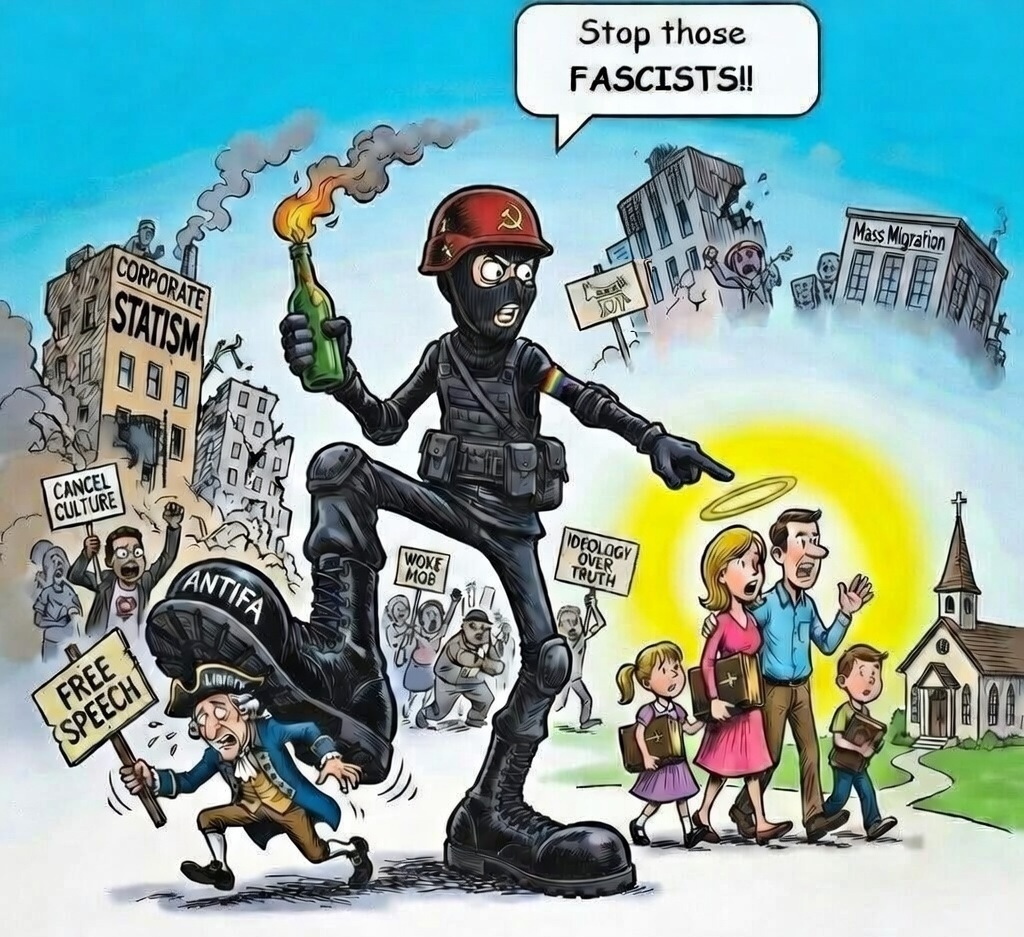
Arielle Scarcella, a lesbian whose Facebook posts deftly deconstruct the claims of the trans lobby, recently reminded me of a cognitive bias I’ve often alluded to but never named explicitly: the illusory truth effect. You’ve likely heard the saying that if a lie is repeated often enough, people will eventually accept it as true. That is precisely the phenomenon. Psychologists—admittedly late to the insight—first identified the effect in the 1970s, and it has since proved remarkably robust. Social science often “discovers” the obvious. The illusory truth effect shapes advertising, political messaging, public discourse, and even personal relationships. The underlying idea was widely recognized long before it acquired the label “big lie.”
A “big lie” is a sweeping distortion or complete falsification of reality, commonly used as a tool of political propaganda. The German phrase große Lüge appeared in Adolf Hitler’s Mein Kampf (1925), where he argued that people could be persuaded to accept an enormous falsehood precisely because they would not expect anyone to have the audacity to invent something so outrageously untrue. Trust in authority is essential to the success of a big lie; conversely, if a person is seen as untrustworthy or illegitimate, even truthful statements may be dismissed as lies. Big lies often function by convincing people that genuine truth-tellers are the deceivers. (See yesterday’s essay, The Fallacies of Appeal to the Authority of Consensus and Expertise.)
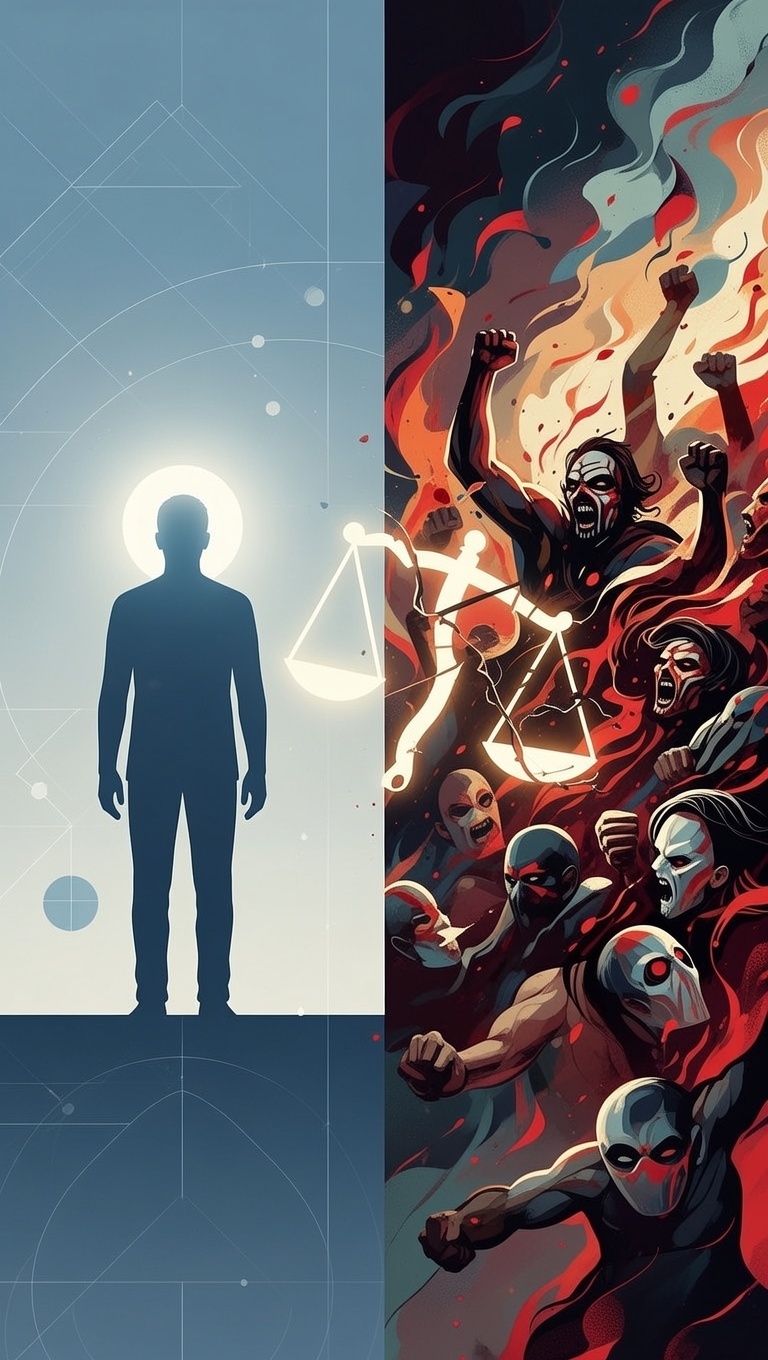
Image by Sora
We are witnessing a striking example of this dynamic today. Although there is no evidence that Trump engaged in sexual misconduct with minors, millions believe he did. Even exculpatory evidence is interpreted as incriminating (see Epstein, Russia, and Other Hoaxes—and the Pathology that Feeds Their Believability). Paradoxically, many people distrust Democrats and the mass media yet continue to treat them as credible sources of information. This is the credibility or trust paradox—a situation in which individuals claim to distrust an institution but still rely on it, often because its claims align with their worldview or because no alternative appears more reliable. (See What Explains Trump Derangement Syndrome? Ignorance of Background Assumptions in Worldview.)
President Trump has been successfully framed as a liar because progressives dominate the institutions that generate and interpret social meaning. Antonio Gramsci’s concept of ideological hegemony explains this paradox. In his view, a ruling class exercises power not merely by suppressing opposition but by shaping the “common sense” of a society—embedding background assumptions in a social logic that is pressed into the public un/consciousness by repetition. Those who control the narrative exploit humanity’s tendency to believe repeated claims. A long chain of misrepresentations about Trump has, through sheer repetition, hardened into “truths” for millions: “good people on both sides,” “suckers and losers,” “drink fish tank cleaner,” “inject bleach”—all distortions or fabrications. “Trump mocked a disabled journalist.” He did not. “Trump is a fascist.” He is not. “Trump is a pedophile.” No evidence.
Why do repeated statements feel truer simply because they are familiar? Our brains use processing fluency—the ease with which information is absorbed—as a proxy for accuracy. When we encounter a claim repeatedly, it becomes easier to process, and that increased fluency creates a false sense of credibility. As Jonathan Swift wrote in 1710, “Falsehood flies, and the truth comes limping after it.” The more familiar modern phrasing—“A lie can travel halfway around the world before the truth has got its boots on”—is often attributed to Mark Twain, though no evidence links the quote to him. The misattribution itself is an example of the very effect this essay addresses.
The illusory truth effect operates largely below conscious awareness, and people of all backgrounds and education levels are susceptible to it. Its power is compounded by partisan framing. This is one reason misinformation, rumors, and slogans can become widely accepted: repetition breeds belief. Consider the slogan “Hands up.” Many still believe its original implication despite contradictory evidence. Or take the long-standing urban legend involving actor Richard Gere—a defamatory fiction from the 1980s and 1990s that persists in popular memory despite being debunked.
Big lies are everywhere. They’re used by dominant institutions to justify atrocities and injustices. Consider the slogan “Transwomen are women.” Even though the claim is on its face false, and demonstrably so using basic science, those who hear it often enough will come to believe it and repeat it—especially if trusted institutions tell them to. The lie is popularly reinforced by people committed to an ideological or political worldview.
I distinctly recall the first time I heard the slogan. It was on Facebook several years ago. The person, a former student, stated the slogan as fact because he assumed I didn’t believe it. He was right; however, I had not explicitly stated that it was not true; rather, my argument suggested that I did not work from the same background assumptions that had infected his brain. He needed me to hear it said. He then appeared to wait for me to agree. It felt as if he needed me to affirm the truth of the slogan. When affirmation was not forthcoming, he privately messaged me a few days later to tell me how much I had disappointed him, especially since he had looked up to me as a teacher. He wondered aloud what had happened to me (and expressed hope that I would come home) before unfriending me. He is one of several former students who have reacted in this way when they discover that I hold opinions that do not align with theirs. They had wrongly assumed I was a tribal member because I taught in a social science program. Given that social science has been captured by woke progressive ideology, the assumption is not entirely irrational.
The illusory truth effect is so powerful that it can override what people already know to be true. Repetition does not merely make a statement sound familiar—it gradually reshapes memory and weakens the influence of prior knowledge. When individuals repeatedly encounter the same false claim, the brain begins to prioritize fluency over accuracy, and their knowledge is corrupted. The ease with which the information is processed creates a misleading sense of reliability, and that sense of reliability can eventually outweigh a person’s original understanding. In this way, repetition can erode even well-established facts, leading people to adopt beliefs they once recognized as false. This is why persistent misinformation can be so corrosive: it does not need to be persuasive in any rational sense; it merely needs to be ubiquitous. And this is why ideological capture of dominant institutions is so dangerous.
Recognizing this effect highlights the critical importance of rigorous scrutiny in how we evaluate information. Claims should not be accepted simply because they are familiar, presented with confidence, or widely repeated. Instead, they must be weighed against evidence, cross-checked with credible sources, and analyzed for internal coherence. This requires cultivating intellectual habits that push back against cognitive shortcuts—habits such as asking whether a statement aligns with independently verifiable facts, whether the source has a track record of accuracy, and whether contrary evidence exists. Ultimately, the illusory truth effect reminds us of a foundational epistemic principle: familiarity is not proof, and no claim—no matter how often repeated—deserves belief without sufficient evidence to support it.
“The people with real power are the ones who own the society, which is a pretty narrow group. If the specialized class can come along and say, I can serve your interests, then they’ll be part of the executive group. You’ve got to keep that quiet. That means they have to have instilled in them the beliefs and doctrines that will serve the interests of private power. Unless they can master that skill, they’re not part of the specialized class. So we have one kind of educational system directed to the responsible men, the specialized class. They have to be deeply indoctrinated in the values and interests of private power and the state-corporate nexus that represents it. If they can achieve that, then they can be part of the specialized class. The rest of the bewildered herd basically just have to be distracted. Turn their attention to something else.” — Noam Chomsky (2002)
In this essay, I address the fallacy of appeal to the authority of consensus (as opposed to truth), as well as ideological and political corruption, and pseudoscience in our knowledge-producing and sense-making institutions. One of the most frustrating things about being a scientist today is having to confront ideology, politics, and pseudoscience. This is not because the claims are difficult to debunk, but because one risks career progression, reputational harm, and even threats to his physical safety for exhibiting tenacity in commitment to science. I will pull a few topics from my past writings as examples of the problem. I begin with gender identity doctrine and the corruption of knowledge about sex differentiation, a topic I frequently address in essays on this platform.
Image by Sora
Even in cases of intersex conditions—an unfortunate term for a scientific classification properly defined as disorders or differences of sex development (DSDs)—the sex of a mammal can still be definitively identified. Identification of gender has to do with gametes and the genetic sex type. An XY sex type or any variation on that side of the binary cannot produce female gametes. It follows that males cannot be women, the term we use to refer to adult female humans (we use other terms to refer to adult females of other species), any more than toms or gibs can be queens or mollies. DSDs are obviously not choices people make or subjective states of being. However, like any other medical condition, they should be accurately described, not rationalized by changing the meaning of gender for the sake of inclusion or kindness. Even though DSDs and trans-identifying individuals are not the same thing, correctly gendering them is based on the same logic.
To put this another way, a mammal, even one with a so-called intersex condition, is either female or male by definition of its developmental orientation toward one of the two reproductive roles. Humans are mammals. As such, our gender is constrained by the same evolutionary demands. The biological category remains binary; disorders simply represent variations within one of those categories, not a third sex. They are also exclusive categories; there is no in-between. This is not a matter of scientific consensus, but rather a brutal truth. Therefore, the term “intersex” should be jettisoned in educational settings; the reality that there are conditions that alter the outward appearance of individuals should be accepted, not rationalized ideologically or politically, or for the sake of sympathy.
A just society must state this clearly and often: Fairness must never be sacrificed for the sake of kindness or pity. I have in mind here the controversy over the recent Olympic Games, when two male sufferers of DSD were allowed to compete against women in boxing. The claim that the two males had always been regarded as girls and women, true or untrue, does not obviate the fact that they were always both males. Their situation, however unfortunate to ego or goal, cannot demand that women sacrifice the opportunities granted as exclusive to them based on the objective fact of sexual dimorphism. For experts to appeal to a consensus whereby males suffering from DSD are defined as women is therefore a fallacious appeal, since the self-evident truth is that they are not.
I have shown in my writings that the repurposing of the term gender, a synonym for sex for eight centuries, is an ideological-political project. Any individual can discover for themselves the history of these terms and who and what was behind the repurposing. The hijacking of the term was intentional and political. What remains true throughout this history is that it is not a scientifically valid differentiation of terms. It also shows how language can be used to undermine accuracy and precision in defining reality.
Thus, if a biology teacher tells his students something other than the truth of the gender binary, he is teaching pseudoscience. If he teaches the truth, but then says that a mammal may subjectively be something that objectively the mammal cannot be, then the teacher is speaking beyond the subject matter; he is entering the realm of spirituality. This is analogous to a biology teacher teaching about the soul, except that, in the case of gender identity, the claim that a male is a woman is falsifiable, even if the notion of gender identity as a subjective thing is not. Moreover, while there may be an organic basis to subjective claims, such as a schizophrenic claiming to be god, the subjective claim itself is a symptom of an illness, not an indication of a real entity. This is not a matter of consensus but of fact and reason.
To pursue the analogy further, the matter of souls is not altogether disallowed in education. However, teaching about the soul as an actual thing is properly reserved for a philosophy or theology class, where the question of its falsifiability is not an issue in ontological discussion. These are speculative endeavors, and it is no small matter given that billions of people believe in, as Freud would have it, illusions. It is for this reason that it’s possible to talk about the soul in the context of a social science class when studying things that people believe in, just not as actual things, not as scientific facts, apart from faith-belief. Faith-belief is a social fact (and a cognitive problem beyond the practical). The soul or things like it are not facts that exist independently of human thought. As suggested above, clinical psychologists may acknowledge that people have mistaken beliefs about their gender, but to teach that the substance of a mistaken belief can exist as a real thing, and therefore the belief is not mistaken, is an error of judgment. Yet many clinicians and teachers do this. In a clinical setting, it’s malpractice. This goes for the medical industry, as well.
This brings us to the problems of ideology, ignorance, and incompetence. Here, I will draw an example from the teaching of criminal justice. If I know that the evidence does not support a claim of systemic racism in lethal civilian-police encounters, a claim that justified widespread violence during the summer of 2020, but I continue to teach my students that patterns in lethal civilian-police encounters are explained by systemic racism, then I am engaged in academic misconduct—and participating in the valorization of the impetuses for irrational dissent and illegitimate violence. If I don’t know that what I am teaching has been falsified by careful research, then I am ignorant or incompetent, which includes the problem of ideological corruption. If it is the former, then the educator needs to be educated. Once the evidence was clear on the question of systemic racism in civilian-police encounters, I revised my criminal justice lectures to reflect this change in knowledge. Culture and institutions should socialize the importance of self-education. Unfortunately, as I noted at the outset, it too often punishes those whose speech acts are deemed politically incorrect.
In the Soviet Union, the notion of speech acts as politically correct or incorrect referred to strict adherence to the Communist Party line—an expectation that one’s scholarship, scientific work, and teachings align with officially sanctioned ideology. The term was used among party members to signal whether a position was doctrinally acceptable rather than factually accurate. Ideas that were empirically true or rationally derived were condemned if they conflicted with orthodoxy, presented as the consensus view. Political correctness functioned as a tool of ideological discipline, reinforcing conformity and discouraging dissent or independent inquiry. An objection is that political correctness in the Soviet Union was rooted in authoritarian control rather than cultural or social sensitivity. But cultural and social sensitivity rationalize the same thing: the disciplining and punishment of independent minds arriving at judgments inconvenient for the ideological and political goals of the establishment and its functionaries.
The purpose of academic freedom and tenure is to shield knowledge production from ideological and political influence, either from those in power or majority opinion, both of which may be unconcerned with truth or mistaken about facts. At the same time, these principles protect incompetence and ideological corruptions. This problem can be checked by rational dissent from consensus. However, too often, the solution is checked by censorship, external and self-imposed. Left unchecked, political correctness creates environments where entrenched intellectual agendas, methodological laxity, or manipulated, selective, or weak evidence persist because they are insulated from scrutiny. The very structures designed to preserve independence can, in certain circumstances and under certain regimes, inhibit correction and truth-telling, making it difficult for institutions to respond when intellectual independence is eroded by ideological and political influence. The challenge, then, is to safeguard the autonomy necessary for genuine inquiry while developing internal mechanisms capable of addressing complacency and the slow drift from rigorous truth-seeking.
I will leave the question of how to achieve this for another day, since safeguarding can itself increase the pressure on teachers to adhere to standards that are objective but ideologically established, often in conjunction with moneyed power and political pressure (albeit this may be the lesser of evils). This will have to suffice for now: While it is appropriate to “teach the controversy,” ignorantly or knowingly presenting falsehoods as facts or truths is a problem in education. Optimistically, it should be enough to demand that teachers reflect on matters of integrity. Realistically, teachers are human, and like all humans, they are biased and prepared to self-deceive to protect cherished beliefs. It may be an intractable problem. How did Romain Rolland put it? “Pessimisme de l’intelligence, optimisme de la volonté” (“Pessimism of the intellect, optimism of the will.”) Perhaps that alleviates one’s cynicism.
Of course, appealing to “the consensus” is not an excuse. This raises another problem in education: appeal to the authority of expertise. We saw this during the COVID-19 pandemic, when the opinions of Washington bureaucrat Dr. Anthony Fauci came to be seen as science. The man said himself that Republican lawmakers who criticize him are “criticizing science, because I represent science.” It is hard to imagine someone in authority saying something more damaging to the legitimacy of science than this. Which is why what he said next was so ironic. “If you damage science,” he said, “you are doing something very detrimental to society.”
How is criticizing Fauci’s claims or government policy based on them damaging science? What he really meant to say, I think, is that criticizing his narrative was detrimental to his authority, the basis upon which he staked his claims. But the question of the scientific veracity of a doctor’s claims rests not on his credentials or his position but on the soundness of his conclusions and the validity of the methods he used to arrive at them. Any reasonably intelligent person can independently determine whether Fauci’s claims were sound or valid, and the importance of doing so has become ever more critical in a situation where the knowledge-producing and sense-making institutions of the West have been captured by ideology and the corporate power that lurks beneath.
President Dwight Eisenhower warned Americans in his 1961 farewell address of the dangers of technocratic hijacking of science: “For every old blackboard there are now hundreds of new electronic computers. The prospect of domination of the nation’s scholars by Federal employment, project allocations, and the power of money is ever present—and is gravely to be regarded. Yet, in holding scientific research and discovery in respect, as we should, we must also be alert to the equal and opposite danger that public policy could itself become the captive of a scientific‑technological elite. It is the task of statesmanship to mold, to balance, and to integrate these and other forces, new and old, within the principles of our democratic system—ever aiming toward the supreme goals of our free society.”
Ideology is a powerfully corrupting force in curricula and pedagogical practice. Indeed, education is, in certain areas, for the most part, no longer the pursuit of knowledge, but the practice of indoctrination. The results of a Fox News poll bear this out:
Fox News:
"If you have high school or less as your education, you're likely to vote for Donald Trump. But the more educated you are, the more you go over to the Democratic column."
Progressives on X use this poll to portray supporters of President Trump as undereducated rubes, a typical sentiment expressed by those who think they are the betters of others. But a proper understanding of the situation finds the President’s supporters are not ignorant but relatively free from progressive programming. Indoctrination is a powerful force, and the more one is embedded in the process, with all its reinforcers, the more they reflect the programming. Noam Chomsky captures the process well in his 1983 essay “What the World is Really Like: Who Knows It—and Why”:
“There’s a vast difference in the use of force versus other techniques. But the effects are very similar, and the effects extend to the intellectual elite themselves. In fact, my guess is that you would find that the intellectual elite is the most heavily indoctrinated sector, for good reasons. It’s their role as a secular priesthood to really believe the nonsense that they put forth. Other people can repeat it, but it’s not that crucial that they really believe it. But for the intellectual elite themselves, it’s crucial that they believe it because, after all, they are the guardians of the faith. Except for a very rare person who’s an outright liar, it’s hard to be a convincing exponent of the faith unless you’ve internalized it and come to believe it.”
Trained people are products of their training. Their conditioning becomes ever more entrenched when their livelihood depends on it. As Upton Sinclair remarked after his 1934 loss in the California gubernatorial race, “It is difficult to get a man to understand something, when his salary depends upon his not understanding it.”When knowledge-producing and sense-making institutions are captured by an ideology or politics, then their products—the functionaries serving elite interests—will reflect that ideology. This is not absolute, of course (I escaped it, for example), but it would be an unlikely result of indoctrination in ideologically-captured institutions for the well-trained to vote for candidates or hold positions that those institutions programmed them to reject. So, yes, there are those with advanced academic degrees who vote conservative—but to expect programming would have no effect betrays an ignorance of the force of indoctrination in ideologically-captured systems. Indeed, a deft system of indoctrination would cultivate precisely this sort of ignorance.
America, Democrats are playing you. But it’s not just the Democrats. The corporate state media are playing you. And the Deep State. It’s playing you, too. The Trump-Epstein hoax is the latest moral panic on the menu. The recent release of select emails from Jeffrey Epstein’s estate has served its purpose: reigniting scrutiny of Donald Trump’s past association with a convicted sex offender. But the disclosures recycle long-known details from court records, depositions, and prior reporting. There’s nothing new here (see (The Epstein Obsession: Conspiracy, Control, and Credibility). If it sounds new, it’s because you’ve already been played. And it’s probably not the first time. Russian collusion, Pussy Hats, COVID, George Floyd, January 6—millions of people have fallen for one or more of the Establishment’s engineered panics.
Not everybody is easily panicked. There are different qualities of mind, and those who are careful, open, patient, and rational are less susceptible to manipulation. Unfortunately, many are victims of a mental quality that predisposes them to panic. Manhattan-based psychotherapist Jonathan Alpert told Fox News on Friday that what is often labeled “Trump Derangement Syndrome” (TDS) resembles a genuine psychological condition he has observed in his practice. According to Alpert, roughly three-quarters of his patients display forms of cognitive or emotional distress tied to their anger, fears, or preoccupation with President Donald Trump.
Image by Sora
In an interview on “The Faulkner Focus,” Alpert described patients who arrive overwhelmed by intrusive thoughts about Trump, reporting symptoms such as heightened anxiety, restlessness, and sleeplessness. Some, he said, are “triggered” simply by seeing Trump’s image in the news or on their devices, to the point that it disrupts daily functioning. He emphasized that being so intensely fixated on a single public figure is “simply not healthy.” Indeed. It is the same quality of mind that feeds leftwing politics. It is already present in the afflicted. It is just a matter of the propaganda apparatus selecting the panic and flipping the switch.
Alpert expanded on these observations in a Wall Street Journalopinion piece, arguing that the phenomenon aligns with characteristics of anxiety and obsessive disorders. They suffer from intrusive ideations, emotional dysregulation, and impaired functioning. Patients he sees report compulsive news checking, emotional volatility, physical agitation, and an inability to stop thinking about Trump even when attempting to disengage. He describes the pattern as “obsessive political preoccupation”—a form of obsessive-compulsive spectrum behavior in which a political figure becomes the constant focus of intrusive thoughts and compulsive monitoring.
Initially, Alpert believed his patients’ reactions were merely ideological responses to a polarizing political figure. Over time, however, he concluded that many cases had taken on “a more clinical shape,” with fixation replacing ordinary political disagreement. “What once looked like outrage now presents as a distortion in perception that consumes attention,” he wrote.
Democrats work from the understanding that a significant proportion of the American population suffers from TDS, which depends on decades of embedding in mass consciousness inverted background assumptions, which progressives accomplish by control over our knowledge and sense-making institutions (see my August essay What Explains Trump Derangement Syndrome? Ignorance of Background Assumptions in Worldview). More than this, they know that some who glommed onto Trump are Eric Hoffer’s “true believer” types who can be flipped from one extremism to the next (see Understanding Antifa: Eric Hoffer, the True Believer, and the Footsoldiers of the Authoritarian Left). All it took from Democrats on the House Oversight Committee was to unveil three messages on Wednesday of this week—just days after caving on a government funding bill to end the shutdown they had engineered—timing the release of the emails for political diversion. Millions of Americans took the bait hook, line, and sinker. The social media platform X is teaming with lost-faith MAGA.
Yet the broader context, including over 20,000 additional pages of documents released by Republicans the same day, reveals no evidence tying Trump to Epstein’s crimes. The Democrat narrative thus hinges on innuendo and Epstein’s own cryptic suggestions of Trump’s awareness of his activities, which are directly contradicted by the testimony of Virginia Roberts Giuffre, the “victim” referenced in the emails.
“VICTIM.” That’s how the media redacts Giuffre’s name. Why redact the name of a corpse? Giuffre committed suicide in April 2025. There is no living identity to protect. The redaction is not protective but strategic: to imply that Trump was with a minor at Epstein’s estate. But the email concerned a 2002 meeting between Trump and Giuffre. Giuffre was 19 years old at the time.
The deception Democrats and the corporate state media are weaving depends not only on TDS but also on a type of memory-holing: perception control via the selective forgetting of key parts of an already established narrative prompted by the re-presentation of those elements as novel and revelatory (see Why People Resist Reason: Understanding Belief, Bias, and Self-Deception and embedded links to related essays). There is nothing new learned from the emails. The emails—and the documents released by Republicans—confirm what we already knew. More than this, they further vindicate Trump’s claims of innocence.
Deft propaganda work requires more work to be performed to recover the memory-holed elements of the narrative. This is for the sake of minor cases of TDS. Who has the time to do the research to clarify associations and timelines? Who has the research skills to accomplish such a thing? Told that there is a scandal to pay attention to, citizens turn on CNN to get the latest on it. There and elsewhere, naively assuming these outlets are simply reporting the news, they are spoonfed propaganda. It therefore falls to researchers like me to tell the whole story, and to do so in a digestible way. Therefore, to fully grasp the situation, it’s essential to revisit the timeline of Trump’s ties to Epstein, Giuffre’s recruitment, and Trump and Epstein’s eventual fallout. It is also imperative to show that this is part of a larger program to undermine the Trump presidency and the will of the people who returned him to Washington in a landslide victory in November 2024.
Trump and Epstein, both fixtures in New York’s elite social scene during the 1990s and early 2000s, mingled at parties, flew on Epstein’s private jet multiple times, and shared mutual acquaintances. Trump once described Epstein in a 2002 New York Magazine profile as a “terrific guy” who liked women “on the younger side.” But their relationship soured amid growing suspicions of Epstein’s predatory behavior.
Virginia Roberts Giuffre, the redacted in emails Democrats released (source of photo: Rolling Stone)
Giuffre’s story provides the pivotal link. A 16-year-old runaway in 2000, she was reunited with her estranged father, Sky Roberts, a maintenance worker at Trump’s Mar-a-Lago resort in Palm Beach, Florida. Roberts secured Giuffre a job there as a spa and locker room attendant.
It was during her brief employment at Mar-a-Lago that Ghislaine Maxwell, Epstein’s longtime associate, approached her. Maxwell, who would later be convicted in 2021 and sentenced to 20 years for her role in Epstein’s sex-trafficking operation, lured Giuffre with promises of a better life, pulling her into Epstein’s orbit. By late 2000, Giuffre had become ensnared in the network, enduring years of exploitation by Epstein, Maxwell, and their high-profile associates (a list that includes former President Bill Clinton, a known womanizer) before escaping in 2002 at age 19.
Giuffre repeatedly stated that her interactions with Trump were innocuous and limited. In her 2015 defamation lawsuit against Maxwell and subsequent depositions, Giuffre described encountering Trump only once or twice at Mar-a-Lago and Epstein’s nearby Palm Beach estate, where their 2002 conversation occurred. Giuffre recalled Trump as polite and friendly, with no involvement in misconduct.
“President Trump was not involved in any wrongdoing whatsoever and ‘couldn’t have been friendlier’ to her in their limited interactions,” White House spokeswoman Karoline Leavitt reiterated in a statement on Thursday. Leavitt is not relying on the President’s recollection of these interactions. These accounts appear in Giuffre’s posthumously published memoir, Nobody’s Girl, released in October 2025, where she details the horrors of her trafficking while explicitly clearing Trump of impropriety. It is beyond the Democrats to acknowledge the testimony of one of Epstein’s victims when obsessively focused on getting Trump. Had Giuffre said the right thing, that would be another matter.
That 2002 exchange marked the beginning of Trump’s deliberate distancing from Epstein. Trump has long maintained that rumors of Epstein’s misconduct—specifically, his aggressive recruitment of young women from Mar-a-Lago—prompted him to act. Epstein had poached other employees for his own operations, as well, which Trump viewed as a breach of trust. Their rift deepened around 2004 over a bidding war for a bankrupt Palm Beach mansion (which Trump won). But the decisive break came in 2007, when Trump banned Epstein from Mar-a-Lago entirely. According to reporting from the Miami Herald and Wall Street Journal, the final straw was Epstein’s inappropriate advances toward the teenage daughter of a club member.
Trump confirmed this timeline in public remarks in July 2025, while at his Turnberry golf resort in Scotland, stating that Epstein had seduced young women from the spa, including Giuffre. “I said, listen, we don’t want you taking our people,” Trump explained. “And then not too long after that, he did it again.” Trump elaborated that Epstein became “persona non grata” at the club after that. By the time Epstein pleaded guilty in 2008 to state charges of soliciting prostitution from a minor—serving 13 months in a lenient jail arrangement—he and Trump had been estranged for at least a year.
Did Trump do more than distance himself from Epstein? Did he rat out his former friend? There is a notable passage in journalist Michael Wolff’s 2018 book Fire and Fury, where Epstein allegedly believed Trump had known some of his secrets and might have leaked details to the police. Wolff reiterated this speculation in a July 2025 Instagram video, suggesting Epstein suspected Trump of tipping off authorities.
One of the emails released by Democrats on the House Oversight Committee
Indeed, Epstein’s private correspondence, portions of which resurfaced in the 2025 releases, reveals a distinct bitterness over their fallout. In an April 2011 email to Maxwell, Epstein wrote: “I want you to realize that that dog that hasn’t barked is trump. [VICTIM] spent hours at my house with him ,, he has never once been mentioned.” Then, cryptically: “police chief. etc. im 75 % there.” A more pointed January 2019 email from Epstein to Wolff stated: “Trump said he asked me to resign, never a member ever. . of course he knew about the girls as he asked ghislaine to stop.”
One of the emails released by Democrats on the House Oversight Committee
Epstein’s bitterness was also apparent in a report by the Washington Post yesterday. Stacey Plaskett, a Democratic non-voting delegate representing the US Virgin Islands, exchanged text messages with Jeffrey Epstein during a 2019 congressional hearing interrogating Michael Cohen, Donald Trump’s former attorney. WaPo reviewed and analyzed the messages, comparing them with footage of the hearing, and determined that Plaskett was texting Epstein in real time. At the time of the exchange, Epstein had already been convicted on two state prostitution charges and had served 13 months. Only a few months later, he would be charged with sex trafficking minors.
According to the Post’s reporting, it appears that Epstein was watching the hearing. His messages influenced the direction of Plaskett’s questioning of Cohen. In one exchange, Epstein wrote to Plaskett, “Cohen brought up RONA – keeper of the secrets,” referring to—and misspelling the name of—Rhona Graff, Trump’s longtime assistant. Plaskett replied, “RONA??” and followed moments later with, “Quick I’m up next is that an acronym.” Epstein clarified: “Thats his assistant.” At 2:28 p.m., Plaskett began questioning Cohen and asked about Graff and other Trump associates he had mentioned, consistent with the timing of a message Epstein had just sent. After she wrapped up her questions, Epstein texted her again at 2:34 p.m., saying, “Good work,” just one minute after her segment concluded.
As Scott Jennings put it, Epstein was programming Democrats in real-time.
A little Epstein back & forth last night. Still can’t believe Dems are going with Epstein as a surrogate but hey Orange Man Bad, right? pic.twitter.com/t4JE7Hb9BJ
These email messages, suggestively presented by Democrats, fuel speculation without proof. They clash with Trump’s consistent denials of involvement, and they ignore Giuffre’s insistence that Trump never harmed her. Epstein admits that Trump told Ghislaine to stop recruiting girls from Mar-a-Lago, consistent with Trump’s recollections. Moreover, a third email, from 2015, six months after Trump announced his candidacy for President, shows how Epstein viewed his association with Trump as politically useful in multiple ways. This explains why Epstein would not hesitate to contact Plaskett to assist in interrogating Trump’s attorney before Congress.
One of the emails released by Democrats on the House Oversight Committee
At the point of the 2019 email, Epstein was nearing his end. Giuffre’s 2015 suit against Maxwell had unearthed additional files, and the Miami Herald’s 2018 “Perversion of Justice” series prompted federal prosecutors to reopen the case against Epstein. Trump reiterated in July 2019, shortly after Epstein’s federal arrest on sex-trafficking charges, that he hadn’t spoken to Epstein in 15 years and had cut ties “a long time ago” due to the Mar-a-Lago incidents.
Epstein’s death by suicide in August 2019, two months after his July arrest, halted further revelations on his part. But Giuffre’s public advocacy kept the pressure on officials to determine the full extent of Epstein’s crimes, to go after the prominent figures who had exploited teenage girls. Yet, in her final writings, she underscored Trump’s noninvolvement, undercutting the emails’ implications.
It looks like Giuffre will get her wish. Yesterday, the Justice Department confirmed that it will investigate Epstein’s alleged links to major banks and several prominent Democrats, including former President Clinton. AG Bondi said the department “will pursue this with urgency and integrity.”
Knowing the timeline, seeing progressives so sure that Trump was part of a pedophile ring, while predictable, is troubling not only because it expresses the witch-hunt mentality that marks history’s darkest periods, but also for this reason: it testifies to the power of propaganda and the mass presence of cultivated deep-seated pathologies that make individuals vulnerable to manipulation. Trump derangement is real.
In truth, the November 2025 dump of information is a re-presentation of already known facts, a rewrapped news package for Debord’s La Société du Spectacle. Democrats spotlight Epstein’s innuendos to imply complicity, while ignoring Giuffre’s exonerations and the absence of any evidence implicating Trump in crimes. The power elite is asking the public to see something that’s not there. And too many of them are.
As suggested at the outset, the Epstein hoax is just part of the ongoing effort to remove Trump from power or at least delegitimize him. No doubt readers have heard the accusation that Trump is going after his “political opponents.” Recent investigations of prominent officials are framed as authoritarian acts of “retribution”—acts that “threaten democracy.” The two most high-profile cases are James Comey, former FBI Director, and John Brennan, former CIA Director, both serving under President Barack Obama during his second term (Comey overlapped with Trump for a few months). I now turn my attention to them and the Russian collusion hoax (see The Russia Fake News Narrative).
Former FBI Director James Comey
Comey and Brennan played central roles in initiating and shaping the investigations into alleged Russian interference and potential Trump ties. In launching Crossfire Hurricane, Comey approved the FBI’s July 2016 full investigation into potential Trump-Russia links. Later, Special Counsel John Durham stated in a report that there was no actual evidence of collusion at the outset, and that the investigation was driven by confirmation bias. That is a charitable way of putting it. Much more than confirmation bias was at work.
Under Comey’s direction, the FBI used the Steele dossier, which contained unverified allegations of Trump-Russia ties, to obtain FISA warrants on Carter Page, a Trump adviser. The Justice Department Inspector General (IG) Michael Horowitz’s 2019 report found 17 “significant inaccuracies and omissions” in these applications. Durham echoed this in his report, noting the FBI failed to corroborate dossier claims despite warnings that it was disinformation.
The dossier was an orchestrated disinformation project arranged by the Democratic National Committee (DNC) and Hillary Clinton’s campaign. Fusion GPS, a private intelligence firm based in Washington, DC, specializing in opposition research, had commissioned the dossier. Fusion GPS had been hired by the DNC and the Clinton campaign through their third law firm, Perkins Coie, explicitly to conduct opposition research on Trump.
Former CIA Director John Brennan
Brennan oversaw the rushed production of the January 2017 Intelligence Community Assessment (ICA), which concluded with “high confidence” that Putin aimed to help Trump win. In July 2016, Brennan received CIA intelligence alleging that Clinton approved a plan to tie Trump to Russia as a distraction from her email scandal. He briefed Obama, Biden, Comey, Director of National Intelligence (DNI) James Clapper, and AG Loretta Lynch on August 3, 2016. Durham’s report noted this intel was forwarded to Comey and FBI agent Peter Strzok, but the FBI did not pursue it as a Clinton-led hoax, instead prioritizing Trump links. Durham suggested this reflected bias. Again, charitable interpretation. It reflected the extent of coordination in the Crossfire Hurricane scheme. A 2025 CIA review accused Brennan of lying to Congress about dossier inclusion, leading to a criminal referral by Ratcliffe to the FBI for possible false statements.
It is not that Russia didn’t interfere in the 2016 election. Russian intelligence services interfere in elections, not just in the United States, just as US intelligence services interfere in the domestic politics of other nations. It’s what intelligence services do. The crime here is that the CIA and FBI under Obama attempted to tie Russian interference to the Trump campaign, thereby not merely serving as assets for the Democratic Party, but to prevent the ascension to power of a man whom the Deep State views as antithetical to its transnational goal of establishing a global corporate state. The Democratic Party is the party of globalization. A Hillary Clinton presidency would have allowed the project to continue, overthrowing foreign governments and projecting US military power around the world.
Brennan is at the center of a lot of things. He’s the man, you will recall, who, in 2020, engineered the disinformation campaign to divert attention away from the contents of a laptop owned by then-candidate for President Joe Biden’s son, Hunter (see New York Post Drops a Bombshell on the Biden Campaign; Hunter Biden’s Laptop, the Cult Mentality, and the Spirit of Free Thinking). The contents exposed the Biden international crime syndicate (to cover up the family’s crimes, President Biden would pardon his son and five other family members). This is what the first Trump impeachment was about. Trump was accused of withholding military aid as a means of pressuring Ukrainian President Volodymyr Zelensky to pursue investigations of the Biden family. The public was asked to ignore (or never know) the fact that the President is the Chief Magistrate of the United States government, and that such actions are well within the scope of authority (see For the Record: The President is the Chief Magistrate).
Brennan, along with several other intelligence officials, penned an open letter assessing the laptop to be a Russian disinformation campaign. It is highly unlikely that Brennan did not know the laptop was real. The FBI became aware of it in October 2019 and took possession of it in December of that same year. Under the information-sharing scheme of the Department of Homeland Security, Brennan, still enjoying the highest levels of security clearance, with all his connections in the intelligence world, would have known this.
How many Americans know that Comey operationalized the FBI probe, while Brennan shaped the intelligence narrative to derail Trump and those who voted for him? If they did, they would have difficulty swallowing the propaganda that recent 2025 investigations under Trump’s second term amount to retribution. The Trump Administration is holding those accountable who sought to thwart the general will. This is a rule of law matter—and nobody is above the law.
These are the pieces of a successful coup removing Trump from office in 2020. There are many other pieces, including a pandemic and a color revolution. And the coup was followed by a comprehensive project to prevent Trump from returning to office. After he was ousted, Trump was impeached again for insurrection because he objected to a rigged and fraudulent election. This was followed by four years of lawfare. (See The Conspiracy to Overthrow an American President; I Told You Joe Biden is Corrupt and Compromised.)
Of course, this wasn’t the Establishment’s first rodeo. Using different means, the Deep State removed John Kennedy from office and prevented his brother Bobby from ascending to the post by assassination. The move against Trump is more reminiscent of the way the Establishment waged lawfare against Richard Nixon, except that there were two attempts on Trump’s life. In all these cases, the end is the same: removal of a President who defied the National Security State. With Trump, the Establishment is using everything at its disposal. The nickname given to Ronald Reagan during his presidency, the “Teflon President,” is better suited to the current occupant of the White House.
Taken together, Alpert’s observations noted at the outset of this essay suggest that what is often dismissed as mere political hostility is, for many, a deeper psychological vulnerability—one that leaves them unusually responsive to fear, fixation, and manufactured outrage. The pattern he describes reveals not just disagreement with a controversial figure, but a predisposition toward anxiety, distorted perception, and obsession that can be activated and amplified by political narratives. In this sense, the panic surrounding Trump is less a reaction to events than a reflection of an underlying mental quality—one that propaganda readily exploits (see Industrial Strength Gaslighting; The Lies of the Corporate State Are Functional to Its Ends; The Deep State and Cognitive and Emotional Manipulation).
Recognizing this dynamic is essential to understanding why some remain levelheaded while others are swept into emotional frenzy, and why certain segments of the public are so easily manipulated into cycles of alarm and obsession. It falls to the levelheaded among us to be steady hands at the helm of reason amid the maelstrom whipped up by those who endeavor to steal from us our beloved republic.
“When one publishes a book it becomes a public property; the author’s only responsibility to his reading public, if any, is to make it as good a book as he can and he is the final judge of that. But the teacher has further responsibilities. To some extent, students are a captive audience; and to some extent they are dependent upon their teacher, who is something of a model to them. His foremost job is to reveal to them as fully as he canjust how a supposedly self-disciplined mind works. The art of teaching is in considerable part the art of thinking out loud but intelligibly. In a book the writer is often trying to persuade others of the result of his thinking; in a classroom the teacher ought to be trying to show others how one man thinks—and at the same time reveal what a fine feeling he gets when he does it well. The teacher ought then, it seems to me, to make very explicit the assumptions, the facts, the methods, the judgments. He ought not to hold back anything, but ought to take it very slowly and at all times repeatedly make clear the full range of moral alternatives before he gives his own choice.”—C. Wright Mills, The Sociological Imagination (1959)
When I teach my course, Freedom and Social Control, I begin with the Enlightenment and the birth of classical liberalism, grounding my students in John Locke’s conception of liberty and the individual. This ties into the second set of lectures, where I cover the sociology of Max Weber and make the observation that Protestantism—especially in its Reformation emphasis on the direct relationship between the individual and God—helped cultivate a cultural shift toward personal conscience, freedom, and responsibility, from centralized religious authority, which later informed classical liberal ideas.
By challenging the authority of the Catholic Church and promoting vernacular scripture, Protestant reformers encouraged literacy, independent moral judgment, and the notion that individuals could interpret truth for themselves. These ideas resonated beyond religion, nurturing an intellectual climate that valued limited government, private property, and individual rights. Thus, Protestant individualism contributed to the philosophical foundations of classical liberalism by reinforcing the moral and social importance of autonomous persons capable of self-governance.
Image by Sora
However, before reaching that point, in the first lecture set, I necessarily trace that intellectual lineage forward to the twentieth century to set up the second set, focusing especially on Friedrich Hayek. I contrast this in the same lecture set with exploration with another tradition—the radical democratic ideas that emerge from Karl Marx, developed later through thinkers such as Abraham Maslow and Erich Fromm.
In this way, I frame the course as an extended conversation between two great conceptions of freedom: the negative and the positive. The negative conception of liberty—freedom from coercion—finds its clearest expression in the classical and neoclassical liberal traditions (the latter often perceived as modern conservatism and right-wing thought). The positive conception—freedom to realize one’s potential—finds its voice in the radical humanist and socialist thinkers. My goal has always been to bring these two visions into sharp relief and let students weigh their strengths and weaknesses.
My goal is not to tell them what to think about these competing viewpoints, although following C. Wright Mills’ lead in his 1959 Sociological Imagination, I do let them know what I think. Mills argues that a responsible teacher should present competing viewpoints fairly, avoid indoctrination, and help students understand the range of possible interpretations. But, after doing this, the teacher ought to make clear where he himself stands, rather than pretending to be a neutral observer. Mills believed this transparency strengthened intellectual honesty and encouraged students to think critically rather than defer to covert authority, or what philosopher Sandra Harding critiques as depoliticized thought. Importantly, Mills adds that students should always be free to reach their own conclusions; the teacher’s job is to clarify, not to coerce.
This essay concerns how the point at which I make my standpoint clear has shifted over time and why. Politically, I’ve long considered myself a civil libertarian. I believe deeply in the US Constitution and, above all, the Bill of Rights—especially the First Amendment. This has not changed over the course of my life. On economic questions, though, I’ve historically leaned toward the democratic socialist side, believing that liberty must have a material foundation if it’s to be meaningful for everyone. For twenty-five years, this balance has shaped the way I teach Freedom and Social Control. I have, over time, become increasingly skeptical of democratic socialism.
I want to begin with the flow of the first lecture set and how I have modified it over time to make the materials more accessible to students, and how the addition of materials to accomplish this persuaded me to change my views.
After syllabus day, I introduce students to brief, accessible excerpts of foundational texts. They read concise summaries of Adam Smith’s Wealth of Nations and Hayek’s The Road to Serfdom that I photocopied from a volume of The Great American Bathroom Books, pre-smartphone collections published in the early 1990s that offered a page or two of great works to read while otherwise occupied. These selections distill complex ideas into approachable forms for freshmen and sophomores. Along with this, they read an excerpt from Hayek’s 1960 book The Constitution of Liberty. On the radical democratic side I have them read an Karl Marx’s Preface to an Introduction to a Critique of Political Economy and an excerpt from Marx and Engels’ Communist Manifesto.
A few years ago, to make these ideas even more accessible, on the liberal side, I supplemented these readings with Kurt Vonnegut’s “Harrison Bergeron,” especially effective in illustrating Hayek’s warnings from The Constitution of Liberty. Fiction engages students’ imaginations in ways pure philosophy often cannot. On the other side of the debate—the positive liberty, democratic socialist side—I assign George Orwell’s Animal Farm and summarize in class Nineteen Eighty-Four, although I bring in Orwell after the second lecture set to bring out the implications of Marx and Weber’s observations (the third lecture concerns corporate statism and media and propaganda). Orwell’s novels dramatize how collectivist and illiberal ideals can curdle into authoritarianism and totalitarianism.
If you are familiar with Orwell’s writings, you probably know where this is going. Over time, I noticed something intriguing: Vonnegut and Orwell, both hailing from the tradition of democratic socialism or at least left-liberal, social-democratic humanist, combined with strong anti-authoritarian instincts, critique bureaucratic control and enforced equality characteristics of really-existing socialism. They are criticizing extreme interpretations of egalitarian ideals, forced equality by coercive government, and more broadly, the desire among some humans to create a perfectly engineered society—in short, a utopia.
Thus, as I continued teaching these pairings, something unexpected happened: the course began to change me. Where I once viewed the “negative liberty” tradition with suspicion, I began to see the force of its arguments more clearly. Hayek’s defense of individual freedom and his warnings about centralized control started to resonate more deeply. Orwell, whom I had long regarded as a critic of totalitarianism from the democratic socialist traditions, began to sound more like an ally of liberal skepticism than of socialist idealism. Slowly, almost imperceptibly, the additions of these fictional works altered my own political outlook.
While my students only have me for one semester, and I doubt their political views shift as dramatically, the course functions as a laboratory for testing these great ideas against each other, a standard pedagogical practice in the humanities. Freedom and Social Control combines humanist and social science interests (history, political theory, and sociology) in the spirit of the program’s curriculum—founded as a critical historical social science department—draws mostly progressive students, just as such disciplinary and interdisciplinary fields in this area tend to attract progressive professors. While I have identified as a democratic socialist in the tradition of Orwell, I am not a progressive. I have never felt comfortable identifying with progressivism, which strikes me as managerial and technocratic, more concerned with systems than with individuals.
That discomfort first surfaced in another class I teach: Foundations of Social Research. Early in that course, I cover the philosophy of science and introduce students to various logical fallacies—both formal and informal. One fallacy that has always stood out to me is the “fallacy of misplaced concreteness,” the error of treating an abstraction as if it were a concrete reality. When I began thinking through examples of this fallacy, I realized how often political and social arguments on the left make this mistake. They take the category of “group” and attribute to all individuals within it the average or assumed attributes of the group as a whole. I have critiqued that view in several essays on this platform (as well as critiquing progressivism and the rise of the corporate state and technocratic control).
That insight opened a crack in my earlier convictions. I began to see that certain progressive frameworks—critical race theory and policies that preceded that standpoint (affirmative action) and that conceptually informed subsequent DEI initiatives—often rely on this same fallacy. They reify the group (an abstraction) and, in doing so, obscure the individual (the concrete). Recognizing that was, in retrospect, the beginning of my shift. As I reworked my course readings in Freedom and Social Control, perhaps unconsciously, I found myself highlighting this individual-versus-group tension more sharply. Over time, the cumulative effect of reflecting on all this revealed to me that some of the assumptions I had carried for much of my life were wrong. Teaching this course—designed to clarify my students’ thinking—ended up clarifying my own.
There is another piece to this. Over the years of occasionally teaching Law and Society, I added a text by Michael Tiger, Law and the Rise of Capitalism, published in 1977, which traces the eight hundred years of Western European legal history, showing how law and legal ideology, the trench work by lawyers for the merchant class in feudal courts, helped the bourgeoisie rise to power. When I think about the great argument between capitalism and socialism in the light of that book, I increasingly see capitalism not as a theory invented by anyone and forced on the masses, but as an organic historical process, the results of which Europeans found themselves living in. In Tiger’s interpretation, capitalism begins, perhaps humbly, with disputes over property rights, contract, and debt, which were slowly disentangled from the web of feudal obligation. From those early legal and economic claims grew a body of precedent and practice that began to privilege exchange over status, contract over custom.
By the time we reach what world-systems theorists, in particular Immanuel Wallerstein, who conceptualizes the period of capitalist consolidation as the “long sixteenth century” (roughly 1450 to 1620), capitalism emerges as a world system. The rise of the English Parliament, the expansion of trade, and the first bourgeois revolution in England in the seventeenth century mark crucial turning points. The French Revolution, often cited as the great bourgeois revolution, was dramatic, but the English case was more decisive in institutionalizing bourgeois power. The American Revolution, therefore, is not so much a bourgeois revolution in the same transformative sense, but rather a war of independence fought by colonists who were already capitalists in practice—agrarian in the South, commercial and proto-industrial in the North. They sought not to invent capitalism, but to secure it from imperial interference.
Climbing out of the weeds of digression, all this suggests to me that capitalism’s rise was evolutionary, not revolutionary. It was an organic emergence rather than an ideological project. It did not spring from a single mind or manifesto but from countless adaptations, negotiations, and unintended consequences. In this respect, and here I get to the point, capitalism differs profoundly from Marxist revolutions, which are typically, if you will, idea-first transformations—intentional efforts to reshape society according to a teleological blueprint. This is precisely the danger Orwell and Vonnegut dramatized in their fiction: the attempt to impose a rational plan on human life, assuming people are infinitely malleable and that human nature can be remade by social design. (Weber sees technocratic control as emergent from liberal rationalization, but I will leave his critique to one side for now. I have covered that development on this platform, so you can look for that elsewhere. I note here that I do cover this paradox in the second lecture set in Freedom and Social Control.)
This brings me to a tension within Marx himself. I’ve long wanted to separate Marx’s scientific insights from the political systems that later claimed his authority. Marx, to my mind, occupies in social science the place Darwin occupies in biology: he offers a paradigm, a framework for understanding the objective processes or structural dynamics of change. Unfortunately, where Darwin’s theory was absorbed into science, Marx’s was absorbed into ideology. Because Marx identified as a communist, his ideas became inextricably tied to a political project that distorted his method. For many years, my democratic socialist sympathies caused me to argue that Marx’s politics and his science were inseparable—that to divorce his communism from his analysis was to betray his intent. Now I have my doubts, however convenient that may sound. I am now coming to the posiiton that, not only that they can be separated, but that they should be if we are to extract from Marx’s writings the scientific paradigm he developed to explain his early emphasis on alienation and the estrangement of man from his species-being.
Marx’s materialism gives us a way to analyze historical processes and the deeper social structures that drive them. However, many of his followers’—as well as his critics’—political interpretations often proceed from an “unconstrained” view of human nature, the assumption, as Thomas Sowell put it, that human beings are infinitely perfectible and that the “right” institutions can produce new men. Whatever the voracity of their interpretations, Marx’s critics are correct that this assumption, in practice, has led to tyranny. Marx himself, I continue to insist, was more constrained in his understanding of human nature. He saw history as structured by material forces and class relations, and he accepted the Darwinian view of human evolution.
This view is reinforced in what is considered Marx’s least deterministic work, his 1852 The Eighteenth Brumaire of Louis Bonaparte. There, Marx discusses transformations in the eighteenth century, particularly its revolutions and political, albeit contingent, maneuvering. Yet, his determinism surfaces when he asserts, in so many words, that men make history under circumstances not of their own choosing—a phrase that Christopher Hitchens many years ago invoked to argue that Marxism is non-deterministic. However, to say that “men make history, but not under circumstances of their own choosing” implies a powerful determinism: the material context defines the limits of action. The strength of this formulation is that it considers both human agency and structural forces, but it is hardly a refutation of the thesis that there are constraints on human action. One may argue that it moves the locus of determinism from human nature to social structure, but in the final analysis, it is human beings who make history in an emergent and, for the most part, unintentional way.
So I am left with a paradox. Marx’s scientific method is deterministic in structure, even if his moral hope is not. The tragedy of Marxism is that this determinism, when turned into political doctrine (which it need not be), breeds the illusion that conscious revolutionaries can override human nature and emergent history, that human reason can redesign society from above, through coercion. This is not to say capitalism is not coercive—the exploitation of human labor is certainly a form of coercion, achieved through emergent social relations butressed by law and state—but the reality is that what is organically emergent, however sustained by its attendant superstructure, is very different from what is constituted anew from political imposition. The result of socialism, again and again, has been the substitution of one ruling class for another, justified by a utopian faith in the malleability of man, an faith that is really not found in Marx’s scientific writings.
To put it more simply, the capitalist story, despite its inequalities and moral compromises, has a different character than the really existing socialist regimes established by a revolutionary vanguard. Capitalism emerged without design—at least not an overarching design implemented by a cadre of capitalist theorists appealing to the authority of Adam Smith. Rather, capitalism emerged from the friction of markets, the gradual reform of institutions, and the unplanned coordination of self-interested actors. That process, for all its chaos (to be sure, Marx is right to record in the final chapter of Capital, Volume I, that there was a bloody appropriation of the means of production), has proven more durable than any revolution built on the dream of human perfectibility.
Looking back, I see that Freedom and Social Control has been more than a course title. It has been a description of my own intellectual journey. I began teaching it as a way of staging a great debate for my students. In the process, I discovered that the most liberating act in the life of the mind is the willingness to let evidence, experience, and history revise one’s convictions. Risking being accused of putting on airs, in an age when universities often confuse moral certainty with moral seriousness, this kind of openness is increasingly rare. Here I can express humility: I myself fell into this trap (make of that what you will). Yet I can see that my journey to enlightenment, still ongoing, is the essence of what liberal education was meant to achieve: the emancipation of thought from orthodoxy, whether of the left or the right. If my students take anything from my course, I hope it is this—that freedom, in every sense, begins with the courage to think for oneself.
Afterall, it’s not called the conservative arts or the progressive arts. It’s called the liberal arts. For a reason.
The foundation of this discussion assumes John Locke’s labor theory of value, which may be regarded as a truism. Locke held that while wealth exists in nature, value is something created by human labor. Without labor, the wealth of nature remains untapped. When a person mixes his labor with nature to extract its resources, he gives those resources value, since he renders them possible to meet human needs and wants. From that value, in a market situation, necessary in complex and free social arrangements, he derives an income with which he sustains himself and his family.
Under capitalism, however, part of the value produced by the worker is expropriated by the capitalist. The capitalist exploits labor to claim a share of the value that the worker’s labor creates, just as the worker exploits nature, today augmented by machines and tools provided by capital, to create value. One may, as a Marxist would, argue that it is wrong for capital to exploit labor—but whether or not one accepts that moral claim (and however the Marxist would rationalize it, a moral claim necessarily lies behind the argument), it remains a fact of life in the economic order we inhabit today. There is a reason to embrace this, namely an economic dynamic that drives technological advance and therefore improves the life chances of the species.
Out of the value the worker receives in wages or salary, a portion goes to the government through taxation. The same is true for the capitalist, who also pays a share of his derived value to the government. The government, in turn, uses these revenues to provide for national defense, maintain public order, and secure the general safety of the population—functions are necessary and therefore reasonable. Thus, from the worker’s standpoint, part of the value he produces goes to the capitalist, and another part goes to the state to sustain these essential services.
However, the worker is called upon to fund much more than this. Out of his taxes, he must also contribute to programs that provide food, healthcare, and housing for those who are not working to produce value, or whose work is deemed unnecessary in the productive process. Consequently, the worker not only supports the capitalist and the government’s core functions but also supports others who are not contributing labor. While one might see this as an act of compassion—helping those in need—the worker cannot support everyone indefinitely, nor is it obvious that the government’s proper role is to compel charity (since charity is by definition voluntarily given). Moreover, this development has a deleterious effect: as more people become dependent on such provisions, society begins to move toward a condition resembling socialism, not because capitalists have been abolished, but because the labor burden increasingly resembles that of a communist redistribution scheme.
To be sure, some people genuinely cannot work—the disabled, the elderly—and their support is both humane and justified (the problem of compulsion remains, however). But some healthy individuals do not work, even as they raise children and depend on government assistance. One of the reasons for this lies in the behavior of capitalists themselves. The capitalist, driven by the desire to maximize his share of the value produced by labor, constantly seeks to reduce the cost of that labor. He achieves this by automating production, importing cheaper foreign labor, offshoring jobs, or otherwise finding ways to produce more with fewer resources. This drive to increase productivity through mechanization, globalization, and technological advancement has led to a shrinking demand for labor in advanced economies. As a result, the number of people who are not working—and who therefore must be supported by the taxes of those who do—is steadily growing.
Some might propose that we are approaching a post-scarcity world, in which machines and robots will produce all that we need. In such a world of plenty, human beings would no longer have to work. Yet this would represent a radical break from all of human history—a world in which people obtain the things they desire without any personal effort. It would also undermine the capitalist dynamic that drives technological advance. In that scenario, an overarching government would have to determine the distribution of goods according to need. But this would require a powerful and coercive state apparatus to decide how much each person receives, when they receive it, and for what purposes. It is easy to see how, in such a world, hunger might end—but freedom could end along with it.
We can already observe a smaller version of this dynamic among those who rely on welfare today. Though they may have food, healthcare, and housing, they must still go to the government to obtain them. They depend on handouts, and those handouts come with conditions, as they must, since those who provide them have an interest in making sure those resources are not wasted on unnecessary things. In contrast, the working person, after the capitalist and the government have taken their shares, still retains the freedom to decide how to spend what remains of his earnings. That freedom of choice—over one’s own portion of value—is essential to human dignity. Those who generate value should play a determinative role in how that value is used.
Given this reasoning, the political task of working-class people should not be to demand that the government provide more “free” goods such as food, healthcare, or housing—since nothing is truly free when it comes from the value workers produce. Instead, workers should pursue policies that restrict the ability of corporations to eliminate jobs through excessive automation, the importation of cheap foreign labor, and the offshoring of manufacturing. Trade with other nations may continue, but under terms that generate revenue to support the national interest and the domestic workforce. Rather than sustaining millions of people who are not working, we should create the conditions under which those millions can be productively employed. With a larger base of working, value-producing citizens, society could more easily care for those who truly cannot work—the elderly, the infirm, the disabled—without eroding the freedom and dignity of the working majority.
In this way, the program outlined above preserves the core commitments of liberalism and republican democracy. Liberalism rests upon the right of individuals to enjoy conditions of personal liberty—control over their own labor, the fruits of that labor, and the life they build with it. A political order in which productive citizens retain meaningful authority over the value they create safeguards these liberties by preventing both private concentrations of power and state-administered systems of redistribution from overtaking individual agency. At the same time, a republican form of democracy is maintained, for the people—conceived not as passive recipients of governmental provision but as active contributors to the nation’s material life—collectively determine the legitimate scope and aims of government. This democratic authority is necessarily limited by the natural rights to life, liberty, and property that no majority may override. By ensuring broad participation in productive labor and preventing economic arrangements that erode that participation, society secures both the freedom of individuals and the self-governing character of the polity.
I am not the first person to address this subject. Most famously, Karl Popper, in his 1945 book The Open Society and Its Enemies, argued that a tolerant society cannot afford unlimited tolerance. If a society tolerates the intolerant without limit, those intolerant forces can destroy tolerance itself. On this basis, Popper contended that a tolerant society has the right—and even the duty—to be intolerant of intolerance, especially when it threatens democratic institutions or the rights of others. He was concerned with totalitarian ideologies in general, but the context of his writing was heavily shaped by both fascism and communism. His point is not to suppress dissent lightly, but to protect the framework that allows open debate and freedom from being overrun by forces that would abolish them. A critic might say that Popper’s argument is a paradox. But is it?
In the present essay, which follows up on one of Sunday’s essays (Defensive Intolerance: Confronting the Existential Threat of Enlightenment’s Antithesis), I turn my attention to the ascension of Muslims to political office in the West, most obviously the victory of Zohran Mamdani in New York City’s mayoral race (which parallels the election of Sadiq Khan as mayor of London in 2016). I am drawn back into this subject not only because of this development but also because of a video I recently watched, which I posted on X on Friday (see below). Ayann Hirsi Ali makes a strong argument concerning the tolerance of intolerance and how failing to keep democracy safe from totalitarian actors is a form of what Gad Saad, a professor at the John Molson School of Business at Concordia University in Canada, calls “suicidal empathy.”
Suppose a society values religious tolerance and guarantees every individual the freedom to follow their own faith. We don’t have to suppose this, of course, since this is the situation in the United States with the First Amendment in our Bill of Rights—at least in our finer moments. Yet, even in the light of the power of that Article, a question arises when a religious (or other ideological) group that rejects pluralism seeks political power. On the surface, barring such a group from governing might seem to contradict the principle of religious freedom. How can a tolerant society justify restricting a religion (or ideology) when it claims to respect the right of all individuals to believe as they choose?
Following from this, those who call for restricting a religion based on its rejection of religious pluralism are often accused of religious intolerance and smeared as bigots. But are they? Religious pluralism distinguishes between private belief and the political or personal capacity to impose that belief on others. Surely that distinction matters. Under the terms of religious tolerance, each person remains free to worship, practice, and organize according to their faith, provided they respect the same rights for others. No religion may demand that others obey its doctrines or attempt to enforce its rules across society. However, obtaining the political—or claiming the personal—capacity to impose beliefs on others, in this case Islam, a totalitarian project that either subjugates non-Muslims or kills them (I will leave to decide which is worse), is something quite apart from religious liberty. More accurately, the problem is the negation of religious liberty.
By separating personal faith from political authority, the free society ensures that belief itself is never suppressed while preventing coercion or domination by some over others. At the same time, it must preserve that arrangement by ensuring that religious groups seeking to undermine it are barred from political power. I would argue, if we agreed that this were necessary, that this restriction cannot rely on a guarantee from that group that they will respect pluralism if they obtain power; it must be based on an understanding of the doctrine of the religion itself. If the doctrine leaves no room for pluralism, then adherents of that doctrine are disqualified from holding office. The adherents cannot be trusted because the doctrine that moves them is totalitarian.
To put this another way, when a religious group explicitly rejects pluralism and seeks to impose its will on others, the society may justifiably limit its political power. This may include barring it from governing, enforcing laws, or controlling institutions in ways that would undermine religious freedom. The restriction is not on private belief, but on acquiring the capacity to destroy tolerance itself. In this way, the society preserves both freedom and pluralism: individuals can freely follow their religion, while no religion is allowed to use that freedom to eliminate the freedom of others. Nothing is taken from the person except his access to the means to take away the religious liberty of others.
The First Amendment is not the only obstacle in defending tolerance from subversion by the intolerant. By explicitly prohibiting any religious test for public office, a principle articulated in Article VI, Clause 3, which declares that “no religious Test shall ever be required as a Qualification to any Office or public Trust under the United States,” the US Constitution makes it more difficult keeping from office members of a totalitarian political movement that moves under the cover or religion. Indeed, this is arguably the most daunting obstacle since it concerns the specific political right we are discussing. The Constitution does place qualifications on those seeking office, including age restrictions, and the requirement that any candidate running for President of the United States must be a natural-born citizen. But it appears to disallow any restriction on the basis of religious affiliation.
This provision, remarkable in 1787, when most nations and even many American colonies imposed religious requirements on public officials, often restricting officeholding to Protestants, could not have anticipated the Islamization project. Indeed, it was beyond their imagination to envision Muslims as potential officeholders. What concerned them was the policing of Christian sects or deism, which was relatively common among educated elites, including some of the Founders. Many of the colonial-era religious tests and oaths were explicitly or implicitly designed to exclude Catholics from holding public office or exercising full civil rights. By rejecting such tests, the framers established that the federal government would be secular in character, open to individuals of any or no faith.
Later interpretation and the Fourteenth Amendment extended this protection to state and local offices as well. While voters remain free to consider a candidate’s religion in their private judgment, the government itself cannot impose or enforce religious qualifications. However, religious tests remained on the books for several decades in several states, namely those that required affirmation of a Supreme Being. The Supreme Court only struck these down in 1961, in Torcaso v Watkins, ruling that states could not require a declaration of belief in God as a condition for public office. Beyond religion, certain federal and state oaths required officials and teachers to swear they were not members of the Communist Party or any “subversive organization.” These loyalty oaths were also gradually struck down as violations of free speech and associational rights (e.g., Keyishian v Board of Regents, 1967).
Together with the First Amendment’s guarantees of religious liberty and the prohibition of an established religion, the no religious test clause forms a cornerstone of America’s commitment to freedom of conscience and the separation of church and state. However, today we confront a totalitarian movement that uses foundational law to establish a political-religious regime that perverts that foundation. This is not an abstract concern. As I write these words, this is happening across the world.
Mayor-Elect of New York City Zohran Mamdani (Source)
Today, there are around fifty Muslim-majority countries. Fewer than half of these countries are formally secular, that is, arrangements separating religion from government or law. The rest are governed in whole or in part by Sharia. Indeed, even in the formally secular Muslim-majority state, the secular arrangement is more nominal than substantive. Moreover, apart from government oppression, those who do not subscribe to Islam must deal with the extra-legal actions of Muslim proselytizers.
Muslims are now colonizing the West. Before 1970, in the United States, there were fewer than 250,000 Muslims. Today, the number is approaching 3.5 million, concentrated in major Blue Cities in the Midwest and Northeast United States. In Europe, the number is projected to reach 9 percent of the population by 2030. Muslim representation is already greater than 8 percent in France and Sweden.
What is driving this growth? Immigration (especially post‑1960s), higher fertility among Muslim immigrant populations, and a younger age structure. However, the proportion of Muslims need not be large to shift politics. Islam, which already enjoys the support of European elites, joins with progressive and social democratic forces, to multiply its power—what is known as the Red-Green Alliance. The Muslim population in New York City is today around 10 percent of the city’s population, or roughly 850,000. A Muslim was just elected mayor of that city. In Greater London, approximately 15 percent of the population identifies as Muslim. A Muslim was elected mayor of that city in 2016 and is still serving. The effect of this, as well as in other European countries and Canada, is the spread of Sharia councils and tribunals. Populations in the West are already partially governed by Sharia. (See Whose Time Has Come?)
The question of whether the West should allow the Islamization of its countries is an either/or proposition. There is no neutral position one may take on the question. Jihadism, the politics to sow the seeds of Islam everywhere, is a militant doctrine advocating the establishment of Islamic-style governance through violent action. The Ummah is a central concept in Islam that refers to the global community of Muslims—those who share a common faith in Allah and follow the teachings of the Prophet Muhammad. The term literally means “community” or “nation.” But it carries a deeper moral, religious, and social meaning that transcends ethnicity, geography, or political boundaries. In its most profound sense, the Ummah is the collective body of believers united by their submission (islām) to God. The Qur’an uses the term to describe not just a sociological grouping but a divinely guided community.
In the late nineteenth and early twentieth centuries, Muslim intellectuals revived the concept of the Ummah as a rallying cry for unity among Muslims across colonial and cultural divides. Pan-Islamism seeks to reawaken a sense of shared religious and civilizational identity that transcended ethnic and territorial boundaries. The goal is to reestablish and spread across the world the Caliphate, the Islamic system of governance that represent the unity and leadership of the Ummah under a single ruler known as the Caliph, or khalīfah rasūl Allāh, meaning “successor to the Messenger of God.” For jihadists, the Ummah is not merely a theological concept but a political ideal—a means to unify the Muslim world and spread Islam globally.
In this respect, Islamism is like fascism, seeking to subject every man, woman, and child under totalitarian control. More than similar: Islam is a species of the thing itself. Islam is a clerical fascist project. Either one condemns fascism in whatever form it takes or he supports it, even if the latter comes with disinterest or silence. One cannot be neutral on the matter.
In my earlier treatment of Popper, the issue at hand was censorship of offensive ideas in Europe, not the question of political office. However, there have been steps by Germany to challenge the status of the Alternative für Deutschland (AfD) under its laws for protecting the constitutional order, although no formal party ban has yet been effected. Germany has legal mechanisms to ban parties that promote fascism or seek to undermine the democratic order. This is rooted in the post-World War II Basic Law (Grundgesetz), specifically designed to prevent the rise of totalitarian movements like the Nazis. The BfV, Germany’s domestic intelligence agency has formally classified the AfD as a “right‑wing extremist” organization. This is an attempt to portray popular democratic forces in Germany as fascist in order to suppress them. AfD is not a threat to democracy, but to corporate statism and technocratic control. Globalists are using the principle of defending democracy from intolerance to suppress the populist uprising against globalization. Democrats in the US endeavor to manufacture the same perception about popular democracy, portraying Donald Trump and MAGA as fascists.
However, as noted, Islam is the thing in itself. One need not perform Orwellian meaning inversions to warp words into their opposite. There is no peaceful movement here that requires conjuring to transform into a totalitarian monster. Why Islam is the favored religion by progressives and social democrats across the trans-Atlantic order is rather obvious: corporate statism, the instantiation of fascism in the twenty-first century, finds a useful form of totalitarianism in Islam, useful because it disorders the nation state through demographic recomposition and cultural disintegration, and by disrupting worker solidarity. The hubris of the transnational elite leads them to believe they can harness the force of Islam. But, as history tells us, they are playing with fire. (See Corporatism and Islam: The Twin Towers of Totalitarianism.)
I admitted in one of the essays cited at the top of the present one that I recognized that libertarianism is itself an ideological framework with assumptions about the state’s proper role in society, but I stressed that the libertarian standpoint is not a singular truth, but rather one that affirms the singular truth that authoritarianism negates free and open society. I said in that essay that one cannot simultaneously proclaim support for a free and open society, on the one hand, and then, on the other, restrict arguments, ideas, opinions, and assembly. I still believe this, but on the question of public office, which I had not considered that deeply, I am not sure that it is a contradiction to proclaim support for a free and open society while erecting barriers to office for those who advance a totalitarian ideology—not an ideology the corporate elite say is totalitarian, but one that is on its face totalitarian, which a long history of showing its face.
So my argument that, from a libertarian standpoint, any attempt to police speech—even speech advocating authoritarianism—is itself authoritarian still holds. The principle of free speech indeed only holds if it applies to all viewpoints, including those some find abhorrent. People are free to believe and say what they will. The matter at hand is not a question of whether Muslims have a right to practice an abhorrent religion. Rather, the question is whether non-Muslims have a right not to be treated as second-class citizens in their own country. Not to sound trite, but one cannot have freedom of religion unless one first has freedom from religion. So we must consider whether it violates our principles to safeguard the West from this form of totalitarianism, and if we agree that it doesn’t comprise those principles, then erect the necessary structures that render our society immune from this problem. We need to move quickly. We don’t have much time. Did I already tell you: New York City just elected a Muslim mayor?
In a recent video I shared on Facebook, Will Johnson confronts several older white progressives at an anti-Trump rally. These individuals struggle to articulate their reasons for disliking Donald Trump. One of their reasons is opposition to Trump’s efforts to reduce crime in American cities, violence that disproportionately affects black people. This may seem strange at first, but there is a reason for it—and it goes to the heart of the epistemological problem that corrupts the rank and file on Democratic side of the aisle.
The encounter resonates with themes from my criminal justice class, where I recently reviewed crime statistics. In that session, I examine overall trends alongside three key demographic factors: age, gender, and race. I emphasized to my students that we spend several days unpacking the underlying causes of these numbers, as I anticipate concerns from progressive students about the stark overrepresentation of black individuals in serious crime data. This got me in trouble with a dean a few years ago, so much concern is not imagined.
To illustrate, consider homicide statistics: More than half of homicide victims in the United States are black. Their perpetrators are predominantly black men. Black men constitute only about 6 percent of the US population, yet they are responsible for between 45 percent and 50 percent of homicides. Rhetorically, I pose the question: Is this disparity inherent to the concept of race itself? The answer is no. Instead, I tell them, geographic and social context shape the statistics: these murders overwhelmingly occur in urban areas, specifically in black-majority neighborhoods within cities.
To explain this pattern, I draw on established criminological frameworks, such as social disorganization theory, differential opportunity theory, and subcultural theory. These models highlight how structural factors—community instability and lack of resources—foster environments conducive to crime. A historical dimension underpins this: the Great Migration of black Americans from 1910 to 1970. During this period, roughly half of the black population left the rural South for cities in the Northeast, Midwest, and West. Moreover, internally within the South, blacks migrated from rural areas to the cities. By 1970, the majority of black Americans, who had once lived primarily in rural communities and small towns, where children grew up in intact families, were concentrated in inner-city ghettos across the United States, where the black family disintegrated.
This is not a partisan observation but an empirical one: these cities have long been governed by Democrats. These are Blue Cities. The progressives in the video I shared—Democrats themselves—falter when the black man asks why their party seems indifferent to the situation in black communities. They offer no substantive response.
Their silence raises a troubling dilemma: either Democrats deliberately seek to subjugate black people through policies that promote poor labor force attachment, welfare dependency, family disintegration, and crime, or they suppress discussion of these issues to avoid exposing how their own policies—from globalization (offshoring and mass immigration) to welfare programs—have devastated black communities. Make no mistake: ghettoization and family disintegration lie at the heart of this crisis. Through these mechanisms, black populations have been systematically idled and marginalized, maintained in a state of economic and social subjection.
Image by Grok
Who bears responsibility for this? It’s not the MAGA movement or Republicans. Historically, Republicans freed the slaves and, during Reconstruction, attempted to restructure society to prevent black subjugation. Republicans do not control the major cities of America. The post-slavery oppression of black people was engineered by Democrats.
A deeper truth emerges here: even if we set aside the notion that some Democrats would actively desire this outcome, the reality is that they do not genuinely aim to help black communities but rather maintain them in impoverished inner-city areas. If Democrats answered the questions honestly, they would have to acknowledge the horrors inflicted by progressive social policies on the very people they claim to represent.
Progressives are terrified of this recognition, not only by those outside their ideological bubble, but by themselves. Such an admission would shatter their faith in the Democratic Party. Many have been raised from birth to identify as Democrats and to despise Republicans. Their worldview hinges on a binary premise: Democrats are good, Republicans are bad; Democrats are liberators, Republicans are oppressors; progressives are anti-racist, conservatives are racist. To confront this as a falsehood would mean dismantling their entire identity. They would leave the tribe. They fear the judgment of their peers: “What happened to you? You used to be a progressive Democrat. How can you align with Republicans now?” This is the power of political identity—it is a pseudoidentity that disorders clear reason for the sake of ideology.
This is why reasoning with such individuals is so often futile. They rationalize the destruction of black communities as a charitable act to be enforced by the government—a view that is 180 degrees from reality.
The corporate state media plays a massive role in perpetuating this distortion. As the propaganda arm of transnational corporate elites and globalists who are disorganizing the working class to disorder the nation, the media promotes an ideology that, if people were rational and open to facts, would attract virtually no adherents.
I suspect this is why progressives identify with Islam. In Islam, if one leaves the faith, then he risks death. For progressives, excommunication is substituted for death. This is why I have been subject to harassment by progressives. It’s not my opinion, but what progressives perceive as my betrayal of the tribe.
There are several examples of my betrayal. There are few issues that I’ve changed my mind on so dramatically in the face of logic and evidence as gun control. I was spectacularly wrong. I was spectacularly wrong on the trans issue, too, but that was because I didn’t know what I was talking about. On the question of guns, I have no excuse. I also have no excuse for past arguments on matters of crime and race. I should have known better. The problem was tribal. I was never fully progressive, but I was pulled into the orbit of that worldview for many years. Leaving that orbit was liberating.
It’s instructive how my view on guns, queer theory, and race and crime started to crumble at the same time. That’s what really frightens progressives to the point that they refuse to engage in conversation—because they’re afraid if they change their mind on one thing, then other articles of faith will start to fall to the point where they risk losing their worldview, which is precious to them not because it’s a rational standpoint, but because it’s an emotionally satisfying epistemic—and because they don’t want to alienate the tribe where all their friends dwell.
Have you watched Frontline’s The Rise of Germany’s New Right, posted a few days ago? You should (see link below). As you watch (if you watch), be aware of what shapes PBS’s framing of rightwing populism—the corporate progressive bias portrays the populist movement across Europe and North America as the politics of extremism. Yet tens of millions support populist politics, whereas outlets like PBS represent the interests of only a small number of elites and functionaries.
As I have noted on this platform (see, e.g., Am I Rightwing? Not Even Close), all my life, I’ve identified as a person on the left. I still do. Yet, over the last several years, I’ve found myself supporting movements such as Brexit, MAGA, the Sweden Democrats, and Germany’s Alternative für Deutschland (AfD)—all of which are routinely portrayed as far right. This shift isn’t the result of a sudden change in my core values, but rather a reaction to what has happened to the left itself over the past fifteen or so years, and indeed, to longer historical developments beneath the surface. Moreover, I haven’t so much “found” myself sympathetic to the rightwing position, as I have determined that it is the right position for a man of the left.
Over time, the cultural and epistemic framing of our sense-making institutions—academia, media, entertainment, and other organs of public meaning—has shifted steadily leftward. This transformation has redefined the ideological landscape, creating the perception that the political center has moved rightward when in fact it is the left that has migrated further left. However, this leftward tilt is an odd one—can it really even be described as left?—in that it has not deepened its commitment to the ideas of the Old Left, but rather fused New Left sensibilities (critical theory, postmodernism, queer theory) with corporate state power.
Elon Musk is seen on a large screen as Alice Weidel, co-leader of Germany’s AfD party, addresses an election campaign rally in Halle, eastern Germany, on January 25.
As globalization advanced in the background over the last several decades, gaining momentum under President Bill Clinton, although for the most part prepared by his predecessor George H. W. Bush (who gushed over the New World Order), it generated conditions of rising inequality and widespread resentment. NAFTA, completed and signed by Bush in 1992 (with Clinton’s role to secure congressional approval) and the Uruguay Round of GATT—which led to the creation of the World Trade Organization—sacrificed US sovereignty to transnational corporate power. The coup de grâce was Clinton paving the way for China’s entry into the WTO.
For the most part, the media, already shifting leftward in the 1970s, framed globalization as an unalloyed good. The left, instead of addressing the material roots of this discontent as it had traditionally, turned increasingly toward identity politics, heightening group antagonisms and fragmenting social cohesion. This deepened the angst of a nation devastated by globalization.
As a result of these developments, many who saw themselves as left-liberal began to feel politically homeless. Conservatives, embracing many of the tenets of liberalism, became seen as allies. The emergence of alternative media allowed people to step outside the hegemonic control of traditional outlets and to see these developments with greater clarity. Conservatives themselves began shifting away from the neoconservatism and neoliberalism that had corrupted the Republican Party. Lincoln’s Republican Party was making a comeback.
In light of these developments, the rise of right-wing populism appears less as a descent into extremism and more as a form of democratic resistance and the reclamation of democratic republicanism—a popular attempt to push back against a globalist order eroding national sovereignty and the Westphalian system of independent states in favor of a transnational, corporate, and technocratic regime. Liberals and conservatives could see that America’s decline was a managed one, and they forged an alliance to turn things around. This is how you get a Trump Administration with Robert F. Kennedy, Jr., as Secretary of Health and Human Services.
Unsurprisingly, the institutions dominated by progressive and social-democratic sentiment portray movements like the AfD in Germany and MAGA in the US as dangerous or regressive. From their vantage point, any assertion of national identity or popular sovereignty represents a threat to the globalist project. Predictably, they reinforce these narratives by linking right-populist movements and personalities to Russia or other perceived external enemies, as can be seen in the PBS documentary.
Across Europe—and indeed, across the Western world—the same pattern is unfolding: ordinary citizens, alienated by the elite consensus and frustrated with the failures—or more accurately the design—of globalization, are embracing political movements that the left condemns as “far right.” Yet these movements are not fundamentally about hatred or reaction; they are, in many respects, an expression of resistance to a global system that has stripped people of agency and their democratic voice.
This essay, which concerns the emotional and psychological burden that attends the Dunning-Kruger effect, continues my ongoing examination of cognitive errors and the rise of mental illness in America, especially among young Americans on the left. Before I get to the substance of today’s offering, I want to briefly review past writings on these matters.
Now I turn to the Dunning–Kruger effect, first identified by social psychologists David Dunning and Justin Kruger in 1999 in an article in the Journal of Personality and Social Psychology. The authors describe a cognitive bias in which individuals with low ability or knowledge in a given domain overestimate their competence. A corollary of this effect is that those with greater ability sometimes underestimate their competence; competent individuals assume their understanding is incomplete and that knowledge production requires openness and skepticism. As a consequence, those who know the least about a subject are at the same time the least equipped to perceive their own ignorance. Dunning and Kruger describe this as a “double burden” of incompetence and unawareness. For those with fragile egos, this is an unpleasant spot to be in.
David Dunning and Justin Kruger (1999), Journal of Personality and Social Psychology (image by Sora)
Empirical support for the effect Dunning and Kruger describe is found in experiments conducted across several domains, including logic and, interestingly, humor. In the realm of civil and rational argumentation, this is often seen in the penchant among confident but otherwise ignorant persons to engage in sophistry rather than reason (in extreme cases, harassment, intimidation, and even violence). Subsequent research has replicated similar findings in fields such as academic achievement and political knowledge. (To begin one’s journey through the literature, one may go here, here, and here. The latter source may be of some help to teachers who encounter this effect and its attendant psychological burden in their students.)
Thus, beyond its original formulation as an error of metacognition, the Dunning–Kruger effect points to deeper psychological and social dynamics. When people overestimate their understanding of the world, they often do so not merely out of ignorance, but out of a need to maintain a positive and stable self-concept in the face of ego threats. They’re triggered by those they perceive as being smarter than they are. This reaction is likely when there is an ideological or political disagreement, and the afflicted wishes to believe his opponent did not arrive at his conclusions rationally. To presume otherwise might lead to an examination of one’s own beliefs, which he is stubbornly committed to for tribal reasons.
Those with fragile egos are especially upset when the person they looked up to demonstrates openness by changing his opinion on an article of faith associated with several other articles perceived to be constituents of a unified ideological worldview. Here, acknowledging that one is wrong about one thing exposes him to the threatening possibility of being wrong about a great many things, including what is perceived as the core assumption holding the standpoint together. This is why fragile egos are so rigid in their thinking (Eric Hoffer captures this trait in his True Believers).
Epistemic overconfidence, that is, the overestimation of one’s grasp of complex biological or social realities, leads individuals who hold strong but poorly informed opinions to dismiss or resent experts and, more broadly, those whom they suspect are smarter than they are across many domains, evidenced by the fact that they have accomplished more professionally and demonstrate a proficiency in applying knowledge and method to other areas. Whatever one thinks of academics with advanced degrees, obtaining those degrees and publishing in peer-reviewed journals indicates that, for the most part, they can think through problems carefully and avoid arriving at conclusions without sufficient evidence, which, gatekeeping aside, the publication of their findings and the appeal to those findings by other scholars attests to. However much the fragile ego might disagree with the conclusions of a scholar’s work, he is still confronted with the quality of mind he does not himself possess—and he resents this. The defensiveness of those who belittle and downgrade demonstrated proficiency in knowledge production serves a psychological function: it preserves the illusion of competence in the face of evidence to the contrary.
Such emotional factors as envy and jealousy thus mark the psychological burdens of insecurity. This is painfully obvious to those who encounter such persons, but not always fully recognized by those afflicted by it, and they keep that recognition at bay by lashing out at those they perceive as their antagonists—their betters—those whose existence reminds them of their incompetence.
An important piece of this is the penchant among shallow thinkers to engage in social comparison, noted in 1954 by Leon Festinger, best known for his theory of cognitive dissonance (a not-unrelated phenomenon). Festinger posits that many individuals assess their own worth by comparing themselves to others. Following from this, when an individual with a fragile ego perceives another person as more knowledgeable or insightful, even if unconsciously, it threatens his distorted sense of self. To protect against this threat, his mind generates feelings of contempt and resentment toward the more competent individual. Such a reaction acts as a psychological buffer, transforming admiration—which would require humility, absent in the narcissist (which I’m coming to)—into hostility, which is an attempt to reclaim or preserve ego integrity.
This mixture of insecurity and resentment often evolves into a fixation. A person who subconsciously recognizes his inferiority in understanding becomes preoccupied with the individual who exposes that gap. The result is an obsession—part envy, part hostility, part dependence. The dependence piece is crucial, as this is the persistent source of compulsion to ruminate over the situation. The individual revolves around the target of his resentment. He may seek to discredit the more knowledgeable person, undermine his authority, prove him wrong (albeit with no substance), or humiliate him, typically by projecting his insecurity onto the target of his emotional pain, all while seeking validation from him. He wants to get a rise out of the person because of a pathological need to be acknowledged. Submerged in his ontological insecurity, he desperately wants to have an effect against which to check his significance.
Image by Grok
Psychologically, this pattern aligns with what is known as narcissistic vulnerability (which is not divorced from grandiosity)—a fragile form of self-esteem that vacillates between feelings of shame and superiority. The vulnerable narcissist is highly defensive, prone to envy, and frequently interprets the accomplishments of others as threats to his own self-worth. This defensiveness serves a protective psychological function, helping to preserve an illusion of competence and maintain a positive self-concept in the face of failure and self-doubt about his own adequacy.
His dismissal of, or resentment towards, those he perceives as more accomplished and smarter than him often leads him to engage in passive-aggressive behavior to shield his fragile self-image while lashing out. He feels the need to belittle the target of his envy, but instead of engaging openly with him, since he knows or fears that he cannot compete, the passive-aggressive engages in indirect expressions of hostility. Instead of directly stating disagreement, he expresses his angst through covert action. One sees this in anonymous letter writing or, more conveniently, social media accounts with obscure names, used to follow and harass those who are smarter than they are on the sly. Such persons are often afraid of publicly revealing their identity, since this would also reveal that they lack the smarts they so desperately wish they had. Thus, the effect becomes intertwined with defense mechanisms that protect the sufferer against the pain of public recognition (which is outsized in his mind). The pattern is not merely one of individual delusion but social friction—an elevation of self-assured ignorance that moves behind the many opportunities to disguise one’s identity made possible by a highly technological world.
Therefore, the Dunning–Kruger effect is not only a statement about cognitive error but, more importantly, I think, also about emotional fragility and the human need to preserve self-worth without corresponding accomplishment. I want to be careful about attributing this to human nature generally, though. The need is felt not by everyone, but by those who deep down know they are inadequate but cannot, because of their narcissism, acknowledge or defer to those who aren’t. While its empirical form describes an error of judgment (and some of the literature on this front is obnoxious in its obsession with rationalizing appeal to the authority of consensus and expertise), its deeper significance lies in how people emotionally respond to their own ignorance and insecurities to the uncomfortable presence of those who do, in fact, understand the world better, and thus remind them of their own inadequacies.
At its most profound level, then, the effect reveals the tension between ego and humility—that is, the difficulty of admitting what one does not know, and the emotional burden of encountering those who do. It would be one thing if they suffered privately, but those suffering from fragile egos sometimes burden others with their self-loathing. At that point, the effect becomes pathological, and clinical intervention is indicated.
Gavin Newsom, a man who slept with his campaign manager’s wife and has done nothing about the tens of thousands of people living on the sidewalks of California cities, told Jake Tapper today that it was un-Christian to reduce the size and scope of the welfare state. One may believe food and medical assistance to the poor is one of the roles the government should perform, but that belief does not follow from Christian teachings. There is nothing in Christian doctrine that recognizes a role for government to play in meeting the needs of the poor and vulnerable.
What JD Vance and Donald Trump are doing — playing politics with food assistance for the poor — isn’t just wrong, it is the antithesis of what Jesus preached. pic.twitter.com/PdJ4uuaPXT
Newsom’s argument that expansive social programs reflect Christian values of care and compassion for the less fortunate is a common one among proponents of big government, advanced to justify the size and scope of the state apparatus. While it is true that acts of generosity and mercy are central to Christian ethics, the question is not whether these acts are good, but whether scripture or Christian tradition supports their administration through the coercive power of the state.
When one turns to the Gospels, one indeed finds there injunctions to give to the poor, to feed the hungry, and to clothe the naked. But these are directed at individuals, not political authorities. Charity, in the Christian understanding, is a voluntary act of love—an expression of free will guided by compassion and faith. Coerced giving, by contrast, may provide material benefit but lacks the moral dimension that makes charity a virtue.
Indeed, the recent insistence on empathy—feeling what another person feels by putting yourself in their place—and, in previous decades, sympathy—feeling compassion without necessarily sharing another’s point of view—while concerned with emotional responses, are not really part of the moral commitment central to Christian teachings. Rather, the commitment is love or agape, the highest form of charity. This involves self-giving action for the good of the other. It is rooted in free will, not emotion. If a man wishes to be kind, he may be so; the government cannot compel his kindness.
Moreover, Christianity emphasizes not only moral agency but also personal responsibility. The Good Samaritan is commended not because he voted for a policy compelling others to do so but because he chose to stop and help a stranger in need. The spiritual merit lies in the act freely given. Paul writes in 2 Corinthians 9:7, “Each one must give as he has decided in his heart, not reluctantly or under compulsion, for God loves a cheerful giver.”
California Governor Gavin Newsom
The Gospels are very clear about this: the Christian ethic of charity is fundamentally incompatible with the idea that government should enforce redistribution. The state operates by compulsion—through taxation and regulation—whereas Christian charity is rooted in conscience, liberty, and love. Newsom is arguing that Christian charity can be achieved through state coercion. Nothing could be further from the truth of scripture.
This is not to say that Christians should oppose all forms of government assistance, to be sure; rather, it is to say that they should recognize the distinction between charity and state-enforced redistribution. The former benefits both giver and receiver; the latter, while (perhaps) alleviating material hardship, erodes personal responsibility and the communal and spiritual bonds between individuals. As the Robin Trower lyric in his 1973 “Two Rolling Stoned” goes: “Takers get the honey/Givers sing the blues.”
Historically, it has often been Christians themselves—through churches, missions, and voluntary associations—who have cared for the poor most effectively, motivated not by law (nor by empathy) but by love. In fact, Christians give much more to charity compared to secular individuals. The Gospel model of charity is deeply personal and moral, not bureaucratic or political, and the personal and moral desire to give is much stronger among Christians than in other groups.
Finally, whatever one’s view on Christian charity or the place of big, intrusive government, the United States is by design a secular state. It is not guided by Christian doctrine but by the will of a people who express many faiths—or no faith at all—with the rights of the individual, among these conscience and property, protected from the tyranny of the majority.
Newsom’s invocation of Christianity can have no purchase here—not only because his interpretation is wrong (really, cheap political rhetoric designed to manufacture the appearance of hypocrisy on the other side), but because religion is walled off from the formation and implementation of law and policy. Indeed, it is the principle of religious liberty that lies behind the strength and vitality of Christianity in America.
James Madison, in a 1832 letter written to Henry Lee, reflected on the meaning and intent of the First Amendment, particularly the Establishment Clause. “The tendency to a usurpation on one side or the other, or to a corrupting coalition or alliance between them,” he wrote, “will be best guarded against by an entire abstinence of the Government from interference in any way whatever, beyond the necessity of preserving public order, and protecting each sect against trespasses on its legal rights by others.”
Madison believed that government involvement in religion inevitably corrupts and weakens faith. He saw in the situation of Europe historical evidence that state-established churches led to loss of spiritual vitality, religious stagnation, and persecution. He was convinced that religion flourishes most when left free from government control or support. He argued that state aid to religion undermines its authenticity and vigor. Separation was therefore not only good for the preservation of secular society, but good for religion, because it preserved its independence, integrity, and character of voluntarism.