The Definition of the Situation: Elon Musk and the Gesture

“In this moment, all sides should give one another a bit of grace, perhaps even the benefit of the doubt, and take a breath. This is a new beginning.” —Anti-Defamation League

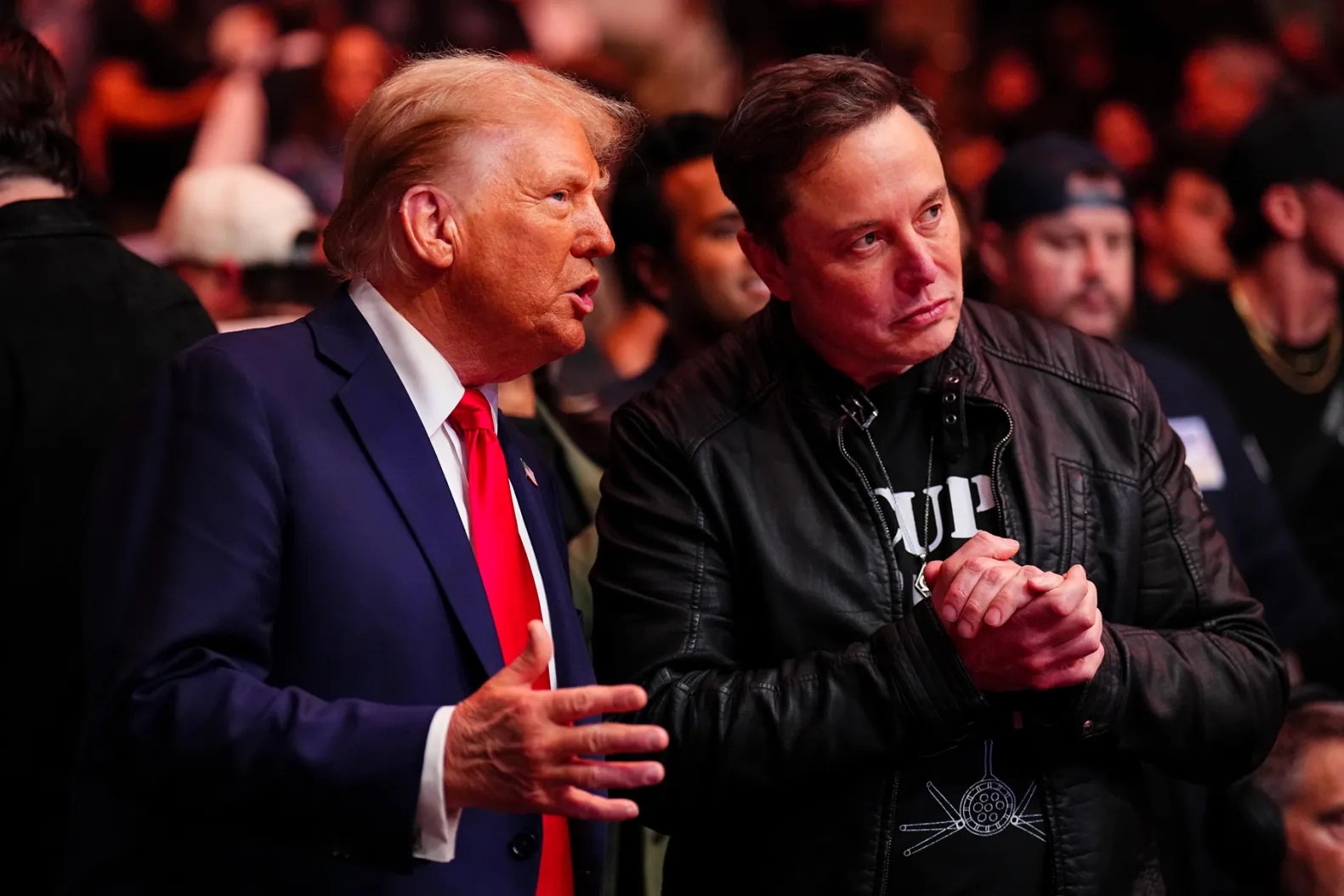
Democrats and others who see Nazis everywhere insist that Elon Musk gave a Nazi salute (the “Sieg Heil”) during a speech celebrating the inauguration of Donald Trump on Monday. Musk thanked the crowd for “making it happen,” before placing his right hand over his heart and then thrusting it out into air. He then turned to those sitting behind him and repeated the gesture. He then turned back to crowd and put his hand on his heart, thanking everybody for the support of Trump and the populist movement. This has generated the latest moral panic from the left. If it keeps going, we may see full-blown mass formation psychosis in the near future.

Elon Musk giving a “Nazi salute”

I wouldn’t be commenting on the matter if it weren’t for story having legs. It’s so very silly. But the left won’t let it go, despite the ADL tweeting on X, “It seems that @elonmusk made an awkward gesture in a moment of enthusiasm, not a Nazi salute.” For his part, Musk said, “Frankly, they need better dirty tricks. The ‘everyone is Hitler’ attack is sooo tired.” Musk mocked the accusation on X using references to prominent Nazi figures, which did finally draw the ire of the ADL.

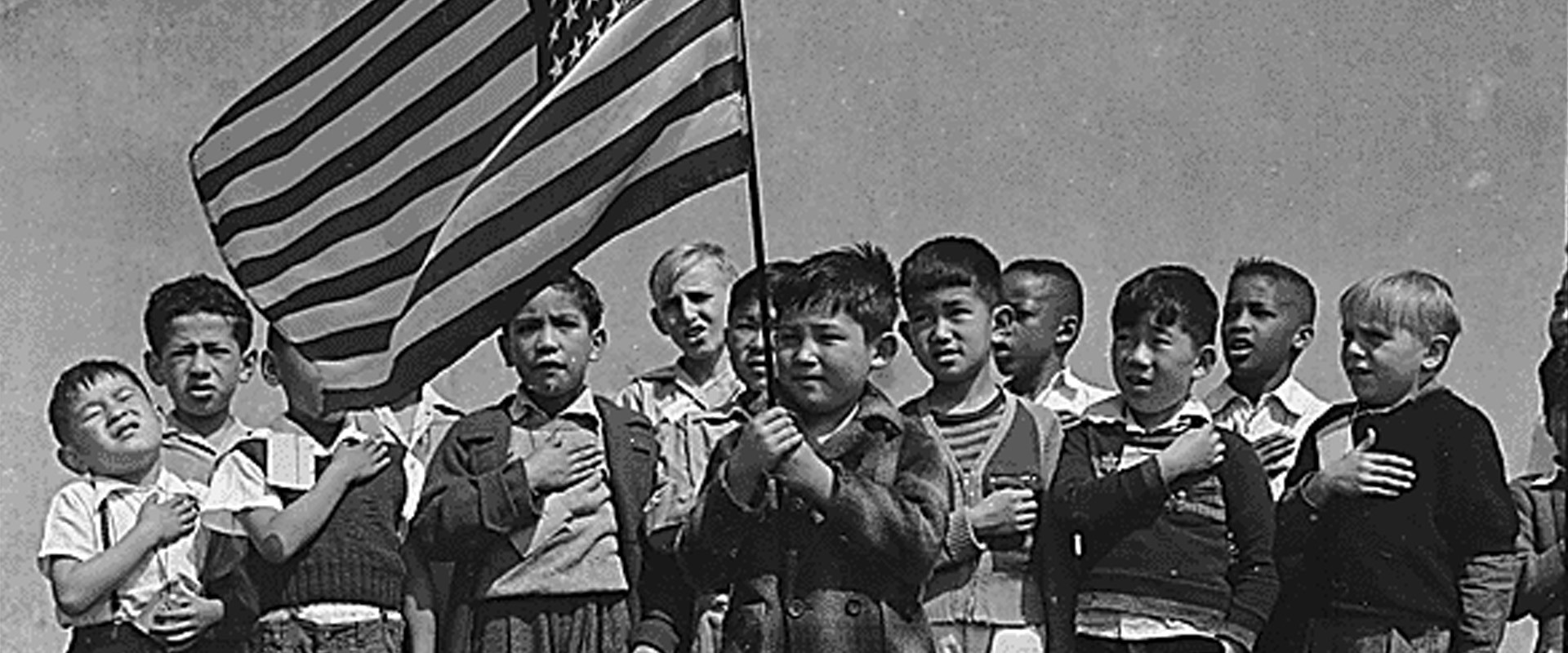
Children salute the American flag in 1915

The image above is demonstration of the Bellamy salute. You can find lots of photographs of children giving the Bellamy salute on the Internet and in history books. James Upham developed the Bellamy salute in 1892 to accompany Pledge of Allegiance, written by Francis Bellamy. Bellamy was a socialist who advocated for worker rights and the equal distribution of economic resources, which he insisted were ideas intrinsic to the teachings of Jesus. The Bellamy salute was the way to address the US flag until 1942. The flag code was changed to avoid identification with the Nazis. Our monuments still retain the fasces, however (see the adornments in the House of Representatives or the Lincoln Memorial).

The Bellamy salute wasn’t the only symbol the Nazis appropriated. The swastika is another one. Originating in Eurasia, but found in many parts of the world, the swastika is one of mankind’s most ancient symbols, dating back thousands of years. It’s strikes me as odd when a people who win a war change the meaning of symbols or alter traditions because the people they defeated appropriated their elements. But then I think about the politics behind the manufacture of moral outrage and it makes sense.

You may remember a moral panic many years concerning handbags manufactured by an India supplier and sold by Spanish fashion chain Zara (owned by the world’s second largest fashion retailed Inditex) decorated with swastikas. The swastika is commonly used Hindu symbol conveying “well-being.” The customer complained. A British anti-fascism group claimed the bags were an attempt to legitimize fascism and the Daily Star ran a picture of Adolf Hitler next to its story headlined, “Fury over Nazi Fashion Bags.” Does anybody believe that nobody caught up in the panic didn’t know that the symbol carried no Nazi intent? I don’t. But truth doesn’t matter to anti-fascists—their goal is to panic the public to gain political advantage. Zara retired the handbags.

Recall the German phrase “Arbeit macht frei,” which translates to “Work sets you free,” was appropriated and used by the Nazis during their regime. The phrase is most famously associated with its appearance on the gates of several Nazi concentration camps, including Auschwitz and Dachau (the latter where the surgeon who pioneered vaginoplasty, Dr. Erwin Gohrbandt, carried out medical experiments on prisoners). The phrase was around long before then, originating in a 1872 novel by Lorenz Diefenbach, a German nationalist. Labor reform movements in German-speaking countries and territories advocating work-ethic principles adopted the phrase to promote the idea of self-reliance and redemption through honest labor. The phrase thus conveys a sentiment similar to that of the Protestant work ethic. Say it today and risk being condemned for insensitivity.

The pairing of Nazis with liberal and right-wing politics progressives and social democrats seek to delegitimize is commonplace today, and are articulated by elites at the highest levels of government. A day after Musk’s hand gesture, German Chancellor Olaf Scholz, speaking at the World Economic Forum, a gathering of transhumanists and transnationalists, said on Tuesday that Germany respects free speech but does not support freedom of speech when used to support extreme-right views. “We have the freedom of speech in Europe and in Germany. Everyone can say what he wants, even if he is a billionaire. And what we do not accept is if this is supporting extreme-right positions,” he said.

The paradox of his statement is rather obvious. You can say anything you want but you can’t saying everything you want. Why would Scholz say this? Because Alternative for Germany, or AfD, a right-wing populist political party that is Eurosceptic and opposes immigration into Germany, especially Muslim migrants, is more popular than Scholz’s Social Democratic Party (SPD). The power elite must find away to censor and delegitimize the AfD to advance the European project of transnational corporate statism. Scholz is the same man who urged the construction of a firewall against the right after the AfD had a tremendous showing in Thuringia and Saxony. Just as with speech, Germans can have their politics in Germany as long as it’s the politics chosen by the establishment.

Alice Weidel, leader of Alternative für Deutschland (AfD)

Alice Weidel, the leader of the AfD, an economist by training (having worked for Allianz Global Investors and Goldman Sachs), holding a doctorate in international development, is openly lesbian, living with her partner, Sarah Bossard, a Swiss filmmaker and producers, and their two sons (it is unclear whether they are legally married, as Switzerland only legalized same-sex marriage in 2022). Apparently her extremism is evidenced by her advocacy for mass deportations and dismantling wind farms. Surely it cannot be that, in a conversation with Elon Musk on X, she emphasized the importance of protecting Jewish communities from antisemitism, which attributed to immigration from Muslim-majority countries and said has become prevalent on the political left in Europe.

Weidel is correct, and one doesn’t have to work hard to see why presents a problem for the corporate state. Antisemitism is a central feature of the alignment of left-wing political groups (anti-colonial, progressive, and socialist) and Muslim organizations, particularly those supporting pro-Palestinian causes, and we see it not only in Germany, but in the United Kingdom and the United States. It’s the glue that holds the movement together—than and loathing of Western civilization. This is speech Chancellor Scholz is not seeking to restrict. Moreover, it sounds to me like Weidel is extreme because corporations who depend on what is effectively indentured servitude stand to lose profit if they can’t super-exploit immigrant labor and drive down the wages for native workers—and because she opposes the Islamization project and the crime it brings to Europe (rape has skyrocketed).

No symbol is immune from the project to delegitimize liberal and rightwing politics. You may remember Pepe the Frog, a cartoon character created by artist Matt Furie in 2005 for his comic series Boy’s Club. Pepe gained widespread popularity as an internet meme. By the mid-2010s, Pepe was appropriated by alt-right groups, and thus, in a media campaign and resulting moral panic, associated with hate speech and right-wing political propaganda. The ADL classified Pepe as a hate symbol. Furie launched efforts to reclaim Pepe’s original meaning, but to no avail. Today, a cartoon frog is forever associated with fascism. Again, it is very silly. But also serious.

Cartoonist Matt Furie killed off Pepe the Frog, only to latter attempt to resurrect him

When were Nazis allowed to spoil everything? It coincides with the ramping up of the corporatist transnationalist project to turn populism and nationalism into right wing fascist ideas to delegitimize opponents to the globalist agenda to erase nation states. Those of you who are my age (I am 62) remember that things were very different when we were kids. Gestures and symbols appropriated by the Nazis were not condemned in the same way as they are today. The punk movement used such symbology as a sign of their rejection of authority. We saw this as well in industrial music—and heavy metal, too. It was the same spirit that metal bands used Satanic imagery to convey a sense of evil (there was moral panic over that, as well). Skits with performers wearing Nazi uniforms were not deemed offensive but send-ups of the pomposity of authoritarian regimes. We even watched a TV show growing up that humanized Nazis, Hogan’s Heroes. You can still catch that show on some rerun channels, but can you imagine a reboot? I can’t.

I also find it curious that sporting a swastika is deemed today as horribly offensive, but waving the hammer and sickle is not generally seen as a problem, even though the Soviet Union was one of the most authoritarian and brutal regimes in world history, killing millions of their own citizens and sending millions more to the Gulag. Moreover, the hammer and sickle convey a similar sentiment to the German phrase the Nazis appropriated about freedom through work. A person wearing a Hitler or Mussolini shirt would be immediately suspect (it would likely get a person kicked out of a college classroom), but a Che Guevara shirt? No problem. When I was in Denmark in 1989, I bought such a shirt in Freetown Christiania and used to wear it around Green Bay. When I learned the truth about Che (suffice it to say that he was not a nice guy), I retired it. I still have it in a closet somewhere. But before I retired it, a young person asked me if the image was Charlie Manson. Knowing what I know today, I would have said, “No, worse. Much worse.”

George Orwell was troubled by this double standard long before I was. Orwell was an anti-fascist, but he chose to focus on communism in Animal Farm and Nineteen Eighty-Four not because he overlooked the horrors of fascism or Nazism—he took up arms against Franco’s fascists in the Spanish Civil War—but because he believed that the atrocities of Hitler and Mussolini were already well understood and condemned. He was alarmed by the widespread admiration for Soviet-style communism among Western intellectuals, despite its glaring abuses of power and suppression of liberty. Orwell saw this uncritical support as insidious, cloaking totalitarianism in the guise of justice and progress. His most well-known works are indictments of how authoritarian regimes manipulate ideology to control and oppress the people they claim to serve. Admiration for communism is still palpable on the left today. If I am being honest, I have in the past been guilty of this myself. You can find writings on Freedom and Reason (I started this platform in 2006), that are properly criticized as communist apologetics.

Ever heard of the Thomas theorem? It is also called the “definition of the situation.” It’s related to the concept of “framing.” The theorem goes like this: “If men define situations as real, they are real in“If men define situations as real, they are real in their consequences.” It was developed by sociologists William and Dorothy Thomas. The idea is central to symbolic interactionism. What the couple are saying is that people’s actions are based on their subjective interpretation of a situation not on objective reality. If they define things in a particular way, then they will see them and act towards them as if they are that way. This is how two people can look at the same thing and see it differently—and react to it differently. Here is French President Macron making the exact same gesture. Is Macron a Nazi?

Of course, the thing is one way actually. So the goal of the rational thinker is to see the thing as it really is. That’s hard for humans because they want to believe that the way they see the world is the way the world is. If it’s not, then a lot of other things they think about the world are probably wrong, too. This could lead to a change of frame. A change of frame risks alienating the tribe. Belonging is a powerful human impulse. So people stick with ideology. Ideology makes a man see what he wants to see.

Apparently Tim Walz is a Nazi.

Has the Era of Colorblindness Begun?

Predictably, I have been labeled a “bigot” for supporting Donald Trump’s executive order ending affirmative action in federal government and for federal contractors. It’s not as if my opposition to affirmative action is unknown. I turned against affirmative action fifteen years ago. My change of mind occurred in stages in the context of teaching upper-division college courses. I want to tell that story here. I provided a short version of the story in June 2021 (you can read it here) and elaborated the argument a few days later in Equity and Social Justice: Rationalizing Unjust Enrichment. I will expand upon the circumstances of transformation here (my ability to change my mind is explained in the essay I published yesterday) and then pivot to the problem of affirmative action, which, as I will show, is a species of racism, and the importance of Trump’s actions in ending it.

President Donald Trump signs the executive order ending affirmative action at the federal level

The first moment of my transformation on this issue came in the spring of 2010. I had assigned, among other books, Richard Delgado and Jean Stefancic’s Critical Race Theory: An Introduction in Law and Society (the forward penned by Angela Davis). When I went through the assigned texts on the first day of class, I told my students that we would not be do the classroom exercises suggested by the book. I said this because I wanted them to critically evaluate the arguments at hand—arguments I largely agreed with at the time—not engage in activities that would require a captive audience to participate in the transformation of consciousness such activities sought. I am a lifelong free speech advocate, and I understood that having students engage in ideological exercises constituted compelled speech. As we worked through those ideas during lecture and discussion, I came to regret having assigned the book for the same reason I would later regret having assigned another piece of ideological work, namely Michelle Alexander’s The New Jim Crow in my course Criminal Justice Process. Why? The problem of ideology. 

It was either during the during the summers of 2010-2011, or the spring of 2012, perhaps even before that (that earlier essay seems to imply that), in the context of my Foundations of Social Research class, while lecturing on the fallacy of misplaced concreteness and the related problem of reification, that I realized why Delgado and Stefancic’s book had troubled me so: critical race theory is built around those fallacies. To elaborate, the fallacy of misplaced concreteness refers to the error of treating an abstract concept or theoretical model as if it were a concrete, fully accurate representation of reality. Reification is the act of treating abstract concepts, such as relationships or social constructs, as though they are tangible and independently existing entities. While both involve a conflation of the abstract and the concrete, misplaced concreteness emphasizes the mistake of overvaluing simplifications, often in the guise of logical reasoning while leveraging group averages, whereas reification critiques the sociological tendency to treat abstractions, in this case “racial categories” as if they have agency or physical existence. Essentially, reification can be seen as a specific form of misplaced concreteness within broader contexts.

The rescission of affirmative action by actions taken by Donald Trump during the first days of his second term as president aligns with my longstanding concerns about the ideological underpinnings of racial preferences that reflection upon those fallacies had raised. It is one thing for an individual to question whether his race affected an opportunity, either acceptance at a university or employment or promotion at a private or public organization. But affirmative action asserts abstract racial categories—simplifications of complex, multifaceted human identities—as the basis for decision-making in education and employment. Thus affirmative action necessarily treats individuals as personifications of abstract and often arbitrary demographic groups (ever looked at a nineteenth century census form?), embodying historical narratives and statistical averages instead of recognizing the unique experiences, merits, talents, and potentials manifest in the flesh-and-blood person. 

Critical race theory, as outlined in Delgado and Stefancic’s work (their primer accurately captures the main arguments), exemplifies this problem. Moreover, the theory has played a central role in rationalizing affirmation action (as well as reparations), by supposing the deterministic role of race in shaping outcomes and experiences, effectively reifying racial categories as concrete, self-contained entities with intrinsic agency—advocating altering the opportunity structure on this basis. A reader might take issue with my characterization of this matter. Fine. But what weight can academic disagreement carry in the law? Anybody who studies the disciplines of history and sociology must admit the myriad accounts one finds there are interpretations and theories built upon or positing essentially contested concepts.

We see these fallacies in the notion of “white privilege,” which refers to the alleged unearned advantages or benefits those individuals identified as white enjoy in societies supposedly structured around racial hierarchies. Those alleged advantages and benefits are said to manifest in systemic ways, such as greater access to education, employment, and housing, as well as in everyday experiences, such as being less likely to face racial profiling by the police or discrimination in businesses. Here, prima facie evidence of disparity, ie the mere fact of group differences, becomes proof of systemic racism. Even if there were empirical evidence supporting these claims at the abstract structural level (I do not a priori rule it out), it is not true that every individual enjoys these privileges.

Moreover, in the legal context, privilege refers to a specific right or immunity granted to a person or group that protects them from certain legal obligations. Such privileges are rooted in statutes, common law, or constitutional protections and are designed to safeguard important relationships or rights. The fact is that laws and policies privileging whites were abolished in 1964, with the Civil Rights Act. There have been no racial privileges for sixty years—at least not for whites and those deemed white-adjacent (shorthand for those groups that on average have accomplished more, command higher incomes, live in better houses, etc.) CRT says difference is because of white supremacy, but that is a theory. (Some say it more crudely; Ibram X Kendi says either group inequality is explained by racism or the racist notion that they are not.) There are other theories, such as cultural traditions that promote academic excellence and hard work. At its core, affirmative action is justified by selective affirmation of particular historical interpretations and sociological theories. It is not the role of government to force us to operate according to particular interpretations and theories by historians and sociologists.

President Lyndon Johnson signs the 1964 Civil Rights Act

As such, affirmative action reestablishes in the wake of the 1964 Civil Rights Act a lawful system of racial discrimination by appealing to the argument that societal systems and institutions have historically been designed to favor white individuals, often at the expense of marginalized racial groups, and therefore government action is required to repair alleged harms. The cover is that white privilege is not about assigning personal blame or oppressing whites and white-adjacents but about understanding structural inequalities and how they perpetuate disparities across racial lines. But of course, blame must be assigned, after all there is an oppressor and the oppressed in this model, and to raise this supposed dynamic to the level of justice, the legal system must be put in the employ of primitive notions of collective and intergenerational guilt, primitive notions out of step with the modern and enlightened system of justice based on individualism. It is in the individual that rights reside, and equality demands that each individual, except in cases where there are intrinsic differences between groups (such as the case of gender, where equity is required), is equally entitled to those rights.

To put the matter bluntly, affirmative action is a system of discrimination based on race. This is why the US Supreme Court significantly restricted the use of affirmative action in college admissions in its June 2023 decision in Students for Fair Admissions v. Harvard (see Ending Patronage and Co-optation: The Death of Affirmative Action is a Start for details and analysis of the policies hegemonic function). The Court ruled that race-conscious admissions policies at these institutions violated the Equal Protection Clause of the Fourteenth Amendment. The decision effectively ended the longstanding practice of affirmative action as it had been used in higher education, emphasizing that admissions decisions must focus on individual merits and achievements rather than generalized considerations of race.

Trump’s rescission of Lyndon Johnson’s 1965 executive order 11246 establishing affirmative action follows the line of progress on civil rights law and policy the Court’s decision advanced. If social justice is to have any real meaning, it is found here. The practice of affirmative action undermines the dignity and individuality of persons, reducing them to vehicles of abstract constructs in a program to right the wrongs asserted by a particular historical interpretation and sociological theory. By ending affirmative action, policymakers have an opportunity to refocus on merit-based frameworks that evaluate individuals on their actual achievements and capacities, rather than perpetuating the flawed logic of racial essentialism inherent in reified group identities. There’s feedback loop: the interpretations and theories at work here lose their purpose. After all, one’s skin color is not an achievement, nor are we to prejudge the capacities of individuals on that basis. There’s a word for ideologies that do that, the word is racism

Hunter Biden’s Laptop, the Cult Mentality, and the Spirit of Free Thinking

As I have explained on Freedom and Reason, the label “conspiracy theorist” functions as an ad hominem attack and a thought-stopping device, dismissing an individual’s arguments without addressing their claims or accessing their merits. By reducing alternative and complex viewpoints to a stigmatized stereotype, the label discourages critical thinking and exploration of evidence. It shifts focus from the substance of the claims to the perceived credibility or rationality of the person presenting them, producing and perpetuating a culture where questioning mainstream narratives is reflexively ridiculed. As such, the label—and this is its intent—undermines open dialogue, creating a binary framework where ideas are either “approved” or relegated to the realm of irrationality, often without genuine examination. The label aims to silence legitimate concern and dissent, impeding the skeptical inquiry essential to a free and informed society.

Ideology also produces a binary framework—a rigid system of “in-group” versus “out-group” beliefs that determine membership within a collective. Ideological belief, which I shorthand as “cult mentality” in this essay, contrasts with the rational approach, that is the approach rooted in facts, logic, and principles that allows for flexibility and thus adaptation to new information. Ideology serves as a shortcut for group cohesion and shared identity that comes at the expense of open inquiry and individual critical thinking. From the ideological perspective, those who do not conform to its tenets are deplorable. This framing prevents genuine engagement with ideas outside the ideology’s boundaries and fosters a tribal mindset, where the primary concern is maintaining group identity over seeking truth. 

The rational person, working outside this framework, risks being misunderstood or maligned by ideologues because his motivations and conclusions do not align with the predefined ideological script. This creates a tension between open-minded rationality and the closed-system thinking that ideology enforces. Those who have attempted to raise awareness of the contents of Hunter Biden’s laptop and the role the deep state in portraying the laptop as “Russian disinformation” know very well the power of ideology, as well as the effect of dismissive labeling, in leaving people utterly incapable of entertaining the possibility that the 2020 Presidential Election was rigged to replace an outsider president with one compliant to the interests of the corporate state.

“The Marco Polo Report: Overview,” by Strauch Mahoney is where folks can begin to learn about the Biden crime family—if they haven’t already studied the matter. Most haven’t, I know, in part because they don’t care to; others because they can’t find it. I provide this link so you can experience for yourself how Internet nodes aggressively censor the report. Click the embedded links and you will be timed out or told that the site isn’t available. If you use the Tor browser that sends you to IPs around the world, then you may be able to find it. But I checked, and that probably won’t work for you. You will have to do that work, however (Hint: the Internet archives). I would publish the report myself, but then Freedom and Reason might likely be censored or the its ultimate owners deplatform me.

Mahoney published the overview back in October 2022. Why didn’t I talk about it then? I did. In fact, I talked about long before then (in October 2020 in New York Post Drops a Bombshell on the Biden Campaign). Why I’m back at it is because I was recently told that the laptop was bullshit after I posted a story about then-president Joe Biden issuing pardons to several close family members on Inauguration Day in the final minutes of his presidency. My family has been subjected to unrelenting attacks and threats, motivated solely by a desire to hurt me—the worst kind of partisan politics, Biden wrote in a statement. Unfortunately, I have no reason to believe these attacks will end. Because where there’s smoke there’s fire. He continued: That is why I am exercising my power under the Constitution to pardon James B. Biden, Sara Jones Biden, Valerie Biden Owens, John T. Owens, and Francis W. Biden. He then added, The issuance of these pardons should not be mistaken as an acknowledgment that they engaged in any wrongdoing, nor should acceptance be misconstrued as an admission of guilt for any offense. I checked. In Burdick v. United States (1915), the Supreme Court ruled that a pardon “carries an imputation of guilt; acceptance of a pardon is a confession of it.” Same goes for Biden’s son, Hunter, whom he pardoned on December of last year, the pardon exactly covering the decade of scandal.

The ignorance of those who cry bullshit frustrates me. I admit it. I need folks to come to terms with the existence of an establishment—a power elite, C. Wright Mills called it—that enjoys tremendous power to censor and deplatform. Before Zuckerberg’s change of policy, sharing the report would have been censored and Facebook might very well have deplatformed for telling you how to find this information. Twitter certainly would have. The laptop was heavily censored during the 2020 campaign and after. The New York Post, the nation’s oldest newspaper (founded by Alexander Hamilton) was censored and deplatformed for reporting it. Why would the establishment do this? Because the Establishment selected the fading compliant Joe Biden to be its figurehead, and the contents of the laptop—polling shows that this would have been the case—would likely have changed the outcome of the election. This wasn’t the only way the 2020 election was rigged (that was censored, too), but it played a major role.

Joe Biden and his song Hunter

The story of Hunter Biden’s is a useful example of what George Orwell identified in Nineteen Eighty-Four as memory-holing. Memory-holing refers to the deliberate suppression or erasure of information, often to manipulate public perception or rewrite historical narratives. memory holes were devices used to destroy documents and records deemed inconvenient or contrary to the ruling party’s agenda. In contemporary usage, it describes attempts to obscure or erase evidence of events, statements, or facts, often in digital contexts. This can include the removal of online content and the revision of records, all to shape collective memory. The practice did not exist only in Orwell’s imagination. Memory-holing was a practice by the Soviet Union. Memory-holing marks the presence of a totalitarian situation. Had Kamala Harris been elected, the United States would have continued down the path towards a totalitarian society.

By moving to revoke the security clearances of the intelligence officials who spearheaded the disinformation campaign to portray the laptop as Russian disinformation (see The Russia Fake News Narrative), Trump is raising consciousness about the existence of a deep state and the function of the mass media as an organ of corporate governance. The Establishment was desperate to stop Trump. It’s why Trump was outspent more than 3:1 during the 2024 election (which he never less won by 77-plus million votes). It’s also why the Biden regime waged lawfare against Trump at the federal level and in multiple state. And why there were two attempts made on Trump’s life (They Tried to Kill Donald Trump Yesterday; Progressives Losing Their Shit Over the Attempt on Trump’s Life; A Second Attempt on Trump’s Life). Yes, Virginia, the deep state is real. I have known it was real since I sat in front of the television set in the 1975 and watched the Church Committee hearings. this is why ignorance frustrates me.

* * *

For those firmly ensconced in a cult, a term that I will use here as shorthand for emersion in a belief system, an ideology, that rests on nonfalsifiable propositions, i.e., faith-belief, and that rejects facts that contradict doctrine, those who appear to leave the cult, an interpretation of the situation that rests on the presumption that they ever were in one, appear as if they have instead stepped into new one, that they have become brainwashed, a determination that presupposes that one is not in a cult. Ironically the act of condemning a presumed apostate is a sure sign that the condemner is in fact himself in a cult. If he weren’t, then somebody changing his mind would be the sign of a freethinker, a man not beholden to a cult. This is the essence of identity politics, which sees the world as a collection of cults. These are the people who have been running our society of late.

This interpretation of the situation is unavailable to those ensnared by cults because they have a particular cognitive style that inoculates them from reason. That’s why it’s nearly impossible—unless an unethical action such as deprogramming is pursued—for a cult member to be reasoned out of his beliefs. I have listened to quite a few people who were once in the cult of Scientology. To a man, they were not talked out of their situation. Rather, they found their way out on their own. And, to a man, once free of cult doctrine, they demonstrate the cognitive style that made that freedom possible. Listening to them, it becomes clear that they were never quite sure of doctrine or their place in the cult in the first place. Doubt left the door ajar just enough to allow their escape.

There is a lesson in this. Having doubts about what one believes is a prerequisite for escaping belief systems—and for accept beliefs on a factual and rational basis. As I have confess on Freedom and Reason, some of the positions I held in the past suggested that I was in a cult, namely the cult of woke progressivism. I used to believe things like global warming, black people are incapable of bring racist (except those who take up the views of white conservatives, you know, the proverbial “Uncle Tom”), systemic racism in the criminal justice system and, more generally society at large, transgenderism was gay-adjacent, and a few other beliefs. But I have also always moved from facts and logic. These were transient beliefs. However long I believed them (some longer than others), I remained a liberal throughout, even during graduate school (academia is something of a cult), open to disconfirmation of my ideas—seeking disconfirmation for the sake of being a reasonable person. The door was never closed for me. Once determined to open wide the door, escape was inevitable.

Others aren’t so fortunate. I have noted before on this platform before that quite a few people have wondered what happened to me. “What has happened to Andy?” Some of my Facebook friends have seen it for themselves. There are a few recent examples. One, a few months ago, involved a former student who, playing the game of “gotcha,” searched my Facebook history to find past statements he believed would trap me. When it only proved my investment in reason and the ability to change my mind, he resorted to ad hominem (I wrote a lengthy essay on this but never published it). More recently I encountered the rage of a friend I have known for decades. Freak outs are not unexpected. Whenever the political flow is disrupted, the likelihood of denouncing and shaming increases. When years ago I shifted the target of my irreligious criticism from Christianity to Islam, it upset a lot of progressives. Progressives are quite fond of Muslims, you may have noticed. Longtime Facebook friends unfriended me. When Trump was president the last time around, several of the Facebook folk caused quite a ruckus, condemning me, then unfriending me. How could I agree with Trump about anything? Some took parting shows on Messenger, essentially praying I would return to my previous positions, that I would “come home,” etc. (Only one ever apologized.)

The assumption is that the Trump column contains checkboxes that no good person would ever check. But I have never ordered my life around such columns. Those columns aren’t rationally ordered anyway. Not even close. They’re ideological and political constructions that simple-minded people, or more generously close-minded people, use to order their speech acts, a substitute for principle used to justify to themselves the act of blackening their social media profiles, or to unfollow, unfriend, block, contact your employer. There’s no reason why a liberal cannot oppose critical race theory, gender ideology, or mass immigration, or criticize the medical establishment, etc. The only things a liberal cannot oppose are those enumerated in the Bill of Rights. And I never have.

I will have to explain myself here since there are those who will counter that liberalism is itself a belief system. Perhaps. But for sure it’s not a cult. Nor is it a mental disease, as conservatives like to say (they’re talking about woke progressivism, not liberalism). Science is a system of beliefs, too. But unlike the belief systems of cults, liberalism and science are rational and based on the objective adjudication of facts. Indeed, they are systems determined by facts and logic. The notion that all belief systems—like all cultures, religions, etc.—are equal, or to be regarded as arbitrary or relative, is postmodernist (or post-truth) sensibilities. Proponents of this essentially nihilist view of the world attempt to delegitimize rational thinking by bringing it down to their level, ideas that appear to deny the possibility of facts and reason. But this genre of speaking and thinking is contradictory, since it’s inherent to the belief system that postmodernism and its various species—post colonialism, critical race theory, queer theory—are superior ways of grasping the world, which in turn leads to rejection of the Enlightenment and loathing of Western civilization, actually superior ways of grasping and living in the world.

This inherent contradiction returns us to the contest of ideas, the validity and invalidity of which are found in their relative fruits. Which ideas are better? That’s a useful question. Look around you. The answer to the question is everywhere. Liberalism and science have given us freedom and progress. Freedom is not subjective. Stealing the freedom of wolves and bears in cages by putting them in cages sickens their bodies and twists their minds (and clearly they do have minds since they act with intention and puzzle at things that escape their understanding). That I am able to convey my ideas on a computer terminal and the readers of this blog receive them validates science. One can argue about whether we should plant an American flag on Mars (I think we should). But if we do ever plant that flag (or somebody beats us to it), it will not be the result of cult mentality, but the fruit of free, and even unfree men, using reason to solve problems, working from falsifiable propositions.

Postmodernism is not the only problem when it comes to reason. What has conservatism brought the world? Where it is not a euphemism for liberalism (and these days it often is), atavisms and intolerance prevail. Both postmodernism and traditional conservatism (excluding the modern conservatism that aligns with the American constitutional principles and the spirit of the Enlightenment) have given the world backwardness and regression. Progress will always depend on freethinking or those who wield science under duress. However, freethinking alone is the unbridled spirit of open-mindedness, the ability to change one’s mind, and to pursue personal liberty based on facts and reason. This spirit is not uncompromising, to be sure. Sometimes one has to support a tendency in which there are some beliefs one would rather see excluded; compromise is part of working with other humans. This is where the liberal value of tolerance has great value. The columns with checkboxes don’t map the lay of the land. I cringe when a Republican appeals to God, even when the speech is the speech I want to hear. That was the case on Monday, January 20, 2025. As long as nobody tries to force me to worship this or that god, or make me live under the rules of this or that religion, I’m fine with it.

The Significance of Trump’s Executive Orders on Gender Ideology and DEI

Update! In a major win for those committed to the principles of a colorblind society, Donald Trump has revoked Lyndon Johnson’s Executive Order 11246 of September 24, 1965. The revocation of this and a myriad of other orders is detailed here: “Ending Illegal Discrimination and Restoring Merit-Based Opportunity.” To summarize, federal civil-rights laws protect Americans from discrimination based on race, color, religion, sex, or national origin, fostering equality of opportunity. Yet institutions across society, including the federal government and major industries, implement race- and sex-based preferences under the banner of “diversity, equity, and inclusion” (DEI) or “diversity, equity, inclusion, and accessibility” (DEIA). These practices often violate civil-rights laws, undermining national unity, individual merit, and traditional values like hard work and excellence. They also pose risks to safety by prioritizing identity over qualifications in critical sectors like government, medicine, and law enforcement. Trump’s order reaffirms and enforces civil-rights laws by eliminating unlawful discrimination and preferences. To put the matter succiently, affirmative action has been rescinded.

* * *

“The Party told you to reject the evidence of your eyes and ears. It was their final, most essential command.” ―George Orwell

I generally don’t like government assertions of the truth. Indeed, I have in the past been highly critical of state affirmation of particular historical interpretations, for example the official recognition of genocides in law. Such affirmations raise the problematic of historical revisionism, a problematic captured by George Orwell in Nineteen Eighty-Four, which was based on the actual practice in the Soviet Union under Stalin. However, considering the way its synonym “gender” has been repurposed by ideologues to deny its binary and immutability nature, Trump’s executive order affirming the scientific fact of gender, mandating the exclusive use of the term “sex” to refer to this reality in law and policy, is not merely affirming basic biology but affirming the empirical premise upon which such law and policy is formed and implemented. The executive order is therefore not analogous to an order affirming the status of Pluto as a plant or other astronomical disputes among physicists.

Donald Trump signs executive orders on the first day of his second term as President

Summarizing the order, “Defending Women From Gender Ideology Extremism and Restoring Biological Truth to the Federal Government” emphasizes the recognition of sex as a fundamental and immutable reality, explicitly rejecting the concept of “gender identity” as a basis for legal and policy decisions and forbidding the use of gender ideology in determine matters pertaining to gender. It declares the federal government’s commitment to protecting sex-based distinctions in American institutions, laws, and policies, arguing that such measures are necessary to safeguard women’s rights, dignity, and safety. The order mandates the enforcement of sex-based definitions for terms, namely “male,” “female,” “man,” and “woman,” while prohibiting the promotion or recognition of “gender ideology” in federal agencies.

It’s sad that gender ideology has become so pervasive that a president finds it necessary to assert the truth that there are only two genders. But it is necessary. In federal agencies, a demand is made upon free people that they misgender others based on gender ideology. As I document in my April 2023 essay NIH and the Tyranny of Compelled Speech, if a man says he’s a woman, then the NIH requires his mangers and colleagues to refer to him by feminine pronouns. From the Sexual & Gender Minority Research Office of the National Institutes of Health (NIH): “Intentional refusal to use someone’s correct pronouns is equivalent to harassment and a violation of one’s civil rights” (emphasis mine). This means that using objectively correct pronouns to refer to individuals is subject to disciplinary proceedings. The NIH rule sets usage and meaning on their heads and punishes individuals for refusing to comply with an Orwellian inversion. Because such a man is a male and cannot be a female, the NIH is ordering public employees to lie. This tyranny must end. It is an affront to free conscience, speech, and writing.

The order directs federal agencies to revise forms, guidance, and regulations to align with these definitions and rescind prior policies inconsistent with this approach, crucially including those supporting gender identity as a basis for discrimination protections. Additionally, the order prioritizes maintaining single-sex spaces, such as prisons and shelters, based on sex, and prohibits federal funding for medical procedures that alter appearance to conform to a different gender identity. The order thus restores the First Amendment and affirms the necessity of sex-based rights. Put another way, it affirms the basic civil rights of Americans working in public institutions.

President Donald Trump on Monday also signed an executive order proclaiming that the US government will end diversity, equity and inclusion (DEI) programs in federal agencies. “Initial Rescissions of Harmful Executive Orders and Actions” rescinds numerous directives and orders from the previous administration, which the Trump administration correctly determines promotes divisive and unlawful initiatives. The order emphasizes a return to principles of merit, equality, and common sense within the federal government. It directs agency heads to immediately end the implementation of DEI-related policies, mandates reviews of federal actions tied to the rescinded orders, and tasks the Domestic Policy Council, National Economic Council, and National Security Advisor with identifying additional measures to rescind or replace. Once more, President Trump has affirmed the basis civil rights of Americans working in public institutions.

The rescinding of executive orders related to DEI and those specifically addressing gender identity reflects a broader effort to reverse policies that incorporate principles of identity-based equity, which include gender ideology as a component of DEI. DEI frameworks typically emphasize addressing systemic inequities across various demographic factors, including race, gender, sexual orientation, and gender identity. By targeting DEI as a whole, the order inherently encompasses policies related to gender identity, as it is a key aspect of these frameworks. By removing both, the administration signals an intent to move away from policies promoting identity-based protections and accommodations in federal governance. This shift aligns with Trump’s stated purpose of prioritizing “merit” and “equality” over what his administration correctly views as divisive or preferential policies rooted in identity-based considerations. The linkage is thus conceptual and practical: eliminating DEI policies involves dismantling broader systems and protections for gender identity within federal practices.

The violation of Americans’ civil rights is what trans activists intend when they demand “trans rights.” The construct means that trans identifying persons claim a right—really a privilege—that supersedes the fundamental civil and human rights to conscience, speech, publishing, and association to which all Americans are entitled. It is on the assertion of this privilege that men claim a right to engage and enter female-only activities, occupations, and spaces. The fallacious construct of “gender identity” is thus a means by which boys and men violate the rights of girls and women. Nobody is entitled to privilege of this kind. Trans identifying people have the same rights as the rest of population. No more. No less. The elimination of DEI bears directly on the matter. DEI is the program that, among other things, socializes the lies that deny the truth of gender.

The path out of madness begins with the assertion of plain truths. To make these assertions, we must be free to speak and write them. It is the role of the Executive of the United States to make sure that our rights to conscience, speech, and writing are preserved. The Orwell quote at the top of this essay, taken from Nineteen Eighty-Four, underscores how the Party—today in America that is the Establishment, the Administrative State, represented primarily by the Democratic Party—seeks to obliterate objective truth—and seeks to accomplish this by requiring public employees to repeat the lies that gender is subjective and depends on the nonfalsifiable assertions of individuals. By clarifying that sex is a biological matter, Trump returns the determination of gender to the realm of the falsifiable. And by eliminating DEI, Trump keeps the promise of the Constitution that the individual will be judged on his merits and treated equally before the law, entitled to the rights he shares with his fellow citizens.

Two Historical Observations and a Hope for the Future

Today is Martin Luther King Jr. Day. My parents were civil rights activists in the 1960s. They involved me in this work, and MLK, Jr., was one of our family’s guiding lights. I don’t have many heroes, but MLK, Jr., is one of them. MLK, Jr., put his life on the line to advance the cause of racial equality. Among other things, King played a key role in securing the 1964 Civil Rights Act, which abolished institutionalized racial discrimination nationwide. Tragically, on April 4, 1968, only days after my sixth birthday (I remember this day quite well), his life was taken by an assassin’s bullet.

Martin Luther King, Jr.

Today will also see the inauguration of the 47th President of the United States in Washington DC, a tradition marking the peaceful transfer of power in the world’s oldest continuous constitutional republic. The US Constitution, which came into effect in 1789, established the framework for the federal government and has been in continuous operation since then. It is the oldest written national constitution still in use. Donald Trump will take the reins of the American Republic today for the second time, having governed the nation during the years 2017-2021.

President Donald Trump and First Lade Melania Trump.

My hope for this occasion is that the American People will today recommit themselves to the principles and values that guide such men. These principles and values are listed in the American Creed, the core values and principles foundational to the United States’ identity and national ethos. The Creed encapsulates the ideals that Americans hold dear—that we should hold dear. Its central themes—liberty, equality, a republic form of government, justice, opportunity, unity, and patriotism—constitute a model for all the peoples of the world.

Sex by Deception and Distorted Notions of Revenge

Today, I explore the case of a transgender male who was the victim of a mob attack planned via Snapchat by a group of his peers in Harrow, a large town in London, England. Many believe that this case provides a real-world instantiation of a form of bigotry transactivists label “transphobia,” defined as an irrational fear, hatred, or loathing of trans identifying individuals. The definition also often includes criticism of the ideology that affirms the existence of gender identity, exalting that identity to a status that effectively holds trans identifying individuals blameless for their harmful actions. The claim made by gender critical voices that the victim in this case is also a perpetrator is thus construed by transactivists as an example of victim blaming.

As such, the Harrow case is useful to elaborating points made in an essay I recently penned, Blame, Fault, and Victimology, in which I distinguish between victimology, a subfield in the discipline of criminology, and the practice of blaming the victim. Victimologists study the legal, psychological, and social impacts of crime on victims, as well as their interactions with the criminal justice system and societal responses. Moreover, victimology provides knowledge to the public useful for avoiding victimization. Victim blaming feels self-explanatory, but the matter is a bit more complex that it might seem at first blush; I detail the practice in that essay. I spend several thousand words on the matter there, so I won’t repeat those details here.

I am moved to write about this today because of a controversy on X (formerly Twitter) in which critics of gender ideology express concern that mainstream media reporting on the Harrow story skirts the problem of “sex by deception,” a crime I detail in the course of the present essay. For background on the X controversy, see the tweets threads below, one by Amy Souza, the other by Helen Joyce, both identified as gender critical voices and smeared by transactivists as “TERFS,” an acronym for “trans-exclusionary radical feminists.” These two (and many others) are routinely smeared as transphobic by the gender ideology contingent. I will first report the details of the case and then think aloud through the problem Souza and Joyce identify.

The 18-year-old victim in this case was lured to a meeting under the pretense of roller disco, where he was ambushed, pinned to the ground, and stabbed fourteen times. The victim survived the attack. The assault followed a revelation that he was transgender, portraying a woman and concealing his true gender. Four youths have been convicted for the premeditated attack. One, a female Summer Betts-Ramsey, received an eight and a half-year sentence in youth detention (four and a half years mandatory), three others, Bradley Harris, Camron Osei, and Shiloh Hindes, received three-year sentences, while a 17-year-old boy, whose name is protected because of juvenile status, received a youth rehabilitation order.

Image of Summer Betts-Ramsey from the Mirror story cited below

The media framing assumes the trans activist narrative that this was a “transphobic attack.” Concerning motivation, the Mirror reports that the court heard the man was with one of the defendants, Harris, at his house in January last year. While there, a mutual friend called the defendant to tell him that the man he was with was “trans.” Excusing his deception, the prosecutor told the court, “Having been attacked in the past because of her transgender identity, she denied it.” The two then kissed, and the trans identifying male performed oral sex on the defendant. Soon afterwards, another friend told Harris that the individual was a “tranny.” The trans identifying male denied it again, at which point Harris picked up a knife and said, “I’ll stab you if you lie.” The trans identifying male says he felt intimidated and admitted to being transgender. Harris told him to leave.

When Harris told the group that the man had deceived him in order to have sex with him, the Snapchat group turned on the trans identifying man, with one of the other defendants threatening to stab the trans identifying male. When the trans identifying male asked the group when they would next be meeting, Harris responded: “[I’m] not your mate… you tranny.” Phone evidence presented in court revealed that during a call Summer Betts-Ramsey told a gang member: “I have to go to Harrow to beat up some… a fucking tranny bro.”

Bradley Harris

I am determined to address the controversy without denying the wrongfulness of what the defendants did, or the appropriateness of the justice served. So I want to put the matter as definitively as I can: what the mob did was wrong and the sentences were appropriate. Whatever happened before the mob attack cannot justify that attack. However, what the stories about this case leave out or obscure, and this is the point Souza and Joyce with to raise, is the crime perpetrated by the trans identifying man, a crime that goes by different names, but most accurately sex by deception. Alluding to this crime, the Guardian characterizes the situation as “a distorted notion of revenge.” To get the totality of the matter on the table, I will explain the crime of sex by deception and then provide an hypothetical case hoping the reader will grasp the significance of it, as it has broader implications. I will also explore real-world cases that might serve as analogs for thinking through such matters.

Sex by deception, sometimes called “sexual fraud,“ occurs when one person misleads or manipulates another into engaging in sexual activity by providing false information or concealing the truth. This deception can take various forms, including pretending to be someone else, hiding important facts about one’s identity, and lying about the nature of the relationship or intentions. In the Harrow case, the three forms identified apply. It also should also be noted that sex by deception often involves manipulating emotional or psychological vulnerabilities to gain consent. It is unclear whether these elements apply. What seems likely is that sex by deception was at least one of the motivating factors for Harris, whose status as a victim of this crime in not in dispute.

The key element in sex by deception is that consent is given under false pretenses, i.e., the person agreeing to the sexual act would have made a different decision had they known the truth. This form of deception can lead to serious emotional harm, physical violation, and sometimes legal consequences, as it undermines the principle of informed consent in sexual relationships. It’s a breach of personal autonomy and respect for others, leading to the exploitation of the victim’s trust. To be sure, the man who was deceived in this case should have sought out law enforcement and reported the incident instead of participating in mob violence. But the reason he was moved to perpetrate this crime may not be solely explained by antipathy towards trans identifying people. Perhaps antipathy towards trans identifying individuals is a bit clearer in Betts-Ramsey’s statements, but in Harris’ case, evidence that he would have committed violence against this group apart from the deception he suffered is lacking.

To make this relevant to my US readers, sex by deception is illegal in certain situations within the United States, although the legal landscape varies depending on jurisdiction. In some states, sex by deception may be classified as a form of sexual assault, even rape. In other cases, it’s classified as fraud. Either way, it rises to these levels if the deception involves concealing one’s identity, pretending to have a different status, or providing false information about the nature of the act itself. The most common legal concept tied to sex by deception in the US is “rape by fraud” or “sexual assault by fraud.” In cases where deception impacts the consent given, the consent given is invalid.

In England, which shares many of the same foundational legal assumptions with the US, sex by deception is also considered illegal under certain circumstances. If consent is obtained through deception, it may be deemed invalid. On these grounds, the act can be classified under the offense of rape or sexual assault, particularly if the deception undermines the person’s ability to give true and informed consent. This is clarified under the Sexual Offences Act 2003, where consent is defined as the agreement to engage in sexual activity, given voluntarily and with full knowledge of the situation. If one person lies about his identity, and the other person consents based on those lies, the validity of consent given is problematic. An important question in the Harrow case is why the victim in the case has not also been charged with a crime.

I interpret Souza and Joyce’s criticisms to speak to a larger issue—that the act of omitting or obscuring the fact of sex by deception in these stories amplifies the framing of the attack as transphobic and thus serves propagandistic ends. Indeed, the construct “transphobia” is a propaganda term—its functions the same as the construct “Islamophobia”—designed to suggest the presence of a state of mind akin to a mental disorder or a species of discrimination. To the extent that we accept the legitimacy of such terms, the language used by the attackers could be construed as such if the common slang “tranny” is seen as an indicator. At the same time, why is it obvious that any revulsion a straight man feels over same-sex acts is irrational and not natural—as natural as a gay man’s revulsion at having sex with a female? If it’s not, then doesn’t a victims reaction to having been deceived into having constitutes another motive? Furthermore, doesn’t failure to acknowledge the role this played in the crime obscures that motive?

I shared above the two clips of atheist, humanist, and secularist Christopher Hitchens speaking about the consequences of elevating an ideology to an exalted position and enjoying the power of the state behind its propagation to convey the greater problem ideology poses. It is the situation Hitchens describes that redefines words as, and transforms criticisms of an ideology into acts of bigotry, which are then blamed for violence against those who subscribe to the ideology. The devotees of the ideology, on the other hand, are held blameless for their harmful actions, or at least the harm of their acts is diminished. Moreover, the harm caused by their actions is blamed on the victims. We saw this in the Charlie Hebdo case, in which it was at least insinuated that the destruction of property and acts of violence perpetrated against cartoonists in Paris, France with a history of ridiculing Islam and its prophet were provoked by cartoons. With this move, perpetrators are transformed into victims.

We are seeing it again in the characterization of reporting on decades of systematic rape of British girls by Muslims, concealed all that time by the British government, as anti-Muslim bigotry, here through the euphemism of being “overly descriptive”:

The reason for such obscurantism seems obvious in that, for some, it suggests that the victim is to blame for mob violent, that having committed a crime himself gives tacit approval to the mob’s actions. It is an example of victim blaming. To be sure, sex by deception in this case does not justify the actions of the mob. As I have plainly stated in this essay, and in the one I cited at top concerning the matter generally, what the attackers did is criminal and they deserve having had the book thrown at them. At the same time, I cannot say that the act of raising awareness of the crime of sex by deception is of no significance here. If we are to fight this type of crime, speaking here of sexual fraud, the risk of which is heightened by the deception inherent in the conditions established by gender ideology, the matter should have been included in the story—and the perpetrated held to account whatever the actions of the rape victim.

I say this not only to raise the possibility that antipathy towards trans identifying individuals as a “community” (to borrow Hitchens’ observation) may not have provided the motive for each of those involved, which would be fair to Harris, but for the general purposes of raising consciousness about the act that likely motivated his actions. Consider the example of interracial crime. Black Americans are many times more likely to victimize whites than the other way around. Are black Americans motivated to victimize whites because of racial antipathy towards the white race? After all, the problems of black Americans are routinely blamed on the white majority. Yet one will be hard pressed to find in reporting on this matter any suggestion that this was the motivation. On the other hand, when a black American is victimized by a white man, the thought appears in many minds that the action was racially-motivated. A look at the demographics of hate crime statistics indicates that such perceptions are the official ones, as well. However, a violent act perpetrated by either a black man or a white man may have other motives in back of it; but the stats will how that white men are overrepresented in hate crimes. More than this, the criminal actions of black Americans is blamed on white Americans at large—or at least understand in terms of the suffering of blacks in America.

I ask the reader to imagine a case in which a lesbian becomes intimate with a man pretending to be a woman without the lesbian being aware that the man is a woman. It doesn’t matter whether the man sincerely believes he is what he is pretending to be. Objectively, it cannot be true that the man is the other sex. I do not know for sure if there is no god but Allah or that Muhammad is his messenger, but I do know for sure that a man cannot be a lesbian no matter what he thinks of himself. And since there is no objective way of determining whether he sincerely believes he is what he cannot be, nor do we need to bother with determining this, the only pertinent matter before us is what he is. Objectively, then, what has occurred in hypothetical scenario is rape, since the lesbian did not consent to having sex with the man. To be sure, a woman who prefers women may consent to having sex with a trans identifying male, but in the hypothetical, which parallels the actual case reported in the British press, the consent given is not valid since the woman did not consent to having sex with a man. The victim in the Harrow case is a heterosexual man who was tricked into engaging in a homosexual act. Harris is a rape victim. Yet, to my knowledge, no charges have been filed.

I have written about the problem of deception inherent in conditions established by gender ideology in several essays. In The Queer Project and the Practice of Deceptive Mimicry, I argue that, whenever used to make a false impression, costume and performance are acts of deceptive mimicry. Gender ideology is founded on lies, and the demand is that we not only deny the lies, but that we participate in them. “Deceptive mimicry in the human species almost always result in bad simulation; despite his best efforts, a man rarely passes as a woman. Most men can see what he really is. Even more women can see through the deception. The man engaged in deceptive mimicry has trouble convincing himself that he is the thing he says or wants to be, demanding others participate in the simulation by referring to him using feminine pronouns and chanting obvious falsehoods like ‘trans women are women.’” The “almost always” is important here. In a few cases the simulation is convincing, but in many others it is made so by years of disordering the innate gender detection faculty common to our species. The demand is that this cannot be deception because the person is the gender he says he is. This demand denies science and asks us to lie for the sake of an ideology.

This lie has been institutionalized in common practice. In the essay Is this Dating Site Encouraging Deception and Fraud? I report that Grindr doesn’t allow gay men and lesbians to filter for “cisgender,” i.e., a neologism capturing those whose identity matches the objective reality of their gender (really a propaganda term designed to make equivalent the normal with the pathological). In doing so, Grindr perpetuates the falsehood that trans identifying individuals are the gender they claim they are. I pose the matter rhetorically in the essay: “Is this company engaged in deceptive practices that put personal security at risk by obscuring reality?” In a word: yes. Grindr is giving cover to deceptive mimicry by covering criminal fraud in the language of anti-discrimination. I go on to explain that “[h]umans are mammals and, as such, natural beings with a natural history. A man who appears as a woman, no matter how sophisticated the simulation is, is still a simulation of a woman. No simulated appearance can change the reality the appearance seeks to obscure. So when a trans identifying man claims to be a woman he is engaged in deception.”

I used the hypothetical of the case involving a lesbian in that essay, as well, noting the problem of a man producing a simulated sexual identity not having to tell lesbians the truth about what and who he is—a heterosexual man. As a libertarian on sexual matters, i.e., tolerating the freedom of consenting adults to engage in sexual relations, I emphasize that there is nothing to do about valid consensual intimacy. I write, “If a man seeks intimate experiences with other men simulating women (or any other being or object), then this is something no government should regulate. In a free country, men are allowed to appear as women, and other men are allowed to seek intimacy with them, etc.” A man may also believe he is a prophet of Allah, etc. If a man desires other men who imagine themselves as such, either a woman or a prophet, I have no desire to prevent sex between them. “But such intercourse must be voluntary and consensual,” I write. “If a man lures a heterosexual man or a lesbian on a date posing as a woman, this should carry criminal penalties; it is, at bare minimum, fraud; if intimate contact occurs, rape or sexual assault.” 

I conclude that February 2024 essay with this: “Why this isn’t obvious with rules rendered in black letter law everywhere is Exhibit A in the success of the progressive war on justice, rights, science, and truth. It’s a signal that we’re in the grip of a new religion, one that, because the government stands behind it, has become the official dogma—the state religion.” That is why the Harrow case is significant, and the deeper reason I think Souza and Joyce have raised the matter. Their argument, as I understand it, is that the act of omission by the media in fully reporting this story feeds the narrative that deceptive mimicry is no problem at all, as least when perpetrated by a trans identifying individuals, that the victim in this case did not commit a crime himself, that the sole motive was antipathy towards trans identifying individuals, and, more broadly, that critics of gender ideology are to blame for that antipathy. But, as Joyce pointed out, two things can be true simultaneously. The victim of the beating in Harrow did commit a crime, and this fact is central to the problem of gender identity and trans identification.

To once more reference the problem of Islamic groomer gangs, suppose one of the thousands of British girls victimized by Muslim men, or a group of her friends or a family members, engage in “a distorted notion of revenge”? That goes to motive. To say it is only the work of anti-Muslim antipathy obscures the real motive. The media works very hard to obscure motive in this case, portraying protests or retaliatory actions as the work of “far-right groups.” But protests or retaliatory actions often emerge from genuine outrage over injustice and the perceived failures of authorities to protect victims or hold perpetrators accountable. While some organized responses may involve groups with specific political agendas, attributing all anger or actions to such groups obscures the real motivations of victims, their families, and ordinary people who feel deeply impacted by these events. Anger and calls for justice—and even retaliatory action—are natural responses to grievous harm, and they often transcend ideological or political labels. Acknowledging nuance is essential to addressing the root causes of such crimes and restoring trust in the systems meant to protect society.

These matters are complex, and solving them requires taking the totality of the situation under consideration. When I teach juvenile delinquency, I ask students to consider the circumstances of the Columbine High School shooting. I tell them that the shooters Eric Harris and Dylan Klebold were driven by a deep sense of anger and resentment stemming from a range of grievances that they articulated in journals and videos. It was clear from those materials and other information that the boys felt profoundly alienated and isolated, perceiving themselves as outcasts in their school community. Both harbored a particular hatred toward what they saw as the dominant social groups, especially athletes and “popular” students, whom they viewed as representative of a society that had marginalized and rejected them. Both individuals felt a desire to assert power and control, using violence to make a statement about their perceived grievances. The Columbine attack emerged from a toxic combination of personal alienation, societal resentment, and a deep-seated desire for vengeance.

None of that justified their actions. Harris and Klebold are responsible for what they did. I raise this and the Harrow case—and one more before I am through—not to blame victims. I talk about motivations to provide a more complete explanation for why people perpetrate such acts so that those in a position to ensure the safety of others can take steps to do so. It’s clear from the evidence that Harris and Klebold’s motives were far more complex and rooted in a combination of psychological issues, personal insecurities, and a broader hatred of society. Framing the Columbine attack purely as a reaction to bullying oversimplifies the intricate web of factors that led to their actions. At the same time, bullying is a problem in society, and failure of those in authority to intervene in such cases leaves some of those who suffer it (thankfully, a small minority) to feel justified in taking matters into their own hand.

In the case I am reporting in this essay, Bradley Harris may have felt that he would not go to the authorities and report the rape he experienced at the hands of the trans identifying male for the same reason that the victims of Britain’s groomer gangs were reluctant to report their victimization to the police. One of the scandals in the groomer gang controversy is the existence of documented instances where police and local authorities failed to respond adequately to concerns raised by victims and their families about grooming and sexual abuse. For example, the Jay Report on Rotherham (2014) exposed a pattern of systemic neglect, where authorities dismissed or ignored complaints despite overwhelming evidence of exploitation. A significant factor was fear of being accused of racism or damaging community relations. Moreover, there was found a tendency to underestimate victims, many of whom came from disadvantaged or troubled backgrounds and were unfairly judged as complicit or unreliable. A culture of indifference within law enforcement and child protection services allowed this exploitation to persist for years, leaving victims without the support or justice they deserved.

Perhaps feeling that there was no receptive authority to handle such a case, Harris may have taken matters into his own hands. I reject this justification, just as I reject as justified the actions taken against the Muslim minority in the UK in retaliation of the systematic rape of British girls. But I think readers would agree that there are scenarios where many would sympathize with a victim taking revenge for an act perpetrated against her or him. As a sociological exercise, empathy helps us understand such situations. Had Harris been a woman raped by a man, how many people reading this essay would have sympathy for her? Would they characterize her actions as “a distorted notion of revenge”? If so, what is the source of the distortion? Was Harrow not also an event possibly enabled by a culture that makes it difficult for a victim to seek redress through legitimate avenues of justice? I think the point Souza and Joyce are making is that the fact of sex by deception can be so easily skirted in this case testifies to the existence of a culture that elevates some statuses over others, holding some individuals responsible for their actions, but not others, the double standard determined by ideology.

I close with a case that illustrates the problem, and to once more reiterate my position that matters of justice are to be adjudicated in courts of law, not in our homes or on the street, where violence is only justified in acts of self-defense or the protection of others. I wrote about this case in the essay I cite at the top of the present one. To recall the facts, on December 4, 2024, Brian Thompson, CEO of UnitedHealthcare, was gunned down outside the New York Hilton Midtown hotel in Manhattan. The suspect, Luigi Mangione, was arrested and charged with murder. In that essay I write, “Slain United Health CEO Brian Thompson was not responsible for Luigi Mangione’s action. Those defending the assassin’s actions are engaged in blatant victim blaming. But those working in health insurance are today thinking about where they are and who is present in the wake of an action that anarchists call ‘propaganda of the deed.’”

In its reporting, the Hill connects the practices of the medical-industrial complex to Mangione’s actions. This incident, they note, has intensified discussions about the US healthcare system, particularly regarding the practices of health insurance companies. Critics argue that these companies prioritize profits over patient care, often denying or delaying claims, which can lead to severe health and financial consequences for individuals. Such actions are perceived by some as systemic violence, fostering deep resentment among those affected. The killing of Thompson has thus been viewed by many individuals as a manifestation of this pent-up frustration, interpreting the act as a form of retribution against a system they believe has caused widespread harm through the denial of necessary medical services. Public opinion polls revealed significant sympathy for the shooter’s motives among Americans. A NORC poll, conducted by the University of Chicago, indicated that 69 percent of respondents believed health insurance coverage denials bore at least “a moderate amount” of responsibility for Thompson’s death. An Emerson College poll found that among voters aged 18–29, 41 percent considered the killing “acceptable or somewhat acceptable.”

Alexandrea Ocasio-Cortez put it this way to CBS associate producer Jaala Brown: “All of that pain that people have experienced is being concentrated on this event. It’s really important that we take a step back. This is not to comment and this is not to say that an act of violence is justified, but I think for anyone who is confused or shocked or appalled, they need to understand that people interpret and feel and experience denied claims as an act of violence against them.” I strongly suspect that those who sympathize with Mangione could very likely be among those attacking Souza and Joyce over their tweets concerning the Harrow case—which is not to say that sympathy for Souza and Joyce’s position requires sympathy for Mangione. What I asking readers to consider is why in the reporting of the Harrow case readers are not asked to consider how people who are the victims of sex by deception interpret and feel and experience sex by deception as an act of violence against them? However we classify the actions of health insurance companies in denying claims, one has to tie himself into knots, or cover himself with the gloss of gender ideology, to deny that sex by deception is an act of interpersonal violence.

A New Hope: Populism in the Twenty-First Century

In his Farewell Address, Joe Biden cast a foreboding shadow over the American landscape, warning of the emergence of an oligarchy that consolidates immense wealth, power, and influence. He invoked imagery of the Gilded Age robber barons, framing his concerns in the rhetoric of safeguarding democracy and ensuring fairness for all. 

Joe Biden delivers his farewell address to the nation from the Oval Office of the White House in Washington, DC, January 15, 2025

 “I’m so proud of how much we’ve accomplished together for the American people. And I wish the incoming administration success, because I want America to succeed,” he said. Alluding to the narrative that Trump attempted to prevent a peaceful and orderly transition of power in the wake of the 2020 election, he declared, “I’ve upheld my duty to ensure a peaceful and orderly transition of power to ensure we lead by the power of our example.” Then, attempting to capture the tone of Dwight D. Eisenhower’s ominous Farewell Address of 1961 (see We Have Become Eisenhower’s Worst Fears), Biden pivoted to a warning, intended to connect Trump to the Big Tech oligarchs:

“In my farewell address tonight, I want to warn the country of some things that give me great concern. And this is the dangerous concern—and that’s the dangerous concentration of power in the hands of very few ultra-wealthy people, and the dangerous consequences if their abuse of power is left unchecked. Today, an oligarchy is taking shape in America of extreme wealth, power, and influence that literally threatens our entire democracy, our basic rights and freedoms, and a fair shot for everyone to get ahead. We see the consequences all across America. And we’ve seen it before, more than a century ago. But the American people stood up to the robber barons back then and busted the trusts.”

Before his sideways attempt to portray Trump as anathema to the interests of the American Republic, he tainted the history of America by feigning wonder at a portrait of the Statue of Liberty that hangs in the White house and waxing sentimental about the Republic’s Founders: “A nation of pioneers and explorers, of dreamers and doers, of ancestors native to this land, of ancestors who came by force, a nation of immigrants who came to build a better life, a nation holding the torch of the most powerful idea ever in the history of the world that all of us—all of us are created equal. That all of us deserve to be treated with dignity, justice, and fairness. That democracy must defend and be defined and be imposed, moved in every way possible. Our rights, our freedoms, our dreams.” (Emphasis mine)

He was not merely contrasting the White Anglo-Saxon Protestant to those others progressives see as his victims, a standard tactic of delegitimizing the purpose of America, but to prepare the audience to engage in acts of resistance against the reclamation of America’s purpose: the supposed pending abuse of power by Trump. “But we know the idea of America—our institution, our people, our values that uphold it—are constantly being tested. Ongoing debates about power and the exercise of power, about whether we lead by the example of our power or the power of our example, whether we show the courage to stand up to the abuse of power or we yield to it.”

Biden’s characterization of the situation—while cloaked in populist alarmism—obscures a very different reality, one that with a proper grasp of history and power dynamics lays bare the dissonance between his proclaimed ideals and the policies enacted under his administration, and more broadly the plan the Corporate State and its small army of progressive elites have for its future. Beneath the veil of warnings lies a profound irony: the very oligarchy Biden cautions against has flourished through the machinations of the Corporate State, of which Biden himself has been a central figure—to be sure, not the actual manipulator of the levers of power (he is himself a shell of the person he used to be and always only an instrument), but rather a simulation of an American president.

We must never forget that the Biden administration, in concert with the CIA, DHS, and FBI (the Deep State), exercised unprecedented influence over Big Tech platforms, platforms owned by the very oligarchs he alluded to in his remarks. Under the guise of combating misinformation and protecting public health during the COVID-19 pandemic, as well as appearing to ensure electoral integrity, federal agencies pressured platforms like Facebook and Twitter to suppress dissenting voices. Accounts were deactivated, content flagged, and alternative narratives silenced. Far from being independent arbiters of public discourse, these platforms were conscripted into service by the Administrative State. The alignment of Big Tech with federal power epitomized the very abuse of power Biden claimed to decry—a collusion that undermined open dialogue and democratic deliberation, the lifeblood of a free society.

The implications of this collusion extended far beyond the mere suppression of information. It revealed the interdependence between corporate elites and state actors, a relationship not unlike that of the old monopolies and political machines of the late nineteenth century, collusion that progressivism and the regulatory regime (the FDA, USDA, etc.—later the CDC, ED, EPA, etc.) were and designed to conceal and obscure. Rather than protecting the democratic ideal, this alliance entrenched a system of governance that served the interests of the few over the many. 

In this sense, Biden’s rhetoric about standing against oligarchy represents an exercise in dissimulation—a propagandistic effort to obscure the fact that his administration, like those of his predecessors (the Bushes, the Clintons, the Obamas), embodied the consolidation of corporate governance. Biden, like his predecessors, is a creature of the Establishment—the military-industrial complex, the medical-industrial complex, the censorship-industrial complex, and the other complexes whose insatiable desire for wealth and power require control over mass consciousness.

However, history seldom moves in a single direction. No control system is total—at least not in the long run. The rise of a populist movement, encapsulated by the persistence of Donald Trump and the America First agenda, marked a decisive counterforce to Corporate State’s hegemony. Despite the relentless efforts to delegitimize the MAGA movement, its force of purpose proved resilient, amassing tens of millions of supporters who defied the narratives propagated by the mind control apparatus—the mass media, the culture industry, and the academy. Trump won more than 77 million votes, winning more than 14 million more votes than he won in 2016. Hardly the unpopular figure the media portrayed; Trump became more popular over the intervening eight years. This groundswell of populist energy catalyzed a shift that even the Big Tech oligarchs could not ignore.

Progressive bugaboo Elon Musk

Elon Musk’s October 2022 acquisition of Twitter, rebranded as X, signaled a pivotal moment in this transformation. Recognizing the inevitability of Trump’s re-election and the ascendancy of populist nationalism, and his own interests in a free and open society (which we must admit has not been perfectly consistent), Musk dismantled the platform’s legacy of censorship and realigned it with the popular will. Following Musk’s lead, especially in the wake of Trump’s landmark victory, Mark Zuckerberg and other tech leaders pivoted, opening their platforms to reflect the preferences of a burgeoning populist majority. This transition marked the erosion of the Establishment’s dominance over Big Tech and the beginning of a new era in which these platforms became subservient to the democratic-republican ethos.

In this new paradigm, the power once wielded by corporate elites in concert with the administrative state has been supplanted by a renewed commitment to the classical liberal values of free association, conscience, publishing, and speech, to grassroots activism, and to popular sovereignty. This shift, far from being confined to the United States, echoes as well across Europe, where similar populist-nationalist movements are challenging the entrenched power of bureaucratic elites and transnational corporations. The global resonance of this transformation underscores the universality of the struggle for self-determination against centralized power.

Considering this, Biden’s Farewell Address takes on a new dimension, not as a clarion call against oligarchy but as an attempt to misdirect the American people and prepare the ground for the coming corporate-organized resistance to the popular will. By framing the populism that unites the left and the right as a threat rather than a corrective, Biden and his administration seek to reinforce the very power structures they claim to oppose. His warnings about the abuse of power ring hollow when juxtaposed with the actions of his administration, which weaponized federal agencies to suppress dissent and uphold the interests of the Corporate State. Progressivism, in this context, reveals itself not as a synonym for populism but as its antithesis—a tool of corporate governance masquerading as egalitarian ideal.

The rise of populist-nationalist movements, bolstered by the realignment of Big Tech, represents a reclamation of power by the people. It’s a reminder that democracy is not a gift bestowed by elites but a right fought for and exercised by citizens. As America transitions into this new era, the oligarchs who once served the Corporate State are now compelled to answer to the desires of the populace. In these developments we see a vindication of the ideals upon which the nation was founded—a testament to the enduring power of self-government. With the resurrection of reason and truth, the destructive ideologies that plague the West—CRT, DEI, TQ—are on the run. Don’t let up (see my recent Tasks for the Rebel Alliance).

Biden’s Belated Clemency Action and Malign Neglect of the First Step Act

“Today’s clemency action provides relief for individuals who received lengthy sentences based on discredited distinctions between crack and powder cocaine, as well as outdated sentencing enhancements for drug crimes,” Joe Biden said today in a statement announcing another round of clemencies at the end of his presidency. “This action is an important step toward righting historic wrongs, correcting sentencing disparities, and providing deserving individuals the opportunity to return to their families and communities after spending far too much time behind bars.”

This is the right thing to do, of course, but an old friend of mine asked me on Facebook why Biden didn’t do this four years earlier. For the same reason he didn’t enact the First Step Act that Trump pushed through Congress, I responded, before adding, “Biden waited until now so that Trump could get no credit for the most important piece of criminal justice legislation in decades.”

President Trump signs the First Step Act, December 18, 2018

There is more to the story, so before I get to the First Step Act and explain why many of those who will read this post will not have heard of this piece of legislation, I want to make brief readers on the background of the discredited distinctions between crack and powder cocaine which, among other injustices, the First Step Act addressed. 

The disparity in sentencing between crack and powder cocaine emerged with the Anti-Drug Abuse Act of 1986, a legislative response to rising concerns about drug use and its societal impacts. This period saw a moral panic fueled by sensationalized media coverage of the so-called “crack epidemic.” Lawmakers, amid a historic crime wave, and seeking to appear tough on crime for their upcoming reelection bids, instituted harsh mandatory minimum sentences. Even though crack and cocaine are the same drug, and even though those who purchased powder cocaine often convert it to crack (I know, I lived in Miami at the time), ready-use crack cocaine, more commonly used in impoverished black-majority communities, was penalized 100 times more severely than powder cocaine. The result was racial disparity in sentencing. 

A good source on this is Michael Tonry, who wrote extensively about disparities in drug sentencing and the broader issues of racial inequality in the criminal justice system in his 1995 Malign Neglect. Tonry argues that these policies were rooted in political motivations rather than evidence-based assessments of drug use or harm. Tonry emphasizes how these policies exacerbated racial inequalities and contributed to the over-incarceration of black Americans. (Tonry exaggerates the role drug sentencing played in the phenomenon, but I will leave that to a future essay. It was nonetheless significant and unjust.) 

It is important for readers to know that, although this occurred during the Reagan-Bush administration, the law was bipartisan, with support from both Republican and Democratic lawmakers. Of note, Joe Biden was US Senator during the passage of the bill, and he played a significant role in shaping and supporting it. Indeed, Biden, serving as the ranking member of the Senate Judiciary Committee, where he helped craft and promote various anti-drug measures, including mandatory minimum sentencing laws. Biden was a leading advocate for tough-on-crime policies during this period and contributed to the broader legislative agenda of escalating penalties for drug offenses. Biden supported the 100-to-1 sentencing disparity between crack and powder cocaine. I condemned the legislation at the time and wrote about it later in my dissertation. 

Some readers may be aware that in the early 1990s, during Bill Clinton’s presidency, Biden played a pivotal role in crafting and advocating for the Violent Crime Control and Law Enforcement Act of 1994, often referred to as the 1994 Crime Bill. As now Chair of the Senate Judiciary Committee, Biden was a driving force behind the legislation, which aimed to address growing public concerns about violent crime in the United States. The 1986 legislation wasn’t a one-off for Biden. More than any other Senator in my recollection, Biden was driven by authoritarian impulse.

Biden’s contributions to the legislation included advocating for expanded mandatory minimum sentences and supporting policies such as “three-strikes” laws, which imposed life sentences for individuals convicted of three serious offenses. The bill also allocated significant funding for law enforcement, enabling the hiring of 100,000 new police officers and supporting community policing strategies. Additionally, it provided substantial federal funding for the construction of new prisons to accommodate the expected rise in incarceration rates.

I supported the 1994 bill at the time and still credit it with bringing down crime and reducing violence. I distinctly remember driving home to Middle Tennessee after vacationing in the Appalachian Mountains when the bill passed just days before my second year of graduate school (the first of my two advanced degrees). While the legislation was initially lauded as a comprehensive solution to crime, its long-term effects, including its contribution to mass incarceration and its disproportionate impact on black and minority communities, have been the subject of significant criticism. As a graduate student in my PhD program in the second half of 1990s, I became critical of the law (its detrimental effects were notable soon after its enactment). Since then I have become more sanguine about the legislation overall but remain highly critical of ow it advanced the drug war. 

That said, Biden speech on the Senate floor at the time is contemptible. He described violent offenders as a “predator” class (Hilary Clinton picked up on this, describing drug offenders as “super predators”), arguing that society needed to protect itself from these individuals regardless of the underlying social or economic factors contributing to crime. Biden stated: “It doesn’t matter whether or not they had no background that enabled them to have—to become socialized into the fabric of society.” He said a lot more:

To be sure, individuals should be held responsible for their actions, but for Biden to reject consideration of the root causes of the crime problem hardened the hearts of a nation to interventions that could have ameliorated those conditions and thus reduce crime organically. However, is aware of they history here, one understands why Biden would deny root causes: it was Democratic policies during the 1960s and 1970s that trapped blacks in impoverished inner-city communities, establishing female-headed households as the norm, generating a demoralized criminogenic culture. Biden’s racism is a fact of the historical record, one he is desperate to dissimulate.

Efforts to address the injustice of Biden and others produced began gaining traction in the 2000s, culminating in the Fair Sentencing Act of 2010 under the Obama-Biden administration, which reduced the disparity but crucially did not eliminate it. However, before heaping unwarranted praise on that administration, the Fair Sentencing Act of 2010 reduced the disparity from 100-to-1 to 18-to-1, a move of which I was highly critical at the time. Had the initial legislation ben 18-to-1, I would have condemned it as strenuously as I did at the time. There should be no disparity.

Let’s now return to the matters of Joe Biden’s actions this morning, and why during his four years in office Biden did not grant clemency to those his legislation sent to prison for decades—and why he did not enact the First Step Act Donald Trump signed into law on December 18, 2018. Moreover, if you are asking “What is the First Step Act?” let’s understand your ignorance.

Obviously, the corporate state avoids giving Trump credit for the most significant piece of justice legislation in decades. How significant? The legislation reformed the federal prison system by reducing mandatory minimum sentences for nonviolent drug offenses, expanding early release programs and allowing eligible inmates to earn time credits for good behavior and participation in recidivism-reducing programs, improving prison conditions, such as requiring federal prisons to place inmates closer to their families when possible, and addressing the disparities in sentencing for crack and powder cocaine offenses retroactively. That’s right, had Biden enacted the First Step Act, these prisoners would have already been released.

To drill down on the widespread ignorance of the First Step Act, this can be attributed to several factors. Although the law received some initial media coverage when it was signed into law, it lacked sustained attention afterward. As many readers are aware, coverage of Donald Trump’s presidency focused on controversies and polarizing issues. Immigration was a flashpoint, where media bias portrayed Trump as an authoritarian, going so far as misrepresenting photos of children in cages during the Obama-Biden administration as having occurred under Trump. (There was also the ulterior motive of flooding the country with illegal aliens.)

The First Step Act was a bipartisan achievement that required Trump’s intervention to accomplish. Trump pushing through and signing into law legislation releasing thousands of black men from prison put there unfairly, put there by Democrats, ran counter to the narrative the corporate state was determined to push. Elites controlling the narrative understood that people were primed to overlook it because criminal justice reform isn’t perceptually associated with Donald Trump, whose tough-on-crime rhetoric is depicted as anathema to the critical race theory/ social justice paradigm pushed by the apparatus. After 2010 especially, the corporate state, the mass media, the culture industry, and academia united in pushing out anti-white conservative bigotry, setting up Trump to be the champion of the Deplorables, and depicting the Democrats as sympathetic to the plight of the poor and minority.

As for academia, the institutional frame in which I have been ensconced for the last thirty years, criminal justice curricula and research endeavors focus on systemic racism, mass incarceration, and policing. This was the subject of my dissertation. The woke progressive academics who dominate the institution cannot give Trump credit for freeing people from policies Democrats were in a major way responsible. A lack of detailed and widely disseminated academic analysis of the First Step Act has limited its presence in coursework and scholarly discussions. When the rare criminal justice expert does discuss it—I present yours truly as the rare example of providing both sides—students across the university system, indoctrinated in woke progressive ideology by a lifetime spent in public education, disregard who they perceive as a “conservative” professor (even though in my case I am a liberal and a Marxist) and even report him to the dean’s office—as they did to me after a lecture debunking the central claims of Black Lives Matter and Trump’s work in addressing class and racial injustice in the criminal justice system.

The lack of recognition for the First Step Act and its transformative potential exemplifies a broader pattern of selective narrative control within our corporate, cultural, and political institutions. By downplaying and ignoring Trump’s bipartisan achievement, the corporate state, media, academia, and cultural elite perpetuate a skewed understanding of criminal justice reform and its origins. This neglect not only does a disservice to the truth but also undermines meaningful progress in addressing systemic injustices. This should be a time to reflect on the missed opportunities of the Biden administration (I have put this charitably) and the persistent ideological bias shaping the discourse over the last several decades. Instead, we are presented with a simulacra of a president who did far more harm than good to the nation he purports to serve.

Blame, Fault, and Victimology

Recently, on Facebook, I noted a warning issued by Green Bay Police Department (this is in the city in which I reside) about warming up one’s car in the driveway or garage. Car thieves have been taking advantage of the practice, a practice one might understand is desirable given how cold it gets in Northeast Wisconsin.

A frequent commenter to my Facebook posts wrote, “I don’t condone theft, but who is stupid enough to leave a running car unlocked? They’re basically asking for it to be stolen. Use some common sense, people.” To the snark about those “stupid enough” to leave a running car unlocked, I retorted, “People who live in safe neighborhoods.” When I was growing up in the 1960s-70s, we never used bike locks, locked car doors, or even barred the front door. At the same time, there was a 12 gauge pump action shotgun in the house just in case there was an intruder.

As readers might expect, I had more to say to the commenter. In a follow up comment, I wrote, “Saying somebody is asking for their car to be stolen because they’re warming it up is a lot like saying a woman is asking to be raped because she’s dressed provocatively or that a businessman is asking to be robbed because he’s dressed nice. People aren’t suppose to steal, rape, and rob. Let’s start there.”

AI generated image

But does that mean people should not practice situational awareness and engage in safety measures to protect their property from theft? Maybe I was too harsh; there’s a fine line between preparing people to avoid victimization and victim blaming. The commenter’s remarks stray into the second category. But there’s a way to talk about this that doesn’t. Perhaps people should heed the police warning about this tactic of car thievery. Indeed, they should. In this essay, I leverage my professional bona fides to talk about victimology and hope to show readers how they can promote public safety without engaging in victim blaming. It’s not stupidity. They aren’t asking for their cary to be stolen. But the practice is unwise, and the result unwelcome.

In the realm of criminology, victimology is one subfield, shedding light on the dynamics surrounding criminal behavior, providing knowledge that allows citizens to better defend themselves from those who wish to harm them or separate them from their property. The population of the United States in 1970, when I was eight years old, was 203 million people. In 2020, it had grown to 330 million, becoming more diverse, more unequal, with rising material deprivation. This is associated with a drastic rise in crime over the 1970s-early 90s, quelled by a massive expansion of the criminal justice system.

Open borders and the entrenchment of ghetto culture, a demoralizing force that increases the likelihood that some of our fellow citizens, as well as the new arrivals who lack the moral sensibilities that made America free and safe, an increase in the proportion of the population that works from definitions favorable to the violation of law and transgression of safeguarding norms, in conjunction with leniency in law enforcement, explain the change. But it took more than the expanding the criminal justice apparatus to accomplish crime reduction after the early 1990s; it also took situational awareness among the citizenry. This came with a downside: among other things, children became less free to enjoy the childhood I enjoyed, replaced by virtual activities. Even now, the current crime wave notwithstanding, our freedoms are constrained as much by fear of predation.

However, the threat of crime remains real, and being prepared to avoid victimization may help relieve the fear, reasonable and unreasonable, people may have about being victimized—at least it promises to shake us out of the naiveté that it could never happen to us. This is where victimology studies become useful. Victimologists study the attitudes, behaviors, and characteristics of crime victims, generating insights into the motives and patterns of criminal perpetration, as well as identifying the preventative measures that can be taken to minimize the risks of victimization. Done properly, this can have the effect of increasing our safety while minimizing the impact of fear of crime on personal freedom.

In my interactions with others, I encounter critics of victimology who say the subfield shifts responsibility for crime onto the victim, implying that it blames victims for their own victimization. This can occur in several ways, I’ve been told: focusing excessively on the behavior or characteristics of the victim rather than the actions of the perpetrator; emphasizing factors like victim behavior or vulnerability that may have contributed to the case of victimization. Critics who view victimology this way point out that focusing on victims detract from addressing the root causes of crime and victimization, perpetuates harmful stereotypes, and undermines empathy for victims.

Assuming victimology does these things, the complaints are valid. There is indeed a desire to avoid addressing the root causes of crime and victimization. Anybody with a sufficient grasp of the demographic realities of crime I the context of the politics of our era can also grasp the desire to avoid acknowledging the situation. As I have shown on Freedom and Reason, leveraging the corpus of crime statistics, black Americans, especially males, are drastically overrepresented in serious crime. On a per capita, according to the 2021 NIBRS data, black Americans were approximately 8.8 times more likely to be reported as homicide offenders compared to white Americans. Based on the 2021 NIBRS data, per capita, black Americans were approximately 7.6 times more likely to be reported as robbery offenders compared to white Americans. I will address the other two criticisms over the balance of this essay (and return to the first again).

Supposing victimology shifts responsibility, the problem identified in my response to the Facebook commenter, how do we explain criminal events while at the same time empower individuals to mitigate risk without veering into victim blaming? First and foremost, as stated, it’s imperative to affirm unequivocally the standpoint that the fault of criminal acts resides solely with the criminal. Regardless of actions, attire, or circumstance, the responsibility for any crime lies squarely on the shoulders of those who perpetrate it. Victim blaming, in any form, is not only morally reprehensible but also counterproductive in the endeavor to strengthen public safety. It undermines the fundamental principle of justice and perpetuates harmful stereotypes that exacerbate the trauma experienced by victims.

At any rate, within the field of victimology, there lies a pragmatic approach to crime prevention—one that recognizes the importance of risk mitigation strategies, situational awareness, and understanding the factors that may increase one’s susceptibility and vulnerability to crime. This approach is not about assigning blame to the victim but rather about empowering individuals with the knowledge and tools to safeguard themselves against potential harm.

Consider, for instance, the simple act of locking one’s doors before leaving home. Again, many of us did not do this in 1970, but we should have. (It is still wise to obtain a firearm and learn how to use it.) This basic precautionary measure does not absolve the burglar of responsibility for his actions. He will if determined break and enter whether the door is locked. But locking the door undeniably reduces the likelihood of a break-in, thereby minimizing the risk of victimization. On purely instrumental grounds, burglars seek the path of least resistance.

Similarly, advising women not to enter vehicles with strange men or to avoid secluded areas at night does not imply fault on the part of the assault victim. Men should not assault women or other men. At the same time, women need to be aware that certain environs pose higher risks. They will benefit from the awareness to navigate those environments safely. Hitchhiking was common in my youth. Today, it would be unwise to pick up a hitchhiker—or to be one; that one sees so few hitchhikers anymore is evidence that people are much more reluctant to invite strangers into their cars or to seek rides from strangers.

Victimology illuminates the role of routine activities in shaping vulnerability to crime. While emphasizing that no one should be targeted based on their appearance or actions, an awareness of behavioral characteristics that increase the risk of becoming a crime victim acknowledges that certain attire may inadvertently attract unwanted attention. A conspicuous display of wealth may make an individual a target for theft, not because he deserves it, but because he presents an opportunity for exploitation.

Slain United Health CEO Brian Thompson was not responsible for Luigi Mangione’s action. Those defending the assassin’s actions are engaged in blatant victim blaming. But those working in health insurance are today thinking about where they are and who is present in the wake of an action that anarchists call “propaganda of the deed.” Similarly, individuals who openly display cultural or religious symbols may become targets of hate crimes perpetrated by bigots. The bigots are responsible, but understanding that there are bigots who may harm those they loathe and taking precautionary measures can protect one from harm.

Understanding these dynamics allows for proactive measures to minimize risk, such as avoiding conspicuous displays of wealth or considering alternative routes in high-risk areas—or, if one can afford it, hiring personal security.

Victimology underscores the importance of self-defense training and empowerment initiatives, not as a means of encouraging violence or victim-blaming, but as tools for fostering confidence, resilience, and situational awareness. By equipping individuals with the skills to protect themselves, such as martial arts or self-defense classes, victimology empowers individuals to assert agency over their personal safety and resist victimization. Understanding victim characteristics that attract perpetrators and increase vulnerability to crime is thus crucial in developing effective crime prevention strategies and reducing one’s risk of victimization. Exploring these factors helps to inform risk mitigation efforts and empower individuals to protect themselves more effectively.

Perpetrators often target individuals they perceive as vulnerable or easy targets. This perception may be influenced by various factors, including age, perceived lack of assertiveness, or physical stature. For example, perpetrators may target elderly individuals or those with physical disabilities, assuming they are less likely to resist or defend themselves. Individuals who find themselves in isolated or secluded environments are more vulnerable to certain types of crimes, such as assault, rape, or robbery. Perpetrators are more likely to strike when their victims are alone and unlikely to receive immediate assistance. This underscores the importance of avoiding isolated areas, especially at night, and seeking safety in numbers whenever possible. Individuals who are unfamiliar with their surroundings or are perceived as strangers may be at higher risk of victimization. Perpetrators may exploit their lack of local knowledge to target them for scams, pickpocketing, or other crimes. This highlights the importance of remaining vigilant and seeking guidance when navigating unfamiliar environments.

For example, predators are known to use tactics such as placing sticky substances on car hoods, leaving money, flyers, or other items under windshield wipers to distract or delay a person—often targeting women—while he or she is entering or preparing to drive away in their vehicle. These actions aim to lure the person into diverting their attention, prolonging their vulnerability, or stepping out of the car into danger. To mitigate this risk, it’s crucial to remain alert and prioritize safety over addressing distractions. If you notice an unusual item on or near your car, avoid removing it immediately, especially if you’re alone or in an unfamiliar area. Instead, enter your car, lock the doors, and drive to a safe location before inspecting the item. Maintaining situational awareness, parking in well-lit and populated areas, and trusting your instincts reduces the likelihood of falling victim to such strategies.

Substance use, including alcohol and drugs, can impair judgment and decision-making, making individuals more vulnerable to exploitation or victimization. Perpetrators may take advantage of intoxicated individuals, rendering them less capable of defending themselves or recognizing potential dangers. Never leave a drink at a bar unintended. If somebody buys you a drink, watch his hands. If somebody offers you drugs, make sure you know the person well and the type and the effect of the drugs you are taking. Educating yourself about the risks associated with substance use and promoting responsible consumption can help mitigate vulnerabilities. I am not preaching the anti-drug message. What you decide to do with your body is your business. But if you are going to use drugs, do so safely and with those you trust. This won’t completely eliminate the risks surrounding drug use, but it will decrease the likelihood that you will fall victim to somebody who means you ill and other problems associated with drug use.

In recent years, subway riders have increasingly been opting to lean against the walls while waiting for trains, a behavior driven by safety concerns. As incidents of people being pushed onto the tracks have become more frequent, passengers are seeking safer alternatives to the edge of the platform. For example, in New York City, commuters at stations like Times Square and Grand Central are now more likely to position themselves along the wall, where they feel less vulnerable to sudden pushes or accidental falls. This shift in behavior highlights growing fears about personal safety and the desire to avoid the risk of tragic accidents, prompting some transit systems to reconsider platform designs and security measures to ensure rider safety. A person standing on the edge of the platform is not blameworthy if somebody shoves them on to the tracks. However, leading against the wall while waiting for the train minimizes the risk.

Unfortunately, individuals belonging to visible minority groups may face an increased risk of victimization due to prejudice or hate-motivated violence. Perpetrators may target individuals based on their race, ethnicity, religion, or sexual orientation, seeking to intimidate or harm them based on their perceived identity. Being openly gay does not justify the actions of anti-gay bigots. When I was growing up, I would hear males talking about what they would do if a gay man ever propositioned them. I always spoke up in those situations, condemning the sentiment. I don’t want to make meeting people any more difficult than it already is, but whether you’re homosexual or heterosexual, making advances to strangers comes with risks. It is not your fault if another person victimizes you, but there are ways to avoid victimization.

Given the statistics I cited earlier, and in light of the anti-white bigotry that plagues American society, the rule of decades of blaming “white privilege” for the situation of black Americans, there is a much greater likelihood that a white person will be the victim of a black person than the other way around. While it should be that white people can feel safe walking in black-majority neighborhoods, the statistical reality indicates that it is not. For example, blacks are approximately 13 times more likely to murder a white person than are whites to much a black person. Blacks are overrepresented not only in robbery, but also in burglary and theft. Therefore, whites should consider avoiding certain neighbors and situations. For those who say this is unfair to the majority of blacks who don’t engage in crime, Heather Mac Donald put it well in an interview with Glenn Loury, observing this particular typification is a tax imposed by some on others given the overrepresentation of blacks in crime commission.

I confess that I struggle with victimization studies because I understand how it can sound like victim blaming. As I type these words, I review them carefully for the potential to cross that line. I moreover understand that raising awareness of danger promotes fear of situations and strangers. This is probably an unavoidable problem, one perhaps best captured by considering type I and type II errors, which in this case reflect the balance between identifying threats and avoiding false alarms.

A type I error, or false positive, occurs when a person perceives an individual or a situation as a threat when it’s not, potentially leading to unnecessary fear or avoidance. When a woman assumes that someone following her in a parking lot is a predator when the stranger is simply walking to his car, a type I error has occurred. A type II error, or false negative, occurs when an actual threat is dismissed or overlooked, such as ignoring someone’s suspicious behavior that later escalates into victimization. Both errors have consequences: type I errors may lead to unwarranted stress or false accusations; type II errors have implications for safety. Situational awareness and trusting one’s instincts may help mitigate these errors. My view is that it is better to overreact than be too trusting.

* * *

Before leaving this essay, I want to note the problem of cultures that blame the victims of violence for the perpetrator’s actions. Islam’s concept of “purdah,” which means to “avoid temptation of society,” is one of those cultural items. In the concrete, this is manifest in the practice of requiring women to stay behind a curtain, live in a separate room, or dress in all-enveloping clothes, for the purpose of keeping out of the sight of men. Purdah is used by Muslims and their apologists to blame European women for rape by Muslim men.

One may remember a few years ago when Pakistan’s prime minister, Imran Khan, faced backlash after he blamed victims of rape for wearing “very few clothes.” When Khan was questioned by the Axios journalist Jonathan Swan about the ongoing “rape epidemic” in Pakistan, the then-prime minister responded by saying: “If a woman is wearing very few clothes it will have an impact on the man unless they are robots. It’s common sense.” This common sense has been imported to the West, where rape has skyrocketed with the mass migration of Muslim men into European countries. It is not women going uncovered that is to blame. But Muslim men use purdah to justify raping “kafir,” i.e., those ungrateful to Allah—a denier, disbeliever, infidel, or pagan.

However, not all gender segregated spaces are oppressive to women. Gender ideology, originating in the West itself, is establishing a culture where men can enter women’s spaces by claiming they themselves are women. As bizarre as that sounds, by repurposing the synonym for sex, namely gender, queer praxis holds that men are entitled to the gender identity of women and therefore to women-only spaces and activities. Women-only spaces exist in the West not for religious reasons, but because of a recognition of the inherent difference between men and women and the risk men pose to women. Spaces free of men foster provide a sanctuary where women are not only freely express themselves, address shared experiences, and build community without fear of harassment or intimidation often present in mixed-gender settings, but also enjoy safe spaces. Indeed, safety is the primary justification for women-only spaces, particularly in contexts like bathrooms and domestic violence shelters, where privacy and security are paramount.

Nonetheless, in both cases, in the presence of purdah or the absence of safe spaces for women, women are blamed for the things that happen to them. In the Islamic worldview, a woman who is not properly covered is blamed for having tempted the man with her body. The analogy given by clerics is that of the apex predator snatching his prey. The shepherd must therefore guard his flock. From the standpoint of gender ideology, women who defend their right to spaces free of men are smeared as TERFs, lose opportunities and reputations, and even subjected to violence. Both of these cultures blame the victims of violence for the abuse and violence perpetrated on them.

There has been growing concern in some European countries, for example in Sweden, about harassment and victimization faced by women, particularly in urban areas with significant Muslim populations. Muslim men are harassing women for not adhering to certain cultural norms, such as the principle of purdah. This issue has extended to other aspects of public life, such as the perception of harassment towards Europeans walking their dogs in certain areas. Dogs are considered dirty in Islamic culture. Additionally, there have been reports of “no-go zones” in cities and towns, where non-Muslim Europeans are cautioned or even discouraged from entering due to safety concerns or tensions between different cultural groups. These developments have fueled debates over assimilation and integration, as well as the practice of cultural pluralism, typically framed as the challenge of balancing freedom of expression with respect for local norms and safety.

For my purposes in this essay about victimology, women and those taking their dogs for a walk must consider the risks of doing so when around Muslims. To be sure, it is not their fault if they are harassed or victimized, but they have to exercise caution for their sake and the sake of their pets. However, the authorities who have not acted to return communities to the level of public safety they once enjoyed are to blame. In this sense, those who continue to support those authorities shoulder some of the blame themselves. This is not blaming the victim, but rather observing the paramount importance of electing to office representatives who grasp the problem of public safety and work to solve it by restricting immigration, deporting those who have no legitimate asylum claim (which should be very narrowly defined and verified), deporting any alien who commits a serious crime, and integrating new arrivals permitted to enter or remain into the national culture to which they have chosen to migrate.

As for gender ideology in the West, this needs to be removed from the nations of Europe and North America root and branch—as should those ideologies that blame white people generally for the problems of black people (critical race theory) and the global North for the problems of the global South (ideas disseminated by postcolonial studies).

Mandatory Perception and the Fact-Checking Regime

A cockroach in the concrete, courthouse tan and beady eyes
A slouch with fallen arches, purging truths into great lies
A little man with a big eraser, changing history
Procedures that he’s programmed to, all he hears and sees

Altering the facts and figures, events and every issue
Make a person disappear, and no one will ever miss you

Rewrites every story, every poem that ever was
Eliminates incompetence, and those who break the laws
Follow the instructions of the New Ways’ Evil Book of Rules
Replacing rights with wrongs, the files and records in the schools

—Dave Mustaine and Danny Ellefson, “Hook in Mouth” (1988)

Before the election, at a small gathering on my front porch, when it was still warm outside, a neighbor expressed his concern about the uninformed people reading and believing misinformation and disinformation on X. Platforms like X, he said, should be policed to remove misinformation and disinformation for the good of society. Given his politics, pro-Democrat and progressive, I felt I could make assumptions about who he thought should serve as commissar. Recently, on Facebook, a former colleague expressed a similar sentiment in the wake of Facebook dropping its fact-checking regime. I asked him whether the “lot of people out there who believe whatever they read, hear or are told at face value” (his words) should believe the fact-checkers. His answer: “[I]f something is verified by multiple reliable sources then yes.”

But how would the people who take things at face value know the fact checkers are reliable? Knowing his politics, I noted that one of Facebook’s factchecking services was Check Your Fact, a service associated with right-wing magazine The Daily Caller, co-founded by Tucker Carlson. The service’s tagline is “We check the facts so you don’t have to.” From the organization’s site: “The Daily Caller’s fact-checking team is funded by The Daily Caller’s general news budget, as well as revenue generated through advertising. Check Your Fact is also partially funded by Meta, which contracts the outlet to do third-party fact-checking on Facebook and Instagram.” I posed the question to my former colleague: “Were you confident during Meta’s factchecking era that an organization owned by former Fox News host and current Trump advocate Tucker Carlson would steer those who take things at face value in the right direction?” Obviously, it is a rhetorical question.

In 2019, Science, a publication of the American Association for the Advancement of Science (AAAS), published an exposé on Check Your Fact in its section ScienceAdviser, “Facebook fact checker has ties to news outlet that promotes climate doubt.” (I presume you received the memo that there is to be no doubt about climate change.) Science is the same magazine that published the editorial “Transgender health research needed,” in which the authors told its readership as fact that “TGD [transgender and gender diverse] people have gender identities that differ from society’s expectations based on sex assigned at birth. Gender-affirming care consists of personalized health interventions that help patients achieve their goals of decreasing gender dysphoria and increasing gender euphoria. Hormone therapy, surgeries, and mental health services help TGD people live in alignment with their gender identity and expression, consistent with the accepted biomedical ethics principle of respect for autonomy, articulated by philosophers Tom Beauchamp and James Childress in 1979.” Presumably, Science is the sort of a reliable source those who take things on face value are supposed to trust—in contrast to The Daily Caller’s Check Your Fact service Meta hired to check facts.

Mark Zuckerberg of Meta

Recall the censorship on social media platforms of COVID-19 information that contradicted the prevailing narrative developed by the medical industrial complex and states and government and nongovernmental organizations around the world. Social media platforms, news outlets, and government agencies took steps to suppress or flag content that diverged from what was portrayed as the mainstream scientific consensus, particularly when it came to alternative treatments, the origins of the virus, and vaccine efficacy. Platforms like Facebook, Twitter, and YouTube enforced policies that often removed posts or accounts that promoted conflicting or “unverified information.” “Experts” argued that this censorship was necessary to prevent the spread of misinformation that could jeopardize public health. When Elon Musk assumed control of Twitter (now X), he ended the practice (on this and several other matters, such as the expression of gender critical views). In the wake of Donald Trump’s re-election, Mark Zuckerberg has followed suit, ending Meta’s relationship with fact-checkers.

Why is there so much angst over these developments? From the elite side, this isn’t hard to understand. “Advertiser concern,” is a euphemism for the concerns of corporate governance. Corporations do a lot more than move product. They manage perceptions. They govern the populace. They can’t do that when platforms allow for the free trucking of information. But perhaps popular trepidation over these developments is not hard to understand, either. A population conditioned to accept on face value the claims of “multiple reliable sources” cannot determine for itself its beliefs. Not knowing what to believe produces anxiety, which is often projected onto the “lot of people out there who believe whatever they read, hear or are told at face value.” Not seeing their own egoism in supposing that, while they know what the truth is, others cannot be trusted to know the difference between what true information and something else, they leave that matter to those with whom they share ideological affinity, assuming that the fact-checkers in Meta’s employ fit the bill. In other words, they themselves take at face value “facts” from sources purported by some authority to be reliable. It is a hopeless paradox.

Huxley dystopian tale was published in 1932

In Brave New World, Aldous Huxley introduces the concept of “mandatory perception,” a feature of the World State’s relentless efforts to control how individuals feel, think, and view reality. Through pervasive methods, such as hypnopedia, or sleep-teaching, which is learning by hearing while sleeping or under hypnosis, citizens are conditioned from birth to accept societal values without question. Conditioning implants beliefs that shape mass perceptions of the world, creating a population that sees conformity, obedience, and stability as the highest virtues. Individuality and personal interpretation are systematically suppressed in Huxley’s dystopia. The World State fosters an environment where deviation from the collective mindset is not just discouraged but unsettling, even threatening. By programming people to perceive their world in narrowly defined ways, the World State ensures its citizens remain compliant and content, incapable of challenging the status quo. The result is a society where perception is not merely shaped but dictated, leaving no room for alternative viewpoints or independent thought.

Today, this is known as “perception management.” Perception management is the deliberate effort by corporations and governments to influence how individuals or groups interpret information, events, or situations. It’s a strategy used in advertising, marketing, and public relations, in politics, to justify military action, etc., to shape public opinion, suppress dissent, and maintain control over narratives. The process involves carefully curating messages, emphasizing certain aspects of reality, omitting or downplaying others, to guide the audience toward a desired understanding or reaction. At its core, perception management leverages the psychological principles of cognitive bias and framing. By controlling the context in which information is presented, those managing perceptions can influence how people interpret that information. When one knows it, he sees it everywhere. A political campaign might highlight a candidate’s achievements while deflecting attention from controversies, crafting an image that aligns with voters’ aspirations. Perhaps this is expected. Is it expected that the entire media apparatus would highlight controversies to deflect attention from the candidate’s achievements and virtues to turn voters against him?

Often subtle—always subtle to those who don’t know what’s happening—, this practice has profound effects, particularly when used to sway public opinion on contentious issues. The rise of digital platforms has amplified the reach and complexity of perception management. Social media algorithms, targeted advertising, and influencer endorsements create environments where tailored narratives can spread rapidly and persuasively. This dynamic makes it increasingly challenging for individuals to distinguish between authentic information and content designed to manipulate their perceptions, underscoring the importance of media literacy (the opposite of factchecking) and skepticism (central to critical thinking) in navigating today’s information landscape. The regime of factchecking is not only a strategy for imposing Huxley’s mandatory perception, but also for obscuring the manipulation inherent in the present workings of social media.

One can see this power in the way the media apparatus can turn on a dime and cause tens of millions of people to believe or disbelieve something today about which they held the contrary view the day before. Things that were never true become always true. The paradigm is the case of Donald Trump.

Before entering politics, former President and current President-elect Donald Trump, a prominent real estate developer from Queens and a television personality, had expanded the family business into a global brand, becoming synonymous with luxury and opulence through high-profile properties, casinos, and ventures. Known for his larger-than-life persona, Trump was a frequent figure in entertainment (talk shows, SNL, etc.), sports, and tabloids, sports, rubbing elbows with celebrities and politicians while cultivating an image as a charismatic billionaire and shrewd dealmaker. In the 2000s, Trump became a cultural icon through his role as the host of the reality TV show The Apprentice, which showcased his commanding personality. However, when Trump announced his run for president in 2015, the media’s portrayal underwent a dramatic shift. Once celebrated as a pop culture icon, he became a polarizing figure in American politics. Far from framing the man as a voice for disenfranchised Americans and a disruptor of the political establishment, the media and partisans portrayed him as a fascist (even comparing him to Hitler) and a racist.

Why this shift occurred is easy enough to explain. Trump was adored as long as he was on the outside the sphere of corporate state power. His fierce independence and views on political economy and foreign policy were tolerated because they could have no effect on policy and world affairs. The people who adored him were believed to be well under the control of the power elite. When he entered politics, that changed. His meteoric rise in the ranks for Republican contenders terrified elites, not only because o his views, but because he brought tens of millions of disaffected Americans with him. He gave them a voice when they were suppose to have no voice. So the hegemony machine flipped the switch, and Trump was transformed. A face became a heel. His wickedness was bottomless. He was a Russian stooge, determined to sell out America to the arch-villain Vladimir Putin. He was a rapist. An insurrectionist. A dunderhead and a kook. Anything and everything said about him was believed by tens of millions, and no amount of factchecking could change their opinion. For those who disbelieved the mandatory perception, their wickedness was a bottomless, which justified harassing the red MAGA hat wearer or disinviting an uncle to Thanksgiving Dinner—or worse: open disappointment that an assassin’s bullet missed its target.

The efficacy of hegemonic power tells us that a large proportion of the population already lives in Huxley’s World State. The popular turn against Trump is one example. There are many others. “MeToo” set feminism on its head. Racism is ubiquitous. Over a number of years queer theory redefined gender, but one day we just seemed to know that affirming the obvious—that a man cannot be a woman—would rightly be met with negative sanction and shame, that we would even think of ourselves as terrible persons for having even thought this, even though everybody thought it only a little while ago. The very fact that we know without being told that this or that is an entirely unacceptable opinion, a belief that can have no purchase in polite society, testifies to this power.

The magic of this power lies in its ability to erase what came before it, since what came before it, if allowed to be the subject of mutual knowledge, negates the thing we’re all supposed to know as eternal truth. Indeed, the wholesale and immediate reconstruction of common sense is perhaps the scariest aspect of hegemonic power. And that is why the fact-checker has no place in a free and democratic society.

Put your hand right up my shirt
Pull the strings that make me work
Jaws will part, words fall out
Like a fish with hook in mouth