Note July 3, 2024: I no longer agree with banning military-style assault weapons.
The police have confirmed my identification of the weapons used in the killing. To be sure, I have an advantage in this sort of thing; I’m a criminologist with a bit of understanding of crime scene investigation, as well as what makes shooters like this tick. But, really, you don’t need to have these qualifications to put together a reasonably accurate account of the Sandy Hook massacre. You just need to listen to what the police, the medical examiner’s office, and other authorities are telling reporters. A knowledge of firearms helps. And a mind not clouded by right wing paranoid delusion.
Adam Lanza’s murder weapon
One of the ironies of this event is that right wingers would rather trust hasty reporting by the “liberal” news media in the immediate aftermath of the shooting, in particular the December 15 Today show coverage, in which numerous claims were made that turned out to be completely wrong, than believe the experts and authorities who are investigating the event.
Sandy Hook is not part of a conspiracy to disarm the populace. Here’s what really happened: A troubled young man living in a climate of gun enthusiasm in a house full of high powered and assorted weaponry went to an elementary school with four of those weapons, took three inside with him, and proceeded to murder 26 children, teachers, and administrators. The guns used in this crime were legally purchased. His mother taught him how to use a firearm and took him to the firing range to practice. He was trained and willing to kill. This is the long term problem we face in the United States: a culture supportive of gun violence.
The only way this particular tragedy could possibly have been prevented is if military-style assault rifles and high-capacity semiautomatic handguns and magazines were not publicly available, the number of guns allowed per household was sharply restricted, and any household with the presence of one or more diagnosed mentally ill persons was barred from owning firearms (which, if you know anything about the prevalence of mental illness would disarm a lot of households). Only the gun control measures listed would cover everybody (since most shooters are not mentally ill) and not involve further stigmatization.
People seem to have forgotten why the Constitution was written. It was in large measure to form a strong national government to put down insurrections and rebellions that were threatening the nation under the Articles of Confederation.
Those who defend the Second Amendment most vociferously reject the premise on which the Second Amendment rests.
Recall the Second Amendment ratified by the states and certified by Secretary of State Thomas Jefferson: “A well regulated militia being necessary to the security of a free state, the right of the people to keep and bear arms shall not be infringed.”
Who regulates the militia? Government. Article 1, Section 8 of the United States Constitution: “The Congress shall have Power To provide for the calling forth the Militia to execute the Laws of the Union, suppress Insurrections and repel Invasions; To provide for organizing, arming, and disciplining, the Militia, and for governing such Part of them as may be employed in the Service of the United States, reserving to the States respectively, the Appointment of the Officers, and the Authority of training the Militia according to the discipline prescribed by Congress.”
How can the Second Amendment protect the right of insurrection when it specifically refers to the right of citizens in the context of a well-regulated militia to put down insurrections?
The Second Amendment is not about arming citizens to overthrow the government. This claim, which we hear all the time, is patently absurd. No republic sets itself up for violent overthrow. That’s why it is illegal to try to overthrow the government. Trying to overthrow the government is treason, arguably the most serious crime a man or group of men can perpetrate.
Think about it. Why would the government recognize a right to engage in illegal activity? It wouldn’t. Surely if it meant to it would not leave such a right so elusive!
The Second Amendment specifically refers to the context of a “well regulated militia” which, in Article I, Section 8 of the Constitution, exists “to execute the Laws of the Union, suppress Insurrections and repel Invasions.” It makes no sense to believe that the framers of the US republican would organize militias to defend against insurrection and simultaneously arm citizens to rebel against the Republic.
James Madison was many things, but stupid wasn’t among them. When he proposed what became the Second Amendment, he introduced the matter this way: “That the people have a right to keep and bear arms; that a well regulated Militia composed of the body of the people trained to arms is the proper, natural and safe defence of a free State. That standing armies in time of peace are dangerous to liberty, and therefore ought to be avoided, as far as the circumstances and protection of the Community will admit; and that in all cases the military should be under strict subordination to and governed by the Civil power.”
The intent of his amendment is clear. States need a military to defend their government. However, standing armies are a threat to liberty. Therefore the people will be at the ready for the purposes outlined in the Constitution. This militia will be well regulated and comprised of persons trained to use arms for the defense of a free state.
Whether this makes sense to you or not, it is nonetheless the plain meaning of the text in every single rendering. It was clear to those who voted for it. In fact, the only debate the House and Senate had over this was a conscientious objectors clause that was struck from the final version. The idea there was that persons could opt out of the militia for religious reasons or other reasons of conscience.
It’s true that the Second Amendment is not about self-defense or hunting. Use of a firearm for self-defense is part of the larger right to self-defense, which is so fundamental as to be assumed under common law. Nobody thought you needed an amendment to protect such a fundamental right. Moreover, the use of firearms in hunting is simply using an effective tool in acquiring food. That was such a normal thing when the Constitution was written that nobody thought you would need to secure that right, either.
The Second Amendment has one purpose: assure the states that the people have a right to defend their interests against insurrection and invasion. When you don’t have a standing army, then your male population becomes an army at the ready.
One wonders why conservatives don’t call for the banning of violent sports, such as boxing. Here the aim is to actually hurt people and the result is that people actually get hurt.
Do forms of organized violence as socially-accepted spectator phenomena beget other forms of violence? Conservatives don’t think so. We are told that sports build character. The athlete – the football player, the hockey player, the boxer, the wrestler – is idolized.
If violent sports are unlikely to beget real world violence, then it’s a greater stretch to suppose violent movies do.
All these things – violent movies, music, sports – at best represent the sublimation of the frustration endemic to a modern capitalist life. Rather than translate that frustration into real world violence, workers discharge their frustrations vicariously through fictional or organized violence. That the forms catharsis takes are ever more intense is a reflection of the ever growing alienation capitalism represents to the social being.
If this interpretation works at all, we must avoid attributing the phenomena to the agency of the working class. Proletarians do not control the means of production; they do not have the power to produce these images. Fictional and organized violence reflect corporate desire to channel and capitalize on alienation and frustration.
Real proletarian violence has two directions and both are threats to the interests of the capitalist class. The first is interpersonal violence. Too much disrupts social order and exposes the ideology that capitalism is a peaceful and harmonious social system. The second is revolutionary violence. For obvious reasons this is to be especially feared.
Granting a few exceptions, violent movies and especially television programming, while providing an outlet for the energy that might otherwise fuel undesirable types of violence, reinforce attitudes supportive of authoritarian and hierarchical social ordering. The most dramatic recent example of this is The Dark Knight Rises.
The exceptions – V for Vendetta, for example – also function as catharsis: individuals can have their rebellion without making one.
First off, there are no such things as “violent video games.” That construction is either a propaganda term or an instance of linguistic shorthand (and sloppiness). There are video games that depict or simulate violence, or VGSVs. We can also identify art, literature, photography, and film that depict or simulate violence. Depictions of and simulated violence are not violence. Violence is behavior involving physical force intended to hurt, damage, or kill someone or something. The surest way to undermine freedom of expression and speech is to forget the difference between depictions of violence and violence itself or to pretend that the difference is insignificant.
It’s not VGSVs that inspire gun violence. True, research finds that levels of aggression are raised among college students playing VGSVs. (Research also shows that video games reduce motivation to act.) However, if VGSV-induced aggression were a source of gun violence, then rates of gun violence would have exploded in the United States and elsewhere in the world over the past several decades with the spread of VGSVs and other analogous media content. Yet the opposite has occurred: violent crime rates have been going down in North America, Europe, and Japan—indeed, they are at historic lows.
What brings VGSVs to our attention is the mass shooting at Sandy Hook Elementary School in Newtown, Connecticut December 16. Twenty-year-old Adam Lanza shot and killed 27 people, 26 of them inside the school building. Twenty of his victims were children between the ages of six and seven years old. Lanza was an avid video game player. Wayne LaPierre, CEO and Executive Vice President of the National Rifle Association, blamed video games for the shooting, singling out the free online game Kindergarten Killers. LaPierre said that video games are “selling violence” to children. Let that claim sink in for a moment while I detail why the larger claim of video game effects is so wrong.
Wayne LaPierre, CEO and Executive Vice President of the NRA
What is the reason for the recent rise in mass shootings? This begs the question: Have mass shootings increased? The evidence used by James Alan Fox of Northeastern University does not support the claim that mass shootings have increased over the near term. Using the FBI definition of mass shooting (four or more people in a single incident), there were more mass shootings in previous years. However, a longer view does indicate more mass shootings in the last decade than America experienced in past decades. So, even while overall gun violence is down sharply, mass shootings are the exception. They have been the exception long before the mass availability of VGSVs. The long-term trend is explained by aggressive marketing by gun manufacturers, as well as laws and policies making firearms easily accessible. Perhaps there are other factors, but they are not obvious.
At the same time, the relationship between video game sales and rates of violence is well known and the correlation is negative. If VGSVs and similar media content are a source of violence, then why is there no associated rise in mass shootings with the emergence and widespread distribution of video games and movies that simulate violence? Why has violence generally experienced a forty-year decline to historic lows in civilized countries? Given the astonishing growth in the amount and intensity of simulated violent content in movies, games, and music, one would expect to see a robust effect on real violence if there were a causal relation.
Why would these games be associated with a decline in violence? We’re not exactly sure, but perhaps VGSVs drain off aggression. If so, society would much rather people get out their frustrations by virtually killing people than by venting in a less virtual manner. Rather than act violently in the real world, video games may provide a zone to act out simulated violence in a manner that doesn’t harm anybody. I have good reasons to make this claim.
Psychologists typically define violence as an extreme manifestation of aggression. The American Psychological Association (APA) uses these examples: assault, rape, or murder. I know of no scientific study that links video gaming to assault, rape, or murder (on this point, the APA asserts a relationship without evidence, as pointed out by clinical psychologist Christopher Ferguson, an expert in this area). Aggression manifests in many ways: anger, competition, hostility, intimidation, violence, and so on. Exhibiting more forceful action in conduct as a result of competition, for example, whether video gaming or contact sports, does not necessarily, indeed very rarely leads to violent conduct.
Playing tennis involves aggression. But tennis isn’t violence. However, if two tennis players have a fist fight, then there’s violence. How often does this happen? Not unheard of. But a reason to encourage children not to play tennis? Is forceful action in a tennis game a consistent predictor of violence? I haven’t seen any studies to that effect. I would posit that, overall, competitive sports is associated with less violence, since persons are occupied in a constructive activity. Many a wayward youth has been steered into pro-social activities through the vehicle of competitive sports. It’s one of the reasons why there are YMCAs.
What gamers will tell you is that gaming doesn’t arouse the level of aggression that contact sports do. Physical competition—football, basketball, etc.—is much more aggression-arousing than video gaming, just as having an Internet argument is much less arousing than having a face-to-face argument. Should we steer kids away from contact sports because it’s aggression-arousing? Should we steer them from debate?
I submit that when you have millions of adolescents and young men in their bedrooms playing video games for hours on end you have millions of adolescents and young men who are not out on the streets perpetrating actual violence. A basic tenet of control theory, which is supported by decades of research, is that involvement in pro-social or socially-neutral activities—sports, etc.—keeps boys and young men away from antisocial activities. If this is true, then we might fear the levels of violence we would see today if it were not for the hordes of unemployed young men living at home playing video games.
While there is a downside to this generation’s lack of actual physical contact with their peers, increased interpersonal violence isn’t one of them. So, aside from the effects of the social democratic reforms (New Deal and Great Society programs) on reducing crime and violence (a trend that began in the 1970s), at least some of the decrease in violence is explained by vicarious participation in sports and activities that provide redirection and release of frustration and aggressive while involving millions in nonviolent activities. Indeed, the drop in violence sharply evidence after the widespread distribution of VGSVs.
It simply doesn’t follow from studies showing aggression following gaming—and many studies don’t even find this, as documented the last time we went through the literature—that violence is a predictable consequence of competition. And there is plenty of convincing evidence that involvement in pro-social activity (and competitive gaming has become fused with social media and is more often a team effort with single-player gaming waning) makes involvement in antisocial activities much less likely. I don’t find the existence of studies showing increases in aggression following video gaming to be compelling. I agree with Ferguson that the touted consensus in psychology has misread and gone far beyond what the evidence shows, hence the growing consensus of doubt over the alleged relationship within psychology itself.
I can think of a lot of social problems surrounding the addicting nature of the various sorts electronic media of our day, but causing violence is not one of them. The very fact that they’re occupied with electronic media—or engrossed in fantasy novels—means they’re not doing other things. Getting kids to just go outside is hard enough. The alternative is to worry about what they’re doing when they’re not at home. It seems to have escaped people this fact that when kids are playing video games they are by definition not participating in violent conduct. “Killing” somebody’s avatar is no more killing somebody than imagining killing somebody or reading a book about killing somebody. It seems those who are worried about the blurred lines between fantasy and reality are those most guilty of blurring the lines. I never once thought that because a character in Edgar Allen Poe story drives an ax into his wife’s skull that it would be something to consider in real life. And I’m guessing that anybody who does that isn’t thinking about Edgar Allen Poe when he does it. There just isn’t a connection here.
Do this: Strike the words “playing” and “a video game” and replace them with “reading” and “a book” or “listening” and “to music.” What’s the difference? They are literary or art forms that produce enjoyment for the persons consuming them. Besides, even if we supposed that simulated violence has something to do with forming motives to kill, without access to military-style weaponry such motives are less likely to materialize in murder. Guns enable mass death. Without guns, actual violence would claim far fewer victims. Shootings would be less common.
What ought to shock us are the death tolls from mass shootings. Shootings are becoming deadlier. That’s a function of easy access to high-powered weaponry. And you can thank the NRA for that. Semiautomatic weapons are associated with higher body counts. It’s hard for a man to kill a lot of people with the types of weapons citizens possessed when the Second Amendment was written. We therefore need to deal immediately with the primary causes of lethal gun violence in our society: advanced weapons technology and its associated culture, a creation of the for-profit weapons industry. The shared factor in most these killings is a fetish for the type of guns that have only one purpose: killing humans.
Calls to censor video game content sacrifices the First Amendment for a warped interpretation of the Second Amendment. It will have no effect on violence in our society. Let’s focus our attention on the actual problem: easy access to military-grade weaponry.
Update: 1.15.2013
NRA’s Wayne La Pierre comes on television to denounce violent video games in the wake of Sandy Hook. Then the NRA releases a first-person shooter game, NRA: Practice Range, for persons four years of age and up on the iPad and iPhone. The shooter in the game—that’s you—can take up an AR 15 and shoot at human shaped targets. You know, practice your aim so you won’t miss the target the next time you go on a killing spree. Apple changed the age recommendation to 12 and up. Whatever. Apple can’t change the hypocrisy.
NRA releases a first-person shooter game, NRA: Practice Range
LaPierre is a paranoid authoritarian, an expression of what used to be the lunatic fringe in America. He supports gun ownership because he knows which types of persons are most likely to buy large amounts of high-powered weaponry, the same types Erich Fromm identified in Escape from Freedom. LaPierre desires a repressive society in which right wingers have the tools to intimidate the rest of the population and, hopefully, in his way of thinking, establish a garrison state based on his political beliefs. Why should our children have to live in armed fortresses for the sake of somebody’s gun fetish? Wayne LaPierre doesn’t support gun ownership as an expression of liberty. He’s calling for censorship of media and putting police officers in our schools. His answer to gun violence is to restrict our liberty.
A small minority of predominately white families and individuals organized as the capitalist class rules the United States (and the world). The ruling class is a network of bankers and businessmen who own and control the means of production (resources, machinery, etc.) and have accumulated the lion’s share of the world’s wealth. The capitalist class lives off the value produced by the labor of the majority of the population. This is the ultimate source of social and economic inequality in America.
To perpetuate its rule, the capitalist class controls the population by using two basic means. The first is the coercive machinery of the state and the law, chiefly the criminal justice system, with its vast policing apparatus, punitive judiciary, and immense penal structure. The second means is ideological hegemony, in which justifications for the relations of domination and exploitation embed in a prevailing social logic legitimating the status quo.
The structure of hegemony is composed of numerous components, but central to its functioning in the United States is the two-party system, made up of the Democratic and Republican parties. In this essay, I will explain how the two-party system works, describe the function of each party, and encourage readers to refrain from participating in the hegemonic system this fall by voting for a third party candidate in order to begin the process of delegitimizing the social logic.
The homosexual community is small, but relatively affluent and situated in important positions in the structure of production. The same can be said with respect to the Jewish community. The ruling class disproportionately feels the influence of these two communities because they are well-organized and have financial resources. There are two large minority populations without such resources that require integration with the system, namely the African American and Chicano-Latino communities. Women make up more than half of the population, so they constitute an obvious target of control. White men are the second largest group in the United States. Although the ruling class is overwhelmingly white and male, the majority of white men are not members of the ruling class, so their consent is not guaranteed. The white community, like other communities, is fractured into affluent, well educated, agrarian, and working class pieces.
The capitalist class has constructed – and modifies from time to time – the two-party system to organize these several groups into two sides and integrate them into the ideological control structure. The dynamic of coordination, division, and incorporation is accomplished by appealing to, and in many instances creating, constellations of issues that directly advance capitalist interests in the form of economic policy (taxes, trade, etc.); subpopulations believe are relevant and important to group-based interests, but that do not affect the material position of the ruling class; divide the population in ways they keep them from organizing along class lines against the interests of the ruling class. Note that points two and three work together to eliminate class-based political organizing. Thus the two-party system is the embodiment of the divide-and-conquer political strategy that perpetuates class rule in America.
The Democratic Party is the element of this strategy that appeals to those members of the various groups who are relatively well educated, have some perception that capitalism is the source of inequality and other social problems (such as global warming), and, furthermore, think that something ought to be done about these problem by reforming the American system by making it more democratic. Those who vote Democratic tend to be compassionate individuals, caring about the needs of poor people, especially children, and concerned with advancing the interests of groups that have been historically underserved by the US system, for example the black community.
Thus traditional Democratic demographics are persons studying and employed in academic institutions, white working men and women who are favorable to labor unions (not as much today as yesterday), women and their allies concerned with reproductive rights and equity in income, gays and lesbians, black Americans, and Jews (as long as the Democratic Party continues funneling financial and military aid to the state of Israel). Key issues that marshal support for the two-party system are minority rights, guns, and reproductive freedom.
The demographic composition of the Republic Party is less diverse than the Democratic constituency. The job of the Republican element is to control those who fall outside of the aforementioned groups. The Republican voter tends to more provincial, less intelligent, less well educated, and largely ignorant of the cause of the problems he confronts. Ignorance and powerlessness cause Republican voters to project personal failure and disappointment on those members of groups who are not in a position to affect them. This is manifest in various hatreds for black and brown people, gays and lesbians, intellectuals, women, union members, and a disdain for government programs designed to help people underserved by the capitalist economy.
Republican voters tend to be conservative and predisposed to an authoritarian personality. They practice anti-intellectualism (actively rejecting logic and facts) and hold and seek to impose on others Christian and conventional beliefs and practices. As authoritarians, they are more likely to be swayed by signs and symbols of national greatness and military prowess and bellicosity. Typical of chauvinism, they worry about national decline and respond to change and difference with belligerence and derision. Specific issues that marshal their support for the two-party system are minority rights, guns, and reproductive freedom.
Crucially, both political parties play up and exaggerate what each side fears the most about the other side. If Democrats get into power, Republican voters are told, then religion will be banished from the public square, women will kill their babies, homosexuals will unleash their gay agenda on children in public schools, industry will be nationalized and Marxists will establish a centralized command economy, taxes will be raised on the middle class and family farms, the military budget will be slashed and the terrorists will win, blacks will move into white neighborhoods and grow fat and lazy on welfare and reparations, and the elderly will be coerced into ending their lives prematurely. If Republicans get into power, Democratic voters are told, they will tear down the wall separating church and state and make Christianity compulsory for everyone, replace science with Judeo-Christian mythology, force women to have the babies of their rapists and fathers, criminalize homosexuality, deregulate businesses and destroy the environment, slash taxes for the wealthy and eliminate social programs for the poor and elderly, privatize public schools, launch military invasions around the world, and end affirmative action for minorities and women.
Successfully carrying out this strategy requires convincing the public that these are the only issues they should be concerned with – they shall not concern themselves with matters of capitalist exploitation and class rule, nor will these ever be mentioned in dominant cultural institutions (schools, mass media, churches); depicting each straw man as an arguable reflection of the character of these two parties by deploying ideological bomb throwers and manufacturing grassroots campaign, while maintaining the presence of calm voices of reason to appeal to the “moderate” or “centrist” voter in the “swing states”; and convincing the electorate that there is no realistic alternative to the other party.
This last one is the linchpin in the ideological structure of control. The ruling class creates a self-fulfilling prophecy wherein either one or the other party wins by scaring voters into voting for either one or the other party. The ruling class has structured the system in such a way that no political party elected in America will threaten their core material interests by giving the public two parties to choose between and convincing them that one or the other of these two parties actually cares about their interests. Whether Democrats win or Republicans win – and it is ideally a mix of the two, shifting every so often as needs change – the ruling class is guaranteed the perpetuation of the class system that benefits them. It is a brilliant scheme that has worked for more than two hundred years.
The only way to get out of this trap at the electoral level is to withdraw consent from the two-party deception by voting for a third party candidate. Voters who believe in the deeper issues – economic and environmental, human rights and civil liberties – should vote for Green Party presidential candidate Jill Stein. If enough people get this message and vote on the assumption that everybody else is also voting to change the way we do things in America, and thus not succumbing to the irrational fear that they are “throwing their vote away,” then we might actually make a different in November. But even if we don’t make a big difference, at least we will have the satisfaction of knowing that we were not manipulated by fear and ideology into voting against our interests, our principles, and our values.
I have often claimed in my critique of late capitalism that there are more slaves in the world today than at any other time in history. Is this claim true? What measure am I using to test the claim? Is it measured in absolute numbers or on a per capita basis? The claim is almost certainly true in total numbers. But it also appears to be likely true on a per capita basis, as well.
First, let’s define slavery. Benjamin Skinner, author of A Crime So Monstrous: Face to Face with Modern-Day Slavery, defines slaves as “those forced to work, held through fraud, under threat of violence, for no pay beyond subsistence.” This includes those held in debt bondage, as well those held as chattel slaves.
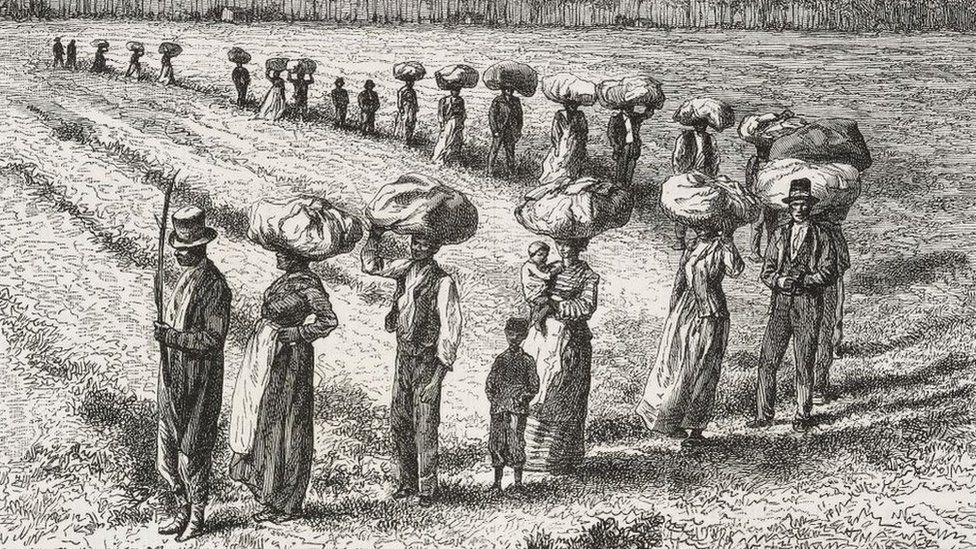
Now, let’s get a comparison point. In 1850, there were 3,204,313 slaves in the United States (this speaks to the importance of ensuring an accurate census). To be sure, there were slaves elsewhere in the world; however, the United States had the greatest number as defined above. The world’s population in 1850 was 1.171 billion persons. Taking the US slave number, we can estimate a rate of 270 slaves per 100,000 persons. I stress tat this is an undercount.
According to Kevin Bales, in Disposable People: New Slavery in the Global Economy, the number of slaves in the world today is estimated to be 27 million human beings. In 2010, the world’s population was estimated at 6.8 billion. Using these figures, we can calculate a rate of 390 slaves per 100,000 persons. Using these figures, the number of slaves in the world today is not only greater in total numbers than ever before, but also greater on a per capita rate basis that in times previous.
It is unfortunate that we don’t have a solid estimate for the world slave population in 1850. If we take a guess and estimate 5 million slaves in the world in 1850, we can calculate a rate of 426 slaves per 100,000 persons, which is greater than the present day rate. On the other hand, there are many slaves not counted in the 2010 figure.
There are at least 8 million prisoners in the world, most of who are in prison for nonviolent offenses, and many of them are forced to work. This form of slavery is called “penal slavery” and, in many places, including the United States, it is legal. If we include half of the world’s prisoners in our calculations, we produce a number of 456 slaves per 100,000 persons. Including just one-quarter of them in our calculations will result in a rate of 441 slaves per 100,000 persons.
A person is free to be racially prejudiced towards black people as long as that prejudice remains an idea only and is practiced privately. A white person can think and usually say what he wants to about black people. Of course, he has no right to be free of criticism for what he thinks or says. He has no right not to be called a bigot. But he has the right to express his opinions and views about black people without official negative sanction. If he wants to believe black and white people should not get married, then he can think and say this and only marry white women. If he doesn’t want to eat around black people, then he can sit in his kitchen with his white family and eat with them. This is his right. If he wants to use offensive language, he should be able to do so. Those who are offended by this utterance, have the right to criticize him for saying it. They, too, have free speech.
However, this racially prejudiced man does not have the right to expect to eat at a restaurant where he is guaranteed the absence of black people or where the restaurant creates an atmosphere where black people will be deterred from eating or working at his establishment. This man does not have the right to set up a business which is a place of public accommodation, such as a fast food restaurant, based on the white supremacist principles. A place of public accommodations must be free of racism, which is defined as racial prejudice in practice or effect. This is a matter of federal law.
The Federal Civil Rights Act of 1964 guarantees all people the right to “full and equal enjoyment of the goods, services, facilities, privileges, advantages, and accommodations of any place of public accommodation, without discrimination or segregation on the ground of race, color, religion, or national origin.” Full and equal enjoyment covers both the customer and the employee. If a white business owner where to utter white supremacist slogans in his place of public accommodations or compel his employees to listen to white supremacist propaganda, he would be in violation of federal law. He cannot create a racially hostile environment in a place of public accommodations.
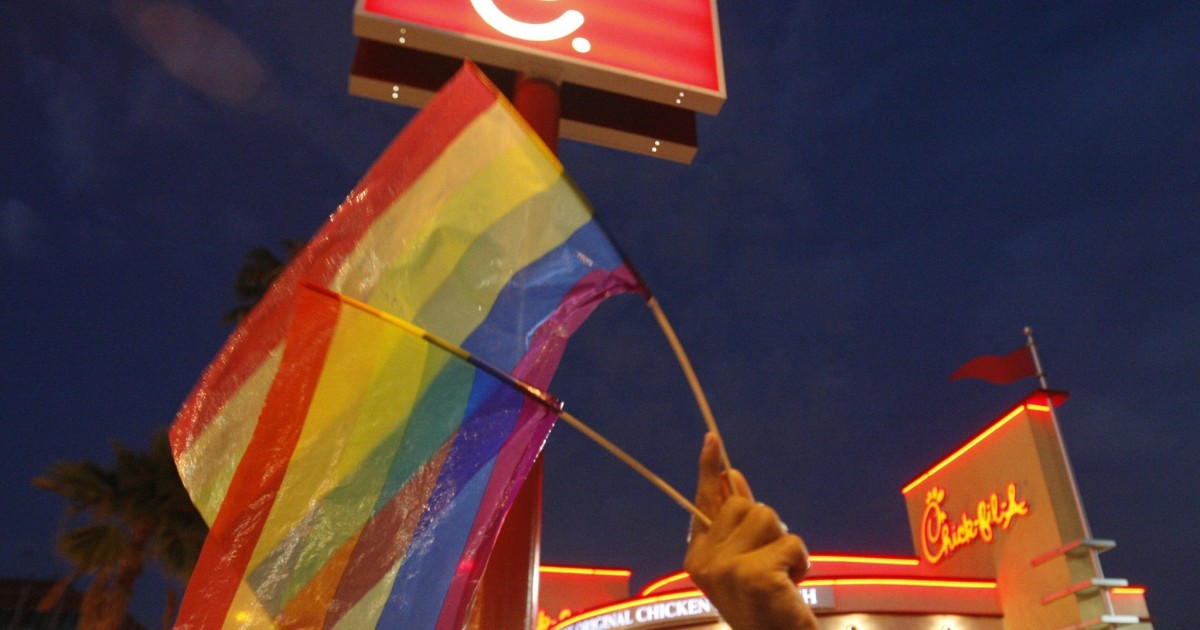
Chick-fil-A and Religious Persecution
You will notice that race and color are not the only items mentioned in the list of protected categories in the 1964 Civil Rights Act. Religion is also listed. Business owners cannot operate places of public accommodations that exclude customers or bar workers on the basis of religion. A business owner cannot terminate the employment of a mother on the grounds that, according to his religious beliefs, she should be at home with her children. A business owner cannot terminate the employment of a man on the grounds that, in her religion, it is wrong for him to be in a romantic relationship with another man. A business owner cannot tell a gay couple that they cannot have a private booth on account of the religious beliefs of the business owner. A business owner cannot stop expression of affection among gay couples but allow these for straight couples. A business owner cannot deny to an employee birth control in the health insurance provision of the benefits package of an employee because the business owner opposes birth control. A place of public accommodation cannot have any religious policies whatsoever, it cannot be a projection of the business owners religious values, and this includes the articulation of a religious policy, let alone an explicit admission that the business is organized upon biblical principles. Businesses of public accommodations cannot be based on Christian, Muslim, or Jewish principles any more than they can be based on white supremacist principles (and by extension male supremacist principles, for sex is a protected category, as well).
This is the part of the Chick-fil-A controversy that many liberals in the corporate news media—and of course all the conservative and self-styled “libertarian” voices we encounter—have missed. And this is the issue. The issue is not freedom of religion for the Christians running Chick-fil-A. It is a religion freedom issue for the customer and worker at Chick-fil-A. And it is not freedom speech issue. Those who defend Chick-fil-A, whether they know it or not, are buying into the pre-1964 logic of the American legal system, i.e., the logic of segregation based on suspect classifications, namely that policy based on principles of exclusivity are equivalent to principles based on inclusivity in the public sphere. This idea no longer underpins public law in America, at least it isn’t supposed to, because we as a people (at least we used to) recognize that this is discrimination and that discrimination is wrong. Denying a license of privilege to a place of public accommodations based on white supremacist principles is not discrimination. Nobody’s rights are violated when the government denies a license to such a business. On the contrary, it is permitting the existence of a business operating as a place of public accommodations explicitly based on white supremacist principles that is discriminatory, since such an establishment harms the rights of black customers and workers to be free of racial discrimination.
In the post-1964 world, if a business owner wishes to operate a business based on biblical principles, then he must convert his business into a private religious institution. His business can no longer be a place of public accommodations. Only in the sanctuary of a church is a group of the religiously devoted allowed to practice exclusivity based on their belief system. A Christian church doesn’t have to allow Muslims or create a welcoming environment for them. The same is true for a racially exclusive group, such as the Ku Klux Klan. A klavern doesn’t have to allow black members. It is not a place of public accommodations. It’s an exclusive club based on white supremacist principles. But if the KKK wants to open a place of public accommodations, it cannot be based on white supremacist principles. And, frankly, a community would be perfectly justified in denying the KKK a business license for a place of public accommodations in which the business owner stated that his business was going to based on white supremacist principles. And you know as well as I do that they would be able to do so without controversy. I can’t imagine any of the liberals presently defending Chick-fil-A defending a business owner who was a member of the KKK declaring that his business was operating on white supremacist principles. And with respect to religion, it’s not simply the demand of the Civil Rights Act of 1964. The right to be free from the religious prejudices of another in the context of the public sphere is enshrined in the First Amendment.
Here is what the right to religion entails: a Christian man is free to be religiously prejudiced towards non-Christian people as long as that prejudice remains an idea only and is practiced privately. A Christian can think and usually say what he wants to about non-Christians. Of course, he has no right to be free of criticism for what he thinks or says. He has no right not to be called a bigot. But he has the right to express his opinions and views about non-Christians without official negative sanction. If he wants to believe that Christians should not marry Jews, then he can think and say this and only marry Christian women. If he doesn’t want to eat around Muslims, then he can sit in his kitchen with his Christian family and eat with them. This is his right. If he wants to use offensive language to describe a Muslim person, he should be able to. I will defend his right to say this. But, again, those who are offended by this utterance, have the right to criticize him for saying it. They, too, have free speech. I will defend their right, as well.
In our society, a person is allowed to be religiously prejudiced in this way, but he is not allowed to operate a business that puts his prejudice into practice. Business owners are explicitly forbidden to run their businesses in a way that discriminates on the basis of race and religion. Nothing could state more clearly the republican and secular principle that underpins our representative democracy that businesses serve the interests of the community and that communities have no obligation to be subjected to harmful business actions than the existence of a law forbidding a business from discriminating against black people.
If you are a white business owner who doesn’t want to serve black people in his place of accommodations, you are not allowed to run such a business. It’s that simple. There is no suppression of your rights occurring when the state denies you a business license on the grounds that you explicitly operate your business based upon racial exclusion. It is no different for religion. You are not being punished for your views. You are being prevented from imposing your views on others.
It took this nation well more than a hundred and fifty years to realize in the law what has always been true in principle. We must not now go backwards to claim as a right what was really always a privilege.
Scalia can be an obnoxious clown, But is he also a shallow thinker? After listening to his interview on Fox News just now, I confess that I am unimpressed with his intellect. To be blunt about it, he seems kind of dimwitted. Yeah, I know, I’m not a Supreme Court justice, so what do I know. I’m just a criminology professor.
I do know this: Anybody who doesn’t see the fundamental right to privacy underpinning the Bill of Rights is pretending to be blind. Why would we have a right to be secure in our papers and effects if we have no right to privacy? Why are the police required to have a search warrant to search our homes if there is no right to privacy? This is one of those rare truly authentic self-evident truths.
It’s not just that the Fourth Amendment makes no sense if there is no right to privacy; it’s that the Fourth Amendment articulates the right to privacy and if you can’t see what is plainly before you, then you should be doing something else other than interpreting the Constitution. Here’s the text of the Fourth Amendment. “The right of the people to be secure in their persons, houses, papers, and effects, against unreasonable searches and seizures, shall not be violated, and no Warrants shall issue, but upon probable cause, supported by Oath or affirmation, and particularly describing the place to be searched, and the persons or things to be seized.”
The language here is not ambiguous. Privacy is generally defined the condition or state of freedom from being disturbed or observed by other people. It’s the state of being free from public attention. Since all rights are limited only by rational secular reason and due process…. You get the point. You aren’t knucklehead like Scalia.
Or, maybe Scalia isn’t a knucklehead but an opponent of the Fourth Amendment. Maybe he believes that our homes and effects should be open to any public scrutiny without limitation. We know he doesn’t believe in personal sovereignty, since his claim that we have no right to privacy occurred in the context of expressing a desire that the state force women to have babies. So he’s not stupid. He’s an authoritarian. Okay, maybe a stupid authoritarian.
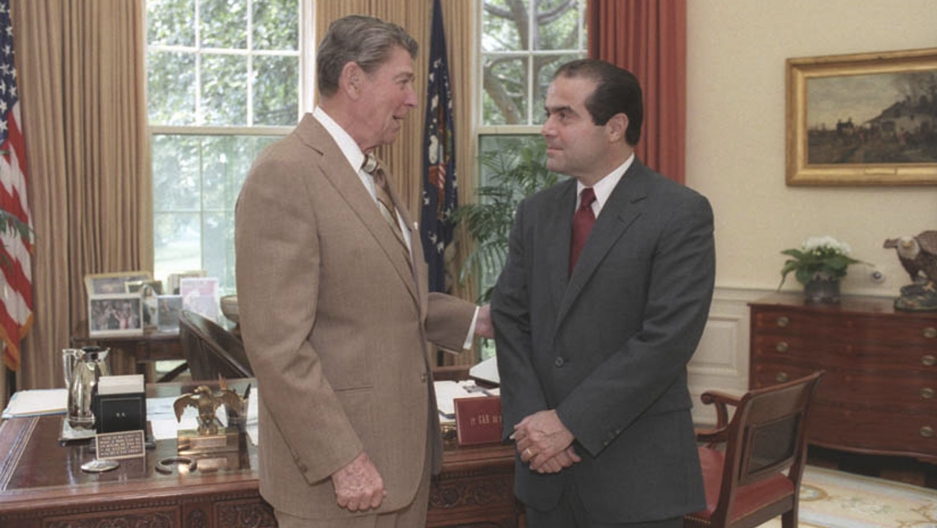
A younger Antonin Scalia meeting with then-President Ronald Reagan
Why don’t we have confirmation hearings in which the nominees either lay out their judicial philosophy in full or be excused from consideration? Why do we put up with this wish-washy bullshit of “I can’t answer that question because there are cases pending before the court of that nature.”
For the record, Scalia’s nomination met with no opposition from the Senate Judicial Committee. The full Senate only briefly debated Scalia’s nomination, then confirmed him 98–0. There were 46 Democratic senators in the Senate at the time. We’re told that the reason why we have to vote Democrat is the composition of the Supreme Court. So what happened there? Why not a single vote against Scalia?
“Family planning is absolutely fundamental to any hope of tackling poverty in our world,” UK’s prime minister David Cameron said.
What’s absolutely fundamental to tackling poverty in the world is the abolition of a global economic system, namely capitalism, that is rooted in the exploitation of human labor and the rape of the natural environment, and that results in the concentration of wealth in the hands of a handful of families.
The cause of poverty is not poor people or poor people having babies. The cause is capitalism. Capitalism systematically generates poor people. Ghettos, prisons, genocides, and wars are either designed or function to warehouse and eliminate poor people. This is population control. White western policymakers and their nonwhite colonial collaborators believe – and Cameron is not the only one who openly admits this – that they can reduce the problem of poverty, which disproportionately affects nonwhites, by reducing the number of poor nonwhites through aggressive population control policy.
I am committed to the right of women controlling their reproductive capacity. Indeed, some of my progressive friends see my position on a woman’s right to an abortion as radical (I believe in no term limitations). I am so steadfast in this advocacy because I see the right of women to control their bodies as fundamental to human freedom. This includes both the choice to not have children andthe choice to have children. If the government can force women to either have a child or not have a child, then the government has the power to use a human body for its own ends.
The same logic that underpins my support for women’s right to choose how their reproductive capacity shall be used is the same logic that underpins my criticism of the motive behind the aggressive population control advocated by western authorities. The motive should be made clear: it is a desire to reduce the victims of capitalism not by eliminating capitalism (or humanizing it) but by reducing the people capitalism victimizes. Peoples of the third world – as are nonwhite subpopulations in the capitalist core – are surplus labor pools that have become too large to be effectively managed, at least from a public relations perspective. Moreover, their labor will never be utilized. So they have become surplus population. With a certain proportion of the population held redundant and in reserve in order to keep downward pressure on wages, if the labor was needed, population control is not an issue.
What I want to see is women controlling their reproductive capacity in a free democratic system where this decision is made based on their interests, not based on the interests of white western elites. This can only happen under conditions of socialism. If we care about the welfare of families, this is where we will put our energies.
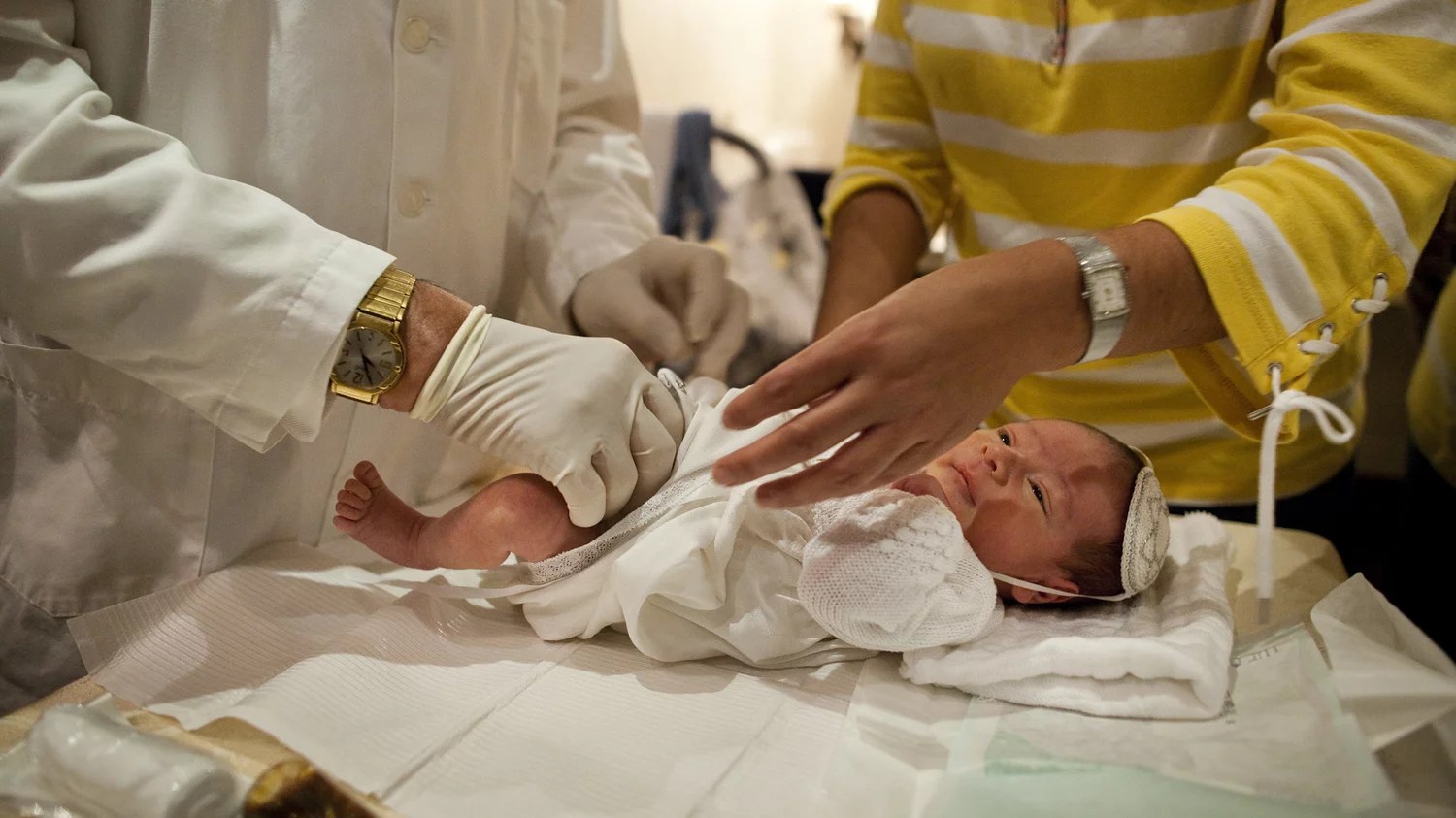
What I am about to tell you, I did not know about until today. My mind is blown. I thought I knew all there was to know about the horrors of religion. I was wrong.
Cultural relativism is one thing, but we have to draw the line somewhere. How about at the Orthodox Jewish practice of the mohel’s orally sucking the blood from the freshly mutilated genitals of male infants? Have you seen this scandal yet? It’s called “ritual circumcision with oral suction,” or in Hebrew, metzitzah b’peh. New York authorities are recommending that rabbis use a different technique after they discovered that several infants contracted neonatal herpes from the practice. Some babies were brain damaged. Two have died.
Turns out the government has known about this ritual for several years and has not moved to stop it. Public health authorities are responding by distributing pamphlets to educate the community. That’s nice. How about we criminalize the practice? Meanwhile, leaders in the Orthodox community have already said the practice is an important tradition, that it is healthy for the infants (I just watched a rabbi claim that saliva is an antiseptic), and that they will continue the ritual. They appeal to religious freedom.
Why are the authorities playing nice here? If we are going to have laws against adults performing fellatio on minors, then we ought not allow these laws to become muddled by religious exemption. Are we really going to say that it is wrong to suck an infant’s penis unless it is in the context of a religious ritual? Folks are okay with that? I don’t think so. At least they shouldn’t be. We need a clear and simple law: an adult man is not allowed to put his mouth on the genitals of an infant.
And while we’re at it, let’s once and for all outlaw the practice of mutilating the genitals of children, female and male. The sucking part just adds a layer of horror to the horror of genital mutilation. It’s 2012. It’s time for humanity to grow up and get serious about the problem of religion. You can believe anything you want in your head, but when you include children in your rituals, you have crossed the line. The state of New York needs to move now and ban this practice forever. Charges of anti-Semitism be damned. Do the right thing. Save these children from this perversion.
UPDATE: On September 13, 2012, the New York City Board of Health voted unanimously to require that parents sign an informed consent before metzitzah b’peh is performed. What about the infant’s right to informed consent?




 freedom and reason