What Motivated Sergeant Crowley? Authority and Crime Control in America

On Thursday, July 30, 2009, amid much media brouhaha, President Barack Obama sat down with Harvard professor Henry Louis Gates Jr., the head of Harvard’s W.E.B. Du Bois Institute for African and African American Research, and Cambridge police officer James Crowley for beers at the White House. The occasion was mediation of the controversy over an incident that occurred on July 16 while Gates and Crowley stood on the front porch of Gate’s residence in Harvard Square, an affluent area of Cambridge, Massachusetts adjacent to Harvard Yard, the heart of Harvard University.  Crowley, a decorated white police officer, arrested Gates, a black man, for disorderly conduct after the two of them had argued inside Gates’ home. 

The Cambridge Police Department dropped the charge on July 21, describing the arrest as “regrettable and unfortunate.”  But the race of the men and Gates’ status as a prominent black intellectual assured the story would not go away so easily.  The controversy was guaranteed a national audience when, during a July 22 prime-time press conference on health care, Obama characterized the Cambridge police as having “acted stupidly” in arresting Gates.  It was a moment of exceptional candor for a cautious president.  And he did not leave it there, either.  He raised the issue of racism in US society by noting that “separate and apart from [the Gates-Crowley] incident, …there’s long history in this country of African-Americans and Latinos being stopped by law enforcement disproportionately.”  A moment later he added that minorities were stopped by police “oftentimes for no cause.”  He presented that matter of race disproportionately as “a fact” that was, at least in his home state of Illinois, backed by “indisputable evidence.” 

From the Massachusetts state house, Deval Patrick, the first black governor of that state, lent more momentum to the racial aspect of the story by remarking that racial profiling is “every black man’s nightmare and a reality for black men.”  But it was Obama’s remarks that were deemed provocative by the media, so out of phase were they with the postracial themes he had stuck in the campaign and his presidency.  To be sure, Obama attempted to rhetorically distance the Gates-Crowley altercation from the larger problem of racial discrimination in policing practices (which begs the question of why he raised the issue in the first place).  But simply noting racial disproportionality in the criminal justice system, in juxtaposition to the Gates case or not, put Obama outside of the acceptable range of racial discourse he had himself established in making his bid for national prominence.

The following day, Robert Haas, the commissioner of the Cambridge police, held a press conference to defend his department against charges of racial bias and stupidity.  Noting that the department “takes its professional pride seriously,” Haas told the assembled reporters that Obama and Patrick had “deeply pained” the officers with their remarks.  He asserted that race did not motivate the arrest and that Crowley was not, as Gates had described him, a “rogue cop.”  Crowley was “a stellar member of this department,” Haas assured his audience, a committed professional who had followed all the proper procedures in arresting Gates.  Following Haas’ lead, the Massachusetts Municipal Police Coalition, flanked by a multiracial group of officers that included a stoic-looking Sergeant Crowley, held a press conference that Friday to express deep resentment over the remarks made by Obama and Patrick and to “reject any suggestion that in this or any other case they have allowed a person’s race to direct their activities.”  Expressing their opinion that the powers-that-be erred in dropping the charge against Gates, they called on the president and the governor to apologize to “all law enforcement personnel.”

The police press conferences, and a flurry of background stories on Crowley, proved to be highly effective in mobilizing the public against Obama’s criticisms.  The public was reminded that Crowley was the officer who had, sixteen years earlier, unsuccessfully attempted to resuscitate Reggie Lewis, an African-American basketball player who had collapsed during practice at Brandies University where Crowley was then a campus police officer.  Would a racist cop give a black man mouth-to-mouth resuscitation? Moreover, a black police chief had personally tapped Crowley to team teach, alongside a black officer, a criminal justice course on how to avoid racial profiling and other discriminatory policing practices.  Would a racist cop be allowed to teach a course on racial sensitivity?  Crowley’s defenders counted upon the popular understanding of racism as explicit anti-black antipathy.

The electronic media were rife with comments by indignant white citizens in Crowley’s defense.  Crowley did nothing wrong, the hue and cry went up.  Gates, a member of the privileged class, got what was coming to him.  Heplayed the “race card.”  Representative of the popular sentiment were comments posted on Facebook by Lee Landor, deputy press secretary to Manhattan borough president Scott M. Stringer, asserting that “the situation got ‘out of hand’ because Gates is a racist, not because the officer was DOING HIS JOB!”  An NBC/Wall Street Journal poll the day before the White House meeting confirmed what many suspected: only one in ten of those surveyed believed Crowley was at fault in the arrest.  Other polls found a plurality of Americans opining that Obama had mishandled the situation.  A slip in Obama’s popularity accompanied the controversy.[1]  Within the span of little more than a week, the booking of a Harvard professor on a public order charge by a Cambridge police officer had a United States president on the defensive.  

Obama interrupted White House Press Secretary Robert Gibbs’ press conference on July 24 to personally express regret for having given the impression that he “was maligning the Cambridge Police Department or Sergeant Crowley,” whom he described as an “outstanding police officer and a good man.”  He reported having just spoken with Crowley on the telephone.  Spreading responsibility for the misunderstanding evenly among the parties, Obama said, 

My hope is, is that as a consequence of this event this ends up being what’s called a “teachable moment,” where all of us instead of pumping up the volume spend a little more time listening to each other and try to focus on how we can generally improve relations between police officers and minority communities, and that instead of flinging accusations we can all be a little more reflective in terms of what we can do to contribute to more unity.

To punctuate the “teachable moment,” Obama told reporters that he had invited both men to attend the White House for beer.  The media quickly tagged the event “the Beer Summit.” 

The “Beer Summit” occurred on July 30.  The involved parties reported a productive and satisfying meeting.  Obama experienced a “friendly, thoughtful conversation.”  Crowley reported that he and Gates “agreed to disagree” and planned future meetings to learn more about one another. Gates remarked, “When he’s not arresting you, Sergeant Crowley is a really likable guy” (something one can say about most police officers in my experience).  Gates went further than the others in reflecting on the experience, publishing a statement in The Root, a daily online magazine on black perspectives that he edits, which read in part:

Sergeant Crowley and I, through an accident of time and place, have been cast together, inextricably, as characters – as metaphors, really – in a thousand narratives about race over which he and I have absolutely no control. Narratives about race are as old as the founding of this great Republic itself, but these new ones have unfolded precisely when Americans signaled to the world our country’s great progress by overcoming centuries of habit and fear, and electing an African American as President. It is incumbent upon Sergeant Crowley and me to utilize the great opportunity that fate has given us to foster greater sympathy among the American public for the daily perils of policing on the one hand, and for the genuine fears of racial profiling on the other hand.[2]

The excessive media focus on who said what at Gates’ house and Obama’s “acted stupidly” comment left neglected the problematic character of disorderly conduct as a crime control category and the full character of Crowley’s motivation in arresting Gates, specifically Crowley’s use of a public order offense to retaliate against Gates’ challenge to Crowley’s authority.  Moreover, the emerging media narrative effectively denied Gates’ claim that race motivated Crowley’s actions, whereas a review of the facts indicates that racism played a significant role in Gates’ arrest.  This essay examines central facts of the event, the terrain of social consciousness and social relations in the United States, and the character of policing and legal categories in capitalist society to demonstrate the continuing salience of race and class in shaping attitudes and behavior in US society. My main arguments are that racial thinking and authoritarianism embedded in the police officer’s working personality were the motive forces behind Crowley’s actions and that whites were collectively motivated to support Crowley because of widespread acceptance of white privilege and authoritarian modes of law enforcement.

My analysis of Crowley’s actions and popular support for them is informed by a general theory of social relations that explains consciousness as a function of a particular social structure and its attendant culture.  Scientific approaches to explaining social action are sorely lacking in popular accounts of the Gates’ arrest and public reaction to it. Mainstream opinion holds that, absent evidence of explicit race prejudice in Crowley’s past or present actions, such as an email disparaging blacks or racist remarks made during the course of the arrest of Gates, it is impossible to say whether racism motivated Crowley.  Because Gates said something about how black men are treated in America, it is possible to identify a racial motive on Gates’ part.  When it is suggested that his remark was in response to his perception of Crowley’s motivation, it is quickly objected that Gates could not know what was in Crowley’s mind.  In other words, a Harvard scholar of race and racism can not be expected to reasonably determine whether race was a factor in an arrest for which no legal basis existed. This appeal to the black box of subjectivity denies the possibility that Crowley’s actions areexplicable absent evidence of explicit race prejudice.  Racism does not necessarily depend on explicit race prejudice at all. Nor does scientific analysis of social action require an ability to read minds.

To begin with, it is a sociological truism that attitudes and beliefs emerge from the complex ways in which social relations are structured in a particular society.  At a concrete situational level, a person acts on the basis of her or his beliefs and perceptions, habits of the mind learned through a life-long process of socialization.  The process of becoming human provides ready-made and rather inflexible frames that individuals use to interpret situations, derive meaning, and select particular lines of conduct.   Because present society is objectively segmented by class, gender, and race, these cognitive frames are sociologically relative. Furthermore, individuals belong to multiple groups simultaneously; thus social categories intersect to divide groups in ways that fragment consciousness.  For example, working class whites in both slave and post-slave systems of racial separation acted, to their detriment, to preserve social arrangements that benefitted those who exploited white labor.  As a consequence of social division, members of various groups approach the world with, and interpret interactions within, different and often contradictory cognitive frameworks.

Popular perceptions of criminality are shaped by the class and race segmentation of US society and by the character of the criminal justice system.  Their history rooted in white supremacy, members of the majority are socialized to see people as constituting different racial types with variable attendant behavioral dispositions.  One of the enduring assumptions about blacks is that they are predisposed, either by biology or, more commonly these days, by culture to criminal perpetration. This assumption is reinforced by racial disproportionalities in arrest, conviction, and incarceration statistics, popularly believed to be objective metrics of criminality. Overrepresentation of blacks in criminal offending is received as evidence of racial differences in criminal proclivities, which in turn explain black overrepresentation in crime.  What emerges in popular consciousness is a “reality” of black criminality.

This “reality” of black criminality is as dramatic as it is false.  According to police statistics, one third of all property crimes and half of all violent crimes are perpetrated by black men, who represent around six percent of the US population.  Furthermore, the arrest, conviction, and incarceration rates for drug offenses are much higher for blacks than for whites.  However, criminal justice statistics are not measures of criminal offending, but instead are measures of arrests, convictions, and commitments to prisons – that is, they are measures of criminal justice actions.  It is not that those ensnared by the system do not perpetrate the acts for which they are arrested, convicted, and incarcerated; it is instead the case that most criminal offenders are never arrested, convicted, or sent to prison.  Perpetrators who do not become official statistics are disproportionately white and affluent.  

The falsity of the popular image of crime in America and the reality of a systematic bias in policing the behavior of the poor and minority are well know to those who have examined the matter.  A few examples will suffice to illustrate the problem.  Most crime in US society is property crime. Conservative estimates of the annual price tag for white collar crime run in the neighborhood of 200 billion dollars.   In contrast, the cost of street crime is around 20 billion dollars annually.  Yet, despite the fact that affluent whites are overrepresented in white collar crime, various government statistics consistently show that around seventy percent of prisoners are functionally illiterate, sixty-five percent of prisoners did not graduate high school, and two-thirds of prisoners were either not working or earning poverty wages at the time they were arrested for the crime that sent them to prison.  This disparity between criminal justice statistics and other measures of crime exists for violent crime, as well. Whereas more than half of all those arrested for violent crime are black, according to the Uniform Crime Report (data produced by police departments), the National Crime Victimization Survey, a scientific survey of crime victims, finds that only one-quarter of violent offenders are perceived to be black, a figure likely inflated by popular perceptions of black criminality.  Moreover, corporate violence, criminal acts that are responsible for more death and injury every year than street violence, escapes victimization surveys.  

One more example before moving on.  Although scientific surveys consistently find that blacks are no more likely to use illegal drugs than are whites, blacks nonetheless represent one third of arrests, one-half of all convictions, and approximately three-quarters of all those sent to prison for drugs.  In Green Bay, Wisconsin, for example, the city where I am employed as a criminologist, blacks are sixteen times more likely to have been arrested for drugs than whites.  Local politicians use drug arrest statistics to turn white citizens of the city against black migrants, as well as Mexican immigrants.  Twice I have become embroiled in controversy by responding to journalists’ queries concerning the matter.  My argument that arrest statistics serve no useful purpose in determining who is using drugs in the city and, furthermore, that, if Green Bay is like every other city in the country, the statistics demonstrate that the police target minorities for drug control, has infuriated police officials and white residents.  (At a meeting concerning law enforcement internships for my students, the police chief told me that a photograph of me serves as his dart board.)

Explaining the consciousness that lies in back of racial profiling depends in part on the observation that police officers are part of society and thus share in the assumption of black criminality.  Racial profiling is an expression of a deep-seated racial consciousness.  Moreover, police share with the public an ignorance of the consequence of policing. Like the public, police officers perceive black overrepresentation in crime not as a consequence of crime control policy, but as the consequence of individual decisions made by those whom they control.  The function of crime control reinforces the belief that the presence of blacks indicates criminality, which consequently subjects blacks to greater scrutiny by civilians and law enforcement personnel alike.  Thus the inherent character of crime control in America operates to amplify and entrench racist assumptions about blacks among those enforcing the law. My conversations with police officers almost invariable end in them telling me I am wrong about the character of crime in America because they confront criminals every day and, as inconvenient as reality is for my arguments, blacks (and Latinos) are more likely to be criminals than are whites.  It is “just a fact,” they assert before ending the conversation.

Police officers often display a stubborn ideological commitment to false beliefs that justify their policies.  For example, proponents of the “broken windows” thesis, an argument first presented by James Q. Wilson and George L. Kelling in the March 1982 edition of The Atlantic Monthly, that aimed at lending scientific rigor to the popular notion that effective crime control begins with hassling poor people over petty infractions (such as cars on blocks, overgrown lawns, and torn window screens), have been undeterred by the fact that, not only has the thesis has been thoroughly debunked, but it never had genuine empirical support to begin with.[3]  Because the “broken windows” thesis justifies the strategy of community policing, which legitimates the constant presence of police in those communities believed to be most crime ridden, evidence demonstrating that other approaches are much more effective, simply doesn’t become a determining factor in policymaking. Instead, a popular opinion, one that advocates coercive control of poor people for the conditions systematically generated by poverty, a force largely beyond the control of the people affected by it, guides policymaking at a departmental level.  

Furthermore, the average police officer is relatively non-conscious of the racialized framework that guides his actions.  Racial frames are deep-seated behavioral patterns which individuals must strive to recognize and understand. Without critical self-reflection, people think what they are conditioned to think.  If a police officers believes black men are more likely to be criminal, then that officer is more likely to think of black men when a possible crime is reported.  This is true for the white majority, but the problem is especially acute among police officers because they operate on the basis of a short list of typifications. Overt expressions of racism among police officers very rarely surface in mass e-mails such as the one Boston police officer Justin Barrett recently mass distributed stating that had he “been the officer [Gates] verbally assaulted like a banana-eating jungle monkey, I would have sprayed him in the face with OC [a.k.a. pepper spray] deserving of his belligerent non-compliance.” (Barrett, who denies being a racist, appeared confused by his choice of words.  When asked their origin, his response was “I don’t know. I couldn’t tell you. I have no idea.”) Racial thinking and practices are woven into the fabric of US society.   

As the same time, I do not want to leave the impression that explicit anti-black prejudice is not a significant part of the police officer’s experience.  Larry Ellison, a Boston detective and president of the Massachusetts Association of Minority Law Enforcement Officers, told the Boston Globe that the Barrett email reflects “a subtly racist culture that permeates the department.” He identified several incidents occurring in 2008 that demonstrates a significant level of racial consciousness among whites, among them a white officer urinating the water bottle of a black female office and another officer posting an article titled “Slavery: Best Thing that Ever Happened to Blacks.”  (Based on character of the incidents, one might well quibble with Ellison’s choice of the word “subtle.”)  “This is not an isolated incident,’’ Ellison said of the e-mail.[4]  The point is that the psychological piece of racism is for the most part a deep-seated cognitive frame which oftentimes denies its own racist attitude.

Institutional commitments cut across social categories to further fragment consciousness and narrow cognitive frames and this lies at the heart of the police mentality that motivates action.  Because the criminal justice system is organized to protect the interests of the wealthier classes (those who own significant property), police officers, black and white, identify with the interests of affluent whites, even though the officers themselves remain members of the working class. Police officers do not write the laws that maintain the status quo, laws that are imposed on, and place them in an antagonistic position to, members of their own social class.  The duty of the police officer is to enforce the laws whatever their social function.  That police consciousness is largely symmetrical with the social function of those laws is a testament to the power of institutions in shaping the lives of individuals within them; racial and institutional commitments bind police tightly to the logic of prevailing power over against their class interests.  This reality provides affluent whites with relative immunity to coercive control.

Finally, there is the unique of police officers.  Like members of other groups organized by near total institutions (military, corrections, etc.), police officers interpret the world within a particular framework of assumptions.  The intersection of danger and authority in the role of police officer engenders a distinctive worldview.[5]  Because its purpose is to coercively control behavior, policing is inherently confrontational.  Confrontation breeds uncertainty.  For survival, the police officer becomes suspicious of the behavior and motives of those with whom he interacts.  Authority is a means of reducing his insecurity.  The oppositional role in which the officer is placed also functions to increase social isolation.  The officer depends on his comrades for physical and emotional support.  Dependency enhances in-group cohesion and solidarity.  

These factors produce an authoritarian working personality and a fierce loyalty among those who collectively believe their institution defends what has come to be called the “thin blue line,” a term that simultaneously denotes the fraternal sense of the profession and the (historically-contradicted) belief that, without police presence, the world would descend into chaos. The officer’s world is built around the notion that the tendency of social reality is towards disorder and that preventing this undesirable outcome depends upon the unquestioned authority of law enforcement and state monopolization of the means of violence. 

Sergeant Leon K. Lashley illustrated an aspect of the “thin blue line” in an email sent to Crowley on the day of the White House event. The letter expressed dismay over the Lashley’s perception that some in the black community were considering Lashley an “Uncle Tom” who “betrayed his heritage” for “coming to the defense of a friend and colleague.”  Lashley, who was at the scene of the arrest, had publicly stated that he believed Gates was responsible for what occurred.  However, from Lashley’s point of view, Gates was responsible for a lot more.  “Mr. Gates’ actions may have caused grave and potentially irreparable harm to the struggle for racial harmony in this country and perhaps throughout the world.”  That a complaint of racial profiling against one of his colleagues would be perceived as a potential threat to global race relations represents the distorting effects of the role in question.  Finally, seeking to include himself among the damaged parties, he concluded his letter by asking Crowley to ask Gates to consider how he might “mitigate the damage done to the reputations of two respected Police Officers.”  Because authority is so central to the role of policing, questioning the application of force is damaging to a police officer’s perceived integrity.

A careful review of the facts exposes the racial frame with which Crowley was operating on July 16, and illustrates the tendency among police officers to coerce respect from civilians who appear to be challenging their authority. While some specific facts are disputed, a clear narrative emerges once one jettisons the argument that Gates was partially to blame and focuses on what all accounts share in common.  That Gates bears no responsibility for Crowley’s actions is demonstrated by noting three recognized facts.  First, officials dropped the charge of disorderly conduct because it was not a valid case.  Second, Gates’ utterances in the officer’s presence represent constitutionally-protected speech. Third, Crowley has a professional obligation to resist acting on the basis of personal interests – that is responding to what he perceived as insults.  Much of the police report was taken up by claims Crowley made about what Gates said, and much of the media discussion was about whether Gates really said those things, as if whatever Gates said justified Crowley’s actions.  The narrative stripped of recriminations indicates that Crowley was not, as he and his supporters claim, “just doing his job.”

Gates returned home from a trip to China on July 16 to find the front door to his Harvard Square home broken and stuck.  The driver who delivered Gates forced open the door. Two women witnessed this and one of them, Lucia Whalen, called the police to report seeing two men with suitcases attempting to enter Gates’ residence.  Police were dispatched to the scene.  Sergeant Crowley, who was working alone, was the first to respond.  In the meantime, the driver carried Gates’ luggage into the house and left.  Gates was on the phone reporting the broken door to the Harvard real estate office when Sergeant Crowley appeared on his front porch.  Crowley asked Gates to step outside.  Gates asked the cop to state his purpose.  Crowley told him that he was investigating a 911 call about a possible breaking and entering.  Gates informed the officer that he was a Harvard professor and that this was his residence.  Crowley asked him to prove it.  Gates went to his kitchen to retrieve his wallet with identification.  Without permission, Crowley followed Gates to the kitchen. In the kitchen, Gates presented the officer with his Harvard ID and his driver license.  The police officer questioned Gates about who else might be in the house.  Gates refused to answer any more questions and instead demanded to know the officer’s name and badge number so that he could file a complaint.  The officer turned away from Gates and walked towards the front door telling Gates that he would speak with him outside.  Gates pursued the officer, demanding the information. Following Crowley out of the front door onto the porch, Gates asked one of Crowley’s colleagues for the information.  Crowley then arrested Gates for disorderly conduct, which Massachusetts law reckons as a disturbance that creates a public hazard and serves no legitimate purpose. 

Gates had apparently not realized he was being set up for an arrest for disorderly conduct.  Constitutional limitations to disorderly conduct place a crucial condition on its administration, namely that for the charge to be triggered the speech or behavior in question must occur in a public place where it may be alleged that others are disturbed by it sufficient to create a danger to public order. Courts have determined that a man cannot be arrested for disorderly conduct in his own home.  Crowley needed Gates to come outside so that he could be arrested for “continued tumultuous behavior outside the residence, in view of the public.” Gates’ front porch was public enough for Crowley. Gates’ only real mistake that day was falling for a trap set by a seasoned police officer.  

Crowley’s police report states that Gates was “observed exhibiting loud and tumultuous behavior, in a public space, directed at a uniformed police officer who was present investigating a report of a crime in progress.  These actions on the behalf of Gates served no legitimate purpose and caused citizens passing by this location to stop and take notice while appearing surprised and alarmed.”

The problematic details of this charge have received no systematic discussion from the major media treatments, which in part explains why the public is supportive of Crowley (assuming a significant portion of the public has an appreciation for the rule of law).  First, Crowley was not investigating a crime in progress at the moment he arrested Gates.  Once Crowley had identified Gates as the resident, Crowley knew no crime had occurred. Indeed, well before the point Crowley arrested Gates, Crowley was certain no crime had taken place. Second, Crowley’s characterization of Gate’s behavior as having no legitimate purpose is belied by the simple fact that Gates’ was speaking with a clear purpose: he was demanding Gates’ name and badge number in order to lodge a formal complaint against Crowley, as well as claiming that Crowley’s treatment of him was racially discriminatory. Crowley abused his power in suppressing Gates’ free speech rights.  Moreover, in an assault on Gates’ human dignity, Crowley violently suppressed Gates’ emotional expression of anger. Finally, the presence of civilians in the area, even when surprised and alarmed, does not constitute a public hazard. Nobody reports hearing Gates exhorting civilians to attack police officers or otherwise endanger persons or property. Of course the bystanders appeared “surprised and alarmed” by what they were seeing. This is a natural reaction to such an event.  It stands to reason that they were wondering, “What is happening to Professor Gates?”

In his official statement, which would have been used in any criminal proceedings had the charges been carried forward, Crowley wrote that Lucia Whalen reported seeing two blackmen breaking into Gates’ house. But, according to Whalen, who had to come forward because Crowley’s police report made her appear racist, she did not report seeing two “black men.”  Even when pressed by the operator, she refused to speculate on the race or the ethnicity of the men she saw except to say that one of them may be Hispanic. Whalen insisted on the release of the tape of the 911 call to confirm her version of the phone call.  Crowley, hearing men breaking into a house, heard black men.  He racialized the event and involuntarily enlisted Whalen in a project to legitimize his actions, an act that has harmed her reputation and caused her much grief.

Crowley reports that Whalen told him that the “wearing backpacks.”  But she actually said that they had suitcases.  The 911 operator understood her.  “What do the suitcases have to do with anything?” he asked her sarcastically. The interpretation that suitcases on the front porch indicated that the residents were returning from somewhere or perhaps had locked themselves out of the house on their way to somewhere apparently never occurred to the 911 operator.  But it did to Whalen, who told the 911 operator that she didn’t know whether the men lived there but were having trouble with their key or they were breaking and entering.  Whalen was leaning towards what we now know was the correct interpretation based on the evidence, namely that these men were returning from a trip. Crowley heard crime in progress by black men wearing backpacks.

The information Crowley was receiving was garbled by the racial framework in which he was operating.  Crowley interpreted his interactions with Gates within that same framework.  Why wouldn’t Gates step outside when asked?  As 5’7, 150 lbs, supported by a cane and coughing due to a bronchial infection, Gates didn’t look like a burglar, Crowley later remarked.  But Crowley states that he found Gates’ behavior strange for a person who supposedly lived at this residence.  Why would he be uncooperative if he was really the homeowner?  Gates told him he was a Harvard professor. Even though Gates was looking at an aged disabled man using a phone in his own house, Gates couldn’t draw the obvious conclusion.  He demanded proof of Gate’s identification.  Gates gave him proof, in his own kitchen, the officer towering above him, but Crowley still couldn’t get out of the momentum of his cognitive train, now clearly off the rails. Nor could he resist the authoritarian bent that comes with the police mentality, the product of socialization in a near total institution, one that teaches cops to be suspicious and confrontational. When Crowley says he asked Gates if there was another person in the house, he said, “I wasn’t expecting his response, which was ‘That’s none of your business.’ To me that’s a strange response for somebody that has nothing to hide.” From this standpoint, only people with something to hide are uncooperative.  It couldn’t be Gates’ healthy skepticism of state authority that caused him to refuse to answer the question.  This was the behavior of a person guilty of something.  When Gates inverted the presumed status relationship and asked for Crowley’s name and badge number, Crowley reached the limit of his patience. How could this man demand his name and badge number?  Gates’ fate was decided then and there.  He was going to be arrested.

The framework of Crowley’s thinking processed the information and found Gates guilty of two intersecting offenses: “contempt of cop” and flipping the roles of the understood racial hierarchy.  Crowley was not only a police officer, which demanded Gates’ respect, but Crowley was white and Gates was not.  It heightened the response to Gates’ failure to show the officer proper respect (his “belligerent noncompliance”) that the respect Crowley expected was rooted in presumed racial status difference.  It is tacitly assumed by many whites, which in part explains the overwhelming support Crowley enjoys among the white public, that the proper disposition of a black man with respect to authority is one of genuflection.  For a black man – especially one of higher status – to disrespect an armed representative of the establishment is a particularly egregious act, one that deserves arrest and detention even when no law has been broken. For Gates did in fact break a rule: he transgressed the racial status quo.

For a criminologist who has spent years researching and speaking on the issue of racism in criminal justice, it was satisfying to hear the president of the United States use the bully pulpit to remind Americans of racial disproportionately of minority arrests by law enforcement.  However, as I have argued, the problem of racial discrimination in the criminal justice system is not the whole story.  Another piece to this story concerns the problematic crime categories developed in capitalist society and their function in maintaining the status quo and in reinforcing the perception among the masses that crime is primarily a problem of what Karl Marx derisively referred to as the lumpenproletariator what is called in modern parlance the “underclass.”  Disorderly conduct belongs to that class of “crimes” that emerged with capitalism that includes “vagrancy” (having no established residence or lawful or visible means of support) and “loitering” (remaining in an area for no obvious purpose). These are crimes classified as “public order” offenses and often carry serious penalties, including substantial fines and jail time.  Gates was not simply wrongly subjected to the crime of disorderly conduct.  He was wrongly subjected to a crime that probably ought not to be a crime at all and certainly ought not to be administered in the manner in which it is in cases like his.

Public order offenses are not really criminal acts according to any reasonable trans-historical definition of crime. The historically-constant moral and legal definition of crime requires the material fact of acts of force or fraud that cause or threaten to cause demonstrable and significant emotional, financial, or physical harm to other persons.  It is crucial that those whose interests are protected by real criminal categories are able to demonstrate reasonably-accepted emotional, financial, or physical harm.  Being irritated or offended by a person’s behavior or existential state does not rise to the level of significant harm.  Behavior which a particular individual believes is harmful, but which reasonable persons do not, is not a criminal offense.

Nonetheless, throughout time, for various reasons, categories of crime have appeared that do not fit this reasonable definition.  In theocracies, thought and behavior challenging the accepted character of the universe have been criminalized (Galileo was famously placed under house arrest for insisting that the earth went around the sun).  Compulsory heterosexuality has found its way into the criminal law.  Authorities have criminalized the consumption of various substances, such as the smoking of certain plants (such as marijuana) or the drinking of fermented organic matter (such as vodka).  Selling sexual services is a criminal offense in many societies. And those who have been enslaved are subject to rules that do not apply to those who have enslaved them.  There are many more examples of criminal acts that do not fit a trans-historical harm-based definition but which reflect the time-bounded norms of a particular society, norms constructed and enforced by the powerful of that society against those who annoy or challenge them.  It will suffice to have the reader note that in none of the so-called “crimes” I have listed can an appeal be made to reasonably-accepted emotional, financial, or physical harm to other persons. Rather, these are crimes designed to control behavior some group of moral entrepreneurs do not appreciate. It will also do to remind the reader that, in a free society, a person is at liberty to emotionally, financially, or physically harm him or herself. 

So what is the purpose of the crime category disorderly conduct if it is not to control actual criminal behavior?  One function is a rule permitting the arbitrary control of undesirable persons by providing authorized government agents (that’s the police and prosecutors in modern society) with broad, almost-infinitely flexible category with which to justify arbitrary arrest and detention. Individuals charged with such crimes are subject to the will or judgment of police officers regarding the appropriateness of their behavior or their existential states.  The defendant’s fate in the moment is contingent solely upon the police officer’s discretion independent of reasonable claim of harm to others.  

From the police officer’s point of view – and discourse following the Gates arrest has made it clear that a large proportion of the population agrees with this viewpoint – the proper disposition of the average citizen with respect to police officers is to be servile obedient and respectful to their authority.  This unofficial requirement of citizens was well illustrated in the wake of the Gates arrest by the high-profile arrest of attorney Pepin Tuma for disorderly conduct for having uttered in the presence of Washington DC police officers “I hate the police.”  Tuma said this in the context of a conversation he was having with some other persons concerning the tendency of the police to act overly aggressively when they perceive they are being disrespected, which Tuma surmised was the essence of the Gates case.  

It is quite likely that Tuma’s case, like the Gates charge, will be dropped.  But the damage was done.  The cop was able physically coerce Tuma into shackles, force him into the back of a car, and take him to jail.  Tuma was fingerprinted, booked, and compelled to open his wallet.  He will now have an arrest on his record that he will have to explain away and there will be attorney fees he will have to pay (although as an attorney he may represent himself).  The punishment of disorderly conduct is the arrest itself.  The purpose in such cases is to intimidate those who would challenge the authority of the police; a thought crime carried out in a less than lawful manner in which the only reprimand the arrest officer may experience for using physical force to oppress a citizen is a dropped charge. 

The broader function of disorderly conduct, along with other crimes in this category, is designed to coercively control the so-called “dangerous classes.” The Massachusetts’ law in question is Chapter 272. Crimes against Chastity, Morality, Decency, and Good Order. Section 53.  The statute number is identified in Crowley’s police report.  The statute reads: “Common night walkers, common street walkers, both male and female, common railers and brawlers, persons who with offensive and disorderly acts or language accost or annoy persons of the opposite sex, lewd, wanton and lascivious persons in speech or behavior, idle and disorderly persons, disturbers of the peace, keepers of noisy and disorderly houses, and persons guilty of indecent exposure may be punished by imprisonment in a jail or house of correction for not more than six months, or by a fine of not more than two hundred dollars, or by both such fine and imprisonment.”

The language of the statute tells us a lot about the function of the law.  The law does not apply to the existential states of those who reside in Harvard Square, only to those who are out of place in Harvard Square, and, more importantly, to those who live in low-income neighborhoods or who are from low-income neighborhoods.  Gates, being a black man, was assumed to be from the dangerous class the law is designed to control, and the qualities described in the law were imputed to him. Because of the overrepresentation of blacks among the so-called underclass, blacks everywhere are assumed to be ofthe underclass and therefore subject to controls designed forthe underclass. In the end, it almost always comes back to either class or race (or both).

The intersection of race and class plays out in variable ways given context.  The application of the law of disorderly conduct against a member of the Cambridge elite would have been surprising if Gates had been white. If one checks the records, I expect one will not find a single instance of a man having been arrested on his front porch for disorderly conduct in Harvard Square.  Even if one were to find an instance here or there, they will hardly make up for the volume of arrests for disorderly conduct that occur in lower-income neighborhoods.  The reason for this is that Cambridge elite simply hasn’t had very many members of the dangerous classes legally residing among them.  The uniqueness of Gates’ experience is was that he was black, and, as a black man, was out of place.  

With almost two and a half million prisoners, several million more citizens under some form of correctional control, and several states actively employing the death penalty, the United States has, over the past several decades, become, compared to societies most like it, extraordinarily authoritarian and punitive.  In 1970, there were fewer than 200,000 prisoners. Current levels of incarceration represent an eleven-fold increase in prison population, a pace of prison population that far outstrips the population increase during the same time frame.  No nation in history has locked up such a large proportion of its population.  The specter of the gulag, a mainstay in the art of anti-communist propaganda, now haunts the United States.  

The decades-long war on crime, led by the drug war, has been effected by aggressive police action enabled by criminal laws and sentencing mandates that stand with the most draconian in the world.  In this system, the police are given a level of power they do not enjoy in Canada or many European countries, despite the United States possessing arguably the most individualistic bill of rights in the world. The erosion of liberty has not, as one might expect, provoked a mass uprising against the American gulag system. On the contrary, the existence of the prison-industrial complex and its supporting ideology spreads the fear necessary to justify its own existence.  The criminal justice professional is a hero in a virtuous profession.  Popular support for the behavior of white police officers issues from the authoritarian sentiment entrenched by criminal justice policy and reinforced by America’s racist culture depicting nonwhites as a threat to the order of things. 

The rising tide of authoritarianism has proven devastating for black Americans.  Accompanying the increase in emphasis of crime control measures has been a dramatic rise in racial disproportionality.  By the end of the 1960s, whites represented around two-thirds of prisoners.  Today, whites represent around one-third of prisoners.  Government statistics show that approximately one out of ten black men aged 20-34 has served time in prison, whereas only about two percent of white men in this category have served any time in prison. Roughly one third of black men will spend time in prison sometime during their lives.  

As dramatic as these facts are, they are not surprising; an increase in the number of minorities processed through the criminal justice system is the predictable consequence of a war on crime and drugs in a society with sharp racial disparities.  However, the public and the police do not perceive racially discriminatory public policy as such, but rather draw the false conclusion that blacks are overrepresented in crime, and, moreover, that overrepresentation in crime is yet another poor choice that black persons, informed by a dysfunctional racial culture, have made. Thus the authoritarian and racist sentiments that lie behind the policy of crime control and mass incarceration are reinforced by the function of the institution of criminal justice in producing racial disproportionality in, for example, arrests, erroneously assumed to be a metric of criminality.

Black overrepresentation in arrests is the consequence of three facts about US society that have little to do with actual black over-involvement in crime.  First, the targeting of poor neighborhoods by police is inherent in the class control emphasis of law enforcement in a capitalist society.  The institution of policing in the United States emerged from the need to manage capitalism’s discontents.  Not only was there a historic shift in emphasis in the criminal law towards the protection of private property in the transition from feudal to capitalist mode of production, but public order crime categories, which target perceived members of the working poor and industrial reserve, proliferated.  Second, as a consequence of patterns of occupational and residential segregation and institutional discrimination, which systematically advantage whites and disadvantage blacks in wealth accumulation, blacks are overrepresented among poor people.  The overrepresentation of blacks in the lower income neighborhoods targeted by police exposes blacks disproportionally to coercive control as a matter of course. Third, police target blacks because officers, for all of the reasons covered in this article, believe blacks are more likely to involved in criminal activity.  The public either supports or denies racial profiling because, like the police, they also believe blacks are more likely to be criminal.

The threat that crime control policy portends for the larger democratic project are ominous.  Acceptance of authoritarianism has become commonplace in American culture and political rhetoric, where police officers are routinely portrayed as heroes and rarely as public servants employed by the taxpayer subject to strict rules of due process.  Police dramas on television consistently represent the police as noble and virtuous defenders of the public interest tragically hobbled by rules designed by social liberals that excuse and coddle criminals.  The police are depicted guarding a wall between the “real American” and his domestic enemy, and the public very much want the police on that wall. 

Fear and insecurity, generated by the media focus on crime and violence, reinforce a popular mentality that reflexively sides with the police.  A popular defense of actions such as those taken by Crowley against Gates is that if any member of society, no matter his status, is allowed to challenge the authority of the police, then this will send a signal to the gangs and drug lords that it is okay for them, too, to disrespect law enforcement. Between two competing models of criminal justice – due process versus crime control – the public has come to supports the latter over the former.  Public opinion is more in line with the sentiments of Harvard professor Ruth Wisse, who writes in an open letter condemning Gates’ behavior that she “would not like to see the authority of our police diminished,” than it is with Harvard professor Henry Louis Gates Jr. and his skepticism of police power.  

All this goes to the question of Crowley’s actions and the public’s response to them. Crowley’s racial motivation is revealed by his actions and his police report.  The 911 caller reported two men with suitcases trying to enter a house in Harvard Square.  She speculated that they were locked out of their residence and therefore was unsure that anything wrong was happening.  Crowley heard two black men with backpacks in the act of criminal perpetration.  Confronted by the sight of a black man using a telephone in the house, Crowley had difficulty believing the man was the legal resident.  Not only did he have black criminal on his mind, but a black man living in Harvard Square did not square with Crowley’s racial expectations. For the same reasons, he had trouble believing the man was Henry Louis Gates Jr., Harvard professor.  Upon receiving clear proof of the man’s identity, Crowley became enraged by his perception that Gates, a black man, was challenging the authority of the officer.  

From Crowley’s perspective, Gates was acting, with his skepticism of police authority and his suggestion that race had something to do with Gates’ behavior, cast against the uniqueness of a man of his race in a social position usually occupied by whites, as the proverbial “uppity”  black man.  This complaint has been expressed by many whites, as well.  Moreover, Crowley, who prided himself on teaching a class on racial sensitivity, was enraged that Gates would suggest that he, Crowley, was acting on a racial motive.   The police as an organization (clearly in evidence at the press conferences) strive very hard to deny racism among their ranks and, power and coercion being the tools Crowley had at his disposal, and faced with somebody possessing a prodigious mind, he used them as rebuttal to Gates’ verbal argument concerning racial profiling.  Gates used the charge of disorderly conduct which exists as a resource for police to use to arrest individuals who trouble them when no crime has occurs.  Thus a law designed to control poor people, was used to control Gates.  Gates blackness, no matter his class status, or perhaps because of it, made him unworthy of expressing his opinion.

Finally, a word must be said about the larger political context.  For the rising tide of authoritarianism put Obama on the defensive over his observation of racial discrimination in criminal justice and the stupidity of Crowley’s actions in arresting a man for expressing himself in a constitutionally-protected manner on his own front porch.  Moreover, the reaction to Obama’s July 22 remarks is revealing of the character of a new racism that has emerged in US society, a form of racism that entrenches itself by demanding that public dialogue eschew racial categories, a discourse reigned in by the rhetoric of “colorblindness.”  

The character of the new racism is fueled by what has been called “postracialism,” and its function is the dissimulation of racial inequity and power.  This paradigm seeks to “solve” in rhetoric what has not been solved through action and policy: actual racial equality.  The proponents of postracialism prefer to extol the virtues of racial harmony over the struggle for racial justice.  As such, postracialism, eagerly embraced by the majority and influential opinion makers, has become highly effective in preventing intelligent discourse concerning racism in US society, as well as permitting the denial of continuing racism in America.  The postracial project is a campaign to dissimulate white racial power in America while at the same time making white culture the cultural normal.  This lies at the heart of Wisse’s demand that Crowley should have “acted white” rather than having “acted black,” was why Crowley arrested him. 

To understand why Obama and his handlers were sent scrambling after his remarks on July 22, one needs to consider the context in which Obama rose to the presidency and his campaign’s self-imposed limitation on race-based discourse.  Obama ran not as a black candidate, but as a candidate who happened to be black.  In other words, he ran as a postracial candidate. The prime-time denunciation of his pastor Jeremiah Wright  and his leaving Trinity United Church of Christ, after the media, based on video of Wright condemning US racism and imperialism, painted Wright as an “anti-American,” “anti-white racist,” and “anti-Semitic” hate monger, was arguably the signature moment of the Obama campaign.  Obama rededicated himself to the implicit promise he made to white Americans at the 2004 Democratic National Convention, namely, if they supported him as president he would not push the “black agenda.” Obama repeatedly punctuated the promise with speeches delivered in Philadelphia and elsewhere in which he told whites he understood their feelings of anger and resentment towards blacks, while lecturing blacks on the errors of their ways. 

Obama walked back his honest assessment of the Gates situation because an avalanche of voices reminded him of the bargain he had made during the campaign.  Obama was put on notice that the fact that police arrest blacks and Latinos disproportionately is to be ignored because, as Obama himself seemed to suggest on so many occasions, the United States is now a postracial society and thus it is not really a fact at all but the product of the “racial grievances” racket. Had not Obama himself told blacks a few days before in a speech before the NAACP to stop making excuses, that black people controlled their own destiny?  What was to be revered was the heroic and hardworking white cop, not the dignity of a noisy black intellectuals.  

After the “recalibration” of his press conference remarks, the media eagerly framed the White House event as a presidential act of diplomacy, a return to form, and a step in the racial healing of a country that only needs to tidy up its legacy of racism.  By shifting attention away from the objective racist (and classist) patterns of policing and towards a misunderstanding between two persons on a front porch in Harvard Square, the White House event was put in the service of entrenching the consensus view that racism is only about attitudes and stereotypes and not about the deep structural rift that exists between blacks and whites in the United States.  

Like Obama’s public denunciation of Jeremiah Wright, the White House engaged in yet another ritual moment in the project to manufacture a mythology: the myth of postracial America.  And what better master of ceremonies could there be other than the postracial Mr. Obama?  Although many of his supporters lauded his actions as demonstrating something special, in fact the whole event exposed the powerlessness of a black man in speaking truth to power in a white dominated society – even a black man who was elected by a large margin to the United States Presidency.  Thus while many whites contend that Obama’s election as president signals the end of racial antagonism in the United States, in fact the ease with which groups defending white privilege were able to push the president around, and to shift the charge of racism from off of the police and onto those criticism the police, reveals the resurgent character of racism in America. 

Right-wing forces exploited the moment to advance their argument that Obama is a dedicated black racialist.  Glenn Beck, the darling of the so-called movement conservatives, appeared on Fox News to talk about Obama’s “deep-seated hatred for white people.” Obama is, Beck said, a “racist.” Aided by the rhetoric of colorblind liberalism, and the timidity of progressives on the issue of race, white racialists demonstrated with the gates-Crowley affair that they are more effective today than at any point in the recent past in turning a claim of discrimination by a minority into an act of racism by a minority.  It used to be widely understood that racism involved institutional power and thus it was rather absurd to call a black man a racist in white society.  Not anymore.    Criticism of institutional practices that may be perceived by the black community as racially motivated or shown to have racially disparate impacts are all too easily transformed into “reverse racism” in the era of forced centrist politics.

ENDNOTES

[1]Rasmussen Reports, “26% Say Obama Response Good or Excellent on Cambridge Cop Question,” July 26, 2009. Pew Research Center, “Obama’s Ratings Slide Across the Board: The Economy, Health Care Reform and Gates Grease the Skids,” July 30, 2009. 

[2]Henry Louis Gates Jr., “An Accident of Time and Place,” The Root, July 30, 2009.

[3]See Bernard E. Harcourt, Illusion of Order: The False Promise of Broken Windows Policing(Harvard University Press, 2005) and his article“Broken Windows: New Evidence from New York City and a Five-City Social Experiment,” University of Chicago Law Review73: 271-320 (2006).  See also David Thacher’s 2004 paper  “Order Maintenance Reconsidered,” published in the Journal of Criminal Law and Criminology, and the Center on Juvenile and Criminal Justice’s October 1999 report, Shattering “Broken Windows”: An Analysis of Francisco’s Alternative Crime Policies.

[4]Maria Cramer, “Racist E-mail Sparks Questions on Free Speech, Image of the Police,” Boston Globe. July 31, 2009.

[5]Jerome H. Skolnick, Justice without Trial: Law Enforcement in a Democratic Society(New York: John Wiley & Sons, 1966).  See in particular pages 42-62. 

The 911 Caller Never Said “Black men.” A Paradigm of Typification

Sergeant James Crowley, the officer who arrested Henry Louis Gates Jr. for demanding his name and badge number, saw black men the whole way. He wrote in his police report that the woman who called 911, Lucia Whalen, reported seeing two black men breaking into Gates’ house. But, according to Whalen, she never told Crowley she saw two “black men.” It never crossed her mind that they were black. She was too far away to tell anything for sure. Cambridge Police Commissioner Robert C. Haas has confirmed that the woman did not cite race in the 911 call, and Haas admits that the police report produced by Crowley identifies the men by race.

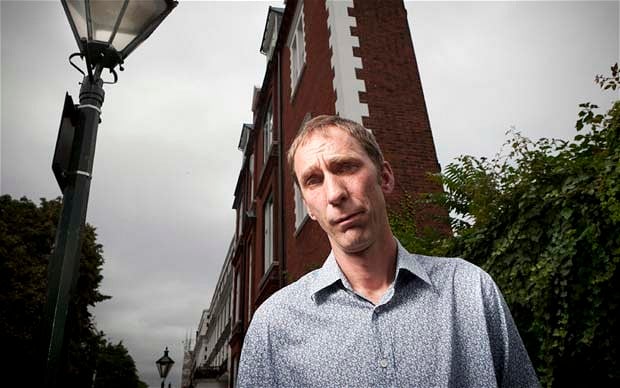
Cambridge Police Sgt. James Crowley

Crowley was operating in a racial framework from the beginning. This is a classic case of typification. He was told that there were men breaking into a house and he stereotypically thought black men. He saw a black man in a house on the phone and stereotypically thought criminal. Given proof that Gates was the legal resident of home, the officer simply couldn’t negotiate the terrain of his own racial thinking. How could a black man live in Harvard Square? How dare this man ask me for my name and badge number. Who does he think he is? It was not a matter of whether Crowley was going to arrest Gates, it was only a matter of when.

The caller also said the men had suitcases. She didn’t know whether they lived there but were having trouble with their key or were breaking and entering. The woman personally found the event unremarkable and only called because an older woman with her was concerned that something untoward might be happening. The 911 operator was very pushy. “What do the suitcases have to do with anything?” he asked sarcastically. Maybe they have to do with the fact that the residents were returning from somewhere or perhaps had locked themselves out of the house on the way to somewhere? Crowley heard “backpacks.” Black men with backpacks.

Disorderly Conduct and the Abuse of Authority

It feels obvious to me that if Henry Louis Gates, Jr. had been white things would have gone differently. The assumption that underpinned Officer Jim Crowley’s actions was that Gates, a black man, was out of place both physically and attitudinally. Gates did not show the officer proper respect, and part of the respect the officer expected was rooted in racial status difference.

Henry Louis Gates, Jr. under arrest for disorderly conduct

But racism is not the whole issue. Other critical pieces to discuss are the problems of the category of “disorderly conduct” and the behavior of the police officer in luring Gates outside so he could arrest him for this problematic criminal category. Disorderly conduct belongs to that class of “crimes” that includes “vagrancy” (having no established residence or lawful or visible means of support) and “loitering” (remaining in an area for no obvious reason). These are classified as “public order” offenses, and they carry serious penalties, including substantial fines and jail time.

Public order offenses are not really criminal acts according to the standard definition of crime. The historically-constant moral and legal definition of crime requires the material existence of acts of force or fraud that cause or threaten to cause demonstrable and significant emotional, financial, or physical harm to other persons.

It is crucial that those whose interests are being protected by real criminal categories are able to demonstrate reasonably-accepted emotional, financial, or physical harm. Being irritated or offended by a person’s behavior existential state does not rise to the level of significant harm. Behavior which a particular individual believes is harmful, but which reasonable persons do not, is also not a criminal offense. For example, it may be emotionally damaging to a particularly sensitive adult to have his trousers referred to a “high waters,” but reasonable persons would agree that the insult does not represent a significant harm to an adult’s emotional interests. Besides, the constitutionally-guaranteed right to free speech protects irritating and offensive speech.

Throughout time, for various reasons, categories of crime have appeared that do not fit the historically-constant definition. In theocracies, thought and behavior challenging the accepted character of the universe are usually defined in the criminal law thereby subjecting the offending persons to punishment. If, for example, the Church says the Earth is the center of the solar system, it transgresses the law to say that the Sun is. Compulsory heterosexuality has found its way into the criminal law, making sexual activity between persons of the same gender criminal. Consumption of various substances, such as the smoking of certain plants, has been controlled using the criminal law. Selling sexual services has also been criminalized in many societies.

Examples of criminal acts that do not fit the historically-constant definition of crime but which reflect the time-bounded norms of a particular society, norms constructed and enforced by the powerful of that particular society against those that annoy them, are practically endless. It will suffice to have the reader note that in none of the “crimes” listed in the previous paragraph can an appeal be made to reasonably-accepted emotional, financial, or physical harm to other persons, and remind the reader that, in a free society, a person is at liberty to emotionally, financially, or physically harm him or herself.

So what is the purpose of such public order crimes as disorderly conduct? This is not difficult to ascertain. The purpose of the crime of disorderly conduct is to permit the arbitrary control of undesirable persons by providing authorized agents of the state, that’s the police in modern society, with broad and almost-infinitely rationalizable categories with which to justify arbitrary arrest and detention.

Individuals charged with such crimes are subject to the will or judgment of police officers regarding behavior or existential states that do not impose harm upon the public. In public order offenses, the criminal behavior may simply be acting or existing in a manner the police or the public don’t like at the moment. The defendant’s fate in the moment is contingent solely upon the police officer’s discretion independent of harm to others.

Disorderly conduct has become a catch-all rule police use to arrests persons who refuse to respect them. Disorderly conduct thus gives the police the power to arrest anyone speaking angrily at them in public, disturbing the peace, or disrupting order in the community. Speaking in agitated tones to police officers is what it called “contempt of cop.” The proper disposition of the average citizen with respect to a police officers is to be servilely obedient or respectful, that is to assume some manner of genuflection.

However, constitutional limitation to disorderly conduct has placed a crucial condition on its administration, namely that, for the charge to be triggered, the speech or behavior must occur in a public place where it may be alleged that others may be disturbed. Standing in one’s living room and dressing down a police officer is not disorderly conduct. Contempt of cop is not yet codified into law.

Jim Crowley, the cop who arrested Henry Louis Gates Jr. on Gate’s front porch, states in his police report that Gates was yelling very loudly and accusing Crowley of being a racist as they stood in Gates’ kitchen. Crowley was frustrated because he knew this is not disorderly conduct. This is why Crowley wanted Gates to come outside, claiming that the “acoustics of the kitchen” made it difficult to hear Gates. This is a patently absurd claim, transparent in its intention. The officer was deceiving Gates in order to arrest him—that is, punish him for back-talking a police officer.

“I would say it is not constitutional to arrest someone in his home just for being loud and abusive to a police officer,” Boston University law professor Tracey Maclin was quoted in a LA Times story. “That’s why the cop asked him to come outside, where he could be arrested for being disorderly in public.” Crowley claimed that he arrested Gates for “his continued tumultuous behavior outside the residence, in view of the public.”

Boston defense lawyer Samuel Goldberg told the LA Times, “You might think that in the United States, you have a right to state an opinion, even an offensive opinion. But prosecutors like to say you don’t have a right to mouth off to the police.” This is, as I have described elsewhere, a thought crime. “Gates was saying, ‘You are hassling me because I’m black.’ I understand how that’s offensive to a police officer,” Goldberg said. “It’s astounding to me to call it criminal.”

What Gates was doing, even according to Crowley’s police report, was criticizing a police officer. Gates was indignant. And that is his right. Human beings have a natural right to be angry with people who displease them. Police work for the taxpayers and, moreover, free speech rights permit a citizen to criticize state employees, whether they are politicians, bureaucrats, or police officers.

Crowley did not appreciate being called a racist and or having his authority challenged. But he knew he could not arrest Gates inside the house. So he had to get Gates outside in public so he could use the presence of other citizens—the presence of other police officers would have been insufficient—to meet what Crowley perceived was the threshold for disorderly conduct.

The charge of disorderly conduct was dropped—and hardly anybody seems to want to focus on this—was because Crowley didn’t have a legitimate case. The arrest was a mistake. The cop acted stupidly. No rule of law was in force, but rather a police officer using his power to arrest somebody he didn’t like at the moment. He wanted to punish Gates, so he arrested him.

Those who love liberty cannot support the behavior of this police officer. Although police abusing their power has been all to common in the United States, most of us will agree that this behavior is out of step with the values Americans hold dear.

The Strange Case of the Upside-Down Flag

In Wausau, Wisconsin, the state in which I reside, the police walked onto the property of a US citizen and removed an upside-down US flag he was flying. Why? Because neighbors thought it was unpatriotic. So?

An upside-down flag is primarily a symbol of dire distress, as stipulated by the US Flag Code 

On the advice of Marinette County District Attorney Allen Brey, the police confiscated the flag on Independence Day. Vito Congin’s First Amendment rights were trampled on the very day Americans celebrate the independence that paved the way for the establishment of uniquely American liberties, which include the right to fly the US flag upside-down. 

Congin’s neighbor, Steven Klein was stunned. “I said, ‘What are you doing?’ They said, ‘It is none of your business.’” Marinette County Sheriff Jim Kanikula put it this way: it’s not illegal to fly the flag upside down but people were upset and, after all, it was the Fourth of July. What the fuck?

Village President John Deschane, an Army veteran who served in Vietnam, said many people in town believe it’s disrespectful to fly the flag upside-down. “If he wants to protest, let him protest, but find a different way to do it.” Hey John, which constitutional amendment gives Deschane the right to dictate to a fellow citizen the manner in which he should protest his government?

By the way, Congine is a Marine veteran who served in Iraq in 2004. Here’s what he had to say: “It is pretty bad when I go and fight a tyrannical government somewhere else and then I come home to find it right here at my front door.“ Indeed.

Academic Freedom and the Historical-Comparative Method

Academic freedom is the lifeblood of the academy. Without the freedom to make interpretations and draw judgments about the empirical and conceptual materials in front of them, intellectuals can’t do their work. The desire to censor objectionable materials and punish the professors who present them is not the work of rational minds but of ideologues who wish to put the university in the service of state and other projects—in the case of the persecution of Bill Robinson, the project of a foreign power. We must not allow the university to become any more of a tool of the elite, foreign or domestic, any more than it is already.

Historical comparison is standard method in both social science and historiography, and comparisons may involve historical facts, documents, photographs, art, music, religious ideology, and so forth. One compares cases to theorize and test hypotheses concerning the causal forces and processes underpinning social phenomena. For example, one may compare revolutions to test the hypothesis that, for example, a weak state is the main factor in successful social revolutions. In making such comparisons it is understood that the cases are not identical, rather that they have differences and similarities.

In the Robinson case, the professor forwarded a comparisons between the Warsaw and Gaza ghettos, the experience of the victims (Jews and Palestinians), and the behavior of the oppressors (Germans and Jews). Both cases were the result of ethnonationalist projects and the similarities are too numerous to document here (view the materials for yourself and study the cases—any objective observer will find the comparison apt). To be sure, there were differences. Of course. But the differences do not eradicate the similarities.

In What Moral Universe are People Living?

Some members of groups who are driven from their homes and off their land into ghettos or onto reservations, denied their freedoms, daily humiliated and periodically massacred, have been known to take violent action against their oppressors. Native Americans sometimes responded to European colonists in violent ways, which the colonists used to justify colonization and genocide. Blacks sometimes violently resisted the policies of the National Party in South Africa. I could provide many other examples. Jewish resistance in Poland is an apt one. It’s a very old pattern. Anti-colonial violence is the consequence of colonialism.

Even when anti-colonial resistance in Palestine dies down (which is remarkable given the conditions Palestinians have been forced to live under for decades), Israel provokes Palestinians to violence. After Israel pulled out its colonists in 2005 (a result of Palestinians’ increasingly successful resistance tactics) and the Palestinians exercised their choice and elected Hamas, Israel blockaded Gaza. Hamas responded to this act of war with rocket and mortar attacks. Israel used these actions to justify bombing and launching several raids into Gaza killing scores of Palestinians.

Palestinians negotiated a ceasefire with Israel June 19, 2008, and rocket and mortar fire dropped to the single digits during these months. In fact, in September and October the number of rockets fired into Israel dropped to one per month. Overall, there was a 98% reduction in rocket and mortar attacks. The rockets that were fired were from groups in opposition to Hamas. Israel did not live up to its end of the bargain, which was to end the blockade of Gaza. Then Israel violated the ceasefire in November by launching a raid into Gaza killing six Palestinians. When some Gazans responded to this provocation, Israel used this action to justify the Gazan Massacre. Even after Israel violated the ceasefire, Hamas attempted to renegotiate. But it was election season in Israel, and politicians needed to look tough.

Finally, while it’s true that international law recognizes the power of countries to control their borders, it does not recognize the “right” of countries to control the borders of other countries or territories not legally under their authority. When a country controls the borders of a territory, then that country effectively occupies that territory.

Israel controls more than the borders of Gaza. As news stories out today demonstrate, Israel has decimated Gaza’s fishing industry by progressively ratcheting down Gaza’s freedom to fish its own territorial waters. Israel restricted Gaza to twenty miles, then to ten, then to three nautical miles, where it stands today. The fishing industry employed 45,000 of the 1.4 million Palestinians in Gaza (the majority of which are refugees). With the disappearance of the industry, one of Gaza’s few sources of protein is disappearing, and since Israel restricts food aid into Gaza, Palestinians are among the most malnourished people in the world.

Resistance to this situation is grounds for more oppression? In what moral universe are some people living?

A World Without Jews

Dagobert D. Runes writes,

Karl Marx was not only born a Jew; he came from a rabbinical family. His father Heschel Marx accepted Christianity in 1816 in order to practice law in Prussian territory. Like many converts, Marx found it necessary all his life to justify the mass conversion of his family by attacks against his blood brothers.

Runes wrote this in the forward to a A World Without Jews, a book attributed to Karl Marx, published in 1959. But Karl Marx never wrote a book called A World Without Jews. Moreover, the essays that form the chapters of this book are collected from essays published separately, and include passages that do not appear in previously published versions.

Karl Marx did not write this book.

Focusing on the above quoted passage, there are two problems with it. The first is the wrong of classic psychological ad hominem. To suppose Marx was psychologically motivated to criticize Judaism and the role of Jews in European society, whatever the reason, is a fallacious argument form. Marx’s argument in the essay is well constructed and, assuming someone with the same intellect, a criticism a man or woman of any ethnic background could make.

The second problem is this phrase “blood brothers,” as in Jews are blood brothers and therefore a Jew who criticizes Judaism is a race traitor. Runes is here embracing the racialization of Jews, an imposition upon Jews by non-Jewish Europeans who sought to make them something other than Europeans. This is the wellspring of anti-Semitism. Jews are Jews by blood. Jewish blood must be something different than non-Jewish blood. This means that creating a Jewish state in Palestine is the creation of a racial state.

The bulk of the argument Marx is making is found in the 1844 essay “On The Jewish Question” in Deutsch-Französische Jahrbücher. It which was a response to Bruno Bauer’s 1943 book Die Judenfrage (The Jewish Question). Bauer’s book is complex, and I may return to a discussion of it on a later date, but the substance of Marx’s argument written in the context of his critique of Bauer is that liberation from religion would mean liberation from Jews, Christians, Muslims, etc. Marx was an atheist who advocated overthrowing the world order—capitalism—that underpinned modern religious ritual. A world without religion and capitalism would be a world without Jews because Judaism is a religion. The same would be true for Christians and Muslims. And so on. In other words, the argument is not anti-Semitic but rather anti-capitalist and irreligious. Indeed, Marx argued on behalf of Jewish liberation in Germany.

Sotomayor and the Belizean Grove

US Supreme Court nominee Sonia Sotomayor on Friday resigned her membership in an all-women organization, hoping to head off criticism that she belonged to a discriminatory organization before her confirmation hearings begin next month.

President Barack Obama nominates Judge Sonia Sotomayor

The group, the Belizean Grove, calls itself “a constellation of influential women” formed in response to the all-male Bohemian Club, whose annual revels at its expansive Northern California estate are attended by powerful and influential men.

The Belizean Grove apparently doesn’t own its own property, but schedules periodic events in the US, Belize, and other locations in Central America, according to its Web site.

“I believe the Belizean Grove does not practice invidious discrimination and my membership did not violate the Judicial Code of Ethics, but I do not want questions about this to distract anyone from my qualifications and record,” Judge Sotomayor wrote in a letter to Senate Judiciary Committee Chairman Patrick Leahy, a Vermont Democrat, and ranking Republican, Sen. Jeff Sessions of Alabama.

“The Belizean Grove is proud and privileged to have had Sonia Sotomayor as a member,” Susan S. Stautberg, the group’s founder, said in a statement. “We’re all sorry that she is not able to continue.”

A Senate Republican aide said Republicans didn’t plan to object to Judge Sotomayor s membership in the group, but did hope to contrast their position with Democrats, who in past years have criticized Republican judicial nominees for membership in all-male clubs.

George Richard Tiller (1941–2009)

It doesn’t matter how many abortions Tiller performed or at what point during the pregnancy he performed them or whether the fetus had birth defects or how much money he made performing abortions or whether the fetus is a person or the motives behind the desire to seek an abortion. All this is beside the point. An abortion is a private matter between the doctor and the patient. In a free society, women decide whether to have children. Not the state. Not the father. Not the church. Nobody else and no other entity can make that decision for women while at the same time maintaining the personal sovereignty of women. Tiller helped tens of thousand of women realize their personal liberty by empowering them to determine for themselves if and when they should use their sovereign bodies to multiply the numbers of persons on earth. The state didn’t decide for them. They state forced them neither to have a baby nor to have an abortion. That is how it should be in a free society. What matters in this case is that a terrorist from a so-called movement calling itself “pro-life,” but which is in fact a extremist countermovement aiming to deny women sovereignty over their bodies, assassinated a doctor in the foyer of his church.

Anybody who says that the state must force women to have babies – and this includes everybody who believes abortion should be restricted by local, state, or federal government – either does not love personal liberty or does not understand what personal liberty means and why it is imperative to preserve it if we are as a people to be free. At its core, the anti-choice countermovement is the authoritarian desire to place the womb under state control, to control women by controlling their reproductive capacity. It is, whether conscious of itself or not, a desire to enforce by law the essence of patriarchal domination. Tiller, and all those other doctors assassinated by anti-choice extremists, are the victims of terrorism. These terrorists, these religious zealots who desire theocracy, hate our freedoms. They hate our way of life.

Abortion is not an issue where reasonable people can agree to disagree. Either we defend the right of women to control their own bodies or we cave to tyranny. Control over one’s body is a fundamental human right. There is no compromise.

“Racist, Fascist” Bills

Right wing Knesset members, led by Foreign Minister Avigdor Lieberman and his ultranationalist party Yisrael Beiteinu, have proposed a bill to outlaw commemorations of the al-Nakba, the catastrophe that befell hundreds of thousands of Palestinian Arabs who were expelled from their homes by Jews in the 1948 wave of ethnic cleansing, a key moment in the construction of a Jewish Zionist state. Israel’s Arab citizens, along with Palestinians in the diaspora, recognize al-Nakba on May 15, the day following the end of the British mandate over Palestine in 1948. Arabs commemorate that day by parading through villages destroyed by Jewish colonizers. The bill, if made law, would ban these commemorative practices with a prison term of up to three years for anyone participating in them.

Bill Robinson, professor of sociology at the University of California-Santa Barbara, recently pointed out about this law “criminalizing acts of memory, of collective identity, of cultural and political expression.” “Imagine criminalizing black commemoration of slavery, or Indian commemoration of genocide in the Americas?” He said. “Or Jewish commemoration of the Holocaust?” Indeed. Can you imagine that? Yet those who commemorate the Holocaust are proposing to forbid Arabs from commemorating al-Nakba.

This isn’t the only fascistic measure. As reported in Haaretz, the Knesset plenum has given its initial approval to a bill that would make it a crime to publicly deny Israel’s right to exist as a Jewish state. This “crime” would be punishable by a prison sentence of up to a year. This means that an Arab Muslim, in an alleged democratic society, could not voice the opinion that Israel has no right to exist as a Jewish state. This is analogous to a law that makes punishable any public denial of the right of the German state to exist as a white non-Jewish racial state. Can you imagine a Jewish citizen of Germany being forced to keep quiet his protest of the exclusive ethnic character of his state?

Moreover, a third bill, proposed by David Rotem of the Yisrael Beiteinu, would require any persons seeking Israeli citizenship to swear an oath of loyalty to Israel. This bill reads: “those seeking citizenship will be required to declare commitment to be loyal to the state of Israel as a Jewish, Zionist and democratic state, to its symbols and its values and to serve the state as required in military service or an alternative service.” Imagine an Arab Muslim, in order to be a citizen in an alleged democratic country, swearing his allegiance to a Jewish Zionist ideal, its flag and others symbols, its values, which include its religious and ethnic character, and to serve in a compulsory fashion that state even when its policies are detrimental to Arab Muslims.

Similar bills propose amendments to the laws that governs the oath taken by Knesset members and members that includes identical language. Thus an Arab Muslim elected to the Knesset would be requires to swear his allegiance to a Jewish Zionist state. Here’s the Haaretz piece: Israeli Arab committee slams ‘racist, fascist’ bills.