The government shutdown drags on, apparently over Trump’s desire to secure $5 billion for more border security fencing. Democrats are denying Trump his “wall” and it appears to be entirely over their desire to not allow the President to be able to keep his signature promise made during the 2016 presidential campaign. It certainly isn’t understandable as a principled position given past statements on the subject of illegal immigration.
Here’s Bill Clinton in 1995:
“All Americans, not only in the States most heavily affected but in every place in this country, are rightly disturbed by the large numbers of illegal aliens entering our country. The jobs they hold might otherwise be held by citizens or legal immigrants. The public service they use impose burdens on our taxpayers. That’s why our administration has moved aggressively to secure our borders more by hiring a record number of new border guards, by deporting twice as many criminal aliens as ever before, by cracking down on illegal hiring, by barring welfare benefits to illegal aliens.”
He continued: “We are a nation of immigrants. But we are also a nation of laws. It is wrong and ultimately self-defeating for a nation of immigrants to permit the kind of abuse of our immigration laws we have seen in recent years, and we must do more to stop it.”
Here’s Barack Obama in 2013:
“Real reform means strong border security, and we can build on the progress my administration has already made—putting more boots on the Southern border than at any time in our history and reducing illegal crossings to their lowest levels in 40 years. Real reform means establishing a responsible pathway to earned citizenship—a path that includes passing a background check, paying taxes and a meaningful penalty, learning English, and going to the back of the line behind the folks trying to come here legally.”
In 2006, Obama said that “better fences and better security along our borders” would “help stem some of the tide of illegal immigration in this country.” The year before he said: “We simply cannot allow people to pour into the United States, undetected, undocumented, unchecked and circumventing the line of people who are waiting patiently, diligently and lawfully to become immigrants in this country.” “We all agree on the need to better secure the border and to punish employers who choose to hire illegal immigrants,” he said. “We are a generous and welcoming people, here in the United States, but those who enter the country illegally, and those who employ them, disrespect the rule of law and they are showing disregard for those who are following the law,” he said.
In 2013, All 54 Democrats voted to pass the Border Security, Economic Opportunity, And Immigration Modernization Act. The bill required the completion of “700 miles of pedestrian fencing along the border” and allocated $45 billion on border security improvements. Not $5 billion. $45 billion. And in November 2015, Hilary Clinton told a crowd: “I voted numerous times when I was a senator to spend money to build a barrier to try to prevent illegal immigrants from coming in. And I do think you have to control your borders.”
We can go down the line and identify numerous Democratic leaders saying very similar things. So what has changed? Why are Democrats hanging up Trump over 5 billion dollars in security fencing? Why all the sudden do we see a flurry of analyses claiming security fencing doesn’t work? Why are we now seeing border control depicted as the second-coming of the Holocaust? Why is every migrant portrayed as a refugee? Where was the outcry when Democrats sounded like Trump?
On this business about the efficacy of walls, Jennifer Miller, writing for Scientific America, claims that “Trump’s wall” “would destroy an extraordinary web of biodiversity that evolved over millions of years.” She makes a very powerful case for the efficacy of walls to prevent the migration of all manner of flora and fauna. For those who say walls don’t stop things, the truth is they can stop almost everything, according to Miller. The fact that walls and fences are good at stopping people is why we build them around prisons and forts. It’s why we have locks on doors. The two-story corrugated metal fence erected by George W. Bush’s administration dramatically curtailed both illegal border crossings and crime in El Paso, which borders Juarez, a city shot through with crime and violence. I know there is a great desire to deny that criminals cross the border (they’re all refugees, right?), but the fact is that they do. Mexicans and Central Americans enter the United States to extend the range of their criminal territory or disappear from law enforcement or other criminals looking for them. Not all of them. A lot of them. The Yuma Border Sector on the US/Mexico border in San Luis, Arizona, has also drastically reduced immigration and, as a result, crime. The reductions in immigration in both cases near or exceed 90%. The reduction of crime is a consequence of reducing the flow of those who are most likely to seek to illegally enter a country; as a rule, reputable and stable citizens follow the rules and aren’t running from anything, therefore they are not crossing borders without authorization.
Walls and fences are not as effective when there are gaps in them, but they are nonetheless effective where they stand. Fences designed to allow flora and smaller fauna would address many of the concerns the Scientific America article presents. Whatever gets built there will be called a wall whether it is a wall or a fence. Trump gets what he wants. But it’s what Democrats want, too.
Democrats know that the southern border is a source of crime and violence in the United States, that criminal networks involved in human trafficking are driving people, including children, across dangerous terrain and around ports of entry and security fencing to drop them in the United States where their labor will be super-exploited by capitalists who will not pay US citizens wages commensurate with the job. Crime makes Democrats look bad. For both parties, crime is used as a justification for more police, tougher laws, and more prisons. The public has a compelling interest in crime reduction at the border. I am not happy that fencing is part of the solution to the problem. I wish I could live in a world where I didn’t have to lock my doors.
To be sure, Democrats do not mind the exploitation of immigrant labor or the displacement of native-born labor; what they want is a legal system of imported labor for these purposes. Every year in the US, hundreds of thousands of foreign workers enter the country legally. When in the context of rhetoric concerning illegal immigration Bill Clinton says, “The jobs they hold might otherwise be held by citizens or legal immigrants,” he conveniently leaves out the fact that legal immigrants hold jobs that might otherwise be held by citizens. Whatever the motive, the effective control of people across the US-Mexico border is a necessity.
Footnote: Consider the millions of citizens in the criminal justice system, disproportionately black, who are there because there was no real effort to train them and put them in a job that could have kept them out of trouble, or who, despite committing a nonviolence offense, or a not-very-serious violent offense, are left to waste away behind walls financed by the US tax dollars at a cost of tens of billions of dollars annually. This is a great betrayal on a moral plane. As a nation we need to find or make a job for every man and woman who is able to work. Only after that should we assess labor shortages and consider foreign workers. That will require sharply reducing the flow of legal immigrants into the country, which will have the benefit of providing time for assimilation to proceed and our culture to adapt. I am fully aware, as I have written about on this blog, that the rationale behind the constant flow of immigrants into the United States is to increase supply relative to demand and suppress wages for American workers. It will take a very large popular movement to change the force of capital importing labor to undermine the domestic working class (the left seems completely incapable of putting two and two together on this one). However, restricting illegal immigration can help our most vulnerable citizens.
There are exceptions, but as a general orientation, and it will pain my leftwing friends to hear me say this, the censorship and deplatforming is aimed at extending and deepening the left-identitarian political sensibility (identity politics, multiculturalism) by pandering to marginalized groups (while reducing individuals to them), simultaneously narrowing the diversity of ideas, in order to expand the market and thus increase profits.
This neoliberal corporate strategy focuses mass attention on questions of gender, race, gender identity, etc., at the expense of and dissimulating the overarching structure of social class and heightening the antagonisms between proletarians segmented by identity. The vast range of ideas become coded as left and right by cultural managers and conditioned and reinforced ideological reaction shuts down consideration not only of the full range but recodes things to stand on the other side of the line – in other words, the culture industry redefines what left and right – and right and wrong – are.
To enforce this religious understanding of political thought, the culture industry creates a set of blasphemy rules that can get you expelled from the church of social media based on your utterances and associations. And to take full advantage of its religious-like character, it claims a wall of separation from the state and therefore manufactures its own justifications for excommunication, actions that operate beyond the scope of the Bill of Rights which are conveniently defined (and this is true with religion, as well) to work in one direction and not the other.
I was just alerted to Brad DeLong’s superficial account of the libertarian role in opposing public accommodations (no time for his hackery here), but with social media we can see clearly the neoliberal tack of maintaining a smooth “non-offensive” culture that makes it easy to discriminate against people based on political identity (speech and association) in violation of the spirit of the First Amendment and basic human rights.
Markets under neoliberalism are not neutral facilitators of exchange, but are ideologically-controlled systems of thought control. Corporations cannot (yet) throw you in jail, but they effectively disappear you in a world where everybody is kettled and channeled. Being excommunicated is a terrible thing. Ask Rosanne Barr. She broke the blasphemy rules of the culture industry and paid the price. She’s just one of a long list of causalities of the prevailing PC culture.
This speaks volumes about Elizabeth Anderson’s point about the oppressions of private government (The Philosopher Redefining Equality). She highlights the unfreedom of being an employee. Here we’re talking about the unfreedom of being a creator of content and a consumer of content. For being allowed to say and here things doesn’t make you free.
Feel good about capitalists telling you what you can hear? Of course, eventually, how would you even know about what you’re not allowed to know about. Yes, that is the idea. When somebody else is deciding for you what you can see, hear, say, and think, you become a child. Tragically, too many people are infantilizing themselves. Part of the jive talk you get about this is that free speech is a ruse the rightwing uses to oppress people. Speech is violence. Etcetera.
It’s like the Devil. He’s trying to beguile and seduce you with his tempting ideas. And because you are weak and fallen, you are susceptible to his charms. So all the better to not listen at all. After all, doubt is the unpardonable sin. You can’t be trusted with your own brain. Leave that to the cultural and political managers.
Dylan Riley, sociology professor at the University of California-Berkeley, has published an essay, “What is Trump?” in the New Left Review (No. 114, November-December 2018) that echoes arguments I have been making since Trump appeared on the scene as a presidential candidate for the Republican Party. It’s nice to see somebody with expertise in the sociology of fascism making the same points—especially when those around me look at me like I’m a space alien when I make them. As many of you already know, my argument is that Trump, a New York real estate tycoon with an independent streak, is alien to transnational power and at odds with establishment norms and goals. He thus represents a disruptive force in the prevailing capitalist hegemony that desires to project globalism and multiculturalism as appealing and animating values, values harmful to working class interests. Make no mistake, there is a downside to Trump (as I have written about on this blog). At the same time, there is an upside to disturbing the smooth surface of prevailing bourgeois hegemony.
I have argued that Trump is not, as the center and the left like to portray him, a fascist (see Navigating the Spectacle and Immigration, Deportation, and Reductio ad Hitlerum), and Riley agrees. Riley is author of The Civic Foundations of Fascism in Europe: Italy, Spain, and Romania 1870-1945 (published by Johns Hopkins University Press in 2010). Much of Riley’s essay is an analysis of interwar fascism, its economic, political, and cultural character. I will let you study his argument for yourself. It should suffice to say here (I will have more to say about interwar fascism later) that, as a capitalist strategy to disorganize the labor movement and disrupt the socialist consciousness that threatened the ceaseless accumulation of wealth, fascism represents something quite different from what we see on the political right today, what amounts to a popular revolt against regionalism and globalism, a moment in which counter-establishment and charismatic politicians appeal to workers suffering under neoliberal economic policies. Indeed, while the politicians answering the call are rightwing, much of the reaction is not intrinsically so, but rather is pro-native-born labor sentiment—and, to varying extents, these politicians are in tune with that.
Riley writes that, “in class terms,” “Trump’s hostile relationship with key sections of the American elite” stands “in sharp contrast to the good relations the interwar fascist leaders enjoyed with their big bourgeoisies and landowners.” I argued from the outset that Trump was not a candidate the establishment would have put forward. Unlike the rigged primary process of the Democratic Party (the superdelegate system), the openness of the Republican party machinery betrayed the power elite and spit out a populist candidate, one who, in Gramscian terms, lacks “any organic connection to the class of which he is part” (quoting Riley). Trump’s election came as a shock to the establishment, whose propagandists immediately turned on the distortion machine in an effort to delegitimize the president or at least bring him to heel. The pattern thus far has been establishment elites tolerating Trump where their interests align, such as tax cuts and deregulation, while criticizing him when he attempts to make peace with “America’s enemies” or roll back US military commitments around the world. The left should applaud Trump’s moves in these areas, but hysteria makes it hard to see the windfall that comes with an anti-establishment moment. The tragedy here is that the left can’t see clearly enough to seize the moment. That blindness has been a long time in development.
Riley detects “a high level of unease within the US capitalist class about Trump” and identifies several key antagonistic relations: “intellectuals and the media” and “national-security intelligentsia and imperial bureaucracy.” Riley notes in particular Trump’s contempt for the State Department and the school of international relations. “He is the only president in living memory with the temerity to make a public issue of how much US deployments in Europe and Asia cost,” writes Riley. “This has led to indignant commentary across the political spectrum, condemning the President for failing to understand the vital role that forward bases play. Indeed the State Department, with the support of the Democrats, has often been more belligerent than Trump himself, forcing him to take a harder line on Russia and the DPRK.” Riley captures concisely the point I have been making for months about the establishment tactic of goading the president into assuming a more muscular military posture in order to continue the neoconservative Project for a New American Century. Decidedly not a Cold War liberal, Trump frustrates the modus operandi of US military-industrial ambitions. Tragically, hysteria on the left is causing many progressives to defend imperialist goals.
Riley adds to these observations an analysis of Trump’s supporters. As he notes, analyses “before the November 2016 election suggested they were likely to lack a college degree and have slightly higher-than-median incomes.” Indeed, Trump “did well among skilled blue-collar workers.” As Riley rightly observes, given the material interests of this demographic, afflicted by globalization, one can plausibly cast their concerns in “nationalist terms.” Thus “Trump’s key move in 2016 was to combine the core Republican electorate—evangelicals; relatively affluent white, rural and suburban southern voters; a section of the Appalachian working class—with a sliver of working-class swing voters in the Upper Midwest.” These are the segments of the electorate who have felt most disaffected culturally, politically, and economically by the bicoastal elite with their focus on left-wing identity politics, diversity, multiculturalism, and globalism. And despite feelings of optimism in the 2018 midterms, “Democrats lost non-college-educated white men by 34 percentage points.” That this group seeks meaning on the right is a chief indicator of the failure of the contemporary left to represent the organic interests of the working class. Instead, it indicates the alienation of a large segment of the working class by the deformation of leftwing thought into an identity politics, blaming white men for the world’s problems, accusing disadvantaged and exploited white workers of bearing “white privilege.”
A person on my Facebook page accused the New Left Review of maintaining a stable of “leftwing analysts sympathetic to western nationalism.” One would hope so (although this doesn’t seem to be the case). After all, Marx and Engels were, given their understanding that it’s civic nationalism that emancipates oppressive structures (religion and property) from the traditional state thus providing an opportunity for emancipating individuals from ideology and class (see Marx’s “On the Jewish Question”), and that, therefore, the proletariat must first settle accounts with its national bourgeoisie (see The Communist Manifesto), which is difficult to do amid the politically and culturally disorganizing effects of globalization. In their most immediate political arguments, Marx and Engels suggest reforms that are only possible in the context of the nation-state; the internationalist movement piece is about orienting national-level proletariat in those parts of the world with liberal values waiting to be fully actualized in the same basic direction. The erasing of nationalist boundaries is something that comes later in history, once the socialist revolution has taken root in the most developed societies. Yet many on the left act as if capitalist globalization was a manifestation of the Internationale.
We should modify Marx and Engels in one crucial way, however: they could not have foreseen the disruptive effects of resurgent religious fundamentalism, especially Islam, which, unlike the Protestant strain of Christianity that made possible the political systems of the most developed capitalist countries, rejects completely the secularism necessary for the potential emancipation of individuals from irrational ideologies that politically paralyze them. Hence another reason for fortifying national boundaries and the values of civic nationalism. The modern western nation-state benefits not only the national proletariat in the developed world by protecting them from the disruptive effects of Islamism, but will, in the long run, help individuals mired in the muck of the Islamic world, since they will have powerful secular states—if we can keep them—as lights on the path to emancipation from religious backwardness. Along with this, we also need to consider that Catholicism remains a regressive force and also must be marginalized. Indeed, Islam and Catholicism represent the most obvious fascisms in waiting. Yet people do not see the real fascist threat (reactionary Catholicism was the heart of classical fascism) and instead smear those who are defending the West from the parties of god with such labels as “nativist” and “xenophobe.”
Nationalist solidarity (of the liberal and civic sort) is a protective force against fascism. As the world saw in the interwar period, communist internationalism, disconnected from national-level sentiment, could not muster popular resistance to fascism, that latter designed by capitalist elites to heighten sympathies for ethnic (over against civic) nationalisms, intensify the split in the working class, and establish an illiberal state in order to gain control over labor and restore profits by force. The United States experience, where fascism did not become a dominant politics (rather social democracy did), provides a useful contrast. Rank-and-file workers in the US marginalized the internationalist wing of the labor movement, pushing, for example, for immigration control in a decidedly populist anti-globalization move. It took nationalist sentiment decades to pull leadership on board, but when it did, and immigration was sharply restricted, the result was greater union density, the development of broad-based democratic socialist consciousness, mass support for the civil rights movement and second-wave feminism, and a vast expansion of individual freedom—all of which was undermined by the opening of America to immigration in the mid-1960s, coupled with other strategies of labor discipline (off-shoring, for example.)
This is the major flaw in Riley’s essay in understanding the present moment: the immigration question. When the author writes that “economic malaise today focuses on the ‘downsides’ of globalization—the relocation of manufacturing jobs abroad, to be replaced by growing precariousness, longer hours worked for falling real pay and rising household debt—thrown into relief by the trillion-dollar banker bailout,” he leaves out the other side of globalization: the importation of foreign workers to domestic production spheres, a relocation that displaces native-born workers, lowers wage, undermines living standards, increases personal debt[1], marginalizes union power, disorganizes communities, and stresses social welfare systems. Of course, the immigration side of globalization is the problem that cannot be identified honestly under the current regime of political correctness, so it goes not exactly unacknowledged, but rather the truth of it is rationalized. Riley provides a good example of rhetorical contortion: “To the extent that Trump’s economic-nationalist agenda had a popular basis, it rested on workers and middle-class layers who had suffered from the offshoring of jobs and who feared competition from immigrants in employment, rather than welcoming them as a cheap source of labor.” By describing the reaction to immigration in terms of attitude rather than fact, Riley leaves the impression (reinforced elsewhere) that concern over the importation of foreign workers is irrational, while concern over the exportation of American jobs is empirically grounded: workers and middle-class layer suffered from the former while fearing the latter. He even detracts from the reality that immigrants are a cheap source of labor (for surely he does not wish to sell immigrants as cheap labor to American workers).
More than this, Riley goes after former Attorney General Jeff Sessions for what Sessions got right. Riley notes “Sessions’s anti-immigrant fanaticism” and claims that it is “rooted in a theory” that “the massive inequalities of the Gilded Age were an expression of uncontrolled immigration from Southern and Eastern Europe. With the passage of the National Origins Act of 1924, the European population was assimilated, becoming a homogeneous white working and middle class—the foundation for US world power and domestic tranquility in the twentieth century.” Here’s what Sessions actually said in 2015: “Some people think we’ve always had these numbers [of immigrants], and it’s not so, it’s very unusual, it’s a radical change. When the numbers reached about this high in 1924, the President and Congress changed the policy, and it slowed down immigration significantly, we then assimilated through to 1965 and created really the solid middle class of America, with assimilated immigrants, and it was good for America.”
I know it pains folks on the left to admit that a right-winger like Sessions could be right about this (or anything, really), but this argument is not only logically obvious, but is empirically confirmed. It was the sharp restriction of immigration in the 1960s that allowed for the emergence of a shared culture that supported unions and civil rights and fostered a social democracy with great promise for the transformation of the US economy (I have written extensively about this on this blog). But social democratic progress was blunted by a well-organized and determined business class that sought a new imperialism—and worked through the Democratic Party and the academy—to open the world to capital investment. This project was accompanied by the development of postmodern ideas (beginning as arguments hailing from the Frankfurt School and French reaction to communism), which led to the development of a leftwing identity politics among relatively affluent and educated youth that was hostile to labor.
At the same time, as Riley notes, the development of the postmodern attitude interferes with fascist politics. “Postmodern charisma throws up yet another contradiction for a would-be patrimonial ruler. Ideally, the charismatic aura is transmitted to the staff through some sort of ideology, creating a layer of disciples who can spread the central message outward and downward. But Trump has no mechanism for this and so lacks disciples.” To put this another way, Trump disrupts the inverted totalitarianism of the current capitalist hegemony (to borrow Sheldon Wolin’s characterization) not by throwing up an alternative ideology, but by channeling popular anger and resentment. This is one of those upsides to the Trump presidency:
“One merit of the present Administration is that, despite his own lack of ideological coherence, Trump politicizes everything, thereby undermining the fiction of technocratic consensus and rule-bound behaviour. There is no real parallel to his open attacks on the Department of Justice, the courts and the security apparatuses, to say nothing of his rejection of the idea that structures such as NATO, NAFTA and the WTO, for example, are non-political. This pervasive politicization of the institutions and treaties of the neo-liberal state may have unintended consequences.”
Perhaps we should be more Marxist about it and admit that it exposes contradictions and sharpens antagonisms. (The question is whether the left is conscious enough and in a way capable of taking advantage. The evidence suggests it is not.)
The author usefully notes that the present circumstances, which find their roots in the 1960s, represent “an inversion of the class-nation relations” we witnesses in the 1930s. “In the US today, a pro-globalist professional layer is pitted against a ‘nationalist’ white working class — a configuration that is almost the opposite to that of interwar fascism.” Identifying the nationalist working class as white prejudices the reader against the nationalist sentiment by assuming an ethnic caste, thus excluding its civic character. In a foot note, the author comments that globalism “is more cultural than political: a key difference between the ‘internationalism’ of the working class and that of the professionals.” One suspects this appears as a footnote because working out this line of thinking might compel a different interpretation of the immigration problematic. So, the author writes: “Fascism, in contrast, emerged in contexts in which the political leadership of the working class, the communist parties, remained internationalist, whereas the petty bourgeoisie swung to extreme nationalism. Far from being a form of populism, fascism was premised on its failure.” But then writes: “Socialism, at least in the advanced world, has emerged where both the new professional strata and the leadership of the working class are oriented internationally: an unfortunate rarity.” This depends on how one is defining the internationalist orientation. Is it one that is supportive of the neo/imperialism of capitalist globalization, which dismantles the nation-state and cultures supportive of civil liberties, human rights, and social democracy for the benefit of a small network of families who believe they are immune to cultural irrationalities (and environmental catastrophe)? Or is it one where, as Marx and Engels argued, the proletariat of the various advanced capitalist states settle accounts with their national bourgeoisie while being mindful of the interstate situation?
Riley writes, “The contemporary new rights differ from these in attempting to mobilize a nationally oriented working class against a globally oriented ‘new petty bourgeoisie’.” This should be reworded to explicitly identity the new petty bourgeoisie as the administrative and cultural managers running public institutions and corporations; these are the servants of the global power elite, carrying out an ideological program of diversity over equality and identity over liberty (these as ideational control structures). One can see what is hanging Riley up. First, he makes the argument: “With the partial exception of the evangelical churches, the hollowing-out of the civil-society organizations that once mobilized electoral support for these oligarchic formations has been a condition for the steady decline in voter turnout—American political culture thus reinforces the political-economic tendency to atomize the population.” It is unclear whether Riley thinks this is a good thing (it is and it isn’t). “On the other hand,” Riley writes, “the movements for black civil rights and women’s self-determination, while lacking formal organizational structures, have continued to renew themselves and now constitute a significant feature of the political landscape.” But these movements, liberated from their traditions by postmodernism, have been substantially corrupted by a mix of the epistemology of anti-truth and stealth ethnonationalist-like notions of group identity over human being (and thus over universal human rights).
However, as Riley points out, and this is the main takeaway from his essay: “pinning the ‘fascist’ label on Trump…means uniting behind the program of the present Democratic leadership…[the] superintendents of the oligarchic order; the very project that gave Trump the White House in 2016.” In other words, the neoliberal policies of the Democratic Party, while providing no protective value against the popular nationalism Trump represents, are not the politics the left should desire in-itself. The need to persuade working class people to vote for Democrats also lies behind the hysteria over Russia and fake news; the establishment has been reduced to the most obvious of fear tactics, even dusting off and rejiggering anti-Soviet hysteria, which was longer ago than those who remember it think.
There is a mundane explanation to all this. What the world is witnessing is the way a businessman operates in his environment. As CEO of a corporation, it is applauded (not by me, of course). But when CEO of a nation-state, it leaves a lot to be desired. But it is not fascist. Riley puts it nicely: “The hour is late and the stakes are high; but bad historical analogies will not aid in dealing with the present crisis.” The question is whether folks as enlightened as Riley will finally jettison identity politics and operate on the reality principle, especially when it comes to political economic truths.
[1] The author makes an interesting point about “personal debt-to-income ratio in the United States,” namely that it “exploded in the run-up to 2008.” As well as this sociological observation: “indebtedness is not a collective experience, in the way that mass unemployment is, but an intrinsically individual one: every debtor has a quantitatively specific credit score, for example, and the crisis for her or him takes the form of difficulty in paying the bills. Debt therefore tends towards an individualization, or serialization, of political activity. Rather than collectivizing wage-earners, it atomizes the population into what Marx famously described as ‘a sack of potatoes’.” As the author notes, “‘potatoes’ don’t make for fascism; they make for Bonapartism—rallying as individuals to a charismatic leader, rather than forming a coherent paramilitary bloc. If they are to be galvanized today, it is likely to be on the defensive basis of protectionist nationalism, rather than yet further imperial aggression.” This must be grasped within a full understanding of the dynamic.
Born in 1962, in the Bible Belt, I was raised in a Christian home by liberal-minded parents. My father was a Church of Christ preacher. My maternal grandfather was also a Church of Christ preacher. Both my father and my mother were trained in biblical studies at Freed-Hardeman University, a private liberal arts university associated with the churches of Christ located in Henderson, Tennessee. My father had two ministries, the first in Roger Springs (Hardeman County), Tennessee, and then in Sharpsville, Tennessee, in Rutherford County (where I spent most of my formative years). My father was also a sociologist (not an uncommon trajectory for evangelical Christians). Theological arguments, and their social implications, were commonplace growing up. I knew about Thomas Altizer long before most kids do (if ever).
My parents kept a good library; the most important books for me growing up were the collection Great Books of the Western World (where I found Hegel and Marx), the World Book Encyclopedia, Bulfinch’s Mythology, and, of course, The Holy Bible, the King James version. When I finally got serious about college, in 1988, I spent hours in the Andrew L. Todd library underground at Middle Tennessee State University studying E. A. Wallis Budge’s translations of Egyptian mortuary texts (where I learned about the great architect of the universe, the artisan, the demiurge, Ptah, and immediately knew him as Yahweh). I also got lost in the Oxford Annotated Bible (where I first learned about the Nephilim, rendered “giants in the earth” in my King James version of Genesis). And through all of this, as a devout atheist, I have been arguing about religion and its negation.
So when I signed up to teach sociology of religion at the university where I am a tenured faculty member (I hold a master’s and a PhD in sociology), I could boast of no small measure of competence in religious studies. However, as they say, you never really know a subject until you teach it, and preparing lectures for this past semester taught me a lot about the subject. I could have used a textbook and canned lectures to save time (it is sometimes tempting given our heavy load at the University of Wisconsin-Green Bay), but I took this as an opportunity to integrate what I knew about religion and sociology in the scope of a fourteen week semester and calibrated to the level of a smart undergraduate sociology class.
I lectured on the following subjects: “The Politics of Science and Religion” (value neutrality and objectivity, critical theory, sociological method, science and humanism), “The Hermeneutics of Suspicion” (Ricoeur, Marx, Freud, and Nietzsche), Peter Berger and The Sacred Canopy (social constructionism, phenomenology), “Eminence, Transcendence, and the Death of God” (19th century liberal Christianity, the Niebuhrs and neo-orthodoxy, Tillich and Altizer and dialectical Christianity), “Materialism and Realism” (Hegel, Feuerbach, Marx, Durkheim, and Simmel), “Max Weber and the Badges of Protestantism” (Calvinism, capitalism, bureaucracy, irrationalism), “The Legacy of Judaism” (Weber’s Ancient Judaism and Marx on the Jewish question), “The Overthrow of Mother-Right” (Marx, Engels, and Morgan, class and patriarchy), “The First Murder” (Cain and Abel, legal theory and state development), “Demons and Sin (Catholicism, demonology, antisemitism, heterosexism, and misogyny), “The Travails of Gilgamesh” (the flood myth and state development in Mesopotamia), “The Churching of America” (Finke and Stark’s thesis), “Syncretism (the social evolution of Judaism, Sumerian, Egyptian, and Canaanite influences), “The Story of the Torah” (documentary hypothesis and criticism, political sociology of Israel), “More Syncretism” (The Social Evolution of Christianity, Zoroastrianism, Hellenistic mystery cults), and “The Secular Revolution” (Christian Smith’s edited volume).
I can see ways to be more efficient next time around in order to cover more material. I will do more on human prehistory and proto-religion. Although I dealt with the subject of Islam quite a bit, the subject deserves a dedicated lecture, so that is in the future plan, as well. But the area about which I most want to expand is the influence of Achaemenid hegemony and Zoroastrianism on Second Temple Judaism. The more the class worked through the historical comparison of Christian and Zoroastrian mythologies, the more Christianity looked like Zoroastrianism adapted for a Jewish audience. I realized there were questions about this that I needed to answer for myself before pushing the comparison too far. For example, when exactly did this happen? Did it happen in the first century CE or before that? And so I had to balance bringing the semester to a close (teaching four classes), while continuing to develop my understanding of the history of the Achaemenid period and its legacy.
What inspires this blog entry is a Facebook discussion about the influence of Zoroastrianism on Christianity on my time-line. It was trigged by a video I shared, which I share below, in which Michael Skobac, a rabbi with the Rabbinical Council of America, argues that Satan is a blessing in Judaism and that, crucially, the Satan of Christianity is not the Satan of Talmudic Judaism.
There is only one force in the universe, Skobac argues, and that is Yahweh. Yahweh is the sole source of good and bad. Judaism is thus monotheistic (I hasten to add, at least after the Torah). We’re put through trials on earth because of the capitalist principle of earning our place in the world to come. In other words, God created us, but he believes we will not appreciate heaven if we don’t work for it. God made us unappreciative of things we do not work for, thus he made us born to toil. Satan’s role is to be the obstacle we have to get over to secure a spot in heaven. In contrast, Christianity is a dualistic religion, like Zoroastrianism, and the Christian Satan represents enmity to God.
It was noted by a friend that the Jewish notion of Satan as a blessing is used by Christians to justify their antisemitism – to paint Jews as satanic. My response was that this is indeed what the Tanakh (the Old Testament for Christians) says. I then explained that Christianity developed from a Jewish sect under the influence of Zoroastrianism. Second Temple Judaism had to contend with the influence of Zoroastrianism the moment it fell upon Jewish ears, I noted. I argued that Jesus is a Jewish Saoshyant, a divine savior being in Zoroastrianism sent to do battle with Angra Mainyu’s dragon Zahhāk at the end-times, a battle the forces of good win just before resurrecting all of the souls of the faithful, to make the world perfect and ascend with him to be with the god Ahura Mazda in heaven. The implication I meant to leave is this: instead of supposing Jews are Satanic, perhaps Christians should consider how Satan’s character was transformed under the influence of another religious tradition.
This led to a claim by a teacher of religious studies that the Satan I was identifying was an invention of the Middle Ages, not a figure in early Christianity. That Satan was different, he asserted. The implication is that medieval Christian ideologues concocted the modern version of Satan. For example, some contemporary observers blame it on liberties Dante took in The Inferno. One can hear these arguments in the History Channel program True Monsters: The Origin and Evolution of Satan. Here’s the trailer:
But what about the fact that Satan I identify is also in Islam? To be sure, the archangel Iblis is not the Satan who challenges God’s throne, but he is the Satan whom God banishes from heaven for refusing to prostrate himself before Adam, thus disdaining humanity – which, as we will see, is a narrative originating in Second Temple Judaism and Christian apocrypha. Moreover, Al-Shaitan (Satan) and the shayatin (fallen angels or demons) are clearly evil entities in the Islamic tradition, the Arabic root of the terms meaning “astray” (in contrast to “accuser” or “adversary” from the Hebrew root of the term). The Islamic Satan was well before the medieval moment. More to the point, I argue, I can show that the modern Satan is found in Christianity from its beginnings and that the dualism of Zoroastrianism is implicated in this development.
Before getting that that, I need to point out that this claim made in the above trailer, namely that hell is never mentioned in the Bible, is deceptive. Consider the name “Gehenna,” often translated as hell in rabbinic literature, and Christian and Islamic scripture (it is rendered “Jahannam” in Islam), which refers to final destination for sinners. Gehenna is a reference to an actual place (the Valley of Hinnom), a place known in the Old Testament for its child sacrifices to the Canaanite god Molech. Over time, it became a metaphor for the place sinner would perpetually burn in the afterlife. Consider when in Matthew 5:21-22 it is written,“You have heard that it was said to an older generation, ‘Do not murder,’ and ‘whoever murders will be subjected to judgment.’ But I say to you that anyone who is angry with a brother will be subjected to judgment. And whoever insults a brother will be brought before the council, and whoever says ‘Fool’ will be sent to fiery hell.” The word for hell is here is “Gehenna.” Matthew uses Gehenna several other times, in the same way, as does Mark (who describes it as the “unquenchable fire”) and Luke. Is this not the hell Christian children are taught to fear? It’s an act of deception to deny this. In the Hebrew bible, when people die, their souls survive and enter a shadow world, Sheol, from which they can communicate with the living. They become ghosts. Thus Sheol (as well as Hades) is the Jewish place or state of the dead, another dimension or the grave. Later Jewish mythology evolved to include the notion that there will come a future time when the righteous will be resurrected, but this is not original to the ancient religion. But does perhaps explain the bone collections, the stone ossuary, that keeps surviving matter for its ghostly owners.
In the late Old Testament and intertestamental period (between late sixth century BC and the first century AD), Jews came under the influence of Persian culture (when Persia conquered the Babylonians in 536 BC) and were influenced by Zoroastrianism, which conceived of the universe – and the soul – as containing opposing forces of good and evil, or cosmic/moral dualism. The evil force opposed God’s creative force, polluting/corrupting God’s pure creative work, hence aging, sickness, etc. There are two paths you can go by in the long run, the righteous path, which is the road to heaven and happiness everlasting, and the wicked path, which leads to wretchedness and eternal torment in hell. I will argue that under Zoroastrian influence, Jewish cults emerged that reconceptualized Satan as the personification of evil. Satan is no longer tempting man as God’s prosecutor to test for loyalty (as we see in Job, one of the Bible’s oldest myths), but enticing man to sin for his own sake. He becomes the corrupter of men’s souls. In the emerging version of Jewish cosmology, God (and his angels) and Satan (and his demons) become independent forces, locked in a struggle for cosmic power. Christian mythology takes this further: Satan, an archangel who sits at God’s right hand, is depicted as rebelling against God in the celestial realm. God casts Satan out of Heaven. Satan falls towards Earth (though its unclear whether all the way). Jesus, another of God’s archangels, is sent from Heaven, eventually depicted as God incarnate, representing along the way the fulfillment of a revised Jewish prophecy, repurposed to wash away the stain of sin with his purifying blood magic (more on this in a future essay).
The idea of choice, of free will, so central to Zoroastrianism (one must choose to be good, as the priest in A Clockwork Orange insists upon seeing the horrific fruits of the Ludovico technique showcased), is incorporated into Christian doctrine, producing a more agency-driven religious feel in the context of a personal salvation cult, a popular mode of religious desire associated with the rise of cosmopolitanism; a person accepts Jesus as his personal savior, honoring the sacrifice Jesus made, in order to be welcomed into paradise, now removed from earth to heaven. Jesus, one of many savior deities, thus represents a composite myth, and is subsequently historicized (or euhemerized) via the Gospels, written in the late first and second century AD (again, more on this in a future essay).
Returning to the Facebook thread, the religious studies teacher rejected the claim of dualism in Christianity, and did so on the grounds that, in the end, good prevails over evil (at least that’s the forecast). On that reasoning, I countered, Zoroastrianism is not dualistic, either, since Frashegird (the Final Renovation) brings the defeat of Angra Mainyu, the Zoroastrian evil spirit. If Zoroastrianism isn’t dualistic, then what is? (Manichaeism, perhaps? But that is also derived from Zoroastrian writings!) Moreover, if there was no dualism, then what is there to defeat? Is this self-defeat? Then what how will a crooked world be made straight again? Sauron represented a genuine threat to Middle Earth, no? His defeat returned the king (Aragorn) to the throne of his ancestors. In Judaism there is no Armageddon; the Jews need to come back to God to enjoy the rebirth of their kingdom. There is clearly a contrast.
At this point the “Day of the Lord” in the Book of Joel was injected into the discussion to suggest that Jesus was the fulfillment of Old Testament prophecy, not a Zoroastrian twist. But Joel is almost certainly post-exilic, produced around the same time as Ezra and Isiah, and that this supports my point upon reflection. We see in it the “prophecy” of Cyrus the Great, the captor of Judah, the “God who is in Jerusalem,” he who walks the path of Ahura Mazda, who “shew wonders in the heavens and in the earth, blood, and fire, and pillars of smoke” (Joel 2:30). Again, this was the Achaemenid period, the time of Persian hegemony, that spread to the known world what we today call Zoroastrianism (as well as the Aramaic language) to Jerusalem. A human being – Cyrus – was a messiah! A god only in metaphor! Moreover, Yahweh is the Hebrew god of war, the “god who makes armies” (rendered “Lord” in translation). In Hebrew usage, the Day of the Lord refers to the day of great war, the appearance of great armies. Cyrus is thus the messiah who brings about Yahweh’s kingdom, which in the way the Jews work mythology is a terrestrial situation that embodies spiritual energies, not an other worldly kingdom – if we remain true to the ancient Hebrew tradition. This is not Armageddon.
What is more, if the religious studies teacher was indeed suggesting that the early Christians manufactured the Jesus myth from Old Testament prophecy, isn’t that what Paul admits to doing? The righteous Jewish kingdom in the Tanakh, the earthly regime to come, becomes a supernatural event for Christians. The great terrestrial armies are for the Christians the supernatural armies of Armageddon, led by the great red dragon. Of course Joel, already corrupted by Zoroastrian ideas, could be made to serve Christian purposes. But only crudely, as New Testament scholar Bart Ehrman points out; Paul and his fellow cult members are plainly wrong abut the prophecy. Maybe Ehrman doesn’t dwell as much into Jewish angelology/demonology as he should, or he puts it aside as most modern Jews do as so much spookiness. At any rate, the Christians appropriated verse and concept. Much in the New Testament is greatly embellished and repurposed retellings of the myths of the Tanakh.
Crucially, then, and this is so often missed, “messiah” doesn’t mean the same thing in Judaism that is means in Christianity. Messiah in Christianity is used in the sense of the Zoroastrian Saoshyant – born of a virgin, no less! The messiah becomes a savior deity in Christianity. For Jews, the messiah is a future terrestrial king (of the Davidic line of course, which is why the New Testament invents a terrestrial genealogy for Jesus). This is why Ehrman says Jesus is not the fulfillment of prophecy (to his credit, despite being rough on mythicists, Ehrman doesn’t believe in prophecy). For Ehrman, the early Christians manufactures the son of God from scripture and did so in stages clearly evidenced in the order of Gospels. But I now contend they did so from a Zoroastrian-inspired Judaism that developed in the Second Temple period!
I wrote the foregoing to provide context for the reader. I felt it necessary to state the problem this blog is addressing. Rather than add to the thread on that Facebook post, or start a new one there, I am moving my argument here to a broader audience. The balance of the essay will build on a video of a superb symposium at the University of California, San Diego, held on March 3, 2014. I summarize the points of two of the speakers and weave in other material. What it shows is the claim that Satan is an invention of the Middle Ages cannot in any reasonable fashion be sustained. The modern Satan is an invention of the ancient world, not of the Middle Ages. It will also show the powerful influence Zoroastrianism had on Second Temple Judaism and Christianity.
Jenny Rose’s presentation is useful for understanding Zoroastrianism and its influence on late ancient Judaism by providing crucial context. I focus mostly on the next speaker, but the reader will profit from Rose’s work, and I will have something more to say about her work later on.
Before I get to the next speaker’s remarks, I want to note Bryan Rennie study of the Book of Daniel, scripture based on Jewish writings in the Aramaic language, finding it to be produced during the period of Iranian-born Seleucid king Antiochus Epiphanies (or Epimanes for those who despised him), originally Mithridates, who lived between 215-164 BCE. You may ask why many Jews were speaking Aramaic at this time. This was a consequence of Achaemenid hegemony, the Persian empire guided by what we today called Zoroastrianism, which assumed control over Palestine in 539 BCE and ruled there for the next two hundred years. The Achaemenid moment pushed Aramaic into the near east. Aramaic represented a revolution in written language, replacing cuneiform, with its hundreds of letters, with an alphabet of 22 characters. Aramaic is ancestral to Hebrew, Syriac, and Arabic alphabets and largely supplanted Hebrew during Achaemenid hegemony. Alexander the Great brought an end to Achaemenid rule in 332 BCE and Jews were Hellenized as a result. Daniel’s story was in Aramaic with Greek language interpolations.
There is a lot of reasons for Rennie’s dating of Daniel, not least of which is that the on-going historical events about which Daniel is most accurate. His understanding of the period in which he has been traditionally located is faulty. In this sense, Daniel is an attempt to fake prophecy, with Aramaic-language folk tales interpolated with supernatural claims. Moreover, Daniel’s near-term predictions are wrong. But more important to my interests is that Daniel is reflective of a genre of Apocalyptic, which was at the time a new literary genre that intensifies during the period of crisis and persecution under Antiochus. Rennie finds that the few examples of Apocalyptic in the Tanakh are all late. Daniel’s Apocalyptic is rather Zoroastrian (see Chapter 12, for example). Rennie further concludes that the popularity of Apocalyptic in early Christian writings indicates that the genre was a relatively new and popular literary form around the time when Jesus (who spoke Aramaic) is said to have existed and in which Saul of Tarsus (the Christian figure Paul, who almost certainly did actually exist), a Hellenized Jew, would have been intimately familiar, given that he was educated at the school of Gamaliel. Not incidentally, Hellenistic Judaism, following the manner of Zoroastrianism, spoke of Wisdom as if of an independent entity. Moreover, at the same time that Apocalyptic was shaping early Christian theology, Gnostics were preaching a dualism in which a messiah brought to humanity knowledge of its divine origins.
Rose is followed by Dayna Kalleres, who discusses Second Temple Judaic literature and its focus on a devil character, an evil spirit, and his minions, angels who fall away from God and become demons. This new theology is under construction during what we call the intertestamental period, the period between the Torah and the Gospels, emerging in a period in which Zoroastrian influence is at its peak in the world. The figure that emerges is Satan and it is here we find my argument verified. Through lies, deceptions, and sections, Satan leads humans into evil acts, not in the manner that the Jewish Satan, God’s prosecutor, tests Job for God’s sake, a myth in which God has to give Satan permission to act, but on the contrary in an independent effort to thwart God’s order, operating beyond God’s will. The influence of Zoroastrianism is evidenced by the fact that, in the temple literature, free will is emphasized. This is the spirit that is carried over into the Christian literature, specifically that individuals make a choice to be seduced, allowing themselves to be deceived, and a God who allows them to stray. The goal of the evil force is to get man to turn away from God. Again, this is Satan as enmity to God. This is not the ancient Jewish Satan, the blessing, but a different Satan, Satan the curse.
Kalleres charts the path of this figure we know as the devil, who goes under many names, identified in the Testament of the Twelve Patriarchs as Beliar or Belial, in Jubilees as Mastema, a personification of the Hebrew word mastemah (which means persecution and enmity), the Enochic collection (the Book of the Watchers), and the Dead Sea Scrolls, where Mastema is identified as the angel of disaster and the father of evil. The Dead Sea Scrolls are especially remarkable in their dualism, for example with its sons and daughters of light and sons and daughters or darkness. As Kalleres points out, this being is also identified as Satan in this literature. The basic story is a familiar one to Christianity: a divine being (Satan) is ejected from heaven, either for challenging God or refusing to bow down before man, taking with him an army of fallen angels that become an army of demons, the Spirits of Beliar. The being is explicitly referred to in this literature as the devil and the dragon. This is the dragon of Revelations.
The Second Temple literature reinterprets the Torah in terms of this emerging demonology, for example, riffing on the passage from Genesis, Chapter 6 concerning the Nephilim, interpreting this way: the Sons of God’s (identified as the Watchers), i.e. divine beings or angels, during the period of giants, come to earth (suggesting they are fallen), have sex with the daughters of men, give birth to wicked men or demons (which are given names by Jewish demonologists), and teach women the ways of the law, herbs, makeup, and magic. You know the rest: Yahweh becomes angry and floods the world, choosing Noah, a righteously man, to reestablish natural history (this part plagiarized from the Sumerian/Babylonian flood epic the Travails of Gilgamesh). Thus this ancient story is recast as the fall-in-action behind which lurks Satan, the master of disaster and lies. The Second Temple writers do the same to Genesis, Chapter 3, in which the serpent that deceives Eve is none other than Satan, giving the story a decidedly Zoroastrian cast (when Angra Mainyu enters the world at its creation and corrupts mankind), and thoroughly reconceptualizing Judaism. Eve then deceives Adam who willingly gives into seduction, putting free will central to the story. This is the origin of evil in the world, and Yahweh gives mankind over to it, ultimately leading to the great flood. (I always preferred Erich Fromm’s take on the story: this was when human freedom entered the world. Thank God for women!)
So, we see Second Temple Judaism taking great liberties with the ancient fables of the Jewish people. Is it any wonder that the writings of this period are downplayed or largely abandoned by modern Judaism? But that Jewish demonology, while marginal, or at least not explicit, in Judaism, becomes central to Christianity. The Satan we recognize today is completely recognizable in the Second Temple literature before Christianity. Satan takes on an evil role from the beginning of the Christian faith, since he has already been transformed by Second Temple Judaism. Underlying this is Zoroastrianism. The core idea in Zoroastrianism – that there are two spirits: The spirit of light and truth, and the spirit of darkness and deception – is the core of the Judaism we find in the Dead Sea Scrolls. The devil is the Great Deceiver, the Great Liar. How can a person push back against this evil? More Zoroastrianism here, as well: the path against evil is dedication to the path of wisdom, to the path of light. This is the path of Ahura Mazda, the wise, but not all powerful, god who leaves it to human beings to make their choice of paths, but punishes them on the afterlife for stepping off the right one. And this god requires human agency to defeat evil in the end. Thus the duty of every righteous person who loves Ahura Mazda – who loves light and wisdom – is to resist the lie. Rose speaks eloquently to this spirit.
In the final analysis, Christianity is a continuation of a particular Jewish tradition, which mainstream Judaism rejects or diminishes. Kalleres argues that this theology is entirely taken up by the Jewish sect that becomes Christianity. Humans turned away from God, and thus God did not just leave them in misery, but abandoned them to the spirit of darkness. And so Judaism, which focuses on the fortunes and fates of humans in the material world, is transformed into a mythology that focuses on man’s fortunes and fates in the world to come. And the whole thing is punctuated by Apocalyptic style. Armageddon, the battle with the great red dragon, the resurrection of the righteous, the great renovation, is Zoroastrian eschatology.
I understand that folks on the left quote Reagan on immigration to paint Republicans as hypocrites. But when I see memes and posts quoting Reagan on immigration, I see people on the left siding with Reaganite politics and economics. They disconnect Reagan’s comments not only from his overarching approach to this subject, but they decouple the substance of his argument from the tradition of left-wing labor politics. In other words, they wind up advancing Reaganomics (and Thatcherism) over against the interests of working people.
Here’s the go-to Reagan quote:
“Rather than talking about putting up a fence, why don’t we work out some recognition of our mutual problems, make it possible for them to come here legally with a work permit. And then while they’re working and earning here, they pay taxes here. And when they want to go back they can go back.”
Ronald Reagan, 1980 debate with George H. W. Bush
Reagan was no dummy. He understood the value of migrant labor to corporations, and more than simply their value as an expendable, super-exploitable work force. Reagan grasped that, more than a source of mega-profits for capitalists, cheap foreign labor suppresses domestic wages and politically disorganizes the proletariat. Reagan, like Thatcher, was determined to discipline labor, undermine labor unions (never forget that he was a union buster), and put US labor at a competitive disadvantage in the world market.
The wage is the price of labor. Under capitalism, labor is a commodity just like most everything else. Their labor is the one commodity workers have to sell, and they sell it in the market in order to obtain money for the things they need and want. When there are foreign-born workers who, because of their situation, work for less than the prevailing wage, or the wage secured by union contract, then this displaces native-born workers unless they agree to work for lower wages – and even then that’s not guarantee of employment. At the same time, cheap foreign-labor undercuts the collective position of native-born workers. It’s a union-killer. A constant flow of foreign labor circumvents the assimilation process necessary for building class consciousness. Ethnic segregation, a function of the distribution of economic and social opportunities, exacerbates the problem of disorganization and is cause of rank-and-file racism (not the other way around).
When immigration was restricted in the 1920s, the result was assimilation, maturing class consciousness, and growing unionism. By the mid-1960s, when the US working class was approaching 40% union density, social movements – civil rights, second wave feminism, socialist consciousness – were peaking. This was the moment the establishment turned to globalism, opening the country to mass immigration. They aimed to halt to evolution towards socialism. Reagan represented a bourgeois leap forward in the opening up of America to foreign labor, both in moving the factories and fields to foreign locations and luring foreign labor to the factories and fields here in the US. Globalism has devastated unions; today, less seven percent of workers in the private sector are represented by unions.
So when folks on the left champion Reagan’s immigration policy, they are championing an economic strategy that was designed to disorganize the left. To cover for this betrayal, they have latched onto a story about the American worker: that he is a bigot, a nationalist, a nativist, a racist, a xenophobe. And since the American worker is such a reactionary entity, the left needs to turn to the power elite, to the establishment, to the globalizer, to the neoliberal, who knows best what is in the interests of working people. Because, after all, capitalists are such great friends to labor.
I found the chart below online (the source is cited beneath the image). It appears to be a scan of a poster that was at one point folded. At any rate, I find it helpful to explain my left-libertarian standpoint. But I want to elaborate that standpoint and work it into my views on the importance of the nation-state, as well as civic nationalism.
Imagine a continuum with the leftwing economic attitude (socialism) on one end—let’s make it the left end—and the rightwing economic attitude (capitalism) on the opposite end. The record of human history tells us to read the chart from left to right; humanity has shifted from socialistic economic relations (democratic, egalitarian, non-exploitative, and peaceful), where the means of production are owned in common and the results of economic activity benefit the collective, to capitalistic economic relations, where work and its results are subject to private control for the sake of individual profit, a situation that allows some (a few) to live without working (or working very much, at least), abandoning the many to the vagaries of the market, to poverty and uncertainty. Here’s what the left-right continuum looks like:
One Dimensional Economic Scale
Now imagine a Y-axis, with the libertarian attitude on top and the authoritarian attitude on bottom (the descent into hell), intersecting our economic scale. The libertarian attitude is one in which the individual lives in a state of voluntary cooperation (yet necessary existence) with other individuals. This attitude, dependent of course on the needs of the organism, is directed through democratic arrangements designed to equitably benefit all individuals in the group, thus maximizing the potential of each person. The emphasis is on human rights, with autonomous individuals free to think and say what they want, as well as live beyond religious affiliation. The authoritarian attitude is one in which the individual is directed not only by organic need, but by external social compulsion in ways contrary to needs. Here, the person is forced to act in ways he otherwise would not choose and in ways that are not good for him. At the extreme bottom end of this continuum lies totalitarianism. This what that looks like:
Two Dimensional Political-Economic Scale
You have likely seen a chart like this before. Something like it is used to help individuals discover what they are politically and, hopefully, inform their political choices. However, there is a conceptual flaw in the model: it is not really possible to extract a form of libertarianism—that is a political practice that seeks to emancipate the individual from oppressive social structures—from the rightwing economic attitude. This is because all rightwing economic practices are based on the exploitation of human labors. It thus falsely disaggregates a totality. Libertarianism is only actually possible on the left end of the continuum where the social system provides every individual the opportunity to be maximally free through an equal distribution of resources.
With this intersecting line, we can identify four quadrants of freedom/unfreedom like so:
The Four Theoretical Quadrants
In the upper-left quadrant, the left-libertarian, live individuals who exist as autonomous beings, initially linked to other individuals by species ties (that is, biological beings with a natural history, endowed with a common genetic heritage), and developing cooperative ties with those with whom they share a social space. In this quadrant, individuals necessarily depend on others and so live in a society, but do so on more or less equal footing. They are recognized as individuals before the law and in principle. They are not the property of any group. Those who fall behind are lifted up. Here, thriving is a recognized human right.
Let’s next look at the left-libertarian’s polar opposite, the right-authoritarian. Those living in the lower-right quadrant, despite belonging to same species, and therefore having the same needs, are compelled to work for other members of their species. Freedom for those who work is limited under these arrangements; they must do what the privileged members of their species tell them to. This system tends to proliferate hierarchies based on identity—gender, race, religion—as control mechanisms that produce and rationalize inequalities. The system is typically sexist, racist, and often theocratic. It is therefore most self-evidently anti-humanist.
As this quadrant shades into the right-libertarian, individuals may enjoy formal equality before the law, for example under classical liberal arrangements, but that same law allows for systematic inequality in material outcomes by permitting some individuals to privately control the means of production and thus the labor process and the act of work. Without an emphasis on positive liberty, i.e., equitable provision of social resources and surpluses, formal equality reproduces unjust inequalities. In other words, liberty is a negative freedom. Put simply: one is free to be poor. Even when sporting a rhetoric of individual liberty, societies of this type tend to emphasize group identity, emancipating collectives from state control but not individuals, and only where it suits their narrow interests. The paradigms are religion and business activities: these are liberated from the state, but individuals are not liberated from them, kept subservient by the principle of government noninterference (laissez-faire) .
Some would locate classical liberal arrangements in the right-libertarian quadrant, assuming these arrangements are libertarian. But the idea that there is anything libertarian about ideas that exist on the rightwing end of the economic attitude is problematic for precisely the reasons I have just identified. We can put the matter this way: however much one may be able to speak freely under capitalism, he is still subject to economic compulsion on account of the imperative to exploit his labor for private gain. Yet this is not quite accurate. It’s worse that this. In reality, a man cannot always say what he wants under capitalism because the speech he may wish to use may be proprietary—somebody owns it (think of the “crime” of online piracy). Indeed, free speech is only fully realizable in the upper-left quadrant because there a person’s words are neither subject to commodification or political correctness (our next problem). The difference between right-libertarianism and right-authoritarianism is not really the absence of stifling authority as much as it is the presence of different rhetorics. The rhetoric is more honest in the latter.
The bottom-left quadrant, the left-authoritarian, does not shade into its counterpart on the left in the same way, but is problematic in its own right. Leftwing identity politics and deep multiculturalism mirror rightwing identity politics but claim not to be sexist, racist, or theocratic on account of the direction of power. Just like the identitarian right, the identitarian left sees individuals as members of groups—racial, ethnic, gendered, religious, etc. Both quadrants order their worldview not only by group division, but by using the same logic of group division. The difference is the sides they take. Thus in somewhat like the way that capitalism undermines the right-libertarian’s claim to represent the values of individual liberty, deep multiculturalism undermines the left-authoritarian’s claim to represent the values of democratic socialism. At the same time, authoritarianism is not intrinsic to the left like it is on the right, so the left bonafides of the left-authoritarian type are suspect. In practice, the struggle for individual liberty means that the upper-left quadrant is surrounded by authoritarian tendencies. In other words, left-authoritarianism is reactionary confusion,
The archeological and historical record provides the concrete evidence for the truth of these theoretical zones. In prehistory, before around 8000-6000 years ago, all humans actually lived in the left-libertarian quadrant. These societies were not segmented as they are today. There were no genders, races, or religions. Economic activity and its results were shared among members of social groups based on ability and need. Today, individuals are born into societies segmented by one or more social divisions—systems that sort individuals by class, gender, race, and religion. These divisions are limiting, even when perpetuated on the left. Class determines how creative energies are spent and used, which is the major factor in the production of inequality. Gender tells people who they are, where they can go, with whom they may associate, and in what way. Religion tell them what to think and say and how to treat people (such as how the ancient Hebrews were to treat the Amalekites or how they were to treat homosexuals). As humans internalize their objectivations, personal identity comes to lie at the intersection of these social lanes. People tend to stay in their lanes, thus reproducing difference and division. The authoritarian impulse is to assign these conditions to natural causes by appealing to “human nature,” as in the claim that human populations naturally sort themselves into hierarchies with various inequalities as the inevitable result. But there is nothing natural about these divisions. They are the result of history and of power. Thus, for many thousands of years, human beings have found themselves living in a rightwing world, where they are alienated not only from other persons, but also from themselves. Authoritarian situations are unjust. The moral imperative is to overthrow them and return to left-libertarian arrangements on a higher technological plane.
In case what I have been arguing isn’t clear enough, none of this is meant to suggest that collective arrangements are intrinsically bad. If it were not for society, its systems of language and morality, of science and technology, of government and law, of art and music, then human freedom would have no method for its realization. We have no choice about this; natural history makes humans necessarily social animals who develop technology to solve problems. We are nothing without each other. This is no human nature, only animal nature; the problem is not whether we as an animal species live together, but what type of collective arrangements our species needs to be free and happy. In other words, we are interested to know what social conditions are necessary for the realization of our human rights and potential as animals.
Tragically, the authoritarianism of the rightwing degradation of human social life has colonized the left, confusing the movement that would emancipate humanity from the systems that limit our lives. At the deep level, multiculturalism allows members of different cultural orientations to govern their affairs as they would if they lived in an ethnic state based on their cultural rules. In other words, the existence of nation in the ethnic sense having integrity in a larger national context shaping the lives of individuals who do not share that ethnicity. And this is multiplied by a myriad of group division. This is tribalism, the very condition that the modern nation-state promises individuals they can transcend by creating the ground for their emancipation from group identity through the mechanism of equal rights. Globalism’s assault on the modern liberal republic amount to a transnational class war on the tendency in mass societies to move human beings towards solidarity. Deep multiculturalism places the traditional attitudes and practices of a particular culture—the ethnonationalist attitude—in an antagonistic position with respect to the rule of law of the nation-state, the civic nationalist order, thus allowing for individuals to be governed by one or more forms of social division from which, under properly-observed civic nationalist rules, they would otherwise enjoy freedom.
A person on the left, in theory, opposes ordering the affairs of people on the basis of, for example, racial ideas and practices, correctly identifying these as prejudicial and discriminatory. Race is an entirely arbitrary social construct; it is not a part of our natural history nor of most human history. Race is a construct developed by men who seek to control human populations in order to secure the conditions of their exploitation. Emancipation of the individual from the limiting structure of racist myth and ritual, of Barbara Field’s “racecraft,” is the essence of the left-libertarian attitude. Yet many on the left assert the integrity of racial identity and demand differential treatment of individuals based on that identity. Determining the fate of individual on the basis of a socially constructed group identity is a decidedly authoritarian impulse, and this impulse defines life in the left-authoritarian quadrant. This impulse is strangely coded as “social justice.” But it is a form of false consciousness.
In a secular democratic republic based on liberal freedoms and humanist values, the individual should be free from religious or tribal marking, such as the act of religious or medical authorities surgically altering his genitalia when he is an infant and cannot consent to this painful and irreversible procedure. A newborn is not in a position to decide whether to be a Muslim or a Jew or something else and therefore cannot give permission to his parents and his community to cut off part of his body because ancient texts said to be dictated by angels command it; the fact that a baby is born to parents who hold a particular religious identity does not automatically stamp that baby with that religious identity. Like race, religion is also not part of our species’ natural history. More than this, unlike race, religion is an ideology that one may or may not subscribe to. One doesn’t have to be a Muslim or a Jew like one has to be black or white under the system of racism. When it is the operating principle of a society, the libertarian attitude stops society from doing this to children. Branding a child is a product of the authoritarian attitude. A society that continues to allow this is, at least in this regard, a society that sanctions authoritarian control of humans.
This is why we say that individuals are not emancipated from religion under negative liberty regimes. Such branding represents not the emancipation of the individual from religion, but the emancipation of religion from the state, freeing religion to write its name on the newborn members of our species. That the multiculturalist defends such practices as fathers and mothers forcing girls to wear restrictive religious costuming reveals the authoritarian impulse that shapes their judgment. Identity politics keeps alive the categories of difference and division. Alienation is coded as a beautiful rainbow but that only aids the continuation of alienation. Under left-authoritarianism, the struggle for equality gives way to the celebration of diversity, a world of differences created by centuries of oppression. It reifies the oppressive categories of unjust power.
It is the nation-state guided by values of civic nationalism that provides the context in which individuals may be liberated from oppressive group relations and set the stage for the socialist transformation of society. The nation-state protects societies so transformed from the regressive forces of oppressive cultures that have not yet been dismantled in this way. In this way, the world is progressively transformed. Globalism and multiculturalism are those forces that are holding up human progress by undermining the transformative power of civic nationalism. Because it allows groups to control individuals over against the rule of law, deep multiculturalism is a regressive force. Gender, race, and religion do not respect the rights of the individual, but disappear the individual into collectives that privilege some and disadvantages others. In these systems, you are not a person, but a Christian, a black man, and so forth. You bear a tribal stigmata, a master status. The extent to which people appear to willingly submit to irrational conditions of belief and practice and claim their stigmata as representing some essence of their being is the extent that they are falsely conscious ad self-limiting. Ultimate freedom lies in the emancipation of human beings from these exploitative and oppressive structures.
The first step to achieving this freedom was the emancipation of these systems from the state itself. Not living in a Christian state makes it possible to not live in Christianity. Not having state-enforced blood quantum rules makes it possible to reject race altogether. Yet the end of de jure oppression has not brought about the end of de facto oppression. This is because of commitments on both the right and the left to identity politics. It is tragic that people are not taking advantage of the opportunity to finally rid the world of these oppressive divisions and the alienated conditions these divisions perpetuate. There is a future in left-authoritarian practices, but it is not the future of human freedom.
It’s amazing how much people forget – or how much they never really knew. The New York Times reported in 2014 that there were about 100 permanent shelters located mostly near the United States-Mexico border, run by the Department of Health and Human Services. To deal with the influx of children that year, the Obama Administration opened three shelters with around 3,000 beds on military bases in California, Oklahoma and Texas.
The number of unaccompanied children from Guatemala, Honduras, and El Salvador picked up by federal agents at the border exceeded 50,000 in 2014. Most of the minors crossing the border were boys 15-17 years of age. Many of them were 6-8 years old. Some were as young as three. Those taken into custody by US border control were placed in fenced enclosures and slept on mats on concrete floors in silver sleeping bags (pictures of which were recycled during June 2018 and attributed to the Trump Administration). The Obama Administration routinely deported several thousand Central American migrants annually (this was hardly the extent of Obama’s deportation activities).
You probably don’t remember hearing much about this. There was press coverage. That’s how I know about it. But the echo chamber was shallow in the days of Obama. I haven’t conducted a content analysis to compare the coverage then to now, but I remember 2014 pretty well and I don’t remember an outcry from the left about Obama’s immigration policy. I certainly don’t remember comparisons to the Holocaust.
The journey to the US-Mexico border is extremely dangerous. (I have learned recently we’re not supposed to talk about this, because it sounds like victim blaming. But I am concerned about human life, so I will talk about it.) Many migrants ride a network of freight trains called “La Bestia” (“The Beast”) or “El Tren de la Muerte” (“The Death Train”), so named because so many people fall off the trains or die while riding them. When they aren’t hopping trains or making the journey on foot (also very dangerous), migrants pay human traffickers–“coyotes”–between $5000-$8000 to be smuggled into the United States. I have switched to present tense because this still goes on. Coyotes are extensions of organized criminal networks.
If the migrants make to the border alive, and when not left at the border to figure out how to get across, they’re led across the border through private property or through barren terrain where they won’t be detected and then abandoned. Between 2009-2015 more than 400 bodies were discovered in a desolate rural jurisdiction known as the “Corridor of Death,” one of many such places where migrants are left to fend for themselves. The Smithsonian Magazine reported in 2014 that nearly 6,000 migrants had died along the US-Mexico border since 2000. In 2014 alone as many as 445 people died trying to illegally enter the United States (that number was reported by the US Border Control, an estimate that may have been on the low side). Local officials collected so many bodies during the period that it financially overwhelmed their governments, the cost of coroner inquests affecting their budgets. A lot of bodies were found by volunteer groups. One organization, the Texas Border Volunteers, from 2012-2014, found 259 dead bodies in Brooks County, Texas alone. There were children among them.
This was how 7-year-old Guatemalan Jakelin Caal wound up where border control found her in December 2018. Her father, Nery Gilberto Caal Cuz, paid human traffickers to take them to the border where they were dropped off (he left his wife and three other children back in Guatemala). Soon after arriving Caal became very ill (she must have become sick on the journey) and, despite the heroic efforts of first responders, she died from heart failure, a swollen brain, and a failed liver. What would have been a tragedy under Obama has become a scandal under Trump. Caal has become the poster child for the inhumanity of US border control policy, what a Los Angeles Times op-ed, channelling the horrors of Stalinism, called America’s “Immigration Gulag.”
The other line the corporate media pushes is that these are refugees. But the vast majority of those trying to get into the United States are economic migrants who desire to make money in America to send back to their families in Central America. Not everybody in these remote villages wishes to leave their families to travel this great distance, but many are enticed by a dream of making money and starting their own businesses. That was Cuz’s story, by his own admission. The money migrants pay coyotes is viewed as an investment. Children are often brought along for sympathy. They’re told that the US government provides for children. Media stories tell the reader how happy Caal was to migrate to America (it was a birthday present of sorts) while dwelling on the conditions of indigenous peoples of the region, peoples who live in small farming villages, as they have for thousands of years. Claims that the children had no shoes or toys are exaggerated. And the promise of striking it rich in America is an illusion.
Digression: Native village life is sometimes depicted as sacred and corrupted by modernity (the unmolested tribes of the Amazon throwing speaks at airplanes or the Sentinelese tribe celebrated for recently killing a Christian missionary who tried to contact them), while at other times it’s portrayed as a horrible condition created by oppressive modernity, deprivations for which those who live in developed countries owe reparations. In my Introduction to Sociology class I show a documentary, The Global Assembly Line (1986), in which people indigenous to the Philippines tell the story of how one day the military came and moved the huts they lived in (not at all unlike the huts Caal’s family lives in) to outside Manila, near the export processing zone, were they were told how much better their lives were going to be working for US and other foreign businesses. My students, who are otherwise generally quite supportive of capitalism, are troubled by the destruction of village life. The documentary connects this to the loss of jobs in the United States when the companies left for the Third World. So which is it? Is the modern West supposed to leave indigenous people to their own lives and traditions? Or is it supposed to entice them to leave their cultures and often their families to come work at groundskeeping, housekeeping, washing dishes, picking fruit and vegetables – or get stuck unemployed in the crime-ridden ghettos of US central cities? What is the evidence that sustains a claim that refugee status applies in Caal’s case?
There is so little understanding today on the left about the reality of illegal immigration, for instance, that it involves a vast criminal networks that reach across borders. Just today we learned that, in Georgia, three illegal immigrants have been indicted for the murder of a whistleblower who reported that one of the immigrants ran a scheme to employ other illegal immigrants in groundskeeping. The victim, Eliud Montoya, a naturalized American citizen, had filed a complaint with the Equal Employment Opportunity Commission claiming that one of his killers, Pablo Rangel-Rubio, employed illegal immigrants at a tree service company, taking a share of the illegal workers’ pay in a jobs brokering scheme. There are businesses like this across the United States, criminal companies supplying illegal labor to legitimate companies by smuggling in Central Americans; human traffickers in Mexico advertise the wonders of life and work in the United States, securing money to bring wide-eyed human cargo across thousands of miles to the border, handing off them off to criminal networks operating in the United States.
It was well understood in 2014 that migrants were coming to the United States because Obama’s immigration policy signaled to them that they could expect to be given work permits or receive welfare benefits. Of course, you know that Obama was tougher on migrants than that if you know anything about that period. But Central Americans didn’t get the message that it wouldn’t be worth their while. Misplaced humanitarian rhetoric is exploited by human traffickers. A priest, Father Heyman Vazquez, who ran a migrant shelter in Mexico (still does to the best of knowledge) said in media interviews at the time, “I remember a little boy of nine-years-old and I asked if he was going to go meet someone [in the US], and he told me ‘No, I’m just going hand myself over because I hear they help kids.’” The late senator from Arizona, John McCain, wondered aloud: “There has to be some kind of organized effort that is bringing them here.”
Four years later, it seems what was understood in 2014 is no longer understood at all.
Except for the partisan bits, the Prager video below is a pretty good diagnosis of the problem. My guess is that Hazony’s opposition to globalism is not hailing from the same source as mine (I’m anti-capitalist), but it is possible for contrary perspectives to arrive at similar conclusions. Here, take a look:
There is a need to elaborate the point about Hitler, who was indeed an imperialist. Hazony is right about that. Mark Mazower, Ira D. Wallach Professor of History at Columbia, argues in his 2009 Hitler’s Empire, that Nazi rule in Europe was imperialist and that, like the imperialism of other Western powers, the extension of Nazi power was motivated by ethnic and economic desire. Of course, the big difference was the Nazi focus on territorial expansion, which brought Germany into an acutely antagonistic relationship with other countries (Germany arrived late to the imperialist game). (See Chapter 8 in Hannah Arendt’s 1958 The Origins of Totalitarianism for a similar observation.)
Where Hazony gets hung up is in denying Hitler was a nationalist. This is because Hazony’s nationalism, taken at face value, is the civic species while Hitler’s nationalism is the ethnic species. Rather than differentiate between the two (which would actually strengthen his argument), Hazony implicitly denies nationalism can be ethnic by excluding this species. This in turn allows him to leave the impression that Trump is also a civic nationalist, and that therefore he does not represent a manifestation of illiberalism. But Trump is an ethnic nationalist. So one becomes suspicious of Hazony’s motives.
It is unfortunate that nationalism has become in the minds of folks on the left monolithic with its reduction to ethnic nationalism. This has resulted in tacit support for globalism and regionalism which is, by virtue of the historical epoch in which we live, capitalist globalism and regionalism, which undermines living standards, deepens the exploitation of labor, and politically disorganizes the proletariat. It means that the people are not governed by the rule of law of a republic with borders but by transnational actors operating beyond democracy and borders through largely unaccountable global political and economic power relations. While this is certainly Alan Greenspan’s wet dream, it is not something folks on the left should defend.
As Marx and Engels note in The Communist Manifesto, the national proletariat must first settle accounts with its national bourgeoisie. It takes socialist countries to make socialist globalism, not capitalist ones. Hell, under bourgeois globalism, the proletariat can’t even keep its unions.
On the facts of the case, it’s hard to come to any other conclusion than Cyntoia Brown murdered real estate agent Johnny Allen in cold blood and robbed him in 2004. The question of what in her life prepared her to commit such a heinous act is an important one. “Society prepares the crime; the criminal commits it” is an old truism (one I’m fond of repeating in lecture). At the same time, this is a society in which individuals are held responsible for the choices they make. An explanation is not an excuse.
Cyntoia Brown
Brown taking up with Garion McGlothen, a small-time gangster in Nashville, turning to prostitution to support their lifestyle, and then murdering Allen in his own home, occurred in the span of a few months. I don’t know what the evidence is showing Brown transformed into a murderer under McGlothen’s influence (I understand that they were together for only around three weeks). She has made a lot of accusation against McGlothen, claiming he beat and choked her, but McGlothen isn’t alive to respond to these charges; he was murdered in 2005. I see a motive to kill Allen for his money and property to support their lifestyle. This case has all the hallmarks of an instrumental crime, not an expressive one.
Brown’s victim, Johnny Allen
As many murderers do, Brown lied about the circumstances under which she shot and killed Allen, at first claiming it was self-defense. Some news stories repeat the lie as if it were still a credible interpretation of events. But the evidence doesn’t support that view. When that lie didn’t work, Brown changed her story – or, one could reasonable say, she lied again. She did admit she stole Allen’s guns to pawn for money. She also stole his truck (McGlothen reportedly wanted a truck). Brown isn’t the first prostitute to murder a john and steal his property. The most famous case was Aileen Wuornos who, between 1989 and 1990, shot and killed seven men. She, too, claimed it was in self-defense. Wuornos was executed by the state of Florida in 2002.
Allen was found nude, lying face down on a bloody bed, shot in the back of the head. Video recorded statements at the time of her arrest find Brown admitting to lying to Allen about her age. She told authorities that while Allen slept, she left the room, found his gun collection, then returned to the bedroom and shot him while he slept. This is a telling sequence of events. Despite claiming that she was worried Allen was going to do something, Brown also told police, “I didn’t think the dude was gonna do something, he seemed like a pretty nice guy.” Investigators said that the placement of his hands indicated that Allen was sleeping when he was murdered.
According to court documents, Brown told her mother in a telephone conversation that she had “executed” the victim. A memorandum from US District Court by judge John Trice Nixon (a Carter appointee) cites court documents showing that Brown told a nurse at the pre-trial confinement center: “I shot that man in the back of the head one time, bitch, I’m gonna shoot you in the back of the head three times. I’d love to hear your blood splatter on the wall.” That memorandum also states that defense counsel was unable to produce evidence of Brown being on the FAS spectrum, a claim they have made. Her diminished capacity not withstanding, she earned an associates degree from Lipscomb University and is now working on her bachelors.
Brown, now thirty, has apparently turned herself around, and is a good candidate for parole under any reasonable system. Fourteen years is close to the outer limit for most modern democratic societies, even for the awful crime of murder. While in prison, she appears to have been rehabilitated. In a fair process, she is an excellent candidate for parole. If clemency is granted, I think that is a fair substitute for parole. She has been prison long enough.
However, the way this case has been covered in the media has distorted circumstances and obscured questions of responsibility and public safety. Some stories make it appear that Brown killed her “captor.” Allen did not kidnap Brown. She accepted an invitation to go home with him. This was a voluntary encounter. Other stories dwell on McGlothen’s nickname (“Kutthroat”) while denying Brown agency. Much as Netflix’s Making a Murderer series (first airing in 2015) sensationalized and created sympathy for Teresa Haibach’s murderer Steven Avery, the 2011 documentary Me Facing Life: Cyntoia’s Story helped bring Brown’s story to a mass audience. The #MeToo phenomenon, the moral panic over sex trafficking, and well-placed celebrities, put her story in the headlines. The emerging narrative is that Brown is a heroic young woman who killed her oppressor. This frame leaves the observer with the impression that Allen’s death was justifiable homicide. The facts tell a very different story: this was intentional murder and robbery.
Had Brown been allowed to get away with this heinous act, or released from prison before the rehabilitative work had been done, there would be good reason to be concerned for the safety of others. She committed a horrific crime and was a public menace. She had a long history of violence. The state has an obligation to protect society from persons like Brown, to hold responsible persons who commit such criminal acts, and to rehabilitate such persons so they can reenter society as law-abiding citizens.
A criminological note: Crime of this nature starts to peak at 16 years of age; Brown sits comfortably on the age-crime curve in a society with an unusually high violent crime rate – in a city that for years now has been one of the most dangerous in the United States. She ran away from home and became part of Nashville’s culture of violence. Society also bears responsibility for this tragic reality.
What do the protestors want in France? A survey of media coverage implies or explicitly claims that it’s only about economics, not “noneconomic” issues such as immigration. This line is a double distortion. Immigration is very much an issue in these protests, and, moreover, immigration is very much an economic issue.
The protest is anti-globalist and populist nationalist in character. The media will tell its audience that protestors are demanding, among other things, an end to austerity, protection of French industry by prohibiting relocation, i.e. moving French jobs overseas, a return of energy utilities to public ownership, and a prohibition on selling property belonging to France.
The protestors are also calling for prevention of migratory flows that cannot be accommodated or integrated. The French proletariat are assimilationist. They demand real integration policy be implemented. “Living in France means becoming French,” they are telling their audience. That means French language courses, a history of France course, and civic education courses with certification. They call for action to address the root causes of migration and for the French government to work with the UN to open host camps outside of France pending the outcome of the asylum application. The call for unsuccessful asylum seekers (which is between 75 and 90% of migrants claiming refugee status) to be escorted back to their country of origin.
The media is avoiding the immigration question because they don’t want to publicize the growing frustration with migration. For the same reason capitalists export production to exploit foreign labor and discipline domestic labor, capitalists import foreign labor to France. While the protestors demand humane treatment of refugees, they reject the importation of foreign labor and the deep multicultural approach to migrants who stay in France, that is, allowing them to form their own ethnic and religious enclaves with practices contrary to French law and culture. Polls show a large majority of French citizens reporting that they no longer feel at home in their own country.
If the media continues to ignore this reality – worse, smear French and other European workers as “xenophobes” and “racists” for wanting to keep their country and their livelihoods, and if the left fails to take up this popular position, populist sentiment will continue to drift rightward – and the right is eager to address popular suffering. The left is not merely blowing an opportunity to move the class struggle forward by taking its traditional stance on immigration, but it is risking democracy and freedom by alienating the proletariat. If the left doesn’t defend civic nationalism, then it will face ethnic nationalism. In the end, the rot of identity politics favors the right. The left was stupid to even take it up.




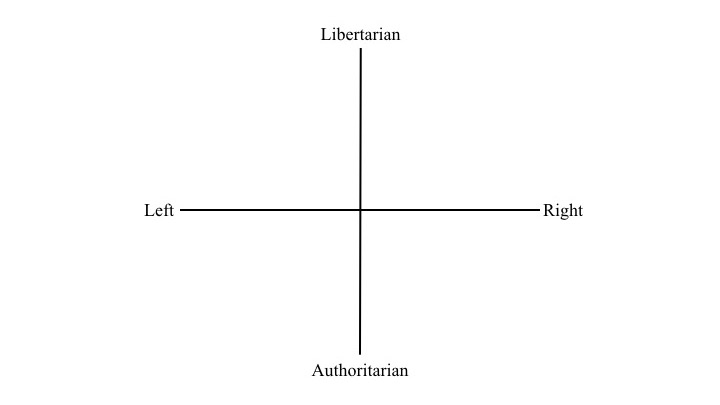


 freedom and reason