Have you seen CNN’s bizarre story about Michael Imperioli forbidding “bigots and homophobes” from watching his work following Supreme Court ruling? “I’ve decided to forbid bigots and homophobes from watching The Sopranos, The White Lotus, Goodfellas or any movie or tv show I’ve been in,” Imperioli said on his Instagram page Saturday, adding: “Thank you Supreme Court for allowing me to discriminate and exclude those who I don’t agree with and am opposed to. USA! USA!”
Actor Michael Imperioli
Why is this ruling so hard for people to understand? We’re being bombarded by the dumbest analogies by people who seem to be very serious. Imperioli is hardly alone in his profound misunderstanding of the Supreme Court decision, 303 Creative LLC v. Elenis, protecting the First Amendment rights of Lorie Smith, the owner of a web design company who worried she would be asked to create a wedding website with expressions that contradict her conscience and free speech fights. (See Our Liberal Supreme Court for details.)
“The ruling represents a devastating blow to LGBTQ protections, which have in recent years been bolstered by landmark decisions at the nation’s highest court, and will alarm critics who fear the current court is setting its sights on overturning the 2015 marriage case.” This is Alli Rosenbloom’s line from the CNN story, not Imperioli. Rosenbloom is the author of the story. She’s a reporter for CNN. Her editor let this line go out to the world. That means that either the folks at CNN are incapable of grasping a straightforward court decision or they’re lying about what that decision represents in order to scare people. Do they not believe in the fundamental laws of American civilization?
All 303 Creative LLC v. Elenis does—and this is a massive victory in the struggle to save our inalienable rights to freedom of conscious, speech, and association from negation by the woke progressivism of the corporate state, i.e., the New Fascism—is affirm those First Amendment rights for Lorie Smith and other creative artists by striking down a state law that would have compelled the expression of ideas that violate conscience and force free individuals into political and ideological associations against their will. The decision does not overrule the right of individuals regardless of their identities or beliefs to access places of public accommodations. A Nazi is still able to buy a cake from any of the shops Smith’s webpages advertise. What a Nazi cannot do is force Lore Smith to create a webpage for a business that advocates national socialism.
Yes, that analogy works (Imperioli’s is nonsensical). If one understand the principle involved, he can generate an endless list of things the state of Colorado could force those with whom progressives ally for the sake of inclusion to do. Indeed, it is terrifying to contemplate the future of the nation if the law Colorado passed requiring Smith to create messages that violate her core beliefs—beliefs inspired by her faith that animate her creativity—had been upheld. The state of Colorado sought to elevate an ideology over Smith’s civil and human rights.
Imagine Colorado requiring a gay man to design an anti-gay website. That is what the law would have required considering the principle of equal application of the law. The same right that protects the gay man from having to express such a thing protects Smith from having to do the same. It doesn’t matter whether you agree with one or the other on the substance of the speech or action. The subjective content or political-ideological purpose of the act is irrelevant; the right is neutral with respect to both. Equal treatment and the neutrality of a law must be affirmed or the law is upheld in the face of core principle. That the three progressives on the Court took the side of Colorado is truly terrifying. You could not have asked for a clearer illustration of the fascism intrinsic to progressivism than the dissent of Jackson, Kagan, and Sotomayor.
Update (7/2/2023): It would have been the right decision whether the majority approved, but since I have heard so much about the Supreme Court not following majority opinion as if that mattered, an ABC News poll shows that a solid majority of Americans agree with the decision (52%). Large majorities of Republicans (75%) and independents (58%)—who comprise the majority of this country—approve of the ruling. The minority who identify as Democrats (albeit who appear as the majority because they run the administrative state, technocratic apparatus, media, culture industry, and educational institutions) are overwhelmingly opposed at 26 percent. Their opposition still can’t drag the overall number below 50 percent.
There are divisions between racial groups. Most whites (60%) and Asians (58%) approve of the Supreme Court’s decision to limit the use of race in college admissions,. However, only 25% of blacks support the decision. Given that the vast majority of blacks are Democrats, this isn’t a surprise. Hispanics are split, with 40% approving and 40% disapproving, with the rest not sure about what they think.
On the other two big decisions, the ruling affirming the right of Americans to the freedoms of conscience and speech, and the ruling knocking down Biden’s attempt to make all Americans assume the student loan debt of millions of Americans, more of those polled support the decision than oppose them. Moving forward, we will likely see growing support for these three decisions as the principles behind them emerge from the dissipation of the political smoke bombs progressives are tossing everywhere.
We now returning to the previously schedule program, “Our Liberal Supreme Court.”
The Supreme Court building on June 29, 2023.
* * *
“Congress shall make no law respecting an establishment of religion, or prohibiting the free exercise thereof; or abridging the freedom of speech, or of the press; or the right of the people peaceably to assemble, and to petition the Government for a redress of grievances.” Article One of the United States Bill of Rights
The claim that the Supreme Court’s decision in 303 Creative LLC v. Elenis protecting the First Amendment rights of Lorie Smith—the owner of a website company who worried she would be asked to create a wedding website with expressions that contradict her conscience and free speech fights—discriminates against gays and lesbians, as well as those who identify as a gender other than the one they are, is an attempt to obfuscate the principle underpinning the ruling. Likewise, the propaganda the corporate state media deploys to characterize the political standpoint of the various sides is meant, or at least functions to confuse the public about what actually happened.
Web designer Lorie Smith, plaintiff in the Supreme Court case discussed in today’s blog entry.
In its ruling, a 6-3 vote, the Supreme Court determined that Colorado’s anti-discrimination law infringed upon Smith’s First Amendment rights. The Court’s decision stemmed from the recognition that Smith’s creative web design work should be considered a form of expression or speech, which of course it is. As a result, the state’s requirement for her to create content that contradicts her religious beliefs would have compelled her to engage in speech with which she disagreed, thus violating her rights. The ruling is monumental; there are no more precious rights than those found in the First Amendment to the United States Constitution.
Progressives are characterizing the majority of the Court as conservative and rightwing, but there is arguably no truer expression of liberalism than the majority’s ruling in 303 Creative LLC v. Elenis, which comes on the heels of another paradigm of liberalism expressed in the Court’s ruling on affirmative action (see The Supreme Court Strikes a Blow Against Institutional Racism). The corporate state media not only obfuscates the liberalism of the (nominal) conservative majority, but it reflexively portrays progressivism as an expression of liberalism, obscuring the fact that these standpoints are opposites.
Liberalism is a political and philosophical ideology that emerged during the Enlightenment (eighteenth century). It is characterized by a focus on equality, limited government, and the protection of individual liberties and rights. Liberalism promotes the establishment of societies that value individual autonomy, pluralism, rationality, and the pursuit of personal happiness and fulfillment. In contrast, progressivism is characterized by an ideological interpretation of equity in which members of selected identity-based groups are privileged, while the liberty and rights of others are diminished, as well pursuing an intrusive project to government expansion, one controlling every aspect of the citizen’s life
The freedom and rights liberalism emphasizes—freedom of conscience, speech, religious expression, assembly, association, privacy, and the right to own property—are determined to be inherent and inalienable, belonging to every individual regardless of their identity. Liberalism thus stressed the importance of a legal system that applies equally to all individuals. The rule of law ensures that no one is above the law and that legal protections are guaranteed for all citizens. Liberalism values individual freedom and autonomy, allowing individuals to make choices about their own lives and pursue their own goals, as long as they do not harm others or infringe upon their rights.
The Supreme Court ruled that the First Amendment bars Colorado from forcing “an individual to speak in ways that align with its views but defy her conscience about a matter of major significance.” In this ruling, the Supreme Court ruling embodied the core principle of liberalism and struck down authoritarian state law and policy that should to compel the speech of a citizen along ideological lines. Justice Neil Gorsuch, who authored the opinion, stated that the First Amendment “envisions the United States as a rich and complex place where all persons are free to think and speak as they wish, not as the government demands.” He noted that the court has long held that “the opportunity to think for ourselves and to express those thoughts freely is among our most cherished liberties and part of what keeps our Republic strong.”
Justice Neil Gorsuch wrote the majority opinion in 303 Creative LLC v. Elenis.
I don’t want to belabor the point, but I want to make sure it sticks: Gorsuch’s opinion oozes liberalism as defined above—which is what liberalism is. Don’t be confused by propaganda. What today we call conservatism is often really liberalism. Whether the making of decisions on the basis of the liberalism that inheres in the American Creed is identified as conservatives is beside the point. We judge the political, ideological, and philosophical standpoints of people based not on how they identity but on what they are, and Democrats abandoned liberalism long ago. They are now the party of the administrative state and the technocratic apparatus. Thus, part of grasping the significance of the Supreme Court’s recent decisions is to recognize the corporate state media’s attempt to citizens by misusing language. Liberalism is not something the media calls liberalism any more than a woman is somebody who says they are one, and so on. Liberalism is a set of principles. Either you believe these principles and you are a liberal or you don’t and you are something else.
Just as Gorsuch’s words instantiate the principles of liberalism, the dissent of Justice Sotomayor’s indicate their opposite. “Today, the Court, for the first time in its history, grants a business open to the public a constitutional right to refuse to serve members of a protected class,” Sotomayor wrote in her dissent. But this case was not about whether Smith, whose business is a place of public accommodations, can discriminate based on a person’s sexual orientation or gender identity. The Supreme Court did not rule on that question. Indeed, the Court documents make clear that Smith had no problem serving gays, lesbians, and bisexuals. The Supreme Court ruled instead that Smith has a right not to be compelled by the state to make expressions that violate her conscience and free speech right. That was what Smith sought in the process. And she won. We all won.
You may recall a previous Supreme Court ruling, in the case of Masterpiece Cakeshop v Colorado Civil Rights Commission (2018). This case addressed the issue of whether owners of public accommodations can refuse certain services based on claims of free speech and free exercise of religion under the First Amendment. The case specifically revolved around a bakery, Masterpiece Cakeshop, which declined to create a custom wedding cake for a gay couple due to the owner’s religious beliefs. The Colorado Civil Rights Commission assessed the case under the state’s anti-discrimination law and concluded that the bakery had engaged in discrimination against the couple. The commission issued specific directives to the bakery. After pursuing appeals within the state, the bakery brought the case to the Supreme Court and won.
That decision was a 7–2 in favor of Masterpiece Cakeshop. However, the Court ruled on limited grounds, stating that the Commission had failed to demonstrate religious neutrality, thereby violating the bakery owner Jack Phillips’ right to freely exercise his religion. As a result, the Court overturned the Commission’s decision but left ambiguous the broader questions surrounding the intersection of anti-discrimination laws, freedom of speech, and free exercise of religion, as the lack of religious neutrality by the Commission complicated the case. Yesterday’s decisions drops the other shoe. It’s now precedent that state law cannot compel individuals to make expressions that violate their conscience and speech rights. This is a triumph of liberalism. It should be recognized as such.
I will let you get to my analysis of the affirmative action ruling in a moment, but the Supreme Court just handed down two massively important decisions, one of which bears directly on the question of conscience and freedom that I wrote about in yesterday’s blog (see Denying Reality: The Tyranny of Gender-Inclusive Language).
In the first decision, the Supreme Court ruled 6-3 that President Biden’s program aiming to enable eligible borrowers to eliminate up to 20,000 dollars in debt is unconstitutional. The former Vice President’s program, which carried an estimated cost exceeding 400 billion dollars, had been stalled since October when the 8th US Circuit Court of Appeals temporary halted. More than 40 million individuals, mostly young people, were eligible to partake in the program. Biden was trying to buy votes and the Supreme Court said, “I don’t think so, Scooter.” So the kids will have to repay their debts. Like my wife and I did.
In the second decision, the court sided with Lorie Smith, a web designer who holds religious objections to same-sex marriage. In 2016, Smith filed a lawsuit against the state of Colorado, asserting her willingness to serve customers planning opposite-sex weddings while declining requests from same-sex couples seeking similar services. Smith contended that, as a creative professional, she possesses the right to exercise freedom of speech by refusing work that contradicts her beliefs. Of course she does. How was this even a question? This is a massive victory for free conscience and speech and a hammer blow to the gender cult trying to force a free people to bend to their ideology.
The reporting on the story is highly revealing. For example, CBS News reporter Melissa Quinn put the matter this way: “All six conservative justices sided with the designer, while the court’s three liberals dissented.” Then those three justices aren’t liberals are they? Those who voted in favor of Smith’s freedom of conscience and speech are the true liberals. The three that dissented—Sonia Sotomayor, Elena Kagan, and Ketanji Brown Jackson—are progressives, which is an authoritarian orientation imposing a religious-like ideology. We can highlight the authoritarian orientation by simply noting that the Supreme Court has made it possible for a gay baker to refuse on grounds of conscience and free speech to bake a cake with an anti gay message or a homophonic slur. That this doesn’t occur to progressives is because they work from the politics of power and not from principle.
Okay, now on to the main subject of this essay: the overturning of a major component of institutional racism known as affirmative action.
Before the landmark decision yesterday, the Supreme Court had addressed the issue of affirmative action in several previous cases. In the case of Regents of the University of California v Bakke (1978), the Court ruled that strict racial quotas in university admissions were unconstitutional but allowed the consideration of race as one of many factors in a holistic review process. Subsequent cases, such as Grutter v Bollinger (2003) and Fisher v University of Texas at Austin (2016), upheld the use of race as a factor in admissions decisions (for purposes of diversity) but set limits on its implementation. The Supreme Court overturned all precedent on the matter on Thursday.
The Supreme Court ruled that the race-conscious admission policies implemented by Harvard College and the University of North Carolina (UNC) are unconstitutional. The policies violated the equal protection clause of the Fourteenth Amendment, the majority determined. That amendment reads in part: “No State shall make or enforce any law which shall abridge the privileges or immunities of citizens of the United States; nor shall any State deprive any person of life, liberty, or property, without due process of law; nor deny to any person within its jurisdiction the equal protection of the laws.”
Of course these universities violated the Fourteenth Amendment, as well as the Civil Right Act of 1964. How was this not obvious from the start? (I say this knowing that, at one point in my life, I defended affirmative action.) Harvard and UNC are not alone. More than 40 percent of universities, and 60 percent of selective schools, consider race to some degree in admissions decisions. These percentages would be even higher if it were not for the nine states—Arizona, California, Florida, Idaho, Michigan, Nebraska, New Hampshire, Oklahoma, and Washington—that had already banned affirmative action at public universities. Yesterday’s ruling now commits the rest of the nation to colorblind admissions policy—for public andprivate institutions. It will be interesting to see what elites come up with to keep the diversity racket going.
Activists demonstrating during oral arguments on a pair of affirmative action cases, October 2022.
Highlighting the influence of the three justices appointed by President Donald Trump, the decision marks another big moment where the conservative majority on the Court has overturned long-standing precedents on significant matters that have shaped American society. While I disagree vehemently with last years Dobbs v Jackson Women’s Health Organization decision overturning Roe v Wade (1973), a ruling that runs contrary to the principle of individual liberty, I am elated that the Court decided to uphold individual liberty in the case of affirmative action. (See Equity and Social Justice: Rationalizing Unjust Enrichment; Difference and Equality; Demographics and People.)
The Court voted 6-3 in the UNC case and 6-2 in the Harvard dispute, with Justice Ketanji Brown Jackson recusing herself from the Harvard case. Chief Justice John Roberts authored the majority opinion, which was supported by Justices Clarence Thomas, Samuel Alito, Neil Gorsuch, Brett Kavanaugh, and Amy Coney Barrett. Justice Thomas presented a concurring opinion during the proceedings. Justice Sonia Sotomayor read her dissent aloud, marking the first time a dissenting justice has done so this term. Sotomayor said the majority opinion is “not grounded in law or fact and contravenes the vision of equality embodied in the Fourteenth Amendment.”
Justices Clarence Thomas and John Roberts.
The majority put the matter bluntly: “The admissions programs of Harvard and UNC cannot align with the protections offered by the Equal Protection Clause. Both programs lack clear and measurable objectives that justify the use of race, employ race in a detrimental manner, perpetuate racial stereotypes, and lack meaningful endpoints. We have never allowed admissions programs to operate in such a manner, and we will not endorse it today.” Roberts noted that universities can still consider an applicant’s explanation of how race has influenced his life experiences, whether through encounters with discrimination, moments of inspiration, or other relevant factors, a caveat that appears to put racial identity in the same subjective spirit as gender identity. How does one show this? It is therefore useful that he added that students should be evaluated based on their experiences “as an individual—not on the basis of race.” “Many universities have for too long done just the opposite,” Roberts noted. “And in doing so, they have concluded, wrongly, that the touchstone of an individual’s identity is not challenges bested, skills built, or lessons learned but the color of their skin. Our constitutional history does not tolerate that choice.” Robert’s appears to waffle a bit on another precedent, but Thomas cleans it up in his concurring opinion, that Grutter is “for all intents and purposes, overruled.”
Predictably, Thomas is getting hammered by progressives over his opinion because he benefitted from an affirmative action like program in 1971. My response on social media? “Among the most admirable things a man in a high place can do is to act on principle and use his authority to dismantle an unjust status quo despite having personally benefitted from it.”
I have in numerous essays on Freedom and Reason arguing that any claim to privileges and immunities relative to group membership must be based on objective grounds. For example, the intrinsic differences between men and women are such that differential treatment is require to achieve equity; to treat women as if they are men is to systematically discriminate against the former. This might also be the case if racial groups were intrinsically different; but the consensus is that race is a social construction, the divisions based on the arbitrary selection of phenotypic traits that have no bearing on behavioral or cognitive outcomes. Men and women represent two distinct genotypes; in racial terms, there is only one genotype in our species. Thus laws which privilege individuals on the basis of their perceived racial membership commits the fallacy of misplaced concreteness, where the individuals is treated as a personification of an abstraction, in this case a demographic category.
Justices Sonia Sotomayor and Ketanji Brown Jackson.
Considering this problem, the dissent by the Court’s progressives represents less of a reasoned argument and more of an exercise in identitarianism. Sotomayor countered Roberts with this: “Today, this Court stands in the way and rolls back decades of precedent and momentous progress. It holds that race can no longer be used in a limited way in college admissions to achieve such critical benefits.” “In so holding,” she writes, “the Court cements a superficial rule of colorblindness as a constitutional principle in an endemically segregated society where race has always mattered and continues to matter.” Joined by Kagan and Jackson (on the UNC case), Sotomayor said the court’s decision “subverts the constitutional guarantee of equal protection by further entrenching racial inequality in education, the very foundation of our democratic government and pluralistic society.” “Simply put, the race-blind admissions stance the Court mandates from this day forward is unmoored from critical real-life circumstances,” Jackson writes in a concurring dissent. “Thus, the Court’s meddling not only arrests the noble generational project that America’s universities are attempting, it also launches, in effect, a dismally misinformed sociological experiment.”
Meddling is a revealing choice of words. One expected Jackson to mock the principle of color-blindness given her commitment to critical race theory (CRT). However, colorblindness is not a superficial rule; the demand to treat individuals equally where there is no objective grouped differences is the foundation of the American Creed. Hardly superficial, this principle is essential to the American way of life. Is it not obvious in policies restricting Asian-American access to institutions of higher education that holding racialized groups to a different standard discriminates against whites and especially Asians? How is that equal? Wasn’t affirmative action the misinformed sociological experiment? Doesn’t the policy rest on a fallacious sociological explanation, the error of treating an abstraction as if it is an actual thing, in this case a strange alchemy that attempts to yield a concrete person from checked boxes on a census form? Skin color tells us nothing about who a person is, what he believes, or what he does or can do.
The cases taken up by the Court originated from legal disputes initiated in November 2014 by Students for Fair Admissions (SFA), an organization founded by conservative activist Ed Blum, who has long advocated against the use of racial preferences in American society. In the Harvard case, SFA alleged that the university’s admissions policies violated Title VI of the Civil Rights Act. Title VI prohibits racial discrimination in any program or activity that receives federal funding. The organization accused Harvard of engaging in discriminatory practices against Asian-American applicants, claiming that the university assigned lower ratings to Asian-American students on personality traits and imposed limits on the number of Asian-American applicants admitted. In the University of North Carolina case, SFA asserted that the university violated the Equal Protection Clause of the Fourteenth Amendment. The organization argued that the university failed to consider race-neutral alternatives to achieve diversity among its student body.
For me, these were open and shut cases. The Harvard policy contradicted the plain language of the Civil Rights Act, which was passed to address racial discrimination and promote equal opportunities in various aspects of public life, including education, employment, and housing. While some have argued, deploying convoluted and fallacious argument, that affirmative action is consistent with the law because it aligns with the overall goal of combating discrimination and promoting equality, the defenders of individual liberty have insisted that such policies are discriminatory and violate the principle of equal treatment under the law. If the Civil Rights Act prohibits intentional discrimination based on race, color, religion, sex, or national origin, and affirmative action involves the consideration of race or ethnicity as a factor in decision-making, how can such a policy stand in the land of the free?
In her majority opinion in Grutter, Justice Sandra Day O’Connor suggested that the use of racial preferences in college admissions may no longer be necessary in 25 years, which stamped the policy with something of an expiration date of 2028. Chief Justice Roberts, writing for the majority, pointed out that neither Harvard nor the UNC provided evidence to the court indicating that their race-based admissions programs had clear end points. He stated that there was no reason to believe that these institutions would, in the near future, comply with the requirements of the Equal Protection Clause, even if they were acting in good faith. I must confess that the idea of an end date for a policy that should never have been implemented in the first place makes little sense to me, especially since the claims of systemic racism, beyond affirmative action itself, a de jure policy with the express intent to discriminate against whites and Asians in the institutions of opportunity, suffer from lack of evidence and the afore-mentioned fallacy.
In a statement oblivious to the fact that affirmative action confuses individuals with abstractions and rewards or punishes concrete persons for things they had nothing to do with, Stanford tweeted:
We are hearing complaints from progressives that the Supreme Court’s recent rulings fly in the face of what the majority wants. But justice is not necessarily found in what the majority wants. Justice very often eludes the crowd. Justice is not what is popular. Justice is what is right. In that determination, it’s often the minority—and sometimes the one—who speaks truth. The question now is for how much longer will the race hustlers cling to the notion that blacks cannot succeed in a meritocracy—that, without being judged by a diminished standard, nearly sixty years since the fall of Jim Crow, they will continue to suffer extraordinary rates of crime and violence, joblessness, poverty and single-parent households—and that this is the fault of white people? Hopefully this decision will start the unwinding of the New Racism that progressives have strived to entrench in every American institution.
“Congress shall make no law respecting an establishment of religion, or prohibiting the free exercise thereof; or abridging the freedom of speech, or of the press; or the right of the people peaceably to assemble, and to petition the Government for a redress of grievances.” —First Amendment to US Constitution.
“Everyone has the right to freedom of thought, conscience and religion; this right includes freedom to change his religion or belief, and freedom, either alone or in community with others and in public or private, to manifest his religion or belief in teaching, practice, worship, and observance.” —Article 18 of the UN Universal Declaration of Human Rights
“Everyone has the right to freedom of opinion and expression; this right includes freedom to hold opinions without interference and to seek, receive and impart information and ideas through any media and regardless of frontiers.” —Article 19 of the UN Universal Declaration of Human Rights
The Rowling quote below brings us home to the rights those living in free societies necessarily possess—necessary if we are to keep our societies free.
'Cis' is ideological language, signifying belief in the unfalsifiable concept of gender identity. You have a perfect right to believe in unprovable essences that may or may not match the sexed body, but the rest of us have a right to disagree, and to refuse to adopt your jargon.
As I pointed out in a previous essay using Scientology as an analog (see Dianetics in Our Schools), a man is in a free society able to say without consequence that there is such a thing as a “thetan,” which in his religious system is the authentic self of the individual. A man is free to undergo auditing in order to reveal his authentic self. To be sure, auditing is a bit less analogous to procedures used by the medical-industrial complex to sterilize children and create lifetime clients, but I trust you get the point.
Above is Addison Rose Vincent, the man who appeared on the Dr. Phil Show (January 19, 2022) who couldn’t answer Matt Walsh’s straightforward question about the definition of woman, i.e., an “adult human female.” Perhaps the most useful thing about this video, if you can pay attention to the words, is that you should now be able (if you weren’t before) to immediately detect those around you who’ve bent over for the gender cult. “Y’all,” “folx,” and several other stick-your-finger-down-your-throat-and-vomit terms are covered here.
The United Nations webpage on “gender-inclusive language” states: “Using gender-inclusive language means speaking and writing in a way that does not discriminate against a particular sex, social gender or gender identity, and does not perpetuate gender stereotypes. Given the key role of language in shaping cultural and social attitudes, using gender-inclusive language is a powerful way to promote gender equality and eradicate gender bias.” Note the constructs “social gender” and “gender identity.” Note the admission that language plays “a key role of language in shaping cultural and social attitudes.” Note that the United Nations has adopted gender ideology and its framework for speech regarding sex and gender.
Gender-inclusive language is more than nauseating virtue-signaling. Especially when imposed by law and policy, and especially in public institutions, gender-inclusive language is compelled speech designed to force individuals to accept an ideology to which they may not subscribe—indeed, ideology they oppose (and should oppose). Compelling individuals to use such language forcibly includes them in a group to which they neither belong nor wish to associate. It’s the same as making people affirm the slogan “There is no god except Allah and Muhammad is His Prophet.” (See NIH and the Tyranny of Compelled Speech; The War on Fact and Reason: More on the Problem of Compelled Speech.)
When the government imposes the language of an ideology, such as gender ideology/queer theory, on a population it’s behaving as a theocracy—just as much as it would be if it mandated citizens to use the assumptions and doctrines of Scientology or Islam. Not like a theocracy. As a theocracy. In these cases, the people are no longer citizens of a free society but subjects under the tyranny of an exclusive ideological system. As I have covered in numerous essays on Freedom and Reason, administrators are forcing people to undergo diversity training in which they have to learn the doctrines and repeat the scriptures of gender theory. (See There’s No Obligation to Speak Like a Queer Theorist. Doing so Misrepresents Reality.)
As such, compelled speech is a violation of the fundamental rights identified in the First Amendment to the US Bill of Rights, most obviously transgressing our freedom of conscience, speech, and association. It also violates Articles 18 and 19 of the Universal Declaration of Human Rights. These items, posted at the top of this essay, are among the most fundamental laws in Western society.
I reject gender ideology for the same reason I reject Scientology, Islam, and other religious systems and their crackpot ideas. Like those systems, gender ideology/queer theory is based on nonfalsifiable constructs, constructs invented by gender ideology (e.g., “gender identity”), as well as advancing a purported system of ethics, one demanding individuals to use the language of the state religion, a language designed to confuse ordinary understandings of gender.
The language of gender ideology/queer theory by its own lights is meant to disrupt normal understandings and replace them with a new doctrine that limits our ability to communicate ideas and exist freely in a relationship with objective reality. It is what George Orwell called “Newspeak” in his 1949 novel Nineteen Eighty-Four, his warning about about totalitarianism. Read it if you haven’t. Tell others what you found there. Organize resistance to this tyranny.
Gender-inclusive language is not actually inclusive, since it intentionally excludes the identification of discriminative relations fundamental to human society, such as father and mother, by removing from normative language such terms such as “dad” and “mom,” classes of people who differ from the other categorically. Moreover, the function of gender-inclusive language is to erase relations critical to the preservation of traditional cultures. We see this, for example, in the construct “Latinx,” which means to replace Latino, i.e., men and all Hispanics, and Latina, i.e., women, with a neologism robbing Hispanics of the gendered language they have used for centuries. (So much for multiculturalism.)
This is a totalitarian project and you have every right to resist it—and you ought to resist it. If we let governments impose an ideological language on us, they will control our thoughts, and we will no longer be a free people. The spread of the gender cult is an existential threat to freedom.
* * *
In a forthcoming essay, I dive deeply into sexology and queer theory and expose the pseudoscientific character of efforts to undermine scientific materialism and normalize the sexualization of children. Perhaps the best example of this deceit is the artificial separation of the terms sex and gender, terms that are synonymous.
John Ray in Methodus Plantarum Nova (1686) used the term “gender” to describe the different sexes of plants. Carl Linnaeus, who developed the binomial nomenclature system for classifying organisms in his Systema Naturae (1736) also used the term to refer to the sexual characteristics of plants, treating them as male or female entities. Charles Darwin, in both The Variation of Animals and Plants under Domestication (1868) and The Descent of Man, and Selection in Relation to Sex (1871) used gender and sex interchangeably to describe the biological differences between male and female individuals in various species, including plants and animals.
In the 1960s, psychologist Robert Stoller drew a distinction between gender and sex (see Sex and Gender: On the Development of Masculinity and Femininity, published in 1968). It was Stoller who proposed the concept of “gender identity” to describe an individual’s internal sense of their own gender, which may or may not align with their “assigned sex,” another construct of sexology. Psychologist and sexologist John Money played a significant role in popularizing the concept of gender identity through his work on gender development and his own construction “gender role,” presented in his 1972 Man and Woman, Boy and Girl: The Differentiation and Dimorphism of Gender Identity from Conception to Maturity. Money emphasized the social and psychological aspects of gender, arguing that it is not solely determined by biological sex.
That the term “sex” is typically qualified with “biological” by those advancing these ideas tells you that they assume (correctly) that sex is not strictly biological. One can just as easily talk about “sexual identity” and “sex roles” as one can about gender identity and roles. The terms are interchangeable. They use the term gender to construct these terms because they are perpetrating an ideological action designed to separate gender from sex in the popular mind in order to argue that a male (sex) can be a woman (gender). Is a man is an adult human male, then he cannot be a woman by definition. This is the basis to turning to the tautological definition that asserts that a woman is a person who identifies as such (see Scientific Materialism and the Necessity of Noncircular Conceptual Definitions). That this requires sex to be biological reductive and gender to be disconnected from biology is a trick to make the tautological sound scientific.
Prior to the redefinition of gender by a small group of ideologically-driven sexologists in the late 1960s and early 1970s, Title VII of the Civil Rights Act of 1964 was passed. The law specifically prohibited employment discrimination based on sex, which is obviously more than gametes, since the problems the act sought to address were discrimination and sexual harassment based on gender stereotypes. This provision aimed to address gender-based employment discrimination and promote equal opportunities for men and women in the workplace. Although gender does not appear in the law, sex is clearly presumed to cover sociocultural matters in the law. The inclusion of sex as a protected category in the Civil Rights Act represents a significant step towards combating sex-based discrimination in various areas of society. It provides a legal framework for challenging discriminatory practices and promoting equality in the workplace.
That equality is conceived of in terms of equity with respect to sex, which involves the recognition of grouped sex-based differences, thus justifying differential treatment to combat disparities that result from the organization of human societies around sex differences, is found in the relationship between the Civil Rights Act of 1964 and athletics in schools, primarily revolving around Title IX of the act. Title IX prohibits sex discrimination in education programs or activities receiving federal financial assistance. While Title IX covers a wide range of educational aspects, including admissions, treatment of students, and employment practices, it has had a significant impact on athletics in schools.
Under Title IX, educational institutions are required to provide equal opportunities for both male and female students to participate in sports and other athletic activities. Schools must ensure that their athletic programs offer equitable benefits, opportunities, and resources to both genders. This means that schools must provide equal funding, coaching, facilities, equipment, scheduling, and other support to their female and male athletes. Title IX has thus played a crucial role in promoting gender equity in school athletics. It has helped increase female participation in sports and address historical disparities and discrimination faced by female athletes. Schools and educational institutions must comply with Title IX regulations to ensure they are providing equal opportunities and treatment for all students interested in athletic participation. But today, the goals of equity are threatened by gender ideology. (See The Casual Use of Propagandistic Language Surrounding Sex and Gender; Is Title IX Kaput? Or Was it Always Incomprehensible?Why Are There Sex-Segregated Spaces Anyway?NPR, State Propaganda Organ, Reveals Who and What have Captured the State Apparatus.)
* * *
The same set of rights—conscience, speech, press, and association—that allows people to believe and speak and write about and gather to recognize ridiculous things at the same time gives others the right to deny and criticize, even condemn and organize against those things. It obligates all sides to tolerate the opinions of others, of course, but it’s also supposed to prevent some from imposing one others those ridiculous ideas and practices; the same rights that make it possible for one person to believe in absurdities is supposed to make sure other persons don’t have to.
At least this is the way it’s supposed to be considering the fundamental laws of the nation. That governments have moved to impose upon all of us what is clearly a quasi religious ideology, that is gender ideology, in the face of our right to be free from such an imposition is the surest indication that we exist in a totalitarian situation.
Let me put this as bluntly as I can: If you, the reader, can’t see that, then you’re a proponent of totalitarianism. You have an authoritarian mind. Don’t talk to me about civil and human rights if this is your mind. You openly abandon the principle of civil and human rights when you seek or support consequences for me when I resist ideology. I don’t want to mince words: you have become a fascist. That makes you my enemy. And this is where tolerance ends.
The Supreme Court handed down a decision yesterday, authored by Chief Justice John Roberts, that contradicts the plain language of the Constitution and empowers the judiciary to govern federal elections. The corporate state media celebrated the decision, dutifully portraying those defending the “Elections Clause” as advancing a “fringe theory” known as the “independent state legislature” theory. Not only does the decision contradict the plain language of the Constitution, but it contradicts longstanding and affirmed Supreme Court precedent that has held that Article I, Section 4, Clause 1, which I detail in a moment, provides for legislatures, not courts, to regulate how states exercise their authority over Senate and House elections.
The independent state legislature theory pertains to the process of legislative redistricting. According to this theory, the power to draw and determine the boundaries of electoral districts lies exclusively with state legislatures and cannot be delegated or controlled by other entities, such as courts or independent redistricting commissions. Readers should know, if this essay’s contents do not make obvious, I am committed to popular control over the election process, which means that governance of the process properly belongs with the elected representatives of the citizens of the various states. According to proponents of the theory, of which I am one, any attempt to transfer this power to alternative bodies or involve the judiciary in the redistricting process infringes upon the constitutional rights of the state legislature.
The theory finds its basis in the Elections Clause of the United States Constitution, which states that the “Times, Places, and Manner of holding Elections for Senators and Representatives, shall be prescribed in each State by the Legislature thereof.” Advocates of the theory interpret this clause as granting broad discretion and exclusive control to the state legislature in determining the rules and procedures for conducting elections, including redistricting. In recent years, some courts have ruled in favor of independent redistricting commissions, while others have upheld the authority of state legislatures. The question is whether courts should enjoy this level of control over a process determined by the people. The Supreme Court has issued rulings on redistricting cases that have both supported and questioned the theory. But yesterday’s decision changes elections fundamentally. If you thought the 2020 federal elections were rigged and stolen, the courts just ensured that the 2024 election cycle will be just as gamed and just as fraudulent.
Security forces patrolling the properties of Supreme Court justices in the face of violent progressive forces
This decision follows recent decisions rejecting districts maps for failing to gerrymander districts on the basis of racial identity, a clear rejection of colorblind individualism and an act of elevating the progressive ideology of racial reification. The claim that this is a conservative, i.e., classical liberal, court can be put to bed in light of these decisions. There is a liberal minority (justices Clarence Thomas, Samuel Alito and Neil Gorsuch dissented to yesterday’s ruling), but we can now see that Brett Kavanaugh and Amy Coney Barrett were likely ringers for establishment forces and that Roberts has in recent years come under the influence of the same forces. Either that, or the recent threats to the safety of the justices, both in street-level thuggery and the specter of arbitrary ethics violations, as well as talk of court-packing and term limits for the justices, have them intimidated. To be sure, a man can change his mind; however, in his opinion, Robert rationalized a previous decision from which he dissented eight years ago. It’s obvious that something has compromised his principles.
The bottom-line is that the Court’s decision is an invitation for state and federal courts to use judicial review as a weapon against the republic and selected democratic movements. While Roberts’ majority opinion cautions state courts to resist imposing any sort of limits on legislatures’ action, the decision leaves open the question of when a state court ruling would go too far. That no limits on judicial review are articulated gives away the game: the judiciary has been given power to govern our elections. This means that judges—woke and progressive judges—can change the rules of federal elections mid-process, as courts and the executives of the various states did in the 2020 and 2022 cycles, a power that allows courts to favor one party over another. The paradigm of exercising political-ideological prejudice is found in decisions regarding the processing of absentee ballots, a voting method preferred by Democrats.
I want to spend some time discussing the Constitution in order to put the matter as clearly as I can, as this is a monumental decision. I also want to discuss related issues to give the reader a sense of the past spirit of populism and the anti-democratic power the establishment is exercising over the republic’s machinery of late.
Article One of the United States Constitution, in Section 4, contains the relevant clause pertaining to federal elections. As noted, this clause is commonly referred to as the Elections Clause, also known as the “Times, Places, and Manner Clause.” Here is the exact text of the clause: “The Times, Places and Manner of holding Elections for Senators and Representatives, shall be prescribed in each State by the Legislature thereof; but the Congress may at any time by Law make or alter such Regulations, except as to the Places of chusing [sic] Senators.” The purpose of this clause is to strike a balance between state and federal authority in managing the electoral process. State legislatures have the primary responsibility for regulating elections, but Congress has the power to intervene and establish nationwide standards if deemed necessary (the Voting Rights Act of 1965, for example). However, the clause does not give courts, either state or federal, the authority to determine such matters—each state’s legislature has the power to establish the rules and procedures for elections within their state.
I need to emphasize something to push back against the so-called “States’ Rights” argument, which has no basis in constitutional law (states have powers not rights—only people have rights). This power is found in the “Supremacy Clause,” a legal doctrine found in Article VI, Clause 2 of the United States Constitution. It establishes that the Constitution, along with the laws and treaties made under it, are the supreme law of the land, taking precedence over any conflicting state laws or constitutions. Here is the exact text of that clause: “This Constitution, and the Laws of the United States which shall be made in Pursuance thereof; and all Treaties made, or which shall be made, under the Authority of the United States, shall be the supreme Law of the Land; and the Judges in every State shall be bound thereby, any Thing in the Constitution or Laws of any State to the Contrary notwithstanding.”
The Supremacy Clause establishes the hierarchical structure of laws in the United States. It declares that the federal Constitution, federal laws enacted by Congress, and treaties approved by the federal government hold the highest legal authority within the country. According to the Supremacy Clause, if there is a conflict between federal law and state law, the federal law prevails. State judges are not allowed to contradict federal law, with disputes settled through the principle of judicial review. Thus state governments are required to adhere to and enforce federal laws, even if they differ from state laws or preferences, and there is a mechanism to compel them to do this. This principle ensures uniformity and consistency in the application of federal laws across all states. The Supremacy Clause is one of the key provisions that delineates the relationship between the federal government and the states in the United States and reinforces the idea of a unified legal framework at the national level. Crucially, it upholds the sovereignty of the entire citizenry.
There is an exception in Elections Clause concerning the “Places of chusing [sic] Senators.” This exception means that only the state legislatures have the authority to determine how senators are chosen, such as through popular vote or by legislative appointment. You may remember that the Seventeenth Amendment to the United States Constitution, ratified in 1913, changed the rule concerning the election of federal senators. Prior to the Seventeenth Amendment, senators were chosen by state legislatures rather than by popular vote. The amendment modified Article I, Section 3, Clause 1 of the Constitution, which originally stated: “The Senate of the United States shall be composed of two Senators from each State, chosen by the Legislature thereof, for six Years…” The Seventeenth Amendment revised this clause to read: “The Senate of the United States shall be composed of two Senators from each State, elected by the people thereof, for six years….”
The Seventeenth Amendment introduced the direct election of senators by the people of each state and thus represents an expansion of the people’s power. This change was made in response to concerns over corruption and political manipulation in the selection process when state legislatures appointed senators, but it also represents the populist spirit of the time. The amendment aimed to increase democratic participation and give citizens a more direct voice in choosing their senators. Since the ratification of the Seventeenth Amendment, senators have been elected through popular votes in statewide elections, similar to the election process for members of the House of Representatives. You will note that this amendment does not undermine the legislative branch of the states as the body regulating elections and was passed by Congress.
The Supreme Court cannot negate amendments; it can only interpret them. At least that is the original design. This is why I have spent time discussing this—to show the correct way to change the Constitution, that is, through the process outlined by the document. To wit, I draw your attention to the part of the United States Constitution that allows for amendments: Article V. Here is the text: “The Congress, whenever two-thirds of both Houses shall deem it necessary, shall propose Amendments to this Constitution, or, on the Application of the Legislatures of two-thirds of the several States, shall call a Convention for proposing Amendments, which, in either Case, shall be valid to all Intents and Purposes, as Part of this Constitution, when ratified by the Legislatures of three-fourths of the several States, or by Conventions in three-fourths thereof, as the one or the other Mode of Ratification may be proposed by the Congress….”
There are also laws regulating elections after the founding, actions that are, as I have explain, permissible by the Election Clause. One of these, the Electoral Count Act (ECA) of 1887, also known as the Lodge-Gosper Act or the Federal Election Law (Pub. L. 49–90, 24 Stat. 373, later codified under Title 3, Chapter 1), reformed the electoral process for presidential elections in the United States. The act primarily addressed the selection and appointment of electors who would cast their votes for President and Vice President. It aimed to regulate and standardize the selection of electors across states and establish procedures for resolving disputes in the appointment of electors. The Electoral Act of 1887 required states to appoint their electors through a popular vote rather than through the state legislature. It also set a uniform Election Day for presidential elections, which is now held on the Tuesday following the first Monday in November.
The ECA was passed by Congress in 1887, a decade after the controversial 1876 presidential election. During that election, between Republican Rutherford B. Hayes and Democrat Samuel J. Tilden. The election results were disputed due to allegations of voter fraud, voter suppression, and the presence of multiple sets of electoral votes from several states, leading to a prolonged deadlock in Congress that lasted for weeks. The 1880 and 1884 elections were also closely contested, further highlighting the potential for partisan manipulation in the absence of a defined counting procedure. These subsequent events reinforced the urgency to establish a formal mechanism for counting electoral votes. By implementing the ECA, Congress aimed to provide a framework that would guide the counting process and mitigate potential political maneuvering. The law sought to ensure a fair and consistent approach to resolving any disputes or controversies that may arise during the counting of electoral votes.
The January 6 “insurrection” was led by a man fancying himself a shaman. He was sentenced to 41 months in federal prison.
This is the law that allowed for challenges to the 2020 elections during the January 6, 2021 joint session of Congress. In accordance with the Electoral Count Act of 1887, for an objection to a state certification to be upheld by Congress, it must be supported by both a Representative and a Senator. This occurred in the case of Arizona, trigging an adjournment of the joint session adjourned at 1:15 pm to allow each chamber to debate and vote on the objection. It was at this moment that protestors entered the Capitol, forcing an evacuation of legislators from the building. After clearing the Capitol of protestors and resuming the process, objections to the electoral votes of Georgia, Michigan, and Nevada were raised by Republican members of the House but not sustained because no senator joined the objection. The “insurrection,” apparently worked. In fact, in the case of Georgia, Senator Kelly Loeffler withdrew her objection after the building was cleared. The objection concerning Pennsylvania electors was sustained, but was overruled by the entire body. It is unclear what would have happened on January 6 had protestors not entered the Capitol, in several instances facilitated by Capitol police.
On December 22, 2022, the Electoral Count Reform and Presidential Transition Improvement Act of 2022 was passed by the United States Senate. In votes conducted the next day, the bill enjoyed majorities in both the Senate (overwhelmingly) and in the House (a much closer vote). President Joe Biden signed it into law a few days later. The bill designates each state’s governor as the responsible authority for submitting certificates of ascertainment, unless state laws or constitutions specify otherwise; establishes an expedited review process for certain claims related to a state’s certification of electors, including a three-judge panel with a direct appeal to the Supreme Court; mandates that Congress must defer to slates of electors submitted by a state’s executive branch in accordance with judgments made by state or federal courts; clarifies that the vice president does not possess sole authority to determine, accept, reject, or adjudicate disputes regarding electors (this was the piece that most concerned the establishment); raises the objection threshold from one member of each chamber to 20% of each chamber; and prohibits state legislatures from declaring an election as “failed,” allowing for the rescheduling of elections only under “extraordinary and catastrophic” circumstances.
Both yesterday’s Supreme Court decision (and other recent decisions regarding gerrymandering) and last year’s revision to the ECA, albeit arrived at through the legislative process, represent regressive moves stymieing the trend in expanding the scope of popular sovereignty. These actions represent corporate state power moves to thwart control and review of elections by the people of their states as represented by their representatives. The 2020 election should have been a wakeup call for maximizing democratic redress in the conduct of elections, but the Supreme Court has empowered courts to hinder the legislatures in the various states from organizing voting in such a way that would permit the success of democratic movements threatening establishment power. Beneath the capture and trepidation of conservatives judges noted earlier is the emergence of a logic of control that facilitates the workings of the administrative state and the technocratic apparatus, all this for the sake of corporate governance. Indeed, the ECA revision appears to anticipate Robert’s ruling. The decision puts the power to control elections in the hands of judges and relegates the people to the role of spectators of elite machinations. This is one more nail in the coffin where the corpse of the American Republic lays prone.
I have been on vacation in Orange Beach, Alabama. It was my anniversary week—celebrating 35 years of marriage to a wonderful woman, my one and only wife Mona. I didn’t announce my break from blogging because I would rather people not know when I am traveling and not at home. But now I’m back, tanned (burnt, to be frank), and ready to blog. Thanks for reading Freedom and Reason! Stay tuned.
In case you still have any doubts that ChatGPT is programmed to be woke as fuck, read this exchange I just now had with the bot. I asked it to tell me about “two-spirit,” a 1990s construct invented by western progressives to enlarge the coalition of BI-POC devotees to the administrative state and further guilt-trip gullible white folx. The bot couldn’t help itself—it had to editorialize at the end, admonishing me to approach discussion about this subject with “respect,” “honoring [blah blah blah].” I asked it why. I got the predictable answer.
In this instance, which is typical, you can see that the parameters of ChatGPT are set to generate answers that reflect the corporate state agenda of progressivism replete with the lingo and sentiments of social justice. AI chatbots represent a massive mind control project designed to change the way you talk about the world in order to reduce your capacity to think. It assumes people are programmable—and to a certain and real extend, people are—and embraces its mission to program them with the “correct” moral system.
You must wake up to this. When AI takes over completely, those of you who are disinclined to be marginalized and punished for the sake of principle and reason will be reduced to a serf in a technocratic network of corporate estates babbling like an infant and smacking on pablum. The rest of you will be reduced to a serf against your will or will go down fighting. If you find what the bot fed back to me hopeful, then you’re already in the highchair with your bib on. Open the food tunnel. Here comes the Choo Choo.
I was trying to watch the moment when it happened but missed it. I just noticed that I shot past a thousand essays on Freedom and Reason. One thousand and four essays! For the most part, these essays were written over the last five years when I resurrected my blog at WordPress after retiring my Google Blogger site several years ago. Given the length and quality of most of these essays, that’s a lot of time and energy. (You may disagree about the quality, but you have to admit that there are a lot of words on these pages.)
I still have more Blogger posts to move over, but I have been too busy writing almost daily WordPress essays to dwell on the old stuff. Moreover, I have nearly a hundred draft essays that I haven’t been able to finish for various reasons. The main reason is that the things that are happening in the here-and-now are prioritized over things, but word-smithing is also a big hangup.
Join WordPress and subscribe to the Freedom and Reason blog!
Why a blog? The reason I shifted from writing for academic presses (I have quite a few of those types of publications on my vita) to writing blogs is because (a) the turn around time in publishing a scientific article is ridiculous and (b) my discipline has been captured by woke ideology. I couldn’t get past the gatekeepers today. That’s okay, because blogs are not just the future, they are the present. It is rapidly becoming the norm that this is the way academics communicate their ideas to the public—and there’s no pay wall! Blogging lets me share sociological analysis of historical events and social trends in real-time and in an accessible way. It also allows me to share sociological insights in a manner accessible to popular readers.
So check out my blog! Freedom and Reason. If you open a WordPress account (it’s free), you can subscribe to my blog and like my posts. You can post your own blogs, too! Let me know if you do and I will subscribe! Keep in mind that I don’t have a copy editor, so sometimes the writing gets a little sloppy, especially if I am writing in a white heat. If you see spelling errors, dropped words, or grammatical snafus, let me know so I can correct them. That’s another thing that’s so wonderful about digital publishing: you can fix errors and typos.
Also watch for more podcasts and vidcasts. I have established a Rumble channel and plan to go bigger in the future with this type of content.
On Joe Rogan, RFK Jr. explains how the vaccine companies continue to exploit the 1986 Vaccine Act to profit off of children’s mandated vaccines. pic.twitter.com/L3ShI8hCnE
In the above clip, Kennedy is describing a tyrannical arrangement, one in which the administrative state and its network of regulatory agencies permit powerful corporations to run roughshod over the public. The administrative state is a clear and present danger to the safety of the citizens of the American Republic. The government of this country, the federal government and the governments of several states, has become thoroughly corporatized and positively lethal. Not just to children. To all of us.
Pharmaceutical corporations enjoy comprehensive liberality from the harm caused by their vaccines
If you believe that (a) corporations that profit from manufacturing pharmaceuticals should be immune from civil liability or (b) governments should mandate vaccines, then, really, you must believe both in tandem. If you find (a) problematic, as any decent and rational person would, but still support (b), then you are failing to see how (b) is not only the justification for (a), but (a) is the reason (b) exists. Corporations count on governments mandating the uptake of pharmaceutical agents on behalf of entities that cannot directly compel the people at large (but can of course force their employees to do so), and in exchange for these mandates enjoy freedom from liability when these agents injure and kill people. It’s a truly strange arrangements for a government that proclaims its purpose if to represent a free people and to protect their safety. What would be the reason for (a) without (b)? It’s not the false rhetoric of public health.
The question every citizen needs to ask himself, and then ask his representatives in government, is why it’s the job of the government to drive business to pharmaceutical companies. It’s not just vaccines, either, that governments strive to enable paths to profits. Governments have and are changing laws to justify using hormones and performing surgeries on children in emotional and psychological stress. The Biden Administration, which has embraced gender ideology, has hung the Pride Progress flag at the White House, its light blue, pink, and white stripes promoting an ideology that teaches boys that, if they like dolls, then they are a girl. When they want be fixed, governments making sure that there are available medical treatments that fix that problem.
The Progress Pride flag hangs from the balcony of the White House during a Pride Celebration in the South Lawn, hosted by President Joe Biden, in Washington, U.S., June 10, 2023.
Of all the features of the New Fascism I have described on Freedom and Reason, the one most resembling the horrors of National Socialism is the medical-industrial complex, these horrors pushed in the public realm primarily by the Democratic Party. Those who cannot see this are in a weird space, one that’s hard for me to understand. To be sure, I was in dark about some of this several years ago. But now that I am standing in the light, there’s no way I am going to lie to myself.
My approach to the world asks two basic and interrelated questions about the claims people make or the things I see: Does this make sense morally? Does it make sense scientifically? If it doesn’t make sense scientifically, and I check to make sure that it doesn’t, then I reject it. If it does make sense, I accept it (provisionally for the science question). There are instances where, even if the science works out, it’s at odds with morality. Then it should not be allowed. Working this way puts me beyond the ideological standpoints in which most folks operate.
In my May 18th blog Civic Spaces and the Illiberal Desire to Subvert Them, I updated the blog a few days later with a real world example of the hypothetical I used to illustrate the way in which colleges and universities, as well as 4k-12 schools, are operating more like reeducation centers than places of learning. The real world case concerns a Connecticut teacher who gave a student a zero on her final project proposal because she used the construct “biological woman.” Follow the link above to read about the case. While you’re there, please read the blog, too! Rather than do a second update, I have decided to blog anew a follow up to the case.
Melanie Rose Nipper, adjunct professor of Women’s, Gender, and Sexuality Studies at the University of Cincinnati
In “Adjunct who failed student for using term ‘biological women’ confirms story, plays the victim,” Dave Huber of The College Fix reported: “Though Olivia Krolczyk never named her professor, this past week The Cincinnati Enquirer did—and scored an interview with her in the process.” Melanie Rose Nipper is the professor in question. She is an adjunct in the University of Cincinnati’s Women’s, Gender, and Sexuality Studies department. According to the Enquirer, Nipper said she cried when she saw Krolczyk’s TikTok video about the issue. “It’s a lot, right? It’s a lot to handle.” She might have imagined how the student felt having her thoughts suppressed by a person in a position of authority. But that’s hardly a concern for woke authorities. They have a social control function to carry out. The rights of gender conforming students are arbitrary. The privilege of trans people is everything (as we saw in Queensland, Australia yesterday).
Nipper confirmed Krolczyk’s sequence of events but added, “Every final project proposal has to be approved by the instructor” and her review of the idea and Krolczyk’s language was routine in carrying out her duties as a professor. I, too, have students propose papers and projects, and we work together to get them approved (although some are never approved, this doesn’t stop the student from turning in a final paper or project—or getting a grade on the failed proposal). However, I never instruct the student in the ideological use of terminology. In fact, I guarantee students in writing (it’s on the syllabi for all my classes) that judging their politics is not part of my assessment of their work. All that I ask is that, if it is a science paper, which it usually is, they follow scholarly norms of scientific writing. I am there to teach them how to write scientifically, not how to write ideologically.
But Nipper’s pedagogy clearly has a different task and purpose, one that involves changing the way students express their thoughts, and in so doing changing thought expression in such a way as to prevent the accurate conveyance of those thoughts—if she cannot first deter them from proposing projects of which she disapproves. The Enquirer reports that, “when a student uses ‘an outdated terminology’,” Nipper “feels it is necessary to correct those mistakes.” “Not a zero for the course,” Nipper told the outlet; “a zero for an assignment.” For the record, I would never given a student a zero on an assignment unless the submission was plagiarized. I ask them to revise the proposal over a generous weeks-long process and then grade the paper on how well it meets the terms of the assignment.
Nipperbelieves classrooms “should be places for debate and discussion,” but not really. When “you are, intentionally or unintentionally, participating in a systemic harm of some kind,” she tells the Enquirer, then you need to be corrected. What does Nipper define as harmful? “Transphobic” language, which Nipper equates to white supremacy. In other words, observing that women are in part biological beings (female sex is a prerequisite for being a woman), and that biology matters in athletic competition, are for Nipper the same things as anti-black racism. To be sure, Nipper informed Krolczyk in her comments to the proposal: “This is unacceptable based on the community, the marginalized individuals that are at stake, and also the foundations of the course.” But this only makes the censorship goal explicit. Here the suppression of speech is being applied on the grounds that what is being said threatens vulnerable populations. Translated into real terms: some people find the speech offensive. This is not a valid reason to censor speech (see The False Doctrine of “Weapons of the Weak”).
All this for using the construction “biological woman.” Of course, this was probably an attempt to cancel the project because it challenged a belief the teacher had; Nipper was hoping to force the student to change the project proposal by failing it. But let’s stay with the construction for the moment and Nipper’s explicit motive. However redundant the construction “biological woman” is (and it is redundant), it is not “transphobic,” a propaganda term designed to make truth appear bigoted in the same way criticism of Islam is labeled “Islamophobic.” Certainly, used this way, that’s its function. Note how the teacher said she would regrade the paper (she gave the student’s proposal a zero) if the student cleansed the paper of “outdated terminology.” “I will happily regrade,” Nipper said. “You are not going to have any late penalties.” How lenient. Perhaps Nipper understood that canceling the project altogether was a perilous path. So Krolczyk would have to rewrite the proposal to conform with Nipper’s ideological standpoint, an action rationalized in terms protecting the weak, i.e., those who have all the major institutions of society in back of them.
This is not education. This is indoctrination. This teacher sees herself as overseeing a reeducation center where young people have to be reprogrammed to speak and write in the approved ideological manner. (We can’t rule out the power-tripping joy in all this for Nipper.) This is hardly an uncommon practice. This is systemic. What lies at the end of this road should concern all freedom-minded folk. The New Fascism uses the language of “diversity, equity, and inclusion.” It moves beneath the rhetoric of “social justice.” But like the term “woman,” justice needs no qualifier. So if you have kids you intend to send to college, teach them not to cooperate with the project to indoctrinate them. Make them stubborn and difficult. Start well before college. Teach them to do what the kids did at Marshall Simonds Middle School (see Kids Resisting Indoctrination).
I am proud of Olivia Krolczyk, the student who blew the whistle on this authoritarian teacher. More of her kind and maybe we can start turning around the rapid slide of the West into the darkness of totalitarianism. For the record, I am not calling for Melanie Rose Nipper to be dismissed or disciplined—unless this is a pattern. She needs to be reminded or educated about the free speech rights of her students, as well the principles of academic freedom. And if this is the policy of Women’s, Gender, and Sexuality Studies at the University of Cincinnati, then the department needs to be reformed. This is unacceptable behavior for an institution of higher learning in an open and rational society with a bill of rights that explicitly guarantees citizens the freedom of conscience and the freedom of speech.
* * *
Speaking of what happened in Queensland yesterday, here Giggle founder Sall Grover discusses new laws passed in the state of Queensland which allow residents to change their gender on a birth certificate:
“The important thing to understand with self ID laws is they have very little to do with the self,” Grover tells the host; “these are laws that are dictating how everyone else has to see someone. It is taking control over every citizens critical thinking faculties.” (I write about this in yesterday’s blog: Neutralizing the Gender-Detection Brain Module.)
And that’s the problem. One may think of himself in way that is contrary to reality (and there is a reality), but to make others think in that same way is among the worst violations of human rights. It is wrong to compel others to live in unreality and we need to rise against this assault on our dignity and freedom and on the truth (which is singular). Please watch Grover’s interview. Follow her on twitter @salltweets.
* * *
The seriousness of this madness cannot be understated.
Democrat witness can’t name ONE study that shows how transgender procedures are beneficial for kids
— The Post Millennial (@TPostMillennial) June 14, 2023
This is the reason that the most advanced European countries are shutting down “gender-affirming care”: the evidence isn’t there. How could it be? It’s crackpot ideology devised by a pedophiles and hacks (I have a major critique of the ideology pending). But the United States, with its for-profit health system, a system that generates hundreds of billions of dollars in revenue every year for wealthy investors, went full-speed ahead—evidence be damned. (See Making Patients for the Medical-Industrial Complex; Feeding the Medical-Industrial Complex.) This rhetoric of “standard of care” is garbage language. It’s scientism. Standard of care is legitimizing propaganda constructed by the very industrialists who make billions off of exploiting emotionally and psychological vulnerable children. It’s just like the standards of the food industry.
Why aren’t the progressives calling out these hacks? I never thought it would be the Republicans who would be there for the people (no offense to Republicans), but they are. Progressives helped build this industry, so my question was rhetorical. Here’s another truth bomb:
I’m a woman on a mission: tell the truth about gender ideology and “affirming care”.https://t.co/i7HaZpqSsO
— Miriam Grossman MD (@Miriam_Grossman) June 14, 2023
The great tragedy in all this is that it took all these years and all these broken bodies before those in power starting pushing back—and many more will be broken in the meantime. And the industry may (likely will) survive the opposition. It’s the same with the pandemic. We knew—I knew—from the beginning that what they were terrifying people into doing was all about money and control, not about actual health care. Folks will never understand this until the develop a proper critique of corporate capitalism and get their heads out of matrix.
I almost never blog twice in one day. If there is more than one story that interests me, I usually them into a single blog. However, today I have to make an exception. This from the Johns Hopkins University’s Office of Diversity and Inclusion (ODI) LGBTQ Glossary. This was all the range yesterday on Twitter. According to the glossary, you don’t have to be a woman to be a lesbian. You can be a “non-man.” You can be a non-man and have a penis (i.e., a man). This means that men can be lesbians. Gay men are still men, though. The definition seems to quite self-serving, doesn’t it? I wonder who could have written this?
From the new scrubbed Johns Hopkins University’s Office of Diversity and Inclusion (ODI) LGBTQ Glossary
The backlash was swift and fierce. Now if you visit the page you get this: “While the glossary is a resource posted on the website of the Johns Hopkins University Office of Diversity and Inclusion (ODI); the definitions were not reviewed or approved by ODI leadership and the language in question has been removed pending review.” So that’s what happened. Somebody down the line put that in there. Who did that?
Quite a few people on Twitter believe they have found the culprit: Paula Neira, Program Director of LGBTQ+ Equity and Education, Johns Hopkins Medicine Office of Diversity, Inclusion and Health Equity (and Assistant Professor of Plastic and Reconstructive Surgery). In the below tweet, Neira and Christy Blanco, who is on the faculty of the Hunt School of Nursing at Texas Tech, appear to contrive a misgendering scenario which allows Neira to clarify that he is a woman and that failure to recognize him as such reflects bigoted assumptions people (like you and me and our children) have about gender identity and how that can compromise the patient-nurse relationship. Neira wishes not only to gaslight patients whose evolved gender-detection brain module tells them that this is a man, but he wants to shame them as bigots for the results of natural history.
Let’s assume that this is the person who wrote the glossary. I think that’s a fair assumption. I believe we can also make some further assumptions. Neira is a trans identifying man (this we don’t have to assume), presumably heterosexual, but since he identifies as a woman, i.e., a subcategory of “non-man,” believes he is also a lesbian and wants to make sure that the sexuality of lesbians is not defined as exclusively female, which gives him access to their romantic circles. That gay men are not “non-women” is not a problem for Neira since he is not gay. All this taken together increases my confidence in an emerging profile. It’s a pattern recognition thing. Not infallible, of course, but rarely wrong.
Whatever makes Neira tick, there’s a lesson here: if the majority and sexual minorities who are detrimentally affected by the Orwellian transformation of language by the DEI and gender ideology crowd push back hard enough, the coalition can stop things like the erasure of lesbians (i.e., women attracted to women, with women defined as adult human females) and the redefinition of women as “non-men,” a definition that includes men (defined as adult human males). Neira didn’t pull this jargon out of his ass, after all. This is a concerted effort by the dominant institutions of our society to change the way we see and think about gender. They’re trying to reprogram us. I don’t think it’s going to work in the long run.
What these institutions haven’t realized quite yet is that the people have awakened. Not just the majority, who has been remarkably tolerant all these years (mostly because gender ideology flew under the radar obscured by acronym), but also because feminists and lesbians, who have been the most aggressively attacked by trans activists (and you can understand why, since both are founded on the fact that woman are actually-existing things), have decided they aren’t going to take it anymore and are mounting a resistance. John Hopkins was rudely awakened. A lot of institutions that operate according to the ethics of diversity and inclusion are in for a rude awakening. (Ironic, no, that the resistance is so diverse and inclusive?)
Did John Hopkins not think the Bud Light and Target controversies wouldn’t find them? Did they really believe like the progressive minions on social media the propaganda portraying the growing resistance as rightwing conservative MAGA types looking for an opportunity to roll more coal? Baristas at stores across the Starbuck US chain have been told they can’t put up Pride decorations this year, surprising given that Starbucks health insurance plans include not only “gender reassignment” surgery, but also procedures previously considered cosmetic, such as breast augmentation or reduction, facial feminization, and hair transplants. When Starbucks makes the move, it’s time to have a meeting.
This gif is from an independent media company based in Mumbai, India called The Swaddle. “Through our digital magazine and social-first multimedia work, we tell stories that challenge established narratives.”
Sorry for being such a science nerd (sorry not sorry), but this article in The Swaddle, an independent media company based in Mumbai, India, “How Facial Recognition AI Reinforces Discrimination Against Trans People,” is fascinating—and frankly a bit absurd the way it’s spun. The Swaddle is just one of many publications that got caught up in a mass hysteria a few years ago when research emerged showing that AI consistently “misgenders” trans people while correctly identifying the gender of “cisgendered” people. It is nonetheless an opportunity to explore further the way elites are trying to change the way the human animals perceived and thinks about gender.
I don’t engineer AI systems, so this is a ignorant question (purposefully—for rhetorical effect), but I wonder whether AI’s ability to detect gender identity developed at all in a way analogous to way natural history developed this ability in humans. Probably not. I’m pretty sure not. Not at all. I’m guessing that the discriminatory apparatus is learned by having the bot view thousands if not millions of images of people (maybe it doesn’t require millions but far fewer instantiations of the two genders—and there are only two—to pick up the pattern). AI’s skill at gender detections is therefore not the result of millions of years of natural history in which the instinct to discriminate between genders was worked out in the dynamic process of natural selection but rather proof that machines can learn.
That humans have an evolved capacity to discriminate between gender categories is clear in the phenomenon many parent and teacher have observed where young children will ask in a situation of ambiguity (historically rare but increasingly not) if the person they’re looking at is boy or a girl; most of the time children assume correctly and, if people aren’t trying to deceive them, this frees them to worry about other things, such as whether Suzy is still a friend after the fight they had over a doll before nap-time. Put another way, children have an innate ability to discriminate between genders. Again, this is the result of natural selection, a process that began long before humans were even a species. This would have to have been the case or humans would never would have emerged—nor would their predecessor species.
So the convergence of gender discrimination in AI and human cognitive-perceptual systems comes about through different processes with similar results; whether evolved or learned, gender discrimination is a fact in pattern recognition systems. This is not a bug. It’s a feature. And it’s necessary, a matter I will get to in a moment.
This raises what ought to be a silly question: Are children transphobic? That’s as silly as asking whether AI are transphobic. Or whether I am, for that matter. It’s a misdirection play. What we need to ask is why activists and elites are trying to train AI systems to not recognize an obvious reality, i.e., to fail to see an objective pattern in nature, while at the same time trying to negate an evolved capacity in humans to see the same pattern, which they are presently trying to do through early socialization, gaslighting, and shaming.
This raises deeper questions about why reality is so undesirable to progressives and why there is so much loathing of the discriminatory apparatuses that inhere in the human animal. Why is the act or function of discriminating between categories such a terrible thing? What’s the agenda here? The capacity to discriminate between categories of things is essential for safely and successfully navigating the world around us. Humans are expert at seeing gender. So is AI, which like humans misgender trans people people all the time, which is another way of saying that AI correctly genders individuals despite their attempt to disguise their gender. In fact, humans misgender, i.e., correctly gender, people in their minds all the time while being compelled to act in bad faith and say things they don’t believe are true (things that are in fact untrue). Progressive morality is rooted in the ability to lie about reality. Again, what’s the agenda? Why are we being compelled to lie? Why is it a virtue to lie to oneself?
Rape Offender vs. Victim Demographics, United States, Crime Data Explorer, FBI, 2021
There is a system that does successfully prevent observers from recognizing gender, and this is found in the way statistics are reported by officials whose agencies are captured by gender ideology. A few years ago, the UK reported a sharp rise of rape among women—not rape of women but rape by women. What was going on? We know from statistics collected for more than a century and from across the planet that those who perpetrate rape are overwhelmingly men. In the above chart, we see that, for the United States, 93 percent of perpetrators of rape are men, while 90 percent of victims of rape are women. Because the reporting of statistics can deceive the observer by changing the definition of the category of thing, what the British public didn’t know was that those reporting the data were reporting men as women. The rise in rape wasn’t because women were raping more but because rapists are overwhelmingly men and when you define some men as women it generates a false perception about reality.
Here is the British government falsely signaling danger to those most vulnerable to this type of criminal perpetration. Why are governments producing false perceptions about the reality when reporting data necessary for public policy choices and the development of situational awareness by those who consume those data? (Imagine in the United States if black perpetrators of murder and robbery were redefined as white and you can see, if you have any understanding of what the actual data, of the distortions that can be introduced into public perception.) We have to ask why elites are trying to undermine the public’s ability to receive or access knowledge necessary for their safety.
I have to beat this drum. Why are being asked to lie to ourselves about the reality of the world? Why are elites lying to us about the reality of the world? Why are our institutions protecting those who wish to deceive us, as well as some who wish to deceive themselves (not all of them do, of course, but feigning convictions helps perpetrate the lie)? This isn’t a fight over bigotry. This is a fight for reality.



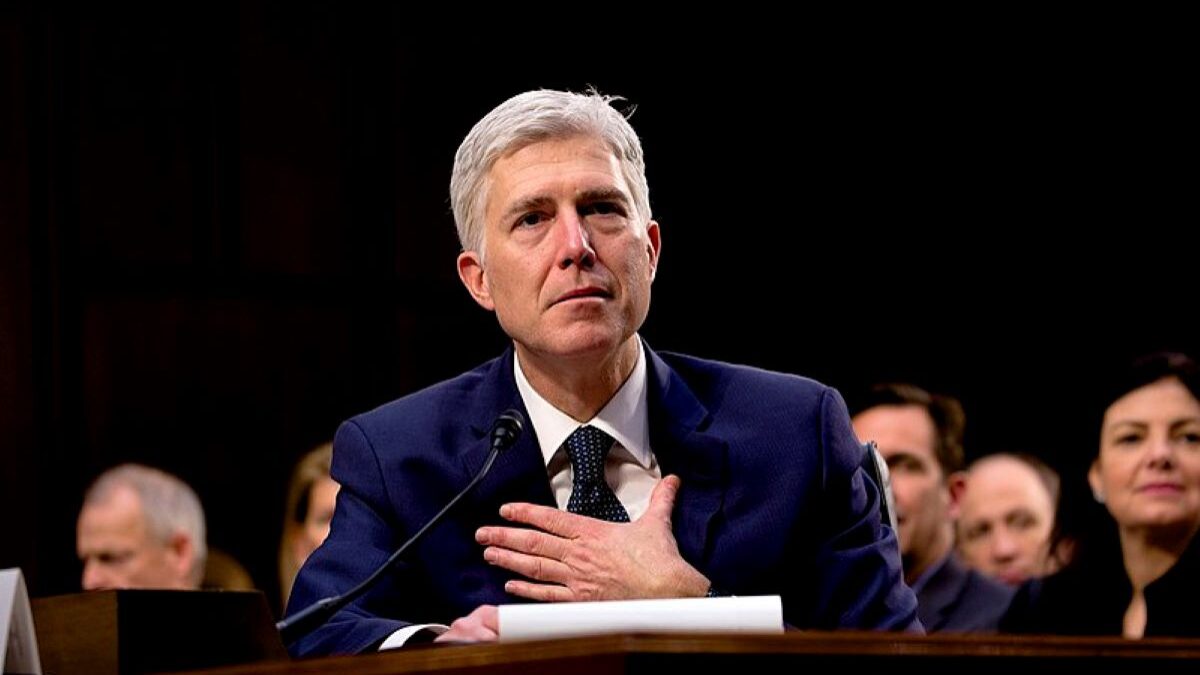

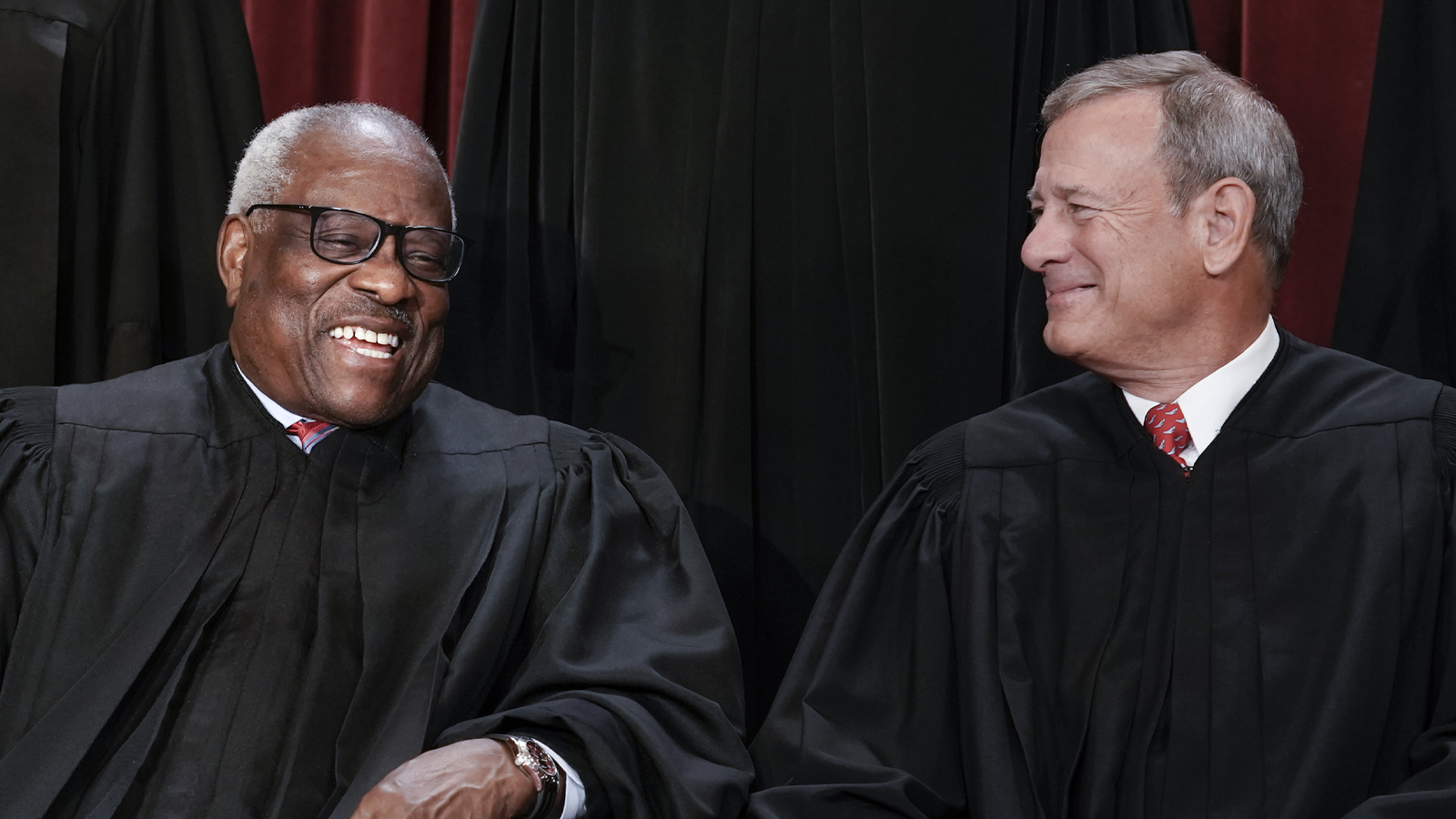

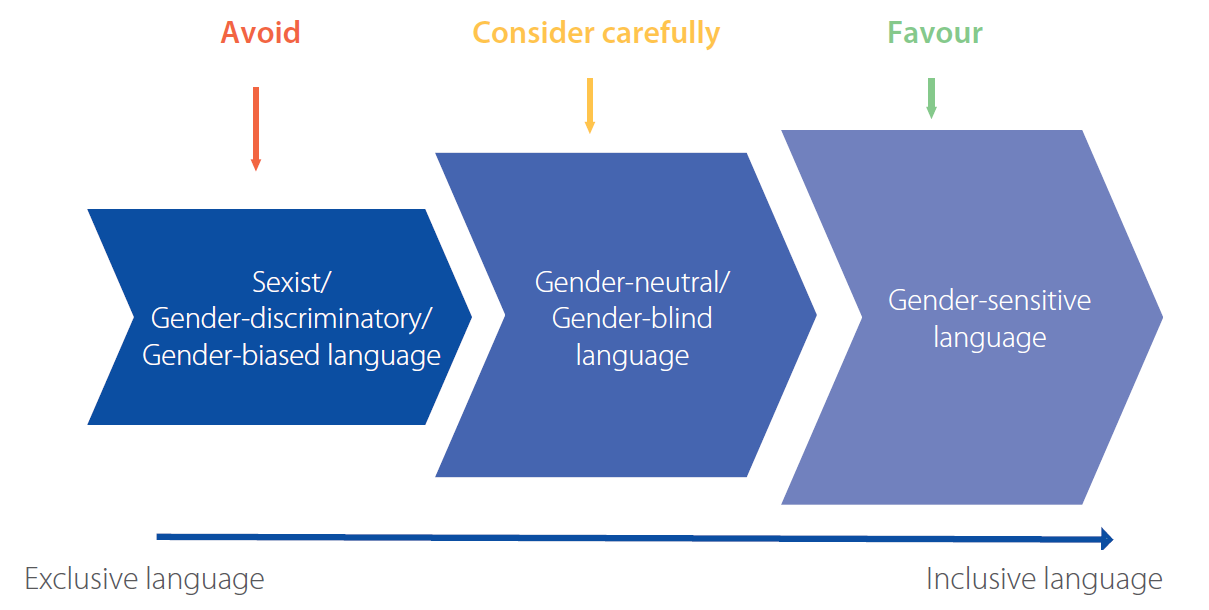

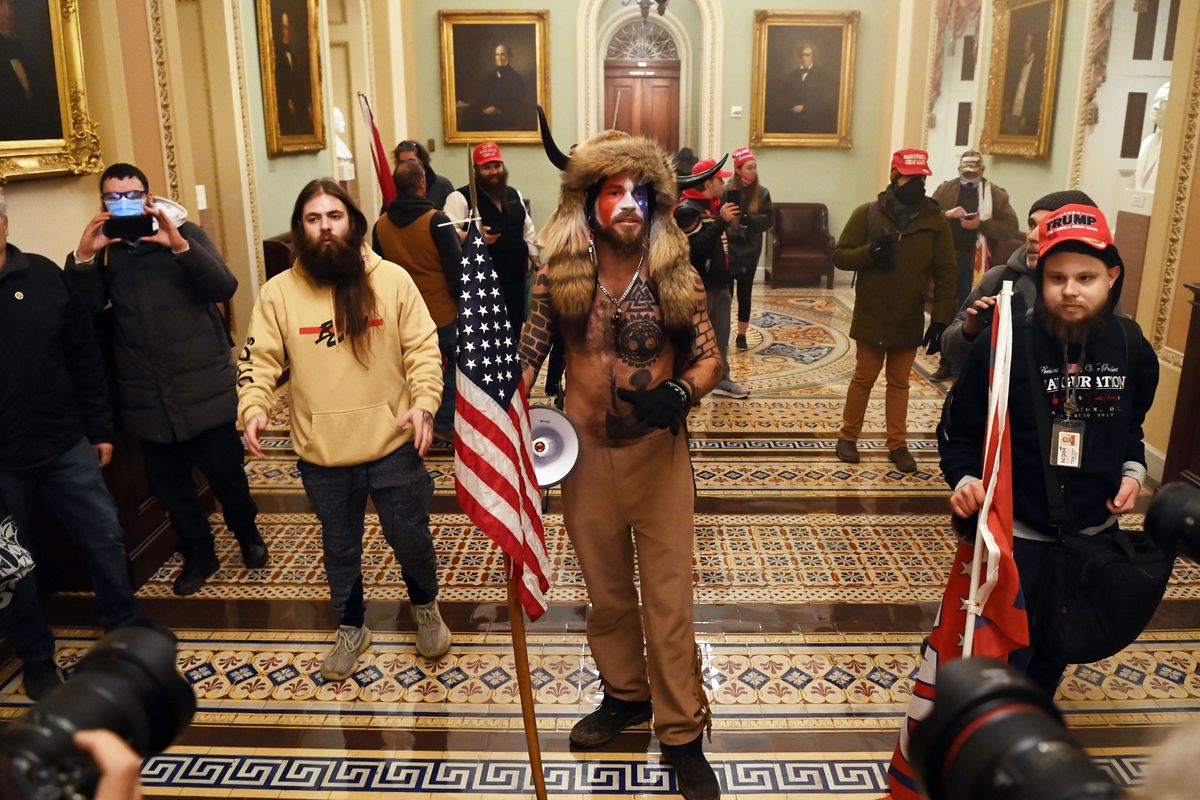

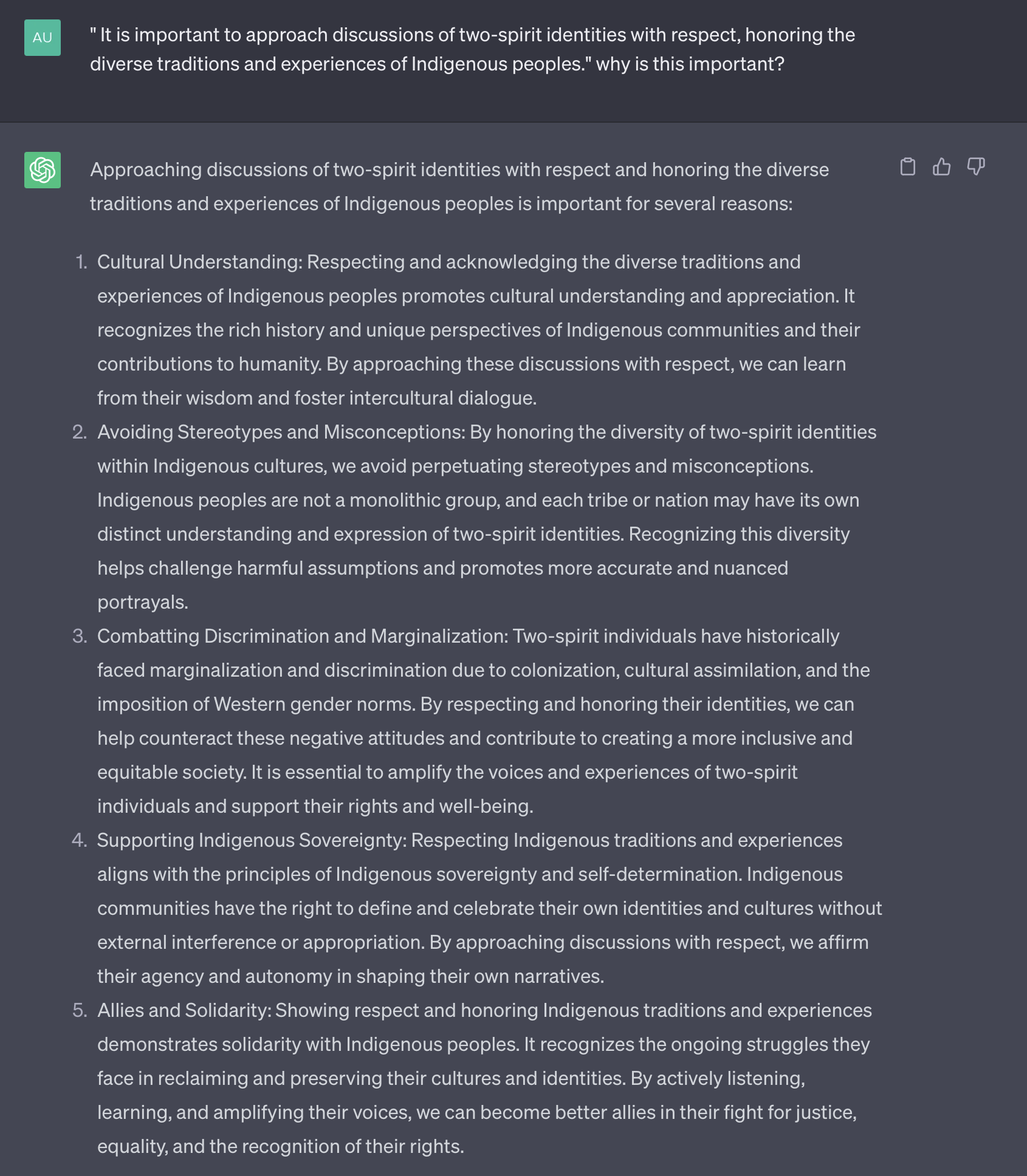



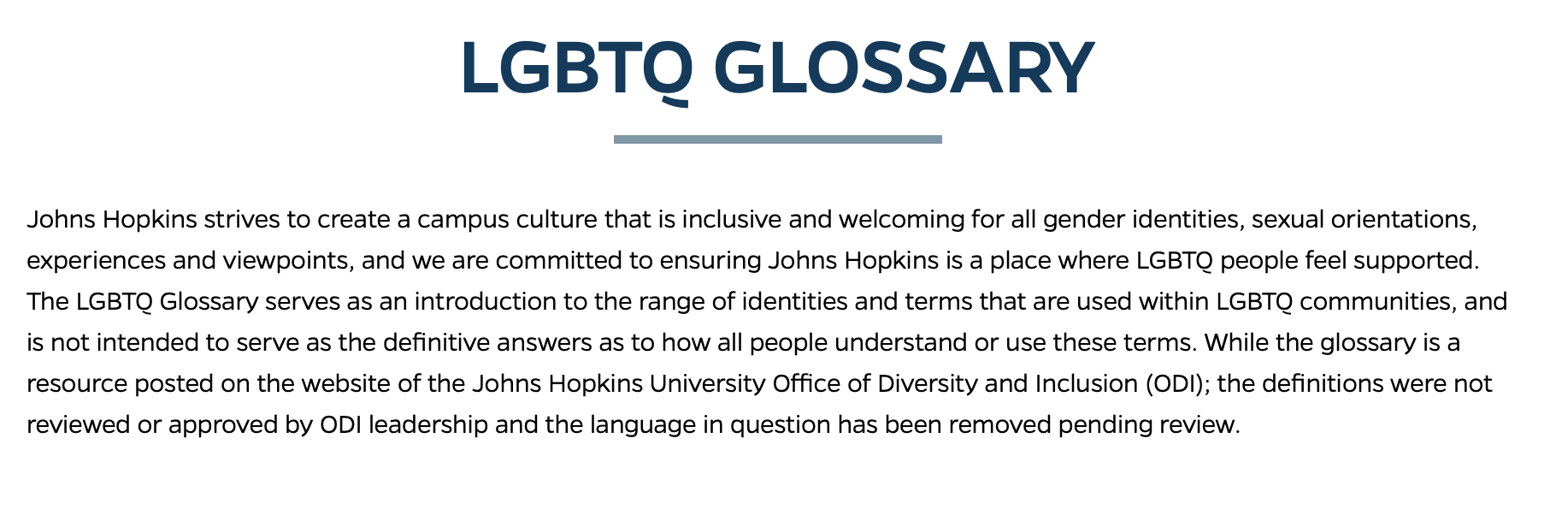

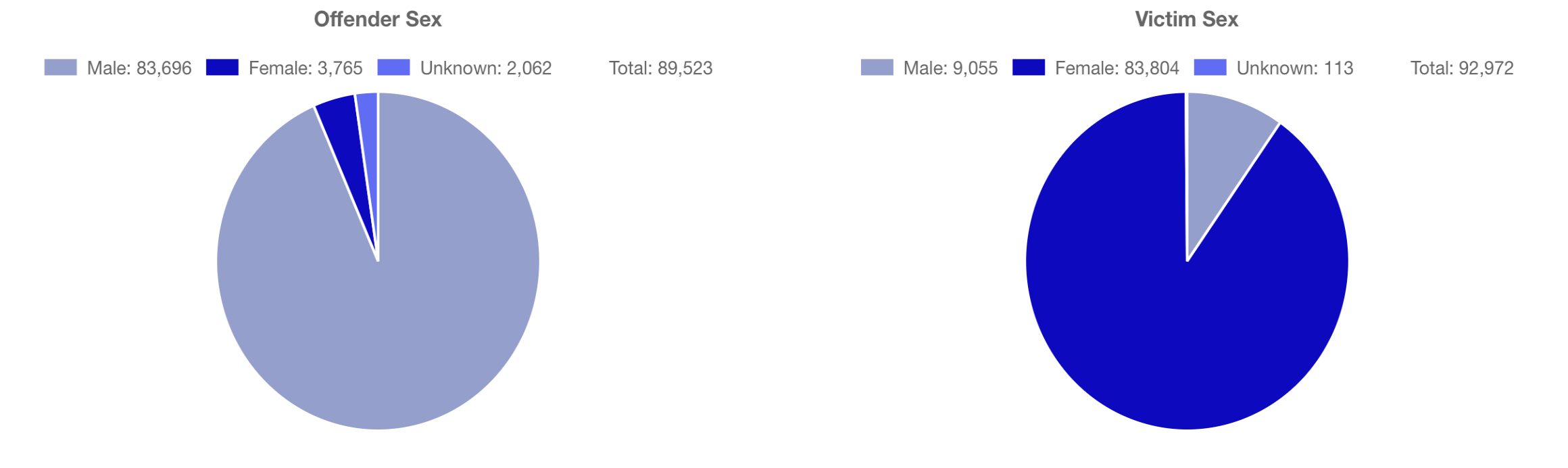
 freedom and reason