I will be brief. Christopher Wray, director of the FBI, is feeding the narrative questioning elements of the attempt on President Donald Trump’s life. In testimony before the House Judiciary Committee, under questioning from Congressman Jim Jordan, Wray said, “I think with respect to the former President Trump, there’s some question about whether or not it’s a bullet or shrapnel that hit his ear.” For those readers who may not have been paying attention, there was an attempt made on President Trump’s life on July 13 during a campaign rally in Butler, Pennsylvania. Had he not turned his head to refer to a chart behind him he would have been struck in the temple by an assassin’s bullet. Now the director of the FBI is raising doubts that the President was struck by a bullet.
It was surprising to hear Wray say this in light of the fact that The New York Times published a photograph of the bullet and the sequence of events documenting the fact of that bullet passing the President in the exact trajectory of the wound, the President’s reaction to being struck thus confirming the timing, and his hand with blood on it in the immediate aftermath confirming the presence of a wound—all of this occurring before quickly dropping to the ground to avoid being struck by more bullets. As the Timesreported, Michael Harrigan, a retired FBI special agent, said the image captured by Doug Mills, a New York Times photographer, seems to show a bullet streaking past former Trump. Indeed.
Doug Mills, a New York Times photographer, captures the bullet that struck President Trump on July 13, 2024 at a campaign rally in Butler, Pennsylvania.Mills captures the sequence of events establishing the fact that the president was struck by a bullet.
Wray confirmed what I already told readers about the number of shots Crooks fired in the span of six seconds. Eight cartridges were recovered from the roof from where the sniper fired the bullets. There were other details readers might find interesting (such as the ladder Crooks purchased that was not recovered from the scene and the presence of three explosive devices and a remote detonator). I may return over the news several weeks with an essay about the shooting, but I am waiting for more details. (See They Tried to Kill Donald Trump Yesterday.)
I want to close here with a few observations. First, whether Trump was hit by a bullet or shrapnel, or whether he was struck at all, doesn’t change the reality that an attempt was made on his life and the significance of Crooks actions and the failures of the Secret Service and local police. It doesn’t change the fact that a man was murdered and two others seriously injured. It is concerning that a narrative raising doubts about what hit the president is being used to raise doubts about the event itself and that Wray is feeding the narrative by using the weight of his authority to echo the doubts.
Because Democrats have suddenly rediscovered their love for law enforcement, they believe Wray’s questioning legitimizes their narrative about the event. If one is objective, then he knows that Wray is part of the Deep State, an apparatus that has been hellbent on delegitimizing Trump for eight years. Many of you are familiar with the many elements of the campaign: Trump is a Putin agent. Hunter Biden’s laptop is Russian disinformation. The 2020 presidential election was the most secure election in history. Joe Biden is sharp as a tack. And so on. That we don’t know what hit Trump’s ear is yet another establishment attempt gaslight the public. (See The Lies of the Corporate State Are Functional to Its Ends. See also Progressives Losing Their Shit Over the Attempt on Trump’s Life.)
Second, polls indicate that a third of Democrats wish the shooter hadn’t missed, while another third believe the shooting was staged. Supposing these two-thirds are not significantly overlapping, that means that a large majority of Democrats are either extremists or crazy.
Finally, I find suspicious the change in norm in how to address a former President where now a former president is referred to as such. It used to be that those who achieved the highest office in the federal government were referred to as “President” regardless of whether they currently serve in that position or not. This is a general rule and applies to other offices as well. It is convention is to refer to a dignitary by the last or highest office achieved. This tradition stems from a sense of respect and recognition of their service. This practice honors the significant role they played as the nation’s leader. For example, Bill Clinton is still commonly referred to as “President Clinton” or “Mister President” even though he is no longer in office. Similarly, individuals who have held other high offices, such as governors, senators, or ambassadors, are often addressed by their last or highest title. For instance, a former governor is often called “Governor [Last Name]” rather than “former governor” or “ex-governor.” Nikki Haley is referred to as “Ambassador Haley.” Etcetera.
I have followed convention whether I like the dignitary or not, and it strikes me that the deviation from the convention in this case is to manufacture the reflex that Trump is a lesser former President than other former Presidents. You may believe Trump to be a lesser figure, but it is not appropriate for the FBI director to engage in the partisan politics this deviation indicates.
The construct “transphobia,” like “Islamophobia,” is a propaganda term and ad hominem tactic designed to delegitimize criticisms of an ideology, in the case of transphobia, trans activism and so-called gender affirming care or GAC. While “homophobia” is itself an objectionable term because, like all constructions of its sort, it pathologizes antigay bigotry, it is not a propaganda term in the same sense, albeit a much better term for this phenomenon exists, namely heterosexism, better since antigay discrimination operates much the same way as does sexism.*
By hitching its wagon to the gay and lesbian rights movement, trans activists accuse those critical of the doctrine and the destructive practices of the medical-industrial complex not only of “transphobia,” but also of “homophobia.” I have been hit with this smear despite a lifetime of advocacy for gay and lesbian rights. For this reason, that smear concerns me more than the smear of transphobia. In fact, the latter smear doesn’t really concern me much at all, certainly no more than the smear of Islamophobia, which I have also experienced given my strident opposition to Islamic doctrine and practices. I make no apologies for my criticisms of gender ideology (or Islam). And the smear of homophobia (like the smear of racism), cannot be reasonably applied to me.
Beyond term quibbling and pedanticism (while recognizing their importance in clarity of conveyances), it needs to be said loudly and often that gay and trans are qualitatively different things. Gay is behavioral, an objective relation between individuals of the same gender. A man, i.e., an adult male human, is attracted to other men. A woman (an adult female human) is attracted to other women. Such a woman is a lesbian. Trans, on the other hand, is a self-identification indicated by the subjective claims of individual who assert that he is another gender, more than one gender, or no gender at all. All of these claims refer to impossibilities. As a scientific matter, gender is binary and immutable. Even in the case of intersex, or disorders of sexual development, the individual can be only one of two possible genders. A trans woman cannot be lesbian since lesbians are women who are attracted to women and men cannot be women (see Lesbians Don’t Like Penises, So Our Definitions Must Change).
The opinion that gay people should be discriminated against for their behavior is heterosexist, or homophobic. There is no rational reason for restricting sexual behavior between consenting adults whatever their gender. To be sure, there are religious prohibitions, but these should have no purchase in a secular society. Moreover, homosexuality, while not normative, is natural, occurring across mammalian species. However, while a man can engage in sexual relations with another man, a man cannot be or become a woman. No mammal can change genders. If a man believes this about himself, then he wrong. If somebody believes that men should not enter women’s spaces or that doctors should not chemically or surgically modify individuals without valid medical reasons, there is no valid term analogous to heterosexism or homophobia to apply to him. He is not “phobic.” He does not fear and loathe trans identifying persons. He merely accepts reality. He is not a “bigot.” He does not hate or seek to oppress trans identifying persons. He’s may not even be necessarily opposed to a man believing he is a woman. He recognizes that people believe all sorts of things about themselves and about the world that are not true. He himself may believe in gods and devils. Rather, he is critical of the doctrine of gender identity and its harmful results in a way similar to his criticism of Islam or any other religious or quasi-religious system.
The gender critical man is certainly not automatically homophobic. On the contrary. Those who are gender critical are safeguarding gay and lesbian children by criticizing queer doctrine and medical industry practices that groom vulnerable members of society for chemical and surgical alteration of their bodies, to induce them into undertaking at great expense a form of conversion therapy that in the end can only simulate the gender stereotypes others believe the patient’s attitudes and behavior convey (Simulated Sexual Identities: Trans as Bad Copy). What is more, trans activists use deceptive mimicry to trespass upon occupations and spaces exclusive to females; queer praxis is not only about transgressing the norms that safeguard children; trans activists work to transgress the norms that safeguard women, as well (The Queer Project and the Practice of Deceptive Mimicry; Magical Thinking and Perception Management in Gender Ideology’s Imperial Ambitions).
Endnote
* Sexism is the attitude that individuals are validly subject to discrimination, prejudice, and unequal treatment based gender. It manifests in biases, stereotypes, and social norms that perpetuate gender inequalities. These discriminatory practices occur in education, employment, politics, and personal relationships, leading to systemic disadvantages for the affected gender. Likewise, heterosexism is the attitude that individuals are validly subject to discrimination, prejudice, and unequal treatment based on their sexual orientation. It manifests in biases, stereotypes, and social norms that perpetuate sexual orientation inequalities. These discriminatory practices occur in many areas of life, such as employment, education, politics, and personal relationships, leading to systemic disadvantages for those who are not heterosexual.
Gender roles are influenced by the natural sexual division of labor, rooted in biological differences and reproductive necessity. Roles have traditionally been organized around sexual dimorphism, which means that males and females have phenotypic differences that organize themselves into overlapping trait distributions, with men typically undertaking tasks requiring greater physical strength and endurance, such as defense, heavy labor, and hunting, while women often assume roles linked to childbearing and nurturing, such as caregiving, domestic duties, and gathering. This division stems partly from practical considerations of reproductive capacities, as women’s childbearing and breastfeeding functions necessitate proximity to home and offspring.
Stereotypes, the result of typification—the process of categorizing and generalizing (abstracting) individual experiences or entities into broader types based on shared characteristics—is innate and often advantageous. From an evolutionary perspective, the human brain has developed the ability to categorize and simplify complex information as a survival mechanism. This cognitive shortcut, known as heuristics, enables humans to make rapid decisions about resources and social interactions, enhancing their chances of survival, both individually and as a species. By grouping individuals and situations into broad categories, stereotypes reduce cognitive load and allow for more efficient processing of information and a greater likelihood of correct action. To be sure, there is considerable error, for example the risk of type I error. Nonetheless, it is better to presume that the rustling in the bush one hears behind him is an approaching apex predator. Likewise, humans are not always correct about the gender of others; for the most part, the gender detection module is quite reliable and advantageous.
Gender roles in primitive society
While these roles were practical in early human societies, and to in many ways continue to be in modernity, they have also often been rigidly codified into social norms and expectations that lead to gender stereotypes that can limit individual potential and reproduce inequities. Modern societies increasingly recognize the flexibility and shared capabilities of all individuals, regardless of gender, and thus promote a more equitable distribution of social roles and responsibilities. There has been much progress in these efforts.
At the same time, the intrinsic differences that result from natural history remain relevant, as men often exhibit greater athletic prowess due to higher levels of testosterone, muscle mass, and physical strength. This biological predisposition contributes to the overrepresentation of men in physically demanding activities. Additionally, evolutionary factors and social conditioning have led to a higher prevalence of men in violent behaviors and roles associated with aggression and defense, reflecting both historical survival strategies and ongoing societal influences issuing from the sexual dimorphism inherent in the species.
Gender stereotypes vary significantly across cultures and historical periods, shaped by diverse social norms and situations. In the past, culture was predominantly shaped by collective beliefs and practices, reflecting shared values and social organization. Gender stereotypes served as a system of beliefs and practices that helped communities maintain cohesion and stability, emerging from roles individuals assumed based on biological differences and practical needs. Cultural norms surrounding gender roles evolved through consensus and adaptation to local conditions, fostering a diversity of gender expressions across societies.
However, the rise of the culture industry has seen corporations exert significant influence over cultural production, shaping gender stereotypes and societal norms to align with commercial interests rather than community values. This industrial-strength influence, encompassing advertising, entertainment, and media, often perpetuates narrow and superficial portrayals of gender, embedding oversimplified images in societal norms and reinforcing them through repetition. This continuous exposure to stereotypical representations can lead to their internalization, making them seem natural and eternal despite their inaccuracies and irrelevancies. (See Peter Berger and Thomas Luckmann’s 1967 The Social Construction of Reality: A Treatise in the Sociology of Knowledge for a comprehensive treatment of this dynamic.)
Robert Plant
The freedom for individuals to express themselves in any manner they choose, regardless of gender, is fundamental to human dignity and well-being. Gender expression encompasses behavior, clothing, hairstyle, voice, and other characteristics traditionally associated with masculinity or femininity. Allowing individuals to explore and present themselves authentically fosters a more tolerant and diverse society, challenging outdated elements of gender roles and enriching our cultural landscape. As I have revealed here on Freedom and Reason, coming of age in the 1970s (I graduated high school in 1980), the practice of so called “gender bending” was common place and I participated in it. Moreover, as a rock musician on the 1980s, makeup and traditional women’s clothing were a major element in stage presentation. I participated in that as well.
Beyond the queer politics of gender expression understood in terms of “identity,” the evolution of gender expression more broadly in modern societies reflects a dynamic shift towards greater individual freedom and diversity. Today, women comfortably embrace fashion traditionally associated with masculinity, such as wearing pants, minimal makeup, and sporting short hair, challenging old stereotypes and asserting their right to express themselves however they wish. Similarly, men’s fashion has also seen significant transformation, influenced by popular culture movements since the 1960s, again, seen in music genres like hard rock, where long hair, makeup, and more effeminate clothing remain commonplace. This cultural evolution underscores a broader acceptance of fluidity and diversity in gender presentation, breaking away from rigid norms imposed by traditional gender roles.
Source: iStock
Perhaps, like me, the reader sees a paradox in all this. How is it that talk about fashion in terms gender presentation confuses gender in terms of biology with the social roles organized around it, as well as with the expression of gender stereotypes? This confusion is intentional. Consider the trans woman who presents in a stereotypically feminine manner to pass socially (if this is the intent rather than autogynephilic desire)? Is this not a limiting construct, one reinforcing narrow definitions of womanhood? Why should the man who wishes to be woman look like exaggerated culture industry expression of femininity? These expectations have been subject of feminist critique, which advocates for freedom from restrictive gender norms and the right of individuals to define their gender identity and expression on their own terms, free from the pressures of societal stereotypes.
From the gender critical standpoint, one of the primary critiques of gender ideology and gender-affirming care is that it reinforces gender stereotypes rather than liberates individuals from them. Feminism has long fought for the recognition that a woman’s worth and identity are not defined by traditional markers of femininity such as wearing makeup, donning dresses, or possessing certain physical attributes like large breasts. The biological reality of being a woman, feminists argue, does not necessitate adherence to culturally and historically contingent standards of femininity. Therefore, a woman can express herself in a myriad of ways that do not conform to stereotypical gender norms, yet she remains unequivocally a woman due to her biology.
In contrast, the gender critical perspective views trans women’s pursuit of traditionally feminine appearances—such as wearing makeup, dresses, seeking feminized facial features, and enhanced breasts—as an embodiment of traditionally stereotypical femininity or stereotypes constructed by the culture industry. This reliance on external markers of gender identity contradicts the feminist objective of detaching womanhood from these very stereotypes. Furthermore, the assertion that gender identity is valid regardless of anatomy introduces a paradox: if a woman can have a penis, as gender ideology claims, why must a trans woman adopt stereotypically feminine traits to be recognized as a woman?
Beyond the fallacy of gender identity as an innate and internal subjective sense of one’s gender, focus on external transformation to align with gender identity reinforces of the very stereotypes that feminists have sought to dismantle. In this view, gender affirming care, which includes medical and surgical interventions to achieve a more traditionally feminine or masculine appearance, perpetuates the notion that adhering to these stereotypes is necessary for one’s “true gender identity” to be recognized and validated (affirmed). Since the many and most fundamental differences between men and women cannot be erased through gender affirming care, the practices associated with the practice result not in an actual transition to different genders but in simulated sexual identities that reify gender stereotypes.
Seeking feminized or masculinized features through gender affirming care perpetuates culturally, historically, and commercially bound notions of what it means to be a woman or a man. By emphasizing external markers of gender, such as fashion, makeup, or physical traits like breasts, gender-affirming care realizes these stereotypes in the form of an altered body. This, from the gender critical perspective, is contrary to feminist aims of liberating individuals from restrictive gender norms imposed by the patriarchy. The practice of aligning one’s external appearance with their imagined gender identity (imagined because identity is not what a thing thinks of itself but what it is in fact) is viewed as a reification of gender stereotypes, solidifying abstract and arbitrary things as concrete and necessary components of one’s gender identity.
“I believe in the United States of America as a government of the people, by the people, for the people; whose just powers are derived from the consent of the governed; a democracy in a republic; a sovereign Nation of many sovereign States; a perfect union, one and inseparable; established upon those principles of freedom, equality, justice, and humanity for which American patriots sacrificed their lives and fortunes. I therefore believe it is my duty to my country to love it, to support its Constitution, to obey its laws, to respect its flag, and to defend it against all enemies.” —William Tyler Page, The American Creed
The bureaucracies of secular institutions are not obliged to provide for their employees moral instruction. This role properly belongs to familial and religious institutions. In public institutions in America, employers are prohibited from requiring their employees to undergo moral instruction. This is because, believing that in a free society matters of conscience should be freely chosen, the Founders of the American Republic institutionalized the separation of church and state.
The United States Bill of Rights guarantees American citizens freedom of religion, i.e., conscience, speech and press, which allow for the free expression of opinion and sharing of information, assembly and association, privacy, and the presumption of innocence. An American citizen is free to believe or not believe in moral doctrines adopted by administrators and managers; administrators and managers are allow to personally hold and express any doctrine; they’re not allow to compel others to hold and express the same. A man is free to utter or not utter moral slogans. He is free to attend or not attend courses of moral instruction—whatever the content. However, secular institution should take care not to make employees feel compelled to attend any such course of instruction due to peer pressure. And, following from principle, such courses should not exist in public institutions. A man has a right to keep his views to himself; he should never be questioned about his beliefs. He is presumed innocent of whatever offense administrators suppose he committed unless they have evidence and the inquisition is legitimate; to compel him to receive moral instruction on the grounds that he is a priori guilty of not subscribing to the moral code his employers wish he did is contrary to the principles of a free society. So is the act of compelling him to think and speak in the language of a code—whether he subscribes to it or not.
American society has allowed the tyranny of moral instruction in public institutions to occur for far too long. Today, and for some time now, secular institutions and organizations in the West have imposed upon their employees a moral code known as diversity, equity, and inclusion, or DEI. DEI seeks a normative framework ostensibly designed to foster a more diverse, inclusive, and fair environment within organizations and society’s institutions. It emphasizes the importance of recognizing and valuing diverse backgrounds, experiences, and perspectives, aiming to create an environment where everyone feels respected and has equal opportunities. DEI initiatives purport to address systemic biases and inequities, promoting equitable access to resources and opportunities while fostering a sense of belonging for all individuals, which it does by excluding opinions and viewpoints it claims undermine that sense of belonging. DEI encompass policies, practices, and programs that support underrepresented or marginalized groups, aiming to dismantle barriers to inclusion and ensure fair treatment for all. You may find all this appealing. You may have a moral argument about why this is important. Others may not. They may reject the premise of the argument.
DEI is diametrically opposed to the American creed of colorblindness and the foundational ethic of individuality set down by the framers of the Republic; DEI demands instead that employees engage with others in ways that acknowledge and respect their unique identities rather than disregarding them. At the heart of this moral philosophy, what is known as identitarianism, DEI requires employees to recognize that each individual’s background, culture, and experiences shape their perspective and sense of self. By interacting with others in terms of their identity, employees are conscripted into a project of validating the lived experiences of others and affirm their value within the community. DEI asks employees to move beyond superficial acceptance and actively engage with and appreciate the diverse characteristics each person brings, the focus being not what a person brings to the enterprise, not on merit or talent, but who they are and how they feel. The goal is to foster deeper understanding, mutual respect, and a more inclusive environment where everyone feels seen and valued for who they “truly” are, for their “authentic self,” and make them “feel welcome”—and “safe.” In other words, DEI is a moral system, a system very much akin to religion, clashes with the American creed. Employees are conscripted into project to negate the American creed through the practice of the identitarian creed.
Because people often find paradoxes when there are none, I want to stress that the argument here is not about advocating for the teaching of the American creed, but rather recognizing it as an ethical and legal framework presumed to be in force within public institutions. This framework, grounded in principles of colorblindness and equality, is a settled matter—unless the Bill of Rights is repealed. Additionally, it is important to acknowledge that in a society shaped by a long history of immigration, numerous creeds coexist but in the ideologically-neutral sphere of the American creed. The American creed operates by ensuring equal treatment for all individuals, regardless of race, religion, or personal belief systems. This foundational principle is what enables diverse creeds to be respected and upheld. It is precisely through the application of the American creed that individuals are treated equally, irrespective of their distinct identities. Far from being a paradox, this reflects the American creed in action.
The American creed functions as a negative force in institutions, acting as a safeguard that prevents employees from being indoctrinated by the positive force of other ideologies. The creed is assumed in the operational framework of public institutions, ensuring that individuals are free from the imposition of any particular moral or ideological system. Similar to the distinction between “negative liberty,” which refers to the freedoms individuals enjoy from government interference, and “positive liberty,” which encompasses the conditions necessary for personal success, the American creed ensures freedom from the arbitrary moral systems imposed by public employers. It protects individuals by maintaining a framework where personal beliefs and identities are respected without mandating conformity to specific ideologies. This negative liberty inherent in the American creed upholds the principle that public institutions should not impose particular ideological views on their employees, thereby preserving individual autonomy and freedom. Upon reflection, it may seem bizarre that DEI was ever allowed in the first place. However, what lies behind the systematic violation of basic rights DEI represents is the emergence of the corporate state and the progressive negation of democratic-republicanism and classical liberal principle.
Therefore, in the context of enhanced political consciousness, this is an ideal moment to time to remember what the American creed entails. The American creed refers to the set of core values and beliefs that define the national identity and ethos of the United States. It encompasses principles such as equality, individualism, initiative, liberty, meritocracy, representative democracy, and the rule of law, with emphasis of equality before the law and equity where there are actual group differences. Rooted in foundational documents like the Declaration of Independence and the Constitution (with its Bill of Rights), the American Creed emphasizes the inherent rights of individuals to life, liberty, and the pursuit of happiness. It underscores the idea that all people are created equal and should have equal opportunities to succeed. It does not, however, guarantee equal outcomes; nor does it treat individuals as concrete personifications of abstract demographic categories.
The creed serves as a guiding framework for American society, promoting the ideals of justice, freedom, and civic responsibility. Everything about DEI flies in the face of the values of the American creed. In contrast, DEI focuses on recognizing and valuing the unique backgrounds, experiences, and identities of individuals within a community or organization, and even beyond this, as employers concern themselves with the moral lives of their employees out in the world. When a public institution disciplines or punishes an employee for a comment on social media, this is an instantiation of imposition of a moral framework the First Amendment prohibits. DEI ostensibly seeks to address and dismantle implicit biases and systemic inequities that allegedly harm marginalize or underrepresented groups. It presumes that such implicit biases and systemic inequities exist, and it needs all employees to agree that the premise necessitating intervention is true. In other words, you are not only required to participate in the ritual, you must accept the truth of the doctrine.
Crucially, then, for DEI to exist as an industry, it must imagine the problems it means to solve. It must imagine that the world is organized around a hierarchy that lifts cis-gendered, heterosexual, male, white Christians and Jews to the top of the pyramid, while putting and keeping queer, homosexual, Muslim, nonwhite, and female persons, at a disadvantage. If an employee doesn’t believe the imagined hierarchy of oppression, then he is a heretic, a status labeled variously “bigot,”“homophobe,” “Islamophobe,” “racist,” “sexist,” “transphobe,” etc. The side that labels him these things is presumed to be the legitimate side. Without any democratic process and in the face of individual right, an ideology became institutionalized, enforced by an army of bureaucrats and clerics. Those who work in the DEI industry exclusively train for their roles in the administration of the doctrine. They have careers they expect to work at over their lifetimes. Because they have the training, they have the wisdom; they are the righteous who tell others what to believe and punish them when they don’t accept the doctrine or practice the ritual.
Just like the church that must always exist to save the wretched from their transgression, identified by the terms of the doctrine, since the raison d’être of DEI is solving the problems of various original sins, i.e., the legacies of chattel slavery, compulsory heterosexuality, patriarchy, and so on, the resolution of which, falling under the purview of representative government having been substantively addressed, albeit denied by doctrine, DEI will always find problems to solve by defining problems into existence, problems that will by said to issue from the imagined hierarchy of oppression. Thus, at the core of the project is the belief that the problems DEI is charged with solving have no ultimate solutions. These problems can’t have solutions, since that would mean the industry goes away. The personal investment in doctrine is obvious; one’s career is advanced by “identifying” problems, i.e., by manufacturing them. We see this also in the area of Pride, where, having achieved the goals of the gay and lesbian rights movement, those same organizations (for example, in the United States, the Human Rights Campaign) perpetuated themselves into the future by manufacturing the trans rights cause.
To be sure, we need a new government in Washington DC that move to make the incorporation of the Bill of Rights even more robust. We will need new governments at the state level, as well. But the imposition of doctrine on public employees won’t finally go away until we resist the very premise upon which it moves: the imagined hierarchy of oppression grifters encourage people to step into. We have to reassert the American creed as our guide and insist on all the protections of the constitutional republic. We need to demand a society that recognizes across its institutions the foundational principles of democracy, equality, individualism, initiative, liberty, meritocracy, and equality before the law as articulated in the nation’s founding documents and in judicial rulings. We have to demand recognition of the inherent rights of individuals, the notion that all people are created equal, and insure equal opportunities for success.
Whereas the rhetoric of social justice is the illiberal expression of the corporate state, the American Creed promotes civic responsibility, freedom, and justice, universal principles that apply to all citizens, without explicitly addressing the specific needs and identities of diverse groups—and even more than this: prohibiting the fetishization of identity from affecting the advancement of any given individual. In short, the managed decline of the American Republic must be stopped.
My fellow Democrats, I have decided not to accept the nomination and to focus all my energies on my duties as President for the remainder of my term. My very first decision as the party nominee in 2020 was to pick Kamala Harris as my Vice President. And it’s been the best… pic.twitter.com/x8DnvuImJV
After sustained and vigorous pressure from his party, Joe Biden, the greatest vote-getter in US electoral history, the “sharp as a tack” octogenarian, the winner of the 2024 primary season, will neither accept the nomination of his party nor seek re-election in 2024. He has endorsed Vice-President Kamala Harris to be the party’s new standard-bearer. Biden will finish his term, though, which raises an important question to my mind: if Biden is not fit to run (or stand trial), how is he fit to remain president?
Joe Biden leaves the race
I want to take a moment to reflect on Biden’s historic 2020 election. His record 81.3 million votes was especially astonishing given that he was obviously senile and rarely left his basement to campaign. To put those 81.3 million votes in perspective, George Bush won 62 million votes in 2004; Barack Obama won 69.5 million votes on 2008 and 66 million in 2012. Trump won 63 million votes in 2016. Biden won 81.3 million votes. Right. That happened.
In 2020, Trump received 74 million votes—the most legitimate votes of any president in history (maybe more, if machine vote flipping occurred). But he’s not popular, we’re told. Look at the suppression polls. How did Trump ever win in the first place? How will he ever win again (presuming he will make it to Election Day alive)?
If it’s Hillary Clinton again she, then will need more than the 66 million votes she won in 2016. And she will have to figure out a way to carry the states she lost in that election (because Biden didn’t win them). But, for now, Clinton has endorsed Kamala Harris (so has her husband, the former two-term president). So has Biden. Will Obama? Or will whomever is the Democrat nominee get 80-plus million votes this time?
Imagine our situation today had Trump been reelected in 2020 with his mandate of 74 million votes. We’d be entering the homestretch of his presidency. He’d be a young 78 years old. No war in Ukraine. Peace in the Middle East. A weakened China. A pacified Iran. Secure borders. A booming economy with low inflation and interest rates and rising wages. Strong public safety. All those who hate all those things would be looking at only a few more months of Trump (and Mike Pence would not be the successor). Now they’re looking at four more years of Trump.
In some ways, it’s better Trump lost in 2020. In the meantime, a plan has been developed that takes advantage of the opportunity created by the Supreme Court’s overturning of the Chevron deference (Celebrating the End of Chevron). The project is Heritage Foundation’s Project 2025, and it is a highly detailed plan to deconstruction the unconstitutional, unelected, and unaccountable administrative state and return to full capacity the original scheme of the Founders (Project 2025: The Boogeyman of the Wonkish; Attempt at an Albatross: The Manufactured Hysteria Over Agenda 2025). The Trump team wasn’t ready for this in 2020. They’re ready now.
And the public should get ready now. With a straight face, the domestic security apparatus reports that the greatest threat of violence comes from the people who are least involved in violence. The people with the most guns (aside from the government) are not the people committing the violence. The greatest threat of violence is from the groups that have committed the most violence over the last many years: Antifa, BLM, Islamophiles, and trans activists, as well as the street gangs of our central cities. These are the groups whom the Democrats encourage and enable. They are the shock-troops of the corporate state.
If the nation doesn’t experience violence during the run-up to the election, it will when Trump is elected 47th President of the United States. Not from MAGA. From the other side. The Democrats will encourage it. The police will be smeared as racists and ordered to stand down. White people who take to the streets to stand up for their republic will be branded “fascists” (they already are). Defending his country makes a white man a white supremacist because his country was founded on it—and thrives on it. Our educational institutions will mobilize armies of counselors to help the triggered through their trauma (that is, trigger the trauma they manufactured). I shutter contemplating the fate of free thinkers in the academy. I have cause to worry for my safety.
We might even get some election denial from the left. It wouldn’t be the first time Democrats disputed an election (2000, 2004, and 2016 are ready examples). Marc Elias and his ilk are already telling us that election integrity is Republican code for rigging. The hypocrisy on the left will be ignored by the corporate media, just as it ignores the hypocrisy of decrying the age of Donald Trump after having lied about Joe Biden’s health for years. Yes, Trump will be like Biden an octogenarian when he leaves office. But, unlike Biden, Trump is a young 78 years old.
The progressive penchant for historical revisionism may be at peak absurdity. Then again, you can never know with progressives. These are people who euphemism the mutilation of children’s genitals as “health care” and anti-white bigotry as “diversity” and “equity.” We’re told that Biden is a patriot who put country before self. The fact is that Biden was forced out the race by his own party. (Putting country before self might look something like sacrificing life and livelihood to represent your country when it needs you.)
Remember the line from George Orwell’s Nineteen Eighty-Four: “The Party told you to reject the evidence of your eyes and ears. It was their final, most essential command.” New examples of doublethink and the manipulation of historical facts by the regime abound. “Kamala Harris was the Democrat candidate. Kamala Harris has always been the Democrat candidate.” It was a coup. Because that term might feel overused, let me define it for you: A coup involves the overthrow of an existing government or leadership by a small group, often from within the military or other segments of the state apparatus, and is usually carried out with the intent to install a new ruling authority. While coups may not be violent nor involve violations of the law, they do violate democratic norms. In this case, the candidate elected during the primary is no longer the candidate running for office.
But Trump is a threat to Democracy.
Democrats have been telling us that they aren’t voting for a president—they are voting for an administration (now they may be voting for a DEI hire). This was certainly true given that it was obvious that Biden wasn’t actually running the country. However, Republicans can say some similar, for the Republican Party is democratic-republican in character now, which opens the party to liberals, as well as conservatives who are not pro-life and warmongering. It’s a movement. The transformation of the party from a globalist and military project that stitched onto itself Christian conservatism for votes to a big tent populist-nationalist party is nothing less than astonishing.
In a USA Todayop-ed yesterday, on National Ice Cream Day, conservative Dace Potas wrote about how sad he is as he watches other conservatives sacrifice “meaningful stances, such as being anti-abortion, opposing sexual promiscuity and opposing union strangleholds on our economy in the name of winning the election.” Take a moment and savor that. The Republican Party is no longer stridently pro-life, prudish to a fault, and anti-labor. And that’s a bad thing. Where do the busybodies go now? (There are analogs for true believers in the woke-scolding Democratic Party, so conservatives might check that out. See what they can live with.)
Potas is also sad because the Republican Party is going to eschew or at least moderate destructive free market policies and hawkish foreign policy. We are seeing the end of neoliberalism and neoconservatism. Democrats are sad to see this, as well. Of course. After all, neoliberalism and neoconservatism were originally their projects. The Uniparty is collapsing.
We are living through a remarkable historical moment. Now if those around Trump can keep him safe. I suggest he stop shaking hands with people and get a food taster. Maybe avoid crowds, albeit these public events are a barometer of the man’s mass support (whatever you think of him, the man is a rock star). The globalists and warmongers are not just going to stand by and watch as they lose their projects. It’s going to get very dangerous now, not only for the president, but for the country.
“The Party told you to reject the evidence of your eyes and ears. It was their final, most essential command. [Winton’s] heart sank as he thought of the enormous power arrayed against him, the ease with which any Party intellectual would overthrow him in debate, the subtle arguments which he would not be able to understand, much less answer. And yet he was in the right! They were wrong and he was right. The obvious, the silly, and the true had got to be defended. Truisms are true, hold on to that! The solid world exists, its laws do not change. Stones are hard, water is wet, objects unsupported fall towards the earth’s centre.”
These words are George Orwell’s. Carry them with you as you go forward in a world where the sense-making institutions of society are determined to gaslight you over the most obvious of truths. Orwell gave you a North Star. You will need rely upon it now more than ever. It is otherwise know as common sense.
Contemporary America—and she is hardly alone—is awash in lies and obfuscations perpetrated by society’s most powerful institutions, public and private. “This constant lying is not aimed at making the people believe a lie, but at ensuring that no one believes anything anymore,” writes Hannah Arendt in The Origins of Totalitarianism (1951). “A people that can no longer distinguish between truth and lies cannot distinguish between right and wrong. And such a people, deprived of the power to think and judge, is, without knowing and willing it, completely subjected to the rule of lies.” She concludes, “With such a people, you can do whatever you want.”
Hannah Arendt
Totalitarian regimes do not simply disseminate falsehoods to deceive the public about specific issues or policies. Their propaganda is designed to create a pervasive atmosphere of distrust and uncertainty. By constantly lying, these regimes aim to erode the very concept of objective truth. In doing so, they foster a climate where individuals become skeptical of all information, rendering them more susceptible to manipulation and social control. The incessant flow of contradictory and false information confuses people, making it difficult for them to discern reality from fabrication. Even the faculty available to all of, common sense, becomes disordered under the welter of lies and distortions.
Contemporary examples of manufactured uncertainty abound: the Putin-Trump nexus hoax, the portrayal of Hunter Biden’s laptop as Russian disinformation by high-ranking intelligence officials, arbitrary coronavirus pandemic protocols (lockdowns, masks, social distancing, vaccines), the queer project to transgress child safeguarding norms by denying the immutability of the gender binary—all these if not by design at least function to prepare the people to accept authoritarian arrangements, or at least to be equanimous towards them, by undermining their capacity to tell truth from lies and right from wrong. The corruption of our sense-making institutions is in any case intentional because the embrace of the post-truth (dis)order is a choice made by operatives of the corporate state. Disinformation by the intelligence community about the Biden laptop, and the Iraq War before it, gaslighting the public about Joe Biden’s cognitive decline—these were not errors of analysis or judgment. They were and are instances of purposeful deception.
The deliberate erosion of truth has profound implications for critical thinking and public trust. In a landscape where facts are constantly in question, individuals struggle to form coherent and informed opinions. The capacity for critical analysis is diminished when the baseline of factual information is rendered unstable by propaganda. Totalitarian regimes, including the inverted ones Freedom and Reason has devoted itself to exposing, exploit this vulnerability to maintain control, as a populace that cannot think critically is less likely to challenge authority or recognize oppressive practices. When people can no longer trust the information they receive, they become cynical and disengaged. Cynicism undermines the social fabric, as trust is a fundamental component of healthy interpersonal and societal relationships. In such an environment, individuals may withdraw from civic engagement and political participation, disillusioned, disaffected, and disempowered.
Arendt’s insights highlight the danger of allowing truth to be a casualty in political discourse by falling to challenge falsehoods. Democratic societies rely on informed citizens to function effectively. The deliberate or intentional spread of lies by totalitarian regimes undermines the democratic process by making informed decision-making difficult if not impossible. In democracies, the free exchange of ideas and information is essential for the formulation of sound policies and the election of competent leaders. When truth and its pursuit are compromised, the foundation of democracy is weakened. In contemporary contexts, we see this with the rise of “fake news” that those who are often the victims of, most prominently Donald Trump, have warned the public about for years. The spread of false information polarizes societies, fuels conflict, and destabilizes democratic institutions.
That combating fake news often exacerbates these problems is yet another one of its consequences. But we have to challenge lies. To counteract the erosion of truth, it is crucial to hold those in power accountable for their words and actions. This accountability must extend to politicians, media outlets, and any individuals or institutions that have significant influence over public opinion. Upholding standards of honesty and transparency is essential to preserving the integrity of public discourse and maintaining a healthy democracy. Mechanisms for accountability include robust independent fact-checking and transparent communication practices. Fostering media literacy among the public can empower individuals to critically assess the information they encounter and resist manipulation. I established Freedom and Reason for this purpose.
But be wary. Because totalitarian regimes use the cover of accountability to censor and marginalize dissenting views, it’s crucial to take care that the fact-checking is not another manifestation of totalitarian control. When the lines between preventing harm, even if we accept that on principle, and controlling narratives blur, the mechanisms designed to hold entities accountable can be used to silence dissenting voices and unpopular opinions. This danger becomes particularly pronounced in highly polarized environments, where the power to define “misinformation” may be wielded by those with vested interests in suppressing opposing viewpoints. This is why it is so important to correctly identify the character and source of power. The pursuit of truth and transparency must be balanced with robust protections for free expression, ensuring that efforts to combat misinformation do not devolve into tools of authoritarian control. Crucially, legal frameworks that penalize deliberate misinformation must be regarded with suspicion, since the suppression of dissent may and often does encompass lawfare by the corporate state.
Hannah Arendt’s analysis of the intent and function of totalitarian propaganda underscores the insidious nature of constant lying and its devastating impact on society. By ensuring that no one believes anything anymore, totalitarian regimes aim to create a disoriented and pliable populace. This erosion of truth undermines critical thinking, democratic integrity, and public trust. To safeguard against these dangers, it is imperative to uphold accountability without government and corporate censorship and promote a culture of honesty and transparency. That means it’s on us, and in meeting the challenge, indeed the obligation, was can resist or at least slow the slide into authoritarianism and preserve the democratic values that hinge on the existence of objective truth and its open pursuit.
President Trump gave his acceptance speech at the Republican National Convention of the day before yesterday. He spent several minutes at the outset talking about the attempt on his life. Between the day a sniper’s bullet pierced his ear (on Saturday a week ago) and his speech on Thursday, a massive doxxing campaign emerged, with pro-Trump forces, most prominently Chaya Raichik, who runs Libs of TikTok, calling out those who publicly expressed regret that the shooter, identified by the FBI as Thomas Matthew Crook, missed his target. Many people have expressed that sentiment on social media and in street interviews. Some of them have been fired from their jobs for expressing it.
The assassination attempt on President Trump is a logical consequence of repeatedly comparing him to Adolf Hitler. After all, if Trump truly was another Hitler, wouldn’t it be their moral duty to assassinate him?
I oppose the doxxing and firings for the expression of opinions. I condemn what Raichik and others are doing. US citizens should be free to express their point of view, and given what they believe about Trump, their opinion is reasonable. Don’t misunderstand. What those who wish Trump dead believe is not true. But if it were, then their wish is understandable. Former congresswoman Tulsi Gabbard put it well when she tweeted “The assassination attempt on President Trump is a logical consequence of repeatedly comparing him to Adolf Hitler. After all, if Trump truly was another Hitler, wouldn’t it be their moral duty to assassinate him?” Moreover, wouldn’t it follow that there would be many people who would celebrate the assassins and regret their failures?
If one could go back in time and kill Hitler, would the assassin be a hero or a villain? The answer is obvious. In 1939, Georg Elser, a German carpenter, planted a bomb in the Bürgerbräukeller beer hall in Munich where Hitler was giving a speech. The bomb exploded, but Hitler had left the venue early, narrowly escaping the assassination. In an assassination attempt orchestrated by a group of German military officers led by Colonel Claus von Stauffenberg (Operation Valkyrie) in 1944, conspirators planted a bomb in Hitler’s Wolf’s Lair headquarters. The bomb exploded, killing four people and injuring others, including Hitler. Colonel von Stauffenberg, along with Henning von Tresckow, Hans Oster, and Ludwig Beck, are celebrated today as anti-fascist heroes.
To be sure, the vast majority of those wishing Trump dead would never take it upon themselves to do what Crooks did. They have others do their dirty work. But the fact that they wish Crooks hadn’t missed reveals the effect of the steady diet of anti-Trump rhetoric comparing the president to Hitler and warning that a second Trump term would be the end of democracy. The problem here isn’t the desire itself. It’s the historical comparison. Trump is not Hitler. Indeed, he is the opposite. Whereas Hitler dismantled democratic-republican structures and put in their stead a corporate state and technocratic rule, Trump campaigns on deconstructing the administrative state and reclaiming the classical liberal values that underpin the constitutional republic the Founders envisioned. Hitler sought perpetual war. Trump seeks peace. Etcetera. The danger isn’t individuals prepared to act patriotically. The danger is false narratives that feeds stochastic terrorism. To be sure, the free speech right protects such narratives. But those who weave them bear moral responsibility for their consequences.
George W. Bush as Hitler
This is not the first time we have been through something like this, that is suggestions that the problems of the police state and warmongering can be solved with a bullet. During George W. Bush’s presidency there were numerous demonstrations and protests where comparisons were drawn between Bush and Hitler. This juxtaposition was used by opponents of Bush’s policies, particularly in relation to the Iraq War and the Patriot Act.
I opposed both the Iraq War and the Patriot Act (taking to the streets to protest, participating in teach-ins at my university, and publishing essays and book chapters highly critical of the neoconservative consensus), but the comparison of Bush to Hitler represented a bad analogy, since fascism had by that time had taken the form of inverted totalitarianism wherein there was no need for dictatorship. Sheldon Wolin made the compelling case for the new totalitarianism in Democracy, Inc.: Managed Democracy and the Specter of Inverted Totalitarianism, published in 2008. Wolin has long warned about democracy’s vulnerability to being subverted by the increasing intertwining of corporate and state power. (For more about Wolin’s thesis, as well as other work concerning the enduring attributes of fascism see my July 6 essay Celebrating the End of Chevron: How to See the New Fascism.)
In 2005, the Lawton Gallery at the University of Wisconsin-Green Bay, the university where I teach, featured an art exhibition by graphic artist Al Brandtner titled Axis of Evil: The Secret History of Sin. The ideas were conveyed in the form of US postage stamps. One notable piece depicted the burning World Trade Center with the caption “Blame God.” But that’s not the piece that got the attention of the Secret Service. The artwork in question featured a page of stamps portraying President George W. Bush. The background displayed the red-and-white stripes of the American flag, while a hand with a gun pointed at Bush’s temple emerged from the right border. The bottom of the stamps read “Patriot Act.” Brandtner’s attorney was questioned by Secret Service agents when the piece was included in a traveling exhibit of more than a hundred mock postage stamps.
“Patriot Act” by Al Brandtner, sheet of 42 mock 37-cent stamps depicting President Bush with a revolver pointed to his head.
The chancellor of UW-Green Bay at the time, Bruce Shepard, censored that artwork. the Secret Service had gotten to him. A book in which the piece appeared, along with other items from the exhibit, was made available to the public, on a stand, opened to the page, but the piece itself was not allowed to hang on the wall with the others. In an email, Shepard expressed his concerns, stating, “The advocacy of assassination is something I view as neither abstract nor theoretical. It happens, it is real. I further believe that the one piece of concern very reasonably can be seen as expressing advocacy of assassination.” Shepard elaborated on his decision in the email, saying that not censoring Brandtner’s work would mean using taxpayer money to potentially encourage the assassination of President Bush. “It is a question of whether this campus will use publicly provided resources for what, very reasonably and by many, will be construed as advocacy of a most violent and unlawful act,” Shepard explained.
For his part, Brandtner tried to have it both ways. He claimed that his artwork was not intended to promote assassination, but his explanation under questioning by The Badger Herald indicated otherwise. “The chancellor was taking the point of view that it’s advocating assassination. I didn’t see it myself as I was threatening, and I really didn’t see it as a real scenario. I don’t expect people to heed the call and do something so crazy.” The phrase “heed the call” makes the point rather dramatically—so what is the call? He explained that the provocative nature of his work was encouraged by the curator of the exhibit, Michael Hernandez de Luna, who, Brandtner said “was flat-out adamant that the work we or anyone submitted to him was hard-hitting and ball-busting, that kind of stuff.” Brandtner continued: “I was just trying to use Bush as sort of a target. I was trying to define that Patriot Act somewhere and turn that around and redefine it.”
Brandtner bragged that the censorship had unintentionally increased interest and publicity for his work. Brandtner said that the controversy had unexpectedly given him a significant political voice. “I’ve never been able to express my political views in a very coherent way,” he said. “I’m a guy that’s just trying to make a living as a graphic artist and all of a sudden some artwork that I’ve done has propelled me into the middle of an argument.” He stated that his artwork was an extreme illustration of his frustration with the Bush administration, referencing political assassinations by self-proclaimed patriots throughout history. The stamps, according to Brandtner, represented “sort of a wishful thinking about the Bush Administration in general that they would just be gone.” In other words, Brandtner’s Patriot Act was a death wish.
Al Brandtner
Shepard’s actions sparked protests and a panel discussion on what free speech, academic freedom, and censorship mean on a college campus. My colleague Carol Emmons, a well-respected installation artist, participated and sobbed as she reflected on the state of freedom on our campus. This was the same chancellor who not only failed to defend me from efforts to derail my tenure but who wrote me one of the nastiest letters I have ever received from an administrator. And here he was censoring an artist at a public university. He defended himself by saying that the piece was viewable, as he could not bring himself to remove the book. But in the end he bent to the government censor in the form of the Secret Service.
As I watched Carol regain her composure, my mind went to Stephen King’s The Dead Zone. Johnny Smith awakens from a five-year coma with psychic abilities—he can touch objects or people and see into their past or future. Dr. Sam Weizak, a Holocaust survivor, is the neurologist who treats Smith after he awakens from his coma. Weizak contemplates what he would have done if he had the chance to assassinate Adolf Hitler before World War II. Their discussion explores the ethical dilemmas Smith faces as he grapples with his powers of insight, highlighting the complexities of intervening in history.
Smith meets Greg Stillson, an ambitious politician campaigning for a seat in the US House of Representatives. Shaking hands, Smith foresees Stillson becoming a dictator and instigating a nuclear war. Smith makes an attempt on Stillson’s life during a political rally. The assassination attempt fails. However, Smith’s actions inadvertently lead to Stillson’s downfall. In the process of defending himself, Stillson grabs a child to use as a human shield, and a photographer captures this moment. The resulting public outrage over Stillson’s cowardice and lack of integrity destroys his political career. Smith is mortally wounded. He dies satisfied that he changed the course of history.
When my recollection of King’s novel began, I had thought about using it as a preface to a question inspired by it. But I realized that it would take too long to set up the question without looking like I agreed with the sentiment expressed by Brandtner’s artwork. Although I loathed George Bush, I did not agree that assassinating him would solve any problems.
We may never know whether Crooks believed he was solving a problem. We will never know whether he knew he had failed at his task if indeed that’s what it was. We do know two things, however. Unlike Stillson, Trump rose courageously from the deck and led the crowd in a chant of “Fight! Fight! Fight!” If Crook’s goal was to stop what he believed was the second coming of Hitler, then he failed spectacularly. Secondly, if Crook believed that Trump represented the second coming of Hitler (we know millions Democrats do), then he was moved by a false narrative, a narrative that endangers the life of a man whose patriotism is fearless.
Experiencing attempted cancellation at a public university highlights the troubling reality of authoritarian impulses in contemporary discourse. I know. It happened to me—twice (see The Snitchy Dolls Return.) The desire to see someone fired for their opinion undermines the foundational principles of academic freedom and open dialogue (see Republicanism, Free Speech, and the Illiberal Impulse). In an environment meant to foster diverse perspectives and critical thinking, such attempts at silencing dissent and opinion not only threaten individual livelihoods but also erode the intellectual rigor and democratic ethos that universities should uphold. This experience underscores the urgent need to defend free expression and resist authoritarian tendencies that seek to stifle debate and diversity of thought in academic institutions.
Meet Jennifer Collins. She is a professor in the American Studies department at the @UofAlabama.
She describes the Pennsylvania assassin as "a really lousy shot" who not only missed Trump but also the people behind him. She then suggests that Trump fake his own assassination and… pic.twitter.com/EzYGAJofDG
I disagree with Jennifer Collins’ opinion, but I defend her right to express it—and condemn those who are attempting to get her because they disagree with her. The free speech right must include the freedom to express regret that an assassination attempt failed. Wishing somebody were dead is not an uncommon wish. Others have the right to criticize somebody who expresses such regret (or any other). But to want to see the speaker/writer fired for having expressed it is an authoritarian impulse. To be sure, the authoritarian has the right to express his desires to see people cancelled. Likewise, the rest of us also have the right to criticize him for it. If we are not authoritarians, then we criticize him, but we do not contact his place of employment and attempt to get him cancelled. This is the difference between authoritarians and liberals, the latter doesn’t seek to harm a person with disagreeable opinions.
I have published several essays on the medical scandal of our time, so called gender affirming care, or GAC, which involves social identification and representation of a gender as the gender it is not (and cannot be), often associated with puberty blockers, cross-sex hormones, and radical cosmetic surgeries, which include double mastectomy, facial feminization/masculinization, phalloplasty, and vaginoplasty. GAC is backed by a junk science supposing, to put the matter in the simplest terms, that people are sometimes born into the wrong bodies. There are clinics across the nation that administer GAC, and all the major medical associations legitimize the procedure. Whether medical professionals do so because of the enormous profits GAC generates, or because they believe that gender identity is akin to sexual preference, is a matter of debate.
As I showed in a recent essay, we have been here before with the lobotomy (The Persistence of Medical Atrocities: Lobotomy, Nazi Doctors, and Gender Affirming Care). A lobotomy, also known as a leukotomy, is a psychosurgical procedure that involves intentionally damaging connections in the brain’s prefrontal cortex ostensibly to treat mental disorders by altering the brain’s function. In the case of GAC, the ostensible purpose is to treat mental disorders (gender dysphoria) by altering the physiology and physical appearance of the subject. The lobotomy doesn’t exhaust the universe of junk science. Nor do the instances of social contagion covered on Freedom and Reason exhaust the universe of mass hysteria and moral panic (Why Aren’t We Talking More About Social Contagion?). We find in the recovered memory scandal at the end of the twentieth century another high profile example of pseudoscientific accounting and manufacture of mass psychogenic illness.
During the 1980s and 1990s, numerous individuals, primarily women, began to “recall” previously forgotten memories of childhood abuse, often “revealed” through therapy. These memories, referred to as “recovered memories,” were “discovered” using various therapeutic techniques, such as hypnosis, guided imagery, and other suggestive methods. The recovered memory movement gained significant momentum during the period, leading to a wave of accusations and legal actions against alleged abusers. Many lives were ruined. (Perhaps the most notorious case was the McMartin Preschool, Exhibit A in the satanic panic episode. See Believing Women and Children and Forgetting History.)
Many of these cases involved accusations of sexual abuse, often against family members or authority figures. The sensational nature of the accusations and the emotional weight of the testimonies led to widespread media coverage and a surge in public concern about hidden abuse. Like the trajectory of genderism, as the recovered memory movement grew, so did controversy and skepticism. Critics argued that the techniques used to recover these memories were not scientifically validated and that they could lead to the creation of false memories. Research indicated that memory is not a perfect recording of events and can be influenced and distorted by suggestion, leading to the phenomenon known as “false memory syndrome.”
High-profile cases and legal battles brought the issue to the forefront of public debate, with some accused individuals being convicted and later exonerated when evidence of memory contamination emerged. Professional organizations, including the American Psychological Association (APA), issued statements cautioning against the uncritical acceptance of recovered memories in therapeutic and legal contexts. The APA established the Working Group on Investigation of Memories of Childhood Abuse in 1993 to review the available evidence and provide guidance. The APA released a report in 1998 that stated that, while it is possible for memories of childhood abuse to be forgotten and later remembered, it is also possible for people to develop false memories of events that never occurred. The report emphasized the importance of corroborative evidence when assessing the accuracy of such memories and urged caution in both accepting memories without further evidence.
Elizabeth Loftus
During this period, American cognitive psychologist Elizabeth Loftus became well known for her work on the malleability and reliability of memory, particularly in the context of eyewitness testimony and recovered memories. Loftus’ research has demonstrated how easily human memory can be influenced and altered by suggestion. She is best known for her documentation of the “misinformation effect,” in which the memories of subjects are altered by exposure to incorrect information. Although false memories are the result of the inherent way brains function, she found that a significant proportion of the population are especially vulnerable to techniques producing false memories. Loftus’ work led to significant reform in the criminal justice process as academics and therapists who theorize that memory repression is a natural survival technique had their beliefs called into question and their legitimacy as expert witnesses against those accused of child sexual abuse challenged. (For a comprehensive overview of Loftus’ work, see her 1994 The Myth of Repressed Memory.)
Despite facing significant criticism and controversy, particularly from advocates of recovered memory therapy and those who believe they were victims of sexual abuse, Loftus’ work continues to be a cornerstone in the field of cognitive psychology and legal studies (I teach her work in my criminal justice courses). There are many experts today who find themselves in Loftus’ situation, skeptics who will (hopefully) change the way people think about GAC but will have to endure the hate and vitriol Loftus suffered (she had been assaulted, sued, and threatened with death). The recovered memory scandal highlights the need for rigorous scientific standards in therapeutic practices and the potential harm of suggestive techniques. More generally, it highlights the ethical responsibilities of mental health and medical professionals, responsibilities corrupted by profit and ideology. It also shows us how bad ideas can sweep through a population with harmful consequences.
I told you this was coming in September of last year (California to Hand Children to the Queer Lobby and the Medical Industrial Complex). Gavin Newsom, the governor of California, recently enacted legislation that puts children and adolescents at significant risk of medical mistreatment for millions children and adolescents. The SAFETY Act (AB1955) invalidates and prohibits any administrative regulation or adopted school board policy that requires “forced outings,” a euphemism used by trans activists to obscure the practice of school administrators, counselors, and teachers keeping parents in the dark about the sexuality and gender identity of their children. Those defending the law claim that it does not limit the ability of parents or students to discuss sexuality and gender identities within their own families in the manner that they choose. That trans activists feel the need to reassure the public that the state is not going to police home life is disturbing. But then the whole concept of the SAFETY Act is disturbing. The law doesn’t protect children. It endangers the health and safety of children and adolescents in several ways.
California state senator Scott Wiener and Governor Gavin Newsom
Adults who keep secrets with children about sexual matters engage in an explorative and manipulative practice known as grooming. Grooming involves establishing a relationship of secrecy and trust to control and exploit a child. By creating an atmosphere where sexual topics are discussed privately and away from the scrutiny of parents, the perpetrator fosters a sense of complicity in the child. Trepidation is instilled in the child that telling his parents about the secret could get the adults with whom he is keeping secrets in trouble. Undermining the child’s ability to disclose the abuse to others creates a distorted sense of normalcy around inappropriate behavior and untoward thoughts. Such manipulation is a critical tactic in preparing the child for ongoing abuse and ensuring that the perpetrator can maintain their control and avoid detection. (See (See Seeing and Admitting Grooming; What is Grooming?)
Trans identifying children and adolescents face a significantly higher risk of suicidal ideations and self-harm compared to their peers. We’re told that this elevated risk is largely attributed to the intense social stigma, discrimination, and rejection trans identifying youth encounter. Many transgender youths experience bullying, family rejection, and a lack of support from their communities, leading to feelings of isolation and despair. (Note the way refusing to “affirm” a child’s false perception is portrayed as abusive.) At the same time, gender dysphoria is associated with higher rates of various psychiatric conditions, including anxiety disorders, mood disorders, and personality disorders. There are correlations between gender dysphoria and conditions such as schizophrenia, bipolar disorder, and cluster B personality disorders (borderline, narcissistic, histrionic, and antisocial personality disorders).
Knowing the child is trans identifying can alert the parent to the child’s digital activity. Too many parents learn too late the necessity of developing an awareness of online interactions and the content their children are consuming. Children are groomed online. Online communities also glorify or encourage self-harm. This knowledge can also alert parents to grooming in the school environment, such as detecting the presence of queer propaganda, which appears in the form of activities, argot, flags, posters, and pornography or other age-inappropriate materials of a sexualized nature. By maintaining vigilance and being proactive, parents can provide the necessary support and intervention to help their children resist cult induction and the indoctrination. Really, parents shouldn’t wait until the signs are present, but the normalization of the queer praxis of transgressing the normative boundaries between adults and children has made parents feel like they’re in the wrong for harboring concern over child sexualization. Grooming is not just about pulling children into the circle of those sexualizing them; grooming also involves manipulating parents.
Recognizing the greater risk of suicidal ideations and self-harm among certain groups of children is vital for parents. Open communication with the child and with schools is therefore crucial. Parents who do not know what is going in their children’s lives may miss the warning signs for self-harm and suicide. Parents should be vigilant for signs such as changes in appetite, behavior, mood, and sleep patterns. Noticing expressions of hopelessness, withdrawal from activities or social interactions, and talk of self-harm or suicide can be crucial indicators. Context is everything; knowing that that one’s child is trans identifying allows parents to make sense of the signs and to seek professional help, as gender identity disorder is a serious psychiatric condition. In seeking this help, parents must learn all they can about the services available to avoid putting their child in the hands of those who push “gender affirming case,” i.e., the road to simulated sexual identities. (See Simulated Sexual Identities: Trans as Bad Copy; Making Patients for the Medical-Industrial Complex; Disordering Bodies for Disordered Minds; The Body as Primary Commodity: The Techno-Religious Cult of Transgenderism.)
I’m afraid I have some terrible news. The governor of America’s largest and richest state has just signed a law that puts 10 million children and adolescents in grave danger of medical mistreatment.
The media headlines have it wrong. They claim that California Governor Gavin… pic.twitter.com/bzr53hZ7We
— Michael Shellenberger (@shellenberger) July 16, 2024
California new law thus removes a crucial element of standard child safeguarding norms by preventing public schools from disclosing a student’s gender identity to their parents thereby enabling child sexualization. This exposes children to potentially irreversible and lifelong medical mistreatment. As Michael Shellenberger points out, these medical practices are predicated on “the pseudoscientific idea that some children are born into the wrong bodies and that we can change a person’s sex through drugs and surgery.” Shellenberger reminds us of crucial developments in the United Kingdom, where pediatrician Hillary Cass was tasked with evaluating the ethics of blocking puberty, administering cross-sex hormones, and performing surgeries on minors to alleviate gender dysphoria, the current designation for gender identity disorder. She concluded that these practices are unethical. She moreover determined that the practice of “social transition,” where a child adopts the identity of the opposite gender, is not a neutral act. It carries psychological implications and is often the first step on the path to medical transitioning.
California’s new law prevents schools from notifying parents when their children are placed on this medical pathway. This represents a serious infringement on the rights of both children and parents. Puberty is a fundamental part of human development, and children have the inherent right to it. No adult should have the authority to block puberty (except in the case of precocious puberty) or engage in any unnecessary medical intervention. Children and adolescents lack the maturity to fully comprehend the long-term consequences of “gender-affirming care.” They therefore cannot provide informed consent. (See Thomas Szasz, Medical Freedom, and the Tyranny of Gender Ideology). Parents have the right to be informed if their child believes they are the opposite gender or feel they were born in the wrong body not only for morality’s sake, but so they can perform their parental duty to safeguard their children. As Shellenberger and others have exposed, internal documents from the World Professional Association for Transgender Health (WPATH) reveal that these medical interventions—hormones, puberty blockers, and surgeries—not only are irreversible but also result in sterilization and loss of sexual function. These are atrocities (see The Persistence of Medical Atrocities: Lobotomy, Nazi Doctors, and Gender Affirming Care.)
Over on X (Twitter), there are thousands of users demanding to see Trump’s medical records. They don’t believe he was struck in the ear by a bullet or that the damage was slight. (Over on Facebook I had a friend tell me that it was a shard of glass from the teleprompter even though both teleprompters were undamaged.) Many are upset by my popular comment to one of these ridiculous tweets:
Why isn't it enough for you that three bullets whizzed past his head—bullets that would have killed him if but a little further to the right? Why isn't it enough that others were injured and that a spectator is dead? Why isn't the fact that an attempt was made on Trump's life…
As you can see above, one of the themes on this and other threads is that folks are justified in demanding answers because others are demanding answers about Biden’s conditions—as if these situations are analogous. There is something clearly medically wrong with Biden. You have to be willfully blind to deny it (millions have been willfully blind for years now). That people want to know what the hell is going on with the man in charge of the nuclear codes, and why the public has been lied to about it for years, is entirely rational, indeed necessary. Is it some form of dementia? Did he have a stoke? Syphilis? Who knew? When did they know? If you don’t care about all that then you don’t care about your country or the safety of your kinfolk and the rest of humanity.
REPORT: New close-up footage shows that Thomas Crooks' shot was perfectly centered in the middle of Trump's head.
In video footage filmed by @C3PMeme, Trump could be seen doing a similar 'head tilt' as he did where he quite literally dodged a bullet.
In Trump’s case, we know what happened to his ear: he was hit by a bullet in an assassination attempt. I watched it live. I heard the shots. There is a photo of the bullet for Christ’s sake. I witnessed people, objects, and structures hit by bullets. There was a man with his brains blown out. his name was Corey Comperatore, a fifty-year-old volunteer fire chief who dived onto his family to shield them from the bullets. There were others—David Dutch and James Copenhaver—who were serious injured. I saw video of the shooter Thomas Matthew Crooks on a roof and his body after the threat he posed was neutralized. Even if no bullets had hit Trump it wouldn’t change the fact that there was an attempt on his life—and that is the heart of the matter. If the attempt on his life had been the actions of a lone wolf motived by a death wish campaign by Democrats and the corporate media (see They Tried to Kill Donald Trump Yesterday) or organized by the deep state to eliminate Trump before the convention so Nikki Haley could be nominated in his stead, it was still an attempt on Trump’s life. You’re fucking batshit crazy to deny that—and not to care.
A New York Times photographer took a once in a lifetime photo
I have seen memes that the blood was fake, that it was ketchup (a former drummer of mine shared such a meme), that it came from a blood capsule that Trump smashed against his ear as the shots rang out. It was staged, they claim. Not a handful of people say this. The number of threads on X about how the assassination attempt was a setup (maybe it was, but not the way they think it was). If they don’t believe it was staged, then they must believe that the president is clairvoyant and knew so far ahead of time that somebody was going to shoot at him and that the bullets would whiz past his right ear that he carried to the rally a blood capsule he could break on his ear in order to make an assassination attempt on his life appear even more dramatic than it did. If it was staged, are we also to believe that the firefighter didn’t die or that Trump is so evil that he had the firefighter killed to make the attempt appear more realistic? I actually heard in a man on the street in view segment a man who said that Trump cares so little for human life that it would no problem at all for him to sacrifice an audience member to make the assassination attempt appear realistic.
Even the corporate media is asking about the medical report. NBC News runs the headline “Three days after the shooting, Trump reveals little about his medical condition.” Ronny Jackson, Trump’s former White House physicians, whose nephew’s neck was grazed by a bullet, dressed the wound this morning and reported that Trump was missing “a little bit at the top” of his ear. Of course, you can see that from the photos. To be sure, there are questions in need of answering. How did this happen? Was it a lone gunman? If so, did he work alone? Why did the police and secret service do such a lousy job of protecting the president and the audience? How did they fail to prevent the event at all? Was it intentional? In any serious investigation, all these questions would be on the table. But that an attempt was made on the man’s life and that he was centimeters away from death or serious injury is not in question. This happened. You don’t need to see his medical records or the wounded ear. What you need to do is acknowledge is the brutal truth of what happened: somebody tried to assassinate the president.
We all know what the freakout tells us: Democrats believe that this event may increase Trump’s chances of winning the presidency again. They know that it is not the assassination attempt per se, but the way the man rose like a lion in defiance of an attempt on his life. Audience members said that when the president did this the fear left their bodies. Courage is contagious. Trump’s actions made obvious what many of us already knew about him: Trump is not putting his life and livelihood on the line for ego. The man has lost hundreds of millions of dollars, scores of friends, and now nearly his life to do what he believes is right. I’ve been following Trump since the 1980s and his love of the United States and the issues that shape his campaign have been the same issues he has talked about for decades (see Republicans and Fascists). Deep down, his detractors know they see before them an authentic man with extraordinary instincts and leadership qualities—and they know that everybody everywhere sees it, too—and they despair. Ideologically blinded, they simply cannot believe their eyes because they are overcome with irrational hatred and loathing for the man.















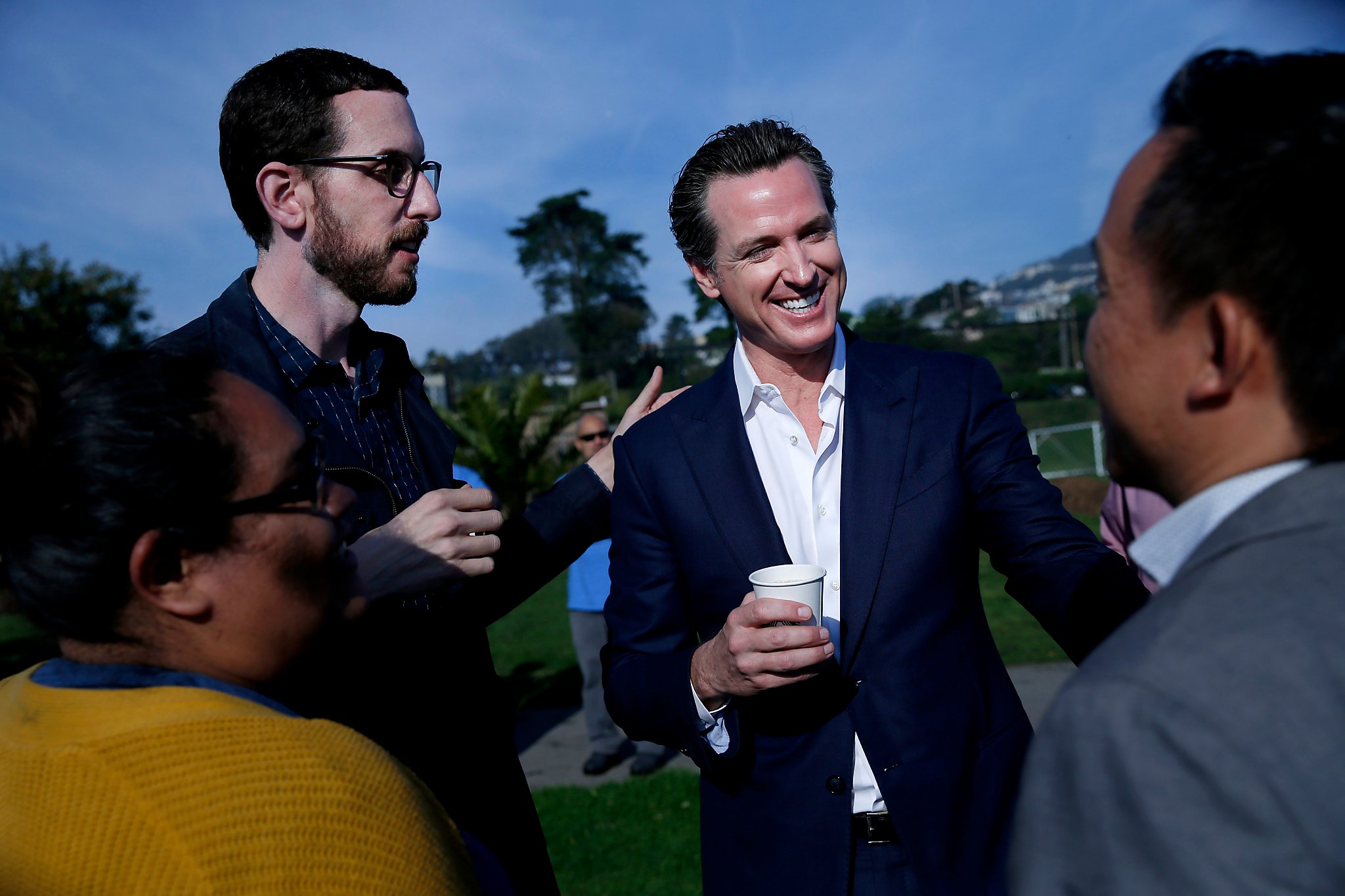
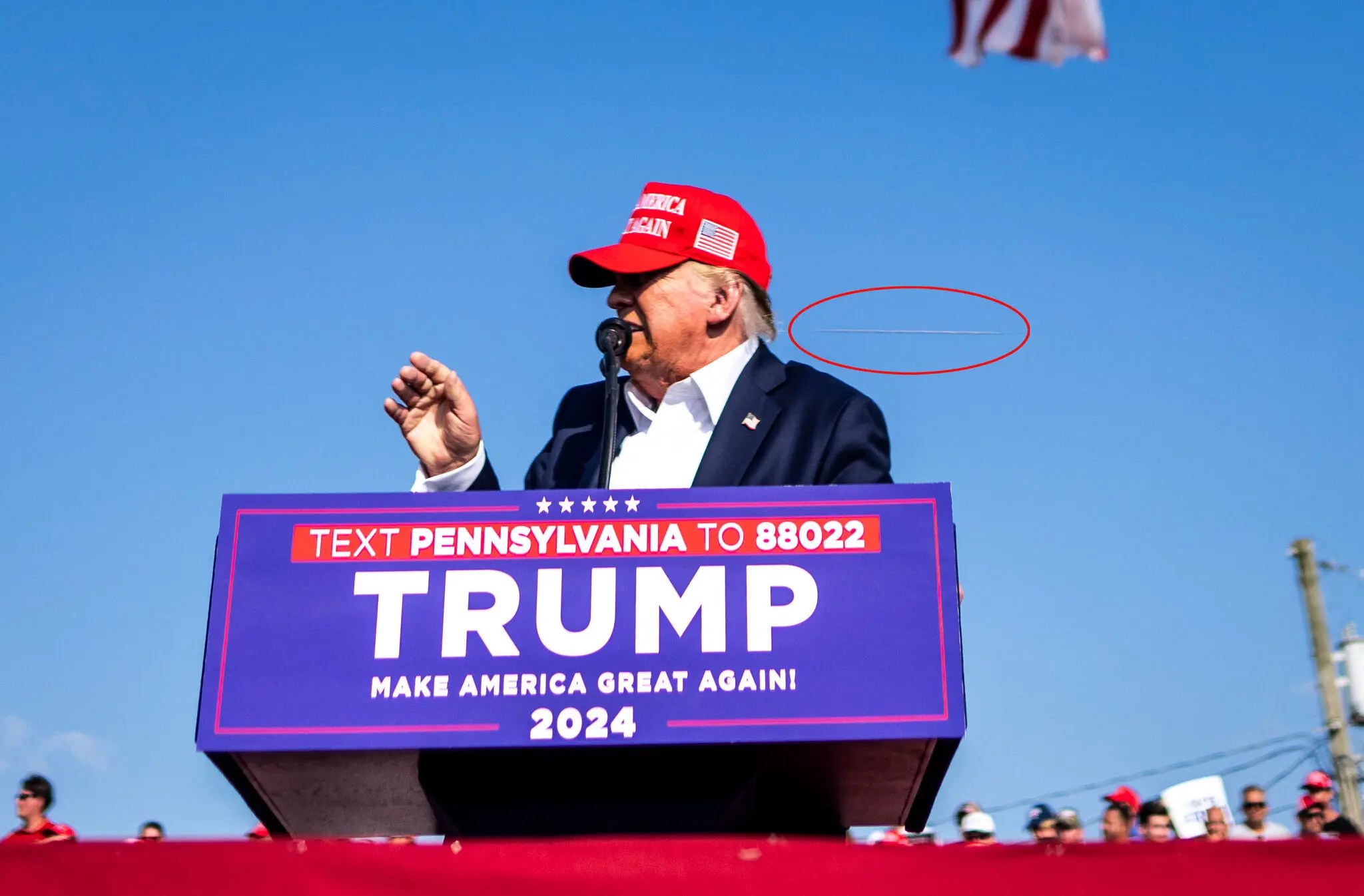

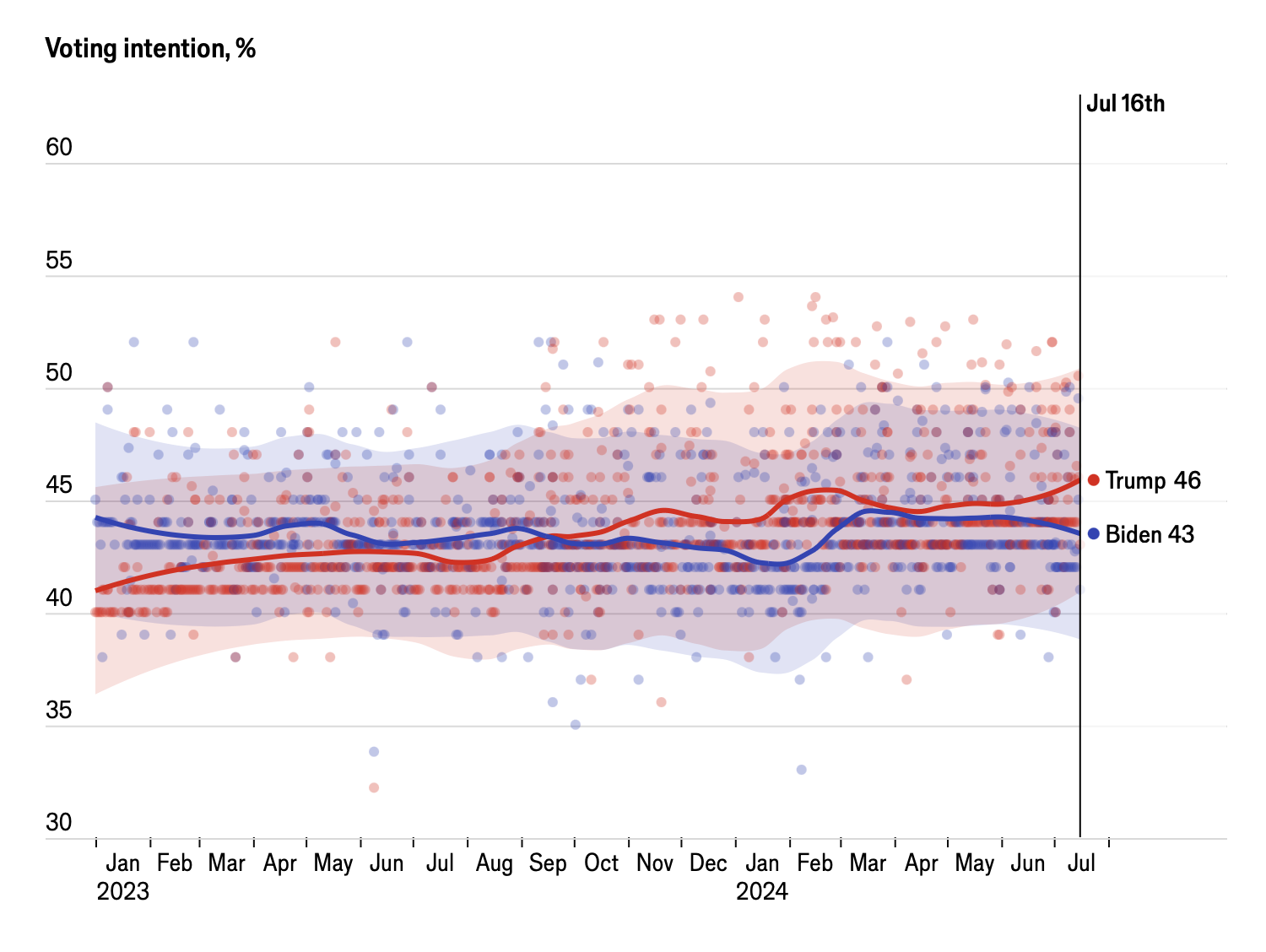

 freedom and reason