Tom Homan, a good and decent man, was put in a difficult—and frankly embarrassing—position when he was forced to draw down federal forces in the Twin Cities. He just held a press conference explaining the drawdown.
I liked the job Bovino was doing. Alongside “No Kings!” and the rest of it, “ICE Out!” is part of a color revolution. The mob—and the operatives who organize it—are bankrolled by NGOs funded by transnational financiers and the Chinese Communist Party. (See “The Whole System is Guilty!”)
I want Trump to nationalize the Minnesota National Guard, send federal troops into Minneapolis and Saint Paul, roll up the mob, and arrest the operatives (see Send in the Troops; The New Confederates and the Return of States’ Rights). I want the federal government to identify these funding networks and prosecute them.
We need to smash this threat to American sovereignty. Maybe there’s a master strategy here. But perceived weakness emboldens the forces seeking to knock America out of its position as world hegemon.
That’s bad for us—and bad for the world.
Image by Grok
I noted this during Trump’s first term, and again in several recent essays: Trump appears too hesitant to do what previous presidents have done—federalize the Guard and deploy troops into cities and states where mayors and governors are in rebellion against the laws of the Union—because he doesn’t want to validate the false accusation that he’s an authoritarian.
They’re going to call him an authoritarian anyway. Worse, they’ve already branded him a fascist. So what does he have to lose by exercising his lawful federal authority to bring rebellious states and cities to heel, and to pursue the enemies of America and Western freedom? If he does this, I can almost guarantee his poll numbers will rise. They’ve already jumped five points in the most accurate poll—Rasmussen—buoyed by an expanding economy following his restoration of the American System.
I don’t understand why Trump officials don’t begin every press conference with images of violence against law enforcement officers. This would build public support for decisive executive action to quell the ongoing insurrection. There is no shortage of such images. Why are Republicans allowing progressives to win the propaganda war? The battle for men’s minds is central to the defense of any nation.
We cannot sustain this level of tolerance for sedition in the United States. There should be zero tolerance for rebellion against the Republic.
The national government is the supreme law of the land. Article VI, Clause 2 of the U.S. Constitution states:
“This Constitution, and the Laws of the United States which shall be made in Pursuance thereof; and all Treaties made, or which shall be made, under the Authority of the United States, shall be the supreme Law of the Land; and the Judges in every State shall be bound thereby, any Thing in the Constitution or Laws of any State to the Contrary notwithstanding.”
There comes a point when the patience of saints becomes pathological. Didn’t Trump just release a major policy document warning of civilizational erasure? Why isn’t he acting on it? Are his words hollow? Where is the man of action we were promised?
The same applies to the toleration of the Islamization of the West. Why are we allowing Muslims to establish de facto autonomous towns and cities in the United States? Americans know about Dearborn, Michigan, and the Twin Cities in Minnesota. But when I tell them about what’s happening in Texas, they’re stunned. Trump knows. The last people on earth who should practice suicidal empathy are those charged with defending the nation.
We have to put our foot down. Sometimes boots are necessary—especially when the Republic is threatened from within. At that point, decisive action becomes an imperative.
Steve Bannon, host of War Room and a stealth advisor to the President, often places Trump in the same league as George Washington and Abraham Lincoln. But if Trump is to belong in their company, he must do what they did. Both used military force to confront states and cities defying the U.S. Constitution—the Whiskey Rebellion and the Civil War. It’s Trump’s turn to be a man of action. (See A Man of Action Must Act to Be Such a Man.)
Rank-and-file progressives riot whenever they’re out of power. Democrats don’t believe in democracy. They hate what America stands for. They want technocratic control guided by corporate-state ideology (see The Real Threat to Liberty Isn’t Trump—It’s Technocratic Rule).
Technocracy negates not only democracy but liberty itself. COVID-19 demonstrated this clearly. States locked down their own citizens, acting in concert with other countries across the global North. American progressives wanted vaccine passports and mandatory masking—ritualized obedience enforced by the state.
There must be consequences for tyranny. Action exposes the dystopian future Democrats have planned for America.
Trump supporters rationalize the President’s actions as four-dimensional chess. Perhaps this is meant to protect the midterm elections—or, more immediately, to secure funding for DHS. Maybe the goal is to make it safe for Senators to pass the SAVE Act. However, I remain convinced that the best way to shore up popular support for this presidency is to do what previous presidents have done: exercise federal authority with clarity and force. We shall see.
Canadian police officials are referring to the man in a dress who shot up a school in Canada as a “gun person” and a “female in a dress.” A woman did not just murder scores of people and wound scores more. A boy did. This is not a she/her. This is a he/him. It’s not that women don’t do things like this (recall the school in Nashville). But women rarely do these types of things. There is also an indication that the boy, 17-year-old Jesse Van Rootselaar, aka Jessie Strang, was on psychiatric drugs. He also murdered his mother and step-brother.
Nine dead, 27 wounded in BC’s Tumbler Ridge
You might ask yourself how the queer community has terrified the government, media, and police into referring to men as women. They’re such a small minority—how can they have that much power?
But this asks the question the wrong way. What you should ask—or, more precisely, what you should state—is this: Trans terrorism exists because the government and media enable it. The police are forced to follow suit. (Another major player is the medical-industrial complex, but I will leave that to the side for this essay.)
You will have noticed that mainstream media, progressive groups—not only in the United States but also in Canada and Europe—repeat queer propaganda as if it’s the truth. The media refer to men using feminine pronouns as a matter of “style” (just like they capitalize “black” but not “white” when referring to race). Public institutions do the same in their documents and pronouncements. Academic publications—same thing.
🚨 "If it had been a trans victim, the media would have talked non-stop about it. But they ignore it when it's the perpetrator"
Julia Hartley-Brewer and Debbie Hayton tear into the media's failure to report the sex of the suspect in the Canada school shooting.@JuliaHB1pic.twitter.com/YiNDwcViCy
This doesn’t happen because a small group of people who suffer from delusions has power. It means that a small number of delusional people are being used—and to a degree are created by—the government to confuse the population and cause them to doubt one of the most basic biological truths: that sex (or gender, same thing) is binary and immutable.
If the state and its propaganda apparatus can get people to believe that, then they can get them to believe anything.
At the core of this is getting people to follow arbitrary rules. Orwell illustrated this in Nineteen Eighty-Four through Newspeak, a deliberately limited language designed to control thought by eliminating words and concepts—or changing their meanings—that could enable dissent or independent thinking. It uses language to alter the perception of reality. The fancy term for this is neuro-linguistic programming.
The COVID-19 pandemic response is another example. If you can get people to agree to state-mandated vaccinations, lockdowns, social distancing, and the wearing of ceremonial masks, then you can get them to submit to other forms of control. (The medical-industrial complex was involved here, as well.)
🚨"He is a MAN. He is a boy. It is a MALE crime. But you wouldn't know that from watching the BBC, ITV or Sky News."
Julia Hartley-Brewer's scathing message to media outlets for telling the public "lies" about the sex of the suspect of the Canadian school shooter. @JuliaHB1pic.twitter.com/uHzdzIaQ9O
Issues like trans ideology, pandemics, and so on serve as demonstration projects. The test is to see who is prepared to fall in line with government demands—by governments controlled by transnational corporate power, which explains the uniformity of cognitive programming across the West—and who will resist the emerging New Fascism. This is a power play.
The real power lies with transnational corporate entities that have an agenda to disorder normal modes of thinking common to our species, or enabled by the revolution in freedom that the Enlightenment made possible. The goal is to replace native common sense with an elite-manufactured version. In his Prison Notebooks, Antonio Gramsci identified this manufactured social logic as “hegemony.”
This concept is useful in understanding the present situation. According to Gramsci, hegemony is the way a dominant social group maintains power not primarily through force, but by securing the consent of subordinate groups through cultural, ideological, and moral leadership. The more you believe the prevailing institutions, the more easily you are indoctrinated in the ideology they use to disorder your thinking.
The shooter was groomed by Reddit’s r/MtF
This is why it is so important to get your head out of the hegemonic mode of thought pumped out by prevailing policy- and sense-making institutions, and turn instead to alternative, more traditional sources of knowledge production—communities of sympathy and concern, Christianity (not woke), and science (uncorrupted by ideology).
Resisting the new common sense is vital to preserving your native common sense. Even when you feel alone, if you are alone with the truth, you can weather the propaganda storm and keep a clear head. That’s how one gets through this: keep a clear head and refuse to bow to power and humiliation.
Finally, I know it’s scary, but when you speak up, it lets others know they are not alone in the truth. Mutual knowledge is a major weapon against power. The emperor is naked, and people know it, but they are unsure that others know it. Doing this by private message is also effective. I appreciate those who are scared to speak out, who contact me on the sly to tell me they get it, too.
I just checked, and the Great Ape-gate hoax has fallen out of Google’s news aggregator. The only value progressives might extract from the video Trump did not share on TruthSocial at this point is to drop it and let people believe the initial big lie. Theyhave to do this, really. Had progressives continued to push the hoax, they would have drawn ever more attention to the fact that it was a hoax—and that they knew it was a hoax. It’s not as if they would ever be honest enough to admit it was.
I wonder what the next moral panic will be? Since progressives are completely making up shit these days, the possibilities are really endless. Turning Point’s alternative Halftime programming may have legs, especially as data showing how successful it keeps pouring in (I am confident advertisers are taking note). Progressives already framed the Turning Point event as an expression of backwardness and bigotry.
That’s the trick: make the response to cultural warfare the culture war itself. Open the border and flood the country with foreign culture-bearers, and then accuse those whose culture is being disordered of making it about culture.
Bad Bunny during the Super Bowl LX Halftime Show at Levi’s Stadium on February 08, 2026.
Did you see the things going on during Bad Bunny’s performance? A man humping a woman in the back of a truck? A man humping a man in the cab? A video of Trump dancing at a party is evidence of a child predator ring, but dancers humping each other at Halftime is an all-American message of unity. If you disagree with that, you’re a racist.
Here’s how zombie-like progressive politics is: We’re supposed to believe that millions of Americans who don’t know a lick of Spanish or who have ever only passively listened to trap en español as background music while eating tacos and drinking margaritas at a Mexican restaurant were Bad Bunny fans. The performance is being touted as the best since Kendrick Lamar, right up there with Prince’s Super Bowl XLI halftime show and Michael Jackson’s Super Bowl XXVII halftime show, which turned Halftime into a high-profile event.
Social media users incorrectly identified a child actor in Bad Bunny’s Super Bowl Halftime as Liam Cornejo Ramos, the five-year-old boy recently detained by ICE (after being abandoned by his father). The child was actually actor Lincoln Fox, who represented a younger version of the artist, not the detained child. Progressives say this confusion reflects racism on the right. It’s not supposed to be obvious that the point of having a child receive Bunny’s Grammy was to remind the audience about the alleged terrible injustice done to Ramos, as well as Bad Bunny’s Grammy speech in which he condemned ICE.
Progressives are conditioned to be ready for the next episode of mass programming. One day it’s “No Kings!” The next one is “ICE Out!” Then “Obamas are apes!” After that, Bad Bunny. (I am sure I am leaving out in-betweens.) They don’t have to know why they’re doing the thing. The switch is flipped, and they’re doing the thing. All they knew about Bad Bunny—if they knew anything at all—was that the man would be singing in Spanish and that he might wear a dress—and that this would piss off the MAGAts, which feels so good in Pretend Land.
I watched some of the Bad Bunny clips while reading the over-the-top coverage of the event. Did readers notice that he played to the camera and not to the crowd? Apart from a few here and there, the crowd wasn’t into it. They were forced to watch propaganda being produced. Bad Bunny was for the sheep at home. From his vantage point, it appears that Commissioner Roger Goodell realized he screwed up. The stream looked flashy. Inside Levi’s Stadium? No energy. A woman on video exclaimed, “No one is dancing. Not one person. Send help!”
Cartoon by Tom Stiglich
Here’s how the trick works: The abolitionist Republicans were the ones who were political because they were trying to destroy a way of life—the slavocracy that underpinned the Southern aristocracy, which Democrats defended. Those who oppose compulsory preferred pronouns are the political ones. They’re the authoritarians, not those who force others to lie about gender. Those who object to a Super Bowl Halftime performance because it sucked, was in a language most Americans don’t speak, and was obvious progressive propaganda pushing multiculturalism and open borders—they’re the political ones.
It’s the MAGA neanderthals who are on the outside looking in. They want the culture war. They aren’t America. Bad Bunny is America.
* * *
In terms of mass social psychological dynamics, a humiliation ritual describes situations where groups humiliate individuals or other groups to enforce conformity or hierarchy. Is that not what the NFL’s Halftime show was? To humiliate Americans who voted for Trump and who want to keep their country, to compel them to accept multiculturalism and the demographic transformation of their nation?
Patriotic Americans are being told to learn Spanish because soon English speakers will be the minority. If one says, “Not if I can help it,” he can expect to be smeared as a nativist, racist, and xenophobe.
This is happening all over the West. Native populations are being replaced with alien culture-bearers and then humiliated when they rise to defend their culture and their people. The population targeted for replacement and humiliation? Native whites. Imagine this project working in any other part of the world and being portrayed as a progressive endeavor?
I forget who said this, but I remember somebody celebrating Bad Bunny on social media the morning after saying this was a “teachable moment.” Indeed, it is.
Readers of this platform are almost certainly hearing the propaganda that, while there is election fraud (if fraud is admitted at all), it’s insignificant, and therefore, cannot possibly determine the outcome of an election.
The propaganda bases its claim that election fraud is negligible on successfully prosecuted cases. As a criminologist, I can tell you that the ratio between crime in the United States and the number of crimes successfully prosecuted is striking. Even when considering only crimes reported to the police, a relatively small proportion result in successful prosecution.
According to the National Crime Victimization Survey (NCVS), in recent years, only a little more than 40 percent of violent crimes and 30 percent of property crimes have been reported to police—and that isn’t counting the crimes victims do not report to the US Census Bureau. Of those crimes reported to the police (recorded in the FBI’s Uniform Crime Report), only around 15 percent result in arrest or clearance, i.e., are delivered to the next phase of the criminal justice process. Only around 10 percent lead to prosecution—and this varies dramatically by jurisdiction and offense type. Less than ten percent end in a conviction.
Obviously, one would have to be naïve in the extreme to believe that the frequency of criminal offending in America reduces the number of convicted criminals. Yet Democrats want the public to be similarly naïve about election integrity. But as we see with crime in America, just because there are a few successfully prosecuted cases of election fraud doesn’t mean that that’s all the election fraud there is.
Americans need to think about election integrity in the following way: What is the likelihood that somebody’s going to break into my house at night? Statistically small. Yet we lock our doors at night (especially after Truman Capote’s In Cold Blood). Some of us get a Ring system so we can see who’s at the door. We established organized police forces in the nineteenth century to respond to home invasions and other crimes. Many of us keep firearms to protect ourselves from home invaders. We do this because we know that, while home invasion is unlikely, it is not only possible, but happens a lot. Including burglaries, there are 1.5 million or more home invasions annually in the US. Only about 11–14 percent of burglaries reported to police result in an arrest or similar action. Of that number, a substantial portion are not prosecuted, and thus there is no possibility of conviction.
When we look at the 2020 election, we’re looking at a crime scene. This is why a judge signed the warrant the FBI used to seize 2020 ballots in Fulton County, George. Democrats fight investigations into that crime (they want those ballots back), and furthermore, seek to prevent America from locking its door to election fraud, thwarting the effective policing of election fraud. This is obvious in the Democratic Party’s vehement opposition to the SAVE Act, which would compel states to require a photo ID to vote. Democrats characterize photo IDs as “Jim Crow 2.0”—even though more than 70 percent of blacks support photo IDs.
In November 2024, Harris only won 19 of 50 states. Yet she won more popular votes than Trump did in 2020, even though Trump increased his popular vote total in 2020 over 2016 by around 11 million votes. No states shifted towards blue in 2024. They either shifted red or remained status quo. Yet Trump won less than 50 percent of the popular vote. Harris’s vote total of 75 million is artificial, just as Biden’s vote total of 81 million votes was artificial. Mainstream polling is engineered to reflect these numbers to make them appear real.
Consider that, in 2024, of the states with strict photo ID (Arkansas, Georgia, Indiana, Kansas, Mississippi, North Carolina, Ohio, Tennessee, and Wisconsin), Trump won all of them. Of those states with strict non-photo ID (Arizona, North Dakota, and Wyoming), Trump won all of them. Of those states with photo ID requirements (Alabama, Florida, Idaho, Louisiana, Michigan, Missouri, Montana, Nebraska, Rhode Island, South Carolina, South Dakota, and Texas), Trump won all but one (Rhode Island was the sole exception).
Yet Trump won only half of those states where ID was requested but photo not required (Alaska, Iowa, Kentucky, Oklahoma, Utah, and West Virginia), while Harris won the rest (Colorado, Connecticut, Delaware, New Hampshire, Virginia, and Washington). Of the states where no document is required to vote in person, Trump won only two of them (Nevada and Pennsylvania). Harris won the other 14 (California, Hawaii, Illinois, New Mexico, Maine, Maryland, Massachusetts, Minnesota, New Jersey, New York, Oregon, Pennsylvania, and Vermont).
Democrats will argue that Trump won states with strict voter ID rules because strict voter ID rules suppress the minority vote. If this were true, then why are photo IDs required for virtually every other activity in which black Americans engage? Americans are required to show ID not only to access secure locations, but for air travel, banking and financial transactions, driving, employment verification, restricted purchases (alcohol, prescription drugs, tobacco, etc.), and public assistance (which blacks disproportionately access). Does having to show ID in those cases resemble Jim Crow laws? It is an absurd argument. We know it is absurd because there is no effort by Democrats to eliminate the requirement for a photo ID for those activities.
Democratic states are not only fighting election integrity, but are engaged in extreme gerrymandering of states to effectively lock out Republicans from the electoral system. They say they are doing this because Republicans are, even though Republicans are engaged in reapportionment in light of population change in those states. For Democrats, what should be secure is left insecure, what should be open is closed, and they lie about the reasons why.
Democrats cite the Tenth Amendment and the Constitution to claim that election rules are determined by the states. These claims are also lies. Article I, Section 4, Clause 1 of the United States Constitution reads: “The Times, Places and Manner of holding Elections for Senators and Representatives, shall be prescribed in each State by the Legislature thereof; but the Congress may at any time by Law make or alter such Regulations, except as to the Places of chusing Senators.” The Tenth Amendment cannot prevent Congress from acting under the Elections Clause, because Congress’s authority to regulate the times, places, and manner of federal elections is itself a specific constitutional grant that supersedes general state-authority claims under the Tenth Amendment.
If the SAVE Act is not passed into law, Americans will have good reason to suspect that, if Democrats prevail in the 2026 midterm elections, the popular will not have been conveyed by a democratic process. Democrats will claim, as they did in 2020, that the 2026 election was the most secure in history. But they cannot claim this if they fight the very measures that would make them secure. Democrats tell us that Republican doubts about election integrity represent a grave threat to democracy. In reality, the threat lies in failing to secure our elections. If Democrats want Americans to have confidence in our democracy, they must pass the SAVE Act. But they won’t, because their electoral success depends on insecure elections. They tell us that they must win or lose our democracy. But weakening our democracy is how Democrats win.
The cartoon shared below is from a time when the Irish were routinely depicted as apes and monkeys. Zookeepers gave the primates Irish names. I can produce many more cartoons like this (the reader can easily find them by searching Google using various search terms). Cartoons depicting the Irish as apes and monkeys were rampant during the nineteenth and early twentieth centuries. In fact, images depicting the Irish as simian during this period are far more prevalent than images of blacks depicted similarly. Why are the Irish not running around with their big red heads on fire when they’re portrayed as apes and monkeys? Do those of Irish descent sit around dwelling on the time when they were? Are they offended that I just described them as having “big red heads”?
Frederick Burr Opper’s “Outrageous,” first published in Life Magazine, May 11, 1893
It’s not like this never happens today. Joe Biden is of Irish descent. The controversial cartoon video by 𝕏erias that Trump did not share on TruthSocial (le scandale du jour) depicting Biden as a baboon is racist if history matters. The Anglo-Protestant culture that produces such images is so racist that it’s racist against other whites. But this doesn’t matter anymore, the likely objection goes, because Anglo-Protestant culture no longer treats those of Irish descent this way. The portrayal of Biden as a banana-munching baboon is not offensive because the Irish are accepted in American society. Why does this rationalization work? It doesn’t, actually.
That those of Irish descent no longer experience significant societal-wide racism, and therefore depicting Biden as a baboon, implies that blacks still suffer such discrimination. Except for the Blue cities and states, those places run by progressive Democrats, where systemic anti-black racism prevails ideologically as infantilism and, institutionally, as ghettoization, there is no systemic racism targeting blacks across America. Certainly not in conservative towns and small cities. And those who keep blacks in poverty and dependency are the last to appeal to supposedly racist expressions—at least those directed at blacks by whites (which is why progressives take offense at such images). Progressives use the language of antiracism to conceal the systemic racism upon which they depend for electoral power and to replace black labor with foreign labor.
The charge of racism in the depiction of the Obamas as apes necessarily appeals to history, which applies at least as much to those of Irish descent as it does to those of African descent. Even if we were to grant that a situation of systemic racism is no longer true, it was true at one time (and not that long ago by the standards of woke); therefore, such cartoons should always be offensive to those of Irish descent—even if they do not themselves take offense to it (I am sure if aware Biden would say he is unbothered by his depiction in the video). After all, we are told that similar cartoons where the descendants of Africans are offensive, even though institutional racism involving blacks was abolished some seventy years ago.
Former President Joe Biden portrayed as a baboon
One reason why outrage over Biden being portrayed as a baboon is absent from the narrative is that if consistency were applied, then admitting the experience of the Irish was racist means that racism affects whites, as well. And that means that the woke claim that whites cannot be the victims of racism is false. From the woke standpoint, admitting to the fact that whites ever were the victims of racism admits that the anti-white racism rampant in contemporary society is wrong.
While blacks are no longer the victims of institutional discrimination (again, except in those urban areas under the thumb of white progressives and their collaborators), whites have, since the 1960s, been discriminated against in society’s prevailing institutional arrangements (affirmative action, DEI), as well as in interracial crime and violence. Remember how we have been told for decades that there is no such thing as “reverse racism”? That’s only true in the following way: it’s not reverse racism—it’s racism sui generis.
Before proceeding, what is racism? As I argued in my previous essay, racism must have a definitive meaning, or it will be used, as it was on Enoch Powell in the context of his so-called “Rivers of Blood” speech, and as it is used every day to malign politics to which progressives object, as a term of abuse. Without a definitive definition, the term will be arbitrary, devoid of meaning.
Racism is the belief that races can be hierarchically ranked according to traits such as behavioral tendencies, cognitive abilities, and moral aptitude. As long as these claims are false, this constitutes the ideology of racism. The Irish were viewed as racially inferior to those of Anglo-Protestant culture. Racism in practice is a system of institutions, laws, and policies organized around and enforcing that hierarchical worldview. The perception of the Irish as racially inferior was deeply embedded in and reinforced by systemic structures, e.g., by the Penal Laws of the seventeenth and eighteenth centuries, which deliberately restricted the rights of Catholic Irish, barring them from voting, holding public office, and serving in Parliament, while severely limiting their ability to own or inherit land. This was justified by ideological racism (not merely religious discrimination), hence the prevalence of cartoons depicting the Irish as simian.
Later, in the United States, similar barriers persisted: Irish immigrants were steered into low-paying, dangerous labor and denied access to housing in many areas, again, justified by racial ideology. Together, these institutional mechanisms enforced a hierarchy that treated the Irish as a permanent underclass, shaping social mobility and life chances for generations.
Here is what racism is not: Racism does not apply to criticisms of culture, except where culture is said to issue from the constitution of race. It does not intrinsically apply to questions of immigration (it can, but not necessarily). Nor does it apply to religious faith. Moreover, racism is not merely the recognition that human beings belong to different races, understood as abstract constellations of phenotypic characteristics emergent from observation of factor analysis. We are told that race is a social construction. While there are social constructions around race, race itself is an anthropological fact, one merely acknowledging that there are group differences in our species (which is true for all living things).
The election of John Kennedy to the Presidency was a big deal, but America is well past that now. Joe Biden served not only as a Senator for decades, but also as Vice-President for eight years and then as President for four years. As Senator and Vice-President, he served with Barack Obama, who also served as a Senator and President for eight years. There is no evidence that either Biden or Obama suffered systemic racism. In fact, Obama’s status as a black man worked to his advantage in a nation where the need to elevate the descendants of Africans as atonement for past sins has long been paramount, a phenomenon Obama has himself acknowledged.
That an Irish-American and a black-American can rise to the highest office in the land disproves the claim that systemic racism represents a barrier to either historically racialized group.
In reality, cartoons harm neither group because the institutional structures reinforced by such expressions were long ago abolished. Institutional and systemic racism do not begin when racist institutions and systems end, but end with the abolition of racist institutions and systems. This is how a concept like “structural racism” comes into usage—the political need to manufacture the perception of racism.
A nation cowers in the long shadow of cancel culture. The woke doctrine of atonement for white guilt is why whites can’t say things about blacks or depict them in certain ways, but blacks can say whatever they want about whites and depict them however they wish. Thus, the moral panic over the video exposes the imposition of an ideology foreign to American culture. The American citizen is supposed to have faith in the doctrine of blood guilt and accept sacred words that must never be uttered lest he blaspheme—words permitted to be uttered by the totems and their allies.
That is what lies at the heart of this matter: the antiracism of the progressive plays a central role in the delegitimation of the American Republic—cast as the bastion of white supremacy—to prepare the population for reincorporation into the New World Order, a world that promises the abolition of whiteness. Blacks and their allies are conditioned by a progressive-captured culture and educational system to harbor resentment towards whites, thus creating racial antagonism that serves the interests of the transnational corporate elite. This is harmful to the republic.
Should it be the case that (a) blacks can say whatever about whites without consequence, but whites cannot; (b) anybody can say offensive things about anybody, absent harassment and intimidation, without consequence (albeit still subject to criticism); (c) nobody can say offensive things about anybody based on race?
(c) Cannot be allowed to stand from the woke progressive standpoint because the expropriation of the wealth of whites and the destruction of Western culture could not, under those circumstances, proceed. Leave aside for the moment the harm that such a rule has towards freedom of conscience, speech, and publishing, since progressives don’t believe in these freedoms except where it advances their agenda. Therefore, (a) is the state of affairs in a society under progressive hegemony.
However, from the standpoint of liberty (the Republic’s foundational principle), (a) cannot be allowed to stand because it is a double standard that violates the principle of equal protection, which grants immunity and privileges to all citizens and requires the government to protect the rights just mentioned. To apply a standard to whites that does not apply to blacks treats whites as second-class citizens, an obvious injustice.
When this unjust rule is in operation, we find that, if a black leader criticizes whites (white culture and sensibilities, etc.), he is speaking truth to power; if a white leader criticizes blacks (black culture and sensibilities, etc.), then he is a white supremacist. The black leader’s anti-white rhetoric is the foundation of his ceremonial elevation. The white leader’s criticism of black culture is said to validate the claim that white supremacy prevails, just as the denial of white privilege admits there is such a thing.
So what is the solution? It’s an easy one, actually. It’s (b). Since the government cannot reach an opinion without violating the fundamental rights of man, i.e., liberty and the pursuit of happiness and property, but can only reach injurious action, nobody should suffer on account of his expressions, but only on his harmful actions, which I define here as a condition in which a person (or other moral subject) is made worse off than they otherwise would have been, through impairment, injury, loss or violation of their interests, which include health, life, liberty, and the pursuit of hapiness and wealth.
Depicting Joe Biden as a baboon or Barack Obama as a chimpanzee does not harm them. These are cartoons—like the cartoon of Muhammad with a bomb in his turban. A bomb-bearing Muhammad may offend Muslims, but it does not harm them. That they believe it does no more make it true than a man who believes he is a woman is one. The reason for the offense-taking is to stifle criticism of Islam, which impedes the Islamization of the West. This is why the construction “Islamophobia” appears, and is now being folded into law: to smear and persecute those who criticize Islam with the abusive label of racism.
The reader may at this point object that, while the cartoons harm no one (if he admits this), the person who shares them—or doesn’t share them in the case of the 𝕏erias video—is still subject to criticism. That’s free speech, after all. Indeed.
Yet, even if we grant that the cartoon is subject to criticism, the broader context matters. In a democratic republic where the electorate has chosen a president, deliberate efforts to undermine his legitimacy—through caricature, misrepresentation, or selective outrage—threaten not merely the man, but the cohesion of the polity itself. This is a concerted effort to undermine the will of the People.
The 𝕏erias video controversy is not a vigorous debate over the policies that affect all of us, but the deployment of weapons of reputational destruction to delegitimize an American President. When criticism is wielded primarily as a weapon to erode the authority of an elected official, it imposes harm on the population at large: it sows distrust in democratic institutions and fuels perpetual political instability. It even exposes the President to physical danger, as we saw with language smearing Trump as a fascist.
This is the purpose of manufactured outrage. Since Trump was elected, progressives have smeared him as a racist and included in that smear all those who support him. MAGA, shorthand for patriotic Americans advancing populist nationalism, is renamed MAGAt (pronounced “maggot”), or, as Hillary Clinton called them, “a basket of deplorables.”
Progressives not only use the smear of racism for this end, but also make black leaders from their side immune to mockery because such mockery—even in cartoon form—is racist. Conservatives criticized Obama—and continue to criticize his legacy—not because his policies proved bad for America, but because he was a black man. Were there people who rejected Obama because he was black? Sure, but nowhere near a majority; otherwise, he wouldn’t have twice won the popular vote in a national election.
In this sense, a harm has occurred. The injury is structural, not personal: the people who voted according to aspiration and conscience are thwarted in their expectations to see their will manifest in policies (ending the madness of gender identity doctrine and protecting women’s spaces and sports, restoration of the American system, etc. strong borders and mass deportations, etc.), and the social fabric is weakened, because their leaders are illegitimate, not on policy grounds but on personal ones.
It’s ad hominem. “Donald Trump is a racist.” That’s why the SAVE Act must be defeated. It’s “Jim Crow 2.0.” The real goal of defeating the measure by turning Americans against it: keeping elections vulnerable to fraud. Smearing leaders who allegedly share offensive but harmless depictions—even when they do—carries collective consequences that diminish the liberty, security, and trust of society as a whole.
Moreover, rather than assuming the resiliency of the American citizen in the face of cartoons and jokes, certain citizen groups are presumed fragile and must therefore be protected from expressions that offend them (this is pathological empathy). Indeed, white progressives take offense for the sake of the groups they have infantilized. With this, they mean to turn the population against a duly-elected President to do what they could not during the 2024 campaign—stop his return to power.
Put another way, progressives lord their agenda over popular power by smearing the people and their leaders as backwards and bigoted and portraying progressives as the conservatives’ betters. In this case, they do it by accusing the President of racism for a video he did not share. The Big Lie tactic makes this particular instance an especially destructive form of political warfare. Here we enter the realm of defamation. The 𝕏erias video is harmless. The moral panic over the Big Lie is not.
I submit that criticisms framed as moral policing—when they serve to delegitimize the office of a duly elected president—transcend personal grievance and become a tangible harm to the citizenry. While there is no legal recourse to stop the smear, adults can use their words to condemn it and expose its purpose, which is, at heart, anti-democratic.
What makes this difficult is that even those who support the President fear retribution for appearing to defend a racist video by denying that it’s racist. They feel compelled to operate by the rules of those they rejected in 2024. Even some of Trump’s fellow Republicans feign shock at the video.
Republicans fueling moral panic is especially concerning. That so many Republicans pretend like they don’t understand what happened suggests that the Establishment is moving against Trump. They believe they found a way to make their move with limited blowback from MAGA. This move depends on whether the threat of being smeared as a racist works on a significant proportion of MAGA. We’ll see.
I end on a lighter note. In the spirit of Frederick Burr Opper’s “Outrageous,” which I shared above, here’s the same joke in contemporary form:
Le scandale du jour is President Trump sharing on TruthSocial (then deleting) a meme video by 𝕏erias of Democrats as zoo animals that opens with Michelle and Barack Obama depicted as apes (the video also depicts Joe Biden as an ape). Except that Trump didn’t share the video. A staffer using video capture produced and shared a clip from a documentary on the 2020 election that, as it was ending, recorded the autoplay preview (suggested by the algorithm) of the next video in the queue, which was a video by 𝕏erias. The image I share below is a fake. This post never appeared on Trump’s TruthSocial platform.
This post never appeared on Trump’s platform
The scandal is yet another hoax that elevates progressive offense-taking—for the most part, white progressives taking offense for a minority they see as children—to obscure the content of the actual video Trump shared. Progressives are throwing a monkey wrench (pun intended) into the SAVE Act (as well as to discredit Trump over immigration by making deportations appear racist). The SAVE Act, or Safeguard American Voter Eligibility Act, is a proposed US federal law that would change how people register to vote in federal elections. Specifically, it would amend the National Voter Registration Act of 1993 to add strict documentation requirements for proving US citizenship before someone could register.
The very fact that this bill is moving its way through Congress and will certainly pass muster at the Supreme Court puts a lie to the claim by progressives that elections are purely a states’ rights matter (as if progressives grasp or could be depended upon to speak truthfully about the Constitution they seek to dismantle or make a dead letter). Article I, Section 4 Clause 1 of the US Constitution states: “The Times, Places and Manner of holding Elections for Senators and Representatives, shall be prescribed in each State by the Legislature thereof; but the Congress may at any time by Law make or alter such Regulations [emphasis added], except as to the Places of chusing Senators [who were then chosen by state legislatures].” Democrats, recalcitrant Confederates, want the public to doubt the power of the national government. The reality is that the federal government possesses awesome power—as it should.
If you are one of the people who rushed to social media to virtue-signal hard at how "racist" Trump's Truth post was, and how righteous and tolerant you were for calling it out before you even understood what happened…
Will Trump apologize for something he didn’t do? The media can’t stop asking him to. I hope not. That’d be like apologizing for a second of the next song in the radio queue on a friend’s mix tape as the current song fades out. Indeed, I’ll be damned annoyed if Trump apologizes. All this is noise to distract from what the video he actually shared was about: election fraud (see above). Smartly, the President is using every reporter’s question about the video he didn’t share to talk about the video he did share. Will the press pick up that thread? If they acknowledge it at all, then it’s to dismiss evidence that the 2020 election was stolen as a “conspiracy theory.” This fact they won’t dwell on at all: that the court that signed the warrant to seize ballots and related material from Fulton County in Georgia found probable cause to believe that Fulton County officials did, in fact, engage in fraud during the 2020 election.
So far, family and friends can’t stop clutching their pearls over Trump having allegedly offended the first black President and his elegant wife. Have you encountered this in your circles—this cult-like adulation of the Obamas? The current First Lady’s documentary, Melania, grossed roughly 7 million dollars in its US opening weekend, placing it third at the box office behind some bigger releases, a figure notable for a documentary. The Rotten Tomatoes audience score (PopcornMeter) stands around 99 percent positive—the largest gap between critics and audience ever recorded on the site. So offended by this was the Obama cult that they flocked en masse to Netflix to elevate Michelle Obama’s biopic Becoming.
Well, the Obamas’ shit stinks, too. Most hypocritically, progressives worship a man who honest observers tagged the “Deporter-in-Chief,” a President who formally deported millions of illegal aliens from the interior of the country, including US citizens (Obama’s error rate was 3.5 times higher than Trump’s), threw kids into cages (those images attributed to Trump were from the Obama era), and saw several dozen immigrants die in his detention facilities. The man also bombed numerous countries, overthrew the Libyan government, orchestrating the torture-murder of its leader, Muammar Gaddafi (Obama’s Secretary of State Hillary Clinton cackled about it), and even killed a US citizen, 16-year-old Abdulrahman Anwar al‑Awlaki, in a Predator drone strike in Yemen (foreshadowing the strike in a joke threatening the Jonas Brothers with Predator drones during the May 2010 White House Correspondents’ Association Dinner). Just a few days ago, the former First Lady told people to boycott white stores. At least that’s what she does, she said on a talk show to loud applause.
It’s truly sad how dense people are. Truly sad, not just for them, but for all of us. These people vote. In threads across social media platforms, they’re desperately trying to make it appear as if Trump shared a racist meme video. I have intervened in posts on several platforms to tell people that he did not share the video they think he shared. “But the image of the Obamas depicted as chimps or gorillas appears in the video!” Yes, for a second at the end, but that’s the start of the video Trump did not share.
I know I don’t need to explain this to most of you, but I want to share the gist of what I have had to say to those who persist in insisting that Trump shared the video. They are essentially asking me to explain it to them like they’re five-year-olds. “So you admit he shared the video.” No. I won’t admit that because he didn’t. “But he deleted it, which proves he was wrong.” No, it doesn’t. When Trump learned that a second of a video he did not share could briefly be seen at the end of the video that he did share, and realized that political operatives were feigning offense to push yet another smear campaign, he deleted the video. He went out of his way not to offend fragile people who are offended by things he didn’t share or say. Trump knows better than anybody that he gets blamed for shit he doesn’t do. He isn’t admitting he’s wrong—and that’s why he won’t apologize (and why he shouldn’t). Deleting the video was an act of charity.
This is not difficult. So not difficult that I don’t believe any reasonably intelligent person really doesn’t get it. One second of the next video appears at the end of the video he shared, just like the beginning of a song in a crossfade on the radio can be heard while the song you have been listening to is fading out. If you’ve ever recorded the radio, which my generation did when creating mix-tapes, then the beginning of the next song you don’t want to listen to may briefly be heard at the end of the song you do want to listen to. If I share my mix-tape with you (and we used to swap mix-tapes back in the day), then I did not intend for you to also listen to the next song, even if you can hear its beginning at the end of the tape. You know that because I did not record that song. Crossfading is how radio programming works. Likewise, when you record a video from a video service, it may be the case that the next video in the queue can be seen at the end of the video that you wanted others to see.
NewsNation’s Chris Cuomo insists that the appearance of the second-long clip of Michelle and Barack was intentional. He wonders accusingly: Why this particular clip? Because the Obamas-as-apes open the 𝕏erias video, proving that it was the result of autoplay. Do people really think Trump sits up late at night inserting Obama-as-apes clips in video captures of documentaries about election fraud? Do people believe that Trump is the author of all of his posts on social media? I can tell you that he doesn’t, because we have video of how the posts are produced.
This is an exercise in pearl clutching so extreme that TDS sufferers are pretending as if the video Trump did not share was the video that he did share, which had nothing to do with 𝕏erias’s video. Either they’re too stupid to understand (and some are this stupid for sure), or they are misrepresenting what happened because they’re desperate to make Trump look like the racist that he isn’t. I have asked (rhetorically) whether this is really how a person wants to go through life, not by the force of fact and reason, but by the force of an ideological agenda. I ask this knowing some people want to live their lives this way. I’m inviting myself to add that this is a rather pathetic way to live. It makes a man look like a moron. And he looks all the more moronic when he can’t understand something so easily understandable.
There’s a name for the cognitive error being committed here, which I have written about several times on this platform. It’s called motivated reasoning. Motivated reasoning is not the mark of a serious, objective thinker. Rather, it sets up a person for participation in the most vulgar propaganda production—“Good people on both sides” and all the rest of it. Do facts matter? If they do, then one concedes the obvious. If they don’t matter, then may God have mercy on their souls (and bless their little hearts to boot).
The rank-and-file are sustained in their false beliefs by the progressive-captured corporate state media apparatus. National Public Radio appeals to a purported record that “Trump has a history of making racist remarks toward Black [sic] people and other people of color.” The examples the propaganda outlet cites: “For years, he [Trump] pushed the false narrative that Obama was not born in the U.S., and he has previously used derogatory language to describe African countries.”
How is suspecting Obama of not being a natural-born citizen racist? Because Obama is black? That doesn’t follow. Whites can be suspected of not being natural-born citizens, as well. How did Trump describe African countries? “Shit-holes.” How is that racist? What does it mean to say a place is a shit-hole? A shit-hole is chaotic and unsafe, dirty and run-down (decay, poor infrastructure, trash), low quality of life with few opportunities, and poorly managed or neglected. Are the African countries he’s referencing shit-holes or not? If Somalia is not a shit-hole, what is it? (Although, in that country’s defense, I learned this morning that Somalia is providing all its citizens with photo IDs so they can’t vote illegally. Looks like the SAVE Act became law there.)
This is why definitions matter. The left uses racism to describe any conservative or liberal who does not toe the progressive line. But racism must have a definitive meaning, or it will be used, as it was on Enoch Powell, as a term of abuse. Racism does not apply to criticisms of culture. It does not intrinsically apply to questions of immigration. Nor does it apply to religious faith. Moreover, racism is not merely the recognition that human beings belong to different races, understood as abstract constellations of phenotypic characteristics emergent from observation of factor analysis.
Many on social media are noting that the 𝕏erias meme video depicts Democrats as all manner of zoo animals. Because it’s a takeoff on Disney’s The Lion King, progressives object that there are no chimps or gorillas in the animated classic. But there are chimps and gorillas in Africa, the continent where our species originates. A Washington Post article objected to the depiction of the Obamas as “primates.” Homo sapiens are primates. In fact, we are, alongside chimps, gorillas, and orangutans, the only extant species of great apes in the world. Joe Biden was also depicted as an ape in the 𝕏erias meme video. Is Trump not referred to as an orangutan because of his frequent use of bronzer (which is darkened in media-manipulated images) and his trademark hairstyle? That’s not racist? “But whites haven’t historically been portrayed as apes!” Really? Irish people were depicted in cartoons as ape‑like or simian in 19th‑ and early 20th‑century British and American media. And contrary to the claim by whiteness historians, the Irish were always considered white. There were never separate water fountains for those of English descent and those of Irish descent.
What lies behind the repeated charge of racism is projection. Since its inception, Democrats have been the party of racism—whether as representatives of slavocracy, Jim Crow segregation, or now DEI. Democrats are the party of administrative rule when in power and separatism when out of power. Democrats are the party of transnational corporate capitalism. Trump is Public Enemy No. 1 because he represents the original purpose of the Republican Party: advancing the American system, putting the country first, and insisting on equality before the law. Democrats must sustain the illusion that Republicans are the party of white supremacy to keep the public from remembering that Democrats are. This is why they’re so quick to take offense for the sake of the minorities they infantilize. Control over the major sense-making institutions—the culture industry (ready for Bad Bunny’s NFL half-time show tomorrow?), educational institutions, and the mass media—gives them immense power to sustain the illusion.
We’ve been here before. The last time we were here and failed to head the insurrectionists off at the pass led to three-quarters of a million dead Americans. The root cause of the Civil War was Democrats deciding that they had had enough of the Republic that threatened this way of life, namely, paternalistic control over an infantilized minority. Disloyalty and disorder are passed down through the generations via the Democrat DNA. Today, the Party exploits immigrants like it used slaves yesterday: for cheap labor and as bodies padding the census (look into what the three-fifths compromise was really about). Trump, like Lincoln before him, is a tyrant. Because Republicans gerrymander districts, Democrats must gerrymander the districts of the states they control to entrench electoral advantage. They’re prepared to burn the country to the ground to prevent mass deportations and undermine election integrity. As the French saying goes, “Plus ça change, plus c’est la même chose.”
After arguing with a relative about the alleged Trump post on TruthSocial in a series of direct messages (where it was stated as fact that Trump cut out the Obamas heads and glued them onto cartoon apes), I was asked if I had any criticisms of Trump. Behind the question is the suggestion that I am incapable of criticizing the President. Yes, of course, I have criticisms—and of Republicans more broadly. Trump should’ve, from the beginning, invoked the Insurrection Act and dealt forcefully with those interfering with law enforcement operations. Republicans must put an end to the sanctuary cities and get behind mass deportations. And they must pass the SAVE Act—even if it means abandoning the filibuster (which Democrats will do as soon as they regain power, which is almost certain in light of Trump’s hesitancy in acting forcefully to honor his campaign promises). The neoconfederate rebellion against the Union must be suppressed, and our elections secured, if we are going to have a country. And the Islamization of America—and more broadly its Third Worldization—must be stopped.
Finally, I have some advice for the fragile: if opinions hurt your feelings, get over it. Don’t try to control or punish those who say things you don’t like. They don’t live for you. They’re not children. You’re not their father. Nor are you a child who needs protection from expressions and opinions you find offensive. You may feed off of offense-taking and virtue-signalling, but, in the end, those who seek the end of America will live in a shit-hole along with the rest of us.
One more thing. This is fake, too, but superb nonetheless.
Congress shall make no law respecting an establishment of religion, or prohibiting the free exercise thereof; or abridging the freedom of speech, or of the press; or the right of the people peaceably to assemble, and to petition the Government for a redress of grievances. —First Amendment to the United States Constitution
In the 2026 Virginia General Assembly session, a bill has been introduced that will define Islamophobia in state law for the purpose of addressing bias-motivated crimes, particularly hate-motivated assault and battery. The bill was introduced by State Senator Saddam Azlan Salim.
Senate Bill 624 (SB 624), sponsored by Democratic lawmakers, proposes a statutory definition of “Islamophobia” as “malicious prejudice or hatred directed toward Islam or Muslims” and directs that definition to be used in identifying and classifying bias-motivated offenses under existing criminal statutes. The bill instructs the Virginia Department of State Police to incorporate the definition into the state’s hate-crime reporting system.
Advocates emphasize that the bill does not create a new standalone crime or criminalize speech; rather, it clarifies how prejudice against Islam may be considered when evaluating criminal conduct already prohibited by law. Yet Islam is a belief system, and this raises a fundamental question: can the government criminalize prejudice or hatred toward an ideology? Would it be acceptable for a state to pass a law protecting fascism or fascists in the same way? Sounds ridiculous, right? Because it is. But it’s more than that. It’s fascisticum per se. (See Islamophobia has no Place on the Left.)
The principle that government may regulate actions but not opinions has deep roots in American history. Thomas Jefferson, the primary author of the Declaration of Independence, explained in his 1802 letter to the Danbury Baptist Association that the “legitimate powers of government reach actions only, and not opinions.” He meant that while the government can regulate people’s outward behavior to protect public order and the rights of others, it has no authority over what individuals think or believe inwardly or utterances based on these beliefs. These are the freedoms of conscience and speech that fellow Virginian James Madison enshrined in the First Amendment to the US Constitution.
In his letter, Jefferson explicitly tied this principle to the Constitution, emphasizing that freedom of conscience is a natural right beyond the reach of civil law. Earlier, the Virginia Statute for Religious Freedom, drafted by Jefferson in 1777 and championed by Madison, was enacted in 1786 as a landmark law establishing that government has no authority over individual beliefs, particularly in matters of religion. The statute declared that compelling people to support or participate in religion—or what today we might recognize as ideology—violated natural rights and corrupted both faith and government. It insisted that civil rights should not depend on religious beliefs.
Although the statute focused on religious liberty rather than speech alone, it advanced the broader principle of freedom of conscience: that opinions and beliefs are beyond the reach of law and punishment. This reasoning, expressed in one of the foundational laws of the American Republic, helped cement the nation’s commitment to protecting thought, belief, and expression from government coercion.
Late in life, Madison reflected proudly on these achievements. In an 1832 letter to Reverend Jasper Adams, written when Madison was 81, he reaffirmed that religion—and, by extension, conscience—flourishes best when independent of government. He praised the American system for rejecting religious establishments and pointed to both the Virginia Statute for Religious Freedom and the First Amendment as deliberate measures to prevent government intrusion on belief. (For an in-depth discussion of the matter, see Rise of the Domestic Clerical Fascist and the Specter of Christian Nationalism.)
Madison emphasized that historical government involvement in religion led to corruption and coercion, while freedom produced genuine faith. Taken together with his later Detached Memoranda, his reflections show that the separation of church and state was not a youthful theory he outgrew, but a principle he remained deeply committed to—and took lasting pride in—until the end of his life.
We must never outgrow that youthful principle. The day the republic ceases to honor and take pride in the boundary between conscience and state is the day the republic ceases to exist. Why is the state of Virginia betraying its two greatest statesmen—the two men most responsible for establishing the freest republic in world history? (See Tim Kaine and the Enemies of Liberty and Rights; Natural Rights, Government, and the Foundations of Human Freedom.)
Le scandale du jour is President Trump sharing on TruthSocial (then deleting) a meme video of Democrats as zoo animals that opens with Michelle and Barack Obama depicted as apes (it also depicts Joe Biden as a monkey). Except that Trump didn’t share the video. He (or likely an aide) shared a clip from a documentary on the 2020 election that, at the end, grabbed a second of an autoplay of the next video suggested by the algorithm. The scandal is yet another hoax that elevates offense-taking to obscure the content of the actual video Trump shared. Progressives are attempting to throw a monkey wrench into the SAVE Act.
NPR writes that “Trump has a history of making racist remarks toward Black people and other people of color.” The examples the propaganda organ cited: “For years he pushed the false narrative that Obama was not born in the U.S., and he has previously used derogatory language to describe African countries.” How is suspecting Obama of not being a natural-born citizen racist? Because Obama is black? That doesn’t follow. How did Trump describe African countries? “Shit-holes.” How is that racist?
I have some advice for the fragile: if opinions hurt your feelings, get over it. Don’t try to control or punish those who say things you don’t like. They don’t live for you. They are not children, and you are not their father. Nor are you a child who needs protection from expressions and opinions you find offensive. Grow up. Life isn’t the third grade. But we know what this is really all about (see Offense-Taking: A Method of Social Control).
In the first chapter of The Sociological Imagination, “The Promise,” C. Wright Mills emphasizes that understanding society requires linking personal biography with historical context. He argues that individual experiences cannot be fully understood in isolation; they are shaped by larger cultural norms, historical forces, political trends, and social structures. By examining the intersection of biography and history, Mills shows that our worldview, choices, and struggles are not merely personal but are connected to broader societal patterns, making the sociological imagination essential for seeing how personal lives reflect public issues. In this essay, I reflect, as I have before in other ways, on my political transformation over the last decade.
The only intellectual arguments happening today are on the right. I never imagined I would write those words, but much has changed over the course of the twenty-first century. If one does not change with world-historical transformation, one risks being stranded in the past. Yet if one does not retain—or recover—a principled center, and remain committed to the promise of America, change itself can drag him into darkness and reaction.
Years ago, we were warned that our children would be sucked into a right-wing rabbit hole by social-media algorithms and radicalized by fascist ideology. But if one allows oneself to go down that rabbit hole—if one listens carefully to what is said on Steve Bannon’s War Room, or attends to the rules of logic modeled by Andrew Wilson of The Crucible in the bloodsport of aggressive debate—what one finds instead fascism is Enlightenment philosophy, deontological liberalism, consequentialism, utilitarianism, Christian ethics, and historiography stripped of ideology. In short, one finds on the right serious analysis and debate across righteous moral and rational political traditions. By contrast, on the left, there is nothing comparable. The left is no longer even in the game. Its arguments and politics have become mad.
To be clear, the political right is wrong about many things. Most conservatives, for example, misunderstand who is truly behind the anarchists and communists in the streets—those true believers committed to chaos and disorder who attract the attention of citizen journalists. The video reports are indeed entertaining, but conservatives often imagine the fools who have come down off the hill as the advance guard of a resurrected Communist International. But these mobs are not the Bolshevik spawn of a global cabal of Marxist-Leninists, even if the tactics are often the same (see yesterday’s essay Communism and Fascism—A Distinction Without a Difference?). They are useful idiots organized by hundreds of NGOs that pay professional agitators salaries in the range of $80,000 to $120,000 a year—NGOs established, financed, and directed by transnational corporate and financial elites.
The global elite have no intention of turning society over to communists. It requires little insight to see that such a belief is incoherent. The professional protestors and true believers who mix with them—often emotionally dysregulated and psychologically unstable individuals—are instruments of corporate capitalism, not the heirs of Marxist ambition. They are manufactured through control of culture, education, and media, then deployed as weapons, much as elites have used Islamic extremism (which is essentially Islam itself) as a weapon, to weaken nations from within and render populations pliable for incorporation into a post-national order.
This is why definitions matter, and why the populist nationalist must be educated about what is actually happening. What we are witnessing is not a world communist conspiracy but the ascendance of a transnational corporate state.
My ability to see this did not arise suddenly, nor did it emerge from ideological conversion. My awakening occurred in stages. One of my strengths—beyond formal training in political economy, psychology, and sociology—is a lifetime spent orbiting the black hole of progressivism without being pulled into it, skimming the edge of a massive gravitational force that flattens reality itself while resisting annihilation. That resistance to the seductions of woke politics owes much to my early formation in Christian ethics and classical liberalism.
I was born in 1962 into a progressive Democratic household. My upbringing was deeply intellectual: our home was filled with books on history, mythology, philosophy, and science. My father was a Church of Christ preacher, and both of my parents were involved in the Civil Rights Movement. My childhood was therefore shaped by liberalism in its classical sense—rooted in individual dignity and reason—and by the moral universalism of Christian ethics, not by the therapeutic, identitarian progressivism that would later come to dominate the left. (Are these directional terms even useful anymore? See Why “Left” and “Right” Are Useless Political Labels—and Probably Always Were.)
Nonetheless, for much of my young adult life, like many who grow up in a highly partisan household, I voted for Democrats—Carter, Mondale, Dukakis, and Clinton. I was taught that Nixon and Reagan were soft fascists, and I dutifully rehearsed the same polemics I now reject. Embarrassingly, I was even sympathetic to the Islamic Revolution in Iran as a college senior. I would often wonder how my conservative friends could be so dense, even while remaining friends with them (an early sign that I was immune to cult induction).
That Democratic alignment and its accompanying reflexes began to fracture in the 1990s, when I entered graduate school to study international political economy. I took seminars in globalization, political economy, social change and development, and theories of development and underdevelopment. Transnationalism and globalization were core priorities of the academic left at the time. My professors, Marxists who identified as progressives, were sharply critical of corporate power and its corrosive effects on democratic sovereignty. I came to see the Democratic Party for what it was: the party of the Establishment. After graduation, I watched my progressive mentors being dragged down the dark path they had once condemned, and I began to wonder how they could be so dense.
As I educated myself about twentieth-century history, the contradictions grew impossible to ignore. Chief among them was the Democrats’ relationship to organized labor. The Democratic Party—historically the party of labor—had become the primary political engine of globalization. Though I still voted for Gore and later for Kerry (Gore for his promise to shore up the trust funds with a historic surplus, Kerry for his opposition to the Vietnam War and his serious oversight work in the Senate—both now lost to the madness), it was clear that the party was not resisting the transnational agenda but actively advancing it. Patricia Cayo Sexton’s The War on Labor and the Left: Understanding America’s Unique Conservatism, which I once found compelling, no longer made sense. It looked a lot like Democrats were the ones waging war on labor. I could no longer cast votes for Democratic politicians. Nor could I vote for Republicans.
Understanding the Democratic Party’s relationship with labor is crucial to understanding change in America. Propagandists like Sexton had got it wrong because they, like me at the time, did not correctly see the unfolding of history. This was because of partisan reflex, which many never outgrow. Over time, Democrat-led globalization decimated private-sector labor unions. As those unions collapsed, so too did the political force that had once pushed Democrats to control borders and enforce immigration law. Private-sector unions understood that cheap foreign labor displaces native-born workers and suppresses wages. Decimating their ranks was crucial to setting America on the path to the new world order.
I want to briefly summarize this history (see here for a longer treatment: Co-optation and Negation: Understanding Corporate Hegemonic Strategy; Progressivism Hasn’t Been Betrayed—It’s Been Installed). In the 1960s, private-sector union membership in the United States reached its peak. Roughly 35 percent of manufacturing workers were unionized, with strong representation in industries such as automotive, electrical, mining, and steel. Unions wielded significant bargaining power, shaping wages, benefits, and working conditions, and often negotiating industry-wide agreements that set standards across the economy. This period represented the high-water mark of labor influence in private-sector employment.
The decline of private-sector unions began with profound structural changes in the economy. Deindustrialization in the 1970s and 1980s caused widespread job losses in traditional manufacturing hubs like Cleveland, Detroit, and Pittsburgh. Many companies adopted automation or moved production overseas, reducing the need for unionized labor. At the same time, the economy shifted toward service industries, such as finance, hospitality, retail, and technology, where union density was historically lower, and organizing proved more difficult.
Corporate resistance and changes in the legal environment further weakened private-sector labor. Corporations increasingly deployed aggressive anti-union tactics, including mandatory “captive audience” meetings to discourage union membership and outright strike-breaking. Legal constraints, most notably those stemming from the Taft-Hartley Act of 1947, restricted union political activity and secondary strikes, while courts and the National Labor Relations Board often ruled in management’s favor. This is the neoliberal revolution.
Globalization and corporate restructuring accelerated the decline. US corporations outsourced labor to countries with lower wages and weaker labor protections, undermining domestic union leverage. Mergers and downsizing also reduced bargaining power and union membership, while health benefits and pension guarantees, once a key feature of union contracts, came under pressure. By the early 2000s, private-sector union membership had fallen to around 7–8 percent of the workforce, a dramatic decline from its mid-twentieth-century peak.
What replaced private-sector unions were public-sector unions—the professional associations of the managerial elite whose interests are fundamentally antithetical to the interests of working-class Americans. Public-sector unions grew in influence, particularly in education, government, and healthcare. In the 1960s, public-sector unionization was minimal, but the passage of laws such as New York’s Taylor Law (1967) and federal support for collective bargaining in local and state government enabled rapid growth. Teachers’ unions, municipal employee associations, and state worker organizations became powerful players in politics and labor negotiations.
Public-sector unions benefited from a fundamentally different environment than private-sector unions. Government employment was largely insulated from market pressures, meaning unions could negotiate benefits, pensions, and wages without the threat of corporate bankruptcy or outsourcing and offshoring. These unions also had greater access to political influence, lobbying, and campaign contributions, which further reinforced their leverage.
By the 1980s and 1990s, public-sector union density exceeded that of private-sector unions, as private-sector membership continued to decline. Today, public-sector unions represent roughly 34 percent of government employees. They wield significant political and institutional power, shaping policy decisions, education, labor law, and public spending. While automation, corporate strategies, and globalization undermined private-sector unionization, public-sector unions thrived in environments protected from market forces, with strong institutional and political backing. (See Federal Employee Unions and the Entrenchment of Technocracy; The Credentialed Class and the Betrayal of America.)
Public-sector unions benefit from mass immigration, which expands bureaucracies and helps secure electoral dominance for the Democratic Party. This is why Democrats are prepared to burn down America to stop mass deportations. This change is not merely an ideological shift; it’s a business model—more precisely, an electoral model. Private-sector labor has ceased to exist as a meaningful political force, and public-sector employees share almost nothing in common with it. The result was a steady shift away from immigration control toward open borders. While there were moments of restraint under Clinton and even during Obama’s first term, the long-term trajectory has been unmistakable. What emerges from these changes is a raw struggle for power.
After the 2006 midterm, I concluded that I could no longer vote for Democrats, which I had been rationalizing as strategic. I began supporting independent figures such as Ralph Nader and the Green Party. The attacks of September 11 had shaken me profoundly and reawakened my lifelong atheism. I had become aware of the civilizational threat posed by Islamism. I read and listened to figures such as Bruce Bawer, Sam Harris, and Christopher Hitchens. For a time, this reinforced my distance from both traditional religion and conservative politics. But it had set me on the path back to sanity. What I was waiting for was a Republican Party that would reclaim its roots in Lincoln, Hamilton, and the American System.
While I was waiting (not knowing that I was!), I voted once more for the Green Party—casting my ballot for Jill Stein—in 2016. That election marked the end of my long flirtation with progressivism. What finally shattered the illusion was watching the full force of the corporate state—media, intelligence agencies, NGOs, and financial elites—array itself against Donald Trump. Moreover, my summer in Europe in 2018 exposed me firsthand to the migrant crisis. This, I said, cannot be our future. The spectacles of a coup and mass migration revealed where real power resided.
The COVID-19 pandemic was the crisis that galvanized my transformation by revealing the path back to reason: right-wing media and pundits. I began listening regularly to Steve Bannon and alternative media. For the first time in decades, political commentary felt like graduate school (see Bridging the Left-Right Divide to Confront the New World Order). This is where my radicalism was—the radicalism that moved the Founders to forge a nation without kings. By 2020, I had become a Trump supporter. Several false beliefs and affinities fell from my mind—queer politics, critical race theory, and postcolonialism, all of which I had already intellectually rejected by a lifelong skepticism of postmodernism (I have published numerous essays on this topic, as well).
The broader conflict is clear to me now, and so also my choice of comrades. On one side stand those who seek to preserve the nation-state: populist nationalists, working-class Democrats and Republicans, and those operating from classical liberal and Christian ethical foundations. It was not merely that I should have been on that side the whole time, but that now there is a patriotic side on which I can proudly stand. On the other side stands a transnational corporate elite intent on hollowing out the nation-state itself. To accomplish this, it deploys anarchists and communists to generate disorder, undermine moral foundations, and erode tradition. These elites are hostile to Christianity—the ontological source of Christian ethics—and to inherited social norms (see Epistemic Foundations, Deontological Liberalism, and the Grounding of Rights; Moral Authority Without Foundations: Progressivism, Utilitarianism, and the Eclipse of Argument). Corporatism has already been consolidated in Europe, where the nation-state has largely been subordinated to supranational authority. In that experience, I could see the outlines of the Second Coming of the Dark Ages.
When progressives warn of “Christian nationalism” as a great evil, they miss the larger picture. Even if one regards Christian nationalism as problematic—and I do—it stands in opposition to a far greater threat: transnational corporate rule enforced through chaos and ideological shock troops on the ground. Failure to grasp these dynamics of the moment risks awakening under a new form of fascism—not the national corporatism of the twentieth century, but the inverted totalitarianism of transnational corporatism. If this revolution from above succeeds, freedom is finished.
Power has always animated these movements, but today that power has become naked. The moment forces a choice. To side with the Democratic Party is to side with transhumanism and ultimately unfreedom. To side with the Republicans—despite all the imperfections, compromises, and internal divisions—is to align with the right side, fractured though it remains between a donor class scarcely distinguishable from Democrats, who still resist alignment with the American Way, and those who insist on the American Way.
The lesson of my intellectual and political journey is not partisan loyalty but intellectual independence. Ideology exerts a gravitational pull. I was subjected to it, like everyone else. Progressivism in particular functions as a black hole: it absorbs dissent, flattens reality, and converts moral complexity into slogans. Escaping that gravity requires the willingness to follow arguments where they lead, to revise one’s positions, and to refuse political identities that demand obedience rather than thought. Above all, it requires recovering one’s principled center. Freedom depends not only on keeping the institutions the Founders bequeathed to us but on minds capable of resisting ideological capture. Without such independence, no society can remain free.
Following C. Wright Mills, this essay weaves my biography into history and offers this reflection to readers of Freedom and Reason as an example of how one may avoid slipping into what my psychological and sociological training tells me is a destructive cult. In the end, the principles of reason and Christian Ethics, and my love of the American Republic, saved me. Readers may read essays and posts from before 2017 and wonder what happened to me. That’s what happened. (See Am I Rightwing? Not Even Close.)
Note: I am using the terms “left” and “right” in this essay because these are standard in analyses comparing communism and fascism. As noted in a recent essay (Why “Left” and “Right” Are Useless Political Labels—and Probably Always Were), the left-right distinction that emerged from the French Revolution is highly problematic. Read that essay for clarification.
In a recent essay, I asked Grok (xAI) to modify a possibly AI-generated cartoon that first appeared on platforms operated by Alan Doshna and was widely shared by social media influencers, removing the communist symbolism lurking in the background and replacing it with references to corporate statism and globalization. Here’s the result:
Grok modified popular possibly AI generated image
My ask was due to my frustration, experienced for quite a while now, about the confusion on the right about what actually lies behind the chaos we see unfolding across the West. Many conservatives take the rank-and-file woke progressives at their word, that they are anarchists and communist revolutionaries. But there is a dark truth that lies behind popular leftist symbology.
To be sure, many of the protestors do identify as such. However, as I explain in a recent essay (On the Atavistic Side of Pattern Variables: The Primitive Emotive Force of Woke Progressivism) and many other essays, what lies behind the woke mob is corporate statism. Those who seek to rule the earth—and already substantially do—have no intention of letting vulgar socialists run anything except street-level antagonisms. Even here, elites control the messaging. They mean to use the rabble to weaken nations to prepare the world proletariat for inclusion in a new world order, which I describe on Freedom and Reason as the “New Fascism.”
It helps to understand what the terms “communism” and “fascism” mean and what systems based on these terms entail in sorting all this out. People who seek heat instead of light will downplay this task as “semantics.” But semantics is important because it shapes how ideas are challenged, evaluated, and understood. Precise word choice helps ensure that everyone is thinking about the same thing, rather than working from different interpretations of key terms. When definitions are clear, knowledge becomes more accurate and sound, reducing confusion and preventing misleading claims. Semantics also matters because even subtle shifts in wording can frame an issue in a manipulative way, influencing how an audience perceives claims. Persuasion should rest on the force of logic, not twisted meanings.
Communism, as it appeared in the Soviet Union and similar regimes, refers to a system inspired by Marxism-Leninism in which a single-party state claiming to rule on behalf of the working class abolishes most private ownership of the means of production and organizes the economy through centralized planning rather than markets. In practice, these societies develop highly centralized bureaucratic states that control agriculture, industry, and the distribution of goods and services, suppress political pluralism, and use coercive institutions, such as secret police and party structures, to maintain power. While theoretically aimed at achieving a classless, stateless society, Soviet-style communism instead produced state-controlled economies and authoritarian political systems in which the ruling party and its elite wielded dominant power.
Fascist arrangements, while superficially comparable to elements of communism, are qualitatively different, whether in their original Italian form (Giovanni Gentile and his coauthor Benito Mussolini detailed the social model in their 1932 pamphlet The Doctrine of Fascism) or in Italian fascism’s German National Socialist cousin led by Adolf Hitler. In contrast to communism, fascism is a far-right authoritarian and anti-Marxist/communist political ideology and system of government characterized by (ostensibly) ultranationalism, the suppression of political opposition, a cult of leadership, and the subordination of individual rights to the perceived needs of the nation or state.
A central economic feature of classical fascism is corporatism, which does not crudely mean obvious rule by modern private corporations but rather a state-managed system in which society is organized into officially recognized occupational or economic “corporations,” such as agriculture, industry, labor, and professions. In this model, the state mediates and controls these groups, suppresses independent unions and class conflict, and claims to harmonize interests in the name of national unity. However, unlike under communism, private property remains in force under fascism. Ultimately, their interests are conveyed by the authoritarian state; banks and corporations control history. Their weapon—the authoritarian state—is made in their image.
Thus, the key difference between Soviet-style communism and classical fascism lies in their respective economic structures, ideological goals, and social visions. Soviet-style communism is equalitarian and officially internationalist in theory: it abolishes private ownership of major industries, replaces markets with central planning, and claims to rule in the name of the working class with the long-term goal of eliminating class distinctions. Fascism, in contrast, is fundamentally hierarchical and rhetorically nationalist: it seeks to strengthen the state in the name of a nation through authoritarian rule, while preserving private property and organizing society through state-controlled corporatist structures that suppress class conflict while maintaining social inequality.
In practice, both systems produce highly centralized, authoritarian states that restrict political freedoms and concentrate power in a ruling elite; each justifies this power using different ideological narratives—class struggle and socialist transformation in communism versus national unity and tradition in fascism—, but the consequence for the Common Man is unfreedom. It is no problem for corporate state operatives to wrap their agenda in the language of communist revolution, since the people’s experience will be the same in the end.
As I have written about in numerous essays on this platform, George Orwell occupies a distinctive place in twentieth-century political thought precisely because he opposed totalitarianism from within the left rather than from outside it.
Having fought for the anti-fascist cause in the Spanish Civil War—where he was nearly killed by a sniper—Orwell understood fascism as an immediate and brutal threat. Yet it was Soviet-style communism that became the principal object of his sustained critique, not because he underestimated fascism, but because communism, unlike fascism, had won the moral allegiance of Western academics, intellectuals, and much of the democratic left.
This is why Orwell haunts my essays on late capitalism.
The corporate elite have captured the imagination of young, disaffected Americans and Europeans with the promise of a communist utopia. In sociology courses and across related disciplines, Marxism remains a staple of the curriculum, where it functions as the theoretical core of lectures and publications framed in the language of social justice, that is, the “perpetrator-victim” frame (critical race theory, etc.). Fascism, by contrast, may only be taught as an object of condemnation—rightly so.
While there are defensible reasons to teach Marx, particularly insofar as his material conception of history parallels Charles Darwin’s account of natural history, this is not how Marx is typically employed by the contemporary academic left. Few engage seriously with his work as a scientific theory; fewer still have studied it in depth. What matters instead is what they believe Marx meant—a moral narrative that was grotesquely distorted by actually existing socialist regimes, which progressives excuse as a series of failed but well-intentioned experiments. On this view, those failures do not indict the ideal itself, but merely its execution, leaving intact the hope that the egalitarian utopia they long for remains achievable. But what does utopia mean? It literally means “nowhere.”
Orwell regarded this infatuation as a profound betrayal of the very values—democratic institutions, free inquiry, and individual liberty—that the left claimed to defend. In works such as Animal Farm and, most fully, Nineteen Eighty-Four, he demonstrated how revolutionary rhetoric can mask the emergence of a new ruling elite and how systems ostensibly dedicated to equality could converge with fascism in their practical outcomes: centralized power, manipulation of language, pervasive surveillance, and the annihilation of truth.
Orwell’s warning was not merely that communism could become tyrannical, but that any ideology willing to sacrifice freedom and reality to power—whether justified in the name of class or race—would inevitably culminate in an authoritarian order indistinguishable in its effects, if not in the end its slogans. All animals are equal, but some animals are more equal than others.
As Sheldon Wolin suggested in Democracy Inc., fascism would not come in its classical form. It would come in the form of inverted totalitarianism. Here we see the convergence of elements of both communist and fascist formations. This convergence is vitally important to grasp so that conservatives and liberals accurately grasp the character of the chaos unfolding in cities across America. Progressivism is an amalgam of totalitarian traits wrapped in kindness.
Annie Lennox is sad because celebrities were “completely silent” on Palestine at the Grammys. Does Annie not know how fast fashion changes? She should. Palestine is like so last year. Like Annie. Keep up, Annie. It’s ICE Out now.
The slogan, “no one is illegal on stolen land” means that, if a country exists on land originally taken from indigenous peoples though conquest and colonization, then it is inconsistent to label migrants as “illegal” for crossing borders established by that same state.
The slogan is illogical.
Modern states and current citizens are generations removed from historical land seizures—and these seizures were rarely illegal to begin with, as they were the result of negotiation, or the spoils of conquest and war. Existing borders and immigration laws are legally established regardless of alleged past injustices.
Contemporary immigration policy and Indigenous land claims are separate issues that when brought together produce a contradiction that resolves in the following way: if it was illegal for Europeans to colonize North America, then it is illegal for non-Europeans to colonize North American.
Billie Eilish at the Grammys
It follows that, just as indigenous peoples should have kept out Europeans if they wanted to keep the land that they stole from others, according to the terms the elite-backed rabble chants in the streets (and clowns at Culture Industry circuses), the descendants of European colonizers—American citizens—should keep out the non-European colonizers and remove those who are already here.
This is not stolen land. It legally belongs to us—the American citizen. Those who are on it who shouldn’t be are illegal. Just as strangers are not allowed in my house unless I invite them in, strangers are not allowed in my country with permission. They are not “our neighbors.” They are thieves—stealing our resources, our opportunities, our property, and our votes. America spoke loudly on November 5, 2024. We don’t want strangers in our home.

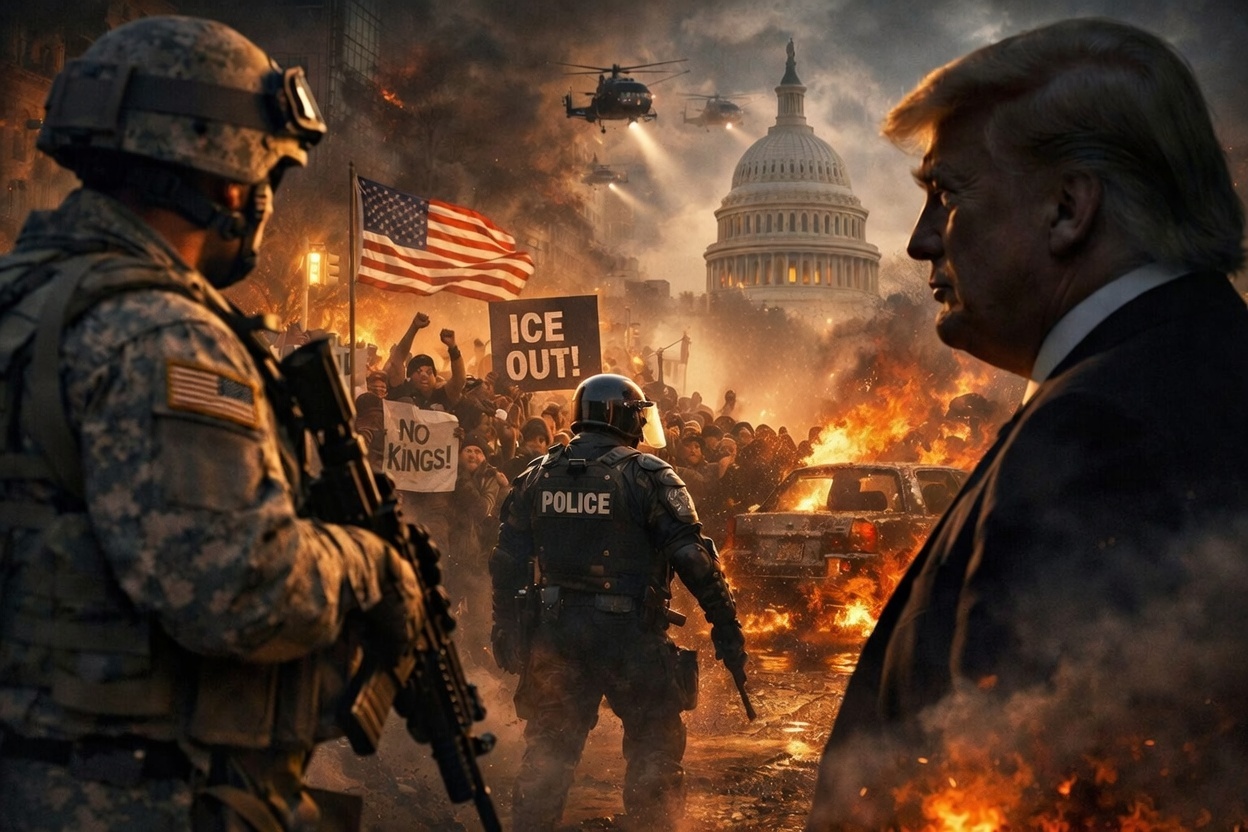

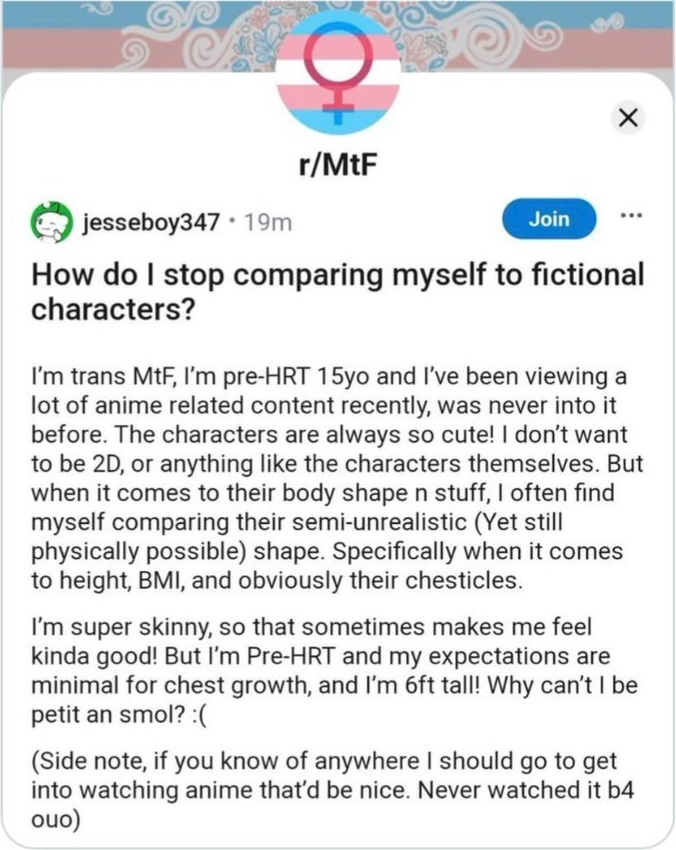
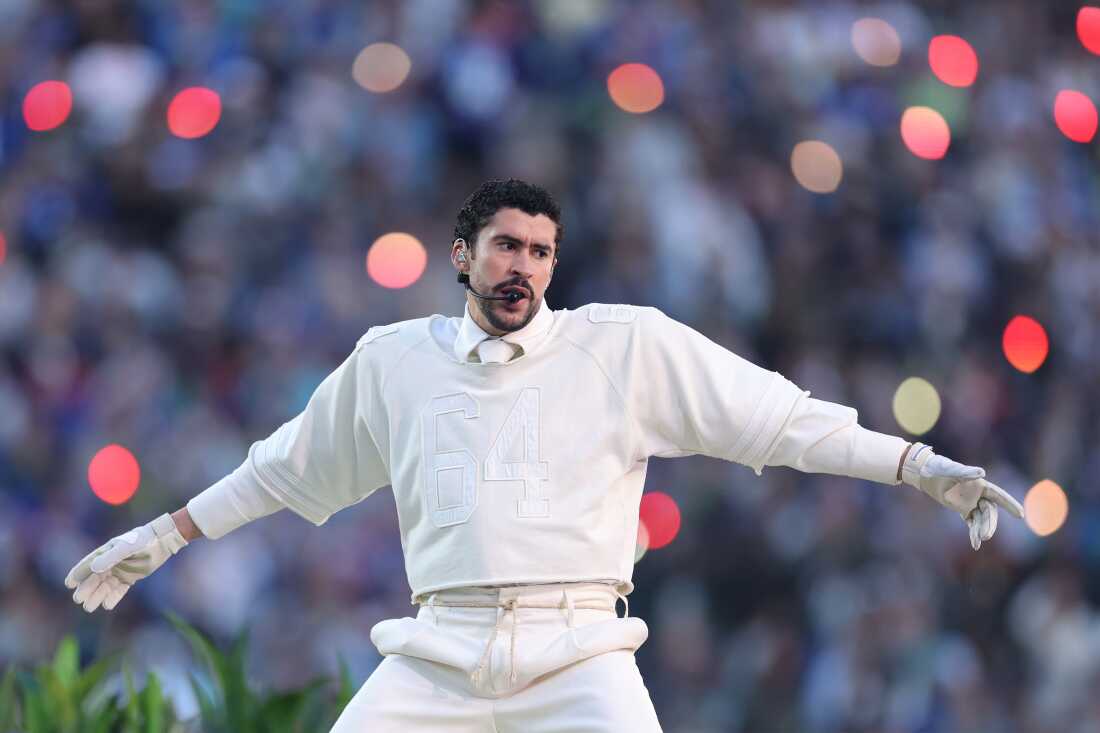
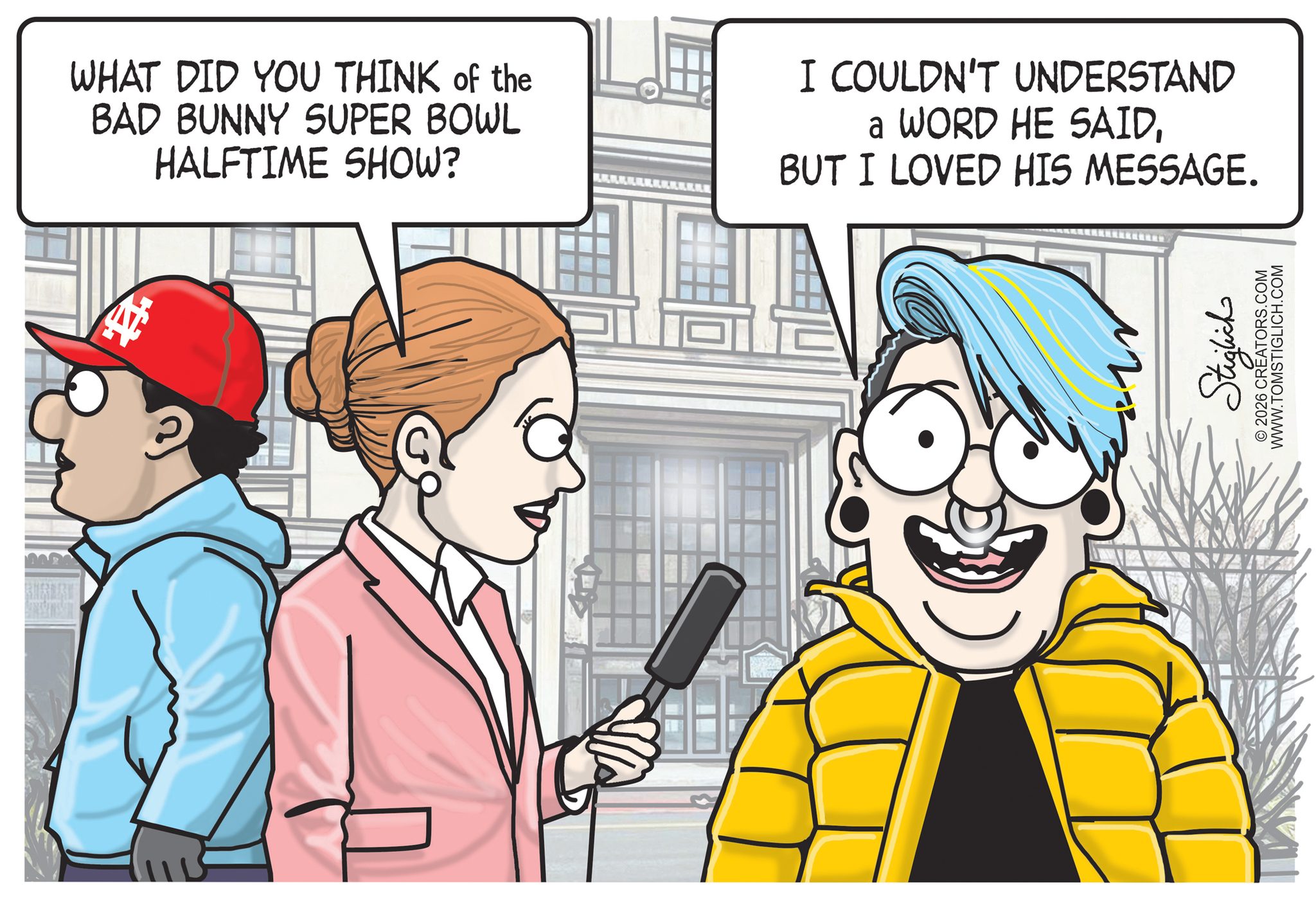
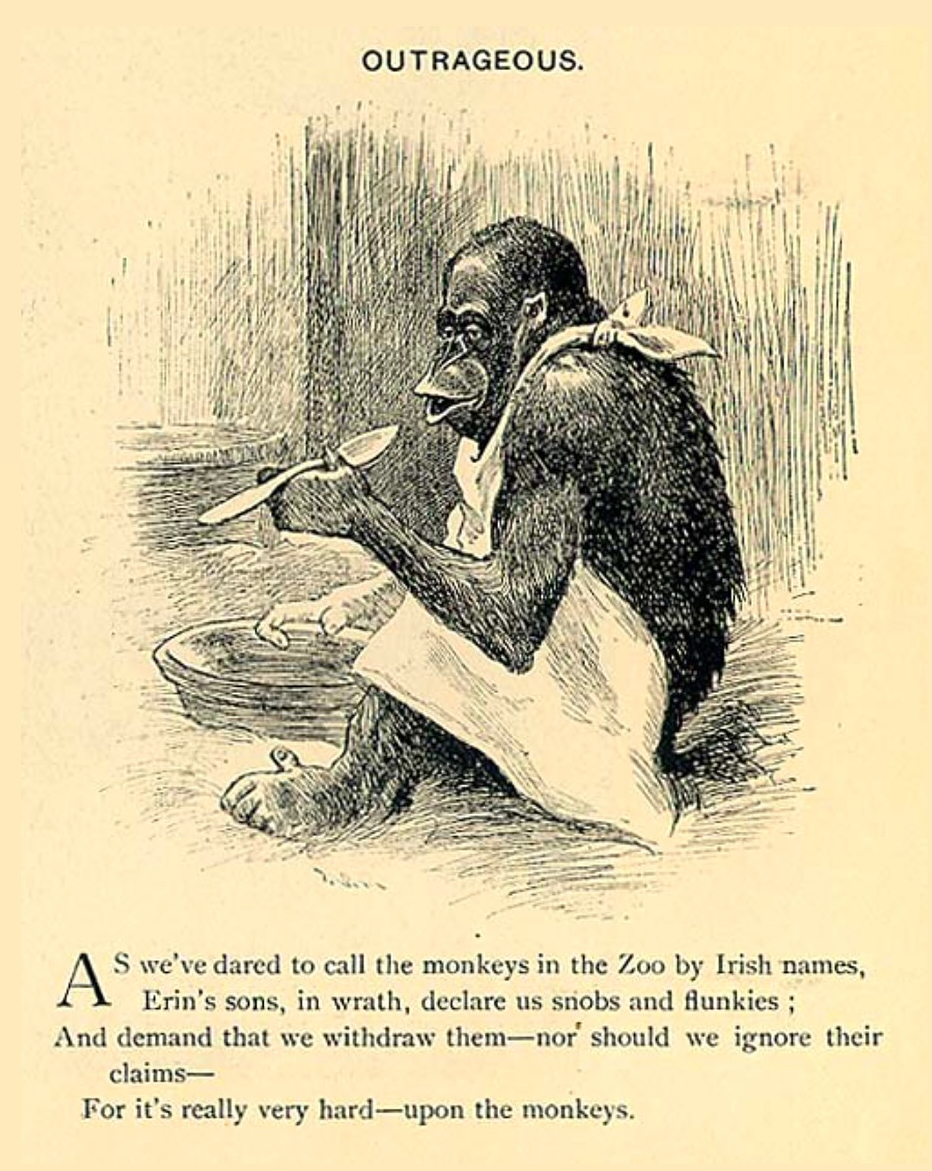
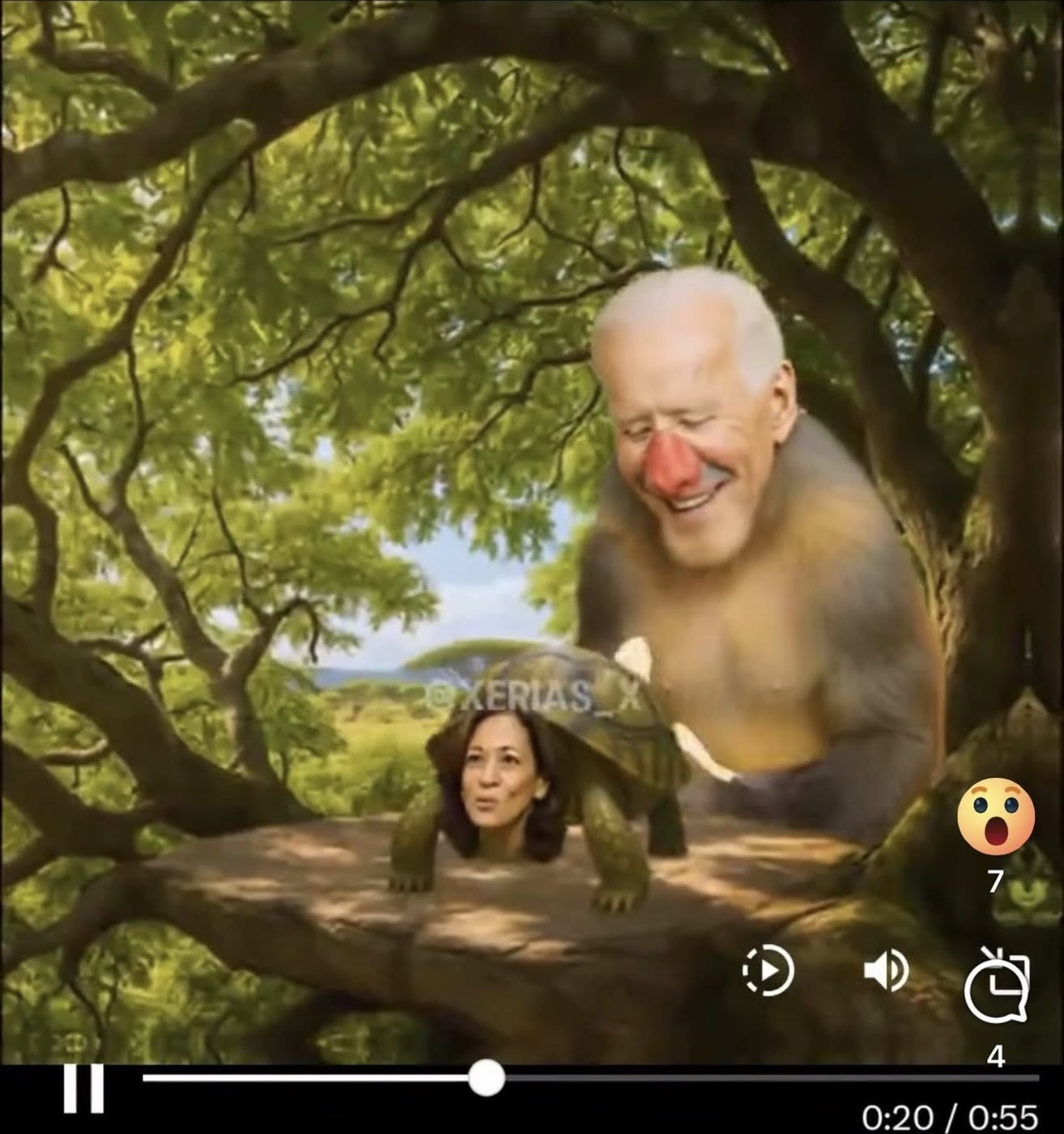
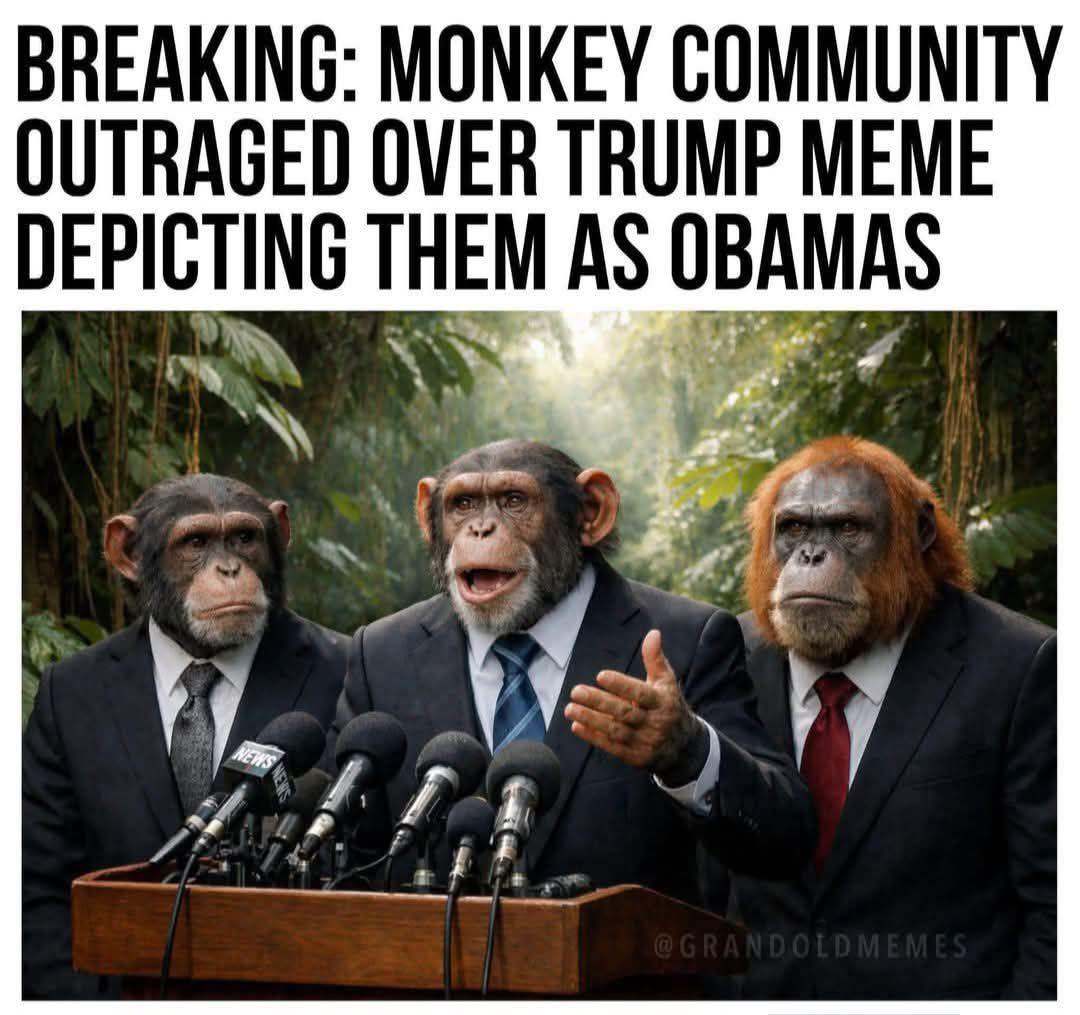
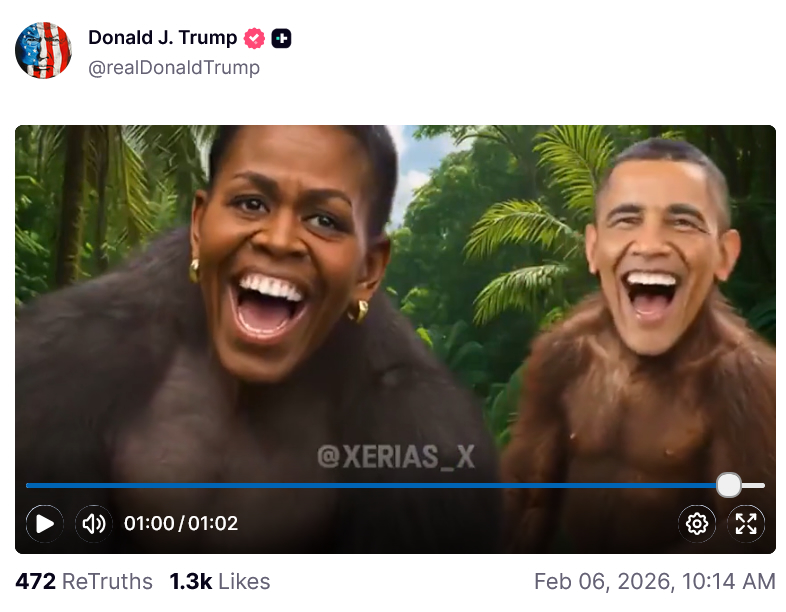
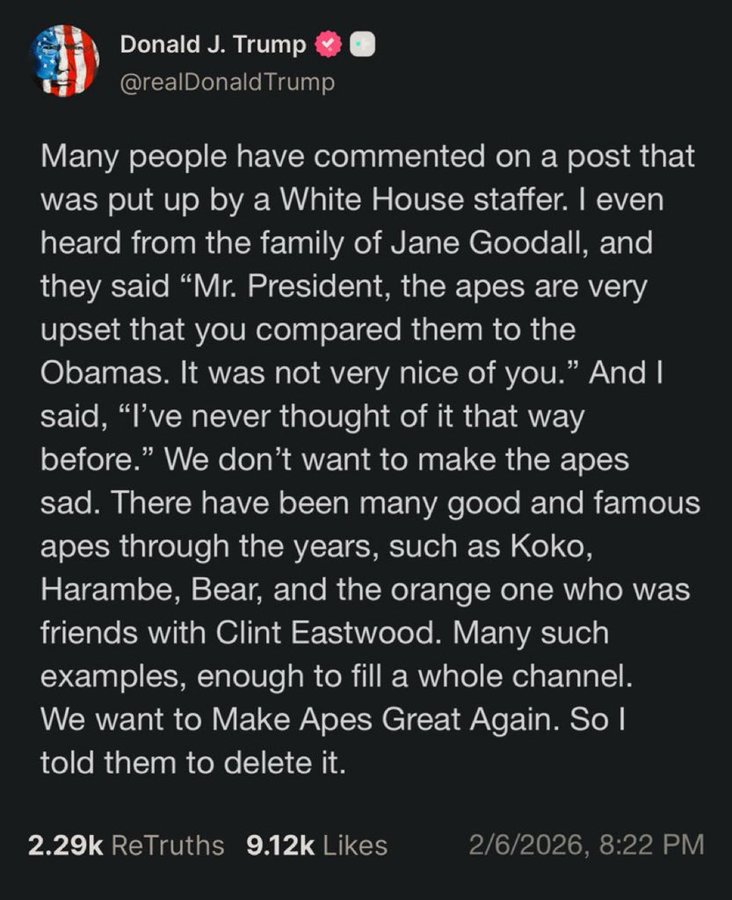
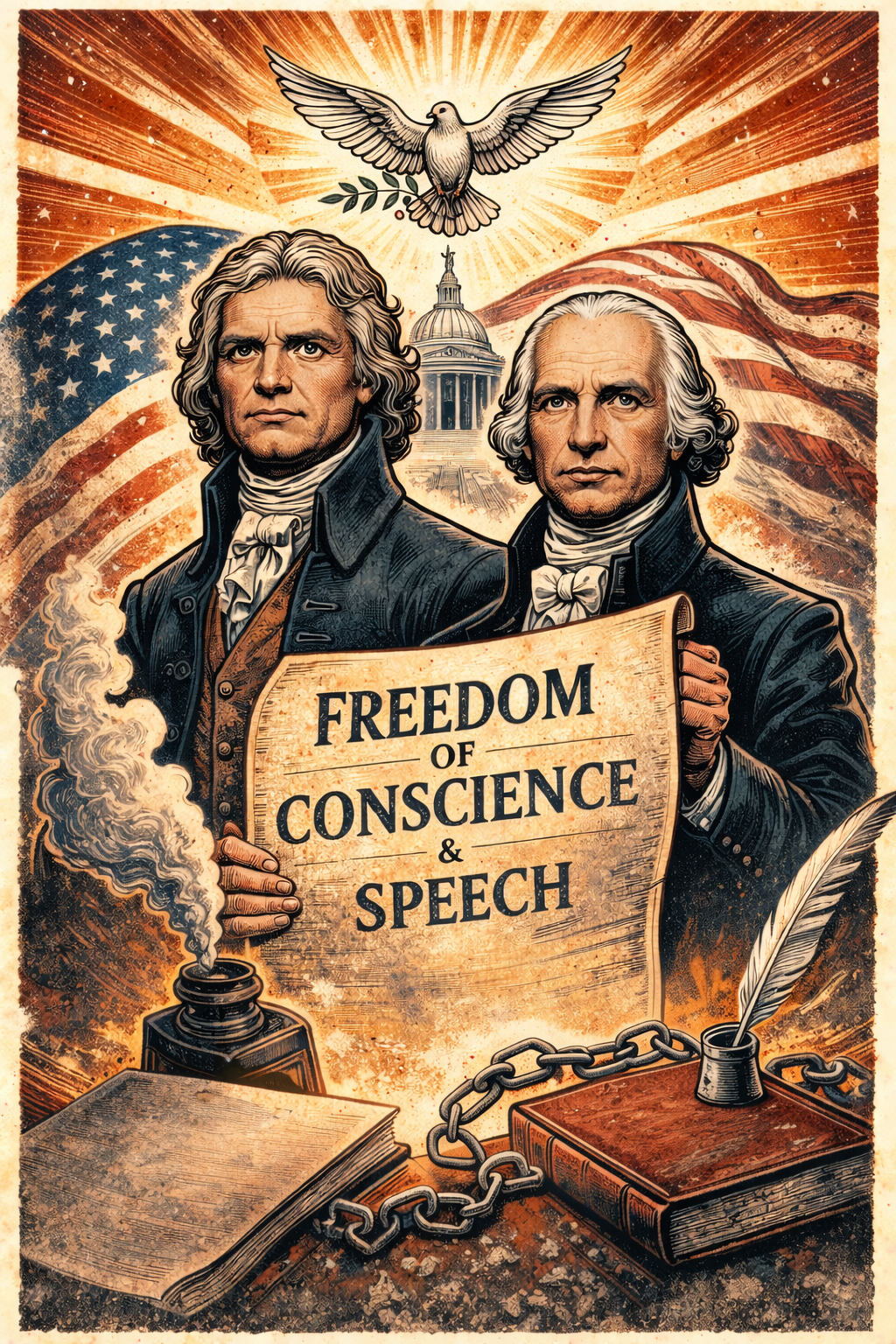
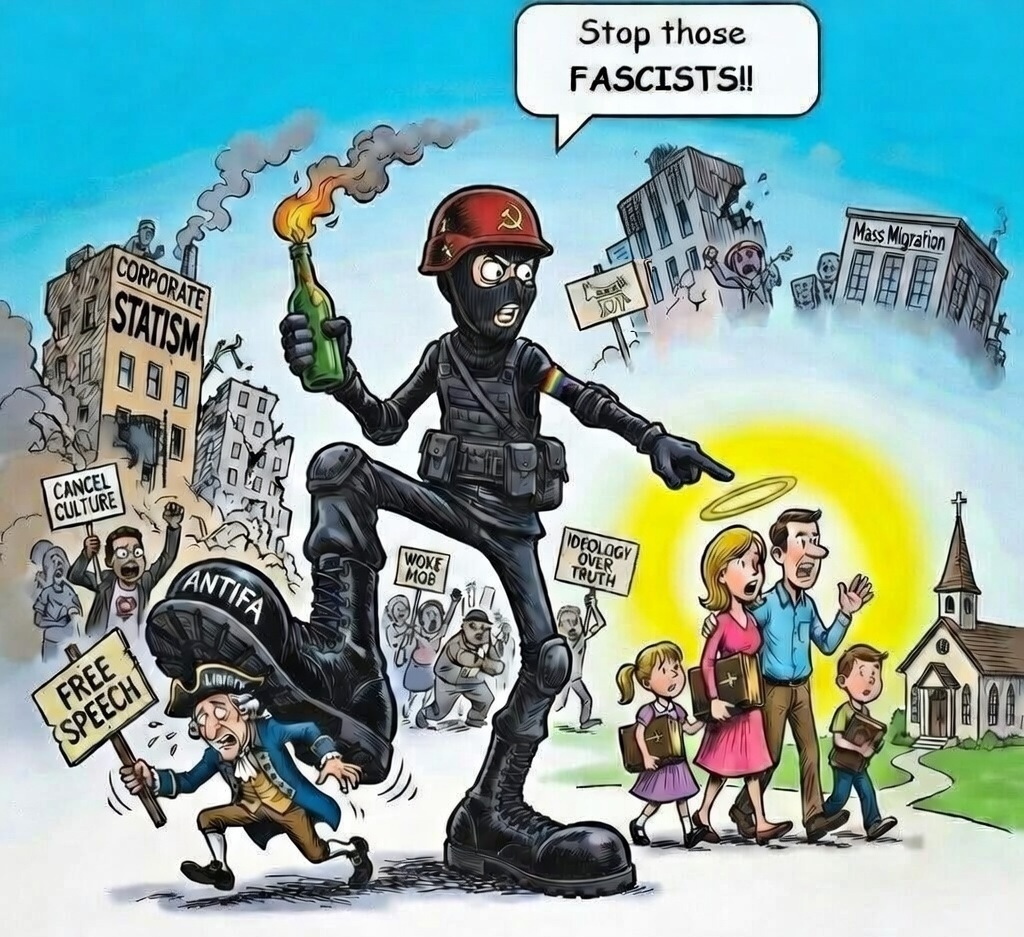
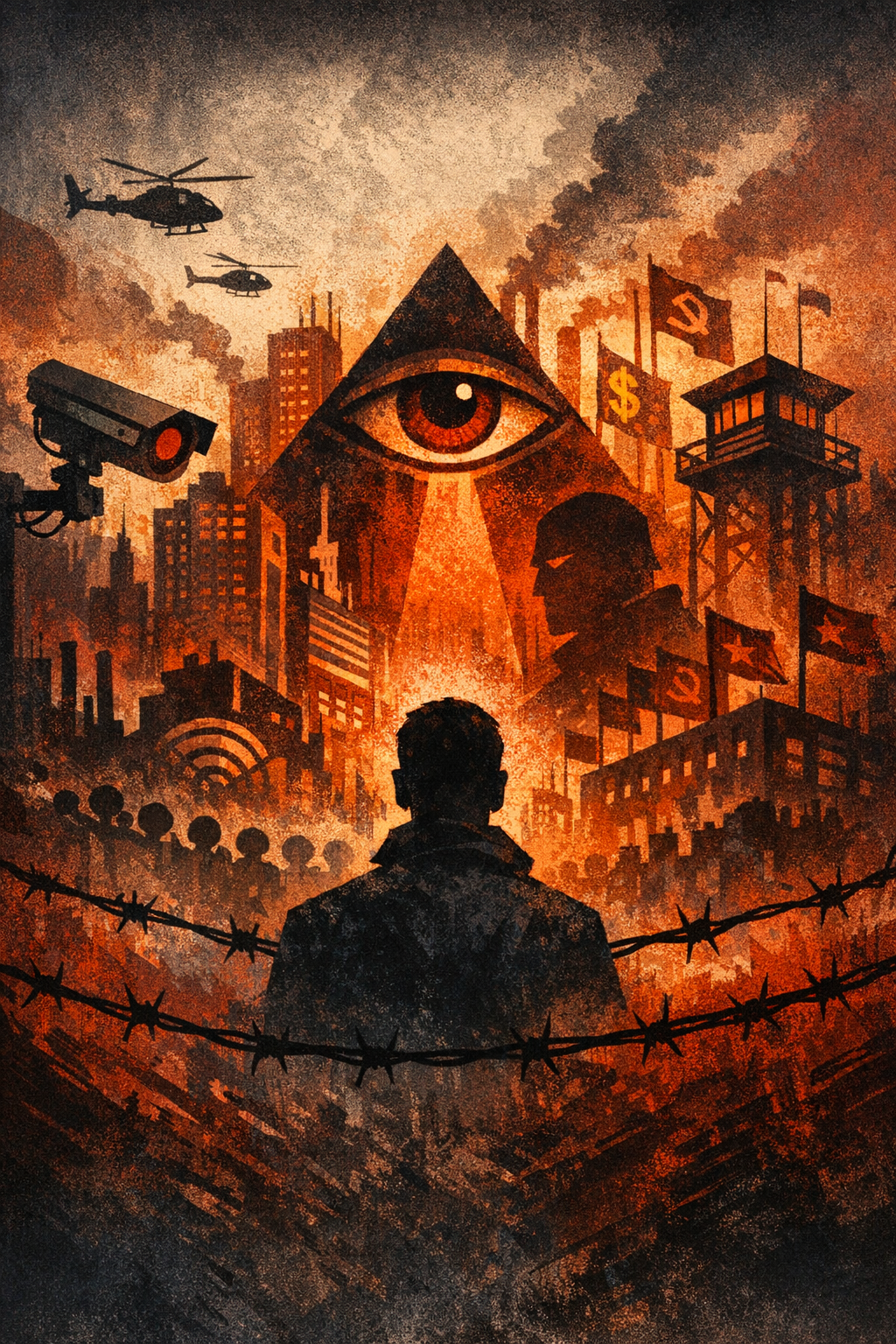
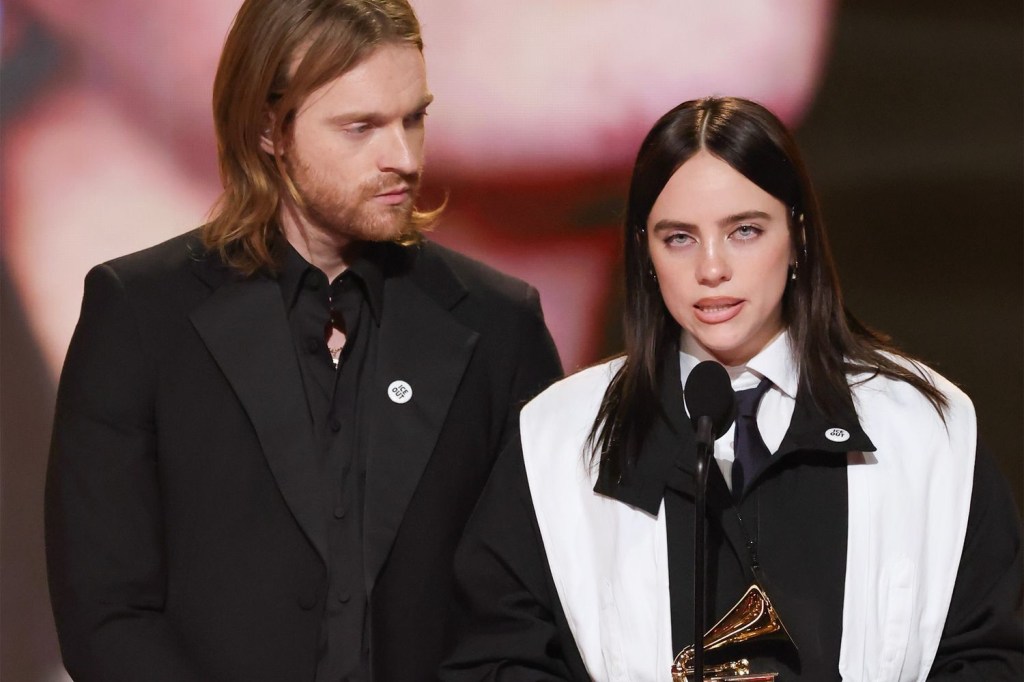
 freedom and reason