I published an analysis of the 2025 Q1 GDP report yesterday on Freedom and Reason. There were reasons in that report to be optimistic, but obviously a robust report would have been more welcome news. Now the April jobs report is out and it finds that employers added 177,000 jobs in April. This is on top of the 185,000 jobs the economy in March.
The unemployment rate remains unchanged at 4.2 percent. While this is a historically low number, keep in mind that unemployment is only a measure of who’s looking for work. For several years now we have had an increasing proportion of the American population disinterested in working. They don’t show up in the headline rate.
A more comprehensive measure is the U-6 unemployment rate, which includes discouraged workers who have stopped looking for work (and those working part-time for economic reasons). This broader figure has historically been several percentage points higher than the headline rate.
To illustrate the difference, consider that during the COVID-19 pandemic the official rate spiked to nearly 15 percent in April 2020; during the same month, the U-6 rate exceeded 22 percent.
Today the U-6 rate is 7.8 percent and labor force participation rate (LFP) stands at 62.6 percent. The LFP is the proportion of the working-age population aged 16 and older either employed or actively looking for work. There is an uptick in participation compared to recent figures, but readers should be cautious about reading too much optimism in that number. A fundamental alteration to the economic structure of the country must be made before making any real strides.
How did we get here? It isn’t Trump’s fault. As always, one has to take the long view. Concerns about the anemic economic growth during the early 2000s was somewhat muted following the Great Recession, when the job market steadily improved. But the bounce-back was an illusion that obscured a massive transfer of wealth upwards and weak underlying fundamentals. The reality is that labor force participation has declined since the 2000s.
AI-generated image
There are various reasons for this, but the most overlooked reason is deindustrialization, which has removed from communities across the nation the incentive that attracts citizens to work: high-wage value-added manufacturing. Manufacturing has been moved to, among other places, China. This is why re-industrializing America (the point of tariffs) and removing illegal aliens from the country are central to Trump’s policies.
Deindustrialization is a serious concern for workers. The anemic quarter century was set up by trends in the twentieth century. In the immediate postwar decades, the US (and Western Europe, with our assistance) saw a golden age of industrial growth. However, starting in the 1970s and accelerating in the 1980s and 1990s, the US experienced deindustrialization; manufacturing jobs declined due to the rising organic composition of capital (capital over labor—automation, etc.) and the offshoring of production to countries with cheaper labor.
This development is not a natural occurrence, but involves elite planning. It’s a strategy to combat something Karl Marx predicted, i.e., the falling rate of profit (which globalization has not stemmed), as well as undermine the strength of private sector labor unions, which depend on capitalism remaining largely within national borders for their actions to work. Globalization devastated organized labor. That was on purpose.
It was job losses and economic shifts in traditional manufacturing regions, particularly in the US Midwest, that created the “Rust Belt”—and the social pathologies that came with it. At the same time countries like China, and later Vietnam and India, embraced export-led industrialization and rapidly grew their manufacturing sectors. This has allowed them to dominate consumer markets in the West, their cheap commodities partially offsetting the relative loss in the standard of living in the deindustrializing West.
As I have written quite a bit about lately, there has been in recent years talk of re-industrialization, in part driven by concerns over supply chain resilience and national security. Those are important consideration, to be sure, but what should be at the forefront of the discussion is re-industrialization as a strategy to rebuild the American Dream. That we only hear populist-nationalists talking about the relevance of high-wage value-added manufacturing to raise the living standards of our citizens is an important tell.
Don’t be naive. The other side is not disinterested in such matters; they oppose re-industrialization because it represents an obstacle to globalization and the managed decline of the West. It’s the same motive that lies behind Democrat resistance to immigration control.
James Carville: "I have on six items of clothes: shoes, socks, jeans, skivvies, t-shirt, and sweatshirt. You know how many of these were made in America? None! None!"
“And I don’t want to live in a country that makes t-shirts. I can buy them from somewhere else.” pic.twitter.com/lGpE9EDxZ1
Democrat strategist James Carville summed up the party’s strategy in a nutshell when he said that he didn’t want America making T-shirts. The T-shirt is a metaphor for apparel manufacturing, which some of my Tennessee friends will remember was a source of good paying jobs in our state before the first big globalization push in the 1980s. The metaphor stands for other sectors, as well. Remember when electronic subassembly plants left Tennessee during that same period? I know I do.
Carville wants cheap Chinese goods. He doesn’t want good paying jobs for Americans. We’ve known this for a long time. It was the man he served, Bill Clinton, who played one of the major roles in deindustrializing America. NAFTA anyone? Etcetera.
It may not always be clear which party represents working class interests, but it’s very clear which party doesn’t.
The Alien Enemies Act (AEA) has been invoked before in US history. While no direct precedent exists for using the AEA against cartel-affiliated foreign nationals, it is easy cite the historical use of the AEA against nationals of enemy countries and the broad statutory language to support a novel application. Thus the US District court in Texas ruling against Trump’s deployment of the AEA in combating foreign terrorism in the United States is not merely suspicious but is yet another data point confirming the pattern of judicial weaponization we have witnessed unfolding over the last several years.
The federal judge in this case is Texas is US District Judge Fernando Rodriguez Jr., a Trump appointee (which the media relishes noting). In his ruling, Rodriguez determined that the administration’s invocation of the act was unlawful in this context. He stated that the statute applies only during times of declared war or actual invasions by foreign nations, and that the activities of Tren de Aragua did not meet these criteria. We thus have another universal injunction (this one permanent), setting a significant precedent (at least for now) for how the statute may be applied in modern contexts.
US District Judge Fernando Rodriguez Jr. (Texas)
Rodriguez was recommended to President Donald Trump during his first term by Senator John Cornyn. Rodriguez was nominated in 2017 and confirmed the following year. In praising Rodriguez, Cornyn cited his work in combating human trafficking (Rodriguez served as a field office director for International Justice Mission in the Dominican Republic focusing on rescuing victims of child sex trafficking). As you read this essay, keep that in mind and ask yourself whether it’s odd for somebody praised for combating human trafficking to rule in a manner that makes it more difficult to remove human traffickers from US territory.
In his ruling against Trump’s deployment of the AEA, Rodriguez notes other tools the administration can use to remove aliens from American territories. But those other tools will hamper actions necessitated by an emergency situation—the threat posed by criminal aliens designated as terrorists, who were allowed alongside millions of other aliens to flood the country under the previous administration for purposes of distorting the Census, gaining electoral advantage, and advancing the transnationalist agenda.
Elite machinations to one side, the judge’s ruling is fundamentally wrong for basic reasons of law. The legal basis for invoking the AEA is sound. It’s the position of administration that the statute provides sufficient authority, when interpreted considering contemporary national security concerns, to support executive action against foreign nationals who present a clear threat to public safety and national sovereignty through organized criminal activity that is, in any adequate interpretation of intentionality, perpetrated by the Venezuelan state, an enemy of the United States.
The AEA states, in relevant part (I italicize critical clause): “Whenever there is a declared war between the United States and any foreign nation or government, or any invasion or predatory incursion is perpetrated, attempted, or threatened against the territory of the United States by any foreign nation or government, and the President makes public proclamation of the event, all natives, citizens, denizens, or subjects of the hostile nation or government, being of the age of fourteen years and upward, who shall be within the United States and not actually naturalized, shall be liable to be apprehended, restrained, secured, and removed as alien enemies…”
Let’s unpack this. The provision, originally enacted in 1798, today codified at 50 USC § 21, empowers the President to take specific actions against nationals of a foreign adversary, contingent upon the following: the occurrence of war, invasion, or a predatory incursion; a Presidential proclamation of the event; the individual being a non-naturalized national of the hostile nation; and the action being taken for the public safety.
What is Tren de Aragua? It’s a Venezuelan-based transnational criminal organization involved in drug smuggling, extortion, human trafficking, and violent crime. The group has significantly expanded its operations into multiple US jurisdictions. According to federal law enforcement sources, individuals affiliated with Tren de Aragua have entered the United States unlawfully and have been implicated in activities that threaten public order. Nobody could reasonably deny that this is the case.
Don’t expect terrorists to wear military uniforms. While not a formal military force, Tren de Aragua represents a hostile and organized foreign threat. The statute’s use of the phrase “predatory incursion” is intentionally broad and encompasses non-military but coordinated actions that endanger US territorial integrity and the safety of its residents. The group’s actions may reasonably be classified under this term. The Wilson Administration used the act detain and restrict German nationals inside the US. The Roosevelt Administration) used the act detain German, Italian, and Japanese nationals. Those arrested, detained, and deported by Wilson and Roosevelt were for the most part not in military uniforms or part of the armed forces of the relevant enemy nations.
Although Tren de Aragua is a nonstate actor, its origin and national base of operations in Venezuela is critical—just as in the cases of Germany, Italy, and Japan. The Venezuelan government has demonstrated a persistent incapacity, or (charitably) unwillingness to suppress the organization, and credible intelligence indicates possible tolerance or complicity by elements of the Maduro regime. It expresses an extreme naivete to demand that Trump wait for confirmation of this. Indeed, confirmation of the intelligence reports is highly unlikely to be forthcoming. To protect the American people and the sovereignty of their nation, Trump must act based on what is likely.
I teach this in every one of my criminal justice courses. Intentionality in criminal and other law isn’t limited to purposeful harm—it includes knowing actions, extreme carelessness, and reckless behavior that a reasonable actor would have avoided. Intentionality in criminal (and other) law refers to the mental state, or mens rea, behind a person’s actions. While many assume that only purposeful actions count as intentional, the law recognizes a broader range of mental states that can fulfill this requirement, including purpose (the actor wanted the outcome to occur), knowledge (the actor was aware that his conduct is likely to result in a particular outcome), recklessness (the actor disregarded substantial and unjustifiable risk but proceeded with the action anyway), and criminal negligence (an actor failed to be aware of a substantial and unjustifiable risk, but should have been).
More than one of these criterions—all, in my view—are present in this situation. This makes Venezuela a de facto hostile nation in this context, insofar as it enables or permits incursions into US territory through its nationals, particularly those affiliated with criminal syndicates. Thus, Venezuelan nationals associated with this threat fall within the statutory definition of “natives, citizens, denizens, or subjects of the hostile nation.”
The act requires a public proclamation by the President, who is the chief executive of the federal government, which includes his roles as commander-in-chief and chief magistrate, acknowledging the incursion. The President oversees foreign policy and is charged with the duty to defend the sovereignty of the American Republic and its citizens. This procedural prerequisite vests the President with full authority under the statute as empowered by the Constitution. Upon issuance of such a proclamation, executive agencies may proceed with the following: designating the affected individuals as alien enemies; imposing appropriate restraints (such as arrest and detention); conditioning their continued residence upon specific security guarantees; and ordering their removal if they refuse to depart voluntarily.
Crucially, such a proclamation need not declare war or identify conventional military aggression but merely recognize that a hostile foreign threat has penetrated US borders in a manner consistent with the statutory language. The statute explicitly allows action “for the public safety,” underscoring that its scope includes not only wartime detentions but responses to modern asymmetric threats. The criminal activities of Tren de Aragua represent a coordinated incursion, with Venezuelan nationals serving as active agents of disruption inside the borders of the United States. The facts in this case fulfill both the letter and the spirit of the AEA.
Judge Rodriguez knows this and is willfully interfering with the Article II powers of the President of the United States. His ruling is connected to a concerted effort by the federal judiciary to usurp the authority of the Executive Branch, grabbing power that was never intended for the Judicial Branch by the Constitution. Article III is subordinate to Article I, which gives Congress control over the judiciary save the Supreme Court, but even here determining who sits on that court, as well as Article II, which gives the President the authority to administer the laws Congress passes and to nominate members of the federal judiciary. The priority of Article I and Article II has a very clear basis: the establishment of a democratic republic that represents the will of the People, i.e., citizens.
A democratic republic puts citizens central to its concerns. It is citizenship that comes with the immunities and privileges identified in the Constitution and its Bill of Rights. If you are a legal resident, you enjoy limited immunities and privileges, which is why, for example, legal residents who are noncitizens cannot vote. If you are illegally present in US territory, then you enjoy few immunities and privileges. The public is hearing a lot about due process these days, but determining whether a person is illegally in the United States is a straightforward manner. Is the person a citizen or a legal resident? No? Then promptly detain and deport. A protective order by a rouge court is not a valid reason for hesitation.
Judicocracy is not part of our constitutional scheme. On the contrary, the judiciary has a limited role in determining the fate of the nation. Federal courts are being weaponized against the citizens of the republic by those attempting to limit Executive authority to further an agenda: the managed decline of the American Republic, preparing its people for full incorporation in a transnational system run by global capitalists and financiers. We are in a struggle for our survival. Trump and the agencies under his authority need to take this threat seriously and act boldly. So does Congress.
The President takes an oath when he is sworn into office: “I do solemnly swear (or affirm) that I will faithfully execute the Office of President of the United States, and will to the best of my Ability, preserve, protect and defend the Constitution of the United States.” Did you think the phrase “against all enemies, foreign and domestic” was in there? So did I. But don’t worry, members of the House and Senate, federal judges, military officers and enlisted personnel, and civil service and executive agency employees take a similar oath but with a crucial difference:
“I, [name], do solemnly swear (or affirm) that I will support and defend the Constitution of the United States against all enemies, foreign and domestic; that I will bear true faith and allegiance to the same; that I take this obligation freely, without any mental reservation or purpose of evasion; and that I will well and faithfully discharge the duties of the office on which I am about to enter. So help me God.”
So where is Congress? Where is the bold and swift action from the body that establishes and oversees the federal judiciary? To be sure, the heads of the various executive agencies may also act against our domestic enemies, and thus this responsibility is baked into the President’s authority. But Congress can abolish and reign in these rogue courts. Why aren’t they? If only to lend more legitimacy to the administration trying to protect the public interest. This is suspicious. Call your elected representatives and ask them why they aren’t acting. Then primary them if they don’t move.
The Rasmussen Reports daily Presidential Tracking Poll for Thursday (today) shows that 50 percent of likely US voter approve of President Trump’s job performance. Must be frustrating to hammer away at something and get the opposite results.
Yesterday morning on Freedom and Reason, I reflected on Trump’s first 100 days of the second term. I said that there would be a lot that I’d leave out. Listening to Trump’s cabinet meetings later that morning, there was indeed a lot of things that I could have reported. If you can find video of that meeting—which was open to the press—you would benefit from the reports.
Last night, I spent several hours reviewing the economic data in light of the first quarter GDP (gross domestic product) report (Q1 2025). As reported in the media, GDP contracted 0.3 percent in Q1 2025. I’d rather not have seen that. I’m hopeful about things. But I’m a realist. I’m also curious—and have expertise in political economy. So I dug into the details to understand what happened. I share with you this morning what I found.
Before I do that, I don’t know how much you know about how GDP is measured, but it’s important to grasp the inputs to get a fuller understanding of the matter. A single number makes headlines flashy but, like crosstabs in polling data (Trump’s approval rating would be much higher if but for a single intersecting demographic), there’s more to this than a single number—maybe there’s even a little good news.
GDP is calculated as consumption + investment + government spending + (exports – imports). Imports are subtracted from GDP because they represent spending on foreign goods rather than domestic production. Perhaps obvious given the name of the measure, I know, but worth noting anyway.
Pay attention to government spending going forward. Budget cutting—necessary because of the massive deficits accumulated under the Biden regime—will negatively affect GDP. It’s hard to suss out how much expectations of budget cuts affect GDP (and Trump’s budget is months away from passing—and even then we will have months more to see its effects), but anticipatory concerns could have knock on effects across other measures.
More directly, even without a budget, federal government spending fell by just over 5 percent in Q1 2025, with estimates finding that this shaved about a third of a percentage point off GDP. This was the result of actions taken by the Department of Government Efficiency (DOGE). Musk did find considerable savings in his audit during this period, around 150 billion dollars—not the trillion he’d hope, but not insubstantial.
That’s what we voted for. And a lot more budget cutting needs to be done. At the cabinet meeting today, Trump suggested more coming for DOGE, perhaps as much as three times that amount. As I said months ago, there will be pain. But if we don’t get our fiscal house in order, the specter of a sovereign debt crisis grows ever larger.
Consumer spending, which accounts for about 70 percent of GDP, grew at a weaker 1.8 percent in Q1 2025, down from 4 percent in Q4 2024. The public is cautious. At the same time, consumer spending is usually strong at years-end (Christmas and all that), so the economy’s underlying strength may be exaggerated. On the plus side, private domestic investment rose by nearly 22 percent, driven by a surge in equipment spending. That’s promising for the midterm.
Imports can have a big impact on GDP. And boy did they. In Q1 2025—which covers the period January 1 to March 31—imports surged by more than 41 percent, driven by a more than 50 percent increase in goods. That’s the largest rise since 1974. This subtracted over 5 percentage points from GDP, making it the primary driver of the contraction. There’s most of the answer for the contraction—if we accept the preliminary number. Economists had expected a modest gain of around 0.4 percent, but a surge in imports (attributed to businesses stockpiling goods perhaps ahead of President Trump’s tariff policies) drove the decline.
Peter Navarro (a chief economic adviser to Trump) notes that removing the effects of imports and inventories reveals a core GDP growth rate of around 3 percent, which exceeds expectations (by quite a bit, actually). Core GDP is defined as final sales to private domestic purchasers, which grew at just under 4 percent. This metric excludes volatile components like inventories and trade. This shows solid underlying demand, so that good news.
One might consider this calculation a rationalization, but Navarro is not alone. Indeed, economist Jason Furman (economics professor at the Harvard Kennedy School and the Department of Economics at Harvard University) calculated a similar 3 percent annualized growth rate for core GDP. Furthermore, Furman cautions observers to keep in mind that the Q1 2025 GDP number, as it always is, will be revised many times in the coming years with better source data. There’s a significant chance that the overall number will be revised upward, he argues, putting it in positive territory—so, if a contraction next quarter, still no recession.
Tariffs weren’t in effect in Q1, so it is difficult to say what role this played in the contraction. Navarro says it didn’t any. But it’s possible, as noted above, that Trump’s campaign promises created economic uncertainty, which could have led to a behavioral shift, with companies building inventories to avoid future costs.
Consumer spending could also have been affected by Trump’s tariff promise, with consumers withholding purchases collectively not fully understanding the timeline. Moreover, the import situation could also have been a consequence of Trump’s promise to raise tariffs. We have evidence that importers began front-loading purchases, which would explain the record surge in imports.
A few points to consider or keep in mind.
– Navarro argues the GDP drop was due to a Biden overhang. But GDP growth was rather substantial in Q1 2024, at least compared to the average GDP during Biden’s term (around 3 percent). It is possible that Q1 2025 under Biden or Harris would have been sluggish, but that would be speculating.
– The 0.3 percent contraction doesn’t indicate a recession. A recession requires two consecutive negative quarters. The press will be waiting with bated breath for the Q2 report. They’re pining for a recession; all the negative press intends this outcome. But, again, as Furman points out, Q1 2025 GPD could be revised upwards.
– We’ll hear a lot of rhetoric tying slow growth to tariffs. Remember what tariffs do. Tariffs protect domestic industries by making imported goods more expensive, encouraging businesses and consumers to buy locally produced products. As I wrote about recently on Freedom and Reason, this boosts US manufacturing, preserves jobs in vulnerable sectors, and strengthen national economic security by reducing reliance on foreign supply chains. For example, tariffs on aluminum and steel imposed during Trump’s first term helped revitalize US mills (which is why Biden kept Trump’s tariffs in place).
– It will take a while for Trump’s economic plans to play out. Since the Senate couldn’t strip Trump’s tariff authority yesterday, we will see what those effects will be. I’m happy to see the experiment run.
– Remember that Trump put a 90-day pause on certain reciprocal tariffs for most countries, while maintaining a 10 percent baseline tariff on imports from nearly all nations and escalating tariffs on China. So with the return of the initial tariff structure (if it returns) and the budget, which won’t impact Q2 2025, the effects won’t likely be known until late this year.
– One might wonder whether spending cuts will hamper growth. Perhaps. There will be tax cuts. But these will largely be the continuation of Trump’s tax cut from the first term (which Biden continued). There will be new tax cuts—no taxes on tips, overtime, and Social Security—but I don’t know whether these will have modest or robust effects on consumption. I am hoping they will raise taxes on the top income earners, which is being discussed, but this might put a drag on things. At the same time, it may, along with budget cuts, help reduce the deficit. I’m also hopeful that external revenue generation from tariffs will reduce the deficit. I’m all for tariffs and eager to see what their effect will be in the long run across a range of metrics.
– I recognize that budget cuts will negative impact GDP growth, but I’m worried Congress won’t cut enough. To reiterate what I said earlier, we really need to tackle the budget deficit. We can’t keep adding 2 trillion dollars to the nation debt every year. (I wish they weren’t proposing an increase in the defense budget, but that will contribute to GDP growth.)
– Note that I have said nothing about Wall Street. Wall Street is a casino. I’ve never considered Wall Street to be the most significant metric of economic health. I focus on the fundamentals. Admittedly, I have only scratched the surface here.
My understanding is that we really haven’t had a new budget in decades. I would like to see Congress pass a “new generation” budget structure—a multi-decade plan rooted in economic nationalism that would contribute mightily to a restructuring of the world economy. That would give investors confidence about the direction of the nation’s economy. All this uncertainty is having a negative impact on optimism. And mass psychology plays a significant role in economic dynamics.
I recently had a person block me on X after she claimed that the DoJ is an independent branch of government. She isn’t the first person I’ve heard say this. I wish she had allowed me to educate her. Folks need a refresher in civics.
The First Cabinet. The Attorney General is seated on the far right.
The DoJ is not an independent branch of government but part of the Executive Branch. The Constitution establishes three branches—Legislative, Executive, and Judicial—and the DoJ operates under the executive branch, headed by the President.
As the head of DoJ, the Attorney General (AG) serves as the chief law enforcement officer of the federal government. The AG advises the President on legal matters and oversees federal law enforcement, including prosecuting cases on behalf of the United States. The AG is appointed by the President and confirmed by the Senate, and serves at the President’s pleasure, meaning that the AG can be dismissed by the President.
In addition to serving as Chief Executive Officer of the United States and Commander-in-Chief of the US armed forces, the President also Chief Magistrate—he is responsible for enforcing federal laws. This responsibility aligns with the President’s constitutional duty to “take Care that the Laws be faithfully executed” (Article II, Section 3).
The Presidency is a powerful office. It’s the one office elected by all the People. The only co-equal body of government is Congress. The Judiciary is not a co-equal branch. Article III only establishes the Supreme Court. All inferior courts are created by Congress, funded by Congress, and can be dissolved by Congress.
Even more than Top Cop, the Attorney General serves as a legal advisor to the President and the Executive Branch. In fact, when the office was created under the Judiciary Act of 1789, the AG’s primary role was to provide legal counsel to the President and represent the US in court.
When the DoJ was established in 1870, the AG’s role expanded to include broader law enforcement and prosecutorial responsibilities. But the AG still advises the President while simultaneously upholding the rule of law.
Readers might want to save this post and whip it out when people try to tell you that the DoJ is an independent branch of government. That the DoJ is an independent branch of government is a convenient myth for those trying to paint the President as a dictator.
The truth is that the Founders of the Republic established a strong national government. The Constitution is the Supreme Law of the Land, and the Office of the President is in charge of running the federal apparatus—and keeping the states in line. The People settled this matter in the 1860s at the cost of some three-quarters of a million lives.
Remember when President Eisenhower federalized the National Guard and turned the troops from keeping black students out of public schools in Little Rock, Arkansas, to protecting them as they entered the school building? Not just the National Guard. Eisenhower deployed the 101st Airborne Division, as well! Imagine that, a president using the National Guard and the Army to enforce federal law. That’s power.
* * *
While I have you, I need you to take a look at Article I, Section 9 of the US Constitution: “The Privilege of the Writ of Habeas Corpus shall not be suspended, unless when in Cases of Rebellion or Invasion the public Safety may require it.”
Rebellion and invasion are important caveats. Note the emphasis on public safety. Abraham Lincoln famously suspended the Writ of Habeas Corpus during the Civil War. But he wasn’t the only one. Ulysses S. Grant did it, too. So did Franklin D. Roosevelt.
Over the last several years the United States has been under invasion. The borders have been effectively sealed, but millions of illegal aliens—many of them criminal aliens—are now inside our borders. If rogue judges are going to prevent the removal of the invaders, then suspending the Writ of Habeas Corpus for those who illegally entered country over the last four years must be on the table.
I am not calling for suspending the Write of Habeas Corpus for US citizens and legal residents. I am suggesting that the President seriously consider using his constitutional power to remove undocumented noncitizens who represents a threat to democracy, our livelihood, and public safety.
Illegal immigrants drain public resources, perpetrate crime and violence, disorganize culture and communities, drive down wages, and distort the Census and the electoral map. It is way beyond time to do something about this. The administration must be more aggressive in its efforts to locate and remove illegal aliens. He has a lot of tools at his disposal to accomplish this. He needs to deploy them.
Trump can set an example for the peoples of Europe to rise up and demand the same from their governments. The globalist project must be halted.
As past posts on social media and on this platform will show, I used to believe that the government providing vouchers or funding to allow parents to send their children to religious schools violated the principle of separation of church and state—that is, that vouchers run afoul of the Establishment Clause of the First Amendment, which prohibits the government from endorsing or supporting a religion.
As I was driving home from Tennessee recently (I traveled there upon the death of my mother), arguing with myself as I do, I considered that the First Amendment is a double-edged protection: it forbids the establishment of a religion AND guarantees the free exercise thereof. When the government creates an education system funded by taxpayer dollars but restricts religious families from accessing those funds unless they forgo religious education, it isn’t maintaining neutrality—it is, in fact, discriminating against religious exercise.
Religious families pay the same taxes as secular families do. Yet they’re denied equitable access to public educational funds simply because they wish to exercise their religious freedom through their children’s schooling. In effect, religious parents are taxed to support a system that excludes their values, and then prohibits them from redirecting those funds toward an education that aligns with their deeply-held convictions.
Why isn’t this a form of taxation without representation? I argued back and forth but couldn’t articulate an adequate rebuttal.
It’s crucial to distinguish between government supporting a religion and government allowing citizens to freely exercise their religion. If vouchers or educational savings accounts are provided neutrally—available to all families regardless of religion or secular preference—then the government is not establishing religion; it is empowering private choice and enabling religious freedom.
It’s the parents, not the state, who choose religious schools. To tell religious families they cannot choose religious schools—which is effectively the case if they cannot afford to send their kids to those schools—is to discriminate against families on the basis of religion, which is forbidden by the Constitution.
Put another way, refusing religious families the ability to use public funds for religious schooling is itself a violation of the Free Exercise Clause. It treats religious conviction as a disqualifier for participation in public benefits—a move that demands religious individuals either compromise their faith or forego public support.
Public schools, while neutral with respect to religion in theory, necessarily reflect a particular philosophical worldview—often a secular or materialistic one. I’m secular and materialistic (in the philosophical sense). I agree that public schools should proceed on this basis and should not endorse a religion (which is why we need to root out ideologies such as gender ideology from them).
However, for religious families, this neutrality is politically interested; it is a philosophical position that conflicts with their own convictions. Thus, government neutrality on religion would allow religious families to use their educational funds to choose schooling that reflects their religious worldview, just as secular families can accept the materialistic worldview implicit in public education.
Public schools can have no religious content—or at least it should be neutral on the question of religion—because of the First Amendment. But the government cannot discriminate against citizens on the basis of religion. If children of religious parents are denied a religious education because of the structure of public funding guided by the First Amendment, then the government its discriminating against those children.
I have argued with myself several times about this over the last few days and I cannot save the position I previously held. Educational choice programs that allow funding to follow the student—including to religious schools—uphold both key mandates of the First Amendment: no establishment of religion and free exercise of religion. Far from violating the Establishment Clause, vouchers respect and empower the religious diversity of American citizens—while maintaining religious neutrality on the part of the government.
You may wish for a system that compels the children of religious families to receive a secular and materialistic education by denying those families access to educational funds to pursue religious education. But this is not your choice. The First Amendment guarantees religious liberty, which means that, while each of us enjoy freedom from religion, each of us also enjoy the freedom to religion.
Families should make such determinations for their children, not government, and they should enjoy access to resources that allow them to realize those determinations. It’s their money. These are their children. Religious families are also part of the public. In fact, they’re the majority.
I sat down last night to list several of Trump’s accomplishments in the first 100 days of his second term and it turned into an essay. It happens. I’m in a groove lately.
Some will read this and ask, “Where are the criticisms?” Seriously, are you really short on criticisms of this man? Nearly everything we hear from the media and progressives is criticism—unhinged criticism. (Did you witness Rachel Maddow’s nervous breakdown last night? I will share the video at the end of this post.) All the good stuff is ignored or warped to fit the media narrative, which is decidedly anti-Trump and anti-populist, and frankly anti-American.
This isn’t a perception. Content analyses of media accounts find that the coverage of Trump is over 90 percent negative. Even Fox News is down on Trump. The garbage polls—the same suppression polls that predicted a Clinton victory in 2016 and a Harris victory in 2024—etcetera. It’s a massive propaganda blitz.
This essay is interested in presenting a review of the facts that cuts through the propaganda.
The first 100 days of President Donald Trump’s second term have been nothing short of a whirlwind, marked by bold actions and tangible results that have reshaped the nation’s trajectory. Populist-nationalism has globalism and progressivism on the run. Trump’s record is a model for rank-and-file Europeans to follow.
Despite a coordinated effort by the media to obscure these successes with negative spin, the facts—here drawn from widely available sources—reveal a remarkable period of progress in a short frame. I focus on the President’s decisive actions to dismantle bureaucratic overreach, secure the border, revitalize the economy, and restore cultural and national pride. While the list is extensive, it scratches the surface of what this administration has accomplished. I’m sure Trump and his associates can give you more.
Central to Trump’s agenda, and a key reason for my support during the election, was securing the southern border and addressing illegal immigration. I have written a lot about this, so you know how I feel about it. You also know that I couldn’t be more pleased with the outcome.
The results in this area have been staggering, with illegal border crossings plummeting to historic lows, with a 96 percent decline from the Biden administration’s peak. US Customs and Border Protection reports just over 7000 southwest border crossings in March 2025, the lowest on record. Construction resumed on the US-Mexico border wall, adding to the over 400 miles built during Trump’s first term. Yes, walls work.
These measures protect American workers by curbing corporate exploitation of cheap labor and thwart attempts to manipulate the Census for political gain, preserving the cultural and national integrity of the American Republic.
Trump achieved this not through contentious legislation but via executive action, declaring a national emergency to deploy the National Guard, Armed Forces, and Coast Guard assets to the newly designated Gulf of America. He ended catch-and-release policies, reinstated the Remain in Mexico program, rebranded the CBP One app as CBP Home for self-deportation, suspended the Refugee Admissions Program for 90 days, and terminated parole programs for nationals from Cuba, Haiti, Nicaragua, and Venezuela. We were told that we needed legislation to accomplish all this. We just needed a new president.
Within US borders, ICE arrests surged by over 600 percent compared to the Biden era, targeting criminal illegal immigrants like gang members and rapists, facilitated by an executive order designating drug cartels as foreign terrorist organizations to combat fentanyl trafficking and violent crime.
Despite interference from rogue judges, Trump’s high-profile focus on this issue has set the stage for large-scale deportations once legal obstacles are cleared. Recall my recent essay showing that Clinton, Bush, and Obama deported some thirty million illegal aliens. If Trump can check the runaway judiciary, he can add another ten million or more to that number.
Economically, Trump’s “America First” policies have delivered impressive results. Over one trillion dollars in private sector investments have poured into the country, bolstered by deregulation that saved Americans billions by rolling back Biden-era appliance efficiency standards. A sovereign wealth fund was announced to fuel long-term growth, and initiatives to boost domestic semiconductor production created thousands of high-paying jobs in states like Arizona and Ohio. Small business optimism has surged, driven by promises of tax relief and reduced compliance costs. Trump is liberating American business—and that means more jobs for Americans.
The media is trying to avoid admitting how dramatically the situation for ordinary Americans has improved under Trump. Remember when they made a big deal over inflation and egg prices? “Trump promised to bring them down!” They repeat this without telling you that he did.
The Consumer Price Index (CPI) fell in March 2025, the first monthly decline in nearly five years, with annual CPI dropping to 2.4 percent and core CPI to 2.8 percent, the lowest since March 2021. Gasoline prices fell more than 6 percent from February to March, wholesale egg prices dropped 44 percent by mid-March, and prescription drug prices for Medicare and low-income Americans were slashed with an executive order. Mortgage rates declined for seven consecutive weeks.
The elite do go on about Tariffs, don’t they? This is because they’re globalists. Democrats are the party of globalization. And the media is their propaganda mouthpiece. But tariffs and external taxation built the United States. That’s Alexander Hamilton’s American System. It’s what Republicans with Lincoln at the helm restored. And Democrats destroyed.
Trump’s tariffs on imports from China, Canada, and Mexico have sparked global negotiations, encouraged domestic manufacturing and protected and created opportunities for workers in the Rust Belt that Democrats and their RINO allies devastated with globalism. While critics claim tariffs raise costs, they overlook the long-term benefits of re-shoring high-wage jobs, decoupling from authoritarian regimes like China, and prioritizing American workers over transnational corporations. New data show that, far from being inflationary, tariffs are reducing commodity prices.
Trump’s commitment to dismantling the administrative state, another priority on my list during the campaign, saw significant progress through the Department of Government Efficiency (DOGE), led by Elon Musk. Musk is loathed by progressives, but the reality is that DOGE achieved tens of billions in savings by cutting waste, fraud, and federal programs. This is why progressives loathe Musk so. A hiring ratio of one new employee per four departures was implemented, and the Federal Executive Institute (training ground for bureaucrats and technocrats) was shuttered.
These moves, executed through a slew of executive orders, memorandums, and proclamations advanced the deconstruction of bureaucratic overreach and technocratic control. This is democracy in action.
Those who have followed me know that I have a long history as an environmentalist. I still am, but I have learned a lot about energy and the environment since then and have come to realize much of what I believed was naïve and, frankly, reactionary. A decade ago, I might have cringed when Trump expanded offshore drilling, opened Alaska for exploration, and ended Biden’s electric vehicle mandate and inefficient 7.5 billion dollar charging program, earning praise from the American Petroleum Institute (API) and automotive workers for boosting energy production, economic growth, and protecting American jobs.
Why would I care that the API would support Trump’s policy? Because we cannot be energy independent or run our society without fossil fuels. I came to this conclusion before Trump was elected. The reality is that we can’t replace oil and gas with windmills. And, while solar is promising, without advancements in batteries, tapping the sun is impractical. It may shock you to learn that I also believe in nuclear power, but that’s a long-range goal. Those take time to build. In the meantime, we must rely on gas and oil.
I have become a global warming skeptic, especially the goal of carbon-neutrality (humans breathe, after all, and the Earth is greener than it was twenty years ago). What the focus needs to be on is clean air, soil, and water. We must get forever chemicals out of our environment, and with Robert F. Kennedy, Jr. in the administration, we finally have the right focus.
Combating woke policies was a top priority for me, and Trump delivered by banning males from women’s sports and abolishing diversity, equity, and inclusion (DEI) initiatives, affirmative action, and critical race theory across federal agencies, fostering a merit-based, colorblind society. These reforms, alongside border security and economic revitalization, will be among Trump’s most significant accomplishments.
A big part of this is rededication to freedom of religion, speech, and the press. The reality is that, while Democrats have become ever more oppressive in these areas, the Republicans have become ever more devoted to the liberal principles to which I have always subscribed.
I confess, cryptocurrency is not something I’m up on, but like AI, I realize that the world is changing, and that instead of resisting the things we cannot reverse, it is better to lean into them and lead. In reviewing matters, I learned that, in the digital realm, Trump positioned the US as a global leader by lifting cryptocurrency restrictions, establishing a Strategic Bitcoin Reserve, creating a US Digital Asset Stockpile, hosting the first White House Digital Assets Summit, and forming a Presidential Working Group on Digital Asset Markets. This is the future, and I am impressed by how aware Trump is on such matters—at 78 years of age.
On a radical note, given that AI and robotization will in time replace human labor, if we can prevent the globalist regression into neofeudalism, liberation from necessary labor and the reorganization of society that will entail promises a new social order in which Maslow’s hierarchy becomes a reality for all. (To be sure, I have concerns, but as I noted above, that’s not the point of this review.)
And then there’s Trump’s cabinet, which was confirmed at a record pace with 11 nominees approved in just 16 days—including Marco Rubio (State), John Ratcliffe (CIA), Kristi Noem (Homeland Security), and Scott Bessent (Treasury). This is an impressive lot. Perhaps more impressively, Trump appointed prominent liberals like Tulsi Gabbard (Director of National Intelligence, or ODNI) and Robert F. Kennedy Jr. (Health and Human Services) to major positions in his administration. Democrats tried to stop it, but Trump created a twenty-first century “team of rivals.”
Gabbard restructured the National Counterterrorism Center to target terrorists and drug-smuggling gangs, referring over 1,000 individuals for arrest and deportation, ended DEI in the ODNI, and exposed operatives undermining the administration. Kennedy launched the “Make America Healthy Again” commission to prioritize wellness, engaging senators in data-driven health policy reforms. And he is engaged in a comprehensive review of food additives and vaccines.
Attorney General Pam Bondi reformed the Justice Department to address politicization of government and facilitated the deportation of over 20,000 illegal immigrants. Defense Secretary Pete Hegseth eliminated woke military policies, driving Army recruitment to a 15-year high, while supporting women in combat roles and outlining plans to counter China in the Indo-Pacific. Also, veterans benefited from Hegseth’s efforts to streamline VA healthcare.
And did you hear? Rubio has announced the closure of the State Department’s Counter Foreign Information Manipulation and Interference (R/FIMI) office, previously known as the Global Engagement Center (GEC), because it censored Americans. The office, which cost taxpayers over 50 million dollars annually, had shifted from its original mission of countering foreign disinformation—such as terrorist propaganda from groups like ISIS or state-sponsored narratives from Russia and China—to targeting domestic speech. It did so through a network of NGOs. (Musk told us how the scheme works.) The program spent millions to censor and silence citizen’s voices—government-sponsored censorship that violated free speech principles.
The office funded organizations and technologies that blacklisted conservative media outlets, such as The Daily Wire and The Federalist, impacting their revenue by pressuring social media platforms to deplatform them or suppress content. This has been known for a while. A lawsuit filed by these outlets and Texas Attorney General Ken Paxton in 2023 accused the State Department of funding censorship infrastructure (we need more Ken Paxton types in government). Mike Benz has been telling us about this for a long time. Finally we have a government in place that listen.
Additional achievements include releasing the JFK assassination files, restoring service members discharged over COVID-19 vaccine refusals, and designating English as the official language. Trump secured the release of American hostages from Afghanistan, Belarus, Russia, Venezuela, and Hamas, and facilitated the arrest of the terrorist behind the 2021 Abbey Gate attack that killed 13 US service members. His transition team brokered a Gaza ceasefire with plans to rebuild the region economically. And progress is being made in the Ukraine-Russia conflict. China is being isolated, and this weakens Iran.
Contrary to the psy-ops being run by the media and the Democratic Party, Trump’s first 100 days have been a masterclass in decisive leadership, delivering on promises to secure the border, revitalize the economy by restoring the American System, dismantle bureaucratic excess, and restore national pride. When one says Trump is playing 4D chess, he is often mocked. But this is because Trump is precisely doing that. There is a method to his madness.
Are there criticisms of Trump that one might form? Sure. But over against the accomplishments, it is hard to imagine how they could negate a remarkable 100 days. One would in any case have to admit to the accomplishments I have identified. Of course, there are those who wish the accomplishments did not occur; these are things progressives oppose (in part because it’s Trump who is accomplishing them). But these accomplishments were what the majority voted for on November 5, 2024.
Trump voters knew what they were getting—and they’re getting what they wanted. They are frustrated by the determined resistance of the establishment (and they should be), but the rhetoric that Trump voters are experiencing “buyer’s remorse” is a myth manufactured by a corporate propaganda apparatus desperate to drive down support for the man. The elite want you to focus on the negative, while ignoring the fact that Democrats are more unpopular than they have ever. If the election were held today, the outcome November 24 would be the same. The media dare not admit this.
As I noted in a post this morning, the Rasmussen Reports daily Presidential Tracking Poll for Tuesday shows that 47 percent of likely US Voters approve of President Trump’s job performance. Fifty-one percent disapprove. That’s just over half. Pretty normal given the political split in our country (and Independents tend to be volatile attitude-wise). Only last week Trump’s approval was over 50 percent. It will likely be that again. We’ll see.
I also point out this morning that, if you dig into the crosstabs, what you’ll find pulling down Trump’s numbers are college educated white women. It’s an interesting phenomenon in American society that working class people support a Republican president— and even college, educated white men, albeit not by much. But by double digits, college educated white women don’t like him. Who is more likely overrepresented in these polls? Even in Rasmussen polling? Who is more likely to take a phone call from a pollster? There is no buyer’s remorse.
It is important to ask whose opinion is more important. Professional white women and the credentialed class? Or working-class Americans? Trump represents the working class. Odd that he is so hated by those who claim the working class as their choice of comrades. I call bullshit on their announced sympathies. It’s just pretense. They think working people are hobbits. Deplorables. Mouth-breathers.
Oh, before I do, the matter of stock market volatility. Yes, it is volatile. Markets go up and they go down. Is the Wall Street crowd unhappy—the rich investors who control 90 percent of investments? Yes. They want a globalize economy. They hate the American System. That’s obvious; they’re the crowd that engineered free trade.
Yet we have the middle class throwing the stock market in our faces as Exhibit A in how awful Trump is. Yet another indicator that those who claim the working class as their choice of comrades don’t really view the worker as an ally. Manufactured working class affinity is a hegemonic strategy.
The credentialed class comprise the same strata that portrays working class resistance to lockdowns, mandatory mask wearing, and forced vaccination programs as backwards and ignorant. RFK, Jr gave children in Texas measles, you know. It’s the same strata that wants immigrants to clean their houses and landscape their lawns and babysit their kids. They don’t want a powerful industrial economy and safe neighborhood that benefit working families because they live in la-la land. Let them eat cake. They marvel at windmills. And virtue signal over race and gender. Trump is the embodiment of the thing they hate most: a rich man who stands with working class Americans.
* * *
This is the Rachel Maddow clip I noted at the outset of this video. This is a broken person talking. The Trump administration is not deporting American citizens. Yes, they arrested a judge—who broke the law. Nobody is above the rule of law. Not even judges. (I’d like to say especially judges, but that would suggest some degree of inequality before the law.)
Maddow has deluded herself into believing that the country is against Trump because paid protestors and lunatics are on the streets protesting him. Remember BLM? These days, there’s a mob looking for a reason to be seen. Narcissism is pathological in our society. TikTok. OnlyFans. “Look at me!” It’s the Century of the Self. These are the same people who celebrate Islamism and Hamas. The same people who think that through a kind of strange alchemy (slogans) men can become women.
Cluster B types and true believers now represents the American majority? I don’t think so. I think most Americans are grounded. God, I hope so. But an alarming number of them aren’t. Get ready to the threat to democracy those people pose. That’s the real peril we face.
You’re a “loser” if you don’t “stand up to Trump.” That’s what Maddow says. “You’re a loser.” How junior high. Apropos for the woman who likely sat at the mean girls table (at least I can picture her there). She thinks that lawfare is a barometer of justice. No, Rachel, thwarting the will of the people is antidemocratic. And Trump is doing what to Social Security?
Maddow suggests that the trans issue—which the majority of American agree with Trump on—will split the public from Trump. She thinks that immigration—which the majority of American agree with Trump on—will split the public from Trump. I don’t think so.
Maddow is nowhere near the real world. If you watched this and found yourself agreeing with Maddow, then bless your heart. Please come back to Earth. You’re leaving the planet. And you don’t have a rocket ship.
Meanwhile, the Rasmussen Reports daily Presidential Tracking Poll for Wednesday shows that 48 percent of likely US voters approve of President Trump’s job performance, up from his low of 47 percent. This may surprise you that his low wasn’t so low. It might also surprise you that, in the most accurate polling, Trump has been above 50 percent most of the time. That’s because the media hammered an engineered poll into your head yesterday to crowd out accurate reporting on Trump’s first 100 days. To use Democrat talking points, the first 100 days were “chaos” and “confusion” and “corruption.” Ah, alliteration.
(Are these folks unaware that when they all come on X and use the exactly same words that they confirm it’s a coordinated propaganda push? It’s not as if all their posts don’t appear in our timeline.)
* * *
As a sociologist (with considerable training in psychology), it’s a fascinating thing to watch this Trump derangement syndrome. Knowing what lies behind it makes it even more fascinating. That’s me being the objective rational observer. But I’m also politically interested. Obviously.
There are essentially two positions with respect to America’s fate. One is Americanism, i.e., the vision of the founders (and Lincoln) and the desire to preserve and advance the vision. The other is globalization, which rejects the founder’s vision and seeks to deconstruct the American Republic for the sake of transnational corporate power, privilege, and profit. Globalists want to erase the modern nation-state.
Trump is with the founders and Lincoln. Obviously. So if you’re pro-America, then you support his agenda. If you’re globalist, then you have to find a way to undermine the restoration project—since globalism was well on its way thanks to Democrats and RINOs—and that means finding ways to delegitimize him. Lie about him. Incite mob violence (right JB Pritzker?). Prosecute him (700 years in prison). Groom assassins even. Whatever, you can’t admit to wanting the managed decline of the American Republic. You can’t admit to globalism because people love their country and the idea of America and they don’t want to lose their way of life to the totalitarian Chinese model of social control—or Islamism. As long as the legacy media controlled the narrative, most Americans didn’t know it was happening. Now they do. (Thanks, Elon.)
The globalists can’t admit their agenda precisely because Americans love their country and that’s a huge problem for them. They have to separate the people from the leader who represents their interests and sentiments. So they try to make Trump out to be an authoritarian who lies beyond the bounds of the acceptable—as a threat to democracy. Remember? He’s “weird.”
But the people aren’t buying it. Even if you suppose that only a minority of Americans support Trump, it will still be a sizable minority, tens of millions of people (77 million as we saw in 2024), and while you can fool some of the people most of the time, you can’t fool them forever. (Okay, you can fool some of them forever.)
The attempt to sustain the ruse has reached a crisis point because everything they try fails. But they can’t stop, since that would have them admitting to their ambitions. They’re in a real pickle. Many of us know what their ambitions are, but they depend on a significant proportion of the population not getting it. But persistence in the bamboozle clues more and more of the population into their ambitions everyday. At this point, everything they do is counterproductive—it exposes them. That they thought a blue suit would be a rallying point tells us how deluded they’ve become. Or maybe they’re bubblized. In their circles, they have convinced themselves that lies are truths. Whatever. It’s one panic after another. They’re wrecking themselves. And with every panic, more Americans are saying to themselves, “Wait a minute. What? A blue suit?”
Remember Chicken Little? That.
Trump is really just a businessman from Queens who loves his country and believes in the American System. He’s been the same ever since we’ve known him. I’m sixty-three years old. I’ve been watching this whole time. I was never in the globalist crowd. Trump has always worn a suit (usually blue) and tie. He’s always done his spaz routine (he doesn’t mock disabled people). He’s the same person to everybody. He doesn’t put on a flannel shirt to condescend to the ordinary America. That’s why the people like him.
In retrospect, of course he was going to be president. He had future president written all over him. He was fine with elites until he ran for the office. Then, what he always told us he believed, became a problem. Because he genuinely loves America. And now he’s president—again. The globalists threw everything they could at him and the people still elected him—twice. And when they try to say that’s because a majority of Americans are stupid, they lose their claim to representing the people—and democracy (which of course they don’t believe in). They just alienate the masses they thought they had under their thumb.
Hillary Clinton called working class people “a basket of deplorables.” Remember that? She said the quiet part out loud. That’s what the elites think of ordinary Americans. Trump doesn’t think that about the people. He’s an American along with the rest of us. Clinton’s not. She is a globalist. She’s with the oligarchs. She’s not like the rest of us. Neither is Biden. Nor Harris. Or all the rest of the globalists. They’re alien to the Creed.
In the end, the globalists are delegitimizing themselves, and their attempt to re-legitimize themselves—to cover their agenda—just delegitimizes them further. At this point, they look insane. If you read the constant X postings of the Lincoln Project you only see crazy people now. See above: Rachel Maddow looks like a person who’s lost touch with reality. The anti-Trump posts on X are completely unhinged. And it is the same crowd that believes in the craziest things, such as “transwomen are women.” It’s an insane asylum on that side. Not just the rank-and-file. The people running the asylum.
Remember what Nietzsche said about insanity? That.
We might be kind and say that they’re not insane, that there’s some method to their madness, and to some extent there is (which means they’re psychopaths), but at this point they’ve worked their way so far into a corner that they can’t get out. They’re now just clawing at the air like Melanie Daniels in Alfred Hitchcock’s Birds—albeit Daniels derangement was temporary. I don’t think Maddow is ever coming home. Or Joy Reid. (Maybe Reid was never hooked up right to begin with—which tells you a lot about the folks who hired her.)
Trump derangement syndrome is a very real thing. That clawing at the air makes people dangerous. For some, like Daniels, it’s not permanent. So perhaps there’s hope. On the other hand, it means they were predisposed to bamboozlement, like those who called for lockdowns and mandates during the last pandemic (trust me, they’ll be another coming along sooner or later). Some will never regain their sanity, and any Trump-like figure that comes along will find them clawing at the air again. And we will see it for what it is.
Either way, these folks do not have what’s best for America in mind. We need to keep the lot of them away from power. Vote Republican in the midterms like the future of your country depends on it. Because it does.
“We have to be honest with the American people. We are going to have to deal with the reality that people who are here illegally will be deported. That’s the law. And it’s something that we have to enforce.”—Barack Obama
I snagged the chart from the Migration Policy Institute. The number of deportations under Obama were lower overall than the two prior administration, but note the emphasis on removals relative to returns.
What’s the difference between removals and returns? Removals are formal deportations where an individual is ordered to leave the United States by an immigration judge or through a legal process. The individual must be removed from the US after they have been apprehended by immigration authorities, e.g., Customs and Border Protection (CBP) or Immigration and Customs Enforcement (ICE). Returns are voluntary departures where an individual agrees to leave the US without the formal deportation process. This happens when a person is apprehended but not formally removed through a legal proceeding. Instead, the individual is allowed to return to their home country without facing an official removal order. This process is handled primarily by CBP.
With respect to these numbers, we should reflect on how few illegal aliens were returned and removed during Trump’s first term. During Trump’s first go around, ICE deported approximately 935,000 individuals, including removals and returns. That’s remarkably low given the hysteria over Trump’s immigration policy. Remember the moral panic? Trump was Hitler. He was throwing brown people into concentration camps. The regime was separating families. The CBO were brownshirts. ICE were Gestapo.
It’s weird, because I lived through Clinton, Bush, and Obama, and I don’t remember any hysteria over returns and deportations during their presidencies. Sure, there were those who complained. But there was no hysteria. During Clinton’s second term, deportations averaged 1.7 million a year—nearly twice as many as Trump deported during his entire first term. Where was the moral panic?
What explains such a drastically different perception and reaction? I explained this in a recent article, but I will summarize my conclusion here. But before I do, I need to emphasize that it is not a party thing. Trump and Bush are both Republicans. Yet the response to their immigration policies were radically different.
The progressive media carried Bush in many respects. They clearly favored him in 2000 in his run against Gore. Their coverage of the steal in Florida favored Bush. They perpetuated the WMD lies and were cheerleaders for the Second Gulf War (just as they were cheerleaders for the First Gulf War). They promoted the Swift Boat smear against the Kerry campaign. They obscured the irregularities in that election.
There’s a reason why the media treated Bush and Trump differently. Trump is a populist and a nationalist and therefore a direct threat to the globalist agenda. In contrast, George Bush was a globalist and a neoconservative, which the progressive media promote. It isn’t because Trump is a Republican, but the wrong kind of Republican.
Which brings us to the explanation: the globalist agenda has moved into the next phase: open borders and mass immigration in order to disorganize nation-states. We see this in Europe, as well. There, the Islamization of the West is more obvious. But it’s a happening here, as well.
When Clinton, Bush, and Obama deported tens of millions from America this was useful because that was the phase of transnationalization focused on regional and global trade agreements, entrenching the global financial system, and offshoring capital and work to export processing zones across the Third and Second (then no longer communist) Worlds. It was useful to appear to have the back of the American worker by being tough on immigrants, cover while they were destroying the industrial base on which the American worker depended. They made up for the devastation with cheap products from China, as well as easy money and credit cards.
Having established the foundation of the New World Order, the second shoe to drop is the creation of a borderless world. This explains the manufactured hysteria over Trump’s policies. Through the use of the universal injunction and hobbling Trump’s presidency, globalists have effectively thwarted his immigration policies.
It was Joe Biden’s role to open the borders. He telegraphed the strategy during the 2020 debates. In so many words, he told immigrants and the human trafficking networks to get ready—immigrants were welcome in America. Schumer went on the record saying that, because native fertility rates are so low, we needed immigrants to replenish our ranks. Biden’s pick of Alejandro Mayorkas was a signal to the traffickers.
Today, they’re coming after Trump even more aggressively on the matter of immigration. They have to keep the millions that flooded into our country here—to make voters of them, to drive down the wages of native-born workers, and to disorganize communities. Trump is confronting a vast apparatus that is driving down his popularity by making it difficult for him to deliver on his campaign promises.
And that means that the apparatus is making it difficult for the electorate to have what they voted for.
The progressive media frame that Trump is now deporting two-year-old US citizens is among the more troubling frames yet. Not troubling because it’s true. At best it’s a gross misrepresentation of the situation. No, troubling because of how audacious the misrepresentation is. The argument that Trump deported US citizens is particularly egregious. One has to abandon basic reason to sustain the frame. It’s naked propaganda.
Source of image: CNN
Suppose a German citizen who has lived in the United States for a number of years and while here has a child. Under the current interpretation of the Fourteenth Amendment, the child enjoys birthright citizenship. The German citizen decides to go home to Germany. Is she going to leave her child in America because the child is an American citizen? It’s hard to imagine that she would. She is the child’s mother. I know if I were to move to another country, I’d take my kids with me.
You might be interested to learn that the child in this scenario is automatically a German citizen because Germany’s nationality law, like most nationality laws, is based on descent (jus sanguinis), not place of birth (jus soli). In other words, there is nothing controversial about a German woman living in America returning to her homeland with her two-year-old German child. A German family is going home to Germany—their language, their culture, their nation.
The same thing holds if this were a case of deportation. Suppose, for whatever reason, the German citizen is deported to Germany. She’s wants her child to be with her. Her child is a German citizen to boot. So naturally the child goes with her. The government isn’t “deporting a two-year-old American citizen.” The government is deporting a German citizen who is taking her German child back with her to Germany.
My hypothetical is identical to the case of the Honduran citizen with the two-year-old Honduran child born in America. The woman is being deported. The Department of Homeland Security (DHS) asks her if she wants the child to go home with her or have the child placed with another family. She wants to take the child home with her to Honduras. After all, like Germany, Honduras reckons citizenship by descent, therefore the child is a Honduran citizen. A Honduran family goes home to Honduras—their language, their culture, their nation.
Obviously the Honduran woman did not have a legitimate claim to asylum. True, Honduras isn’t the land of opportunity that the United States is (albeit cities like San Pedro Sula and Tegucigalpa do have areas with a growing middle class), but it’s not an abandoned airstrip on a remote island. You know how progressives rage whenever anybody describes the Third World countries as “shit-hole countries”? Surely progressives aren’t saying that Honduras is a shit-hole country. It sounds like, though.
And what about family separation? Do they want Honduran children staying in America without their mothers? That sounds like a historical desire that Democrats would find repellant (at least based on their rhetoric). Then again, the way things are going, with families increasingly depicted as traditional ways of organizing society best left to the past, who knows. Maybe don’t ask the mother whether she will take her child back with her to Honduras then. Maybe ask the two-year-old child. If she can know her gender identity, then she can know whether she wants to be in Honduras with her mom or in America with God knows who.
What about the cases of Honduran children with cancer? The progressive media are advancing this line, too. Not a big deal for our German citizen in the hypothetical scenario, since Germany has universal health care and, were her child to have cancer, it would be taken care of. But did you know that in Honduras there a thing called the Ministry of Health (SESAL), as well as a thing called the Honduran Social Security Institute (IHSS)? SESAL and (IHSS) provides free healthcare services to Honduran citizens. Guess what else they have in Honduras? Cancer treatment. Not quite the shit-hole country progressives thought it was.
This is a typical feature of propaganda. It’s like showing Trump in a blue suit at the Pope’s funeral and suggesting that blue suits are disrespectful and Trump is the only one in attendance wearing a blue suit. Not only are facts excluded, but the assumption is false. Here we are told that Trump is deporting two-year-old American citizens to God knows where without informing the audience that the children are Honduran citizens whose parents are being deported. When elites control the propaganda apparatus they can make nothing-to-see-here into all-important-things. They take the ordinary and make is extraordinary. It’s like a magic trick. It’s sleight-of-hand.
The propaganda frame makes it sound like ICE is snatching little children riddled with cancer from their parents and sending them off to some totalitarian hellhole. Again, Honduras isn’t paradise (where is paradise?), but it has a functioning democracy and rather forward leaning politics. Xiomara Castro, elected in 2021, is the first female president of Honduras. She’s a member of the Liberal Party. These Honduran kids are going to be fine in Honduras. Will you stop believing in progressive media already?
As an aside (maybe not), you might remember that Castro’s husband, Manuel Zelaya, refused to comply with a Supreme Court order, which led to the 2009 Honduran coup d’état. The day after the army removed him from office, the Honduran Congress impeached him. He deserved it for disobeying the Supreme Court, right? I don’t know. Soon after the coup, US President Barack Obama issued a statement: “We believe that the coup was not legal and that President Zelaya remains the president of Honduras, the democratically elected president there.”
Put in a pin in that for when Trump refuses to comply with a Supreme Court order (they’re already lying to you by saying he already did) and Congress impeaches him (which is what will happen if folks put Democrats in charge of the House two years from now) and the US Army ousts him. He won’t receive the Zelaya treatment.
No one is above the law, Democrats chanted in lockstep in reference to their persecution of President Donald Trump. But the hypocrisy of Democrats is unbounded. Democrats are condemning the arrest of Wisconsin Judge Hannah Dugan, warning it could threaten the rule of law.
Dugan is accused of obstructing a US agency and concealing an individual to prevent his arrest. On April 18, 2025, she allegedly helped Eduardo Flores-Ruiz, an illegal Mexican immigrant facing charges of battery, evade arrest by federal immigration officials at the Milwaukee County Courthouse. According to the criminal complaint, Dugan, after becoming aware of the presence of ICE agents, directed Flores-Ruiz and his attorney to exit her courtroom through a non-public jury door, delaying his arrest. The charges carry a maximum penalty of six years in prison and a 350,000 dollar fine.
The hypocrisy is easy to explain. More than operating with double standards, progressives see the judiciary and the administrative state—when it carries forward their agenda—the same way Islamists see theocracy. Rule by clerics and technocrats is the antithesis of liberalism and republicanism. But this is the world Democrats want Americans to in.
The goal of a one-party state led by Democrats is to acquire power to put in place judges and administrators who advance progressive ideology. This is what lies behind the strategy of open borders. It’s why Democrats are especially outraged by the arrest of judges who interfere with deportation. Democrats want to keep every illegal alien in America, even terroristic gang members, because they believe that most of them will vote for Democrats out of appreciation for allowing them to enter and stay in our country. Deportation is a direct threat to the party’s objective. And so, Trump is an “authoritarian.” That means that democracy and the rule of law don’t matter. And that means they never do except as instruments for advancing the progressive agenda.
DEAR DEMOCRATS, who are furious with the FBI arresting 2 judges in the past 24H.
To cut through the fog of ideology, controlling immigration is a federal obligation—and it is necessary: without control over our borders and who is allowed to be in our country, we have no country. Judges that interfere with deportation efforts are activists in the globalist project to erase borders. They should be removed and their courts defunded or abolished. If they break the law, then they should be arrested and prosecuted.
There is nothing authoritarian about any of this. Nationalism is not inherently authoritarian in character. Nationalism is a set of moral and political principles centered on the belief that a group of people who share a common identity—through culture, ethnicity, history, and language—should form a sovereign nation-state. Every patriotic American should be a nationalist. More than this, every person who believes in the Enlightenment project should be a nationalist.
A child of the Enlightenment, the modern nation-state emerged in the late eighteenth and nineteenth centuries. Enlightenment ideas about popular sovereignty, combined with the revolutionary experience of overthrowing aristocracy, led to peoples redefining themselves as nations of citizens rather than subjects of a king. The modern rule of law emerges from this arrangement. Liberalism and republicanism represent the apex of this development. Lose these and lose freedom.
Progressives’ fellow travelers give away the game. Today on X, none other than arch-neoconservative Bill Kristol writes: “If they were arresting judges in another country with an authoritarian-inclined (even if democratically elected) government, we’d be alarmed.”
Note that Kristol, who has for a long time now aligned his opinions with Democrats and progressives (really, there is no light between neoconservatives and Democrats, since the former is merely the rebranding of Cold War progressivism), doesn’t care if the government was democratically elected. He doesn’t believe in republicanism. He only believes in advancing the progressive cause. This might sound odd given that Kristol is a neoconservative. But the reality is that, in light of common elitism, neoconservatism easily converges with progressivism.
Recall what Kristol’s father, Irving, the “father of neoconservatism,” once said: “What’s the point in being the greatest, most powerful nation in the world and not having an imperial role?” This is the heart of neoconservatism: to use U.S. military power to usher in a New World Order. And neoconservatism is merely the rebranding of Cold War progressivism.
I responded to the son’s post that, if another country were arresting judges who were illegally thwarting the will of the electorate, then we would be applauding. This is because we believe in the rule of law and democracy. We’d be alarmed if the United States supported anti-democratic forces that were thwarting the will of the people of that country. But this is what neoconservatives desire: the overthrow of popular governments and the installation of regimes that carry out the imperialist agenda. We have been alarmed about this many times.
Frankly, I don’t see how such an interpretation even crosses the mind of anybody who claims to believe in democracy and the rule of law. It rather exposes an authoritarian mind. Kristol doesn’t like Trump and his agenda, which the populace voted for, because it stymies imperialism, so it’s authoritarian. This is typical of neoconservative framing. Governments that do the bidding of corporate elites are “democratic.” Those that resist global corporate power are “authoritarian.” This is an Orwellian projection. Kristol, like progressives, desires the rise of the judicocracy and lawlessness because these are means to stifle democracy. His is the mind of a cleric, not a republican.
This is how something called the “Democracy Project” can arise with the premise that the United States has a moral duty to spread democracy (here a euphemism for corporatism) worldwide, even by military force if necessary. Neoconservatives, such as Paul Wolfowitz and Richard Perle, dressed imperialism in American values—capitalism, democracy, and human rights—and portrayed these values as universal, arguing that promoting them abroad would make the world more stable and secure—and serve America’s interests.
But these are not America’s interests. These are not America’s values. Not the coded version, that is. Decoded, these are the interests and ambitions of transnational corporations and world financial organizations.
Leo Strauss
Readers should know that the guiding light of neoconservatism, political philosopher Leo Strauss believed that classical political philosophy (supplanted in the progressive mind with postmodernist notions of power, but with the same attitude) contained hidden truths accessible only to the elite. The masses needed guiding myths to maintain social order.
If that sounds like the thinking of Walter Lippmann and Reinhold Niebuhr there’s a reason for that: they all represent the same broader cultural and political shift in elite circles. Lippmann, in Public Opinion (1922) and The Phantom Public (1925), argued that the average citizen was too uninformed and emotionally driven to truly participate in rational democratic decision-making. Democracy, he argued, needed to be managed by a knowledgeable elite—experts, journalists, and technocrats—who could interpret reality for the public and manipulate them towards the right ends. Likewise, Niebuhr, a theologian and political thinker, emphasized the limits of human reason and virtue, advancing a “Christian realism,” wherein such idealistic projects as democracy and peace would always fail. Thus, leaders had to balance moral ideals with the reality of power—often requiring myth to maintain social order. Both Lippmann and Niebuhr were progressives.
Like the followers of Lippmann and Niebuhr, Straussians interpreted their man’s ideas as justifying an assertive role for elites in shaping political life—including the promotion of democracy (as so warped) abroad as part of a larger civilizational mission. This interpretation heavily influenced the architects of the so-called “Democracy Project” in US foreign policy after the Cold War. But the mission wasn’t spreading civilization, but entrenching the power and privilege of the New Aristocracy.
Like Lippmann, Niebuhr, Strauss, and his father, Kristol is an organic intellectual for the New Aristocracy. He’s an elitist and a globalist. He is a neoconservative. Democrats are neoconservative. They align with progressivism. Those who want to protect the American Republic need to get that straight in their heads.
We can focus on the political economic dynamics that lead to change at the macro level. Indeed, we must. However, we mustn’t neglect the cultural ideological side of the struggle for power or fail to recognize to which class the sides ally.
The attitude of organic intellectual serving the interests of the corporate class—academics, entertainers, mass media—is one that privileges the exotic and the foreign. The fetishes here are Islam, queer, and race. This comes with loathing of the ordinary and the traditional.
Having been established centuries ago, the ordinary and the traditional have been modernist in orientation. Correspondingly, its intellectuals are traditionalist, not merely from settling into a new epoch, but in carrying over the importance of family and community. The desire for the exotic and the foreign is a postmodernist attitude. Its proponents hate family and culture and the liberal and republican values that define the modern age.
This schism is, of course, tied to the political economic dynamic, wreaking havoc on capitalist relations and the international system of modern nation states and raising among the ruins a transnational corporate state. The postmodern attitude is thus an expression of globalism and corporate power over against the nation, state and popular power.
The situation is at once revolutionary and counterrevolutionary—revolutionary in the sense that the corporatist system is struggling to break free of the reins of the capitalist mode of production; counterrevolutionary because it opposes the Enlightenment that stymies what lies beyond it: the reestablishment of a type of feudalist mode of production, where the proletariat is returned to serfdom, its fate determined on estates governed by lords. To be sure, the estates are high tech, and the lords are corporations, but the basic arrangement is the same—it is a condition of unfreedom. The corporatist revolution is therefore counterrevolutionary in the sense that it is atavistic and regressive.
AI-generated image
Having recognized all this (which assumes the political economic dynamic of world historical change), we need also to study the process by which the cultural-ideological program of the corporatists is established. The strategy is slick, but once you grasp it, you have another means beyond content criticism to delegitimize it.
It’s not enough to criticize ideas—though that’s necessary—we must also expose how corporate elites and their army of intellectuals inject those ideas into the bloodstream of the body politic. For example, how did woke progressives infuse public education with gender ideology and make a disruptive and destructive praxis appear normal and necessary? Gender ideology is but one tentacle of the octopus, but it serves as a useful example. so we shall begin there.
Here’s how the process unfolds:
First, elites colonize the governing, policymaking, and sense-making activities and institutions with progressive operatives—academic, administrative, cultural, educational, judicial, and media-based. In short, they capture the hegemonic machinery. Today, progressivism commands the machinery.
The elites and intellectuals then spend years crafting a comprehensive ideology and a new way of speaking about reality—what we might describe as language contamination. This mirrors what George Orwell called “Newspeak” in 1984. This ideology, traceable over the past several decades, was manufactured by academics and activists. The repurposing of the concept of gender, heretofore a synonym for sex, to refer to an unfalsifiable subjective identity is the paradigm of the strategy.
Next, they install this ideology at every level of the hegemonic machinery and normalize it—treating it as if it has always been part of our institutions or at least the result of a long social justice struggle finally won by those who stand on the right side of history. This requires, among other things, historical revisionism. A notable tactic here is the practice of rendering as false what everyone knew was true until a few decades ago, and to portray that truth as the product of an evil hegemonic system that demands deconstruction. This tactic mystifies the strategy by projecting its intent onto those who defend history and science, thus creating fake legitimacy.
Finally, when the public pushes back, the new order labels them bigots for resisting—even questioning—what has allegedly always been normal, portray modernists as conspiracy theorists and paranoids. And, of course, bigots.
The first three steps prepare the ground for the fourth: portraying those who object to a novel and destructive ideology as narrow-minded and reactionary. It flips the burden—no longer do ideologues have to explain why gender ideology should guide our institutions. Instead, the onus falls on dissenters to justify their objections. It makes a crackpot idea appear rational while making rational people seem like crackpots.
* * *
I’ve spent years debunking the core claims of gender ideology and exposing its harmful consequences. This is a necessary task. I knew I’d be accused of bigotry when I went public with my conclusions, but gender ideology is so destructive that silence wasn’t an option.
When I decided to speak out, I asked myself a question I believe all of us are obliged to ask: could I live with my conscience if I stayed passive in the face of a campaign to disrupt ordinary, common-sense understandings of gender—and all the lies and atrocities that come with it? Puberty blockers. Cross-sex hormones. Disfiguring surgeries. Sterilization. I thought about lobotomies and other horrors once pushed by the medical establishment. I thought about the medical experiments Nazi doctors performed on Jewish children. Brave people speaking out were essential to ending those practices (war was necessary in the case of the Nazis). Who today would defend destroying an adolescent’s frontal lobe to make the boy more compliant? The Nuremberg Code spoke loudly about the crimes of the national socialists. Somebody had to speak out. The machinery of justice had to act. Today, those whistleblowers are seen as heroes. The German doctors in the dock at Nuremberg are universally recognized as villains (but not those who escaped justice).
I thought about gay kids being manipulated into believing they’re the opposite sex—setting them on a path that would destroy their lives. I thought about the girls and women losing their spaces and opportunities to boys and men, whether deceiving or deluded (there’s no objective way to tell the difference). Had I stayed silent, knowing what I now know, I couldn’t look at myself in the mirror.
I know not everyone is ready to stand on the ground of truth and face the mob. The consequences for doing so can be severe. The mob is scary. But it only takes a few people to create mutual knowledge. And courage is contagious.
Still, to delegitimize gender ideology, we must do more than critique its claims. We must show how we arrived at this moment. That requires critical historical analysis and systems thinking. Gender ideology isn’t unique. The same strategy was used to re-racialize American society after the civil rights victories of the mid-twentieth century. It’s been used to delegitimize Western civilization, elevate corporate scientism over democratic science, and install technocracy in place of republican governance.
These strategies are manifest not only in gender ideology, but also in critical race theory, postcolonial studies, and other postmodern doctrines—advanced not by grassroots radicals, but by transnational elites and corporations. The so-called grassroots radical may be a true believer, a professional activist, or suffering from a Cluster-B personality disorder, but together they form the reactionary mob, trained up by the hegemonic apparatus. In a significant extent, the counterrevolution has succeeded, which makes the resistance appear counterrevolutionary.
To save Western civilization, we must root these doctrines out of our governing and sense-making institutions. To preserve freedom, reason, science, the West, our families, our way of life, the public must understand not just that these are dangerous ideas—but how they gained legitimacy. To be sure, it is a false legitimacy, but legitimacy of any sort is necessary to elevate power to authority. Our task is to expose the process to show that what masquerades as authority is class power.
One tactic has been to portray attitudes that advance the globalist project as “leftwing”—the New Left. How did a praxis advancing neoliberal and neoconservative goals become identified as left-wing politics? How did the corporate state come to embrace “left-wing” causes?
The answer, once you’ve done the critical historical and political analysis, is simple: the New Left is not a left-wing movement. It’s anti-human, anti-liberal, anti-rational, and anti-worker—all things that are antithetical to Old Left. Indeed, it’s a corporate-state strategy designed to fracture the traditional left and reincorporate its members into an alliance with globalist technocracy. To turn prior defenders of conscience and free speech into ideological authoritarians. To transform a fraction of the masses into reactionary mobs cloaked in the garb of justice.
Transnational elites and their progressive operatives—the organic intellectuals of globalization—cleverly constructed and absorbed the ideas of the postmodern New Left. They read Antonio Gramsci, too. They hijacked his cultural strategy, not to bring about communism (which is not to say that end is desirable), but to entrench corporatism.
DEI is the most obvious program that advances this alliance. At first, it may seem strange that corporations would embrace such ideas a diversity, equity, and inclusion. But with the correct approach to grasping the truth, it becomes obvious. Like gender ideology (a component of DEI), DEI programming was installed in our institutions to make corporate power and profit appear moral and just, while disorganizing the organic politics of the proletariat and the strata of entrepreneurs.
The saw this with the debate over affirmative action (DEI 1.0). Criticizing it was labeled “racist.” We were told that privileging black applicants over white ones could not be racism, because racism = prejudice + power, and only whites have power. By constructing a formula that placed critics of affirmative action out of bounds, and establishing that formula as the only truth, no real debate could be had. In an Orwellian transformation, what was racist became antiracist.
This formula hides the truth: corporations and elites hold the real power—not average white citizens. DEI and affirmation action don’t rectify injustice—they perpetuate it. The formula strengthens bureaucracy and its liberty-negating processes.
The same applies to the claim that opposing male intrusion into female spaces represents bigotry. That assumption, too, was installed through the same strategy. Many assumptions are installed in this manner. Those of us fighting to reclaim liberal freedoms and democratic institutions must therefore stop fearing labels. “Islamophobia,” “racism,” “transphobia”—these epithets are used not to describe reality but to marginalize dissent. We must stop caring what they call us. We know why they do it. Explaining why and how they do it is thus essential to defeating them.
This critical analysis isn’t mine alone. It builds on an old tradition. The German left-Hegelian Ludwig Feuerbach, in 1842, developed the “transformation method”—a way to invert the relationship between reality and illusion as framed by religion and ideology. Feuerbach argued that religious beliefs are not divine truths but projections of idealized human qualities—love, justice, power—externalized onto a supernatural being (God). By reabsorbing these divine traits back into humanity, Feuerbach demystified religion, exposing it as a reflection of human nature.
Karl Marx adopted, refined, and radicalized Feuerbach’s method. He agreed that religion expresses alienation—but rooted this alienation in material social relations, especially economic ones. At the core of alienation is the class struggle. Marx’s critique of ideology exposes how ruling class interests mask exploitative conditions in the language of morality and justice. He didn’t stop at analysis; he called for praxis to change the world. However, he left it to us to expose the strategy.
This was the worldview of the Old Left. Liberal. Democratic. Anti-elite. Popular. The Old Left fought to empower working people, preserve communities, and oppose exploitation. The New Left is its opposite. It aims to destroy families and communities for the benefit of the very elites the Old Left sought to overthrow. This explains why many liberals now join conservatives in the populist-nationalist movement. Even without deploying the transformation method, they see the truth: the enemies of freedom, sovereignty, and democracy are the same elites who fund and advance the New Left.
People like George Soros don’t bankroll protests to challenge corporate and financial power. They fund movements to preserve and entrench these oppressions. They install prosecutors and advocacy groups to thwart the popular will. This isn’t a Jewish conspiracy (another tactic to chill the air is to smear those who evoke the specter of Soros with antisemitism)—it’s class warfare waged from above.
Gender ideology is one part of a larger counterrevolutionary project: the return of the working class to serfdom under a New Feudalism. Once you understand the system, all the tentacles become visible. But knowledge is only potential power; the people must act to turn potential into outcomes. There are more of us than there are of them.
* * *
Remember the end of A Bug’s Life?
Hopper: “Let this be a lesson to all you ants! Ideas are very dangerous things! You are mindless, soil-shoveling losers put on this earth to serve us!”
Flik: “You’re wrong, Hopper. Ants are not meant to serve grasshoppers! I’ve seen these ants do great things! And year after year, they somehow managed to pick food for themselves and you. So who’s the weaker species? Ants don’t serve grasshoppers! It’s you who need us! We’re a lot stronger than you say we are… and you know it, don’t you?”
Earlier in the film, Hopper warned his lieutenants: “Those puny little ants outnumber us a hundred to one. If they ever figure that out, there goes our way of life! It’s not about food—it’s about keeping those ants in line.”
Flik’s response to what Hopper told his subalterns behind closed doors? “Ants grow the food. Ants pick the food. And the grasshoppers leave!”
When I first watched A Bug’s Life, I wondered why Disney would distribute a film so critical of elite domination. It’s a story about exploited workers (ants) rebelling against parasitic rulers (grasshoppers) through collective action. That’s class consciousness—delivered with Pixar charm.
Directed by John Lasseter and co-directed by Andrew Stanton (who later directed WALL·E, another radical allegory), the film was inspired by Aesop’s fable, The Ant and the Grasshopper. But its subtext—about labor, class, and resistance—is unmistakable. Whether intended or not, the film critiques the very system that produced it.
Perhaps corporations allow—even socialize—radical messages because they’re so supremely confident in their control over the populace. The anti-capitalist band Rage Against the Machine signed with a major label, after all. This is how the culture industry works: it manufactures a pretense of justice to co-opt and contain opposition.
I have many disagreements with critical theorist Herbert Marcuse, but he put in his 1964 book One-Dimensional Man that captures the spirit of my critique:
“If mass communications blend together harmoniously, and often unnoticeably, art, politics, religion, and philosophy with commercials, they bring these realms of culture to their common denominator—the commodity form. The music of the soul is also the music of salesmanship. Exchange value, not truth value counts. On it centers the rationality of the status quo, and all alien rationality is bent to it.”
Rolling Stone recently framed Tom Morello’s politics like this: “Like many of his comrades in music, the artist despairs at the bizarre, daily antics from the Trump administration. Trade wars, cosying[sic]-up with the enemy, picking fights with allies. Every day, another pie thrown from the MAGA circus.”
“You can only imagine what it’s like here with the impending shadow of American fascism,” Morello told the magazine. “The almost ethnic cleansing of discourse is a very significant warning sign, where anybody who wants to apply for a grant, or if you used words like ‘inclusion,’ ‘gender,’ or ‘African-American,’ you’ll be red-flagged.”
That’s corporate framing. Morello opposes “trade wars” (neoliberal rhetoric) and repeats neoconservative talking points about Russia. All of this aligns with the goals of the corporate state. Rejecting that frame, we see that Trump policies seek to re-shore high-wage value added manufacturing to the United States, as well as rapprochement with Russia for the sake of world peace and to marginalize China. Trump and the populist movement do not represent the “shadow of fascism.” On the contrary, the peoples of Europe and North America stand in the shadow of a New Fascism.
Indeed, Trump and the populist movement is resistance to the New Fascism. This is the real threat, what Barrington Moore, Jr. called a “revolution from above.” As noted earlier, the revolution-from-above in our time represents a counterrevolution against the Enlightenment. If the globalist project succeeds, we won’t just lose our liberties. We’ll lose the Enlightenment itself—and enter a New Dark Age.
* * *
One of the most common objections I encounter when raising concerns about elite coordination in shaping the global order: the supposed lack of direct evidence—the demand for the proverbial “smoking gun.” Detractors ask: Where is the document? Where is the confession?
But this standard of proof, while emotionally satisfying, an effective is sophistry is allowed, is intellectually naïve. Power, especially at the highest levels, rarely broadcasts its intentions. The nature of elite influence is opaque, strategic, and subtle. Elite machinations take place behind closed doors, across private conferences, and through networks inside institutions, not press releases.
Yet we are not without means to understand what is happening. Just as in a criminal trial, one does not need a confession to reach a conviction. A murderer is not obligated to explain himself under our system; he enjoys a constitutional protection against self-incrimination. Rather judge and jury infer intention and guilt from evidence—corpus delicti (the body of the crime), patterns of behavior, access, motive, and opportunity. The prosecutor builds his case from context, evidence, and the logic of the act itself. What explains the outcome? Can it be explained another way? Is there reasonable doubt?
So too with global economics and politics. We don’t need elite actors to publish their plans for hegemony, resource control, or ideological engineering. We observe policies coordinated across actors, financial systems that perpetuate inequality, wars whose beneficiaries are always the same, and technologies that centralize control. These are not accidents. There is no reasonable doubt to be had here. The consistency of outcomes and the mechanisms by which they are produced point to rational actors with converging interests. Conspiracies are real. And rational people have theories about them.
To demand a confession from the architects of global power is to misunderstand both the nature of power and the means by which we come to know anything complex and concealed. Like any good detective—or any good historian—one must work from the evidence available (and there’s plenty of it), grasp the patterns, and be willing to follow reason and facts where they leads, even if the path runs behind closed doors.
Remember what Groucho Marx said to his wife when caught in bed with another woman: “Who are you going to believe, me or your lying eyes?”


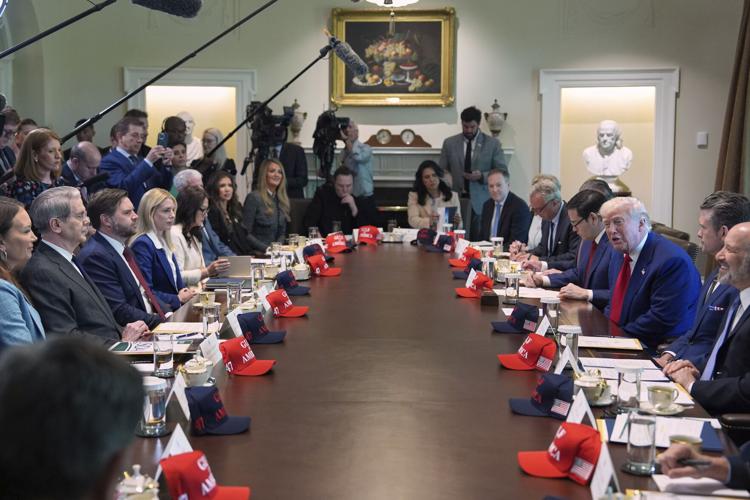

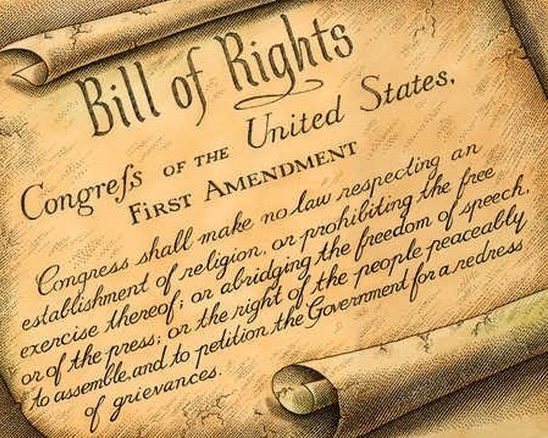



 freedom and reason