In a recent video circulating on X, a man is seen filming in public when a woman approaches him and asks what he’s doing. He calmly explains that he is conducting a First Amendment audit—an activity rooted in the constitutional right to record in public spaces. There is no expectation of privacy in public, so the man is breaking no laws by recording activities of daily living in public spaces.
The woman, dissatisfied with this answer, presses him further, insisting that his reason isn’t specific enough. While her questioning may seem benign at first, it begins to cross a line when she continues despite having been given a legitimate and legally sound explanation.
The video ends before she’s leaves, so I do not know the outcome of the interaction. The man with the camera is calm and patient throughout. The woman obviously feigns ignorance to rationalize her desire to continue hassling the man.
Harassment occurs when someone persistently confronts, questions, or pressures another person who is lawfully exercising his rights, despite having received a clear and reasonable explanation. She is right on the edge.
Once the man recording states his lawful purpose—exercising his First Amendment right—any continued insistence that he justify himself further, especially in a confrontational and persistent manner, may cross the line from casual inquiry to intrusive, unwanted behavior.
Harassment is not simply asking a question; it is the refusal to accept an answer and the attempt to coerce, intimidate, or shame someone into changing their lawful conduct to suit another’s preferences. He does indicate that he wishes to break off the conversation, telling her that he has explained himself three times.
This interaction highlights a common but often misunderstood dynamic: the difference between legal rights and social expectations. The man has no obligation to offer an answer that satisfies a stranger’s curiosity beyond what the law requires. His explanation—that he is exercising a First Amendment right—is not only specific, it is entirely sufficient. Continued demands for a more palatable reason reveal less about the cameraman’s supposed arrogance and more about the interrogator’s sense of entitlement.
I said in the thread that her insistence than he answer the question to her satisfaction was a dick move. I was dismayed by the number of X users who thought the man was arrogant. Indeed, I was moved to comment initially because I was surprised to see so many people attacking the man for his attitude.
I suggested a useful analogy: open carry in a jurisdiction where it is legal. If a man walks down the street with a sidearm, a passerby is certainly free to ask why. If the man replies, “for self-defense,” that is a valid, constitutionally protected reason. If the questioner continues to press him—disapproving of the answer or attempting to debate the legitimacy of his action—the dynamic shifts from inquiry to harassment of the interaction is unwanted. The same principle applies to public filming. Rights are not contingent on the comfort or approval of onlookers. No one owes members of the public an explanation for why he is engaged in constitutionally protected activities.
The notion that someone must justify their lawful behavior in terms others find emotionally satisfying undermines the concept of individual liberty. In this case, it’s not the man filming who is being arrogant; it’s the person insisting that his answer conform to her standards. Exercising a constitutional right does not require a permission slip—and it certainly doesn’t require a debate with every passerby who doesn’t like it. In fact, nobody is obligated to converse with any other citizen in public.
Bottomline: The man has a First Amendment right to record in public. There is no expectation of privacy in public. She is free to ask questions, of course (that is her First Amendment right), but if the interaction becomes persistent and unwanted, which is what is starting to happen in the video, then crosses the line into harassment. A man with a camera in a public place harasses no one. He no more provokes responses than a man with a sidearm in an open carry state. She is permitted to speak with him as long as the interaction is mutual. As soon as it is unwanted, she is harassing.
I addressed the issue of Democrats lying about detention facilities years ago in a 20`19 essay Migrant Detention Facilities are Not Fascist Concentration Camps. Democrats are lying again about the conditions in the detention facilities for illegal aliens, this time focused on Florida’s “Alligator Alcatraz.” Democrats were caught lying constantly about the detention facilities? They think you have short memories. unfortunately, a lot of people do. I don’t.
This whole business about drinking water from the toilet. It’s a unit that has a toilet and a sink combined—like in an RV. Do you know how in your own bathroom you have the toilet and often the sink is right beside it in the same pipes connect both the sink and the toilet? It’s the same thing in a more compact form. I wrote about this as well summer of 2019, Ocasio-Cortez and the Powers of Expectation and Identity.
It’s typical to find this type of compact organization in a prison cell or detention facility. It’s perfectly sanitary. Nobody’s drinking water out of the toilet. Either the Democrats who are telling you that are so stupid they can’t understand basic technology, or they’re straight up lying to you. They’re not stupid. At least not for the most part. For the most part, they’re lying.
The detainees are being treated well. They have soft beds. They enjoy a climate controlled environment. They have nutritious food. And we know where they are while they await their deportation orders. They all must leave the country. They are here illegally. We cannot allow them to disappear back into the interior of our country.
And all this talk about family separation? This one drives me up the wall. I wrote about this in 2018 (Law Enforcement and Family Separation), 2019 (The Rhetorical Function of Family Separation and Family Reunification), and most recently in January of this year (“Family Separation” Redux). We have hundreds of thousands of adult American citizens in our prisons and jails in the United States. They have partners, children, siblings, parents, and friends. They’re separated from all those people when they go to prison. Family separation is part of what happens when—because you engaged in illegal behavior—you get separated from society.
All these politicians who go on about the horrors of family separation are only concerned about it when it comes to illegal aliens. Have you noticed that? They don’t give a fuck about the horrors of family separation when it comes to their own citizens. These politicians are the ones writing and enforcing the laws that separate families every day in America.
When they engage in this propaganda, they’re not merely prioritizing illegal aliens over American citizens. They’re erasing American citizens and all the trials and tribulations that the American citizen faces every day in the United States. Democrats want jobs for illegal aliens when there are millions of idle American citizens who need jobs. They don’t want you to think about your fellow citizen and his situation. They don’t want you to consider that at least some of those they’ve idled would not have committed the crime that sent them to prison if they had had a job—jobs taken from them by illegal aliens.
The Democrat political program is anti-American. They loathe ordinary Americans. The Americans they appear to loathe the most are the black and brown citizens that they trapped in the inner-city ghettos Democrats control. They’ve destroyed families, taken away jobs, and keep the disorganized and idle alive through a paternalistic system of welfare dependency. The only thing these citizens are useful for in their eyes is voting Democrat.
What is jaywalking? The legal definition of jaywalking varies by jurisdiction, but in most US cities and states, it generally refers to a pedestrian crossing the street outside of a marked or unmarked crosswalk, especially between adjacent intersections that are controlled by traffic signals. It also includes crossing against a pedestrian signal, such as walking when the signal displays “Don’t Walk,” and crossing in a manner that creates a safety hazard or interferes with oncoming traffic.
Several US states and jurisdictions have moved to decriminalize or eliminate jaywalking as a criminal offense to address demographic disparities. What began in Virginia has grown into a national reform movement, with over 50 million Americans now residing in places that have relaxed jaywalking enforcement in some way. (Crowder’s example is New York City decriminalizing jaywalking last year.) These reforms are driven by racial equity concerns and the rationalization that jaywalking laws are ineffective safety measures.
It is well-documented that black and Latino pedestrians are disproportionately cited or stopped for jaywalking and other minor infractions. The progressive argument is police patrol patterns (heavier presence in certain neighborhoods), implicit bias (unconscious racial profiling), and socioeconomic or structural factors (fewer crosswalks, longer waits at lights) are the reason for the disparities. But could this be that blacks and Latinos are more likely to jaywalk? There is a significant lack of comprehensive, nationwide behavioral data comparing jaywalking rates by race or ethnicity. The available data comes from enforcement records, not observations of actual behavior. Is there another way we could answer this question?
Black and Latino pedestrians in the United States face significantly higher risks of being hit and killed by vehicles compared to their white and Asian counterparts. According to the latest age-adjusted fatality data from 2021, Black pedestrians had a fatality rate of 4.4 per 100,000 people, while Latino pedestrians had a rate of 3 per 100,000. In contrast, non-Hispanic white pedestrians had a rate of 1.9 per 100,000. Asian non-Hispanic individuals had the lowest rate of all these categories at 1.4 per 100,000. When examining risk in terms of exposure—measured as fatalities per mile walked—research suggests that black pedestrians are nearly twice as likely to be killed per mile walked compared to white pedestrians. Hispanic pedestrians, similarly, are about 1.5 times more likely to face a fatal outcome under the same conditions.
These disparities are not only present in death rates but are also reflected in injury statistics. Emergency room data collected between 2021 and 2023 showed that black pedestrians were 1.93 times more likely, and Hispanic pedestrians 1.70 times more likely than their White counterparts to require emergency medical treatment from being struck while walking.
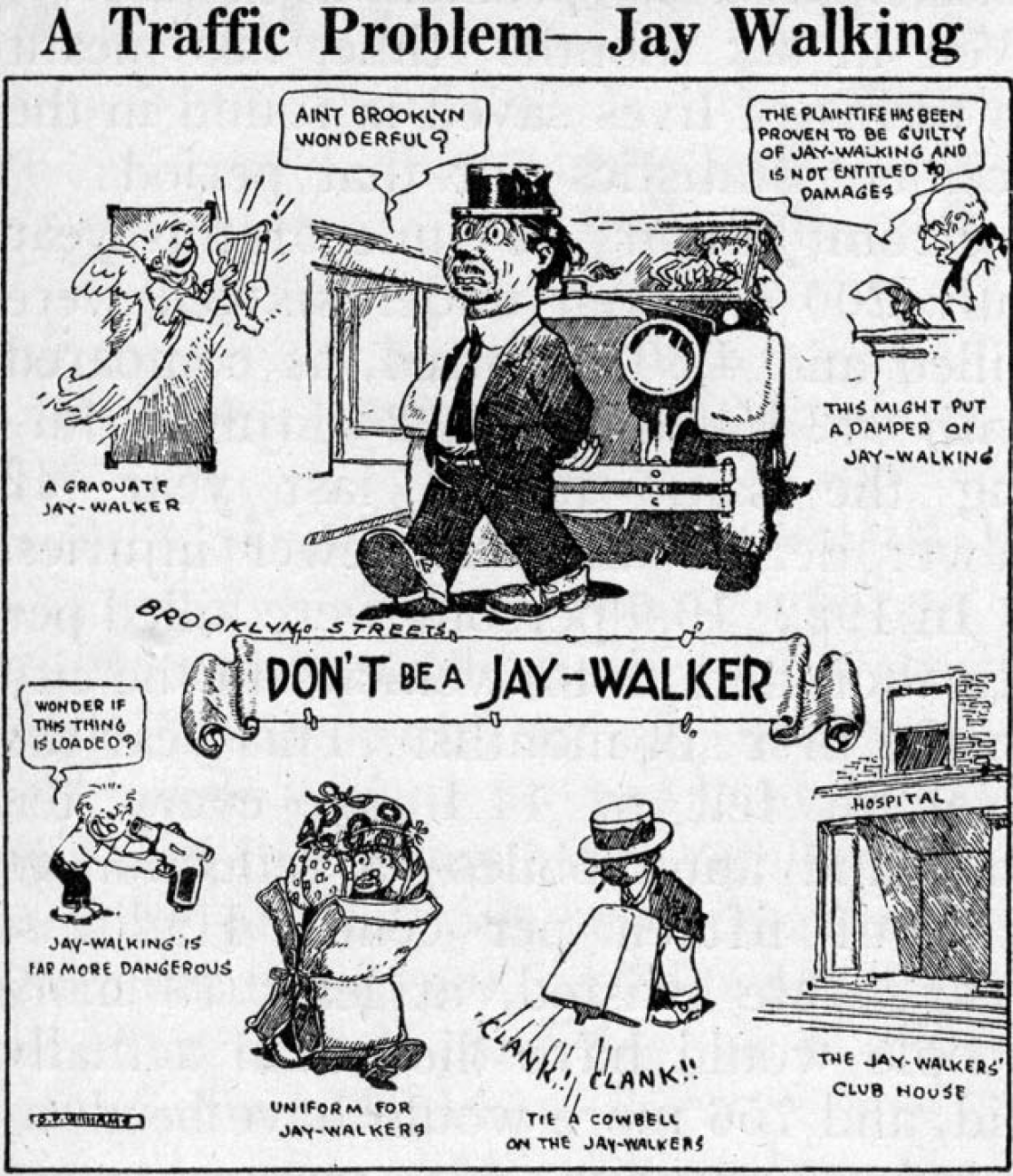
One of many public shaming campaigns distributed to normalize laws against jaywalking.
What progressives will tell you is that these figures paint a sobering picture of systemic disparity. Despite often walking more due to lower car ownership rates, people of color are navigating environments that are less safe for pedestrians. This is due to historic underinvestment in pedestrian infrastructure in communities of color, such as the lack of crosswalks, inadequate lighting, and dangerous road designs that prioritize vehicle speed over pedestrian safety.
But it could be that blacks, and to some extent Latinos, as a group are engaged in what Karl Marx and Frederich Engels called “primitive rebellion”? This term describes individual and group acts of defiance by members of the lower class who believe system is rigged against them. Engels describes the phenomenon in his Conditions of the Working Class in England, where he describes how joblessness, overcrowding, and poverty are associated with crime, disorder, and rioting, which he interprets as expressions of social desperation.
In a letter to Marx, Engels remarks on the rise in petty crime and lawlessness in Paris, citing it as evidence for a growing belief among the poor that the law does not represent them, that it is merely a tool of bourgeois domination, and therefore worthy of violating. It’s what David Matza and Gresham Sykes a century later described as “techniques of neutralization”—rationalizations used to justify wrongdoing. This is a kind of demoralization, not in the sense of resignation, but in the loss of belief in the legitimacy of the social and legal order.
A regular guest on Crowder’s show, Nick Di Paolo, relayed an answer from a cop to a question concerning crossing against the light: “Why do they do that?” The cop responded, “Because every ounce of their fiber is fighting against the man and the establishment.” Di Paolo said it was the best explanation he has ever heard. And for good reason. And it’s not just jaywalking. It’s crime in general and a myriad of other subculturally-specific behavioral norms. Progressives normalize violations of the broader norms of society.
I argue in previous essays that the contemporary left has embraced a pattern that, at first glance, appears erratic or irrational: not merely the rationalization of their actions, but in the celebration of those who break the law, flout norms, or violate traditional moral codes. From criminals to illegal aliens, to individuals engaged in perverse lifestyles, lawbreakers and norm violators are increasingly held up not just as sympathetic, but as heroic. For the rest of us, this feels less like politics and more like cultural upheaval—confusing, chaotic, even unhinged. That’s because it is.
But this seeming irrationality masks an intentional moral and strategic realignment. It is the rational deployment of irrational means for political ends. The elevation of deviance isn’t a misfire of progressive politics—it’s a deliberate move to undermine existing structures and reframe moral authority. By recasting lawbreakers and outcasts as noble resisters of systemic injustice, progressives are engaging in a form of ideological subversion. What looks like compassion is, at a deeper level, a tool for cultural and political transformation.
This view relies heavily on structuralist explanations of human behavior—those found in academic theories that prioritize systems over individuals. Criminal acts are reframed not as failures of character or will, but as outcomes of historical trauma, poverty, or racism. Lawbreaking becomes not a breach of social contract, but a cry for justice. No justice, no peace. In this moral ecosystem, victimhood grants sanctity. To suffer is to be righteous, and those who suffer at the hands of authority—border patrol, immigration agents, police—are elevated as moral avatars.
From this perspective, punishment is rarely seen as just. Instead, it is recast as cruelty, a symptom of institutionalized oppression. The enforcers of rules become villains, while violators are recast as heroes. This moral reversal doesn’t merely confuse traditional categories—it redefines them entirely. It replaces individual accountability with systemic blame, law with empathy, and order with rebellion.
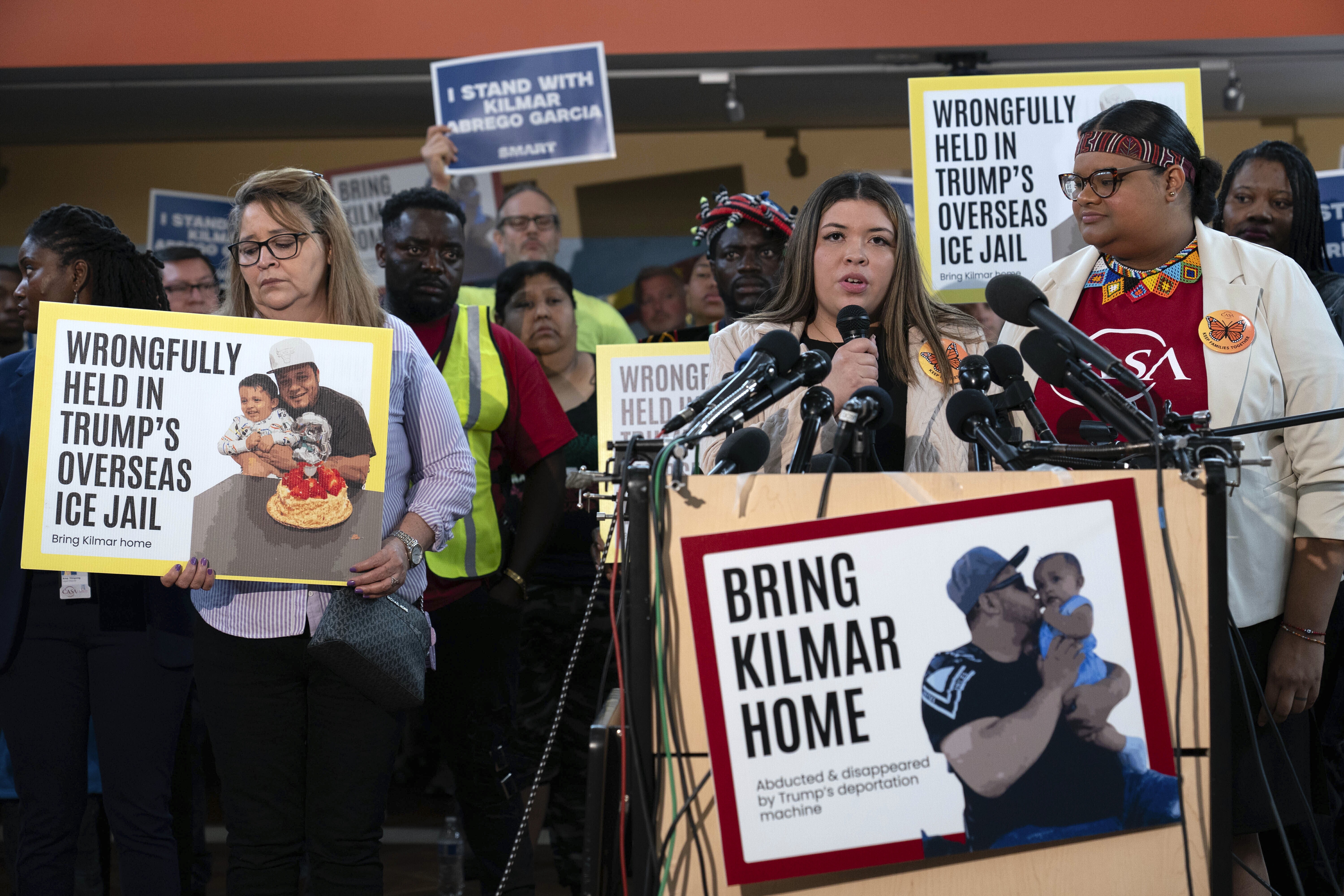
Jennifer Vasquez Sura, the wife of Kilmar Abrego Garcia of Maryland, speaks during a news conference, April 2025. (AP Photo/Jose Luis Magana) (Source)
In this new hierarchy, the highest form of moral standing comes from being “marginalized,” or more accurately marginalizing oneself through deviant behavior and life style. This is how a human trafficker and serial wife beater Kilmar Abrego Garcia can become a poster boy for injustice. Those seen as oppressed—especially if poor, non-white, or gender-nonconforming—are said to possess a heightened moral insight: the righteous privilege of the deviant. Their “lived experience” is unassailable truth. Crossing a border illegally, breaking laws, or flouting societal norms become courageous acts of resistance against a system deemed illegitimate.
Insisting that people follow traffic rules oppresses the righteous rebel. Jaywalking is an act of resistance.
This is the glue holding together much of the left’s political coalition. Immigrant communities, racial minorities, urban voters—all demographics more likely to experience friction with the state—deserve not merely sympathy but sanctification. Instead of addressing why certain behaviors lead to law enforcement encounters, progressives reframe the law itself as the problem.
This approach serves concrete political ends. It fuels activism, mobilizes voters, and shapes public narratives. Media stories highlighting sympathetic offenders transform individual wrongdoing into broad indictments of society. These stories aren’t just meant to evoke empathy—they’re designed to shift public perception, weaponizing what one might charitably describe as personal tragedy—at worst thuggery—for ideological gain.
In this light, the celebration of transgression becomes more than moral posture—it becomes strategy. Progressives argue that traditional concepts of justice—deterrence, equality, fairness, punishment—are merely masks for maintaining power structures dominated by capitalists, conservatives, nationalists, and other “privileged” classes—Christians, cisgendered, whites, white adjacent, etc. The left calls not for reform, but for reimagining justice itself: grounded not in impartiality or law, but in “equity,” “liberation,” and “repair.”
The jargon of the woke left, common in academia and activist spheres, flips the moral compass. Offenders no longer need correcting; they’re symbols of deeper truths. Lawbreaking becomes revelatory. Transgression becomes obligatory, even sacred. Deviance is not merely defined down, as Daniel Patrick Moynihan warned in the early 1990s. It is that, to be sure, but it is also redefined as virtue.
This linguistic turn reflects a broader philosophical departure from classical liberalism. Moral legitimacy is no longer found in customs, democratic consensus, or laws, but in personal suffering and subjective identity. Those once deemed criminal—be they illegal aliens or violent offenders—are now praised precisely because their lives defy convention. Their deviance becomes a form of moral authenticity.
We see this in the beatification of career criminals like George Floyd, in sympathetic portrayals of individuals with gang affiliations and violent pasts. These portrayals are not isolated—they represent a systemic effort to blur the boundaries between virtue and vice, legality and illegality. It’s not just storytelling—it’s an ideological reframing promoting cultural realignment.
This realignment is not a grassroots revolution. It’s engineered from above. Major institutions—academia, corporations, media conglomerates, NGOs—have embraced this moral inversion not because they share its ideals, but because it serves their interests. In many instances, they manufactured it. As traditional norms dissolve, individuals become more dependent, inner-isolated, and pliable. But not all are docile. Some are angry, and therefore useful. A society detached from family, heritage, nation, and tradition is one that’s easier to manage—through bureaucracy and ideology. And the ease with which they may be gathered in the streets and provoked to violence makes them instruments for sowing chaos.
This top-down destabilization reframes cultural disintegration and social disorder as moral progress—as liberation. Corporate HR departments speak the language of diversity and inclusion while extracting maximum value from atomized workers. Media companies amplify fringe identities not for justice, but for clicks. Bureaucrats use the rhetoric of “safety” to justify censorship and surveillance. None of this requires liberty or self-governance—only compliance. Liberty and self-governance are the signs of power and privilege. So, in the end, there must go away.
The breakdown of tradition isn’t a side effect—it’s the goal. Norms around family, morality, national identity, and sex are intentionally eroded. Norms bind people together, and a bound society is harder to control. Disorder becomes a tool of governance—rule over a disordered populace and conditions that draw the disordered. The Old Left sought to empower the working class. The New Left empowers the technocratic class by disempowering the citizenry.
In this environment, the glorification of deviance functions as a mechanism for substituting bureaucratic authority—technocracy—for civilizational values. Cultural boundaries are erased, inherited wisdom dismissed as prejudice, and legal structures undermined. In their place stand policies and paradigms determined not by voters, but by elite networks of credentialed professionals and ideologically aligned institutions.
This is the essence of the post-liberal and post-truth world. Classical ideals—free speech, rule of law, limited government—are subordinated to vague imperatives like “equity,” “inclusion,” “safety” (but not public safety), and “wellbeing.” These terms become weapons deployed to justify everything from race-based policies to censorship. They’re slogans of control masquerading as liberation.
The new order doesn’t suppress freedom with jackboots. It dissolves it through emotional manipulation, institutional creep, and technocratic consensus. It is Sheldon Wolin’s “inverted totalitarianism.” In this framework, deviance is no longer merely tolerated—it is instrumentalized. The breakdown of legal norms and moral precepts facilitates a larger project: the reengineering of society into a managed system, ruled not by law and custom, but by expertise and ideological conformity.
Donald Trump doesn’t like the word “progressive.” He says it sounds too nice. He likes the word “liberal” to describe this. Ironically Trump is a liberal and his word choice undermines his ability to accurately describe the problem. Progressivism is regressive. What claims to be progressive is in truth the cultural façade of a deeper transformation. Behind the stories of liberation lies a calculated campaign to dissolve the foundations of civil society and replace them with a new order—one more centralized and more intrusive than anything that came before it.
To those grounded in conventional moral codes—centered on lawful conduct, personal responsibility, and societal cohesion—this valorization of transgression is perplexing. Yet for many on the left, it’s righteous rebellion. Celebrating those targeted by law enforcement or immigration control becomes a way of attacking the institutions themselves, which are portrayed as inherently corrupt, oppressive, and racist. The goal of progressives is not to make America better. It is to make America go away.
I can hear the criticism now. How did we get from jaywalking to the decline of Western Civilization? To dismiss jaywalking as a trivial offense is to dismiss the symbolic weight it carries in the cultural and political imagination. What was once a minor infraction of urban order, one designed to protect human life, has become, in the progressive framework, an emblem of defiance against systems deemed illegitimate. Ultimately, it is not the act itself that matters. It’s what the act represents—a challenge to the authority of law, to the expectation of conformity, and ultimately, to the legitimacy of the social order. Jaywalking is a litmus test for a worldview that reinterprets deviance as justice, lawbreaking as virtue, and public safety as racist.
The deeper problem is not the individual crossing against the light but the broader ideological project that celebrates such acts as morally elevated—that valorizes one of a myriad of actions against the regular order of things. Excusing acts of primitive rebellion—jaywalking, resisting arrest, sitting in the road, smash and grab, violence against ICE agents—signals a deliberate and determined unraveling of the norms and institutions that sustain a free and cohesive society. Jaywalking may be minor in legal terms, but in the context of instrumental chaos, it reveals a profound shift in how justice, legitimacy, and morality are being redefined—not from the ground up, but from the top down.
Finally, for those considering telling me about the origin of jaywalking, how it was the evil auto industry through aggressive public campaigns shaming pedestrians, framing pedestrian behavior as the problem rather than dangerous driving or poor infrastructure, who manufactured a crime, I will not be impressed. Cars have been a wonderful addition to human history, liberating individuals to get to where they need to go quickly—to travel where they wish on a whim. There are sidewalks and crosswalks for pedestrians. There is nothing stopping pedestrians from getting where they need to go—except not following public safety rules.
There’s a way to tell the history of this law without the biased language The Resistance™ uses to delegitimize laws. Jaywalking originated in the early twentieth century during a time when automobiles were becoming increasingly common on city streets. As cities faced rising pedestrian fatalities amid increasing car traffic, auto industry groups and safety advocates promoted the idea that pedestrians should use sidewalks and designated crossing areas, helping governments establish jaywalking laws as a way to enhance public safety. The left wants to make everything good bad.
Even before he was President, Donald Trump was not afraid to attach his image to forms of popular entertainment mocked by progressive elites and their subalterns. You know, the “white-trash” and “trailer-park” culture of the commoner? The mouth-breathing Neanderthals who wouldn’t wear masks duing the pandemic? The deplorables who resist the elite consensus? The peasants who won’t obey their betters?
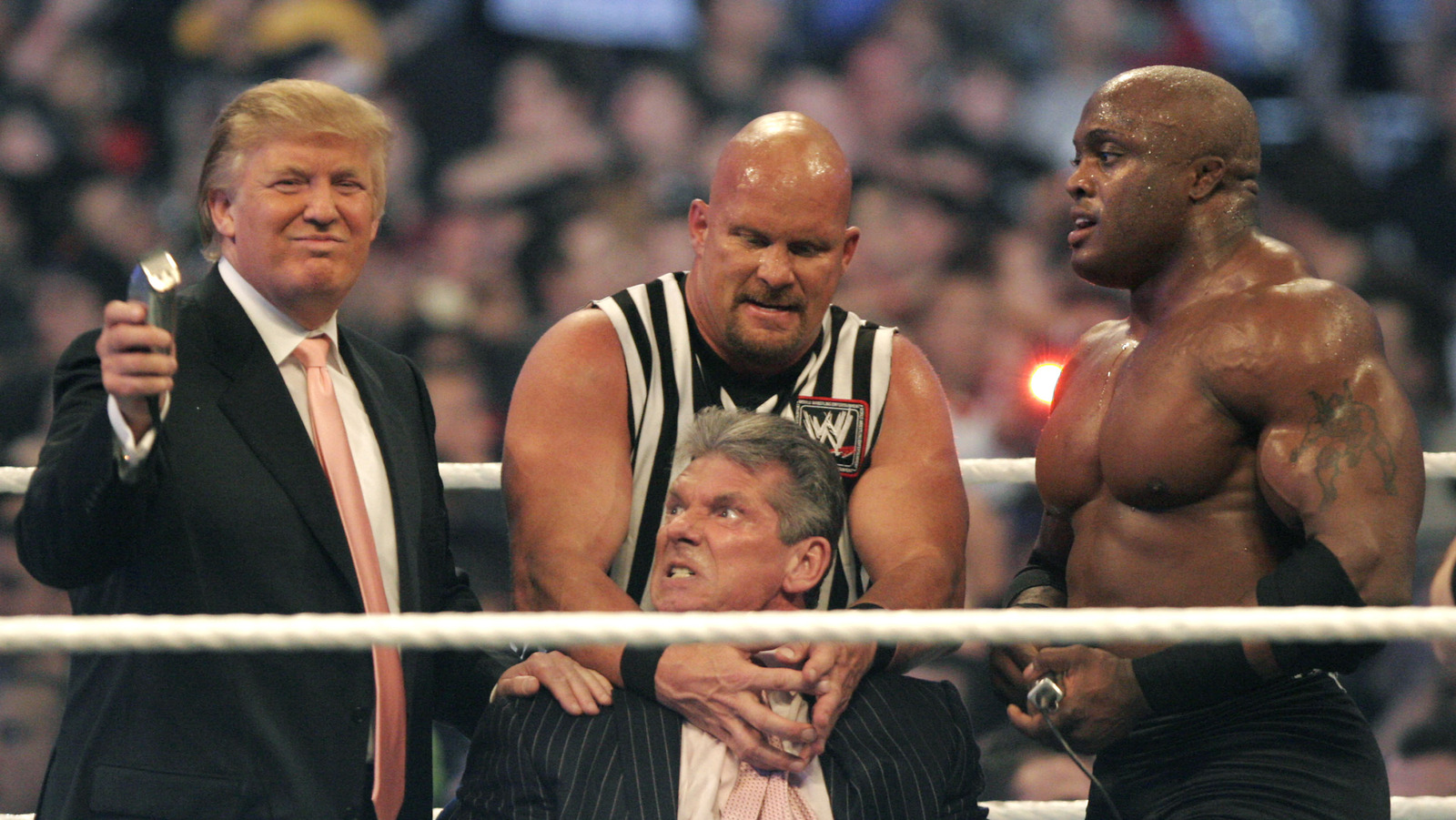
WWE chairman Vince McMahon prepares to have head shaved by Trump and Bobby Lashley while being held down by ”Stone Cold” Steve Austin after losing a bet in the Battle of the Billionaires at the 2007 Wrestlemania.
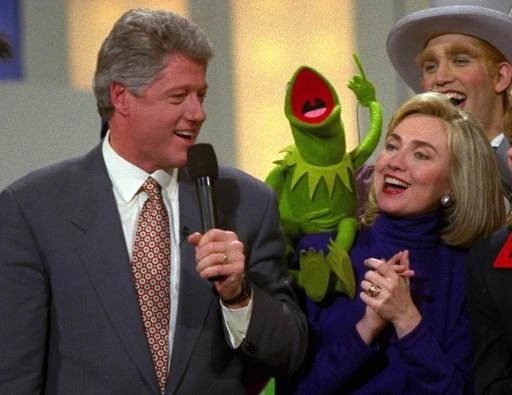
Remember “Battle of the Billionaires” at WrestleMania 23, where Trump faced off against Vince McMahon and the loser had to shave his head? Trump is in the WWE Hall of Fame. Did you know that? Inducted in 2013. He’s also a huge fan of the UFC. Dana White, CEO and president of the Ultimate Fighting Championship, and Trump are very close. You didn’t forget Trump’s “fascist” rally at Madison Square Gardens that featured White and Hulk Hogan? It’s a far cry from Bill and Hillary Clinton and the Muppets in 1993.
Kermit the Frog sits on Hillary Clinton’s shoulder, Kennedy Center, January 19th, 1993
Remember how beloved Trump was by other celebrities before he came down the Golden Escalator a decade ago? Remember how they practically begged him to run for President and then turned on him in an instant when he answered the call? They loathe him because of who is in back of him.
UFC Event at the White House
Trump is working with White to bring a UFC match to the White House. Instead of a White House festooned in Pride Progress flags and men with fake tits out pushing the queer agenda, we get American flags and warrior displays of raw masculinity at the People’s House.
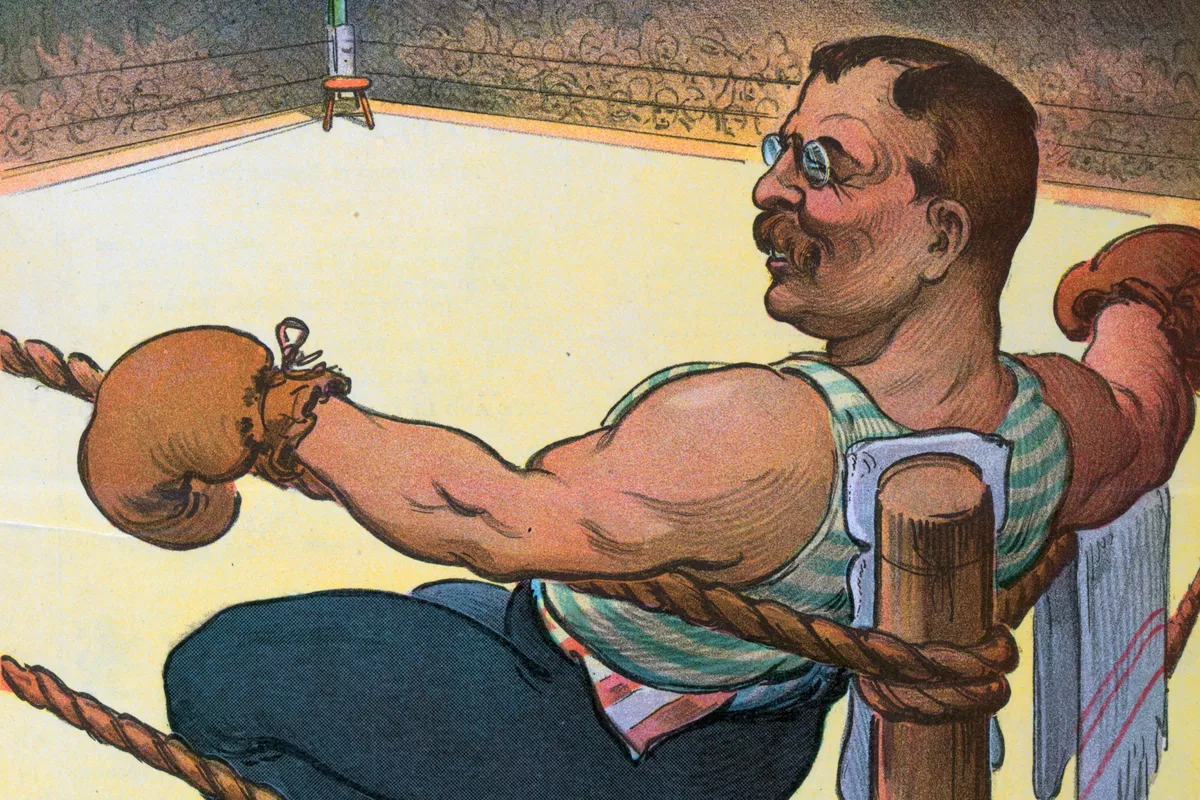
Teddy Roosevelt, President and Pugilist.
Teddy Roosevelt was a lifelong fan of boxing. Did you know that? It’s true. In fact, he boxed himself. As president, he installed a boxing ring at the White House where he would put on fights. He would box with military aides and professional fighters.
It will make for quite the contrast in ads and memes, won’t it? Progressivism versus populism. Elites versus the masses. It works for both sides. Working people get to see one of their beloved sport honored at the White House. Progressive elites get to condescend and mock the unsophisticates. As usual, Democrats will play the heel.
Happy Independence Day, first of all. Next year will be 250 years since we declared our independence from a monarchy.
The United States is more than $34 trillion in debt. Unless we achieve strong economic growth, we face serious fiscal peril. A 2% annual GDP growth rate isn’t sufficient—that’s barely keeping pace with inflation, population growth, and entitlement obligations. To stabilize and begin reducing the debt-to-GDP ratio, we need sustained real growth in the range of 3 to 3.5 percent. And we need it now. A sovereign debt crisis is looming. If we hit that wall, the consequences could be catastrophic: structural adjustments imposed by market forces or international institutions, which could mean deep cuts to Social Security, Medicare, and other entitlements that millions of Americans—who built this country—rely on.
When Trump was elected in 2016, I said there would be pain. But if we fail to deal with these realities today, the pain tomorrow will be far worse. And tomorrow is rapidly becoming today. There is no time left to wait.
President Donald Trump and Treasury Secretary Scott Bessent (source)
There’s no viable alternative to the economic path that Trump and Bessent have outlined. The progressive alternative—massive new government spending to stimulate growth—only leads to deeper debt. More debt pushes up interest rates, which slows investment and growth. Higher rates also increase the cost of servicing that debt, which now consumes over $1 trillion annually—more than we spend on defense. At the same time, expanded government means more regulation, less freedom, and a ballooning administrative state that inserts itself into every aspect of our private lives. Moreover, government spending often requires monetary expansion—raising the money supply—which fuels inflation. The progressive path is a trap: unsustainable debt, persistent inflation, and creeping authoritarianism cloaked in bureaucracy.
Some argue we should simply tax the rich. But this is a mirage. Hiking top marginal rates reduces private investment, which is the engine of economic growth. History and empirical evidence show that over-taxing high earners leads to capital flight and stagnation. Without growth, tax revenues shrink, deficits widen, and the debt burden worsens. It’s a vicious cycle. (The post-WWII era, often cited to justify high taxes, was unique: the US was the only intact industrial power, the dollar was backed by gold, and rebuilding the world created unprecedented demand.)
Instead, we need supply-side growth. That means making the Trump tax cuts permanent, creating certainty for investors, and freeing up capital for productive investment. Growth brings increased tax revenues without raising rates. Only through expansion can we pay down the debt, reduce interest rates, and unlock further investment—not just in capital markets, but in homes, cars, and durable goods that drive real economic vitality.
Immigration policy is key to this effort. By securing the border and enforcing existing laws, we can reduce the labor surplus that depresses wages. As capital flows into domestic manufacturing and infrastructure, labor demand rises. A tighter labor market means higher wages, especially for blue-collar Americans. Basic supply and demand.
Some critics say: “But capital is mobile—won’t investors just go offshore?” That’s where tariffs come in. Trump’s tariff policy discourages offshoring by making foreign production more expensive. If you invest in America, you avoid tariffs. In addition, tariffs serve as an external source of revenue—billions of dollars have flowed into the US Treasury from these measures, helping offset fiscal pressures. And critically, businesses are returning to the US—reshoring jobs and rebuilding capacity.
Trump and Bessent’s plan is not business as usual. It’s a bold departure from the stale orthodoxy of slow growth and elite consensus. The target is 3–3.5% real GDP growth. Achieving it means rebalancing the global economy to favor the United States. Call it what it is: economic nationalism. Supply-side economics plus strategic protectionism. An “America First” model fit for the twenty-first century. It’s time to unleash the animal spirits of innovation, investment, and labor.
What did Reagan say? “Let us begin an era of national renewal.” He awakened the sleeping industrial giant. Now it’s time to do it again—just in time to counter the next challenge: artificial intelligence.
AI is advancing rapidly. It’s coming for white-collar jobs—accounting, law, media, even academia. Bureaucrats aren’t safe either. But this opens the door for blue-collar America to rise again. We need to build a resilient, productive nation—one that digs and manufactures. That means refocusing on physical labor and industrial infrastructure, and on the dignity of work.
When did we last grow like Trump and Bessent propose? The Reagan years. Supply-side economics pulled us out of stagflation, brought down interest rates, tamed inflation, and sparked one of the longest expansions in US history. Despite a crash in 1987 and a mild recession under Bush Sr., the foundation was so strong that even Clinton—with a Republican Congress—benefited, claiming a budget surplus by the end of his term.
But Clinton’s deregulation, followed by Bush Jr.’s globalist wars and unchecked spending, laid the groundwork for the 2008 financial crisis—the worst since the Great Depression. Obama responded not by reforming Wall Street, but by handing trillions to corporate donors and expanding federal power. Between Bush Jr. and Biden, only Trump’s first term stood out—until it was disrupted by COVID-19 and the political chaos that followed.
Now Trump is back, and more prepared than ever. Those four years outside Washington were providential. He returns with clarity, purpose, and a tested economic blueprint. I understand why the Freedom Caucus wants more from current legislation. But no bill is perfect—and this one needs to pass. Delay means another continuing resolution this fall—and Biden’s budget all over again: more spending, more debt, more stagnation.
We don’t have time for that. We need growth—now. We need the Big Ugly Bill.
“Madness is something rare in individuals—but in groups, parties, peoples, and ages, it is the rule.” ―Friedrich Nietzsche, Beyond Good and Evil
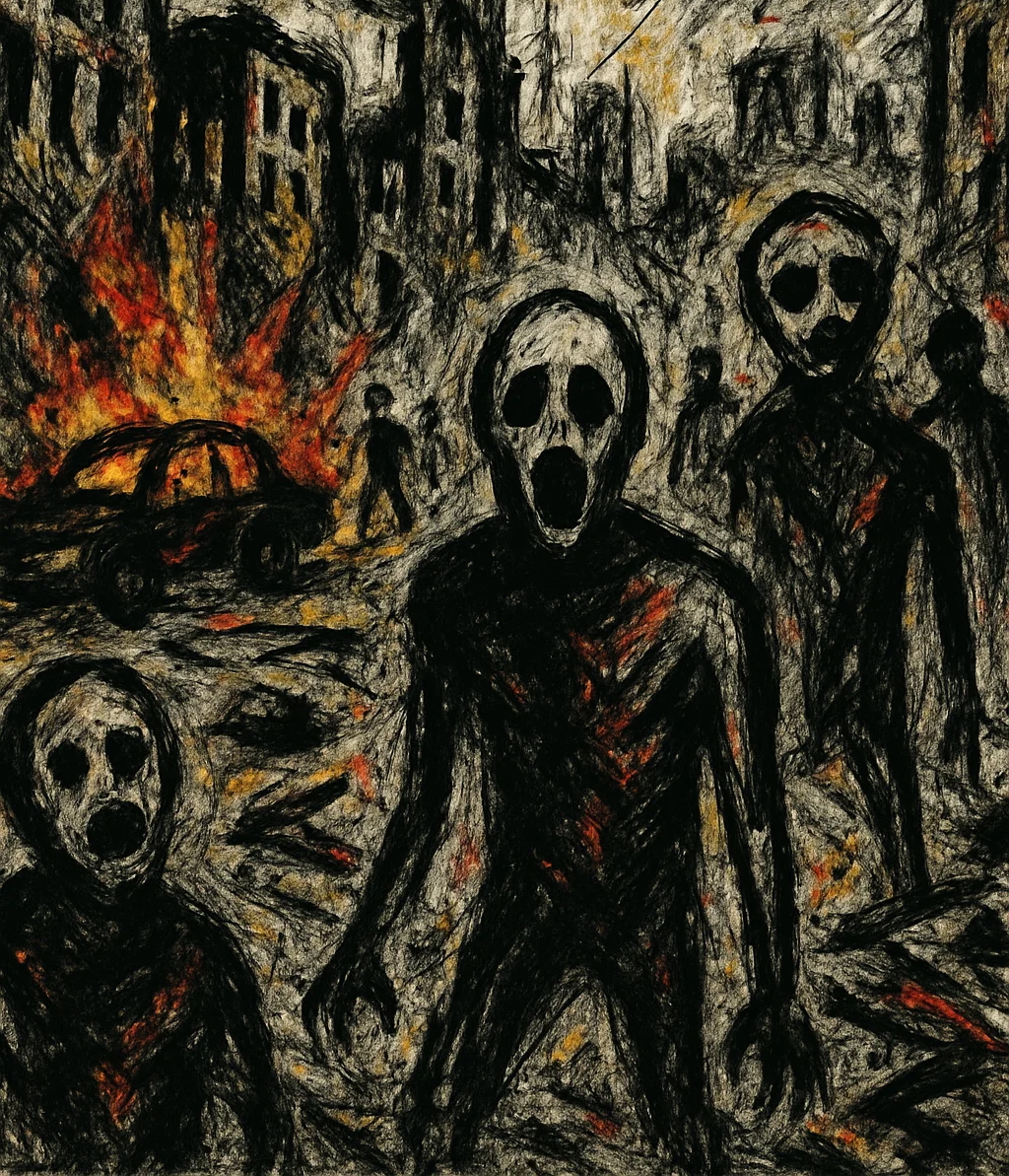
The rise in mental illness in the West is driven by postmodernist notions that have colonized our sense-making institutions over the last several decades. Postmodernism denies the reality of truth. Once there’s no truth, there’s only fantasy and personal impulse. Every person who has a tendency towards disordered thinking becomes unfettered by any requirement that they live in a truth-based reality. Disordered thinking is contagious without the anchor of truth, without the parameters of reason. Cluster B becomes a social movement. And it has—latching onto whatever flag and slogan put into its hands and mouths.
Image generated by Sora
Freedom without obligation, structure, and virtue leads to madness—in a word: nihilism. That’s what the postmodernists seek: the madness of conceit. At the core of this ideology is egoism. Under egoistic anarchism, all alleged abstract ideals—morality, the state, even humanity—are illusions that limit personal freedom. Today, egoism has merged with the transhumanist desire of exploiting technology to “liberate” humanity, to transcend the body. This is what lies in back of the madness of transgenderism: the belief that individuals are not bound by the truth of reality. It perverts the ideal of making of yourself what you will.
If one recognizes postmodern relativism—egoistic self-sovereignty—as the path to disorder and nihilism, then actual or true freedom must be grounded in something deeper than fantasy and personal impulse. It is this: actual freedom is not the absence of limits but the presence of order rooted in truth. Freedom, properly understood, is the ability to live in alignment with reality—not escape it. The attempt to escape reality is the desire to escape freedom, to seek instead the ecstasy of simulacra. True freedom requires acknowledgment of objective truths: about human beings, morality, nature, and the structure of the world—the terrain of the real.
When truth is dismissed as a social construct or a matter of personal feeling, freedom becomes unmoored, untethered to reality and shared humanity, to our species-being, and thus transformed into its opposite. In its place exists a counterfeit version, a simulation of liberty—one that is ultimately self-destructive, disconnecting individuals from what is real and from what is good and right. In a word: a state of psychopathy. To not live in the real world is by definition madness.
True freedom requires moral structure and obligation. Freedom is not the ability to do whatever one wants, freedom is not sociopathic, but the capacity to choose good and right in the context of family and community. This is why the postmodernist notion of social justice is deceitful: it denies the social. True freedom is cultivated through virtue: the habits of courage, knowledge (valorized belief), self-restraint, and wisdom. Without these, freedom collapses into chaos. We see the chaos across the West. Our youth are lost in it.
The postmodern exaltation of personal autonomy without responsibility creates not liberation but fragmentation of self and society. Freedom divorced from virtue leads to license, and license leads to cultural breakdown and moral corruption. Estranged from truth and our common humanity is what generates the emotional and psychological troubles we see so many people in. Long ago, the great sociologist Max Weber warned us about this. He warned us about the iron cage.
Freedom requires a shared vision of the common good and human nature. A true social justice is found there. When society loses its sense of what it means to be human—of what is dignified, essential, and true about our nature—then each individual becomes a sovereign island, an atom left to invent meaning in a vacuum. As another great sociologist, George Herbert Mead, observed, the self is a product of co-present and emotionally available relations; under postmodernist conditions, the individual is alienated from his comrades, alone (even in crowds) and depersonalized. Alone in crowds, the individual becomes a mob.
Such atomization is not freeing; it’s disorganizing and destabilizing. The denial of a human nature in radically subjectivist and transhumanist ideologies fosters confusion and mental disintegration. These are the conditions that disorder individuals. A society that encourages individuals to deny biological reality or moral responsibility in favor of self-constructed identities is not promoting freedom—it’s encouraging and affirming delusion. More than this, it’s establishing the conditions of authoritarianism; in the end, only naked power will determine right. As this ideology spreads, ever more people—especially the young and still developing—are pulled into its gravity well.
Actual freedom is ordered freedom—anchored in truth, governed by virtue, and oriented toward the good and right. It is not enough to be free from constraints; we must be free for something: for love (not self-love), for community (not imagined or manufactured communities), for truth (not “lived experience,” “my truth,” relativism). Without these foundations, freedom becomes not a blessing but a curse. Indeed, it’s not freedom at all. It’s chaos and disorder.
If postmodernists attempt to deconstruct all norms and dissolve all structures in the name of a perverse conception of liberation, then the antidote is the recovery of character, purpose, and truth as the essential conditions for any meaningful and sustainable freedom. Opposition to woke progressivism is thus not merely disagreement over policy and politics—it’s a struggle against the forces of chaos that would plunge the West into the New Dark Ages.
If Democrats pursued a working class agenda, then they would pursue a policy of external revenue generation that compelled corporations to re-shore manufacturing to the United States to avoid paying tariff duties—not taxing affluent white-majority communities to pay for state-run grocery stores, a policy proposed by New York City mayoral candidate Zohran Mamdani that will see those who can relocate move their businesses and families to Florida, Tennessee, and Texas.
Image generated by Sora
If Democrats pursued a working class agenda, then they would eschew internal revenue generation, leaving more money in the hands of working class men and women who know far better than the government how to spend their money. I hear talk about how Republicans are going to take away money from those who need it for health care and food. My wife and I need money for health care and food. Cut our taxes and we will be able to do that more effectively—and maybe have some left over for recreation and retirement. That’s not a selfish concern. We earned it. And we’re not exceptional. We are among the millions of Americans who made something of themselves.
If Democrats pursued a working class agenda, they would close the borders and deport the millions of illegal aliens who take jobs from American workers and drive down their wages. They would invest in law enforcement to secure for American residents the public safety measures that provide residents with the security they require to go about their lives. They wouldn’t invite the Third World to come to America. They would keep barbarians outside the city walls. They wouldn’t defund and stand down ICE and local law enforcement.
If Democrats pursued a working class agenda, they would make sure that girls and women enjoy safe spaces to go to the bathroom and undress in locker rooms without having to worry about males being present. They would ensure that females sports were for females. They wouldn’t allow administrators, counselors, librarians, and teachers to sexualize children in our public libraries and schools. If Democrats pursued a working class agenda, then they would stand with families to protect childhood innocence.
If Democrats pursued a working class agenda, they wouldn’t make race a qualification for education and employment opportunities. They wouldn’t subject working class Americans and their children to discrimination on the basis of skin color and other suspect classifications rationalized with academic theories and abstract bases lacking discriminatory intent.
The reason Democrats find themselves in the position they do, with only around 20 percent of voters across various polls approving of the party’s performance—as high as 70 percent disapproval—is because Democrats on the opposite side of every one of the items noted above. Meanwhile, Trump has maintained an approval rating of over 50 percent for weeks now, and Republicans as a party enjoy approval ratings approaching that. Republicans are now the largest party in the United States, drawing support from across demographic categories. The party pursuing the working class agenda today is the Republican Party. I never thought I would see the day when I would say such a thing. But here we are.
Democrats desperately want to contrast themselves with Republicans. That would be a massive mistake. Leaning into the contrast will only keep the Democrats mired in the rut they’ve put themselves in. The American people are suffering from progressive fatigue. Progressivism has only made their lives worse. They don’t want what Democrats are peddling. They want good paying jobs, low taxes, safe neighborhoods, and an educational system that puts families first. They don’t want government to run their lives. They want government to say out of their lives.
Zohran Mamdani does not represent the working class agenda. He represents a boutique, academic progressivism that plays well in Ivy League faculty lounges and on social media, but falls flat in the break rooms and kitchen tables of working American families. His policies are crafted not for those who build, fix, haul, or protect, but for activists who treat politics like a lifestyle brand. The working class doesn’t need state-run grocery stores (the face of socialism’s failure)—they need the freedom and means to choose where they shop, where they live, and how they raise their children.
Mamdani’s vision, like much of the modern Democratic Party’s, is top-down, ideologically rigid, and fundamentally disconnected from the practical realities of everyday Americans. Until Democrats abandon that vision, they will continue to lose the very people they once claimed to champion.
British rap-punk duo Bob Vylan have reportedly been dropped by their agents following a controversial performance at Glastonbury Festival on June 28. During their set on the West Holts Stage, frontman Bobby Vylan led the crowd in chanting “Free, free Palestine” and “Death, death to the IDF.” The moment drew criticism and sparked widespread debate, with some defending the group’s political expression and others condemning the language as inflammatory.
Bob Vylan performing on the West Holts Stage, during the Glastonbury Festival at Worthy Farm in Somerset. (Source)
“Free, free Palestine” is often chanted alongside the slogan “From the river to the sea,” both calls for the “liberation” of all “historic Palestine,” the name given the territory by the Roman Empire in an attempt to erase the Jewish homeland—punishment for Jewish resistance to Roman imperialism.
“Liberating Palestine” requires the dismantling of the State of Israel. This is what “Free, free Palestine” means. Since Israel is the homeland of the Jews, and has been for millennia, and since Arab nationalism is a colonizing ideology, there is no other way to interpret these slogans as genocidal.
The colonization of the Jewish homeland by Arab Muslims is a project to expand the Ummah, the global Muslim community, and establish Sharia (Islamic law) over the whole of the world. Islam is a totalitarian ideology.
We see this pattern of colonization not only in Israel, but across the Middle East and North Africa. Egypt used to be majority Christian. After the Arab-Muslim conquest of Egypt, Islam gradually became the dominant religion there through a combination of economic, political, and social pressures. Today, only 10–15 percent of Egypt’s population is Christian, marginalized and persecuted.
What has happened to the Middle East and North Africa is happing across the West. Muslims are colonizing Europe in massive numbers, establishing mosques everywhere, creating Muslim-exclusive enclaves, praying in the streets and on church grounds, even electing Muslims to positions of political power.
Muslim immigrants are Islamizing the cultures of the UK, France, Sweden, etc. And it’s happening in the United States, as well. New York City is home to the largest Muslim population in the US. Democrats there just nominated a Muslim to be mayor of the largest city in America.
It’s not just New York. Dearborn, Michigan, has one of the highest concentrations of Muslims in the country. Dearborn is home to the Islamic Center of America, one of the largest mosques in North America. The emotionally unstable Rashida Tlaib represents Dearborn Muslim community in the US House.
Minneapolis–St. Paul, Minnesota has also become a center for Muslims. Ilhan Omar—who recently said that the US is worse than Somalia—represents the Muslim community there in the US House.
The origins of the phrases noted above represent Arab nationalism, Muslim imperialism, and Palestinian “resistance,” gaining prominence in the mid-twentieth century as Palestinian political groups articulated aspirations for hegemony over the entirety of the Jewish homeland. By the 1960s and 1970s, the slogan was used by organizations such as the Palestine Liberation Organization (PLO) and later taken up by the genocidal death cult Hamas.
We see a lot of young Americans out in the streets chanting these slogans. This is the rot of postmodernism, a nihilistic doctrine they learned in college or from their college-aged friends or learned in Internet chat rooms. Like radical gender ideology, it’s a social contagion that preys on America’s mental health crisis and personality disorders freed from normative structuring.
I have critiqued postmodernism many times on here and on my platform. Let me just talk briefly here about one figure: French paraphilic philosopher Michel Foucault. You may know Foucault as a the “godfather of queer theory,” but he was also an Islamophile. He not only expressed sympathy for Muslims, particularly during the Iranian Revolution of 1979, but he embraced the rise of Islamism in Asia. He saw in their revolutionary fervor a powerful challenge to Western norms and secular modernity.
Foucault was intrigued by how the revolution mobilized what he regarded as deep cultural and spiritual forces to resist “Western authoritarianism” (i.e., democracy and liberty). Islam offered the world what Foucault called “political spirituality.” He saw the Islamic “uprising” as a disruption of dominant Western narratives about progress, order, and rationality.
As I have noted before, while Foucault did not explicitly identify as an anarchist, his core ideas resonate strongly with anarchist thought. This captured the imagination of Western youth. One of the reasons we see this bizarre affinity between the queer movement and Islamism is because of Foucault’s ideas regarding order and truth. The Red-Green alliance owes a lot to Foucault.
That’s right—our own academic institutions prepared younger generations to embrace the nihilism of postmodernist thought, which turned their corrupted minds against their families and their communities, and pointed them towards Islam and paraphilias. These are the young people you see cheering the election of Zohran Mamdani for candidate for New York City major (see The Problem with Zohran Mamdani). These are the misfits who comprise Antifa and BLM. And it’s all backed by transnational corporate power.
This is not a prediction. The struggle against Jihad is now. London has a Muslim mayor. New York is facing the very real possibility of a Muslim mayor. The barbarians are well inside the city walls. If the West continues allowing the Islamization of its cities and towns, the West will fall and our families will live under conditions of clerical fascism. Christopher Hitchens warned us about this more than 15 years ago. Resist while you can, he instructed us.
As for Israel, the Jewish state is the last outpost of reason in the Middle East. It’s imperative that the United States defend Israel’s existence. The struggle with Jihad is global.
Progressives claim that systemic racism lies behind the higher poverty rate among black children compared to white children. The prevailing narrative is that conservatives and Republicans represent the problem of racism in America. Let’s think through the problem.
First, let’s establish the fact: for every white child living in poverty, there are approximately two black children living in poverty. That fact itself is not evidence of systemic racism (a common confusion). There could be many factors causing this disparity. But one stands out: fatherlessness.
There is a strong and well-documented correlation between fatherless households and poverty, especially among children. Research consistently shows that children living in single-mother households are far more likely to experience poverty than those living in households with both parents present. Census-based estimates show that roughly two-thirds of black children are raised without a resident father, compared to less than one-quarter of white minors. The numbers are much worse for black families living in America’s inner cities, commonly referred to as “ghettos.”
It was not always this way. In fact, from the early to mid-twentieth century—especially before the 1960s—black families were more likely than white families to be two-parent households. Even as late as the 1950s, most black children were raised in homes with both biological parents present. And few black children lived in poverty as a result.
Image generated by Sora
What explains the change? One of the most significant factors was the economic decline affecting black communities in the mid-twentieth century—the deindustrialization of the American economy. Industrial jobs that once provided stable employment to working-class men began disappearing in the 1960s and 1970s. Black men were hit especially hard by this shift. Their jobs were automated or moved overseas (offshoring). Urban centers where many black families lived saw economic disinvestment, resulting in fewer stable, good-paying jobs. The resulting economic instability made it increasingly difficult for black men to support families or be seen as viable partners, which led to higher rates of single parenthood. This situation was further complicated by mass immigration.
Another leading factor was public assistance programs (food assistance, housing, income transfers) that discouraged marriage or cohabitation by reducing or eliminating welfare benefits when a male partner was present in the household. These policies created financial incentives for keeping fathers out of the home, especially in already economically vulnerable households.
Who was behind globalization (offshoring, open borders) and the expansion of the welfare state with these perverse incentives? From the 1930s through the 1960s, the Democratic Party was the dominant political force in American politics. Under Franklin D. Roosevelt, the party spearheaded the New Deal, which marked the most significant expansion of the federal government’s role in social welfare—the institutionalization of progressivism. These programs laid the foundation for the modern welfare state. Later, under Lyndon B. Johnson, Democrats led the charge on the Great Society programs of the 1960s, which vastly expanded the welfare state. This institutionalized the perverse incentives noted above.
The situation grew worse over time. While both parties embraced elements of globalization, the Democratic Party—especially from the 1990s onward—supported trade agreements and policies that accelerated workforce displacement and suppressed real wages. With strong support from Wall Street and corporate interests, Bill Clinton pushed hard for the passage of the North American Free Trade Agreement (NAFTA) in 1993. Though originally negotiated by George H.W. Bush (not a traditional conservative—and a globalist), it was Clinton and a coalition of pro-business Democrats and Republicans who pushed NAFTA over the finish line. But they didn’t stop there. Clinton also championed China’s entry into the World Trade Organization (WTO) in 2001, which had profound effects on U.S. manufacturing jobs.
Democrats combined welfare expansion with a growing openness to international trade from the 1990s forward. Through this period—from Roosevelt through Biden—bipartisan policies contributed to deindustrialization, the decline of union power, and economic shifts that disproportionately impacted working-class communities—especially in the Rust Belt and urban centers, where many black families lived. One consequence was an explosion of crime and violence, which was addressed by vastly expanding the criminal justice system, leading to millions of incarcerated Americans, disproportionately black. What lay behind the explosion of crime and violence that justified this expansion? Fatherlessness. Caused by who? Democrats.
Today, Democrats are apoplectic over the Republican bill, which they decry as weakening the welfare state—the same welfare state that robbed black children of their fathers, plunged children into poverty, made their mothers dependents on the government, and created the conditions of social disorder that led to historic rates of crime and violence. Democrats decry Republican immigration policy that restricts immigration and deports the illegal aliens who take American jobs and suppress wages—which especially impacts black Americans. Democrats decry Trump’s populism and economic nationalism that reshores industry and reclaims work for Americans—policies that promise to provide jobs for black men and make it possible for them to enjoy a higher standard of living and the opportunity to rebuild the black family.
So, if we agree that globalization and the expansion of the welfare state undermined the black family—as fact and reason demand—and we’re looking for the systemic racism that caused the rampant fatherlessness in the black family, which has caused so many problems for the black community, which party is the party of systemic racism?
Not conservatives. Not populist Republicans. Conservatives don’t run the urban areas we know as the “blue cities.” Populists aren’t responsible for globalization. Conservatives aren’t responsible for the welfare state. It’s the Democratic Party that runs the blue cities. Democrats put black families in the situation they’re in. Progressivism lies at the heart of ghettoization. And that means, comrades, that Democrats are the party of systemic racism.
I am not starting the historical timeline at a convenient point. Historical comparison only strengthens my argument. Before the sharp rise in fatherlessness among black families in the latter half of the twentieth century—while child poverty along racial lines was still significant—the gap between black and white children was narrower. Moreover, the causes of poverty were rooted more directly in institutional racism than in family structure. Think about it: where were most black people living then? In the South. Who controlled the South? Democrats. Blacks migrated from the South to escape Jim Crow segregation. When Democrats established nationwide hegemony in the second half of the twentieth century, systemic racism took on a new form: globalization and the welfare state. And who was behind this? I already told you: Democrats.
As I have argued on my platform, racism is in the DNA of the Democratic Party. Democrats were the party of the slavocracy—and it took a war to overthrow their tyranny. Democrats were the party of Jim Crow—and it took a massive civil rights movement to end de jure segregation. Democrats were forced to end institutional racism, kicking and screaming all the way to the end. And now Democrats are the party of globalization and welfarism—that is, de facto racism. All three periods are manifestations of systemic racism. And today’s Democrats—with critical race theory and DEI—are desperate to keep systemic racism going. The party associated with free trade from the beginning (over against the American System) has always depended on racism to divide the working class.
Those are the facts. But that’s not the perception. So how did Democrats flip public perception? Why do so many people today believe it is the Republicans who are the party of racism while the Democrats are the party that looks out for black families? This isn’t a hard question to answer. During the twentieth century, progressives captured America’s sense-making and policy-making institutions—the academy, the administrative-bureaucratic apparatus, the culture industry, and mass media. They used this control to manufacture an Orwellian inversion that made the party responsible for black misery appear as the party devoted to helping black families.
Paternalism has always been a part of the Democrats’ racial strategy—they infantilize black people. By keeping black people poor and uneducated and through the paternalism of welfare dependency and DEI—an ancient strategy of elite capture where token leaders of subjected populations are relatively privileged through symbolic status elevation (also known as “colonial collaboration”)—Democrats have kept a large portion of blacks ignorant of their circumstances while holding a select minority of them near institutional power. Most blacks are no longer useful to the corporations Democrats serve, so they are managed in ghettos, redundant, the emergent culture of violence perpetuated by popular culture, populations managed via racially selective underprotection.
So, if we’re going to talk about cause and effect, and if we want to explain why we see the racial disparities we see today, and if we’re going to attribute these disparities to systemic racism, then we know who the culprit is: the Democratic Party.
This is why Democrats are so upset about the Supreme Court ruling that potentially prepares a precedent with respect to birthright citizen. Progressives effectively deny the historical fact that the Fourteenth Amendment was written specifically to negate the Supreme Court’s 1857 Dred Scott v. Sandford decision, which infamously held that black people—enslaved or free—could not be US citizens. They attempt to erase this fact by claiming that the Fourteenth Amendment gives birthright citizenship to whomever is born in the US. They seek to valorize this interpretation to advance the electoral strategy of increasing the number of voters dependent on the Democratic party.
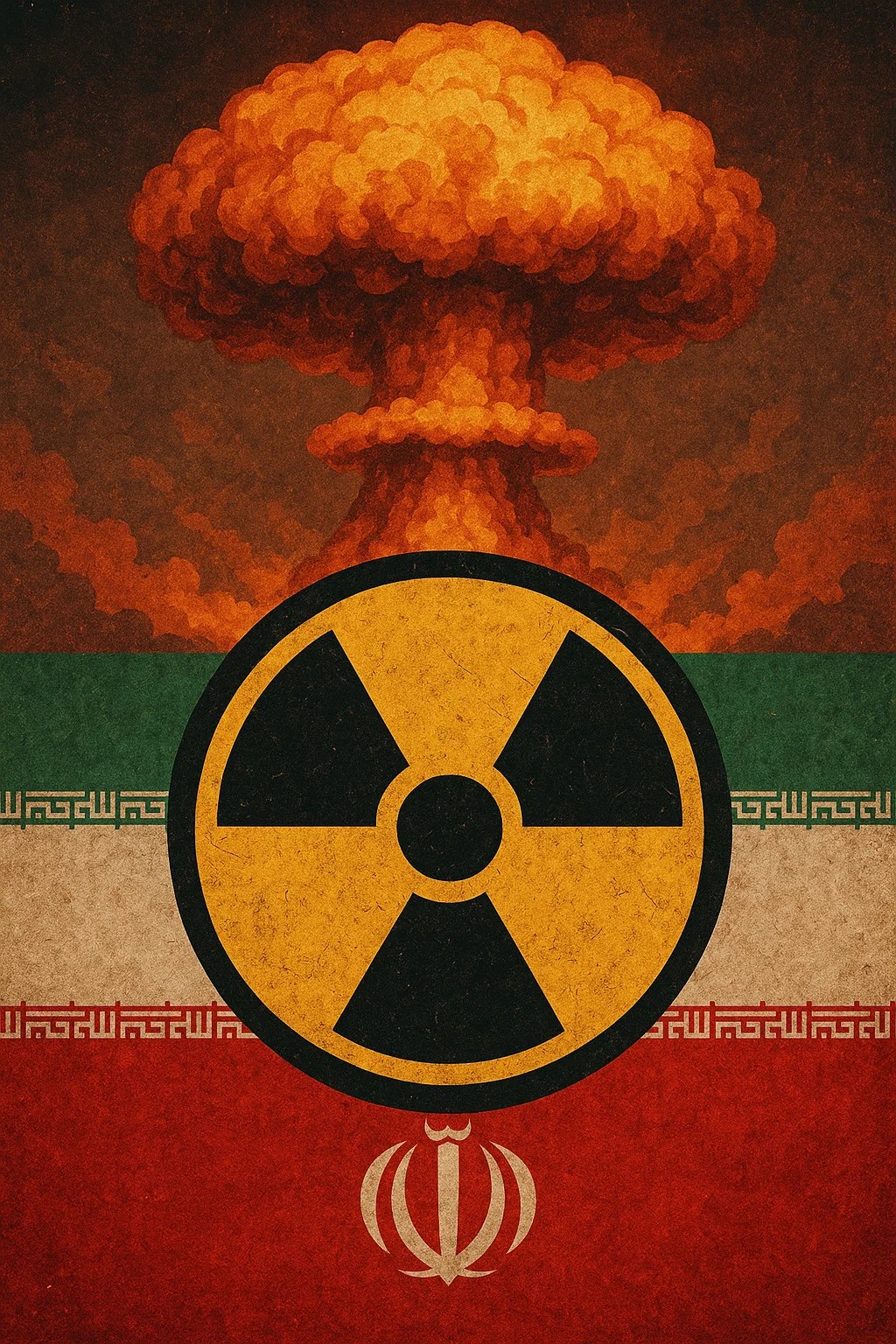
In yesterday’s post (Iran, Nukes, and the Realities of Military Power: A Constitutional Perspective) I said I would follow up with a post on Israel’s grievances with Iran. After reviewing my writings on the subject, I saw that I covered a lot of this in previous posts and considered writing instead about the Supreme Court decision to allow the Trump Administration to deport illegal aliens to third countries was a leading contender. However, developments overnight bring me back to this subject.
Image generated by Sora
Yesterday, Trump announced he had successfully brokered a ceasefire agreement between Israel and Iran. However, shortly after the announcement, Israeli forces reportedly carried out additional military actions against Iranian targets, defying the terms of the agreement. The move prompted a sharp rebuke from Trump, who expressed frustration over Israel’s actions, stating that their defiance undermined his diplomatic efforts and risked reigniting broader conflict. As of now, it looks like hostilities between the countries have ceased.
I understand Israel’s difficulty in adhering to the terms of a ceasefire in the face of a regime determined to obtain nuclear weapons and wipe Israel off the face of the earth. Iran has long been identified as a leading state sponsor of terrorism, using proxy groups and financial networks to project influence and destabilize regions that serve its strategic interests—Hamas in Gaza, Hezbollah in Lebanon, the Houthis in Yemen, and various Shia militias in Iraq and Syria. These proxies allow Iran to engage in confrontational policies without direct engagement, targeting Israel, American assets, Sunni regimes, or Western allies while preserving plausible deniability. Iran’s deniability fails to withstand scrutiny. The world knows what Iran is doing.
Israel rightly views Iran as an existential threat—its sponsorship of anti-Israel terrorist groups, its ongoing ballistic missile development and nuclear program justify this view. Now there is evidence that Iran moved large quantities of enriched uranium before the bombing. A nuclear-armed Iran would fundamentally alter the strategic balance in the region and embolden Iranian aggression under a nuclear umbrella. Iran’s ideological hostility combined with growing military capabilities necessitated preemptive actions. The US degraded Iran’s nuclear capacity on Saturday. But Israel is concerned that the job isn’t finished. Unfortunately, given Iran’s size, the material could be anywhere. It would take a ground invasion to know for sure—and that is the last thing the world wants to see (excepting neoconservatives like Linsday Graham).
As I wrote in my June 22 essay US Strikes Iran’s Nuclear Facilities, Trump should listen to George Washington’s warning about foreign entanglements. While I support Trump’s efforts to broker peace in the Middle East, I also expressed in a June 14 essay (America First is Not Israel First) my understanding that Israel has to do what it believes it must to protect its population from a nuclear holocaust. But at what cost?








 freedom and reason