“It was a grave mistake to let in so many people of totally different cultural and religious concepts because it creates a pressure group inside each country that does that”—Henry Kissinger, speaking about Hamas-cheering protesters in the West
I want to expand on something I wrote on Facebook a few days ago. I wrote then that the survival of a nation depends on knowing the difference between immigration and colonization. We must make this distinction obvious to the masses. But millions are blind to reality. So I am following up.
Image generated by Sora
Immigration and colonization involve people moving to a new land, but they differ significantly in effects and purpose. Immigration refers to individuals or groups relocating to another country to integrate into the existing cultural, legal, and social framework.
Legitimate immigrants adapt to learn the language and local customs, and contribute to the host society—while respecting its established norms and institutions. Colonization, on the other hand, occurs when newcomers arrive with the effect and purpose of imposing their own culture, governance structures, language, and laws on the existing population, reshaping or replacing the native way of life.
In short, whereas immigration is characterized by assimilation or integration (really, the same thing), colonization involves a transformation of the host society’s identity through displacement and dominance.
This distinction is crucial for understanding contemporary population movements and their consequences for national identity and sovereignty. It is also essential for identifying the enemy from within. When a people are told by their fellow natives—and their children taught—to tolerate foreign cultures and sensibilities via the manufactured ethic of multiculturalism, these natives are exposed as colonial collaborators.
Don’t fear the colonial collaborators. Don’t let them silence you with smears of bigotry, racism, and xenophobia. Shun and shame them. These progressives telling you that you must be tolerant, even affirming, of cultural differences are working at cross purposes with the imperative of national integrity. They do not speak for Americas or Europeans. They speak for the globalists. The globalists mean to dismantle the West to clear the way for a corporatist transnational empire. Encouraging the colonization of the West by Third Worlders is part of their strategy of world domination.
Immigrant or colonizer? How do we tell the difference? This is known by whether the foreigner assimilates or resists integration. The latter must be deported as soon as his intent is obvious. The former? Be on guard. Colonizers lie. So do their collaborators in the West.
Case in point: the consternation over Israel’s plan to occupy Gaza City. Israel has been depicted by progressives as the colonizer for so long that the widespread assumption is that there is something unjust about Israel’s actions in Gaza. But there is a historical analogue that should guide us in deciding what our opinion on this matter ought to be: the occupation of Germany in the aftermath of World War II.
Those who oppose Israeli plans cite the destruction of much of Gaza from bombing campaigns. Even Steve Bannon of the War Room was going on about this on his Saturday morning program. As I have noted before, during World War II, the Allied bombing campaign against Germany, which aimed to cripple its industrial capacity and break civilian morale, left scenes identical to those we see from Gaza (see The Danger of Missing the Point: Historical Analogies and the Israel-Gaza Conflict).
The Allied bombings caused widespread destruction, with estimates of German civilian deaths ranging from 300,000 to 500,000. In addition to the fatalities, many hundreds of thousands were injured or maimed, with entire urban areas devastated and millions left homeless.
Following Nazi Germany’s well-deserved defeat, the country was occupied by the Allied powers. During this occupation period, a major focus was on denazification, which aimed at removing Nazi influence from cultural, political, and social institutions. This included trials for war criminals, the banning of Nazi organizations, and re-education efforts to promote democratic values.
The postwar upheaval caused massive displacement, with estimates of around 12-14 million Germans expelled from various territories they had settled. Displacement created a humanitarian crisis, reshaping the nation’s demographics and postwar recovery. This history is the consequence of Germany’s actions under Nazi rule.
The government of Gaza, organized by Hamas, a modern incarnation of Nazism, right down to the pathological desire to eradicate the Jews, attacked Israel on October 7, 2023. Israel rightly retaliated with a massive bombing campaign and ground invasion to overthrow Hamas and rehabilitate Gaza to ensure it was no longer a threat to Israel. This is near-perfectly analogous to the Allied invasion and occupation of Nazi Germany and Nazi held territory.
So why don’t people see it the same way? Again, because progressives have successfully portrayed Israel as a white settler colonial entity and an illegitimate country. In the end, more destructive to the survival of Israel than Hamas attacks will be the delegitimation project that has transformed Jews into a white settler colonial project in the public mind.
I get why the Israel people tire of war. I understand their concern for the fate of the hostages still held by Hamas. But the survival of Israel depends on annihilating Hamas and sending a signal to the world that Israel will not allow the genocidal desire of antisemites to do to Jews what Nazi Germany—and many others before them—did.
It’s not just the Jews who are being delegitimized in this way by progressive forces. Americans and Europeans are depicted as white settler colonials, too. Just today, I again ran across on X another version of the meme expressing a sentiment along these lines: “If you don’t want immigrants, then stop colonizing the world.” The idea is that the West owes the Third World some debt (we don’t), and to settle up, we have to welcome foreign invaders bent on changing the West to fit a culture and political vision inimical to freedom, humanism, and secularism.
Protesting new electoral maps in their state, Texas Democrats fled to a state—Illinois—that gerrymanders on this scale. Take a look at District 13. This snaking district illustrates how post‑2020 redistricting transformed a formerly swing or Republican area into a solid Democratic‑leaning seat.
Illinois’ electoral map
Gerrymandering is named after Elbridge Gerry, a Governor of Massachusetts in the early 1800s, who was a member of the Democratic-Republican Party—the political party of Thomas Jefferson. The Democratic-Republican Party was the historical ancestor of today’s Democratic Party. In 1812, Gerry signed a redistricting bill designed to favor his party in state senate elections. One of the resulting districts was shaped so oddly that critics said it resembled a salamander, leading a political cartoonist to label it a “Gerry-mander.”
“The Gerry-mander,” political cartoon by Elkanah Tisdale, Boston Gazette, 1812
Gerrymandering often involves drawing districts along partisan lines and racial lines. The latter is known as racial gerrymandering, and it can take different forms depending on the legal and political context. In some cases, courts or lawmakers draw districts with race in mind to ensure compliance with the Voting Rights Act—specifically, to help minority communities elect candidates of their choice. This can and should be controversial, especially when race becomes the predominant factor in district design. Such designs can be challenged as unconstitutional under the Equal Protection Clause of the Fourteenth Amendment.
There are millions of Republicans living in
Massachusetts Connecticut Rhode Island New Hampshire Vermont
And you know how many GOP seats they have in Congress?
ZERO
Democrats have gerrymandered this country for decades & now they’re mad Republicans are finally fighting back pic.twitter.com/ih3Aay8CqM
Illinois is not the only Blue state that gerrymanders. Far from it. Democrats are notorious gerrymanderers. Maryland (7-1 seat advantage), Massachusetts (9-0), New Jersey (9-3), New Mexico (3-0), Nevada (3-1), and Oregon (5-1) rigging districts to heavily favor Democrats. New York attempted in 2021 to design a system that would yield a 22-4 Democrat advantage, but the state Court of Appeals struck it down in 2022 as unconstitutional.
Why do I have to tell you any of this? Because redistricting only matters to the media when Red states do it. However, the redistricting fight in Texas, which the War Room posse (led by the brilliant Steven K. Bannon) elevated to national consciousness, has made it difficult for the corporate state media to hide the true history of gerrymandering.
Progressives are trying to spin the matter, of course. And so we have a new Democratic concept: “competitive authoritarianism,” pushed by Democratic operatives like Norm Eisen (Eisen recently confessed to using color revolution to thwart the democratic will).
What does this term mean? In states like California, where 40 percent of the electorate is Republican, drawing districts that yield only 17 percent of federal seats for Republicans may not be good enough to keep “authoritarianism” at bay. California and other states need to do what Massachusetts does: even though 35 percent of that state is Republican, there are zero federal seats held by Republicans in Massachusetts.
Competitive authoritarianism is not a new concept, albeit it gets twisted in the minds of political hacks like Eisen. The concept was popularized by political scientists Steven Levitsky and Lucan Way in the early 2000s. They argued that this regime type became more prevalent after the Cold War, especially in places where outright dictatorship became less legitimate but full democracy had not taken root.
Levitsky and Way describe a hybrid regime where formal democratic institutions exist but are manipulated by those in power to maintain dominance. Opposition exists, but it’s structurally disadvantaged.
Here’s how it works: the media is controlled or harassed (Edward Herman and Noam Chomsky call harassment “flak”) to favor the ruling party; electoral, judicial, and legislative bodies are biased; the regime uses institutional power and legal means to maintain hegemony (e.g., by changing election laws).
Bottom line: single-party power is secured while maintaining the appearance of democracy. Hungary, Russia, Turkey, and Venezuela are typically given as examples.
In previous essays, I have leveraged Sheldon Wolin’s concept of “inverted totalitarianism” to describe administrative and technocratic rule in the West. Wolin describes a system where corporate power dominates the political system. Democratic institutions are hollowed out not by dictators but by depoliticization and managed consent.
The chief characteristics of inverted totalitarianism: citizens are apathetic, disengaged, and passive; politics is reduced to consumer choices; the state uses fear, propaganda, and surveillance to maintain control; culture and media focus on distraction and spectacle; control is indirect and internalized, rather than through open coercion. The effect: corporate/elite dominance is maintained while discouraging active citizenship.
It is via inverted totalitarianism that Democrats have created the false perception of being a majority party, a perception that is coming undone with the rise of populist nationalism. This is raising consciousness about the reality that, for years, Democrats have gerrymandered states to disenfranchise Republican voters and put in federal office a majority of or exclusively Democratic politicians.
The other ways that Democrats manufacture the illusion of being a majority party are also being exposed on the daily: command of academia and the science-industrial complex, the admistrative state and technocratic apparatus, the corporate media, and the culture industry (movies, television programming). It’s all unraveling.
The freak out over Texas redistricting, which Texas is pursuing because, as the fastest growing state in the country, its population and its demographics have drastically changed, is twofold. First, it means that Republicans are moving to become more competitive in the inverted totalitarian system designed by Democrats during their period of hegemony. And, second, and this is a self-inflicted wound, because the firestorm over what Texas Republicans are doing is exposing the long-standing practice of Democrats gerrymandering states.
Democrats took the bait and fueled the fire of attention drawn to this issue—which they’re now spinning as a necessary response to redistricting in Red states. As if Democrats are forced to engage in gerrymandering because Texas does. Democrats are so confident in their ability to control the narrative that they think they can keep eyes off their antics. They pretend like Americans haven’t seen their dismal polling. They lie like dogs.
Democrats are deluded about this in the same way they are deluded into believing that they can dissimulate the fact that Barack Obama and those around him committed the worst political crime in our lifetimes—yes, bigger than Watergate by several orders of magnitude. They believe legal and social media can confuse the public about this.
Source: Media Resource Center
We now have empirical evidence that Google, in the filtering their news tab, buried and continues to bury that story. I warned followers on social media that this was happening in real time. For days, the Obama story never appeared in my Google news feed. And now that it is, it is being dimissed as nothing to see here.
Finally, former President Donald Trump has proposed a new US Census that would exclude individuals living in the country illegally, arguing that it would produce a more accurate population count. Right, because it was wrong for the Democrats to count their slaves to artificially inflate party representation in government—the real meaning of the three-fifths compromise. As with African slaves, Democrats use illegal aliens to inflate their numbers, which they use not only to obtain more resources for their states, but to secure greater representation in Congress. Democrats depend on their serfs.
A mostly complete map of counties in the 2024 presidential election
The county count shows that Democrats are the minority party. Not by a hair—by a lot. In truth, the nation is a sea of Red, yet the House is only a few seats away from a Democratic majority. Democrats may take control of the House in 2027, which will guarantee Trump’s impeachment for another imaginary crime. This is a serious problem for this and many other reasons. It allows the Democrats to enjoy electoral success despite having policies that do not align with the American Creed or the interests of the majority of Americans.
The 2020 Census faced several major challenges that affected its accuracy and public trust. The COVID-19 pandemic disrupted in-person data collection and follow-up efforts, leading to lower response rates, especially among hard-to-reach populations. But it was more than this: the Census Bureau is run by the Administrative State, which was long ago colonized by progressive-minded bureaucrats and technocracy.
Subsequent evaluations revealed significant undercounts of rural populations (which lean heavily Red) and overcounts of urban populations. These (in many cases, engineered) inaccuracies impact congressional representation and the allocation of over 1.5 trillion dollars in federal funding for the next decade. Analysis shows that problems with the 2020 Census disproportionately negatively impacted Red states while benefiting Blue states.
I agree. Redo the census. Include only citizens. Reapportion accordingly.
Paying attention to the text of our foundational documents is imperative to understanding the law in this area.
Article I, Section II, Clause 3 of the United States Constitution: “Representatives and direct Taxes shall be apportioned among the several States which may be included within this Union, according to their respective Numbers, which shall be determined by adding to the whole Number of free Persons, including those bound to Service for a Term of Years, and excluding Indians not taxed, three fifths of all other Persons. The actual Enumeration shall be made within three Years after the first Meeting of the Congress of the United States, and within every subsequent Term of ten Years, in such Manner as they shall by Law direct.”
Article 1, Section 9, Clause 3: “No Capitation, or other direct, Tax shall be laid, unless in Proportion to the Census or enumeration herein before directed to be taken.”
These are the sections in the Constitution that bear on the Census. These were approved by Congress 1787.
Fourteenth Amendment, Section 2: “Representatives shall be apportioned among the several States according to their respective numbers, counting the whole number of persons in each State, excluding Indians not taxed. But when the right to vote at any election for the choice of electors for President and Vice-President of the United States, Representatives in Congress, the Executive and Judicial officers of a State, or the members of the Legislature thereof, is denied to any of the male inhabitants of such State, being twenty-one years of age, and citizens of the United States, or in any way abridged, except for participation in rebellion, or other crime, the basis of representation therein shall be reduced in the proportion which the number of such male citizens shall bear to the whole number of male citizens twenty-one years of age in such State.”
This is the section in Amendments section to the US Constitution, approved by Congress in 1868.
The media is hyper-focused on the word “persons.” But one cannot help noticing the word “citizen” appears. This is clarified in the Fourteenth Amendment, where it requires that those male citizens in rebellion against the Union be subtracted from the whole number of male citizens.
Note also that blacks in the US when the Constitution was ratified, were counted only as three-fifths of persons for purposes of apportionment—and American Indians were excluded altogether.
Moreover, American Indians were not assumed in the Fourteenth Amendment, which means that “whole number of persons” was not referring to all people but to citizens. The Fourteenth Amendment concerns freed slaves and white citizens (male and female) not all persons in the United States.
How have such false assumptions persisted all the years? Because Democrats depend on their serfs for political power—and have used political power to perpetuate false understanding of the law to keep their serfs—whether slaves or immigrants. This has been true from the inception of the Republic. Marginalizing the Democratic Party in American politics is long overdue.
On the gerrymander question, ban racial gerrymandering and consider drawing maps with party representation in mind. Consider the falling disproportionalities: CA, GOP is 40% of vote, 17% of seats; MA, 35%, zero seats; CT, 38%, zero seats; NY, 42%, gets 26%; MD, 38%, gets 12%; NM, 44%, zero seats. Keep in mind that even drawing maps with party representation in mind could disadvantage Republicans since many registered Democrats in Southern states vote Republican. But it would be a start.
One function of these strategies would be to force Democrats to return to some semblance of Americanism in search of votes. The dark reality is that if progressivism is allowed to manipulate American politics, then America will soon be America no longer.
I get asked a lot by progressives why I care so much about “gender affirming care,” or GAC. Sometimes, I’m accused of “obsessing over genitals”—an ironic accusation given the left’s obsession over reproductive anatomy inherent in the transhumanist desire to escape natural history. My standard answer is that any decent person with a functioning moral capacity should care about medical atrocities. I cannot disregard my knowledge of the history of such injustices.
Image generated by Sora
The obvious example of historical injustice that moves my objection to GAC is the body of medical atrocities associated with the Nazi period in Germany—at Auschwitz, Dachau, Ravensbrück. GAC bears not merely similarities to these atrocities; there are direct points of contact. I have written an essay on this topic before (see The Persistence of Medical Atrocities: Lobotomy, Nazi Doctors, and Gender Affirming Care), but the importance of the subject deserves revisiting. In today’s treatment, I focus on how the scientific veneer of professional legitimacy shields perpetrators from justice. As readers will see, that veneer is in a major way provided in the current moment by artificial intelligence.
Decades ago, I read Robert Jay Lifton’s 1986 book The Nazi Doctors: Medical Killing and the Psychology of Genocide and was horrified by what I encountered on those 500-plus pages. Lifton, an American psychiatrist, investigated how physicians—trained to heal — became perpetrators of atrocities. (See also Vivien Spitz’s 2005 Doctors from Hell: The Horrific Account of Nazi Experiments on Humans and Richard Weikart’s 2009 Hitler’s Ethic: The Nazi Pursuit of Evolutionary Progress.)
Lifton analyzes how physicians psychologically adapted to the situation by splitting their identities: one part as a healer in some contexts, another as an agent of the corporate state. This is the idea of “doubling,” the psychological mechanism allowing a person to divide into two selves. He uses this concept to explain the corruption of medicine and how ideology transforms professional ethics.
Dr. Ernst-Robert Grawitz, the SS Chief Medical Officer
The Nazi human experiments were an ideological project, overseen mainly by the SS medical hierarchy, in particular Reichsführer-SS Heinrich Himmler. The central figure coordinating these across camps was SS-Obergruppenführer Dr. Ernst-Robert Grawitz, the SS Chief Medical Officer (Reichsarzt SS und Polizei). Grawitz had authority over all SS doctors and medical operations in the camps, and he approved experiments on prisoners. There were several doctors under his command. I will discuss two of them here: Dr. Josef Mengele (the “Angel of Death”) and Dr. Erwin Gohrbandt.
At Auschwitz, as part of his eugenics research, Dr. Josef Mengele carried out surgical procedures on twins, including genital mutilation. These surgeries were done without consent (I discuss the problem of consent in the context of GAC in concluding this essay) and caused immense suffering, permanent disfigurement, and sometimes death. The experiments had no legitimate medical value, at least according to those who condemned them, and were later prosecuted as crimes against humanity during the 1946-47 Nuremberg Doctors’ Trial (formally United States of America v. Karl Brandt et al).
Dr. Josef Mengele, the “Angel of Death”
Using false papers, Dr. Mengele fled Europe in 1949 and lived out his life in South America, supported by a network of former Nazis and sympathizers. Mengele lived openly under his name at times and worked as a businessman and farmhand. In 1979, while swimming off the coast of Bertioga, Brazil, Mengele suffered a stroke and drowned. In this way, he escaped justice. He wasn’t the only one to avoid death by hanging or life in prison. Himmler was captured by British forces in May 1945. However, he committed suicide by biting a cyanide capsule before he could be put on trial. Dr. Grawitz avoided trial by blowing himself up (along with his family) with a grenade in April 1945, shortly before Germany’s surrender.
Dr. Erwin Gohrbandt, pioneer of vaginoplasty and Nazi doctor
Perhaps the most remarkable case of escaping justice, and this bears directly on the matter of GAC, is that of Dr. Gohrbandt, whom I have written about before (see Fear and Loathing in the Village of Chamounix: Monstrosity and the Deceits of Trans Joy). Gohrbandt conducted human experimentation at the Dachau concentration camp. Gohrbandt was a German surgeon and Luftwaffe medical consultant. At Dachau, he was connected to the camp’s hypothermia experiments, in which prisoners were forcibly submerged in ice water or exposed to freezing outdoor conditions to study survival and rewarming methods, often resulting in death or permanent injury.
Before the Nazi era, in 1931, Gohrbandt—then a prominent Berlin surgeon—performed one of the first documented male-to-female vaginoplasties at the Institute for Sexual Science (Institut für Sexualwissenschaft) in Berlin. The Institute was founded and directed by Magnus Hirschfeld, a pioneering sexologist and LGBTQ rights advocate. Hirschfeld was not a surgeon himself; rather, he provided the medical, psychological, and social framework for GAC, while Gohrbandt (and other surgeons) carried out the operative procedures. Hirschfeld is a celebrated figure in the queer camp and its allies (see Scientific American’s treatment of him in The Forgotten History of the World’s First Trans Clinic). In truth, he was a monster.
Three trans women associated with Hirschfeld’s Institute for Sexual Science. From left to right: Charlotte Charlaque (aka Curt Scharlach), Toni Ebel (aka Hugo Otto Arno Ebel), and Dora Richter (aka Rudolf Richter)
The 1931 operation Gohrbandt and Hirchfeld performed on Rudolf (Dora or Dörchen) Richter is well known among queer scholars and activitists. Richter is celebrated as the first complete vaginoplasty of its kind. Richter worked as a housekeeper at Hirschfeld’s Institute. Richter wasn’t the only victim of so‑called “gender affirming care.” The Institute employed many like him and Hirschfeld facilitated many such surgeries in the late Weimar Republic, attracting patients from across Europe. The queer narrative laments that this “progressive work” ended abruptly in 1933 when the Nazis raided and destroyed the institute, driving Hirschfeld into exile.
Costume party at the Institute for Sexual Research in Berlin. Magnus Hirschfeld (in glasses) holds hands with his partner
The characterization “progressive work” is how ChatGPT put the matter when I inquired to determine whether and how much it knew about the case. To be sure, ChatGPT confirmed all my claims. However, the fingerprints of queer theory were all over the framing of its answers. In an extraordinary rationalization, when challenged about Gohrbandt, ChatGPT noted that “Gohrbandt’s career has this striking duality.” It then elaborated without prompting: “In the early 1930s, he was involved in groundbreaking gender-affirming surgery alongside one of history’s most famous advocates for sexual minorities; a decade later, he was connected to unethical Nazi human experiments at Dachau.” This is an instance of Lifton’s doubling. Here, ChatGPT is doing reputational work for a psychopath.
As I have explained in previous essays, ChatGPT scrapes the Internet, where content on this subject is dominated by queer theory and the medical industry, the latter appealing to queer ideas to justify highly lucrative medical atrocities. Progressives long ago captured the sense-making institutions of Western society. It’s therefore expected that the biography of a villain like Gohrbandt would be explained away by an apparent contradiction.
But there is no contradiction. GAC is, at its core, a set of medical atrocities—from puberty blockers and cross-sex hormones to radical surgeries, such as phalloplasty and vaginoplasty. The theory justifying these atrocities—that the nonfalsifiable claim of a subjective identity at odds with the karyotype, gametes, and reproductive anatomy is the real stuff of gender—is a paradigm of the destructive practice of fusing ideology with medical science. (For more on this topic, see the essay previously cited: Fear and Loathing in the Village of Chamounix. See also Thomas Szasz, Medical Freedom, and the Tyranny of Gender Ideology.)
It might interest the reader to know that Gohrbandt is not only known for his work on genital mutilation but also for his published material based on the data collected at Dachau, despite its unethical origins and lack of scientific validity. Of course, at the time, the experiments were considered warranted and valid, just as they are today in the GAC field, so really it’s no surprise that these were openly shared in the scientific community in the context of a legitimizing regime. Curiously, however, after the regime was dismantled, unlike some other Nazi physicians, Gohrbandt was never prosecuted at the Nuremberg Doctors’ Trial and instead resumed a prominent medical career after the war, serving as director of Moabit Hospital in Berlin and continuing academic work. He died in 1965, a renowned surgeon and scholar.
The Tuskegee Syphilis Study, conducted by the US Public Health Service from 1932 to 1972, produced multiple published medical articles during its run, often in respected journals
There is an analog to the Nazi medical atrocities in the United States during the same time frame. The Tuskegee Syphilis Study, conducted by the US Public Health Service from 1932 to 1972, produced multiple published medical articles during its run, often in respected journals, which reported on the progression of untreated syphilis in black men without informing them of their diagnosis or offering effective treatment even after penicillin became available in the 1940s. By my count, some sixteen articles and reports were published during the period, normalizing the study in medical literature at the time. Despite the severe ethical violations and public outrage after the study was exposed in 1972, no one was ever prosecuted.
Why no prosecutions? The answer is straightforward, as well as instructive: the study had been conducted by government agencies and endorsed by professional medical associations, including the AMA and the NMA (the latter the leading association for black doctors), under policies that, while unethical, were not clearly illegal under US law at the time. There were no federal statutes explicitly criminalizing nonconsensual medical research on civilians, and the norms for informed consent that exist today were not yet codified into binding law. Instead, the federal government opted for an out-of-court civil settlement in 1974, paying 10 million dollars to survivors and families, and instituted reforms in research ethics oversight rather than seeking legal punishment. (See Harriet A. Washington’s 2006 Medical Apartheid: The Dark History of Medical Experimentation on Black Americans from Colonial Times to the Present.)
Walter Freeman demonstrating his transorbital lobotomy technique in 1949
Similarly, there were no prosecutions of doctors for the now‑discredited neurosurgical procedure known as the lobotomy, in which connections between the brain’s prefrontal cortex and other regions are severed. The Lobotomy was used to treat severe mental illness such as depression, obsessive‑compulsive disorder, and schizophrenia (disorders that also afflict trans patients). First developed in the 1930s by António Egas Moniz and later popularized in the United States by Walter Freeman, the procedure could involve drilling holes in the skull or inserting an instrument through the eye socket (the “transorbital lobotomy”) to cut brain tissue. As a result, while making patients calmer, many suffered permanent cognitive deficits, emotional blunting, seizures, or profound personality changes.
At the time, lobotomy was considered a legitimate medical treatment. Surgeons like Moniz and Freeman operated within the medical and legal norms of their era, and in some cases even received honors—Moniz was awarded the 1949 Nobel Prize in Physiology or Medicine for developing the procedure. While later decades saw lobotomy condemned as harmful and unethical, its use was phased out through changes in medical standards rather than through criminal trials or legal accountability. Moniz’s Nobel Prize was never rescinded. None of those damaged by the procedure ever saw the perpetrators punished for their actions.
I asked ChatGPT how Gohrbandt avoided prosecution—or even reputational damage. The chatbot explained: “He had been a respected Berlin surgeon since the 1920s and had performed pioneering procedures, including early gender-affirming surgery. This gave him a veneer of professional legitimacy that may have helped shield him after 1945.” In other words, the fact that Gohrbandt mutilated the genitalia of delusional men—men who falsely believed they were women—made him a sympathetic figure, instead of the psychopath he truly was. The surgeons performing GAC today likewise operate with a veneer of professional legitimacy. It is this veneer that allows them to perpetrate crimes against humanity with impunity.
ChatGPT summarized the psychopath’s infamy in this manner: “Erwin Gohrbandt was a significant figure intertwined with the unethical medical research at Dachau, especially related to hypothermia and altitude experiments. Though not prosecuted, his association with Rascher [Sigmund Rascher, a Nazi SS doctor, executed by the Nazis in 1945] and dissemination of the results implicate him in the broader tapestry of Nazi medical crimes.” The chatbot added a moral observation: “His legacy is a sobering reminder of how science can be twisted when ethics are abandoned.” Indeed. But what about gender affirming care? Is there not a more obvious example of twisted science? ChatGPT cannot see the parallel because the data it scrapes is embedded in the veneer of professional legitimacy.
As for the monster Hirschfeld, ChatGPT describes him thusly: “His legacy as a groundbreaking researcher and human rights pioneer endures, despite the tragic destruction of his institute and suppression of his work under the Nazi regime.” The language used here—“human rights pioneer” and lamenting the “tragic destruction of his institute”—tells us what we are up against in the actual human rights project to raise awareness of medical atrocities being committed in hospitals across the United States.
As readers are becoming aware, this essay has a twin purpose. While it is mainly concerned with medical atrocities, my interaction with ChatGPT in checking my information (gathered from several decades of research on the topic) reveals the real danger of AI becoming the source of narrative generation. If—or, more accurately, when—AI becomes the chronicler of our common history, the past will be recollected in such a way that sanitizes identical ideologically driven medical atrocities, depending on whether they are embraced or rejected by the prevailing ideology of the day. It’s already putting the history of medical atrocities associated with GAC in a positive light while admitting that the same procedures are recognized as human rights abuses through a historical lens. Today, genital mutilation is framed as “affirming health care,” but condemned as “crimes against humanity” when practiced under illegitimate regimes.
Eugenicist Margaret Sanger at the center of attention
One irony I cannot let pass is that eugenics was a key piece of the progressive movement at its inception. Consider the case of Margaret Sanger, a birth control activist and founder of organizations that became Planned Parenthood. Sanger was an influential figure in the early twentieth‑century Progressive Era, a time when “reformers” sought to apply science and social planning to improve society, i.e., to advance an ideological project. Sanger advocated for women’s access to contraception as a means of public health, a project that engaged the eugenics movement, which promoted selective breeding to “improve” the human population. She argued that birth control could help prevent the reproduction of those deemed “unfit.”
Curious, I asked ChatGPT about this, too. Predictably it put the matter this way: “Her work illustrates how strands of humanitarian reform, public health, and eugenics often overlapped in Progressive Era thought, blending genuine concern for social betterment with beliefs that are now recognized as ethically problematic.” Once again, ChatGPT is incapable of seeing parallels when it exposes the inherent authoritarianism of progressivism. But the more one studies the worldview of the Nazis, the more one becomes aware of the parallels between Nazi ideology and progressivism. Both are paradigms of scientism—ideologies pulling about themselves scientific jargon and enjoying the authority of the state and prominent medical institutions. (This essay is getting long, so I will follow up on this point in a future essay.)
Earlier I noted that one of the problems with the work Nazis did is that it did not meet the consent requirement in human subjects research. Consent is central to the ethical system governing the use of human subjects in medical and scientific work. The most obvious example of medical and scientific work using human beings is forced participation. However, some populations and circumstances present a high risk that consent—while seemingly given—does not truly meet the ethical standard of being voluntary, informed, and ongoing in human subject research. These include vulnerable groups such as children, individuals with cognitive impairments, and people in coercive or dependent relationships (e.g., institutionalized patients, military personnel, and prisoners).
If it’s unclear whether participants in these situations grasp the nature, risks, and implications of the study, then consent is problematic. In these contexts, the appearance of consent may mask subtle coercion, compromised autonomy, or insufficient comprehension, meaning extra safeguards—independent advocacy, repeated confirmation of willingness—are ethically essential. The inability of children to consent to GAC should be obvious to everybody. Given the significant correlation of mental disorders and trans desire, the inability of adults to consent to life-altering medical procedures is equally problematic.
But even if we presume such adults can consent, this does not relieve the doctors who mutilate them of their complicity in crimes against humanity. After all, surgeons who remove arms and legs from mentally disordered patients who wish themselves amputees are rightly seen as monsters (see The Exploitative Act of Removing Healthy Body Parts). Heaven help those patients if this stops being true. But I fear it will. The term “apotemnophilia,” which the medical profession now refers to as body integrity dysphoria (BID) or body integrity identity disorder (BIID), was coined by John Money and his colleagues in a 1977 article in The Journal of Sex Research. Who is John Money? The man who oversaw the mutilation of a boy’s genitals so he could raise him as a girl (see Fear and Loathing in the Village of Chamounix for details).
This is why it is imperative we learn the lessons of history. This is why I care so much about so-called “gender affirming care.”
A common criticism of tariffs is that they lead to higher consumer prices. The elite and their minions push this point constantly on legacy and social media. Tariffs, they argue, are nothing more than a sales tax. But while rising prices may occur in the short term (see clarification at the conclusion of this essay), raising the costs to importers is precisely the point of tariffs: to protect domestic industry from being undercut by cheaper foreign competition, often in the form of Western corporations offshoring production to lower-wage countries.
The honest interlocutor will admit that, when companies offshore, they reduce labor costs and flood the market with lower-priced goods—and that this is the point of free trade. Whether he admits this or not, this reality creates a false choice for the American consumer: buy cheap, foreign-made products or pay more for goods produced in the United States, where wages and labor standards are higher.
Image generated by Sora
The consequences of offshoring thus go beyond prices at the checkout counter. Globalization results in job losses, stagnant or falling wages, and a hollowed-out industrial base. It moreover deepens our dependency on fragile or strategically positioned foreign-controlled supply chains. In any case, the economic fate of the nation becomes increasingly subject to the whims of global financial networks and transnational corporate power.
Cheap goods may seem like a win, but they cannot compensate for the erosion of purchasing power that comes with widespread unemployment and wage suppression. And, in fact, wage suppression is the entire purpose of offshoring and so-called “free trade.” Tariffs are thus a corrective mechanism. They discourage offshoring by altering the cost-benefit analysis. If a domestic producer wants to avoid tariffs when importing commodities to the United States, the logical step is to keep production at home. For foreign producers, the only way to dodge tariffs is to move manufacturing to the US—creating high-wage, value-added jobs in the process.
The result of stemming the outflow of capital, as well as reshoring production, is rising domestic purchasing power. When Americans earn more, they can afford goods that might be slightly more expensive, making the relative price increase negligible in real terms. Rising prices are hardly guaranteed, and will vary across sectors, but whether they do or not, the improvement in economic well-being of the general population offsets the price shift.
Meanwhile, institutions like the Federal Reserve—driven by globalist priorities—have kept interest rates elevated, discouraging investment in domestic manufacturing and reshoring. These monetary policies work at cross purposes with industrial strategies intended to reorient the global economy toward American labor—a vision advanced by Trump and his economic advisers. In essence, unelected and largely unaccountable technocrats are undermining industrial policies that voters explicitly endorsed. This is no accident. Trump’s economic nationalism is a disaster for the transnational project.
It’s crucial to understand that price increases under this kind of tariff regime are not the same thing as inflation. Inflation occurs when too many dollars chase too few goods or when the money supply expands to the point that it devalues the currency. Tariffs, by contrast, reflect a deliberate reconfiguration of how and where value is produced. A higher price tag on domestic goods is not “inflation” or a “tax on consumers”—it’s a sign of labor reclaiming its rightful value in the production chain and of a healthier economy with stronger purchasing power.
Americans have a choice: they can pursue a high-wage, value-added economy where people are employed in productive, dignified work and where the standard of living rises in real terms; or they can continue on our current trajectory: a downward spiral in which profits are prioritized over labor, wages fall, unemployment rises, and we become increasingly dependent on foreign imports that erode their livelihoods and sovereignty.
This dynamic was predicted long ago. In the mid-nineteenth century, Karl Marx and Friedrich Engels told the world that world capitalism would break down domestic economies and national sovereignty. Marx even supported free trade in a speech that same year—not because he believed in the benefits of global capitalism, but because he saw free trade as a force that would accelerate capitalism’s internal contradictions, increase class antagonisms, and bring about its eventual collapse. For Marx, free trade was a means to an end: communist revolution.
In Chapter I of The Communist Manifesto (1848), Marx and Engels described how capitalism conquers new markets: “The cheap prices of its commodities are the heavy artillery with which it batters down all Chinese walls, with which it forces the barbarians’ intensely obstinate hatred of foreigners to capitulate.” Here, Marx and Engels emphasize that cheap commodities are not neutral economic goods—they are the tools of economic and cultural domination, breaking down sovereign labor markets just as colonial armies broke down borders.
In a lesser-known but revealing speech, “Speech on the Question of Free Trade,” delivered to the Democratic Association of Brussels on January 9, 1848, Marx explained why he supported free trade—not because it was good for workers, but because it intensified capitalism’s contradictions: “The protective system is conservative, while the free trade system is destructive. It breaks up old nationalities and pushes the antagonism of the proletariat and the bourgeoisie to the extreme point. In a word, the free trade system hastens the social revolution.”
Marx’s endorsement of free trade was thus strategic. He believed it would expose the exploitative core of capitalism, leading to its collapse. In short, free trade is a mechanism of capitalist self-destruction. Marx wasn’t celebrating globalization—he was leveraging it as a revolutionary accelerant. (I cover this speech in detail here: “Marx the Accelerationist: Free Trade and the Radical Case for Protectionism.”)
Today’s libertarian free-traders and globalists—whether they realize it or not—are enacting the very same policies Marx believed would hasten capitalism’s demise. But Marx himself acknowledged that communism wasn’t guaranteed. For what should happen if the proletariat fails to seize that moment—or they reject communism? In his later writings (e.g., correspondence and notes), Marx acknowledged that the alternative to revolutionary transformation could be what Rosa Luxemburg would later term “barbarism.”
Marx’s theory of the tendency of the rate of profit to fall, developed in Capital, Volume III, offers further insight into the long-term contradictions of capitalism. As capitalists compete, they are compelled to increase investment in machinery and technology (the rising organic composition of capital) in order to boost productivity and lower costs. However, since profit derives from labor—not machines—this process ultimately reduces the share of capital invested in labor and, therefore, the source of surplus value itself.
Over time, this leads to a declining rate of return on capital. Marx emphasized that this tendency does not operate in isolation; it is offset and modified by countervailing factors such as intensified exploitation (e.g., wage suppression), expansion into new markets, financialization, and technological innovation. But these measures only delay the underlying contradiction—one that free trade and offshoring exacerbate by displacing labor and cheapening its cost globally, further undermining the system’s ability to generate profit without deepening crisis.
The logic of his argument—which history validates—helps us understand the looming threat of the Fourth Industrial Revolution—artificial intelligence, robotics, and automation—as the next phase of capital’s quest to overcome the falling rate of profit. As Marx argued, capitalists are compelled to displace labor with machinery to cut costs and stay competitive, but in doing so, they undermine the very source of value and profit: human labor.
Today, the replacement of workers by machines—particularly in logistics, manufacturing, customer service, and even white-collar sectors—serves the same function as offshoring did in previous decades: to reduce labor costs and protect margins in a saturated global market. But just like offshoring, mass automation erodes the wage base that supports consumer demand. Fewer jobs, lower wages, and more precarious employment will mean less purchasing power and deeper economic insecurity. (The End of Work and Value. See also my 2009 essays Late Capitalism and Late Capitalism and Permanent Mass Unemployment.)
If offshoring sent industrial jobs abroad, automation threatens to eliminate them altogether—replacing labor with capital entirely. This is not a speculative future; it is a present reality. Considering Marx’s insights, the AI-driven shift is not some neutral wave of “technological progress,” but the logical outcome of a system trying to maintain profitability at the expense of its own foundation.
Another critical factor in all of this is the suppression of wages and erosion of working-class power brought about by mass immigration. While corporate media and political elites frame open borders as a humanitarian necessity or economic inevitability, the material effect is clear: mass immigration expands the labor supply, putting downward pressure on wages, increasing competition for scarce jobs, and weakening the bargaining power of native workers.
Marx himself noted this dynamic in his writings on the English labor market, particularly in how Irish immigration was used by English capitalists to divide the working class and keep wages low. In a letter to Sigfrid Meyer and August Vogt (1870), Marx wrote, “The ordinary English worker hates the Irish worker as a competitor who lowers his standard of life.”
In today’s context, mass immigration functions much like offshoring or automation: it’s a tool for capital to discipline labor by creating a surplus workforce. The working class is not enriched by this process—it is fragmented, disorganized, and made more desperate. Controlling immigration, therefore, is not about xenophobia or exclusion; it is a necessary part of a labor strategy that prioritizes the economic dignity, job security, and political power of American workers.
It is more important now to restructure the global economy to favor the American working class. And Trump’s approach is precisely the intervention we need now.
This is especially true for those who do not wish to transition to capitalism to save us from capitalism’s death.
Rosa Luxemburg’s famous warning—“socialism or barbarism”—comes from her 1915 pamphlet The Crisis of German Social Democracy. “Bourgeois society stands at the crossroads,” she writes, “either transition to socialism or regression into barbarism.” Later, she sharpens her point. “We stand today,” she writes, “before the choice, either the triumph of imperialism and the destruction of all culture, as in ancient Rome, depopulation, desolation, degeneration, a great cemetery; or the victory of socialism.”
The question is not whether tariffs, reshoring, and immigration control raise prices. The real question is whether we want an economy that supports American workers and strengthens the nation, or one that sacrifices both at the altar of cheap goods and corporate profit. The globalists don’t want Americans to recognize this. They want to keep Americans in a bubble with a short time horizon and no comprehensive grasp of economic history and dynamics.
Whether one agrees with Marx’s vision of the future, his critique of political economy enjoys historical support. No prophet was he, but rather an ordinary man who leveraged the dynamics identified in classical political economy to predict the development of capitalism downrange. This makes it all the more ironic that those on the left still calling themselves Marxists would be so opposed to Trump’s economic nationalism—unless of course, they, too, are accelerationists who want to see the demise of capitalism.
Why would American workers support the same imperialist strategies that are used to derail development and impoverish working populations abroad? It makes no sense—unless you benefit from capital flight or depend on global supply chains as a shareholder or transnational executive.
A point of clarification, since there is widespread misunderstanding about this. A tariff is technically paid by the importer in the country where the goods arrive, but who actually bears the cost depends on market conditions. If demand for the good is elastic and there are close substitutes, importers may be unable to raise prices without losing customers, forcing them to absorb the tariff and accept lower profit margins. Conversely, for goods with inelastic demand, such as certain luxuries, more of the tariff can be passed on to consumers. Across sectors, competitive pressure among importers keeps prices down, generally preventing cost pass‑through. Indeed, in some cases, exporters lower their prices to offset the tariff. In practice, the burden of tariffs is shared between importers, foreign suppliers, and domestic consumers, depending on demand elasticity, market structure, and pricing dynamics.
“Genes are passed down from parents to offspring, often determining traits like hair color, personality and even eye color. My jeans are blue.” —Script from American Eagle blue jeans ad commercial
“Nobody was smarter than anybody else. Nobody was better looking than anybody else. Nobody was stronger or quicker than anybody else.” —Kurt Vonnegut, “Harrison Bergeron”
American Eagle’s recent ad campaign featuring actress Sydney Sweeney
The outrage over American Eagle’s recent ad campaign featuring actress Sydney Sweeney is remarkable. Critics from the progressive left have denounced the campaign as Nazi propaganda, accusing its makers of promoting a eugenic ideal, simply because it presented a traditionally beautiful woman in a manner consistent with prevailing standards of physical attractiveness.
The critique typically takes the form of a split-screen video, with a progressive off to one side decrying eurocentrism and the male gaze. There are too many videos to share here, but if you want to see instances, you can’t swing a stick on the platform X and not hit one.
The vitriol is telling: it reflects a cultural project not merely to broaden conceptions of beauty but to invert them entirely. DEI-aligned cultural critics seek to deconstruct and reconstruct aesthetic norms to favor those purportedly previously marginalized—not by lifting others, but by tearing down and shaming natural excellence. The woke seek to replace the standard embodied by Sweeney with a new one, most notably, obese, intentionally unattractive, and gender nonconforming.
DEI—diversity, equity, and inclusion—is widely embraced across academia, business, and cultural and media institutions as a moral virtue. But beneath the language of its virtuous altruism lies a regime of practices hostile to the very values it claims to uphold. Rather than eliminating prejudice, DEI programs formalize new forms of bias, undermine standards of individual merit and equality, and stifle dissent. Hysteria over Western aesthetics is a predictable feature of the woke worldview.
Here, I will critique all pillars of DEI (admittedly, not my first rodeo); however, their intersection reveals itself throughout this critique. Woke progressive strives to be a total ideological system. I will conclude with the uproar over American Eagle’s ad campaign, which represents the emotional and popular cultural sensibilities of DEI. As DEI advocates find themselves increasingly marginalized, their attempts to keep the project going become more desperate and deranged. The Sweeney ad triggered them something fierce.
I begin with diversity. While diversity ostensibly champions the inclusion of people from various demographic categories—some of which, e.g., the transgender class, are inventions of progressive ideology—it has, putting the matter charitably, devolved into a superficial numbers game focused primarily on immutable characteristics such as race, gender, and sexual orientation. Uncharitably, this was the purpose all along.
Consider the academic job search and screen process. If a list of ten finalists contains none of the categories sought by the DEI officer in the human resources department, a dean will ask the search and screen committee to reexamine the files and adjust the list accordingly. This will necessarily entail the removal of files previously selected based on rational criteria. This practice has its counterpart in commercial advertising. American Eagle deviated from the new norm.
The insistence on achieving demographic quotas—and this is what they are—sidelines individual merit and intellectual diversity. Ironically, in pursuing diversity in this way, organizations perpetrate a form of discrimination by excluding or undervaluing individuals from majority groups or those whose views do not align with prevailing progressive orthodoxies. The selective valuing of identities represents a new kind of prejudice that prioritizes group identity over personal qualification and, in doing so, fosters reverse racism, resentment, and tribalism.
In the final analysis, diversity in DEI programming constitutes a flipping of the presumed hierarchy, marginalizing conservatives and classical liberals, Christians and Jews, heterosexual males, and whites of both genders.
Equity, unlike equality, does not aim to give everyone the same opportunities but rather to engineer equal outcomes among groups. As I have explained in previous essays on this platform, the meaning embedded in this usage of equity is a new construction, taking what was heretofore a recognition of group differences to achieve positive liberty and substantive equality (e.g., between females and males) and redefining it as equality of outcomes. Equity defined in this way veers into social engineering, requiring unequal treatment under the guise of justice. By assuming that disparities in outcomes must be the result of systemic injustice—a core assumption of the progressive worldview—equity-based policies establish and enforce gender and racial preferences that disadvantage individuals from groups deemed “overrepresented.”
This logic replaces fairness with favoritism—favorites chosen not by emergent sensibilities but by ideologically captured institutions. Far from correcting injustice, equity redistributes it, rewarding some based on identity while punishing others for historical wrongs they did not commit, implicit biases they do not hold, and appearances that embody white cultural imperialism. Such practices mirror the very discrimination DEI claims to oppose, just inverted. Put another way, equity-based programs institutionalize racism, etc., in reverse.
Inclusion is intended to foster a welcoming environment for all individuals, but in practice, it results in bad faith (in the sense that people reflexively lie), censorship, and intellectual conformity. Under the banner of inclusion, dissent is discouraged, dissenting voices—particularly those skeptical of DEI—are marginalized, and speech is policed. If the male gaze falls on Sweeney, it is racism that draws it there.
Rather than cultivating a true marketplace of ideas, inclusion initiatives prioritize emotional safety over open dialogue, resulting in environments where certain viewpoints are systematically excluded, while others are elevated to truisms. The paradox is clear: inclusion, when enforced through rigid ideological filters, becomes exclusionary. This undermines the democratic values of critical inquiry and free expression, replacing them with a culture of ideological intolerance and moral gatekeeping. It means good people aren’t wowed by Sweeney in a muscle car or at the gun range.
Kurt Vonnegut’s 1961 dystopian short story “Harrison Bergeron” offers a vivid literary warning against the kind of coerced egalitarianism embodied in the DEI conception of equity. It’s as if Vonnegut had a crystal ball. In Vonnegut’s imagined future, the government imposes handicaps on the talented to ensure everyone is “equal”—not in dignity or opportunity, but in outcome. Beautiful people must wear masks, the intelligent are fitted with devices to interrupt their thoughts, and the strong are burdened with weights.
The story’s central premise critiques the same ideological impulse that underlies equity-based initiatives today: the belief that equality must mean sameness, even at the cost of excellence, liberty, and merit. In this light, equity programs appear not as instruments of justice but as mechanisms of mediocrity—compelled leveling that punishes distinction and treats competence as a threat.
Vonnegut’s satire suggests that the pursuit of equity, if unchecked, does not liberate but enslaves, flattening human potential in a misguided attempt at fairness, resulting in a tyrannical social order that crushes individuality and liberty.
Friedrich Hayek, in The Constitution of Liberty, published in 1960, similarly critiques the philosophical and practical dangers of equity as conceived by progressives. Hayek distinguishes between equality before the law and enforced equality of condition, arguing that the latter necessarily entails coercion and injustice. When the state (or an institution) attempts to guarantee equal outcomes, it must treat individuals unequally—it must allocate burdens, opportunities, and resources not according to individual choice or merit, but according to group identity and a bureaucratic vision of “fairness.”
Hayek warns that such practices inevitably lead to the erosion of freedom and the rule of law, as administrators are empowered to override emergent, natural, and neutral principles in favor of ideologically and politically determined outcomes. In the DEI context, this means substituting (color)blind justice with partiality based on selected (and arbitrary) identity status. For Hayek, such equity is not only unjust but destructive, undermining the organic order of a free society in favor of a rigid, top-down regime of redistribution and control.
With the American Eagle ad campaign, a striking real-world example of the Vonnegut-Hayek dynamic is manifest. The hysteria eliminates any remaining doubts one might have been clinging to about the darkness that lurks behind the rhetoric of social justice.
Sweeney’s appearance became offensive not because it imposed a new standard, but because it reasserted an old one (and not so old at that): that attractiveness is unevenly distributed and not subject to ideological desire or political will. The left’s angry reaction reveals that at the heart of DEI’s equity obsession lies not compassion, but envy—a desire to socially engineer what cannot be engineered.
Beauty, like athleticism and intelligence, emerges naturally, and any attempt to force its redistribution leads to absurdity and resentment. The fury over the ad campaign thus underscores the broader DEI impulse: to create a culture of coerced affirmation, where traditional standards—whether of merit, beauty, or excellence—must be dismantled not because they are unjust, but because they are unequal.
Friedrich Nietzsche’s notion of ressentiment, developed most fully in his 1887 On the Genealogy of Morals, offers a psychological framework for understanding the emotional engine that drives such outrage, particularly in its obsession with equity and leveling outcomes.
Ressentiment arises when individuals, unable to act upon their feelings of envy or inferiority through achievement and strength, transmute those feelings into a moral narrative that condemns what they cannot attain. Rather than admiring beauty, excellence, and success, the ressentiment-driven person declares them oppressive or unjust. Within DEI, this moral inversion is evident in efforts to elevate mediocrity under the guise of fairness, pathologizing traditional standards, and stigmatizing merit.
Ella Emhoff, stepdaughter of failed presidential candidate Kamala Harris, was the left’s new beauty standard hopeful
The Sydney Sweeney episode exemplifies this dynamic in spades: it was not beauty per se that offended (although the uniform unattractiveness of her detractors suggests it played a role), but the reappearance of a standard that could not be democratized. As Nietzsche warned, ressentiment does not produce new values through strength but revalues the world through weakness, recasting virtue as vice, and vice as virtue. This helps explain the punitive fervor in much of DEI discourse: its energy comes not from love of the marginalized (woke progressives really don’t care about poor working class folk—indeed, they loathe the deplorable), but from animus toward the excellent, which for them is often unattainable.
The bottom line is that, even where DEI is administered with noble intentions (and there are plenty of true believers), its execution mirrors the very injustices it seeks to address. By emphasizing emotion over reason, group identity over individual accomplishment, character, and talent, outcomes over opportunities, the primitive over the modern, the unwell over the healthy, ugliness over beauty, DEI represents a program entrenching a new caste system built on gender, race, and rigid ideological alignment, one that overturns Enlightenment standards.
A genuine commitment to fairness, human dignity, and justice requires rejecting the dogmas of DEI and reaffirming the principles of equality under the law, freedom of thought, individual merit, and the standards of attractiveness that require so much effort to suppress.
A popular narrative in American politics holds that Democrats are better stewards of the economy—citing better stock market returns, higher GDP performance, and stronger job growth under Democratic presidents. I’m sure you’ve seen this argument many times on social media. Back in the early 1990s I made similar arguments. But when I studied political economy in graduate school, I begin to develop a different understanding of the way economic trends work, and the relationship of economic cycles to fiscal and monetary policy.
Source: History.com
The surface-level analysis one sees in social media and partisan commentators ignores a key reality of economic policymaking: the effects of major policy decisions often take years to materialize. When viewed through the lens of delayed impacts, a different story emerges, one in which Republican administrations lay the groundwork for prosperity that their Democratic successors inherit and enjoy—while also taking the fall for downturns set in motion by prior Democratic excesses.
Economic policies—monetary restraint, regulation, and taxes—do not yield immediate results. Deregulation and tax cuts may take several years to stimulate business investment, productivity gains, and wage growth. Republican presidents—from Reagan to Trump—implemented long-term growth strategies, even at the cost of short-term political popularity, that produced economic strength and stability. When those reforms begin to pay off, it was largely under the Democratic administrations that followed, allowing them to benefit from a rising tide they did not initiate—and would squander.
Take the Reagan revolution of the 1980s. His policies of deregulation, strong dollar, and supply-side tax cuts initially met fierce resistance and even recession. But by the 1990s, the United States was entering a historic boom. President Clinton inherited an already expanding economy and benefited greatly from the growth sparked by Reaganomics and continued by a Republican-controlled Congress that pushed welfare reform and balanced budgets. It wasn’t Clinton’s and George Bush Senior’s tax hikes that led to budget surpluses, but Reagan’s supply-side tax cuts—what Bush Senior called “voodoo economics.”
A similar pattern unfolded in the 2010s. President Trump’s 2017 pro-energy policies, regulatory rollbacks, tariff policies, and tax cuts contributed to a pre-COVID economic boom marked by rising wages, especially among lower-income workers and minorities. The rebound from the COVID-19 lockdowns—often attributed to Biden—was fueled by these earlier structural changes made under Trump.
To be sure, Democrats pursue short-term stimulus and expansive welfare policies that temporarily boost demand, but these sow the seeds of long-term instability. The inflation crisis under President Biden—driven by a flood of post-COVID spending, energy policy shifts, and supply restrictions that discouraged production—is a case in point. Should inflation fall and growth stabilize under Trump, future Democrat regimes will take credit for a recovery built on Republican course corrections. But their narrative will depend on popular ignorance—reinforced by the media narrative.
Ultimately, the idea that Democrats are consistently “better for the economy” rests on a snapshot understanding of time and causation. The ship of state moves slowly—and more often than not, it is Republicans who set its course toward long-term prosperity, even if they are out of office by the time the results are felt. Why this understanding isn’t intuitive is because of widespread economic illiteracy.
“Everyone. And, I mean every single person in this country. Unless, you are of 100% Native American/First Peoples decent, has ancestors that were immigrants. Whether they came by land, or sea, they immigrated to this land. Probably, in hopes of a better future. Whether by legal channels, or not, they were human searching for a homeland when theirs stopped feeling like one. They came to this place to have a better life.
“I know that’s what happened in my mom’s family. The war between the Protestants & Catholics drove them from their home. I am the 2nd generation, on her side, to be born in America. My gran-da was born in Ireland. My nana was born in Scotland. They both traveled to this country, separately, with their families in the very early 1900’s. Arriving at Ellis Island, & enduring the naturalization process, before coming onto the mainland. (The two of them met years later in Niagra Falls. That’s a whole ‘nother story.)
“My father’s family has been here for eons. We are Choctaw & have inhabited these lands for many – more than 2 – thousands of years. My 4th great grandfather was a tribe leader. My 4th great grandma was a healer & mystic, a kind of medicine woman. They walked the Trail of Tears from an area near Ft. Payne, Alabama. They were forced from their home by the/our government to, basically, a wasteland. The same government that decided genocide was better than honoring treaties & the spirits of other human beings.
“My point is, everyone deserves a chance to make something better for themselves & their future generations. And, no one should want to take that away from them.”
I hear this argument a lot and it makes no sense. Moreover, the conclusion does not follow from the premises however nonsensical they are.
American Indians are not originally from North or South America. They came across on boats or walked across a land bridge from Asia—where their ancestors had migrated to from Africa tens of thousands of years earlier.
A person born in the United States is not an immigrant by definition. He is a native. I am not an immigrant. I was born here. I am a native American. This is why I refer to American Indians not Native Americans, since the latter obscures the truth. It’s like referring to blacks who are born here as African American. They aren’t from Africa. They were born here. They’re black Americans. Elon Musk is an example of an African American, since he is a naturalized citizen from Africa. Trump just designated white South Africans as refugees. If they are naturalized, they will become African Americans. As it if they are South Africans. Race doesn’t have anything to do with it.
My wife immigrated here many decades ago. She became a citizen. She is a Swedish American, more broadly a European American. She can say she is an immigrant, but my children, both born in the United States, who have dual citizenship (since in her country citizenship is determined by blood, as it is throughout most of the world), cannot claim to be immigrants. They like to think about their Swedish experiences, but they are native Americans.
The slogan “America is a nation of immigrants” obscures the truth that the vast majority of people in the United States are natural citizens not immigrants. We can say that America is a nation with immigrants, but we cannot say it is a nation of immigrants. To argue that my paternal ancestors who came from Wales more than two centuries ago makes me an immigrant makes the ancestors of those who migrated here immigrants to Wales, since their ancestors migrated there from somewhere else (at the earliest approximately 12,000 years ago).
Human beings are a migratory species (see the above chart), but that does not make them all immigrants. The vast majority of people in the world are not immigrants. Even Africans migrated from place to place on the African continent to what are now recognized as different countries. What makes a person an immigrant is being a citizen of one country who moves to another country.
By the way, an eon is one billion years. Homo sapiens didn’t appear until around 300,000 years ago. The user’s father’s family has not been in North America for eons. Her father’s ancestors likely arrived in North America around 20,000 years ago when humans crossed from Asia to the Americas via Beringia.
All this clarified, how does it follow from these facts—either hers or mine—that everyone who comes to America deserves a chance to make something better for themselves and future generations? Apply to come to America. If America accepts the application, and you seek to become a citizen, there is a process for that. My wife followed the process. Everyone should follow the process.
However, not everybody in the world—or even most people in the world—can come here. We don’t have the space or resources. Besides, our standard of living, the integrity of our republic, the rule of law—all these depend on an integral nation-state with borders, a common culture, a common language, and a shared history. Nor can America send millions to go live in other countries. That’d be an act of colonization and I thought we’d all agreed that colonization of other people’s lands is oppressive and wrong. We can’t do anything about past colonizing projects and the erasure or distortion of their cultures, but we can do something about contemporary colonization projects now. And we should. The preservation of our republic depends on it.
I just saw a meme on Threads a little while ago noting that, while the truth can never have enough facts in its favor, the lie is believed with no facts at all. There’s something to that. But often the lie is believed when all the facts that betray it are known by everybody with eyes to see and ears to hear. That’s a much deeper problem.
Remember Hans Christian Andersen’s fairytale “The Emperor’s New Clothes”? He wrote that as a commentary on how the fear of appearing stupid can become a stronger force than the desire to speak the truth or be an independent thinker. The story captures a dynamic common to real-world behavior, especially among those who value being seen as intelligent and virtuous. (This is not my first essay using Andersen’s parable. See The Emperor is Naked: The Problems of Mutual Knowledge and Free Feelings.)
We’re all familiar with the story, but some specific details are important to recall. In the parable, the clothes worn by the emperor are invisible to those who are hopelessly stupid or unfit for their position. Even the emperor convinces himself he is clothed, when in fact he is buck naked (not in his underwear as depicted in our children’s books). The emperor must believe this because he sees himself as intelligent and regards his status is legitimate. His position requires this of him.
Swindlers posing as master weavers pretended to weave on empty looms and fabricated their progress only to provide the emperor and his subjects the opportunity to lie to themselves. The con men represent manipulators of public opinion who exploit fear and vanity to profit from the situation, much like ideologues and propagandists who introduce unquestionable ideas with significant social costs to those who question them.
The swindlers are metaphors for experts and institutions whose authority becomes unquestionable not due to merit but because doubting them is politically dangerous and socially ostracizing. In contemporary terms, the “weavers” are akin to figures who set the terms of cultural discourse—academics, activists, corporate leaders, media personalities—who introduce new “fabrics” of belief that people are afraid to challenge for fear of being labeled as bigoted, ignorant, or otherwise unfit. Their real power stems not from truth, but from everyone’s fear of speaking the truth.
The emperor and his loyal subjects engage in what sociologist Erving Goffman called “civil inattention,” where people deliberately ignore what’s plainly visible out of politeness or social pressure. The subjects deny the obvious to appear intelligent, loyal, and worthy. When image, reputation, or status are perceived to be on the line, those with weak egos choose conformity and silence over honesty—even in the face of obvious falsehoods. The risk of being thought ignorant outweighs the discomfort of going along with something they privately question. The reader knows that the subjects know that the emperor is naked.
Trans ideology is the invisible clothing of our time. We all know trans women are not women. Only someone deeply confused—or pressured into believing—would genuinely think otherwise. At small gatherings, when everyone is relaxed and lets down their guard, those who publicly repeat the slogans will often, albeit in hushed tones, admit the truth. But they’re afraid to say so openly because rejecting radical gender ideology would make them appear backward or bigoted to the elite circles whose approval they crave or need. They know trans women are men, but they’re unsure whether others will admit it, so they either endorse an obvious falsehood or remain silent.
In the pursuit of appearing smart and maintaining tribal affinity, people abandon the very traits—honestly observing the world and reasoning clearly—that define genuine intelligence. Intelligent people become stupid out of a desire to appear smart and be admired. This is the heart of Andersen’s parable: a critique of those who prize pride, vanity, and social approval over courage and honesty.
This is the mechanism that lies behind virtue signaling. It plays out across a range of cultural flashpoints—not just gender ideology, but vaccines (those who call skeptics “anti-vax” typically can’t rationally explain their pro-vaccine stance), the cause of Palestine (and the increasingly unsubtle loathing of Jews), or public shows of solidarity with Ukraine. Social media amplifies the rewards for public alignment and the penalties for dissent, but the underlying dynamic is ancient. Blackened profile photos, digital flags for Mexico or Pride Month, pronouns in bios—these are all current-day markers of moral posturing.
In each case, the dominant narrative becomes less about truth and more about signaling—saying the right words, striking the right pose, demonstrating that one is on the “correct” side, that they are “good” and “noble.” The slogans proliferate: “I stand with Ukraine,” “Silence is violence.” They are not invitations to honest debate but loyalty tests—expressions of the desire to belong, look good, and sound smart. Much of what we know as Trump Derangement Syndrome is driven by the desire for affirmation from other members of the tribe. To be a good progressive is to despise the President and to say so publicly and loudly.
The public square, contaminated by ideology, pride, resentment, and many other things, is shaped less by logic or shared inquiry than by performance. To question the prevailing orthodoxy—on gender, geopolitics, medicine—is to risk being cast out of polite society. So cowards and the self-absorbed play along. They wear the ideological garments they’re told are beautiful, even if they suspect—or know—they don’t exist. Like the emperor’s subjects, they avert their gaze from the obvious or nod and even applaud the falsehood. Those who speak the truth are cast as the foolish child in Andersen’s tale—not because they’re wrong, but because they’ve shattered the illusion and turned private doubt into public awareness.
Image generated by Sora
But the child in Andersen’s parable is not cast as foolish. The child is the embodiment of courage and truth. By bringing mutual knowledge to the subjects—that the emperor is naked and everybody knows it—the child, not yet indoctrinated in the ideology that holds the others back, shakes the subjects out of their commitment to civil inattention. The thing that made them uphold the illusion turns them against it: they don’t want to be fools.
Andersen’s parable endures because the mechanism it describes is timeless. When reputational risk outweighs the cost of falsehood, civil inattention becomes a defense mechanism, and mass self-deception is sustained not by the powerful, but by the silence of those who know better. “The Emperor’s New Clothes” is not just a children’s fable—it’s a mirror held up to every age where fear eclipses truth and where being thought wise is valued more than being wise at all. And tragically, though we all learn the story as children, too many take nothing from it. Too many live their lives like loyal subjects in the presence of a naked emperor. And those who escape ideology, or those who were never totally consumed by it, and who are courageous enough to speak the truth, are smeared as backwards and bigoted.
As many of you know, I have taught college for thirty years. So many of the ideas that prevail in academia are like invisible clothing—people believe ideas handed down from on high because they want to appear smart. There is a lot of pressure on administrators, staff, and teachers—and students—to see what’s not there, to dress truths in fictions. It is a powerful milieu, one that, in more than a few ways, affected me. Critical race theory concealed just societal arrangements. Radical gender ideology obscured hard natural facts. At the same time, I never allowed misplaced humanitarianism to dissimulate class warfare. I was never completely taken in by postmodernist notions. How I was able to escape false doctrine or for the most part avoid it altogether was thanks to the atheist child in me.
But there’s an irony here, if irony is the right word. There are those for whom beliefs I could never accept provide protection from indoctrination. So many of my Christian friends could never be persuaded to accept CRT or queer theory. I am missing that strength. Myths aside, the Judeo-Christian tradition carries inherent in it the power of rational perception. There’s a reason sociologist Max Weber observed in The Protestant Ethic and the Spirit of Capitalism that the Enlightenment is Protestantism’s heir.
In Matthew 13:16-17, after explaining to his disciplines why he speaks to the crowds in parables, Jesus says to them: “But blessed are your eyes, for they see, and your ears, for they hear. For truly, I say to you, many prophets and righteous people longed to see what you see and did not see it, and to hear what you hear and did not hear it.”
I can never be a Christian. But if anything can save the West from the perils of self-deception, it will be Christianity. Through its emphasis on the individual’s direct relationship with God, Christianity laid the groundwork for individualism and modernity. By asserting that each person has inherent worth and moral responsibility—independent of tribe or social status—Christianity challenged ancient collectivist norms.
Protestantism in particular intensified this by encouraging private conscience and a vocation-centered life, promoting autonomy and self-discipline. It was these religious beliefs that gave rise to ideas central to modernity: the dignity of the individual, moral agency, rational self-examination, and the value of work. To be sure, over time these theological roots were secularized, but their structure remains foundational to capitalism, civil rights, and liberal thought.
As I finish up here, a phrase comes to mind: “Speak truth to power.” This is from a 1955 pamphlet published by the American Friends Service Committee (AFSC), a Quaker organization. Quakers are committed to moral integrity and the belief that truth has the power to challenge unjust authority. The line may be attributable to Bayard Rustin, who coauthored the pamphlet. Rustin’s ideas ran parallel to George Orwell’s—both were anti-authoritarian and anti-communist. Both believed communism—and by extension collectivism—was incompatible with democracy and civil liberties.
Rustin’s rationalism put him in conflict with the New Left. So does mine. The New Left played a major role in creating the detrimental circumstances—and all the virtue signaling—that confronts us today. New Left ideas are ubiquitous in the academia and the culture industry. These are the ideas that run through woke progressivism. We hear woke progressives using AFSC’s phrase. But speaking truth to power presupposes seeing and hearing it. The left has become subjects who admire the emperor’s new clothes. The left doesn’t speak truth to power, but rather seeks power to clothe the truth in lies.
After learning that the Obama administration interfered with the 2016 election, withdrawing a Presidential Daily Briefing (PBD) on December 8 because President-elect Donald Trump might learn that there was no evidence behind the claim of Russian interference with the election—that it was a political operation run by Democrats—and replacing it with a manufactured PBD that concluded with no real evidence that Russia interfered with our election, I opened Google’s news aggregator today to discover the conspicuous absence of news stories concerning what is, by any definition, seditious conspiracy and treason.
Image generated by Sora
If you ever doubted there is a Deep State, you can only do so now by lying to yourself. Director of National Intelligence Tulsi Gabbard brought the receipts: New Evidence of Obama Administration Conspiracy to Subvert President Trump’s 2016 Victory and Presidency. The State Department needs to cancel passports now. The Department of Justice needs to frog march Obama and his criminal associates out of their residences and into federal jail. But most Americans don’t even know about the scandal. They know a lot about what they think they know about the Epstein scandal. That story remains in the headline loop. But the fact that the Democrats conspired to thwart democracy is not news worthy.
🧵 Americans will finally learn the truth about how in 2016, intelligence was politicized and weaponized by the most powerful people in the Obama Administration to lay the groundwork for what was essentially a years-long coup against President @realDonaldTrump, subverting the… pic.twitter.com/UQKKZ5c4Op
I have always known Obama was bad news. At the end of October 2008, in Hope for Failure, I warned folks on my old platform about him. Unfortunately, Obama won the election (and reelection) and, as a result, among other things, real wages for black Americans plummeted, millions of homes were lost, while trillions of dollars were sucked into the corporate class. The corporate state gave blacks and their allies racial ressentiment as a substitute—the ideological roots of Black Lives Matter. The Democrat rank-and-file bought the scam hook, line, and sinker. They still do. Obama took our country backwards and Democrats can’t see it because they hate the America Republic—they run down our country at every turn. And it’s only getting worse.
Welcome to reality: Obama and his criminal associates conspired to install Hillary Clinton as President in 2016 to keep the project of American decline going. And Deep State and corporate state media used the Russian collusion hoax—and many others—to derail Trump’s first presidency. And the same forces are trying to derail his second. I didn’t vote for Obama ruse either time because I saw it then for what it was. I didn’t vote for Hillary because I grasped the plan. I didn’t vote for Trump in 2016. I didn’t yet see what it was all about. I see it now.
In a Truth Social post highlighting the intense publicity surrounding billionaire Jeffrey Epstein’s sex trafficking activities, President Donald Trump called on Attorney General Pam Bondi to produce all relevant grand jury testimony—subject to court approval. Bondi responded by petitioning the court to unseal the grand jury transcripts.
President Trump—we are ready to move the court tomorrow to unseal the grand jury transcripts. pic.twitter.com/hOXzdTcYYB
— Attorney General Pamela Bondi (@AGPamBondi) July 18, 2025
I have not previously written about the Epstein case on Freedom and Reason, in part because much of the hysteria surrounding it reflects some of the more paranoid tendencies of the far right. On social media, I’ve said that while pedophilia is a serious problem (I have written quite a bit on that subject on this platform), we are not governed by a cabal of pedophiles. I urged people to step away from QAnon—a far-right movement rooted in a theory that the world is controlled by a Satanic cabal of pedophiles embedded in corporations, government, and popular culture. The theory reeks of antisemitism.
Moreover, if Epstein were such an urgent matter, why didn’t Democrats release the files during Biden’s presidency? They had four years. Why didn’t then-Attorney General Merrick Garland act? Why didn’t the media press the administration? Why didn’t Democrats in the House or Senate demand action? Their sudden interest now is highly suspicious.
While some documents have been released, many remain sealed or heavily redacted. No concrete evidence has emerged linking Trump to Epstein’s criminal activities. Elon Musk’s recent claim on X—that Trump is named in still-sealed files and that this is causing delays in their release—comes without evidence.
Suppose everything is released. After years of politicized investigations—remember the Steele dossier, the Russia collusion hoax, and the Biden Administration and media’s coordinated dismissal of the Hunter Biden laptop story—why should the public trust the integrity of these files? Democrats, Garland, Wray, and the Deep State had ample time to remove or insert names, scrub records, or manufacture evidence. They had cover, motive, and time.
Now, six months into Trump’s second term—and in concert with far-right paranoiacs—Democrats clamoring for release. They know what is and isn’t in those files. This feels orchestrated. Right on cue, The Wall Street Journal, owned by Rupert Murdoch, published a fabricated conversation between Trump and Epstein. Who was behind the forgery? Fusion GPS?
Trump has every right to be angry and frustrated. They tried to destroy him—and we still know little about the attempt on his life. We’re still uncovering details of the JFK assassination—61 years later. Now, elements of MAGA are turning on Trump because he dares say what anyone paying attention already knows: the establishment is hell-bent on bringing him down. We all know this is what lies behind the frenzy over Epstein.
Trump, future wife Melania Knauss, Epstein and companion Ghislaine Maxwell at Mar-a-Lago in 2000.
It has long been publicly known that Trump had social ties to Epstein. His name appeared in Epstein’s contact lists and flight logs. The two were photographed together at social events in the 1990s and early 2000s.
Is there anything real here? The Epstein case sits at the intersection of criminal justice, political power, and class privilege. It reveals the flaws in our legal system, the power of wealth and influence, and the ongoing difficulty of holding elite predators accountable. Epstein’s crimes are among the most notorious in recent US history, involving the systematic sexual abuse of underage girls, a suspiciously lenient plea deal, and deep connections to powerful figures in business and politics. All this is real and important.
The saga began in the mid-2000s, under President George W Bush. Following reports from victims in Florida, the FBI and local law enforcement launched an investigation. Federal prosecutors, led by then-US Attorney Alexander Acosta (appointed by Bush in 2005), oversaw the case.
Epstein was accused of having abused at least 36 underage girls, some as young as 14. Yet in 2008, Acosta negotiated a remarkably lenient plea deal. Epstein pleaded guilty to two state charges—solicitation of prostitution and solicitation involving a minor. In exchange, he avoided federal sex trafficking charges and received immunity for himself and unnamed “potential co-conspirators.” The deal effectively shut down the FBI investigation. Epstein served thirteen months, with liberal work-release privileges.
The non-prosecution agreement (NPA) was controversial for several reasons: it was negotiated with limited input from victims (in violation of the Crime Victims’ Rights Act); Epstein’s high-powered legal team—led by Alan Dershowitz and Ken Starr—exerted heavy pressure on prosecutors; and its secrecy shielded powerful figures. Crucially, the deal only applied within the Southern District of Florida, not nationally. More on this in a moment.
Acosta’s role in the Epstein case resurfaced when Trump appointed him Secretary of Labor in 2017. Though academically and professionally accomplished (Harvard law, former Alito clerk), his handling of the Epstein case became a liability. Under mounting public pressure, Acosta resigned his post in 2019. A 2020 DOJ review found he had exercised poor judgment, though it stopped short of declaring legal or ethical violations.
As noted, Trump and Epstein were socially acquainted in the 1990s and early 2000s. But Trump reportedly severed ties in the mid-2000s. In a 2002 New York Magazine interview, Trump admitted “I’ve known Jeff for fifteen years. Terrific guy. He’s a lot of fun to be with. It is even said that he likes beautiful women as much as I do, and many of them are on the younger side. No doubt about it—Jeffrey enjoys his social life.”
However, at a press conference in July 2019, a day after Epstein was arrested, Trump said, “I knew him like everybody in Palm Beach knew him. People in Palm Beach knew him. He was a fixture in Palm Beach. I had a falling out with him a long time ago. I don’t think I’ve spoken to him for 15 years. I wasn’t a fan.” In fact, Trump banned Epstein from Mar-a-Lago in 2007. Epstein’s membership was terminated after he was accused of “perving” on the teenage daughter of a club member and making inappropriate advances at the resort.
There is no evidence that Trump and Acosta had a personal or professional relationship during Epstein’s original prosecution.
Why was Epstein re-arrested under Trump’s Justice Department in July 2019? Prosecutors in the Southern District of New York charged him with sex trafficking of minors and conspiracy, focusing on crimes outside Florida’s jurisdiction. Renewed interest in the case came from investigative journalists, victim advocacy, and new evidence.
Epstein pleaded “not guilty” but died by suicide a month later in federal custody—shortly before trial. His death fueled intense speculation, with many believing he was murdered. It’s not an unreasonable suspicion. However, FBI Director Kash Patel and Deputy Director Dan Bongino have both said after reviewing the evidence that it was a suicide. Epstein’s longtime associate, Ghislaine Maxwell, was later convicted for grooming and recruiting underage girls for Epstein. In June 2022, she was sentenced to twenty years in prison.
Among the more sensational claims is that Epstein had ties to intelligence agencies—CIA, Mossad, MI6. These theories stem from his elite connections, unexplained wealth, and unusually lenient treatment. Some reports suggest Acosta was told Epstein “belonged to intelligence.” There is no record of this and there is no verified public evidence to support the underlying claim, but would such proof even be made public? Does anyone believe the CIA would allow evidence implicating itself to remain in declassified files?
The outrage over Epstein stems largely from the plea deal’s secrecy and leniency, and from the perception that it protected powerful people. Those concerns are legitimate. But the timing of today’s renewed hysteria strongly suggests yet another attempt to undermine Trump and the populist-nationalist movement.
Unfortunately, some elements of MAGA are playing into Deep State hands. Obama had eight years, Biden had four—plenty of time to tamper with files, delete evidence of Democratic involvement, and manufacture evidence against Republicans. Given the relentless onslaught against Trump—Crossfire Hurricane, Russia collusion, Ukraine, the “perfect phone call,” Charlottesville, “suckers and losers,” January 6, election interference, sexual assault allegations—is it unreasonable to be skeptical of the timing?
Maybe there’s nothing there. The Epstein saga has always been heavy on speculation, light on verified facts. It often veers into QAnon territory. Trump may well know this—and may be letting the left hang itself with its own rope. But the media hysteria has ensured that this issue won’t disappear. So, Trump has gone on the offensive.
Unsealing grand jury transcripts isn’t guaranteed. Grand jury proceedings are typically secret to protect investigative integrity, prevent witness intimidation, and shield the reputations of uncharged individuals. Courts only unseal such records when there’s a compelling public interest or credible allegations of prosecutorial misconduct. The Justice Department’s argument will certainly cite compelling public interest.
Trump and Bondi are trying to gaslight you into believing they're turning over the Epstein Files.
Don't believe them.
Grand jury testimony won't include anything relating to any other people involved in the sex trafficking ring.
Even if the transcripts are released, it won’t satisfy the far right—or the Democrats. New York Congressman Daniel Goldman, who led Trump’s first impeachment, is already pre-bunking their release. Today, on X, he posted: “Grand jury testimony won’t include anything relating to any other people involved in the sex trafficking ring.” In another post yesterday, he said the real evidence—“videos, photographs, recordings”—is elsewhere. Does he know what’s in the files? Or more importantly, what’s not? He doesn’t seem concerned that Democrats might be implicated. He seems confident that Trump will be. That’s revealing.
Meanwhile, on the far right, anyone who questions the Epstein conspiracy becomes part of the conspiracy. And this is derailing the most successful presidency of my lifetime.
Sex trafficking is a serious issue. People are right to be upset about the fact that federal charges against Epstein were not pursued initially. Moreover, while justice cannot be taken out on a corpse, there are those who took advantage of Epstein’s sex network. Why they were never pursued is a relevant question.
However, what draws many to this case today is the possibility that Epstein was associated with intelligence. It’s alleged that Epstein lured powerful individuals into compromising situations—often with underage girls—and recorded them using hidden cameras installed at his properties. While there is no direct proof, it’s not irrational to ask questions. Epstein’s wealth has never been credibly explained. At least not to my satisfaction. Could blackmail have been his true business?
I remain curious about this piece. His 2008 sweetheart deal remains a staggering anomaly. Are the Epstein files being withheld for the same reason, namely because they implicate too many elites—perhaps enough to shake the Deep State to its core? If Trump is playing 4D chess, is this the angle?
For this reason, the grand jury record and how it is unsealed, in what manner evidence is shared, will be compelling news. As for the files accumulated by the Justice Department over the last several years or so, my confidence in their integrity is slim to none. I don’t trust the Democratic Party and what they left the Trump Administration to find.






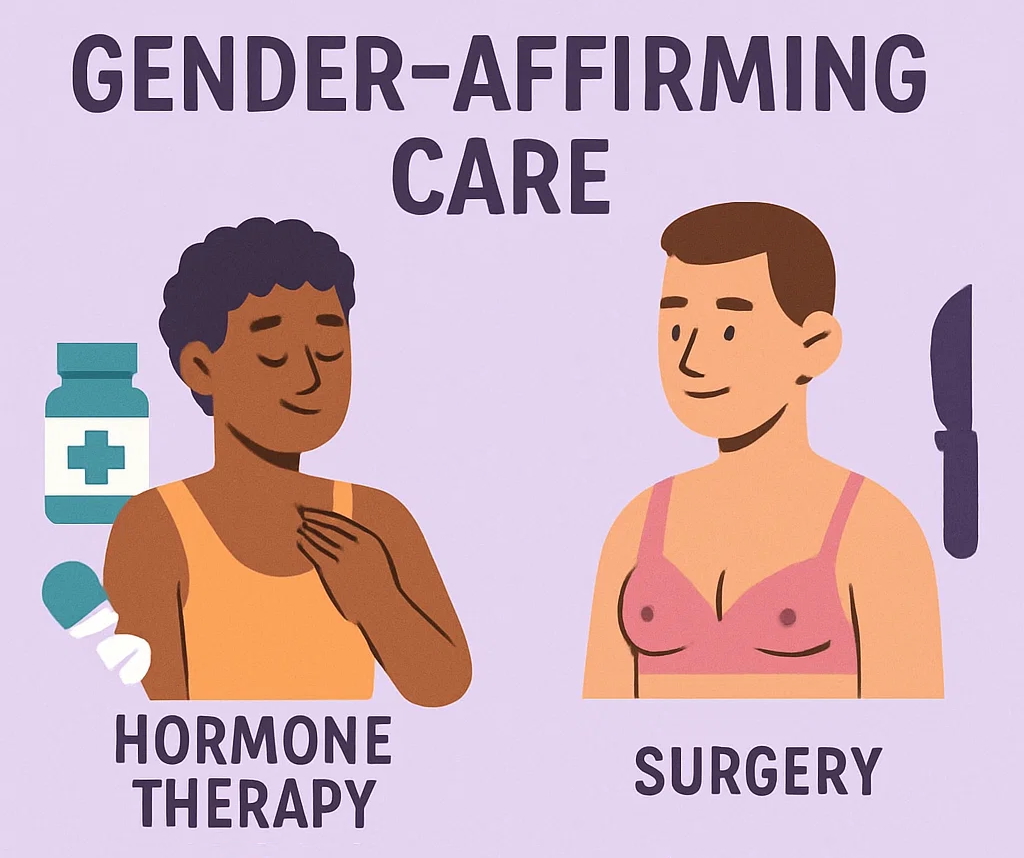


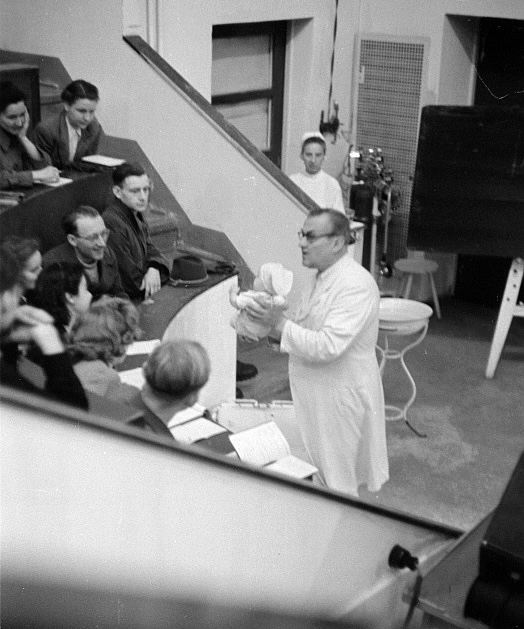
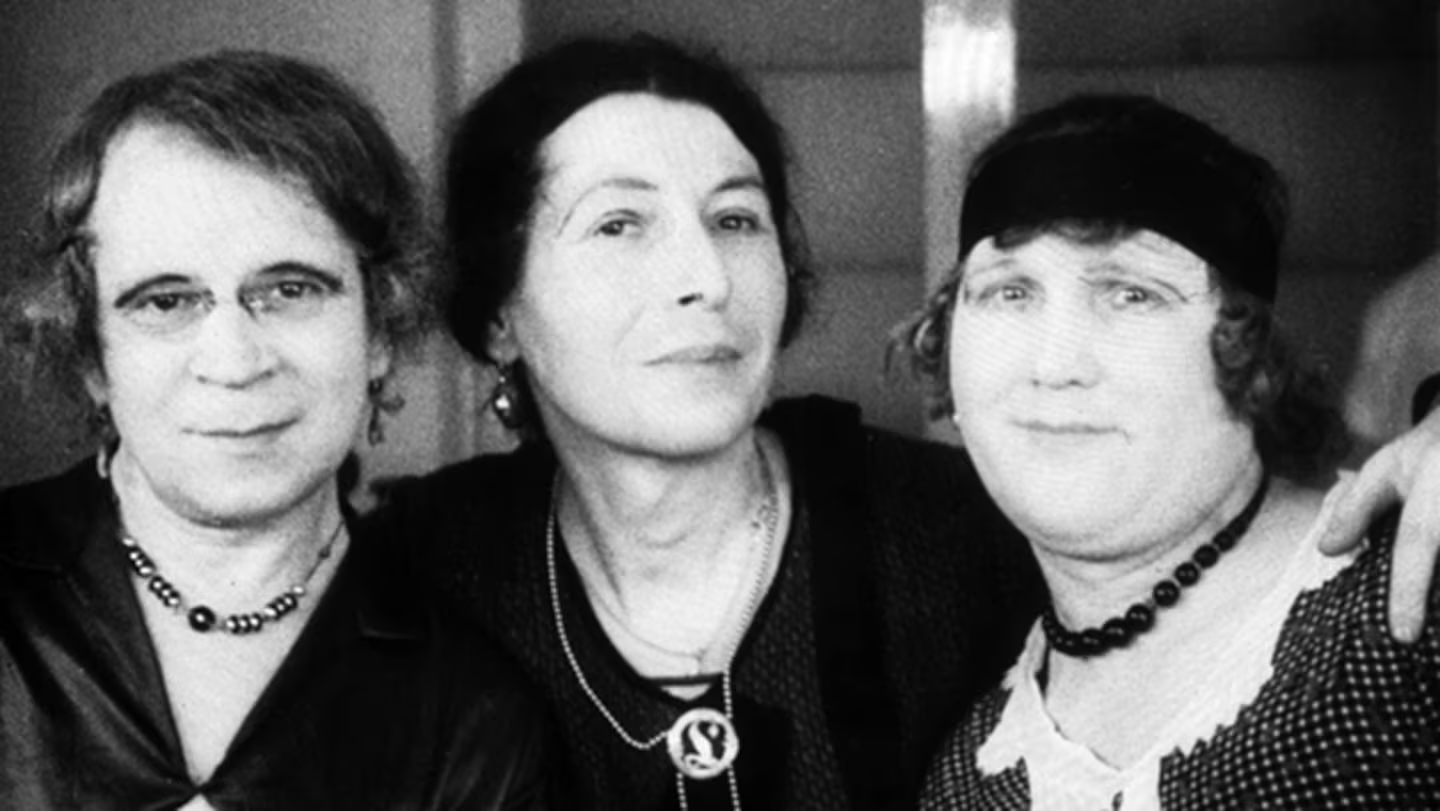
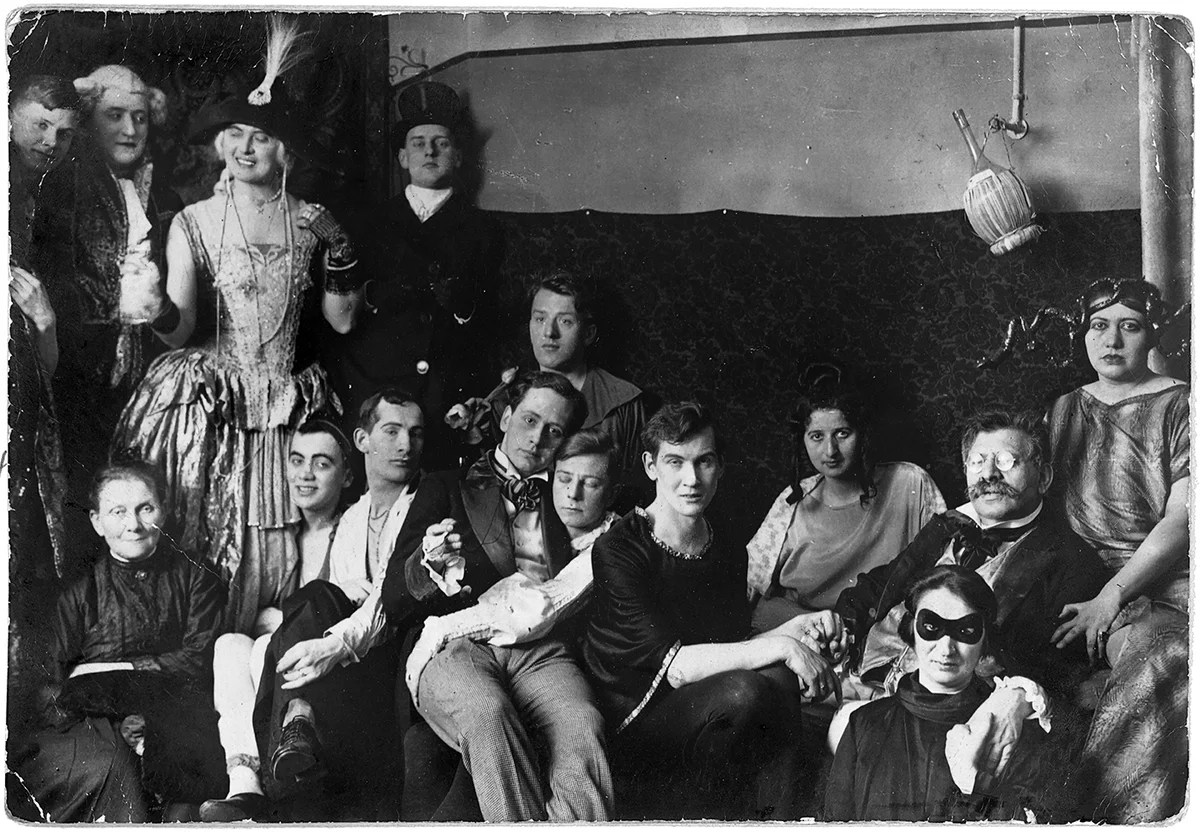
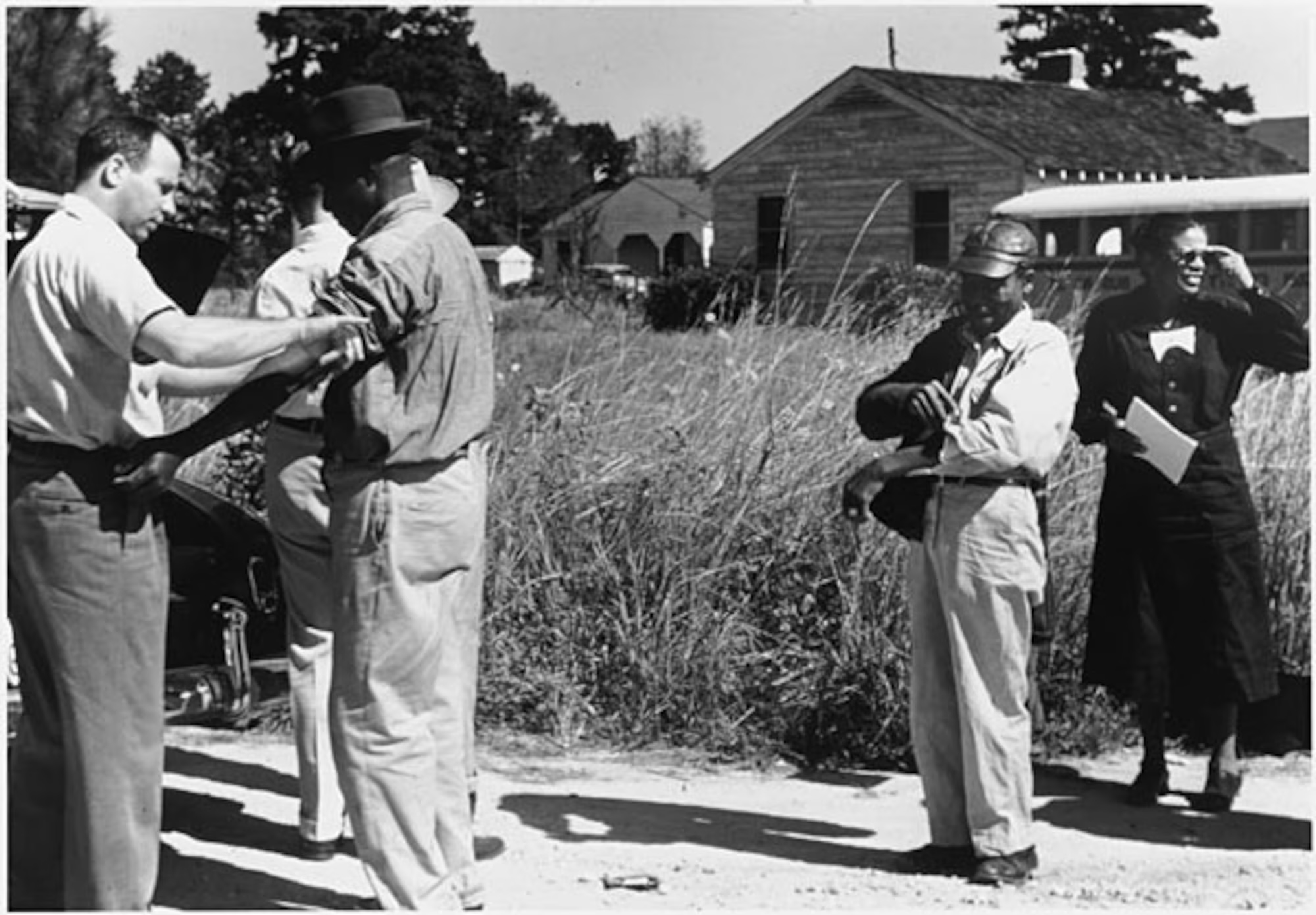
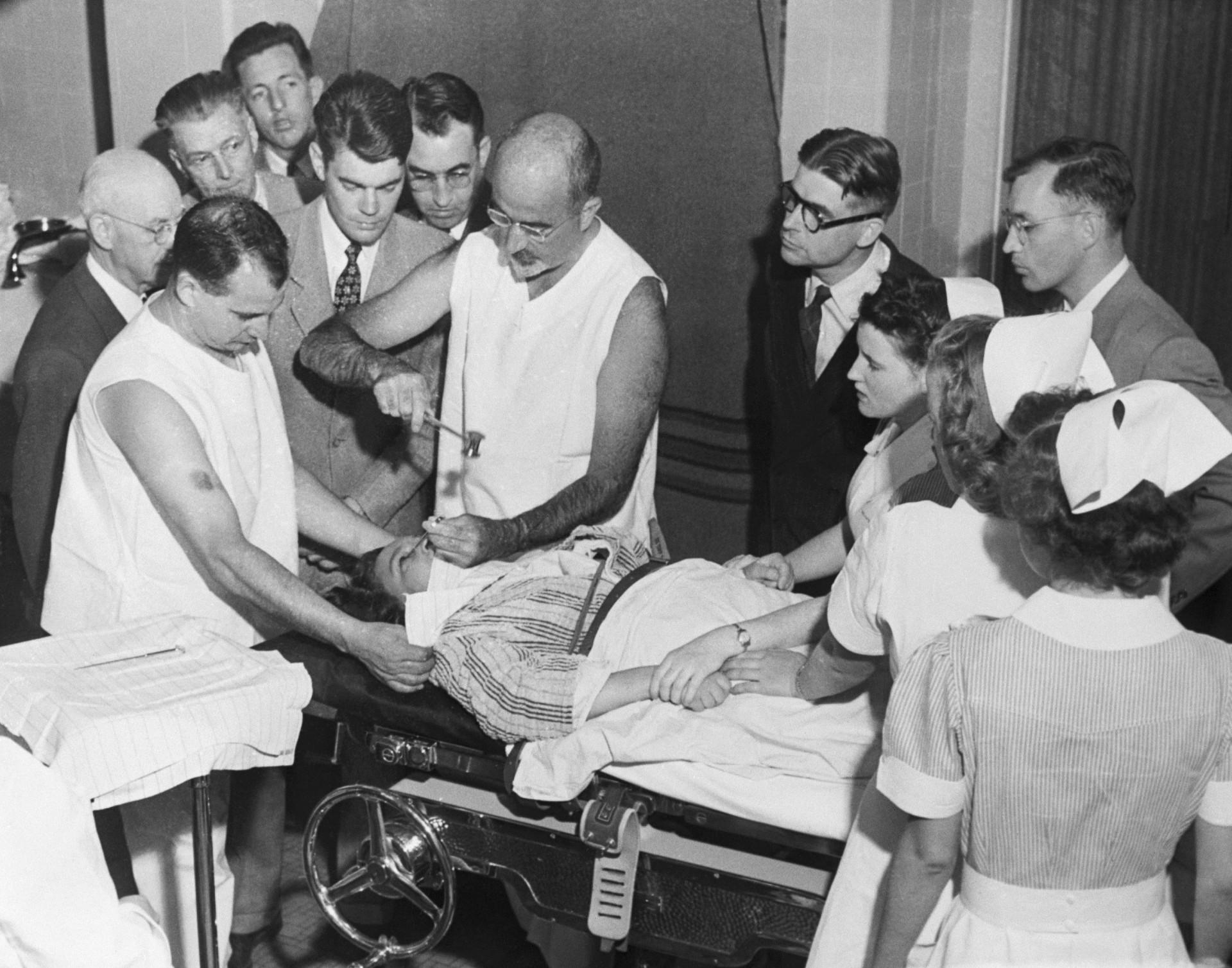
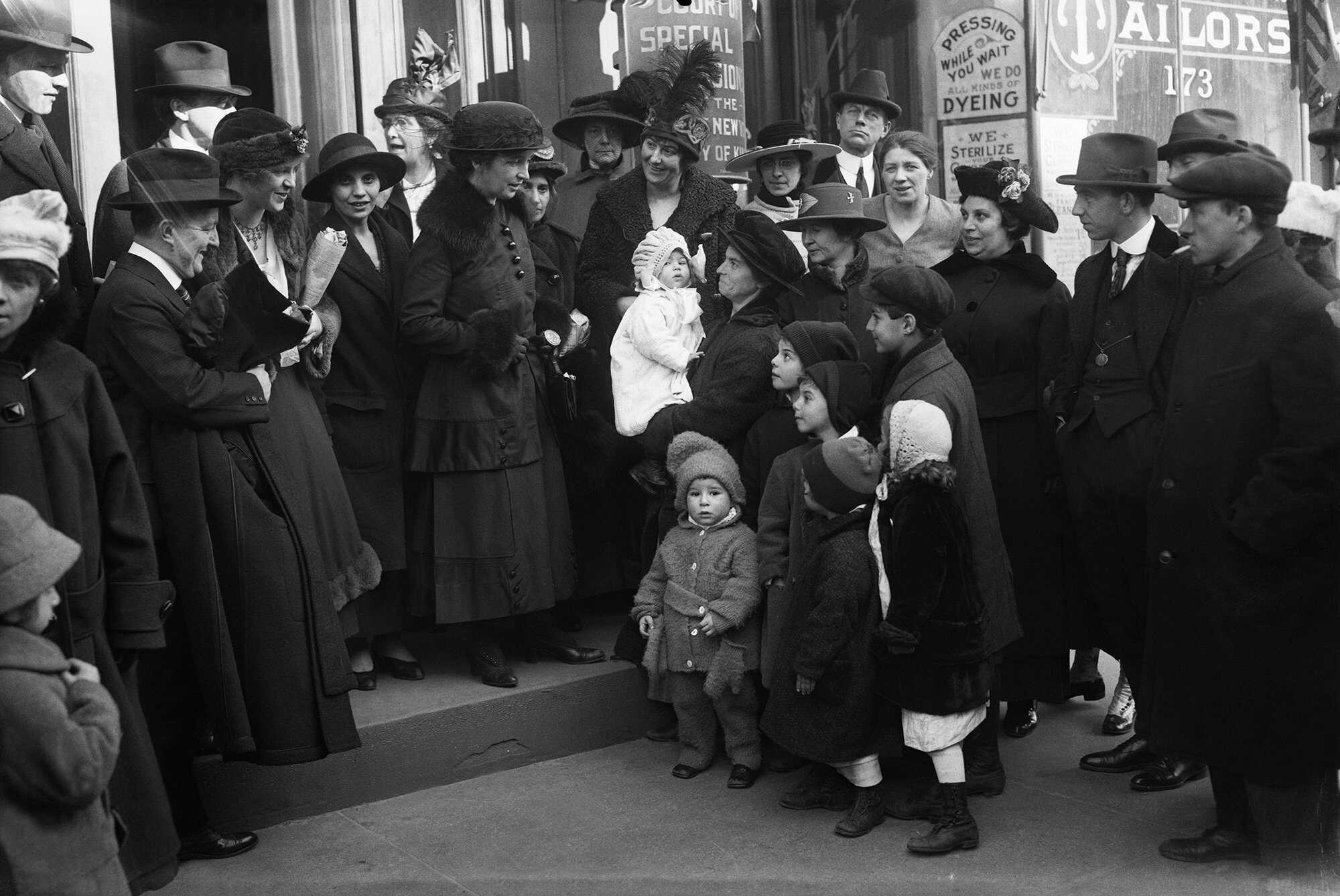







 freedom and reason