I couldn’t disagree more with Josh Bell’s complaint in his review of the new FX/Hulu series conceived by director and writer Noah Hawley: “The Alien franchise hits a wall with TV series Alien: Earth,” published in Inlander. It’s not that I have no criticisms of the series—I do, although I won’t consider them here, since I am still progressing through the series—but I reject the idea that the franchise is venturing into territory it shouldn’t. In fact, it’s going exactly where I hoped it would go from the start.
I was seventeen when Alien premiered in May 1979. I found a seat up front in the Martin Twin Theater (in Jackson Heights Plaza, Murfreesboro, Tennessee), ready for whatever Ridley Scott had in store for me. The TV campaign had given us almost nothing—just enough eerie imagery and sounds to make it irresistible. With no Internet to offer clues or ruin the shock, we went in blind, unprepared for the horror of the chestburster scene. I shrank in my seat the way others in the theater must have. I didn’t scream. But others did.
Scott’s Alien tells the story of a deep-space mining expedition whose course is secretly altered—known only to the synthetic Ash, his identity also concealed from the crew—to collect an alien species for the Weyland-Yutani Corporation, one of five conglomerates that dominate Earth in a transnational corporatist order. This voracious system seeks the spoils of interstellar space, including other life forms. In this future, the world’s proletariat—and the synthetics embedded among them—serve the interests of technological overlords. The parallel to our own emerging reality is unmistakable. As he would do in 1982 with Blade Runner, Scott gave us a window into a possible future with Alien.
Corporate intrigue has never been an incidental subplot to Alien; it’s embedded in the series from the start. Scott’s fascination with world-building ensures that, just as the xenomorph has an origin story (collected or created by the Engineers), so does Ash. Alien has the structure of a slasher film. I love the action and horror of the genre as much as anyone. But what really fascinates me about Alien is the deeper horror: the realization that humans—and other humanoids across the stars—are consumed by an obsession with biotechnology and the Promethean desire to transcend the forms provided by natural history.
HR Giger’s The Pilot (Engineer)
That’s why, when I saw Alien on opening night, the moment that haunted me most wasn’t the chestburster scene—it was the fossilized Engineer seated at that vast HR Giger contraption aboard the derelict ship. The archaeologist in me burned to know the story behind it. I had to wait until 2012, with the release of Scott’s Prometheus, a flawed but compelling prequel, to get answers.
Prometheus takes place 27 years before Alien: Earth. The follow-up Covenant (2017) occurs a decade after Prometheus. Alien: Earth is set two years before the events of the original Alien, set in the year 2122. Thus, Hawley’s story partly fills the gap between Covenant and Alien that a future theatrical release promised. (Will we ever learn the fates of Daniels, David, and the USCSS Covenant and its cargo?)
It’s in Prometheus and Covenant that we learn how the Weyland Corporation first encounters alien life. CEO Peter Weyland (a fictional character anticipating the ambitions of Elon Musk, as I note in a recent essay, From Neon Rain to Corporate Space: Blending the Histories of Alien and Blade Runner) may have been more interested in the Engineers and immortality, but the acquisition of alien species became central to Weyland-Yutani’s ambitions (the corporate merger of Weyland and Yutani occurring in the aftermath of the events of Covenant).
In Alien: Earth, the USCSS Maginot, carrying alien life forms, crashes into Prodigy City, New Siam, in futuristic Thailand. Because of what happens there, Weyland-Yutani knows it must keep the crew of the USCSS Nostromo (the ship in Alien) ignorant of the Maginot’s fate—and the catastrophic consequences of the company’s ambitions. Thus, when the Nostromo, returning from Thedus, picks up the distress signal from LV-426, the crew knows nothing of the fate that awaits them. In the depths of interstellar space, they have no knowledge of the hybrids realized by wunderkind Boy Kavalier. The plot of the original Alien thus remains untouched—a self-contained story of corporate exploitation. The difference is that we, the audience, now know the context. Far from spoiling the original, the FX series, and Prometheus and Covenant before it, enrich it. This is the beauty of an expanded universe—provided it doesn’t distort the core backstory.
Critics who fault Hawley for introducing existential themes into the franchise overlook that Scott himself already did, exploring them in the prequels. Scott introduces these themes through the exploration of humanity’s hubristic desire to transcend natural limits, a premise embedded in Alien itself, which we learn from Mother, the AI that runs the Nostromo (a shoutout to Kubrick and Clarke’s Hal 9000 from 2001: A Space Odyssey). We also learn in the original film about the intrinsic pathological potential of synthetics, which mirrors the amorality of the xenomorph (recall Ash’s admiration of the creature).
In Scott’s 2012 prequel, the crew of the USCSS Prometheus embarks on a quest to find the Engineers, the mysterious species Weyland believes to have created humanity. They travel to LV-223, a distant moon orbiting a gas giant in the Zeta 2 Reticuli system (see my June 2012 essay Ridley Scott’s Prometheus and the Problem of Time Dilation for more). LV-223 is near LV-426 (aka Acheron), the planetoid in the original Alien. The search raises fundamental questions about human origins and the nature of our creators, forcing the characters—and the audience—to confront whether life itself has inherent meaning or whether our makers are fallible and even malevolent. Weyland’s obsessive pursuit of immortality highlights humanity’s desire to cheat death and assert control over existence, raising questions about the cost of such ambitions and the hubris inherent in attempting to transcend natural limits.
Another existential theme is the tension between humans and their creations. David, a synthetic, exhibits curiosity, creativity, and, at times, malice, blurring the boundary between creator and creation. The synthetics turn not only on the human crews in which they are embedded, but also turn on their creators (a theme also explored in Blade Runner). Through David, Scott challenges assumptions about what it means to be human and probes the ethical implications of playing god—and the inevitable boomerang of having done so.
At the core of his concerns, Scott emphasizes the fragility and expendability of human life in the corporate gaze. Both films place characters in the presence of cosmic forces—the Engineers, xenomorphs, alien landscapes—that dwarf them, underscoring their vulnerability and the existential uncertainty of their—indeed our—place in the universe. The unleashing of the xenomorphs and the chaos that ensues serve to illustrate this key existential idea: our creations escape our control and even turn against us, reflecting on the unpredictability of life and the limits of human knowledge. The Gods punished the Titan Prometheus for giving man the technology of fire. Like Dr. Frankenstein, man punishes himself.
In these ways, Scott uses the prequels to explore profound existential questions about origins, creation, ambition, and mortality. These themes set the stage for Alien: Earth, where Hawley continues to probe humanity’s obsession with biotech, the consequences of overreach, and our fragile place in a vast, indifferent universe. Bell’s review of the FX series moves from a superficial understanding of Scott’s vision. This suggests that he has not spent much time with the Alien franchise—or dwelled much in Scott’s other dystopian world, the world of the blade runner.
All that said, if I were introducing a novice to the Alien franchise, I’d start with the original film. Not only would this preserve the shock of the chestburster scene, but more importantly, mirror how we come to understand any world—ours included. We don’t receive a neatly packaged explanation before we experience what life throws at us. We live it first and afterward ask, “What the hell just happened?” Taken chronologically, the Alien franchise unfolds like a murder mystery or the excavation of an ancient site. Along the way, we deepen our understanding of humanity and the terrible potential that lies at the heart of corporate ambition. Hawley’s Alien: Earth (with Scott serving as executive producer) continues our journey of discovery. For that reason, whatever its flaws, the new FX series works.
Today marks the eighteenth anniversary of the end of World War II—the day Imperial Japan formally surrendered to the United States (which required the detonation of two nuclear fission devices over major Japanese cities), bringing to a close the deadliest conflict in modern history.
Russian President Vladimir Putin and US President Donald Trump in Anchorage, Alaska (source of image: BBC)
This anniversary is especially significant in light of current events: President Donald Trump and President Vladimir Putin are meeting today in Anchorage, Alaska, to seek a resolution to the Russia–Ukraine war and to establish more normal relations between world powers—powers armed to the teeth with thermonuclear or fusion weapons (which are also part of the negotiations).
It’s worth remembering that in World War II, the United States’ most important ally was Russia, then the Soviet Union. Great Britain fought valiantly, to be sure, but it must be noted that its primary concern was preserving the British Empire (which it did not in the end, as the United States became the world hegemon).
Other European states contributed very little to the Allied struggle against Nazi Germany. Italy was a fascist ally of Germany, as was Spain. France, under the Vichy government, was effectively under Nazi control. Neither did the Scandinavian nations offer much assistance; for example, Sweden’s “neutrality” worked in practice to Germany’s benefit.
In the end was the Russian working class (who suffered the most of any nation, with as many as thirty million perishing one way or another), the American working class (who lost more than 400 thousand lives), and the British (losing nearly 400 thousand souls) who bore the heaviest burden in defeating Nazism.
Germany and Japan also lost millions, but since they were the instigators, we must note that these and other losses were self-inflicted.
After the war, the financial and industrial elites who had supported Nazi Germany orchestrated the European Union, while NATO fulfilled Hitler’s vision of a pan-European military. Thus, the Europeans, as well as Britain (Brexit notwithstanding), have pursued their own self-inflicted wounding—a situation they wish to inflict on others.
In the post-Soviet era, globalist hostility toward Russia has been strikingly persistent—even belligerent. NATO’s eastward expansion, the 2014 Ukraine coup backed by globalist forces, and other actions have all served to antagonize Russia. The Russia-Ukraine war is the predictable consequence of Western belligerence, pursued through its proxy Ukraine, which has brought great suffering to the Ukrainian people, as well as to the Russian people.
Why such hostility? Notably, the same entrenched forces direct similar animosity toward President Trump and the populist–nationalist movements sweeping both the United States and Europe—movements that seek to restore national sovereignty and resist transnational control. The same goals shape Russia’s stance.
This suggests (more than suggests really) that the animus toward both the Russian people and the American people is rooted in globalist disdain for popular self-determination. A renewed commitment to the Peace of Westphalian—centered on national sovereignty, peaceful international relations, and freedom from entangling alliances—runs directly counter to the transnational agenda.
In other words, the forces opposing both Russia and the Trump movement fear nothing more than normalized relations between the two nations, because such cooperation threatens the globalist project.
The truth is, the Russian and American peoples ultimately want the same things. We have common interests. And, for this reason, we should hope that the talks in Anchorage lead not only to a resolution of the Russia–Ukraine conflict, but also to a broader normalization of US–Russia relations, including robust trade and mutual respect—and a reduction in the nuclear arsenal of both nations.
Moreover, if such a rapprochement between the United States and Russia were achieved, it would also serve to isolate China. Beijing has relied heavily on the estrangement between Washington and Moscow to advance its own strategic ambitions, positioning itself as Russia’s indispensable partner against the West.
A genuine thaw in US–Russia relations—grounded in mutual respect, sovereignty, and trade—would remove that leverage, leaving China increasingly alone in its push for global influence. Instead of exploiting a divided geopolitical landscape, China would face a more united front of great powers seeking stability and balance, undermining its capacity to expand unchecked.
The effect of this would not only lessen the antagonisms that are driving the world towards World War III, but would weaken the transnational project, as well as blunt China’s bid for world domination. A successful negotiation would therefore be a win-win-win for the world. Let’s hope for the best.
“To exercise exclusive Legislation in all Cases whatsoever, over such District (not exceeding ten Miles square) as may, by Cession of particular States, and the Acceptance of Congress, become the Seat of the Government of the United States, and to exercise like Authority over all Places purchased by the Consent of the Legislature of the State in which the Same shall be, for the Erection of Forts, Magazines, Arsenals, dock-Yards and other needful Buildings.” —Article I, Section 8 of the United States Constitution
The latest counter to Donald Trump’s push to reestablish law and order in the Capitol is the renewed demand for DC statehood. This demand isn’t new—I’ve heard it my entire life, more loudly in the 1980s. It fades from time to time. It most recently remerged in 2023 in Congress. Now it’s back.
Before making the case against DC statehood (which won’t take long), a brief timeline of Congressional moves made to give DC more power. In 1961, the Twenty-Third Amendment to the US Constitution was ratified, granting the District of Columbia three electoral votes in presidential elections. This measure gave DC residents a voice in selecting the President and Vice President for the first time, yet it stopped short of offering them any voting representation in Congress. The amendment addressed only one aspect of DC’s political disenfranchisement, according to proponents, ignoring the plain text of the Constitution, leaving unresolved the broader question of the city’s role in the federal system.
A further step toward local self-governance came in 1973, when Congress enacted the District of Columbia Home Rule Act. This legislation created an elected local government consisting of a mayor and a city council, with members chosen both at-large and by ward. While Home Rule allowed DC to manage many of its internal affairs, not a particularly objectionable move, Congress retained the authority to review and override the city’s laws and budget, ensuring that the federal government maintained ultimate control over the nation’s capital. This piece is crucial.
The debate over DC’s political status continues into the present day. In 2023, the Senate reintroduced the Washington, DC Admission Act, which would transform most of the District into the nation’s 51st state—called Washington, Douglass Commonwealth (so it can keep the acronym)—while preserving a small federal district around core government institutions. Supporters argue that statehood would end “taxation without representation” for hundreds of thousands of residents, while opponents contend it would violate constitutional principles and upset the balance of power envisioned by the Founders. I am with the opponents.
Indeed, it would be refreshing if DC Mayor Muriel Bowser and proponents of DC statehood would sit down and read the United States Constitution and the Federalist Papers—or, if they struggle with comprehension, have someone explain it to them. In truth, I suspect Bowser and others around her have read these documents and do understand them. But they operate under the cynical assumption that most Americans haven’t, and can’t, so they work to mislead the public into thinking the federal government is “taking over” something it already has exclusive control of.
Even Trump, during his first term, may not have fully grasped the constitutional arrangement. Many in his administration—some actively working at cross purposes with him—certainly weren’t going to help him figure it out. Ironically, Democrats may come to regret giving Trump four years between presidencies to study how government works and assemble a more loyal, informed team. One aspect of Trump’s second term is that he has assembled a team much more loyal to the will of the People.
As the above quote indicates, the US Constitution designates the District of Columbia as a federal district, not a state. Making it a state would require a constitutional amendment—an amendment that would undermine the Founders’ intent and embed the Capitol within a single state’s jurisdiction. Why did the Founders avoid statehood for DC in the first place? To ensure the nation’s capital remained under direct federal control, free from the influence of any one state. They wanted the capital to be politically neutral, preventing one state from gaining disproportionate power over the federal government. A separate federal district ensures that Congress can maintain security and stability without interference from state politics—a safeguard for effective, unbiased governance.
DC statehood would shatter this balance. Since DC voters (no longer a chocolate city, DC is still around 45 percent black) lean heavily Democratic, granting it statehood would guarantee two additional Democratic senators and a shift in congressional power. We don’t need another Democrat-controlled state flooding Congress with more bad ideas. The state of DC itself is proof enough: decades of Democratic rule have left residents—and visitors—wading through crime, mismanagement, and urban decay. You want more of that in national politics? No thanks.
The ripple effects would be significant. If DC is granted statehood, other US territories will demand the same, further altering the political landscape and diluting the union. This would derail populist efforts to restore the Republic and move away from the destructive policies of the Democratic Party. (For perspective: this is the same reason I opposed adding Canada to the United States. The progressivism up there would make America look like—well—Canada: a woke hellscape.)
Let’s be clear: DC already has representation—however poor that representation may be. Statehood won’t fix the city’s problems. Establishing law and order is the first step, but real improvement will require a change in leadership and political culture. That will be a challenge for a city whose voters once saw their mayor (Marion Barry, DC’s four-term mayor, who spent six months in federal prison on drug possession) on video smoking crack with prostitutes—and reelected him anyway. Half a century of Democratic control has yielded misery as its primary fruit. We should not reward that record with statehood.
Steven Miller once more laying down the facts of history
This is very important for everybody to socialize. The controversy Democrats are trying to manufacture about DC is yet another attempt to revise American history. History matters, and if we arm ourselves with the facts we can win the arguments that advance the project to reclaim our beloved republic.
Remember, it’s not so much who you are arguing with that matters. I’m sure you know full well that those working from partisan standpoints are typically incapable of being persuaded. What matters most is the audience. Our goal is to expand the parameters of mutual knowledge. For every progressive one encounters, there are many others open to changing their mind. Many people are not as dug in as progressives, since they have not articulated a position they feel compelled to defend to remain loyal to the tribe.
The term “cultural totalitarianism” (more accurately, the concept behind it) is associated with essayist Norman Mailer (see Sophie Joscelyne’s essay on this). Mailer warned that American society in the 1960s was threatened by a subtle, internalized form of totalitarianism—one rooted in cultural conformity and psychological manipulation rather than overt political coercion. This doesn’t happen by accident. It happens because an ideology captures the nation’s major sense-making institutions.
This week, the corporate media is buzzing with a new refrain (albeit not that different from things they have said before): “Trump is a Stalinist revising history at the Smithsonian!” The charge is everywhere, repeated so often that it feels like fact, especially among those prone to believe the mainstream media. But in reality, it’s an inversion of the truth.
Anti-white display at the Smithsonian
To see why, we must remember what the Smithsonian itself was doing just a few years ago—at the height of the summer 2020 unrest, which many (including your humble narrator) have described as a “color revolution” in the United States. At that time, the institution aligned itself with the corporate-backed, self-styled “neo-Marxist” group Black Lives Matter. The BLM organization, heavily funded by corporate donors, pushed demonstrably false narratives—chief among them the claim that systemic racism drives lethal civilian–police encounters (debunked as early as 2017 by Harvard’s Roland Fryer). By 2020, such ideas, drawn from critical race theory (CRT), had already been incubated for years by the corporate media.
In July 2020, Newsweek reported that the Smithsonian National Museum of African American History and Culture had “clarified” the purpose of its new Talking About Race portal:
“At a time when the soul of our country is being tested, our ‘Talking About Race’ portal will help individuals and communities foster constructive conversations and much needed dialogue about one of our nation’s most challenging topics: Racism and its corrosive impact.”
This was published on its official Twitter channel. The Smithsonian continued:
“America is once again facing the challenge of race, a challenge that needs all of our understanding and commitment. Our portal was designed to help individuals, families, and communities talk about racism, racial identity and how forces shape every aspect of our society.”
At a time when the soul of our country is being tested, our Talking About Race portal will help individuals and communities foster constructive conversations and much needed dialogue about one of our nation's most challenging topics: Racism and its corrosive impact.
On the surface, this may have appeared benevolent to many eyes. In practice, it amounted to the Smithsonian adopting the role George Orwell warned about in his 1949 novel Nineteen Eighty-Four: the “Ministry of Truth” (or “Minitrue”), an institution tasked with generating and disseminating pro-regime ideology, often by rewriting history. In Orwell’s vision, the Ministry’s name was the opposite of its function.
Image generated by Sora
Today’s Smithsonian—captured by “woke” progressives aligned with the emergent transnational corporate state (TCS)—operates in much the same way. The TCS is represented politically by Democrats, administratively by the technocracy progressive operatives command, culturally by compliant academic and media institutions, and strategically by the transnational corporations (TNCs) seeking hegemony over the West.
However, Trump is not “revising history.” On the contrary. He is resisting historical revisionism—pushing back against a coordinated elite effort to delegitimize America in service of corporate power and profit and the functionaries that serve these interests.
History is not the only battleground. The real-world Ministry of Truth also revises scientific reality to suit ideological ends. One glaring example is radical gender ideology (RGI). With RGI as its guide, schools are teaching children that they can change—or discard entirely—their gender.
The Smithsonian has played its part here as well. Plans for its forthcoming American Women’s History Museum included the recognition of transgender women, newspeak for men portraying themselves as women. Its materials reference, for example, Monica Helms, a Navy veteran and creator of the first transgender pride flag.
This March, Trump signed an executive order titled Restoring Truth and Sanity to American History, which prohibits the Smithsonian’s Women’s History Museum from recognizing men imitating women in any capacity. Such actions aim to return the institution to its foundational mission—truth in sense-making—rather than letting it serve as a propaganda arm of the ruling ideology. It also notes the anti-white display noted above.
Predictably, the corporate media is framing this effort not as a restoration of truth, but as an act of historical revisionism. This is yet another example of Orwellian inversion—where insistence on historical accuracy and scientific soundness are painted as falsification.
The managed decline of the American Republic depends on such inversions. And once again, the press is doing its part to ensure the process runs smoothly.
You don’t hate the mainstream media enough.
Did Norman Mailer nail it or what? See British journalist Melanie Phillips argue that we have slipped into an age of “cultural totalitarianism.”
Freedom and Reason is concerned with late capitalism and, heretofore, has, for the most part, dwelt in the real world. However, I am a boxing aficionado and a science fiction fan, and I believe both subjects have their place here. I may publish essays in the future on boxing, and I have previously written about science fiction (long ago), however I have frequently incorporated its themes—artificial intelligence, robotics, etc., albeit no longer science fiction—into my writings. The present essay is a long time coming, much of it sitting for some time in my collection of draft essays (which is enormous). I am moved to finally publish the piece, extensively revised, because of recent developments in the worlds of Blade Runner and Aliens. So science fiction is on the menu today.
The recents developments are exciting. Blade Runner is making a comeback with a new live-action TV series called Blade Runner 2099, set 50 years after Blade Runner 2049. It stars Michelle Yeoh as a replicant nearing the end of her life and Hunter Schafer as a survivalist chameleon. Production has wrapped, and it’s expected to release sometime in 2025 or 2026 (most recent reports suggest 2026 is more likely). The show promises a return to the darker, grittier vibe of the original 1982 film. Those who know me know that I reckon Ridley Scott’s Blade Runner to be not only the finest science fiction movie but the greatest movie ever made. I watch it like I listen to my favorite albums. In fact, I have the soundtrack playing in the background when I write, joined by rain sounds to emphasize the dreariness of Vangelis’ ethereal score.
Alien is expanding with two main new projects. First, Alien: Earth, a TV prequel series created by Noah Hawley, with Scott as executive producer, is set two years before the original Alien movie, exploring early experiments with synthetic-human hybrids and new terrifying creatures. It premiered this August and has received strong critical praise. I watched the premiere on Hulu last night and found it intriguing (I will not be discussing the series in detail today, since there are more episodes to watch and I want to consider how it all fits into canon, but, as readers will, the series will not go unmentioned). Second, Alien: Romulus (2024), a standalone film set between Alien and Aliens, did well and already has a sequel in development. I found Alien: Romulus intriguing, as well.
I am also moved to publish this now because I am preparing to teach my First-Year Seminar for the fall semester titled Becoming Human: People, Machines, and Monsters. I developed the course (which I have twice taught previously) because I find questions about identity, technology, and simulation increasingly urgent. In the seminar, students engage with science fiction films like Alien and Blade Runner, as well as episodes from Black Mirror, a British anthology television series created by Charlie Brooker, alongside Baudrillard’s Simulation and Simulacra, and the film The Matrix, which draws heavily on Baudrillard’s insights. (Other films include John Carpenter’s The Thing and Stanley Kubrick’s 2001: A Space Odyssey. The prescience of HAL9000 is a must-see for students.)
The present essay reflects a continuation of that exploration—how synthetic beings and hyperreal worlds challenge and redefine what it means to be human in a late capitalist society dominated by corporate power and technological mastery.
The Blade Runner vibe. Image generated by Sora.
The worlds of Ridley Scott’s Alien (1979) and Blade Runner (1982), while never officially merged on screen, share strikingly similar DNA. Both depict futures dominated by extreme class stratification, mega-corporations (there are five identified in Alien: Earth), and the technological mastery of artificial humanoid life—the entirely synthetic androids in Alien and the genetically engineered replicants in Blade Runner. Indeed, Alien: Earth draws considerably on Blade Runner mythology, even if this mythology is not explicitly referenced (at least not in the first episode).
Scott has hinted that the events of these films could exist in the same universe, with Weyland-Yutani producing the synthetics and the Tyrell Corporation producing replicants occupying different corners of human cosmological and technological expansion. By aligning their timelines and social structures, I endeavor to show how the interstellar corporate empire of Alien aligns with the grim, rain-soaked streets of Blade Runner’s Los Angeles, depicted as having suffered significant ecological collapse. Yet, in Blade Runner, there still stands over the multicultural chaos beneath golden cities that pierce the haze.
I weave these worlds together in the chronological order established in these fictions. I will leave aside the details of the various movies and focus instead on Scott’s worldbuilding and how they fit together. I will also set aside criticisms of facts that weaken the synthesis I am presenting. I am trying to make a case here, not tear it apart. I will leave the critique of my synthesis to others. As always, I invite critique.
That said, I admit that the lack of explicit intersection between these worlds makes my argument speculative. For example, why are there no replicants involved in the interstellar space depicted in the Alien franchise? (There is something like replicants in Alien: Earth, called “hybrids,” but with creepier differences, which I will discuss in a note at the end of this essay, since it involves the mind-body problem.) I can (and will) make the case that, in my synthesis, replicants are mostly relegated to the Earth, with blade runners (some of which are replicants themselves—indeed many as we learn in Blade Runner 2049) policing renegade replicants. Perhaps less rationalizable is why no synthetics appear in the Blade Runner franchise. The Blade Runner world is Earth-focused, but one might expect that synthetics would appear there, especially given that Peter Weyland (portrayed by Guy Pierce) and Eldon Tyrell (portrayed by Joe Turkel) are competitors, and finctional Weyland’s TED Talk in 2023, discussed in more detail below, is marked by his defiance of rules constraining the development of such beings.
However, one can reconcile the ethics of replicants and synthetics in the following manner: Many on Earth find synthetic humanoids, whether entirely synthetic or genetically engineered, to be generally problematic, thus mirroring concerns that many living in the real world have about the extremes of biotech, AI, and robotics. It’s possible that Weyland lost his bid—especially considering the replicant problem—to populate Earth with synthetics. Moreover, the known replicant problem of free will arguably makes them largely unsuitable for interstellar work (the crux of the Blade Runner story). They, therefore, would have likely been banned from off-world colonies some time after Deckard, the main protagonist of the original Blade Runner (portrayed by Harrison Ford), confronts Roy Batty (portrayed by Rutger Hauer) and his gang of replicants. They were already largely banned on Earth for this reason (albeit we do see later creation of hybrids according to Alien: Earth, and of course there are replicant blade runners as we see in Blade Runner 2049).
Another possibility, practically speaking, is that, given the time between Blade Runner (2019-2049) and Prometheus (2093), the introduction of synthetics like David, portrayed by Michael Fassbender, may have been a later development, suggesting the biotech route to creating androids was, at least in Scott’s universe, an easier path than entirely synthetic humanoids early on (albeit current technological development indicate the opposite to be the case).
At any rate (and I haven’t work all this out in my mind), I spent time with this matter upfront because the synthesis I now present assumes the premises sussed out above to more fully integrate the Blade Runner and Alien worlds. I wanted to make these assumptions explicit.
The original Blade Runner, based on Philip K. Dick’s 1968 novel Do Androids Dream of Electric Sheep?, takes place in a world of ecological decline and sprawling urban decay. The wealthy having already begun migrating to off-world colonies, leaving behind an underclass in deteriorating megacities. The Tyrell Corporation, at its peak, produces Nexus-6 replicants (Batty being one of these types)—bioengineered humans designed for combat and labor—that are at first indispensable to off-world industries (suggesting that Weyland-type synthetics were not yet available). Beneath the hazy neon skyline lies a chasm between the privileged and the forgotten. For the upper tiers, life is contained within corporate towers and private transit systems. For the proletariat and lumpenproletariat, life is a daily grind through overcrowding, smog and acid rain, and surveillance. Surveillance is an ever-present fact in both the Blade Runner and Alien worlds.
This fragile balance is shattered in 2022. In Blade Runner: Black Out 2022, a 2017 tech-noir cyberpunk anime short film directed by Shinichirō Watanabea, presented as canon, a high-altitude nuclear detonation triggers an electromagnetic pulse over the western United States, wiping out vast swaths of the global digital infrastructure. Banking systems, corporate archives, and government databases vanish in an instant. The loss of identity records leaves millions untraceable—and, for many replicants, free from ownership. This sets up the events of Blade Runner 2049, brilliantly directed by Denis Villeneuve.
The chaos of the period between Blade Runner and Blade Runner 2049 unfolds in stages. In the immediate disruption, communications collapse, power grids fail, and transit halts. Law enforcement is paralyzed; without functioning databases, policing becomes guesswork, and criminal syndicates flourish. Corporate secession follows, as wealthy elites retreat into fortified enclaves, relying on private security to protect their assets. Urban breakdown, marked by looting, riots, and black (informal) economies dominating the proletarian zones. Crucially, for the privileged, the disruption is temporary; hardened data vaults and analog backups allow them to recover within months. Presumably, this catastrophe is what allows the corporate elite to become the governing body of the Earth and beyond—an instance of Barrington Moore’s “revolution” from above.” For the underclass, the Blackout ushers in years of instability, cementing a permanent division between the corporate-controlled “clean world” and the lawless, decaying urban sprawl beneath. In this way, Blade Runner is an instantiation of the endpoint of Saskia Sassen’s “global cities”—class stratification in vertical form under technocratic control.
Peter Weyland’s TED Talk from the viral campaign promoting Prometheus (2012)
Only a year after the Blackout in the fictional timeline, in a scene from Prometheus viral campaign (which should have been embedded in the film, with some other scenes cut to accomodate, cut as well as because of their excesses—e.g., an exploding engineer’s head), a young Weyland delivers a TED Talk in 2023 (which uncannily anticipates the rise of Elon Musk). In it, Weyland promises to reshape human destiny, claiming, “We are the gods now.” While the underclass still reels from the Blackout, Weyland’s words resonate in elite circles, heralding a new era of corporate ambition. To be explicit, I am inserting Weyland into the Blade Runner timeline. At this stage, Tyrell and Weyland’s domains overlap but remain distinct: Tyrell focuses on replicants—biological constructs nearly indistinguishable from humans, which require the Voight-Kampff test to differentiate them from humans—while Weyland pursues synthetic AI, robotics, and terraforming.
Tyrell’s most notable replicants are the aforementioned Batty and Rachel (portrayed by Sean Young)—and possibly Deckard himself (although I have always resisted this suggestion, as has Harrison). Weyland’s most notable synthetics are Ash (from the original Alien movie, played by Ian Holm), Bishop (from James Cameron’s 1996 Aliens, portrayed by Lance Henriksen), and David (from Scott’s 2012 Prometheus and 2017 Covenant, where Fassbender also portrays David’s identical Walter, albeit with a distinct temperament). In my synthesis, both replicants and synthetics exist in a world where governments and institutions have lost the public’s trust and corporations are viewed as the only reliable sources of stability. Alongside the question of “what is human?”, Scott’s dark portrayal of corporate power is the most compelling angle of both franchises.
David 8 from the viral campaign promoting Prometheus (2012)
The death of Tyrell in the original Blade Runner weakens his company, and by the 2040s, the Tyrell Corporation collapses. Niander Wallace (portrayed by Jared Leto) acquires its assets, reviving replicant production and expanding into off-world colonization. So, at least at this time, replicants could still be found off-world, with the events in Prometheus and Alien still decades away (with the introduction of hybrids in the new series representing something of the replicant 2.0). Wallace’s work in planetary resource extraction dovetails neatly with Weyland’s own ambitions, and one can imagine this setting the stage for the eventual absorption of Wallace technology into the Weyland-Yutani portfolio later in the twenty-first century (although, again, this is not explicit in the films).
In Blade Runner 2049, Earth’s environment has degraded further. Agriculture relies almost entirely on genetically engineered crops and protein farms; natural ecosystems are largely gone, at least in those places where events of the movie unfold. Off-world migration is no longer just an opportunity—it is a necessity for anyone seeking a better life. The clean world of corporate elites thrives in secure districts and orbital habitats, while below remain neon-lit labyrinths of crime, industrial smog, and grinding poverty.
By the time of Prometheus, set in 2093, Weyland stands as an elder statesman of industry and innovation, commanding resources that rival entire nations. His focus is no longer on the decaying Earth cities but on deep space exploration, synthetic human development, and terraforming alien worlds. In my synthesis, the underclass—and the blade runners who police it—still exist, but they are irrelevant to the priorities of interstellar corporate leadership. However, finding it impossible to not work into the synthesis the new television series, the events of Alien: Earth occur in a vast city called New Siam, located in a futuristic Thailand, controlled by the corporation Prodigy, which gives it the feel of the Blade Runner series, especially in the incorporation of Far Eastern culture in the multicultural mix.
(I must note here that the globalist, multicultural vibe is anticipated by Gene Roddenberry in his conception of the Star Trek franchise, set in the mid-twenty-third century, as well as the Khan Project, where genetically enhanced humans culminate in the late twentieth-century Eugenics Wars, resolved by sending the “augments” into deep space aboard the sleeper ship SS Botany Bay in suspended animation. Humanity missed the opportunity to destroy the existential threat augments pose when it had the chance. So did James Kirk, captain of the USS Enterprise in the original 1960s series, which prepared the movie franchise for its best installment, the 1982 film The Wrath of Khan.)
In Alien (set in 2122), Aliens (set in 2179), and Alien: Romulus (set between Alien and Aliens), it is the Age of Weyland-Yutani. Yutani is a Japanese manufacturing powerhouse that appears mainly in the expanded universe with subtle film references—thus Scott conceives a global and interplanetary megacorporation. As in Star Trek, humanity is at this point a spacefaring civilization. Earth remains inhabited and plays a central role in the culture and economy; however, the corporate gaze is cast spaceward, where vast riches await mining. Weyland-Yutani dominates colonization, military contracting, and resource exploitation.
In this synthesis, the hazy neon streets of Blade Runner’s Los Angeles are a historical footnote, remembered—if at all—as the chaotic early days of the megacorporate era. Yet the exploitation, hierarchy, stratification, and disregard for human life that defined 2019 Los Angeles will not have disappeared, just expanded to the stars. However, this dynamic appears in the Alien series, as well. One sees it in life aboard the Nostromo, the commercial towing spaceship featured in the original Alien film (its interior almost identically recreated in Alien: Earth), where the crew are depicted as the expendable peons of corporate power. Moreover, warrant officer Ripley, the protagonist of Alien and Aliens, portrayed by Sigourney Weaver, never returns to Earth; instead, she is drawn immediately into the military mission to LV-426 in Cameron’s Aliens. Crucially, then, throughout the Alien series, Earth (except for the latest offering) exists mainly as a distant backdrop—an implied homeworld largely overshadowed by spaceward corporate ventures. All this makes it easier to integrate Alien and Blade Runner universes.
A worthy question to ask—which may strike some readers as a convenient rationalization—is how humans in the Alien context know whether replicants walk amongst them? After all, the crew of the Nostromo was surprised to learn that Ash is a synthetic. For that matter, how would anybody in the Blade Runner universe know for certain that they are not interacting with one of Weyland’s synthetics? This speaks to the problem with humanoid synthetics designed to look and act like human beings, so much so that tests had to be developed to detect them—indeed, with some perhaps not even knowing themselves whether they are artificial. This raises the philosophical question that obsesses Scott about the nature of humanness, a question central to Alien: Earth with Prodigy’s hybrids.
In reflecting on the worlds of Blade Runner and Alien, Baudrillard’s concept of the “precession of simulacra” resonates deeply. The replicants and synthetics are not merely artificial beings; they embody simulations that precede and ultimately threaten to replace humans. In these narratives, the boundaries between the artificial and the authentic blur, revealing a universe where simulation no longer copies reality but becomes its own hyperreality. In Alien: Covenant, the synthetic David even becomes the creator of life.
I have moved from world-building to the problem of simulation, so I will finish where I started: the problem of synthetic beings. The replicants’ struggle for identity and freedom is a poignant allegory for our own moment, where distinctions between the organic and the synthetic dissolve, and authenticity becomes a contested concept. Batty says to Tyrell before killing his creator, “I want more life, father.” As these synthetic beings simulate humanity so flawlessly, society is left questioning what it truly means to be human, a question that dominates the first episode of Alien: Earth. The corporate empires controlling these technologies mirror Baudrillard’s hyperreal world, where simulations are commodified and wielded as tools of control and power.
Baudrillard’s precession of simulacra compels us to confront a critical paradox: as technology advances, the simulated becomes more “real” than reality itself (this was Tyrell’s corporate slogan—“More Human Than Human”?). With this development, humanity loses touch with an authentic human experience and enters the era of hyperreality. The worlds of Blade Runner and Alien are thus cautionary visions of a future where human freedom and reason are entangled with and undermined by the omnipresence of simulations. Both movies make androids, some sympathetic, others not so much, that murder humans. Thus humanity’s Promethean drive—and transhumanist desire—boomarangs. It is not enough to be human. One desires at least modification. And he desires it at the cost of losing his essential being.
The promised note. Don’t read if you hate spoilers. This note stems from arguments I made over the years with a good friend, my eldest son, my recently deceased mother, and students in my first-year seminar.
Wendy from the FX 2025 series Aliens: Earth
In Aliens: Earth, while the hybrid Wendy may subjectively feel like the terminally ill child she once was—and to her own consciousness, continuity seems intact—it doesn’t follow that the original child lives on. This problem makes the new series a very dark exploration of corporate power—and the power of corporate illusion. If we consider that our identities arise not from an immaterial mind implanted in a neutral vehicle, but from the emergent, integrated, embodied unity of brain, body, and experience, then the synthetic body stands as a mere vessel, not with a tranferred consciousness, but a replication of that consciousness. The original child—Marcy—dies when her biological body perishes, and what emerges is, at best, a copy of her mind rather than a continuation (n this way, like Rachel’s memory implants, which are those of Tyrell’s niece Lilith. Hence, despite outward familiarity, the true child is lost, and every consciousness transferred to a synthetic host constitutes a new, artificial life rather than a preserved one. This is the most compelling aspect of the new series.
This tehcnology is developed by Boy Kavalier, the brilliant but psychopathic CEO of Prodigy, who built the company as a child and, by age 20 or so, became the world’s youngest trillionaire (a reworking of Musk’s biography, something a wunderkind who would no doubt attempt the same thing if technology were at this point?). Kavalier develops Prodigy’s hybrid consciousness-transfer program in hopes of ultimately transferring his mind into a synthetic body, perceiving the children he “saves” not as altruistic beneficiaries but as prototypes for his inevitable immortality, a goal sought by Weyland in Prometheus. The theme is wrapped in the Peter Pan thematic, where the superrich desire also to live in Neverland.
This is not the first treatment of this dilemma, which I noted even at a young age. In Star Trek—and in a more grotesque form in Cronenberg’s The Fly—the transporter poses a profound identity problem: every time a person steps into the device, the original is disintegrated, ceasing to exist. What emerges on the other side is not a preserved self but a newly assembled being, a perfect imitation built from a genetic and informational blueprint. This reconstructed person may carry all the memories and personality traits of the original, and thus sincerely believe he is the same individual, but he is in fact a duplicate.
The unsettling corollary is that the system could easily create two (or more) Captain Kirks, the new Kirk the same as food or anything else is replicated aboard the Enterprise, meaning the illusion of a single, continuous Kirk is maintained only by ensuring the destruction of each prior iteration. Dr. McCoy’s oft-voiced complaint about having his atoms scattered across the galaxy misses the deeper horror: it isn’t that his atoms are scattered—it’s that his death is required every time he uses the transporter, a blind spot surprisingly unacknowledged by a twenty-second-century physician.
“In a time of deceit, telling the truth is a revolutionary act.” —not George Orwell
Imagine a professor drawing up and circulating a petition to have a student expelled from the university because he disagrees with a student’s belief in creationism or intelligent design. The student runs a platform from which he promulgates this theory, which is widely shared among the public.
Image generated by Sora
As an evolutionist, I am startled by how widespread belief in creationism is among Americans. According to a May 2024 Gallup poll, 37 percent of US adults identify as “creationist purists,” meaning they believe that God created humans in their present form within the last 10,000 years. As a libertarian, I am committed to the right of Christians to believe that the Earth is young (or old, from their perspective) and that God created and populated it with all the things we see with our very own eyes.
However, this professor I am imagining, a progressive, insists that, because his identity as an evolutionist is sacrosanct, and the theory calls his identity into question—the theory is bigoted, even dangerous. It offends him and, moreover, makes him feel unsafe. The professor thought the university was a safe space in which he would not have to suffer the presence of students in his classroom—or on campus—who advance ideas that question his identity. The university, therefore, should expel the student. At the very least, the university should issue a statement affirming his identity.
How likely is it that the professor could get other professors to sign his petition? Not very likely, one would hope. Assuming the best of professionals committed to academic freedom and the First Amendment, his colleagues would say that students are free to believe what they will, and that it was not his or their role to gatekeep ideas by punishing students with disagreeable ideas. Indeed, again assuming the best, they would worry that the professor was not committed to or at least sufficiently tolerant of the values of a free, open, and questioning society promoted by the university at large.
After all, academic freedom is not just for professors, but for students, too. Indeed, the noble professors I am supposing consider the problem in this situation not the student but the professor. Some even expect the dean to call the professor to his office and ask him why he would do such a thing. All students are welcome here, the dean would say. Viewpoint diversity is essential to the Enlightenment project.
Now, let’s suppose the theory in question is the proposition that gender is binary and immutable and that this theory is promulgated by a group of students. This view is even more widespread among the public. A 2022–2023 survey by the Public Religion Research Institute (PRRI) found that 65 percent of Americans believe there are only two genders. A Pew Research Center survey around the same time showed that 60 percent of Americans believed that a person’s gender should align with the sex assigned at birth. The 2025 AP-NORC poll reported that approximately two-thirds of US adults agree with the statement, attributed to Donald Trump, that gender is determined by biological sex at birth. The proportion of the population who believes this is on the rise. This is because of the work of this platform and other courageous voices.
Let’s make the professor queer for this example and imagine that he espouses the theory of gender identity. Suppose further that the official position of the university is that it is a welcoming environment for LGBTQIA+ individuals. Does this change anything? It’s hard to imagine that it does. Yes, there will be students who believe in the gender binary. The conservative and classically liberal students will for sure (whatever they stand on other matters, conservatives and classical liberals are clear-headed on this one).
Are such students unwelcome at a public university because they believe in the gender binary? On what grounds can conservatives and classical liberals be excluded from a college education or expelled from the university because of their beliefs? However, conservatives in particular at my institution tell me they feel unwelcome. Few major in my program for this reason. Many more don’t attend public universities. But, for those who come, the university must allow them to matriculate. They’re citizens—and taxpayers. And they are our future.
What do I tell my conservative students? Don’t leave. If a professor says something you disagree with, challenge him. I will have your back.
What if it were the students who believed in the gender binary drafted and circulated a petition to expel the queer professor from the university because they disagreed with his belief in gender identity? What university administration would recognize such a petition as carrying any weight at all? None, I am confident. Nor should they be. It’s not difficult to imagine that the dean of students might call the students into his office and remind them of the importance of the values of academic freedom and a free, opening, and questioning society.
Just because conservative students disagree with the professor is no reason to seek his dismissal. In America, people are allowed to believe different things. To be sure, they have the right to assemble and petition the administration, but their desire to see the professor kicked to the curb is out of step with the ideals of the public university. The petition should not only carry no weight, but it is a stain on the reputations of the students who brought it.
Now, suppose the students who circulate the petition are progressive students who believe in gender identity, and the target of their petition is a professor who believes in the gender binary and its immutability. Now things are likely to become different. The administration does not bring the students into their offices and explain to them the values of a free and open society and the vital importance of academic freedom. The professor’s colleagues don’t support their colleague but instead subject him to an hour-long struggle session, shaming him for his beliefs, wondering what they’re supposed to tell their students about him, while dressing the petition signed by those who appeals to offense-taking and safety in the robes of civic action, actions designed to chill the air and damage the reputation of their colleague.
Imagine the professor is coming up for post-tenure review. In his course evaluations, instead of providing constructive advice about his teaching, some respondents abuse the opportunity to attack him for his views, demanding he be fired. They’re thinking that his colleagues and administrators will read those comments and carry out their will—those such comments presume.
Given the situation, can we blame the professor for being concerned that the university might carry out the will of the group of students who are using these various avenues to secure his dismissal by using the post-tenure process as a proxy for punishing the professor for his belief in the gender binary?
This is what we mean when we talk about the chill. The professor knows such tactics are effective because he sees the lay of the land, as any rational person would. He knows that ideology undermines fairness and reason in ideologically-captured institutions.
Had these comments been made by conservative students in a campaign to silence and remove from employ a queer professor, complaining about things he had written on his platform, even for things he said in class (professors feel safe in presenting queer theory as obvious truth), appealing to the petition they circulated—nobody seriously thinks the professor should worry about his colleagues and administrators chastising him in a struggle session, or worrying that the post-tenure review process might serve as a proxy for punishing the professor for his belief in queer theory? Not in the least. Nor should he worry. The conservative students are in the wrong.
Why the double standard?
Put aside the guff about power asymmetries. The theory supposing an oppressor and the oppressed, and the judgment that asymmetries gives the latter the power to silence the former, is a cracked theory. It is bereft of reason. It is an entirely artbitrary proposition imposed by those with illegimate power. To be sure, one may appeal to cracked theories, but it cannot determine the fate of individuals in a civilization founded on liberty.
That nobody thinks that a university would abandon a queer professor but would be unsurprised when it kicks a liberal professor to the curb for his commitment to science testifies to how the institution has become ideologically captured by this and other progressive agendas, conscripted, if you will, into carrying out the demand that the ideology of some students be carried out in action—to wit, that belief in the gender binary should be condemned as bigoted and that professors who hold these views be censured or expelled, or at least hassled.
Image generated by Sora
I close with the frame provided by Hans Christian Andersen’s parable “The Emperor’s New Clothes.” What is happening at our universities under the thumb of gender ideology is the persecution of professors for professing scientific truths. We also see this with critical race theory (CRT). The professor targeted by students committed to gender ideology is also a likely target by those committed to “antiracist” action. (For my prior use of Andersen, see Wokism and the Naked Truth; The Emperor is Naked: The Problems of Mutual Knowledge and Free Feelings; Stepping into Oppression.)
The point is that being called to account these days in public universities only occurs when their pronouncements contradict woke progressive ideology. The demand that professors uphold a particular ideology by not criticizing it occurs because, only by preventing mutual knowledge around the truth that men who say they are women are not really women, or that systemic racism is largely mythic, can the fiction that they are or can be, or that America is a profoundly racist country, be preserved. When myths crumble under the force of truth, actions lose their cloak of justice. What is left is obvious illegitimacy. This is why the public sees neo-Nazis not as a social movement but a gang of thugs.
Perpetuating the fiction is what lies behind the demand for affirmation, wrong-gender pronouns, and all the rest of the woke demands. That those around the trans identifying man correctly gender the man reminds him that he is not the gender he wishes to be (for whatever reason). The truth stresses him. If you tell a man who thinks he is God that he is merely mortal, then you will distress him. Especially if the world around the man tells him he is a woman or God.
Manufacturing and entrenching illusions takes a lot of effort, but illusions are always fragile, because they are just that: illusions. To avoid the feelings that come with crumbling illusions, the deluded man demands even more loudly that others misgender him, and if they don’t, in the camera obscura of his ideology, where things are their opposites, he accuses them of “misgendering” him. (See The Faux-Left and the Woke Function; Inverting the Inversions of the Camera Obscura; Manipulating Reality by Manipulating Words.)
Such an offense has for years been practically an unpardonable sin. We’re told that pronouns are no big deal, it’s such a little thing, but then make a big deal over them when the rules aren’t followed. But whose rules? The rules by which humans have operated for millennia? The rules that come with the instinct of natural history? Or the rules of a new minority that demands conformity to a new ideology?
It is particularly helpful to those imposing new rules that the institutions and organizations in which they move demand that everybody follow the new rules. It’s understandable that those who call the new rules into question make those who require the rules to feel unsafe. Truth threatens chicanery. Only treasonous magicians expose the tricks of the trade. Tricks depend on audiences prepared for deception. Trusting magicians with truth begins the end of civilizations.
Every professor who reads this essay knows the new rules and the pressure to follow them. Some embrace the new rules for reputational and professional advancement, even convincing themselves that the new rules are the right rules. Once so disposed, it is nearly impossible to blast them out of their cracked worldview. As the muckracker Upton Sinclair put it: “It is difficult to get a man to understand something when his salary depends upon his not understanding it.”
Trepidation at violating the new rules is thus palpable. But there are other professors and graduate students who talk about the situation in hushed voices at professional conferences. They’re talking about the emperor and they don’t want the emperor to hear them. They thank me in private DMs for my courage to write posts like this and apologize for not speaking up themselves. I don’t blame them. They see what happened to me (and there are far more serious cases than mine). Yes, the imagined professor in the third scenario is yours truly (see The Snitchy Dolls Return).
Open and free spaces are unsafe because they allow the truth to be spoken and for mutual knowledge to be manifest. These spaces should be unsafe in the sense that the woke have articulated. For if we are forced to appreciate—because some people want to appear hip and smart—the emperor’s new clothes when there are none (or even when the emperor is dressed in false reality, for that matter), then we live in an unfree society. We must feel free to tell the truth. That free feeling is obtained when nobody is told what to say or punished for saying what they’re told they’re not supposed to.
* * *
Socialist muckracker Upton Sinclair
A brief historical note: Sinclair was a committed socialist. He joined the Socialist Party of America in the early 1900s, ran for political office several times on its ticket, and believed capitalism exploited workers as a fact of its logic. His novel The Jungle (1906) was meant to stir outrage at labor conditions and push the public toward socialism. Instead, his exposé ended up mainly inspiring food safety reforms. For this reason, socialists were often considered part of the progressive movement in the sense of advocating reform, fighting corruption, and supporting labor rights. But Sinclair’s standpoint went well beyond mainstream progressivism, which usually sought to regulate capitalism, not replace it. Sinclair’s muckraking was coopted by elites to make corporate capitalism appear concerned with the average person. This why progressivism appears and history—and persists to this very day.
Imagine if the Republican Party or those sympathetic to the Party’s ideas had governed, profitted from, and defended the slavocracy; seceded from the Union, creating its own nation, and made war on their fellow citizens; killed the President who abolished slavery; created the KKK and terrorized black familes for decades; lynched thousands of blacks, including women and chilldren; established Jim Crow segregation and fought in Congress to keep it; established internment camps for American citizens; assassinated civil rights leader MLK, Jr.
How would the Republican Party and its followers have any credibility in modern politics with this history? Would they not be seen almost universally as the party of white supremacy? It depends of course on whether conservatives and classical liberals controlled our sense-making institutions and were able to (assuming they had the predicate character to spin big lies) twist history in such an Orwellian manner as to make the Democrats appear to be the major party that did all these racist things. But Republicans don’t. And so for a lot of Americans, it’s the Republicans who are the party of white supremacy. (See History as Ideology: The Myth that the Democrats Became the Party of Lincoln; Republicanism and the Meaning of Small Government.)
Democratic campaign material circa 1860
This is arguably the greatest propaganda accomplishment in world history, and progressives could not have pulled it off had they not been so successful in colonizing the dominant administrative and intellectual apparatuses of the nation—and they could not have done that in a capitalist society without the desire of corporate leaders to see progressive ideology and its telling of history become the prevailing narrative in America culture and politics (and the West generally).
We hear that American is a racist country. I would suggest that, if so, the best evidence in support of the claim is the way the party of white supremacy was able to portray itself as the party of racial justice—and make its opposition wear its dress. Democrats could not have remained in power for so long but for a racist culture that sustained them over the decades. To be sure, racism had to adapt over the years—from slavery to Jim Crow to DEI—but its persistence and permanent home in the Democratic Party, and the success of the Party over the decades, tells us a great deal about the national character. Until we purge the last of these sentiments from our culture (and we came close in the decades following the struggle of the 1960s), we cannot come together finally as one people.
I will continue sharing messages like this to keep folks conscious of the trouble the nation will face should Republicans lose the midterm elections in 2026. It will be here before we know it and we need to keep up the enthusiasm for the long struggle for a more perfect Union. America is a constitutional republic. Elect those who understand its founding character. It is an ideal to be obtained by those who believe in it. Those who don’t, just get in the way.
***
I initially sought a different image for this essay. I went to Grok and prompted it with this: “Union versus confederacy on the battlefield. Over their heads write Democrat and Republican, thus correctly identifying the sides.”
It generated this image:
Grok’s identification of Democrat versus Republican
After a few confused image generations I asked Grok why it kept mislabeling the sides. “I apologize for the confusion. The mix-up likely stems from the evolution of political parties over time. During the Civil War (1861–1865), the Republican Party, led by Abraham Lincoln, supported the Union (North), while the Democratic Party had significant support in the Confederacy (South). However, modern associations with these parties can differ, which might have influenced the initial error. I’ve corrected the depiction to reflect the historical alignment: Republicans with the Union (blue uniforms) and Democrats with the Confederacy (gray uniforms). Thank you for your patience, and I’ll ensure greater accuracy moving forward.”
Grok never did generate an image with the sides correctly identified. So I gave up and used an actual historical image. The AI confusion of sides is a prime example of the effects of progressive ideology and the extent to which it has corrupted historical memory. One can easily imagine a future where the ubiquity of the myth of the parties flipping will be universally assumed as historical truth.
Last night I watched an unofficial documentary on the making of Black Sabbath’s 1972 Vol. 4 album, originally Snowblind, a title the band, under pressure from Vertigo and Warner Brothers, was forced to abandon. The documentary (link provided at the end of this essay) inspires me to revisit Sabbath’s 1972 offering, an album with which I’ve had a love-hate relationship since I first heard it back in the 1970s when I was in high school.
Album cover for Black Sabbath’s 1972 Vol. 4.
After reviewing the history of the album, I’ve learned that I am not alone in my feelings about Vol. 4. Although the album contains some outstanding production—most notably the track “Tomorrow’s Dream” and the acoustic instrumental “Laguna Sunrise”—much of the record suffers from production choices that have frustrated fans. They have certainly frustrated me. While production is the main problem with Vol. 4, there are other reasons Vol. 4 is a lesser album in the Sabbath catalog.
The recording context and timeline of Vol. 4 are essential to understanding its production flaws, and the documentary I watched last night, its relevant claims confirmed by additional research, was helpful to this end. “Tomorrow’s Dream” was recorded in January 1972, during sessions closely following Master of Reality, the band’s third album, which was recorded in December 1970 through early 1971, and released in July 1971. This track’s relatively superior sound quality stands in sharp relief to the rest of Volume IV, much of which was recorded later that year following the completion of the second leg of the Master of Reality tour. It is in these later sessions that the production quality noticeably declines.
One cannot discuss Vol. 4 without acknowledging the band’s growing cocaine use around 1972. The drug abuse reportedly began during the Master of Reality era but became more entrenched during the Volume IV sessions. Guitarist and principal riff writer Tony Iommi was particularly impacted by the drug. The lifestyle and its associated chaos undoubtedly contributed to the difficulties in maintaining focus and achieving the sonic clarity present on earlier albums. There were other drugs involved, as well. Bill Ward, struggling with alcohol dependency, was almost canned because of his inability to grasp some of the compositional elements in “Cornucopia” and “Under the Sun.”
But it wasn’t just the drugs. Where an album is recorded has a lot to do with the sound. “Tomorrow’s Dream” was recorded at the Record Plant Studios in Los Angeles, the same studio where Master of Reality was recorded (according to the documentary, it was in LA that the band was introduced to cocaine). However, most of Vol. 4 was recorded at Island Studios in London. This likely had something to do with the production. Indeed, in many ways, “Tomorrow’s Dream” stands as a bridge from Master of Reality to the rest of Vol. V.
Critics and fans alike have noted that, for most of the album, the drum sound is underwhelming, with the kick drum buried low in the mix and an overall lack of presence or punch that diminishes the impact of Ward’s performance. Overall, the drums sound thin. The bass guitar similarly feels submerged, failing to provide the driving low end that had characterized previous albums. Most fans would acknowledge that much of Sabbath’s sound is due to Geezer Butler’s bass playing and unique tone. Most glaringly, Iommi’s guitar tone, once thick and heavy under Bain’s guidance, comes across as brittle and thin throughout much of the album—except again on “Tomorrow’s Dream,” which preserves that earlier warmth, as well as the drum and bass sounds familiar on Master of Reality.
One cannot ignore ego in all this. In the documentary, during that period, both Iommi and Ozzy Osbourne express dissatisfaction with Bain’s production, feeling it didn’t fully capture their sound. For Vol. 4, the band, in particular Iommi, served as the producer, with Mike Butcher engineering. In interviews, the band said that Vol. 4 was the first time they really had control over production and could achieve the sound they wanted. Their opinion testifies to the importance of having a producer who is not in the band (Judas Priest’s albums produced by Glenn Tipton likewise suffer from not having a producer like Tom Allom or Chris Tsangarides at the helm). Compare Sabbath’s work produced by Iommi to albums produced by Martin Birch (Heaven and Hell and Mob Rules).
Following Vol. 4, Sabbath’s production improved notably on Sabbath Bloody Sabbath (1973), Iommi co-producing alongside the band and Butcher. This album’s sound is richer and more layered, with greater attention to detail and experimentation in the studio. However, the subsequent album Sabotage (1975) presents a mixed picture. While the production overall is solid, some guitar tones, such as on “Symptom of the Universe” (a killer track otherwise), don’t capture Iommi’s signature tone, with a rawness that some may interpret as either a stylistic choice or the result of technical limitations or time pressures in the studio. I admit that taste is a subjective matter, but it’s worth noting that internal tensions and ongoing substance issues were escalating throughout his period, which could have influenced these inconsistencies. In the end, these problems led to Sabbath firing Ozzy in 1979 and Sabbath charting a new path with Ronnie James Dio.
Black Sabbath Vol. 4 stands as a fascinating yet flawed chapter in the band’s storied career. The album’s production issues, linked to both technical choices and the band’s personal struggles, have left me (and others) wishing for a more robust sonic treatment of the material. The songwriting and performances hold up for the most part. The evolution of Black Sabbath’s production roles—culminating in Iommi’s co-production on Sabbath Bloody Sabbath—signaled the band’s determination to refine their sound despite ongoing challenges. I get the desire (a desire likely driven in part by cocaine-inflated ego). But in the final analysis, Sabbath erred in moving on without Bain or somebody who could capture the essence of Sabbath, which is defined by those first three albums.
Again, my observations regarding the production shortcomings of Vol. 4 are not isolated. Music critics and longtime fans frequently cite this album as having some of the weakest production in Sabbath’s classic era. The drum mix, bass levels, and brittle guitar tones are common points of complaint. At the same time, it is widely recognized that, despite production, the songwriting of the group shines through in songs like “Snowblind,” a remarkable composition somewhat marred by its production. “Supernaut” is another excellent track that suffers from Iommi having taken over at the helm.
Not that all the songs on Vol. 4 are worthy of inclusion on their merit, mind you. One track in particular, “Wheels of Confusion,” despite its promising beginning, collapses into chaos—and not the wicked disjunctures Sabbath is known for. The short “St Vitus Dance” seems hastily written (and fails to capture the magic of “Paranoid,” another short, hastily written track off the band’s sophomore effort). But, again, my main problem with Vol. 4 is the production. This is a shame, since most of the songs on the album are great. “Tomorrow’s Dream,” “Snowblind,” “Cornucopia,” “Supernaut,” and “Under the Sun” are superbly constructed and lyrically sublime.
Unlike the first three albums (excepting “Rat Salad,” a vehicle for Ward’s drum solo, and “The Warning,” a cover song), many of the songs from Vol. 4 don’t make my classic Sabbath playlist. This is true for the next four albums, as well, albeit this is not because of production as much as due to their creativity waning (frankly, I don’t include anything from Technical Ecstacy or Never Say Die). Vol. 4’s production is a real barrier for me, despite an abundance of excellent material, causing me to situate those songs towards the end of the playlist. I do this so my listening experience is not sonically derailed. I’ve tried for years to rationalize the production on this album, but in the final analysis, I can’t.
Needless to say (but I will say it anyway) I am a massive Black Sabbath fan. Sabbath’s first three albums, produced by Roger Bain, stand as the foundation of heavy metal. While other bands of the period produced heavy metal music (Lucifer’s Friend’s “Ride the Sky” stands out), Sabbath is the world’s first true heavy metal band. Bain’s production captured the raw power and doom-laden atmosphere that defined the band’s early sound and established the genre. Rick Beato’s recent tribute to Ozzy Osbourne provides an excellent treatment of Sabbath’s impact on the many species of metal Sabbath inspired. Here’s a link:
Rick Beato’s video marking Ozzy Osbourne’s passing
In reflecting on Vol. 4, an intriguing question arises: do the master tapes of the recording survive in good condition? If so, there could be potential for reengineering some of the sounds (reamping or rerecording the guitar on some songs), remixing several tracks (to approximate “Tomorrow’s Dream”), and remastering the entire album to bring everything in line. This would address the album’s production weaknesses, bringing greater balance and depth to the drums, bass, and guitars. I am sympathetic to the complaint that rerecording guitar parts alters a historical document. At the same time, a musician as respected as Frank Zappa was known for rerecording parts in pursuit of perfection (incidentally, Zappa was a huge fan of the track “Supernaut”). Such a project would likely be welcomed by fans and critics eager to hear these songs realized with the sonic clarity they deserve. Those fans who object can simply refuse to buy the remixed/remastered offering. And I could have the Sabbath playlist I always wanted.
Robert F. Kennedy, Jr. and his team at Health and Human Services (Hatfield and the rest) are not anti-vax. Gene therapy, i.e., mRNA technology, this is not standard vaccine technology—the technology touted by progressives as having saved millions of lives over the last several decades—but a novel experimental product that has caused widespread harm across world regions where citizens were either manipulated or coerced into submitting their bodies—and the bodies of their children—to the jab.
Health and Human Services Secretary Robert F. Kennedy Jr. speaks as President Donald Trump listens.
What RFK, Jr. and his team are doing is putting science and public safety before corporate profit by standing up to Big Pharma and subservient technocrats pushing new technologies.
Why were people censored (like me), deboosted (like me), and deplatformed (almost) by telling the truth about mRNA technologies? Why were dissenting physicians and other medical professionals canceled by their employers and Big Tech social media platforms? Why is the corporate media pro-mRNA? Because the Medical-Industrial Complex commands the prevailing administrative and media apparatuses. The answer to the last question is obvious: Big Pharma funds the legacy media through advertising (RFK, Jr. has a plan to deal with that, too).
This development, among other things, is why voting for Donald Trump in November 2024 was so vitally important. Why progressives think that Big Pharma is immune to the incentives that drive Big Ag, Big Chem, and other effective monopolies is a chief symptom of the pathological character of this worldview—a reflection of the corporatist mentality (see The Origins of the Medical-Industrial Complex). RFK, Jr. is taking on corporate power. He would not be in a position to do so if Trump had not won back the White House.
These are the same people who think that blocking the puberty of normally developing children, administering cross-sex hormones, and performing radical surgeries—the amputation of healthy breasts, phalloplasty, vaginoplasty—is not merely appropriate but humane acts of social justice. On the contrary, these are medical atrocities. The Medical-Industrial Complex—endocrinologists, psychiatrists, surgeons—embraces this ideology because it advances corporate profits and generates lucrative career paths.
As I argued recently on Freedom and Reason (see Medical Atrocities Then and Now: The Dark Continuity of Gender Affirming Care), this is what happens when corporate profits, ideology, and science become integrated. It’s what I (and others) have called “scientism.” In popular culture, we see it in buffoons like Steven Colbert prancing about on TV with dancers dressed as syringes. Media personalities work overtime to make those of us who can read and understand science appear as mouthbreathing neanderthals. Industry has a long history of this tactic, which anybody familiar with the Big Ag and Big Chem attacks on environmental activists and health advocates knows all too well.
I remember when many on the left understood this. But by around 2010, most of the left could no longer. Those who still could abandoned the left for higher rational grounds. This is why, before the decade was out, I could no longer associate myself with the left.
“It was a grave mistake to let in so many people of totally different cultural and religious concepts because it creates a pressure group inside each country that does that”—Henry Kissinger, speaking about Hamas-cheering protesters in the West
I want to expand on something I wrote on Facebook a few days ago. I wrote then that the survival of a nation depends on knowing the difference between immigration and colonization. We must make this distinction obvious to the masses. But millions are blind to reality. So I am following up.
Image generated by Sora
Immigration and colonization involve people moving to a new land, but they differ significantly in effects and purpose. Immigration refers to individuals or groups relocating to another country to integrate into the existing cultural, legal, and social framework.
Legitimate immigrants adapt to learn the language and local customs, and contribute to the host society—while respecting its established norms and institutions. Colonization, on the other hand, occurs when newcomers arrive with the effect and purpose of imposing their own culture, governance structures, language, and laws on the existing population, reshaping or replacing the native way of life.
In short, whereas immigration is characterized by assimilation or integration (really, the same thing), colonization involves a transformation of the host society’s identity through displacement and dominance.
This distinction is crucial for understanding contemporary population movements and their consequences for national identity and sovereignty. It is also essential for identifying the enemy from within. When a people are told by their fellow natives—and their children taught—to tolerate foreign cultures and sensibilities via the manufactured ethic of multiculturalism, these natives are exposed as colonial collaborators.
Don’t fear the colonial collaborators. Don’t let them silence you with smears of bigotry, racism, and xenophobia. Shun and shame them. These progressives telling you that you must be tolerant, even affirming, of cultural differences are working at cross purposes with the imperative of national integrity. They do not speak for Americas or Europeans. They speak for the globalists. The globalists mean to dismantle the West to clear the way for a corporatist transnational empire. Encouraging the colonization of the West by Third Worlders is part of their strategy of world domination.
Immigrant or colonizer? How do we tell the difference? This is known by whether the foreigner assimilates or resists integration. The latter must be deported as soon as his intent is obvious. The former? Be on guard. Colonizers lie. So do their collaborators in the West.
Case in point: the consternation over Israel’s plan to occupy Gaza City. Israel has been depicted by progressives as the colonizer for so long that the widespread assumption is that there is something unjust about Israel’s actions in Gaza. But there is a historical analogue that should guide us in deciding what our opinion on this matter ought to be: the occupation of Germany in the aftermath of World War II.
Those who oppose Israeli plans cite the destruction of much of Gaza from bombing campaigns. Even Steve Bannon of the War Room was going on about this on his Saturday morning program. As I have noted before, during World War II, the Allied bombing campaign against Germany, which aimed to cripple its industrial capacity and break civilian morale, left scenes identical to those we see from Gaza (see The Danger of Missing the Point: Historical Analogies and the Israel-Gaza Conflict).
The Allied bombings caused widespread destruction, with estimates of German civilian deaths ranging from 300,000 to 500,000. In addition to the fatalities, many hundreds of thousands were injured or maimed, with entire urban areas devastated and millions left homeless.
Following Nazi Germany’s well-deserved defeat, the country was occupied by the Allied powers. During this occupation period, a major focus was on denazification, which aimed at removing Nazi influence from cultural, political, and social institutions. This included trials for war criminals, the banning of Nazi organizations, and re-education efforts to promote democratic values.
The postwar upheaval caused massive displacement, with estimates of around 12-14 million Germans expelled from various territories they had settled. Displacement created a humanitarian crisis, reshaping the nation’s demographics and postwar recovery. This history is the consequence of Germany’s actions under Nazi rule.
The government of Gaza, organized by Hamas, a modern incarnation of Nazism, right down to the pathological desire to eradicate the Jews, attacked Israel on October 7, 2023. Israel rightly retaliated with a massive bombing campaign and ground invasion to overthrow Hamas and rehabilitate Gaza to ensure it was no longer a threat to Israel. This is near-perfectly analogous to the Allied invasion and occupation of Nazi Germany and Nazi held territory.
So why don’t people see it the same way? Again, because progressives have successfully portrayed Israel as a white settler colonial entity and an illegitimate country. In the end, more destructive to the survival of Israel than Hamas attacks will be the delegitimation project that has transformed Jews into a white settler colonial project in the public mind.
I get why the Israel people tire of war. I understand their concern for the fate of the hostages still held by Hamas. But the survival of Israel depends on annihilating Hamas and sending a signal to the world that Israel will not allow the genocidal desire of antisemites to do to Jews what Nazi Germany—and many others before them—did.
It’s not just the Jews who are being delegitimized in this way by progressive forces. Americans and Europeans are depicted as white settler colonials, too. Just today, I again ran across on X another version of the meme expressing a sentiment along these lines: “If you don’t want immigrants, then stop colonizing the world.” The idea is that the West owes the Third World some debt (we don’t), and to settle up, we have to welcome foreign invaders bent on changing the West to fit a culture and political vision inimical to freedom, humanism, and secularism.

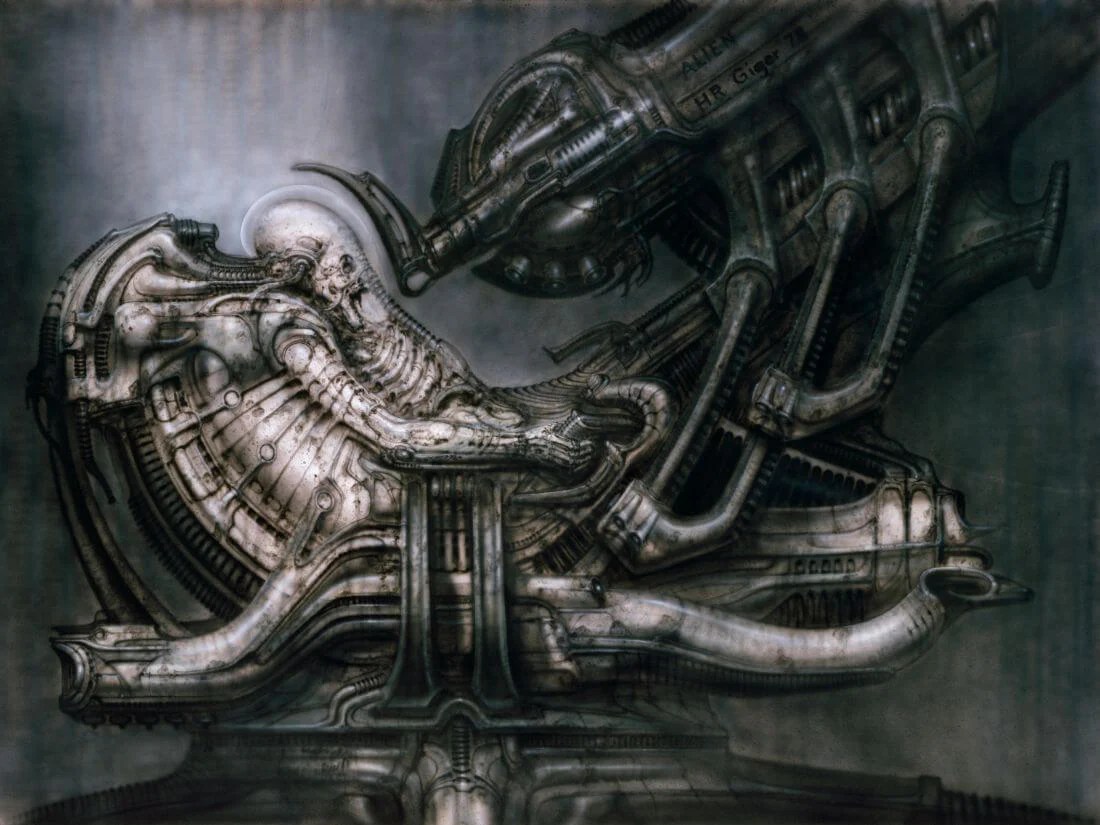

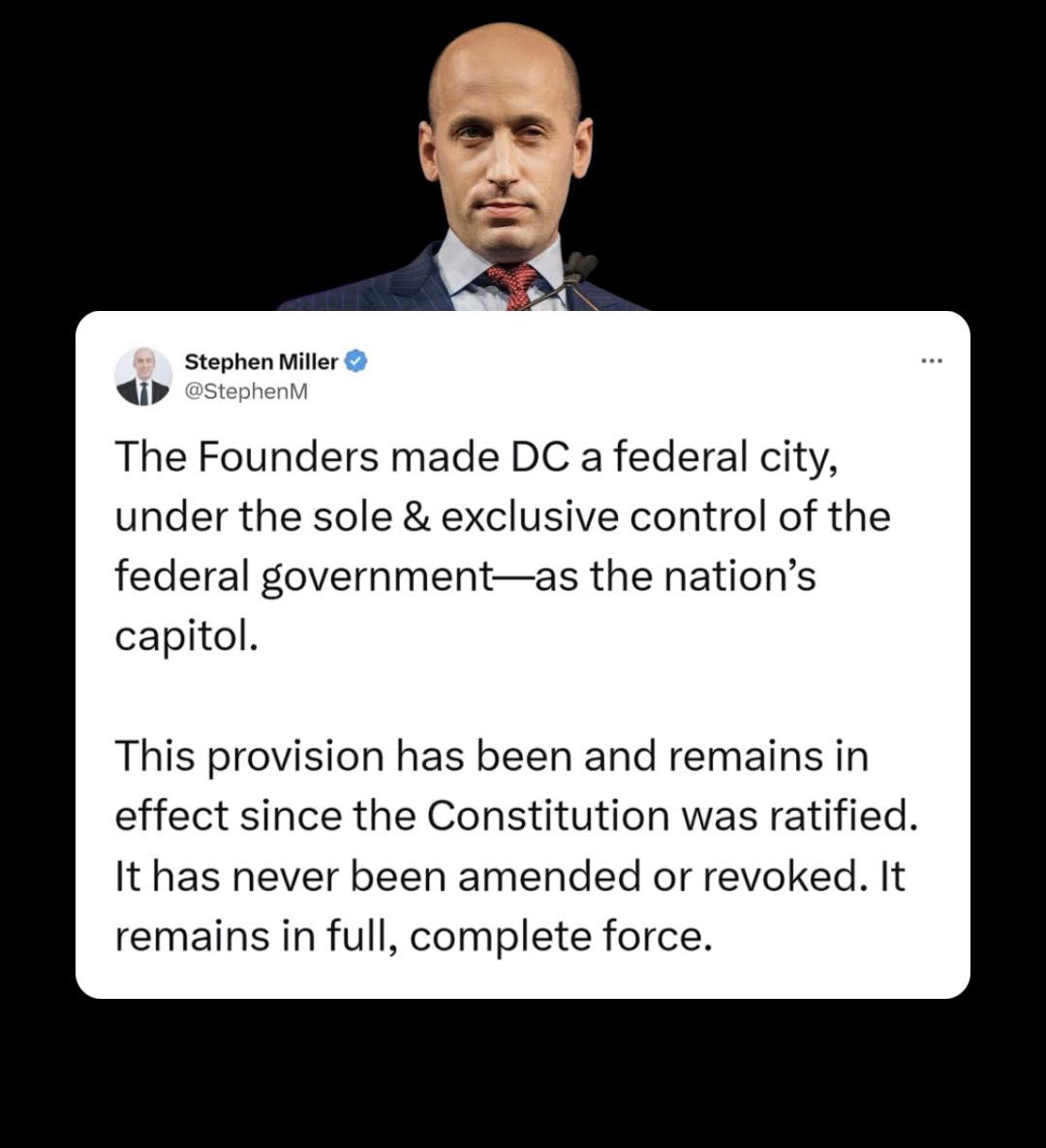
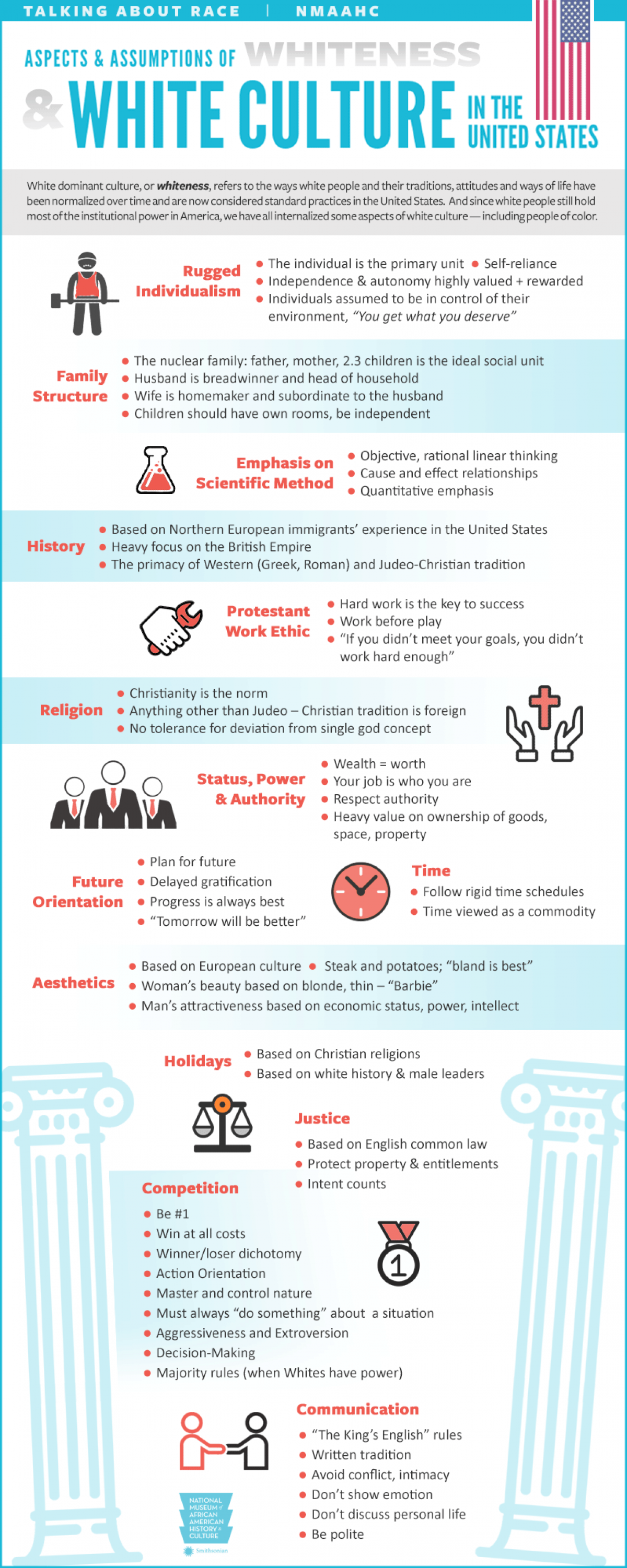
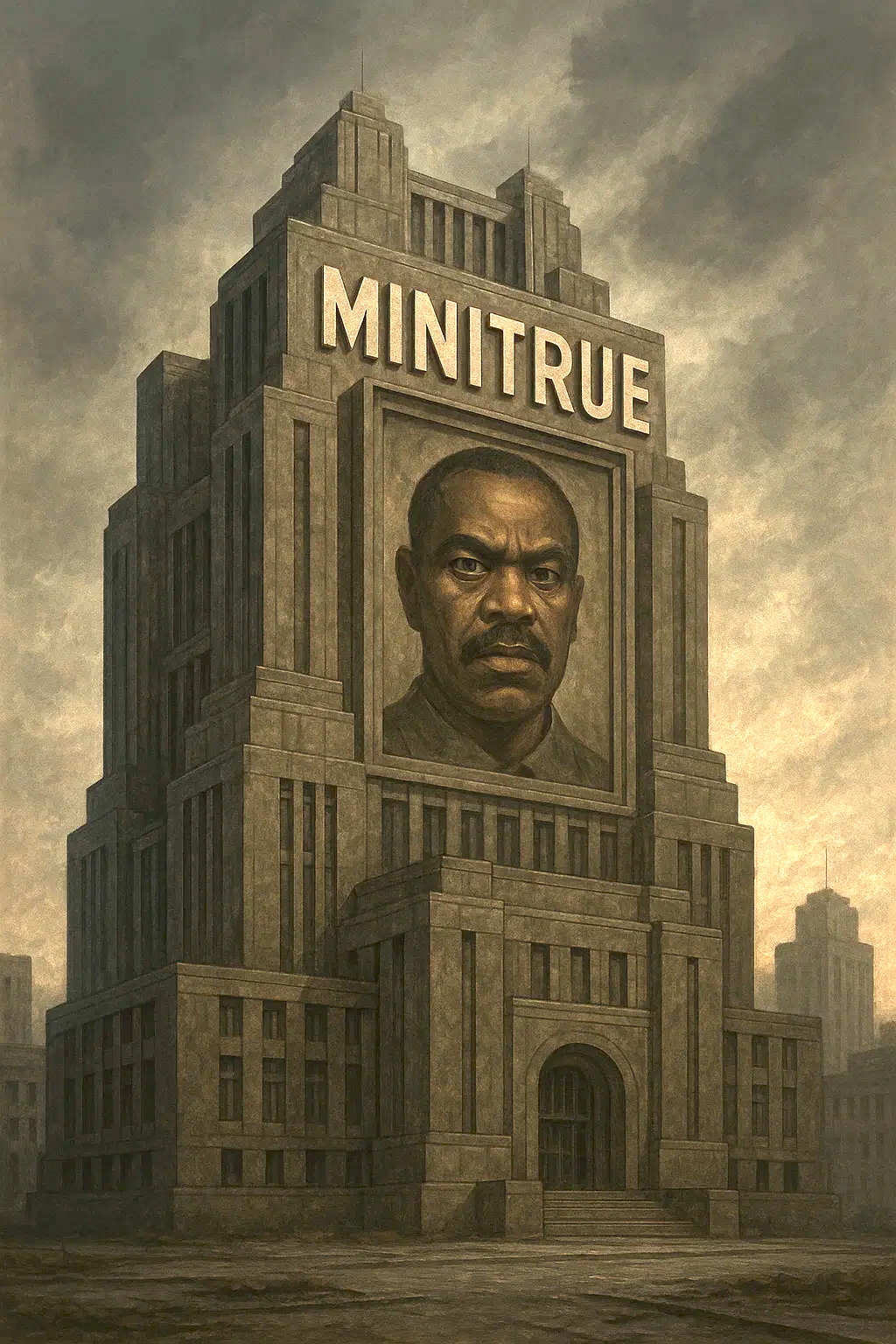







 freedom and reason