A Duty to Submit or the Right to Resist?

William Norman Grigg, writing for Information Liberation, has written a useful essay, titled “When the Right to Resist Becomes the ‘Duty to Submit.” He quotes Paul Chevigny’s words from a 1969 Yale Law Journal essay: “The right to resist unlawful arrest memorializes one of the principal elements in the heritage of the English revolution: the belief that the will to resist arbitrary authority in a reasonable way is valuable and ought not to be suppressed by the criminal law.” And so this must be true of the American revolution (if we may be allowed to call it that).

“The weight of authoritative precedent supports a right to repel an unlawful arrest with force,” according to the Alaska State Supreme Court in Terry Glenn Miller v State of Alaska. “This was the rule at common law.” The rule is “based on the proposition that everyone should be privileged to use reasonable force to prevent an unlawful invasion of his physical integrity and personal liberty.” Read the article to see how the court wormed its way back into a justification of unlawful police coercion. In this blog, I want to make some points about police powers and the sovereignty of the people who employ them.

There is a fundamental distinction to be drawn between power and authority. Power is ability to make people act in ways contrary to their will. Authority is legitimate power. In a monarchy, legitimacy comes from the divine right of kings. In a totalitarian state, legitimacy comes from the dictator and his cult of personality. In a free society, legitimacy flows from the consent of the governed who, through common law and democratic deliberation, express a willingness to submit to that authority when it accords with the law and meets their fundamental needs, which includes the preservation of their rights.

No upright citizen in a free society voluntarily gives up those rights or agrees to act in a manner contrary to the law. They are either forced to do so or they are confused about their rights, both conditions that indicate that society is become more or less unfree. It follows that, in a free society, every citizen has a right to resist an unlawful or wrongful order (just as we have the right to violate unjust rules and laws). Self defense, defense of the innocent, and resistance to and overthrow of tyranny and oppression are fundamental and nonnegotiable rights in a free society.

You do not have any legal or moral obligation to follow the commands of a police officer if you have done nothing wrong or if he is commanding you to do something wrong. Any state that would criminalize resistance—even violent resistance, to which every human being has a right—to an unlawful order is by definition a tyrannical state. The only reason to obey a police officer’s unlawful order is for personal safety and then only if following that order does not jeopardize the personal safety of others. However, it must be emphasized that obeying an unlawful order for personal safety is a personal choice, never an obligation. It may be prudent, but it is not obligatory.

Moreover, every citizen has the right to aid any other citizen who is being unlawfully detained and, especially, assaulted by the police. Indeed, citizens, if able, have an obligation to physically intervene in the case of an assault. If you are in a group of persons of sufficient number or if you are armed and you see a police officer assaulting another person, you are within the law to stop that assault—yes, even if it means using deadly force.

Americans must, if we are to be free, understand the meaning of this and start acting in a manner that asserts our rights. We are the law. The police work for us. We pay their salary. They are our servants. Their duty is to protect and serve the community, not detain, harass, and assault its members without cause. We cannot harass an officer who is harassing us. This is resistance, and resistance is not harassment. We cannot assault an officer who is assaulting us. Self-defense is not assault. A badge doesn’t give a police officer the right to go wherever he pleases or do whatever he wants.

The police need to acquire a healthy fear of the public so that they can have confidence in their actions only when those actions are in accordance with the law. The police need to work for and with us, not against us. To be sure, we have a long way to go to reign in the police state. Laws and prostitution and drugs and other so-called “public order crimes” need repealing. Such laws as disturbing the peace, disorderly conduct, and harassing a public servant must never be used as tactics to control populations, especially when those laws amount to contempt of cop charges. We should forbid deception and lying by the police and prosecutors. Entrapment should be disallowed.

There should be no felony associated with touching a police officer or breathing on an officer. If police officers don’t want to be touched or breathed upon, then they shouldn’t get in the faces of citizens. If a police officer puts his hands on you and he has no reason to, it cannot be a felony when you physically resist what is by definition assault. The very notion that citizens do not have a right to resist physical force when it is wrongful is the essence of tyranny.

To win back our freedoms—and more fully realize them, since we have never truly been optimally free and cannot be so in the current epoch—we need to critically examine ourselves. I have watched too many videos of police perpetrating wrongful acts—unlawful detention, arrest, assault—with scores of people standing around not doing anything about it.

In 2007, at the University of Florida, Andrew Meyer was violently arrested for disturbing the police and resisting arrest. None among those assembled came to his defense.

Why did the crowd stand by while Andrew Meyer was being unlawfully arrested for asking John Kerry uncomfortable questions at an event at the University of Florida? They watched—only a few verbally protested—while he was being tortured in front of them, repeatedly dry tased. Many in the audience shamefully applauded the police action.

Recently I showed a clip of a naked man at an outdoor concert being violently assaulted by the police, repeatedly tased for refusing to put on his clothes. A human being was tortured in front a crowd hundreds strong merely because he wanted to wear the suit he was born with. Some in the crowd cried “shame,” but no one in the crowd acted to stop it. Why?

I recently posted a video of men and women being violently arrested at the Jefferson Memorial for the crime of “dancing.” This occurred in front of a number of witnesses. None of the bystanders organized a group to intervene and stop the police. How come?

Michael Foucault, in the preface to Gilles Deleuze’s Anti-Oedipus, suggests that Deleuze’s book might be otherwise titled “Introduction to the Non-Fascist Life.” Foucault condemns “the fascism in us all, in our heads and in our everyday behavior, the fascism that causes us to love power, to desire the very thing that dominates and exploit us.”

We sure do love power in America, don’t we? We heroize the police and the soldier. Even while they are off protecting the imperial interests of the transnational corporation, we thank them for defending our freedoms. Our freedoms? We see the capitalist exploiter as virtuous—just as the slave society sees the plantation owner as noble.

Psychologically locked into the hierarchical mentality of class, gender, and race. we are alienated from our own power—the power to make history and the law. We think that it is only natural that the law comes from the state and that the state decides what is lawful. We have come to see the republic as previous generations saw the monarchy. But in a free and democratic society, the law comes from the people. We decide what is lawful.

Here is exposed the fundamental problem of our epoch: in a capitalist society, the state is not legitimate because it does cannot represent us. It is an instrument of the ruling class—the capitalist class—and that class wields the state and law as a weapon to oppress our right, the right to determine history for our needs.

Walter Benjamin, in his essay, “Art in the Age of Mechanical Reproduction,” puts the matter superbly: “The growing proletarianization of modern man and the increasing formation of masses are two aspects of the same process. Fascism attempts to organize the newly created proletarian masses without affecting the property structure which the masses strive to eliminate. Fascism sees its salvation in giving these masses not their right, but instead a chance to express themselves. The masses have a right to change property relations; Fascism seeks to give them an expression while preserving property.”

Liberal capitalism can give way to fascism because the inequality generated by exploitation destabilizes liberal legal and intellectual structures. These are ultimately incapable of legitimating the oppressive rule of the capitalist class. Class society is not a free society and eventually enough people come to realize this and demand something different.

Consent breaks down because the people understand the problem and withdraw their consent. Then the torn velvet glove of consensual control comes off and the iron fist of coercive force comes out. Hence the police violence perpetrated on the Occupy Wall Street protesters. At this point it is no longer authority—it has lost its legitimacy—but naked, bare-fisted power.

Benjamin understands the moment perfectly. “All efforts to render politics aesthetic culminate in one thing: war. War and war only can set a goal for mass movements on the largest scale while respecting the traditional property system. This is the political formula for the situation. The technological formula may be stated as follows: Only war makes it possible to mobilize all of today’s technical resources while maintaining the property system.”

So we have our wars: the war on communism, the war on terrorism, the war on drugs, the war on poverty. We have our carceral controls, our gulags—2.4 million strong—and more than eight million with criminal labels under some form of correctional control, with millions more stigmatized, hundreds of thousands disenfranchised. We have our therapeutic controls (remember, if you aren’t criminal, then you’re crazy).

And in our wars and control systems (their wars, their control systems), the police and the soldiers and the doctors must be our heroes. Speak no ill of them! They protect us from danger and disease! No, they protect the ruling class from the dangerous classes—you and me, the working people and the poor and the movements against capitalism and imperialism.

Guantánamo Nightmare

The New York Times carried an op-ed today with the provocative title, “My Guantanamo Nightmare.” The author of the editorial is Lakhdar Boumediene, who was locked away at Guantánamo Bay for seven years, his family thrown into poverty, his world forever changed.

Guantánamo detainee Lakhdar Boumediene

Let me be blunt. George W. Bush, Dick Cheney, Donald Rumsfeld and the rest of them should be arrested and tried for the crimes that were perpetrated against Boumediene and the many others who suffered or are suffering his fate (or worse). It is hard to imagine that a fair trial would find Bush and nest of war criminals not guilty of these most serious offenses—false imprisonment, torture, destruction of livelihood, and, in some cases, physical injury and death. These are the actions of sociopaths, and only a successful plea of not guilty by reason of insanity would justify sending them anywhere else but prison for their natural lives. I don’t think many of my progressive friends will disagree with me about that. If they do, then I wonder about their commitment to rule of law and, not to be insulting, but I have to say it: basic moral decency.

Second, if Bush and associates should be punished for the crime of Guantánamo Bay, then what shall we do with Barack Obama for keeping Guantánamo Bay open? Here’s where progressives find their double standard. But human beings are there still, enduring all the horrors that the Bush Administration visited upon Boumediene and his fellow detainees. If Guantánamo Bay is a reason for prosecuting Bush and associates—and I know it is because I can still hear the din of progressives calling for his impeachment over the matter—then why are progressives silent about Obama? It cannot be that it is only wrong to falsely imprison and torture human beings when Republicans do it. If Guantánamo Bay exists whether a Republican or a Democrat is the Commander-in-Chief, then how can a person vote for either party’s nominee?

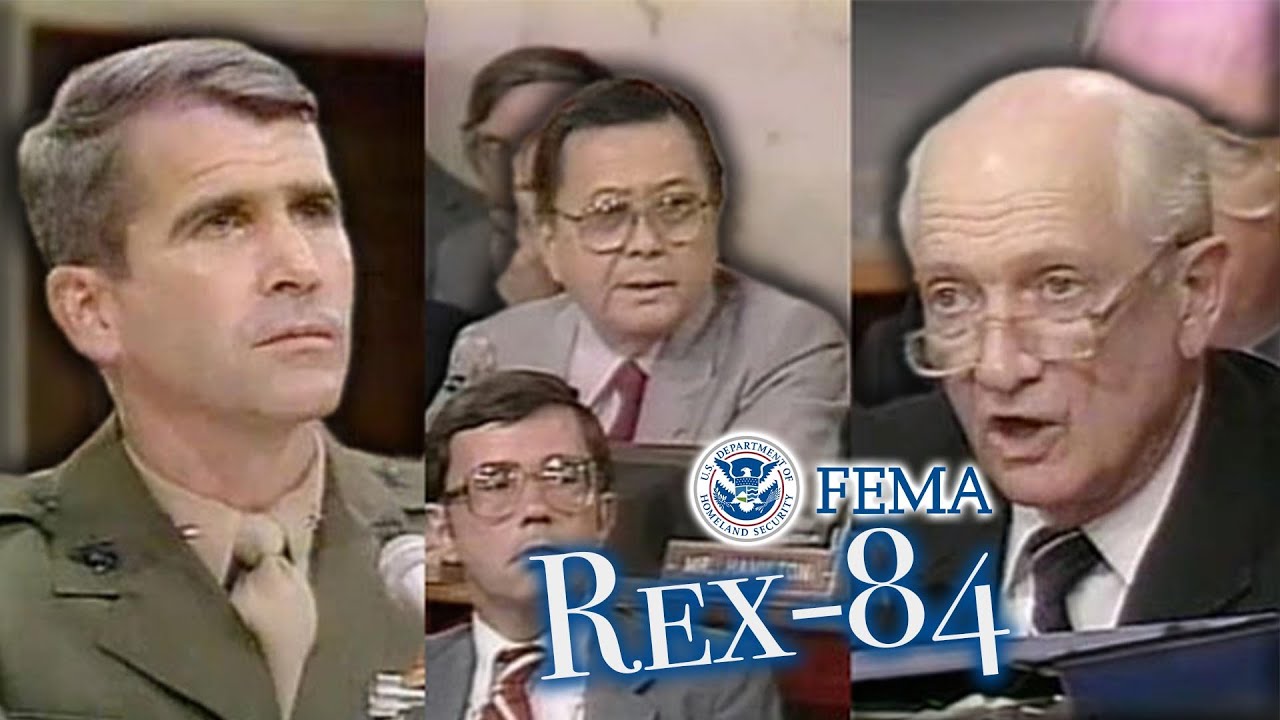
Rex 48

From the transcripts from the Iran-Contra Hearings in 1987. Dialog between Congressman Jack Brooks, Oliver North’s attorney, Brendan Sullivan, and Senator Daniel Inouye, the Democratic Chair of the joint Senate-House Committee:

Brooks: Colonel North, in your work at the NSC were you not assigned, at one time, to work on plans for the continuity of government in the event of a major disaster?

Sullivan [agitated]: Mr. Chairman?

Inouye [sternly]: I believe that question touches upon a highly sensitive and classified area so may I request that you not touch upon that?

Brooks: I was particularly concerned, Mr. Chairman, because I read in Miami papers, and several others, that there had been a plan developed, by that same agency, a contingency plan in the event of emergency, that would suspend the American constitution. And I was deeply concerned about it and wondered if that was an area in which he had worked. I believe that it was and I wanted to get his confirmation.

Inouye [more sternly]: May I most respectfully request that that matter not be touched upon at this stage. If we wish to get into this, I’m certain arrangements can be made for an executive session.

This dialog concerns Rex 84 (Readiness Exercise 1984), a detailed plan, developed by Oliver North, deputy director for political-military affairs of the NSC, Louis Giuffrida, head of FEMA, and vice president George H.W. Bush to declare martial law, suspend the United States Constitution, put military commanders in charge of state and local governments, and detain large numbers of citizens deemed threats to national security. All that would be required for this to be enacted is for the US president to declare a “State of Domestic National Emergency.” Listed among activities that could trigger such an emergency is widespread opposition to a US military invasion abroad.

North co-authored the report with John Brinkerhoff, deputy director of FEMA’s national preparedness program. The plan is based on a Army War College template published in 1970 by FEMA chief Louis Giuffrida. The original plan proposed detaining 21 million “American Negroes” in the event that there was a “black militant uprising.”

You can watch the exchange here:

Private Property is not a Monolithic Thing: The Problem of Public Accommodations

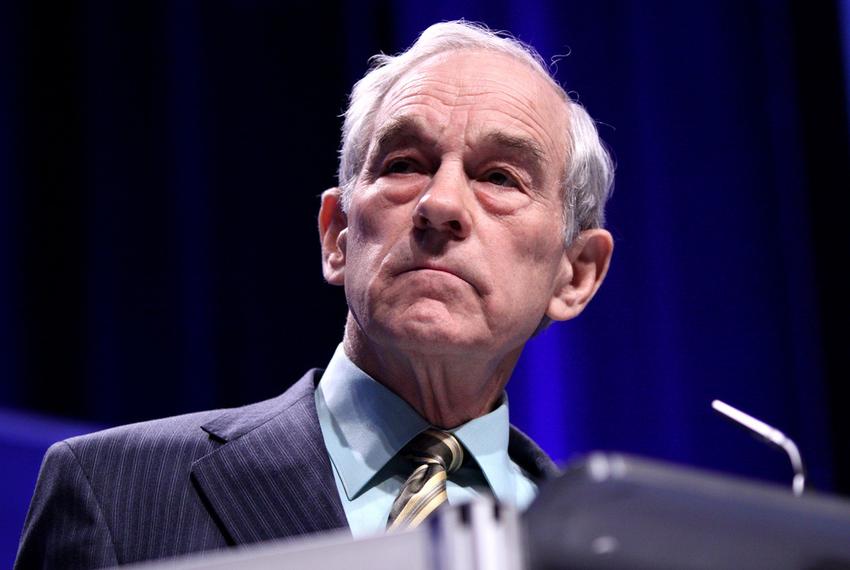
A business is a special class of private property, yet Ron Paul and other self-styled “libertarians” speak of private property as if it were one all-inclusive class of things operating under the same set of rules. In a contentious appearance on the Larry O’Donnell show, Paul claims that forcing a white-only restaurant to serve black customers, which is authorized under Title II of the 1964 Civil Rights Acts, hyperbolically characterized as the government “taking over private property,” is like “taking over the bedroom.”

Ron Paul

The analogy is absurd. I don’t need a business or any other license or permit to sell my car to the teenager down the block. I just need a title. I can sell that car to anybody I choose. If I want to sell my car to a white person I will. If I don’t want to let black people into my home, I don’t have to. However, if I run a business, I fall under a different set of rules because it’s a different type of property. It’s capital. I must obtain local, state, and, sometimes, even federal and professional licenses and permits. Additionally, I must obtain a state tax license, labor department registration, employer identification number, etc.

If my home is not a public accommodation, then I decide whether blacks can sleep in it. If my home becomes a public accommodation, then I don’t have that choice. This is because it has become a business.

Here’s the essential difference: A person or group of persons who want to go into business must seek the state’s blessing. The state grants a license—a privilege—to a business thereby legitimizing its operation and retaining the express power to regulate that business. (Businesses that decide to operate without the state privilege become part of the black market. Yet when I sell my car, I do not become part of the illegal market.)

When the term “right” is appealed to in the context of the business-state relation, the term is assumed to be a condition legally conferred, not an inherent or natural right. This is because only individuals have inherent rights—and the right to operate a business that harms persons’ civil liberties is not among them. To be sure, businesses have protections in the law, but none of these are allowed in principle to exclude and harm without reason (i.e. rational secular justification). I say in principle because this often doesn’t always work in practice due to the power of capital in influencing government action or inaction (see, for example, mountain top removal). However, just because the state doesn’t act consistently on principle doesn’t mean the principle isn’t well established.

The state has always had the authority to compel establishments serving the public to open their services to everybody. The Civil Rights Act of 1964 confirmed this by providing the machinery to force state governments to recognize the unalienable rights of US citizens—life, liberty, and the pursuit happiness, which are self-evidently compromised by the racist “separate but equal” doctrine—by banning laws permitting or requiring segregation.

Paul and his ilk make two errors. First, they fallaciously separate private and public sectors, as if a public accommodation can refuse to serve black people without that refusal enjoying or suffering either positive or negative sanction by the state. There is no neutral state position relative to business in the concrete—this is to say, any state that permits racial discrimination in public accommodations acts in a racially discriminatory fashion. It is basic to common legal understanding that laws that either require or permit establishments to discriminate against certain group members are themselves discriminatory and must be struck down in order to restore the inherent right. Therefore, discrimination in labor and consumer markets had to fall along with policies and acts of state discrimination; there is no disentangling the spheres; they rise or fall together.

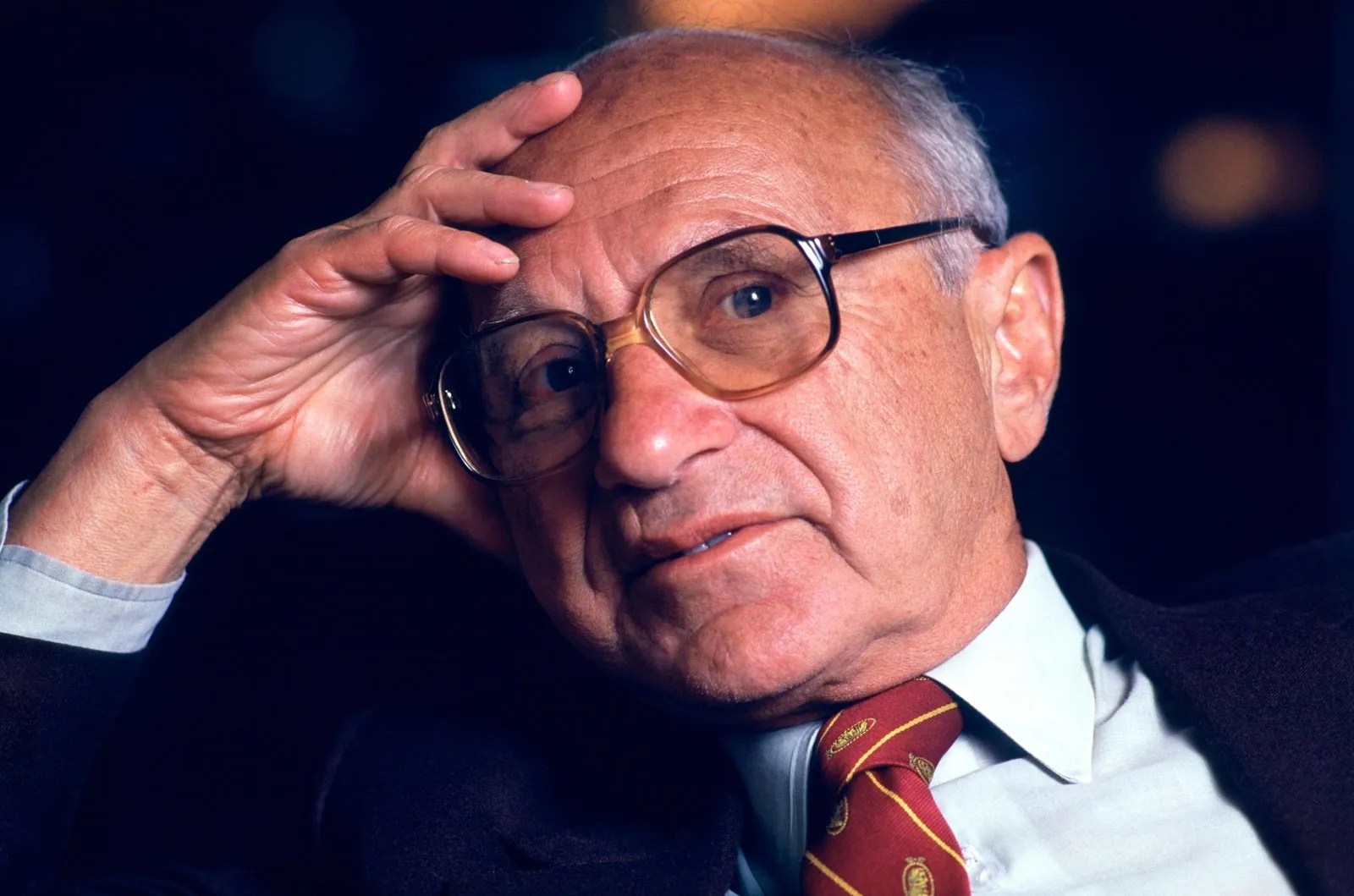
Milton Friedman

Neoclassical liberal thought is shot through with this error of reification. See the works of Milton Friedman or Friedrich Hayek. So busy building ships in bottles were they that it’s comical to watch how confused they could become when trying to talk about the concrete character of actual political economic systems. Friedman looked particularly foolish on a regular basis, since he was keen on getting in front of audiences and challenging college students to match wits with him.

Libertarians (I am talking about true libertarians now), on the other hand, don’t commit the fallacy of misplaced concreteness because they consistently operate on the principle of personal sovereignty. That’s what makes it an intrinsically left-wing philosophy and practice: the aim to dismantle all illegitimate hierarchy. Not so with so called “libertarians” like Ron Paul. Paul desires to keep the capitalist hierarchy firmly in place and more: entrench the hierarchy even further by weakening the democratic machinery (the positive freedom side) of the republic.

Second (and this isn’t so much error as it is propaganda), neoclassical liberals want to flip the universe by making the alleged right of business unalienable while characterizing the rights of individuals as apparent privileges. In doing so, they explicitly put property before people; they are essentially arguing that having capital gives one person the right to oppress other persons, and if that person is white, then he is free to oppress black persons. In other words, they use the rhetoric of private property to justify apartheid. I do wish they would finally admit that the inevitable conclusion of their argument is that de jure race segregation is a legitimate outcome of capitalist property relations.

Finally, concerning Paul’s mantra of federalism and strict constructionism, given that the federal government is, according to the Constitution, the supreme law of the land (readers are familiar with the supremacy clause, no?), and the obvious fact that states do not have rights but powers (only individual persons have rights), Ron Paul supporters don’t have a leg to stand on. The bottom line: Paul’s rhetoric is subterfuge in defense of white nationalism. Maybe some Ron Paul supporters don’t recognize that. But it is what it is.

Junior Achievement. Relevant Bits of the Letter I Wrote the Principal

I have reviewed the materials and, as expected, the design of the Junior Achievement program is intended to obscure the true character of capitalist relations in quite profound ways and to the detriment of cognitive and moral development of our children. Corporate propaganda is designed by very clever ideologues to build in at an early age tacit acceptance of an ecologically unsustainable and immoral system of economic exploitation and social injustice. …

In “Sweet ‘O’ Donut,” the lesson on unit versus assembly-line production … there is zero discussion about the consequences of the Fordist and Taylorist model of industrial efficiency being taught to the kids. There are easy-to-grasp consequences of rationalizing production in this way in a capitalist economy, many of them detrimental to the interests of workers, which is the destiny of nearly every child in the public school system. Allow me to explain.

The motive behind the rationalization of production is raising the value of production, or what modern economics calls “value added,” generated during each worker hour, which, under capitalism, means a larger share of (unearned) income for the owners of the means of production, but not more wages for the workers, even though the workers add all of the value generated during their part of production. Put another way, the factory workers produce more commodities in a given unit of time in order to enrich the factory owners who do no productive work. This is the source of inequality in capitalist societies.

I will (briefly) work out this process mathematically to show you how it works. According to the 2006 Survey of Manufactures, conducted by the US Census Bureau, we see that industrial workers (i.e. workers in manufacturing) were compensated for their labor at an hourly rate of $18.33 (this amount is what we call variable capital).  We also see that the hourly rate of value added during production was $122.73. Part of this value added goes to pay for the $18.33 paid to the worker per hour. What happens to the rest of it, to the $104.40, what we call surplus value? It goes to the capitalist.

Let me make this point more dramatically, because this is the essence of capitalist exploitation. If we divide $104.40 (the surplus value) by $18.33 (the variable capital, or wages) we find that the worker produced 5.69 times the amount of value he received in wages in 2006. (Note: the raw materials, machines, etc, what we call constant capital, contribute no value to production, as they are consumed in the production process. These costs occur before the added value component. Here we are looking only at the variable capital input, since this is the sole source of profit in a capitalist market.)

The more productive the process can be made, the greater the surplus value for the capitalist. Let’s look at the 1996 numbers. Value added by manufacture per production worker’s hour was $65.14. Workers received before taxes an average of $12.40 per hour. Using the same formula as above, we find that the worker produced 4.25 times the value she received in wages.  We can see by this calculation that the rate of exploitation increased over the decade in question. Why? Because of increasing productivity with no benefit for the direct producers, precisely what “Sweet ‘O’ Donuts” aims to sell to students as a benefit with no negative consequences. The rising rate of exploitation was the source of the rising degree of inequality and concentration of wealth that contributed directly to the economic collapse in 2008.

Beyond economic calamity, the detrimental consequences are many. The worker’s income declines relative to the capitalist’s (more sharply if she is not a member of a collective bargaining unit). The worker is deskilled through task specialization. Her understanding of the production process is diminished. In the example, rather than each worker knowing how to make donuts, each worker only knows how to make one aspect of the Sweet “O” Donuts donuts. Thus their capacity to think and the extent of their knowledge of production is reduced. In the exercise [the student] was meant to learn the value of this by pitting skilled labor against robotized deskilled labor replete with inspection (“quality control”). This was not in his interests as a future worker or in becoming a complete moral person.

As noted, increasing the productivity of workers – which could, in a democratic economic model, be used to increase wages and benefits and shorten the work week – is the source of unemployment under capitalism, as fewer workers are needed for equivalent production output. Aided by machines, the number of workers can be reduced even more, to the point where many of the workers[/students] … could become unemployed.

I don’t see anywhere in the materials any criticism of assembly-line production. A curriculum could be derived for George Ritzer’s The McDonaldization of Society, in which the detrimental effects of Fordism and Taylorism on society are rigorously documented and analyzed in a clear and concise way. He shows that rationalizing production in these ways diminishes social interaction and alienates workers, deskills them, causes repetitive motion injury, heightens work related stress (as clock time comes to dominate the worker’s daily routine), raises the level of structural unemployment, and increases inequality.

In this and other exercises, the capitalist is never mentioned. For example, in the lesson on government, the children are “paid” five dollars for their productive efforts. The money is said to come from the sale of Sweet “O” Donuts products. Yet the owner of the company is never identified. Nor is profit – or more importantly the source of profit – ever mentioned. It is as if all the money generated by the sale of the commodities is distributed equally among the students. On the contrary, under capitalism the value added by labor is realized as profit in the market and banked by the capitalist, as I demonstrated above. The wages are advanced along with the costs of capital, i.e. materials, machines, etc., all of which were, crucially, produced by previous labor while capitalists profited at every stage.

A realistic and therefore more useful classroom exercise would have the Junior Achievement facilitator/volunteer posing as the capitalist sitting at a table with a large pile of the play money giving orders while the students posing as workers receive but a fraction of the income generated by their labor in exchange for making more donuts. It would be explained to them that they have to sell their labor (i.e. rent themselves) to the Junior Achievement facilitator because they do not themselves collectively own the means of production. It would be explained that the capitalist not only lives off their work, but lives in a much bigger house, eats more nutritious food, wears nicer clothes, receives better health care, and has more leisure time because of the work the students/workers are performing. A classroom could do a similar demonstration of slavery in order to drive home the point of the immorality of such systems.

Of course I recognize that, while it is permissible to condemn slavery in contemporary U.S. society, it is not permissible to make the same condemnation about capitalism. At the same, it wasn’t permissible to make that point about slavery back in the days when slavery prevailed. Indeed, back then, a lot of people didn’t see the problem of slavery at all.  They were taught in school that it was an appropriate way to make money.

The exercise I have been detailing could be combined with the assembly-line production lesson to show how capitalists drive other (smaller) capitalists out of business, displace workers through rationalization, and accumulate every larger piles of money, while the students continue working or work not at all, as many will have lost their jobs. Then some of the students assigned to be government workers, which are in the Junior Achievement materials (see “The Role of Government”) portrayed as police officers (whose real world function is to maintain the unjust status quo in property relations, a role that is never explored in the lesson) could pretend to be welfare case workers who will manage the poor and unemployed students – that is, the victims of the actual process of capitalism. I imagine that parents of students of Aldo Leopold would be represented by this exercise. Are not the poor and unemployed members of the community, disproportionately minority and female, important enough to be represented in these exercises? Shouldn’t the link be made between wealth and poverty? After all, we can’t all be wealthy in a capitalist society. In fact, most of us can’t be. The inherent logic of capitalist production precludes it. A simple classroom exercise illustrating this could be derived from Jeffery Reiman’s classic The Rich Get Richer and the Poor Get Prison.

Another example of the function of the curriculum to obscure reality is found in the lesson on money, “Money Moves.” The children are instructed to sit in a circle and pass a quarter to each other, each spending it to buy something they need to keep business or other activity going. This is supposed to demonstrate the circulation of money. But this is not what happens in a capitalist economy. Under capitalism, money is invested and commodities are sold for more money than the initial investment. What is being described in the exercise is simple commodity circulation (and even here is a mystifying oversimplification), something that happens in pre-capitalist societies where money is merely a symbolic unit of exchange. In fact, make the transfer of stuff in the example direct without money and you have a barter system. Capitalism is impossible under the model the students are demonstrating here. It manufactures the illusion that nobody is benefiting at anybody else’s expense. It avoids having to explain the source of profit.

Now, if the objection be made that what I have written is over the heads of students, I would counter that it is easy enough to create simple models simulating the real world experience of capitalism (I suggested two). In fact, simply setting up a simulation where the Junior Achievement facilitator ends up with a big pile of money at the end of exercise, while students get far less money and are dispossessed and displaced by efficiency regimes, and then asking students if they think that is fair should suffice to make the point. If not, drawing an analogy to slavery would. Despite how odd it sounds to hear such an analogy, it is true that, while capitalism is a different mode of exploitation, capitalism is still an exploitative system, and in fact operates on the same profit-making principle as did chattel slavery in the antebellum southern United States.

To be sure, teaching an alternative curriculum would be a subversive and democratic act that would likely bring an outcry from the business community who would besiege the school board with complaints, organize astroturf letter writing campaigns to smear the teachers, and marshal the power of the corporate media to make public education look anti-business. This despite the fact that it would be to the benefit of nearly every family associated with Aldo Leopold. Then why is it to be accepted as normal and unproblematic for Junior Achievement’s “Our Community” to be taught in schools? Herein resides the tacit and undeserved legitimacy of the corporate capitalist worldview over against the interests of the majority, namely the working class. As one of the most influential of all social scientists once observed, “The ruling ideas of any age are the ideas of the ruling class.”

Which brings me to my final point: if you feel you can’t allow teachers and students to speak truth to power at [the school in question], then why allow any economic agenda into the classroom? If the other side is too complicated, too troubling, then why permit propagandists to confuse children about the world they live in? When you think about it, given its detachment from the operation of the real world, “Our Community” possesses a religious quality. Junior Achievement is dogma, not enlightenment. It takes capitalism and elevates it to a virtue and then systematically masks the history and reality of the system in order to brainwash children into accepting a system that exploits them and destroys the environment. As such, it is out of place in a public educational setting and, really, not befitting a democratic society.

The Truth the Left Must Grasp About Obama

Obama isn’t giving ground. He isn’t caving. He isn’t timid, confused, or unsure of himself. He simply isn’t one of us. If he wins re-election, he will become even more of what he is right now and has been for years: a neoliberal globalist. His campaign was a sham. (The great untold story of our age is how millions of left and left of center voters allowed themselves to be so completely bamboozled by an obvious Madison Avenue-style campaign.) Obama’s election sucked much of the energy out of anti-corporate/anti-war movement. The election of Obama to office was a spectacular propaganda achievement by the corporations that own the country.

President Barack Obama

What the left must now understand (what they should have understood all along) is that Obama is a key player in a structural adjustment program being imposed on the United States by finance capital. Obama had to be the bringer of the austerity phase of the project because the ruling class knew progressives wouldn’t go for it if McCain were president. If it were McCain cutting Medicare, expanding military presence in Central Asia, Middle East, and Africa (imperialism), extending the PATRIOT Act, as well as George Bush’s tax cuts, organizing assassination squads, undermining Social Security, etc., progressives would be howling. But because it’s Obama, they instead rationalize, apologize, make excuses, and blame Republicans.

Such rationalization as, “We’re stuck with him,” would sound ridiculous to progressives if it were McCain doing all the things Obama is doing. We would instead hear: “We have to get this man out of office.” But it’s just as ridiculous to say shrug off the situation with Obama. In fact, that he commands the obedience of so many citizens makes him worse than McCain. The Obama years will be looked back upon as among the worst in the rollback of democracy gained during the 20th century. The United States is now being fully re-articulated into the global capitalist economy, but this time with a different locus of power: a transnational ruling elite. Both parties are servants of the project. It’s time to withdraw consent from the two-party system. They win. We lose.

The Appeal to Human Nature

There is an argument that hierarchy and inequality are a reflection of human nature, not the result of unjust social arrangements. 

If we are to address this question of a human nature objectively, then we will have to agree that determining our nature requires looking at the history and prehistory of the species scientifically and historically. As a distinct species, Homo sapiens has been around, in its modern form, for at least 200,000 years. The species originated in Africa and migrated outward, reaching nearly every part of the world by roughly 25-35 thousand years before present. Some 6-10 thousand years ago some groups of Homo sapiens began living in large-scale social systems in the Indus, Nile, Tigris-Euphrates, and Yangtze River valleys. Meanwhile, most members of the species continued to live outside the city-state environment for thousands of more years, finally being incorporated (with a few notable exceptions) into modern world-system by the mid-twentieth century.

It is with the emergence of the city-states that we see the regular appearance of the major forms of social segmentation, i.e. class, gender, and ethnic divisions, unjust arrangements which, over time, required, among other things, an ideology claiming that selfishness is part of human nature, which in turn, it was said, explained such things as exploitation, genocide, property, war, and so on (as if these are simply the natural conditions of human existence). However, before the city-state and outside it, human beings for the most part lived in democratic egalitarian social orders, communities based on cooperation, sharing, and compassion. In essence, these societies were based on altruistic relations and behaviors, not on selfish ones.

Let’s do the math: Taking the more generous number of 10,000 years ago to establish the emergence of the selfish conception of human nature, and the conservative number of 200,000 years for the existence of the species (it’s probably longer, and moreover we have earlier hominids displaying symbolic culture who also enjoyed communal existence going back more than a million years), we find, measured temporally, that 95 percent of human beings lived in communist and socialist societies in which either everybody owned everything in common or those who worked kept what they earned for their families (which were extended and essentially covered, through larger familial networks, the entire community). In other words, at best, only 5 percent of human beings have lived in the types of social orders that the advocates of selfishness (and exploitation and inequality) seek to legitimize with their appeal to human nature.

Judging the matter using archeological, anthropological, historical, and sociological facts and analyses, we would have to conclude, from a human nature standpoint, that class-based societies are contrary to human nature, not a reflection of it.

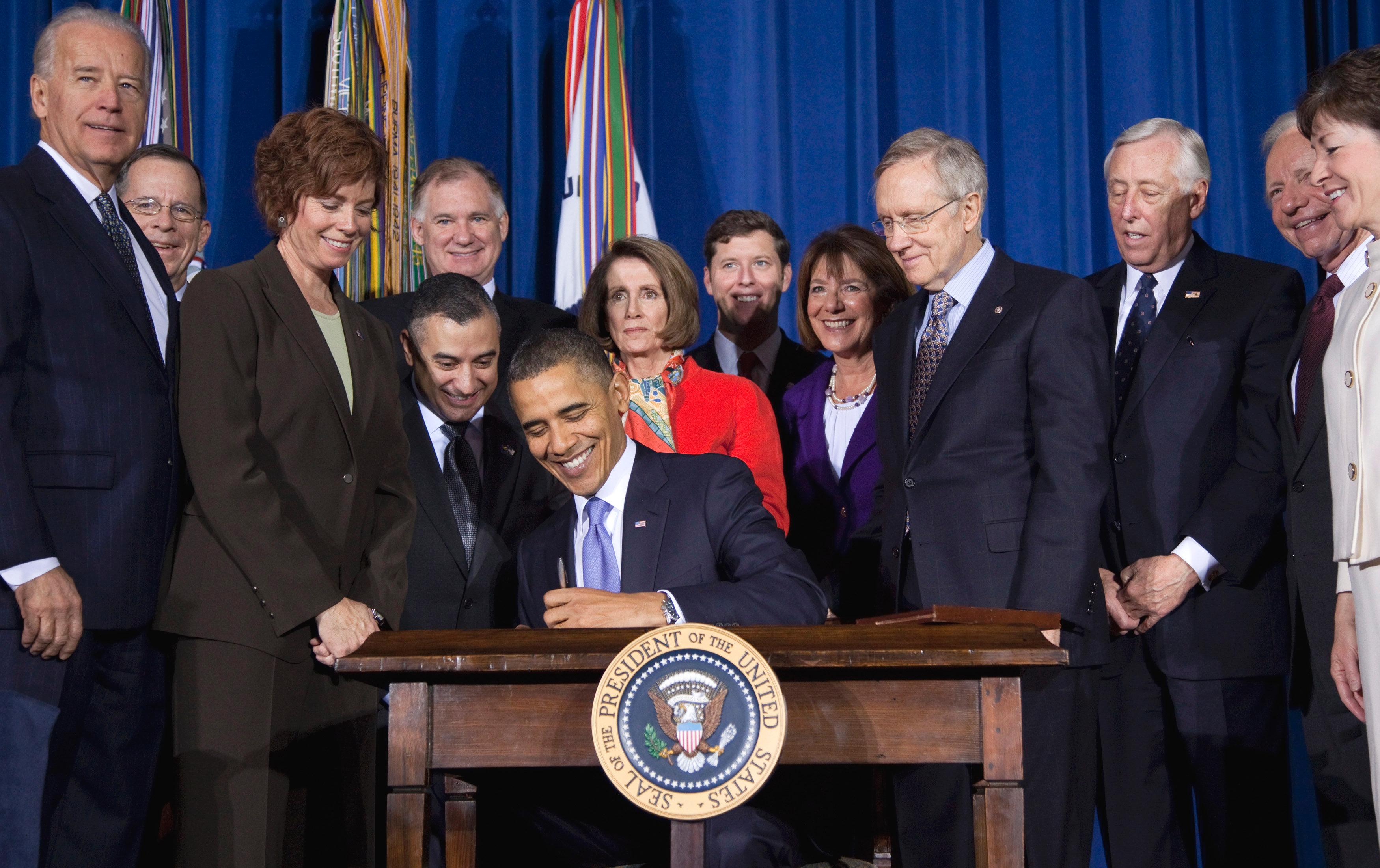
Don’t be Naive about Obama’s Repeal of “Don’t Ask, Don’t Tell”

The repeal of “Don’t ask, don’t tell,” or DADT, is being hailed as a signature accomplishment by Barack Obama, something akin to Truman desegregating the military. It certainly is a great moment for the gay and lesbian community and those who support them. Any time a form of discrimination is knocked down, those who are discriminated against and those of us who believe in equality win. I have been pushing the repeal of DADT since it was put into effect under Clinton. I’m elated to see it fall (albeit I am concerned about its contingent wording in the bill Obama will sign).

But let’s be honest. The homosexual community and those who support gay and lesbian rights are responsible for this victory. We must not give all or most of the credit to elites when it is the people who did the heavy lifting. The black community and its supporters appreciated Lyndon Johnson’s support of the Civil Rights Act of 1964. It was a brave thing to do and ultimately destructive to the Democratic Party. But it was the civil right movement, led by such moral leaders as Martin Luther King, Jr., who deserve the credit. The gay and lesbian community and its supporters have been dedicated to overthrowing this discriminatory policy, and this victory is for the most part theirs.

Moreover, we should never give too much credit to authorities who stop perpetuating an immoral practice. Overturning segregation and, now heterosexism (though not entirely), are morally necessary acts, not favors. It’s about realizing a right, not enjoying a privilege. To be sure, Lincoln freed most slaves; but we should not treat the Emancipation Proclamation as a gift. A representative of the ruling class finally did the right thing (and this was only because he was forced to by circumstance). Therefore, we should ask ourselves exactly why Obama is signing this bill. Is there an ulterior motive underpinning Obama’s support for DADT? He is, after all, opposed to gay marriage.

Let’s be honest with ourselves. Obama would not support the repeal if the military were not encouraging him to do so. The country is now spending half of every tax dollar on the war machine. The military needs good soldiers. But the military’s discriminatory policy has made it difficult to recruit on college campuses, many of which bar groups that discriminate from using their facilities or occupying their grounds. Ending DADT makes the main justification for barring recruiters vanish. The military wants young bodies. Recruiters have to go where potential recruits are. Recruiters already work the economically disadvantaged neighborhoods. Opening up colleges and universities greatly expands the hunting grounds.

Furthermore, repealing DADT is politically useful to Obama. It gives Obama cover for the work he does for the power elite—the corporate bailouts, the wars, the surveillance and torture regimes, and a myriad of other things beneficial to the rich and detrimental to the working class and the poor. When Obama’s loyalty to progressive democratic politics is questioned (and his disloyalty to those further left confirmed), the administration and corporate media will simply trot out the repeal of DADT and say, “Well, if he is such a right winger, then why did he end DADT?”

There is little cost to Obama with DADT’s repeal. Conservatives aren’t going to vote for him anyway, and independents are ambivalent about gays in the military. The single-issue progressive Democrat is positively ecstatic over this action. In a fine display of magical thinking; it confirms his faith in his leader. In the final analysis, this repeal changes nothing about the essential truth of Obama. The president is still delivering the goods for the rich and powerful.

Don’t be naive. He didn’t do this for gays and lesbians or because he opposes inequality and discrimination. As Obama demonstrated during the campaign with Jeremiah Wright and Trinity United, he is prepared to throw under the bus any constituency in the progressive community that gets in the way of meeting the demands of the ruling class. Obama has demonstrated time and time again as president that his behavior during the campaign is standard operating procedure. Where’s card check? Where’s the public option? Where’s the repeal of the Bush tax cuts for the wealthy? Why aren’t our troops home from Iraq? Why is the Guantánamo Bay detention center still open?

Avatar and Racism

Just got back from seeing Avatar. Great movie. It was a bit deliberate in the beginning as the director sought to have characters explain elements of the premise to the moviegoer, information that every character in the movie already knew and therefore didn’t need to hear again, but I guess the reasoning was that enough people would be too slow on the uptake – you know, with the general ignorance of colonialism and all – that it would be better just to clarify matters at the outset. Hand holding aside, it was a gorgeous and emotionally potent movie (I hope Roger Dean gets some credit for the visual elements he inspired).

One of the criticisms I am reading is that the movie is racist. The argument is that a great white warrior arriving to save the primitives from the colonizers, who happen to be his race of people, is a white supremacist trope. But this interpretation ignores one key fact: the main character becomes the “other” by transferring his consciousness into his avatar. And long before that he identifies with the other – and with nature. He is, as the antagonist puts it at the end, a race traitor. He rejects the colonizer identity and embraces the identity of the colonized. This is analogous to a white man rejecting his whiteness and identifying with oppressed peoples of color. This is ant-racist, not racist.

The whole point of the movie is that, when a man comes to know a people, lives with them, cries with them, bleeds with them, he no longer sees them as big blue monkeys but rather as living sentient moral beings like himself. He is able to judge right and wrong not from the colonizer’s point of view but from a universal point of view, wherein it is always wrong to destroy a people and plunder their resources and it is always right to side with the colonized against the colonizer. The corporation after the treasure of the indigenous beings is soulless. It only sees profit. And this is always the way of the colonizer. To find morality, one must stand against that, and in so doing, one becomes the other, since the other is the organic enemy of colonization and exploitation.

The movie is anti-racist, anti-colonialist, and anti-capitalist. If the message wasn’t clear enough in its premise, the dialogue certainly made it brutally obvious. By having the audience side with those whom the colonizers label “terrorists,” just as the transnational capitalist class operating through the United States and other western powers define those resisting occupation, the director is saying that it is okay for third worlders to go to war against the global corporation and its military. I am pleased this movie was made and that so many people are watching it. Let’s hope they get the point. 

The Essential Truth of Racism

The world just got wackier. The NAACP was way out of line. And Obama proved in the most blatant way that he’s the white man’s black president. At least the NAACP has retracted its criticism and apologized to Shirley Sherrod. They admitted they were snookered by Andrew Breitbart, a conservative blogger and confirmed serial liar. He edited the tape to make it appear as if the U.S. Department of Agriculture official was discriminating against white farmers. Nothing could be further from the truth. In fact, it’s because of Sherrod’s efforts that the white farmer kept his land. And that was twenty-four years ago, years before she worked for the Department of Agriculture.

It would be nice if the NAACP would release the full tape they admit vindicates her (as if she needs vindicating from the tactics of a right-wing provocateur). Indeed, the white family whose farm she saved is shocked by the way she is being treated. Her story is one of understanding – that white people are just as screwed by capitalism as black people are.

Suppose we believe what we are being told to believe, that this is racism. But racism is a social system in which one racial group benefits systematically at the expense of another. It has never been true in the United States than blacks have benefited systematically at the expense of whites. It follows that her comments cannot be racist. To call this racism is to falsely reduce racism to race prejudice. Racism doesn’t even require race prejudice, and, these days, racists prefer its absence. This is a decades old project to change the meaning of racism to legitimate the false concepts of “reverse racism” and “reverse discrimination.”

That Obama caves every time the right wants him to participate in the white power project to dissimulate racism tells us the reason his election to office was desired by the powers that be.

The end goal of this political project is to make any form of racial consciousness equivalent to racism, no matter whose consciousness it is. It is, in essence, a project to cloak group power in egalitarian rhetoric in the absence of actual egalitarian arrangements. It is a manifestation of racist ideology.

This is the source of these terms “colorblind” and “postracial.” Colorblindness turns the struggle against racism into racism itself; if you accept the propaganda that racism reduces to race prejudice or individual acts of discrimination then you can falsely portray any individual as capable of being a racist.

Colonizers design ideological systems to rationalize oppression. Different rhetoric works at different times. Instilling in everybody’s mind the idea of black inferiority is one strategy. This has two dominant phases: The first is religious, where black skin is depicted as a curse from God. The second is scientific, in which blacks are said to be less evolved than whites. When people rise up and convince enough of their brothers and sisters that the prevailing ideology is a myth, then the oppressor is forced to develop a new strategy. But the myth is always structured in a way that rationalizes the power of the colonizer over the colonized. This is no less true of colorblindness. Beneath all these phases is the material fact of structured racial inequality.

Critical race theorists call these phases reflections of the “perpetrator’s perspective.” Because the oppressor commands social structure and shapes dominant ideology, the perpetrator’s perspective prevails in our institutions, law, education, etc. This is why, in law these days, one has to prove intent – and a very narrow conception of intent as the knowing purpose of an individual – in order to prove discrimination. Law school in most places is a system of indoctrination in which the perpetrator’s perspective is taught as the only legitimate perspective. 

There is another perspective: the victim’s perspective. Those who are on the disadvantaged end of society’s hierarchy cannot usually point to a specific individual who has purposely put them in the ghetto or in a job serving white folks. The facts that they are disproportionately poor, sick, undereducated, unemployed, arrested, and imprisoned relative to whites are rationalized by the perpetrator’s perspective as not the fault of all those who are affluent, healthy, educated, employed, and free from harassment and jail and therefore the fault of the victim. We are all just individuals, after all, and there is no such thing as group power – so the mythology goes. Even some members of the oppressed group (Obama rarely misses a chance to) blame the victim for the crimes of the white establishment.

Equalitarian rhetoric masks inegalitarian arrangements. This is because racism is fundamentally a problem of the unequal distribution of power  – and power has a direction. MLK argued that the problems of racism and colonialism will never be conquered without “a radical redistribution of political and economic power.”