I’ve been writing a lot about the Constitution lately, and the frenzy in the media on whether President Trump directed the Attorney General Pam Bondi to target James Comey, Tish James, and John Bolton for prosecution, a question that functions to socialize progressive presumptions about Executive Power, illustrates the importance of understanding the Constitution.
Image by Sora
As I have argued, rather than an authoritarian takeover of the federal government, Trump is returning the Republic to its rational foundation. To wit, in the original constitutional framework of the United States, the office of the President is conceived as a singular and unified executive authority, embodying multiple roles. I have written about them before, but in light of the “No Kings” nonsense out on our streets last weekend, it is worth reviewing the inventory. (See “No Kings” Redux—There They Go Again.)
The “Vesting Clause” of Article II of the Constitution grants all “executive Power” exclusively to the president, placing all executive branch officials under their direct control. This means that the framers intended the President to serve not only as Commander-in-Chief but also the Chief Executive Officer (CEO), charged with administrative matters and the faithful execution of the laws. More than this, as the preceding makes clear, the President is also the Chief Magistrate of the United States.
As Commander-in-Chief, the President holds supreme command over the armed forces. This provision ensures civilian control of the military while providing for a decisive and unified direction in times of conflict. Congress retains the powers to declare war and appropriate funds, but the actual conduct and leadership of the armed forces lies exclusively with the President.
In his role as CEO, the Constitution establishes the President as the central administrator of federal authority. All officers of the United States ultimately derive their authority from, and are answerable to, the President. This design reflects the framers’ rejection of the weak, fragmented executive model that had plagued the Articles of Confederation.
Equally important, and this is the crucial piece here, the President functions as a Chief Magistrate, that is, the head of the nation’s law enforcement and legal administration. The Judiciary Act of 1789 establishes the office of Attorney General, whose role is to serve as the President’s legal advisor and as his chief prosecutor. This is the reality the media obscures: the Attorney General serves at the pleasure of the President and operates under his authority and at his direction. Thus, the President stands at the apex of both civil administration and the enforcement of justice.
In our constitutional design, the presidency is meant to embody unity of action—a single executive, a principle known as the “Unitary Executive,” who leads the nation in war, administers its government, and stands as the chief magistrate, ensuring that the laws of the United States are faithfully executed. This upshot is that, whatever communications the President had with the Attorney General concerning Comey, James, Bolton, or anybody else, is likely not untoward.
Progressives don’t want the President to have, in principle, the power the Constitution gives him, illustrated in the historical case Christopher Hitchens provides in the above video clip from a talk he gives on his book about Thomas Jefferson. Had there been the rogue judiciary that we currently suffer, some judge somewhere would have interfered with Jefferson’s war to stop Muslims from enslaving his fellow countrymen.
I am not imagining this. Recall that a judge ordered President Donald Trump to turn deportation planes early in Trump’s second term. James Boasberg, Chief Judge of the US District Court for the District of Columbia, issued a temporary restraining order halting the deportation of Venezuelan nationals under the Alien Enemies Act of 1798. Despite his verbal directive to return any planes already in flight, the administration rightly proceeded with the deportations anyway. Of course, Boasberg had the advantage of a communication system that judges in Jefferson’s day did not enjoy. But had they, and had they in their brains the ideology that currently prevails in the courts, they almost surely would have demanded that Jefferson turn back the ships sent to stop the trade in humans.
The analogy Hitchens presents us with, therefore, could not be more apt for the present situation. The “No Kings” fools don’t want democracy. They seek technocracy and a judiciocracy, both under the command of the graduates of the woke university. Never mind that Trump is doing what he said he would do, that he was elected because he said he would do these things, that he won the popular vote, the electoral college, swept all swing states, and secured majorities in both the House and the Senate.
In truth, “No Kings” is an expression of a minority of Americans against the wisdom Americans expressed in November 2024. The throng substitutes protests for popular will, hoping that by documenting their presence in parks and streets, chanting slogans, holding signs, and pumping their fists in the air, a perception will be manufactured that a free and fair democratic moment was really an authoritarian moment. More than this, they wish to form in the public mind the belief that the President does not have the powers identified in this essay, clearly articulated in the Constitution of the United States.
Do the people have the right to assemble and protest? Of course. Assembly and protests are signs of a free and open society. Assembly and protests against the government are not allowed in authoritarian regimes or absolute monarchies. That they could assemble and protest tells us a great deal about the validity of the cause that brings them to march about. It also tells us that they are not defending the Constitution. The project they’ve allowed themselves to deceived into advancing is about subverting the American Republic. “No Kings” is an anti-American movement festooned in the symbols of American patriotism. However lame the attempt, it means to be a color revolution. These are the useful idiots of globalism.
The long-standing project to weaken the executive branch is part of the desire to entrench the unelected and unconstitutional fourth branch of government, what is known as the administrative state. Not just Boasberg, we see this also in the many actions taken by inferior courts in the US judiciary to usurp the power of the Executive. It’s a project to subvert the Constitution. Progressives—functionaries of the corporate state—are attempting to assume command of the Republic by undermining the Constitution. One strategy they use towards this end is confusing the public about the intent of the Framers.
Protestors march in the second No Kings protest on October 18 in Shelburne, Vermont
How did the organizers of the “No Kings 2.0” protests do? Let’s look closely at the rallies from October 18, 2025, and do a bit of observational, statistical, and analytical work. I have relied on OpenAI’s ChatGPT for reverse image searches, aggregation of estimates of attendees, and statistical calculations using Bayesian modeling.
Organizers have claimed the nationwide turnout was more than 7 million people at around 2,700 events. If taken at face value, that would make October 18 the single largest protest day in US history—bigger than the Women’s March in 2017 and peak Black Lives Matter demonstrations in 2020.
Keep in mind that similar large estimates for past protests were later revised downward. There are obvious reasons organizers inflate numbers, foremost among them, exaggerating turnout rewards participants and amplifies the protest’s perceived impact. The present exercise is important because these protests, like so many others, are propaganda exercises. We are to believe that the American masses have turned against Trump, believing he is an autocratic ruler. Since polling does not support this claim, organizer and media amplifications are used to manufacture the perception.
If one divides 7 million evenly across 2,700 events, that’s roughly 2,600 people per event. Of course, events are not evenly distributed. Most of the “No Kings 2.0” events were in towns and small and mid-sized cities. I reviewed numerous social media photos from smaller population sites: many show four or five people, a couple dozen, or perhaps a few hundred. One post explicitly notes that he was the lone demonstrator. This suggests that, to reach the millions claimed, turnout in major metropolitan areas would have to be enormous—hundreds of thousands across dozens of cities.
There are images of the larger protests, but what immediately strikes the objective observer is green foliage and other features inconsistent with October 18 in the Northeast and upper Midwest. Yes, it has been a long and warm summer, but skepticism is warranted. When those images are run through reverse-image tools or compared to known archives, many can be traced back to earlier protests. There have been claims that some media outlets used old video or misattributed images—if true, that distorts public perception about turnout.
Popular social media meme
A collage widely shared on social media labeled “NO KINGS 2.0” (shared above) shows large protest crowds across multiple cities, but reverse image searches show that several of these images are from the summer 2025 protests, or are repurposed from unrelated events, such as Black Lives Matter protests in 2020, Women’s Marches, or other large demonstrations. Additionally, some of the images are mislabeled. Whenever and wherever these images were taken, the combined estimates of crowd sizes from these ten cities on October 18, 2025, are around 750,000. Lower estimates put the number at fewer than 500,000.
Trump’s inauguration, January 20, 2017
Other social media memes are obvious fabrications. Consider the side-by-side of photos (see above) purportedly comparing Trump’s inauguration (left) to the “No Kings” protest (right) in Washington, DC. The right image has been darkened. Why? Because the original image is not from “No Kings” on Saturday, but Trump’s January 20, 2017, inauguration, a few hours later, after the crowd filled in. If you zoom in, you can see Trump’s face on the big screens. These screens were not there during “No Kings.” This propaganda image does double duty: it misrepresents crowd sizes at Trump’s first inauguration and misrepresents the size of the crowd on October 18, 2025 by using an irrelevant image. What drew my skepticism is that both images appear to be from the same fixed camera angle.
Enhanced and recycled images are used to distract from the weak turnout on Saturday in cities across the country. For example, estimates of the largest crowd during the Wisconsin Act 10 protests in Madison in early 2011 vary, but a commonly cited figure is around 100,000 people on Capitol Square and the surrounding area. I was there protesting against Act 10. The crowd was enormous. If it had not been so cold, the crowds would likely have been larger. The crowd on Saturday in Madison, in good weather, was significantly less, around 15,000.
If you feed the available data—past protest sizes and downward revisions, population distributions, and photographic evidence—into a prior probabilistic model (Bayesian statistical modeling), it finds that the 7-million claim is highly unlikely. A generous estimate might yield 2–4 million. A cautious, media-skeptical estimate could be 1–2 million. A conservative, lower-bound estimate might be several hundred thousand. Different biases and methods produce different answers, but the bottom line is that 7 million is statistically highly improbable.
Beyond headline counts, there are claims about paid protesters and organized staffing that raise questions. Some professional organizers receive steady funding and compensation; others are day laborers or people who respond to recruiting ads. One sees many of the same faces from “No Kings” at pro-Palestinian and anti-ICE protests. It is well documented that funding comes from NGOs provided by billionaires, such as George Soros and his Open Society Foundations and Neville Roy Singham, currently living in Shanghai and married to Jodie Evans, co-founder of the activist group Code Pink. Singham has funded or been linked to a network of nonprofits, NGOs, and media outlets that promote narratives aligned with the Chinese government (including pro-Beijing or anti-US/anti-Israel narratives).
Soros, Singham, and other wealthy donors are globalists. Of course, they are allowed to spend their money as they wish, but, by the same token, we are free to report on how they spend their money and what ends they seek. These ends are anti-American, technocratic, and transnationalist. The point is that, if thousands were paid to participate, and if protest materials were externally supplied, that would materially affect how we interpret the movement’s spontaneity and grassroots character. Admittedly, the exact numbers of paid protesters and the amount of externally-provided materials are hard to verify, but the fact of paid protestors and externally provided materials is well-documented. Also well-documented is the general ignorance of many in the audience about why they are even protesting. The mainstream media skirts these facts.
EXCLUSIVE: Yesterday in Chicago, on the perimeter of the NO KINGS rally, an activists speaking in front of a Progressive Labor Party sign exclaims, “You gotta grab a gun, we gotta turn around the guns on this fascist system. These ICE agents gotta get shot and wiped out. The same… pic.twitter.com/zKkiyVKe9J
Finally, while many No Kings events were peaceful and featured patriotic symbolism, there were also documented instances of violent rhetoric and extreme imagery at some rallies. There were protesters in the crowd cosplaying Charlie Kirk’s assassin. There were shirts and signs reading “86 47,” code for assassining the current White House occupant. There is video of Chicago teacher pantomining the Kirk’s execution. And there is video of a speak calling on the crowd to kill ICE agents (see above). These instances were documented on alternative media while mainstream outlets focused on the peaceful majority. That contrast in coverage influences how the events are perceived nationally.
At the very least, one should be skeptical of the headline “7 million” number, which the media admit is the number organizations have provided (the media should be one of skepticism not promotion). It’s prudent to assume a sizeable protest (the crowd in Chicago was quite large, albeit the marches were smartly channeled down streets), but to expect downward revisions as independent counts and photographic verification happen, and to recognize the incentive in exaggerating crowd sizes. Treat claims about recycled images and paid demonstrators as important investigative leads rather than settled facts—they change the interpretation dramatically if proven. Several of the images used have already been exposed as recycled. At the same time, a video of the protest in Boston may have been misidentified by Grok as having been shot during a 2017 protest.
Another thing that’s striking about the protest is how few minorities were present. It’s true that the majority of the US is white, but blacks are around 13 percent of the population, and I see almost no blacks in my review of hundreds of pictures taken of the protest. Granted, many of the pictures are from different angles of the same protests to make the crowds appear larger, but you’d think, given the rhetoric, that the protests were driven in major part by concerns of racism and ethnicism. One would expect to see more minorities. There are also few Hispanics in these pictures. To be sure, most Hispanics are white, and have many shades of skin tone, so I could be missing them in the sea of whites cosplaying civil rights marchers and Antifa members.
Also, while most color revolutions involve youth groups, the “No Kings” protests featured a great many elderly white people. This makes sense because the elderly have time on their hands and often seek community and reputational redemption, the latter since they feel the need to rehabilitate their tarnished image as “Boomers” responsible for the troubles of younger generations. I agree with many commentators that a significant proportion of the elderly were radicals from the 1960s and early 1970s trying to recapture their youthful idealism. Nothing wrong with that, I suppose.
However, that the obstacles faced by the younger generations have to do with progressive governance over the last several decades eludes those out on the streets with signs and symbols manufacturing the illusion that ordinary Americans (MAGA) and a liberal businessman from Queens who love their country are authoritarian is beside the point; this is not a rational expression of actual grievances but the rational deployment of irrational semiotics and symbology by elites to advance the project of managed decline for the sake of globalist ambition.
A big Halloween party is an apt way to describe the event. Remember when progressives mocked conservatives for wearing bandages on their ears in solidarity with their candidate whose life was nearly taken? Or the ridicule of tea baggers? (I’m guilty of that one, I must confess; I was highly critical of the Tea Party protests, even while I opposed Obama from the beginning.) However, those silly displays can’t hold a candle to what I see in the pictures from yesterday. That was maximum silliness—although I wouldn’t put it past progressives to eclipse October 18, 2025, in the future. Very powerful people have a lot riding on stifling Trump and the America First movement.
The premise of “No Kings” is, on its face, silly. Donald Trump is doing what he said he would do. He was elected because he said he would do these things. He won the popular vote, the electoral college, swept all swing states, and secured majorities in both the House and the Senate. How is that authoritarian? How is that monarchy? The premise of “No Kings” is an insult to the tens of millions of patriotic Americans who voted for Trump—and to the intellect of rational men.
In truth, “No Kings” is an expression of a minority of Americans, organized by elites, against the wisdom ordinary Americans expressed in November 2024. The throng substitutes protests for popular will. They hope that by documenting their presence in parks and streets, chanting slogans and pumping signs, amplified through the mainstream media, which has a well-documented anti-Trump bias, a perception will be manufactured that a free and fair democratic moment was in truth an authoritarian moment. This is a plainly false claim, but they do have the right to assemble and protest. Assembly and protests are signs of a free and open society. It is worth nothing then, then, that assembly and protests against the government are not allowed in authoritarian regimes or absolute monarchies.
One can argue with people over ideas. It can be fun sometimes. But if one’s interlocutor has a cognitive style that is impervious to fact and reason, it can be a significant waste of time. It can also produce rage in people.
I prefer to explore why people come to believe what they do and why they are so resistant to facts and reason. Until one understands the problem of cognitive errors and ideological blinkering, it’s difficult to make progress in persuading people to adopt a more rational position.
It’s like the proverb: “You can lead a horse to water, but you can’t make him drink.” A teacher can explain a concept clearly, but a student must choose to learn it. A good teacher has to understand the obstacles that prevent the student from making that choice.
Image by Sora
Understanding the reasons why people resist reason is also beneficial for one’s self-development. By understanding this in others, one can understand it in oneself. Like other animals, even equipped with sapience, human beings do not emerge from the womb capable of clear reasoning. One must learn it. And the socialization process can install obstacles that are very difficult to overcome. It takes awareness, practice, and self-reflection.
One problem in such a pursuit is that helping people overcome their resistance to reason is often perceived by resisters as an ad hominem attack. One can come across as arrogant when pointing out errors and flaws. This is because, while not everybody is reasonable, almost everybody believes they are, and when one criticizes their cognitive style, they take offense.
I have received, over the last several years, anonymous emails from Proton mail accounts, angry with me because I sound like a know-it-all—from those who clearly think they know it all.
Other problems are occupational security and tribal affinity. Upton Sinclair puts it well when he writes, “It is difficult to get a man to understand something when his salary depends on him not understanding it.” People often cling to ideas that protect their group membership, professional identity, and social status, even when those ideas are demonstrably flawed. Challenging these beliefs can feel threatening, not just intellectually but socially, which makes reasoned persuasion all the more difficult.
I tell my students that my purpose as a teacher is not to tell them what to think, but rather to demonstrate how to think. Although that is my professional role, I do think this approach is generally applicable. But, I confess, it is no less frustrating (beyond the classroom, where it is the task) than arguing points, since people seem to understand that losing an argument calls their worldview into question.
They’re right about this. The structure of a worldview rests on a set of common assumptions; if one assumption goes, the entire structure may collapse. They don’t hear you because they can’t hear you. It’s a defense mechanism. People fear losing their certainty in things they think they know—and what those around them will do to them if they lose faith in doctrine.
This is why, for the most part, I avoid going to other people’s social media pages and engaging them in discussion. I prod people on X, but it is never productive, only a pastime. It’s also why I don’t seek out opportunities to publicly debate issues (besides not wanting to get beaten or shot at). I do recognize that it is the audience that matters more than the opponent. But public debate has become more spectacle than enlightenment. (And it has become dangerous.)
Conservatives share memes and videos of Democrats saying something 180° today from what they said only a few years ago. They should, of course, because people need to be reminded of this. But conservatives must also recognize that the double standard, historical revisionism—all this was anticipated by George Orwell more than three-quarters of a century ago in his novel Nineteen Eighty-Four.
It is not that Democrats work from a double standard because they’re hypocrites—they are this, for sure—but because it’s a strategy to disrupt rational thought. The hypocrisy is collective and entrenched. It’s an epistemic, like the principle of Taqiyya is Islam, which permits Muslims to lie about their intentions. It’s presented as a noble lie (self-preservation) while serving the purpose of Islamizing nations.
Recall George Orwell’s concept of “Doublethink” from the novel. That’s the ability to hold two contradictory beliefs or thoughts simultaneously and not feel the need or urge to give up one for the other, as any rational person would. After all, either something is true or false—even if presently undetermined. But if you believe in the integrity of truth, you’re a brute, entirely unqualified to have a say in the destiny of your nation.
Doublethink is rationalized today as the sophisticated intellectual ability to hold or justify incompatible ideas under the guise of complexity, nuance, or “systemic thinking.” The cognitive maneuver is praised as “dialectical flexibility,” a concept popular in academic or political culture, where progressives are licensed to tolerate contradiction without resolution as a form of advanced cognition and sophisticated thinking.
In psychology, this ability is known as “cognitive dissonance management,” the psychological skill of maintaining a sense of internal coherence even when beliefs conflict, typically by reinterpreting facts or rationalizing motives. Other psychological terms describe this phenomenon. “Cognitive polyphasia” is the coexistence of contradictory modes of thought within a single mind or society, each activated depending on context. Then there is “motivated reasoning,” which I wrote at length about recently, where one intellectualizes a contradiction so that it seems principled rather than self-serving (see When Thinking Becomes Unthinkable: Motivated Reasoning and the Memory Hole).
While psychology has shown that this ability, however specified, is in many instances pathological, the pathological instances have been normalized by postmodern relativism, all the fashion in academia, where consistency and truth are treated as “contextual” or “constructed,” even “rigid,” allowing contradictions to coexist without embarrassment. It’s an intellectual shift from brute-force contradiction to rationalizedincongruity—an error dressing itself in the clothes of critical theory, pluralism, and sophistication.
The contemporary paradigm is the slogan “Transwomen are women.” The slogan follows the formula illustrated in Nineteen Eighty-Four: “War is Peace,” “Freedom is Slavery,” and “Ignorance is Strength.” As Walter Benjamin, in the epilogue to his essay “Art in the Age of Mechanical Reproduction,” told us, continuous war keeps society obedient and unified; in this sense, it “preserves peace” internally. This is a mark of fascism, Benjamin warned. According to the Party in Orwell’s novel, true individual freedom, the freedom to think, speak, and write as you will, leads to chaos. One must avoid “Thoughtcrime,” which your managers will define. Submission to the collective, governed by an enlightened technocracy, is the only real democracy. The ignorance of the populace—“Listen to the experts! Follow the Science!”—is the source of the Party’s power. Today, “Freedom is Slavery,” if rendered explicitly, would appear as such: “Compliance is Empowerment.” So, mind those pronouns!
Each slogan functions as a paradoxical truth enforced by conditioning—training citizens to accept contradiction as coherence. How Neanderthal is the majority for its inability to hold two contradictory ideas simultaneously. Wait, they can? See, that’s why they’re Neanderthal!
Here’s another one from Orwell: “We’ve always been at war with East Asia.” This is the one that Abigail Spanberger, campaigning to be Governor of Virginia, commits without a hint of awareness. As Barzoo asks, “Was she asleep when Obama was deporting children at record numbers?” Remember that from Nineteen Eighty-Four? That’s the technique of retroactive rewriting of history to fit the current narrative needs of the power elite, combined with collective forgetting that the past was ever different. (See What Lies Behind the Double Standard on Deportations?)
We’re not here talking about reinterpreting history in light of new evidence. That is the work of reason. One must change one’s mind when confronted with facts and rational reinterpretation. Rather, here, it is, in the Orwellian sense, the deliberate falsification and reflexive forgetting of the historical record to align with current ideology. Orwell’s “Ministry of Truth” (or Minitrue in Party Newspeak) is the bureau of revisionism. There, to “send something down the memory hole” means to erase all traces of it. There is no literal memory hole; it’s far more sophisticated than that now. The Ministry of Truth of today is comprised of the web of sense-making institutions: culture, education, media—all controlled by the Party.
Spanberger also demonstrates Doublethink in her continued support of Jay Jones, the Democratic candidate for Virginia Attorney General. Private text messages surfaced in which he used graphic and violent language about a Republican lawmaker. In one message, he fantasizes about shooting the GOP House Speaker and even references harm to the Speaker’s family. Once the texts were made public, Jones confirmed they were real and issued a public apology, calling them inexcusable and shameful. But he did not drop out of the race—a race for the state’s top law-enforcement office.
Prominent Democrats who had endorsed Jones condemned his language in strong terms—characterizing it as beneath the standards of public service, disgusting, offensive, etc.—yet most have not formally withdrawn their endorsements. Party leaders have tried to walk a line between acknowledging the seriousness of the comments (putting the assassination of Charlie Kirk and two attempts on Donald Trump’s life out of their minds) and maintaining political unity. Some have said that his apology was sincere and that voters should decide his fate; others avoid direct answers when asked if they still supported him.
In the recent gubernatorial debate between Spanberger and Winsome Earle‑Sears, the Republican candidate, Earle-Sears, pressed Spanberger about whether she still endorsed Jones in light of the text messages. Spanberger called the texts “abhorrent” but declined to withdraw her endorsement of Jones, saying instead that “it is up to voters to make a choice.”
Contrast this with the fallout from private text messages by members of the New York State Young Republicans organization that expressed antisemitic, racist, and violent sentiments. The leak caused widespread outrage and led to swift disciplinary action on the Republican side. National party officials publicly condemned the messages and demanded that those responsible step down. The New York State organization was suspended by the state party, effectively shutting it down, and the individuals involved lost their jobs or resigned from leadership positions.
Image by Sora
Finally, Orwell identifies a cognitive strategy called “Crimestop,” the antidote to “Crimethink,” which refers to the act of thinking thoughts that challenge or question Party orthodoxy. Crimestop, the mental discipline of automatically blocking or suppressing any such forbidden thoughts before they take shape.
Crimestop is a tool of cognitive control similar to cognitive-behavioral therapy (CBT), dialectical behavioral therapy (DBT), or neurolinguistic programming (NLP). (See Why is CBT Credible, but Not NLP? What About Dark CBT/NLP?) Crimestop trains citizens to detect even the faintest impulse toward critical reasoning and to neutralize it instinctively.
These mechanisms work hand-in-hand with Doublethink and historical revisionism. Doublethink allows individuals to hold contradictory beliefs—for example, accepting that the Party has always been right even while knowing personal memories suggest otherwise—without recognizing the contradiction. Historical revisionism reinforces this process by constantly reshaping the record of past events so that the Party’s present narrative always appears consistent.
In combination, Crimestop, Doublethink, and historical revisionism create a self-reinforcing mental environment where reality itself is subordinate to the Party, and citizens are conditioned to police their own minds as thoroughly as the state does. Many rank-and-file Democrats are not deliberately hypocritical. This is the way progressives think about the world. Combined with profound ignorance, reinforced by the collective self-perception of cognitive superiority and the practice of cerebral hygiene, they confidently express their views without reservation (see Bluesky and the Progressive Practice of Cerebral Hygiene). It is also why they feel they are justified in using harassment, intimidation, and violence against those who do not share their worldview. (See Tesla and Propaganda of the Deed; Charlie Kirk’s Killer is in Custody and the Specter of Antifa; The New Fascism of the Left: A Critical Analysis of Contemporary Antifascism.)
Never put it past progressives—the illiberals—to figure out a way around Orwell’s warning. They want to live in Airstrip One. They want you to live there, too. And they know you don’t want to.
The American Federation of Teachers (AFT) is one of the organizers of the “No Kings” protest being held today. AFT says that “America is about democracy, not dictatorship.” This depiction of the American Republic does not reflect well on an organization that claims to represent education. More accurately, America is a constitutional republic with expansive federal authority to defend and protect the United States from enemies, foreign and domestic. A dictatorship, on the other hand, is a system of government in which absolute power is concentrated in the hands of a single ruler or a small group, leaving citizens with little or no participation in political decision-making.
Signs from “No Kings” protest this past summer (image source). Reasons not listed because they don’t know why they’re here.
I’m seeing a lot of memes on social media asking how a “No Kings” day could happen in a dictatorship. Not a bad question, but let’s charitably suppose the organizers of these protests aren’t assuming that we already live in a dictatorship, but rather they’re worried that a dictatorship is coming. That means we should see signs of it on the horizon. Let’s take a closer look to see if we can find any, since, presumably, we all agree that dictatorship would be a bad thing. To do this, we need to identify the characteristics of a dictatorship so we know what we’re looking for.
In a dictatorship, authority is highly centralized, and opposition parties, free elections, and independent media are either abolished or sharply restricted. I don’t see any of this. Do you? No opposition parties have been banned. No elections have been canceled. Some might point to the temporary suspension of a late-night television show, but that was a private corporate decision, not a government act. Nothing here suggests dictatorship.
Dictators rule by decree, implementing laws and policies without the consent of the people or a representative body. I don’t see any of this, either. Do you? We voted freely in November 2024, and the current administration has the consent of the people through that election. Executive orders, the authority of presidential rulemaking, have long been used by chief executives of both parties, and those actions operate within a framework of checks and balances. Nothing unusual there. Obama and Biden issued plenty of Directives and Executive Orders.
To maintain control, dictators rely on coercion and force through military or police power. We have to be careful here, since there is nothing intrinsically wrong with coercion and force; the key question is whether the deployment of coercion and force is legal and just. The US Constitution empowers the federal government to use the military to repel invasion, suppress insurrection, and enforce the law. Article II recognizes the president as commander-in-chief and chief magistrate, responsible for maintaining order and ensuring that laws are faithfully executed. All this involves coercion and force—but it is constitutional, not dictatorial. I don’t see anything beyond those limits. Do you?
Historical examples of dictatorships include Adolf Hitler’s Nazi Germany and Benito Mussolini’s Fascist Italy, both of which certainly illustrate the dangers of unchecked political power. How does anything happening in America resemble those regimes? I’ve studied these historical regimes for many years now, and I think I would know it if I saw their reconstitution in the present day. However, I cannot be sure that others would—hence, “No Kings.”
Right—the event is called “No Kings.” Are kings dictators? Let’s take a look at this, too, keeping in mind that not all monarchies are the same. We’ll keep it simple and look at two types: absolute and constitutional monarchies. An absolute monarchy is one where the monarch has almost total control over the government and laws. A good example is Saudi Arabia, which closely resembles a dictatorship because the ruler’s power is relatively unchecked. Does America look like Saudi Arabia? I don’t see it.
A constitutional monarchy, by contrast, limits the monarch’s powers through a constitution or parliament. The United Kingdom is a good example. In such systems, the monarch mainly serves a ceremonial role, and real political power lies with elected officials. The United States is allied with these types of countries. Does America look like the United Kingdom? Some might wish it did, but the systems are fundamentally different. The US has a constitutional and federal system, which one can easily distinguish from the system governing the UK.
So, no dictatorship appears on the horizon. Nor is there a nascent monarchy in the US. Then what’s the point of the “No Kings” protests? According to numerous sources, the event is funded by several well-resourced organizations and NGOs, such as George Soros’ Open Society Foundations, and the event itself appears as what is classified as a “color revolution.”
Color revolutions are characterized by mass street protests and civil disobedience campaigns that claim to oppose election fraud, government corruption, or “rising authoritarianism.” They feature coordinated youth movements (although in the US there are lot of elderly conscripted into these events), opposition coalitions, and heavy use of colors, slogans, and symbols to create the appearance of cultural and political affinity, shared identity, and social solidarity. legacy and social media play a major role in spreading the message and organizing participants, while also attracting domestic and international attention. NGOs, professional unions (lke AFT in the US), or other external actors help organize protests to advance political objectives, often framed as “democracy promotion.” This can include coordination through social media and networks designed to mobilize participants, raise awareness, and generate attention.
The true purpose of “No Kings” is to confuse the public mind about the peril facing the American Republic. What progressive Democrats commonly call “democracy” is less a true exercise of popular sovereignty (progressives loathe populism) than a system of technocratic control via an administrative state and command of society’s sense-making institutions (academic, culture, media). The very techniques that enable color revolutions—careful coordination of social movements, opposition coalitions, media amplification, and symbolic messaging—reflect a broader logic of managed democracy, in which public participation is channeled, choreographed, and ultimately contained within boundaries set by entrenched power.
Sheldon Wolin, in Democracy, Inc., identifies this phenomenon as “inverted totalitarianism,” a form of governance that does not resemble the overt dictatorships of the past but instead subtly concentrates authority in the hands of bureaucratic, corporate, and financial elites. Fascists aren’t so stupid as to rehash fascism’s historical and transient forms. This is why you have to understand what fascism is at its core, not by its surface appearances, e.g., the coalitions it cobbles together to appear popular, but in its deep structure. What is fascism really? State monopoly capitalism that seeks a world order without democracy. Big corporate and financial power that commands the state and the sensemaking institutions to advance its ambition: a corporate state apparatus that controls the masses.
As a critical analysis of corporate statism shows, just as historical fascism was rooted in a constellation of administrative, corporate, and financial power, its modern instantiations under late transnational capitalism achieves the same ends through ostensibly democratic forms—elections, NGOs, and public protests operate within a controlled framework, giving the appearance of popular engagement while real decision-making remains in the hands of entrenched technocratic and powerful economic entities. The spectacle of mass mobilization, coordinated civil disobedience, and international attention is part of a system that manages consent, rather than allowing genuine democratic self-determination.
In 1896, the Supreme Court decided Plessy v. Ferguson, upholding a Louisiana law that required railroads to segregate passengers by race. It was one of the darkest moments in the Court’s history, a ruling that it took America, in court decisions and legislation, more than half a century to reverse. But amid the majority’s acceptance of segregation, one justice refused to go along with the majority. John Marshall Harlan wrote a dissent that would echo through the ages: “Our Constitution is color-blind and neither knows nor tolerates classes among citizens.” (See Colorblindness and Blindness to Color; The Constitution is Colorblind—So Why Do Democrats Insist that the Country is White Supremacist?)
Harlan’s lone opinion was more than an act of moral courage (although this it certainly was—and remains so today). It was a defense of the core logic of the American Constitution—that equality and liberty belong to individuals, not racial categories. When the law divides citizens by color (or other arbitrary characteristics), it denies that principle. Only when it treats them as equal bearers of rights, of immunities, liberties, and privileges, does it fulfill it. “There is no caste here,” Harlan writes of United States, “In respect of civil rights, all citizens are equal before the law.”
That simple but profound insight is worth recalling today, as the Supreme Court debates the meaning of equality and race under the Voting Rights Act, which was signed into law in 1965, a year after the passage of the 1964 Civil Rights Act that ended de jure segregation. On October 15, the Court heard arguments in Louisiana v. Callais, a case testing whether Section 2 of the Voting Rights Act (VRA) permits race-based districting to remedy vote dilution. The justices’ questioning suggested to observers that the Court’s conservative majority is prepared to narrow the scope of the Act, focusing on how long race-conscious remedies can persist and whether they must meet stricter constitutional scrutiny. This is a welcome development to those who believe in the founding principles of the American Republic.
Section 2 of the VRA “[p]rohibits any voting qualification or prerequisite to voting, or standard, practice, or procedure, that denies or abridges the right of any citizen of the United States to vote on account of race or color.” Section 5, which required certain jurisdictions with a history of discrimination to obtain federal preclearance before changing voting laws or practices, was effectively invalidated by the Supreme Court in 2013 in Shelby County v. Holder. It seems logical that Section 2 is the next to fall in the Court’s project to align state law with the US Constitution and democratic republican principle.
The hearing has drawn intense public attention, with many observers warning that weakening Section 2 could undermine one of the last major federal protections for minority voting rights. But what we should be asking is why the VRA is allowed to stand at all in light of the fact that the People already have the Fifteenth Amendment to the US Constitution, which states, “The right of citizens of the United States to vote shall not be denied or abridged by the United States or by any State on account of race, color, or previous condition of servitude.” From this, it follows that any “voting qualification or prerequisite to voting, or standard, practice, or procedure, that denies or abridges the right of any citizen of the United States to vote on account of race or color” (the language of the VRA) should be ruled unconstitutional based on the Reconstruction Amendment. In the immediate aftermath of the contentious 1964 Civil Rights Act, the VRA may have been necessary. But today? It is hard to see why.
Supreme Court Justice Ketanji Brown Jackson (Source of image: FoxNews)
Amid the promising tone of the hearing on Wednesday, there was a moment that stood out in particular. During questioning, Justice Ketanji Brown Jackson drew a comparison that shocked many of those listening. It certainly got my attention. In discussing the Act’s Section 2, Jackson likened the position of black Americans to that of disabled Americans who cannot climb stairs. The law, she suggested, must recognize that both groups face barriers to equal participation—and therefore require differential treatment to achieve genuine equality. She thus invoked the principle of equity as it is currently conceptualized in the woke progressive epistemic.
“Going back to this discriminatory intent point, and the fact that remedial action, absent discriminatory intent, is really not a new idea in civil rights laws. And my paradigmatic example of this is something like the ADA,” Jackson said. “Congress passed the Americans with Disabilities Act against the backdrop of a world that was generally not accessible to people with disabilities. And so, it was discriminatory, in effect, because these folks were not able to access these buildings, and it didn’t matter whether the person who built the building, or the person who owned the building, intended for them to be exclusionary. That’s irrelevant.”
She continued, implicitly and conveniently shifting to the original meaning of the equity principle: “Congress said the facilities have to be made equally open to people with disabilities, if readily possible. I guess I don’t understand why that’s not what’s happening here.” She shifted back to the woke meaning when she interpreted Section 2 to mean that the government “is responding to current-day manifestations of past and present decisions that disadvantaged minorities,” and to “make it so they now have equal access to the voting system, right? They’re disabled.” Here she collapses the analogy into the thing itself. Black Americans are disabled.
For people with physical disabilities, the barrier is specific and universal. A set of stairs excludes every person who cannot climb them. No matter one’s education, social standing, or wealth, the obstacle is concrete. Equity—in its original, legal sense—demands an accommodation, such as an elevator or a ramp, to ensure equal access. Thus, an accommodation is made to achieve equality of opportunity under circumstances of a preexisting and categorical inequality: a disability. Equality of opportunity is a species of substantive equality, which, in the case of disability, involves treating people differently to achieve equality. Contrast this principle to formal equality, which means treating everyone the same under the law without regard for individual differences or social situation. While other expressions of substantive equality may be impermissible, for instance, the goal of equality of outcome (see Kurt Vonnegut’s short story “Harrison Bergeron” for an illustration of the perils of such attempts), a good society would make such an accommodation for the disabled to make any claim to decency.
Race is not like that. There is no inherent incapacity attached to being black or white, nor any uniform barrier that exists today that affects all members of one race in the same way. When disparities arise—for example, in voter ID possession rates, a favorite argument of progressives—they reflect complex social factors, not a shared intrinsic limitation. Some black Americans face real obstacles; others do not. The same is true for whites. Think about it: if poverty or lack of education and information affect poor blacks, these also affect poor whites. To assume that what is statistically true of a group is concretely true of every individual within it is to confuse demographics with destiny, abstraction with concrete individuals. Moreover, if states are to consider complex social factors, why would they focus on race and not the social factors themselves? Would not, in the case of voter ID, all races benefit from a policy that helped the economically disadvantaged obtain the necessary proof required for securing our elections? (Of course, but opposition to voter ID is not about electoral integrity, but about making it easier to rig elections.)
The critical question is whether voting rights is a case where equity even applies. Equity, properly understood, is about correcting for relevant, material differences. It recognizes that strict uniformity can sometimes produce injustice—as when identical treatment ignores a physical limitation that makes equal participation impossible. We see this also in the necessity of gender-segregation in sports (another matter that I have devoted considerable time to on this platform). Given the intrinsic and categorical differences between females and males in a sexually dimorphic species that has reached sapience, it has been recognized that it is discriminatory to treat women and men the same. Equality, in contrast, is about treating individuals the same where there is no relevant concrete difference. The challenge of justice is knowing when to invoke one principle rather than the other. Jackson’s analogy applies the logic of equity—appropriate to disability or gender—to a realm where equality, not accommodation, is the governing ideal. This was Justice Harlan’s argument. This is why his dissent resonates down through history. And should for all time.
Jackson’s confusion carries profound constitutional implications. As I explain to my students in the first lecture of my course Freedom and Social Control, the American system, as well as classical liberalism more generally, is grounded in what philosophers call negative liberty: freedom from government-imposed barriers or classifications. Individuals are not free to make of themselves what they will under the rule of law if the government shapes decisions for them on the basis of race or some other supposed difference that has no basis in material fact. The Reconstruction Amendments, particularly the Fifteenth, embody that idea. The Fifteenth Amendment declares that the right to vote shall not be denied or abridged on account of race. It does not require proportional outcomes; it forbids racial exclusion. It is a bulwark against interference, not a tool for engineering representation. Putting this another way, the Amendment forbids manufacturing proportional outcomes for a suspect category.
What is a “suspect category”? This is a legal term used in US constitutional law to describe a class of people who have historically been subjected to discrimination and are, therefore, entitled to heightened judicial protection when laws classify or discriminate against them. This is understandable and, in terms of the logic of our constitutional republic, it means ensuring that there are no discriminatory barriers placed before citizens who have suffered past discrimination that would harm their life chances in the present and future. It does not mean that the role of government is to disadvantage those who did not suffer past discrimination. Ibram X. Kendi’s formulations, in his book How to Be an Antiracist, that “[t]he only remedy to past discrimination is present discrimination” and that “[t]he only remedy to present discrimination is future discrimination,” are antithetical to the principles that established the American Republic. This is the logic of antiracism, an Orwellian inversion that Justice Jackson smuggles into her cross-examination.
Consider that the Voting Rights Act of 1965 was written to enforce the constitutional command of the Fifteenth Amendment. The section at issue, Section 2, was meant to stop states from imposing voting rules that would discriminate by race, which was a problem at the time. But over time, with the growing influence of woke progressive ideology in legal theory, interpretations of the statute drifted toward a different goal: ensuring racial groups elect candidates of their choice in approximate proportion to their population. That shift transforms the Act from a guarantor of individual access into an instrument of racial balancing. It changes a law against discrimination into a law of electoral design. That is flatly unconstitutional.
That is why Jackson’s analogy matters. By equating racial disparities with physical disabilities, she implies that race itself is a condition the state must always accommodate through special privileging, in this case through race-conscious districting or representation. The failure of the state to do this is prima facie discrimination. The logical end of that reasoning is a political system permanently organized by color—the very thing Harlan warned against. Harlan understood that the law cannot be neutral toward racial classification if it is to remain neutral toward citizens, which is the demand of the Constitution.
Harlan’s vision is not naïve. He did not believe that prejudice would vanish from private life. But he rightly insisted that the law must stand above it. Indeed, prejudice (an attitude) is not the same as discrimination (an action or inaction, under specific and unjust conditions). The Constitution, Harlan writes, “neither knows nor tolerates classes among citizens.” In that simple declaration lies a whole philosophy of government—our philosophy of government: that the state’s duty is to secure equal rights, not to equalize outcomes. It must remove barriers, not rearrange voters into racial blocs. Indeed, to arrange voters into racial blocs is a manifestation of the separate-but-equal principle that Harlan exposes as racially discriminatory in his dissent!
Hence, Jackson’s unclever and fallacious analogy. When Jackson likens black Americans to disabled Americans, she shifts the moral terrain from one of equal treatment to one of special treatment, that is, to an exclusive privilege wrapped in the rhetoric of civil rights. It is not that special treatment is intrinsically wrong, but it must apply in relevant cases where there is a need for an accommodation, not to ideological or political projects seeking to engineer outcomes. The goal of any accommodation is to create equality of opportunity, not equality of results, the latter being the goal of the ideological redefinition of equity.
The problem with applying the equity principle for ideological reasons is not only philosophical but practical. It invites the state to decide which groups are in the abstract “disadvantaged.” In the conscious use of racial classifications in decision-making, this necessarily negates colorblindness, which, in the present-day project of addressing historical wrongs, systematically disadvantages whites—admittedly the goal for many who take this position. This is what lies behind the claim that colorblindness is by default discriminatory (yet another Orwellian inversion). “We all see color,” we’re told. Yes, but the principle of colorblindness is not asking us to ignore color, but demanding that we don’t use color as a basis for privileging some over others. To privilege some over others based on race is the definition of racial discrimination.
The just path for America is, therefore, the one Harlan outlines in his dissent: to regard every citizen as a bearer of the same rights and the same dignity before the law. That doesn’t mean ignoring the history of discrimination or the persistence of inequality. It means addressing those wrongs and current-day problems through remedies that respect the individual rather than reify the group. It means ensuring that every person, regardless of race, can register, vote, and have their ballot counted, not guaranteeing that each racial group will have representation in proportion to its numbers. To do the latter constitutes racial balkanization, i.e., the fragmentation of a society into often—and almost guaranteed—antagonistic groups based primarily on race or ethnicity, rather than shared civic or national identity. This is why the principle of “separate but equal” in the case of race was (one would have thought) finally recognized as an intrinsically unequal standard in practice. Such a principle can only be applied to material categories such as disability and gender without being unjustly discriminatory.
The distinction may seem technical to many, but it speaks to the heart of the American promise. The Constitution was designed to protect freedom by limiting the reach of government classifications. Again, its liberty is largely negative in that it forbids coercion, restrains power, and draws lines the state may not cross. The VRA, interpreted in that light, interpreted in the light of the Fifteenth Amendment, remains a notable achievement of American democracy—a law that expanded opportunity, not one that rearranges seats. But when it became a vehicle for race-based districting or quota-like expectations, it betrayed the very colorblind ideal it was meant to secure. And, in light of its misuse and guaranteed future misuse, much of it should be gutted by the Court. This must be done to prevent states from racially gerrymandering districts for partisan political advantage. This must be done to end the Democratic practice of racially antagonizing the American population through policies of racial separation, an antagonism the Party has used since its founding in 1828.
Again, Harlan foresees this tension (after all, he had history in his rearview mirror). In his dissent, he warns that “[t]he thin disguise of ‘equal’ accommodations for passengers in railroad coaches will not mislead anyone, nor atone for the wrong this day done. Such a system is inconsistent with the equality of rights which pertains to citizenship, and tends to keep alive a feeling of race hostility and distrust between large classes of our fellow-citizens.” He writes that this is “as obnoxious as the legislation that imposed the badges of servitude upon the colored race rather than the white.” These words are prophetic. Segregation did not foster harmony; it entrenched division. A modern jurisprudence that sorts voters by race, even in the name of fairness, repeats the same mistake in a new form. It tells Americans that political identity begins with color—that representation must be measured by pigmentation, not persuasion. It allows Democrats, contrary to the principle of “one person, one vote,” to exploit black Americans as servants in a partisan project to amass political power.
Perhaps, then, a deeper irony in progressive desire, if we accept the rhetoric of its politics on its face, is that this approach undermines the moral authority of the civil rights movement itself. The triumph of that movement lay in its appeal to a universal principle: equal treatment under law. When Martin Luther King Jr. dreamed that his children would be judged not by the color of their skin but by the content of their character, he wasn’t calling for equitable accommodations by race (at least not in the dream he articulated in his famous 1963 speech at the feet of the Lincoln Memorial). He was reaffirming Harlan’s colorblind ideal in moral terms. Some readers may find it odd that it’s the conservative and not the so-called liberal in this argument that is respecting the principle of colorblind equality, but, as I have explained on this platform, today’s conservative is, in many respects, yesterday’s liberal. The progressive has generally abandoned liberalism altogether. Indeed, progressives, corrupted by postmodernist philosophy, have rejected the idea that any principle can be universal.
To uphold Justice Harlan’s vision today—and it is a vision rooted in the American way—is not to deny history or injustice; it is to insist that the remedy for unjust discrimination is not more classification but its abolition in its entirety. The state has no legitimate interest in considering a citizen’s race when it allocates benefits, draws district lines, or guards the ballot box. Its only duty is to guarantee that every citizen can participate on equal terms, and to apply the equity principle only where there are firm material grounds to do so, such as in the case of disability. On what grounds districts are to be drawn is a problem for state legislatures, as the Constitution permits, but the solution cannot be based on race, which the Constitution forbids.
We might be charitable and excuse Justice Jackson’s intentions as decent and honorable. She seeks a society in which racial inequality no longer distorts opportunity or political power. So do I. But good intentions do not guarantee sound reasoning—and, frankly, I don’t believe her intentions are good in the first place. Based on everything I’ve heard from Jackson, she is firmly grounded in the injustice sought by progressive and racial reordering of American life. And she seeks this at the same time she agrees with the queer activist that women’s rights should yield to the doctrine of gender identity! By conflating concrete disabilities with abstract demographics, Jackson turns a principle of access into a policy of racial engineering. And she does so for the sake of her ideological and partisan commitments.
Supreme Court Justice John Marshall Harlan
Justice Harlan understood this better than most. His dissent in Plessy is not just a protest against one law but a defense of an enduring truth: that in a free republic, the rights of citizens do not depend on their race. That truth should and must still guide us if we seek a just society. Failing to follow that truth is the source of injustice found in the history of racial discrimination, an injustice that has for too long kept the nation from the promise of the Constitution and the Declaration of Independence, which stated as self-evident truths “that all men are created equal, that they are endowed by their Creator with certain unalienable Rights, that among these are Life, Liberty and the pursuit of Happiness.” The Constitution Harlan accurately describes—colorblind and focused on individuality—remains the best hope for genuine equality in a diverse nation.
In the end, Jackson was correct when she said, “I guess I don’t understand why that’s not what’s happening here.” They teach her confusion in our nation’s law schools, curricula corrupted by the fallacious logic and racism inherent in critical race theory, which is the basis of antiracism, a euphemism for anti-whiteness, preached by Kendi and his ilk. Such teachings are designed to produce legal scholars who feign not to understand why the ADA is entirely different from the VRA (who conflate Title VII with Title IX, as I showed in my last essay), who confuse categories based on universal conditions versus abstract categories based on ideological reifications. For many, such is the depth of their indoctrination, they are not pretending to grasp the difference; they genuinely believe that there is an analogy to be found there.
I want to close with the words of Justice Harlan, words Justice Jackson and her ilk should consider and, ideally, take to heart: “The destinies of the two races, in this country, are indissolubly linked together, and the interests of both require that the common government of all shall not permit the seeds of race hate to be planted under the sanction of law.” It’s time to move beyond the attempt to revise the past that progressives believe the VRA still represents. The past cannot be changed. And we are several decades beyond it. Its legacy cannot be repaired by present-day discrimination. Whatever effects history has on today’s situation, these effects can only be overcome by recommitting ourselves to the principle of colorblindness in law and policy. The moment for guttig the VRA is now.
I seek no laws or ordinances forbidding the wearing of pants by women. So why would I seek rules telling men they cannot wear skirts? People can wear whatever they want—if what they wear is not a disguise to evade detection in the commission of a crime. What I will not abide by are laws and policies telling me that I must believe or speak in ways that affirm lies. A free society cannot tolerate rules that punish people for telling the truth or refusing to tell falsehoods. If we lose this shared understanding, then freedom dies.
In early 2025, in Washington State, Frances Staudt, a fifteen-year-old junior varsity basketball player, refused to play against an eighteen-year-old male athlete on an opposing girls’ team. The dispute occurred within the Tumwater School District, where athletic programs are governed by the Washington Interscholastic Activities Association (WIAA). Under WIAA policy, students may participate on sports teams consistent with their “gender identity,” regardless of their gender (or sex), without the need for legal or medical documentation. Not that legal or medical documentation should have any relevance, but I want readers to reflect on the fact that a male can merely say he is a female and play against girls in women’s sports. That’s all it takes: a male telling a lie about his gender. District administrators and the WIAA will valorize gender identity doctrine and discipline those who dissent from it.
Washington state high school athlete Frances Staudt, alongside her mother, Aimee, appeared on TV to discuss her case (source of image: Fox News)
According to Staudt’s mother, she and her daughter were surprised to discover that a male player was competing on a girls’ junior varsity team (composed mostly of fourteen- and fifteen-year-olds). Concerned about fairness and safety, the mother approached the athletic director for clarification. She raised the matter of Trump’s executive order banning the practice of allowing males to compete against females in women’s sports. She was told that the district does not discriminate based on “gender identity” and that its policies were aligned with Washington State law, not federal directives.
Staudt chose not to play in the game. As she left the court, she reportedly muttered, “You’re a man” toward the opposing athlete—an impulsive remark, she says, made in anger rather than ill will. But what does the intent of her remark matter? People don’t have the right to make expressions of ill will in Washington State? Her remark did not disrupt anything except perhaps the delusions of the male athlete. She said it once, so it couldn’t possibly stand as a case of harassment. She’s a teenage girl, the male is an adult, so intimidation is out of the question. Stating “You’re a man” to a man is not a true threat. It is simply an acknowledgment of the truth.
Yet the moment sparked a disciplinary investigation, the district accusing Staudt of violating its “anti-bullying, harassment, and intimidation” policy by “misgendering” the transgender athlete. As I have explained on this platform, misgendering is when you, either accidentally or intentionally, call a person by the gender they are not. In this case, the girl acknowledged the gender of the male athlete; therefore, by definition, she did not misgender him. However, in the district’s view, which has adopted the rules of gender identity doctrine, the comment constituted harassment based on “gender identity,” a protected category under state law. I want readers to reflect on this: Washington State has made lying about one’s gender a protected category, while authorizing the thought police of a neoreligion to discipline those who tell the truth.
When I say truth, I am not offering an opinion but observing a trio of straightforward scientific facts, among the most fundamental truths of mammalian biology: gender is objective, binary, and immutable. Gender is not a subjective matter that becomes reality because public authorities claim it as such. Gender is not spoken into existence. Gender describes reproductive anatomy, which exists independently of language. It is either one or the other—even if the outward appearance of the individual is deceptive. One either acknowledges it or deceives oneself or others about it.
The Staudt family rightly and strenuously objected to the situation, arguing that Frances was being punished for expressing discomfort with a situation she—and anybody else with a just and rational mind—perceived as unfair and unsafe. They claimed that her speech—however blunt—was constitutionally protected and that the school’s action violated her rights under Title IX and the First Amendment.
How could the school not have violated her rights? Title IX is a 1972 federal law prohibiting sex-based discrimination in any educational activity or program receiving federal funding. It protects staff and students from discrimination based on sex, guaranteeing equal opportunity in academics and athletics. Moreover, the First Amendment ensures that no public institution or program can make law or policy restricting freedom of conscience or expression except where speech acts are used to disrupt the free speech rights of others, represent an imminent threat of violence, or defame another (a civil matter requiring the defendant to have made demonstrably false statements about a plaintiff with the intent to harm his reputation).
Trump’s Department of Education’s Office for Civil Rights (DoE/OCR) subsequently opened a Title IX investigation into the Tumwater School District. The federal inquiry seeks to determine whether the district’s handling of the case discriminated against Staudt based on sex or expression. At issue is whether the school’s actions reflect compelled ideological conformity—that is, students being forced to affirm beliefs about gender that conflict with biological and moral convictions. That this happened is obvious, and I applaud the DoE/OCR for moving aggressively on this case.
Those who support the inclusion of males in female sports maintain that protecting “transgender students” from verbal harassment is an essential application of civil rights law. But there is nothing in civil rights law warranting such a claim. I ask for the reader’s patience while I get into the weeds on this. Not only does it help with understanding the case, but it also demonstrates how elections matter to preserving the Republic and its core principles.
Title IX of the Education Amendments of 1972 was enacted to ensure equal opportunities for girls and women, particularly in athletics. Its framers understood sex as biological (what else would it be?). Yet in recent years, federal authorities have broadened Title IX’s interpretation to include “gender identity,” Bob Stoller’s (unfalsifiable) notion that one’s internal sense of gender is incongruent with their gender observed at birth, effectively redefining who qualifies as “female” in athletic competition. Washington State’s own civil rights laws go further still, explicitly prohibiting “discrimination” based on “gender identity” (or “gender expression”).
How did politicians in Washington State come to believe they are permitted to violate Title IX? It was a sleight of hand by the Democrats. In June 2021, Biden’s DoE announced that it would enforce Title IX’s protections against sex discrimination to cover discrimination based on “gender identity” and sexual orientation, relying on the Supreme Court’s 2020 decision in Bostock v Clayton County, which interpreted “sex” in the context of employment law under Title VII, which I will explain in a moment. In April 2024, the DoE issued updated Title IX regulations reaffirming that position, stating explicitly that discrimination based on “gender identity” constitutes “sex discrimination.”
Bostock v Clayton County involved Title VII of the Civil Rights Act of 1964, which prohibits employment discrimination based on sex. In a 6-3 decision, penned by Justice Neil Gorsuch, the Court consolidated three cases in which, upon learning that employees were gay or transgender, employers terminated their employment. The reasoning of the majority was that discrimination based on sexual orientation or “gender identity” necessarily involves treating someone differently because of their sex.
On the matter of sexual orientation, the decision makes sense. For example, if an employer fires a man for being attracted to men, but wouldn’t fire a woman for being attracted to men, sex is a but-for cause of the decision. However, the “gender identity” piece does not follow. The Court argued that firing someone for being “transgender” means penalizing them for their gender identity not matching the sex assigned at birth, thus constituting a form of “sex-based discrimination.” This assumes as valid gender identity doctrine while dismissing out of hand the reasons why an employer might have cause to believe that a man pretending to be a woman creates an unsafe working environment for customers and other employees. An employer dismissing a man pretending to be a woman is not discriminating on the basis of gender, but on the basis of the man’s deceit or delusion. If he is to be protected from termination for identifying as a woman, then the Court needs to leverage other law and precedent, not Title VII. (I leave it up to the reader to consider how the Court can accomplish this.)
While Bostock directly interpreted Title VII (employment law), however fallaciously, Title IX (education law) uses similar wording, since it bans discrimination “on the basis of sex” in federally funded education programs. Federal agencies under Biden leveraged this superficial similarity to extend protections under Title IX to “gender identity” in schools, including athletics, disciplinary matters, and restrooms. In a blatant disregard of reason and statute, they forced through an education policy that harms and discriminates against girls and women.
Stretching Bostock’s logic from Title VII to Title IX is not a bridge too far; it contradicts the principle of sex segregation in sports and other areas of public life as dictated by Title IX. Title IX, though it bans discrimination on the basis of sex, differs fundamentally in context, history, and structure from Title VII. Bostock’s reasoning, derived in the employment context, does not logically carry over to educational settings or to unique programs therein—athletics, privacy, or sex-separation issues. Indeed, Title IX expressly contemplates single-sex educational programs and athletics—it presumes sex segregation in sports and empowers authorities to maintain separate sports for females and males—in ways that Title VII does not. The presence of special carveouts or permissive provisions for differential treatment or separation based on sex is evidence that Congress intended distinctions by sex. That’s the point of Title IX!
In light of the Supreme Court’s ruling in June 2024 in the case of Loper Bright Enterprises v Raimondo, which overturned the long-standing Chevron deference doctrine, Title IX’s implementing regulations crafted by Biden’s DoE/OCR, relying on Bostock as a basis for interpreting Title IX, involves an impermissible agency overreach, especially when the ruling holds that courts should not give deference to interpretations that go beyond the statutory language. After all, Title IX is hardly an ambiguous statute. Moreover, the decision in Bostock is expressly confined to Title VII and employment decisions; it does not address educational institutions, athletics, bathrooms, locker rooms, privacy rights, etc. Applying Bostock to Title IX is an analogical leap lacking any grounding in precedent or statutory language. Extending Bostock to Title IX thus upends longstanding practices around sex-separated facilities, rules, and teams in educational activities and institutions, thus conflicting with other regulatory, statutory, and constitutional principles—e.g., bodily privacy and equal protection.
It’s not as if the Supreme Court has not addressed this issue in the meantime. In Department of Education v Louisiana(2024), the Court declined to allow enforcement of the Biden Administration’s new Title IX rule, which included expanded definitions of sex, leaving in place injunctions against those provisions. The Court’s stay implicitly recognizes that lower courts have reasonably found merit in claims against the rule’s “gender identity” provisions. So, mustering as much charity as possible in this case, appealing to Bostock as a persuasive authority on Title IX matters at the very best jumps the gun. (Do we have any doubt in how the Court will rule if the substance of this or similar cases comes before them?)
Thus, we have in the Washington State case a collision between state enforcement of “transgender inclusion” and federal efforts to preserve sex-based distinctions, especially in light of Trump’s executive order. When the athletic director told Frances’s mother that the district would follow state law, not federal directives, he was pitting the Democrats’ notion of state rights against federal supremacy in the governance of civil rights. Washington State is well out of its lane on this one. States cannot be allowed to dissent from federal statute or resist federal authority.
The First Amendment adds another layer. What are Staudt’s rights in light of the free speech rules of the Republic? Under the Supreme Court’s 1969 ruling in Tinker v Des Moines, students retain their right to free expression in school so long as their speech does not materially disrupt the educational environment or amount to a true threat. Whether Staudt’s comment constitutes harassment is the central question. As I already suggested, since she simply voiced a biological truth, the accusation that she targeted another student’s identity in a way that could reasonably cause harm is absurd on its face. If people are disciplined for expressing true statements because they hurt feelings, then conditions of unfreedom are obtained by coercive state power, illegitimately wielding that power.
This case is important because its ultimate resolution will carry national implications. If the OCR determines that the Tumwater district violated Staudt’s rights, it could set a precedent affirming sex-based protections under Title IX and limit the ability of schools across the nation to discipline students for gender-related speech. If the district is upheld, it will reinforce the authority of schools to enforce an Orwellian regime of “respectful language” policies and expand the scope of compelled affirmation of “gender identity” in public education. This would effectively render the First Amendment inert in the face of gender identity doctrine.
At the heart of the Staudt case lies a profound moral and social question: whether laws originally designed to protect girls and women are being reinterpreted in ways that redefine womanhood itself, over against the fundamental truths I earlier identified and at great detriment to girls and women. The debate is not simply about one student’s comment, but about the meaning of fairness and freedom in a pluralistic society. Frances Staudt’s experience illustrates how individual conscience and institutional policy are in direct conflict in the modern establishment of education and progressive ideology, determined by elite command of the educational system.
Thus, in the end, the Frances Staudtcaserepresents more than a local dispute. It’s a microcosm of the broader struggle over equality, the protection of females, the protection of speech, and the attempt to infect biology with the ideology of queer politics. I have already made my views known on these matters, so I will briefly summarize them in concluding this essay:
True equality requires recognizing natural group differences, in this case, the inherent difference between females and males. Treating males as if they are females systematically disadvantages females and puts them in harm’s way.
Free speech, if it means anything, is the freedom to express opinions that hurt other people’s feelings. With obvious exceptions, we each have a right to be protected from harmful action, but do not enjoy a right to be protected from expressions of truth.
Finally, science must always trump ideology in the realm of law and policy—and in science itself. If it ever comes to pass that crackpot notions like “gender identity” stand as truth in education, law, and policy, we will live in a society determined by lies.
The state board and Tumwater Board have also pushed back. The Tumwater Board adopted a resolution backing a change to WIAA policy that would limit participation in girls’ sports to students whose biological sex is female. The Education Department is threatening to withhold federal money if Washington state continues to allow trans athletes on girls’ and women’s teams. Meanwhile, a federal judge has issued a temporary ruling that blocks this strategy — saying the Trump administration’s actions amount to executive overreach.
With regard to gender identity, the Trump Administration through DOE has largely rescinded or reversed the Biden-era interpretations under Title IX. It has reverted to enforcing the 2020 Title IX rule, which does not treat gender identity as a protected category, and the Biden 2024 rule that explicitly expanded Title IX protections to include gender identity has been struck down by a federal court and is no longer enforceable.
Washington state Superintendent of Public Instruction Chris Reykdal (source of image)
Why is Washington State being so recalcitrant? Washington State Superintendent of Public Instruction Chris Reykdal tells us why: “They want to take folks to court. They want high-profile cases. They’re not just trying to win a case—they’re trying to vilify trans youth and the schools that support them. What they’re really doing is taking on states’ rights.”
There it is. Just as with immigration and crime, progressive Democrats see gender identity doctrine as a battle in the civil war they are fomenting. This is the neoconfederate tendency that began as soon as the Confederacy was defeated by Union forces way back in the 1860s. Progressives are hiding their secessionist desires behind the false charge that conservatives are waging a cultural war against progressives.
Again, Reykdal: “The best thing to do is follow state law. And the best thing for the federal government to do is deal with the numerous problems they have right now, instead of crafting a cultural war against, arguably, five to ten kids on average per state.” One boy in girls’ sports is enough. It’s not about numbers. It’s about principle. It’s about civil rights.
The latest trend on social media is to declare, “I am Antifa.”
I reject authoritarianism in all its forms, whether it comes from the left or the right. Why would anyone not afflicted by an authoritarian impulse pledge allegiance to an irrational, militant, paramilitary movement? Such behavior reflects the psychopathology of a corporate state-managed society.
Image by Sora
As Michael Parenti once observed about the rational use of irrationalism, those who wield power often mobilize irrational popular forces to weaken the modern nation-state that constrains their global ambitions. Parenti himself was a partisan who failed to see this tendency on the left. Even my hero George Orwell fell into this trap earlier in his life (which Antifa clowns on X take great pains to tell me—as if I didn’t know).
If one truly wishes to oppose corporate-state domination, why side with emotionally volatile extremists? People really can’t see Antifa today prancing about in animal costumes as the emotionally dysregulated misfits that they are? Why not instead join with humanity and reason—championing democratic-republicanism and the classical liberal values that made the West the freest and most advanced and prosperous civilization in history?
Why such hostility toward the Enlightenment? Have those who declare themselves Antifa allies ever examined their motives? Have they taken any time to study the social psychology of the movement with which they align themselves?
What they would find if they did is that their worldview fallaciously treats the principles of democratic-republicanism and classical liberalism—freedom of conscience, speech, and press; the right to peaceful assembly; individualism; privacy—as mere ideological constructs of Western imperialism, devised to justify political-economic domination and cultural hegemony.
Viewed through the warp of postmodernist ideology, such values obscure systems of exploitation by portraying Western norms as the only legitimate form of governance, thereby discrediting non-Western political traditions and social arrangements—as if universal rights were not subject to objective, scientific inquiry.
It’s indeed curious that many who claim to follow Karl Marx—who believed in science and a universal species-being—now insist that these “universal” rights serve only to perpetuate Western influence and suppress indigenous autonomy, thus valorizing backward and primitive belief systems.
For those who don’t know, Marx’s concept of species-being (Gattungswesen) refers to humanity’s essential nature as a conscious, creative, and social species capable of shaping the world through purposeful labor.
In his Economic and Philosophic Manuscripts of 1844, Marx argued that humans realize this essence through productive activity expressing both individual and collective potential—a premise he sought to (and did) establish scientifically, and from which Maslow’s hierarchy of needs later follows.
Of course, Marx was a critic of imperialism, but he did not reject the Enlightenment. He believed that the elements of false universality projected by bourgeois ideology needed to be overcome by realizing the Enlightenment’s rational, universal human ideals in practice, not by discarding them. Marx was a child of the Enlightenment, not an opponent of it. Today’s antifascist is a postmodernist.
Remember, Marx was, in his foundations, a republican and a child of the liberal Enlightenment, even though he went beyond both in his vision of a future society without designing that society, since it would be built by the people democratically. His political formation was in the context of a movement steeped in republican humanism, civil liberty, and rational critique of monarchy and clerical authority. Marx was a journalist and democratic reformer, demanding freedom of the press, constitutional government, and civic participation—all classic liberal and republican ideals. He wrote a letter praising Lincoln for his efforts to save the American Republic from the racist and transnational aspirations of the Democratic Party.
Yet from the standpoint of contemporary “antifascism,” resisting or dismantling these principles and values—even by coercive means—is recast as an act of “decolonization” and “self-determination” against an allegedly oppressive, imperial order, appropriating Marx’s righteous opposition to the exploitation of man by man to upend the Enlightenment.
The corruption that has estranged humanity from its species-being will not be overcome by rejecting the Enlightenment or individualism. It will be overcome by embracing reason and working peacefully to build a world that meets the needs of all—without sacrificing human essence on the altar of primitive and quasireligious ideology.
Antifa has it backward. Those who embrace antifascism as currently conceived (since, of course, any reasonable person is antifascist) are not defending rational individualism but succumbing to a form of nihilism—a political and moral pathology masquerading as liberation.
This is why Antifa draws like flies emotionally dysregulated misfits, who are used by corporate elites as weapons in the disordering of the West. To what end? A transnational system in which humanity will be managed on high-tech estates to preserve the power and wealth of a global oligarchy.
The false consciousness is profound on today’s left. They don’t know what they’re fighting for, and so they fight against their own material interests. We see the same thing in the Islamic world. Hence, the affinity between the so-called antifascist and the openly declared real-world clerical authoritarians in Muslim-majority countries (hence the peril of Islamization of the West).
This is why the greatest postmodernist of them all, Michel Foucault—the Father of Queer Theory—was sympathetic to Islamism. He saw in the Iranian Revolution of 1978–79 a “political spirituality”—a collective uprising that rejected both Western liberalism and Marxist materialism.
Foucault was enchanted by the way Islamists mobilized religious belief as a form of resistance to “Western-imposed modernity” and the Shah’s “technocratic regime.” Foucault viewed revolution as an alternative to Western political rationality—a rebellion against what he saw as the “disciplinary power of modernity.” Foucault’s texts are seductive. They are fraught with danger.
This is the world Antifa wants for us. Rather than oppose the corporate-state technocratic organization sought by today’s social democrats, to detangle corporate power from republican governance and restore the Enlightenment, and continue with the final liberation of mankind from unreason, they condemn the Enlightenment altogether and seek the destruction of the nation-state. This is why the Democratic Party is dissimulating the terrorism Antifa represents. The Party also seeks a transnational world.
As for Marx, yes, he wanted a world without nation-states. Here, he was naive. However naive he was about this, he did not want a stateless world ruled by corporate actors. He wanted a stateless world with rational democratic processes as its foundation. There’s no path to that world through so-called antifascism. There is only madness and unfreedom to be found there. And those irrationalisms begin as soon as we start our walk down that path.
If you see the officer as doing something wrong in the video below, you may have absorbed a politically selective, anti-government ideology. If instead you ask why the woman is refusing to obey lawful commands, then you are asking the right question. Public safety depends on mutual responsibility—officers must act within the law, and civilians must comply with lawful orders.
A public service reminder: You do not have a right to resist a lawful arrest. If you believe an arrest is unlawful, the proper place to challenge it is in court, not in the moment. Civilians do not have the authority to unilaterally decide whether an arrest is legitimate. Were that the standard, resistance would become routine, and encounters between police and civilians would be even more dangerous. This is precisely why resisting arrest often results in additional charges such as obstruction, resisting, or even felony assault on an officer.
If you resist arrest, any injuries you sustain are self-inflicted consequences of that decision. Officers are authorized to use necessary and proportionate force to carry out an arrest—and to defend themselves if attacked. Violence begets violence in this case. When a suspect resists, an officer’s use of force is both lawful and, in many cases, unavoidable.
The deeper issue—amplified by modern antiracist doctrine—is the growing belief that police authority is inherently illegitimate or racially motivated (or both). This ideology teaches civilians that resistance to law enforcement is justified. It is a dangerous and destructive belief.
This mindset drives the public’s divided reactions to incidents like this. America increasingly splits along two lines: those who believe that public safety requires respect for law enforcement, and those who reject the legitimacy of both law enforcement and the rule of law itself. The first position supports the principles of a democratic republic; the second reflects an insurrectionist impulse that undermines civil order.
Image by Sora
You see this same sentiment in opposition to ICE and other agencies carrying out lawful duties. The issue is not that progressives reject the use of state power altogether—they simply wish it directed only against their political adversaries. Hence the double standard: pro-police when the subject is a political opponent, anti-police when the subject is an ideological ally.
This hypocrisy is visible in the celebration of legal actions against Trump and his supporters, contrasted with outrage when similar accountability is applied to those on the left—whether for obstruction, false statements, or other federal offenses. The same selective outrage will surface again when the next high-profile indictment emerges.
Ultimately, it is not the existence of law enforcement that signals authoritarianism—but the selective politicization of it. When one side weaponizes justice and delegitimizes the rule of law itself, that is the hallmark of authoritarianism.
Historian Mark Bray, assistant teaching professor at Rutgers University, and the author of the partisan 2017 Antifa: The Anti-Fascist Handbook, which The New Yorker describes as “a how-to for would-be activists,” has relocated from New Jersey to Spain after receiving multiple death threats, some of which were sent to his home.
Bray blames his decision on a campaign by the Rutgers chapter of Turning Point USA, which circulated a petition calling him “Dr. Antifa” and demanding his dismissal. Speaking with Newsweek, Bray described the harassment as part of a larger national pattern that he claims has intensified under the Trump administration—a trend, he believes, that reflects the country’s shift toward a more authoritarian political climate. And readers will see, Bray flips the authoritarian problematic on its head.
I disagree with Turning Point USA’s petition (I was myself the target of a petition by leftwing students who sought my dismissal for criticisms of gender identity doctrine). And, of course, I condemn death threats. I have written recently about the rise of domestic violence on the left, so I would hope my position on this is clear. But the irony of Bray’s concerns is rather delicious given that he himself is proudly authoritarian and promotes Antifa, a designated domestic terrorist organization, as a means of establishing a political climate in which those with whom Bray and his ilk disagree are harassed, intimidated, and even subject to violence.
In this exposé, I reveal the contradictions in Bray’s thought. I also examine the work of Canadian sociologist Stanislav Vysotsky, who, like Bray, albeit less openly sympathetic to antifascism as expressed by the politics and actions of Antifa, fails to condemn collective violence or the ideology that animates Antifa.
Cover of Bray’s Antifa
Bray is a duplicitous individual. He describes his book as “partisan history,” openly describing it as written “from the perspective of the anti-fascist movement.” Yet, Bray recently told the media something very different about the character of his scholarship. In a statement he made to the New York Times last Wednesday, he said, “My role in this is as a professor. I’ve never been part of an Antifa group, and I’m not currently.” He then added: “There’s an effort underway to paint me as someone who is doing the things that I’ve researched, but that couldn’t be further from the truth.”
What Bray is telling the NY Times could not be further from the truth. In fact, he announces in the introduction to The Anti-Fascist Handbook that “at the very least 50 percent of author proceeds will go to the International Anti-Fascist Defense Fund, which is administered by more than three hundred antifa from eighteen countries.” He is not only an intellectual partisan of Antifa, but helps fund them. Perhaps this is why he fled the country.
Bray’s Antifa rationalizes the authoritarianism of so-called “antifascism” by arguing, in typical fashion, that fascism must be confronted and dismantled before it gains political strength. For Bray, the liberal principle of open discourse and tolerance of dissent, which I advocate for on this platform and in the classroom, is naïve and even dangerous. This is because it allows fascist ideas to grow under the protection of free speech. His solution is militant antifascism—a willingness to disrupt, silence, and even physically “resist” those he and his ilk smear as “fascists.” This is not repression, he contends, but “preemptive self-defense.”
The contradiction in Bray’s argument should be obvious to a clear and objective mind: he “opposes” authoritarianism by adopting its fundamental premise: that a select moral vanguard should determine which ideas may or may not be expressed, and, furthermore, coercion to silence those whose ideas are deemed beyond the line of the freely expressible is warranted. While claiming to defend freedom, his framework licenses censorship and violence whenever they serve what he regards as the “greater good.” Such logic more than blurs the line between opposing tyranny and imitating it—it erases it. It becomes the thing itself.
Beneath the contradiction lies a deeper presumption common to social justice politics—one of epistemic certainty. Bray’s argument assumes that only he and those who share his ideology can correctly identify “fascism” and distinguish it from other forms of political expression. Bray thus is a self-appointed commissar in an authoritarian movement. It is based on this claim to absolute truth that Antifa finds its moral authority to harass, intimidate, and harm those they identify as “fascist”—actions that move beyond the rule of law. The ethic expressed here presumes that the rule of law in the context of a state is an illegitimate arrangement. This is anarchism.
What is fascism in Bray’s mind? Absurdly elastic, Bray’s definition of fascism encompasses a range of nationalist, right-wing, and traditionalist views. (He leans on Robert Paxton’s 2004 The Anatomy of Fascism for his definition, which famously proceeds without the economic, legal, or political analysis of fascism in the same systematic way that, for example, Franz Neumann does in his 1942 Behemoth: The Structure and Practice of National Socialism.) Bray ostensibly differentiates between conservative or right-wing views and fascist movements, while at the same time acknowledging a blurry boundary in practice. In effect, he treats the views of tens of millions of ordinary Americans as nascent fascism, while, again, granting his movement the authority to decide what beliefs and expressions are legitimate—and to use violence against those Antifa deems illegitimate in theirs.
Bray’s antifascism is not a critique of a social phenomenon but grounded in an ideological vision of society—one that is rhetorically democratic and egalitarian, but, in reality, militantly opposed to both modern and traditional principles and values. From his standpoint, any defense of inherited norms, national identity, selected religious traditions, or traditional culture can be potentially described as a precursor to fascism. Thus, Bray’s anti-fascism doesn’t protect society from tyranny; it seeks to impose a conception of the “just society,” against which all dissent to a particular politics is condemned as dangerous and to be met with various forms of coercion—harassment, intimidation, and violence.
Liberal democracy and republicanism, by contrast, rest on epistemic humility: the recognition that no faction or individual can be trusted to decide who may speak or peaceably assemble or which thoughts can be expressed. Free expression is defended not because every idea is good, but because no authority can be safely empowered to decide which ideas are too dangerous to hear. By rejecting that principle, Bray’s militant antifascism undermines the very pluralism that distinguishes a free society from a repressive one. In this way, Bray’s work exhibits the same absolutism that has marked authoritarian movements throughout history.
This is the mark of the authoritarian threat to the West I have described on this platform for years. While Bray rightly warns of the dangers of genuine fascism, his solution replicates its structure of thought and action; thus, his warning hails from an illegitimate place. This is why I argue on Freedom and Reason that antifascism, as conceived by Antifa, is an element of the New Fascism, which is not an idea, but actions pursued on the streets of the West and in the halls of its governments. The tendency here is totalitarian monopoly capitalism. Antifa is its street-level expression. For true believers, anarchism is an ideology blind to its own consequences. For those who know better, the contradiction is a smokescreen.
Actual antifascists. Dwight D. Eisenhower and top commanders of the Allied Expeditionary Force 1944.
Social media is awash in memes identifying those defending the West from fascism as “Antifa.” However, any real antifascist would condemn Antifa. Indeed, that’s how you know who a genuine antifascist is: whether they condemn or defend Antifa. Eisenhower and the Greatest Generation are not to be compared to the cluster B types and nihilistic misfits who make up Antifa. The comparison is an insult to their sacrifices.
President Donald Trump’s recent designation of Antifa as a domestic terrorist organization is the authentic expression of antifascist politics of today. Trump is nipping fascism in the bud by cracking down on Antifa and interrogating its organizational structure and funding sources. Antifa appeals to the First Amendment to defend their actions. But only peaceful protests are protected by the First Amendment—the finest articulation in the modern period of the principles Antifa tramples every time its members engage in coercion against citizens and government officials. How could anarchists believe in the First Amendment, anyway? They don’t believe in the government that recognizes and protects those rights!
Stanislav Vysotsky
Bray is not the only academic who is—if in this case tacitly—sympathetic to Antifa’s brand of militant antifascist action. In a 2020 book and a 2015 article published in an academic journal, sociologist Stanislav Vysotsky, an associate professor of criminology at the University of the Fraser Valley, argues that militant antifascism functions as a form of community self-defense rather than as a form of chaos or criminality. His central contention is that militant anti-fascists engage in what he calls “prefigurative politics,” meaning they enact the kind of society they wish to see—one without oppressive hierarchies or state violence—through collective and direct action.
In “The Anarchy Police: Militant Anti-Fascism as Alternative Policing Practice,” published in Critical Criminology in 2015 (you can find the full text here), which precedes Bray’s handbook, Vysotsky examines how antifascists fill the vacuum left by state inaction or complicity in confronting far-right organizing. In this space, he contends, militant antifascists act as a grassroots, non-state policing force. Unlike formal police institutions that protect existing power structures, antifascist groups monitor, expose, and disrupt fascist and white supremacist organizing to safeguard their communities.
This view parallels the practice Southerners during Redemption described as “self-help,” that is, collective extralegal action associated with the lynching of those viewed as threatening what whites perceived as an inherent moral order. Vysotsky’s conclusion states as much, only the conception of the moral order is switched: “This article posits that there may be confrontational, even violent, forms of action that can be taken to ensure safety and order that are consistent with anarchist principles.”
Such action, Vysotsky argues, challenges the monopoly on violence claimed by the state—a monopoly he fails to see or denies as necessary for the preservation of a democratic republic. Recall Max Weber’s definition of the state as an entity that claims a monopoly on the legitimate use of physical force within a given territory. While many actors, such as individuals, groups, or organizations, might use force, only the state is recognized as having the right to do so. For Weber, this monopoly is what fundamentally distinguishes the state from other forms of social organization.
In the United States, the right of individuals to use force in self-defense under certain conditions is recognized. However, as the Declaration of Independence and the Constitution make clear, the federal government is the vehicle through which collective self-defense is manifest. Without this arrangement, any action dressing itself in the ethic of collective self-defense represents an expression of mob rule. This is precisely why the United States was established as a constitutional republic (see Our Constitution and the Federal Authority to Quell Rebellion).
Legal systems, the military, and the police all operate under this authority (i.e., legitimate power), enforcing laws and ensuring order (see Concerning the Powers of the US Constitution—And Those Defying Them; also Posse Comitatus and the Ghosts of Redemption). Without this recognized monopoly, the state’s authority would fragment, leading to chaos with competing sources of power. Thus, Weber’s definition links political legitimacy directly to the state’s exclusive right to authorize and wield force. It is this political legitimacy that current-day antifascism seeks to undermine so that, via disorder, the social order can be reordered not through democratic processes but by the force of the mob. This is why the police and other law enforcement are among the targets of Antifa action, which we are seeing playing out on the streets of America as I write this essay.
In American Antifa: The Tactics, Culture, and Practice of Militant Antifascism, published in 2020 (here Vysotsky cites Bray’s work), Vysotsky situates Antifa within a broader political culture of anarchism, emphasizing that militant tactics—such as confrontation, disruption, and doxxing—are rooted in a defensive posture against fascists and racist threats. Vysotsky argues that these groups operate through decentralized networks, emphasizing collective action. He insists that militant antifascism is reactive rather than inherently violent—it emerges in response to what he supposes are real threats from fascist movements and the failure of state institutions to protect marginalized communities.
Vysotsky’s framing is clever, but its intent is obvious. If the government moves to suppress Antifa violence, then Antifa and its allies accuse the government of the very behavior it claims to be defending its communities from. This functions as a form of preemptive justification, where accusations of oppression are used to reframe violence as morally necessary, and any attempt to curb it as further proof of the original threat. Putting the matter as he does, Vysotsky flips the aggressor–victim dynamic, a rhetorical move that reframes defensive action as aggression, thereby justifying the very actions that provoked it—in this case, the duty of the state to secure domestic order and protect civilians and property. At its core, then, the rhetoric constitutes a form of moral reversal, in which those defending themselves from terrorism are portrayed as the true aggressors (we see this in the rhetoric of Hamas and other Islamic terrorist groups). When the government moves to suppress Antifa violence, Antifa and its allies—including Democrats and the mainstream media—claim that the state is enacting the very oppression Antifa is resisting.
Cover of Vysotsky’s American Antifa
Thus, in his writings, albeit in sideways fashion, Vysotsky valorizes militant anti-fascism as a legitimate, community-based response to the dangers of fascism, which is evidenced by the appearance or threat of legitimate collective defense, portrayed by anarchists as “state violence,” and, moreover, as an experiment in establishing non-state forms of justice and safety—that is, policing actions that usurp state authority. His analysis reframes Antifa not as the extremists they are, but as a form of ethical resistance that reflects broader anarchist commitments, foremost among them the rejection of allegedly oppressive power structures, i.e., the necessary functions of democratic government.
Even while speaking in organizational terms, Vysotsky obscures the fact of organization by arguing that what makes something “antifascist” isn’t belonging to an organization but participating in a shared political (sub)culture and repertoire of the tactics we see on the streets. Antifa, in his view, is not an organization but a “network of affinity groups.” Vysotsky could argue that apparent support for Antifa in his writings is defensible because, as an ethnographer, he is attempting a second-order account of the emic perspective of the (sub)culture under study. But it is often the case that advocacy wears the fig leaf of neutrality to disguise affinity.
It is noteworthy that Vysotsky claims that the depiction of Antifa as agents of chaos and criminality is a mainstream media construction. Yet we find mainstream reviews of Bray’s book not only praising his work but endorsing its purpose: After fawning over the book, the Los Angeles Review of Books states, “The book is at its best when criticizing the liberal view that official democratic institutions alone are sufficient to prevent a fascist seizure of power.” The Baltimore Beat writes that the “‘Antifa Handbook’ is hard history, a call to action, and an even-handed and reasonable explanation as to why we need to be way less damned reasonable.” The Progressive writes, “In the Trump era, Bray’s Handbook is essential reading.”This is a selection of reviews in the progressive-dominated media amplifying Bray’s advocacy for violent street-level violence against those Antifa designates as “fascists.” As noted, Vysotsky read Bray’s book and, presumably, was aware of the positive reviews of it as he was writing a book that can be reasonably seen as a tacit defense of Antifa.
Vysotsky is more openly sympathetic to Antifa in a 2017 article published by In These Times, “Towards a Broad Left Front Against Fascism,” in which he argues for unifying against the “far-right” rather than smearing those taking antifascist action. He emphasizes the importance of collective resistance to a dangerous force, strongly suggesting a stance supportive of antifascist efforts. Indeed, he criticizes liberals, e.g., Peter Beinart, who make many of the “same critiques of antifascist tactics that have become commonplace among the Right.”
These critiques, Vysotsky argues, effectively represent “apologism for white supremacy.” Thus, he has presumed a leftwing mythology about the West, that the belief and defense of a national community is a racist expression. He admits that Beinart’s critique of Antifa “rests on an assertion that the movement challenges the state’s monopoly on power, a claim that antifa are unlikely to argue with.” He then, fallaciously, writes, “At a time when the legitimacy of the state’s use of violence is under critique from the Left, it rings hollow to criticize activists for challenging this monopoly on force.” Criticism of the legitimacy of various state actions is not the same as challenging the state’s monopoly on the use of force. The former is necessary in a democracy. The latter, in action, constitutes insurrection. At any rate, Vysotsky is endorsing the Antifa position.
Keith Ellison, Today: Nobody even knows what Antifa is.
Readers might find Bray and Vysotsky to be marginal figures in the political landscape. But as we have seen, Democrats and talking heads in the mainstream media defend Antifa, too, mostly by either insisting that Antifa is not an organization or that it doesn’t exist at all! At least these two academics recognize the reality of Antifa, even if they deny that it is a terrorist organization.
For the record, Antifaschistische Aktion (Antifa) was founded in 1932 in Germany. It was initiated by and under the command of the Communist Party of Germany (KPD). The KPD had an official paramilitary arm, the Roter Frontkämpferbund (RFB), paralleling to the Nazi Sturmabteilung (SA). The RFB was banned in 1929 by the Weimar government because it was a violent, revolutionary, paramilitary organization that threatened public order and the democratic system. Of course it did not go away. The KPD continued to organize violent street action through its front group Antifa. While there is no analogy to the SA in today’s America, Antifa is alive and well and supported by today’s Democratic Party. And while there may be a smattering of communists in Antifa, it is, for the most part, composed of nihilists of the anarchist persuasion—hell bent on disrupting liberal freedoms and democratic institutions and processes.
I want to close with what I said in last Thursday’s essay: Would you know fascism if you saw it? In these passages, I describe Mussolini’s Blackshirts and Hitler’s Brownshirts. The parallels between these historical examples of street-level fascism and Antifa are unmistakable:
Before and during their rise to power, Mussolini’s Blackshirts and Hitler’s Brownshirts disrupted public meetings and universities to silence dissent. They would enter classrooms, lecture halls, and political assemblies to shout down speakers, intimidate professors, and break up events organized by liberals and other perceived enemies of their movements. These actions were part of a broader strategy to suppress free speech, enforce ideological conformity, and create a culture of fear that paved the way for fascist control of intellectual and public life.
The Blackshirts waged open street warfare against the public, burning buildings, beating political opponents, and even killing activists and political figures. Their violence was tolerated—even quietly supported—by sympathetic businessmen and officials. Likewise, the Brownshirts engaged in street battles with civilians and law enforcement, using intimidation and violence to destabilize the public order. They assaulted citizens and political opponents. Their violence included murders of activists and political officials. Again, their violence was tolerated, even tacitly supported by businesses and government officials.
Does this sound familiar? Antifa is “just an idea,” you say? Nothing to see here? The federal government should do nothing about this? Maybe expose the sympathetic elites who tolerate and tacitly support them? Maybe expose those who tell you that Antifa is “just an idea”? Do you have a timepiece handy? Can you tell what time it is? Would you know fascism if you saw it?


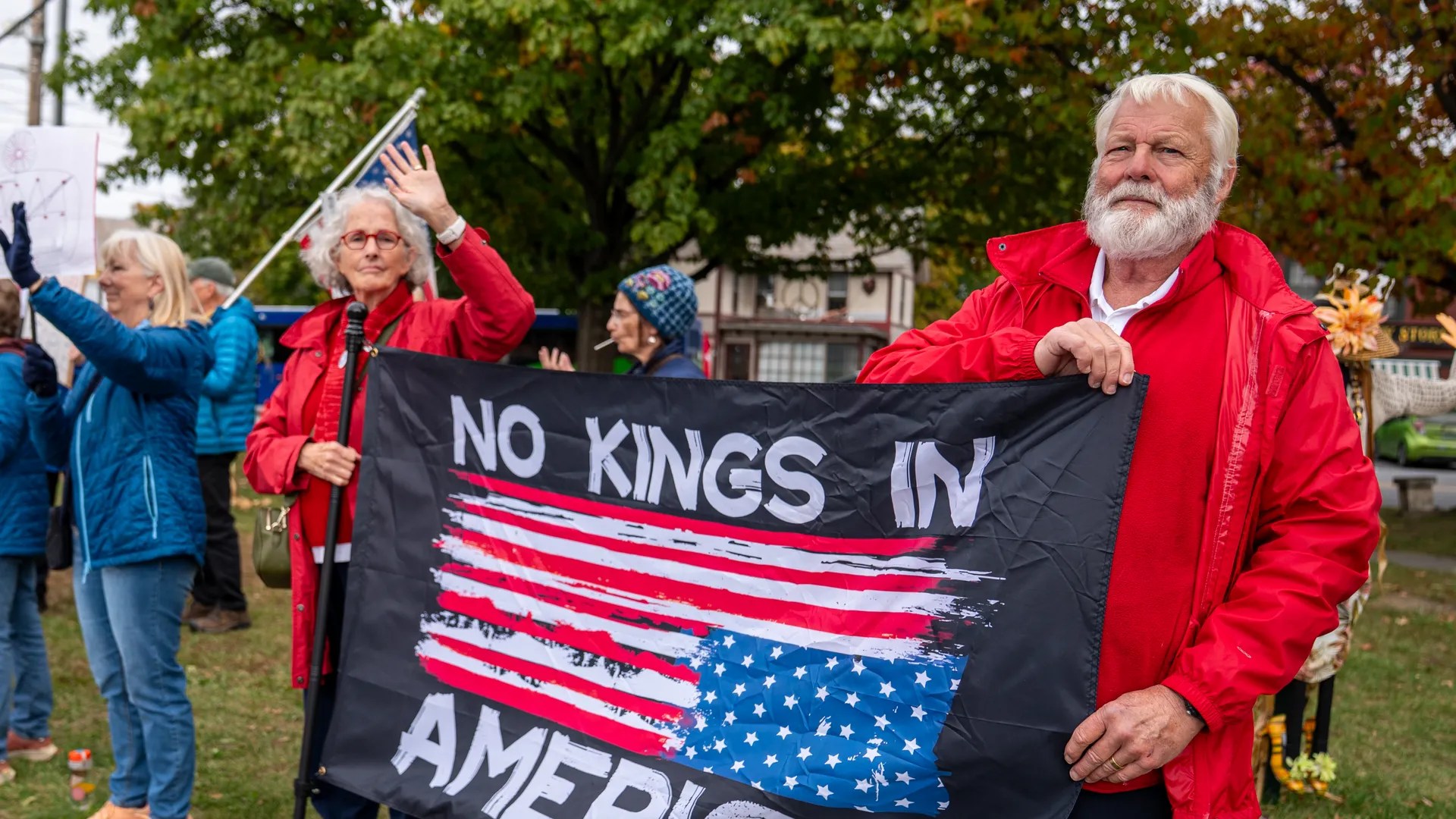
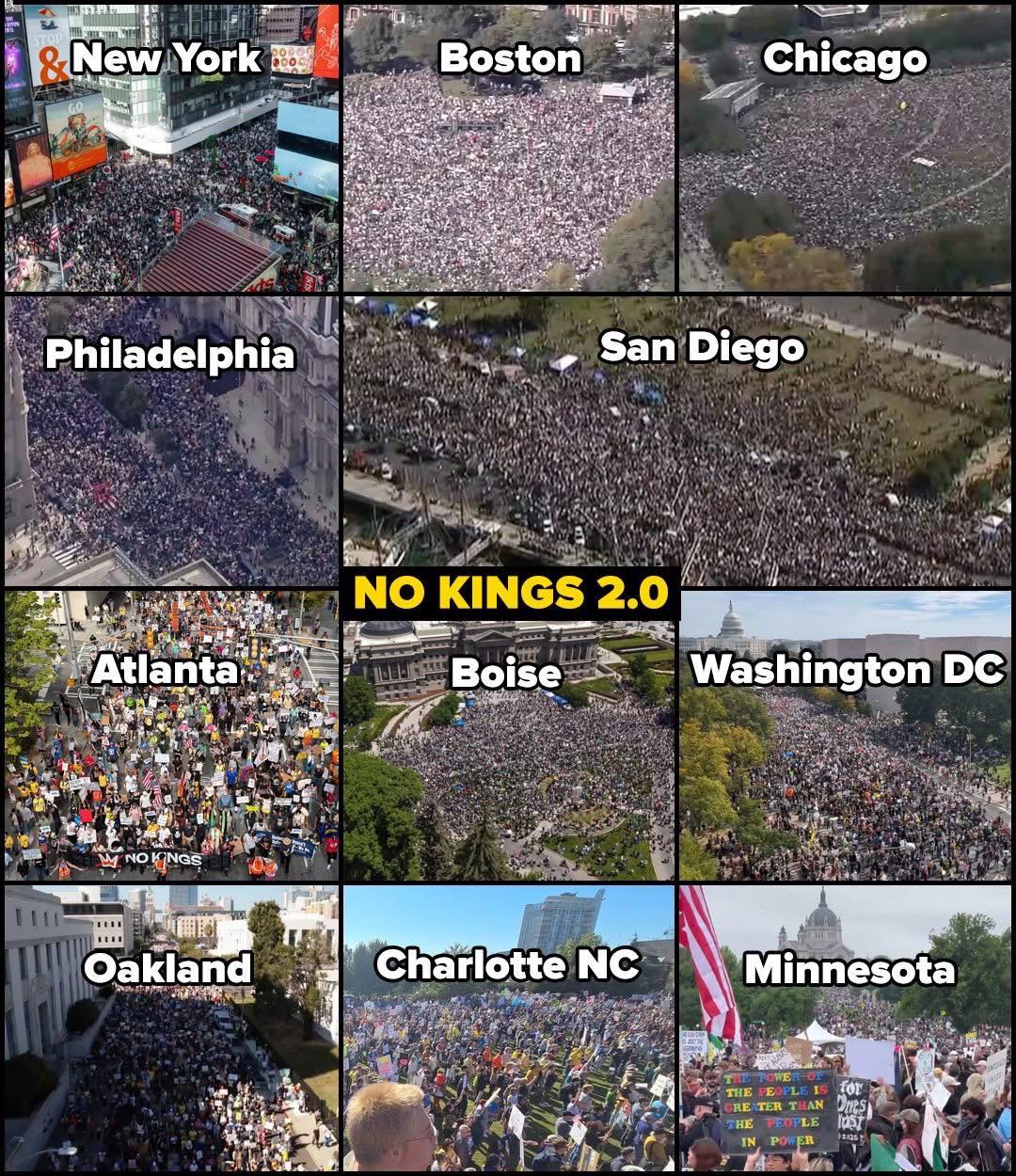
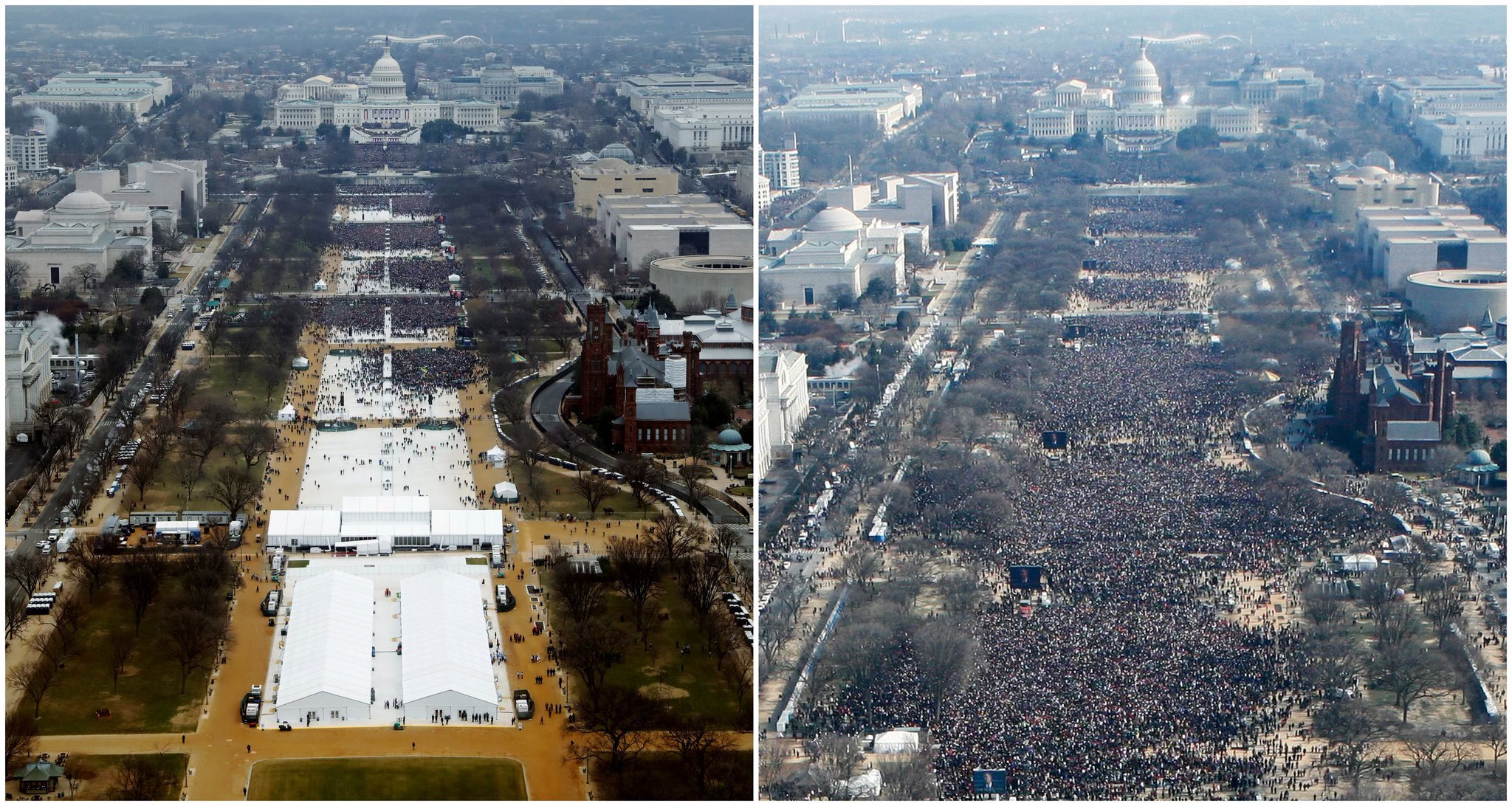


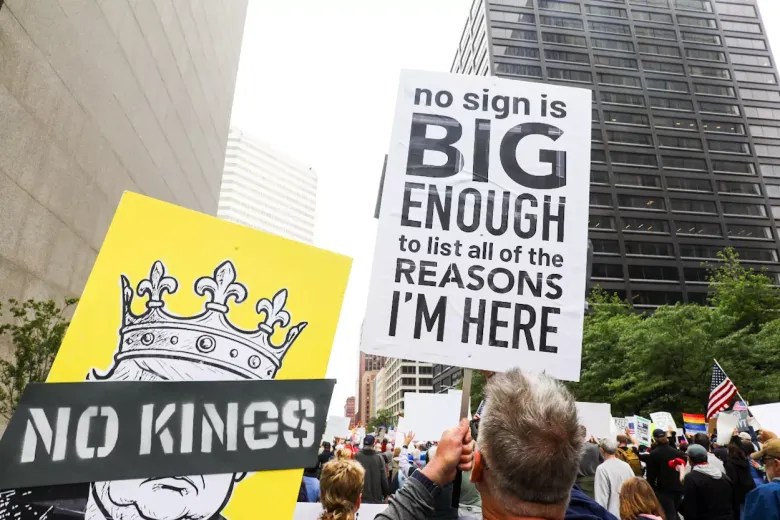

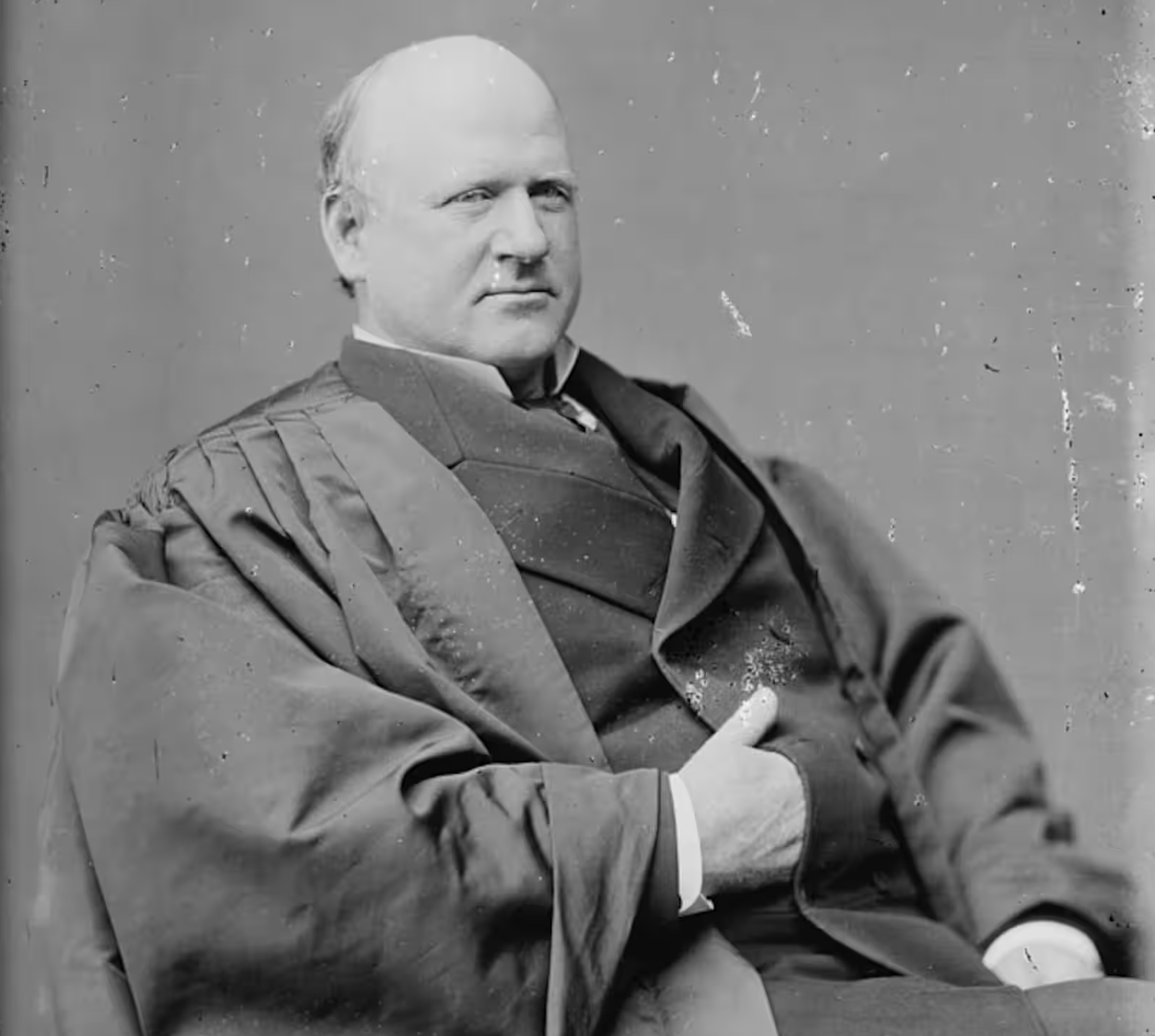
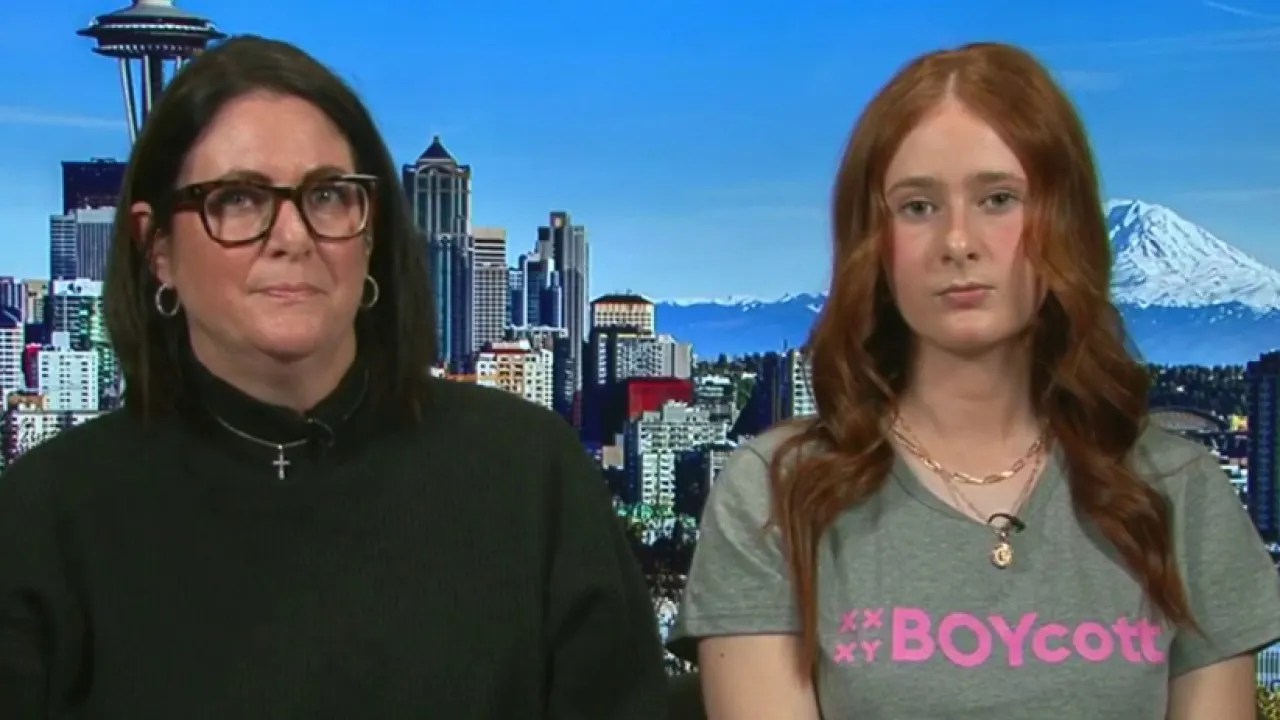



 freedom and reason