Some Confederate memorials and monuments should be relocated to museums. Also, we should rename some of our public buildings. I know people who disagree with my opinion on this topic. Most of them are very fine people. They are good people who disagree with me. We can disagree with each other and not believe the other person is a bad or evil person. Indeed, I am not here to argue the Confederate monument issue. I am here to argue for the freedom of speech and against the attitude of zealotry in politics.
Consider the problem of Islam. According to Islamic doctrine, a man named Muhammad held conversations with an angel named Gabriel who transmitted to him God’s word. The word is patriarchal, heterosexist, and intolerant. The world would be better off without Islam (religion altogether). Are there no fine Muslims? Would it be appropriate to disrupt a public gathering of Muslims in which Islamic opinion was being expressed? Is it appropriate when Muslims use violence and intimidation to protest expressions with which they disagree? Are Muslims justified in murdering cartoonists who depict Muhammad in their satire?
The practices of reducing those with whom you disagree to very bad people and disrupting their public and permitted events is the attitude of the zealot. Zealots hear contrary speech as if it were blasphemy. Zealots treat disagreeable people as if they were heretics. Operating according to a rigid doctrine that comes with a license to dehumanize others and lord your beliefs over them is the mark of an intolerant attitude. Politics organized in this fashion undermines the conditions of a free and open society.
The free speech right means that holding and expressing opinions with which others disagree is protected by the state. Attempts to shut down public and permitted speech using violence and intimidation is a violation of that right. Recently, I posted an example of white supremacists disrupting speech critical of white supremacy. Those disrupting the speech have a right to their opinion, but they do not have a right to prevent others from expressing theirs. They left voluntarily. But forcible removal from the location would have been justified. Likewise, antifascist action that disrupts the public and permitted expression of opinions with which the antifascist disagrees moves beyond the free speech right. It is not an expression of the free speech right to disrupt public and permitted expression of opinion by others. (I am not suggesting that everybody who supports keeping Confederate monuments and memorials is a white supremacist.)
I hear the objection: Are you saying that white supremacist and antifascist opinions are equivalent? The question is irrelevant. Opinions don’t have to be equivalent in moral worth to recognize that the right to express them is possessed equally among all persons. If the right to free speech was only reserved for those whose opinions were agreeable no such right would be necessary. You would, in fact, live in a totalitarian society. In as free society, however, white supremacists and antifascists (and Muslims) have an equal right to express opinions in the proper places at the proper times.
The moral worth of opinions has no bearing on equal access to the free speech right. The state cannot determine speech on the basis of its content either by interfering with it or by allowing others to interfere with it. Interfering with that right without justification – and disagreeing with an opinion is not a justification for interfering with that right – justifiably draws criticism. And good people can disagree.
This talk was delivered to the Midwest Wisconsin Sociological Society in Chicago, April 2019.
Recently, in Norway, there was consternation over the problem of “the queue,” the long wait for convicted offenders to enter prison due to the limited capacity of correctional facilities and prohibitions on overcrowding. As time in the queue is spent beyond custodial control, public concern was expressed in growing support for the law and order rhetoric of right-leaning political elites and pundits. The situation carried implications for foreign-born persons in Norway. Today, about a third of Norway’s prison population is of foreign background—this in a country where more than 80 percent of the population has no migrant background. Norway remains highly regarded for forward-leaning penal philosophy and low rates of recidivism; however, shifts in the sociocultural and political winds could complicate its reputation. This paper examines in a preliminary way the intersections of demographics, politics, and criminal justice processes in Norway’s efforts to eliminate the queue.
Foreign bodies in this talk refers to those in Norway who are foreign-born or Norwegian-born to immigrant parents (or, more rarely, persons with four foreign-born grandparents). Norway, like much of the world, determines such matters by the method of jus sanguinis, or hereditary-based citizenship. Norway’s foreign-born population is approaching one million, 84 percent of whom are immigrants, which is considerable given an overall population of 5.3 million. Significantly, immigration has increased since the early 1990s, to 17.7% in 2019 from 4.3% of the population in 1992. I chose the phrase “foreign bodies” for the title of my talk in light of the MSS conference thematic to capture the objectification of human beings in the dynamic of coercive control—that is, as objects to be controlled for the politics sake.
Norwegian prisons are known for their progressive penology, distinguished by a focus on limiting what, in his 1958 The Society of Captives, Gresham Sykes called the “the pains of imprisonment.” The emphasis is on humane treatment of prisoners and the principle of normality, which means maintaining full citizen rights with only deprivation of or reduction in liberty as the consequence of lawbreaking, avoidance of isolation, thus diminishing the problem of prisonization and enhancing successful reentry into society, and inmate access to Norway’s wide and generous range of public services through the import model, or reliance on resources and personnel from local communities. Overcrowding is forbidden under Norwegian human rights law. This has traditionally included a prohibition on double bunking. This rule has historically meant that many offenders wait to enter prison if there is no available space. This is known as the detention queue, or, typically, just thequeue. Convicts are considered in the queue if the turnaround from conviction to prison is longer than two months. The striking feature of this situation is that they may wait in the queue for as long as 2-3 years. Depending on rate and type of sanctions, and length of prison sentences, the queue’s size is variable over time. Public opinion about the queue is shaped by perceptions of crime, evolving moral sentiments, and shifts in political attitudes.
A prison cell in Norway
Context of Research Project
I traveled to Scandinavia in the summer of 2018 to gauge the feasibility of a research project into the efficacy of the Nordic model in reducing recidivism. This was my third trip to Scandinavia, having previously spent the summers of 1989 and 2006 in Sweden and Denmark. My initial plan was to determine the degree of access to relevant authorities, experts, and data sources in Göteborg, Sweden’s second largest city, a diverse urban population of approximately 500,000 persons (about a million in the metropolitan area). As with many cities in Sweden, Göteborg is experiencing a rapid pace of cultural transformation across several areas of social life, including ethnic and religious diversity, politics, welfare, and work. The urban and changing spaces of Göteborg present real-world opportunities for scholars interested in the study of social problems and public policy. There I met with criminal justice professionals—police officers of various ranks, including forensics pioneer detective Jan Olsson.
As things unfolded, I gained access to educational and correctional institutions around Stockholm and Oslo. With an urban population of 1.5 million (2.3 million in the metropolitan area), Stockholm is Sweden’s largest city, and the most populous city in Scandinavia. The trip to Stockholm involved meetings with researchers at the Swedish Prison and Probation Service (SPPS), or Kriminalvården, in Liljeholmen, a district in the Stockholm archipelago. There, I was briefed by a policy officer for the European Organization of Prisons and Correctional Services (EUROPRIS). In Norway, I traveled to the University College of Norwegian Correctional Service (KRUS), or Kriminalomsorgen, in Lillestrøm, northeast of Oslo, and met with experts there.
Race, Ethnicity, and Immigration
Although Norway does not have a history of racism comparable to that of the United States, racial and ethnic minorities are overrepresented in its criminal justice statistics, albeit not to the degree seen in the US. Changes in the racial and ethnic composition of its prisons reflect to some degree Europe’s changing demographic profile. As in the United States, with the emergence of globalization, changing labor market needs, and migration pressures, Europe has been growing more diverse. Nearly 18% of those living in Norway are immigrants or their close descendants. Roughly half are from non-western societies, mainly Africa, Central Asian, and the Middle East. The rest are from Australia, Europe, especially Poland and Lithuania, and the Americas. Immigrant communities in Norway are largely urbanized. Immigrants comprise one-third of the city of Oslo, accounting for most of Oslo’s population growth (Oslo is one of the fastest growing cities in Europe). As with Sweden and other Scandinavian countries, Norway is mindful of assimilation. For example, proficiency in Norwegian is required for citizenship. Nonetheless, ethnic enclaves have emerged and persist. See Susanne Søholt and Terje Wessel’s Contextualizing ethnic residential segregation in Norway: welfare, housing and integration policies (2010).
These facts are noteworthy given the insecurity migrants face in host countries and criminogenic pressures surrounding their situation. The large numbers of migrants have strained the capacity of the welfare state (a system already compromised by neoliberal devolution) to optimally deliver social services. A shortage of housing has led to indigency and overcrowding. The intersection of ethnic enclaves and split-labor market have concentrated poverty and joblessness. Labor force attachment is difficult for those with poor language skills and relative deficits in cultural and social capital. The wage differential is significant due to the skills gap (Norway is a technologically-advanced economy). Nonetheless, Norway has managed to retain comparatively low recidivism rates despite these changes. At the same time, part of managing the situation has brought reductions in newcomers through the implementation of stricter immigration rules, as well as shifts in the criminal justice process.
Norwegian Correctional Service, Lillestrøm
On Wednesday, June 27, 2018, I traveled by train from Stockholm to Oslo. The next morning, I took the train from Oslo to Lillestrøm for a meeting organized by Tore Rokkan at the Norwegian Correctional Service. The Correctional Service replaced the Prison Board (Fengselsstyret) in 2002. Located eighteen kilometers northeast of Oslo, Lillestrøm is the administrative center of Skedsmo Municipality in Akershus County. This county is home to the notorious Akershus Fortress, which for many years maintained a stable of prisoners who were leased to various business and municipal entities for cheap labor. It became known as Slaveriet, or “The Slavery,” for this reason. It has since become a museum.
Rokkan is Associate Professor at the University of Oslo and University College of Norwegian Correctional Service, where he works in the Department of Research. In his capacity at the University College, Rokkan is associated with the Staff Academy, or KRUS. KRUS is responsible for training prison officers, as well as production of knowledge about crime control and offender rehabilitation. (It takes two years of education to be a prison guard in Norway. Among other things, recruits are trained in ethics taught from a humanist standpoint. In the United States, you are required to have at least a high school education. Some states require some college credit. But it is minimal. The training regime is typically 6-12 months.)KRUS works closely with Correctional IT services, or KITT, which is responsible for the development and implementation of IT systems in the agency, a site of rapid transformation. The goal is to develop comprehensive informational flows between all agencies in this area, coordinating units with relative operational independence. Agency independence is a feature of the Nordic administrative system. The Norwegian correctional service is governed by the Norwegian Ministry of Justice and Public Security, which also governs law enforcement and immigration control. The service is organized into a hierarchy headed by the Correctional Services Directorate (or Kriminalomsorgsdirektoratet), responsible for administrative and professional management. Until very recently, the directorate supervised five regional administrative units, which has since been replaced by topical divisions, organized by topical areas, such as women’s issues and immigration. At the local level, there are the prison and probation offices that handle offenders. Municipalities are responsible for services, training, education, and health (the 57 municipalities are being reorganized into 17). All of these services are embedded in a network that comprises the public function in charge of rehabilitating offenders, the import system. Due to considerable prison-to-prison variation, there is a desire for more across-system uniformity. And the shift in methodology away from aggregate cross-sectional study of social patterns, such as the link between inequality and crime, and towards longitudinal life-course models with a focus on within-subject change.Rokkan and I spoke about a great many things over the course of the day. But we kept coming back to the queue and immigration and their implications for Norwegian politics.
Shift in Politics
Critical to understanding recent developments in penal philosophy and practice is the changing dynamic of the political milieux. Norway, as with other Scandinavian states, has long been noted for its social democratic tendencies. With a few short gaps, Norway was governed by the Labor Party (Arbeiderpartiet) from 1945-1981. From 1981-1997, the political pendulum swung between Labor and Conservative (Høyre)-led center-right governments. Much of the political turmoil surrounded Norway’s relation to economic regionalization, emerging awareness of the problem of climate change, and the growth in immigration. The European Economic Area is the EU plus Iceland, Liechtenstein, and Norway. Norway is also a party to the Schengen agreement.
A left-center government, comprised of Labor, Socialist Left, and Center parties, took over in 2005 under the centrist leadership of Jens Stoltenberg (current secretary general of NATO). Stoltenberg was prime minister when, in July 2011, rightwing terrorist Anders Breivik bombed the prime minister’s office building, killing eight, and then massacred 69 at a Labor Party youth camp on Utøya, an island forty-five kilometers from Oslo. Breivik was given a special type of sentence, containment, or preventative detention, which allows for infinite post-carceral incapacitation with five-year reviews. Stoltenberg and his coalition was damaged politically by what was seen as a massive security failure. Anundsen led the charge in undermining Stoltenberg over the Breivik affair. This came against the background of rising anxiety about crime and immigration and the associated trend in populist right sentiment.
In 2013, four parties ranging from right to center won a total of 96 of 169 seats, well more than needed to compose a majority. While the Labor Party remained the largest party, its coalition collapsed, ending eight years of rule (2005-2013). In 2013, Stoltenberg relinquished his position to Erna Solberg, leader of the Conservative Party. Conservatives were joined by the Progress Party (Fremskrittspartiet) and enjoyed the support of the Liberal Party (Venstre) and Christian Democrats (Kristeleg Folkeparti). The situation underscored the Labor Party’s plight and social democracy in Norway. Amid good economic conditions with low unemployment, the right prevailed on promises of better public services, increased spending on education and public infrastructure, tax cuts, means-testing welfare recipients, and stricter immigration controls.
Despite losing seats in the 2013 election, the Progress Party has remained highly influential. Unlike the shunning of the Swedish Democrats by other parties following the recent Swedish elections, in which the populist right put on a strong showing, the Progress Party plays a significant role in shaping the policies of the rightwing coalition governing Norway. Its leader, Siv Jensen, has long voiced concerns about creeping Islamization (snikislamisering), seen, for example, in the demand to incorporate the hijab into the police uniform and providing halal food and Islamic education in prisons and schools. Over time, her voice has grown more strident on the subject. She now identifies Islam as the most significant problem confronting Europe, referencing the situation in Rosengård district in Malmö, Sweden as evidence for the problems of assimilation. Her rhetoric of creeping Islamization has given way to warnings of open Islamization. Another figure in the party is Per Sandberg, first deputy leader from 2006-2018. Along the way, he served as acting ministers of Migration and Integration and Justice, Public Security, and Immigration. His views are to the right of Jensen’s. Moreover, he has been sharply critical of the Nordic model, especially the newer penology practiced as prisons such as Halden. He has described its residents as enjoying “hotel-standard” accommodations. These views are becoming increasingly common, leading to greater popular support for the Progress Party. Another member, Anders Anundsen, played a key role in establishing Norway’s relationship with the Netherlands in the project to transnationalize the correctional function.
Changes in Crime Control Policy
Despite the relative autonomy of Norway’s administrative agencies, which remain committed to the restorative justice model, the rightwing coalition affected crime control policy, mainly in conveying urgency in clearing out the backlog of persons entering the correctional system. The backlog had grown because of a rise in serious crime and the number of criminal convictions was complicated by Norway’s rule against overcrowding. While property crime has declined in Norway (a trend seen throughout the Western world), there has been an increase in violence and maltreatment and sexual offenses, the latter due in part to changed definition that expands the scope of sexual offense, but not entirely. The violence represents increase in gang violence, with more guns and drugs. There are more people being sentenced, but the sentences are lighter for property crimes and traffic offenses Immigrants from Central and South Americans, Eastern Europe, Middle East, and North Africa are overrepresented in crime and are perpetrating most of the serious crimes. Western Europeans and North Americans are unrepresented in criminal perpetration, as are educated immigrants. Patterns of over and underrepresentation apply across offenses.
Lengthy sentences are rare in Norway. The longest sentence allowed in Norway is 21 years (not including preventative incapacitation). The average prison sentence in Norway was 75 days in early 2000s. However, it grew to around 85 days, which, combined with rising conviction rate, enlarged the queue. The rise in crime led experts and the public to believe that this was because of a diminished capacity to mete out swift consequences for lawbreaking. The queue was believed to lie at the heart of the problem: the time between conviction and imprisonment militated against the deterrence effect. “We are experiencing more violence and more thefts,” said Cari-Hugo Lund, a Norwegian judge, in 2003. “When I hand down a sentence, invariably the person in the dock will ask when their sentence will begin. Invariably I have to reply, ‘I simply don’t know’.” Moreover, crime victims had to live with the worry that their attackers were still at large. To be sure, murderers and rapists were jailed immediately, but perpetrators of domestic violence weren’t. Eva Frivold, a lawyer in Askim, reviewed a case in which a woman badly beaten by husband was attacked again before his cell became available. For those who had to wait, anxiety and uncertainty plagued their days. (Andrew Glasse in Oslo and Olga Craig. 2003. “Sorry for the wait sir, your cell is ready now.” The Telegraph. See also John Pratt. 2008. “Scandinavian Exceptionalism in an Era of Penal Excess.” British Journal of Criminology48: 275-292.)
Authorities approached the problem of the queue in a number of ways. A constellation of strategies involved more finely differentiating risk and more deliberately distributing persons across a variety of correctional options, from drug courts associated with treatment to electronic home monitoring for traffic, drugs, and property crimes, which freed up prison space for a wider range of violent offenders. One of the more notable approaches under the new government was transnationalizing part of its correctional function, what Eugene Kantorovich calls “Gaolbalization.” (See Eugene Kantorovich’s November 19, 2012 “Prisoner Offshoring, or Gaolbalization,” in The Volokh Conspiracy. URL: http://volokh.com/2012/11/19/prisoner-offshoring-or-gaolbalization/. At first, in 2013, Norway sought to lease space from Sweden. Norwegian Minister of Justice Anders Amundsen, a member of the Progress Party, sent a request to Sweden for prison space. The Swedish government considered establishing what it called the “Norwegian convict zone” in anticipation of a change in crime rates. However, the arrangement would have required significant legal changes and the Swedish government ultimately rejected the request. Amundsen next turned to the Netherlands. According to the Dutch prison service, the Netherlands’ prison population had (as of 2012) been falling continuously since 2008. As a consequence, Dutch prisons were suffering from chronic undercrowding. The Netherlands was already working with Belgium to address overcrowding there. Thus, Norgerhaven Prison in the Netherlands became a unit of Norway’s Ullersmo Prison.
Under the terms of the lease, arranged for three years, starting September 2015, with a two-year option, the prison was placed under Norwegian management but employed Dutch correctional officers. The fact that two out of three inmates in the queue were foreign nationals was a particular point of concern for Anundsen. He had pursued (over the objections of the Liberal and Christian Democratic parties) a policy of aggressive deportation. This policy was extended to the arrangement with the Netherlands. About one-third of gaolbalized foreign-born convicts were deported after serving their sentence there.[i]Norway’s contract with the Netherlands expired August 31, 2018. Norway decided not to extend the lease. By then, it had slashed the queues, in part by securing allowances for limited double bunking, but also through renovation and new construction, as well as increased use of alternative strategies, such as electronic monitoring. The reoffending rate is low with electronic monitoring, but this is in part because those suitable to its use are less likely to reoffend. Norgerhaven thus afforded Norwegian prison officials time for expansion, maintenance, and retooling penal strategy. The experience with gaolbalization has been dubbed the “Dutch effect.”
Conclusion
Racial and ethnic disproportionality in Norway’s prisons is explained by the shift in priorities against the backdrop of human rights law and rehabilitative approach that govern corrections in that country. In Norway, there is a progression through the system: high security first, then stepped-down progression towards liberty. Two-thirds of prisoners in the system enjoy early release if native-born. They have families, work, speak the language, and so on; they are more easily reintegrated with the community on the basis of a strong social support network and inherited cultural capital. The foreign-born do not enjoy the features of established and stable citizenship. Nor do authorities find it reasonable to devote resources towards rehabilitating those Norway plans to deport. Thus, steering toward capacity while eliminating the queue has resulted in overrepresentation of foreign bodies in prisons. The changes yielded the results it sought, perhaps most notably, the re-election of the Erna Solberg government in 2017 and the expansion of the rightwing coalition. The Liberal Party joined the coalition in 2018, followed by the Christian Democratic Party in 2019.
As Peter Beinart notes in his op-ed “Ilhan Omar’s Deeply American Message,” published in The Atlantic, Omar explains that, rather than keeping her religion private, she expresses it openly as a way of affirming that, in America, she need not hide who she is to enter the public square. “I tweet out verses of the Koran,” she explained. “I say As-salaam alaikum and Alhamdulillah”—“Peace be unto you” and “All praise is due to God alone”—“because I want” Americans “to get comfortable” with “what they mean.”
Yes. Just as fundamentalist Christians want their views to be comfortably accepted by those who don’t share them or who are threatened by them. Just as, in their agenda to fold their ideology into everyday thought, fundamentalists demand their views be heard in government offices and in public schools. Fundamentalist Christians say “Jesus is Lord” and “The path to salvation is through Jesus and Jesus alone” to get people “comfortable” with “what they mean.” It’s not enough to have churches where they can pray and talk to each other about their beliefs. They want to use the public space to proselytize, to mainstream their religious ideology, to normalize a belief system that claims the existence of a supreme being to which every person should submit and a divine law to which everything should be subject. They complain constantly about being the victims of anti-religious bigotry by liberals and atheists who resist this campaign. There’s a war on Christianity. Haven’t you heard?
Not all Christians do this, of course. Many Christians accept the place of faith in a secular society. They recognize the separation of church and state. They love their country and respect its founding principles. If they always put “God first” in their own lives (a scary thought, but they have that personal freedom) they don’t insist others suffer along with them. They don’t whine about being the victims of anti-religious bigotry when people criticize their faith and note the terrible things Christians have done on the basis of that faith. But the zealot does. Indeed, it’s a mark of zealotry to complain about irreligious criticism, to express fantasies about being a persecuted minority in a society that defends religious liberty, to compare criticism of their beliefs to attacks on people for their skin color or sexual orientation. We hear it a lot. Where are the mainstream newspapers and TV news shows on this terrible bigotry?
A zealous religious propagandist might dream up a word like “Christophobia” and use it to smear critics of his faith in an attempt to silence objections to its content, effects, and spread. We’d expect that from zealots. But it would be quite troubling if the mainstream media reflexively took up this propaganda term and used it to suppress criticism of the Christianist campaign to force Christianity into government and politics.
Imagine the headline: “Democrat’s Criticism of Mike Pence’s views on homosexuality is blatant Christophobia.” Or imagine the media defending a prominent white nationalist from criticism after he described the Christchurch massacre in New Zealand as “some person did something.” Imagine the howls going up about “fascophobia.” It’s not hard if you assume a situation in which the media is peddling Christianity or white nationalism. Otherwise, why would they do such a thing?
Supreme Court Justice Clarence Thomas, a Catholic, is critical of Senate Democrats’ attempts to apply religious tests to Roman Catholic judicial nominees. “I thought we got away from religious tests,” he remarked this year during (you guessed it) Pepperdine University School of Law’s annual banquet. Thomas was referring to Article VI of the Constitution, which states that “no religious test shall ever be required as a qualification to any office or public trust under the United States.” It’s one of my favorite parts of the Constitution. I cite it frequently.
But Thomas is confused about what “no religious test” means. It means not compelling a person to swear an oath to a religion or to profess a belief in religion at all. It doesn’t mean finding a person unfit for office because of his ideology. That would require turning off one’s brain. Ask yourself: Does it matter whether a person is a fascist? Hell yeah, it does. We are only obliged to tolerate somebody’s beliefs. If the man keeps his religion to himself or merely expresses a religious point of view at the appropriate time and place, then we are in no position to oppress him. At the same time, we are under no obligation to enable or welcome or respect his religious opinions. And we are free to ask him about his religious views and reject his candidacy on account of them.
There is nothing oppressive about keeping Catholics off the court if they can’t keep their Catholicism out of their judgments (and it appears they can’t). Nor is there anything oppressive about keeping Muslims out of government if they can’t keep Islam out of politics (ditto here). Why on earth would any rational person expect other persons to disregard what candidates for public office think about the world in determining whether they are fit to judge the affairs and fates of other people? We’re now supposed to ignore facts and rubber-stamp the installment of demagogues and zealots in power? Pardon me, but this is an insane interpretation of secularism.
Metropolitan Police have entered the Ecuadorian embassy and detained Julian Assange, founder of Wikileaks, for “failing to surrender to the court” over a warrant issued in 2012. He was said to have escaped into the Ecuadorian embassy to avoid extradition to Sweden to be prosecuted for molestation. Is this true?
Julian Assange dragged from Ecuadorian embassy in London by Metropolitan Police
Assange cooperated with Swedish authorities in its investigation of molestation and was cleared and allowed to leave the country. The facts appear to show that Assange had consensual sex with two Swedish women who became jealous upon learning of the existence of the other. Later, Swedish authorities demanded Assange’s extradition from Sweden on Kafkaesque charges, the most serious being something called “minor rape” (three of the charges had run out on the basis of statute limitations).
Sweden has been the United States’ poodle for years following the assassination of US-hostile Olaf Palme in 1986 and the installment of the new US-friendly Ingvar Carlsson as prime minister, who reversed policy and allowed the US Navy to park its ships in its territorial waters in the Baltic Sea to surveil the Soviet Union. I was in Sweden in 1988 shortly after the controversy, seeing for myself the massive Soviet cargo ships in Goteborg harbor (their status as cargo ships questionable) and US navel vessels in Stockholm harbor, a source of great irritation to Swedes. Moreover, Swedish authorities adored Obama, who was eager to get his hands on Assange.
It was obvious to Assange and others based on timing and facts that the Swedish charges desired to obtain Assange from Great Britain for extradition to the United States. He thus entered the Ecuadorian embassy to avoid a hellish fate. Once the Ecuadorian government had been successfully bribed into expelling Assange from the embassy, Sweden resurrected their pursuit of Assange because they were unsure Great Britain would hand him over to Trump. Assange is a citizen of the Commonwealth, and the political mood has changed considerably in Great Britain.
Had the Swedish charges been real, and had Assange been tried and convicted, he would already be free. What he was being accused of would have brought a punishment far less impactful than the punishment he endured holed up in the Ecuadorian embassy. If you know what prisons are like in Sweden, then you know that it would have been a very similar experience for Assange but of shorter duration. If Assange could have been confident that he would not have been extradited to the US, then he would likely have jumped at the chance to be tried in Swedish courts. It is highly unlikely that, without the corrupting influence of politics, he would have even been convicted.
The charge of “minor rape” was manufactured to produce an extradition order. Extradition to the US could mean death for Assange or at least a very long periods sentence, likely spent in solitary confinement. Knowing what Manning went through, the Ecuadorian embassy was a safe space. All this is because, through his reporting, Assange exposed US war crimes in Iraq.
* * *
Update (January 2021): On May 2019, Sweden reopened the sexual assault investigation. That same month, the United States simultaneously filed seventeen new charges against Assange. In November of that year Swedish prosecutors discontinue an investigation into an allegation of rape against Mr Assange. The United States is still pressing its case. On January 4, 2021, Judge Vanessa Baraitser ruled against the United States’ request to extradite Assange on the grounds that doing so would be “oppressive” given his health. Still, Assange has been denied bail pending an appeal by the United States.
The CAQ government has introduced a secularism bill (Bill 21) that will prohibit many public sector workers from wearing religious symbols. It also blocks their ability to challenge the bill over rights violations. The legislation would affect elementary and high school teachers, judges, police officers, prison guards, prosecutors, and others.
According to reporting by The National Post (March 28, 2019), Immigration, Diversity, and Inclusiveness Minister Simon Jolin-Barrette said Bill 21 is an affirmation of Quebec’s distinctiveness and its decades-long drive to separate church and state. Jolin-Barrette said that, for the Quebec state to be truly secular, it cannot employ people who exercise authority while wearing religious symbols.
Civil rights groups (forgetting the civil rights of everybody else) have claimed that the legislation violates the Canadian Charter of Rights and Freedoms and contradicts protections in the provincial Charter of Human Rights and Freedoms. However, these documents contain provisions allowing governments to pass laws overriding those rights (it has successfully done so dozens of times). It is difficult to see any avenue in the courts for those who wish to challenge this bill if it passes.
Except for the pro-Quebec independence Bloc Québécois, all the major parties in Canada’s federal parliament—Liberal, Conservative, and NDP—have denounced the CAQ bill as a transparent and demagogic attempt to promote Canadian nationalism. Canada’s political culture is rooted in civic nationalism. Not all nationalism is the same. Conflating ethnonationalism with civic nationalism is globalist rhetoric. Moreover, as a nation, Quebec is recognized as having the authority to determine its future and character. What’s wrong with promoting Canadian nationalism?
Expected claims of religious bigotry fall flat, as well. “It is unthinkable that a free society would legitimize discrimination against anyone on the basis of religion,” declared the Prime Minister and Liberal leader Justin Trudeau. But it’s not religious discrimination to separate religion from the public function. Indeed, that’s the meaning of religious liberty.
Religious liberty is enshrined in the First Amendment to the United States Constitution. In the United States, one is free to practice his religion at his home, in his church, or walking around town. There is cause for public concern when individuals exploit positions of authority to peddle religious beliefs and practices. If this work is public or in a place of public accommodations, then religious uniforms are inappropriate. The public has an expectation that these places will be kept neutral by law and custom. Government rightly becomes involved when the exercise of religion becomes an imposition on other citizens.
To be sure, Canada is not the United States. However, our First Amendment is the paradigmatic instantiation of religious liberty. Tragically, even here, the meaning of religious freedom has been twisted to compel the government to enable, facilitate, promote, and tolerate religious ideology and practice in public employment. We can learn a lot from the CAQ.
In principle, a truly secular state must not privilege some ideologies over others. It doesn’t matter whether it is a religious or some other type of ideology. Religion was specifically mentioned in the US Bill of Rights because the founders were particularly concerned about its insidious effects on politics. So concerned, in fact, that they forbade the government from respecting an establishment of religion and from prohibiting its free exercise. Religion peddlers ignore the first and warp the second part. Exploiting positions of authority to promote religion is not its free exercise. It is a violation of the religious liberty of everybody else.
Demanding to wear religious costuming at work is the same as a Nazi or a Klan member demanding that he be permitted to perform his public duties dressed in an SS uniform or while wearing a white bed sheet. He is of course free to wear his costume at home or walking about. These are within his privacy and speech rights. But he will be told to leave his costume at home while he is teaching an elementary school class, because the children and his fellow workers have rights, too. Indeed, the Ku Klux Klan is a religious sect (and so are Nazis when you get right down to it). Is anybody prepared to defend a right to wear Klan robes while working in a place of public accommodations? Alongside black employees? Alongside Catholic employees? That would be not merely offensive, but harassing.
To treat the expression of religious ideology differently from other ideologies in a place of public accommodations is giving religion a privilege over other standpoints. Permitting the promotion of religion in public spaces reflects neither the neutrality nor the protection that liberty demands and affords citizens in a free society.
It is the same for a feminist or a gay man who has to work alongside a person whose religious costuming represents an ideology that sees women as second-class citizens and homosexuals as abominations as it is for a black man or a Catholic to have to endure a Klan member in full regalia. Would we allow a Muslim to harass a gay man at work? Not even in a society in which the freedom of speech is enshrined in the very same amendment that puts religious liberty central to our governmental arrangements and workings would we allow that. Yet we allow this individual to work draped in the symbol of compulsory heterosexuality.
This is why the argument advanced in the clip below by communitarian philosopher and Quebecer Charles Taylor is so awful. He lifts the site of individual liberty to the level of the group by confusing human rights with cultural and social understandings. Put another way, he reduces the individual to the context supplied by sociocultural order not merely to understand their life choices but as a position from which to consider their legal rights. He rejects the secularization thesis not merely due to its failures (this in substantial part due to the rot of cultural pluralism over against human rights advanced by multiculturalists like Taylor) but because he sees religious understandings (plural as they are) to be the grounds for regarding persons. We are not, in his view, all members of the human family, as the Preamble to the Universal Declaration of Human Rights proclaims, but members of tribes. This stance erases the person. The irrational character of such a standpoint is exposed by simply pointing out that the same argument can be made in favor of tolerating fascism and racism. This is how he can identify Islamophobia as the big challenge facing Canadians rather than warning his audience of the actual challenge to free and open societies, namely Islam.
Communitarian Philosopher Charles Taylor
Religious liberty is the bedrock of a free and secular society. We have religious zealots pushing their religious beliefs and practices in our public institutions and places of accommodations. The level of religious imposition and proselytizing has become such that governments of free states are going to have to act with laws and administrative policies to take up the slack of a normative system pressed by identity politics. Ideally all people living in the West should come to an understanding of the importance of religious liberty and the expectation that newcomers assimilate to and respect this norm. Unfortunately, this is not happening. Instead, we suffer ideologues subverting western liberal values and using the rhetoric of rights to peddle irrational and oppressive ideological systems.
I applaud the CAQ government taking this bold step and hope to see Bill 21 passed into law.
“Open borders? No, that’s a Koch brothers proposal. That’s a right-wing proposal, which says essentially there is no United States.”
Bernie Sanders, July 2015
I just ran across this Bernie Sanders interview from 2015. I don’t know how I missed it at the time. But I have it now. It’s from a conversation between Sanders and Ezra Klein in Vox, July 28, 2015, a web magazine Klein helped found in 2014 (along with Matt Yglesias and Melissa Bell). In the clip, Klein asks Sanders about international poverty. Klein looks stunned by Sander’s answer. From a working-class standpoint, it is the correct answer.
On January 19, 2019, I wrote about the right-wing libertarian open borders push on my blog: “The Koch Brothers and the Building of a Grassroots Coalition to Advance Open Borders.” It’s one of many posts I have written to demonstrate what the actual working-class position on immigration looks like in contrast to the neoliberal denationalizing rhetoric championed by Democrats and the faux-left (i.e. progressives).
Progressives don’t know quite what to do with leftwing arguments hailing from the organic standpoint of social class. However it’s quite satisfying for these ears to hear Sanders saying things about open borders such as: “It would make everybody in America poorer—you’re doing away with the concept of a nation state, and I don’t think there’s any country in the world that believes in that.”
Unfortunately, there are a lot of left-wingers who do believe in that. They want to dismantle security fencing and barriers, abolish Custom and Border Protection (CBP), Immigration and Customs Enforcement (ICE), and grant amnesty to millions of people who are in the US illegally. They call for decriminalizing immigration, which will open the floodgates. Open border folks are especially eager to recruit Catholics from Central America and Muslims from anywhere, who bring with them ideologies harmful to women, children, and gays and lesbians—ideologies that do not respect open and secular societies.
To be sure, Sanders is no socialist. But one doesn’t have to be in order to understand how immigration is contrary to the interests of the native-born of developed nations. The harm immigration causes was well understood by labor in the early twentieth century and the New Liberals of middle twentieth century United States, as well as their social democratic counterparts in Europe (see “The Need for Limits”).
“If you believe in a nation state or in a country called the United States or (the United Kingdom) or Denmark or any other country, you have an obligation in my view to do everything we can to help poor people. What right-wing people in this country would love is an open-border policy. Bring in all kinds of people, work for $2 or $3 an hour, that would be great for them. I don’t believe in that. I think we have to raise wages in this country, I think we have to do everything we can to create millions of jobs.”
Bernie Sanders, July 2015
Sanders is observing a basic economic principle that capitalists exploit to check rising labor costs: a surplus of the labor commodity (to which humans come attached) drives down the price of labor (wages). As Marx pointed out in the nineteenth century, the economic imperative of surplus value drives the population dynamic under capitalism (see “The Urgency of Population Control”).
Marx incorporated this understanding in his strategic proposals. In an April 9, 1870 to letter to Sigrid Meyer and August Vogt (who were in New York), Marx writes, “Ireland constantly sends her own surplus to the English labor market, and thus forces down wages and lowers the material and moral position of the English working class.” The contemporary analogs should be obvious. In case they are not, consider the Central American states, or the Muslim-majority countries of Central Asia and North Africa.
Marx grasps the function of Irish immigration: “Every industrial and commercial center in England now possesses a working class divided into two hostile camps, English proletarians and Irish proletarians. The ordinary English worker hates the Irish worker as a competitor who lowers his standard of life.” Anticipating WEB DuBois’ “psychological wage” enjoyed by white workers over black workers, Marx writes, “In relation to the Irish worker he regards himself as a member of the ruling nation and consequently he becomes a tool of the English aristocrats and capitalists against Ireland, thus strengthening their domination over himself.” The English worker “cherishes religious, social, and national prejudices against the Irish worker.”
Of course, these antagonisms are not to be confused with racism, but they are exploited in much the same way by the capitalist class to disorganize the English working class. “This antagonism is the secret of the impotence of the English working class, despite its organisation,” Marx argues. “It is the secret by which the capitalist class maintains its power. And the latter is quite aware of this.” It is in other words a conscious strategy by capitalist elites.
As I note in that January 19, 2019 blog entry on the Koch brothers, the “LIBRE initiative, which enjoys the backing of conservative mega-donors who stand to profit from the massive transfer of value that comes with immigration, strives to help immigrants (legal and illegal) come and live in America, learn English, and pass their drivers’ license tests.” The goal of LIBRE is not only to gain access to cheap foreign labor, but to drive down the wages for all labor and disrupt worker solidarity.
What did Marx believe was the solution to this antagonism? He argues that “the national emancipation of Ireland is not a question of abstract justice or humanitarian sentiment but the first condition of their own social emancipation.” Marx does not sink into the morass of social justice, but rather the practical politics of nationalism. As Marx and Engels insist in the Communist Manifesto: “Though not in substance, yet in form, the struggle of the proletariat with the bourgeoisie is at first a national struggle. The proletariat of each country must, of course, first of all settle matters with its own bourgeoisie.” Leftwing politics from a Marxist standpoint differs radically from the the politics of the identitarian left, which are in substance neoliberal.
Marx encourages Meyer and Vogt to forge a coalition between German and Irish works, as well as English and American workers willing to participate, to raise consciousness about the importance of Ireland’s national emancipation—to become an independent nation-state organized around Irish nationality. Marx’s argument in favor of ethnic nationalism have been warped in the service of aggressive pro-immigration politics. Sanders views have likewise been distorted. (See for example, David Wilson’s “Marx on Immigration” in the February 1, 2017 edition of Monthly Review.)
Individual control over reproductive capacity in modern secular nations presents a problem for the bourgeoisie: lower fertility rates, fewer children, and longer inter-pregnancy intervals (or birth spacing) reduces the rate of population growth. The decline in the rate of population growth is welcome news for humanity: a population that is not growing or (even better) shrinking, means a higher standard of living with a reduced risk of exceeding the ecosystem’s carrying capacity (overshoot and collapse). But this situation is bad news for capitalists. It means rising wages, falling profit rates, and deepening class consciousness. This is why the governing elite opened the borders in the 1960s to import cheap labor from developing countries, namely to drive down wages for native-born workers through displacement and disadvantage and restore high rates of profit. The strategy carried an added benefit: by disorganizing the national culture—common language and values—it disrupted the formation of class consciousness and effective political organizing. The countermovement stopped socialist progress in its tracks and opened society instead to the New Right.
In his conversation with Klein, Sanders correctly ties the open borders strategy to the situation of workers in the United States: “You know what youth unemployment is in the United States of America today? If you’re a white high school graduate, it’s 33 percent, Hispanic 36 percent, African American 51 percent. You think we should open the borders and bring in a lot of low-wage workers, or do you think maybe we should try to get jobs for those kids? I think from a moral responsibility we’ve got to work with the rest of the industrialized world to address the problems of international poverty, but you don’t do that by making people in this country even poorer. We have native-born Americans who need jobs.”
Yes, Sanders said “native-born Americans.” We’re told that this terminology is nativist, xenophobic, even racist. But this is who the left is supposed to represent: the national proletariat. These politics are neither racist nor xenophobic; they’re pro-worker. They benefit not only white male workers, but black workers, Latino workers, women workers—all workers. We have enough people in the United States to do the work of the nation. We don’t need more people. On the contrary, we need fewer people (see “PBS and Immigration Apologetics”).
The denationalizing rhetoric of the progressive left represents a spectacular propaganda achievement by the bourgeoisie, in which the neoliberal globalists have masterfully deployed cultural pluralism and cultivated a popular desire to virtue signal in order to enlist political strata, cultural managers, and young proletarians in a project to undermine the working class in the West, to expropriate all that working people have built over the decades and leverage the social surplus to raise the rate of profit, all while politically disorganizing the masses. This is the neoliberal agenda, and progressive Democrats are among its major proponents.
Leftists need to ask themselves the question that conservatives (for example, Roger Scruton) have rhetorically asking for years: What is the point of having a democratic republic if the citizens who built it can’t depend on their own government to protect their interests? How could any activist, politician, or pundit claiming to speak for the interests of labor advocate and enable policies that benefit the capitalist class at the expense of working families?
As I have shown in numerous entries on this blog, the Democratic Party stands at the forefront of selling out the American worker. Alexandria Ocasio-Cortez is a paradigm of misdirection (see “The Democratic Party and the Doctrine of Multiculturalism”). History tells us that right-wing populism thrives in weakly social democratic moments. Right-wing populism fills the vacuum left by the abandonment of class politics by the left. Today, instead of focusing on inequality and poverty, liberal Democrats and progressives make a fetish of diversity and identity. They push false essentialisms and alienate working people with sterile politically-correct argot. The left needs a left-wing populism, not a globalism that feigns humanitarian concern. The United States needs to emancipate itself from the global capitalist order.
Progressivism is paradigmatic of a left-wing politics that allows right-wing politics to thrive. It is a politics that antagonizes workers and disrupts class consciousness by disorganizing national culture. However good somebody like an Ocasio-Cortez may sound on issues of social class and economics, advocacy of cultural pluralism betrays the rhetoric. Ocasio-Cortez’s code-switching and tribal pandering pushes her to margins—and her devotees follow her into that marginalization. Millions of working-class Americans can’t go where the multiculturalists mean to take them. Nor should they. Ocasio-Cortez and her ilk represent the wrong direction for Democrats if they want to reclaim the mantle of champion of working people (I know, this was never organic, but for a few decades, there was an opportunity there). The identitarians who see a moment for their anti-class politics to shine are destructive to the proletarian movement.
When Democrats return to the politics of class and popular economics of Roosevelt and extol the founding liberal values of individual liberty, secularism, and the open society, then the rightwing in America will run into a wall. The political and cultural right will stand alone as practitioners of such atavisms as religionism and tribalism.
In the final analysis, the Democratic Party appears to be a dead-end. Working people need a viable socialist party rooted in the Marxist theoretic, a working class movement focused on equality and championing individuals liberties and rights that brings all people together around their common class interests. This occurs in a national context with a common language and a government that defends the needs of the majority of its people.
Tens of thousands of Guatemalans, Hondurans, and Salvadorans, migrants from the three countries comprising what is known as the Northern Triangle, have for decades been pushing into the United States. The Northern Triangle is remarkable for the extraordinarily high levels of criminal violence that persist in the face of government attempts to combat it and despite billions of dollars in US security and economic development aid. Alongside stark inequality and lack of opportunity, migrants cite organized crime and gang violence as reasons or seeking residence in other countries. Neighboring states of Belize, Costa Rica, Nicaragua, and Panama have seen flows sharply increase over the last 15 years. But most migrants have set their eyes on the United States as their destination. As of 2015 (the most recent statistics), some 3.5 million Guatemalans, Hondurans, and Salvadorans live in the United States. That figure represents a more than doubling of persons from that region over the decade. More than half of them are in the United States illegally.
It is important to note that the surrounding countries of Belize, Costa Rica, Nicaragua, and Panama do not exhibit nearly the levels of crime and violence as the countries of the Northern Triangle do. Part of this is explained by the historical circumstances of these countries. Between 1979 and 1992, in fighting that left some 75 thousand dead, the population of El Salvador was pulled into a struggle between leftist guerrillas and government forces. Between 1960 and 1996, fighting in Guatemala resulted in the deaths of some 200 thousand persons. During the US government’s campaign to destabilize the Sandinista government in Nicaragua in the 1980s, the United States used Honduras as the forward staging area for the projection of death squads, called Contras, into Nicaragua. As these conflicts came to an end, the large supply of weapons and conflict-hardened men, many of whom had been raised in the service of illegal clandestine operations, coalesced into organized criminal networks. There is evidence that both the international drug enforcement activities and the use of drug networks to supply clandestine funding for counterrevolutionary operations created the context for the drug trafficking that represents the business interests of organized crime in the region.
These networks operate both domestically and transnationally, involved in extortion, drug and human trafficking, and other illicit activities. Domestic street gangs, or pandillas, are part of the daily experience of local populations. Transnational gangs, or maras, have a much wider reach. The Eighteenth Street Gang, more popularly known as M-18, and Mara Salvatrucha, the notorious MS-13, enjoy an estimated 85 thousand members. Mexicans formed M-18 in Los Angeles in the 1960s. MS-13 was the work of Salvadorans in the 1980s, also in Los Angeles. In the 1990s, responding to extraordinarily high rates of gang violence, the Clinton Administration and local law enforcement authorities pursued large-scale deportations of illegal aliens with criminal records (an estimated 10 thousand remain in the US). It is likely that, while reducing gang violence in the United States, relocating large numbers of gang members had the opposite effect in the Northern Triangle. The depth of the depravity of gangs has made it difficult for law enforcement to contain the crime and violence in the Northern Triangle. Moreover, the mano dura (“heavy-handed”) police tactics and use of mass incarceration may have helped gangs in their recruitment efforts. (See Clare Ribando Seelke’s Gangs in Central America, Congressional Research Service, August 29, 2016, as well as the report Crime and Violence in Central America’s Northern Triangle by the Woodrow Wilson Center, 2015.)
The new millennium brought with it a surge in crime in the region. In 2005, migrants, in part fleeing the violence, but also seeking the higher standard of living and social services built by US workers, sought to enter the United States to live and work. The Bush Administration responded with Operation Streamline, a “zero-tolerance” policy that criminally prosecuted and deported those who illegally crossed the US-Mexico border. Alongside aggressive law enforcement efforts, Bush introduced the Merida Initiative, a security assistance package that funded expanded law enforcement efforts. Congress appropriated money to extend physical security barriers along the border, construction pursued under the Obama Administration. Obama reorganized and rebranded the Bush programs as the Central America Regional Security Initiative (CARSI). As with Bush, Obama pursued economic development strategies. All told, the US government spent billions of dollars to help the region combat its crime problem. However, illegal immigration increased, reaching a crisis point in 2015. If violence explained the increase, then it was clear that El Salvador was the main problem. Violence, as measured by homicide rates, had been declining in Guatemala since 2009. And violence using the same measure has been declining in Honduras since 2011. Whatever the cause, Obama responded by ordering mass deportations of all migrants with denied asylum claims. The express reason was to deter migration to the United States.
Assuming power in 2017, the Trump Administration pursued strategies similar to his predecessors. Most notably, Trump sought to expand construction of physical security barriers and step up prosecutions of those who crossed the border illegally. Trump’s initial efforts produced a sharp drop in attempted border crossings in 2017 (not surprisingly, more than half of those apprehended were from Northern Triangle countries). However, sharp criticism of Trump’s policies from the corporate and leftwing media, religious organizations, and libertarian groups, have weakened his legitimacy. I have written about the organized efforts to challenge the US border in previous blogs so I will refer you there. The point I wish to leave you with today is the danger of allowing large numbers of people from the Northern Triangle to enter the US without a legitimate reason or without supervision. The transnational character of the criminal networks described in this blog reflect a deep culture of violence. The US has made great strides in reducing criminal violence in our nation. There is a very real risk of reversing that success with lax immigration controls.
Note: I benefitted from Rocio Cara Labrador and Danielle Renwick’s “Central America’s Violent Northern Triangle,” published in Foreign Affairs on June 26, 2018. The charts used above are from their work.
I do not support the Democratic Party for many reasons, but chief among them is its advocacy of the doctrine of multiculturalism, which Alexandria Ocasio-Cortez puts at the center of what she identifies as her desired public school curriculum, as seen in the video below. After welcoming the audience with the standard Islamic salutation of As-salāmu ʿalaikum, she speaks to the debate between integrationism and separatism. She explains how she opposed assimilationism and valued pluralism from a young age, linking directly bilingualism with multiculturalism, the former not so much as possession of an advantage, but more as an expression of the right to exist in a culture apart from the United States mainstream. This perspective sees integrationism advocacy as a racist project to strip people of their core identities, not as individuals in a democratic republic, but nations defined in ethnical terms.
Alexandria Ocasio-Cortez. Public Education Town Hall: A Bold New Vision for Public School Equity and Justice. Jackson Heights People for Public Schools (Jackson Heights, Queens) March 16, 2019
Ocasio-Cortez’s words are an unambiguous expression of identity politics. She says that halal food should be available in every school because it tells children “you matter.” Halal meat is from animals that have suffered Islamic ritual slaughter, or dhabihah, in which the animal is bled to death while a blessing, typically “Bismillah,” is said. “Even down to thing you eat,” Ocasio-Cortez says, “we are not going to make you feel invalidated.” But this practice does not tell children “you matter.” It tells children “Islam matters” — and that as a matter of government policy, the state will uphold Islamic dietary requirements not chosen by the child or by any rational criterion, but imposed by the superstitious beliefs of an imagined community. Put another way, even down to what a child eats, the state will serve as a proxy for an oppressive ideological system. Multiculturalists want to make sure that there is no place a child can go where Allah won’t have control her body. Ocasio-Cortez is calling for the state-enforced negation of religious liberty.
Ocasio-Cortez’s desire for the state establishment of religion is anticipated in a speech given by Sharifa Alkhateeb on August 5, 1989 at the Muslim Americans Political Awareness Conference session “Politics and Contemporary Social Issues.” C-SPAN preserved the conference presentations and I am providing the clip of Alkhateeb’s speech below. For those of you who do not know this person, Alkhateeb was the managing editor of the International Institute for Islamic Thought’s American Journal of Islamic Social Sciences (a journal presenting an alternative “scientific” framework rooted in Islamic superstition). She died in 2004. In her speech, she lays out the strategy to use public schools to proselytize Islam and move the United States towards an Islamic state.
The project of mainstreaming Islam has targeted public schools. Muslim appreciation days. Acceptance of extreme does of religious dress. Cultural sensitivity curriculum. Disruptive prayer exercises. It has become reflexive to criticize Christianism (progress of a kind). But Islamism is being normalized under the rubric of cultural pluralism. I have heard objections that Muslims are but a small minority. That the concerns are overwrought. But we don’t need to be a Muslim-majority country for Islam to be a problem in public school. We have communities in the United States that are Muslim-majority. Religious liberty must be protected for everybody. We cannot allow religious enclaves to skirt the First Amendment. Besides, the problem of Christian religious ideas and practices in public schools does nothing to obviate the problem of Islamic ideas and practices in public schools. We also must acknowledge that, whereas some Christian sects push state religion, Protestantism is a source of church-state separation. This is in sharp contrast to Islam, which sees all institutions and behavior under divine command. Remember, rational Protestants established the premise of the First Amendment. As I have documented, it was for this reason that so many native-born Americans opposed Catholic immigration. And now the Supreme Court is a majority Catholic which is decidedly not a good thing for reasons of doctrine. Finally, the proof of Islam’s colonization of public space lies in the trends I am identifying. It is already a problem. There is nothing abstract about my point.
In a previous blog entry, The Work of Cultural Hegemony in the Immigration Debate, I discuss the postmodernist implications of Horace Kallen’s (eventually) highly-influential 1915 essay “Democracy Versus the Melting Pot” organized under “cultural pluralism.” Kallen argued that cultural diversity would strength national unity. Yet the argument opposed to national unity the doctrine of multiculturalism. Others were less deceitful in their formulations (I name names in that blog entry). Kallen and his ilk lost the fight at the time, the working class finally winning restrictions on immigration in the mid-1920s, ushering in the most socially democratic period in American history, with declining inequality, high union density, civil rights, second wave feminism, speech/expression rights, and rising socialist consciousness representing just some of the social advances during that period. But the globalist opening of the country in the mid-1960s, followed by the 1970s business class war on labor and the left, was accompanied by a reframing of the value of assimilationism as a form of racism and an extension of (“internal”) colonialism, a reframing enabled by the introduction of New Left modes of academic thought and street -level politics. These countermovement politics, hailing from across the ideological spectrum, mark the emergence of the era of neoliberal capitalism which has shattered the worker movement, the logical core of social progress. In place of the politics of equality and unity, a reflexive rhetoric of equity (defined as group privilege) and diversity emerged. The rhetoric is ubiquitous in management strategy, from the corporate board room to the administration of colleges and universities. A cosmetics of inclusion replaced actual integration of individuals, where the emphasis on maintaining cultural difference became fetishized and those who sought the integration of individuals into the political and civil structures of the republic — by democratizing personal access to resources — were accused of cultural erasure.
At the popular core of neoliberal multiculturalism lies a monumental confusion about the relationship of individualism to civil, political, and social rights. The confusion stems from the logic substituting group rights for individual rights. Cultural pluralists see the individual not as an autonomous rational personality, but as the personification of an ethnic image, thus obviating individual liberty from group control as the core definition of personal liberty and instead redefining freedom as the right of groups to mark individuals for differential treatment based on tribal stigma. In a bizarre inversion of the truth of personal freedom, forms of oppression, such as the compulsory wearing of the hijab or the nonconsensual mutilation of the genitals, become transformed into the expressions of democratic freedom. As Marxists, we know that the Young Hegelian Ludwig Feuerbach provided us with a methodological antidote to this distortion: his transformational method. But the left isn’t Marxist anymore. It’s postmodernist. And so the method lies outside popular leftwing consciousness… or it is considered to be the method of old dead white men who have nothing to contribute to a “woke” society.
The elite notion of cultural pluralism, one that does the work of the bourgeois desire to more effectively exploit human labor and disorganize the working class, is the bane of modern socialist development. It causes the masses to forget or never know that the beauty of the historical arc of the rational and secular nation-state — of republicanism and civic nationalism — is the promise of personal emancipation from the limiting scope of tribal life, to create the conditions that can bring about the end the practice of submerging the person in tribal identity. Liberation of the tribe (the nation defined as ethnicity) from the rule of law, enabling tribal leaders to mold individuals born in the ethnic enclave in light of irrational custom and tradition, is a deviation from the emancipatory thrust of modernity. The devolution of the commonwealth amid neoliberalism and globalization is at the same time the devolution of civic nationalist institutions and practices, erasing the political framework suited for the emancipation of the individual from tribal associations (as well as from religion, property, and business relations). This contradicts the promise of liberalism Karl Marx writes about in his 1843 essay advocating the incorporation of Jews in the citizenry of the German state. To be sure, Jews didn’t need to convert to Christianity to be citizens of what should be a secular state. At the same time, forcing conditions of secularism advances the conditions for transcending tribal identification. Such an advance is a threat to capitalism, as irreligious criticism and conditions creates the preconditions for the emancipation of the individual from bourgeois property relations.
Far from usefully problematizing the truth, postmodernism represents an atavistic desire for the pre-modern, for the tribal; as such, it is a regressive force. The value of modernity for human progress is the disintegration of tribal identities and the reintegration of individuals into a sociopolitical order that allows human rights to manifest on a fully individual, and therefore actually materialist basis, one that treats all individuals not as members of the imagined communities whose moral entrepreneurs strive to control their thoughts and behaviors through myth and ritual (instantiated in the expressed desire to keep eternally those marked as Muslim so that Islam can project its past and present into the future), but as all equally members of the human family — that is, according to their species-being. Only then will people see the material divisions that allow for the exploitation of our labor by our common oppressor and find the solidarity to politically organize on the basis of that unity.
Ocasio-Cortez claims to be a “democratic socialist.” The popular response to this self-identification is that she is really a social democrat (based on the substance of her policies). But even if she were to push her policy ideas into socialist territory, she could not authentically represent socialism because of her militant advocacy of multiculturalism. Osacio-Cortez, like most progressive political voices, is the result of political campaign that separates individuals into groups, limits them in terms of a false essentialism, to drains off their political energies. In reproducing this ideology in her speech and action, she does the work of the bourgeoisie. Indeed, the Democratic Party’s function is to bury the class struggle under the hegemony of cultural pluralism, and thus steer the left away from socialism. This politics mirror the fascist strategy of giving workers not their right to change property relations but a political aesthetic. It is a species of the politics that Walter Benjamin specifies in the epilogue of this The Work of Art in the Age of Mechanical Reproduction. It is, what Sheldon Wolin theorizes in Democracy, Inc. “inverted totalitarianism,” a method of mass control that uses corporate logic of capitalism to de-democratize the population.
A troubling aspect of the popular and effectively denationalizing rhetoric calling for an end to border control and deportations is reckless disregard for public safety. Some of this heedlessness stems from ignorance about our situation in the West, which is exacerbated by mass immigration, in which particular cultural orientations are correlated with overrepresentation in crime and violence. In the United States, the problem is primarily associated with immigration from Mexico and the various Central American states. In Europe, African, Eastern European, and West Asian immigrants are overrepresented in serious crime and violence. To clear up any misunderstanding, this has nothing to do with race. There is no relationship between race and crime because race is not an actual thing. However, there is a relationship between culture — defined as patterned ways of thinking and acting — and propensity to commit crime. Put another way, beliefs and habits are criminogenically variable. State and mass media systems enable popular nescience by misleading the public on the facts of immigration and crime, by lumping together groups with variable associations with crime and violence or failing to differentiate serious from less serious criminal offending, as well as obscuring the greater detrimental effects of immigration on working class families, such as declining standards of living, neighborhood overcrowding, and strains on public resources. They mislead by framing claims about the relationship between culture and crime as racism.
The denationalizing rhetoric is presently at a fever pitch as the crisis at the US border that the Democratic Party has denied for months for political gain (and in deference to the needs of their benefactors) has become undeniable even to the liberal media establishment. Law enforcement is overwhelmed by the organized campaign to flood the US border with Central American migrants. However, in admitting there is a crisis, the establishment endeavors to redefine its causes. It is not the de facto coalition of pro-corporate libertarian activists, the Catholic Church, virtue-signalizing cultural leftists, and immigration lawyers that the evidence indicate, but a consequence of the very actions aiming to control the border in the first place. Put simply: it must be Trump’s fault. And so what we are seeing are not processing centers swamped by irregular border crossing, but “concentration camps.” That calling detention facilities, however makeshift the crisis forces them to be, “concentration camp” is insulting to those who actually suffered in concentration camps seems not to trouble the establishment in the least bit. For those readers struggling with the obvious, the overblown rhetoric translates to a call for open borders.
It is helpful in understanding the motive behind media disinformation and misrepresentation in the United States to keep in mind what the American media is, namely a network of mostly privately-funded public relations firms advancing the capitalist mode of production. Corporations strive to keep the immigrant flow at high levels for economic and political reasons: superexploitation of vulnerable workers expands surplus value production (the source of profits); maintaining a surplus of labor power across labor-intensive and capital-intensive sectors puts downward pressure on wages for all workers; disruption of class consciousness impedes the formation of democratic politics and sensibilities; a fractionalized polity makes for a more manageable population. In Europe, where the media system is not as much a mouthpiece for capitalists as it is for governments, the state apparatus, captured by corporate power, does this work, engaging in subterfuge to derail immigration concerns. Many governments there hide the relationship between immigration and crime from the media by refusing to record demographic information on offenders or allowing researchers to conduct detailed demographic analyses of patterns of crime and violence.
In this entry, I want to theorize the deeper ideological structures and processes that work underneath the lockstep march of the corporate media with respect to the immigration issue. This is class warfare and in the context of the present density of hegemonic clouding the tactics are not apparently to a large segment of the audience. Whether it’s corporate or government propaganda distorting the picture, an anti-worker ideology is at work, one hoisting the flags of identity over the red banner of class, replacing the struggle for individual equality and justice with demands for equity and diversity. (When I use equity, I am not referring to considerations of individual needs, which are variable, but distributional demands based on group identity.) The politics of diversity, the center of gravity of contemporary political mainstream culture, is something of a mirror image of the rightwing authoritarian method of control, which also extolls the virtues and superiority of a racial, ethnic, or religious majority or minority. Let me explain:
In rightwing authoritarian mode, elites tamp down the class struggle not merely through domestic terror, which is the immediately accessible historical memory of human experience with this approach, but also by giving the masses a politics of race, ethnicity, and gender to substitute for their right to struggle for equality. In his observations of the character of Fascism, German philosopher Walter Benjamin writes,
The growing proletarianization of modern man and the increasing formation of masses are two aspects of the same process. Fascism attempts to organize the newly created proletarian masses without affecting the property structure which the masses strive to eliminate. Fascism sees its salvation in giving these masses not their right, but instead a chance to express themselves. The masses have a right to change property relations; Fascism seeks to give them an expression while preserving property. The logical result of Fascism is the introduction of aesthetics into political life.
Benjamin is describing what today we recognize as identity politics. Identity politics is a superstructure conditioned by the substructure of material production. Benjamin writes: “The transformation of the superstructure, which takes place far more slowly than that of the substructure, has taken more than half a century to manifest in all areas of culture the change in the conditions of production. Only today can it be indicated what form this has taken.” Benjamin is carrying over into his critique of fascist aesthetics an understanding of the then-prevailing conditions of production (this is what makes his theory of art different from the bourgeois approach to the subject matter). Fascism was, during a certain period and in certain locations, the expression of capitalism transcending limitations imposed by the world capitalist situation, the state of class antagonisms, and the strength and character of democratic structures and processes. In the now-prevailing conditions of production, the superstructure takes a form appropriate to navigating through contemporary barriers and limitations. The ideological and political superstructure is not monolithic; the presence of rightwing authoritarianism remains part of the suite of options available to various class fractions. However, the force of historical inertia and prevailing mode of mass consciousness make the rightwing authoritarian option less effective from a control standpoint. What is more, the fractional character of the bourgeoisie means that different strategies are more or less viable based on which fraction or set of fractions is presently hegemonic. Today that is the culturally progressive corporation.
In its leftwing manifestation, the prevailing hegemony assumes a form akin to that which Sheldon Wolin adumbrates in Democracy, Inc. as “inverted totalitarianism”: a method of control “driven by an ideology of the cost-effective rather than of a ‘master race’ (Herrenvolk).” We must more explicitly add to the corporate bureaucratic dynamic the Kulturindustrie (“culture industry”) described by Theodor Adorno and Max Horkheimer in the Dialectic of Enlightenment (1944). In their formulation, the standardization of culture via mechanical reproduction manipulates the masses into passivity. Similarly, in One-Dimensional Man (1964), Herbert Marcuse shows how late capitalism bends all alien cognition to its line of rationality, which is in the service of reproducing the mode of production (and irrational for that reason). The central idea in both of these arguments is that authentic human needs of autonomy and creativity are supplanted by false needs only supplied by the culture industry. This theory requires a bit of a clarification for present circumstances: the stifling of authentic needs produces a popular unease that, estranged from the politics of class struggle, finds its expression of industry-directed activism, mini protestations and rebellions organized around the travails of imagined communities. Misdirection drains off the transformative potential of popular angst into activities that won’t accomplish much (because they are designed not to). These activities thus represent more a form of wasted energy than docility. Even better; it’s not wasted energy from the standpoint of the capitalist, since it is part of capitalist reproduction that secures the conditions for his life of leisure.
Neoliberalism and managed democracy are historically appropriate means to the same ends the rightwing authoritarian seeks: to transcend (however temporarily) the international contradictions of capitalism and restore optimal levels of accumulation by appealing to manufactured loyalties associated with imagined communities. This is reductive identitarianism. Right or left, identity politics makes a fetish of cultural differences, hypostatizing non-essential symbolic and semiotic expression as essential features of human being. At its core, from whatever ideological side it hails, identity politics either aims or functions to divide the working class by denying the individual and sorting persons into groups with incommensurable worldviews that must be appreciated in terms of themselves, which necessarily leads to legitimating and privileging some persons over others. The asymmetry of group power discourse is designed to obscure the actual power core: class segmentation. This is a postmodern condition: truth is determined by standpoint. There are now plainly different truths. So it becomes about power — not power to keeps society free for individuals, but power to impose one totalitarianism over another. In the leftwing manifestation, non-white cultures are good, whereas western culture, defined as “white,” is imperialistic and inherently problematic. It follows that features of western society, free speech, the rule of law, even science, should at the very least be suspected of serving racist and sexist ends. The view that we should preserve the culture that carries in it respect for free speech, the rule of law, etc., thus becomes problematic, even reactionary.
With respect to the immigration debate, open borders propaganda marginalizes conservative and traditionalist concern over immigration by smearing them as “nativist,” “racist,” and “xenophobe.” At the same time, cultural managers of the political strata, typically leftist and centrist intellectuals and activists, inculcate in the young the virtues of “multiculturalism,” what, in his highly-influential 1915 essay “Democracy Versus the Melting Pot,” published in progressive news magazine The Nation, Horace Kallen called “cultural pluralism.” Kallen, in the face of the daily experiences of working class people, argued that cultural diversity would strengthen national unity not weaken it. (Others during that period advocating similar views were Louis Adamic, Randolph Bourne, and Leonard Covello.) The following passages from an unsigned essay, “The Right to Be Different,” found at Harvard University’s Pluralism Project, capture the spirit of this standpoint: “To [those who opposed the ‘melting pot’ metaphor] freedom meant to be oneself, with all one’s differences and particularities.” Putting the matter this way conflates individual differentiation with group beliefs and habits, as if each member of an ethnic group is or should be a personification of the group in which he enculturated and not a distinct personality. If it was not clear there, then it is clear here: “In the wake of the most intensive decades of massive immigration to America that brought an unprecedented diversity of people to American shores, there were those who argued that the distinctive ways of immigrant communities did not need to be melted down or stripped away for them to become Americans.”
But the beauty of the historic arc of the rational and secular nation-state is the promise of personal emancipation from the limiting scope of tribal life, from standpoint-based truth. To get stuck at liberation of the tribe (the nation so defined) from the rule of law, liberating tribal leaders to mold those individuals born to various ethnic enclaves in the atavism of irrational custom and tradition, or to sink back into the morass of tribalism, is a deviation of the emancipatory thrust of liberalism. Tribalism is antithetical to liberalism. Thus multiculturalism represents arrested development in the progressive evolution of society. It is regressive. The strategic value of this would have been well-understood by Antonio Gramsci, who recorded in his prison notebooks (1926-1935) that the ruling class achieves cultural hegemony by marginalizing the opposition while leading the masses, by determining and shaping the beliefs, explanations, mores, perceptions, sentiments, and values to guide popular consciousness. In the current phase of control, the velvet glove is preferred as the strategy from above. Bullying is left to the masses. And the cultural left has been worked into a position where they are taking taking it up.
The doctrine of the accepted parameters of the immigration discourse is a master class in ideological hegemony. When a American talks about the wide and deep culture of violence in Mexico and the countries of Central America, he is portrayed or perceived as a bigot. The reality is that the top four most violent cities in the world are located in Mexico, with Tijuana, just across the US-Mexico border, topping the list. The criminal violence associated with this culture rages across the US-Mexico border, which is porous and insecure. The organized crime networks that traffic in human beings — only a small part of human trafficking involves sex workers — are sophisticated and determined. The businesses on the US side of the border that exploit foreign-born labor are not effectively policed, nor do they suffer the negative consequences of illegal immigration, or immigration more broadly; on the contrary, they benefit to the tune of hundreds of billions of dollars annually. The Catholic Church, which sees itself as a borderless world government, organizes caravans of migrants to challenge US border authority (and to replenish its stores of aggressively faithful devotees).
Meanwhile, immigration authorities have been sounding the alarm about the number of migrants crossing the southern border. NPR is reporting that the daily average of migrants apprehended by federal agents is greater than any time in the last 15 years. The commissioner of the Customs and Border Patrol has warned that the “breaking point has arrived.” “CBP is facing an unprecedented humanitarian and border security crisis all along our Southwest border,” the commissioner said. Trends will push higher. It is expected that the total number of migrants in March will be 100,000. So many are flooding in that there is no way to hold them. And the media takes pictures and the left screams “Concentration camps!” The CBP has warned that will be releasing migrants into the country with a notice to appear in immigration court. Experience tells us most will disappear into the vastness of the United States and live and work here illegally. CBP will release apprehended migrants in cities in the Rio Grande Valley, and they will expand the practice to San Diego, Yuma, Del Rio, and El Paso. What’s behind this? “The increase in family units is a direct response to the vulnerabilities in our legal framework, where migrants and smugglers know that they will be released and allowed to stay in the US indefinitely pending immigration proceedings that could be many years out,” the commissioner said.
Resistance to the Trump Administration’s efforts to control the tide of migrants has been determined (although the House of Representative failed to override a veto that sought to end Trump’s emergency order to strengthen border security). Why the resistance? It ultimately goes back to economics. Beyond the political value in disorganizing the proletariat, elites are desperate to restore the rate of profit, which has been in decline since the end of the neoliberal boom in late 1990s. US elites of the 1980s-1990s believed that with globalization, union-busting, deregulation, and pumping up the credit market they had solved the problems of the declining rate of profit and effective demand, both problems emerging from decoupling compensation from productivity in the late 1960s in the United States. If it wasn’t clear during the Bush Junior years that these changes hadn’t solved their problems, the 2008 crash and subsequent years of stagnation certainly made it obvious. Ignoring, or, more accurately rejecting the lessons of the golden years (1948-1965), in which the West pursued social democratic and highly-restictive immigration policies to great success across the income structure (albeit, of course, at the risk of rising democratic consciousness — the “crisis of democracy”), elites looked instead to the period of wide-open immigration to the United States (late-19th to early-20th centuries), a time when capitalists enjoyed unprecedented profit rates. Lawmakers had changed course on immigration in 1965 with disastrous results, results obscured by the Reagan-Clinton boom associated with intensive globalization. Today, elites are doubling down on a failed economic strategy. Maybe not failed for the financiers, of course.
The success of the business class at getting leaders and actors on the left to carry out this agenda is one of capitalism’s more spectacular propaganda achievements. While the left is capable of expressing some understanding that moving production overseas to take advantage of cheap and vulnerable labor is designed to discipline labor in the western world in order to reap mega-profits for transnational corporations, they seem to have no recognition that importing cheap and vulnerable labor to work in the West is part of the same globalist project. Again, this ignorance represents the work of an elitist ideology that substitutes the virtues of identity and diversity for the politics of social class and individual equality. Multiculturalism has become the water the left swims in. It has turned potentially progressive-minded individuals, especially among the young, into virtue-signaling automatons who vilify their working class brothers and sisters. In Europe, teary-eyed young Scandinavian women hold up deportations with acts of civil disobedience, refusing to sit down on planes or preventing passengers from boarding, oblivious to the problems migrants bring to their nations. Folks around me, confessing to and seeking redemption for white privilege, expressing cultural self-loathing, and accepting responsibility for deeds they could not have possibly committed, reflexively list among the evils of so-called rightwing populism growing opposition to illegal immigration and mass immigration. There is no understanding on the left of the political economy of all this or the fact that rightwing populism is the result of neoliberal multiculturalism. This naiveté explains the shock of Donald Trump’s 2016 victory in the race for the American presidency. The hysteria that followed (recall that some universities even provided grief counselors to students traumatized by the election) represented the nightmare par excellence of anomie–of not understanding what is going on or how to effectively respond to it. The recent disappointment with the Mueller investigation and the lost chance to use extra-democratic means to overturn a democratic outcome adds to the frustration. (Perhaps more grief counselors?)
Of course, as should be obvious, there is nothing intrinsically racist about immigration law and enforcement or seeking limits on immigration, and we need to be more strident in making this point. Moreover, there is nothing intrinsically racist about nationalism, and by conflating the two, globalizing elites means to deprive those on the left of a means of defending the working class. It is in the nation-state that the proletariat finds the machinery to reorganize society. So let’s clarify: An immigrant is a civilian who lives in a country she wasn’t born in or isn’t a citizen of. An immigrant can be of any race (ethnicity, religion, etc). And so they are. Immigrants in the US come from all over the world. And there are lots of them. More than a million come to the US legally every year. While people have a right to leave their home country, they have no right to live in another. They only have a right to seek asylum. And even here, they have no right to receive it. Asylum seekers are a small portion of the millions who leave their homes every year. Most immigrants come seeking access to the educational systems, jobs, and social welfare systems of developed economies. Outsiders have no right to these. Yet, to listen to the left these days, the demand is for the United States to accept everybody who “only wants a better life for themselves and their children.” They insist that it is a human right to live in the United States, that Americans either honor that selective moral imperative (the native-born be damned) or be smeared as heartless bigots for skepticism or concern. Reducing the number of immigrants coming into the United States is not ending immigration. But the panic does not really represent a reaction to a nation abandoning immigration. The panic is a reaction to the desire that the nation be more discerning about who comes to America and in what numbers they come. The character of the reaction testifies to the desire to throw open the borders to everybody who wants to come. And the logic behind this I have already made plain: it is a capitalist strategy to increase exploitation of and disempower the working class.
All of this has caused a profound ignorance about the importance of maintaining a free republic. This is why we have nation-states: to represent and defend the rights and freedoms of those who legally live in them. Americans are not subject to the theocratic laws of Islam because we live in a secular America. That others are not so lucky doesn’t mean that we should relinquish what makes us superior by defending the practice of transplanting backwards cultural ideas here. The republic exists so that the people do not sacrifice their standard of living and way of life to those who are not a part of that republic. When conservative philosopher Roger Scruton points out that, after all, what is democracy if not a people’s ability to collectively affect their lives? That is the point. Transnational capitalism takes that away. It has been puzzling to me for a very long time why the left has had such a freak out over Brexit. When I studied international political economy in the 1990s (my other area of specialization is political economy) it was well understood among Marxists that the EU was a massive cluster-fucking of the worker. Regionalization and globalization puts these decisions in the hands of technocrats who serve at the direction of corporate power. It was wrong to buy into this monstrosity and it’s never wrong to leave a monstrosity — although at a certain point you may not be able to. And then Brexit happens and everybody was like, “Stupid Brits.” “Xenophobes!” “Racists!” To be sure, Britain is capitalist. But, as Marx pointed out, proletarians have to settle accounts with their national bourgeoisie. When Marx says working men have no country, he means they have not yet won their country. That’s the work of class struggle! And workers can’t accomplish that without solidarity. And solidarity depends on a common interests and a common set of ideas and clear means to communicate them. Transnationalize everything and the worker loses the state machinery and the common core he needs to win the state in order to transform society. There is no worker state without a state. But even if the worker never overthrows the bourgeoisie, at least it’s his country to a much greater extent than if the central banks of Europe run it.
The left has it so wrong on immigration. And it’s tragic when a conservative thinker gets the labor question better than huge swaths of the left who no longer do because they’re lost in reductive identitarianism, when they all out to out-racialize the racialists. Of course, Scruton is no ordinary conservative (which is why it’s stupid not to pay attention to him). But just imagine a left that actually represents the collective interests of their countrymen. A left that isn’t doing the work of capitalists by alienating a huge chunk of the working class by calling them “deplorable” and “nativists” because they want to have a decent standard of living and pass on their culture to their children — because they want to live in a free society where it is possible to abandon ideas if they want to. I have a lot of conservative friends. I know the reason they reject a lot of leftwing ideas is because the left treats them like shit, belittles them and trashes their culture. Why would anybody want to hook up with people who look down at them? Who blame them for things other people did who look like them? The Preamble to the US Constitution states: “We the people of the United States….” It does not say, “You the people of the world….” It does not say that the union is established to “secure the blessings of liberty to everybody in the world and their posterity,” although we certainly stand as a model for the rest of the world to emulate — yet another reason to preserve the American Republic, what Christopher Hitchens call the last best hope for humanity. We established a nation that suits us and we are better for it. If people want a nation like ours, then we urge them to build it. And if they come here in manageable numbers with the desire to join our national community, then we will welcome and work with them. But they cannot all live here and they surely can’t expect to supplant our culture with theirs. Beyond an ulterior motive, why would this even be controversial? That’s what the Brits who voted for Brexit wanted.
Americans can be any race or any religion (or no religion at all). But to be an American requires an America, a place where freedom of speech and religious liberty, from arbitrary detention and search and seizure, and a myriad of other liberties and rights are enshrined in law. People in many parts of the world, a planet marked by religious oppression and authoritarian personalities, don’t enjoy these rights and liberties. Moreover, it is a mistake to assume they want to enjoy them given the depth of their indoctrination in anti-humanist ideology. The truth is not obvious — even less so under conditions of extreme alienation. Our rights and liberties are something unique to the western way of life (and the West is unique vis–à–vis the rest of the world), the result of leaning on science more than religion, an enlightened worldview that is harmed by reflexive toleration of alien cultures that not only resist assimilation, but would rather see their culture in place of ours. Human rights is not a western invention, but a discovery by the western mode of thought. People in the West have the obligation to scrutinize those who want in, to take an interest in their ideologies, to be mindful of the tendencies of their manner of thinking. Yet folks are too busy virtue signaling to pay attention to the threat to our freedom and democracy. They practice the soft bigotry of believing that others are incapable of becoming enlightened beings in their own lands, masked by their belief that there is no such good as enlightenment, and thus enable the moral entrepreneurs of oppressive cultures to keep the people shackled in mental chains. Even when they live in the West.



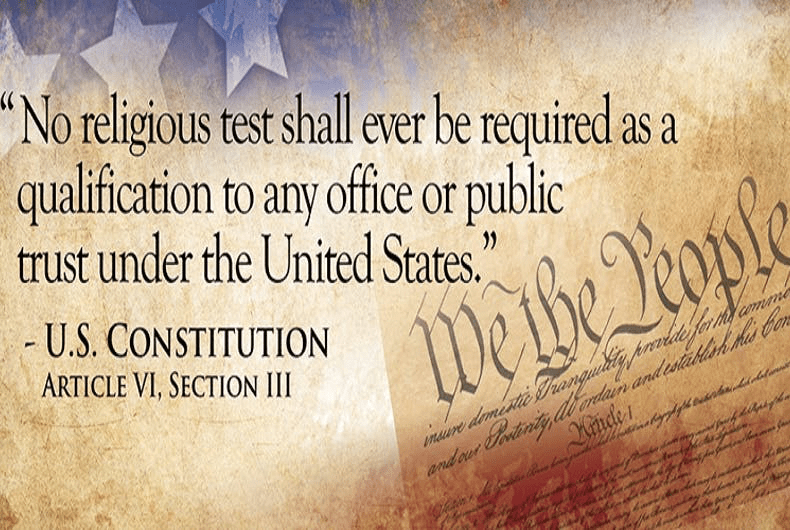


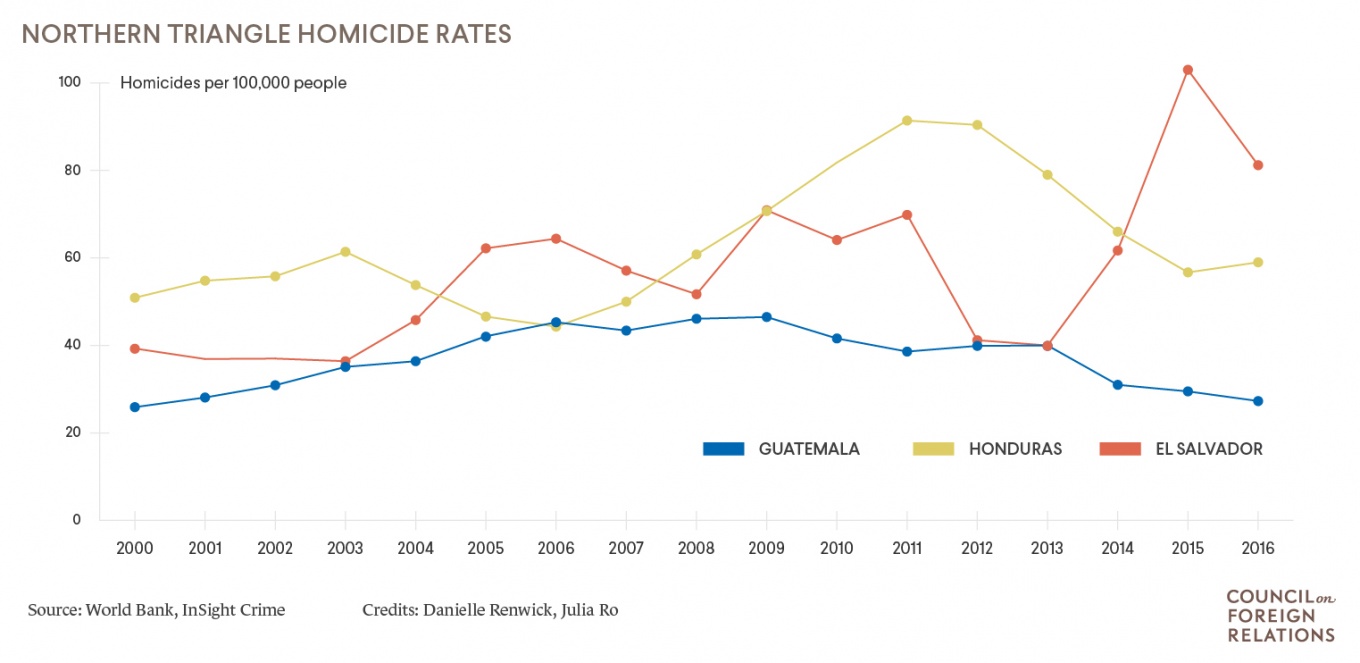
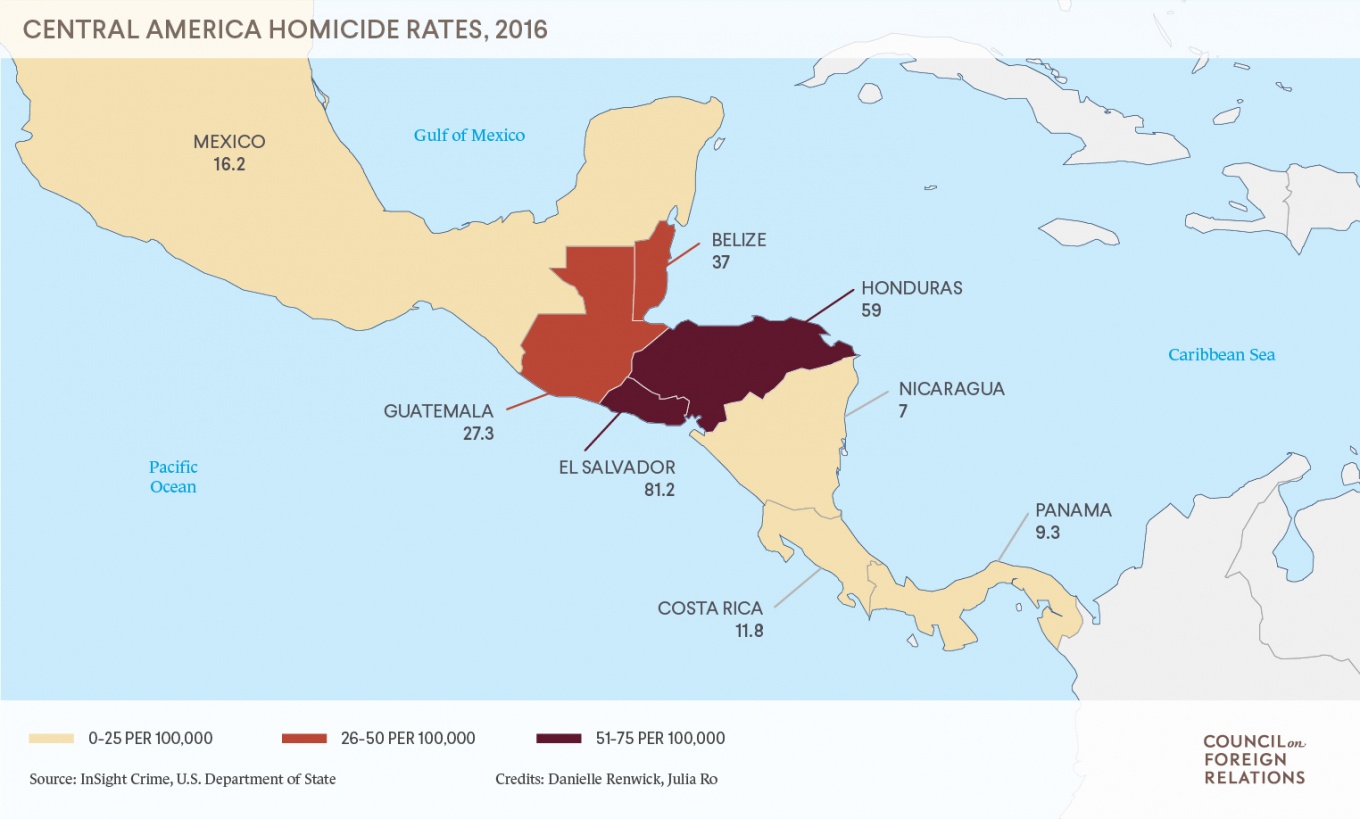
 freedom and reason