Whatever one’s opinion of the Jacob Blake shooting in Kenosha, Wisconsin, on August 23, Wisconsin governor Tony Evers’ statement on the matter is reckless and inflammatory. It is arguably an incitement to riot. Given everything that is going on in our country, and recognizing the importance of an unbiased investigation and possibly of a criminal trial, that the governor would issue a statement like this is, frankly, astonishing. He’s putting his thumb on the scales of justice. As the governor of a republic organized by the rule of law with the presumption of innocence, his statement tramples his duty to the citizens of Wisconsin to be fair and impartial on matters of justice.
“Jacob Blake was shot in the back multiple times, in broad daylight, in Kenosha.” That’s the first sentence of Evers’ statement. The phrase “broad daylight” leaps out. It’s like the hackneyed phrase “senseless death.” Why not throw in “at point bank range”? Those are the sorts of connotations “broad daylight” conveys. It should not have appeared in his statement. “While we do not have all of the details yet,” Evers continues, “what we know for certain is that he is not the first black man or person to have been shot or injured or mercilessly killed at the hands of individuals in law enforcement in our state or our country.” “Mercilessly” means pitiless or cruel. The governor admits that he doesn’t have all the details, but even with what he has on hand, how can he tell that the officers act pitilessly or cruelly? The choice of the word “mercilessly” suggests a gangster-style execution, a man begging for his life with his hands tied behind his back. Evers associated this characterization with other shootings “at the hands of individuals in law enforcement.”
I don’t think Evers is so stupid as to think that coming out immediately with a statement that reflexively sides with Black Lives Matter would quell the predicable riot (indeed, Kenosha is in chaos). He had to know that matters put this way would likely only inflame the insurrectionist passions rampant in our society these days. Such rhetoric gives the mob permission. Is it not Evers’ duty as the leader of Wisconsin to try to calm down the situation not inflame it? Yet here it is: “We stand with all those who have and continue to demand justice, equality and accountability for Black lives in our country—lives like those of George Floyd, of Breonna Taylor, Tony Robinson, Denise Hamilton, Ernest Lacy, and Sylville Smith. And we stand against excessive use of force and immediate escalation when engaging with Black Wisconsinites.”
The case of George Floyd is pending, and new developments cast doubt on the initial narrative taken up by a media bent on inciting “peaceful protests” across America. Breonna Taylor was killed in an apparent no-knock raid of the sort Radley Balko writes about in his useful The Rise of the Warrior Cop. The Tony Robinson shooting was ruled a lawful use of deadly force. Ernest Lacy’s death occurred in police custody back in 1981. The reason for its inclusion in Evers’ list is probably because Lacy died in a manner similar to Floyd. (Deaths from immobilization techniques are quite rare and have resulted in the deaths of whites, as well.) In the Sylville Smith case, Dominique Heaggan-Brown, a black police officer, was found not guilty after a criminal trial. Evers adds Blake’s name to this problematic list and strongly implies, without having all the details yet, that this is a case of “excessive use of force and immediate escalation.”
I have watched the video several times (you can easily find the video online). I see a man not complying with the lawful orders of police officers with guns drawn appearing to first reach into his waistband and then reach into a car followed by shots fired. It is a difficult scene to watch. It always is hard to watch a person being shot. The reaction of those present adds to the drama. But however dramatic the scene, it is irresponsible to characterize what we see on the video without asking several questions. What was going on before the clip begins? What do the police officers know about Blake? (With more video of Floyd’s death now available we have a lot of context to digest—context that appears to support the medical examiner’s conclusions. Moreover, we now know about Floyd’s criminal history.) What was the motive behind trying to stop Blake from getting into the car? Did the officers know it was Blake’s car? (Was it?) Did they know whether there were weapons in the car? Did the officers know there were children in the car? If they did know there were children present, did they know they were Blake’s children? In either case, assuming he was trying to drive away, were officers prepared to allow Blake to leave the scene with children in the car? Why was Blake not following the officers’ commands? Did Blake know there were children in the car? Was Blake known to officers? Did he have a criminal history?
With all these questions in the air, Evers ties the shooting to the claim of systemic racism, a claim that finds no support in an extensive body of research focused specifically on this question. “In the coming days, we will demand just that of elected officials in our state who have failed to recognize the racism in our state and our country for far too long,” Evers says in his statement. But Evers cannot possibly know whether racism has anything to do with this.
One eyewitness account should have told Evers to be cautious with his words. Raysean White, who filmed the video clip, describes Blake arriving in the car and ordering a child into the vehicle. Then Blake walks into a home. When White next witnesses what was happening, he sees Blake wrestling with police officers. He starts videoing the incident after Blake breaks free and starts walking to the vehicle. In the police call, the dispatcher tells officers that Blake “isn’t supposed to be there” and that he took the complainant’s keys and refused to leave. This indicates a very serious and dangerous situation. We also know that officers had already used a Taser on Blake before the shooting. According to the website Heavy.com, which is a reliable source for facts ignored by establishment media, Blake had a warrant issued for him on July 6 of this year on pending accusations of several charges including criminal trespass to a dwelling and felony third-degree sexual assault, all with domestic abuse as modifiers. He was also listed as not having a driver’s license. It also appears that he resisted arrest during a traffic stop after pulling a gun at a Racine bar in 2015. He injured a police officer in the incident. “As always,” said Pete Deates, president of the Kenosha Professional Police Association; “the video currently circulating does not capture all the intricacies of a highly dynamic incident.” He then states, “We ask that you withhold from passing judgment until all the facts are known and released.” Why couldn’t Evers do this?
Jacob Blake’s Facebook cover image
You won’t get any of these details from the establishment media. NBC carried the story with the following description of the incident: “Police shot Jacob Blake, 29, multiple times in Kenosha, Wisconsin, on Sunday as he opened the door to a vehicle where, an attorney hired by his family said, his three children sat. Blake was taken to a Milwaukee hospital and is stable after coming out of surgery.” The paper continued, “The shooting, the latest in a string of police violence against Black Americans captured on video this year, sparked uproar and protests against systemic racism in Wisconsin. Democratic politicians called not only for justice for Blake but also for changes to address systemic racism at the root of excessive use of force against Black people.” (Evers has called for an emergency legislative session to do just this.)
Not to be left out of a chance to advance the systemic racism narrative, presidential candidate Joe Biden said that cops in Wisconsin “must be held accountable” for the shooting of Blake. “This calls for an immediate, full and transparent investigation and the officers must be held accountable,” Biden said in a statement Monday. Was an immediate, full, and transparent investigation not expected? Moreover, wouldn’t that be necessary before demanding that “officers must be held accountable”? “These shots pierce the soul of our nation. Jill and I pray for Jacob’s recovery and for his children,” the former vice president continued. “Equal justice has not been real for Black Americans and so many others. We are at an inflection point. We must dismantle systemic racism. It is the urgent task before us.” A man who wants to be president of arguably the most racially diverse nation on the planet asserts the existence of a phenomenon that is falsified by empirical science.
Both Biden and Evers are blowing a perfect opportunity to be real leaders. They are missing a chance to plead with the public to obey the commands of police officers, especially when there are children and bystanders present. Put your hands in the air and comply, I always tell my students when I teach them how to interact with police officers. That and a lot of other things. If the officers are wrong, then you may file a complaint later. Being alive or conscious is necessary for this to happen. Follow orders and you are very likely to leave the situation intact. You may not even be arrested. Resist and it is almost certain that bad things will happen.
Evers’ reckless use of language signals to the public that law enforcement is illegitimate and one does not have to comply with an officer’s commands. It undermines a crucial piece in officer-civilian interaction that keeps people safe: compliance in an inherently coercive situation. Like correctional officers, police officers are permitted to use force to carry out their duties. Coercion is inherent in the nature of police work. That will never change. There are bad people in the world and they mean others harm. Officers may rationally use force to compel a person to comply in order to effect an arrest or detainment or prevent wrongdoing or harm. If officers wrongfully apply force, then there is a mechanism by which this may be adjudicated.
When you put into the heads of people the notion that defying the commands of police officers is justifiable because police officers are aggressing upon you because of your skin color, then you set up persons for further use of force and possible injury and even death—you also set up our cities and town for riots. In Jacob Blake’s case, the police had to stop a man who was where he should not be either from obtaining a weapon or leaving the scene of an investigation or possibly an arrest with children in the vehicle. Whether they used excessive force or whether they were motivated by racism is unknown at this time. But we do know that if the man had complied with their commands it is very unlikely that he would have been shot. And there would be no riots in Kenosha, Wisconsin today.
Housing policy is a complex affair. But I want to get very basic about it here. Is it really fair for a woman to work her way out of low-income housing and into suburbia only to have the federal government change the zoning laws of her city to allow low-income housing and all its consequences to follow her there? We cannot simply dismiss her concerns by shouting racism. Not everything is about race. Most things aren’t. Not really. At least not to most people. If we believe in the value of aspiring to something better through hard work and obedience to law and making sure people are rewarded for adhering to those values, then we shouldn’t work against their efforts by redistributing misery. Of course, at the same time, we should be careful not to assume a priori that low-income housing brings misery with it.
In a City Journalarticle published in 2003, Howard Husock argues that, not only are big public housing projects “noxious environments for their tenants,” but they also “radiate dysfunction and social problems outward, damaging local businesses and neighborhood property values.” “Making matters worse,” Husock continues “for decades cities have zoned whole areas to be public housing forever, shutting out in perpetuity the constant recycling of property that helps dynamic cities generate new wealth and opportunity for rich and poor alike.” This blog is about dysfunction and social problems, so I want to quote Husock at length here:
“Public housing spawns neighborhood social problems because it concentrates together welfare-dependent, single-parent families, whose fatherless children disproportionately turn out to be school dropouts, drug users, non-workers, and criminals. These are not, of course, the families public housing originally aimed to serve. But as the U.S. economy boomed after World War II, the lower-middle-class working families for whom the projects had been built discovered that they could afford privately built homes in America’s burgeoning suburbs, and by the 1960s, they had completely abandoned public housing. Left behind were the poorest, most disorganized, non-working families, almost all of them headed by single women. Public housing then became a key component of the vast welfare-support network that gave young women their own income and apartment if they gave birth to illegitimate kids. As the fatherless children of these women grew up and went astray, many projects became lawless places, with gunfire a nightly occurrence and murder commonplace.”
Those lower-middle-class working families, many of whom were the descendants of recent immigrants, worked their way into a position to escape public housing and the surrounding area and did so by seeking and holding on to good-paying union jobs. Moreover, they had, since the institution of quotas on immigration in the 1920s, assimilated into mainstream American culture, a development often mischaracterized as “becoming white” (the truth is that they were always white). Those who worked hard and saved money did not depend on the government subsidizing rents in order to live in suburbia, albeit the government place a big role in creating the suburbs. Working people depended largely upon themselves and embraced the American Dream. Self-reliance moreover played a big role in strengthening the nuclear family. In contrast, subsidized housing or subsidies without time limits are associated with young single mothers entering and becoming dependent upon the system.
Under an Obama-era rule, jurisdictions receiving Housing and Urban Development (HUD) money were required to analyze their housing situations by using metrics of economic status, English proficiency, race, and other items to determine factors that might represents barriers to access and, if finding problems, develop remediation plans. Such an analysis is pursued with predictable findings. It is defined in such a way as to produce desired results, results that align with a particular ideological frame.
HUD Secretary Ben Carson, in rescinding the policy in 2018, argued that the Affirmatively Furthering Fair Housing (AFFH) regulation was “unworkable and ultimately a waste of time for localities to comply with, too often resulting in funds being steered away from communities that need them most.” He then asserted principle: “Washington has no business dictating what is best to meet your local community’s unique needs.” The policy replacing AFFH is Preserving Community and Neighborhood Choice (PCNC) and it defines fair housing as “housing that, among other attributes, is affordable, safe, decent, free of unlawful discrimination, and accessible under civil rights laws.” It defines the concept of “affirmatively furthering fair housing” (which originates in the Johnson Administration) to mean “any action rationally related to promoting any of the above attributes of fair housing.” This change in policy has proven controversial and has been used by progressives to push the narrative that President Trump is a racist.
I recognize that there are benefits accruing to those who move into affordable and low-income housing in more affluent communities. If those who live there become successful, then an association between goal and objective becomes demonstrable. And for many, increasing diversity is in itself a good thing. But there is a cost. Two of the more obvious are decreasing surrounding home prices and raising crime rates. The evidence concerning smaller-scale projects, especially when scattered throughout a residential area (dispersed housing), is inconclusive regarding this matter. My city of Green Bay has small housing units (duplexes and quads) scattered throughout and they are not hotbeds of crimes. However, larger projects do result in increased crime and the effect obtains across multiple types of affordable housing (non-profit rental, public, or supportive).
On the assumption that locating low-income housing in wealthier communities increase diversity, Inclusive Communities Project brought and won a lawsuit in 2008 in which it was argued that the Texas Department of Housing and Community Affairs practice of concentrating supported racial segregation. However, researchers at Stanford found in 2015 that, while new projects in wealthier neighborhoods drives down home prices, affordable housing projects in poorer high-minority neighborhoods increases surrounding home prices and reduces crime because it attracts higher-income homebuyers. Moreover, the latter increases diversity while the former decrease diversity.
Consider the NPR story Mike Herring Says Richmond Can’t Combat Crime Without Addressing Public Housing. According to the story, Richmond police made about 27,000 contacts with people between 2017 and 2018, and most of those stops were with blacks. For example, blacks made up about 90 percent of traffic stops for warrant violations. The article consults Liz Coston, a sociology professor at Virginia Commonwealth University, who tells them, “If we think about it largely in the context of what does the population of Richmond look like, 48 percent black, we should see roughly 48 percent of the stops being of black people for curfew violations.” But that assumes police do not have reason to pull over blacks in greater numbers than non-blacks. Crime data refutes that assumption.
Gilpin Court, Richmond, Virginia
More fundamentally, why do progressives approach the problem of poverty with policies that burden working people? What about policy that reverses the transnationalization of capital and jobs, i.e. off-shoring, mass immigration, so that we can rebuild a national economy that fosters working class solidarity and raises proletarian consciousness while reducing unemployment and upward pressuring wages so people black, brown, and white can afford to leave progressive-run cesspools of crime and misery for pro-social neighborhoods with high-quality schools, nice homes, and low crime rates? We know that since the 1960s, the percent change in media rents has outstripped wages. Wages fell sharply in the 1970s, as we see wages decoupling from productivity, rebounded in the 1980s and 1990s for various reasons, and then fell sharply after 2000, the consequence of ramped up globalization. We can explain these patterns. Are the neoliberals and progressives who peddled globalization going to reverse course? Of course not. There was no good will in these policies. The work of neoliberalism is to paralyze democracy via privatization and top-down bureaucratic control. The job of progressives is to legitimize the process.
I’m all for liberating people from dreadful conditions and having them join my family in better ones. There are great benefits to living the life I live. That’s why I am keen on preserving it. I am not opposed to small-scale scattered projects that bring low-income families into suburban communities, but this should be carefully planned and a matter for local government. What I am not in favor of is federal government unleashing conditions associated with low-income communities in my community. To be sure, progressives responsible for the misery of inner-city America are going to smear those who mean to keep better lifeways as “racists” while imposing regulations triggered by assessments that are sure to find the patterns they’re looking for.
Progressives will always find these patterns until the country dedicates itself to a course of economic nationalism that provides good-paying jobs that raise the standards of living for all Americans. We do in fact live in a nation where life is de facto segregated, and there are historical reasons for this, but globalization, neoliberalism, and progressivism work to entrench these patterns not disrupt them. Leftwing technocrats stifle the democratic populism needed to bring back our country with policies and programs designed to enrich the corporate elite at the expense of working people.
In this blog entry, I cover several items concerning the on-going COVID-19 pandemic. Even as the virus fades, the panic endures. I first clarify the distinction between cases and infection rates, then I make some observations about the global and regional patterns of community spread, describe the character of the virus and its mode of operation, critique social media framing of frontline doctors and therapeutics, and criticize the recent vote in my city to start schools in virtual mode. As I have argued in past blog posts, we are in the midst of an unprecedented moral panic, one that is destroying the American way of life.
* * *
People continue to mix up infection rates with case frequencies. As a scientist who cares about the integrity of knowledge, this drives me up the wall. Rate and frequencies are not the same things. We see a similar confusion when trying to grasp COVID-19 deaths. People say there is a high death rate without distinguishing case fatality rates (CFR) from infection fatality rates (IFR). (I have discussed this on my blog before. See, for example, Hunkering Down for No Reason.) We need to correct this misunderstanding because without properly grasping the difference between these statistics we cannot proceed on the basis of rational risk assessment. Without rational risk assessment we cannot go back to a normal life. And we have to get back to normality. Not a “new normal.” Normality.
The infection rate has to be estimated because not everybody who is infected is tested. This is also true for calculating death rates; historically, not all viral deaths are identified by testing. The CDC does this with influenza every year. So, this year (October 1-April 4), the CDC estimates between 39 and 56 million flu illnesses, with between 24 and 62 thousand deaths (that’s a lot of death the media failed to tell you about). In contrast, the case rate is determined by the number of positive tests. Authorities don’t estimate that; they count positive tests results. Thus, case frequency is a function of testing. President Trump has been criticized for pointing out this fact. But he is right about this. It is not a technicality. It matters a lot.
Positivity rates represent the fraction of tests that come back positive, calculated by dividing the number of positive tests by the total number of tests (you can in turn calculate these in terms of population). The President is interested in this number and so should you be. A large proportion of the population can be infected but the number of cases low because they have not been detected through testing. This was the situation back in March and April. More testing will raise the number of cases while the infection rate may be falling, rising, or stable. Moreover, the positivity rate can be high because there is a greater likelihood of detecting cases if a larger proportion of the population is infected. At the same time, the IFR hasn’t changed much during the entire period, as I have shown in numerous blogs. This virus is deadly, but not particularly deadly. The evidence suggests that it is less deadly than it was at first.
It is helpful to clarify several things at this point. First, testing positive does not mean the person is ill. There is a distinction between SARS-CoV-2 infection and COVID-19 disease. For example, children test positive for the virus but are rarely ill. Second, viral tests are different from antibody tests. A person can test negative for the virus and positive for the antibody. This is because he either had the virus (and even the disease) and now longer does, or he was exposed to one or more coronavirus in the past. Third, a person who has tested positive for the virus may not test positive for the antibody, which does not necessarily mean the person has no immunity to the virus. T-cells, for example, develop a memory of a particular virus or viral group. Remember, if the body can produce no immune response to this virus, then a vaccine for this virus is not possible (industry propagandists talk out of both sides of their mouth on this point). Generally speaking, declining positivity rate with the same amount of testing means the infection rate is falling. Crucially, a declining positivity rate can occur even while the total number of cases is greater because of a greater number of positive tests. In other words, more cases does not necessarily mean the rate of infection is increasing.
I am a criminologist, so I find a similar problem in determining the “dark figure” of crime—that is, how much crime is there really? We can never know for sure, but we do know to be very careful with the Uniform Crime Report (UCR) published by the FBI. The UCR is compiled from crime reports submitted by thousands of law enforcement agencies across the nation. The more crime police detect the more cases of crime they may report (they may also report more arrests and greater clearance rates). This does not necessarily mean there is more crime (or that they will report more crime). The Justice Department publishes a different measure, the National Crime Victimization Survey (NCVS). The NCVS draws population inferences using probability sampling. Both use rates, but I trust you see the difference. What we know is that, for some years, the rate of crime in the NCVS goes down while the rate of crime in the UCR goes up because the police report more cases, which can be a function of community awareness and engagement, public fear, better trained officers and more diligent record-keeping, not an actual rise in crime.
President Trump’s complaint is not that testing causes infections (he’s not stupid). His point is that, instead of focusing on declining positivity rates, even when the number of cases is rising, because there is more testing, the media’s focus on the total number of cases misleads the public. Heads up, progressives: a lot of people know Trump is right about this and you are antagonizing them. They also understand why the media is misleading the public. For the same reason, the media has shifted its attention from deaths to case frequencies. The declining positivity and IFR rates do not fit the narrative the media pushes. One has to be willfully ignorant of reality to pretend that the establishment media is not hellbent on destroying the Trump presidency. Accurate observation of reality should not depend on whether you are a Trump supporter.
* * *
SARS-CoV-2
When looking at COVID-19 patterns, regionally and globally, one may draw an inference that lockdowns and masks have reduced community spread. If there is an effect, this is likely due mostly to lockdowns, the authoritarian practice of quarantining healthy people, albeit it depends on how persons are locked down. However, to the extent that these practices are effective, they appear only to have delayed community spread, not prevented it. I recognize that this is a funny way of putting it but the nature of herd immunity makes the virus appear to want to run its course. If this is true, then the sooner we establish herd immunity, the quicker we can get over this pandemic, and it doesn’t look like we will get there with lockdowns and masks. Rather we get there with a significant portion of the population getting this virus and developing an immunity to it. That is, of course, true by definition. But it appears to be really true. H1N1 and H3N2 strains of influenza, which were markedly more deadly in the past than COVID-19, remain present in the annual viral mix without the same death rates, even if they continue to kill tens of thousands of Americans every year.
Fortunately, for the same reason H3N2 influenza type is not as deadly as it was in early periods (recall the Shanghai flu and the Hong Kong flu), community spread of SARS-CoV-2 is naturally limited by the fact that coronaviruses have always (or at least for decades) been with us and, for many of us, our immune system recognizes the generic type and attacks it. For those who are infected, most present without or with very mild systems and subsequently develop some degree of immunity from it (again, otherwise vaccines wouldn’t be a possibility—which also means, at the same time, vaccination is not really necessary for healthy people albeit potentially harmful for unhealthy people). When herd immunity is established in a country or a region, buttressed by previous exposure to coronaviruses, community spread slows and eventually the virus loses its foothold (but remains in the viral mix). Our immune systems remain our first and best protections from pathogens.
This is why those countries and regions that did not lock down or wear masks, assuming these work to some extent, until after there were a significant number of cases are now seeing declining cases and deaths, whereas those countries and regions that locked down early but have now lifted their lockdowns are seeing a rise in cases and deaths (although not nearly at the rate seen in early spring). For example, and this is not something Governor Andrew Cuomo can take credit for, because New York was hit early and hard, the virus burned through the population and now is at low levels. By the time New York locked down, the virus had already done its damage. (Sweden did this on purpose and they had zero deaths on August 11). The midwestern, southern, and western states that locked down early at best delayed community spread. They are not seeing rising rates (without the corresponding frequencies of deaths). Might we have already been through the pandemic if these states had let the population get the virus? If so, locking down was a mistake.
Locking down was a mistake for another reason. The virus does not do well in heat and sunlight. It’s hot and bright in the South. The colossal error of sending people into enclosed spaces with drawn curtains and air conditioning should be obvious. But science and common sense have been tossed to the wayside in the context of mass hysteria.
* * *
What are people dying of really? Influenza and other viruses kill a lot of older people, people with cancer, etc. But when a person with cancer dies from a rhinovirus, this is not the sole cause of death—or even the listed cause of death. Who dies from a cold? Consider the individual at the end of his days in a case where influenza plays a proximate role in his death. His grandkids visited him one weekend and he picked up H1N1 from them. He never had it before. His immune system is failing. This happens with age. He underwent chemotherapy to combat his stage IV cancer. If he were younger and healthier, then influenza probably wouldn’t kill him. To say that he died from influenza when it’s age or health conditions that made him susceptible to dying from influenza or some other pathogen (bacterium, fungus, etc.) misleads younger and healthier people into believing the virus is lethal to them in the same way. Obfuscation of fact creates unreasonable fear. And the fact is that healthy children and adults under 60 are very unlikely to be affected by SARS-CoV-2—indeed, influenza is more dangerous to children than is coronavirus. Low-level risk becomes obscured by the myopic and sledgehammer focus on official death without qualification—and a media that feeds on sensationalism.
A useful analogy here is the AIDS epidemic. Persons with AIDS may die from many things. Pneumonia is a common condition (a quarter of a million Americans have died from pneumonia and flu-like illness this past spring and summer). Pneumonia in turn has many causes—viral, bacterial, fungal. Is it not AIDS that underlies the many possible proximate causes of death that ultimately kills the person? Perhaps this is a subtle ontological problem, but if we don’t talk about the risks associated with AIDS then we are not being honest with the public about this disease. A death certificate that says a person died from pneumonia doesn’t tell us why pneumonia was able to invade and ravage this person’s body so easily. Yet, with SARS-CoV-2, children are being traumatized and shut off from others over a virus that is very unlikely to harm them. We don’t do that with most other pathogens. And there is nothing particularly remarkable about SARS-CoV-2 beyond possibly pathogenic priming (and this is not the only virus capable of autoimmunity).
* * *
The novel coronavirus, or SARS-CoV-2, is an RNA virus. It appears to be a modified version of SARS-CoV, which appeared in 2002. (When I say modified, I do not necessarily mean engineered by man. But given the reality of gain-of-function experiments, it is possible that this virus was engineered for some benevolent or malevolent purpose.) RNA, like DNA, is genetic material carrying instructions for the unfolding of living things. Viruses cannot reproduce on their own. They must break into cells and hijack their gene-replicating machinery. A feature of all coronaviruses are protein spikes on their surface that activate ACE2 receptors. ACE2 receptors are doors that open the cell. The protein spikes pry open the doors and the virus enters the cell. The SARS-CoV-2 virus first enters the cells of the nose and throat. ACE2 receptors are present in other organs (the digestive system, circulatory system, etc.). The male sex hormone testosterone may increase the number of ACE2 receptors. This may explain why men are more affected by this disease than women and why children, especially young children, are rarely affected by it.
SARS-CoV-2 is less deadly than its predecessor SARS but replicates more rapidly. Its lower level of lethality is related to its success, since living hosts enable community spread. Viruses that quickly kill a large proportion of their hosts ten to be self-defeating. Indeed, with SARS-CoV-2, infection is usually so mild that most infected people won’t feel sick at all. According to University of California—San Francisco researchers, more than half of infected persons examined never experienced or showed signs of any symptoms at all. Monica Gandhi, a professor at the University of California-San Francisco, recently punctuated the significance of asymptomatic cases: “If we did a mass testing campaign on 300 million Americans right now, I think the rate of asymptomatic infection would be somewhere between 50 percent and 80 percent of cases.” Data show that only one in five persons showing up to the hospital described or presented with cold-like symptoms. Sulggi Lee, another UCSF professor, concludes: “The majority of people who have COVID-19 are out in the community, and they are either asymptomatic or only mildly ill.”
While SARS-CoV-2 does not seem to be unusually cytopathic (it is not particularly aggressive—influenza is far more so), it does appear to affect the immune system in a novel way in that the immune system mobilizes more aggressively against SARS-CoV-2 than against influenza. The immune response may go awry provoking the development of a severe pneumonia known as acute respiratory distress syndrome, or ARDS. Treatment of ARDS requires therapies that subdue an overactive immune system. Too much immune suppression, however, could make it difficult for the patient to clear the infection. It is unclear whether this is a feature of the virus, the result of pathogenic priming from vaccination, autoimmunity from whatever source, or a combination of all of these (the phenomenon is seen in other viruses and vaccines).
At any rate, hydroxychloroquine (HCQ) has unique properties that make it the ideal drug for treating SARS-CoV-2. HCQ has well-known antiviral properties. But it is also widely used for the treatment for rheumatoid arthritis, an autoimmune disorder. The same mechanisms that tame while not over-suppress the immune response in arthritis patients appears to allow HCQ to better strike the balance that prevents cytokine storm that occurs from an overreaction of the immune system while allowing the patient to develop an immune response to the virus. Whatever one thinks of their politics (it was a diverse group), the doctors whose video was taken down on social media (“America’s Frontline Doctors”) were merely confirming clinical and scientific findings showing the efficacy and safety of HCQ, a decades old medicine with wide therapeutic applicability. That explains the effort to discredit them—that and the fact the Trump promoted them. Is Facebook going to take down posts sharing an article by a professor of epidemiology at Yale School of Public Health? “I am usually accustomed to advocating for positions within the mainstream of medicine, so have been flummoxed to find that, in the midst of a crisis, I am fighting for a treatment that the data fully support but which, for reasons having nothing to do with a correct understanding of the science, has been pushed to the sidelines,” writes Harvey A. Risch, Professor of Epidemiology at Yale School of Public Health (see Newsweek). “As a result, tens of thousands of patients with COVID-19 are dying unnecessarily.”
In June, Trump’s doctor prescribed the President hydroxychloroquine as a prophylaxis. That same month, the Food and Drug Administration (FDA), an organization long ago becoming the poster child for regulatory capture, revoked emergency authorization for the drug for Covid-19 patients claiming that it was “unlikely to be effective” and carried “potential risks.” The National Institutes of Health (NIH) halted clinical trials of the drug. The CCP-controlled WHO pushed the same anti-HCQ line. Progressives, as they always do, came out in force in support of restrictions of the drug, repeating industry propaganda. This is the big flaw of progressivism: adherents accept corporate governance and bend institutions to its logic. In the typical ad hominem fashion, the professional (pseudo)skeptics picked on one doctor in particular, pediatrician and Christian minister Stella Immanuel, who has said some rather bizarre things (although not bizarre to anybody who believes in angels) to distract from the fact that thousands of people have died who wouldn’t have had the industry adopted HCQ (along with azithromycin, or doxycycline, and zinc) at the beginning of the pandemic. (For an example of professional skepticism see Science-Based Medicine, an organization run by, among others, corporate shills and disciples of James Randi Steven Novella and David Gorski.)
If you haven’t noticed, there’s a big problem in our country with folks with limited understanding of science approaching corporate science—a product of the medical-industrial complex—with wide-eyed religious-like faith. This is a near-universal feature of progressivism. You see it in the hysteria over healthy people resisting quarantine, masks, or vaccination. These would-be tyrants want the government to force people to be jabbed by government agents or to exclude and stigmatize those who refuse to be jabbed. They tend to speak of humans as disease vectors. These zealots are effectively uncompensated shills for the pharmaceutical industry. They efforts are not without their rewards, though. Their compensation is the attention and strokes they receive on social media from their fellow woke scolds. And getting off on lecturing people for free thinking. It’s a psychological wage. They even manufactured the mythic creature “Karen” to distract the public from their pathological busybodyism.
This is where we find ourselves. People who oppose the use of hydroxychloroquine in COVID-19 patients and as a prophylaxis to slow community spread are supporting government policy and industry action that are sickening and killing people with risk factors that heighten the lethality of this virus. A piece to this is of course what people are calling Trump Derangement Syndrome, or TDS. Because Trump advocates effective and safe pharmaceutical interventions, said interventions are judged unfit for human consumption. If widespread use of drugs Trump endorses substantially reduces death, if these interventions allow us to go back to school and work, if opening society gets the economy back on track (and under the current administration it was humming), then Trump may look good just around the time the public votes for President. For many people, the singular focus of contemporary politics is vanquishing Big Orange Man to the netherworld.
There are those who will claim to stand outside such infantile politics. The “level-heads” push back against the efficacy of hydroxychloroquine by citing studies that do not show a statistically significant difference between treatment and control groups. Their argument is deceptive. It depends on when and how the medicine is administered. Therein lies the tragedy of industry and corporate media propaganda against HCQ. If you wait until the patient is very sick, then HCQ won’t help very much. Early administration of HCQ is highly effective—with studies of early administration showing reductions in mortality by half or more—as well as HCQ being an effective prophylaxis. In other words, industry opposition to off-label prescribing of this drug is killing people. And they’re doing it for the sake of profit. Why should this surprise people? They do the same thing when they poison the environment.
My critique goes for the reluctance of staff and teachers to go back to school in a normal way, which I focus on in the next section. Disregard for the emotional and psychological health of children and their proper social development among public employees charged with such matters ought to disturb all of us. I know some will take umbrage at this, but the abuse of parents and other staff and teachers who want to return to normality is contemptible. I have been patient in watching the hateful rhetoric and emotional blackmail coming from those whose livelihood depends on my taxes. Frankly, I feel some shame for helping legitimize some of the voices dominating the discourse out there in the past. People have to become more vocal against this countermovement against liberty and democracy. Crazy can become tyranny in the face of silence.
(Note: the website of pediatrician and Christian minister Stella Immanuel offers a prayer to remove a generational curse originally received from an ancestor but transmitted through the placenta. Do you think this prayer also works to remove the generational curse of white privilege that I have been afflicted with by the deeds of my ancestors?)
* * *
I am a teacher and researcher at the University of Wisconsin-Green Bay. I hold degrees in psychology and sociology, including degrees at the masters and doctoral levels. My areas of expertise are criminology and political economy. Among the skill sets associated with these areas of expertise is working knowledge of demography and the logic of epidemiology. I tout my areas of expertise to let readers know that I am capable of reviewing the scientific literature on the current pandemic across a wide range of disciplines. I have reviewed the literature and determined that returning to as much of normal life as possible—and probably no walk of life is more relevant to this case than the experience of public school—is not only reasonable but vital to our future.
It is of course no problem to cherry pick studies that contradict the consensus. I don’t mean here the faux-consensus surrounding the narrative the teachers unions peddle with their talking points. I mean then consensus that emerges from the literature that hardly anybody who talks about this subject cares to read. It’s not as if teachers haven’t had a lot of time on their hands lately or lack access to the Internet to do the hard work on this. They don’t care to do the hard work. Cherry picking doesn’t help us make the right decision. Indeed, it’s a tactic in confusing rational judgment.
When I consume science, I look for evidence that allows me to develop if possible critical assessments of the stories people are telling. This is so I can weigh the arguments and information in order to determine the voracity of these stories. I need to constantly challenge what I think I know or what I am being told is the consensus opinion. I also feel a need to constantly challenge what you think you know or are being told is the consensus opinion. To be sure, when you understand how religious-like thinking works you also understand why it’s so difficult to break through false narratives that sweep up people and carry them into the currents of mass hysteria, for example over COVID-19 (or the moral panic surrounding systemic racism). Some give up in the face of the intensity of faith belief. But I have been critical of religion my whole life knowing that I won’t be able stop religious thinking. That I can’t change most people’s minds doesn’t mean I haven’t changed any minds. If I persuade one person to change his mind, then there is value in the exercise. And I know I have changed minds.
When I listened to the voices from my community during a recent school board listening session on how to go back to schools (shamefully, the board voted 5-2 to start the semester virtually), I was delighted to see parents and professionals using critical thinking and independent judgment to arrive at reasonable conclusions. I thank them for momentarily pulling me back from the brink of misanthropy (I am still teetering). But I also heard spokespersons for the teachers union repeating talking points with which I was already quite familiar and that are cringingly unscientific and religious-like. I know the strategy deployed on that side. I know about how the line was organized. It was propaganda. While I have changed some minds about this, I have clearly not changed enough minds. I noted the night before on my Facebook page—I was anticipating the process and the outcome—that propaganda illustrates a story that we believe we already know or what somebody wants us to believe we already know. Propagandists do not want people to consult information that calls into question the story they want others to believe. Hence the lockstep narrative, the repetition of points, and the mocking and ridiculing of alternative interpretations and their bearers. I know how the union works to exclude and marginalize non-union voices.
Given what I have been reading and hearing from this group of staff and teachers, I confess that I am deeply concerned about the future of public education. I am losing confidence in an enterprise that I have been supporting with my money, time, and energy. I have trusted this system with my children. It won’t take much pondering before other people start to consider that a great deal of money may be bound up in the wrong place. If children can be properly educated by sitting in front of a screen all day, then why do we need public education? All this money going to buildings and people who don’t do what they were built and hired to do—shouldn’t the government instead invest in the construction of apparatuses that ensure that children are in their seats at home receiving their daily programming—extend the surveillance system into our abodes? Maybe the government should give the public back its taxes so it can invest in home educational systems or spend the money instead in private systems prepared to do what educational system are supposed to do. Yes, I hear the rebuttal: “Well, this is just a temporary situation because of the coronavirus.” But this line only highlights the irrational thinking behind the shuttering of our institutions.
This argument I hear teachers making about how just one death is one death too many therefore we cannot return to school until COVID-19 is over applies equally to influenza. According to the Centers for Disease Control (CDC): “People with flu can spread it to others up to about 6 feet away. Most experts think that flu viruses spread mainly by droplets made when people with flu cough, sneeze or talk. These droplets can land in the mouths or noses of people who are nearby or possibly be inhaled into the lungs. Less often, a person might get flu by touching a surface or object that has flu virus on it and then touching their own mouth, nose, or possibly their eyes.” Sounds like COVID-19. Then the CDC tells you that “you may be able to pass on the flu to someone else before you know you are sick, as well as while you are sick. Some people can be infected with the flu virus but have no symptoms. During this time, those people may still spread the virus to others.”
Why haven’t we been wearing masks for years? How could we have been so irresponsible? We know that influenza is more lethal to children and adults under 60 than COVID-19. Yet, we’re shutting down schools for COVID-19, but not for influenza. Given that influenza rages through the population every year (tens of millions of infections), and vaccines have only some efficacy in controlling community spread (some years much less than others), and given that influenza kills many people every year (tens of thousands) how can we ever go back to school? Why didn’t we stop going to school years ago given the fact that at least one person has died every year from influenza? Why is this connection never made? Are we going to be consistent? This also applies to adenoviruses and rhinoviruses (yes, those are deadly viruses, too). And to bacteria and fungi.
It’s as if teachers suddenly discovered that the viruses that constitute the annual mix of pathogens (coronaviruses are not novel) carry lethal potential. Viruses have always carried this potential. Teachers have always been at risk of contracting a virus and spreading a virus that could kill them or others. In fact, this has already happened. Every year it happens. Children bring home pathogens that kill relatives and they have been doing this long before this particular coronavirus came on the scene. That the grim mantra of death is repeated over and over again by teachers tells us that either common sense is being suppressed for some ends or that the capacity for seeing the obvious has gone missing. Either way, how can we trust the judgment here? No. You can’t. They’re irrational. They are lost in fear.
Here’s another absurd argument we hear all the time: Expecting public schools to be open and educating children as part of the institutional frame that allows parents to go to work to financially support their families, that prepares children for productive lives in an advanced economy, and that facilitates the normal socialization of humans in mass society equates public education to daycare or treats it like babysitting. Teachers delegitimize their profession and undermine their esteem by comparing themselves to daycare employees and babysitters (no offense to daycare workers and babysitters, who also perform a vital role in a complex society). The school board should not enable such self-sabotaging rhetoric. But it did.
A popular post shared on Facebook by Alan Moore “Teachers for Justice” (his page glorifying anarchistic violence against the republic) contains a list helping teachers rationalize their desire not to do their jobs anymore. “You are not hurting children by wanting the safest possible school arrangement for students and their families. That is a healthy sense of caring for the wellbeing of others,” one items goes. This item follows: “You are not leaving working parents with no options by asking to teach from home. That is setting healthy boundaries between problems that are your responsibility and problems that are government/society’s responsibility.” Do I need to spend any time pointing out the massive contradiction between these two affirmations/rationalizations with respect to harm and safety? Or how teachers are in fact leaving working parents with no options by asking to teach from home? How about the next item: “You are not ignoring children’s mental health, nutrition, and special service needs by insisting on safety. That is, again, setting healthy boundaries between problems that are your responsibility and problems that are government/society’s responsibility.” In case you missed the contradiction, Moore makes sure you finally get it. The list, which has been shared about three dozen times, has one comment thanking Moore for recognizing the problem of “emotional blackmail.” Ironic. The list is a paradigm of emotional blackmail.
I believe that teachers, like everybody else, should enjoy the right to speak their minds and participate in decision making. I am a democrat. Of course I believe this. But teachers are also public servants who are ultimately answerable to a public who pays their salaries and trusts them with their children. Teachers should not have an outsized role in determining how we proceed. There is no contradiction in giving public workers a voice and expecting them to serve the public. The respectable occupation of garbage collection must of course allow workers the right to speak up about their occupation. But the garbage must nonetheless be collected. And roads laid and potholes filled. And bridges suspended and repaired.
The presentation of the conditions in the schools—the strict adherence to the absurd CDC guidelines—gave the game away (all this was virtual, of course), it was so obviously orchestrated to shame and scare parents who want to go back to face-to-face instruction. If I were one to have faith in people, I would have lost it on this night. Right from the git-go, it was theater. Just as the dissemination of images of teachers in masks, goggles, and shields, these images were designed with this purpose in mind. Many of these precautions are so unnecessary that, if you know the science, the presentation insulted. These were panic tactics. I was infuriated by the petty elitism expressed in the contrived commentary—it was so contemptuous of the values of democratic republicanism. If one ever wanted an illustration of small-scale technocracy, they found it here. Pubic health officials and experts have presumed to be our unelected rulers. And a panicked public has coronated their rule.
The school board should have acted in the best interests of the community. That would mean going back to physical school and in as normal way as possible. But it didn’t. Everybody who voted for virtual education can expect no support from me in the future. They not only let down our children, they also failed our democracy. The public poll showing parents overwhelmingly wanted to return to in-class instruction was dismissed as “out of date.” There was no effort to conduct a new poll. This is—at least it used to be—an open society that uses evidence in a pragmatic fashion to develop public policy that advances the common interests of the families that comprise it. What I saw that night was an insular and misinformed professional class proceeding on technocratic notions of how policy should be formulated, a petty elite delegitimizing their own profession—worse, undermining one of the most important institutions of modern society: public education.
* * *
I was told the other evening that we aren’t making enough of a big deal about SARS-CoV-2. Really? I have kids and my friends have kids and the constant reporting about the dangers of this virus is terrifying them. We’re seeing a great deal of emotional and psychological difficulties in beings designed by nature to be free and social. The consequences of shuttering society and teaching people to see other people as disease vectors are terrible. It’s not disease and death that are novel. That’s the human experience. It’s the concrete societal reaction that is novel here. I’m 58 and we never responded to a virus like this in my lifetime. We never quarantined healthy people. We never forced people into masks—or goggles? face shields? What’s next? Mandatory vaccination? (Nuremberg, anyone?)
In 1968-69 the Hong Kong flu killed 100 thousand people in a population of 200 million. That’s proportionally a lot more deaths than what we’re currently experiencing. Did we lock down then? What I remember from the summer of 1969 was not doom and gloom amid a welter of constant reporting of unqualified official death from H3N2, but Americans landing on the moon and me and my sister playing with our friends. No, we didn’t lock down. When H3N2 came around the planet in 1957-58 it killed around 120 thousand in a population of 170 million. Did they lock down then? No, they didn’t. My father’s cohort enjoyed a normal senior year of high school.
I am told that SARS-CoV-2 is far more contagious and virulent than influenza. It’s not. Compared to SARS-CoV-2, influenza has a shorter median incubation frame (time from infection to symptoms) and a shorter serial interval (time between successive cases). That means that, all things beings equal, influenza spreads faster than COVID-19. Moreover, influenza is more contagious in asymptomatic carriers. Asymptomatic cases are not the major drive of COVID-19 transmission (which is why mask wearing is so obnoxious). However, because of less exposure to SARS-CoV-2 in the population, there are more super-spreader events with COVID-19. This explains the comparable R0. With influenza, past exposure limits such events. As for virulence, antibody research shows that the death rate from COVID is comparable to more severe influenza types (again, one needs to look at IFRs over against CFRs) and is less deadly than previous influenza types, such as H1N1 and H3N2. Moreover, influenza kills more people across the age range than COVID-19, which is lethal only among the very old, obese, and immunocompromised. It is also the case that doctors killed a lot of people in the early days of the pandemic, as the CFR has dropped significantly since then.
Because enough people think in comparative terms, the establishment media pushes hard a narrative that COVID-19 is more like the Spanish flu pandemics than other influenza types (the strategy of repeating the mantra that this was nothing like the flu didn’t catch on, although one still hears it today). The dishonesty in CNBC’s article, “Scientists say the coronavirus is at least as deadly as the 1918 flu pandemic” is remarkable (this article is representative of several articles published on the same day). The opening sentence: “The coronavirus is at least as deadly as the 1918 flu pandemic….” The next paragraph: “‘What we want people to know is that this has 1918 potential,’ lead author Dr. Jeremy Faust said in an interview, adding that the outbreak in New York was at least 70% as bad as the one in 1918….” “Potential” and “70% as bad” is not “at least as bad.” In fact, it is significantly less as bad. And how does one get to 70% as bad? Later on they tell us that the death toll from the Spanish flu was 749,700 in the United States alone (comically, the article does not call it the Spanish flu). And that was when the US population was around 100 million. If this amount of death was happening in the United States we would be on track to amass some 2.5 million corpses. No, the Spanish flu was way worse. This is media sensationalism.
Those who defend the article claim that modern medicine must be credited with why the present pandemic is not as bad as the Spanish flu pandemic. But really, if we are going to credit anything, it should be modern sanitation and other advancements in social life won by the worker movement. Most of the gains in reducing death from disease (tuberculosis and measles, to take two examples) came not from medicine but from the work of labor in improving living conditions (see R. Lewontin’s Biology as Ideology). However, there are a couple of factors that push against the thesis that modernity has lessened the fallout in this case. First, given that there is a very clear correlation between population density and death associated with this disease, all things being equal, the fact that the degree of urban density is much greater today than in 1918 suggests a greater death toll from COVID-19. Just imagine H1N1 with no herd immunity in New York City. Second, it has become rather clear that vaccines have primed individuals for pathogenic response to a wide range of pathogens (foods, as well). SARS-CoV-2 seems particularly keen on tricking the immune system. One of the main reasons that people are suffering from COVID-19 is because of autoimmunity and associated inflammation. This problem, to the extend that vaccines are behind it, did not exist in 1918. Finally, we have an intervention today that would sharply reduce the number of dead by possibly as much as 80 percent, but at least by 50 percent—hydroxychloroquine plus zinc plus Zithromax. But the very medical industrial complex that people credit with such great gains has prevented the widespread use of this cocktail in the western world for the sake of profits. Authorities have used this in the Third World, which is why their deaths are between 1/8 and 1/12 the deaths that have occurred in the first world. For example the entire country of India, which has 1.2 billion people and in which COVID-19 is widespread, has had roughly the same number of deaths as New York City, which is about 19 million. India is not regarded as being very advanced in their medical systems. I don’t buy the progressive case.
The fear is unreasonable. We are experiencing a classic moral panic around a new focal point, but the dynamic is the same: people giving in to irrational fear and insisting others be paralyzed alongside them—and it’s wrecking the future of people who have a lot of future still in front of them. Thank goodness there are young people out there resisting this and getting on with their lives. I saw a young man in Walgreens yesterday violating the stand mandate to wear masks inside buildings. Nobody is saying you and I should join him. I am saying, let him live. Aren’t you wearing a mask? You’re safe, right? I was. I don’t want to pay the fine.
The political consequences of this hysteria are frightening. We are seeing the emergence of rule by public health, officials with their models and patents focused on one aspect of human life: merely a beating heart. We are becoming a corporatist technocracy in which all qualitative factors are being pushed to the margins. Animals don’t do well in cages. Meanwhile our people are being denied therapies shown to work throughout much of the developing world. Populations are being denied strategies that have allowed other populations to achieve heard immunity and get on with their lives. People are making a fetish of SARS-CoV-2, treating it as if it’s Michael Crichton’s Andromeda strain. While obeying certain experts, since they dint care to know for themselves what’s really going on. But they know Trump has to go.
Panic is a different kind of virus. It’s a virus of the mind. Is there a limit to the spread or duration of this one?
In 1779, an artisan named Ned Ludd is supposed to have smashed stocking frames he believed undermined his craft. Ludd becomes the inspiration of British textile workers and weavers who see their livelihoods being undermined by knitting frames and mechanized looms. Almost a hundred years later, in 1870, Karl Marx observes that the English bourgeoisie imported cheap Irish labor to England to undermine wages and morale and disrupt solidarity of English proletarians. Marx observes that globalization and cheap immigrant labor is the capitalists’ secret weapon in maintaining class hegemony. Yet there are those claiming to be “on the left” who condemn “luddites” and “nativists,” rejecting creative endeavors and eschewing class struggling while rioting for a world where the worth of each human shall be determined not by his individual personality but by the color of his skin. They have become destructive force laboring (many unwittingly) for corporate power.
What are the consequences of the first development? If pushed far enough the system will crash, as Ernest Mandel noted in his 1967 An Introduction to Marxist Economic Theory. Automated systems (robots and the like—Fordism, Taylorism) don’t buy things. By replacing flesh-and-blood workers, they reduce effective demand. Rising organic composition of capital (OCC) thus renders labor redundant, increasing unemployment, reducing effective demand, preparing a realization crisis, where there are more commodities than customers and the economy contracts in its wake (see Late Capitalism). At least with immigrants the economy enjoys consumers. But then it doesn’t have much of a national culture or potential for worker solidarity. Moreover, immigration drives down wages and standards of living across the occupational structure, as well as disrupts neighborhoods and burdens public infrastructure and services.
Thus the immigration question is as important as the rising OCC problem in capitalism. I have written about this rather extensively on this blog, Freedom and Reason: A Path Through Law Capitalism (I make references to some of my writings throughout the essay). In the present essay, I focus on Marx’s understanding of the problem in the context of British imperialism because New Left ideology distorts this history and Marx’s arguments. For example, when Marx ponders restrictions or amnesty in the Irish immigration question, amnesty is the narrow political question. Marx has something more grand in mind: Irish self-government (i.e. Irish nationalism)—that is independence from England with agrarian land reform, returning the land to the Irish farmer, and ending the source of the surplus people exploited by the English bourgeoisie to hammer the English proletariat. He also argues for protective tariffs against the British government. It’s all very obviously nationalist politics. One can disagree with Marx, of course, but one should not twist the argument in order to preserve an appeal to the power of Marxian thought.
Friedrich Engels and Karl Marx
The tenor of Marx’s favored points clearly issue from his critical political economic standpoint. We know from the evidence of history that immigration restrictions are highly beneficial not only for employment and wages for native born but also for class solidarity and political organizing. United States history testifies to this (see The Immigration Situation). This is why Marx and Engels argue that the class struggle—as Marxists should today—is a nationalist struggle. This is not a matter of interpretation. The distortion I am critiquing is a matter of the New Left overthrowing Marxism in favor of Third Worldism. The problem is neo-Marxism. Marx is explicit in saying that it is immigration that undermines English working class solidarity.
Readers should not misunderstand. Marx’s politics are obviously not an expression of bourgeois nationalism, what we today call “multiculturalism.” He explicitly condemns bourgeois nationalist politics as divisive. “This antagonism is the secret of the impotence of the English working class, despite its organization,” Marx writes. “It is the secret by which the capitalist class maintains its power. And the latter is quite aware of this.” Rather, his vision is proletarians wresting power from the national bourgeoisie and establishing worker states. Indeed, his hope is that Irish nationalism will spark a string of revolutionary moments across the nation-states of Europe. He is hopeful that the Civil War in the United States, in unifying America, will do the same (unfortunately, the ramping up of mass immigration in the post-war period stalled out that possibility in the United States).
It is Marx’s belief that restricting immigration through delinking national economies will permit the development of both Irish and English working class consciousness. In 1870, he argues that “the decisive blow against the English ruling classes (and it will be decisive for the workers’ movement all over the world) cannot be delivered in England but only in Ireland.” Marx regarded as the most serious issues the fact that “Ireland constantly sends her own surplus to the English labour market, and thus forces down wages and lowers the material and moral position of the English working class.” As a consequence, “every industrial and commercial centre in England now possesses a working class divided into two hostile camps, English proletarians and Irish proletarians.” This is not a subtle analysis.
It is well understood by objective observers that immigration is a tool capitalist use to undermine wages and consciousness. This is also popularly understood. Immigration restrictions in the United States in the late-19th and early-20th centuries were driven by rank-and-file workers over the objection of cosmopolitan urban elites pushing multiculturalism and their own labor leaders pushing crude internationalism (see The Need for Limits). The charge of “nativism” was a pejorative to delegitimize the left populist movements against immigration (see Smearing Labor as Racist: The Globalist Project to Discredit the Working Class). It still is. The cultural left is making the charge today, throwing in “racism” and “xenophobia” for good measure (see Secularism, Nationalism, and Nativism). Admittedly, shameless self-attacking by members of the working class is a spectacular propaganda achievement.
The analysis presented here is hardly novel. For example, in a 1983 article by Ellen Hazelkorn in Saothar, a peer-reviewed journal published by the Irish Labor History Society (as many of my readers will know, Marx’s arguments are very important to left-wing nationalism in Ireland and, obviously, to the enterprise of Irish Marxism), the following summary of Marx’s argument is made: “Independence, Marx argues, would have a dynamic impact on capitalist expansion in England. By destroying the economic links between the two islands, it would force the development of an indigenous and self-reliant capitalist economy in Ireland while simultaneously depriving English capital of a vital source of labour, capital and markets.” Marx wanted to deprive the English capitalist of access to cheap Irish labor, as he believed this was a major reason for the strength of capitalism in England. He wanted the withdrawal of the English from Ireland which he believed would trigger an agrarian revolution.
Marx was anti-globalist. He and Engels make it very clear in the Communist Manifesto that the struggle for socialism occurs in the national context—republican political and legal machinery must be preserved in order to build the worker state. Without juridical, legal, and political machinery, there are no levers to pull against global capitalism. Moreover, Marx and Engels were aware of the conditions necessary for worker solidarity. They operate in the framework of nation-states, including nation in the ethnic sense (common language, common culture, common law, etc.), which carries a powerful detribalizing force, producing individuals who are incorporated into a national ethos. Via the development of the nation-state, capitalism forges the national proletariat and gives rise to its collective consciousness. Globalism and multiculturalism are strategies used to undermine proletarian consciousness and undermine democratic-republican machinery, which corporations in a transnational system no longer need. Globalization is an inevitable feature of world human development. Globalism is a political-ideological strategy used by big capital.
Marx is a democratic-republican. This standpoint holds that government should be in charge, not capitalist firms. The problem is that the working class is not in charge of the government, not that government is the problem. It follows that Marx wants Ireland to have an independent nation in order to develop consciousness and struggle for socialism and not have Irish workers disrupting the development of socialist consciousness among English proletarians. But that’s not the argument coming from the New Left—who are folded into progressivism in late capitalism. They argue for open borders to wash out nationalist and republican commitments, which in turn strengthens corporate power over against the world class everywhere. Academic elites have been quite successful in coopting the emancipatory language of Marxism to undermine the development of socialist consciousness via multiculturalism. The fashionable theory of intersectionality has replaced class analysis with this result: the left has become regressive and even reactionary. (See Corporations Own the Left. Black Lives Matter Proves it; What’s Really Going On with #BlackLivesMatter; Dividing Americans by Race to Keep America From Democracy;
From where does this corruption of Marxian thought hail? This is the infantilism of Third Worldism, the ham-handed interpretation of Marx in light of New Left ideology, an amalgam of Mao Zedong and postmodernist thought. The current crop of New Left types seem unaware of the fact that Marx and Engels argue in their most famous work that ”the proletariat must first of all acquire political supremacy, must rise to be the leading class of the nation, must constitute itself the nation.” The revolutionary program in the Communist Manifesto argues for the establishment of a national bank. Hard to do without a nation! Revolutionary politics from Marx and Engels’ standpoint requires the organization of diverse groups into a national proletariat for “one national struggle between classes.” Marx and Engels contend that “the proletariat must first of all acquire political supremacy, must rise to be the leading class of the nation.” Which is why they stress that “the struggle of the proletariat with the bourgeoisie is at first a national struggle. The proletariat of each country must, of course, first of all settle matters with its own bourgeoisie.”
I suppose all this is too obvious. The New Left types need to twist Marxist thought to fit their identitarian narrative. The new story is that Marx and Engels are all about race consciousness not class struggle (ironically, this is the same interpretation of Marx and Engels as that presented by Jordan Peterson). Warped by Third Worldism, the attitude becomes authoritarian and destructive. Cultural revolution, not a proletarian revolution. Knee-jerk illiberalism, not socialist consciousness. The point of socialist revolution is to realize humanist and liberal values for everyone, but so-called revolutionaries in the West today seek to tear down humanist and liberal culture. Look around at the results of illiberal thinking. See China. See the city streets of major cities in the West.
Interesting story in The Hill today. There, in the context of Oprah Winfrey’s new talk show, Emmanuel Acho is found declaring that white people “run America.”
This sounds a lot like a conspiracy theory I have heard before. The CEOs and Fortune 500 companies that comprise collective white rule, aren’t these disproportionately run by Jews? Isn’t the conspiracy that Jews and their gentile white allies run America? This is Louis Farrakhan’s thesis (Farrakhan is the leader of the Nation of Islam). Dressing it up in the pseudo-intellectualism of woke social science doesn’t make it any better.
In real life, is it not actually the case that capitalists and their functionaries run America? Isn’t this a capitalist society? We don’t live in an apartheid system. Any privileges white people enjoyed were abolished more than half a century ago. How does the out-of-work white coal miner in West Virginia living in a trailer addicted to fentanyl made in China and carried into the United States by Mexican cartels enabled by lax border controls figure into the white ruling caste? I am trying to understand the logic of this vast white conspiracy to run America.
Acho’s comments were made on Winfrey’s new interview show “The Oprah Conversation.”
If whites run America how did Oprah Winfrey get to be so filthy rich? And she’s not the only one. What about Herman Cain? To be sure, progressives mocked him for dying from COVID-19 (because they are so full of empathy), but he was a highly successful black businessman.
I could go on all day giving examples of prominent and wealthy black men and women. One of them served two terms as president and remains wildly popular. Are prominent and successful blacks like Winfrey and Obama part of the white cabal to run the world? Or is Winfrey a capitalist and Obama a functionary for the capitalist class like so many wealthy white people are?
I hope my comrades can see what is going on here. Capitalists sow racial division to disrupt proletarian consciousness. They’ve been doing it for hundreds of years. At different moments in history the system of racial antagonisms gets tweaked for effectiveness. The contemporary version is the rhetoric of “white privilege.”
Winfrey is part of the prevailing hegemony that has taken up the language of “fragility” and “caste” to perpetuate the system of class privilege—a privilege she enjoys.
Said the billionaire made a billionaire by her overwhelmingly white audience. What a fraud. https://t.co/aNoUrga6SP
I am reminded by (black political economist) Adolph Reed, Jr.’s observations sitting in a room from of prominent and successful blacks talking about white privilege and white racial oppression. I don’t think I even need to repeat those observations here. The paradox is obvious.
“We saw a man face down on the pavement, pinned beneath a car, and above him another man, a man in uniform, his skin lighter than the man on the ground, and the lighter man was bearing down on the darker man, his knee boring into the neck of the darker man, the lighter man’s hands at his sides, in his pockets — could it be that his hands were so nonchalantly in his pockets? — such was the ease and casual calm, the confidence of embedded entitlement with which he was able to lord over the darker man.
“We heard the man on the ground pleading with the man above him, saw the terror in his face, heard his gasps for air, heard the anguished cries of an unseen chorus, begging the lighter man to stop. But the lighter man, the dominant man, looked straight at the bystanders, into the camera, and thus at all of us around the world who would later bear witness and, instead of heeding the cries of the chorus, pressed his knee deeper into the darker man’s neck as was the perceived right granted him in the hierarchy. The man on the ground went silent, drained of breath. A clear liquid crept down the pavement. We saw a man die before our very eyes.
“What we did not see, not immediately anyway, was the invisible scaffolding, a caste system with ancient rules and assumptions that made such a horror possible, that held each actor in that scene in its grip. Off camera, two other men in uniform, who looked like the lighter man, were holding down the darker man from the other side of the police car as dusk approached in Minneapolis. Yet another man in uniform, of Asian descent and thus not in the dominant caste, stood near, watching, immobilized, it seemed, at a remove from his own humanity and potential common cause, as the darker man slipped out of consciousness. We soon learned that the man on the ground, George Floyd, had been accused of trying to pass a counterfeit $20 bill, and, like uncountable Black men over the centuries, lost his life over what might have been a mere citation for people in the dominant caste.”
Isabel Wilkerson, author of Caste.
Dear Isabel Wilkerson,
Have you heard of Tony Timpa? White man. Cops suffocated him. He begged for air. And his mother. Look into it. Then get back to us with your wise answer to this question: What is the “invisible scaffolding” that causes cops to kill roughly twice as many white males than black males each year? What are the “ancient rules” at work here? And the tell us why you and others keep perpetuating a myth about systemic racism in policing. I think I know why, but it would be nice to hear it from you.
I have described myself as a populist and a nationalist. As you might imagine, as a man of the left, I get a lot of questions about this. People think these terms indicate right-wing sympathies—worse, and this is because corporations have effectively associated populism and nationalism with far right-wing ideology, sometimes even fascistic tendencies. This plays heavily in a narrative about my changing politics, as if consumers of my public comments on governance and politics were unaware before the presidency of Donald Trump of my strident criticisms of corporatism, globalization, neoconservativism, and neoliberalism, as well as my open sympathies for classical liberalism, civil libertarianism, and democratic republicanism.
The reality is that a pathological reaction to Trump presents as cognitive tunnel vision wherein either one is a progressive devotee to corporatist-globalist ideology committed to diversity, equity, identity, and inclusion or a white supremacist—or self-loathing minority. As I pointed out in a recent blog, the constellation of beliefs held by progressives reflect a deep disturbance in the collective thinking of self-convinced left identitarians. At this point it has become a religion in all aspects sans explicit belief in a god.
Right-wing politics are of course not intrinsically fascistic even if my politics could be said to be right wing. Right-wing ideas encompass a range of beliefs including liberal capitalism, a belief and a system far preferable to the bureaucratic-corporate utopia for which the progressive pines and in which all of us increasingly dwell. Indeed, this system is a source of the deformation of left-wing thought. But populism and nationalism are not intrinsically right wing. Populism and nationalism may be left wing or right wing or an amalgam of ideas and values found in these standpoints. As I have said before, the bifurcation point is less about left-right and much more about the following divides: democracy-technocracy, libertarianism-authoritarianism, nationalism-globalism, populism-progressivism, republicanism-corporatism. I fall on the left side of all these bifurcation points. Unfortunately, today, most people who self-describe as “on the left” fall on the right side of all these bifurcation points.
We see the way corporations use the left-right divide to manipulate the public and advance their agenda in a recent opinion piece in The Daily Beast (echoing many other MSM opinion pieces of late) Why Is the Right So Obsessed With Hydroxychloroquine? The piece, by William Sommer, the platform’s tech reporter, rambles about right-wing voices who support the drug while ignoring completely the many doctors and scientists whose work demonstrates the clear benefits of hydroxychloroquine in clinical data and academic papers, for example, Harvey Risch, distinguished epidemiologist at the Yale School of Public Health. Risch’s work (see his article in The American Journal of Epidemiology) is promoted on the Steven Bannon’s right populist webcast War Room: Pandemic.
The straw man of “right-wing” advocacy of hydroxychloroquine is contrasted with amplified media reports of progressive scientists and their technocratic allies in the regulatory bodies of the medical-industrial complex (FDA, CDC, NIH) finding that hydroxychloroquine is ineffective and even dangerous. Among the more amplified reports was the May 22 The Lancet article “Hydroxychloroquine or chloroquine with or without a macrolide for treatment of COVID-19: a multinational registry analysis.” You won’t hear much about the article today. If you follow the link you will see why. The point is that scientific work that contradicts the financial interests of pharmaceutical corporations (hydroxychloroquine is a cheap genetic drug) is delegitimized by locating it on a political side. This in turn reinforces in the public mind the connection between right-wing sentiments and populist-nationalism and the danger populism presents to public health.
When you understand what populism is the framing described above makes sense. Populism is an egalitarian political movement and philosophy that promotes the interests and opinions of the common people over against concentrated and narrow power. As in the case of the medical-industrial complex, we see the institutions of the progressive movement in full regulatory capture, that is, regulations in the service of legitimizing corporate products and services to facilitate capitalist accumulation, while restricting public access to cheap and effective drugs and interventions. We see the same thing with environmental regulations and resource management (see The Anti-Environmental Countermovement). Populism involves a critique of establishment power where it prevails and affirms the right of sovereign people to collectively determine their fate by popular democratic means. Populists are suspicious of elites because they are suspicious of hierarchies and concentrated power. Hierarchy and concentrated power carry corrupting effects. We see this clearly in the framing of therapies for the treatment of COVID-19.
Who are these elites? Those in position of power in the administrative state, corporate media, culture industry, higher education, the medical-industrial complex, the military-industrial establishment, and science and technology firms. This is the technocracy (see Paul Diesing’s 1992 How Does Social Science Work? for the distention between democratic and technocratic science). Elites put their narrow interests—and often the interests of foreign agents external and internal—above the people’s interests. Large corporations and wealthy oligarchs cannot represent the interests of the common man and woman. Government captured by these forces is alienated from the popular will. Sheldon Wolin tells us in his 2010 Democracy, Inc.: Managed Democracy and the Specter of Inverted Totalitarianism, “Inverted totalitarianism, although at times capable of harassing or discrediting critics, has instead cultivated a loyal intelligentsia of its own,” He writes. “Through a combination of governmental contracts, corporate and foundation fronts, joint projects involving university and corporate researchers, and wealthy individual donors, universities (especially so-called research universities), intellectuals, scholars, and researchers have been seamless integrated into the system.” Wolin is no longer with us, but if he still were I would urge him to recognize that harassing and discrediting critics has become a core tactic of corporate governance.
Populism holds that the nation is synonymous with the people, that is the citizens organizing a government to reflect their interests in a juridical system defined by policed borders that lie at the center of politics. The people are sovereign, and the government belongs to the people. The government promotes the general welfare, protection of individual rights and due process. This is democratic republicanism. to provide a concrete example, in a popular democratic system, the demonstrated efficacy and safety of hydroxychloroquine would enjoy government-facilitated distribution throughout the population. The regulatory agencies as federal, state, and local levels would not interfere with the doctor-patient relationship and the freedom of doctors to prescribe off-label. Any government official who would conspire with business to prevent patients from getting the medicine they want in order to preserve the possibility of profits from the patenting of new drugs and therapies would prove immediately scandalous. The media under a popular democratic system would expose such corruption, not cover it up as it does under the present elite technocratic system.
Since corporate power folds left-wing sentiments into its hegemonic control structure, the establishment media disregards the history of left populism and focuses instead on right populism. When audiences hear the word populist, as well as nationalist, they are presented with such figures as Jean-Marie Le Pen and the National Front. As I However, in the United States, the first populist movement emerged from the interior of the United States and from the South in the 1880s and 1890s. Represent a democratic mass movement, farmers organized against bankers and politicians of the Northeast. In the twentieth century, Senator Huey Long’s campaign for wealth sharing pushed Franklin Roosevelt to expand the depth and reach of his New Deal programs, as did the End Poverty in California movement, led by Upton Sinclair.
It is crucial to avoid confusing left populism with progressivism, the latter technocratic movement from above to expand and deepen the social logic of corporate governance. When Occupy Wall Street emerged in the context of the 2008-2009 financial crisis, it presented itself with populist tones with the rhetoric of the 1%. And the Independent senator from Vermont, Bernie Sanders ran his 2016 bid for the Democratic nomination using this language. Both Occupy Wall Street’s thematic was incorporated into the progressive establishment of the Democratic Party and suffocated. By 2019-2020, Sander’s message had become a thoroughly progressive one, seen, for example, in his shift away from advocacy to immigration restrictions and adopting the neoliberal line.
Donald Trump also took up a populist spirit in the 2016 election and this led him to victory. Trump’s populism, which shared many of Sander’s positions, grew out of a movement on the political right. In 1992, Ross Perot, a billionaire from Texas, launched the United We Stand campaign, it’s centerpiece opposition to the North American Free Trade Agreement (NAFTA). This movement established the Reform Party, and in 1996, Pat Buchanan ran on its anti-globalization, anti-immigrant, and anti-neoliberal platform. Also, during the 2008-09 financial crisis, the Tea Party movement emerged as an attack on neoliberalism. This set the stage for Trump in 2016, the core elements reflected in his anti-establishment and anti-globalization campaign. Trump has been involved in the right populist movement since the 1990s and his election and presidency steered the Republican Party away from its neoliberal and neoconservative character, which had brought it into alignment with the Democratic Party.
Right populism is a trans-Atlantic phenomenon. There is the aforementioned National Front in France, now led by the daughter of its former leader, Marine Le Pen. There is also the Freedom Party in Austria and the United Kingdom Independence Party (UKIP), led by Nigel Farage, which succeeded in leading the British working class to greater independence from Europe with the Brexit referendum in 2016. This was followed by the election of Conservatives in 2020, led by Boris Johnson, which finally recognized Brexit in law. At the heart of these developments is Euroscepticism, a standpoint critical of globalization and immigration. Latin America is also a site of populism across the ideological spectrum. On the left, it has come in the persons of Evo Morales in Bolivia, Rafael Correa in Ecuador, Daniel Ortega in Nicaragua, and Hugo Chavez in Venezuela. On the right, Brazil’s Jair Bolsonaro is most notable. The resounding victory of Narendra Modi and the Bharatiya Janata Party victory brought populist nationalism to India. Modi has won two consecutive terms with a full majority.
What are populists responding to? The power of transnational corporates and affluent cosmopolitan elites amassing wealth and privilege from neoliberalism and globalism and a rigged political system that entrenches these policies. These developments have come at the expense of working families. Resistance to these forces was accelerated by the financial crisis of 2008-2009, which was a trans-Atlantic affair. Mass immigration, competition over jobs, and the unraveling of Western norms of values heighten class antagonisms across the European continent, especially as the open border structure of the European Union (EU) facilitated the wide distribution of immigrants throughout Europe. The distress was rendered acute by the migrant crisis in the 2010s. The imposition of austerity and the heaping upon of scorn by the EU on the PIIGS (Portugal, Italy, Ireland, Greece, and Spain) was an insult to working people particularly affected by globalization. These developments brought to awareness the inability of the corporate form of capitalism even in its social democratic and progressives forms to deliver on bourgeois promises to build a just and sustainable future for the Western proletariat, to solve the problems of inequality and poverty as well as the diminishment of the Western norms and values of democracy, liberalism, and secularism.
I earlier said how important it was to distinguish between populism and progressivism. The more vocal among self-described leftists in the United States identify themselves a progressives and contrast this to rightwing populism, smearing the latter as fascists, nativists, racists, and xenophobes. Progressives do this while appealing to populist rhetoric, claiming to represent the people, while furthering the neoliberal and neoconservative aims of the corporatist-globalist establishment. Perhaps nobody has done a better job to putting the distinction between populism and progressivism in historical context than the late Richard Grossman co-director of the Program on Corporations, Law and Democracy. Grossman at once shows how the founding of the United States secured the power of a minority of the opulent while simultaneously laying the foundation for a dynamic republic responsive to popular movement politics.
Grossman identifies the development of corporatism and progressivism, with its legacy of administrative and regulatory law, as establishing a governing framework that undermined the dynamic potential of our democratic republic, leading to a corporate state, and it was the defeat of populism and the institutionalization of progressivism that locked in corporate power. Banking, insurance, manufacturing, real estate, transportation. He identifies how the corporate media, for example Bill Moyers, sold the lie that progressivism represents farmer and worker interests by lumping the two together thus erasing the stark differences between them. Populism sought to end the privilege or special rights of the corporations, to make institutions democratic and responsive to popular will, to subordinate the corporate entity to democratic government. The essence of populism left and right is the people controlling their communities, owning their labor to better their ends, and commanding the mechanisms of governance and the levers of social institutions for the sake of all families and communities.
Blake consults The Economic Policy Institute (EPI) for this statistics: less than 13 percent of white students attend a school where a majority of students are black.
Stop and reflect on the absurdity of this factoid. Blacks are only around 13 percent of the US population. How would one propose substantially raising the percentage of whites going to majority black schools when blacks are not even the largest minority in America? Go ahead. Try to work out the math in your head.
Speaking of minorities, perhaps blacks might ask how it came to pass that they were demoted from the largest minority in America—while disproportionally relegated to impoverished neighborhoods in progressive-run cities. Maybe they should look into why the jobs blacks used to do are now occupied by members of the new largest minority. Whose policies accomplished that? (Hints: New Deal, Great Society).
CNN is all in on painting whites as racists, describing even white liberals as “dangerous” (we know they have assumed all along that conservatives are). Are whites dangerous because the neighborhoods where they are the majority do better on such key social metrics as education, health and well being, crime and violence, and entrepreneurial activities?
Why is the situation of racial inequality always pitched as a zero-sum game? “Unless more White people are willing to give up something to change the racial makeup of where they live and send their children to school, there will be no true racial awakening in America.” Give up what?
Civil War, Reconstruction, Civil Rights—these weren’t moments of “true racial awakening”? Who sneaked those three Amendments into the Constitution? How did the Civil Rights Act of 1964 happen? Did it happen?
Once more we see the work of antiracist ideology in erasing collective memory of American progress in race relations.
Why, if we are promoting racially-integrated communities and schools, do progressives push divisive identity politics? Who is it that teaches our children and tells their parents to see race first and persons second? Who is it that defines? (See the chart below.) Western norms and values, individualism and industriousness, as “white culture”? Who is it that systemically glosses over the chief determinant of life chances—social class.
Chart appearing on the Smithsonian National Museum of African American History & Culture, subsequently taken down after a query from Newsweek.
If we want integration (and, of course, we do), then we need to get back to the ethics of humanism and the politics of social class. Stop saying colorblindness is “racist.” Stop demanding group rights over individual rights. Stop perpetuating the myth that individuals are meaningfully subdivided by race. Stop racially essentializing culture.
There are no laws stopping black people from living in majority white neighborhoods and sending their children to majority white schools. So knock off this nonsense about white people having to give up something for the sake of justice as if they are the cause of inequality and poverty in America.
Look instead at the structure of capital ownership and control. Determine which group actually controls the way life happens in a society run by corporations.
White people don’t run things. That’s not how it works. This is not an apartheid system. We got rid of that more than fifty years ago.
Welcome to “Double Throw Down Thursday” (not really a thing, but for today’s blog, what the hell). Trump has managed to get the establishment twice worked up in a week. First, HUD Secretary of Ben Carson is changing housing policy and Trump likes it. Then Trump suggests delaying the 2020 election. The latter tweet comes just in time to distract the public over the shit show put on by House Democrats during the testimony of Attorney General William Barr. Sometimes Trump can’t get out his own way. Okay, a lot of times he can’t get out of his own way. Let’s begin with the “call” to postpone the 2020 presidential election.
With Universal Mail-In Voting (not Absentee Voting, which is good), 2020 will be the most INACCURATE & FRAUDULENT Election in history. It will be a great embarrassment to the USA. Delay the Election until people can properly, securely and safely vote???
Media darling Anthony Fauci, the nation’s top infectious disease expert, recently said that we could get back to some normalcy by the end of the year. He’s excited about the SARS-CoV-2 vaccine that uses novel technology to (hopefully—profitably) provoke immunity in people against a virus that well more than 99 percent of people survive. In his tweet, amid the constraints of a pandemic, Trump is asking a question about timing. I don’t agree with delaying the election. I do have a problem with universal mail-in voting. But I remind readers that, when Wisconsin governor Tony Evers actually called for a delay in voting (I opposed this move, for the record), progressives lined up behind him. Then they hurled insults at Republicans for rebuffing Evers’ call.
The spate of news stories about Trump wondering out loud whether a delay in the election should be considered given the pandemic and the problems with universal mail-in voting (loss of national solidarity, not being able to conduct on-the-spot exit polling useful for detecting voter fraud, and other things—see NPR’s recent article on how mail-in voting is fraught with problems) are written in a sensationalistic manner to leave the impression that the president aims to establish a fascist dictatorship. My Facebook newsfeed is chockfull of panic over Trump’s pending fascist dictatorship. Mission accomplished.
Here’s the BBC’s take. I should say “takes.” Note the different headlines. The BBC changed the headline after at first “misrepresenting” the president’s tweet. That the BBC did this is important since its reach is global. Bring on the panic.
The BBC’s edited headlineThe BBC headline before it was edited
Here’s more fake news from CNN: “Trump Floats Delaying Election Despite Lack of Authority to Do So.” Maybe this is just a badly worded headline. Is it referring to Trump’s lack of authority to delay the election or his lack of authority to ask whether the nation ought to consider a delay given the pandemic? But can we really be charitable with CNN given its clearly established pattern of Trump-bashing?
According to the story, “Trump has no authority to delay an election, and the Constitution gives Congress the power to set the date for voting. Lawmakers from both parties said almost immediately there was no likelihood the election would be delayed.” There you go. As CNN itself notes, Congress sets the vote. This is a constitutional republic that has stood for more than two centuries. It has survived civil war and world war. Republicans quickly pushed back against the idea. No problem. We can move on.
Not so fast. “Trump’s message provides an opening—long feared by Democrats—that both he and his supporters might refuse to accept the presidential results.” Only Democrats are allowed to refuse to accept the results of a presidential election (see Gore v Bush 2000). But wait, what does this have to do with delaying an election? When Evers called for postponing the election in Wisconsin, did that tell us that he was prepared to refuse to accept the results of the election when it was actually held? (See also Republicans openly challenge Trump’s tweet on delaying election.)
The frenzy over Trump’s tweet is nothing new. The hysteria began the day Trump was elected. Today’s freak-out is yet another instantiation of the globalist-corporatist effort pushed by the establishment media and the Democratic Party to undermine the legitimacy of a democratically-elected presidency by spreading fear, ginning up public outrage, and fomenting “popular” resistance to imaginary and misrepresented things. The panic presumes Trump is a fascist. The panic reinforces that presumption.
Round and round we go. Chicken Littles are running amok on my Facebook newsfeed. A segment of the population has become addicted to cortisol. And I am trying very hard to not to slide into misanthropy. But I digress….
This is a not merely a double standard on the progressive side. Progressives are projecting onto Trump their irrational beliefs about this president and the current situation. At the same time, many of the same people who think Trump will postpone an election—or refuse to accept the results of the election—in order to establish a fascist dictatorship embrace a regressive tribalist countermovement endeavoring to undermine democratic-republican institutions and restrict civil liberties and rights. The real extremism in America today is Antifa and Black Lives Matter, groups tearing down and blowing up stuff to convince Americans to abolish the police and dismantle the nuclear family.
I get why marketers use social media to determine attitude and desire. As a sociologist, I have before me a detailed ethnographic record from which I can distill worldviews. After more than a decade of observation, I conclude that the people who think Trump is a fascist are mostly the same people who think that the chaos in our cities is “peaceful protest,” equate speech and even silence to “violence,” while opposing the deployment of law enforcement to quell actual violence, call for the shuttering businesses and forcing everybody into PPE, clamor to see everybody by force or shame jabbed with vaccines using novel technology, reject therapeutics not endorsed by big pharmaceutical companies who have captured our regulatory agencies, call for keeping our children homebound and away from their peers and teachers, and push globalization and mass immigration at the expense of American families (who should be dismantled anyway along with their “privileges”).
If you examine these attitudes closely you, too, will probably see an overarching ideology at work. Progressives express a loss of faith in the institutions of Western civilization that they themselves have sown with their rhetoric and actions. We are seeing a self-fulfilling prophecy at work. Progressives sow discord over imaginary or hyped up threats and then cry “fascism” when patriots stand up to them and rise to defend the republic. All this is managed by a vast propaganda apparatus. It’s a project.
* * *
…Your housing prices will go up based on the market, and crime will go down. I have rescinded the Obama-Biden AFFH Rule. Enjoy!
We see more of this in the fallout over the resent HUD decision. Grace Panetta, columnist for The Business Insider (and granddaughter of life-long Democratic operative Leon Panetta), put the spin on this one to make Trump out to be a white supremacist stoking racist fears.
Last Thursday, HUD Secretary Ben Carson (himself a frequent target of outrage and ridicule by progressives) announced that his office would rescind the 2015 Affirmatively Furthering Fair Housing regulation that required state and local governments seeking federal housing funding to collect data on demographics and living conditions and, importantly, to show that they were not perpetuating racial discrimination. Trump voiced support for the change in the tweets above.
Housing advocates immediate criticized the rule change claiming that it would allow discriminatory housing practices. For example, the National Low Income Housing Coalition said the rule change “represents a complete retreat from efforts to undo historic, government-driven patterns of housing discrimination and segregation throughout the US” and would “allow communities to ignore the essential racial desegregation obligations of fair housing law.”
Panetta writes, “Wednesday’s tweets were among Trump’s most explicit overtures to white fear and grievance in his bid to win back suburban voters who have been staunchly repudiating the GOP since he took office.” This move comes, she notes, amid evidence that Biden is beating Trump among white, college-educated, and suburban voters. Trump’s alleged strategy is to scare white voters over Biden’s housing plans, namely that said policies would make their neighborhoods less safe and desirable. Panetta cites this tweet in support of her accusation:
The Suburban Housewives of America must read this article. Biden will destroy your neighborhood and your American Dream. I will preserve it, and make it even better! https://t.co/1NzbR57Oe6
Panetta tells the readers of Business Insider that many observers find Trump’s references to “suburban housewives” and his linking Biden with crime and disorder in the suburbs “appear to stem from an outdated view of suburbs as almost completely occupied by wealthy white people who are fearful of crime and distrustful of diversity in their communities.” The article points to a PEW survey indicating that “today’s suburbs are far more racially and economically diverse than those of the mid-to-late 20th century, when ‘white flight’ propelled many white Americans to flee urban areas for suburbs.” (You can read about these developments here, as well.)
Why does Panetta and her ilk assume Trump is playing to white suburban fears of yesteryear rather than to the diverse suburban fears that exist today? Are black and brown suburbanites unconcerned about the effect of low income housing on property values and the problems of crime? (There is, after all, an association.) Or is it only white people who are concerned about property values and crime? Remember, Trump is making a major play for black and brown votes in his reelection strategies. Panetta is not only making assumptions about Trump’s intent; she is assuming that low income housing and criminality is a function of black and brown people and she does this in the face of the PEW survey she has right in front of her.
When Panetta quotes Paul Waldman’s July 21 op-ed in The Washington Postthat “the idea that Biden wants to ‘destroy the suburbs’ makes no sense,” that this idea is “only coherent if you think that an increase in racial diversity would ‘destroy’ the suburbs, which means that the suburbs only exist if they’re all-white,” she is along with Waldman assuming Trump is talking about the problem of racial diversity and not about the impact of low income housing on property values and the problem of criminality. Again, why assume this? Why assume that the only threat to property and person in suburbs is from racial minorities—many of whom now live in the suburbs?
Waldman calls Trump’s rhetoric race-baiting. But who is actually doing the race-baiting? Why does low income housing and crime always have to be about black and brown people? Why is concern for these problems only to be found among whites who are then accused of racism for expressing it? Could the concern be about social class and economics?
Panetta and Waldman and others feel comfortable broadly generalizing about race relations while avoiding the class question because they operate from the premise that the president is a white supremacist and that fear of crime can be reduced to race. They are in the media elite bubble. Indeed, they are so committed to the presumptions of the hegemony in which they imbibe that, without any reflection or self-doubt, and without any evidence, they attribute to the president motives that are not apparent.
* * *
People really have to stop freaking out every time Trump tweets something. Folks are being played. Not by Trump. By the people who want you to panic over populism. How would it be possible that Trump could just stay in office beyond his term or bend the Constitution to his ends? It’s incredible that he’s stayed in office this long given the efforts of the deep state to drive him out. Law enforcement would walk into the White House and perp walk the man out. There’s no Mussolini or Hitler moment in our future. Not from Trump, at least.
If you want to understand the real power dynamics in the world read C. Wright Mills’ The Power Elite, Sheldon Wolin’s Democracy, Inc., David Korten’s When Corporations Rule the Earth, Bill Robinson’s Promoting Polyarchy, Joel Kotkin’s The Coming of Neo-Feudalism.
Trump and the populists worldwide are outsiders to the globalist-corporatist order. We should be so lucky that they could have a lasting impact of things (we might get back our republic and our liberties). Indeed, why you are conditioned to freak out about Trump is to push you into the arms of the nexus of world historical power: the network of transnational corporations working hand in hand with the Chinese Communist Party.
You are being played and I only wish you’d feel a bit more shame about that instead of the self-righteous bullshit you keep slinging.
The conservatism before Donald Trump was neoliberal and neoconservative. The New Right forged under Reagan fell away very quickly (and was really ever only strategic and largely cosmetic). Neoliberalism and neoconservatism are subservient to corporate governance and transnationalism. This explains the remarkable continuity from George H.W. Bush through Barack Obama—privatization, regime change and endless wars, the trade deals, enabling CCP imperialism, the woke progressive takeover of the culture industry and administrative state apparatus, mass immigration. The two-party system has operated during this people via the social logic of globalist-corporatism.
In opposition to the politics and policies of establishment Republicans, Trump—and one sees this, as well, in Great Britain with Brexit and the recent blowout of Labor by Conservatives—represents a return to nationalist populism, reflecting the yearning of working people in the US and the UK to get the keys to their country back. Populism has the potential to bring working people of all stripes together to blunt the effects of globalization. It has already achieved quite a bit.
Its success is why we see an unprecedented effort, facilitated by neoconservatives in the Republican establishment, for example John Bolton, whose philosophy roots in Cold War progressivism, to delegitimize a sitting president. Trump represents a real problem to the denationalizing project that progressives and globalists have been pushing for decades. If Trump is turned out of office, the establishment believes, it will be able to get the project back on track. As I have blogged about, this explains Russiagate and the impeachment over the Ukraine affair.
Biden and the return of the neoliberal/neoconservative establishment to full power would be very bad news for working people and the future of liberal democracy across the trans-Atlantic system. On the other hand, it would be very good news for the Party of Davos and the Chinese Communist Party. These are the forces that are feeding Antifa and Black Lives Matter with both money and ideas. Western civilization is at a crossroads. The establishment project to do in Trump and populism should deeply concern rank-and-file conservatives. But really it should concern all of us who care about liberty and democracy.
There is a rhetoric advanced by establishment Republicans and their rank-and-file supporters that attempts to isolate Trump, painting as a demagogue who stands alone against reason. This rhetoric is profoundly elitist. We see it in the claims that Trump makes policy with an eye towards reelection, as if doing what the people would deem worthy of casting a vote for a sitting president is somehow contrary to the national interest. In fact, it is contrary to the interests of the globalists who can’t wait to get back in the drivers seat. The elite are attempting to disappear tens of millions of people. The “deplorables” Clinton dismissively called them. That’s what they elite think of workers in the heartland.
Those of us on the left shouldn’t speak that way about working people not because it’s condescending (it is), but because it denies reality. The states Trump took from the Democrat column were blue collar states. Voters knew what they were doing: they were rejecting the neoliberalism and neoconservatism that degraded their communities and undermined their livelihoods and squandered and spilled treasure and blood. Workers in Great Britain knew what they were doing when they voted in the Conservatives.
Illustration: Craig Stephens
Workers and small business owners knew what they were doing when they rejected all those many establishment Republicans who tried to take down Trump during the primaries. There was a reason he blew away the entire field: he made an argument that resonated with the people. He didn’t regurgitate establishment talking points or hesitate before fear of media framing. He spoke frankly about the decline of America and, in unapologetic terms, about its greatness.
For those who say Trump stands for nothing but himself, I have followed Trump’s career for decades and he definitely stands for something other than himself. He has been remarkably consistent in what he stands for, in fact. He and those around him present a coherent set of policies and offer a clear direction for America to move in. They mean to—and already have on many fronts—re-shore industry, end regime change and endless wars, restore public order and economic security to working class communities, and marginalize the People’s Republic of China. Trump’s personal interests and his vision of the national interests coincide. He doesn’t stand up there alone. This is a movement. And it’s trans-Atlantic in character. We see populism on the rise throughout the Western hemisphere. It’s catching fire in China, as well. All of this has the globalists terrified.
People are distracted by the tweeting. I get it. Trump says outlandish things. He trolls people. I don’t pay attention to all that, frankly. One has to look for the signal in the noise, as Steven Bannon is fond of saying.
In the final analysis, you don’t judge persons, policies, or nations by what they think or say of themselves. You judge them by what they do and what they accomplish. The neoliberal/neoconservative consensus had its chance. We saw what the managed decline of the American republic and Western civilization has wrought for the people. The people won’t long survive more of that.
I am not a Trump supporter. I am a supporter of the populist mood that has swept hundreds of millions of people across the world into an emerging resistance movement against the transnational project to denationalize the West and replace Enlightenment values of liberty and democracy with those of bureaucracy and technocracy. Trump did not start the resistance movement. He is a manifestation of it. It will survive his presidency. At the same time, his administration has become something of a bulwark against the forces of globalization. I do not, therefore, dread his reelection.

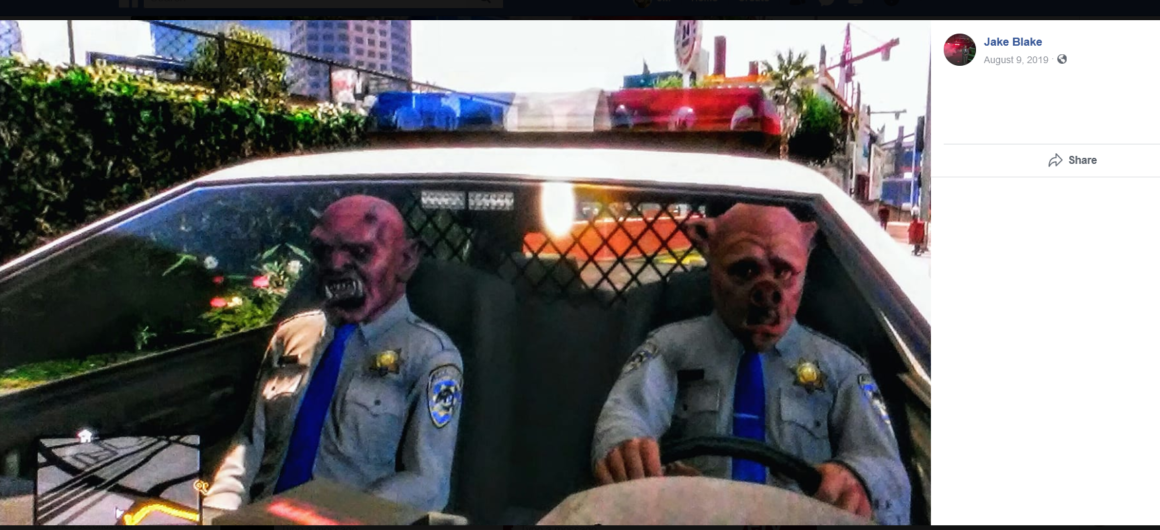



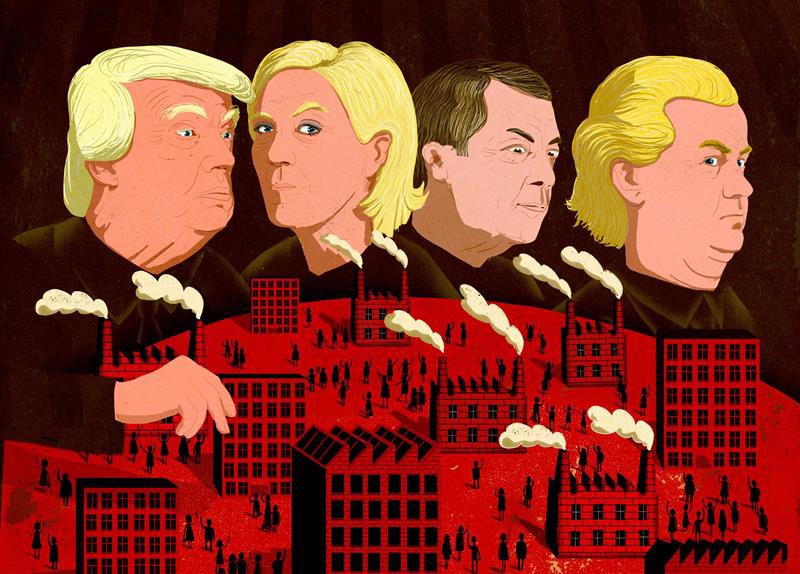
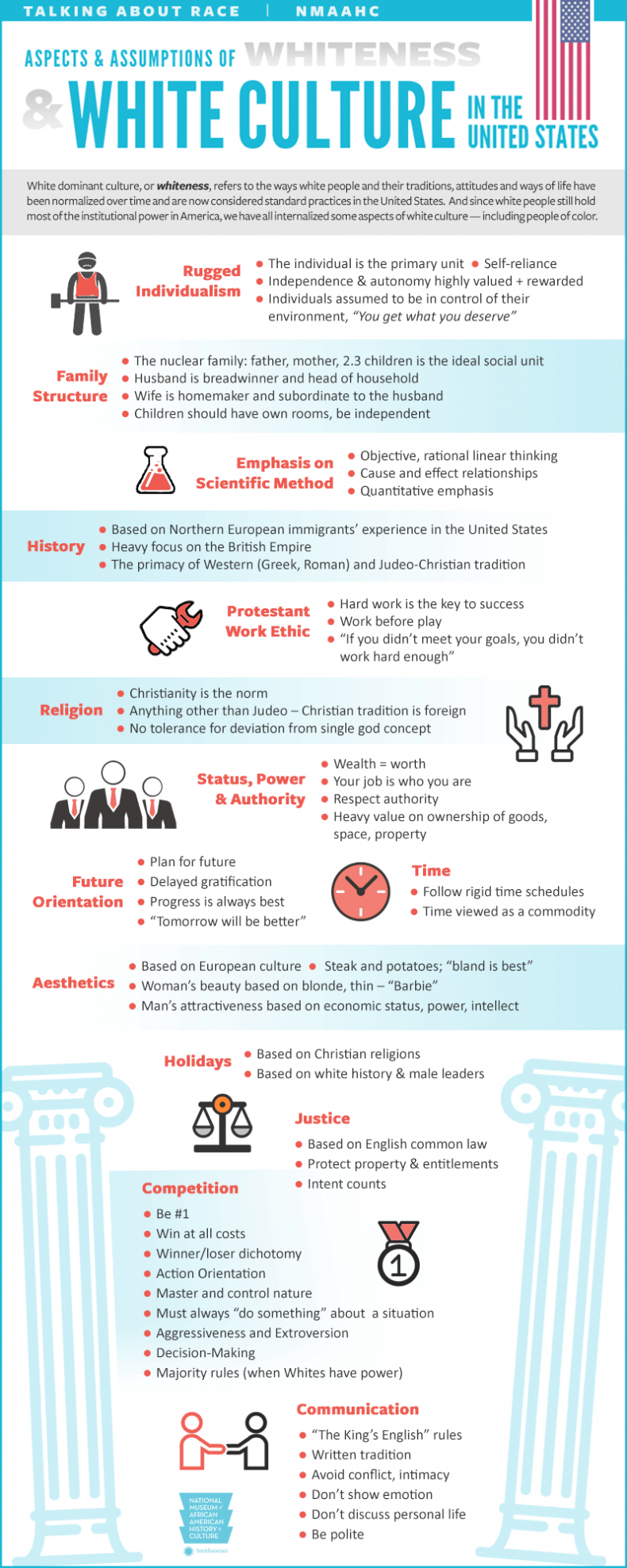


 freedom and reason