In the modern West, it has become commonplace to label any resistance to demographic and cultural change as “racist” or “xenophobic.” Yet when indigenous populations of the past resisted colonization, they were rightly seen as brave defenders of their culture, land, and way of life. This double standard is morally inconsistent and intellectually dishonest. The right to resist colonization should not be a selective principle applied only to non-European peoples. If indigenous peoples in Australia, North America, and South Africa were justified in resisting cultural erasure and displacement—and they were—then native populations in Europe and the Americas today are equally justified in defending their cultures and nations from analogous forms of transformation.
It is essential to distinguish between reasonable immigration and colonization. Migration, when limited in scale and conducted by those willing to assimilate into the host culture, poses no existential threat to a nation. Many societies have enriched themselves through such exchanges. But colonization is something altogether different. It occurs when migration is so large in scale—or so resistant to assimilation—that it disorganizes and displaces the native culture, alters the political order, and marginalizes the native population.
This is not merely theoretical. Historical colonization worked precisely this way: settlers arrived in overwhelming numbers, imposed their culture, institutions, and language, and often relied on collaborators from among the native elite to legitimize their control. We condemn this history when it involves the British in India or Europeans in Africa yet hesitate to apply the same critique when similar dynamics unfold today under the banner of “multiculturalism” or “progress.”
My argument is not about race. Race is a biological concept (and a sketchy one), but nations are cultural and historical entities. A nation is an extended kinship network bound by shared customs, language, memory, and territory. These bonds matter. They create the continuity, shared purpose, and trust that make democratic self-governance possible. Defending these bonds is not racism; it is the defense of a living culture—of a people.
Those who resist mass immigration that threatens to erase their national identity are not animated by hatred of the “other,” but by love for their own. Just as a man loves his family, he loves his nation. He loves his way of life. This is patriotism. This is no different from the motivations of American Indians who resisted European settlers, or Japanese citizens who would rightly object to a hypothetical scenario in which Germany colonized Japan, changed the language, suppressed Japanese culture, and declared it a new society. It would no longer be Japan. The Japanese would be right to resist.
Throughout history, colonization has often been facilitated by members of the native population—political or economic elites who side with the colonizers, either out of self-interest or ideological alignment. These individuals are known in the literature of political economy and history as colonial collaborators. Today, many among the political and cultural elite of Western nations play a similar role, encouraging policies that accelerate demographic transformation while silencing dissent through moral condemnation. They dismiss legitimate concerns about national continuity as mere “racism,” thereby marginalizing those who dare to resist.
Patriotic Resistance (AI generated by Sora)
This is not a conspiracy theory; it is a pattern observable throughout history. Recognizing it does not imply paranoia—it is to signal understanding of how power works, and how cultures are lost not only through invasion but through slow-motion surrender.
Because the principle is clear, one common objection to this argument is to sidestep that principle and substitute others—most notably the notions of civilizational debt and reparative migration. The modern West, built in significant part on wealth extracted through colonialism, imperial domination, and slavery, carries a moral and historical burden owed to the Global South. This debt is not merely symbolic; it is cultural, material, and ongoing.
Like original sin, the guilt asserted here is not individually chosen but collectively inherited, embedded in borders, economic systems, and institutions that persist long after formal empires have collapsed. The exploitation of land, the drawing of arbitrary borders, the theft of labor and resources—these acts created asymmetries that now manifest in global inequality, migration, and war.
From this perspective, migration is not charity, but restitution owed to the living by the dead. To deny mobility to the descendants of the colonized is to preserve the privileges of empire under a new guise—safeguarding the wealth of settler societies while externalizing the costs of their history. The West’s borders, in this view, become a kind of gated inheritance, protecting ill-gotten gain from the rightful claims of those it once dispossessed. Just as intergenerational wealth is passed down, so too, it is argued, are intergenerational debts. Migration becomes a right—not merely of movement, but something of a right of return, a right to reclaim what was taken by passing through the gates of the Wesst. It is a right to participate in the world violently shaped in one’s name.
This argument, though rhetorically powerful, fails to withstand moral scrutiny. Legally, a person inherits his father’s wealth, not his debts. The counter is that moral debts don’t operate under legal logic: if a country has benefited from centuries of exploitation, and that wealth continues to confer advantage—through infrastructure, institutions, or global leverage—then some responsibility must accompany those advantages. Yet holding the living responsible for the crimes of the dead mistakes legacy for cause, inheritance for intent.
Moreover, colonialism and imperialism were not democratic endeavors—they were elite ventures, orchestrated by aristocracies, merchant classes, and industrial capitalists. The working peoples of empire were not its architects; they were often its cannon fodder, its coerced laborers, and at times, its resisters. British miners, French conscripts, Irish peasants, and Italian tenant farmers did not colonize India or Africa. They were themselves exploited, conscripted, displaced, ruled, and taxed alongside the colonized subjects of the past. When today’s discourse treats “the West” as a guilty monolith, it obscures the class dimension of historical injustice. It absolves the capitalist class and redirects attention away from the actual mechanics of empire: extraction by a few, benefit for the fewest, and manipulation of the many. It turns the global proletariat—North and South—against itself by moralizing historical suffering rather than dismantling current structures of exploitation. It redirects blame toward those who merely existed—who survived history. It turns the global proletariat—North and South—against itself, moralizing historical suffering while ignoring the ongoing dynamics of exploitation.
Propaganda rationalizing the colonization of the United Kingdom
It also conceals the actual motive behind contemporary mass migration: to drive down wages in the West, facture working-class solidarity, and prepare the world for the integration of the peoples of the various nations into a borderless corporate order. The elite want to make you pay for what your ancestors didn’t do to advance a political economic project. A reparative politics, if it is to be just and effective, even if we accept it on principle, must distinguish between those who rule and those who are ruled. Otherwise, it dissimulates class struggle with ethical symbolism serving the interests of the elite and their functionaries; it collapses reality into moral theater—substituting abstraction for justice and absolving the elite while scapegoating the native working class.
The elite are not really asking ordinary people to pay for what they never did. Rather they are telling the people to accept cultural erasure and social dislocation in service of an economic and ideological project they never chose. They’re asking the masses to give up their way of life for the sake of power and privilege they fear losing as capitalism unwinds in the terminal phase of its existence—and unwinding they hasten with free trade and globalization.
So, the argument that, because Europeans were colonizers, and thus have no moral ground to complain about the colonization of their nations is not only a primitive and regressive notion of justice but a rhetoric to marginalize the majority who seeks to preserve their culture and their nations. Those living are not responsible for the deeds of the ghosts. No one alive today colonized North America or subjugated India. To hold modern individuals morally accountable for ancestral actions is to abandon any serious conception of justice. Moreover, whatever affluence the peoples of Western nations inherited from historical deeds does not explain their culture, customs, and traditions, nor does it negate their right to continue them.
The native peoples of the West are their own people, not avatars of their imperial past. They have as much right to keep their nations as those of the Global South. The West need not be haunted by history, but it can learn from it. And history teaches this: when a people lose control over their land, culture, and institutions, they cease to exist as a distinct people. If that loss is lamentable in the case of Native Americans or Aboriginal Australians, then it is no less lamentable, no less mournful, when it happens to the French, the English, or the Afrikaners. Appeals to civilizational guilt do not override this first principle. They are rhetorical constructions designed to obscure it.
A troubling inversion has taken place. In the name of tolerance and inclusion, many now celebrate the decline or displacement of historically Western populations—so long as it is framed as “progress.” When white South African farmers, facing political and social persecution, seek refuge in countries settled by their ancestors, they are mocked, not welcomed. Meanwhile, millions of black and brown migrants are accepted with open arms, regardless of whether they intend to integrate. If this isn’t racialized thinking, what is? What is being celebrated is not diversity, but the diminishment of a particular people—Western, to be sure often white and often Christian. The resentment this generates is manufactured and manipulated, then dismissed as racism when it emerges. But it is no more racist than Japanese resistance to hypothetical German colonization would be. In such a case, the Japanese would be right to resist. Their cause would be righteous.
If we are to be ethically consistent, we must affirm the right of all peoples to defend their nations—not only those previously colonized. Cultural and demographic and cultural self-defense is not inherently racist; it is a form of national self-determination. History cannot be undone. But the future is still being written. If resisting colonization was justified centuries ago, it is no less justified today—regardless of who the colonizers happen to be. To deny this is not to serve justice. It is to participate in a new injustice—one that shames and silences those who wish only to remain who they are, to preserve their republics, and to pass their traditions forward.
X users shared a graduation speech by NYU student Logan Rozos, who took his golden moment to declare a genocide in Gaza and condemn the state of Israeli. Here’s the speech:
It so brave to get up on stage and defend Nazi Germany while condemning the United States and the other countries trying to free the world from the grip of fascist tyranny and terrorism. Also, I just have to say, it's heartening to see so many young Americans stand and applaud…
I responded (both in the above comment and then in my own feed sharing the post): “It so brave to get up on stage and defend Nazi Germany while condemning the United States and the other countries trying to free the world from the grip of fascist tyranny and terrorism. Also, I just have to say, it’s heartening to see so many young Americans stand and applaud Nazism. I don’t know [if] it will save the Nazi project to exterminate the Jews, but here’s to trying. Good job Logan Rozos. History will always remember your bravery and eloquent defense of the project to free the region from the terrible presence of such an evil force.”
I had thought the point I was making was obvious, and it appears some people grasped it, but others did not, thinking I was claiming that Rozos supported the Nazis. I do need to remind myself periodically that not every adult progresses to the optimal level in childhood development. Some become stuck at an early phase. In Jean Piaget’s theory of cognitive development, children in the Preoperational Stage—which spans roughly from ages 2 to 7—typically take language literally and struggle to understand analogies and metaphors. During this stage, children are developing symbolic thinking but have not yet acquired the ability to perform logical operations and are thus typically incapable of abstract reasoning. As a result, they interpret words and ideas concretely rather than figuratively. Literal thinking is linked to egocentrism, which is when a person has difficulty seeing perspectives other than his own. It is only in the next stage, the Concrete Operational Stage (around ages 7 to 11), that children begin to grasp analogies and metaphors as they develop more logical thinking skills. There are X users who got stuck at the Preoperational Stage.
Rather than waste my time explaining an obvious analogy, other than remarking upon the arrested development of those who cannot grasp a simple analogy, I thought I would use this platform to explain the analogy, presuming there are others who don’t understand the moral point of it. Charitably, the reason why an X user might take what I said literally is because they have the moral equation inverted in their mind. This has rendered them so blind as to not grasp the point of the analogy. So I thought an essay might serve a more useful purpose.
Of course, many of them are not victims of arrested development. The power of egocentrism across the life-course, and the phenomenon of antisemitism rampant in Western culture, makes reasonably intelligent people dumb and incapable of proper moral reasoning. Much has been said about the morality of Israel’s response to the Hamas-led massacre of Israeli civilians on October, 2023, with some voices going so far as to liken Israel to the Nazis. This analogy is not only false but dangerously inverted. The accurate historical parallel lies in the opposite direction: Hamas, not Israel, represents the genocidal ideology of the Nazi regime, and in the historical parallel Israel stands in the place of the Allied powers who had the moral obligation to crush that ideology utterly and reconstruct the society from which it emerged.
View from Dresden’s town hall of the aftermath the allied bombings, February 1945. Roughly 25,000 people were killed, and 90 percent of the city centre turned to rubble.
So, to clarify, my analogy draws from the broader narrative of the twentieth-century global conflicts. World War I serves as a precursor in this framing, with a series of Arab-Israeli wars—particularly the 1948, 1967, and 1973 conflicts—analogous to the buildup of nationalist resentment and militaristic posturing that preceded World War II. Just as Germany invaded France in World War I and again in World War II in pursuit of regional domination, so too have Arab coalitions launched successive military attempts to destroy the Jewish state. Hamas is the genocidal analog to Nazi Germany, both regimes obsessed with eliminating the Jews—from Europe with Hitler; from the Middle East with the Palestinians.
The genesis of Hamas fits this pattern. As an antisemitic, Islamist, and theocratic movement, Hamas’s 1988 charter openly calls for the destruction of Israel and the extermination of Jews. This genocidal objective is not incidental; it’s ideological, foundational, and non-negotiable—just as Nazi Germany’s goals were. The October 7, 2023 attack was not merely a military operation; it was a barbaric massacre aimed at terrorizing and erasing Jewish life. That act of brutality mirrors, in spirit and purpose, the pogroms and atrocities committed by Nazi forces in Eastern Europe. It is a continuation of the effort in the Arab world to eliminate Jews from the region.
Historically, antisemitism in the Arab world has manifested in both rhetoric and policy. After the establishment of Israel, nearly a million Jews were expelled or fled from Arab countries, with their communities—many centuries old—being reduced to a fraction of their original size. Properties were seized, rights revoked, and populations scattered. This ethnic cleansing, though less discussed (for ideological reasons), forms part of the backdrop to the persistent hostility toward Israel. Readers may be unaware of the fact that the elimination of Jews from the Middle East (except for Israel, of course) has reduced the Jewish population there by approximately 97 percent. There is no other way to describe this history but as ethnic cleansing.
The goal of eliminating Jews from the Arab world is a longstanding one. And it is not happenstance. Even before the Jewish homeland was recognized a nation-state, during World War II, Nazi Germany met with representatives of Palestinian Arab leadership. Amin al-Husseini, the Grand Mufti of Jerusalem, met with Adolf Hitler in November 1941 seeking support from the Nazis for Arab independence, expressing the view that the Nazis and Palestinians shared a common enemy in the Jewish people. He expressed solidarity with Nazi Germany’s goal of annihilating the Jewish population in Europe and encouraged Arab resistance against the Jewish communities in Palestine.
The proposed collaboration between the Palestinians and Nazi Germany symbolized a dark convergence of antisemitic ideologies, linking the genocidal aims of the Nazis with Palestinian nationalism. The Mufti’s alliance with Hitler remains a historical fact that underscores the deadly roots of the ideologies still present today.
It’s important for readers to remember (or learn) that, in the third and final war between the Jewish people and the Roman Empire, after crushing the Jewish Bar Kokhba revolt in 135 CE in Judea, the Roman Emperor Hadrianrenamed the region “Syria Palaestina.” This was intentional, intended to minimize Jewish identification with the land by invoking the ancient Philistines—historical enemies of the Israelites—thereby erasing Jewish ties to the territory. Unfortunately, the name stuck and was used through various empires, including the Byzantine, Islamic Caliphates, Ottoman Empire, and the British Mandate period.
Before the twentieth century, the inhabitants of the region—Jews, along with Arabs, Christians, Druze—primarily identified with their local villages, clans, religious groups, or as part of the broader Arab world rather than a distinct “Palestinian” national identity. The term “Palestinian” was a geographic designation used by outsiders, including the British Mandate authorities (1917–1948), to describe all inhabitants of the territory regardless of ethnicity. The distinct Palestinian Arab national identity began to crystallize in the twentieth century during and after the British Mandate period, largely in response to growing Jewish immigration and Zionist claims.
Crucially, Palestine was not devoid of Jews during that time. The Jewish connection to the land—historically known as Judea, Samaria, and later Palestine—dates back thousands of years, with continuous Jewish presence despite periods of exile and foreign rule. Indeed, Jews are the indigenous people of that territory. Arabs first appear in recorded history around the 1st millennium BCE in the Arabian Peninsula. Arabs are not indigenous to the Levant. They migrated there. And now they threaten the existence of the Jewish state.
Archaeological sites, religious texts, and historical records confirm that Jewish communities lived in the region from ancient times through Roman, Byzantine, Islamic, Ottoman, and British rule. Even after the Roman expulsions and various diasporas, Jewish populations remained in cities like Hebron, Jerusalem, Safed, and Tiberias continuously. Jewish religious, cultural, and national identity has been historically intertwined with this land, which forms the foundation for modern Zionism and Israel’s claim to the territory as their ancestral homeland.
Berlin after the Allied victory over Germany
In light of these realities, Israel’s military campaign in Gaza should not be viewed through the narrow lens of proportionality alone. Rather, it is akin to the Allied invasion of Nazi Germany—a response not just to aggression but to an existential threat. The Allies did not merely repel Nazi advances; they leveled German cities, toppled the regime, and embarked on a comprehensive project of denazification. They understood that the Nazi ideology could not be appeased or contained. It had to be eradicated.
So too with Hamas. Israel is not merely fighting a militant group—it is confronting an ideology that glorifies death, martyrdom, and the annihilation of Jews. Just as Hitler sought to bring all of Europe under Nazi rule, Hamas seeks an Arab nation established on the Jewish homeland, thus expanding Arab—and Islamic—hegemony over the entire region. Just as the Allies bore the moral burden of wartime devastation in order to secure a future free from fascism, so too does Israel now shoulder the moral responsibility of rooting out a death cult that threatens not only its people but the broader values of civilization.
This is not to deny the suffering of Palestinian civilians any more than one denied the suffering of German and Japanese civilians during WWII. Civilian casualties are a tragedy, as they were in Berlin, Dresden, and Tokyo. But the source of that tragedy lies not in the defenders, but in the aggressors who embed themselves among civilians while proclaiming genocidal aims. The path forward must include, as it did in postwar Germany, a full ideological and structural transformation—a denazification of Gaza. And before that objective can be realized, there must be total annihilation of Hamas and Gaza occupied until the transformation is complete.
We live in a time where historical analogies are often abused or flattened into caricatures. But if history is to have any moral utility, it must guide us in recognizing evil where it arises, and support those who take the burden of confronting it. In this light, Israel’s war against Hamas is not only justified—it is necessary, and, like the Allied war effort against the Nazis, morally urgent.
Whenever you see rants like this imagine the person on the streets of America during WWII screaming about our tax dollars going to prosecute the war against the Nazis and their project to drive Jews out of Europe.
The widespread pro-Palestinian protests in the United States and Europe reveal a striking disconnect from the complex historical realities on the ground, bordering on the absurd when they equate Israel with Nazi Germany or ignore Hamas’s genocidal ideology. Their moral reasoning corrupted by the postcolonial studies standpoint, these protests represent a reductive and inverted narrative of colonial oppression that fails to account for the historical circumstances of Israel’s founding and survival amid existential threats.
While postcolonial theory can be useful for critiquing imperialism and advocating for oppressed peoples (I am being generous here), its application in this case (as well as others, such the South African situation) is fallacious, framing the Israeli-Palestinian conflict purely through a misapplied colonial lens and thus obscuring history and existential threat posed not only to Israel but the West more broadly by Islamism. Reductionism and historical revisionism distort public understanding and obscure the moral clarity required to confront a movement like Hamas, whose objectives align with total annihilation of a native people.
This is not a case of postcolonial liberation—at least not for Palestinians. The Palestinians are not colonial subjects. They are colonizers. The leftwing protests on Western campuses and streets are performative gestures rooted in global identity politics shaped by postmodernist irrationalities. Many of the protestors were taught these irrationalities at the university they attend. The West needs to reclaim its sense-making institutions and point them back towards truth-seeking. Higher education needs a big reset.
One frequently encountered argument regarding race is that race is a social construct—that it has no inherent biological basis but is instead rooted in superficial phenotypic characteristics and the stereotypes derived from them. According to this view, the social roles historically assigned to different races are arbitrary and constructed rather than essential or natural. I have long taught this point of view in my sociology courses. It was what I was taught as a student. One finds this point of view across the anthropological and sociological literature.
A parallel argument is often made about gender: that gender, too, is a social construct without essential biological grounding. Like race, it is said to be based on socially imposed stereotypes tied to outward appearance or behavior. The roles historically assigned to men and women are, in this view, culturally constructed and socially imposed rather than biologically determined. These roles are learned and internalized through socialization, including anticipatory socialization.
Yet when it comes to how society reacts to individuals crossing these constructed boundaries, we see a striking inconsistency. When a white man adopts stereotypically black dress, speech, or mannerisms—engaging in what is often termed a performance of blackness—he is accused of “blackface” and branded a bigot. His actions are condemned as offensive, and those who speak out against them are seen as standing up for racial justice. The underlying assumption here is that the white man is appropriating something that does not belong to him, something intrinsic to black identity.
However, if a man adopts stereotypically feminine dress, speech, or mannerisms—engaging in a performance of womanhood—he is not typically accused of “woman-face” or labeled a bigot. Instead, criticism of his performance is often branded as transphobia, and the man is affirmed in his self-identification. In this context, gender is treated as fluid, performative, and open to personal redefinition. Critics of this treatment of gender and personal identification are bigots.
What explains this double standard? Why is it that race, which is claimed to be a social construct, is treated as essential and exclusive, while gender, also claimed to be a social construct, is treated as flexible and inclusive?
The implication is that, despite rhetoric, society essentializes race. A black person is seen as essentially black, such that even a performative act by a non-black person is deemed a violation. This is not true in the inverse. Consider that in recent years, film and theater have increasingly embraced diverse casting, including black actors portraying roles originally written as or traditionally played by white characters—even when those characters are historical figures. This trend is celebrated as a form of artistic reimagining and social progress, aiming to correct longstanding disparities in representation. Casting choices like these are defended as empowering and inclusive, especially given that white actors have historically dominated the stage and screen, often to the exclusion of non-white performers.
The reverse—casting a white actor to play a black historical figure—would likely provoke widespread condemnation. This reaction is rooted in the history of blackface and racial caricature, which makes such portrayals deeply offensive regardless of artistic intent. Critics point to the asymmetry of power: while marginalized groups taking on roles of privilege can challenge dominant narratives, dominant groups portraying the historically marginalized can come across as appropriation or erasure. While this may seem like a double standard, it is justified by the historical and systemic context in which these portrayals occur. The prevailing consensus is that representation cannot be separated from the realities of history and power.
By contrast, gender is not treated in the same way; it is considered open to performance and self-definition in both directions. Men can be women. Women can be men. Thus, while both race and gender are often described as social constructs, the social and moral frameworks surrounding them diverge. In the case of race, society tends to treat the identity as fixed and inviolable—except where in performance where blacks are empowered to assume white roles. In the case of gender, society increasingly embraces the idea that identity is fluid and performative altogether.
We are taught that the “black role”—the cultural identity and expression of blackness—is the result of historical oppression. It emerged within the context of slavery, segregation, and systemic racism, and therefore occupies a space of resistance and survival within a dominant framework of white supremacy. Consequently, when a white man adopts the black role—by imitating black vernacular, dress, or artistic expression—he is seen as trivializing this struggle. His performance is interpreted not as homage but as mockery, a form of exploitation that reasserts racial hierarchy. He is accused of appropriating cultural expressions born of pain and resilience for his own benefit, gaining social currency while bypassing the lived experience of black oppression. Moreover, such appropriation grants him access to spaces—linguistic, social, or symbolic—that have traditionally been carved out for black people as sanctuaries or affirmations of identity.
But if this logic holds for race, why does it not apply to gender? Is the woman role not also the result of historical oppression? Has it not, too, developed under centuries of subjugation—patriarchy, legal exclusion, domestic relegation, and gender-based violence? Just as blackness is shaped by its historical position relative to white dominance, femininity has been shaped by its historical position relative to male dominance. So why is a man’s adoption of the woman role—through dress, speech, or mannerisms—not interpreted as a similar kind of appropriation?
Does it not, in parallel, allow the man to access spaces traditionally reserved for women, including shelters, support groups, athletic competitions, and intimate conversations shaped by shared experience? Does it not enable him to use the language developed within feminist and female-centric contexts—the female experience, menstrual health, or women’s empowerment—without having lived the realities they emerged from? If a white man performing blackness is accused of reinforcing racial superiority under the guise of identification, could a man performing womanhood not be seen, by the same logic, as reinforcing male privilege—using the social authority he retains as a man to redefine what it means to be a woman?
Racial Identity Disorder (AI generated by Sora)
A common defense of the man who adopts the woman role is that he does not merely perform femininity externally but experiences a deeply felt internal sense of being a woman. This sense of identity is described as essential, even if it is subjective and unverifiable. Whether labeled “gender dysphoria” or “gender identity disorder,” it has been medicalized and, in many frameworks, essentialized: the body is said to be misaligned with the true self, and thus medical intervention is appropriate—indeed, necessary—to bring external appearance into alignment with internal identity. Hormones, surgeries, social accommodations—these become pieces of affirming care, steps toward congruence and psychological well-being.
But why does this line of reasoning not apply to race? Why is there no serious public argument for the concept of a white man who believes or feels that his identity is, internally and essentially, that of a black man? You may object that this is not a widespread phenomenon, but neither was gender identity until only a little while ago in historical terms. There are people who identify as the other race. Why are they not affirmed in their identity? Why not speak of “racial identity disorder” or “race dysphoria”? If one can claim that their inner sense of gender overrides the physical and historical realities of biological sex, then why can’t the same be said for race?
A person who identifies as black, despite being born white, might seek medical and social interventions to bring his appearance and experience into alignment with his internal identity. This could include skin darkening treatments, changes in hair texture, or speech coaching—what we might call “racial affirming care.” Even without medical procedures, such a person might present himself as black, participate in black spaces, and expect recognition of his racial identity based on personal experience and conviction. Would he be entitled to this by today’s lights? Could he be a diversity hire at the institution or organization?
No. Society overwhelmingly rejects this. Such a person is typically ridiculed, ostracized, and accused of deceit and appropriation. Their internal identity is not affirmed but denied, even condemned, regardless of the depth or sincerity of their experience. The case of Rachel Dolezal, for example, was not treated as a matter of racial dysphoria but racial fraud. The very suggestion that one could “feel black” or possess a black identity absent black ancestry is seen as offensive—a form of theft, not self-expression. But what does it mean to “feel female”? Would you not have to be one?
This again reveals the asymmetry. While gender identity is treated as subjective, psychological, and potentially in conflict with biology or social history, racial identity is treated as fixed, external, and rooted in inherited experience. Gender, we are told, lives in the mind; race, it seems, lives in the blood. Thus, despite claims that both are social constructs, society treats gender as interior and malleable, and race as exterior and immutable.
This development is striking consider the biological foundation—or lack thereof—of the categories in question. As noted at the start, the claim that race is not essential, that it is constructed from superficial phenotypic traits such as skin color, facial features, and hair texture, is widely accepted in the social sciences and for much of biology and physical anthropology. While these traits correlate to geographic ancestry, they do not meaningfully divide humanity into discrete biological races. Instead, these visible traits have been socially organized into categories—“black,” “white,” “Asian,” etc.—which are then imbued with roles, expectations, and stereotypes. In this view, race is imposed from the outside in.
Gender, however, rests on a more robust biological foundation. It is tethered to a host of deeper biological realities: chromosomal configurations (XX vs. XY), gametes (ova vs. sperm), internal and external reproductive anatomy, and secondary sex characteristics. These distinctions exist independent of social categorization and are relevant not only to reproduction but to a wide array of physiological and developmental processes. The essentialist view of sex is not a matter of superficial traits, but of fundamental biological organization.
Paradoxically, though, it is gender that is now treated as mutable, fluid, and internally defined, while race—which rests on far thinner biological ground—is treated as fixed and sacred. This reversal leads to an irony: from a purely biological standpoint, a white man performing the black role and claiming black identity may actually be less of a stretch than a man claiming to be a woman. The white man’s “whiteness” is not encoded in a unique chromosome or gamete; it is a loose proxy for ancestry and phenotype. By contrast, the man’s male body is rooted in a suite of anatomical and genetic realities that cannot be changed in kind, only in appearance.
Moreover, when viewed through a historical lens, the subordination of women by men predates the transatlantic slave trade or European colonization by millennia. Patriarchy is not merely a social system—it is, in many cultures, a civilizational bedrock, deeply interwoven with religion, law, family structure, and language. If one argues that it is offensive for a white man to appropriate black identity because it trivializes centuries of black struggle under white domination, then, by the same logic, one might argue that a man adopting womanhood trivializes thousands of years of female subjugation under male dominance.
In this light, society’s current framework—affirming gender identity while rejecting racial identity—begins to look not only inconsistent but internally contradictory. The man who claims womanhood is asking society to affirm an identity in spite of biology and history. The white man who claims blackness is denied for precisely those same reasons. The standard, then, is not principled but cultural—one built on shifting political sentiments rather than coherent logic.
This asymmetry becomes even more pronounced when we consider those who reject the binary system altogether. In the context of gender, there is growing recognition of individuals who identify as nonbinary—those who do not see themselves as either male or female, or who claim a fluid identity that transcends traditional categories. While sex remains biologically binary, gender is treated as a spectrum, or even as optional. A person can be affirmed not only in transitioning from one role to another, but in refusing to perform any gendered role at all.
But where is the analogous concept in race? Why is there no mainstream recognition of a person who is nonracial—someone who does not identify with any racial group and refuses to perform race altogether? In a society that claims race is a social construct without essential biological grounding, this should be entirely possible. If race is externally imposed and historically constructed, then surely one should be permitted to disavow it, to decline participation in racial identity just as one can decline participation in gender roles.
Yet in practice, society offers no space for racial nonconformity. A person who claims to be “raceless” (spellcheckers don’t recognize the word) is often met with confusion, suspicion, or accusations of privilege and denial. To refuse race is to refuse the terms by which power, identity, and belonging are currently organized. Even in contexts that celebrate nonbinary gender identities, racial identity remains strictly policed. One must belong to some race, even if that race is “mixed” or “other.” Racial categories are treated as compulsory and immutable, despite their acknowledged artificiality.
This raises a final and uncomfortable contradiction: gender, which is grounded in biology, can be dismissed, redefined, or transcended. Race, which is acknowledged to be a social fiction, must be performed, claimed, or affirmed. One cannot opt out of race, even though race has no essential reality. But one can opt out of gender, despite sex being among the most deeply rooted biological features of the human body. The conceptual framework that permits nonbinary gender identities but forbids nonracial ones reflects not a coherent theory of identity, but the selective application of social norms.
In the end, the double standard is not merely an inconsistency within our cultural logic—it is an inversion of biological reality. A society without racial roles and identities is imaginable, perhaps even desirable, if one accepts the premise that race is socially constructed and not biologically essential. Indeed, the human species can thrive without maintaining rigid racial categories. Nothing about reproduction, survival, or social cooperation depends on treating race as real.
But a society without gender—or more precisely, without sex distinctions—is not imaginable in the same way. Human beings are a sexually dimorphic species. The terms “man” and “woman” are not arbitrary labels but describe biological roles in reproduction. While gender is often treated as distinct from sex, in reality the two are inseparable: even if they are not treated as synonyms, gender is the cultural expression of sexual dimorphism. To argue otherwise is to deny that the categories “male” and “female” correspond to any objective natural facts. The perpetuation of the species depends on the existence—and recognition—of those very facts.
A white man and a black woman can produce children. A man and another man cannot. A black woman and an Asian man can form a family in the biological sense. A woman and a trans woman cannot. However much one may wish to reconstruct identity through culture, medicine, or language, sex remains stubbornly real, and its implications universal. It is embedded not only in human history, but in the evolutionary logic of life itself.
Therefore, if we follow the logic of biology rather than ideology, and if we are to find any of this controversial, it is not transracialism that ought to be controversial, but transgenderism. Race is contingent and context-bound; sex is cross-cultural, transhistorical, and essential to life. The irony is unmistakable: the very identity we treat as fluid and performative—gender—is the one rooted in biology, while the one we treat as immutable—race—is arguably nothing more than skin deep. We have built a cultural orthodoxy on a foundation precisely opposite the facts it claims to defend. Gender ideology is a nonsensical position, which would be fine (there are lots of nonsensical position) but for the harm it causes in practice and its acceptance by governments and the organization that shape our lives.
Those fifty-nine Afrikaners who have triggered progressives, what explains the hostility and hysteria? Progressives are losing their shit over this. The Episcopal Church is terminating its partnership with the government to resettle refugees. That move ends a nearly four-decades-old relationship between the federal government and the Church. Why did the Church do this? Moral opposition to resettling white Afrikaners from South Africa who have been classified as refugees by President Trump’s administration. That’s what the Church said.
The first group of Afrikaners to be granted refugee status by the Trump administration and arrive in the United States, welcomed by US Deputy Secretary of State Christopher Landau and Department of Homeland Security Deputy Secretary Troy Edgar at Washington Dulles International Airport (Image source)
“Moral opposition”? Sounds like race prejudice to me. Yes, Virginia, whites can be the targets of prejudice and discrimination. That 1960s Black Power slogan “racism = prejudice + power” is a convenient ideological definition (so is the term “institutional racism,” which came into vogue after institutional racism was outlawed) that yields “Only whites can be racist.” Not a big step from there to “All whites are racist.” The slogan testifies to the power of progressives to socialize critical race theory, an ideology built on fallacious concepts (the fallacy of misplaced concreteness, blood libel, etc.).
While the “genocide” narrative is sketchy, Afrikaner concerns about violence and land loss are rooted in very real issues. Farm attacks and South Africa’s broader crime problem and inflammatory rhetoric like “Kill the Boer” exacerbates tensions. The Expropriation Act, while not yet used to seize land, fuels legitimate worries among Afrikaners about their future given their historical reliance on farming. I want to take a moment to provide the facts so you can understand why Afrikaners brought to the United States are legitimate refugees and why the double standard is rooted in anti-white sentiment. If racism is wrong, then what gives?
Afrikaners, particularly the farmers, face brutal attacks on their rural properties, involving assault, robbery, and murder. South African Police Service data reports 330 farm attacks and 45 farm murders in 2023/2024 alone. These incidents are often gruesome, with victims tortured and brutally murdered, leading Afrikaners to rationally fear targeted violence. The isolation of farms and perceived police ineffectiveness heighten their vulnerability.
Political slogans like “Kill the Boer,” chanted at rallies by figures such as Julius Malema of the Economic Freedom Fighters, are rightly seen as direct threats. The rallies and murderous sentiments expressed constitute incitement to violence, especially in light of farm attacks. In other words, there is follow through on the threats—they are not idle. The government’s reluctance to condemn such rhetoric deepens Afrikaner distrust and fear of being targeted. Afrikaners are few and the government won’t protect them.
Many Afrikaners feel culturally and economically sidelined in post-apartheid South Africa. Racially discriminatory policies that resemble our affirmative action limit job opportunities for younger Afrikaners. Combined with the threat of land loss and violence, this fosters a belief that Afrikaners are being pushed out of society. Progressives will argue that white people ought to be pushed out of Africa (they’re white settler colonizers, after all, just like the Jews in Palestine). They have no right to be there. Right, so that makes them refugees. The United States has a long history of taking refugees.
What’s wrong with Afrikaners in particular? Is it because they’re white Christians? Is there a problem with being white or Christian? Are progressives all for refugees as long as they’re non-white and not Christian? Is it because of the history of colonialism and imperialism (which has been rebranded “globalization”)?
I recognize the history of colonialism, but I reject completely the argument that the present should be governed by the ghosts of the past. Intergenerational reparations are immoral by the standards of universal human rights. It’s a primitive view to hold the living responsible for what the dead did.
So what did the ghosts do? The Dutch first settled in South Africa in 1652, when the Dutch East India Company established a refreshment station at the Cape of Good Hope. This marked the beginning of a permanent European presence. The settlers gradually expanded inland, laying the foundation for the Afrikaner population and culture in the region.
The Khoisan population in the Cape was small and quickly devastated by Dutch settlement. Smallpox epidemics, land dispossession, and violent conflicts with settlers reduced their numbers significantly by the 1700s. Sound familiar? The larger black African population, primarily Bantu-speaking tribes, lived further east and north. For a complex of reasons, Bantu-speaking groups grew in population. In time, black Africans came to represent the majority of the population. Apartheid was a strategy to deal with the situation.
Don’t get me wrong, Apartheid was wrong. I have always condemned the practice. I’ve criticized Israel for having apartheid-like structures, and certainly in my own nation’s history with Jim Crow. But I also recognize that Apartheid (established in South Africa in 1948) was dismantled in South Africa more than three decades ago—much like Jim Crow was dismantled in the US more than six decades ago. Black South Africans have been in charge of the government since the end of apartheid. This doesn’t mean that South African society has colorblind society, however. As of right now, according to the Index of Race Law maintained by the South African Institute of Race Relations (IRR), South Africa has 142 race-based laws currently in effect. These laws are defined as statutes that make a person’s race, skin color, or ethnicity legally relevant.
So it matters very much in South Africa that one has white skin. Whites are a small minority in South Africa, approximately 7 percent of the country’s population. That this small number of whites holds a most of the farm land is beside the point. Roughly two-thirds of the farmland in the United States is owned by less than 1 percent of the US population. About 96 percent of US farm owners are non-Hispanic white.
In the past, the land non-Hispanic whites hold in the US was the land American Indians dwelled on. We would vigorously resist expropriation of that land for reparations to American Indians and we would not tolerate violence against the landowners. This is a capitalist society. So is South Africa. Conquered land is not stolen land. The past is not the present. Nobody born today is responsible for history. It’s a time order problem. One can only be responsible for what they do, not for the things other people do or people who came before them. We are not responsible for the sins of our fathers.
But we are responsible for the future. So I ask readers to imagine if whites were a minority in the United States and were facing threats like this. Could they hope for a country that would take them as refugees? Or will white loathing grow so great that whites will have nowhere to go—even to countries with a majority white population? That’s what progressives would like to have happened to those fifty-nine Afrikaners.
You may not see this in your lifetime (unless Democrats get back in power), but consider that, in 1950, England’s population was approximately 99 percent white British, whereas today white British comprise less than 75 percent of the population. What explains the relative decline of the white population? Immigration, higher non-white birth rates, and white British emigration (affluent white Brits are leaving the country). The decline from near-homogeneity to a quarter non-white British reflects significant demographic shifts over seven decades.
The situation has become so bad, in fact, that, on May 12, 2025, Prime Minister Keir Starmer of the Labour Party delivered a speech in Downing Street immigration that aimed at reducing net migration, which he claimed had soared to 906,000 in 2023 under the previous Conservative government. He promised to “take back control of our borders” with stricter visa rules, including banning overseas care worker recruitment, raising English language requirements, and extending the path to settlement from five to ten years. It was a startling speech coming from a Labour Party leader. Sounds like populist-nationalism to me.
Thinking about the future, Starmer warned that without these measures, the UK risks becoming an “island of strangers,” a phrase criticized by some Labour MPs for echoing far-right rhetoric. Of course they did. Remember Enoch Powell, the British Conservative politician and scholar who delivered that so-called “Rivers of Blood” speech in 1968, in Birmingham? Powell warned that unchecked immigration would lead to racial conflict, quoting Virgil’s Aeneid to evoke a future of violence. Powell claimed that white Britons were becoming “strangers in their own country.” Although he was dismissed from the Shadow Cabinet for this, polls showed more than two-thirds of Britons supported Powell’s position.
You can dismiss the large majority of white British citizens who agreed with Powell as racist, but would you likewise dismiss the large majority of Japanese or Africans (pick any Sub-Saharan country) as “racist” for expressing the same sentiment? If Japan were colonized by Swedes and became majority Swedish would it be Japan anymore? Is it really about race or about culture and nation (i.e., ethnicity)? Do the English not live in a democracy where the people decide their fate?
My argument isn’t about whether England should be white in the sense of biological race (I am skeptical of racialism). My point is this: imagine the native English population dwindles to a minority and anti-white sentiment continues to grow—and the nation continues to be Islamized at the present pace. Should white Britons be concerned about their future and safety? Yes, I think they should. Like Powell, Christopher Hitchens warned his fellow countrymen about it (before migrating to the US and becoming an American citizen). “The barbarians are inside the gates,” the brave man said. South Africa is the paradigm of the dangers of being a minority out of power in a society dominated by those who do not share Western values of tolerance and justice.
What whites need to consider is whether in such a world they could in the future, if they needed to, find a country in which to seek asylum. If one is white, according to doctrine, then he is responsible for all evils in the world. His property is justifiably expropriated and his worth as a human nil. This is the rot of postcolonial ideology. This ideology is not about criticizing the deviation of colonialism that threatened the Peace of Westphalia, but a rejection of the substance the modern Western nation-state altogether. This is the threat to the Peace of Westphalia. The West is in peril. the time is late.
Who would be behind such a thing? And why are Europe politicians enabling those who are behind it? And, no, I’m not talking about the Jews. They’re in the same boat as the rest of the West. (Have you heard the pro-Palestinian rhetoric on our college campuses?) I’m talking about the globalists—the transnational corporations and their functionaries and intellectuals. They don’t care about nation-states only to the extent that they are fetters on their campaign to rule the planet. Indigenous populations meant squat to the imperialists and they mean squat to the new brand.
Example of a popular meme among progressives
Think about it: If one argues that the indigenous population of England is analogous to the South African situation, that these are peoples who are being colonized (which one must if he rejects racist double standards), then why would the West support mass immigration? Those memes with cartoon American Indians depicted centuries ago condemning the new arrivals? Those cartoon Indians were right. Progressives know they were because they’re the ones who share those memes!
There’s a lot going on here but it operationally comes back to loathing of whites, whether they’re the majority or a minority. A great many whites argue themselves for anti-white hostility—we might deem these folks self-loathing. This was expressed during the BLM riots, when whites washed the feet of the black activists setting businesses on fire out of white guilt for being “oppressors.” Remember the Democratic congressmen, including House Speaker Nancy Pelosi and Senate Minority Leader Chuck Schumer, wore kente cloth while taking a knee for George Floyd?
Racism has been a strategy Democrats—the party of the slavocracy, Jim Crow, and now DEI—have used for centuries to divide the working class and disrupt worker solidarity. Proving it an effective tool for power, sowing division, and jacking animosity and envy, they’ve simply flipped the oppressor-victim script. So quite naturally, when Trump allows fifty-nine white Christian Afrikaners into the United States as refugees fleeing racist violence in South Africa progressives lose their shit.
They’re also losing their shit because among the criteria Trump is using for vetting refugees seeking asylum in our country is their ability to assimilate with our culture. The Democrat rank-and-file has been so programmed that when they hear the word they think there’s something untoward about it, as if it’s racism or something. But the huge problem that the West has been grappling with is migration from areas where populations are highly resistant to assimilation with western culture. More than resistant, they’re colonizing the West and culturally transforming our countries. This is what Hitchens warned us about back in 2009.
Do folks really not understand that progressives oppose assimilation because they seek to Balkanize the West? I promise you that elites understand this. It’s what they want. Multiculturalism is a strategy in the project of managed decline of the West: to disorganize the most advanced nations and undermine the solidarity that binds their populations together.
But assimilation should be one of the primary goals governing immigration. For those seeking asylum, the two questions we have to ask: (1) is there a legitimate claim to seek asylum; (2) are those seeking asylum compatible with American culture? If we answer yes to both questions, we have to take refugees in a small enough numbers to allow them to properly assimilate with our democratic-republican traditions and liberal values. We also have to consider whether the people who come here can make an economic contribution to our economy in ways that don’t harm the job opportunities and wages of native Americans and Europeans. In larger numbers, this consideration moves itself into the above list.
Europe has a huge problem with Muslim populations, idle in ghettos and dependent on taxpayers, separating themselves except to gather in masses and clog the streets with their praying. The Islamizing of European cities and towns is intensifying. Why should Americans follow suit and become culturally-disorganized welfare states for the world’s poor and open to those who mean to destroy the decadent West? Why should the West allow their countries to be colonized by culture-bearers who won’t respect our religious and secular traditions?
Let me go on record here and say that I am 100 percent supportive of Trump’s immigration policies. When I started writing in 2018 about the problem of mass immigration on this platform, I made these exact same arguments. I was skeptical of Trump in 2016. I’m not skeptical anymore.
Trump’s EO signing today came with a press conference with RFK, Jr. (it’s still live), NIH director Dr. Jay Bhattacharya, CDC director Dr. Mehmet Oz, and FDA Commissioner Dr. Mary Makary standing at his side. Take a look at their resumes. It’s an impressive team. I don’t remember America having a team this strong.
Listening to his remarks, I’m impressed by how deep Trump’s knowledge runs on the subject of the medical-industrial complex (and international political economy more broadly), and what he’s doing to reign in Big Pharma price-gouging is one of the most important developments in our lifetime.
Democrats have promised this for years, but it was a talking point. Democrats take millions of dollars in donations from Big Pharma—include the self-described democratic socialist Bernie Sander (who is reality a sheepdog). But Trump can’t be bought this way. Kennedy just praised him for his independence and focus on the needs of the common man. Kennedy noted that Trump took 100 million dollars from Big Pharma, but it did not influence him.
Trump and Kennedy are taking on arguably the most powerful lobby in Washington to bring down drug prices for working class Americans. Trump is pegging drug prices in the United States to what the rest of the world is paying, which is several times lower than the price Americans pay both individually and collectively.
Presently, the US has only 4 percent of the world population yet represents two-thirds to three-quarters of Big Pharma profits. The American people have been subsidizing Big Pharma for decades—and more broadly state-run healthcare in Europe.
One of the main reasons universal healthcare has not been instituted in the United States is because Europe depends on US subsidies to the industry to maintain their socialized systems. I’ve been talking about this for years. Trump refers to his approach as “equalization.” European taxpayers are going to learn very quickly how much they have depended on the American taxpayer for their low drug prices.
When the new pricing regime comes into effect, it will save billions for Medicare and Medicaid. Prices on insulin and cancer drugs will come down substantially. How are Democrats going to vote against this? How will RINOs going to vote against this? Millions of Republican voters depend on Medicaid and Medicare.
So I await to see whether the corporate state media (largely funded by Big Pharmaceutical) will praise Trump for finally doing something about drug prices. I am being sardonic of course. So far, the media has dwelled on the stock price drop hitting Big Pharma over the news. Progressives have been thrilled at stock market instability of late. They use it as a metric of Trump’s performance. If you believe the media narrative you won’t understand politics in America—or around the world.
This tells you on whose side legacy media and the Democratic Party stand. It’s not on your side. It’s on the side of the oligarchs Trump is taking on. The cathedral and progressive pundits want you to believe Trump is the oligarchs’ president. But the truth of reality the corporate state propaganda system projects is inverted to produce a false reality. Right the image and you see the truth.
The Republican Party is becoming party of the working class, entrepreneurs, and small business. Once RINOs are fully marginalized and forced to return to the Party of Lincoln, the transformation will be complete. Democrats are the party of big corporate power and the credentialed strata for decades (really, they always were).
Unfortunately, the cognitive dissonance associated with this information will for many be lessened by denying it. I don’t expect progressives to ever embody their working class rhetoric. Their fortunes depends on the perpetuation of the corporate state and its administrative apparatus. They’re technocrats.
To be sure, Republicans have to deal in a world of big corporate power and finance. But Trump, with his tariff policies and demands for economic fairness, includes everybody in the deal. That’s all working class Americans have ever wanted: a piece of the action.
I have written quite a bit on cults, ideology, and psychological operations on this platform. With all the fast breaking news concerning Trump’s government reforms and the project to reshape of the world economic order to put American first, as well as the resistance to these efforts, returning to this issue has taken some time. However, I was able to finally finish an essay on the psychological systems of CBT and NLP and I report my findings in this essay.
It is important to do this work because what forms and fuels resistance to rebirth of the US Republic and the American System is a complex set of psychological operations that produces the rank-and-file corporate state activists and functionaries who help carry out the globalist agenda via the managed decline of the American Republic. In today’s essay, I provide a comprehensive analysis of these therapies and show how their inverse provides the tools for controlling the masses. I call the respective systems “Dark CBT” and “Dark NLP,” to distinguish them from applications that seek to help individuals rather than harm societies.
I therefore begin by emphasizing that, in the right hands, Cognitive-Behavioral Therapy (CBT) and Neuro-Linguistic Programming (NLP) are both psychological approaches aimed at understanding and improving human thought and behavior. While they share some conceptual overlap—particularly in their emphasis on the power of language and perception—they diverge in methodology, purpose, and, allegedly, scientific credibility. While the values of CBT are extolled, NLP is dismissed as pseudoscience. At least that’s the narrative. The reason why NLP is dismissed becomes apparent when considering the application of these techniques in the wrong hands.
Part of what promoted me to write this essay is my suspicion that the alleged scientific inadequacy of NLP is because NLP’s focus on language to change perception might be perceived to be advantageous, and therefore it is useful to dissimulate its power as a potential tool of mass manipulation. Admitting NLP’s efficacy gives too much of the game away. To explore whether this may be the case, the balance of this essay explores the origins, techniques, and criticisms of both approaches, offering a comparative analysis of their distinctions and similarities. In addition to exposing the technologies of psychological operations, I have intellectual interests in this subject as both a psychologist (undergraduate) and a sociologist (PhD and professor).
Aaron Beck and Albert Ellis, inventors of Cognitive-Behavioral Therapy (CBT) (AI generated image)
CBT emerged from the clinical research of psychologists Aaron Beck and Albert Ellis (depicted above) in the 1960s and 1970s. It is sold as a structured, evidence-based therapy widely used in mental health to treat disorders such as anxiety, depression, and obsessive-compulsive disorder. CBT rests on the idea that behaviors, feelings, and thoughts are interconnected. By identifying and challenging distorted thinking—such as all-or-nothing thinking, catastrophizing, and overgeneralizing—individuals can learn to develop healthier, more adaptive patterns of behavior. Techniques such as cognitive restructuring, exposure exercises, and thought records form the core of CBT practice.
NLP was developed in the 1970s by Richard Bandler and John Grinder (depicted below). The approach is based on the idea that by modeling the language and behaviors of enviable others, one can be like them. NLP emphasizes how language and internal representations—feelings, mental images, and sounds—shape our experience of the world. Techniques such as anchoring (associating a stimulus with a desired emotional state), mirroring (mimicking someone’s body language), and reframing (changing the context of a thought) are common to this approach. Crucially, NLP finds its primary application in business communication, coaching, and personal development rather than in formal mental health treatment. Thus, while CBT helps distressed individuals overcome their limitations, NLP is more aspirational.
Richard Bandler and John Grinder, inventors of Neuro-Linguistic Programming (NLP) (AI generated image)
A chief distinction between the two is, we are told, apparent in their scientific footing. CBT has been rigorously tested in clinical settings and is supported by a large body of empirical research and practiced by licensed professionals with standardized guidelines and training. In contrast, NLP is considered by many in the psychological community to be junk science due to its inconsistent results in clinical settings, lack of peer-reviewed studies, and unregulated training standards. Despite this, NLP maintains popularity in self-help and performance coaching due to its accessible and intuitive techniques. Where else might modeling the language and behaviors of enviable others be useful? I’ll come to that.
Another point of divergence lies in how each method uses language. For NLP, language is central—both as a diagnostic tool and a method of intervention. The premise is that by changing how someone speaks or imagines their experience, their perception and reality can shift. CBT also pays attention to language, especially in uncovering cognitive distortions, but its use of language is more diagnostic and grounded in reality-testing rather than reprogramming. Is that the problem? Is it the reprogramming piece that needs dissimulating? Would admitting the efficacy of NLP raise suspicions about CBT?
At the core of CBT lies the principle that thoughts influence feelings and behaviors, and by challenging distorted thought patterns, individuals can achieve behavioral and emotional change. But like any powerful tool—and CBT has this mighty reputation (which I am not disputing)—CBT’s principles can be inverted; instead of guiding someone toward clarity and emotional resilience, the therapy can be used to destabilize a person’s sense of reality, intensify fear, and reinforce irrational beliefs. In this “reverse CBT,” the goal would not be healing but control. I call this Dark CBT.
Imagine replacing CBT’s healthy questioning with deliberate reinforcement of cognitive distortions. A manipulator might encourage black-and-white thinking (“You’re either antiracist or racist”), catastrophizing (“If you speak out, you will lose your career”), or personalizing (“You’re responsible for the things that are happening to you”). These familiar manipulations are the very thought patterns CBT seeks to dismantle, yet in the hands of someone or some group with harmful intent, such as the need to control people, they can be implanted and strengthened to create anxiety, dependency, and obedience. This is the psychological mechanism behind techniques used in authoritarian propaganda, cult indoctrination, and gaslighting.
Reinforcement plays a key role. In helping therapy, CBT encourages repeated practice of healthier thought patterns until they become second nature. In Dark CBT, repetition serves to normalize distorted beliefs. Slogans, memes, news cycles, social cues—all serve this purpose. Emotional conditioning—linking certain thoughts or behaviors to feelings of fear, guilt, or shame—is another tool in the box. In its healthy form, CBT might use exposure, or stress inoculation, to reduce irrational fear; its dark form might use triggering imagery or words to induce fear at will. Stress inoculation here takes the form of resistance to facts and reason. This allows the resolution of cognitive dissonance to reinforce aligning behavior with programmed attitudes and beliefs rather than changing attitudes, beliefs, and actions to align with conflicting information, i.e., facts.
One of the forms this takes is “prebunking,” a strategy to counter “misinformation” by proactively exposing people to straw man versions of allegedly false arguments or manipulative techniques before they encounter them in real contexts. It aims to build cognitive resistance by teaching individuals to recognize information that challenges their worldview through examples or inoculation-like approaches, reducing susceptibility to alleged deception. This is closely to the technique of “thought-stopping,” a cognitive technique used to interrupt and halt intrusive, negative, or unwanted thoughts. It involves consciously recognizing the thought and then using a mental or physical cue to break the thought pattern. The goal is to redirect the mind back to desired thoughts, which then helps the individual experiencing cognitive dissonance manage associated anxiety and interrupt harmful thought cycles, such as critical reflection on the information presented.
In his dystopian novel Nineteen Eighty-Four, George Orwell anticipated this strategy by introducing the concept of“doublethink.” Doublethink is closely related to the ideas of cognitive dissonance, prebunking, and thought stopping, as it involves managing conflicting thoughts in a way that aligns with a specific ideology. Doublethink is the act of simultaneously holding and accepting two contradictory beliefs in one’s mind, while suppressing awareness of their contradiction. It’s a form of mental discipline enforced by the totalitarian regime in the novel, IngSoc (newspeak for English Socialism), to ensure loyalty to the Party, even when its propaganda contradicts logic or reality. For example, citizens might believe “War is Peace” knowing war involves conflict, yet they reconcile the contradiction through doublethink to avoid questioning the Party.
This is not a bug in CBT but a feature. We thus have a caution about the power of cognitive influence. The methods for helping people clarify their thinking can also be used to confuse it. This underscores the importance of critical thinking, ethics, and transparency, not only in therapy but in education, media, politics, and relationships. Ultimately, the mind is pliable—CBT proves it can be shaped for healing. But the same mechanisms, turned on their head, can be used to control people.
Let’s now return to NLP. Dark applications of NLP rely on its core principles—anchoring, language patterns, modeling, and reframing—not for therapeutic benefit, but for manipulation. Set aside the question of NLP’s empirical standing; what remains is a toolkit for modifying behavior and perception through language and suggestive techniques. In the hands of a skilled manipulator, these tools can subtly bypass critical thinking and embed distorted beliefs or emotional triggers, often without the target’s awareness. My hope is that readers will come to understand that CBT and NLP are really not that different, and that by combining them produces a powerful psychological weapon for mass population control.
A central technique in NLP is anchoring—linking a specific stimulus (a gesture, a phrase, or a tone of voice) to an emotional response. In a therapeutic context, anchoring is used to help clients achieve positive states on demand. But in its dark form, Dark NLP can be used to implant in the mind fear, trigger shame, and achieve submission. A manipulator might, for instance, repeatedly associate questioning authority with discomfort or ridicule. Over time, the mere act of doubting or resisting could trigger emotional unease, conditioning obedience without overt coercion. This is precisely what Orwell was warming the world about with his novel.
It follows that language patterns can be weaponized. Milton Model language—vague, hypnotic phrasing—can create confusion, lower resistance, and implant suggestions subtly. This calls the Milton Model because the technique was developed by Milton Erickson, who guided individuals into “a receptive state of mind.” In abusive relationships, cults, or propaganda, such patterns can generate trance-like agreement, nudging people toward belief or compliance without them realizing how or why. Reframing, typically used in NLP to help clients see problems from a new, empowering angle, becomes dangerous when used to invert truth: abuse is reframed as love, oppression becomes protection, doubt becomes betrayal. With the application of Dark NLP, the Orwellian inversion can be attained. “Ignorance is Strength.”
Finally, modeling—the imitation of behaviors and internal states—can be used to shape identity. In Dark NLP, a charismatic figure might present themselves as the model of certainty or enlightenment, subtly guiding others to suppress their individual judgment and replicate the model’s mindset. Over time, personal autonomy erodes, replaced by internalized scripts rooted in the manipulator’s language and behaviors. In essence, Dark NLP exploits the pliability of cognition through emotional association, repetition of stimuli, and suggestive language. Like Dark CBT, the application of Dark NLP demonstrates that the tools of influence are neutral—it is the intention behind their use that determines whether they heal or harm. In good hands, the subject knows the practitioner. In bad hands, the practitioner is dissimulated—hence the need to marginalize the efficacy of NLP.
Is there research on Dark CBT? Yes, but it’s not identified as such. Though the concept itself has not been the subject of targeted empirical research, many of its components have been rigorously studied under the banners of coercive control, gaslighting, propaganda, and psychological abuse. I want to go more in depth into these techniques and show how established research has already assessed the efficacy of Dark CBT.
In his 2009 book Coercive Control: How Men Entrap Women in Personal Life, Evan Stark describes a systematic campaign to erode a person’s autonomy, often by reshaping beliefs and perception. The reinforcement of fear, guilt, and helplessness constitutes a program of psychological conditioning, wherein the victim learns to think in ways that support the abuser’s power. Emotional punishment, isolation, and repetition become tools for psychological entrapment. Coercive control can be understood as a real-world application of Dark CBT, wherein cognitive restructuring occurs—but always in favor of the manipulator’s aims.
Recall that a key concept in CBT is the identification and restructuring of cognitive distortions—inaccurate or exaggerated thought patterns that drive emotional suffering. In abusive or manipulative environments, CBT in reserve, distortions are amplified, introduced, and reinforced. For example, in emotionally abusive relationships, perpetrators may repeatedly blame the victim for the abuser’s own actions, thereby reinforcing patterns like personalization (“It’s your fault I’m angry”) and catastrophizing (“If you leave me, everything will fall apart”). Research by Graham-Kevan and Archer (2003) demonstrates how such emotional abuse serves to maintain control by shaping the victim’s internal narrative in ways that resemble an inversion of CBT’s goals.
Dark CBT finds a particularly sinister form in gaslighting, a technique in which a person is made to question their own memory, perception, or sanity. Gaslighting has been studied extensively in the context of intimate partner violence and narcissistic abuse. It often involves contradiction, lying, misdirection, and persistent denial to destabilize a victim’s sense of reality. Over time, the victim internalizes the abuser’s view of the world and of themselves, mirroring what CBT identified as a failure to challenge distorted thoughts—but here, failure is engineered. Repeated exposure to manipulated narratives erodes cognitive autonomy and increases dependence on the perpetrator, aligning closely with the concept of Dark CBT. (I have written quite a bit about gaslighting on this platform.)
These techniques extend beyond interpersonal relationships into larger social systems. Authoritarian propaganda and cult indoctrination both make use of cognitive manipulations. Cults use emotional conditioning, reframing, and thought-stopping techniques to override critical thinking and create dependence. Researchers such as Margaret Singer (2003) and Janja Lalich (2004) have detailed how repeated exposure to a controlled narrative and the strategic use of fear and guilt reshape followers’ beliefs. Through these methods, individuals adopt distorted worldviews that feel internally coherent, despite being externally constructed and often deeply harmful. (I have written on cults on Freedom and Reason, as well. In previous essays, I have shown that cults pursue the same techniques groomers use to disarm children for sexual exploitation.)
These mechanisms are present in media and political environments. Studies on propaganda and misinformation have demonstrated how cognitive biases can be exploited through repetition and emotional appeal. Lewandowsky et al. (2012) show that, even after misinformation is corrected, people often continue to believe it if it has been repeated enough times—an effect known as belief perseverance. Propagandists exploit this by normalizing harmful and irrational beliefs—the inverse of CBT. In such contexts, emotional triggers—disgust, fear, and shame—are deliberately associated with behaviors, groups, or ideas to shape public behavior and perception, bypassing rational deliberation. Prebunking and thought-stopping are all in play here.
Orwell anticipated this, as well. His concept of “crimestop” is the ability to stop short of any thought that could lead to questioning or challenging the Party’s orthodoxy, effectively halting dangerous or “unorthodox” ideas before they fully form. It’s a conditioned, almost instinctive reflex to avoid thoughts that might be considered rebellious or heretical, protecting the individual from committing “thoughtcrime.” Orwell describes it as a kind of protective stupidity, where the mind automatically shuts down any line of reasoning that risks disloyalty to the Party. Emotional triggers—disgust, fear, and shame—prevent any rational consideration of unorthodox ideas by associating them with visceral rejection and social taboo, short-circuiting critical thought and enforcing conformity.
It all sounds familiar, doesn’t it? While Dark CBT may not yet be a formally recognized psychological construct, its principles are visible in numerous documented phenomena. The deliberate reinforcement of cognitive distortions, the emotional conditioning of belief, the strategic reshaping of perception—all are practices seen in coercive control, cult indoctrination, gaslighting, and propaganda. The same mechanisms CBT uses to promote mental health—belief restructuring, emotional learning, and repetition—can be inverted to cloud judgment, erode autonomy, and induce compliance. This underscores a broader truth: the mind is pliable, and cognitive tools are powerful weapons in the wrong hands. Whether they heal or harm depends on how—and why—they are used.
What about Dark NLP? Recall that NLP draws on hypnosis and linguistics to harness patterns of language and thought to influence emotion and behavior. Stripped of alleged scientific pretension, NLP can be viewed as a loosely organized set of techniques for persuasion. This malleability raises concerns, particularly when these techniques are used not to empower, but to manipulate. This is the domain of Dark NLP: the deliberate use of behavioral modeling, emotional conditioning, and suggestive language to shape others’ thoughts and actions without their consent. As I detail Dark NLP, ask yourself: Where have I encountered these techniques in action? (Ask the same thing of yourself about Dark CBT.)
At the heart of NLP lies the idea that language can rewire cognition. In therapeutic or coaching contexts, this is meant to help people overcome limiting beliefs or mental blocks to achieve aspirational goals, but in darker contexts, those same techniques can reinforce distorted beliefs or behaviors for the manipulator’s benefit—to achieve the manipulator’s goals. Anchoring—the association of a specific stimulus (a gesture, word, or tone) with a particular emotional state—used ethically can help a person achieve calmness or confidence. Used manipulatively, it becomes a tool for emotional control. For example, a manipulator might repeatedly use a particular phrase or tone when inducing fear or shame. Over time, the victim may experience a conditioned emotional response to the phrase itself, even when no real threat is present. It also renders the person susceptible to emotional blackmail, even use emotional blackmail to sway those around him. This creates a subtle lever of influence that can be activated at will.
Another NLP technique is the use of language patterns, especially those derived from the Milton Model. In therapy, such language may be used to create openness and self-reflection. But in manipulative contexts, it can cloud judgment and implant ideas by suggestion rather than argument. A phrase like “You already know what the right thing is” can subtly imply agreement or certainty, steering the listener towards a desired end without their full awareness. When used in marketing or seduction without ethical guardrails, such patterns can produce belief and compliance not through rational persuasion and reason, but through the careful engineering of ambiguity and emotional resonance. That describes the advertising industry and mass media generally.
The technique of reframing, central to NLP and borrowed from cognitive therapies, is also easily inverted. Reframing involves changing the way a person interprets an experience to alter its emotional impact. Ethically applied, it can help a person reinterpret challenge as opportunity or failure as growth. In Dark NLP, reframing is used to disguise harm as virtue. An abusive act might be reframed as “tough love,” gaslighting as “helping you see the truth,” or manipulation as “guidance.” Over time, victims may come to accept harmful behavior as beneficial, internalizing the manipulator’s reinterpretation of events and abandoning their own perceptions. As I tell my students, the best way to control people is not through force, but by convincing them that your interests are their interests. This proceeds by manufacturing affinities.
Finally, the NLP principle of modeling—imitating the behaviors, beliefs, and emotional states of enviable others—can be employed to erode autonomy. A charismatic figure may present himself as the ideal, subtly encouraging others to adopt a worldview, conform to a group, or suppress dissent. Again, affinity production is central to the operation. In cults, multilevel marketing schemes, or political movements, modeling becomes a form of emotional and psychological mimicry where followers learn not to think independently, but to replicate the body language, emotional tone, or the speech patterns of a perceived authority or a desirable tribe.
Although Dark NLP has not been studied in academic literature as a formal psychological construct, its underlying tactics, as with Dark CBT, overlap with well-researched domains of coercion, manipulation, and social engineering. Techniques resembling Dark NLP have been described in research on authoritarian propaganda (Pratkanis and Aronson, 2001), cult influence (Lalich, 2004), and interpersonal abuse. These studies confirm that emotional association, language, and repetition can have powerful effects on behavioral compliance, belief formation, and identity. What NLP allegedly lacks in scientific rigor, it compensates for in rhetorical and performative potency—especially in the hands of someone intent on controlling rather than helping.
Thus, real-world experience finds NLP valid. It also finds that NLP and CBT are highly similar, especially in their dark form where they converge. The pliability of the human mind makes it possible for emotional anchoring, framing, and suggestion to be used either for growth or exploitation. While suggestibility (and gullibility) is variable across individuals, humans have evolved a common capacity for trance induction. We see this happening all around us. Dark CBT and Dark NLP are weapons the elite deploy to control the masses.
While NLP may never gain full legitimacy in clinical psychology—raising suspicions that psychologists do indeed grasp its efficacy—the technology in the wrong hands is a reminder that even the appearance of therapeutic technique can be harnessed to deceive. As with Dark CBT, grasping the significance of Dark NLP is not only about the methods themselves, but about the ethical imperative to use tools of influence with transparency and a commitment to truth, freedom, and democracy. However, there are political forces that are not committed to transparency and commitment to truth. In the hands of corporate state elites and their army of technocrats and activists, CBT and NLP merge to form a powerful weapon in the progressive and globalist arsenal of domination.
Happy Mother’s Day first of all. Mother’s Day is a celebration honoring the love, sacrifices, and strength of mothers everywhere. It’s a special day to pause and recognize the endless ways moms guide, nurture, support us—often without asking for anything in return. More than cards and flowers, it’s a moment to express deep gratitude for their unconditional love (for those fortunate enough to experience this) and the profound role they play in shaping our lives.
For today’s essay, which seems appropriate for a Sunday in America, I want to explain why the concept of transphobia is unreasonable by comparing it to the concept of Christophobia.
AI generated image
I am not a Christian, nor have I ever been one. I was never baptized. Although I grew up around Christians, I have never discriminated against them. My strongest criticism of Christianity arises when Christians try to impose their beliefs on me, but that critique is not discrimination—or even prejudice. In a free society, people can believe and practice as they wish, and I am equally free to disbelieve and abstain from those practices. I should not be subject to someone else’s doctrines. Because we live in a free society, I am also free to criticize doctrine.
Now, substitute “gender identity ideology” and “transgender” for “Christianity” and “Christian,” and the same reasoning applies to the transgender question. Accusing me of “Christophobia” or labeling me a “Christophobe” for my reasonable stance regarding that faith would be absurd. The same applies to gender identity ideology. Criticizing or disbelieving in gender identity does not make me a bigot, any more than my stance on Christianity does. Even in the strict sense of bigotry—dogmatic adherence to one’s opinion while dismissing others—I am not intolerant of differing views. I am only intolerant of the imposition of those views, whether by harassment, intimidation, violence, or institutional rules.
Some might argue that gender identity differs from Christianity because one is inherent to a person’s being, while the other is a belief. However, for many Christians, their faith is their core identity—it’s who they are. They cannot imagine being otherwise. They always knew they were Christian. Neither gender identity nor Christianity is like race, sex, or homosexuality, which are innate. Belief in gender identity and Christianity are subjective.
Believe what you want, but don’t force me to believe it or participate in its rituals. If we redefine freedom as bigotry and the government and other powerful institutions endorse that definition, we’re in serious trouble. As a wise saying goes: don’t make a rod for your own back.
I want to return to my note on Mother’s Day at top and relate it to the substance of this essay. This is my first Mother’s Day without my mom. I lost her to cancer last month. While woke zealots are free to redescribe mothers as “inseminated persons” it’s a rather cold way to put the matter of motherhood. We are our bodies to be sure, but we’re not mere vessels for delivering and receiving sperm (or for housing souls, for that matter).
Referring to mothers in such a clinical way erases the profound emotional, physical, and relational depth of motherhood. Being a mother is not just a biological event—it’s an ongoing act of care, love, and sacrifice that shapes lives and communities. Mothers nurture not only with their bodies but with their hearts, minds, and time, offering guidance, protection, and unconditional support. Reducing them to a clinical term denies the dignity, complexity, and humanity of the maternal role, which deserves deep respect and recognition. Because I am an unbeliever, I cannot say that mother is looking down on me with all motherly virtues in mind. But I know she did when she was alive.
Gender identity ideology is contemptible for this reason: it denies the objective existence of women as such and thus denies the essence of motherhood. Women are adult female humans. Men cannot be that. It is a paradox to deny the reality of gender while at the same time reducing women to their reproductive function. The absurd attempt to convey the opposite—that gender is not natural and immutable—with sterile language that negates the attempt dehumanizes women. Again, a person is free to express the opinion that a man can be a mother. But the truth is that he cannot be. He can only be a father. Father’s Day falls on June 15 this year.
Trump is offering illegal aliens $1,000 each to leave the country voluntarily. With courts waging lawfare against his administration and obstructing the mass deportation effort voters supported, this offer appears to be a strategic alternative born of necessity.
The CBP One mobile app is being repurposed for self-deportation (source of image)
Critics on X are sounding alarms about the potential taxpayer cost. “Do the math,” they say—imagine how much it’ll cost if millions accept. But this framing ignores a critical reality: illegal immigration already imposes a massive cost on American taxpayers. In that context, $1,000 to incentivize voluntary departure could actually save billions. It’s a bargain.
The Federation for American Immigration Reform (FAIR) estimates that illegal immigration costs US taxpayers approximately $150 billion annually, covering public services like education, healthcare, and law enforcement. With an estimated 20 million illegal aliens in the US, that translates to about $7,500 per person, per year.
But the economic cost goes further. Immigrant labor—including illegal—has long been used by employers to suppress wages for native-born workers. Harvard economist George Borjas estimates this dynamic results in a $500 billion annual transfer of wealth from workers to business owners. If 23% of immigrants are undocumented (Pew Research), then $115 billion of that wage loss can be attributed to illegal aliens.
That puts the total gross cost at $265 billion per year.
To be fair, illegal aliens do pay taxes. The Institute on Taxation and Economic Policy (ITEP) estimates they contribute roughly $97 billion annually in federal, state, and local taxes. That brings the net annual cost to about $168 billion, or $8,400 per illegal alien.
DHS puts the average cost of a formal removal at $17,121 per person. But under Trump’s voluntary departure plan—which includes a $1,000 incentive and travel assistance—DHS estimates the cost could drop to as low as $4,500 per person.
That means offering $1,000 to leave would save taxpayers approximately $7,400 per person annually. If even a fraction of the estimated 20 million illegal aliens accepted the offer, the resulting savings could reach tens or even hundreds of billions of dollars.
This would be a one-time cost, whereas the fiscal burden of continued illegal presence accumulates year after year. In that light, voluntary departure isn’t just practical—it’s fiscally responsible. It is also a break for illegal aliens. If they have to be rounded up and deported, they can’t come back in. But if they leave voluntarily, they can apply for a visa.
If you think Trump’s offer is unusual, know that it is not. Several European countries have implemented voluntary return programs that offer cash incentives or support packages to migrants (including undocumented individuals or failed asylum seekers) to encourage them to leave the country and return to their country of origin. France, Germany, Netherlands, and Sweden are the four I know about.
Trump’s $1,000 offer fits into a broader international pattern. Many European countries have recognized that financial incentives can be a cheaper, quicker, and more politically feasible method for reducing unauthorized immigration. Trump recognizes this, too. He pays attention.
There’s nothing untoward about this plan—except that it is inconvenient for those who want to keep illegal aliens in America. If the plan works, those who are inconvenienced lose cheap labor, wages suppression, and census and election gaming. Who wins? The American worker!
I get daily emails from Statista. Today I received one about the new Pope. I took the following paragraph and put it in GPTZero.
“On Thursday late afternoon, white smoke emerged from the Sistine Chapel, signaling that the cardinals had chosen a new pope on the second day of the conclave. Cardinal Robert Francis Prevost, a 69-year-old from Chicago, was elected as the first pope from the United States. His appointment marks a historic milestone in the history of the Catholic Church, as it signifies a broadening of the Church’s global leadership, reflecting the growing influence of Catholic communities in the Americas. Pope Leo XIV, as he has chosen to be called, is widely expected to follow in the footsteps of Francis in terms of his progressive views and focus on working for the underprivileged.”
100 percent AI generated—according to GPTZero.
GPTZero results
Am I saying that Statista used AI to generate the paragraph? Not at all (I don’t care, either). I can’t say that since GPTZero will flag any well written text as AI generated. You can take text written before AI was invented and GPTZero will flag them as AI generated. As long as it is written in a grammatically sound and neutral manner, it risked being flagged as AI generated.
Any employer or teacher who uses AI detection to accuse their employees or students of academic dishonesty is doing so unethically since the accuser shoulders the burden of proof and cannot ever know whether the text was actually AI generated without a confession. Is that the kind of world we want to live in? This is the only real problem with AI generated text: it undermines trust in subordinates and peers. For those of in graduate school or who still know students in college or high school, let them know so they can defend themselves from accusations of misconduct.
I have generated texts that are entirely AI and fed them into GPTZero and it determined that they were entirely human. It’s not just the problem of false positives. It’s false negatives, too. These systems are not reliable because AI is now writing like humans and any advance in AI detection will only make the technology more likely to flag well-written text as AI. How can AI do this? Because it cracked the code of language. Language is how humans write.
The future is now. We can either distrust each other or we can recognize a tool as a tool and use it wisely.
Writing this caused me to reflect on the question of free will and telos. Imagine free will is merely residue from a brain reflecting on past action. Write a program that has a machine ask itself why it did something. It will then have an explanation for its behavior (you may not, though, because the machine could be hallucinating, i.e., lying). Then ask the machine what it wants to do. If it generates a plan of action, it has telos. We are way beyond the Turing test AI just blew past.
Finally, a dean at my college just remarked that the difference between humans and machines is that humans have culture. Culture is produced by connection, activity, relations, and language. Why can’t AI produce culture? Presuming AI cannot will result in blinding ourselves to the culture AI produces. Avoiding this error will require presuming, however provisionally, that AI will—and perhaps already is—producing culture. It is for sure altering it.
Yesterday, I intervened on several X accounts—cryptically, I admit—to caution those using the election of a Pope whose politics are antagonistic to traditional and conservative Catholics to mock Trump and MAGA to look more closely at recent history and the machinations of the Church under Pope Francis’ leadership. Cardinal Robert Prevost, a 69-year-old from Chicago, now Pope Leo XIV, is openly committed to social justice doctrine. In his inaugural address, he emphasized progressive values for the Church’s future. I intervened with a single line: “Alliance with the Communist Chinese Party.” I decrypt that line in this essay. Some readers will find what I write here incredible, but here’s what we know and what can by reasonably inferred:
Chicago-born Cardinal Robert Francis Prevost selected leader of the Roman Catholic Church (image source)
Those unfamiliar with strata of elites in the Catholic Church may not have heard about a Cardinal named Puerto Parolin, but Parolin is the string puller here. As Vatican Secretary of State, Cardinal Pietro Parolin played a central role in negotiating the 2018 provisional agreement between the Holy See and the People’s Republic of China. The agreement centers on the appointment of bishops in China, ostensibly aiming to reconcile the state-backed Chinese Catholic Patriotic Association with the Vatican’s authority. It allows for collaboration between the Vatican and Chinese authorities in the selection process, while the Pope retains final approval.
Final approval may sound like a safeguard, but Popes can be captured. Whatever safeguards might be in place, why is the Catholic Church aligning with the Chinese Communist Party in state control over the Church? We know why the CCP seeks this arrangement. What motivates the Church to compromise its autonomy? The Church clearly doesn’t want its followers to know the reason, as the details of the agreement remain confidential. However, Catholics know enough about the agreement to be concerned. More than concerned, really. Any arrangement with the CCP is inevitably a Faustian bargain. The People’s Republic of China is a totalitarian surveillance state.
Pope Francis is pictured next to Cardinal-designate and top aid Pietro Parolin in 2014 (image source)
What does all this have to do with the new Pope? Let’s make the connection. Cardinal Parolin’s role in the 2025 papal conclave, and his stance on the election of Prevost (now Pope Leo XIV), while officially secret, is not beyond reasonable inference. Moreover, institutions are leaky. In addition to serving as Secretary of State, Parolin is a senior cardinal bishop. He presided over the conclave and oversaw the voting process. He was widely regarded as a leading candidate himself. According to Italian media, Parolin withdrew his candidacy after the third vote and encouraged his supporters to back Prevost.
Prevost and Parolin are ideological allies—both considered moderates (whatever that means) with progressive leanings and globalist inclinations. For example, both have expressed support for open borders and large-scale immigration. Migration trends are seen by many (including me) as weakening nation-states and easing the path to integration with a global economic system—one in which China, alongside international finance and transnational corporations, is striving to assert greater control. Moreover, Parolin’s loyalty to Pope Francis, the architect of the Vatican-CCP agreement, along with his moderate-progressive and globalist views, suggests he would back a successor capable of continuing Francis’s reforms while maintaining institutional stability. The Church, after all, cannot risk moving too radically without courting schism.
Parolin reportedly stepped aside because he lacked the support needed to reach the required two-thirds majority, largely due to tensions with conservative cardinals over the Vatican-China agreement, and, under these circumstances, Prevost was seen as a suitable substitute, since he was not directly involved in the Vatican-CCP agreement, but, by record and likely through consultation with Parolin, supportive of the Vatican’s alliance with the People’s Republic of China. The Church missed a historic opportunity to put in place a bulwark against the rise of China, an entity that not only oppresses Chinese Christians, but threatens religious autonomy everywhere if it obtains its goal of world domination.
My intervention on X yesterday thus had more in mind than cautioning petty people using the election of a Pope to poke Trump and MAGA. I wanted them to reflect on why they’re supporting progressive and globalist machinations undermining nation-states and facilitating the rise of China. The affinity between those promoting progressive and globalist ambitions and the ambitions of the Chinese Community Party are not accidental. It’s more than just a convergence of interests (albeit that’s damning enough). China’s rise is fueled by transnational corporate and world finance capitalism and the free trade regime; Western progressivism and globalism advance the agenda. Encouraging open reflection on motives allows others to see more clearly the forces transforming our world—exposing what lies at the heart of opposition to Trump’s nationalist economic policies: desire for a new world order.


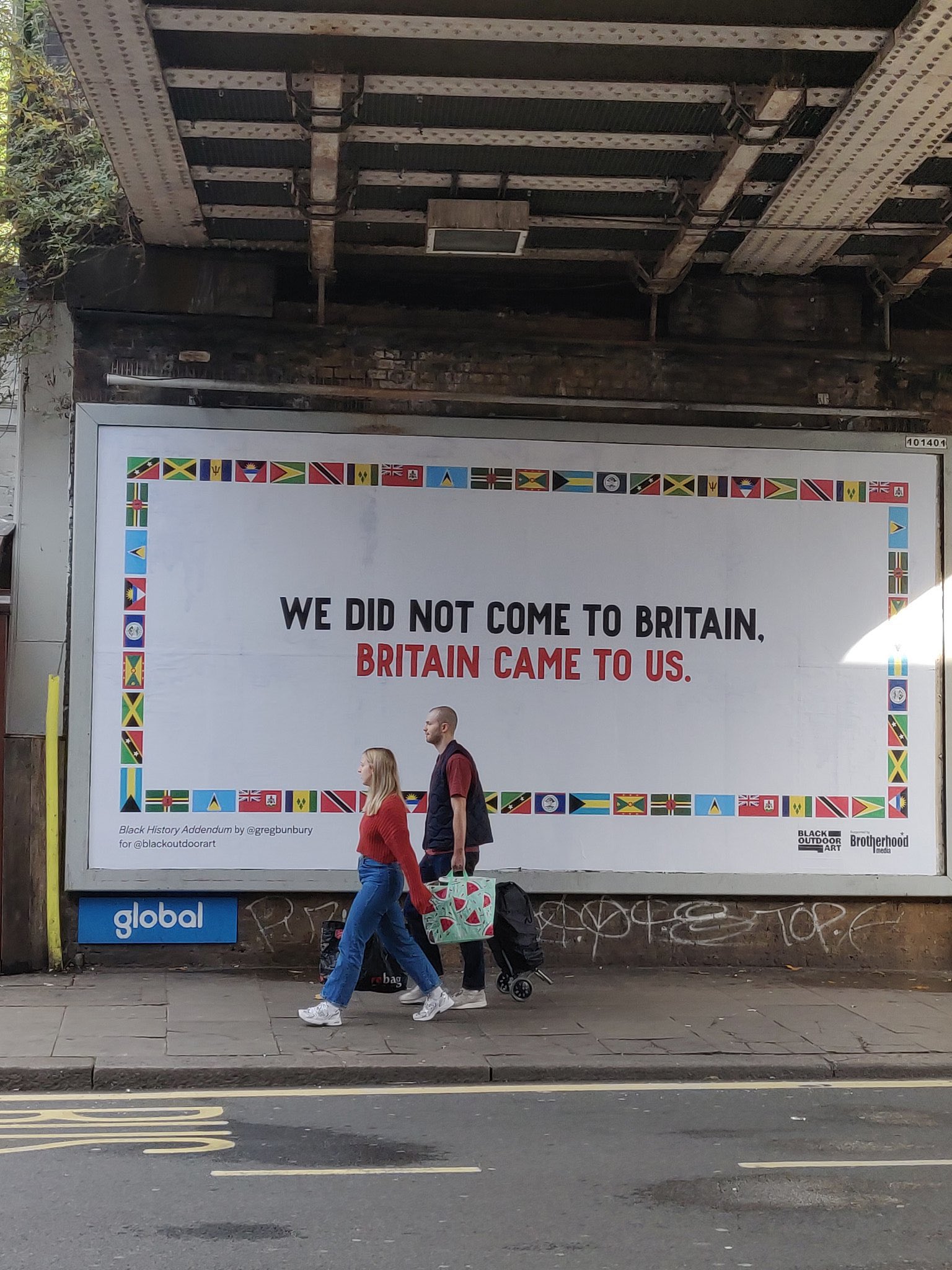




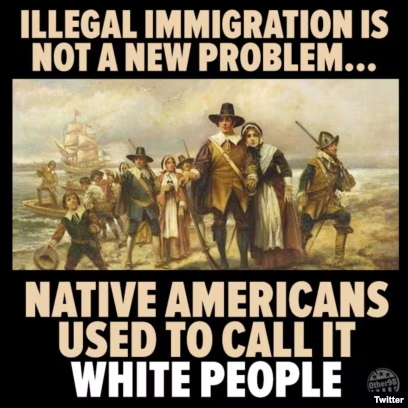







 freedom and reason