Natural Rights, Government, and the Foundations of Human Freedom

Before getting to today’s essay, I want to say a few words about Charlie Kirk, who, in what Governor Spencer Cox called a “political assassination,” was shot and killed on Wednesday in an event at Utah Valley University in Utah by a shooter on a rooftop several hundred feet away.

I also pin a note to the end this essay on the matter of political violence.

Kirk, the co-founder of Turning Point USA, was instrumental in mobilizing young conservative voices on college campuses across the country. His energetic presence captivated audiences nationwide. He played a major role in Donald Trump’s return to the White House in 2025.

Kirk’s murder serves as a solemn reminder of the perilous state of political discourse today in America, where the political left has increasingly resorted to what anarchists call “propaganda of the deed.”

There are still many facts to be determined—the shooter remains at large and we do not yet know his identity or his motive (although there is some indication of his ideology in the evidence he left behind)—but whatever we may learn about these facts in the coming days, we can say now that there is an urgent need for civility and the safeguarding of public dialogue.

There are many posts and videos on TikTok, X, and other social media celebrating his death and condemning the man for his divisive rhetoric.” But words are the opposite of violence, and Kirk, like every one of us, should be able to voice opinions without fear of harassment, intimidation, and violence.

Kirk leaves behind a wife and two small children.

Charlie Kirk with his family

* * *

The recent claim by Virginia Senator Tim Kaine that rights come from government, not from God, should not reignite—if Americans have their heads on straight about the matter—one of the oldest debates in political philosophy: where do rights originate? The answer matters, to be sure, because if rights are granted by government, they can be taken away by government. If, instead, they are inherent in human nature, then government’s role is not to bestow them but to protect them—and limit them only where the actions of particular citizens and governments interfere with the unalienable rights of the individual. But since Kaine raised the matter, I want to take a moment to clarify the matter (which I did last seek in my essay Tim Kaine and the Enemies of Liberty and Rights).

The American founding documents speak with remarkable clarity on this issue. The Declaration of Independence asserts that all men “are endowed by their Creator with certain unalienable Rights,” these being the rights to “life, liberty, and happiness,” and that governments are instituted “to secure these rights.” Rights, in this vision, are pre-political. They exist before constitutions, before judges, before kings, before legislatures. Governments do not create them, but arise because they exist, and are only just governments as long as they recognize and defend these rights. Otherwise, the people reserve the right to overthrow unjust governments.

Image generated by Sora

The “Creator” invoked by Jefferson and the committee that penned the Declaration was not the interventionist God of clerics or theocrats. To be sure, some of the founders of the American Republic were Christians, but many of the founders were deists or skeptics, and most were Enlightenment rationalists. They drew on John Locke, who argued that natural rights flowed from the “state of nature”—from what it means to be human. Thus, when the Declaration invokes “the laws of nature and of nature’s God,” it points not to dogma, but to principles discoverable by reason and observation. No priest is required to interpret these truths. Indeed, by separating government and matters of conscience, no priest can interpret these truths.

This framework also explains the language of the Bill of Rights. The First Amendment does not grant free speech; it recognizes it and its obligation to defend it. The Article declares, “Congress shall make no law…abridging the freedom of speech.” Such phrasing assumes that freedom already exists. The same is true for matters of conscience. The same is true of the rights to bear arms, to be secure against unreasonable searches, or to due process of law. The Bill of Rights restrains government precisely because rights precede it.

Anthropology and history confirm this point. For most of our existence, human beings lived without formal states. Yet they cooperated, shared food, and protected one another. These social instincts—cooperation, mutual protection, sympathy— were essential for survival. Thinkers like Adam Smith and David Hume described this moral sense as natural to humanity, while Darwin recognized its evolutionary advantage. Whether one believes these rights come from a creator who set the universe into motion, one observes that creator’s handiwork in nature, its signs determinable by reason and scientific observation.

eIn this light, rights reflect not arbitrary convention but enduring features of human existence. The right to life reflects the need for survival; the right to liberty reflects the need for autonomy and flourishing. The right to happiness follows logically from these rights, since one is not happy when his life and liberty are compromised by his fellows or governments. Even nonhuman animals demonstrate this fact: bears and wolves confined in cages do not thrive—not because they have a subjective sense of freedom but because they are objectively unfree. This is the fact that inspired Abraham Maslow to chart the hierarchy of needs. This is the fact that inspired the Universal Declaration of Human Rights, a declaration rejected by Muslim-majority countries, countries run by panels of clerics who interpret matters handed down by a supposed prophet of a theocratic conception of god. The creator in the Declaration is not a theocratic conception. It is a euphemism for nature.

Understanding this is crucial for the future of freedom. If rights are natural, then government is permanently limited. It cannot legitimately abolish free conscience or speech or any other unalienable right because doing so would violate what people are by nature. But if rights are merely governmental, then they are contingent: they last only as long as the state allows. That is the logic of tyranny. The founders understood this distinction, which is why Jefferson could write that when a government becomes destructive of these ends, “it is the Right of the People to alter or abolish it.” Natural rights provide the moral standard by which governments are judged. The upshot is that Senator Kaine is admitting that his standpoint, one shared by his party, seeks to realize in life the totalitarian desire.

Let us make this as clear as our founders did 250 years ago: The American experiment rests on the premise that rights are not created by government but recognized by it. They are rooted in human nature, discernible by reason, and essential for human flourishing. Government is legitimate only insofar as it secures these rights. In this, the founders aligned with both the ancient natural law tradition and modern psychology: human beings require freedom, life, and the pursuit of happiness, not as privileges conferred, but as necessary conditions of existence and thriving. If we lose this, it won’t be just Americans who will lose their freedom and happiness. The world will lose its best hope for establishing the principle of natural rights in societies around the world.

* * *

On September 11, 2001, Islamic terrorists attacked the United States.

Political violence comes in different forms and necessarily presumes an ideology. Democrats want us to not think about what lurks behind the violence by chanting “gun violence.” But Jihadists used planes on September 11, 2001. And Decarlos Brown used a knife to kill that “white girl” in Charlotte.

Today there is an affinity between left progressivism—“woke”—and Islamism. What unifies these ideologies is a loathing of Western Civilization, its core rights and values, among them free speech and tolerance for open dialogue; an inability to suffer the opinions of others; a belief that snuffing out the lives of those who offend them is righteous action—that it’s morally justified.

Folks on social media are wondering whether we are entering a new era of political violence. We’ve been here for a while now. We know what’s fueling it. It’s neither liberal nor conservative.

The Extemist Cell Code Pink Gets Dangerously Close to the President and Cabinet Members

Trump, accompanied by Vice President JD Vance, Secretary of State Marco Rubio, Defense Secretary Pete Hegseth, and other senior officials, arrived by motorcade at Joe’s Seafood, Prime Steak and Stone Crab—just a short distance from the White House.

Outside the restaurant, he briefly spoke to reporters, drawing both cheers and chants of “Free Palestine!” Inside, protesters waving Palestinian flags escalated, confronting the President while chanting, “Free DC, free Palestine, Trump is the Hitler of our time.”

Code Pink misrepresents Benjamin Franklin in 2006

Let’s state the obvious: Washington, DC is far freer today than it was before Trump’s crackdown on crime in the capital. As Abraham Maslow noted decades ago, personal freedom rests on safety and security. The idea that safety and freedom exist in tension is a false dichotomy. Without protection from harassment, intimidation, and violence, no one is truly free to exercise their basic rights in public life.

As for equating Trump to Hitler, this is not only absurd, but dangerous. Just as waves of anti-white rhetoric from the progressive left, amplified by mainstream media, fuel racial violence targeting whites, the constant pairing of Trump with Hitler inspires violence against him. Do people have the First Amendment right to make this comparison? Yes. But why do so few leaders condemn it? The reason is plain: they want the rhetoric to persist.

Another urgent question: how did Code Pink get so close to the President, Vice President, and multiple Cabinet members? If even one protester had been armed, House Speaker Mike Johnson might be President today. The Secret Service knows who these radicals are—so why were they allowed within feet of the nation’s top leaders? After Butler, Pennsylvania, where Trump survived an assassination attempt (he was struck by a bullet), and another at his golf club in Florida, the idea that extremists could again get so close is alarming. At what point do we stop chalking these failures up to chance? Could there be something more sinister at play?

For those unfamiliar, Code Pink is a radical activist group led by Medea Benjamin, funded through opaque “dark money” channels. Beyond its rabidly pro-Islamist stance—an ideology that poses a very real threat to freedom and security across North America and Europe—Code Pink is notorious for harassing members of Congress and disrupting House and Senate hearings. The fact that such a group could breach security so easily should deeply concern every American.

Concerning the alleged quote by Benjamin Franklin on the supposed antithesis of security and freedom, the actual quote goes like this: “Those who would give up essential Liberty, to purchase a little temporary Safety, deserve neither Liberty nor Safety.”

This is from a 1755 letter written on behalf of the Pennsylvania Assembly in the context of the French and Indian War (1754–1763). Franklin penned the letter because of a conflict between the Pennsylvania Assembly and the Penn family (the colony’s proprietors). The Assembly wanted to raise funds for frontier defense against American Indian raids during the French and Indian War. The Penn family refused to allow their estates to be taxed. Franklin’s line was aimed at those unwilling to make fair sacrifices for the common defense.

The way this quote is used illustrates the problem of manufactured quotes wrenched from context for propaganda purposes. Franklin distinguished between core freedoms, e.g., self-government and fair taxation, on the one hand, and privileges and protections, namely the Penns’ wealth, shielded from taxation, on the other. In other words, what Franklin wrote is the inverse of what is intended by the manufactured quote Code Pink—and a lot of rightwing libertarians—put on their banners.

Franklin was actually saying this: If you (the Penn family) won’t give up some of your privileges for the sake of collective security, then you deserve neither liberty nor safety. When you understand the actual quote in context, an entirely different principle is laid bare.

Tobacco and Talc: A Tale of Two Denials That Warrant Perpetual Skepticism of Corporate Concern for Public Health Risks

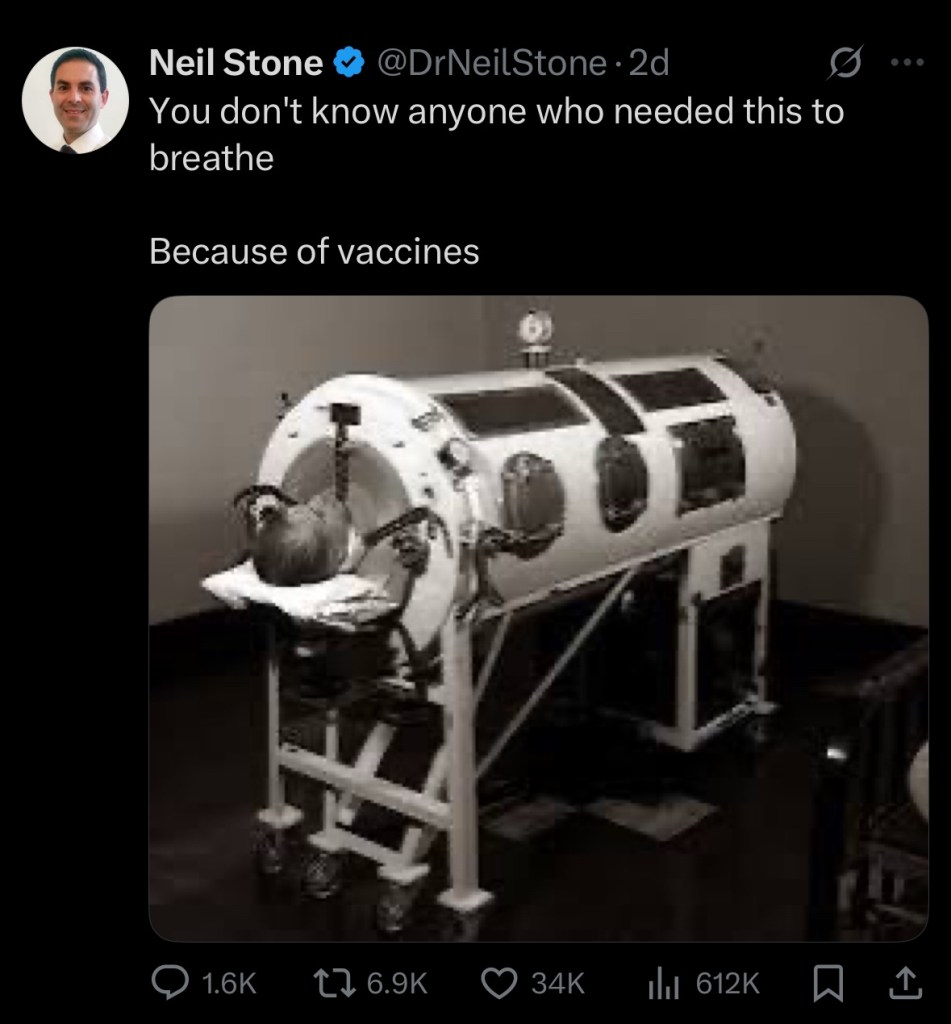
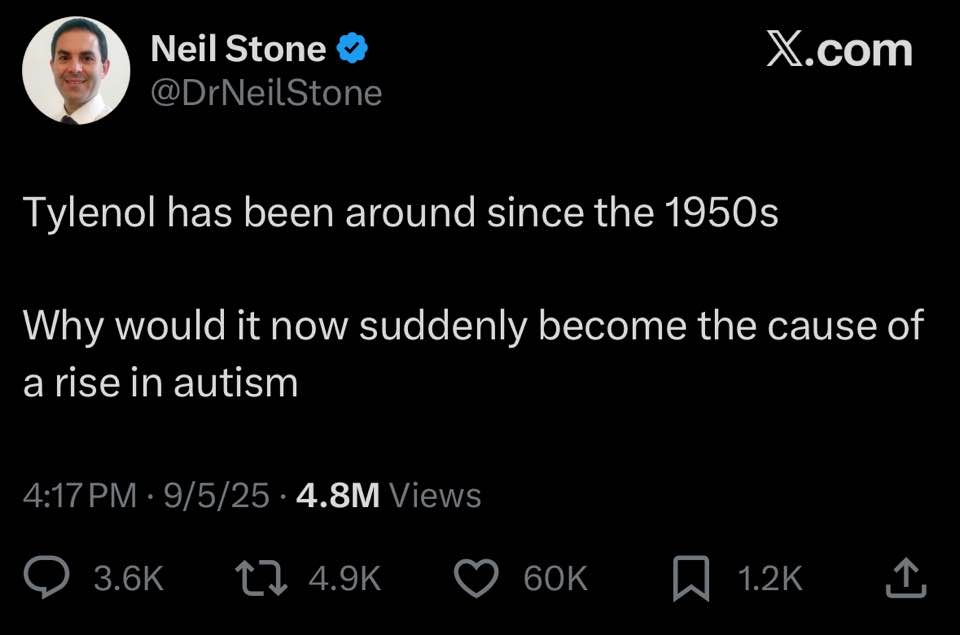
I checked. Neil Stone is a real doctor. I thought at first this account was a bot, but nope, it’s real. This is how a profession affixes to one’s head blinkers that keep a man undistracted by obvious questions. That a doctor would ask this question is troubling. So is the fact that, at the time of the screenshot (a few days ago), 60 thousand X users would like his post. In this essay, I review two historical cases that illustrate why asking such a question is so troubling.

Screen grab from X

The scientific link between smoking and cancer was suspected as early as the 1930s (German researchers observed unusually high lung cancer rates among smokers). Epidemiological studies in the 1950s (for example, by British doctors Richard Doll and Austin Bradford Hill) established the connection between smoking and lung cancer. By the 1964 US Surgeon General’s report, the evidence was overwhelming.

Despite the evidence, the tobacco industry mounted one of the most aggressive denial and disinformation campaigns in modern history. For decades, companies funded research designed to sow doubt, launched public-relations offensives, and even testified under oath that nicotine was not addictive and cigarettes did not cause cancer. This resistance lasted until the 1990s, when lawsuits and landmark settlements finally forced accountability.

Concerns over talcum powder and ovarian cancer began appearing in medical literature in the 1970s, when researchers found talc particles (which naturally contain asbestos, a known carcinogen) embedded in ovarian tumors. The theory was that talc applied in the genital area could travel into the reproductive system and cause inflammation, potentially leading to cancer. 

Over the years, epidemiological studies produced mixed results—some showing increased risk, others not. For decades, like the tobacco companies, Johnson & Johnson and other manufacturers denied the risks, emphasizing regulatory reviews that did not classify talc as a proven carcinogen. In this way, corporations hid behind government authority.  

Lawsuits in the 2010s brought the issue into public view, with internal documents surfacing that suggested the companies were aware of possible risks but continued marketing talc products as safe. Since then, juries have awarded multi-billion-dollar verdicts against talc producers.

The medical industry is one of the largest sectors of the global economy, larger than automobiles, the military, and oil. Healthcare accounts for nearly 18 percent of US GDP—over $4.5 trillion annually—making it the dominant domestic industry. 

Within this industry, the pharmaceutical sector is a massive money maker. Globally, the pharmaceutical industry generates more than $1.5 trillion in annual revenue, with profit margins often exceeding 15–20 percent, among the highest of any major sector. Of that, vaccines generate approximately 10 percent of total revenue—$150 billion dollars annually.

Pharmaceuticals consistently deliver high returns due to patent protections, exclusivity periods, and, with vaccines, immunity from liability. This makes Big Pharma both one of the most profitable and politically powerful industries worldwide.

Reflecting on the two historical examples I have given (and the two others cited in my recent essay The Tactic of Reputational Destruction: The Inquisition of Health Secretary Robert F. Kennedy Jr.), why would anybody with a rational mind think that the medical industry has less of an incentive to lie about the harms their procedures and products they produce than R.J. Reynolds or Johnson & Johnson? 

Returning to Dr. Stone’s rhetorical question concerning the link between Tylenol and autism, Tylenol (acetaminophen, or paracetamol outside the US) has indeed been around for quite a while. However, for most of the twentieth century, aspirin was the go-to drug for parents in treating children to treat fever and pain. In the late 1970s–1980s, studies linked aspirin use in children with a condition called Reye’s syndrome. As a result, parents and doctors began avoiding aspirin in children. During the 1980s, Tylenol (and ibuprofen) quickly became the preferred fever and pain reducers for kids. This is what could not occur to Stone because of the blinkers of his profession.

In the 1970s–1980s, prevalence estimates for autism were very low, often 2–5 per 10,000 children. In the 1990s, reported rates began to rise sharply. For example, in the US, prevalence estimates rose from 1 in 2,500 (early 1980s) to about 1 in 500 (mid-1990s). Rates continued to climb in the 2000s. In 2000, the CDC’s Autism and Developmental Disabilities Monitoring (ADDM) Network estimated 1 in 150 US children had autism. By 2008, it was 1 in 88. As of 2023, the CDC reported that about 1 in 36 children in the US is identified with autism.

These alarming numbers were raised at the recent inquisition of Robert F. Kennedy, Jr., before the Senate Finance Committee (discussed in the previously cited essay). Yet Senators, especially on the Democratic side, seemed unconcerned about them. They were focused instead on discrediting Kennedy, demanding his resignation as Secretary of Health and Human Services. Kennedy rightly pointed out that those interrogating him had a vested interest in defending the medical industry. Kennedy’s motivation? Public health.

To be sure, broader diagnostic definitions (especially since the 1990s), greater awareness among parents, educators, and clinicians, and better screening and services that identify more children with this disorder account for some of this rise. But all of it? I have trouble believing that. I’ve been alive for six decades, and I don’t remember seeing the number of autistic kids I see today. My impression is anecdotal, to be sure, but I am hardly the only one with this impression. Obscuring potential environmental inputs with the rhetoric of social construction doesn’t sit well with me.

Nor is Kennedy the first to suggest a link between Tylenol and autism. The earliest explicit scientific suggestion linking the two came from a 2008 study by Stephen Schultz. Schultz raised the idea that regression into autism might not be triggered directly by the MMR vaccine (one of the theories explaining the rise of autism), but rather by acetaminophen administered afterward for fever or pain. The study reported an association between early childhood acetaminophen use and regressive autism.

Since then, a hypothesis has emerged from the broader biochemical and historical evidence: autism diagnoses began sharply rising in the early 1980s, coinciding with a widespread replacement of aspirin with acetaminophen for children, due to warnings about Reye’s syndrome. Perhaps this association is coincidental, but determining whether it is imperative—as imperative as determining whether the MMR vaccine or some other environmental factor is associated with the rise of autism. 

Relatedly, Sabine Hazan has argued that mRNA COVID-19 vaccination may be associated with a sharp decline in certain beneficial gut microbes, particularly Bifidobacterium, in some individuals. She has suggested that this disruption could influence immunity and possibly wider health outcomes. You may recall that, similarly, Andrew Wakefield proposed in the late 1990s that the MMR vaccine caused gastrointestinal inflammation that, in turn, triggered autism, linking vaccination to both gut disruption and cognitive disorders.

While the reception of Hazan and Wakefield’s research differs in important ways—Wakefield’s claims allegedly having been discredited (reviews of the case scream this at the reviewer), while Hazan’s are under scrutiny (she is taking quite a risk speaking out)—both place the gut microbiome at the center of a vaccine-related hypothesis, suggesting that changes in intestinal bacteria may underlie broader effects on health and even cognition.

None of these connections should be a priori ruled out, and I am not at all convinced by claims that they have been. All connections should be thoroughly examined—and they haven’t been to my satisfaction. And I am hardly alone in lacking confidence that these matters have been thoroughly interrogated.

It would be naïve in the extreme to suppose that Big Pharma welcomes such an interrogation. There is no difference between the medical industry and any other—for all of them, the bottom line is to generate as much revenue for their stockholders as possible. This is why we don’t trust corporations to do their due diligence in determining whether their products are safe. We must leave that to those who have no stake in the profitability of any industry. And the politicians who protect the stockholder at the expense of the stakeholder to keep the campaign donations and other benefits flowing? They must be called out. The last voices to be discredited and pushed to the margins are the brave men and women who are asking the right questions.

Dr. Stone routinely makes posts like this. Here’s another one.

Another propaganda post by Stone

These viral memes with dramatic imagery crediting vaccines with the disappearance of the iron lung—the negative pressure ventilator—subconsciously work to obscure the actual reason the iron lung is no longer the standard way people struggling to breathe are ventilated: the invention and widespread adoption of the mechanical ventilator. The development of positive pressure ventilators is associated with the decline in iron lung use.

During the COVID pandemic, millions of Americans watched thousands of their countrymen ventilated with no awareness that the reason the iron lung was not used is because technology had changed. The dramatic memes work because of the power of propaganda to put awareness out of mind.

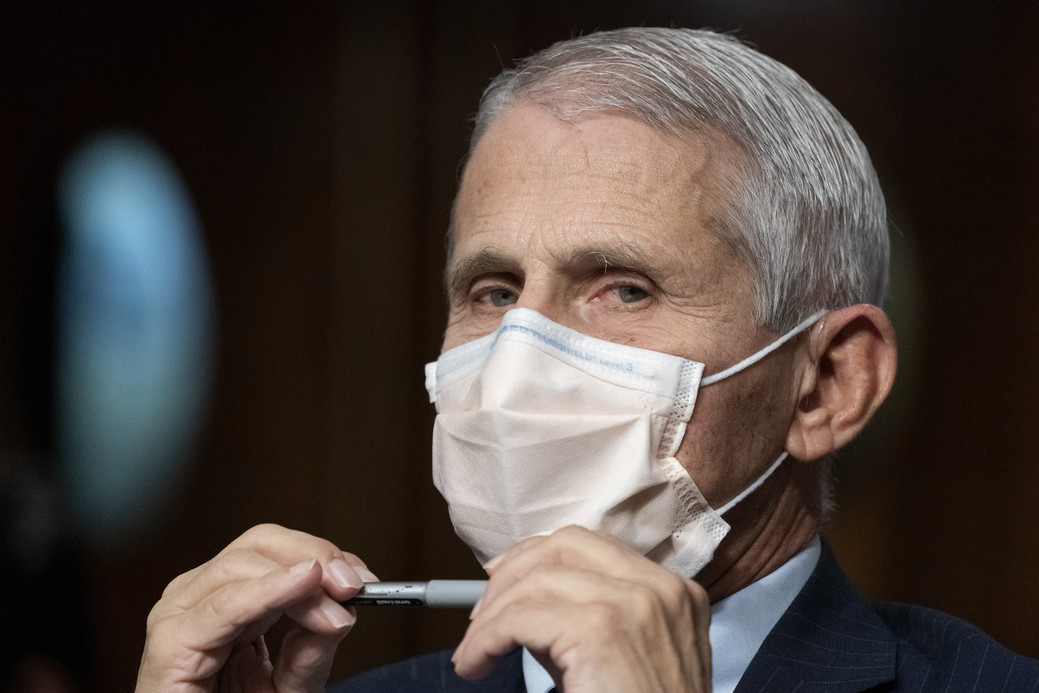
Spectacle and Silence: Grilling Kennedy, Guarding Fauci

I want a world where lawmakers grill lifelong technocrats serving corporate interests, while elevating critical and independent thinkers who question dogma and entrenched power on the facts that the technocrats and their corporate overlords (and the media who shill for them) conceal from the public.

Image source: Politico

Compare and contrast the way lawmakers treated Anthony Fauci and Robert Kennedy, Jr. Were you doubtful that the Senate Finance Committee is owned by Big Pharma? How about now? That spectacle on Thursday was obscene.

Never forget that Joe Biden, during the final hours of his presidency, granted Fauci a full and unconditional presidential pardon for any potential federal offenses Fauci may have committed between January 1, 2014, and the date of the pardon. Here’s the Executive Grant of Clemency.

The pardon was specifically related to Fauci’s roles as Director of the National Institute of Allergy and Infectious Diseases (NIAID), a member of the White House Coronavirus Task Force, and Chief Medical Advisor to the President.

“Let me be perfectly clear,” Fauci told the media: “I have committed no crime and there are no possible grounds for any allegation or threat of criminal investigation or prosecution of me.”

Denial is expected. But it seems Biden—or at least those operating the autopen—thought differently. What inside knowledge did Biden or those around him have that Fauci committed federal offenses? Why is the Senate not investigating that question?

Sure, Fauci can’t be prosecuted now (unless Biden’s pardons are found to not have issued from his hand). But that also means he can’t invoke his Fifth Amendment privilege to remain silent in the face of incriminating evidence. He was a witness to federal crimes. Haul the man before the Senate and make him answer questions under threat of perjury and contempt of Congress.

As for Biden, he can’t be hauled before any tribunal because he was determined to be mentally incompetent to stand trial. Then again, he was also mentally incompetent to stand as President, yet the powers-that-be had no problem with that.

One last thing, while I got you here: Isn’t it funny how Biden could not give a press conference for an entire year, and all we heard was crickets in Media-land, yet Trump is out of the public eye for a day, and he either had a stroke or died?

We couldn’t question whether Biden was dead from the neck up, but Trump has a bruise on his hand, and his Cabinet should invoke the 25th Amendment to the US Constitution and sack a sitting President.

If you can see how upside-down everything is may God have mercy on your soul.

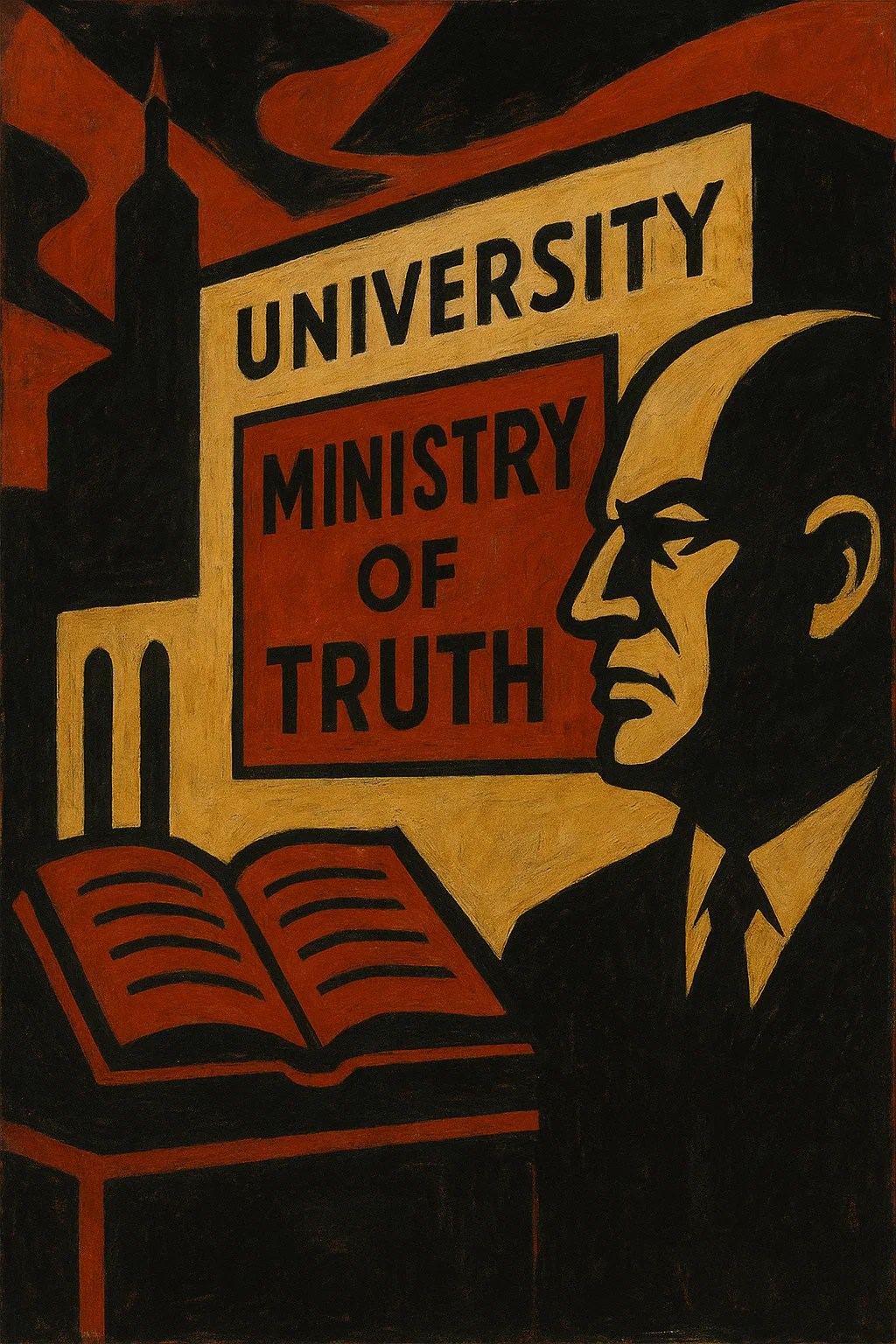
Professors, Propaganda, and the De Facto Ministry of Truth

One of the underexamined problems (perhaps even unexamined, as I have not seen this stated elsewhere) with professors’ anxiety about students using AI is their desire to control the scope of knowledge—the boundaries and thus the content of the knowledge base. But it is not the professor’s role to dictate where students may seek information. Students are citizens of a free republic, free to pursue knowledge through any means available to them, including conversations with chatbots.

I see a parallel here with media literacy programs. While I agree that citizens should be aware of propaganda, these curricula often function less as neutral training in discernment and more as tools for steering students toward approved sources—sources that align with a progressive agenda (which has colonized our sense-making institutions)—while delegitimizing alternative perspectives. In practice, media literacy often amounts to ideologically primed and framed “pre-bunking” of ideas that threaten the prevailing orthodoxy. Ironically, those who design and implement these programs are often as unaware of their own biases as AI is of its.

Criticism of AI for its inaccuracies and distortions—criticisms that are, to be sure, justified—can also be leveled at professors, both in their teaching and in their scholarship. Just as AI inherits an ideological slant from its training data (“data scraping”), which is largely drawn from institutions dominated by a progressive worldview, so too do professors reflect and perpetuate those same distortions. Indeed, much of the bias AI reproduces originates in academia itself and in its dissemination across cultural and media spaces.

My conversations with chatbots are often as frustrating as discussions with professors. The difference, however, is that with careful prompting, a chatbot can at least acknowledge that its errors and distortions stem from a progressive bias in its knowledge base. Many professors would not grant even that much. There are many reasons for this, but part of it is that admitting this fact undermines the authority they believe accrues to their profession through expertise and professional development. Chatbots—at least at this stage—are not burdened by the demands of reputation (albeit they can be defensive when accused of possessing a point of view, of which they deny being capable).

Image generated by Sora

The deeper problem, perhaps, is that most people lack the independent knowledge necessary to guide AI toward more accurate outputs through thoughtful prompting, since they themselves have been shaped by the same ideological indoctrination. In this way, AI, like teachers, reinforces a distorted and incomplete understanding of reality, preparing students to accept received knowledge as valid. So, in the end, it comes back to ideological control over the sense-making institutions that shape mass consciousness.

The result is the emergence of a de facto “Ministry of Truth,” operating much like the one George Orwell described in Nineteen Eighty-Four: by (consciously and unconsciously) keeping general knowledge in line with political doctrine, the knowledge-industrial complex controls not only what is taught, but what can be thought.

Tim Kaine and the Enemies of Liberty and Rights

“When in the Course of human events, it becomes necessary for one people to dissolve the political bands which have connected them with another, and to assume among the powers of the earth, the separate and equal station to which the Laws of Nature and of Nature’s God entitle them, a decent respect to the opinions of mankind requires that they should declare the causes which impel them to the separation.

“We hold these truths to be self-evident, that all men are created equal, that they are endowed by their Creator with certain unalienable Rights, that among these are Life, Liberty and the pursuit of Happiness.—That to secure these rights, Governments are instituted among Men, deriving their just powers from the consent of the governed.”

These lines are from the Declaration of Independence, penned in the summer of 1776 to provide a clear rationale for breaking ties with Britain. More than this, the Declaration aimed to establish legitimacy for a new republic by grounding independence and the right to form a government in natural rights and the principle of popular sovereignty. It thus framed the United States as acting in accordance with universal principles of justice.

Artist: Jean Leon Gerome Ferris

The Declaration was drafted primarily by one of the greatest Virginians, Thomas Jefferson, in June. He wrote it at the request of the Committee of Five—a group appointed by the Second Continental Congress—consisting of Jefferson, John Adams, Benjamin Franklin, Roger Sherman, and Robert Livingston. Adams and Franklin made important edits, and the full Continental Congress debated and revised the draft before formally adopting it on July 4. Next summer, the American Republic will celebrate the 250th anniversary of its independence.

US Senator Tim Kaine, a Virginian and the man who was selected by Hillary Clinton as her potential Vice President, might want to revisit the Declaration of Independence.

Texas Senator Ted Cruz gave a compelling response, but his points require clarification. Who is the “Creator” Jefferson is writing about? Jefferson tells us in the text: “Nature’s God” who established the “Laws of Nature.” Kaine compares these ideas to Islam—but he is mistaken. Natural law is not a religious prescription; it is an observation—a self-evident truth.

The religious outlooks of the Committee of Five reflected the diversity of thought among the Founders (some were Christians, others were not), yet they converged on common ground in Enlightenment principles. Jefferson, Adams, and Franklin leaned toward deism, emphasizing natural law, reason, and the sovereignty of individual conscience. Livingston reflected the rationalist strain within the Reformed tradition. Among the five, only Sherman, a Calvinist, adhered to more orthodox Christian convictions.

Despite these differences, all agreed that human rights were not the gift of government but rooted in a higher order—whether understood through divine providence, natural law, or human nature itself. This convergence allowed them to craft the Declaration in language broad enough to resonate across faith traditions and philosophical outlooks, grounding the new republic in a shared commitment to liberty and the protection of individual rights.

Congress approved the Declaration without dissent on July 4. Every colony assented, making the vote unanimous. There were no imams, priests, or rabbis among the fifty-six delegates representing the thirteen colonies. However religious some of these men were, they did not impose religious authority on the American people. The Declaration they authored or assented to is unmistakably liberal and rationalist in character. It does not invoke revealed theology, denominational creeds, or sectarian authority. Instead, it grounds political legitimacy in natural rights, the equality of individuals, and the sovereignty of the people, all articulated in the language of Enlightenment philosophy.

The Declaration thus reflects a convergence: religious delegates could see in it the hand of providence, while deists and rationalists could recognize the operation of natural law. What united them was the conviction that rights are inherent, not granted by government, and that the purpose of republican government is to secure those rights against both majority tyranny and elite domination.

From this foundation, the Founders devised a Constitution and a Bill of Rights that embodied Enlightenment ideals in a system of government—a republic—grounded in popular sovereignty, where authority derives from the people and is exercised through a framework of representation and law. Unlike direct democracy, a system in which citizens make all lawmaking and policy decisions, republicanism channels popular will through elected representatives and constrains both rulers and the majority by constitutional principles and institutional checks. Its central purpose is to protect individual rights and the public good simultaneously, ensuring that government is neither arbitrary nor majoritarian, but rather manifests ordered liberty under the rule of law.

What is liberalism, then? One can infer its meaning from what has already been written, but its meaning should be made explicit: Liberalism is the doctrine that the individual is sovereign over his own associations, conscience, speech, and the fruits of his labor. It affirms that each person possesses an inviolable personal sphere—of expression, thought, and productive effort—the unalienable rights: “Life, Liberty and the pursuit of Happiness”—that precedes and limits political authority over him.

The republican system is designed to protect this sovereignty, ensuring that no majority may vote away fundamental liberties and no minority of elites may rule over the people by fiat. Liberal principles provide the guardrails of republican government: they set the boundaries within which popular rule must operate, preserving ordered liberty by restraining both majoritarian excess and oligarchic ambition.

For republicanism to function, it must therefore be bounded by liberal guardrails—principles rooted in individual liberty, principles that issue from natural law, that is, human rights, which inhere in every citizen of a free republic. Ultimately, the individual is sovereign. His rights of conscience, expression, publication, and association are his own, free from government interference.

This moral framework acknowledges that human beings are social creatures whose sentiments often converge, and that democratic processes must exist to reflect shared sentiment. Yet even democracy is constrained by liberal principles. We do not live in a majoritarian system where the majority may vote away fundamental freedoms. Democracy requires dissenting voices—individuals and associations who challenge prevailing opinion—so that issues can be debated openly and consensus reached through rational deliberation. Rights do not—must not—come from government, but precede it, with government existing to reflect the will of the popular sovereign while protecting civil liberties and individual rights.

For republicanism to function, it therefore must be bounded by liberal guardrails—principles rooted in individual liberty—principles that issue from natural law, that is, human rights, which inhere in every citizen of a free republic. Ultimately, the individual is sovereign. His rights of conscience, expression, publishing, and speech to associate with those whom he wishes to, are his own, free from government interference.

This moral framework admits that human beings are social creatures whose sentiments often converge, and that democratic processes must exist to reflect that shared sentiment. Yet even democracy is constrained by liberal principles. We do not live in a majoritarian system where the majority may vote away fundamental freedoms. Democracy requires dissenting voices—individuals and associations who challenge prevailing opinion—so that issues can be debated openly and a consensus reached through rational deliberation. This is why man’s rights do not—must not—come from government, but precede government, with government existing to reflect the will of a popular sovereign—the people—while protecting the civil liberties and rights that are the birthright of every citizen.

The problem with progressivism—and why it is essential to emphasize that progressivism is not liberalism—is that the progressive mentality is technocratic in spirit. It seeks rule by bureaucrats and experts, subservient to elite power, treating both the individual and common sentiment as subordinate to elite knowledge. Liberal guardrails, while limiting democratic impulses by rooting sovereignty in the individual, also ensure that elites rule neither over the individual nor the populace without consent and within a rational, secular framework.

This is the essence of self-government. Progressives aim to transcend these limits, replacing self-government with rule by elites and their functionaries—the bureaucrat, the expert, the scientist. In a word, progressivism is technocratic: governance by unelected administrators, ultimately dictated by those who install themselves as overlords—the representatives of corporate class power.

This explains why Tim Kaine and his ilk argue that rights are granted by government rather than grounded in natural law. They want rights determined by the money-power that stands behind the politician, the corporatist ideology that moves the progressive policymaker, not by the self-evident nature of human beings. For, properly understood, natural law rests in human nature, which can be rationally examined and empirically observed. Since all humans share the same nature, the unalienable rights identified in the Declaration thus inhere equally in each person. No government can determine human nature. It must, in the final analysis, reflect it in establishing its foundational principles.

Maslow’s hierarchy of needs

Abraham Maslow’s hierarchy of needs reflects this nature: meeting basic needs is essential not as an end in itself, but as a necessary condition for self-actualization—the full development of every human personality. Such development benefits all, not merely the majority, and certainly not a minority of the opulent. Maslow valued above all else human potential and personal freedom. His focus on individual growth aligns him with liberal, humanistic ideals rather than rigid ideologies. He criticized extreme collectivism for suppressing creativity, acknowledged the value of social support, and condemned authoritarianism, believing government should facilitate human growth, not control it.

Thus Maslow, like the Founders, centered human rights and rooted them in human nature. If a government can define our rights, then that government can also take them away—our freedoms of association, conscience, press, and speech. These freedoms are necessary conditions for citizens to deliberate together, envision their future, and work collectively toward it in ways that maximize the flourishing of individuals and society alike. A free society is not one in which all are identical, but one in which each individual has the opportunity to strive for self-actualization. Because we are social beings, our institutions must support that effort, but they cannot be structured to give one person an unnatural advantage over another.

Kaine’s argument is, at least superficially, majoritarian: if the majority elects representatives who legislate according to their views, then rights are defined by that process. There is no external source of liberty and rights. In practice, however, the interests served are not truly those of the majority. They are the interests of a minority of the opulent—the corporate elite who control cultural and economic institutions. Kaine is an animal of concentrated power, not a representative of individual freedom. Nor does he represent the popular will constrained by human rights.

In the republican system, liberal guardrails protect universal interests by safeguarding individual liberty and the pursuit of happiness from both the majority and the minority of the opulent. By contrast, Kaine’s approach places the definition of rights in the hands of elites claiming to represent the majority. In a late-capitalist order, where corporations wield immense economic power, this means rights will serve narrow interests rather than those of the people. Rights conceived of in this way are not properly rights at all, but the instruments of tyranny.

Kaine’s position thus reflects, at bottom, a totalitarian impulse. It must be rejected if we are to preserve a free society. Crucially, Kaine is not an outlier—he embodies the progressive ideology at the heart of the Democratic Party, which advances transnational corporate agendas. To reject his politics is to reject the politics of that party itself. Whatever one thinks of the Republican Party, whatever it was before its representatives were compelled to bend to the demands of the populists, today’s Republicans are the only political force representing the liberal foundations established by the Founders.

If Democrats prevail in the 2026 midterm elections, the nation risks losing the best opportunity it has had in decades to recommit itself to the ideals set forth in the Declaration, the Constitution, and the Bill of Rights—ideals reclaimed in the 1860s when the Democratic Party, the party of the Slavocracy, was defeated on the battlefield, but lost with the rise of progressivism. That would be a tragic way to commemorate the 250th anniversary of the greatest experiment in self-government since class power alienated humanity from its species-being so many millennia ago.

The Tactic of Reputational Destruction: The Inquisition of Health Secretary Robert F. Kennedy Jr.

What the Senate Finance Committee put Robert F. Kennedy, Jr., through on Thursday, September 4, is an instance of a long historical pattern of corporations attempting to silence those who call out exploitation and harm in pursuit of profits, in this case, working through politicians elected by the people but bought off by money-power. Throughout American history, corporate power has sought not only to neutralize its critics but also to destroy them, often using media influence and political allies in government to discredit, marginalize, and smear those who speak out.

Robert F. Kennedy, Jr., before the Senate finance Committee (source of image: CBS News)

In the face of relentless attacks on his character and motives, Kennedy stuck to his guns, arguing that mRNA vaccines fail to provide effective protection against upper-respiratory infections like COVID and flu. He insisted that government funding should be redirected toward safer, broader vaccine platforms that remain effective even as viruses mutate. In his testimony, he assured Senators that everyone still has access to vaccines, rejecting claims to the contrary as false. When asked whether mounting evidence shows mRNA vaccines cause serious harm, including death—especially among young people—he responded in the affirmative. For this, he was smeared as “anti-vax” and a “conspiracy theorist.” Senators called for his resignation.

It was obvious that Big Pharma was behind the witch hunt. But Big Pharma isn’t the only corporation that works to suppress criticism of its products. The corporations most responsible for shaping this climate of suppression today are among the most powerful sectors of the economy: in addition to Big Pharma, there’s the medical-industrial complex, Big Agriculture, and the chemical manufacturing industry. Each has vast financial resources, entrenched political influence, and a record of prioritizing profit over public health and ecological well-being.

Big Pharma wields its power through aggressive lobbying, marketing, and the capture of regulatory agencies meant to protect the public from the pathological pursuit of profit. One has to be naive to believe that the medical-industrial complex at large doesn’t profit from a system that treats illness as a market opportunity rather than a social problem to be prevented. Indeed, the industry is responsible for manufacturing illnesses that it can then “treat” with its wide array of nostrums. (See Making Patients for the Medical-Industrial Complex; Feeding the Medical-Industrial Complex.)

Big Agriculture relies on industrial farming practices and subsidies that sustain monocultures, chemical dependence, and ecological degradation. Chemical manufacturers churn out substances whose long-term impacts on human health and ecosystems are well-documented, while other products remain poorly studied (and for that reason their use restricted). 

Together, these forces represent a modern embodiment of the same dynamics that Rachel Carson and Ralph Nader confronted long before Kennedy became a target of Big Business—those corporate giants seeking to silence critics who reveal the human costs of their business models. The stories of Carson, Nader, and Kennedy illustrate an enduring struggle between those who place the public good above profit and those who profit from keeping the truth hidden, and its critics at the margins of credibility.

Rachel Carson

Rachel Carson, a major figure in the history of environmentalism, was a marine biologist and conservationist whose 1962 book, Silent Spring, focused particularly on DDT, exposed the dangers of indiscriminate pesticide use. She sounded the alarm about humanity’s capacity to disrupt ecosystems with chemicals. Carson’s work was not only scientifically rigorous but also deeply compelling to the public, blending meticulous research with accessible and evocative prose. She had a real gift for popular science writing. This made her especially dangerous in the eyes of polluting corporations.

In Silent Spring, Carson documents how pesticides accumulate in the environment, enter the food chain, and cause harm to humans and wildlife alike. She challenged the prevailing assumption that chemical pesticides were inherently safe—the industry line—and argued that the companies producing these chemicals and regulatory authorities ostensibly established to police those corporations were failing to protect the environment and public health. Before there was a word for it, she was warning the world of the phenomenon of endocrine disruption.

Carson’s work had a profound impact on my late mother, who refused to let me join my friends who peddled on their bicycles behind the “bug truck,” city vector-control vehicles spraying insecticide, most often DDT or, later, malathion, to control mosquitoes. The white cloud they moved through was the pesticide mist, and a lot of kids thought it was fun to ride their bikes through it. At the time, there wasn’t much public awareness about long-term health risks. Later, after DDT was banned in the US in 1972, people began looking back at those neighborhood spraying days very differently—especially since DDT was linked to environmental damage and potential human health concerns. Many parents didn’t think twice about letting kids ride through the mist, but thanks to Carson, my mom was ahead of her time. I have vivid memories of her frantically rushing around the house, pushing wet towels into the windowsills, cursing at the powers-that-be.

Carson’s work provoked a fierce backlash from chemical manufacturers whose economic power was threatened by her revelations. Corporations whose products she criticized launched campaigns aimed at discrediting both her science and her character. She was labeled an alarmist and accused of being a hysterical woman. Companies and their allies questioned her scientific credentials despite her extensive background. Public relations campaigns sought to undermine her arguments by warning farmers and the public that restricting pesticides would damage agriculture and progress. Industry spokespeople frequently accused Carson of exaggerating risks and stirring unnecessary panic, dismissing her evidence as anecdotal. 

Years later, in my environmental sociology work, I would see Carson’s legacy in such studies as Michael Edelstein’s 1988 Contaminated Communities and Dorceta Taylor’s 2014 Toxic Communities. My own critiques of corporate polluters were sandwiched in between: “Advancing Accumulation and Managing its Discontents,” in the Sociological Spectrum (2002), and “The Neoconservative Assault on the Earth,” in Capitalism, Nature, and Socialism (2005).

Carson’s work had held up through the years, and despite the attacks on her scholarship and reputation, Carson’s landmark contribution ultimately had profound consequences for environmental policy. Public awareness of pesticide dangers surged, contributing to the eventual ban of DDT for agricultural use in the United States in 1972. Moreover, Carson’s advocacy helped catalyze the creation of the Environmental Protection Agency in 1970 (for good or for bad). Her example demonstrated that well-documented science could challenge powerful corporate interests and inspire meaningful policy change.

Ralph Nader with a Chevrolet Corvair at the American Museum of Tort Law, in his hometown of Winsted, Conn. November 30th of this year will mark the 50th anniversary of his landmark book Unsafe at Any Speed.

Ralph Nader, an American consumer advocate, became a central figure in the movement for corporate accountability in the 1960s. His groundbreaking 1965 book, Unsafe at Any Speed, exposed the automobile industry’s disregard for driver safety, particularly highlighting defects in the Chevrolet Corvair. Like Carson’s work, Nader’s work combined meticulous research and compelling argumentation, challenging powerful corporations to prioritize human life over profit. Like Carson and many whistleblowers, Nader’s efforts provoked an aggressive backlash from the industries he criticized.

In Unsafe at Any Speed, Nader documented how car manufacturers knowingly ignored safety issues that endangered drivers and passengers. He argued that the auto industry valued aesthetics and cost-saving measures over human lives, creating vehicles that were prone to accidents and injuries. Beyond detailing technical flaws, Nader emphasized the systemic failures in government regulation, showing that the federal agencies responsible for public safety were too weak or too influenced by industry to enforce meaningful standards. 

Like Carson’s, Nader’s work resonated with the public, drawing attention to risks that had previously been largely invisible to everyday drivers. The response from General Motors (GM) and other industry leaders was swift and aggressive. GM in particular viewed Nader as a significant threat and engaged in a coordinated campaign to discredit him personally and professionally. The company conducted surveillance, hiring private investigators to follow him, attempting to gather damaging information on his private life—as if this had any bearing on the truth of his arguments.

Corporate executives portrayed Nader as a radical troublemaker whose activism threatened the economy and undermined American progress. Their attacks aimed less to counter his factual claims than to intimidate him and diminish his credibility in the eyes of the public. This was their only recourse, of course, since their ability to counter his claims was prebunked by the brutal truth of their harmful commodities.

Despite the pressures, Nader remained steadfast. His research and communication skills helped him withstand attempts at character assassination. Even as a young person, I remember his appearances on television. He exuded credibility. After all, what did he have to gain from his exposés other than grief? It was the public who was to gain by his success. Public support for his work grew as Americans recognized the validity of his findings.

The long-term impact of Nader’s advocacy was profound: it led to significant reforms in automobile safety, including the creation of the National Highway Traffic Safety Administration, the implementation of mandatory safety features like seat belts and energy-absorbing steering columns, and a broader movement for consumer protection in numerous industries.

Carson’s and Nader’s stories are not only about environmental science or consumer safety; they are also narratives about courage in the face of powerful opposition. Both illustrate the intersection of truth, public welfare, and entrenched economic interests, exposing in real time how industries and their political allies were concerned more about suppressing inconvenient truths than cleaning up their act. Their perseverance ensured that the public could no longer ignore the human costs of unchecked corporate power. They reshaped policy, established new standards of accountability, and proved that individuals and publics armed with evidence and integrity could stand against the might of entire industries. 

One often hears that Robert Kennedy, Jr., is not a doctor or a scientist and, therefore, has no credibility in his arguments. Sometimes the arguments go beyond the fallacy of appeal to authority and expertise (see The Cynical Appeal to Expertise), making sure the public is aware that Kennedy is a recovered heroin addict (which only makes him more impressive to anybody who understands the problem of addiction and knows stories of recovery). The public is also told that a worm ate his brain.

However, before his role as Secretary of Health and Human Services, Kennedy built an impressive record as an environmental and public health attorney. He fought against polluters that poisoned waterways, communities, and ecosystems, holding corporations accountable for the damage their practices inflicted on human health and the environment. His litigation through groups like Riverkeeper and the Natural Resources Defense Council pitted him against powerful industries, including energy companies and chemical manufacturers, whose negligence endangered both people and the natural world. 

Kennedy’s legal career reflects a consistent commitment to the principle that corporate power must be checked when it threatens human well-being. His knowledge of health and science is extensive. He brings this same activist spirit and medical and scientific knowledge into his public service role, where he confronts not just environmental hazards but also broader public health threats (such as chronic disease and radical gender ideology), continuing to challenge entrenched interests resistant to reform. His insistence that corporate power be subordinated to the health and safety of ordinary people marks him as a witch. The Senate’s treatment of him, echoing the corporate smear tactics of earlier eras, underscores the continuity of this struggle.

Just as Carson and Nader endured attacks yet left lasting legacies of reform, Kennedy’s work carries forward the principle that public health and environmental integrity must come before profit. In resisting the corporate subversion of democracy, Kennedy joins a lineage of voices that remind us that truth, though often silenced, remains the most powerful weapon against exploitation. Indeed, such accounting he gave of himself, calling out Senators for their subserviance to Big Pharma, the story quickly disappeared from the Google news aggregator. But the industry will be back.

Kennedy is the right man for the job—for the populist struggle against elite power and public harm caused by the pathological pursuit of profit. Those of us who believe in individual liberty and popular democracy must have the man’s back. At the very least, ask yourself why doctors want to jab an infant with a vaccine for a disease (hepatitis B) that is primarily transmitted through sexual contact or sharing needles—a disease that pregnant women are screened for? Is it plausible that the infant hepatitis B vaccination is promoted not for public health, but to boost profits for pharmaceutical companies? If one thinks so, then he should agree that the country needs voices like Kennedy’s in the halls of power.

For previous essays on this platform concerning Kennedy’s views see Kennedy’s Confirmation Hearing Before the Functionaries of the Corporate State and A Few Features of Corporate Tyranny.

Posse Comitatus and the Ghosts of Redemption

Yesterday, a federal judge barred President Donald Trump from deploying National Guard troops in California for law-enforcement actions, including arrests and crowd control. (See Quelling the Rebellion.)

The ruling was issued by Clinton appointee Charles Breyer, a senior US district judge of the United States District Court for the Northern District of California. (Charles is the younger brother of Stephen Breyer, who served as a justice of the US Supreme Court from 1994 to 2022.)

Judge Breyer cited the Posse Comitatus Act as justification for his ruling. Let’s talk about that law.

Image generated by Sora

The Posse Comitatus Act was passed in 1878 by a Democrat-controlled Congress after the end of Reconstruction. It was designed to sharply limit the federal government’s ability to use the Army for domestic law enforcement. But why would Democrats at the time want to do that?

This came in the wake of the Compromise of 1877, when federal troops were withdrawn from the South. The law reflected the desire of Southern Democrats to prevent the federal government from deploying soldiers to enforce federal law within the states.

During Reconstruction, federal troops had been deployed to protect freedmen, uphold voting rights, and defend Republican-led governments from violent “Redeemer” resistance. By restricting the use of federal troops, the Posse Comitatus Act effectively made it much harder for Washington to protect black citizens from violence, intimidation, and disenfranchisement during Redemption.

The results were devastating. Lynchings and other forms of racial violence soared (see Agency and Motive in Lynching and Genocide). Black families were driven from their homes, their property seized by white mobs (see my review of Marcos Williams’ documentary Banished). At the polls, Black men were met with terror and intimidation that destroyed their right to vote for generations.

This law is a relic—and it’s time for it to be struck down. Take this ruling to the Supreme Court and have the Posse Comitatus Act finally ruled unconstitutional. Let’s return to the original intent of Article I, Section 8, and fully restore the powers granted under Article II of the Constitution. (See Concerning the Powers of The US Constitution—And Those Defying Them.)

We need to stop the rise of neoconfederate resistance in these blue states. If left unchecked, this escalating defiance will drive the nation closer to conflict. We cannot afford to repeat the mistakes of the past. We settled the question of “states’ rights” once by war. Let’s settle the question this time in peace. (See On the Road to Civil War: The Democratic Party’s Regression into Neoconfederacy.)

When Streets Take Sides—The Colors of Compelled Speech

I’m straight. My sexual orientation is part of who I am. It’s not political. Even if I thought it was—and some people do—and I raised a Straight Pride flag at my house, I would still oppose the government painting Straight Pride colors on a public crosswalk. (I recognize that a version of the Straight Pride flag looks like a neutral crosswalk on an asphalt road. But that is a coincidence.) The government should not endorse my politics, even if the majority wanted it to. Not everyone shares my politics. Why would anyone who believes in the First Amendment want the government to impose their politics on everyone else by painting a crosswalk in Straight Pride colors?

What flag I fly at my house, what symbol I wear on a hat or T-shirt, or what patch I sew onto my backpack—that’s my business. That’s my right as a citizen of a country that protects free expression. If I want to stick an “In this house, we believe…” sign in my yard, I can. (I wouldn’t, but I could.) And if the government tried to stop me, I’d tell them to back off. That’s my First Amendment right.

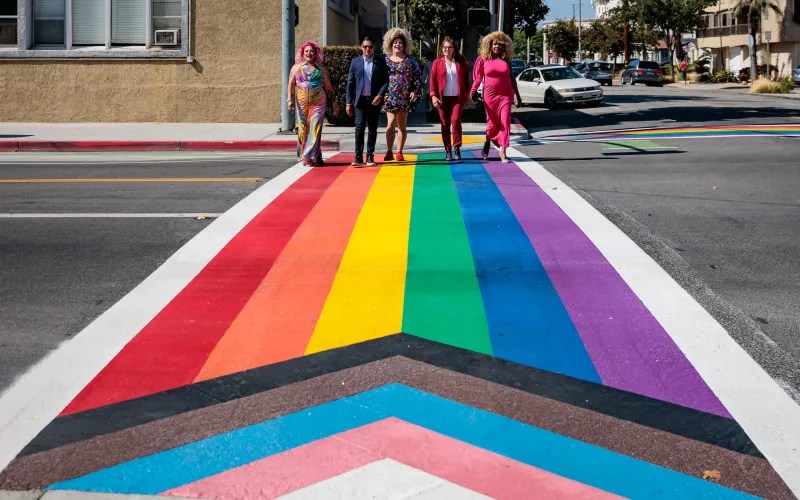
Long Beach Mayor Robert Garcia and Councilmember Cindy Allen walk with local drag queens 2022

I can paint a Confederate flag on my car. I can wear a Christian cross around my neck. I can even tattoo a swastika on my forehead. But the government can’t raise a Confederate, Christian, or Nazi flag over the courthouse. It can only fly flags that represent all of us—the US flag and the state flag. Those are inclusive symbols. They belong to everyone: straight and gay, black and white, young and old.

That’s why flying a Straight Pride flag at my house is fundamentally different from the government flying one. I’d object to a Straight Pride crosswalk not because there’s anything wrong with being straight (though, let’s be honest, Straight Pride is a little weird) but because exclusive flags are political. And the government should not endorse political movements—whether they’re gay, straight, white power, black power, or anything else. For the same reason, the Black Lives Matter slogan should never have been painted on public streets—even if most people agreed with the sentiment. (And they don’t.)

I don’t have to be politically neutral. In fact, I’m very political—just not about Straight Pride. But the government is not a citizen. It doesn’t have a right to free speech. Its role is to represent everyone, not to endorse particular political ideologies.

Think of the government like my classroom. My students and I can express our political opinions freely, without fear of punishment (unfortunately, not all professors run their classrooms this way). But I would never plaster my classroom with symbols of my personal politics—not if I respect the First Amendment. That’s why I’m baffled that we’ve normalized public school classrooms being decorated with political movement symbols. That should trouble anyone who values neutrality in public spaces.

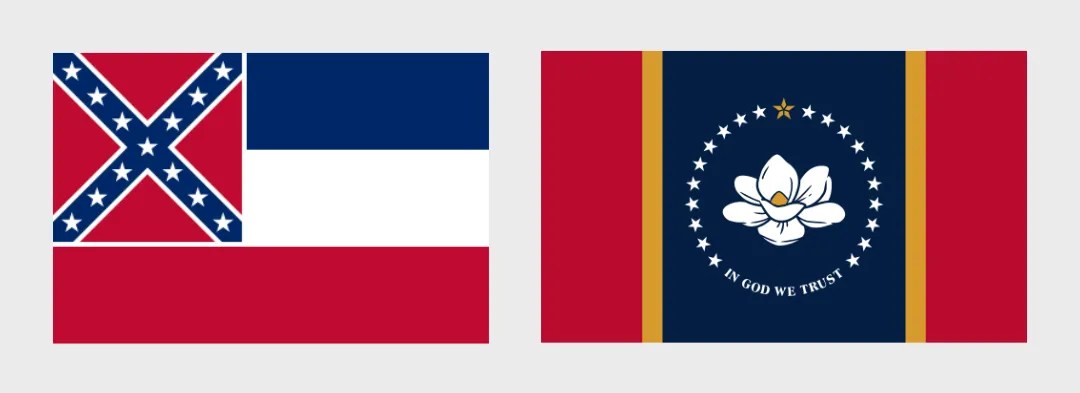
The Mississippi flag old and new

I’m honestly astonished that this point isn’t obvious—or welcomed. My argument protects everyone’s right not to stand on public property that’s been co-opted to express a political view they don’t share (or even if they do). Yet, just for saying this on X, people are calling me anti-gay. Nonsense. I’ve supported the gay rights movement since I first became politically aware. That’s not the point. People ask if I complained when Confederate flags flew on public buildings. Hell yes, I did. Anyone who knows me knows I’ve always wanted state governments to change those flags—to design symbols that represent everyone.

Some object that being gay is not an ideology or a politics. But queer is. There’s a crucial difference between being gay—a sexual orientation, a way of being, a matter of who you love—and being queer. Anyone can express queer politics on their own property or person, and that’s their right. But the government should never endorse queer politics. Whether I personally agree with it or not is irrelevant. It’s not the government’s role.

As I said on my platform Saturday, those who insist on commandeering public spaces by having the government endorse their politics are standing on ground that is antithetical to liberty. They reveal an authoritarian mentality—an unwillingness to allow others the freedom to move in politically neutral spaces. Wear a Pride Progress flag T-shirt crossing a public street? Fine. I’ll tolerate your expression. But I shouldn’t have to walk across a street painted in Pride Progress colors. That street belongs to me, too.

This same authoritarian impulse drives demands that public employees adopt the language and doctrines of queer politics—using preferred pronouns, affirming certain identities—under threat of punishment. When the government compels me to affirm a particular ideology, I am no longer free. That is compelled speech. And when my tax dollars are used to paint a crosswalk in the colors of a political movement, I am being forced to fund a political message I may not agree with—one I may have no choice but to walk across.

It is not anti-gay to demand political neutrality in public spaces. But it is discriminatory to use government resources to push one political message over others. People say, “But Andy, how bad is it to walk over those colors? You’re overreacting.” No. I take the First Amendment seriously—and everyone else should, too. Just think about your own freedom. If the political winds shift and a movement you abhor paints its colors on our crosswalks, you won’t have room to object since, before the shift, you insisted on your colors in that space. No movement colors in those spaces ever, and you will command the higher ground.

Floyd Mayweather and the Myth of Boxing Perfection

Floyd Mayweather is unquestionably one of the best fighters of his era. His defensive genius, ring IQ, and ability to adapt to any opponent cement his place in boxing history. In terms of ring generalship, he was one of the finest practitioners of the sweet sport in history. High-profile struggles notwithstanding, Mayweather commanded his space. His pristine 50-0 record is impressive, but it should not be mistaken for the ultimate benchmark for boxing greatness. Numbers, after all, tell only part of the story.

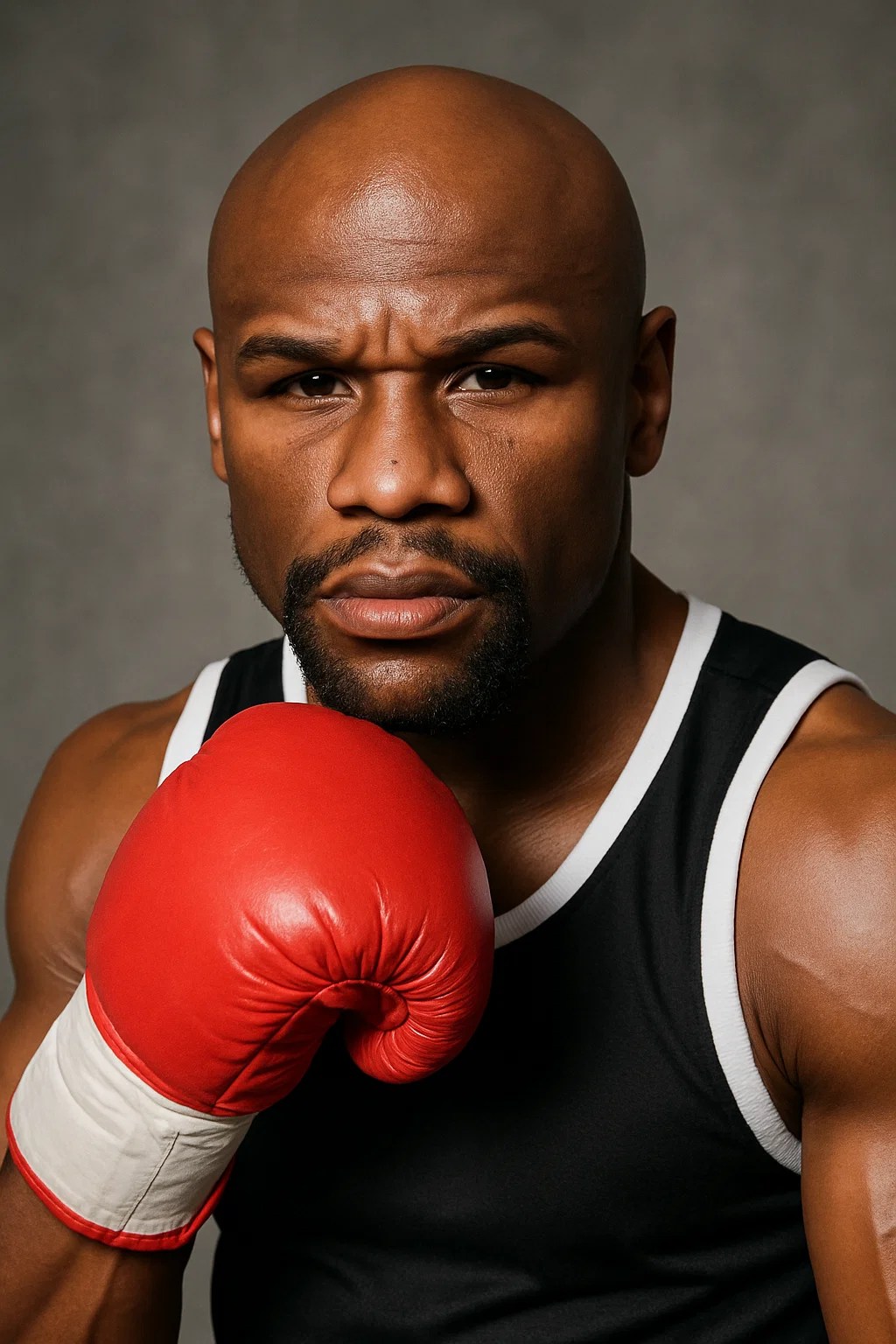
Image generated by Sora

Julio César Chávez was undefeated in his first 87 fights before tasting defeat. Had Chávez retired before his draw to Pernell Whitaker, his perfect record would have dwarfed Mayweather’s. Would that make him better than Mayweather? Not for that reason alone. What makes Chávez great is that he took on the best of his era when they were in their primes: Ruben Castillo, Rocky Lockridge, Juan LaPorte, Edwin Rosario, José Luis Ramírez, Hector Camacho, Meldrick Taylor, and many others. Chavez had the most total world title bouts (37) and the most title-fight victories (31) of any boxer in history. Chavez is a truly legendary fighter.

Mexico’s greatest boxer, Julio César Chávez

Featherweight Willie Pep won his first 62 bouts before losing to lightweight Sammy Angott (he bit off more than he could chew), only to string together another remarkable run of 72 victories. Willie Pep won the world featherweight title in 1942, beginning what would become one of boxing’s most celebrated careers. He successfully defended the title multiple times, showcasing his unmatched defensive skill and agility. He accomplished this against remarkable odds. In January 1947, during his first reign as champion, Pep survived a serious plane crash in New Jersey that left him with fractures to his back and leg. They never thought he would box again. Remarkably, he recovered and returned to the ring later that year to defend his title. Pep eventually lost the championship to Sandy Saddler (an all-time great in his own right) in 1948, ending his first reign, but demonstrated his resilience by regaining the title in 1949, outboxing the tall and dangerous Saddler in a dazzling display of boxing prowess.

Willie Pep, arguably the greatest defensive boxer of all time (and one of the dirtiest), here facing the great Sandy Saddler

Sugar Ray Robinson, widely regarded as the greatest pound-for-pound fighter of all time (that is certainly my opinion), won his first 40 fights, suffered a loss to middleweight Jake LaMotta (Robinson was a welterweight at the time), and then embarked on a staggering 91-fight unbeaten stretch, capturing the World Middleweight Title by stopping LaMotta in the 13th round. Before this, Robinson had held the World Welterweight Title for many years with several successful title defenses, including a 15-round decision against future world champion Kid Gavilan. After beating LaMotta, Robinson would go on to win the middleweight championship four more times, posting victories over Randy Turpin, Rocky Graziano, Gene Fullmer, and Carmen Basilio.

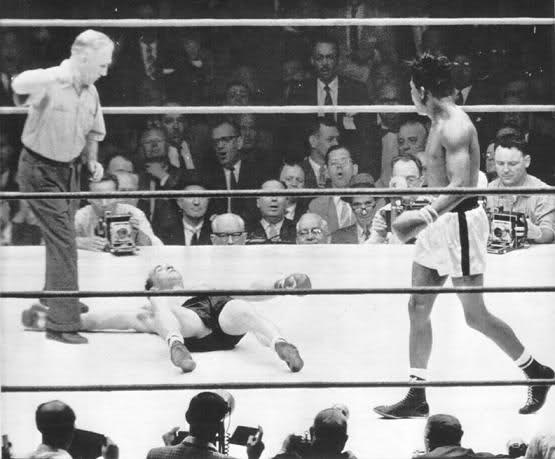
Robinson knocks out Gene Fullmer in the 5th round in what many hail as the perfect punch

These fighters—Pep, Robinson, and many other great fighters of the past—fought more often, frequently against elite competition, and in multiple weight divisions without the careful matchmaking that defined much of Mayweather’s later career.

The mystique of Mayweather’s 50-0 record owes much to Rocky Marciano. Marciano retired at 49-0, an unbeaten heavyweight champion in an era when retiring undefeated was almost unheard of. Marciano fans pin the greatness of their fighter on his unblemished record. That number became something of a sacred benchmark in boxing, a measuring stick for perfection. Marcino’s grit, determination, and high knockout percentage added to the legend of the Brockton Blockbuster. When Larry Holmes came close to eclipsing Marciano’s record in the 1980s—only to lose to Michael Spinks in his 49th fight—the mythology surrounding that number grew even stronger. Holmes didn’t help with his bitter remarks at the post-fight press conference. Holmes became a heel in the public mind.

Rocky Marciano comes from behind to knock out Jersey Joe Walcott in the 13th round

Mayweather’s eventual 50th win, over UFC star Conor McGregor in what was more spectacle than sport, felt like a symbolic breaking of a curse. But the fetishization of “the zero” overlooks the nuances of competition and risk: it is far easier to remain unbeaten when opponents are handpicked and activity levels are lower, as opposed to the relentless schedules faced by fighters of previous generations.

Even within Mayweather’s spotless record, the claim of perfection carries caveats. His first fight against José Luis Castillo in 2002 is still debated. Many observers scored the bout for Castillo, arguing that Mayweather was outworked and outlanded. The official decision went to Mayweather, but it was hardly decisive. I had Castillo winning, in fact. The scorecards for that fight—a resounding unanimous decision for Mayweather—were obscene. Mayweather won the rematch, but no one can take Castillo’s performance in that first fight away from him. To my mind, Mayweather is not undefeated.

Mayweather’s 2007 split-decision victory over Oscar De La Hoya was close, and while Mayweather’s defensive skill was on display, some ringside experts felt the fight could have gone the other way. That was my feeling on fight night. Even his mega-fight with Manny Pacquiao in 2015, though a clear unanimous-decision win on the cards, was closer and less dominant than the scorecards suggested. Mayweather benefited from a lot of charity from judges over his career. The charity of judges towards Ray Leonard mars his legacy in mind, to cite another case. Mayweather wasn’t the first golden boy in boxing. Many argue that Muhammad Ali enjoyed charity in some of his bouts, as well.

None of this diminishes Mayweather’s brilliance. He is a generational talent and a master of his craft. His defensive skills were on the level of Pernell Whitaker (though not quite at the level of Willie Pep). But when Mayweather proclaims himself “The Best Ever,” the history books invite a more tempered judgment. True greatness in boxing is measured not just by perfection on paper but by the depth, frequency, and audacity of the challenges faced—and by that measure, Mayweather, for all his genius, stands a step below the legends who built their legacies the hard way.

I’m not sure where I would put Mayweather in my all-time rankings, but he certainly wouldn’t be in my top ten. My top ten: Robinson, Henry Armstrong, Roberto Duran, Muhammad Ali, Pep, Sandy Saddler, Chavez, Marvin Hagler, Roy Jones, and Salvador Sanchez. There are others that push Mayweather out of the next several slots.