There was an article published many years ago in The Insurgent Sociologist concerning propaganda materials produced by corporations and right-wing academics for use in elementary schools. The propaganda was used in the indoctrination of children in free market ideology. The material discussed the benevolent firms that generously give families food, clothes, televisions, and, of course, jobs. The exploitation of labor power was conveniently left out of the materials, as was the widespread environmental destruction and poverty caused by capitalist relations. The reason for the omission was obvious: why would capitalist-produced propaganda explore exploitation and environmental destruction?
My recent conversation with Steven Barnes, an assistant professor from George Mason University who specializes in the GULag, moves me to write this entry. Barnes takes issue with my posts criticizing Solzhenitsyn. Recall my entries on conservative economist Walter Williams, the man who asks his students exam equations drawn from Old Testament material. Walter also works at George Mason University. So do a large number of right-wing intellectuals. George Mason University is a magnet for right-wing moneybags and is highly influential in producing the propaganda used by bourgeois elites to misdirect Americans. (You can read the record here: Source Watch: George Mason University and here: Media Transparency: George Mason University).
Does this mean that everybody who works at George Mason University is a right winger? Of course not. However, people choose the institutions with which they affiliate, and the ideological character of institutions is relevant in considering the ideological bent of any particular intellectual working there. I chose the department in which I was tenured because it is a critical historical social science unit concerned with progressive democratic politics, civil rights and social justice. One would be right to consider this fact when assessing my politics and scholarly approach. As I always emphasize: consider the source.
In learning about who Steven Barnes is, I ran across a teacher’s workshop, conducted in the spring of 2008 at Duke University (a private religious college), designed to teach high school and middle school teachers how to, in turn, teach students standard anti-communism by comparing the Soviet prison system to the Nazi death camps. I discovered this program because Barnes is on it, his presentation titled “Behind Barbed Wire: The Gulag and the Shaping of Soviet Society.” In participating in the workshop, Barnes is fulfilling one of the thrusts of George Mason University, specifically to organize public schools in the teaching of scientific and historical materials, such as standardized materials approved by the Virginia state legislature. Close to Washington DC, George Mason University helps design the elements of thought that become embedded in national educational standards. Hopefully you can see where I’m going with this; the Duke program reminded me a lot of the corporate materials presented in The Insurgent Sociologist article I mentioned.
Barnes discusses the character of the April 5 Duke event in his comments to this entry, so I will leave him to tell you about that. I wasn’t present at the workshop (I would have been a nuisance), so I am not going to characterize the content of the contributions. What I am interested in is the program description and the way in which it distorts history for ideological purposes. I suppose I could engage in criticism of Barnes for participating in the event, but it is his area of specialization, he is building a record towards tenure, and the event in question is of the sort that his institution looks kindly upon. I won’t begrudge him career advancement. This entry is about institutions and agendas not personalities.
Here is the copy from the Duke program:
The Center for Slavic, Eurasian, and East European Studies at Duke University is pleased to invite you to participate in a unique one-day workshop on Saturday, April 5: REMEMBERING THE GULAG.
The GULAG — the prison camp system that arose in the Soviet Union after 1929 — served primarily as a way to gain control over the entire population, rather than punish criminal acts. The incarceration of millions of innocent people in the GULAG system is correctly seen as one of the worst and most shocking episodes of the twentieth century.
Millions of innocent people were incarcerated in the GULAG, serving sentences of five to twenty years of hard labor. Prisoners in camps worked outdoors and in mines, in arid regions and the Arctic Circle, without adequate clothing, tools, shelter, food, or even clean water. We will never know how many prisoners suffered from starvation, illness, violence, and cold; an immense number of people died. More people passed through the GULAG, for a much longer period of time, than through Nazi concentration camps; yet, the GULAG is still not nearly as well known.
REMEMBERING THE GULAG is intended to introduce participants to this notorious Soviet prison system and its long-lasting effects on Russian society. We will provide middle and high school teachers who participate with the background understanding and curricular materials to introduce their students to it as well.
WHEN: Saturday, April 5, 9 a.m.-4 p.m.
WHERE: Room 320 Languages Building, Duke West Campus, Durham, NC COST: No registration fee. CSEEES is able to provide limited financial assistance for participants who travel substantial distances to attend. CONTINUING EDUCATION CREDIT: CSEEES will provide participating teachers with documentation for CE credit.
The program speakers will be drawn from leading scholars and specialists at Duke and other universities. Each talk will be followed by ample opportunity for questions and answers. The program schedule will be:
9:00 a.m.–Welcome: Dr. Edna Andrews, Director of CSEEES, professor of Slavic & Eurasian studies, Duke University
9:15–“Behind Barbed Wire: The Gulag and the Shaping of Soviet Society,” Dr. Steven A. Barnes, Professor of history, George Mason University
10:15–“‘It’s Impossible to Express’: Stories from Gulag Survivors, ” Dr. Jehanne Gheith, Professor of Slavic & Eurasian studies, Duke University
11:15–Break
11:30–Documentary film: “A Trial in Prague” (2000)
1:00 p.m.–Lunch (on your own)
2:00–“Thinking about ‘A Trial in Prague’: A Discussion of Political Terror and Stalinist Rule in Eastern Europe,” Dr. Chad Bryant, Professor of history, University of North Carolina at Chapel Hill
2:45–Break
3:00–“Camps in the Classroom: Bringing Stalin’s Gulag Alive for Your Students,” Dr. Pamela Kachurin, Professor of art history, Duke University
Curricular and other teaching materials will be distributed to all participants.
You will note a several things about the program relevant to my on-going discussion concerning the use of the GULag history for pro-capitalist propaganda purposes.
First, the not-at-all-subtle idea of the program is to make the Soviet Union appear much worse than Nazi Germany: “More people passed through the GULAG, for a much longer period of time, than through Nazi concentration camps; yet, the GULAG is still not nearly as well known.” There are two claims here: (1) more people passed through the GULag than the Nazi camp system and (2) the GULag is not nearly as well known as the Nazi concentration camps.
The numbers of prisoners who passed through the GULags runs in the millions. Whenever you incarcerate such a large number of persons in a nation as large as the Soviet Union (around 210 million in 1959 just in the Union Republics – compared to 178 million for the US that same year), the number will be large. For example, with prison and jail populations of several hundred thousand running into the millions over several decades in the US, and with average prison sentences running between 2-5 years and average jail sentences six months, the result is tens of millions of prisoners having passed through the US system since the end of the second world war (most of them non-violent offenders and many of them political prisoners, victims of the war on drugs). What about those incarcerated in Nazi camps? The Nazis operated more than 15,000 camps (maybe as many as 20,000) scattered throughout Europe housing millions of prisoners between 1933 and 1945. Records show that more than 6 million, and as many as 11 million, were killed in the Nazi camps, and many millions more were imprisoned but not exterminated.
On a comparative basis, the implication that the GULag was worse than the Nazi prison system in terms of size and scope seems implausible. Taking the period from 1935-1953 for the Soviet Union, a longer period than that of the Nazi system, adding up the numbers does not indicate more prisoners. Taking into account how large the Soviet Union was compared to the size of Germany at this time, the rate becomes much, much higher for Germany than for the Soviet Union. The deeper implication, that the Soviet GULag was worse in terms of function and conditions, is unsupported by the facts and doesn’t make logical sense. The purpose of the GULag was not extermination. It was a prison system in which the vast majority of inmates were imprisoned for non-political criminal offenses. The Nazi system was for the most comprised of individuals incarcerated because of their ethnicity (most Soviet prisoners were Russian) or their political affiliation.
On the question of whether the Holocaust is more well-known than the GULag, this strikes me as hyperbole. I can’t count the number of times when the Holocaust is being discussed that somebody says, “Well, Stalin’s Gulags were worse,” with the audience nodding in approval. The intent of the claim is obvious: communism is worse than fascism. Whenever I discuss the possibilities of socialism, Stalin and the GULags are almost always raised as reasons why socialism cannot possibly work. Never are Hitler and the Nazi concentration camps cited as a reason why capitalism is a unworkable system with respect to freedom (and Nazism is authoritarian capitalism). Moreover, while people know about the numbers of Jews killed in the camps (they have learned the 6 million figure), very few people know much at all about the Nazi prison system itself. Despite overwhelming documentary evidence of the Nazi system compared to the Soviet system, people I meet everywhere know more about the GULag than about the Nazi camp system (of course, most of what they know is wildly inaccurate, which is the point of my writing about it on my blog).
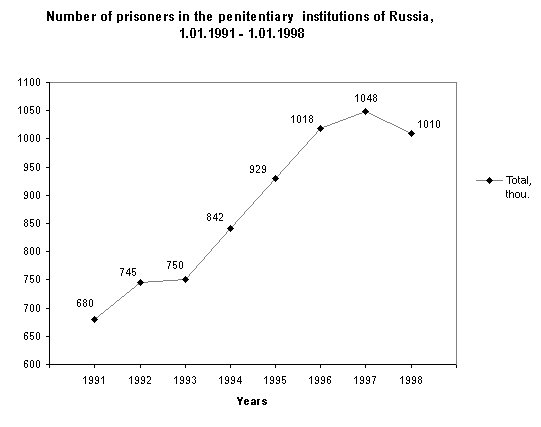
The Duke program language talks about an “immense number” of people dying in the camps, but, as we have seen, the numbers, which are bad enough, are perhaps not as extraordinary on a comparative basis. The vast majority of GULag members survived (at least one to the ripe old age of 89) and were released back into society. Of course I am not saying that people did not suffer in Soviet-era prisons. They did. They still do. Russia maintains a massive penitentiary system – only comparatively larger both in terms of history and population size. Why aren’t these historians writing about this? Why are prisons only bad in socialist societies?
I also want to emphasize that, according to research required by Deaths in Custody Reporting Act (DICRA), approximately 7,000 Americans die in US prisons and jails annually, a figure that Americans never hear about. This number comes with improved prison conditions, advanced medical treatments, and guarantees of health care for prisoners. The further one goes back in time, the worse US prison conditions become. How many people in the US hear about US prison conditions between 1935-1953? In case you don’t think about these things, people die in prisons from disease and old age in the US just as people died in prisons in the Soviet Union from disease and old age. Prison rape and other forms of interpersonal violence are/were problems in both systems.
The claim of “millions of innocent people” being sent to the camps is misleading for it assumes that acts for which persons were being incarcerated were not criminal acts. One must reckon the legally-politically constructed nature of all criminal categories. While I advocate for the release of all non-violent offenders from US prisons and jails, I would never claim that the majority of prisoners are innocent. Most people who go to prison are guilty of the crime for which they were convicted. The same was true in the Soviet period. Now, if you want to argue that the laws were improper, then be my guest. I do it all the time. I don’t think there should be any criminal laws applicable to the consumption of currently illicit substances, such as marijuana and LSD. But if you get busted with pot or acid, then you’re guilty of a criminal offense.
Let me follow up on this matter of crime and punishment, because this point is always lost or ignored in these discussions. The 2.3 million persons in US prisons and jails is not troubling merely because it is such a big number. What’s far more troubling are facts about who is in US prisons and jails. More than two thirds (70 percent) of US prisoners are illiterate (65 percent never graduated high school). Two thirds of prisoners were either earning less than 5,000 dollars annually at the time of their arrest (one third of prisoners) or weren’t earning any money at all at the time of their arrest (one third of prisoners). The US prison system warehouses the poor and uneducated. This is how the prison system under US capitalism is in the service of the US capitalist system. There were poor and uneducated persons in the Soviet prison system, as well, but there was a greater proportion of affluent and well-educated persons in the system compared to the United States. This fact is often used as a criticism of the Soviet system: the system was evil because it incarcerated smart and wealthy people.
This sensibility, almost universally expressed, represents an implicit class politics in favor of the exploiter-oppressors over against the exploited and oppressed. People do not mourn for the plight of the poor and uneducated in the United States. Indeed, the poor are despised and feared. This is part of our Calvinist/social Darwian conditioning. The fact that more than seven million persons under some form of correctional control, the vast majority of which are poor and uneducated, does not disturb Americans because middle America has been trained to hate these people. That 60 percent of prisoners are non-white is a big factor in our lack of collective outrage. We are a deeply racist nation. There is little hue and cry about the warehousing of persons our society has no use for. But if white business leaders started going to prison, then you would hear about it. If white middle class people starting being controlled by the poor and minority populations, then there would protests in the street. The fact that we lock up so many poor and uneducated people reinforces the idea that crime is mainly perpetrated by poor and uneducated people.
But most crime in the United States is not committed by the poor and uneducated. Depending on accounting, street crime costs the country between 4-14 billion dollars annually (and a lot of stolen property is recovered). That may seem like a lot of money (we spend as much or more than this on the Iraq war every week), but compared to other forms of crime, it is a minuscule amount. How minuscule? Employee theft and corporate crime account for nearly half a trillion dollars a year! Another difference between street crime and suite crime is is that the wealthy educated perpetrators of the latter don’t usually go to prison. In fact, many of the most socially and personally injurious practices that occur in US society are not criminalized at all. Why? Because they are perpetrated by rich white men and not by poor minority persons. There is no other explanation for it. It’s the wealthy white men who write the criminal law. Corporations are for the most part free to act in ways that harm people and the environment. This immunity from wrongdoing reflects the character of power in the United States.
In a capitalist society, one without the social safety net of a Scandinavian country, especially one as deeply racist as ours, the criminal justice system represses poor disproportionately minority persons. This is how the penitentiary system came into existence in the first place. The criminal justice system does not serve the interests of the majority of the population in controlling those who do the most harm, namely rich white men. The criminal justice system serves the interests of the minority of the opulent: rich white men. One would therefore expect to see under a dictatorship of the proletariat not the end of prisons but a change in the composition of those prisons, a shift from warehousing almost exclusively poor persons to punishing more affluent and educated persons.
Now we get to the so-called political prisoner. The idea you are supposed to hold is that taking privileged and educated counterrevolutionaries to prison is the supreme mark of a totalitarian society. Yet those who strive to overthrow socialism and restore capitalism aim to return social relations to the practice of exploiting human labor, which is a fundamental violation of human rights. Why should workers allow such a thing to happen? Working people are right to expect that a government representing them would prevent that. Why should a people allow, under the guise of free political expression, counterrevolution that pushes the masses back under the thumb of the oppressor? What would we do to those who attempted to bring back slavery? What do we do with those who practice slavery? If we convict them and send them to prison is this a fundamental violation of their human rights? Or would the violation of human rights occur if we tolerated their actions?
Maybe you believe, like I do, that people have the moral right to organize to overthrow their government. Any law or state that does not represent the interests of the people deserves to be broken and overthrown. But that doesn’t mean that such actions should be legal. Why should they be? After all, it’s true everywhere that overthrowing the government is only legal if you are successful. If you fail, you’re a criminal. It works the same for revolutionary and counterrevolutionary forces. The state represents certain interests over against other interests, and the state will always have built into it mechanisms that resists overthrow in the name of those who interests are contrary to the interests of those the state represents. The fundamental difference is that the exploiters and oppressors are morally in the wrong.
Why is this point so difficult to understand? First, people don’t operate on principle but instead are ruled by ideology. The principle is that if it is illegal for me to overthrow the government, then it is illegal for you to try to retake control after I overthrow it. Second, widespread bourgeois understanding of democracy as a competition between political parties in the context of a separation of politics and economics with citizens casting ballots distorts understanding of democratic practice. What bourgeois intellectuals call democracy is in fact liberalism. In contrast, democracy is rule of the people, and people cannot rule if a minority of the opulent is permitted to rule over the majority (and don’t come back at me with the claims of opulence among the Soviet elite. I already checked that out and the fact is that our elected officials in the federal government have much high salaries than any Soviet official did). Maximizing democracy requires socialist revolution. Once the transition to communism takes place, democracy can manifest. Democracy (or communism) represents freedom pursued to its logical conclusions. Third, too many people believe without criticism that those who aim to exploit other people have a legitimate point of view that must be given a hearing in the public sphere.
If justice were actually being served – that is, if the criminal law and enforcement covered those who commit the worst forms of social and individual harm for the sake of material gain – our prisons would look very different than they look today. But then we would be living in a different society. One cannot expect that our prisons will look like they should as long as capitalism is in place. If there were a socialist revolution, then the prison composition would begin to change, and, oh, how the wealthy would make known the tragedy of their persecution at the hands of the socialist administrators. Oh, the hue and cry when the wealthy are dispossessed. It’s a tragic occurrence from the perspective of the wealthy who live off the work of the masses. The plantation owners likewise cried about the end of slavery. Are we crying about it today? Do you feel any sympathy for the slaveowners?
The idea of the Duke workshop, like so many of these types of affairs, whether intentional or not (and I honestly believe that a lot of propagandists don’t realize their producing or participating propaganda), is to confuse people ideologically by equating the GULag with the Nazi death camp, where millions of persons perished because of their ethnic identity or political affiliations. You will recall that between 5-6 million Jews were exterminated in death camps, along with millions more members of other ethnic groups, along with socialists, communists, and anarchists. The Nazi regime started a world war that left more than 50 million human beings dead, 23 million of them Russians, and countless others injured and traumatized – all in the pursuit of capitalist expansion and entrenchment. The attempt to draw a parallel between Nazi Germany and those atrocities and the Soviet Union is deeply immoral, not only because of the hideousness of the Nazi regime, but also because of the dramatic accomplishments of the Soviet Union in raising hundreds of millions of human beings out of poverty, providing universal health care, and quality education for all. It disrespects the lives lost to authoritarian capitalist terror to paint the social system that defeated the Nazi menace as worse than Nazism itself.
When I see programs such as the Duke program, and I consider all the rhetoric in this country about democracy and freedom, I wonder where are the workshops for high school and middle school teachers to learn about the history of US terrorism in pursuit of capitalist domination? Where are the workshops that educate teachers about the perils of authoritarian capitalism and corporate control over society? Where are the workshops about Western colonialism and imperialism? Where are the workshops about the US classist and racist penitentiary system? Where are the workshops about the exploitative character of capitalism and how labor can organize in resistance to economic oppression? What is the relevance of teaching students about the GULag when the need is to prepare them to deal with capitalist oppression? The relevance is that the capitalist class must indoctrinate children to equate socialism with the GULag, communism with Stalinism (who must be depicted as the anti-Christ or else you are an apologist for terror), so that all other avenues of possible social existence are closed off to them. By systematically hiding the globally oppressive character of capitalism and exaggerating the excesses of the socialist state under historic siege conditions, educators are leading children to conclude that capitalism is the only possible way to exist and remain free. In truth, capitalism is a system of unfreedom and this bullshit they are feeding the children is bourgeois propaganda.
If researchers into the GULag cared about historical truth, they would run a series of conferences in cities around the country explaining to Americans why “facts” routinely cited by politicans and journalists concerning the Soviet-era are either untrue or wild exaggerations. Where are the high profile conferences exposing the work of Conquest, Solshentsyn, and others as erroneous and even fraudulent? Where are the conferences carefully documenting the success of the Soviet Union as an alternative mode of societal organization? Educators are missing a golden opportunity to teach young people how to carefully and objectively reason through and investigate history. They are also failing in their moral duty to teach children about alternative forms of social organizations that could liberate them from exploitation and save their planet from environmental catastrophe.
* * *
My arguments concerning the GULag are directed at those propagandists who exaggerate for political purposes the conditions, and distort the primary purpose of the GULags and who, at the same time, have no interests in condemning the use of prisons for non-violent offenders, prison conditions generally, or the execution of prisoners. My arguments concern consistency in the treatment of historical fact and moral reasoning, as well as humane treatment for all prisoners regardless of type of social system.
When anti-communists exaggerate and distort history they are engaged in the despicable exercise of manufacturing constructing knowledge with the purpose of manipulating people – the goal of which in this case is to close off avenues for historical possibilities that focus on liberating humankind from the indignity of capitalist relations. Its propaganda, and the purpose of it is obvious: communism is to be seen as the worst possible thing that can happen to people and the proof is to found in the vast system of forced labor camps in which millions upon millions of human beings perished under horrible conditions (claims that the facts refute).
These propagandists never fail to ignore the accomplishments of the Soviet people. The history is all bad, in their view. The Soviet Union was hell on earth. Even worse than the Holocaust. And anybody who publishes objective accounts of the history of the Soviet Union and of the GULags, or raises questions about the rampant inconsistencies in anti-communist fact and reason, is branded an apologist for Stalin. These propagandists do not condemn the GULag on the grounds of opposition to prisons, forced labor, or state execution. Indeed, they hold up as the ideal – the USA – a country with the largest prison system in world history (both in absolute terms and relative to the population), a country that exploits prison labor and executes prisoners (including minors and the mentally handicapped). The hypocrisy, clear to all who do not desire to be ideologues, reveals the political objectives.
Here are some facts: Prisons existed in the Soviet Union and continue to exist in post-Soviet Russia, just as prisons existed and continue to exist in the United States and elsewhere around the world. Conditions in Soviet prisons were, and in post-Soviet Russia, are, as they are in many prisons throughout the world, inhumane and deserving of the condemnation of moral persons. Most prisoners in the Soviet Union, as is the case in post-Soviet Russia, and as is the case in the United States, should not be in prison at all, but are non-violent offenders who should be rehabilitated in non-carceral settings.
Here’s the irony: If communism is to be condemned because the Soviet Union, a massive country with a large population, had a large prison system, then capitalism is to be condemned because the United States, a smaller country with a smaller population, has an even larger prison system. Are anti-communists prepared to accept that bargain? In other words, if communism is so bad because of the GULag, then how can capitalism with its vaster prison-industrial complex be better? Here’s another one: Why are those who cry loudest about the GULag the first to speak in favor of harsher punishment and treatment of prisoners? At least this seems to the true from where I’m sitting.
Finally, one of the most disturbing aspects of the anti-communist tendency is its association with anti-Jewish sentiment. This isn’t always true, of course, but the idol of the anti-communists, Alexandr Solzhenitsyn (who also branded opponents of the Vietnam War as genocide enablers), is not alone in characterizing – and not too subtly, either – communism in the Soviet Union as a Jewish plot. Sound familiar? Yeah, communism is worse than Nazism, the anti-communists tell us. So Hitler’s war on the Soviet people was noble after all?









 freedom and reason