
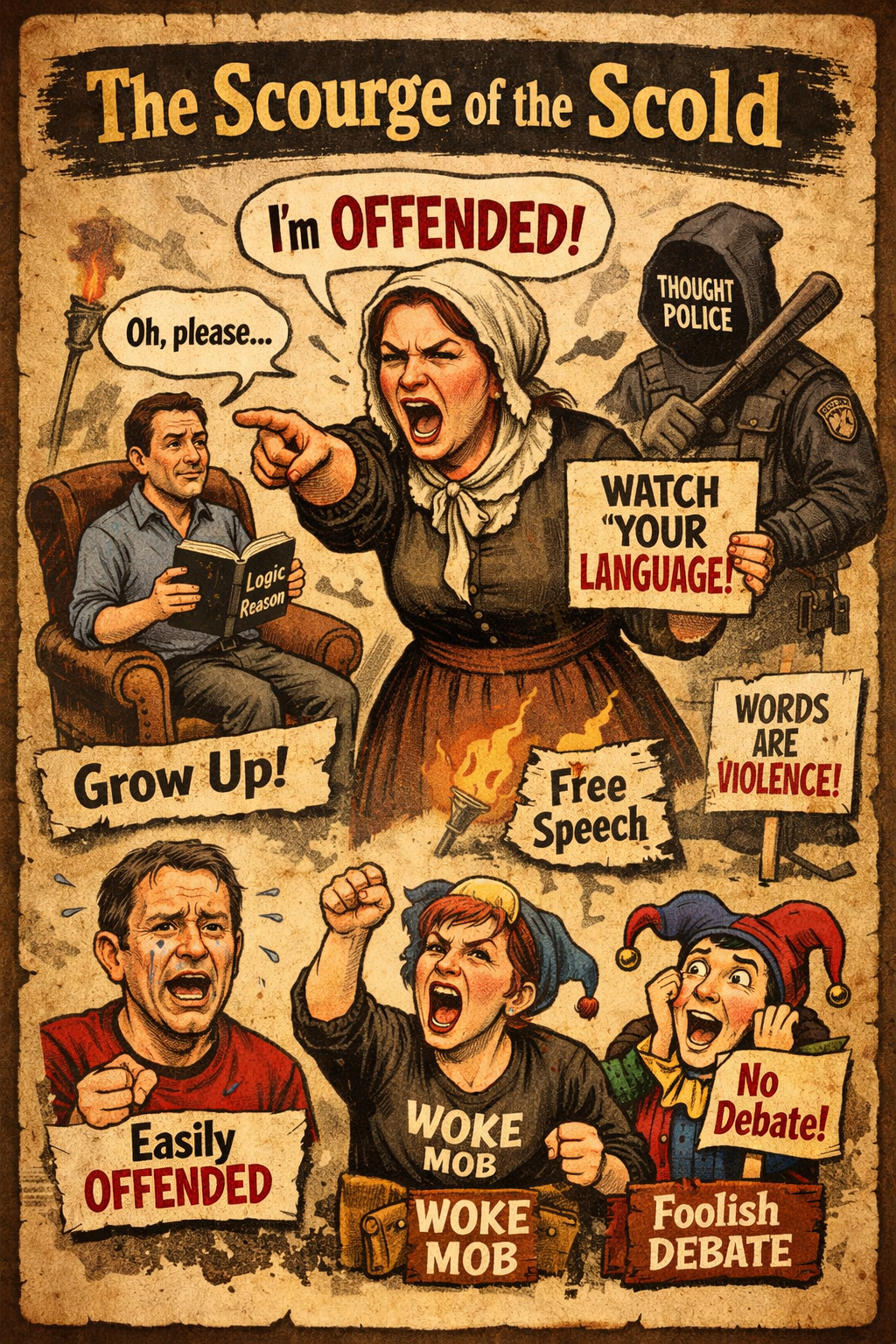
One of the things that baffles me is when people take criticism of their choices or opinions personally. Associated with this is word policing. A person uses the word “retarded” and somebody may respond, “I find that word highly offensive.” Some feel justified in using violence over words they don’t like. Even if a word is used in a nonderogatory way, when, for example, reading aloud passages from Mark Twain’s The Adventures of Tom Sawyer, or in accurately conveying something somebody said, some people take offense.
People criticize my choices, opinions, and use of words all the time. It would never occur to me to seek them out and declare having taken offense at their utterances. I can’t imagine hearing a criticism of liberalism and saying to the critic, “I am offended by what you said about liberals.” What am I supposed to say when this happens? Duly noted? I find it difficult to take offense at being called a “cracker” or “whitey.” As Frank Zappa noted, they’re words.
Frankly, I don’t care if you’re offended by the things I say. I’m proud of the fact that the things that people say don’t offend me. Taking pride in being a reasonable and tolerant man, I would think less of myself if I were to feel offended. One less thing to get my back up about. I have always believed the appropriate thing for a person to do when confronted with a disagreeable opinion is to make an argument. Either that, or just ignore it. The same is true for the words people use. I would never scold people over the words they use. Reasonable people don’t like busybodies. Why would I be a busybody?
I also don’t argue with people when I know I cannot persuade them (although I may mock and ridicule them). German philosopher Arthur Schopenhauer cautioned against arguing with fools. Logic holds little power against stubborn ignorance. Such disputes waste valuable time. Moreover, debating fools diminishes one’s own standing, as true intellectual victory is unattainable when faced with irrationality and pride. His central advice was simple: avoid engaging altogether. Offense-taking is the terrain of the fool.
When I say I’m baffled by offense-taking, I don’t actually mean that. I understand why people do this. They’re emotionally immature, small-minded, or trying to shame people for their choices and opinions. Taking offense or word policing are often signs of an authoritarian personality. In such cases, offense-taking is strategic.
The standout example of strategic offense-taking is the response one elicits by refusing to affirm the slogan “Transwomen are women.” By definition, transwomen are men. If they were women, they wouldn’t need a prefix. The offense-taker has no argument in favor of the slogan. It’s neither factual nor logical. It is an attempt to assert as given that which is impossible. It is self-evidently untrue, and so offense is taken to substitute for reason.
If not deploying offense-taking strategically, people should free themselves from authoritarian tendencies by recognizing that they don’t have to be offended. It does wonders for a man’s emotional and psychological well-being to let things go. When somebody says something disagreeable, and a reasoned argument is undesirable, move along. Whether the product of small-mindedness or authoritarianism, being offended is a choice.

 freedom and reason