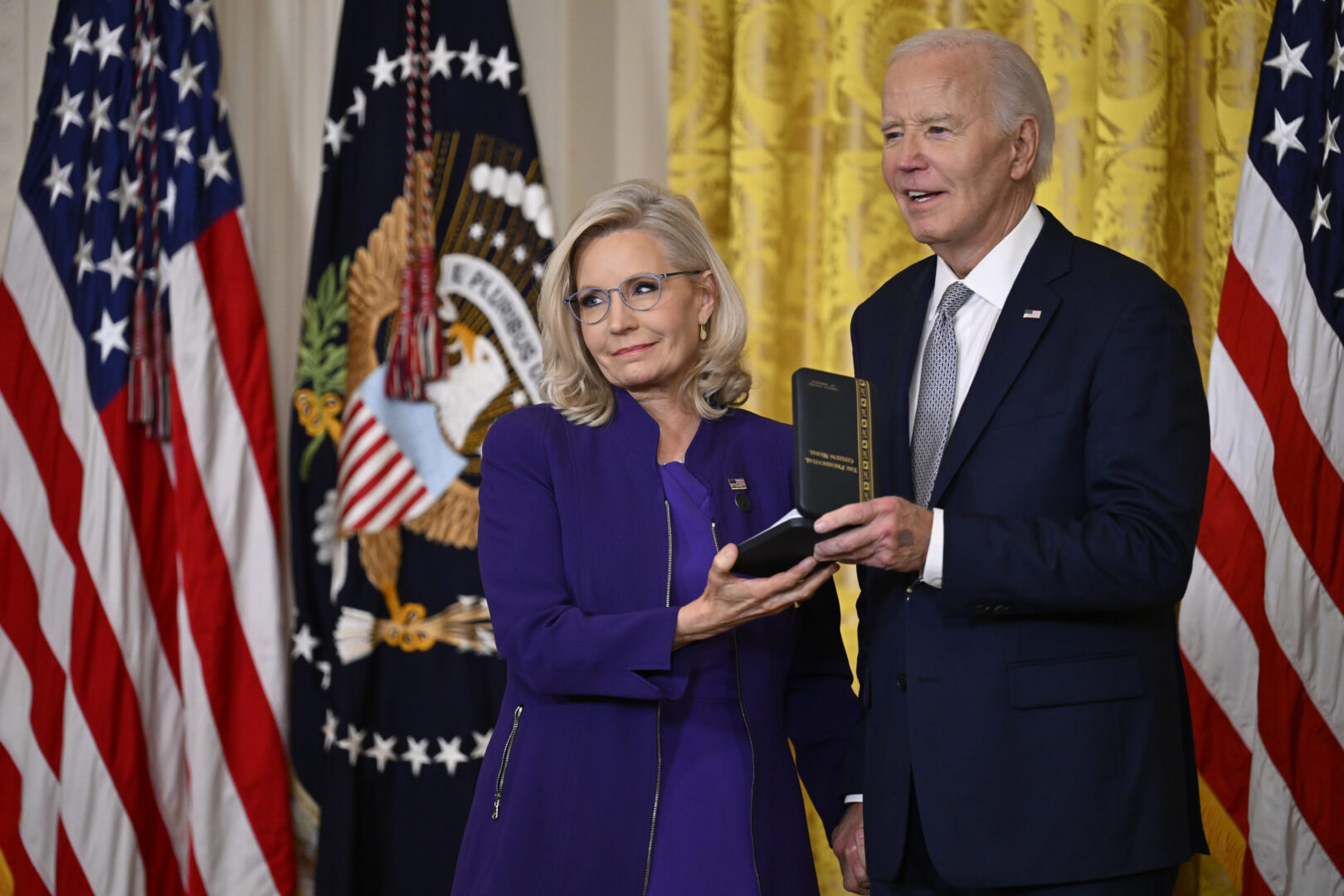
Never forget that, in the final hours of his presidency in January 2025, Joe Biden issued numerous preemptive pardons to his son Hunter, his brother James Biden, and other members of the crime family, as well as Anthony Fauci, the head of the public health response to COVID, senior military commander General Mark Milley, and lawmakers and staff associated with the House January 6 Select Committee.
These preemptive pardons granted clemency to individuals who had not been charged with crimes but who, the president argued, could face future “politically driven” investigations, thereby manufacturing an assumption that any attempt at justice against those likely guilty of criminal wrongdoing could only be politically motivated.
Critics contend that the Biden pardons were designed to shield his family, key figures in the administrative state and military-industrial complex, and those involved in shaping the narrative that January 6 was an “insurrection” (none of the January 6 protestors were ever charged with this crime). The critics are not wrong. I am one of them.
I have documented in numerous articles on this platform the misconduct by Biden’s family members (the former president enjoys expansive immunity for his crimes), Fauci’s false statements about the origin of the virus, the efficacy and safety of mRNA therapies, and policies such as mandatory testing, masking, lockdowns, and social distancing. I have also reported on Milley’s backchannel communications with China during Trump’s presidency without Trump’s awareness.
The January 6 Committee pardons included Liz Cheney, who was later removed as House Republican Conference Chair and effectively banished from the party (both she and her father, Dick Cheney, Vice-President under George W. Bush, supported the Kamala Harris campaign).
They are all despicable people.
Pardons themselves are not unusual; nearly every president has exercised this power. While people may disagree with specific decisions, traditional pardons typically follow convictions or formal charges. Preemptive pardons, by contrast, function as forward-looking legal shields, covering potential federal offenses over defined periods of public service. This makes them a useful tool to protect associates from future legal scrutiny—scrutiny that might uncover broader wrongdoing or misconduct.
Recall the backlash from many progressives when Gerald Ford granted a preemptive pardon to Richard Nixon. This offense is not remote to public memory. By comparison, there is less visible outrage from progressives regarding preemptive pardons issued by Joe Biden. The latter is rarely recognized as a remarkable fact. This is the phenomenon of coordinated collective forgetting.
This essay, like many others I have written over the years, serves as a reminder of events that can fade from public memory. It’s important to revisit such moments periodically so they are not claimed by the memory holes of the Ministry of Truth. This is the purpose of Freedom and Reason: to chronicle ongoing events in real time and contribute to the historical record so that the public memory is preserved. I recognize that this is likely a futile effort.
When it occurred, Biden’s preemptive pardons drew objections from those who demand government transparency and integrity. These critics argued that such sweeping, anticipatory use of the pardon power risks undermining accountability by placing individuals beyond the reach of the judicial process before any allegations are tested in court. That is the broader principle at stake. Whether such pardons serve to shield wrongdoing is a separate, substantive question.
Based on what I know and can demonstrate, that was the purpose of Biden’s preemptive pardons: to shield wrongdoers from accountability for their wrongdoing. But the criticism of Biden’s actions quickly faded from consciousness, and now Trump’s critics fume over the President’s pardons as if he is doing an unconscionable thing.
It is also notable that former DHS Secretary Alejandro Mayorkas was not granted a preemptive presidential pardon. In 2024, Mayorkas was impeached by the House for “abuse of power” and “abuse of the public trust,” though he was not convicted in the Senate after Democrats blocked the trial.
Predictably, the episode received relatively limited public attention, which we may attribute to a lack of sustained media focus. As the late Michael Parenti wrote in Inventing Reality, “If the press cannot mold our every opinion, it can frame the perceptual reality around which our opinions take shape. Here may lie the most important effect of the news media: they set the issue agenda for the rest of us.”
The phrase coined by Bernard Cohen—“The media may not tell you what to think, but it tells you what to think about”—captures the core idea of agenda-setting theory, later developed by Maxwell McCombs and Donald Shaw. The theory argues that while media outlets may not directly shape individuals’ opinions, they play a powerful role in determining which issues the public considers important by giving certain topics more frequent and prominent coverage. McCombs and Shaw demonstrated a strong link between the issues emphasized in the news and the issues voters perceived as most significant. In this way, the media influences public attention and priorities by effectively setting the agenda for public discussion.
While not everyone is affected by agenda-setting media, tens of millions are—whether they naively accept what they see and hear or have their existing beliefs reinforced. The rise of alternative media, such as X, owned by free speech advocate Elon Musk, has in some cases challenged this dynamic; however, agenda-setting by large, established media institutions remains a powerful force in shaping mass consciousness. And this steers discourse on social media platforms.
We see this in the near-total absence of coverage of those Biden pardoned or the goings-on of Mayorkas. You might think that the man who opened the Southern border to millions of foreigners, allowing them to illegally cross over into the United States, is newsworthy, but what’s newsworthy is determined by “the Cathedral,” a metaphor often associated with Curtis Yarvin, for the mainstream news media and allied institutions, such as academia.
Yarvin’s metaphor captures the fact that interconnected elites informally coordinate to shape public opinion and cultural norms, not as much through conspiracy (though conspiracy plays a role) as through shared assumptions and incentives. The Cathedral influences which topics are emphasized and how they are framed, echoing the principles of agenda-setting by shaping what the public attends to and how issues are understood.
So what is Mayorkas up to these days? You must actively locate this information, but it can be found, and I’m saving readers the time. Since leaving office, Mayorkas has appeared at policy discussions and academic events, speaking on immigration and national security. You wouldn’t know it, but he continues to shape thought on the progressive left.
What about those who received preemptive pardons? Fauci has likewise remained active in public life, including taking a faculty appointment at Georgetown University, where he teaches medicine and public policy. Milley has also joined Georgetown, working with students in security studies.
These three Americans, despite betraying their fellow countrymen, remain active in public discourse and continue to advocate for the corporate state. They operate largely without scrutiny.
Why has no further legal action been pursued against Alejandro Mayorkas? Since his case did not go to trial, the principle of Double Jeopardy would not apply. Moreover, despite the pardons granted to Anthony Fauci and Mark Milley, they are not immune from being compelled to testify about their actions, the actions of others, or the consequences of lying under oath. Such preemptive pardons protect them from punishment, but do not inherently shield them from legal scrutiny or testimony.
Why isn’t the Trump Administration pursuing justice? This is, perhaps, the strangest piece of all this.
Dear President Trump and congressional Republicans, do something.
For everybody else, never forget what those who Biden pardoned did to our country. If their ilk regain power in 2026, they will do it all again, and they will begin by impeaching the President, not for any wrongdoing (the two previous impeachments were shams), but because they need to put the managed decline of the American Republic back online.
The disagreement between the parties is no longer about different visions of America. It’s about whether America exists or not. And that is the purpose of coordinated collective forgetting.

 freedom and reason