
I understand the concern over high gas prices. We just emerged from a period of historically high inflation—driven largely by the monetary policies of Democrats and their advisors. Under Republican leadership, people have been experiencing a much more favorable economic situation. That said, I worry that Americans today are ill-prepared to make sacrifices in wartime. Unlike the inflation under Democrats, the current rise in prices is largely conjunctural and likely transitory. We will probably get through this.
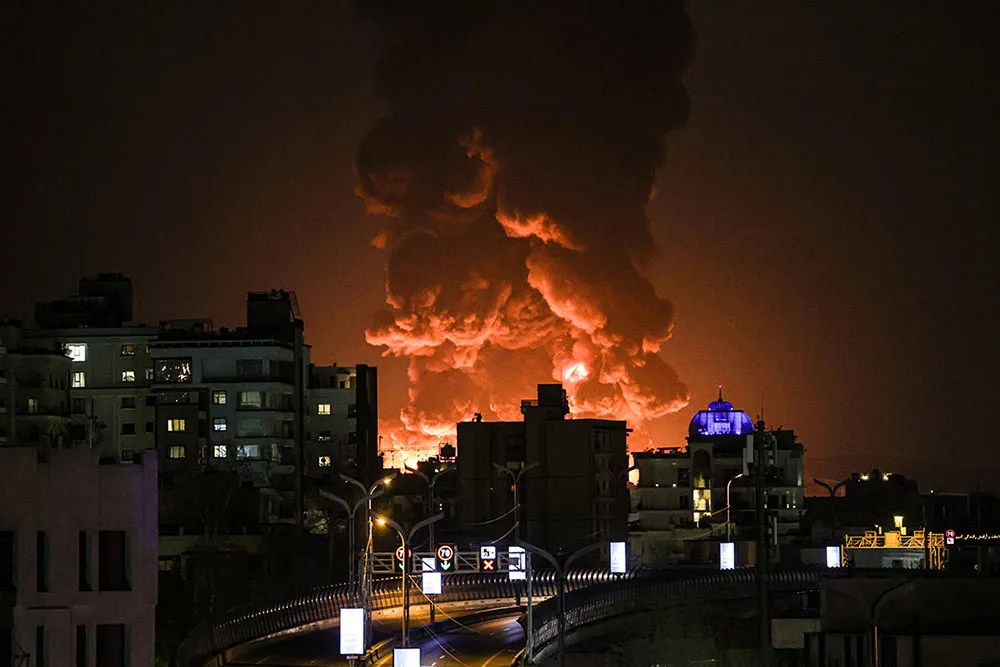
Regarding war generally, I would have supported US involvement in World War II, but until now, there has been no war in my lifetime that I backed in the moment. I am on record as supporting action to eliminate Osama bin Laden in Afghanistan, but I did not support the subsequent invasion and occupation. I wished for targeted invention. As history has shown, the invasion and occupation of Afghanistan ultimately strengthened the Taliban—and that was bad for the people living there. Moreover, US involvement in Afghanistan dates back to the Carter Administration, and I have criticized our actions there ever since. I opposed the First Gulf War, though I have since come to recognize its merits. I opposed—and continue to oppose—the Second Gulf War, which contributed to the rise of ISIS. And, of course, I opposed the Vietnam War.
The First Gulf War is an instructive case. In early 1991, polls indicated that roughly 70–80 percent of Americans supported military action once the war began. Support increased after the coalition launched Operation Desert Storm in January 1991. The war was short—about six weeks of major combat—and resulted in a decisive coalition victory, further boosting approval. At the time, many assumed Bush Sr. would win reelection in a landslide, but the recession and jobless recovery proved more significant. Trump’s intervention in Iran is currently popular, but it does not command the same level of support Bush Sr. enjoyed in Iraq. Bush was an establishment figure; Trump is outside the establishment—one reason I voted for him.
There are important parallels to consider. George H. W. Bush’s administration chose to leave Saddam Hussein in power. A decade later, George W. Bush removed the regime, and chaos followed. Trump seems to believe the First Gulf War’s strategy is preferable. We saw a test case in Venezuela: the President removed a dictator but left the regime largely intact while drawing the country into the US sphere of influence. If Trump avoids a protracted war in Iran, history may judge the action against the First Gulf War. If the conflict drags on, the Second Gulf War is the more likely comparison. The outcome will determine whether the intervention is seen as a measured application of force or a continuation of the neoconservative foreign policy I have long criticized.
As many readers know, I am a fan of Christopher Hitchens. I was surprised, however, when he supported the 2003 invasion of Iraq. He cited many reasons, but the most compelling were his claims that organized Islam posed a threat to the West and that Saddam Hussein’s regime had forfeited Iraq’s sovereign protections under international law. I want to focus on the latter (I have published many essays on the former).
Hitchens argued that sovereignty is not unconditional. A state loses its legitimate claim to non-intervention when it persistently violates international obligations and commits extreme abuses against its own population. He cited Iraq’s invasion of Kuwait, repeated breaches of United Nations resolutions after the First Gulf War, use of chemical weapons, and repression of civilians as evidence that the regime had placed itself outside normal protections. Iran has committed similar acts. In Hitchens’ view, such behavior makes regime removal a justified response, not a violation of sovereignty. I find this argument compelling.
If Trump can dismantle the Islamic Republic without deploying US ground forces, he will have written a new chapter in the history of regime-change wars. Hitchens, notably, supported boots on the ground in Iraq. I have little doubt he would have approved of Trump’s actions in Iran, even if the war became protracted.
Some claim the US has lost its moral authority to defend its sovereignty. Even if that were true—which it’s not—what state possesses the military power to hold the US accountable? This underscores the importance of maintaining US hegemony. Recognizing the unparalleled military might of the American state, George Galloway recently called for the military to stage a coup against the President. He is not alone in such extremism. If Democrats win the midterms, they are likely to pursue impeachment.
We have reached the point where one of the two major parties is openly anti-American. They have flipped reality. One day they protest against dictators, the next, for them. Progressives see republicanism as “tyranny” and clerical fascism as “anti-imperialist.” They mistake a liberal businessman from Queens for a king, while protesting the death of a regime that forces women under the veil and hangs gay men from cranes. Progressives live in Bizarro World, where everything is what it’s not, and what it’s not is everything.

 freedom and reason