
One of the most striking differences between classical liberalism and contemporary progressivism concerns the moral grounding of individual rights. For liberals—and in many respects conservatives as well—the defense of individual rights does not arise from selfishness, but from principle. For progressives, whether a person enjoys free speech rights depends on whether progressives agree with them or are prepared to tolerate them, considering group identity.
The liberal tradition, rooted in thinkers such as John Locke and later articulated in American political thought, holds that rights belong to individuals as individuals. Freedom of conscience, freedom of speech, freedom of the press, and freedom of association are not privileges reserved for those whose views we approve; they are universal guarantees that apply precisely when disagreement or offense occurs.
To tolerate only agreeable speech is not to believe in free speech at all. Thus, when a liberal encounters ideas that offend or contradict his own, he defends the speaker’s right to express them—not because he is indifferent, but because he believes the principle must apply equally to all.
By contrast, progressivism often appears organized less around principle than around outcome and what the progressives deem virtuous. The commitment to speech and expression is conditional: speech is defended when it advances approved moral or political aims, or personal promotion, but curtailed when it is judged offensive and contrary to imposed norms based on progressive ideology, or damaging to identities the progressive deems worthy and valid.
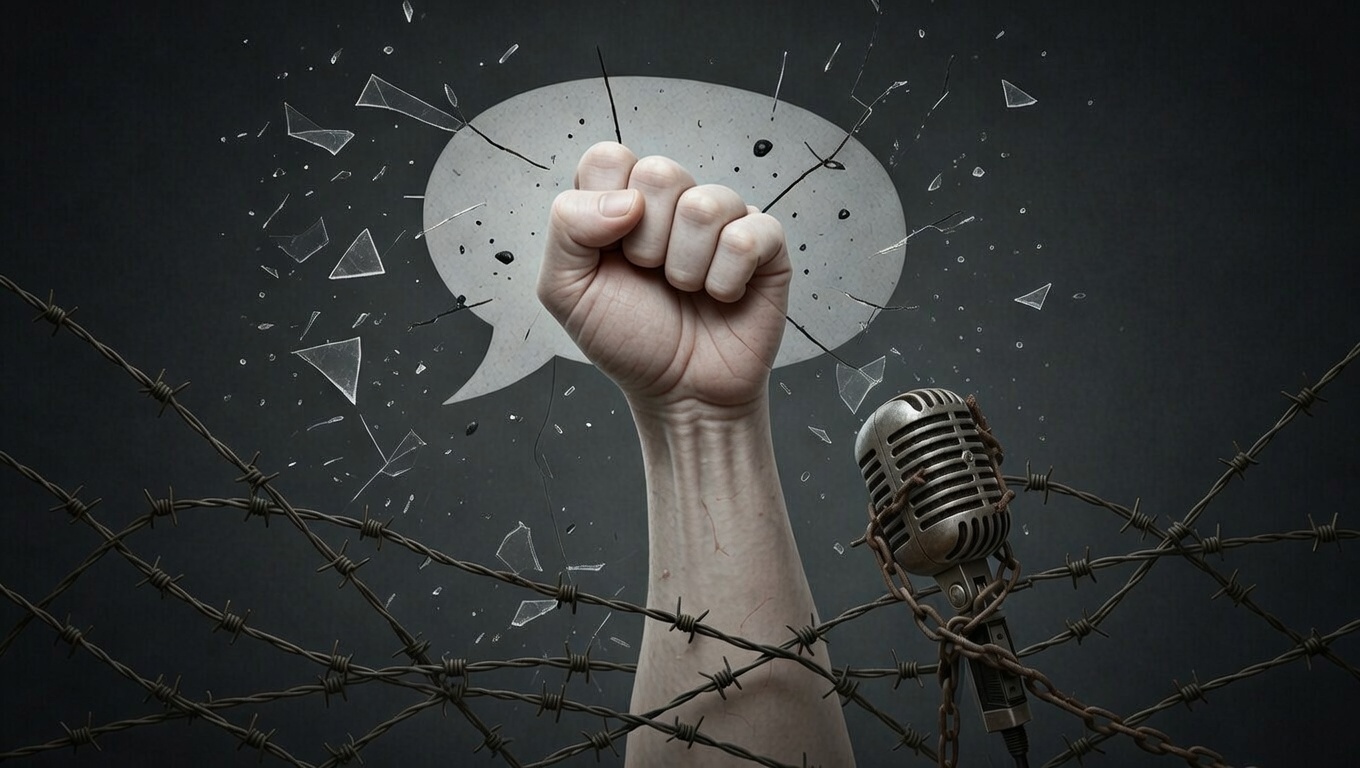
In the progressive framework, rights function instrumentally rather than universally. The result is a tendency toward censorship or “shutting down” opposing viewpoints in the name of protecting others from harm. This leads to the paradoxical tactic of valorizing harassment, intimidation, and violence to suppress speech. The slogan “Punch a Nazi,” which gained popularity after Richard Spencer was punched in the face in Washington DC on Inauguration Day 2017, is without shame heard in progressive circles.
I say that it is paradoxical because punching opponents in the face for their opinions is not merely infantile, but is a fascist tactic. Benito Mussolini’s philosophy of fascismo was deeply rooted in the veneration of violence. Mussolini saw violence as a transformative and virtuous force. He viewed tolerance as a sign of cowardice and decadence. For him, struggle was the natural and essential purpose of life. Standpoint appoints the fascist as the arbiter of what speech is tolerable, and thus establishes, either officially or de facto, an office of the commissar.
This conditional approach marks a departure from liberalism properly understood. Liberalism insists that rights are collective in their universality—everyone enjoys them equally—not collective in the sense that they may be withdrawn for the sake of ideological conformity. When rights are treated as permissions granted only to the virtuous or the aligned, the logic shifts in an authoritarian direction.
This is an inherent tendency in progressive thought. Progressivism is an expression of corporate statism. As such, it is not democratic, but coercive and technocratic. As the world witnessed during the COVID-19 pandemic, as long as the tyranny of public health was not in Trump’s command, progressives were eager to compel others to get jabbed with an experimental mRNA shot, remain in their homes, socially distance, and wear masks. Corporations were encouraged to censor, deplatform, and discipline those who challenged the authority of officially sanctioned experts.
At its core, then, the disagreement is not merely political but philosophical. Liberalism treats individual rights as principled, universal, and equal; progressivism treats them as contingent and strategic. The distinction reveals two different understandings of freedom: one grounded in equal liberty for all persons, and another grounded in the management of speech and expression to secure preferred political and social outcomes.
But there is something else here that must be confronted. You can see this in the manner in which progressives use speech, such as in protests. Lionel Shriver, in her interview with Winston Marshall, captures the selfishness of speech among progressives (and causes me to reconsider my thesis concerning progressive self-loathing, although making oneself the center of the play and hating oneself are not mutually exclusive). The liberal commitment to freedom of expression and speech is a selfless act. It promotes individualism rather than any single individual. The progressive makes a fetish of the self. It’s all about them.
This explains the phenomenon of virtue signaling. Virtue signaling lies at the heart of the rhetoric of “inclusion,” which is really about viewpoint discrimination—disapproved ideas are excluded for the sake of promoting selected identity and opinions. Policing speech is wrapped in a pseudoethics derived from a preference-based morality based on utilitarianism, a type of consequentialism.
Progressives can move from protest action to protest action easily, whatever its content—pro-Palestinian, pro-immigrant, etc.—because each protest action is an opportunity for them to draw attention to themselves, taking advantage of a context that elevates their esteem and their worldview. The content of the action is secondary, if not altogether incidental. The action is first and foremost about vanity and constructing a world in which the progressive standpoint is hegemonic, and thus privileges the progressive. It is an egoistic expression of the self.
Ultimately, the progressive depends on power to impose this situation on others—a situation that, if allowed to prevail, will negate the foundation of the American Republic. It has already weakened the government’s commitment to principle. Liberalism, on the other hand, seeks a government that prevents such oppressive power from being exercised. Progressives loathe the Republic for precisely this reason: foundational law checks their egos and the post-liberal world they seek to establish.
The liberal commitment to free speech is rooted in altruism, the sentiment that one does not declare for oneself what he’s not prepared to defend for others. Speech is not the exclusive domain of whatever ideology he subscribes to. The liberal works from an actual moral ontology. The progressive uses free speech egoistically. It’s a tool he uses to advance his politics and elevate his persona—and suppressing the speech of others is likewise a tool to achieve the same end. He is obsessively concerned with how others perceive him, to the point of shallowness or narcissism. The hair dye, septum, and other piercings, clothing, the buttons and stickers, pronouns, screaming, whistles, and noisemakers, and all the rest of it—these appear to draw the attention of others. Progressives are clowns who want to be taken seriously. We should take them that way, as the world they seek spells the end of freedom.

 freedom and reason