I’ve been stressing since May 2024, when a Manhattan jury convicted Donald Trump on 34 felony counts of falsifying business records, charges stemmed from payments made during his 2016 presidential campaign allegedly to conceal alleged affairs with adult film actress Stormy Daniels and model Karen McDougal, that a man is not a convicted felon in the state of New York until the jury verdict is affirmed and recorded by the judge at sentencing.
Judge Juan Merchan
As of this morning,folks can finally repeat with confidence the propaganda line that Trump is a “convicted felon.” In the zombie case against Trump, on the basis of Judge Juan Merchan’s public signaling, an assistant district attorney stood to utter, “We must respect the office of the Presidency. So we request unconditional discharge, as the Court has indicated. This creates the status of convicted felon, as he appeals. The People recommend it.” Excellent choice of words; the ruling does indeed create a status, a manufactured label useful to those desperate to delegitimize the leader of the populist-nationalist movement that threatens Establishment power. Yesterday evening, a divided Supreme Court cleared the way for Trump’s criminal sentencing to go forward. What if Merchan had changed his mind and sentenced the President-elect to prison?
Trump was put through what sociologist Harold Garfinkel, in an article published in a 1956 issue of the American Journal of Sociology, called a “status degradation ceremony.” Since a civilized society can’t just call a man a convicted criminal and have him be so (albeit people do and think so), you have to put him through a formal ritual proceeding that makes him appear as one. It is validation via ceremonial. In the Manhattan hush money case case, by resurrecting expired misdemeanor charges that are very rarely pursued, and conjuring them into felonies by having juries (grand and trial) to image an underlying crime with no requirement that they all agree on the crime they’re imagining, a court has created a convicted felon without prescribing any punishment—no prison time, no community supervision, no fines, no nothing. And while avoiding a constitutional crisis by not sentencing a President-elect to prison, Judge Merchan gave Trump’s opponents a rhetorical weapon to wield against his agenda.
I have a point I am working towards, but before I get to it I have to say something about the substance of the case. Applying the principle of charity to steel man the prosecution’s argument, the theory of the case was that Trump orchestrated these payments to influence the election by suppressing potentially damaging stories. How that constitutes a felony is beyond me. It is common for prominent figures with deep pockets to give into extortionists in order to protect their reputations from false or damaging claims. This is why the prosecution team left it to the jury to rationalize the matter—as long as those rationalizations yielded a unanimous verdict of guilty beyond a reasonable doubt.
Getting to my point, the reflex on the left to work into every discussion of Trump the phrase “convicted felon” carries in it a self-delegitimizing force if made obvious. I have in the past noted that one of every three black man is a convicted felon—and many of these far worse that placating grifters—before wondering aloud whether a third of black men in America should be barred from public service, or whether their status as a convicted felon constantly thrown in their face. We might ask about the case of Nelson Mandela, a convicted felon who is widely seen as a great man who did great things. Should we go around constantly inserting into every conversation about Mandela the fact that he led the militant wing of an anti-government organization that was engaged in sabotage and violence?
Then-President Nelson Mandela revisits his South African prison cell on Robben Island
In 1961, Nelson Mandela co-founded uMkhonto weSizwe (MK), the armed wing of the African National Congress (ANC), which carried out acts of sabotage against government infrastructure and other violent action. These acts were intended to undermine the apartheid regime and force it to negotiate. Those who make Mandela out to be a hero are quick to note that Mandela’s decision to engage in armed struggle came after years of discrimination, oppression, and systemic violence faced by the black population in South Africa, which left little room for peaceful resolution. He was a reluctant terrorist? No, not a terrorist at all—a freedom fighter leading the struggle against an unjust and oppressive system.
Of course, Mandela’s actions were seen by the government as terrorism. And so he was arrested in 1962, and convicted and sentenced to life imprisonment in 1964 for his role in planning sabotage and plotting to overthrow the government. After 27 years in prison, Mandela was released, ultimately becoming South Africa’s president in 1994. So a convicted felon served as the president of the country that made him a convicted felon.
If a domestic organization in the United States engaged in similar acts of sabotage against government infrastructure, the US government would almost certainly classify it as a terrorist group. This label would be supported by arguments about the illegitimacy of using violence to achieve political aims and the threat such actions pose to public safety and national stability. The broader public will likely view the group negatively, particularly if media and political narratives emphasized the disruption caused by its actions without adequately addressing the grievances driving the resistance.
The events of January 6, 2021, at the Capitol, provide an imperfect analogy. Imperfect because one must elevate a police riot to terrorist action by those so provoked, and make a sitting president the ringleader of the insurrection. Also imperfect because the Establishment was not able to pull off the charge of insurrection on the legal front. However, it was able to manufacture the impression of an insurrection by constantly repeating the label, and millions of gullible citizens made stupid by partisan ideology were predictably impressed. Where those waging lawfare were able to get a verdict and a conviction, they had to turn to a state court in a blue state (to be sure, orchestrated by the US Attorney General’s office), transmogrifying a trivial matter. And, though he did not move forward with the insurrection charges (or the Mar‑a‑Lago documents case), special prosecutor Jack Smith has a report that Attorney General Merrick Garland has said he will release to the public. The smear merchants are salivating.
Should moral calculus shift depending on context? If the US government were widely recognized as oppressive, systematically denying rights to a segment of its population, surely domestic and international observers might frame the resistance as justified. After all, wasn’t that how the left rationalized the color revolution during the summer and fall of 2020? What about the American Revolution or the Civil Rights Movement—don’t these demonstrate how perceptions of resistance evolve over time? Even figures who were once labeled as dangerous or subversive—for example, Martin Luther King Jr., who was closely monitored by the FBI’s COINTELPRO program—are now celebrated posthumously when their causes are vindicated.
What about the January Sixers? They’re convicted felons. Hundreds are sitting in prison as I write these words. How will public perceptions about them evolve over time? And what about Trump? Will the degradation ritual the Establishment has put him through be sufficient to make the label of “convicted felon” stick, to valorize, as we say in sociology, a master status?
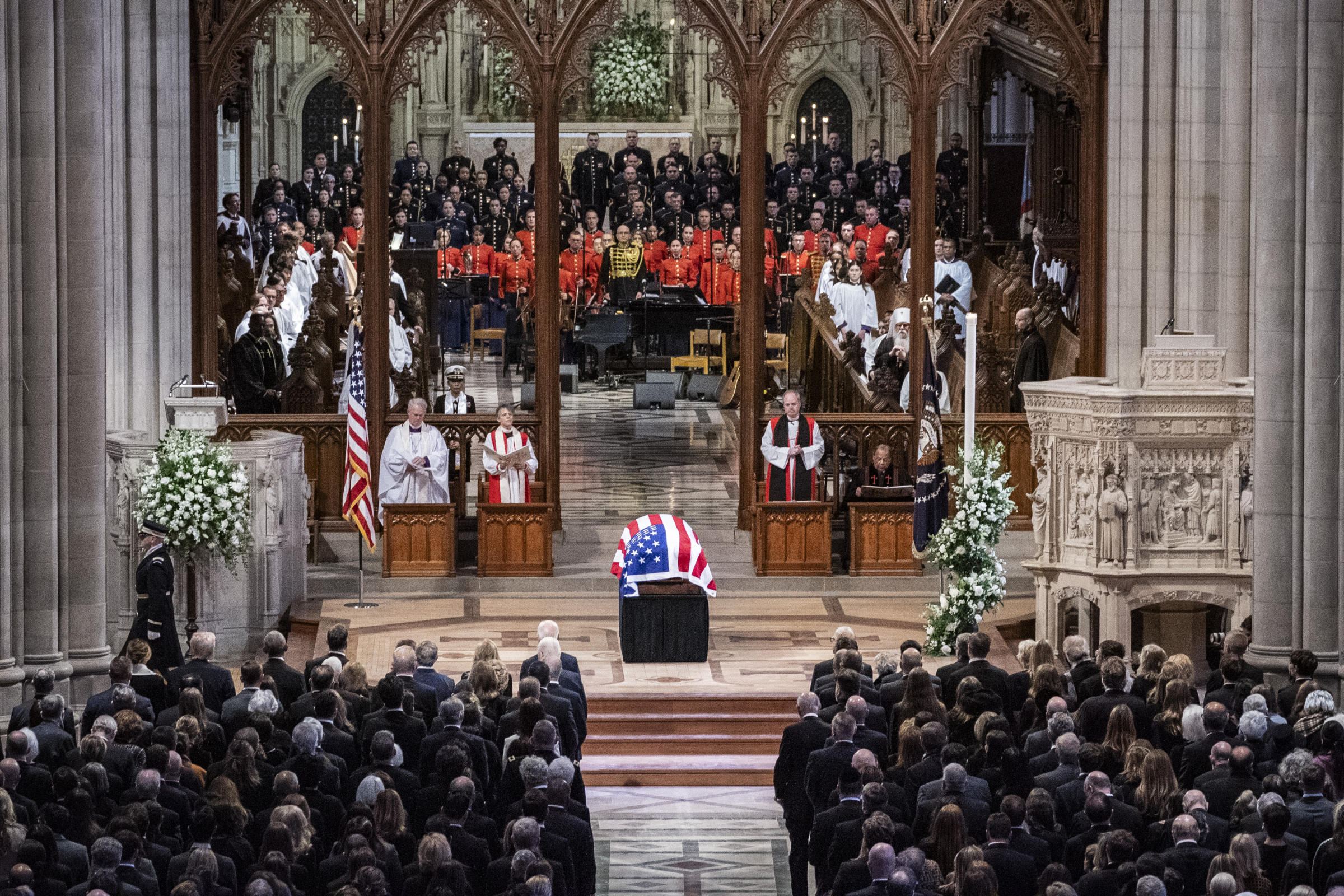
Today, several former presidents sat in observance of former-president Jimmy Carter’s passing. The current president, Joe Biden, gave the eulogy, focusing on Carter’ s “simple decency.” Former president Barack Obama and former and future president Donald Trump sat next to each another engaged in lively conversation. Vice-President Kamala Harris, sitting in front of the presidents’ row, appeared to roll her eyes at the two. Former president George W. Bush walked into the scene with his chest puffed out.
Jimmy Carter’s funeral in Washington DC
What was not mentioned was Carter’s involvement with the Trilateral Commission, an experience that played a significant role in shaping his political trajectory. In fact, Carter was a founding member of that organization. George H. W. Bush, who was CIA director when Carter entered office, also had strong ties to the Trilateral Commission, particularly through his connections with David Rockefeller and Henry Kissinger. I say both of these presidents’ names in the same breath because both reflected the Trilateral Commissions desire to establish global governance, expressed as the “New World Order” in Bush’s September 11, 1990 speech before a joint-session of Congress.
The Trilateral Commission, established in 1973 by Rockefeller, aimed to parlay the historic cooperation among North America, Western Europe, and Japan into a New World Order. The commission provided Carter with an opportunity to engage with prominent thinkers and policymakers, those whom Antonio Gramsci would have classified as “organic intellectuals,” in this case those who represented the interests of the transnational corporate and financial elite.
This association with the Trilateral Commission elevated Carter’s visibility on the international stage. To dissimulate the agenda of the Trilateral Commission and Carter as its vessel, the image of Carter the peanut farmer was projected. The narrative portrayed a humble Christian man of simple decency coming from nowhere to lead the nation back from the twin disgraces of Watergate and the Church Committee Hearings, a narrative reinforced by the seeming penance paid during his long ex-presidency by occasionally driving nails into 2X4s before a fawning media.
A key figure in Carter’s connection to the Trilateral Commission was Zbigniew Brzezinski, a political scientist who served as the commission’s first director. Brzezinski became a close advisor to Carter and significantly influenced his foreign policy. Indeed, after winning the presidency, Carter appointed Brzezinski as his National Security Advisor. Brzezinski’s emphasis on geopolitical strategy, particularly in managing US-Chine relations, US-Soviet relations, and the Middle East and Central Asia.
It was Carter who recognized the People’s Republic of China as the legitimate state of the Chinese people. The normalization of diplomatic relations was guided by Brzezinski. Normalization with the totalitarian Chinese Communist Party opened up a range of opportunities, not just in politics but also in science and trade, paving the way for China’s gradual integration into the global economy over the subsequent decades. President Biden was a champion of this cause. His role in the funeral was not merely because he is the sitting president. He played a major role in advancing the agenda. (See Hell on Earth or Earthly Heaven? The Totalitarian Threats Facing the West.)
And don’t forget Carter’s action of selling the Panama Canal, a structure the United States built and dozens of men died in building, for one dollar. As I wrote about yesterday, in Monroe Doctrine 2.0, Donald Trump has signaled that America wants it back.
Update (10:50 PM): Listening the PBD podcast. Tom Elsworth made a great case for acquiring Greenland here on Apple Podcasts: California Wildfires, Gulf of America, Zuckerberg Kills Meta Fact-Checking. The conversation is in the order of the title. Scroll forward (or listen to the whole thing). In summary: There are minerals there. China is trying to acquire them.
I know for most Trump’s rhetoric regarding Greenland and the Panama Canal comes as a surprise or an absurdity—a shock even. But Trump has been talking about these acquisitions for a long time. And he is not the only one. Nor are his ambitions unusual to United States history. There’s a reason for this: enhancing national security through territorial expansion. His ambitions are not personal, but patriotic and strategic.
There is precedent for this in American history. A cornerstone of US foreign policy, aimed at limiting European influence in the Western Hemisphere, the Monroe Doctrine was articulated in 1823 by President James Monroe. The doctrine declared that any attempts by European powers to colonize or interfere in the affairs of the nations of the Americas would be viewed as acts of aggression against the United States. In return, the US pledged to refrain from involvement in European wars or internal affairs.
Illustration with detailed planet surface withe Arctic Ocean as the focal point. The model was created and rendered in Cheetah3D software in March of 2017. Layers of planet surface use textures furnished by NASA. Blue Marble collection
We’re used to looking at the world map from the side and not from the top. The perspective determines how we think about the world and the security risks the actual proximities of nations pose. Russia seems very far away when viewed from the side. It’s not. Sarah Palin was correct: you can see Russia from Alaska on a clear day. For this reason, Alaska, acquired by the United States from Russia in March, 1867, via a treaty negotiated by US Secretary of State William Seward, was a vital strategic acquisition. The acquisition provided not only strategic advantages, but access to vast natural resources, as well as a stronger presence in the Pacific for trade and territorial expansion. Abundant wealth in natural resources, including oil, has proved Alaska to be an immensely valuable asset.
We think about the top and bottom of the planet as covered in ice caps, which also messes with our grasp of the situation. The South Pole is a continent. However, the North Pole is not a land mass at all but a sea. This sea separates North America from Russia. It’s not a big sea. At least not big like the Atlantic or the Pacific. Given Democrats constant ranting about the danger Russia poses to our democracy, they should appreciate this fact more than anyone. Obviously Democrats and Republican allies are not shy about interfering in the affairs of Europe to harass Russia on its Western Front.
At present, Greenland is an autonomous territory in the sphere of the Kingdom of Denmark. Greenland became a colonial possession of the Norwegian crown during the medieval period. Greenland established home rule in 1979 and expanded its autonomy in 2009. Today, while foreign affairs and defense remain under Danish control, Greenland manages most of its internal affairs and has its own parliament. Incorporating Greenland into the US sphere of influence provides the Western Hemisphere with greater security in the region. Greenland desires complete independence from Denmark, and Denmark has signaled its openness to negotiations with the United States over Greenland’s future.
As for the Panama Canal, its strategic and economic value should be obvious to everyone who understands why the United States built the canal in the first place. The canal is presently controlled in a major way by the Chinese Communist Party, which represents a much greater threat to world freedom than Russia. Rhetoric aside, Democrats don’t really care about the China problem. They have spent the last fifty years selling out American to China to enrich their corporate masters in world cities across the West. They have moreover been busy installing the CCP model of control in the West (a major part of the significance of Donald Trump’s victory in the 2024 election). But the rest of us should care. China is Orwell’s dystopia on steroids.
Now, I am not saying we should take over Greenland or the Panama Canal. I am saying that I understand why this is being considered. It’s not some wild idea that only Trump could dream up. It’s something that should be discussed and debated. The People would do well to disregard the incessant mocking by progressives and hear out the argument.
As for acquiring Canada, which Trump is flirting also with, is not such a good idea. Canada would become our largest state. It would get about the same number of electoral votes as California. Canada is more like California than it is like, say, Texas. Just saying, Republicans, Canada as our 51st state might likely secure Democratic Party hegemony for generations. This is a country that had Justin Trudeau as prime minister for a decade.
For their part, Canadian officials have floated the idea of incorporating California, Oregon, and Washington into Canada. Others have suggested Canada acquire Minnesota. I am not saying these are good ideas, either, but these are our worst states, fitting better with the Canadian idea as it has developed than they do with the American Creed. Of course, this idea is the worst idea because it diminishes the world’s greatest hope for democracy and freedom. So we hope instead that these states come around—and there are promising signs that they will in time.
“A well regulated Militia, being necessary to the security of a free State, the right of the people to keep and bear Arms, shall not be infringed.”—Second Amendment to the United States Constitution
“The totalitarian states can do great things, but there is one thing they cannot do; they cannot give the factory-worker a rifle and tell him to take it home and keep it in his bedroom. That rifle on the wall of the laborer’s cottage or working class flat is the symbol of democracy. It is our job to see that it stays there.” —George Orwell, Evening Standard
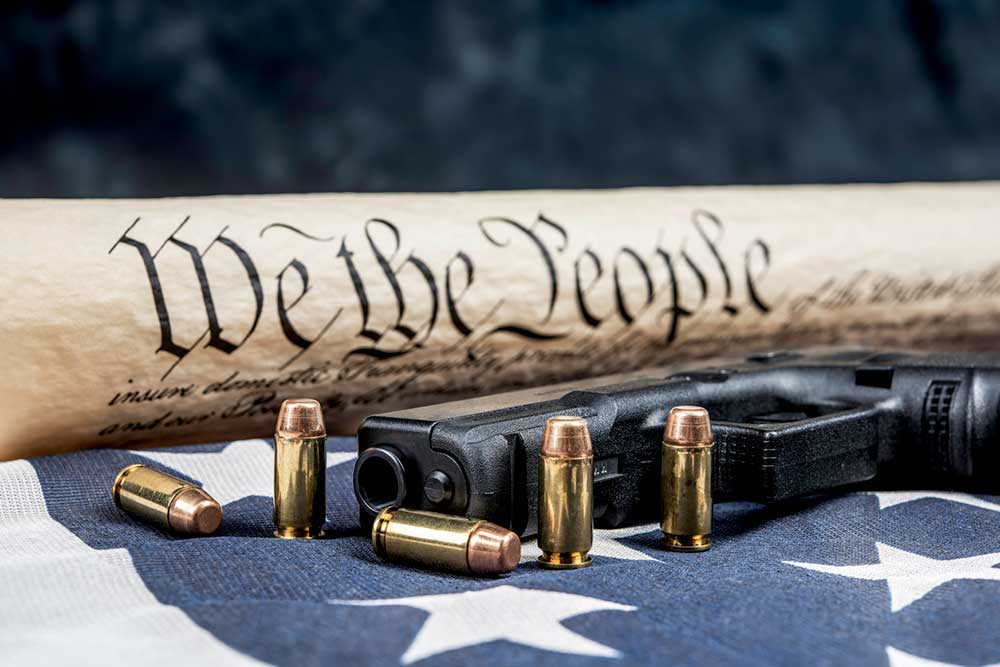
The Supreme Court’s decision in District of Columbia v. Heller in 2008 is a landmark case liberating the Second Amendment of the United States Constitution from the hands of progressive gun grabbers. The Court valorized the Second Amendment intent to protect the individual’s right to keep and bear arms, unconnected to service in a militia, and struck down provisions of the District of Columbia’s gun control law that effectively banned the possession of handguns in the home and required lawful firearms to be disassembled or bound by a trigger lock.
Source: iStock
Writing for the majority, Justice Antonin Scalia emphasized the historical and textual analysis of the Second Amendment, stating that its prefatory clause did not limit the operative clause, which guarantees the right to keep and bear Arms. The Court held that this right is rooted in the natural right of self-defense which predates the Constitution. Following the Heller decision, the 2010 ruling in McDonald v. City of Chicago extended the Second Amendment’s protections to the states through the Fourteenth Amendment’s Due Process Clause, solidifying the Court’s interpretation of the Second Amendment as applicable across the United States.
What predates the Constitution is the right to self-defense found in English common law, principles shaped over centuries that became a cornerstone of the legal system in England. At its core, common law recognized that the use of force, including deadly force, is justifiable in circumstances where an individual reasonably believes it is necessary to protect himself, others, and his property from an imminent threat of unlawful violence and usurpation. Thus the right to self-defense is tied to the concept of necessity, emphasizing proportionality and immediacy—that is the force used in self-defense must be proportional to the threat faced, and the danger immediate and unavoidable. This principle reflects the necessity of the individual’s right to safety and the broader need to prevent violence and maintain public order.
By the time of Sir William Blackstone’s Commentaries on the Laws of England in the eighteenth century, self-defense had become firmly established as a lawful justification for the use of force. Blackstone articulated that killing in self-defense is not to be considered murder if the act was necessary and provoked by an unlawful aggressor, provided the defender’s response was proportionate. The evolution of this right, as well as its justification, can be traced through several key legal doctrines. For example, the “castle doctrine,” derived from the idea that a person’s home is his sanctuary, held that individuals were not required to retreat before using force to defend themselves within their own home. And while the law traditionally imposed a duty to retreat when outside the home, if safe to do so, before resorting to deadly force, over time, some states have modified the duty to retreat, with greater recognition given to the rights of individuals to stand their ground when faced with a threat.
It is paradoxical, then, that gun laws in England are among the most stringent in the world. The focus there is on strict regulation and control of firearm possession and use, with the ostensive overarching goal of minimizing gun violence and ensuring public safety. The laws governing firearms in England are primarily outlined in the Firearms Act 1968 and its subsequent amendments. However, even if the United Kingdom has abandoned its commitment to common law in this area, the principles of self-defense in English common law has had a profound influence on the development of legal doctrines in the United States and other jurisdictions, where the right has been enshrined in constitutional and statutory law. This speaks to the importance of a constitution and a bill of rights that is less subject to the whim of those who would put a false sense of security over the need of the people to defend themselves, their neighbors, and their property.
Reflecting on all this, I recently stirred the shit on Facebook by noting the fact that the choice of cars and trucks as weapons has become common. Only few days before I posted this, an ISIS devotee, Shamsud-Din Jabbar, drove a truck through a crowd in New Orleans, killing more than a dozen people and injuring dozens more. This was not a one off event. Readers will recall that in November 2021, Darrell Edward Brooks Jr. drove a SUV through the annual Christmas parade in Waukesha, Wisconsin, killing six people and injuring 62 others.There’s no constitutional right to a car or truck, I wrote, so why don’t we ban them? One of the progressives who frequently challenges my postings said, “Because the main use of cars and trucks is transportation. The main use of guns is killing.”
I noted that guns are used for hunting and self-defense, all legitimate uses. Bow and arrows, knives, spears, slingshots are used for these purposes, too. If the main use of bow and arrow, crossbow, and the spear are used to kill or otherwise incapacitate a person, should these weapons be banned? “If the number of killings via spears and bows was even remotely close to the number of killings via guns, then it should be considered,” was the response. “They banned Jarts just because there were 3 deaths in the 30+ years they were sold—how many fatal shootings were there in the past 30 years?” I wondered aloud: Why do numbers matter? Isn’t one person killed by a crossbow enough? One, two, a thousand—death is manifest. Is there some number of dead gun grabbers have in mind? If so, how could the number not be arbitrary?
I went on to observe that, if numbers matter, more people are killed by hands and feet every year than rifles. More people are killed by knives every year than rifles. In fact, knives are the second most common instrument used in killing after handguns. What should we do about hands and feet and knives? I noted that lawn darts were never intended to be weapons. They were designed as toys for children. When it was discovered that they punctured skulls and caused other injuries when used correctly, they were banned. Clackers were banned, too, when it was discovered that their action often sent shards of glass flying. There are a lot of products banned or restricted because they cause death and injury when this was not their intended purpose (e.g. alcohol and cigarettes). Cars are a good example.
There is something fallacious about noting that things that can be weapons but intended for other purposes should be banned or restricted in the context of a discussion about the right to keep and bear arms. Admittedly, I risked provoking this fallacy by my sarcasm. But in taking the bait, a red herring was dragged across the thread. Guns, knifes, crossbows, bow and arrow, and many other things are designed to kill and injure animals, including people—and that’s the point of preserving the people’s right to them. Are gun grabbers opposed to defense of self and others? Is a person obligated to stand by while another person murders him or his family, friends, and fellows? Of course not. A gun is as useful for this purpose as a car is for getting to and from work. The question who benefits from taking guns away from citizens. George Orwell answered that question in his 1941 Evening Standard.
Of course, guns are more effective than knives and other weapons for legitimate purposes because they are more likely to deter attackers, and this is why it is paramount to preserve for protection of home and person the deadliest of weapons. The CDC estimates that there are between 60,000 and 2.5 million defensive gun uses in the US each year. The National Crime Victimization Survey (NCVS) estimates that there are about 70,000 defensive gun uses every year. A lot of people are alive today because they had access to a gun and used it to deter or thwart an attack that could have lead to their death or injury or to the death or injury of others.
Rinse and repeat: “The primary purpose for knives, hands, and feet is not killing. The primary purpose for rifles and guns is to kill.” That’s was the response with which I was met. So I made the point as clear as I could by appealing to man’s animality: It’s built into humans to kill. For tens of thousands of years our species used hands and rocks and sticks to acquire food and to defend ourselves from apex predators and other men in other tribes—and in their own. The gun is only a more effective tool for these necessary and natural ends. Animals and plants have evolved and specialized parts to more effectively acquire food and defend themselves from predators. Humans use brains and culture to do this. Humans make better weapons to more effectively effectuate their right to survive and to thrive. Rights aren’t manufactured by states; rights reside in species-being.
“Really? It’s necessary to go into a church or a synagogue or a nightclub or a grocery store or a school and start shooting??? That’s a fucked up attitude.” I had to take this one on with a great deal of charity. There are men who believe this is necessary. But there have been numerous instances where individuals have carried out attacks in crowded places using knives or other bladed weapons instead of firearms. These incidents share characteristics with mass shootings—targeting random or specific groups in public places like stores, schools, churches, or transportation hubs.
Yes, knife attacks have yielded significant body counts. One notable example is the 2014 Kunming Railway Station attack in China. In March 2014, a group of attackers armed with large knives and machetes targeted civilians at the busy railway station in Kunming, Yunnan Province. The coordinated assault resulted in 31 people being killed and over 140 injured. Four attackers were shot dead at the scene, while one was captured and later convicted and sentenced to life in prison. Despite the lack of firearms, the attackers exploited the element of surprise and the vulnerability of unarmed civilians, demonstrating how mass casualty events can occur with weapons other than guns. Those who were being slaughtered had to wait for the police to intervene, since the totalitarian Chinese state does not allow its subjects to go about armed.
The person with whom I am arguing—as do too many others—must assume that guns have agency, that they’re able to get up from the resting place and go out and shoot people. But guns don’t shoot themselves. They’re a tool people use for various activities, some of which good people rightly oppose. The same is true of knives. The knife is a tool used for various activities, sometimes for cutting and killing people. If these activities are not in self-defense or in the defense of others, then the person wielding the knife has likely done a bad thing. But the knife is only the instrument used in carrying out the bad thing. On its own, the knife is incapable of doing anything at all. It possesses no agency. Nobody asks why a knife did something.
Gun control doesn’t change these truths. Norway has strict gun laws, indeed, among the most rigorous in Europe. Yet, in 2011, Anders Breivik carried out the deadliest attack in Norway since World War II. Breivik first detonated a car bomb in Oslo’s government quarter, killing eight people, then traveled to Utøya island, where he opened fire at a Labour Party youth camp, killing 69 people, most of them teenagers. The bomb didn’t make and detonate itself. The firearms Breivik used didn’t shoot themselves. The man built and detonated the bomb. He pulled the trigger while defenseless individuals ran for their lives. Norway’s strict gun laws didn’t prevent the massacre. A determined person will obtain and deploy the tools he needs to manifest his objectives. If he can’t obtain a thing from here, he will obtain it from there; if he cannot obtain one thing, he will obtain another. Nothing could demonstrate this more effectively than the 2014 Kunming Railway Station and Utøya island massacres.
Nor are guns the reasons people kill. It was not guns that moved Omar Mateen to enter the Pulse Nightclub in 2016 and murder 49 people and wound more than 50 others (see Orland and Religion; No Muslim Ever Called Me Faggot and Other Nonsense). It was Islam and the homophobia intrinsic to that ideology that moved him to target a gay nightclub. Mateen would have perpetrated this action whether the United States had Norway’s gun laws or not. (Check out the gun laws in New York City and in Chicago and see if the murder rates are acceptable in those cities.) To be sure, as noted, a gun makes a person potentially more lethal, but that’s a good thing. This is why citizens need access to guns—so they can effectuate their inherent right to self-defense and their moral duty to protect others with greater certainty in the outcome. Had those at the Kumming Railway Station been armed, perhaps so many people would not have been killed and injured.
When I listen to people who speak like this person I have been arguing with (and too many of them do), the Utøya island massacre is not the first thing that comes to my mind. My mind goes to the woman huddled in the corner of her bedroom waiting to be beaten, raped, maimed, or murdered without any means to effectively defend herself against an abusive husband or an intruder. If she had a gun, and knew how to use it, and was willing to use it, she would not only be able to potentially save herself, but, if her aim was true, rid the world of a scumbag. She wouldn’t have to wait for the police—who may not ever come to her rescue. Gun grabbers put misguided dogma over the right of human beings to effectively defend themselves against those who mean to harm them. In the end, and I know this is cliché, but the only people who would be impacted by strict gun laws are those who are inclined to follow the law. They would lose a precious right, a right as fundamental as those of conscience, speech, and publishing.
I confess to putting dogma over the right of human beings to effectively defend themselves against those who mean to harm them in the past. It wasn’t that long ago that I was so misguided. As recently as my 2019 essay, A Truly Awful Commentary on Gun Control and the Value of Life, I wrote, “Given all the facts, how do we combat mass killing in an optimistic era of declining crime and violence? Many of these sources will take a while to diminish or remove. But one of the sources we could ameliorate almost immediately and achieve the greatest effect: remove the means to perpetrate mass death. Comprehensive gun control and bans on most types of weapons and ammo.” I cringe when I read these words today (just as I cringe when I read my past defense of gender ideology), especially when I consider that my past perspectives were built not from facts and logic but from the ideology. I was in my fifties when I reconsidered some of my positions and found them fatally flawed. The upside is that, while I regret my former position, I also benefit from understanding why people adhere to dogma.
* * *
In reviewing the draft of this article, it struck me that the situation in the United Kingdom with respect to weapons is part of a much greater problem the people of that island face today. The effective rejection of the foundation of Article 10 of the European Convention on Human Rights (ECHR), which the UK had embraced, is part and parcel of that islands descent into totalitarianism. “Everyone has the right to freedom of expression” Article 10 begins. “This right shall include freedom to hold opinions and to receive and impart information and ideas without interference by public authority and regardless of frontiers.”
The article should have stopped there. But it was 2013 and, of course, there had to be qualifications: “The exercise of these freedoms, since it carries with it duties and responsibilities, may be subject to such formalities, conditions, restrictions or penalties as are prescribed by law and are necessary in a democratic society, in the interests of national security, territorial integrity or public safety, for the prevention of disorder or crime, for the protection of health or morals, for the protection of the reputation or rights of others, for preventing the disclosure of information received in confidence, or for maintaining the authority and impartiality of the judiciary.”
Thus, while I have you here, it’s worth noting that the abandonment of the right to keep and bear arms in the United Kingdom parallels the abandonment of the right to freely express opinions in speech and writing. This development, like the evolution of gun control, is paradoxical, as well, as the right to free speech is a concept also rooted in English common law. To be sure, there isn’t an explicit right to free speech in the early days of English law, and English law traditionally imposed limitations on free speech, including restrictions on speech that was deemed blasphemous, defamatory, or seditious, but the idea that individuals should be free to express ideas and opinions without fear of punishment gradually nonetheless became an important legal principle. Even in the early days, freedom of speech became particularly important in legal contexts, such as parliamentary debates (see the Bill of Rights 1689 that emerged after the Glorious Revolution). Over time, English common law further expanded the idea of freedom of expression, and the growth of a free press played a key role in the development of modern free speech principles.
In the twentieth and twenty-first centuries, the protection of free speech in the UK became more formalized, particularly through international agreements such as the ECHR. Article 10 enshrines the right to free expression, though, as the reader can see from above, it allows for certain restrictions, such as in cases of national security or protecting the rights of others. Enshrining the right to free expression is in principle a good thing, but the restrictions identified there effectively negate the right when prioritized over the human right itself. Readers familiar with the United Nations Universal Declaration of Human Rights and the International Convenient on Civil and Political Rights, which attach no trammels to the right, might wonder why the ECHR has become the UK standard. They might consider further why the Muslim world rejects those earlier documents and how that could be influencing the choice the UK has made on the matter.
We’re told that the concept of “protecting the rights of others” within the framework of Article 10 is meant to balance free speech with other important rights and societal interests. There is no shortage of videos of police using this language to suppress the speech and writings of the people of that island. This could involve situations where the exercise of one person’s right to free expression could infringe upon the dignity of others. For instance, speech that incites hatred, which is interpreted to includes expressions of ethnic, racial, or religious antipathies that purportedly lead to discrimination or societal harm. Similarly, in cases where speech is said to jeopardize the health or safety of others—such as spreading false medical information that could endanger public health—the police may intervene and actually harm individuals by arrest and imprisonment.
Where the fundamental rights of others include a right to be free from offensive speech or supposed misinformation, then free speech is effectively non-existent, since the purposes of free speech include offending others and being able to utter what the government claims are falsehoods. A free society has no commissar. If an Englishman says, for example, that Islam is condemnable for the harm it encourages against homosexuals, as I did earlier in this essay, and Muslims find this offensive (which they do), then that man risks being found guilty of hate speech and punished for his opinion—and opinion that may save his country if heeded. Indeed, if I say anything that Muslims take offense to then I risk censorship and punishment. There must be some reason why those who work the levels of the British government are doing this.
Americans are truly fortunate to have a bill of rights that enshrines freedom of speech and punishing in its first article. The First Amendment of the US Bill of Rights reads, “Congress shall make no law respecting an establishment of religion, or prohibiting the free exercise thereof; or abridging the freedom of speech, or of the press; or the right of the people peaceably to assemble, and to petition the Government for a redress of grievances.” Like the right to keep and bear arms in the Second Amendment, the rights listed in the First Amendment have been incorporated. Moreover, as with the Second Amendment, there are no limitations on the First Amendment. Trammels on either are left to legislatures subject to judicial review. Some of those identified by the ECHR are not among the limitations. Nor should they be. To be a free society, the United Kingdom must come home to the principles that make a society free. They should put back on the wall of the laborer’s cottage or working class flat the symbols of democracy—guns and free speech. As Orwell told them, tyrants won’t do that sort of thing. That’s a task for the People.
Update (2:03 pm): Congress convened today to count the votes of the Electoral College and formally affirmed President-elect Donald Trump’s victory in the 2024 presidential election. Vice President Kamala Harris, who lost to Trump in November, presided over the joint session of Congress in her now ceremonial role as president of the Senate and announced the results of the vote (I discuss this change in the Vice-President’s January 6 duties in the essay). The ceremony, which is how we must describe it going forward, lasted less than 40 minutes, testifying to the now perfunctory nature of the proceeding. Unlike four years ago, when Democrats refused to ramp up security to protect the Capitol building, barriers and fencing were erected around the Capitol. These obstructions will remain in place until Trump’s inauguration later this month.
Before the certification, Vice-President Harris delivered brief remarks. As you might guess, she alluded to the event of four years earlier. “Today was obviously a very important day, and it was about what should be the norm and what the American people should be able to take for granted, which is that one of the most important pillars of our democracy is that there will be a peaceful transfer of power,” Harris said. “I do believe very strongly that America’s democracy is only as strong as our willingness to fight for, every single person, their willingness to fight for and respect the importance of our democracy. Otherwise, it is very fragile, and it will not be able to withstand moments of crisis.” The choice of the “fight” word is a curious one. Our democracy is not fragile, but we do need to fight for it.
* * *
Today is January 6. January 6 holds unique significance in the context of US presidential elections. It marks the date when a joint session of Congress convenes to formally certify the Electoral College results. This process is the final constitutional step in confirming the election of a President and Vice President, occurring after the states have counted their votes, resolved disputes, and sent their certified results to Congress. The event symbolizes the culmination of a central democratic process and the peaceful transfer of power in our republic. I will be closely watching the proceedings as I did four years ago, when an effort was mounted to return suspect certifications to the states for review.
On January 6, 2021, several Republican members of Congress challenged the certification of the 2020 presidential election results during the joint session of Congress. These challenges were led by a group of lawmakers, most notably Senators Josh Hawley of Missouri and Ted Cruz of Texas, along with several members of the House of Representatives, such as Mo Brooks of Alabama, Andy Biggs of Arizona, Paul Gosar of Arizona, Louis Gohmert of Texas, and Jim Jordan of Ohio, among others.
Their efforts were thwarted by a convenient riot involving several Trump supporters (most of whom are serving time in federal prison), encouraged by police officers firing tear gas and rubber bullets into the crowd, and quite possibility by several agent provocateurs. On the latter possibility, we have learned recently that there were numerous FBI informants present outside and inside the Capitol Building. Details to one side, when Congress resumed business, Congress members who had initially planned to object to the certification of the 2020 presidential election results withdrew or dropped their objections. The long-running coup d’etat against a sitting president and his America First agenda was successful and Joe Biden was installed as caretaker for the Establishment.
President-Elect Donald J. Trump
Four years later, suffering from persistent inflation and housing shortages, a disastrous foreign policy, and open borders and rampant crime, the People reaffirmed their commitment to the America First movement. On November 6, 2024, Donald J. Trump won re-election, garnering 312 electoral votes, as well as the popular vote (with Republicans regaining the Senate and keeping the House). However, both before and after the election, elected officials and activists signaled their intent to attempt to bar Trump from returning to office on January 20, 2025. The reason? Insurrection.
The law in question, written in the wake of the Civil War, and in the context of Reconstruction, is found in Section 3 of the Fourteenth Amendment, which states: “No person shall be a Senator or Representative in Congress, or elector of President and Vice-President, or hold any office, civil or military, under the United States, or under any State, who, having previously taken an oath, as a member of Congress, or as an officer of the United States, or as a member of any State legislature, or as an executive or judicial officer of any State, to support the Constitution of the United States, shall have engaged in insurrection or rebellion against the same, or given aid or comfort to the enemies thereof.”
In a press release on March 5, 2024, US Representatives Jamie Raskin (Maryland) and Debbie Wasserman Schultz (Florida) announced their intention to pass a law addressing the following: “The Supreme Court held that states cannot block insurrectionists from running for federal office unless Congress has acted first to identify and disqualify them under Section 5 of the Fourteenth Amendment. Although this ruling departs from the plain text and original purposes of the Fourteenth Amendment, the good news is that the Supreme Court never challenged the Colorado Supreme Court’s factual finding that Donald Trump had participated in the insurrection that took place on January 6, 2021.” More on the Colorado finding in a moment (for what it’s worth).
Raskin and Schultz concluded the press release with: “Because the Supreme Court has not provided any other way to settle the disqualification of an insurrectionist prior to the casting and counting of Electoral College votes, Congress must now develop a judicial mechanism for ascertaining such persons and Speaker Johnson must permit the House of Representatives to vote on it. If not, Section 3 of the Fourteenth Amendment could simply be rendered a dead letter or a dangerous flashpoint as applied to federal officeholders.” (To clarify, the reference to Section 5 in the press release is a reference to the self-executing function of the amendment.)
No such legislation has been passed by Congress. Indeed, in May 2022, Raskin and Schultz introduced HR 7906, which aimed to establish a civil action for disqualification under this section. The bill did not make it out of the Judiciary Committee. But what would be the point of such legislation given that the President was acquitted of insurrection at trial on February 13, 2021, nearly a month after he had peacefully transferred power to incoming president Joe Biden?
Let’s review the Constitution and recall the impeachment and trial of Donald Trump and see if there is anything there. The authority to bring and try such an indictment is found in Article II, Section 4, of the Constitution: “The President, Vice President and all civil Officers of the United States, shall be removed from Office on Impeachment for, and Conviction of, Treason, Bribery, or other high Crimes and Misdemeanors.”
The judicial process is found in Article I, Section 3 of the US Constitution. “The Senate shall have the sole Power to try all Impeachments. When sitting for that Purpose, they shall be on Oath or Affirmation. When the President of the United States is tried, the Chief Justice shall preside: And no Person shall be convicted without the Concurrence of two thirds of the Members present.” Section 3 continues: “Judgment in Cases of Impeachment shall not extend further than to removal from Office, and disqualification to hold and enjoy any Office of honor, Trust or Profit under the United States: but the Party convicted shall nevertheless be liable and subject to Indictment, Trial, Judgment and Punishment, according to Law.”
On January 13, 2021, just a week before the end of Trump’s term, the House of Representatives, led by Speaker Nancy Pelosi, voted to impeach the President. The charge was “incitement of insurrection.” The alleged crime occurred on January 6, 2021. On that day, as described above, there was a riot at the US Capitol that involved Trump supporters. The article of impeachment alleged that Trump had encouraged the riot, arbitrarily elevated to the level of insurrection, with his claims of election fraud and his speech at a rally earlier that day, where he used the common phrase “fight like hell” (a phrase of Democrats are quite fond).
The trial, occurring after Trump had already left office, raised constitutional questions about whether a former president could even be impeached and tried. The Senate nonetheless proceeded, arguing that accountability for high crimes and misdemeanors transcends a president’s term of office. Trump’s defense argued at trial that Trump’s speech was protected by the First Amendment and that the impeachment was politically motivated. That argument carried the day, the vote falling short of the two-thirds majority required for conviction. As a result, Trump was acquitted of the charge of insurrection. In principle, the prohibition of double jeopardy precludes retrying Trump on the charge of insurrection (see Fifth Amendment of the Bill of Rights).
Trump’s acquittal settles the question. Congress is the proper and only venue to bring such an indictment and try its merits. Article III, Section 2 of the Constitution states: “The Trial of all Crimes, except in Cases of Impeachment, shall be by Jury; and such Trial shall be held in the State where the said Crimes shall have been committed; but when not committed within any State, the Trial shall be at such Place or Places as the Congress may by Law have directed.”
Despite the finality the acquittal brought, during a five-day judicial hearing in Colorado, District Court for the City and County of Denver, presided over by Judge Sarah Wallace, concluded that President Trump had engaged in insurrection as defined in Section 3 of the Fourteenth Amendment. The court’s decision was subsequently reviewed and affirmed by the Colorado Supreme Court. When the case reached the US Supreme Court, the justices correctly ruled that states lack the authority to disqualify candidates for federal office, asserting that enforcement of Section 3 requires federal legislation. This negated several others states’ attempts to bar Trump from their ballots.
Then, despite the fact that Trump has been acquitted of insurrection, a House Select Committee to Investigate the January 6th Attack, active July 2021-December 2022, concluded Trump engaged in insurrection against the Constitution. Specifically, the committee determined that Trump unlawfully pressured Vice President Mike Pence to reject Electoral College votes for Joe Biden, a power the committee claims Pence did not possess. The principle of double jeopardy notwithstanding, the Special Counsel’s Office, upon the House Select Committee referral, brought a criminal case in Washington, DC charging Trump for his role in the event of January 6, 2021. However, upon Trump’s reelection, Special Counsel Jack Smith dropped the charge related to allegedly attempting to fraudulently overturn the 2020 presidential election (as well as the charge that Trump had unlawfully retained classified documents at his Mar-a-Lago estate).
It is important to note that the House Select Committee, in addition to its illegitimacy, faced criticism over its handling of evidence and witness selection. Evidence, including interview transcripts and internal communications, had been destroyed (or not preserved), raising concerns about transparency and accountability. Additionally, the committee was accused of selectively presenting evidence and calling witnesses, focusing on evidence and testimony that aligned with its narrative while excluding exculpatory evidence and witnesses offering a differing perspective. On the matter of the narrative, the House Select Committee enlisted the help of James Goldston, a former president of ABC News and an experienced television producer, to craft and present its narrative during public hearings. Goldston played a significant role in shaping the hearings into a compelling, story-driven format, utilizing video montages, graphics, and carefully curated witness testimonies to engage the public and convey the committee’s findings effectively. Put another way, the work of the House Select Committee was a show trial designed to manufacture the perception that President Trump has indeed orchestrated an insurrection—again, a charge of which he had already been acquitted.
The illegitimacy of the House Select Committee notwithstanding, it is important to note that the claim by the House Select Committee that Trump unlawfully pressured Vice President Mike Pence to reject Electoral College votes for Joe Biden hinges on an interpretation of the Vice President’s role during the certification of electoral votes. At the time, the Electoral Count Act of 1887 was in effect, which contained language about the Vice President’s authority during the process that could reasonably be interpreted to give the Vice President the power the committee claims he did not possess.
Ironically, Democrats affirmed this interpretation with subsequent legislative action. To prevent future disputes, the Electoral Count Reform Act was revised on December 29, 2022 changing the role of the Vice President in certifying Electoral College votes to a purely ministerial role, explicitly stating that the office does not have the power to reject or alter the results. The hearings and investigative work of the House Select Committee overlapped with the debates surrounding the need for reforms to the Electoral Count Act, which made office the game being played. However, since the US Constitution prohibits ex post facto laws in Article I, Sections 9 and 10, the revision has no authority in the case.
Credit where credit is due, the persistence of those who seek to bar Trump from taking office is impressive. In a column published in The Hill on December 26, 2024, Evan Davis and David Schulte (former editors of the editors in chief at the Columbia Law Reviewand the Yale Law Journal respectively) argue that Congress has the authority under the Fourteenth Amendment to object to electoral votes because Donald Trump is, in their words, “an oath-breaking insurrectionist.” They urge Congress to take action during the joint session to count electoral votes. The authors cite Trump’s second impeachment trial and the Colorado Supreme Court’s decision to disqualify Trump from appearing on the state ballot in 2024. Despite the aforementioned Supreme Court ruling in Trump’s favor, the authors argue that it did not challenge the finding that Trump engaged in insurrection. They maintained that Congress, not the Supreme Court, had the authority to reject electoral votes on constitutional grounds, as specified by the Electoral Count Act.
David and Schulte’s column rightly sparked intense backlash, with critics accusing them of attempting to undermine democracy. The authors’ stance represented an attack on the electoral process and the will of the people. Indeed, Trump supporters and others argued, Davis and Schulte’s op-ed is an attempt to overturn the 2024 election, itself tantamount to insurrection. But it’s not the only action attempting to thwart the will of the people. The House Select Committee’s referral to the Department of Justice that Trump be prosecuted under the criminal statute prohibiting insurrection also represents such an attempt. All this is lawfare, and the conspiracy to stop Trump from resuming his duties as Executive and even put him in prison, as well as during his first term in office, should be obvious to everybody with a working knowledge of our government and judicial process.
Here’s the brutal truth: No federal court has found Trump engaged in insurrection. He has not been found guilty under the Insurrection Act or any other federal law that would disqualify him from office under Section 3 of the Fourteenth Amendment. Derek Muller, a University of Notre Dame law professor, put it like this: “He’s not been prosecuted under the Insurrection Act, much less found guilty under the Insurrection Act, which would disqualify him. So there’s no existing statutory mechanisms enacted by Congress to determine his eligibility at this time.”
What Muller leaves out, as do Davis and Schulte, as well as the corporate state propagandists, is that Trump was tried for the crime of insurrection and acquitted at trial. In reality, the matter was settled on February 13, 2021. It is long since time to move on. Trump is the legitimate forty-seventh president of the United States of America.
Remember when Jonathan Pie used to be compelling? That fake reporter bit was pretty goddamned funny. That was then. This is now. The rise of populist-nationalism across Europe and the America has broken him.
Remember when John McCain’s running mate Sarah Palin told Charlie Gibson in an ABC interview that she could see Russia from her house? No, you don’t, because she didn’t say it.
Gibson asked Palin, “What insight into Russian actions, particularly in the last couple of weeks, does the proximity of the state give you?” Palin responded, “They’re our next door neighbors and you can actually see Russia from land here in Alaska, from an island in Alaska.” She explained, “I’m giving you that perspective of how small our world is and how important it is that we work with our allies to keep good relation with all of these countries, especially Russia. We will not repeat a Cold War. We must have good relationship with our allies, pressuring, also, helping us to remind Russia that it’s in their benefit, also, a mutually beneficial relationship for us all to be getting along.”
Sarah Palin sits down with Charlie Gibson of ABC for an interview in September 2008
Can one see Russia from Alaska? Yes, in fact one can. On a clear day, from Little Diomede Island in Alaska to Big Diomede Island in Russia, which are about 2.5 miles apart at their closest point, one can see Russia from Alaska across the Bering Strait. So why do so many people remember Palin telling Gibson that she could see Russia from her house? It’s what we know in social science as mass formation hypnosis. We use this term in psychology and sociology to explain how individuals predisposed to do so by their identification with a particular group and set of concerns lose their sense of charity and critical thinking upon subjection to certain stimulus. In the case of Palin, installing a false memory also has a purpose.
Recall the context in which Palin was discussing Russia. Palin was John McCain’s pick for Vice-President in his contest with Democrat candidates Barack Obama and Joe Biden. Obama and Biden were the corporate state picks. The corporate state needed Obama and Biden to put a progressive gloss on the neoliberal and neoconservative agendas. (It’s why they relentlessly mocked Al Gore to secure the election of George Bush and Dick Cheney.) Just days before she sat down with Gibson, Palin had lit up the Republican National Convention, breathing life into McCain’s candidacy. Mark Halperin, writing for Time, gave her performance a glowing review:
“Mother, fighter, small town girl, patriot, reformer, energy expert, hockey mom, McCain attack dog, America’s political sweetheart—she did everything she had to do, and more. The Alaska Governor was poised, stirring, charming, confident, snarky, cozy, well-rehearsed, biting, utterly fearless, unflappable, and self-assured. She read the teleprompter like a champ, with fine, varied pacing and conversational projection. Touched on her family story and then veered into a forceful political presentation, going hard after Barack Obama and selling John McCain with flowing admiration. She rocked the hall (and likely the country) with a tough, conservative message, steely offense, glowing optimism, and boundless charisma. The start of something truly big—or the best night of her candidacy.”
The culture industry and mass media apparatus swung into action, determined to make sure that it would effectively be the only good night of her candidacy by mocking her relentlessly. They struck pay dirt when, on NBC’s Saturday Night Live, Tina Fey, whose Palin impression was exceptional, saying in character, “I can see Russia from my house.” The line was put into the loop machine and now most American have in their heads a false memory. Not just those for whom a partisan political worldview had prepared them. Fey’s line was so ubiquitous and unchallenged that even Republicans came to believe she had said it.
Remember when the machine looped Mitt Romney’s “binders full of women”? Unlike the Palin Russia meme, Romney did say this, but the opportunity was the same. What did Romney mean? He said this in 2012 during the second debate with Obama, who was running for reelection. Romney, governor of Massachusetts at the time, was responding to a question about pay equity, referring to ring binders with résumés of female job applicants he was reviewing. How could that be turned into a meme and used to endlessly mock Romney? That it was testifies to the power of the propaganda machine in producing mass formation hypnosis. It also testifies to the gullibility and pettiness of a large swatch of the population. (I don’t have to say anything here about what the crowd does with Donald Trump’s speech except to merely make this note.)
Greece’s 25-mile wall along its border with Turkey
The United States is not unique for having a mass of gullible and petty people. The UK mass recently raised its visibility by mocking conservative Suella Braverman for her appearance on LBC talking about the wall Greece erected between that country and Turkey. Greece erected the 25-mile long wall because the government recognized their country proximity to the Islamic world meant that they were the gateway to Europe for migrants. Braverman explained that she had seen the wall when she visited Greece, which of course she had. Only she didn’t say Greece but instead “Italy.”
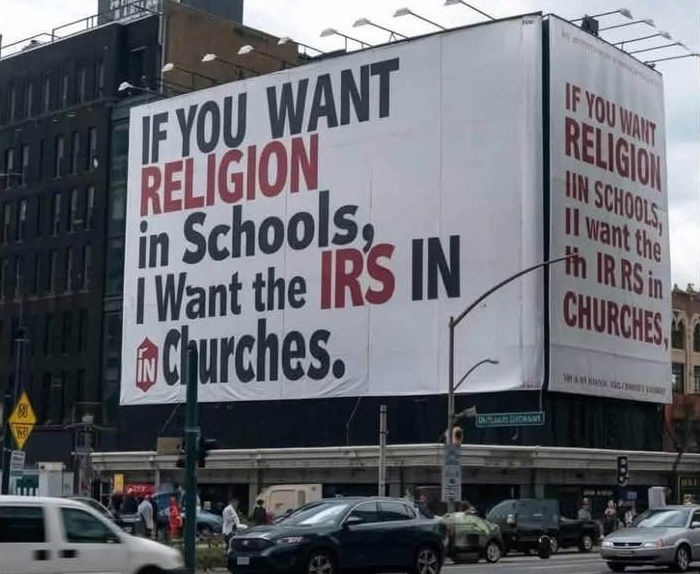
Recently, on Facebook, I was trying to explain religious liberty to people who were determined to push the straw man that religion had been banned from public schools in order to push for taxing the church. As I always do, I referenced James Madison as the man to consult in such matters. As the conversation unfolded, I used Hamilton’s name in place of Madison at one point. Obviously I meant Madison. But those who were pushing the argument saw it as an opportunity to execute the ad hominem ridicule. As if I don’t know the difference between the two men. Why would Hamilton’s name pop up? I don’t know, could it be because they were both Founding Fathers? Could it be that both of them worked on the Federalist Papers? Could it be that I had just been in another conversation where Washington’s first cabinet was the subject of discussion?
Anybody with any working knowledge of maps and a decent sense of charity knew Braverman didn’t mean Italy. Italy doesn’t share a border with Turkey. All the maps with circles showing that they don’t tell us that there are lot of petty people in England who jump at the opportunity to mock their political opponents over the most trivial thing. It’s not that mocking and ridiculing are necessarily wrong. But when one mocks and ridicules, it needs to be over something substantial, not wrongly naming a country in front of a microphone—especially when Italy and Greece (like Madison and Hamilton) are commonly thought of together given what both bequeathed to the West.
Whatever people think about Braverman’s politics, that she is an intelligent and knowledgeable person is not in question. So the avalanche of memes mocking her by suggesting she can’t read maps is disingenuous. It has a purpose. The purpose? The same purpose we saw with Palin and Romney (and Trump): to delegitimize a politician whose politics they wish to delegitimize. It’s the standard stuff of ad hominem: create a fake controversy and ridicule the person over it to poison listeners to the arguments that person makes.
What is in particular bothering people about Braverman? This is why I am spending any time at all on this. It directly relates to the substance of her comments about the wall between Greece and Turkey: the migrant crisis. Braverman speaks for the people when she praises the wall, condemns grooming gangs, and criticizes Labour—and even the Tories—for failing to turn back small boats of migrants crossing the English Channel. Home Office figures released on New Year’s Day show 36,816 people crossed the English Channel in small boats throughout 2024. “And what it is about these ‘small boats’?” That’s what it’s about. Migrants are turning the United Kingdom into a shit-hole. “But Muslims are only a small percentage of the UK population!” As if the major cities of that nation aren’t jammed up with Muslims praying the streets and on church grounds and rallying for Hamas. They are party of the Islamization project.
Here’s the tweet where Braverman clarifies that she meant Greece’s land border with Turkey. That she even had to clarify this tells us a lot about the character of those who persist in pretending that she actually meant that there was a land border between Italy and Turkey. The open borders crowd wish to make her an embarrassment to advance their agenda. In fact, they are, and this must be pointed out.
In responding to Pie’s tweet, I quipped that “Italy is doing a smart thing there.” With predictable results I substituted Italy for Greece on purpose to prove that the dog-pilers were uncharitable. That’s Pie’s tweet that begins this essay. You can see for yourself that particular dogpile. The notifications are so numerous I may need to mute the thread. If the so easily triggered can’t feel embarrassment, then I can feel it for them.
It’s an old argument, one I have heard all my life—and used to make myself long ago. It long ago became cliche. Then I studied the intent of the founders, in particular James Madison who wrote the First Amendment, and came to see the argument as deeply flawed. In this short essay, I explain why the cliche is wrong.
The First Amendment states: “Congress shall make no law respecting an establishment of religion, or prohibiting the free exercise thereof; or abridging the freedom of speech, or of the press; or the right of the people peaceably to assemble, and to petition the Government for a redress of grievances.” The First Amendment has been incorporated, meaning that the protections guaranteed by it have been applied to the states through the Fourteenth Amendment’s Due Process Clause, which states that no state shall “deprive any person of life, liberty, or property, without due process of law.”
Incorporation ensures that state and local governments, not just the federal government, must uphold constitutional rights. In practice, this means that no government body—federal, state and local, public schools, public libraries—can take a position on an establishment of religion. Government institutions are ideologically neutral. At least they’re supposed to be. This is because they belong to the citizenry in all its diversity—religious, etc. The government is not allowed to advocate for a particular religious or ideological viewpoint.
To grasp the importance of this one must understand the distinction between government and individuals. Every individual is entitled to freedom of conscience, speech, publishing, assembly, and association. A citizen does not lose his rights because he is religiously affiliated. A preacher is perfectly free to advocate for a particular political point of view from the pulpit. This does not violate the Separation Clause. What is not allowed is for a tax-exempt organization to fuse its organization with a political campaign. Nor is it allowed to lobby to influence legislation. The congregant remains free to participate in a political campaign or lobby legislators.
School administrators, couches, counselors, paras, staff, and teachers are not permitted to indoctrinate children in whatever ideology to which they subscribe because that would violate the religious liberty of students. But every one of them is allowed to express his beliefs, including religious observances. Students, too, are allowed to express their religious and ideological views. The only restraint on the exercise of religion is time and place, which should be self-evident.
Would it be proper to tell the Muslim teacher that she can’t wear the hijab while teaching? To tell a Christian teacher that she can’t wear her cross? To tell a Jewish student that he can’t wear his Star of David? If the principal of the school doesn’t hang crosses on the school walls or compel the students to pray to Jesus, the Constitution has not been violated if a parent sees hijabs and crosses in their children’s school.
In the high school my kids attended, Muslims pray to Mecca in the building. The school accommodates them by giving them a hall in which to pray. The Somali girls wear the hijab. The Muslim students observe dietary rules. Etcetera. Religious liberty means they have a right to do that. What Muslims do not have the right to is to expect that the high school will require the kafir to adhere to Islamic pray, garb, or dietary rules.
The same is true with gender ideology. A male teacher is free to identify as a female. The school is not permitted to compel students to use the wrong pronouns or festoon their classrooms with trans propaganda. The same is true with neoconfederacy. A man is free to believe this thing. He is not free to require his students to rehearse neoconfederate slogans or hang confederate flags on the walls of his classroom (not as a permanent fixture or as an act of affirmation). Scientologists aren’t allowed to audit the students or make them read Dianetics. Yet Scientologists are in the world practicing their religion.
Religion was never removed from the public square. Because public spaces are for the public, and since the public is religious or not, the public has expressed its various religious and ideological views—or declined to participate in religion—all along. Nobody removed God from the classroom. Those who believe in God go to school. God goes with them. The meme’s premise is a canard.
The reason why church and state are kept separate—and how they are kept separate matters—is as much to keep the state out of religious belief and practices as it is to prevent the state from respecting the establishment of religion. If the churches paid taxes, then they would demand respect, and the churches with the most influence would wield the government to secure their ends over against the citizenry—and that would violates the Constitution.
The idea that tax-exempt organizations are disallowed from political advocacy is to not understand the tax-exempt principle even a little bit. The NAACP is tax-exempt. The organization is engaged in racial politics. The ACLU is political. Tax-exempt. Planned Parenthood is political. The HRC is political. So are the United Farm Workers of America, the American Federation of Teachers, the Chambers of Commerce. All tax-exempt.







 freedom and reason