Dr. Deborah Birx is trying to save her soul by admitting what I told everyone in the spring of 2020: that the mRNA shot is not a vaccine, that it does not provide immunity from the coronavirus, and that it does not prevent the spread of disease. (I wrote many essays on this topic, so I won’t list them here, but they follow in rather rapid succession from the first, which I published on March 27, 2020: Viruses, Agendas, and Moral Panics.)
Donald Trump and Deborah Birx
Doctors jabbed children with a drug that at best should have been used on those at risk for serious disease, Birx now says. Moreover, she admits, even those at risk could have avoided the jab with early treatment. Why were they denied early treatment? Because effective treatments like Ivermectin (you know, “horse paste”) would deny Big Pharma the emergency use authorization it needed to carry out a massive medical experiment on human populations.
Coronavirus is a cold virus. It’s not harmful to children—or to the vast majority of healthy adults. Most of us had a coronavirus as children. On Freedom and Reason, again way back in 2020, I showed how the media was lying to public by systematically confusing case fatality rate (CFR) vs. infection fatality rate (IFR), among other lies. You don’t have to be a virologist or a doctor to know things like this. You need only to understand basic science and mathematics—and the reality that corporate state media is a vast propaganda apparatus.
Yet I know smart people who couldn’t wait to get their children jabbed—and snap and share pictures on social media to signal their virtue, while describing skeptics as “mouth-breathers.” Want to guess what party the virtue-signalers belong to? Now we have a generation of young people who are carrying in their body a time bomb.
Yes, Trump was president. He fucked up. He was part of Operation Warp Speed, a public–private partnership initiated by the US government to accelerate the development, manufacture, and distribution of the mRNA shot. Operation Warp Speed was in part funded by the CARES Act (Coronavirus Aid, Relief, and Economic Security) passed by the US Congress in March 27, 2020—the same day I penned my first essay on the matter (as I was recovering from the first wave of the virus). CARES was an interagency program that included Big Pharma shills—HHS, CDC, FDA, NIH, BARDA—as well as Big Pharma itself. (Excited about Bobby Kennedy, Jr. cleaning up this mess as the new head of HHS.)
Do you know what other agency was part of the project? The Department of Defense. In fact, the Defense Advanced Research Projects Agency (DARPA) played a key role in the development of mRNA technologies used to develop the mRNA platform.
Birx was a core part of the Trump Administration team. So was Anthony Fauci, whom President Biden recently preemptively pardoned. What did Fauci do that was so bad that he needed a pardon? Look up EcoHealth Alliance. Trump’s pride won’t allow him to admit he was duped. But he was. A lot of people were. Not me. Not for a second. I knew too much.
There are two definitions or usages of the term “racism.” The first definition refers to an ideological belief system that asserts the existence of distinct racial categories and the inherent superiority of certain races over others. This perspective is rooted in the idea that race is a biologically fixed characteristic that determines capabilities, intelligence, and moral worth. Historically, this form of racism has justified discriminatory practices such as colonialism, segregation, and slavery. It often manifests in overt prejudice and explicit discriminatory policies that favor one racial group over another based on perceived innate differences.
The second usage of racism focuses on the structural and systemic inequalities that result in racial disparities, regardless of individual intent or belief in racial superiority. This understanding of racism considers historical and institutional factors that create and maintain unequal conditions for different racial groups. Examples include disparities in criminal justice outcomes, education, income, jobs, and wealth outcomes that disproportionately affect marginalized racial groups. Even in the absence of explicit racial animus, policies and practices that perpetuate these inequities are considered forms of systemic or structural racism. This broader definition shifts the focus from personal prejudice and explicit discriminatory law and policy to societal patterns that sustain racial injustice.
Using the first definition, a law or policy is considered racist if it is explicitly based on the belief that distinct racial categories exist and that some races are inherently superior or inferior to others. Such laws institutionalize the belief in racial hierarchies by granting privileges to one racial group while oppressing or disadvantaging another. For example, Jim Crow laws in the United States were racist because they were founded on the idea that white people were superior to black people, justifying legal segregation and denying black Americans equal rights. Similarly, apartheid in South Africa was a racist system because it legally enforced racial segregation and discrimination, privileging white South Africans over nonwhite populations. These policies are not merely associated with racial disparities; they are explicitly designed to uphold racial superiority and inferiority, making them fundamentally racist under this definition.
Using the second definition, which focuses on systemic inequalities and racial disparities, indeed, often taking these facts on their face as an explanation for them, urban areas in the United States exemplify how historical and institutional factors have created and sustained racial disparities. Many predominantly black and Hispanic neighborhoods in cities suffer from fewer economic opportunities, higher crime rates, limited access to healthcare, and underfunded schools. These conditions are not merely coincidental but are the result of public policies and social forces. Under this definition, these conditions are considered forms of systemic racism because they perpetuate racial disparities even without explicit racist intent, demonstrating how historical injustices and institutional structures contribute to ongoing inequality.
A truth that escapes a great many people is that most major urban areas in the United States are run by the Democratic Party, which has held political control in cities such as Chicago, Detroit, Los Angeles, and New York for decades. The governing philosophy in these cities aligns with progressive policies, emphasizing government intervention in the distribution of economic, educational and other resources. The people there are heavily dependent on progressive taxation, public assistance programs, and regulations aimed at maintaining the conditions of marginalized communities. High taxation, overbearing regulations, and over-reliance on government programs have stifled economic growth and opportunity. They have also promoted family disintegration. For example, the fathers of around eighty percent of black children in urban areas are not married to their mothers, and are often not present in their lives.
It is therefore important to ask why, if those living outside urban areas are not responsible for the conditions of cities because they do not control the policies or leadership that govern them, they are blamed for the conditions of black Americans and other impoverished racial minorities. Local governments in major urban centers make decisions on education, housing, regulations, and taxation, which directly shape the economic and social environment of these areas. Since rural and suburban residents have little to no influence over these city policies, they cannot be blamed for the ongoing issues in urban centers. Federal and state funding is often directed toward urban development initiatives (i.e., maintaining the conditions I have described), meaning that resources from taxpayers outside these cities are frequently allocated to address “urban challenges.” If city leadership continues implementing policies that fail to resolve issues such as crime, educational disparities, and poverty, the responsibility lies with those who enact and support these policies, not with people living in areas where different governance models are in place.
Map of counties in the 2024 Presidential Election
In most counties across the United States, the Republican Party and conservative and traditional liberal philosophy prevail. Rural and suburban areas tend to favor limited government intervention, lower taxes, and policies that prioritize individual responsibility and free-market solutions. These regions typically emphasize business-friendly regulations, local control over education, and a focus on traditional social values. This contrasts in governance philosophy between urban Democratic leadership and rural Republican leadership highlights the ideological divide in the country, with cities tending to support progressive policies.
I have emphasized in my writings that while culture and race are often conflated concepts, they are fallaciously so. This conflation functions to make those who criticize certain cultures appear to be making a racist argument. The effect is to make public conversations about the cause of racial disparities difficult, which serves the interests of those who benefit from maintaining the conditions that produce and reproduce dysfunctional culture. So to clarify, race is a socially constructed classification based on perceived physical characteristics such as ancestry and phenotypic characteristics. It is largely an external categorization that societies have historically used to group people, often with social and political implications.
Race has no inherent connection to attitudes, behavior, traditions, or values, as it is not a determinant of one’s abilities or worldview. Culture, on the other hand, refers to the shared beliefs, customs, language, practices, and values of a group of people. It is shaped by geography, history, religion, and social norms, rather than genetics or physical traits. Culture is learned and passed down through generations, influencing everything from cuisine to family structures to academic tenacity and work ethic. Crucially, while people of the same racial background may share some cultural elements due to historical and geographical factors, individuals from different racial groups can share the same culture.
Culture plays a significant role in explaining group differences and disparities by shaping attitudes, behaviors, social norms, and values that influence educational, economic, social outcomes. Different cultural traditions emphasize varying levels of emphasis on education, family structure (the integrity thereof), social cohesion, and work ethic, all of which can impact a group’s success in different societal contexts. For example, cultures that strongly prioritize formal education and intergenerational investment often see higher academic achievement and economic mobility. Similarly, cultural attitudes toward authority, community support networks, and risk-taking can affect economic decisions, entrepreneurship, and social mobility. Cultural differences help explain why different groups respond differently to similar educational outcomes and economic and social conditions, leading to variations in outcomes.
Thus, if racism is to blame for the conditions of black Americans in urban areas, the definition that applies is the second one—systemic or structural racism. This is the definition progressives and Democrats promote and portray as getting at the root causes of racial disparities. The first definition, which centers on explicit beliefs in racial superiority and inferiority, does not align with modern urban policies, as there are no current laws that openly promote racial hierarchy as Jim Crow laws once did. Instead, racial disparities in crime, education, and economic opportunity must be explained by the second definition, which attributes these differences to historical injustices and institutional policies that, even without explicit racist intent, sustain inequality. Since Democratic leadership has controlled urban policy for decades, systemic racism in these areas stems from the policies enacted under their governance rather than from outside influences.
This ties in to the problem of open borders and mass immigration, which Democrats promote. Open borders exacerbates economic challenges for working-class Americans, particularly for black and Hispanic citizens and legal residents, by increasing labor market competition in lower-wage sectors. The influx of cheap foreign labor results in a surplus of labor, which depresses wages and reduce job opportunities for these vulnerable groups, who already face systemic barriers in the workforce because of the effects of the policies I have identified. The economic pressures minorities face disproportionately affects those with limited education or skills. Furthermore, employers exploit the availability of a cheaper labor force to drive down wages and working conditions, ultimately harming the economic mobility of working-class Americans who are already struggling. The combination of these factors deepen racial disparities.
Everything progressive Democrats tell you about racism is designed to distract you from the fact that the definition of racism they embrace indicts them as the racists, not rural and suburban conservative and traditionally liberal Americans. Democrats blame white conservatives and traditional liberals for racism—as progressives define it—framing it as the enduring problem of “white supremacy.” But white supremacy is captured by the first definition, and the fact is that white supremacy is not really a problem anymore. Progressives confuse the public about who the racists are to maintain the conditions that benefit them.
The prevailing narrative is that Democrats are the champions of the poor and downtrodden, and that false narrative works because progressives have captured the administrative apparatus and the sense-making institutions of the nation. But we can easily decode the rhetoric: what they’re really talking about is the paternalistic relationship cosmopolitan elites established over decades that keeps black and Hispanic urban dwellers in impoverished inner-city neighborhoods, idle and dependent on public assistance. Democrats make Republicans out to be the party of racism to distract those under their control as to the real cause of their suffering and to stymie attempts to change the conditions that actually keep down blacks and Hispanics.
Recall Sheldon Wolin’s concept of managed democracy, presented in his landmark 2008 book Democracy, Inc. There, he describes a political system where democratic institutions exist in appearance but are in reality controlled and manipulated by corporate-state interests to maintain elite power and privilege. Wolin argues that this system suppresses genuine democratic engagement, reducing citizens to passive spectators—and transforms those who seek democratic means and ends as enemies. Inverted totalitarianism, the situation of managed democracy, contrasts with classical totalitarian regimes by lacking a charismatic leader and pseudo-nationalist rhetoric; it is instead a state of unfreedom secured by entrenched administrative and bureaucratic control. Inverted totalitarianism functions through the expansion of corporate state power, the suppression of democratic accountability, and the use of media and spectacle to pacify the public while maintaining the illusion of democracy.
JD Vance at Munich, February 14, 2025
US Vice-President, JD Vance, speaking at the Munich Security Conference on Friday, February 14, launched into brutal critique of the authoritarian character of the European superstate, calling out the leaders of its member states for suppressing free speech, failing to halt illegal migration, and thwarting the democratic desire of its respective citizens. Predictably, progressive Democrats were horrified. The Trump-Vance administration’s vision of popular democratic republican governance and its commitment to liberal values are antithetical to the Democrat’s vision of a global capitalist order governed by transnational corporations via elite-controlled administrative machinery and technocratic control. The thesis-antithesis dynamic in which the West finds itself is republicanism on the one hand, and empire on the other.
The idea of a German-dominated Europe, now a reality on the Eurasian landmass, is not new. During the Nazi era, the concept of a Greater Germanic Reich envisioned a centralized European superstate under German leadership, with big banks and corporations at its back, integrating neighboring countries into a political-economic system designed to serve expansionist and militaristic goals. In essence, German fascism sought a structured reordering of Europe under corporatist principles. Like a phoenix rising from the ashes, German corporatism is today is being entrenched by transnational corporate actors. The Democratic Party, and coopted elements of the Republican Party, especially in the neoconservative agenda, a rebranded Cold War progressivism, now on the run, have for decades played a key role in that entrenchment.
A key part of Hitler’s vision was the creation of a pan-European military force, with Germany at the helm, to extend its reach eastward. This ambition materialized in Operation Barbarossa in 1941—the invasion of the Soviet Union—designed to extend corporatist-style capitalism into Eastern Europe. The idea was to transform the Eurasian landmass into a hierarchical order where Germany controlled economic, military, and political affairs. Today we see the German fascist vision materializing in a new form. NATO’s goal of allocating two percent of GDP to military spending, set in 2014, remained unmet by many European members for years. We now see significant progress in meeting that goal; members of the European superstate have increased their military budgets amid warmongering-engendered fears of new conflicts and growing uncertainty over the US’s commitment to global military leadership under Trump. Germany’s substantial investment in its military, known as the Sondervermögen, has propelled the country into the top five global spenders on military assets and readiness, according to data released this week by the International Institute for Strategic Studies.
Readers should remember that the Nazi regime did not rise in a vacuum. The role of Western banks and corporations in supporting German and Italian fascism is well documented. Financial giants—including JPMorgan Chase and other major banking institutions—saw fascism as a strategic counter to the populist movements of the early twentieth century. Whether socialist, libertarian, or nationalist, these democratic forces were a threat to the immense financial and political power of capitalist elites. Rhetoric aside, the oligarchy portrayed democracy as a threat to economic stability, favoring a system in which an authoritarian corporate state would manage markets and suppress dissent. This was thus not merely about ideology but about the consolidation of a corporate-state alliance, replacing democratic accountability with centralized economic and political and technocratic control. The suppression of political opposition, censorship, and surveillance were all tools to entrench this new order.
Following World War II, many of these same corporate and financial interests played a key role in shaping the new European order. The formation of the European Economic Community (EEC) in 1957, which later evolved into the European Union (EU), was marketed as a peace project. However, its deeper function mirrored the Greater Germanic Reich vision—creating a centralized, technocratic superstate. Germany, through its economic dominance rather than direct military conquest, emerged as the controlling power within the EU. The European Central Bank (ECB), headquartered in Frankfurt, and the EU’s strict economic regulations have effectively bound weaker member states into a structure where Germany exerts disproportionate influence. German fascism regrouped and realized its dream by apparently different means. But it is the same nightmare.
In light of this history, it is no surprise that modern European leaders—now fully embedded in a corporatist paradigm—are reviving the idea of a pan-European military force, set to emerge from the moribund NATO alliance emplaced in 1949 to counter the now-defunct Soviet Union. Ukrainian President Volodymyr Zelensky’s recent call for such a force, amid an ongoing war with Russia, reflects the logical next step in the integrationist agenda. And where did he make this call? February 15 at the same Munich conference that hosted Vance the day before. The lukewarm reception of Vance by corporate state elites contrasted sharply with a standing ovation Zelensky received. Democrats today are busy on social media spinning Zelensky’s vision of a pan-European military establishment over against the Trump-Vance vision of a peaceful international order.
Just as in the 1930s and 1940s, the primary target of this militarization is Russia, the go-to boogeyman man of the West. And the strategic objective remains the same: eastward expansion, territorial and economic control over Eastern Europe, and the containment or dismantling of the Russian specter. Thus, the hostility expressed towards JD Vance’s speech criticizing the militaristic and technocratic policies of the European elite was entirely predictable, highlighting the divide between those who seek centralized control over the world’s populations and those advocating for national sovereignty and democratic governance. These two visions of the future order of things could not be clearer. Technocracy is not democracy no matter how often Democrats repeat their Orwellian euphemisms; breaking the back of legacy media by a liberated global social media network has made it difficult if not impossible for Democrats to fool most of the people all the time. Vance told European elites this much to their faces.
For a deeper understanding of this, readers may find helpful yesterday’s essay History as Ideology: The Myth that the Democrats Became the Party of Lincoln. There, I show how the Democratic Party has historically aligned with transnational capitalist interests, favoring corporate-state alliances and globalist policies. I explain how progressivism and transnationalism have consistently worked hand-in-hand to undermine national sovereignty in favor of a managed global order run by the transnational oligarchy. Conversely, the Republican Party, its underlying DNA populist and nationalist, remains the party of democratic republicanism. Indeed, today, under Donald Trump and JD Vance, the party is experiencing a return to and revitalization of its anti-corporate-state roots. That Democrats claim Lincoln is yet another instantiation of Orwellian inversion.
The centralization of power in Europe—whether through economic control, corporate influence, or military integration—has always carried the risk of expansionist conflict. The historical trajectory from the Greater Germanic Reich to the European Union demonstrates a continuity in corporatist ambition, repackaged under different ideological banners. The modern push for a pan-European military force under German leadership is therefore a dangerous step toward escalation, particularly in its confrontation with Russia, a confrontation the United States using previous administrations, involving deep state forces, provoked by capturing the Ukraine government to use as a proxy for its imperial desire. The fact that leaders across Europe applaud this trajectory while suppressing dissenting voices should be a cause for great concern and helping Americans and Europeans alike grasp the ends the power elite seek. If history has taught us anything, it is that technocratic empire inevitably leads to war, suppression of individual liberties, and the destruction of national sovereignty.
Zelensky at Munich, February 15, 2025
For his part, Zelensky is a willing agent of the power elite. Imposing martial law, Zelensky banned opposition parties, alleging ties to Russia, and seized their assets. Zelensky canceled elections, as well. It is no exaggeration to say that Ukraine has become an authoritarian state. Indeed, it is even a throwback to the classical totalitarian regime, replete with a charismatic leader and paramilitary shock troops. This is what elites in Munich stood for and applauded. In Zelensky, they have a leader who manifests imperial desire. In Vance, they saw a vision that, if manifested, negates that desire.
What was excusable as ignorance in the past is inexcusable now. The question is: Will people wake up before it’s too late? Will we have republican governments in an international order or a pan-European empire governed by the transnational corporation? Crucial to the awakening is keeping progressive Democrats away from power so they cannot undo the progress the populist forces have made, while at the same time supporting nationalist movements across the various European states.
This is the significance of Vance’s speech in Munich. And Zelensky’s speech provides the perfect contrast to raise awareness of the forces facing those who believe in democracy, liberty, and world peace. To be sure, changing the terms of the NATO alliance provides the European superstate their opportunity to establish a pan-European military apparatus with which to threaten Russia’s security. Or at least to pursue Cold War 2.0. But, facing a sovereign debt crisis thanks to the reckless spending by the progressive establishment, the United States can no longer afford to underwrite Europe’s security (which should start by securing borders and deporting the millions of aliens invaders that have illegally crossed them) by stuffing money we don’t have into the ravenous maw of the military-industrial complex. NATO long ago became a scheme to feed that beast—the same beast that frightens the people about the threat posed by Russia.
The corporatists and warmongers tell their populations that populist-nationalist politics represents fascism, but this is an Orwellian inversion designed by corporates elites, pushed out by their propagandists, to confuse the masses. They make Putin out to be Hitler because they don’t want the masses to see who the ghost of Hitler actually haunts. As Wolin told us, totalitarianism is today inverted, manipulating the masses through managed democracy. The reality is the opposite of what is projected. Corporate-state propaganda is a camera obscura. German fascism was never populist in character, anyway. Its character was always corporate capitalist and imperial, and what went under the name National Socialism was a capitalist cabal obsessed with suppressing popular democratic forces. German fascism did not seek a republican order, but instead empire—and empire is where civilizations go to die.
The suppression of speech critical of progressive and social democratic policies and the globalist agenda, and the popular political resistance that takes up this criticism, tells us that the corporatist-style arrangements that have marked the European superstate are well into their authoritarian phase. Vance spoke past the elites to tell the people that Trump is on their side. In so many words, Vance told the world that it is witnessing Fascism 2.0, that the menace of totalitarianism is no longer supposition, and that it’s populist-nationalism that can save the world from it.
“It is not that the historian can avoid emphasis of some facts and not of others. This is as natural to him as to the mapmaker, who, in order to produce a usable drawing for practical purposes, must first flatten and distort the shape of the earth, then choose out of the bewildering mass of geographic information those things needed for the purpose of this or that particular map…. But the map-maker’s distortion is a technical necessity for a common purpose shared by all people who need maps. The historian’s distortion is more than technical, it is ideological; it is released into a world of contending interests, where any chosen emphasis supports (whether the historian means to or not) some kind of interest, whether economic or political or racial or national or sexual.” —Howard Zinn
Given Trump’s announcement of reciprocal tariffs, it may be useful for readers to know that, like Alexander Hamilton, Abraham Lincoln was pro-tariff. Hamilton advocated for tariffs to promote American industry and generate revenue for the federal government. In his Report on Manufactures (1791), he proposed using tariffs and subsidies to encourage domestic production and reduce reliance on foreign goods. He believed that a strong manufacturing sector was essential for economic independence and national security. His advocacy of this approach was not just about protectionism. Hamilton also wanted to ensure steady government revenue. Hamilton was not alone among the Founders in his advocacy of tariffs. George Washington, John Adams, and James Madison (the primary author of the Constitution, the Federalist Papers, and the Bill of Rights) were, as well.
Abraham Lincoln in 1861, the year he entered office
Lincoln’s views on tariffs were likewise shaped by his commitment to economic protectionism, particularly to support the industrial development of the United States and protect domestic businesses and working-class Americans from foreign competition. This contrasted sharply with the Democrats, especially Southern Democrats, who were opposed to tariffs. The Democrats represented sectors that benefitted more from world capitalism than domestic economic development. Since Democrats were party of slavery, they were not concerned with the fate of the proletariat but with maintaining the aristocracy and atavistic feudal arrangements. A party’s choice of comrades is important to keep in mind—actually, not just in rhetoric and on the surface level. Democrats maintained a culture of paternalism, upon which black slaves were dependent and made subservient. One strategy Democrats used to control blacks was fatherlessness, substituting plantation owners for the fathers of black children.
We thus see that the Republican Party aligned with the vision of the protectionists, those who sought economic independence, industrial development, and national security, whereas the Democrats sought world capitalism in which industry and the proletariat were subject to the vagaries of the world market. This division was not insignificant. Indeed, it is still significant, as I will come to in this essay. From the beginning, this difference in philosophy was the divide that contributed to the growing tensions between the North and South in the run up to the Civil War—the real American revolution that overthrew the aristocracy and the slavocracy. Unfortunately, to the detriment of the American project, in the aftermath of war, Democrats reasserted their power via the corporate state, which replaced the slavocracy with a new paternalism, indeed a new aristocracy, which is today manifest in a party desperately trying to save the globalization project from the populist revolt it necessitates (if man is to be free and society democratic)—a populist movement that seeks the reclamation of the American Republic as envisioned by the Washington, Madison, and Lincoln. What Democrats called “Redemption” was a counterrevolution.
This discussion also necessitates an understanding of the emergent problem of mass immigration and the goals of the transnationalists who defend the practice of open borders, especially in light of Trump’s immigration policies. I have written about this history before (see, e.g., An Architect of Transnationalism), but it bears revisiting here. As I did in previous essays, I focus on the early twentieth century philosopher Horace Kallen. Kallen alerted the nation to the globalization project because he endorsed it and wanted to socialize the idea to enable the new aristocracy to achieve hegemony over the people. When you hear people decry the metaphor “Melting Pot” and celebrate in its stead the “Salad Bowl,” you’re hearing Kallen’s rhetoric. Kallen was one of the leading organic intellectuals of the corporate class that desired these ends. Crucially, Kallen was not only an advocate of mass immigration, he strongly opposed to the idea of a national identity.
Kallen introduced the concept of “cultural pluralism,” what we call today “multiculturalism,” which opposes assimilationism and celebrates the coexistence of multiple cultures within a single nation, envisioning America as a federation of distinct ethnic communities rather than an integrated people. Indeed, the man desired the devolution of the modern nation-state and the establishment of a one-world government run by technocrats in its place. Kallen used the term “trans-nationalism” (he may have coined the term) to advance the corporate dream of one-world government. This is a vision that goes back to eighteenth century, to the French philosopher Henri de Saint-Simon’s desire for global corporatist arrangements, or what he called “socialism.” (He even proposed a version of the United Nations.)
How do the transnationalists advance their agenda? They strive to capture the administrative apparatus of the federal government and society’s sense-making institutions and put them under the control of corporate power—and make this appear to be a progressive and therefore desirable development. Over the centuries, progressives (social democrats in Europe) have transformed the administrative apparatus into a permanent political establishment, the administrative state, which they use to steer nations towards the desired ends by circumventing the will of the people. Whatever party is in power, the agenda continues. However, the story of how this unfolded is a crucial part of understanding possibility, and the more historical details provided, the more we are helped in understanding the fallacy I will discuss in a moment, that is the fallacy of the parties of the US polity having flipped (I discuss an aspect of this here: Republicanism and the Meaning of Small Government). Once this myth is debunked, it is easy to see where the parties have stood historical on the question of globalism and administrative rule—and to see that the public has been fed a crude revisionist history functional to the globalist agenda.
The transnationalists were having their way at the beginning of the twentieth century. Woodrow Wilson, a Democratic who served as president from 1913 to 1921, was opposed to protectionism. He believed in free trade and advocated for eliminating and reducing tariffs to promote international commerce. Wilson’s administration signed the Underwood-Simmons Tariff Act in 1913, which lowered tariff rates significantly. It also reintroduced the income tax, which the Supreme Court had previously stuck down. This time the income tax was secured by constitutional amendment (overwhelming supported by Democrat majority states). Wilson argued that high tariffs benefited special interests at the expense of consumers and hindered the growth of global trade. This aligned with his vision of a broader vision of a cooperative world order. The obvious expression of this was his advocacy for the League of Nations after World War I.
Wilson also played a key role in the establishment of the Federal Reserve. The Federal Reserve Act, signed into law by Wilson on December 23, 1913, was ostensibly a response to the banking panics that had occurred in the late nineteenth and early twentieth centuries. In reality, it put the nation’s financial fate in the hands of the banking and corporate elite. Wilson and his administration pushed for a central banking system that would exist beyond democratic control. The Federal Reserve Act established a decentralized system of twelve regional Federal Reserve Banks, which would oversee and regulate commercial banks and manage the money supply. Wilson’s support of the Federal Reserve Act was part of his broader progressive agenda to “reform” the financial system and protect consumers and businesses from “economic instability” (how has that worked out?).
Wilson’s stance on immigration was a bit more complicated because of his racism, which was not particularly favorable to non-European immigrants. He supported measures like the Immigration Act of 1917, which created an “Asiatic Barred Zone,” sharply limiting immigration from much of Asia. He believed that immigration should be in line with the desired racial hierarchies that have historically marked the designs of the Democratic Party. So, while Wilson was not opposed to mass immigration, his policies were shaped by the segregationist trends of the late nineteenth an early twentieth century (the Redemption sought by Democrats). It is worth noting that, domestically, Wilson’s administration establishment of racial segregation in federal offices. It is important for the historical record to recognize that Wilson, a progressive, was a segregationist.
Following the war and the failure of the League of Nations, Republicans were able to push back against the transnationalist agenda. In the 1920s, Republicans embraced protectionist economic policies, aiming to shield domestic industries from foreign competition. Under the leadership of presidents like Warren G. Harding and Calvin Coolidge, the government implemented high tariffs, such as the Fordney-McCumber Tariff of 1922, which raised duties on imported goods to protect American farmers, manufacturers, and workers. The goal was to encourage domestic production and reduce reliance on foreign goods. Thus, protectionism continued as a central feature of the Republican economic agenda, reflecting a broader desire for economic self-sufficiency and autonomy after World War I.
Republicans also cut off the flow of immigrants into the United States, thus impeding a key part of the globalist plan. In 1924, Republicans secured the Immigration Act of 1924, also known as the Johnson-Reed Act, that limited the total number of immigrants to around 150 thousand per year, a sharp reduction from previous numbers allowed. Quotas were set at two percent of the total population of each nationality in the US according to the 1890 census, which had a much higher percentage of Northern and Western Europeans compared to the 1920s population.
Thus, the law was designed to maintain the cultural integrity that a slower pace of assimilation had established. Those entering the country would then have stable communities with which to integrate. In other word, the overall cap would allow for more orderly integration. Thus the effect would obviously favor those established populations. The nation was dealing with the very serious problem of social disorganization and the criminogenic conditions it produced, seen in high rates of gang violence, interpersonal violence, and juvenile delinquency. It was prudent from a reasonable understanding of the experience of mass immigration that immigration should be sharply limited and that new arrivals associated with established populations would allow for more orderly assimilation and thus reduce the problem of social disorganization and the problems associated with it. The following decades bore out their understanding.
Progressive Democrat made a major power move in the 1930s, taking advantage of the world capitalist crisis (the same crisis that led to the rise of progressivism’s authoritarian corporatist cousin, fascism), and with the New Deal of the charismatic Franklin Roosevelt entrenched progressivism by enlarging the administrative state. As a result, except for a handful of Republican presidents whose commitment to the American Creed the masses found welcoming, the party dwelled in the wilderness for decades. The exceptions are important to the story, however, so I will discuss them forthwith.
Dwight Eisenhower, Supreme Commander of the Allied Expeditionary Force (SCAEF) during World War II, was deeply troubled by his experience in his subsequent post as Commander in Chief, which had permitted him to see the entire apparatus, the military-industrial complex and the technocracy most concerning, waiting until his farewell address to warn the nation about the danger posed by the emergence of what Columbia professor C. Wright Mills identified a few years earlier as a “power elite.” Despite his popularity, Richard Nixon resigned in his second term, concerned that if he fought back against the power elite, he’d suffer the same fate as John Kennedy and brother Robert, who were assassinated for their plans to dismantle the administrative state (Nixon talked frankly about this concern in his latter days). Ronald Reagan was safe because he was managed by an establishment operative named George H. W. Bush, former chief of the CIA (and founding Trilateralist), who was selected as Reagan’s vice-president. Reagan wasn’t the same man he had been during the 1960s and 1970s, which would have caused the establishment concern (Reagan, a former Democrat, was Barry Goldwater’s greatest surrogate).
Electoral map showing states that went for Republican Barry Goldwater in 1964. Goldwater’s campaign championed free markets, individual liberty, and limited government. His success in several Southern states indicates that the appeal of the Republican Party was more about small and less intrusive government than about maintaining conditions of racial separation.
However, once George Bush Senior assumed the presidency in 1989, the globalization project came into full bloom. He and Bill Clinton ushered in the new world order progressives had sought since the Kallen days. Suspicious of Al Gore, the establishment engineered the election of George Bush Junior in 2000 and staffed his White House. They did the same in 2004, denying John Kerry the election and securing Bush’s reelection. (Both Gore and Kerry subsequently became stooges for the transnational agenda.) If you ever wondered why Barack Obama, who served as president from 2009-2017, continued Bush’s policies, it’s because these were the establishment’s policies and Obama was their selection for president, not just to continue the transnationalist agenda, which includes the neoliberal and neoconservative projects, but also to push the emerging DEI regime to cover the realities of capitalist accumulation, the concentration and deepening of corporate power, the elaboration of the hegemonic strategy of cultural pluralism, and soften the image of empire.
These developments are not only rooted in the New Freedom and New Deal regimes. The transnationalization project was ramped up during Great Society regime of the 1960s. The nation was reopened to mass immigration mid-decade, and, via control of the culture industry, the emerging mass media domain, and federal command of the educational system, including higher education, the power elite projected its power to such an extent that it assumed control over speech, writing, and thought. This through-going control over intellectual production is the problem this essay is addressing: the revision of history and the indoctrination of the masses to conform with the grand narrative progressives had composed. To say that it was Orwellian is not an exaggeration. Today, generations of young people have been taught to loathe the American Republic and its history, and to see key historical figures through a lens that either changes their appearance or blurs them out.
Karl Marx captures the dynamic well in these words from The German Ideology (1845-46): “The ideas of the ruling class are in every epoch the ruling ideas, i.e. the class which is the ruling material force of society, is at the same time its ruling intellectual force. The class which has the means of material production at its disposal, has control at the same time over the means of mental production, so that thereby, generally speaking, the ideas of those who lack the means of mental production are subject to it. The ruling ideas are nothing more than the ideal expression of the dominant material relationships, the dominant material relationships grasped as ideas; hence of the relationships which make the one class the ruling one, therefore, the ideas of its dominance. The individuals composing the ruling class possess among other things consciousness, and therefore think. Insofar, therefore, as they rule as a class and determine the extent and compass of an epoch, it is self-evident that they do this in its whole range, hence among other things rule also as thinkers, as producers of ideas, and regulate the production and distribution of the ideas of their age: thus their ideas are the ruling ideas of the epoch.”
But there’s good news. Something happened on the way to world government. A populist movement began gaining steam in the late 1980s and early 1990s, not just in the United States, but across Europe. I will focus on the United States for this essay. The historical marker is the defeat of Democrat candidate Hillary Clinton, who had served as Secretary of State under Obama and was next in line to continue the transnationalist project was to be the next iteration. However, by 2016, populist nationalism, grassroots resistance to the globalization project, was ascendent, and Donald Trump prevailed in that year’s election (I explain the emergence of populist nationalism in detail here: The Red Shift and What it Means).
Trump’s presidency was hobbled by his political naiveté, especially by his over-reliance on establishment functionaries, but more so by an all-out war by the establishment waged at multiple levels—corporate media propaganda, and deep state activities, and lawfare (I chronicle these developments in numerous posts on Freedom and Reason). Using these tactics and organizing a color revolution, the establishment engineered Trump’s defeat in 2020. However, thanks to the opening of social media (Elon Musk and his take-over of Twitter, now X, deserves the lion’s share of the credit here) and the delegitimization of the legacy media in the wake of this development, which had played a key role in all the engineering I have been talking about, and the experience of a feeble and inept president in the form of Joe Biden (who had played a key role in globalization throughout his fifty-year career as a politician), the people not only reelected Trump in 2024, but elected a Republican Senate and kept in place a Republican House.
Today, thanks to tireless resistance, the majority can see the scheme. Recently, DOGE and a full-scale government audit have helped the public learned how, via its various agencies and departments, the administrative state pushes out revenues derived from the populace to wealthy families and individuals around the world who establish non-government organizations to enrich themselves and entrench their power and influence under the guise of humanitarianism. Progressives and social democrats have engineered regional and global power directed by transnational corporate organization. This is the real oligarchy, and for decades both Democrats and Republicans served its interests. The people can also see this thanks to the rise of an alternative media, not only Steve Bannon’s influential War Room, but a plethora of blogs and podcasts freely available on their devices. In this way, the people have disrupted elite control over the production of ideas that Marx describes in the quote I provided earlier in this essay.
This point cannot be overemphasized. Key to restoring the integrity of the constitutional republic our founders established at the end of the eighteenth century, and that the Republicans salvaged from the decadence of the slavocracy nearly a century later, is exposing the way the scheme works and then using mutual knowledge to marshal the will for deconstructing the administrative state. The power of technology and the weakening of legacy structures of control have given the populace new tools and renewed passion to fight corporate state control.
It was fully expected that the corporate state would resist being exposed and the prospect of losing their power and thus their agenda—and their privileges. Democrats tell public that the populists and nationalists are trying to burn down the government, that right wing forces are disrespecting the Constitution, and that the nation is headed towards a constitutional crisis. But what the power elite is really fighting for is continued control over the administrative apparatus they use to enrich the corporate state and advance the globalist project. This is why they have fought so hard to maintain hegemonic control over the production of ideas. It’s the populists and nationalists who are the ones respecting the Constitution and thwarting the transnational project that will, if allowed to succeed, end the American Republic. It is crucial for the people to see these matters clearly and grasp the task at hand.
Crucial to expanding the scope of mutual knowledge is debunking something I note earlier: the conventional narrative that the Democratic and Republican parties “flipped” after the 1960s, with Democrats allegedly adopting the legacy of Lincoln and Republicans assuming the mantle of the old Southern Democrats. However, as the reader can see, a closer examination of American political history reveals a more complex transformation, one rooted in ideological shifts, structural economic changes, in particular the rise of the corporate state and capitalist regionalization and globalization, and the ongoing struggle between populism and progressivism. For the sake of mutual knowledge, I want to finish this essay by summarizing and, in some cases elaborating, what I have written so far.
From its founding, the Democratic Party was the party of the agrarian elite in the South, advocating for the preservation of a plantation economy that relied on slavery. This quasi-feudal system was deeply hierarchical and resisted industrialization and democratic participation. In contrast, the Republican Party emerged in the 1850s as a coalition of abolitionists, entrepreneurs, and free labor advocates who sought to dismantle the slave economy and establish a more dynamic, market-driven society. Notably, the economic and political philosophy of the early Republican Party was not lost on contemporary socialist thinkers (not the Saint-Simon variety, which is not socialism at all but technocracy). Karl Marx and Friedrich Engels, writing for the Republican Party newspaper, the New York Tribune, supported the Union cause in the Civil War, viewing the struggle as one between a reactionary aristocracy and a rising free-labor economy. This international support underscores the early Republicans’ alignment with the desire for economic liberty and political democracy over entrenched hierarchy that threatened the capitalist elite. The New York Tribune is an exemplary of the early attempt to establish media for the people.
As readers have seen, after the Civil War, Democrats adapted to changing realities by aligning themselves with an emerging corporate and bureaucratic elite (Richard Grossman’s history is useful here, which can find by searching for his lecture on Law and Lore on the Internet). By the late nineteenth and early twentieth centuries, progressivism—rooted in central planning and technocratic control—became the dominant force within the Democratic Party. This shift was exemplified by Wilson’s vision of governance, which sought to replace democratic participation with expert rule, culminating in the expansion of administrative agencies.
During the 1920s, the Republican Party, still rooted in a populist vision of national cohesion, championed immigration restrictions to stabilize American labor markets and maintain cultural unity. These policies laid the groundwork for a nation-state framework that later enabled the Civil Rights Movement by ensuring that economic and political participation was not undercut by labor competition in a split labor market, as well as the world market. It is worth noting that the Civil Rights Act of 1964, often credited solely to Democrats, was filibustered by Southern Democrats and passed largely due to Republican support.
Roosevelt’s New Deal represented the final consolidation of the Democratic Party as the party of centralized corporate control, institutionalizing the administrative state and displacing Republican populism. This shift was reinforced by post-war internationalism, with Democratic leadership spearheading initiatives like the United Nations (realizing Saint-Simon’s dream), projects that subordinated national sovereignty to global governance. Republicans, meanwhile, struggled to maintain political relevance amid this sea change.
The Bush and Obama years represented the zenith of technocratic governance, where both parties converged on a shared agenda of globalization and administrative expansion. The disillusionment with this consensus set the stage for the populist resurgence embodied by Donald Trump, whose political movement rekindled the spirit of economic nationalism and skepticism toward bureaucratic overreach. Trump’s presidency challenged the realignment of Republican leadership, a betrayal of the Party of Lincoln, as well as the founding vision of America, with corporate interests and internationalist policies, instead championing tariffs, deregulation, and a reassertion of national sovereignty. This shift was met with fierce resistance from entrenched elites, who employed legal, media, and institutional mechanisms to counteract his influence.
Despite these challenges, Trump’s political success—culminating in a Republican-led government—signaled a broader ideological shift away from the technocratic status quo and toward a renewed vision of democratic republicanism. The establishment’s aggressive opposition, including attempts to delegitimize his presidency and policies through legal and political maneuvering, underscores the stakes of this ongoing struggle. Thus, the narrative that contemporary Republicans merely adopted the old Southern Democratic ethos, despite being crude and false, obscures the deeper reality: the Republican Party today represents a revival of the original populist-nationalist principles that animated Lincoln’s coalition, reclaimed by Republicans during the 1920s, and then marginalized during progressive hegemony. Meanwhile, the Democratic Party, long a bastion of aristocratic control, evolved into the party of globalized technocracy and transnational corporate power, and these loyalties have been central to the party throughout its history. The Republican Party hasn’t really changed, only derailed from time to time. The Democratic Party is the same party it has always been, its desire for racial control periodically reimagined (what replaces affirmative action and DEI awaits to be seen).
As the political landscape continues to evolve, looking forward, figures like Vice-President JD Vance and other populist conservatives represent the next phase in this ideological battle. Vance’s blistering speech before European leaders Friday at the Munich Security Conference demanding that they listen to their voters is a preview of coming attractions. Whether the Republican Party can fully reclaim its historic role as the champion of democratic participation and economic independence remains to be seen, but the realignment now underway suggests a profound challenge to the status quo of the past century. A crucial moment will be the midterm elections in 2026. That depends on Trump, Vance, and the team around them (conservatives and liberals working together) having early legislative and policy successes. Today, Trump maintains his popularity among the masses, but, as we have seen, just as it did in the aftermath of the Civil War, and during the capitalist crisis of the 1930s, populist-nationalism today faces considerable opposition. The people can take nothing for granted.
* * *
At the top of this essay, I note the words of Howard Zinn from his popular revisionist text, A Peoples History of the United States. Zinn correctly acknowledges that historical writing inherently involves selection and emphasis (as I have here). His framing wants us to believe that this process is not just unavoidable but ideological. Perhaps. But the problem is not merely that his work is ideological, but that it is partisan, deliberately shaping narratives to serve contemporary political objectives. While Zinn described his politics as democratic socialist, he did implore people to vote for Barack Obama.
In A People’s History of the United States, Zinn does not just emphasize overlooked perspectives (his justification for writing the book in the way he does); he simplifies or omits complexities that do not fit the narrative he sets before us. His approach reflects a partisan strategy of mobilizing history for present-day political activism. He selects facts and frames them in ways that reinforce a progressive worldview, to be sure draped in anti-establishment rhetoric, downplaying ambiguities and counterpoints in the subjects to which he chooses gives his treatment. This is the work of an activist-historian who constructs history as a tool for political ends.
The broader problem with progressive history is that it portrays itself as a corrective to mainstream narratives while engaging in moral absolutism, omission, and oversimplification. If all history involves selection, the question becomes: to what end is that selection made? A historian’s role is ideally to illuminate complexity, not historicize contemporary political dogma. But progressive history prioritizes present-day ideological alignment over historical nuance, making it less a scholarly endeavor and more a means of political persuasion—and not always by the force of its reason, but by often manipulating emotion.
I want to be clear. Zinn does not explicitly make the argument that the parties flipped. I am using his justification for working the way he did to illustrate the problem. An example of the argument I have critiqued (I am confident Zinn would have agreed—not with my critique but the target of it) is the work of Dan T. Carter. Many years ago, when I first taught race and ethnic relations, I used Carter’s The Politics of Rage: George Wallace, the Origins of the New Conservatism, and the Transformation of American Politics. This was when I was still in the antiracism camp. I confess, my selection of the book was an ideological choice.
Carter’s central argument is that Wallace, a populist, adopted the rhetoric of racial segregation, and that the Republican Party, especially Nixon and later Reagan, adopted Wallace’s themes, albeit more subtle versions of such appeals—framing racial issues in terms of “law and order” and as opposition to “big government” rather than explicitly segregationist. In this way, Carter contends, Southern white conservatives, once loyal to the Democratic Party, realigned with the GOP. Historian Kevin Kruse makes a similar argument, arguing that white Southerners and many Northern whites abandoned the Democratic Party in response to the civil rights movement, particularly after the 1964 Civil Rights Act and 1965 Voting Rights Act. He contends that Republicans, through Nixon’s Southern Strategy, courted these voters by using coded racial appeals — “states’ rights,” “law and order,” and “forced busing.”
The interpretation that opposition to big intrusive government, the desire to return to a more robust federalism, support for law and order (America was experiencing a crime wave during these years), and the desire of parents to keep their children closer to home are code words for racism, moreover that Democrats’ embrace of affirmative action and the rhetoric of antiracism did not represent a turn to identitarian policies centered on ginning up racial animosity, is emblematic of the partisan ideological approach that marks progressive historiography.
It’s not about race. It’s about opposition to big intrusive government and all the rest of it. It’s also about rejecting the progressive tactic of demonizing white people for wanting to be free and safe and for refusing to be enlisted in the identitarian project.
If one believes that the United States is intrinsically white supremacist, then I understand why he wants to destroy the American Republic. But a rational people should not leave the fate of the republic to the designs and delusions of a few. White supremacy is not in the DNA of the nation. If anything, it is in the DNA of the Democratic Party—the party of the slavocracy, of Jim Crow, and now of DEI.
Justice John Marshall Harlan
Let’s recall together the 1896 Supreme Court case Plessy v. Ferguson. Justice John Marshall Harlan, the sole dissenter in the case, wrote that the Constitution is “color-blind” and that the law should not allow states to discriminate based on race. Plessy v. Ferguson upheld racial segregation under the “separate but equal” doctrine. The case arose when Homer Plessy, a mixed-race man, violated Louisiana’s segregation law by sitting in a whites-only train car. He was arrested and challenged the law, arguing it violated the Equal Protection Clause of the Fourteenth Amendment. The Supreme Court ruled against Plessy, stating that segregation was constitutional as long as the facilities provided to black and white people were “equal.” This decision legitimized racial segregation for nearly six decades until it was overturned by Brown v. Board of Education in 1954.
Now let’s recall Harlan’s words: “But in view of the constitution, in the eye of the law, there is in this country no superior, dominant, ruling class of citizens. There is no caste here. Our constitution is color-blind….” It’s true. There is no mention of race anywhere in the Constitution. Harlan continued: “In respect of civil rights, all citizens are equal before the law. The humblest is the peer of the most powerful. The law regards man as man, and takes no account of his surroundings or of his color when his civil rights as guaranteed by the supreme law of the land are involved.” Harlan then concluded with this: “It is, therefore, to be regretted that this high tribunal, the final expositor of the fundamental law of the land, has reached the conclusion that it is competent for a State to regulate the enjoyment by citizens of their civil rights solely upon the basis of race. In my opinion, the judgment this day rendered will, in time, prove to be quite as pernicious as the decision made by this tribunal in the Dred Scott case.”
Dred Scott v. Sandford case was a landmark 1857 Supreme Court decision that ruled against Dred Scott, an enslaved man who sued for his freedom after living in free territories. Chief Justice Roger B. Taney’s majority opinion declared that black people, whether enslaved or free, were not US citizens and had no legal standing to sue in federal court. The Court also ruled that Congress had no power to prohibit slavery in US territories, effectively striking down the Missouri Compromise. This decision strengthened pro-slavery forces and Democratic Party hegemony and was a major factor leading to the Civil War. It was later nullified by the Thirteenth and Fourteenth Amendments. In fact, the Fourteenth Amendment was written to recognize black Americans as US citizens.
Perhaps it goes without saying that Harlan was right, and in series of judicial decisions and the 1964 Civil Rights Act, the Democrat regime of racial segregation was broken and his dissent was vindicated. We now look forward to finally realizing in our concrete lives the fundamental law upon which our civilization is based. The only people holding up progress are the Democrats who are desperate to keep alive the racial division that benefits the corporate state they serve. As for white supremacists, one would be hard pressed to find any. Not that they don’t exist, but that there are so very few.
* * *
“Joe Louis is a credit to his race—the human race.” —Sportswriter Jimmy Cannon
The evolution of racial progress can be seen in many domains of history. As something of a boxing historian, the history of the Sweet Science is for me a paradigm of racial progress. Consider the careers of three legendary fighters, heavyweights Jack Johnson, Joe Louis, and Muhammad Ali. These athletes show how sports mirror broader societal shifts, and chronicle the American journey out of racism.
Jack Johnson, the first black heavyweight boxing champion, faced persecution due to his race and defiance of social norms in early twentieth century America. After winning the heavyweight championship in 1908 (securing the world title in the minds of everybody in his 1910 beatdown of lineal champion Jim Jeffries), Johnson became a target of white supremacists and the government, especially for his relationships with white women. In 1913, he was convicted under the Mann Act, a law meant to combat human trafficking but often used selectively against black men. Johnson’s conviction, widely understood as racially motivated, forced him to flee the US for several years. He eventually returned and served a prison sentence. In 2018, he was posthumously pardoned by President Donald Trump.
Joe Louis demolishes Max Schmeling
In contrast, Joe Louis emerged as a hero not just for black Americans but for the entire country, embodying American courage and might during World War II, particularly as he rallied the nation in its fight against Nazi Germany by demolishing Max Schmeling before a packed Yankee Stadium on June 22, 1938. It took Louis a single round to get the job done. Hitler had held up Schmeling as the personification of the master race. The first fight in 1936 saw Schmeling defeat a young and overconfident Louis. By the time of the rematch, tensions between the US and Nazi Germany had escalated, and the fight became a symbolic battle between democracy and fascism. The decisive victory made Louis a national hero.
Muhammad Ali, then Cassius Clay, defeated Sonny Liston on February 25, 1964 in one of the biggest upsets in boxing history. This was the same year as the landmark 1964 Civil Rights Act that outlawed racial discrimination in employment, federally-funded programs, and public accommodations. It ended institutional racism, guaranteeing equal access to restaurants, schools, and transportation. It strengthened voting rights and gave the federal government power to enforce desegregation. In the wake of this historic national achievement, and carried by his astonishing talent, Ali became arguably the most iconic figure in sports history, beloved by black and white Americans alike. His journey from a brash young champion to a revered elder statesman illustrates how far America has come in its recognition of racial equality.
* * *
I have been reflecting on all this over the last several days because Congresswoman Jasmine Crockett has been on a tear lately arguing that all the problems of black Americans as a group are the consequence of white supremacy. Crockett is determined to remind us that white supremacy is baked into American society. But is it? It’s hard to see how based on what I have just written. The nation’s love affair with Joe Louis told us that white supremacy was cracking. Louis exposed the fallacy of white racial superiority. By the seventies, black actors, athletes, comedians, musicians, and politicians took their place alongside their white counterparts. The three Michaels—Jackson, Jordan, and Tyson—became the face of their respective domains. The nation twice elected a black man. Those elections weren’t close.
It’s time to move on from the belief that American society is permanently imprinted by the legacy institution of white supremacy. The United States ended the trans-Atlantic slave trade, chattel slavery, and Jim Crow segregation. Today, America celebrates people from all races. The structures of institutional racism were knocked down a very long time ago. White supremacists are not keeping down black women like Jasmine Crockett. Materializing the ideal of a colorblind society is only being hindered by race merchants like Crockett and her ilk. It’s time for Democrats to quit the practice of racecraft.
They don’t want a colorblind America. They don’t stand with Justice Harlan (who was nominated by a Republic president, for the record). And some of us understand why the representatives of corporate state want to keep racial divisiveness going. It’s a power play that benefits the power elite. A majority of Americans, black and white, are wise to the ruse. Those who continue pushing the line only lose their legitimacy before the eyes of a nation ready to walk through the open door to a colorblind future.
But persist they will:
JUST IN: Democrat Rep. Summer Lee of Pittsburgh calls the Trump administration “white supremacists” and demands “reparations” be paid out. pic.twitter.com/vOLzfX4bb1
In contemporary discourse, especially in progressive circles, a peculiar argument has gained traction: that refusing to affirm a person’s self-conception equates to denying their very existence. This assertion is a conflation of two distinct ideas—recognizing a person’s objective existence (mind-independent) and affirming their self-perception (subjective).
A person’s existence is not contingent upon the beliefs of others. I do not believe in thetans, yet Scientologists exist. They are people who do believe in thetans. I do not believe Muhammad spoke to an angel, yet Muslims exist; it is enough that they believe that Muhammad met Gabriel in a cave near Mecca. Scientologists and Muslims do not require my affirmation or approval or affirmation to exist; their beliefs may be untrue, but their right to hold them remains intact, and they continue to exist all the same.
For the record, I disapprove of both Scientology and Islam and I would attempt to talk a family member or close friend out of joining either cult because I presume they seek my counsel. But if they made the decision to see themselves that way, I would still regard them as family and friend and would treat them no differently than before—unless of course they demand that I believe the same or affirm their religion or approve of their choice. My only obligation is tolerance.
I frequently encounter the argument that if I do not affirm a man in his self-perception—if I do not accept what he thinks of himself or what he claims to be, if I do not affirm his subjective identity —I am denying his existence. Just the other day on X, I was confronted with a version of this argument, and the person was obviously offended.
Here’s the context: Representative Mary Miller (R-Ill) had referred to Representative Sarah McBride (D-Del) as “Mr. McBride.” This is because McBride is male. “The chair recognizes the gentleman from Delaware, Mr. McBride, for five minutes,” Miller said in the House chamber last Thursday. “Thank you, Madam Speaker,” McBride replied, before proceeding to deliver a speech. McBride did not disappear because of Miller’s use of male pronouns.
My take on the matter was something along the lines of whether it would not be disrespectful to truth and freedom to expect an official representative of a secular republic to follow the rules of an ideology held by a small minority. To be sure Miller could have follow the minority’s rules. It is a person’s prerogative. But my view is that representatives should not act in bad faith, so her having done so would have irked me.
Based on my comment, a user from McBride’s tribe presumed that I did not acknowledge his gender identity. It was clear that his following assertions were not made in agreement with my point, but represented instead defiance of the alleged trans erasure project. He wanted me to know that, in all his interactions with others (he works for a food delivery platform), he has never once been “misgendered.” I gathered from this that he believes he passes, but the more likely explanation for what he perceives as affirmation testifies to the hegemony of gender ideology rules. Those with whom he interacts are reluctant to transgress the novel norm. His defiance testified to his acceptance of the doctrine of erasure.
When I explained that he is free to identify any way he wishes, it was at that point that he blocked me. I wished the interaction had continued because I wanted him to know that I do not need to recognize him for how he sees himself, that his existence does not depend on my acknowledgement at all. He exists independent of my consciousness; I never knew he existed until he commented on X, yet he always has been (at least since his birth and until his death). Perhaps his defiance was really agreement with my position. I could be wrong. I will never know.
But I want readers to know that I have always maintained that a person is free to believe whatever he wishes about himself. I am a libertarian, and freedom of self expression is one of central tenets of the standpoint. I genuinely have no desire to dictate to people how they must to think of themselves, nor would I ever treat a person differently based on self-expression. My view is the same for those of different religious faiths, as I earlier explained. My view is the same for those of different political ideologies, as well. Whatever one believes, he is entitled to it, as well as to my tolerance.
At the same time, tolerance must be reciprocal. If one man is free to believe something about his identity, another must be equally free to not believe what he believes, and even to disagree with it. The principle of tolerance permits disagreement, so it’s okay. It’s, simple, really: if I cannot dictate what another must believe about himself, then neither should he be able to compel me to affirm his self-perception. If my refusal to affirm his belief is framed as a denial of his existence, or a threat to it, even if he defies my power to do so, and I am punished for that refusal, then I am no longer free to believe as I will. The moment affirmation becomes mandatory, freedom of conscience and thought ceases to exist. Then it becomes not about individual dignity but about ideological control. I am of course not erased—I amoppressed. That’s what makes it complicated.
At the core of this debate is the question of whether respect for others necessitates agreement with their self-definition. Advocates of gender ideology argue that refusal to affirm another’s identity is harmful. But compelled affirmation undermines intellectual and moral autonomy, and this is harmful because, as noted above, it violates the freedoms of conscience, speech, and publishing. It also violates the right to free association, since it requires an individual to obey the rules of a group to which he does not belong.
The tension thus lies between social cohesion, as dictated by some, and individual liberty, as self-determined, as well as protected by fundamental law, and if the government upholds the dictates of some over others with respect to the fundamental rights just noted, then the government violates that law. If affirmation is enforced, then liberty is sacrificed in the name of ideological conformity. This is why the state of a free nation is obliged to remain neutral on such matters; the person whose affirmation is force becomes unfree.
Presumably this is the reason, in 2021, when the House adopted rules under Speaker Nancy Pelosi that replaced gender-specific language (such as “he” or “she”) with gender-neutral terms (such as “they” or “Member”), no formal rule was adopted mandating pronoun use based on gender. Members are generally addressed by their official titles anyway (e.g., “Representative” or “Congressperson”). The rules also allow individual members may choose how they wish to be addressed, and decorum rules guide respectful communication in debates and official proceedings. But to my knowledge, preferred pronouns were never prescribed. Credit where credit is due goes the cliché.
Pelosi’s changes primarily focused on replacing gender-specific terms (e.g., “chairman” with “chair,” “father” and “mother” with “parent”) in House documents to promote the progressive norm of inclusivity. Promoting ideology this way is certainly obnoxious, indeed incongruent with the principles of a free nation, but that Republicans have not to my knowledge rescinded the rules since assuming control of the House strongly implies they were not impositions with the force of discipline behind them. If I am wrong about that, I will correct the record.
Trans erasure (AI generated image)
This distinction between affirmation and tolerance is the crucial point. Tolerance allows for peaceful coexistence despite differences, while forced affirmation demands conformity to a prescribed belief system. If a man believes that 2+2=5, he is free to do so, but his belief does not alter mathematical reality. My insistence that 2+2=4 does not erase his existence; it simply affirms a mathematical truth. However, if I am compelled to say that 2+2=5, then I am no longer free. And if the man who states mathematical falsehoods refuses to defend my freedom to dissent, then he has marked himself as an authoritarian. I am at present free to criticize the man who asserts mathematical falsehoods, but unless he is teaching these falsehoods to captive audiences, such as school children or college students, I have no grounds to stop him from doing so.
Paradoxically, the idea that I must recognize a person for who he claims to be lest he ceases to exist grants me an almost godlike status. It implies that my acknowledgment or affirmation is what sustains his being—as if, without my validation, he would vanish from existence. I am simply not that important nor that powerful. I still maintain that identity is not what a man thinks of himself, but what he is. The point I wish to make here is that very argument that demands compulsory affirmation in the name of personal autonomy ironically undermines that autonomy, making identity dependent not on the individual or on reality, but on the perceptions of others. This absurdity testifies to the corruption of postmodernism and its reduction of reality to subjectivity. Indeed, the farce of gender identity is self-confessed if its existence requires my affirmation, since it confirms that he believes his identity depends on my believing it, as well. But I have no such obligation, and he nonetheless continues to exist whatever either of us believes.
I want to emphasis this problem of freedom and coercion, for this is really what is at stake here (not the man’s existence). This real issue arises because societal pressures increasingly push for not just tolerance but affirmation—the expectation that one must actively validate another person’s self-conception to avoid accusations of bigotry or hostility. This is a long-standing project to make a man’s stubborn commit to the truth and freedom appear as if it is an act of discrimination or harassment. But it is this ideological project that manufactures the conflict; when affirmation demands the acceptance of ideas that contradict one’s own beliefs, when affirmation is no longer a personal choice but an enforced obligation, freedom of thought and speech are compromised.
This is not a matter of civility or decorum; this is about the fundamental freedom of individuals to hold and express beliefs, which includes not agreeing with or expressing beliefs he does not hold. This is really not about him but about all of us. Freedom is reciprocal. A man is free to believe that he is something, but I must also be free to disagree. If I cannot dictate his beliefs, then he cannot dictate mine. If his identity depends on my acceptance, and I am punished for refusing to affirm it, then I am not free to hold my own beliefs. If disagreement is prohibited or penalized, then one belief is being forcibly elevated over others, and autonomy is eroded. Yes, I am repeating myself, but the matter of freedom eludes a great many people so it bears repeating.
The Thought Police (AI generated image)
As I have written about at length on Freedom and Reason, control over language and belief has been a hallmark of authoritarian regimes. In Nineteen Eighty-Four, George Orwell, a keen observer of authoritarianism, warned of the dangers of linguistic manipulation, where dissent becomes a crime and objective reality is sacrificed for ideological purity. He warned the world of the Thought Police. John Stuart Mill, in On Liberty, argued that the free exchange of ideas is essential precisely because no authority should have the power to dictate belief. There can be no commissar as no one is suited for the position. No man is God. Nor can any man speak for him. There can only be authoritarians who presume to be or speak for God.
Historical instantiations of authoritarianism are plentiful; National Socialism, the Soviet Union, and Communist China are the most notable, but they hardly exhaust the examples one may cite. Increasingly, nations of the West impose on the populace rules that compel speech. This is true also in the United States (otherwise, this essay would be about the United Kingdom or some other nation that polices speech and writing). This is a road that should never be traveled. When social cohesion is built upon enforced agreement rather than mutual respect, it ceases to be true cohesion and instead becomes a form of intellectual subjugation. It is therefore crucial to state, over and over, in no uncertain terms, that a free people will resist being dragged into the downward spiral of unfreedom. If they don’t, they are already unfree.
Therefore, the real tension is not between affirmation and bigotry or hostility, as is often framed, but between authoritarianism and freedom. A society that values liberty must defend not only the right to believe, but also the right to disbelieve and even to dissent. The moment disagreement is treated as an existential threat, free thought is sacrificed on the altar of ideological control. Affirmation must remain a choice; it cannot be required, not without establishing the authoritarian condition. Even under the demand of civility and kindness, we trade genuine freedom for the illusion of consensus when we demand conformity to the ideologies or others. It is, as I have argued, a form of bad faith. Agreement cannot be enforced by fear, intimidation, or sanction; it must be built on mutual respect. Those who stand outside gender ideology do not believe in its myths. Those who do believe the myths will have to tolerate the disbelief of those who don’t. I disbelieve.
I want to share an example of being wrong from my own life. My purpose is not just to illustrate how ideology can lead a person to a flawed understanding, but also to urge the public not to abandon the concept of equity in the justified backlash against DEI. This essay is inspired by a Facebook post that challenged those who oppose DEI to courageously reject each word in the acronym—diversity, equity, and inclusion—along with the purpose they convey. The post was intended to shame opponents of DEI, but it framed the issue disingenuously. The real task is not to accept or reject these words based on how they have been co-opted but to reclaim their proper meanings. In this essay, I focus on equity to illustrate the importance of clear and consistent definitions.
In the 1990s, while in graduate school, I was assigned to teach an introductory sociology course. While lecturing on inequality, I presented affirmative action as an effort to promote equity, which I defined as ensuring equality of opportunity. To illustrate this, I began with an analogy: wheelchair-bound children. I believed that by starting with a clear example of a physical barrier, I could then apply the concept to racial disparities. After all, who would object to accommodating wheelchair-bound children?
I explained that a teenager in a wheelchair needs a ramp to enter a school building. This accommodation does not guarantee academic success, but it does ensure that the student has access to the same educational opportunities as others. In my mind, this was a clear example of equity—removing a tangible barrier to opportunity.
A student interrupted, asking, “Are you saying black people are like crippled people?” To my ears, his question implied that he found the analogy offensive because he saw disability as an inherent deficiency in a judgmental way. My response was dismissive: “Is there something wrong with being disabled?”
Years later, I came to understand the deeper significance of his question. He was pointing out a flaw in my reasoning. While wheelchair ramps are an example of equity, affirmative action is not. The disadvantage faced by disabled individuals is partly because society is designed for those without physical impairments. A wheelchair ramp addresses an objective, verifiable need. Racial disparities, however, do not stem from inherent physical limitations but rather from complex social, historical, and economic factors. The causes of racial disparities are contested and difficult to isolate, making policies designed to address them inherently more subjective.
My inability to grasp this distinction at the time stemmed from ideological conditioning, which had redefined equity to justify group-based policies under the guise of justice. This is how ideology can constrain logical thinking, and why critical self-examination is necessary.
Equity, properly understood, focuses on removing tangible barriers to opportunity while allowing outcomes to be determined by individual effort and circumstances. The example of a wheelchair-bound child needing a ramp is appropriate—he is not guaranteed success, but he is given the same access as his peers. In contrast, affirmative action does not remove a concrete barrier; it selects individuals based on race, treating them as members of a collective rather than as individuals.
A more accurate analogy can be found in gender differences. There are clear physical distinctions between men and women that justify differential treatment in certain areas, such as sports. Women’s sports leagues exist because strict equality—forcing women to compete directly with men—would systematically exclude them from competition. Equity, in this context, requires separate leagues to ensure fair opportunity. This differs from racial affirmative action because it is based on an objective, measurable difference rather than an abstract social construct.
Similarly, economic disadvantage presents a tangible and measurable disparity. Poverty, regardless of race, creates barriers to opportunity. Poor individuals face limited access to quality education, healthcare, and economic mobility. A class-based approach to equity, which targets disadvantaged individuals irrespective of race, is more effective at reducing disparities and promoting fairness. In contrast, race-based policies assume uniform disadvantage within racial groups, ignoring the fact that economic circumstances vary widely among individuals of the same race. Addressing class-based barriers ensures that assistance goes to those who genuinely need it, rather than being distributed based on racial identity.
This distinction is crucial in the broader discussion of fairness and justice. Equity should be about removing clear obstacles to opportunity, not about enforcing proportional outcomes. Affirmative action, as it is commonly practiced, does not eliminate barriers—it creates a new form of discrimination by prioritizing racial identity over individual circumstances and merit.
DEI frameworks often distort the meaning of equity. They claim that equality means treating everyone the same, while equity involves ensuring equal outcomes. This redefinition is misleading. Properly understood, equity is a form of equality—it ensures equality of opportunity by accounting for real differences in circumstances. However, when equity is redefined to mean achieving uniform outcomes across groups, it ceases to be about fairness and becomes a tool for ideological work.
In practice, if equity is to be just, it cannot be based on ideological constructs and speculative social theories. It must be grounded in objective realities—physical, economic, and structural barriers that can be addressed without resorting to group-based discrimination. If we are to reclaim equity from ideological distortion, we must insist on applying it consistently and rationally, ensuring that it remains a tool for fairness rather than an instrument for enforcing ideological conformity.
The American Republic will be $52 trillion in debt by 2035. Interest on the debt will crowd out spending on programs that benefit the people. We will in the end bankrupt the nation. We have to stop Trump from exposing the swindle.
AI generated image
Knock from your head any virtuous notions or respect for law and tradition. The proper function of the executive of the federal government is not good stewardship of the taxpayer dollar but obedience to the plan, obedience of the sort displayed by Biden and Harris and the progressive rank-and-file. To be sure, they’re an embarrassment to watch, but we need demented and unintelligent stooges who fear and loathe the salt of the earth.
What’s the plan, you ask? It isn’t obvious? We shovel money into the ravenous maw of the transnational corporate elite until there’s no country left. I never said that was a bad thing. On the contrary, it’s a good thing. We will dress it in the flags of nations and glorify the international rule-based order. We will demand the free flow of capital and labor across the globe.
“Isn’t a country for the people?” the proles will predictably cry. Don’t laugh in their faces. But we must finally disabuse them of this silly notion that they actually have a country. They don’t. They’re serfs. They just don’t know it yet. And serfs must bend the knee to their betters. Smear the recalcitrant as fascists and racists. Discipline them for their obstinance. Mock them for their fidelity to family and country. On second thought, laugh in their faces.
MAGA is just a bump in the road. Keep your chins up. Take the long view. It may take a little longer, but we will get it done in the end. We have a world to win. After all, Michael Parenti was right. We have only ever wanted one thing: everything.
“Choose love” is a terrible slogan when the agenda requires perpetuating the perception that racism is a problem in America. We can’t have a positive slogan in the end zone. We must have a divisive slogan that alerts those who watch the NFL to the need to suggest that there are racists among them.
As for myself, I won’t watch the Super Bowl because the sport is corrupt, the championship game engineered. However, ideally, there should be no slogans. The NFL should not assign to itself the role of moral entrepreneur. But if any slogan is to appear, hats off to the programmers who decided to promote a positive one rather than one that recalls the mass hysteria of 2020, a moral panic that led to cities being wrecked, law enforcement being Fergusoned, and citizens being intimidated and, in numerous instances, injured and even murdered. The NFL played a major role in this.
AI generated image
But don’t fret, those who wish to keep alive the divisive message. Snoop Dog and Tom Brady have teamed up for a Super Bowl commercial to [hashtag] “Stand Up to All Hate.” I suppose they could have promoted the slogan “Choose love,” but since the NFL will paint that slogan in the end zones, that would be redundant. Here we get the yin and yang of the ideology. After all, we can’t assume that people know that love is good and hate is bad. (Is love always good? Is hate always bad? That’s another conversation.)
What is a “moral entrepreneur”? This is a term we use in sociology to refer to power actors who work to influence or create laws, policies, and social norms based on their moral values or beliefs. These entrepreneurs actively campaign for certain behaviors to be defined as acceptable or deviant, often with the goal of protecting what they consider the greater good of society, an endeavor that often involves manufacturing evil. The moral entrepreneur challenges existing norms and create new ones by pushing for change on issues like social justice. Moral entrepreneurs use their influence and resources—in a word power, derived from wealth—to shape public opinion and public policy, attempting to transform societal values in line with their agenda, which is dressed in the language of ethics and morality.
“All persons born or naturalized in the United States, and subject to the jurisdiction thereof, are citizens of the United States and of the State wherein they reside. No State shall make or enforce any law which shall abridge the privileges or immunities of citizens of the United States; nor shall any State deprive any person of life, liberty, or property, without due process of law; nor deny to any person within its jurisdiction the equal protection of the laws.” —Fourteenth Amendment to the United States Constitution
I no longer live in the great state of Tennessee (my home state—perhaps I will one day return there), but I keep up with matters there, especially when they touch on matters of national concern. The Tennessean reported on Tuesday that “Tennessee Republicans file bill to allow public schools to reject undocumented children.” By “undocumented,” propagandists mean illegal aliens. In US law, the term alien has historically referred to any non-citizen (see 8 U.S. C. § 1101, 8 U.S.C. § 1365(b), etc.). Illegal broadly means not permitted by law, and it applies to both civil and criminal violations. Those who are here illegally are therefore illegal aliens. If they or their parents crossed the border illegally, violating 8 U.S.C. § 1325 or § 1326), their presence here constitutes a criminal offense. If they overstay their visas, it’s a civil penalty. That said, here’s what I think is important to consider in this case.
Photo Credit: MALDEF in History, Plyler v. Doe
If and when a school denies enrollment to illegal aliens (the legislation leaves that determination up the district), it is sure to be challenged by enterprising attorneys and advocates for illegal aliens and thus trigger judicial review. Nothing is ever really or inherently unconstitutional from the standpoint of stare decisis, the legal principle that courts follow precedent but are at the same time permitted to overrule precedent and trigger judicial review. This is because either the precedent was poorly decided (based on flawed reasoning or an incorrect interpretation of the law), the legal landscape has shifted (over time, changes in societal values, technological advancements, or other factors might make past rulings no longer relevant or just), or the law evolves (courts may find that constitutional interpretations, evolving understandings of rights, or new legal theories warrant a departure from established precedent. In other words, the law is never really settled, as everybody recently found out with Dobbs, which ended the 1973 precedent established in Roe v Wade concerning abortion rights. Indeed, this is likely the point of the legislation, to attempt to overturn the precedent in question, Plyler v. Doe (1982).
This is not a bad thing. Legislatures have the power, I will assert the obligation, to trigger judicial review because, as the representatives of the people, their duty is to express the popular will, with due respect to the individual, and this must presume that the people are not weighed down by past political attitudes or shackled to moribund manifestations of law. The judiciary’s role in a constitutional republic eschewing the tyranny of majoritarianism is to work from law and principle to determine whether the interpretations of the law are valid, as well as whether majority desire conflicts with the liberties and rights of individuals, and hence on which side the law and those who administer it must come down.
The Fourteenth Amendment states that no government can make or enforce any law that abridges the privileges or immunities of citizens. This is one of those instances where the plain text of the clause leaves little to no wiggle room for judges. Whether an illegal alien has the same privileges and immunities is a more open question, albeit the term jurisdiction tells us something about the status of persons to which the article refers. Given that those here illegally can be deported (and even naturalized citizens under certain conditions), whereas native-born citizens cannot, it’s not safe to assume that illegal aliens are entitled to the things citizens are. Indeed, any honest reading the article tells you that they are not. Just as the man who breaks into your house is not entitled to your stereo system, the man who breaks into your country is not entitled to the things your tax dollars buy. And that’s the way it’s supposed to be in a representative system where the citizen is sovereign. If anybody from anywhere can exploit public resources, then the citizen has no country.
On the question is whether the precedent established in Plyler v. Doe will stand or fall, whatever one thinks of the matter, one must keep in mind that the Supreme Court in 1982 had a different composition than the Supreme Court in 2025. Most of the court’s justices then were appointed during the 1960s-70s progressive era. Even moderately conservative justices, for instances Harry Blackmun and John Paul Stevens, evolved into left-leaning judges on the bench. I don’t see a lot of evolving on the bench today—and that’s not necessarily a bad thing. To be sure, it depends on where the observer stands. I trust where I stand is clear enough.
The almost certain judicial review provoked by Tennessee’s actions—if enacted and contested guaranteeing it—will land the question finally in the lap of the Supreme Court, and given the Court’s present-day composition, it is probable that Plyler v. Doe will not survive. It will likely go the way of Roe v Wade (1973), Chevron (1984), and Grutter v. Bollinger (2003), precedents established during the progressive era of the Court. If overturned, it will make life difficult for those who are in the country illegally, which will in turn disincentivize the desire of those who wish to illegally enter our country or overstay their welcome to exploit resources meant for citizens. If the Court also overturns US v. Wong Kim Ark (1898), the interpretation of the Fourteenth Amendment that all persons born on US soil, regardless of their parents’ nationality or immigration status, are to granted citizenship, then the Court can make it even less desirable to enter or stay in our country (you can read my essay on that matter here: “Blatantly Unconstitutional”? Ending Birthright Citizenship for Illegal and Certain Other Aliens).
The movement to reclaim America for Americans is a noble one, one patriots hope the Supreme Court will affirm in its pending sessions.





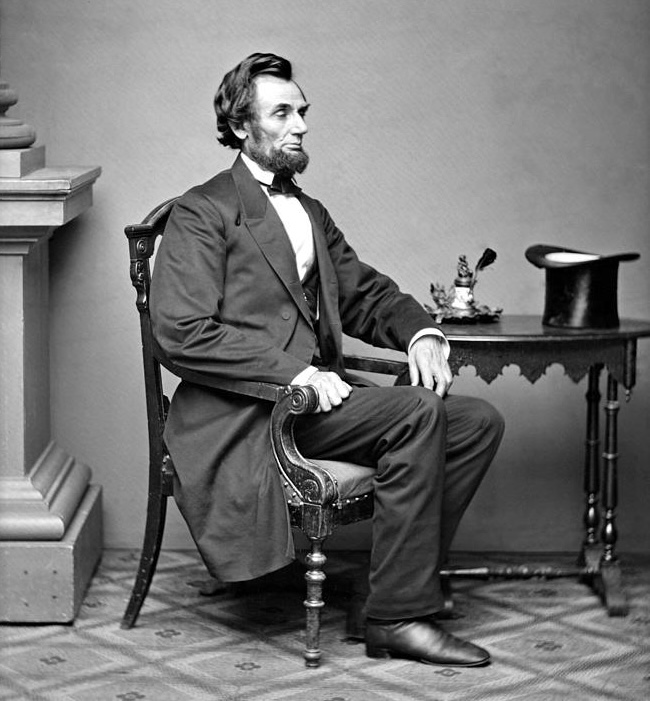
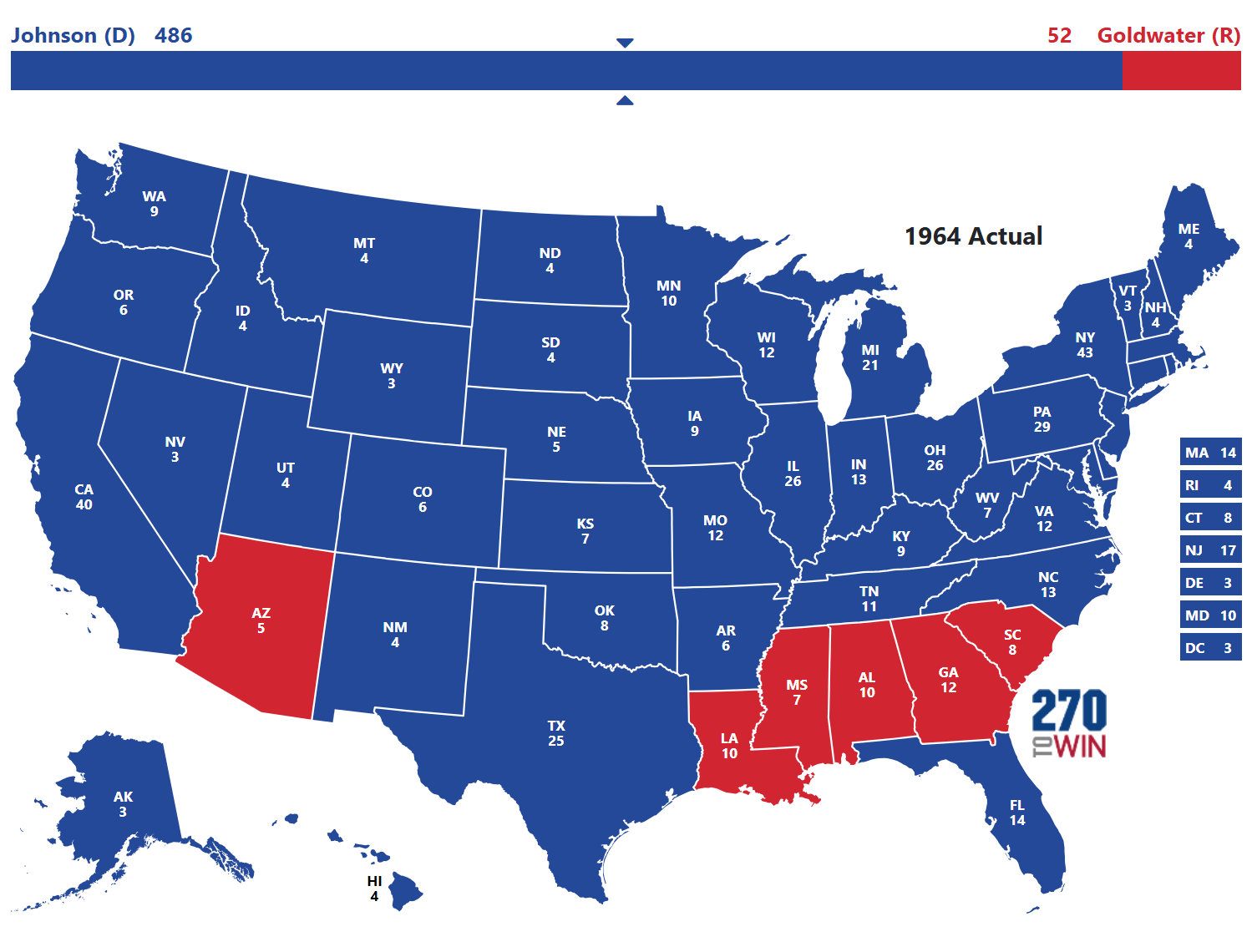
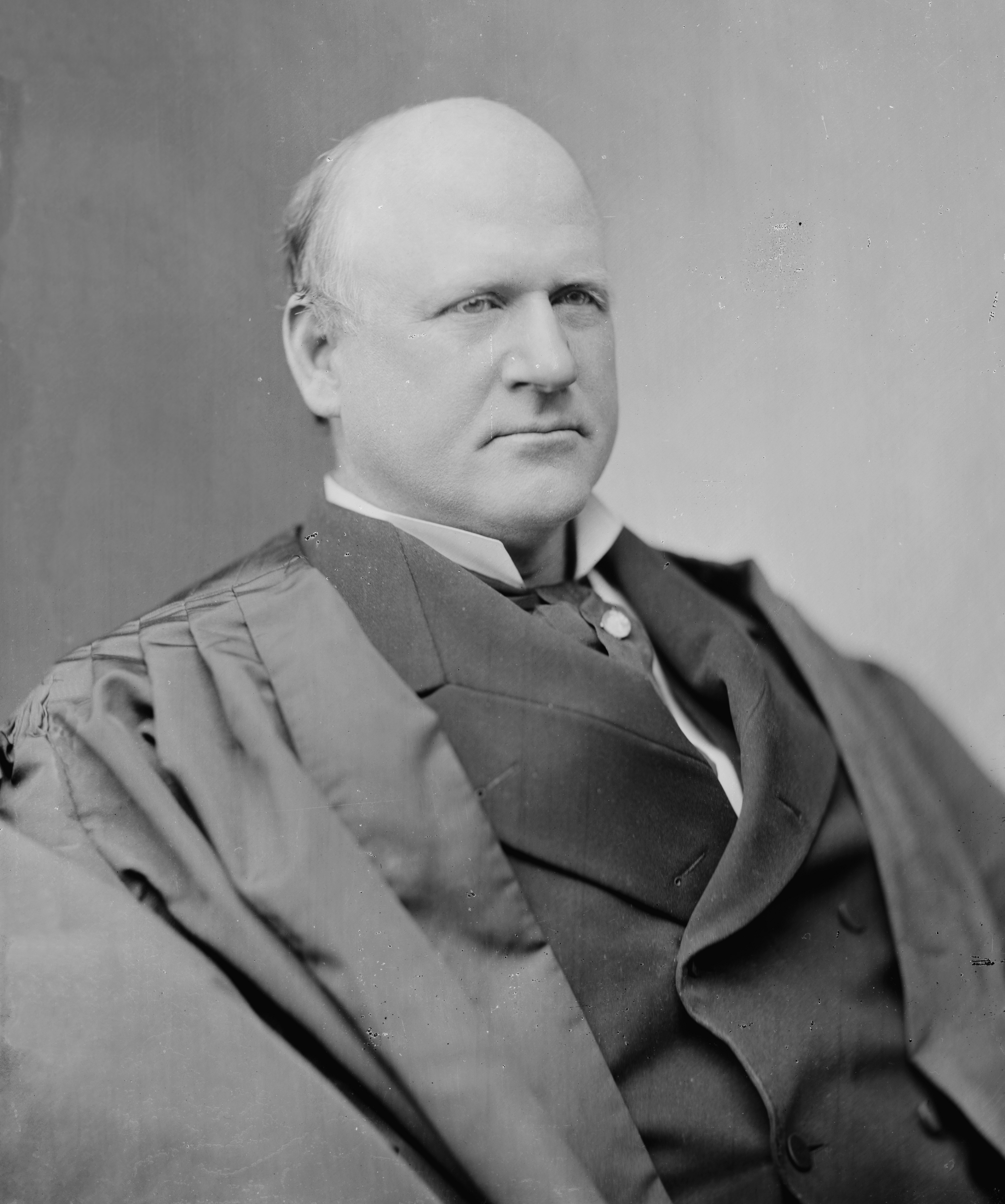




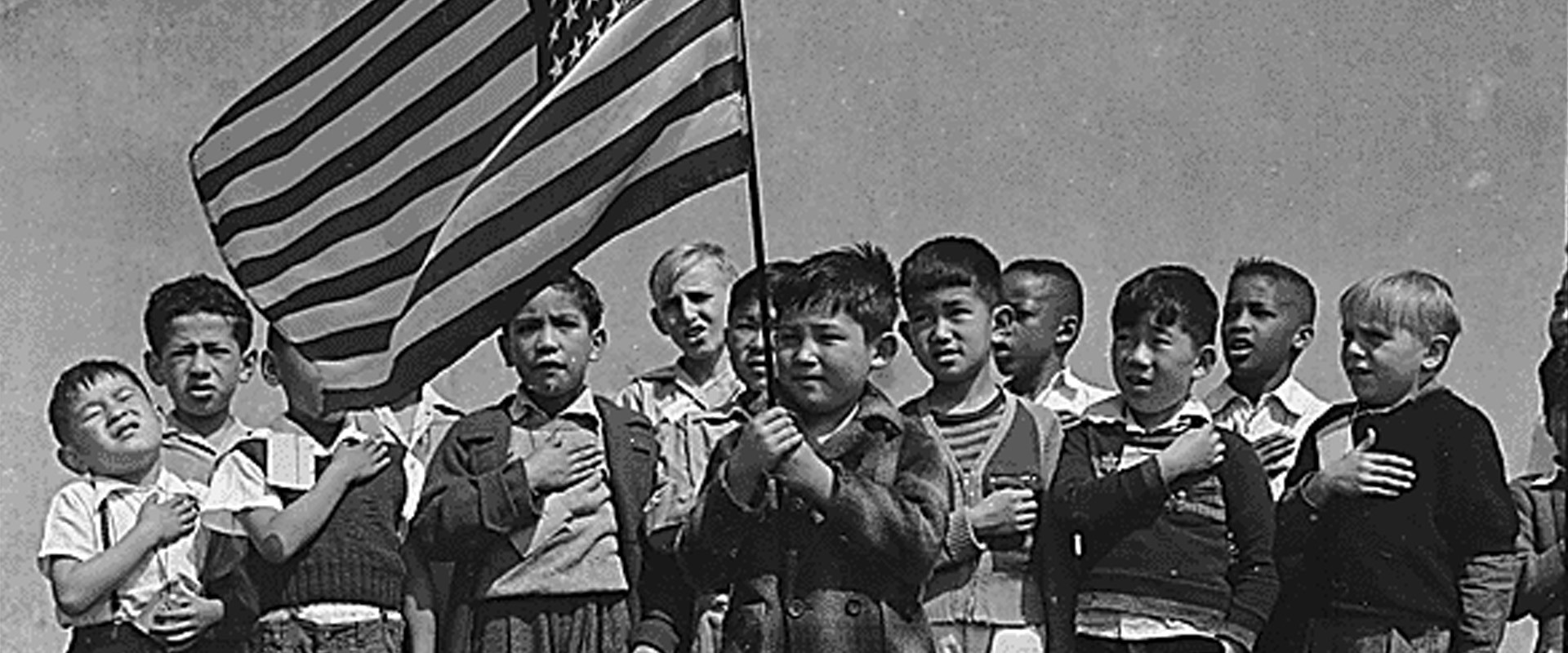
 freedom and reason