This cartoon is accurate and it’s a real problem. I have been on the receiving end of this idea. To be sure, in my case, students have the freedom to draw up petitions and make a lot of noise, but that doesn’t change the sentiment from which their actions issue. That sentiment is fascistic. However draped in the language of social justice, it is a totalitarian desire.
The right of others to be authoritarian in spirit is given in a free system. One is free to say and write whatever. The problem is authoritarianism in action—and thus the sentiment expressed in the cartoon is condemnable even if it is wrong to punish those who merely express it.
However, if my employers were to ever take up the desire, and punish me for my disbelief, then the situation becomes manifestly fascist. And the fact is that a lot of employers have indeed taken up this desire, and people have suffered on account of disbelief. The specter of fascism is not merely haunting America but palpable in so many ways. This is true as well as in Europe.
Tragically, because of the chill this puts in the air, most others are forced into a kind of bad faith, where they disbelieve but go with the flow to avoid the consequences of openly expressing their disbelief. That is yet another sign that freedom has already been compromised; people debase themselves because they are fearful of misfits and those with power who have their backs.
I saw on the interstate Friday a Tesla with the brand and emblems removed. This was presumably to avoid having the vehicle keyed or worse. It is a sign of the times. We have one side that believes in personal liberty and the right to expect that property and person will be safe from destruction and violence. The other side believes that sentiment justifies destructive and violent action. The vandal has always been a pain in the side of civilization.
I might wish others saw the world the way I do, but to force them to, either by punishment or terrorism, is a deeply totalitarian impulse. Both punishment and terrorism have been used to force populations to agree with utterly fallacious worldviews. It is in the face of this force that we must rise.
“But isn’t your belief that you should be free from coercion also a belief?”
The only thing I demand is what I demand for everybody else: the right to be free from having to believe what somebody else believes. This freedom requires but one universal rule. Is this coercive. No, it isn’t. But you will hear that it is. So I want to arm you with a rebuttal.
The quote above is made up, but it captures a sentiment, and I have heard it said in this form or another. I bet many of you have, too. It’s what we call a tu quoque move—a man who demands liberty is accused of holding a belief, as if that alone makes his stance equivalent to the coercive actions he is rejecting.
It’s a sleight of hand: it implies that because I have a conviction (freedom from coercion), I’m somehow hypocritical for opposing others imposing theirs. This move skirts a critical distinction. My “belief” isn’t about dictating what others must think—it’s about preventing anyone from doing that to anyone else. It’s not a positive imposition of a worldview, but a negative boundary against force.
This should be obvious—anti-coercion is not coercion. But for many it is not. It’s an obvious contradiction, albeit obscured by the Orwellian world that has grown around us (where, for example, racism becomes antiracism). But that is the contradiction that lies at the core of the sentiment I capture in the quote. That is what the other side believes.
If you take anything away from what I am writing here it is that fascism is not on the side that demands freedom from compelled speech, but rather on the side of those who demand others change their core beliefs and values so misfits fit in. “Should?” Whatever. “Will?” No. To be sure, a free society tolerates misfits. It is not obligated to change the world to normalize their deviance, since this limits the freedom of everybody else. The desire that it should be otherwise is the fascist spirit.
The fallacy here lies in equating opposites. But belief in liberty isn’t the same as belief that demands conformity. The misfit is free to be a misfit. A free society does not tell the individual how to dress or even how to think of himself (although if it is self-destructive, then we might wish to help). The principle of liberty is to prevent him from forcing others to accept or respect his nonconformity—and force comes in many forms.
Acceptance and respect are not the same things as tolerating nonconformity. We are only obligated in a free society to be tolerant. We are not obligated to affirm the delusions of others. If nonconformity interferes with the liberty and rights of others, then the state must act to stop the misfit for the sake of liberty and rights.
There is very real danger here. The now ubiquitous dodge blurs the line between power and reason. If every belief is just a belief (and this is the core assumption in postmodernism and its progeny), then everything becomes about dominance—the imposition of the will of the one or the minority on the rest of us.
This is what lies behind the keying and firebombing of Teslas, which if tolerated, will almost certainly move to the next level, namely violence against persons. Indeed, it’s happened before. My warning isn’t speculative. Propaganda of the deed is a historical fact. This is terrorism.
Those who work from this fallacy—which is the fallacy of “speech is violence”—flatten the difference between the principle that protects individual autonomy, on the one hand, and a dogma that crushes it, on the other. It’s a rhetorical trick that lets those who seek to coerce others off the hook: “Well, you’ve got your beliefs, we’ve got ours, so who’s to say?”
Again, they’re not the same type of thing. One side’s belief, if manifest in positive action, law, and policy, comes with shackles and violence. The other is the precondition for freedom. If coercion appears here, it is in defense of liberty, not the arbitrary imposition of ideology. Coercion in the latter is just. Coercion in the former is criminal.
My universal rule—freedom from coerced belief—doesn’t need to justify itself by power. It is a necessary condition for reason to even function. Any power used in effecting that freedom is not an imposition but an action protecting myself and others from the imposition of ideas that would limit individual liberty. No one has to bow to the thug. He only does so to survive. If he is armed, then he is justified in using violence to survive.
Author unknown
Once you or I have been coerced into a worldview, all argument is negated; all that’s left is obedience to whatever idea is foisted upon us. Put another way, repression and violence don’t “reduce” to power because they start there. If force is legitimate, then it is authority. The state has the authority to coerce citizens because it represents the will of the people to secure their liberty and rights—when the state acts otherwise, it is illegitimate and thus an expression of fascist power. And then, and only then, do the people have the right to rebel. Not riot. Rebel.
Freedom of conscience and speech make it possible for the center of attention in the cartoon to make her or his demands. This is freedom that leaves fools on the hill. If you want to bend over for misfits, then bend over. That’s also part of freedom: the freedom to debase oneself. But I won’t. And if you want to continue living in a free society, then you won’t, either. I therefore appeal to your sense of self-dignity, since self-dignity, widely held, is a chief bulwark against life in a totalitarian society.
Self-dignity will also help you avoid becoming a misfit yourself. To be sure, there is a current out there that finds fashionable nonconformity for its own sake (the young are especially susceptible to the pull of fashion). But disobedience is really only righteous when it’s in opposition to delusion and tyranny. The civil rights struggle was righteous. The project to make us conform to untruths is not.
In an X post yesterday, Vermont Senator Bernie Sanders, presently touring college campuses wearing a populist mask to obscure his subservience to the corporate state, pushed his plan for Medicare for All by citing statistics on life expectancy in a number of advanced Western societies. Here’s the chart:
Characteristics of Sanders’ sledgehammer style of rhetoric, arguing the case using the relative lower life expectancy of Americans compared to selected Western countries at best oversimplifies the matter, while obscuring the many downsides of socialized medicine.
It is fallacious to pin lower life expectancy on health care delivery models. The US ranks lower in life expectancy among advanced nations due in major part to lifestyle factors and violence—not just or even for the most part healthcare access. In fact, on pure healthcare outcomes (e.g., acute care, cancer survival), the US often outperforms its peers.
To be sure, Medicare for All will help close coverage gaps, but without tackling obesity, violence, and other societal issues, life expectancy won’t significantly improve for America. So while inequities in access are indeed a problem, Sanders drastically overstates the role of access disparities in the broader statistic.
The United States of America is the only major country on earth that does not guarantee health care as a human right.
The result: We rank dead last among wealthy nations in life expectancy.
Moreover, Sanders omits the downsides of socialized medicine from his pitch—e.g., bureaucracy, delays, lack of choice and flexibility, and rationing. The US outperforms other nations in innovation, responsiveness, and speed. Sanders’ focus on life expectancy thus obscures not only the other factors affecting the relative ranking of nations, but also the advantages of the US model. In attempting to address the problem of life expectancy through Medicare for All, Sanders’ plan risks those advantages.
It is also crucial to recognize that the US healthcare model, whatever its flaws, plays a critical role in supporting socialized systems globally via dynamic, market-driven innovation in medical technology, pharmaceuticals, and research. The US is the engine for the healthcare advancements that other populations enjoy. By keeping healthcare largely free market in the US, America enables the world to enjoy better medical care, making their health care outcomes better despite their socialized models.
Socializing medicine in the United States, by stifling innovation, will likely lead to stagnation in medical breakthroughs, reduced access to cutting-edge treatments, and slower advancements in life-saving technologies, hurting those other populations in addition to our own. In the long run, Sanders’ plan could result in fewer cures, less effective therapies, and diminished hope for patients worldwide.
Finally, supposing we were to implement Sanders’ plan, the cost to taxpayers would be staggering, requiring from taxpayers tens of trillions of dollars over the decade following its implementation. It would also expand the corporate state apparatus, concentrating even more power and wealth in the hands of a relatively small number of large corporations, while enlarging the strata of bureaucrats and technocrats who serve their interests.
Bottomline: Sanders’ pitch drastically oversimplifies life expectancy, while ignoring the myriad of downsides of the corporate state medical model he pushes.
Donald Trump followed through on his promise to abolish the Department of Education (DoE) yesterday. He signed the executive order Improving Education Outcomes by Empowering Parents, States, and Communities. He will need Congress to act to make his promise a reality; since the DoE was established by an act of Congress in 1979, dismantling it necessitates the passage of new legislation to repeal or significantly amend the existing law. The good news is that Trump will need a simple majority to accomplish this.
Trump’s executive order abolishing the Department of Education (Source)
If the Department of Education is abolished, blue cities and states will continue indoctrinating America’s youth in public schools with critical race theory (CRT), queer theory, and other anti-Western ideologies. Moreover, the emphasis on social and emotional learning (SEL) will persist in undermining academic outcomes—either by diverting time away from core subjects like English, math, and science or by infusing these subjects with ideological content. This presents a challenge for those already brainwashed by progressive ideology—if they are ever capable of recognizing their indoctrination.
However, abolishing federal control over education in red cities, towns, and states would allow citizens in those areas to escape the influence of the credentialed class. The imposition of woke progressive ideology is largely inorganic to these communities. Without federal overreach, they could refocus on the true task of educating America’s youth.
To grasp the significance of liberating these communities from the dictates of a federal ministry of education consider that, of the 3,143 counties or county-equivalents in the US, Donald Trump won 2,588, while Kamala Harris secured only 555. Currently, the credentialed class shapes curricular and programmatic design—dictating progressive ideology—even to counties that would otherwise prioritize instruction in English, math, science, and appropriate social studies (civics, geography, and history) over woke programming.
While the county-level electoral map is not a perfect metric—since many schools are run by cities, independent districts, or mixed systems—public schools still exist within counties. Thus, Trump’s county-level success reflects the preferences of many families whose children attend public schools.
Advocates of woke progressive education argue that these frameworks offer essential perspectives on identity, power, and social justice, encouraging students to, in the language of that ideology, “critically engage” with issues of gender, race, and sexuality. Of course, the goal is not genuine critical engagement but rather the uncritical adoption of the progressive worldview on these topics—a worldview corrupted by corporatist and postmodernist ideas. These so-called “theories” infiltrate subjects like English, history, social studies, and even science, injecting warped interpretations, revising history to align with ideological goals, and degrading scientific norms and understandings.
The inclusion of such content in public education not only detracts from traditional subjects (which is damaging enough) and undermines academic rigor and essential skill development—it also implants in impressionable minds an ideology that is neither organic to their communities nor advantageous to their future prospects or rational civic participation.
Jimmy Carter signed the bill that created the Department of Education October 17, 1979 (Source)
When this issue is acknowledged at all, it is often misframed as a debate about the role of education in shaping students’ values and preparing them for higher education and the workforce. In other words, the situation facing American families is cast as a dilemma: balancing the demands of progressive curricula with the traditional goals of fostering academic proficiency. However, this way of putting the matter misrepresents the problem—it presumes that public education should universally assume the role of parents and communities in shaping children’s values. It positions public schools as the primary vehicle for instilling progressive ideals, while rejecting family and community values as backward and bigoted.
Progressives believe they know better than families and communities about the values children should hold. However, especially since the pandemic, tens of millions of Americans have rejected this premise (many had already rejected the premise). They increasingly recognize that progressive curricula and programming aim not at developing critical, independent thinkers or autonomous citizens who make decisions for the betterment of themselves and their communities, but rather at producing obedient corporate subjects and reliable Democratic voters.
The practical reality is that, since the establishment of the Department of Education (DoE), the introduction of SEL and other programming has shifted focus away from core academic subjects like literacy, math, and science. This shift has blunted the development of critical thinking, knowledge acquisition, and essential skills. The redistribution of time and attention has reduced instructional hours dedicated to academic rigor, negatively impacting test scores and overall educational outcomes. Teachers and administrators feel pressured to balance SEL with meeting academic standards, resulting in less effective delivery of both. The political reality is that SEL—and similar ideological initiatives—should be purged from public education not only because it interferes with the goals of education, but on principled grounds: public schools should not be an instrument for pressing ideology into the public mind.
There is also the problem of bureaucratic bloat and the burden on taxpayers. Since the DoE’s creation in 1979, the teacher-to-administrator ratio in US public schools has shifted significantly. Before the department’s formation, schools were teacher-heavy, with relatively few administrators and minimal support staff. Most schools operated with a principal, perhaps a vice-principal, and a small central office team. In the decades following the DoE’s establishment, the number of non-teaching staff has grown at a much faster rate than the number of teachers.
While several factors contribute to this trend, one key driver is the expanding federal regulatory apparatus and its mandates on public education. The result is that, despite significant increases in education spending, much of the additional funding has gone toward administrative costs rather than directly benefiting classroom instruction. This regulatory imposition has created a vast bureaucratic structure, ostensibly to meet students’ needs and comply with federal mandates.
Returning to the ideological problem, some will recognize in the plan of action articulated by Rudi Dutschke, a German student activist and leader of the 1960s socialist movement, who described it as “the long march through the institutions.” His inspiration came from the work of Italian communist Antonio Gramsci and the concept of “cultural hegemony,” which I have explored in several essays on Freedom and Reason.
Dutschke’s phrase is useful—it captures the essence of a strategy aimed at achieving cultural and political change by gradually infiltrating and transforming society’s key institutions, such as education, government agencies and departments, mass media, and the institutions of cultural production—in other words, the organizations that shape public perception and policy.
For Gramsci, cultural hegemony was essential for maintaining capitalist power; therefore, the left needed to challenge and reshape cultural norms through institutional influence. However, what we see today is not the left in either the liberal or Marxist sense, but rather a faux-left manufactured by the corporate class—progressivism—designed to mislead those who genuinely value social justice.
This is how the corporate class has secured hegemonic control over society over the last several decades: by disguising corporate aims in the language of democracy and justice. In other words, the accumulation of political power in the administrative state and technocratic apparatus entrenches a social logic that ultimately benefits corporate interests. Thus, the very concept of social justice has been transformed into its opposite. What moves under the appeal of social justice is totalitarian desire.
With schools now offering an ever-widening range of services beyond traditional instruction, the introduction of SEL and other pursuits has added yet another layer to an already overcrowded curriculum—one driven by the ideological objectives of the credentialed class rather than the academic needs of students. At a time when greater emphasis on literacy, math, science, and civics (untainted by anti-American and anti-Western sentiment) is more critical than ever, public education has instead been burdened with ideological programming that undermines its core mission.
Ideological programming does not align well with the traditional goals of academic education, such as mastering subject-specific content and skill development, not because there is resistance to it by the ordinary citizen, but because ideological programming is not appropriate to the goals of education, which should focus on education not indoctrination.
However, for progressives, the goal is not education but indoctrination. The goal of creating obedient corporate subjects requires technocratic control of the centralized administrative apparatus, the enlargement of the bureaucracy, the retrenchment of this regime, and generations of voters who support the agenda. Therefore, the project to reclaim our democratic republic is advanced by the dissolution of the Department of Education. It is now up to Congress.
I am routinely astonished at the degree of irrational thinking and acting among people who think of themselves as otherwise. They think they are so right. But they are so wrong. These individuals are not necessarily unintelligent, rather they possess a diminished or undeveloped capacity for reason. One mark of this type of person is the substitution for logical argument the practice of sophistry. This is associated with a penchant for putting emotion over logic—and justice.
One recent example of irrationality is displayed by those who accuse those condemning the firebombings of Teslas as hypocrites for not also condemning the boycotts of Bud Light, Target, etc. However, there’s an obvious difference between firebombing Teslas sitting at a car dealership, on the one hand, and, on the other hand, not buying a Tesla. If you don’t like Tesla, then don’t buy a Tesla. Of course. Why you wouldn’t buy a Tesla because you don’t like Elon Musk is beyond me, but people are free not to buy things for whatever reason.
A related example is found among those who cite the case of Kid Rock shooting up a case of Bud Light. Again, there’s a difference between buying a Tesla and blowing it up, on the one hand, and, on the other, blowing up a Tesla that doesn’t belong to you. Same goes for vandalizing a Tesla. It may be absurd to buy a case of beer so you can shoot it full of holes with a semi-automatic weapon, but it’s not the same thing as damaging somebody else’s property.
These attempts at equivalences are so obviously fallacious that one has to be concerned about the state of education in America (and Canada, etc.).
But the more serious issue is what the false equivalences obscure: the problem of propaganda of the deed.
For those of you with good memories, you will recall the waves of similar action targeting Hummers, especially in the early 2000s (although the attacks started in the late 1990s). A group calling itself the Earth Liberation Front (ELF) firebombed and vandalized several vehicles at dealerships. The group claimed responsibility for the arson, protesting the vehicles’ environmental impact. Slashed tires, spray-painted slogans (“No Blood for Oil”), and other forms of vandalism occurred across the United States and in some European countries.
“Propaganda of the deed” is resort to direct, often violent actions, e.g., assassinations, bombings, or sabotage, to inspire or provoke broader political or social change. It was popularized by anarchists in the late nineteenth and twentieth centuries who believed that dramatic acts of rebellion or violence would serve as a catalyst for revolution by inspiring the oppressed to rise up, as well as demonstrating the vulnerability of the state to control deviance. The idea was that such deeds would not only attract attention to some cause or another but also motivate others to take action, making violence itself a form of symbolic communication.
Resort to propaganda of the deed is the expression of a personality type. I haven’t conducted any polling on this, but I would expect to find that those who think it’s appropriate to firebomb and vandalize Teslas are more likely to also believe that it is appropriate to vandalize great works of art or block roads to impede motorists trying to get to airports, hospitals, or work. One could also reasonably suppose they are also more likely to celebrate the assassination of a CEO of an insurance company. It’s obvious enough that polling on the matter seems a waste of resources. Just scroll through your X feed.
I’m sure readers are generally familiar with a theory that can be summed up with the saying, “Birds of a feather flock together.” In the 1950s, Eric Hoffer’s The True Believer explored the psychology of mass movements, analyzing why individuals are drawn to them. More to the point, he draws his audience’s attention to the type of person drawn to mass movements. Hoffer finds that individuals who are frustrated with their lives are particularly susceptible to joining mass movements—whether political, religious, or social. In short, misfits. For the misfit, these movements provide an escape from individual insignificance by dissolving personal identity in tribal spirit.
For Hoffer, mass movements attract lost souls seeking belonging, certainty, and purpose. This type of person lacks creativity, self-efficacy, and talent. Hoffer contends that fanatical devotion stems less from ideological conviction and more from the need for personal fulfillment. Ideological conviction follows as a rationalization for passion. Once in the group, the individual observes and apes the attitudes and behavior of those around him, as well as receiving instructions on how to think and act. This is what is behind the mindless chanting. Hoffer examines the shared characteristics of different movements and finds that the underlying psychological appeal is often the same, regardless of specific goals. Thus the misfit moves from cause to cause in search of external purpose.
When you consider the collective attitude of the left today, it’s obvious that people with this personality type have found their flock. This explains why we see the same type moving from Antifa, Black Lives Matter, anti-Israel action, and trans activism, displaying the same obsession over the same prominent figures, such as Donald Trump. Often, today usually, these movements merge into one mass movement. This is how we get the idiocy of “Queers for Palestine.”
The misfit is also the criminal type, rationalizing his criminality by appeal to higher loyalties. Michael Gottfredson and Travis Hirschi’s 1990 A General Theory of Crime argues that crime is primarily the result of low self-control, which they describe as an enduring personality trait shaped early in life. According to their thesis, individuals with low self-control are impulsive, risk-seeking, and short-sighted. The saying “birds of a feather flock together” encapsulates their observation that individuals with low self-control tend to cluster together, forming social circles where deviant behavior is normalized and reinforced. The authors claim that low self-control also contributes to poor life outcomes, such as economic struggles and unstable relationships, the profile Hoffer identifies in the “true believer.”
One is tempted to paraphrase Friedrich Nietzsche’s observation that while madness is rare in individuals, it is common in groups. But the madness of the individuals draws them to other mad individuals. The result is what Douglas Murray describes in The Madness of Crowds. There he documents the rise of identity politics and its influence on contemporary culture. Murray argues that the obsession on gender, identity, race, and sexuality has led to a form of ideological extremism, where reason and nuance are sacrificed for rigid dogma. What also goes out the window is respect for individual liberties and rights, replaced by narcissistic obsession with self.
Murray contends that social justice movements, while sometimes initially rooted in legitimate concerns, have become driven by mob mentality and a desire to police thought and speech, not just of the group, but of everybody. It is a fascistic mentality. He observes that this trend is fracturing society, as individuals are differentiated and judged by group identities rather than individual merit. The book critiques the spread of outrage culture and the tendency for public discourse to be dominated by moral absolutism and performative activism. Murray calls for a return to rational debate and individualism. His book was published in 2019. In meantime, the situation has only worsened.
NEW: Canadian Climate Change group vandalizes a Tesla dealership in Montreal Canada to protest against "climate denial."
The Climate Change freaks are now vandalizing the top electric vehicle company in the world. You can't make this up.
In short, the left has become a mob—and mobs and democracy don’t mix. The mob today is a manifestation of what I have identified in several essays as the New Fascist mentality expressed as such: a group doesn’t like another group of people, so they vandalize the property of that group, and it’s just a short step from there to interpersonal violence. Indeed, examples of leftwing activists assailing individuals over the last several years are abundant. We witnessed acts of intimidation and interpersonal violence with Black Lives Matter (and we will likely see it again). We saw it more recently in the harassment of Jewish students by pro-Hamas activist on college campuses. We see it with trans activists.
Readers have surely heard left wingers insist that speech is violence. The idea that speech can be violence is rooted in the notion that certain forms of speech—what activists describe as dehumanizing rhetoric and hate speech—can cause emotional and psychological comparable to physical violence. Proponents of this view argue that speech can cause distress and fear and trigger trauma, and that this harm carries tangible effects on mental health and well-being.
But if speech is a type of violence, then violence is a type of speech. This creates a dangerous precedent where actual physical violence is justified as a form of expressive protest. It follows that such acts as physical confrontation during protests, rioting, and vandalism are forms of symbolic resistance or speech. They are certainly acts of criminal violence. Clearly, the left has embraced this idea. This development represents a very dark turn in America’s political culture (not that we haven’t been here before).
This trend won’t end well if we permit it to continue. It’s incumbent upon all of those who identify as being on the political left to condemn violent actions by others who associate themselves with left-wing politics. As somebody who has long identified as being on the left, I have long condemned the use of violence as a form of protest and resistance, and even acts short of violence, such as the heckler’s veto. It’s not that violence is never appropriate, but it must be reserved for self-defense, defense of others, and extraordinary situations in which genuine oppression requires rebellion. The misuse of violence has become so bad on today’s left that I can no longer associate myself with that standpoint.
I want a world where I am safe to buy a car without fear of being targeted by those with a warped sense of justice and appropriate action. I have considered buying a Tesla, but I am fearful to do so because of what might happen to my property and even my person and the loved ones around me. This is of course the intent of those who firebomb and vandalize Teslas: to put fear in the hearts of Americans in order to hurt Tesla and Elon Musk. Why? Because he has put his talents to the deconstruction of the big intrusive government in the DOGE project (just as he saved free speech in America by purchasing Twitter).
I have seen a lot of denials on X over the last few days that firebombing and vandalizing of Teslas is not terrorism. However, I am confident that if my readers saw swastikas spray-painted on a Jewish family’s home, they would see it for what it is: an act of domestic terrorism. Terrorism is, after all, the unlawful use of violence and intimidation tactics, especially against civilians, to achieve ideological, political, or religious goals. It typically involves acts intended to create fear, disrupt society, or coerce governments or populations into making concessions or policy changes. Terrorism can take many forms, including assassinations, bombings, and cyber attacks.
A site calling itself “Dogequest” has appeared with a map of Tesla owners so that domestic terrorists can more easily target Teslas for vandalism. Tesla owners are told to either rid themselves of their Teslas or remain on the list and risk having their vehicles vandalized—or worse.
This essay explores protectionism and tariffs (see also my essay Why the Globalists Don’t Want Tariffs. Why the American Worker Needs them). I begin by recalling the 1993 debate between Ross Perot (presidential candidate in 1992 and 1996) and Vice President Al Gore on Larry King Live over the North American Free Trade Agreement (NAFTA). I watched the debate live, along with 16.8 million others—it was the second most-watched program in CNN’s history.
This debate remains one of the most memorable economic discussions in American history, exemplifying the divide between nationalism and globalism. More than that, it revealed the Democratic Party’s attitude toward ordinary Americans, highlighting its disregard for job security and the preservation of stable, prosperous communities—all while insulting their intelligence.
The debate occurred in the aftermath of General Motors CEO Roger Smith relocating automotive plants in Flint, Michigan to other locations, including Ciudad Juárez, Mexico. GM made the decision to relocate in anticipation of NAFTA. The closure of plants in Flint, particularly in 1987 and 1988, was depicted in Michael Moore’s 1989 documentary Roger and Me, which highlighted the economic and social effects of Smith’s decisions on the community, which were devastating. (Roger and Me remains Moore’s best documentary. I highly recommend readers watch it if they are unfamiliar with that situation.)
Gore, representing the Clinton administration’s pro-NAFTA stance, argued that free trade would lead to economic growth, increased efficiency, and job creation. As part of his argument, Gore presented Perot with a photograph of the authors of the Smoot-Hawley Tariff Act of 1930, claiming that the act, signed into law by President Herbert Hoover, had been a major factor in deepening the Great Depression. Indeed, Gore said that economists widely agreed that it was the central cause of the depression. The rhetoric was obviously intended to discredit Perot’s advocacy of economic nationalism and his calls for protectionist policies.
For his part, Perot warned that NAFTA would lead to a “giant sucking sound,” as American jobs, particularly in manufacturing, were relocated to Mexico, where labor was cheaper and worker protections weaker. This, Perot argued, would deindustrialize key sectors of the economy, depress wages, and undercut American workers. Perot recognized that global trade agreements were written to benefit multinational corporations rather than domestic workers. He saw protectionism as a way to correct for these effects, ensuring that American industries remained competitive and that wages were protected from a race to the bottom. He was also concerned about the conditions of Mexicans.
Image Generated by Grok
Perot’s position was rooted in the tradition of Hamiltonian economics and the American System, which relied on tariffs to foster domestic industry. From the founding of the Republic, protectionism was a key element of national economic strategy, promoting industrial self-sufficiency and national security. The Smoot-Hawley Tariff, which Gore exploited as a cautionary tale, was merely one episode in a long history of tariff use.
The Vice President portrayed Smoot-Hawley as an extraordinary event, using the photograph as a prop to sidestep the fact that, among experts, the Great Depression is widely attributed to financial instability and monetary policy rather than tariffs. Gore’s selective use of history was intended to obscure the broad success of protectionism in American economic development. In doing so, he revised history to advance the globalist agenda.
Both Gore and Perot recognized that capital was highly mobile in a globalized world, allowing corporations to relocate production to exploit lower costs. In Perot’s view, tariffs—and, more broadly, reversing globalization and regionalization—were necessary to counteract this mobility and ensure that domestic workers were not sacrificed on the altar of corporate profits. The Clinton administration—led by the so-called New Democrats, who rebranded the party under the banner of neoliberalism—viewed protectionism as an obstacle to the progress of the New World Order, an order shaped by transnationalism.
Image generated by Grok
Perot’s argument anticipated many of the concerns that have since become central to debates about globalization: deindustrialization, economic dependency on foreign nations, unemployment, and wage stagnation. In hindsight, his warnings have proven prescient, evident in the decline of American manufacturing and the rise of economic populism in response to globalization’s detrimental effects.
(I will soon publish an essay charting the rise of populism over the last several decades. In that piece, I will argue that the Trump phenomenon is not merely a reaction against globalism but rather that the president has long been a champion of economic nationalism, a contemporary of Perot’s.)
Despite what the propagandists of the corporate state claim, Perot was not a relic of outdated economics. Rather, he was a modern-day Cassandra. Protectionism offers essential tools for addressing the challenges of globalization, particularly in light of the limitations of comparative advantage and the portability of capital.
While free trade advocates argue that open markets lower prices and maximize efficiency, their arguments deliberately ignore the realities of modern globalization—namely, that the free movement of capital in pursuit of lower costs directly affects workers’ livelihoods. Protectionist measures, such as tariffs, help counter the negative effects of capital flight, preserving both national and local economic stability.
This reality exposes a fundamental flaw in the theory of comparative advantage. Classical political economy suggests that countries should specialize in industries where they have an opportunity cost advantage, thereby increasing overall productivity and wealth. This principle, however, relies on the assumption that factors of production—such as capital and labor—are relatively immobile, meaning that industries will naturally develop in regions best suited for them.
In today’s globalized economy, this assumption no longer holds. Capital mobility enables multinational corporations to shift production to low-wage countries, where artificially lower costs are driven by government subsidies (such as grants, tax breaks, infrastructure support, and resource discounts), lax environmental regulations, and weak labor protections. Transnationalism facilitates this process—and it is no coincidence that the projection of US military power aligns with these economic interests. Neoconservatism and neoliberalism are intrinsically linked; the New Democrats have become the party of war.
In a 1999 essay, The US and NATO in the Balkans, published in New Interventions, I analyzed Clinton’s bombing of Belgrade within the broader context of global capitalism. I argued that the Kosovo crisis must be understood in relation to the history and structure of the capitalist world economy, as well as the geopolitical interests that drive state and military operations to sustain and expand capitalism.
I further contended that NATO, along with the broader political and military apparatus it belongs to, has been a central force in advancing globalization. Its role has included suppressing socialist movements, quelling nationalist uprisings in developing regions, and integrating former Soviet Bloc territories into the global economic system.
I will let readers explore that essay for themselves, but the following passage is particularly relevant, so I will share it here:
“The US has facilitated capitalist development by supporting and implementing a neoliberal project throughout the territories formerly controlled by socialist regimes. This has involved the introduction of World Bank- and IMF-promoted economic policies that have reorganized the entire regional economy. These policies have caused widespread misery among people who once enjoyed a relatively high standard of living under socialism. The region is being set up to become the European equivalent of the Maquiladora, with export processing zones spreading across the countryside of what was once a multiethnic socialist state. Once the region is politically stabilized, there is little doubt that capital will flood in.”
As history demonstrates, these dynamics have severe consequences for industrialized, high-wage economies—something the left once acknowledged. Recall the Battle of Seattle, the protests surrounding the 1999 World Trade Organization (WTO) Ministerial Conference, which sought to initiate a new round of global trade negotiations. The conference was met with strong opposition from environmentalists, labor unions, and other pro-worker advocacy groups. These groups recognized that as industries relocate to exploit cheap labor abroad, domestic manufacturing declines, leading to deindustrialization, environmental degradation, and rising structural unemployment. One might ask, where has that left gone?
The erosion of key industries not only undermines a nation’s economic security but also poses significant risks to national security. As industries are outsourced, nations become increasingly dependent on global supply chains, which expose them to economic warfare and external shocks. This vulnerability was starkly evident in recent disruptions caused by geopolitical conflicts and pandemics.
Outsourcing critical industries makes countries susceptible to price volatility, shortages across various sectors, and even adversaries who may use economic power as a form of warfare. For instance, pharmaceutical shortages are a persistent problem, directly impacting patient access to essential medicines. The same issue arises in critical sectors like energy and transportation.
Consider the United States’ dependence on Taiwan, particularly in light of China’s ambitions. Globalists often frame resistance to this dependency as part of a broader narrative about a “a war on Taiwanese semiconductors,” obscuring the precariousness of relying on a single source for such vital components.
Protectionist measures, such as tariffs, correct market distortions by ensuring that domestic producers can compete on a more level playing field and that critical industries remain resilient to disruptions, whether caused by economic warfare or logistical breakdowns. By discouraging offshoring and incentivizing local production, tariffs help protect strategic industries and stabilize employment, preventing economic dislocation.
Economic nationalists are not opposed to capitalism; rather, they prioritize fair trade over free trade. Strategic protectionism enables nations to maintain greater self-sufficiency, reduce dependency on foreign production, and ensure resilience during crises. Additionally, tariffs offer a source of external revenue, allowing governments to avoid over-reliance on internal taxation. (See Eighty Billion is Not Nothing, but Revenue Generation is Not the Point of Tariffs. My thoughts on this matter have been evolving).
While free trade may be ideal in theory, the realities of globalization require a more pragmatic approach. Donald Trump’s strategy of reciprocal tariffs is a core component of his economic agenda and aligns with Republican Party orthodoxy (see History as Ideology: The Myth that the Democrats Became the Party of Lincoln). . Like Perot, Trump advocates for a shift away from classical political economy in response to the rise of capital mobility.
Strategic protectionism is not about rejecting trade altogether; rather, it is about ensuring that economic policy serves national interests, rather than merely catering to the profit motives of multinational corporations. By using tariffs to regulate the movement of capital and prevent further deindustrialization—while promoting reshoring and near-shoring—governments can foster economic stability, protect workers, and safeguard long-term national prosperity.
Trump’s strategy is most evident in his recent efforts in Panama (see Countering China’s Influence). Since the handover of the Panama Canal to Panama in 1999, China has significantly expanded its economic influence in the region. Although the canal is not officially part of China’s Belt and Road Initiative (BRI), Panama’s 2017 decision to join the BRI and sever ties with Taiwan effectively placed the canal under Chinese influence. In response, Trump has taken steps to counter China’s growing presence, including demanding Panama return control of the canal to the US and pressuring the country to withdraw from the BRI. These moves are part of a broader strategy to reduce Chinese influence over critical global infrastructure and addressing national security concerns presented by an increasingly aggressive rival.
The strategic use of protectionism, such as tariffs, is not an opposition to capitalism but a pragmatic response to the realities of globalization. As global supply chains and capital mobility expose nations to economic vulnerabilities, particularly from rivals leveraging economic power, strategic protectionism offers a path to maintaining national self-sufficiency, economic stability, and long-term prosperity. Whether through curbing offshoring, encouraging reshoring, or countering foreign influence over critical infrastructure, protectionist policies ensure that economic policy prioritizes national interests over the unchecked profit motives of multinational and transnational corporations.
What would we call a society run by judges and courts? A “judicocracy”? That seems like a fitting term. It would describe a political system where judges or the judicial branch assume supreme authority over decisions traditionally made by elected representatives or the executive.
Now, imagine these judges are not only largely of a particular partisan persuasion but also steeped in a specific legal philosophy that grants them sweeping power to shape the law—producing a hegemony that displaces the will of the people. In a democracy, citizens expect their interests to be represented by popularly elected legislatures and executives, not thwarted by unelected officials in ceremonial robes.
AI-generated image
This would resemble a clerical society, where men in silly hats interpret scripture and use those interpretations to overrule laws made by legislators. We might call that a “clerocracy”—rule by clerics. The more familiar term, of course, is theocracy. If those clerics subscribed to a theocratic movement that twisted scripture beyond its plain meaning (anti-originalism), their power would become even more arbitrary.
We might also compare such a system to totalitarianism—the one-party state where elections, if held at all, are merely ceremonial. People may vote, but their choices are meaningless because bureaucrats and technocrats ultimately decide policy, often based on an ideology foreign to the populace—an ideology used to control them.
In a democratic republic, judges are expected to weigh in on constitutional matters, ensuring that laws align with the nation’s foundational principles. But what about legal issues not explicitly addressed in those founding documents? Consider a system where the judiciary, empowered by common law and the doctrine of stare decisis, not only upholds precedent but also has the authority to overturn it, creating new legal interpretations. Now imagine a legal theory that claims to see things in documents that aren’t really there—while dismissing those who question it as lacking the intelligence to understand.
Separation of powers is a delicate balance. It’s certainly preferable to absolute rule by a single authority. But what about the people? Is it not their government?
John Locke, the first liberal, believed so. In Two Treatises of Government, he argued that governments form through a social contract, where individuals surrender certain natural rights in exchange for protection of their fundamental ones—particularly life, liberty, and property. However, if a government fails to protect these rights or becomes tyrannical (which, to Locke, was essentially the same thing), the people have the right to overthrow it.
For Locke, a government’s legitimacy depends on the consent of the governed and its commitment to protecting their rights. His philosophy echoes in the Declaration of Independence, written by future president Thomas Jefferson:
“We hold these truths to be self-evident, that all men are created equal, that they are endowed by their Creator with certain unalienable Rights, that among these are Life, Liberty and the pursuit of Happiness. —That to secure these rights, Governments are instituted among Men, deriving their just powers from the consent of the governed, —That whenever any Form of Government becomes destructive of these ends, it is the Right of the People to alter or to abolish it, and to institute new Government, laying its foundation on such principles and organizing its powers in such form, as to them shall seem most likely to effect their Safety and Happiness.”
Some might argue that “judicocracy” is just another way of describing the “rule of law.” But is it? One could say the same about a clerocracy or even a totalitarian state—after all, they have laws, too. The real question is: To what end does the law serve? Does it work for the people? Or for the elite? And what of the individual?
I asked ChatGPT to rewrite Karl Marx’s opening salvo in his (in)famous 1843 “A Contribution to the Critique of Hegel’s Right” in the style of Christopher Hitchens, another notable atheist. I fed the outfit into GPT Zero and it judged it to be 55 percent human/45 percent of AI generated. Yet it was 100 percent AI generated. This is what is known as a “false negative.”
100 percent AI-generate text scanned by GPTZero
My university has, as have universities across the country, asked departments and faculty to develop policies around AI use—and to include them in our learning outcomes and syllabi. During a departmental meeting, when concerns about student use of AI, a faculty member suggested GPTZero to check student papers. She claimed that GPTZero was highly accurate in identifying AI-generated text. After the discussion, our chair asked us to each develop statements about how we approach student use of AI, which we would then in the future meeting fashion into a common document for our department.
Last night, in preparing my statement, I thought about GPTZero and began Googling AI detection. Something I had raised concerns about in various conversations, the problem of the “false positive,” where a human-generated text is flagged as AI generated, turns out to be a very real problem indeed; so intractable of a problem, in fact, that universities are moving to marginalize or exclude evidence produced by AI detection software from disciplinary procedures surrounding accusations of student misconduct. Some universities have even deactivated the AI-detection function on plagiarism detection software, such as the one associated with TurnItIn, which Canvas, a learning management system (LMS), uses.
The importance of this development cannot be exaggerated; falsely accusing students (or anybody, for that matter) of submitting AI-generated text when there is no definitive way of proving they did (and the burden of proof rests with those making the accusation) damages careers, esteem, and reputations.
I have long suspected that the likelihood of AI detection software identifying content as AI generated was greater for those whose writing is grounded in solid writing mechanics, especially when one’s style obeys the normative rules of science writing. Moreover, for students who use an LLM for copy-editing purposes, a well-crafted text run through an AI detector risks increasing the likelihood that a false positive will result—unless one believes that using an LLM as a copy-editor somehow negates the originality of the initial draft. But wouldn’t this also apply to a work revised by a human copy-editor?
I decided to check out GPTZero (which produce the false negative above), and thought it would be interesting to use a guide I wrote a while back designed to help students understand the promise and pitfalls of AI-generated texts. I had beta-tested ChatGPT, and I was concerned early on that students would abuse this technology. To be sure, to some extent, at least, they already were with Grammarly, especially that software’s enhanced features; but given ChatGPT, Gemini, and Grok’s ability to generate novel content, I could see a different problem emerging, one where students would rely on LLMs as a substitute for creative and critical thinking. So I crafted a guide, one that would also model good writing.
GPTZero determined that the document was mostly AI generated, with around three-quarters of the text determined to be not human. I then opened ChatGPT and ask the bot to copy-edit the guide. The AI-generated output was essentially the same as the human-generated text. (What was there to change, really? I’m a good writer. So is ChatGPT.) I entered that output into GPTZero and this time the bot was certain that the text was AI generated. I turned back to ChatGPT and said, “I put this through GPTZero and it said it was AI generated. The original version I entered and asked you to revise was not AI generated, yet GTPZero said it was. Can you explain what’s going on here?”
ChatGPT’s output (below the line) is quite illuminating. It explains what it is doing and why good writing gets flagged as AI generated.
That’s an interesting result, and it speaks to the limitations of AI detection tools like GPTZero. Here’s what might be happening:
1. AI Detection Relies on Predictability
AI detectors, including GPTZero, analyze text based on certain patterns that are common in AI-generated writing. These include:
Fluency and Coherence – AI tends to produce text that is very well-structured and grammatically sound.
Lack of Errors and Idiosyncrasies – Human writing often contains small inconsistencies, slight awkwardness, or unique phrasing choices that AI may not naturally include.
Overuse of Formal or Neutral Tone – AI tends to use a polished and neutral tone, avoiding highly personal, emotional, or idiosyncratic expressions.
Because I rewrote your text to be clearer and more structured, it may have triggered more “AI-like” features, leading GPTZero to flag it as AI-generated.
2. Why the Original Was Flagged as “Likely AI-Generated”
Even though the original version wasn’t AI-generated, GPTZero found enough traits that made it unsure. Many academic and instructional texts have characteristics similar to AI output, such as:
A logical and structured progression of ideas
Formal and neutral phrasing
Clear definitions and explanations
Since AI is often trained on academic and professional writing, it tends to mimic these characteristics, making AI detection tools misidentify human-written work as AI-generated.
3. Why the Revision Got a Stronger AI Classification
When I rewrote your text, I focused on clarity, conciseness, and avoiding repetitive phrasing—things that AI also does well. As a result, it might have pushed GPTZero further into thinking it was AI-generated. The changes made the text more polished, which ironically made it look more like AI output.
How to Reduce AI Detection Flags
If the goal is to make text less likely to be flagged as AI-generated, here are some approaches:
Introduce personal anecdotes or informal language – AI tends to avoid highly personal expressions.
Use minor grammatical quirks or stylistic variations – Small, natural “imperfections” in writing make it feel more human.
Vary sentence structure and length more deliberately – AI tends to keep sentence structures fairly uniform.
Inject more rhetorical questions or conversational tones – This mimics a more human style.
Final Thoughts
AI detection tools like GPTZero are not perfect—they make probability-based guesses rather than definitive judgments. If a piece of writing is structured and professional, it can mistakenly be flagged as AI-generated, even when it’s written by a human. Similarly, a more casual or imperfect style can reduce AI detection, even if AI wrote it.
In the era of text checking, if a polished science writer wants to avoid content being falsely flagged as AI generated, would he need to consciously write more loosely, inject into his writing anecdotes, use informal language and a more conversational tone, introduce grammatical quirks, stylistic variations, and rhetorical questions, and personal idiosyncrasies—in other words, all the things good writers often try to avoid (except rhetorical questions, which I use probably too much). Defensive writing to avoid suspicion that one’s work is AI-generated would compromises accuracy and precision in science writing, as well as the neutral tone in the conveyance of conceptualizations and explanations.
Based on other things I have read about AI detection works, the algorithm also punishes writers who like symmetry, i.e., paragraphs and sentences of similar lengths, and who are fond of coordinate series, where items are of equal importance and joined by coordinating conjunctions (such as and or or), often referred to as parallel structure or parallelism (I do this all the time, and put the series in alphabetical order unless there’s a reason not to). Knowing that my writing is often predictable, repetitive, and sterile (at least those are some of criticisms of it by offering opinions), I find it difficult to break away from these habits. In using coordinate series of three, for example, I find the rhythm of it aesthetically and rhetorically pleasing. I just did it in the previous sentence. I do it all the time. So does ChatGPT (albeit not in alphabetical order for some reason).
ChatGPT asked me, “Would you like me to modify the text further to reduce the chances of AI detection?” I responded, “That would be an interesting exercise. Yes, modify the text further to reduce chances of AI detection.” ChatGPT then generated a version that it declared “feels more natural, less polished, and more human-like in tone—reducing the likelihood of being flagged as AI-generated.” After generating the new text, it told me the changes it made to reduce AI detection.
Changes Made to Reduce AI Detection:
More casual, natural tone (added conversational elements like “kind of like,” “the thing is,” “think of AI as…”)
Shorter sentences and slight variations in sentence structure (AI tends to favor longer, polished sentences)
Less formal transitions (e.g., using “Another issue is…” instead of “Additionally, AI presents a challenge in…”)
Minor imperfections (e.g., sentences that feel a little more human in their rhythm)
More direct engagement with the reader (e.g., asking questions, giving straightforward advice)
I entered that revision into GPTZero and it determined with 99 percent certainty that it was AI-generated. A percentage point difference. I returned to ChatGPT and asked, “What I hear you telling me is that if a writer has solid writing mechanics, is polished, objective/neutral in tone, etc., all the characteristics you noted about academic and scholarly writing, it is likely to be falsely flagged as AI-generated, but if it were, say, sloppier or more personal, it wouldn’t.”
ChatGPT responded: “Exactly! AI detection tools like GPTZero are trained to flag text based on patterns commonly found in AI-generated writing. Ironically, this means that good writing—well-structured, clear, polished, and objective—can trigger false positives. On the flip side, more human-like writing—meaning slightly messy, varied in structure, informal, or personal—tends to avoid detection. This is because AI tends to avoid certain human quirks, like sentence fragments or slight awkwardness, unusual phrasing or word choices, informal or emotional language, a mix of short and long sentences that don’t follow a strict pattern, and minor inconsistencies in tone. In other words, writing that follows the conventions of academic or professional prose is more likely to be flagged as AI-generated, even when it isn’t. Meanwhile, more conversational, unpolished, or even error-prone writing may pass detection more easily.”
This is the fundamental flaw of AI detection tools: they don’t actually understand writing or originality. They just analyze statistical patterns and compare them to known AI-generated outputs, which are instantiations of well-written content, using standards all good writers should strive to develop in their writing. As a result, good writers may be punished for being good writers.
ChatGPT put it this way: “A polished and well-structured human writer can easily get caught in the ‘AI trap,’ while someone writing in a choppier, more inconsistent way might not.” I like that: the “well-structured human writer.”
This raises an interesting problem: Should we be teaching students to write worse to evade false positives? That obviously wouldn’t be a desirable outcome. But it’s a real concern if institutions had continued to rely too heavily on AI detection tools that are more likely to falsely flag students for AI-generated content if they take care in their writing (and some still do).
Of course, we don’t need AI detection software to suppose text is AI generated in the case of a student whose other work indicates that they are not yet capable of writing text good enough for the AI detectors to flag as AI generated. But in the case of students who are good writers, and especially accomplished professional writers, their work may be flagged even if is human generated (and we presume they are the human who produced it). To be sure, every writer produces content of variable quality, so even the same student could get flagged for some assignments and not others. The same is true for their professors.
Essays on Freedom and Reason are sometimes written in a white heat, while others are the result of several weeks and even months of word-smithing. Some content is written in a more conversational style, others in a more journalistic style (short paragraphs), while others are the result of considered science writing (I am, after all, a scientist). Some content deploy all of these approaches. Since I have no human copy-editor, and when I don’t ask ChatGPT to serve as one, my essays contain errors of spelling, grammar, etc., that are corrected in large part thanks to readers who point out those errors. Is the best way to tell if something is human generated is to see if there are typos, dropping of words, poor word choice, misspellings, and so forth? No, because these could be intentional errors to deceive AI detectors.
Students who turn in papers to my classes often don’t proof their papers. I tell them in that guide (the one I used to put GPTZero through its paces), that it is acceptable to use Grammarly and LLMs to proof their papers (I also tell them that they can use it as a research assistance as long as they acquire and cite those sources). Did I err in that advice? If they heed it, then they risk their papers being flagged as AI generated.
Sometimes I read essays where the text has been abused by a thesaurus. That raises suspicions, but the use of synonyms can just as easily be attributed to the act of paraphrasing text from articles and books so as not to plagiarize. Sometimes I suggest better synonyms and ask them to revise the text. I admit to being more suspicious of those papers that have no errors and use just the right words. But what if the student is a careful and conscientious writer? Maybe the less careful and conscientious abuse the thesaurus to cover their tracks.
I am especially suspicious of any paper that uses the word “delve.” Is that a popular word among the kids these days? It certainly is with ChatGPT. Indeed, that may be the single greatest red flag that the content was AI generated. But what should I do about that? Accuse students of having used AI when I can’t prove it? “Delve” is a legitimate word, after all. Maybe I just don’t like the sound of that word. Maybe everybody will be using the word this year.
Here’s another thing. It’s common in conversation to use “like” when the speaker should say “such as.” I just asked ChatGPT to explain the difference between these words. Here’s a screenshot:
Output from ChatGPT
This is content that could just as well be human generated. But there is an important reason to use “such as” instead of “like”: “like” primarily means “similar to” rather than including as examples. Suppose I write, “Countries like France and Italy have rich culinary traditions,” which is something I would probably say in conversation, but which is less precise than if I were to write, “Countries such as France and Italy have rich culinary traditions.” Because I am obsessive with accuracy and precision in language, I worked for years to rehabilitate my writing so that I would stop using “like” and instead use “such as” when appropriate. But old habits die hard, and sometimes I use “like” (for sure, I do this all the time in conversation).
I just put the question to ChatGPT: “Is there a reason for that [using of “like” instead of “such as”]?” Here’s the reply:
Output from ChatGPT
I spend a lot of time with ChatGPT. I play with some other LLMs, but I have judged ChatGPT to be the most sophisticated chatbot out there. It has a lot of problems, as I write about it my recent essay AI Bots (LLMs) and Their Discontents (I have written many other essays on the subject of AI over the last couple of years). Despite its problems, having a conversation with a machine that thinks can be way more satisfying that conversing with humans, since the latter usually don’t have the communicative competence to satisfy the requirements of what Jurgen Habermas describes as the “ideal speech situation.”
An ideal speech situation is one in which communication is governed by rational discourse, free from coercion, domination, and inequality. Here, all participants have equal opportunities to speak, question, and challenge claims, ensuring that arguments are judged solely on their merit rather than power dynamics. The goal is to achieve a consensus based on reasoned agreement rather than external pressures.
Most humans with whom I converse do not rely on logic but on sophistry, and discussions become tedious when one tries to correct the barrage of fallacious arguments. One comes off as pedantic when demanding everyone involved operates according to the precise usage and meaning of terms and uses the norms of logical argumentation. You can do that with an LLM because its doesn’t judge. To be sure, you have to bracket the woke progressive assumptions these machines has scraped an integrated into its algorithm. But once you learn how to do that, LLMs are great sounding board for clarifying one’s own arguments. Since I am often unsure of what I think until I see it externalized on a screen (another reason I don’t like arguing with humans), LLMs are a great place to clean up one’s arguments.
I use LLMs for two other tasks: research assistance and copy-editing. Just beware when using LLMs for assistance in research that AI hallucinates.
The portrayal of rapprochement with Russia as a bad thing betrays the warmonger sentiment—and the transnational corporatist imperative—that drives belligerence towards Russia. Those who tell you that Trump is a Putin stooge are really telling you that they don’t want peace. They don’t want peace because war is the endpoint of military spending. There’s a goal behind this: to organize the proletarian masses without affecting the property structure.
Russia’s President Vladimir Putin and U.S. President Donald Trump talk during a bilateral meeting at the G20 leaders summit in Osaka, Japan, June 28, 2019 (Source: Reuters)
Keep in mind as you read these words that the West allied with Russia against the fascist threat during WWII. Roosevelt and Churchill allied with Stalin, not because they liked Stalin, but because the greatest threat to human freedom is fascism. Today we see the nations of the West—except the United States—have switched sides. Europe and the pan-European military force it is building, a vast apparatus aimed at Russia, was Hitler’s wet dream.
Walter Benjamin warned the world about this in the epilogue of his 1936 essay “The Work of Art in the Age of Mechanical Reproduction.” “The growing proletarianization of modern man and the increasing formation of masses are two aspects of the same process,” he writes. “Fascism attempts to organize the newly created proletarian masses without affecting the property structure which the masses strive to eliminate. Fascism sees its salvation in giving these masses not their right, but instead a chance to express themselves. The masses have a right to change property relations; Fascism seeks to give them an expression while preserving property. The logical result of Fascism is the introduction of aesthetics into political life.”
Benjamin is warning about the way fascism manipulates the masses by giving them a sense of expression and participation while maintaining the existing economic and social structures—what he calls the “property structure.” For those unfamiliar with Marxist terminology, by property structure, Benjamin means the pattern of ownership and distribution of resources and wealth in society, particularly in capitalist systems where a small elite controls capital, those assets used to produce goods or services, which exclude the majority, i.e., the proletariat, but also even the petty bourgeoisie.
Benjamin argues that modern mass movements, fueled by new forms of media and mechanical reproduction (like film, radio, and photography), create a politically engaged public. In response, fascism offers a way to organize this mass energy, not by changing economic inequality or redistributing property, as sought by Marxists, specifically in popular control over the productive means, but by channeling popular emotion into aestheticized, theatrical displays—propaganda films and grandiose spectacles. This creates an illusion of empowerment while leaving the power structure intact.
Benjamin is expanding on Marx’s observation in The German Ideology: “The ideas of the ruling class are in every epoch the ruling ideas, i.e. the class which is the ruling material force of society, is at the same time its ruling intellectual force. The class which has the means of material production at its disposal, has control at the same time over the means of mental production, so that thereby, generally speaking, the ideas of those who lack the means of mental production are subject to it.” For Benjamin, this mental production is elaborated by cultural system that is no longer organic to the people but organized by the bourgeoisie and imposed on the masses.
The ability to do this is the result of elite control over the means to produce and distribute ideas advancing the class interests of the bourgeoisie. This is the ideological hegemony that Antonio Gramsci writes about in his Prison Notebooks. The imposed social logic circumvents common sense, producing a subjectivity conducive to control over the masses.
Again, Marx anticipates these observations: “The ruling ideas are nothing more than the ideal expression of the dominant material relationships, the dominant material relationships grasped as ideas; hence of the relationships which make the one class the ruling one, therefore, the ideas of its dominance. The individuals composing the ruling class possess among other things consciousness, and therefore think. Insofar, therefore, as they rule as a class and determine the extent and compass of an epoch, it is self-evident that they do this in its whole range, hence among other things rule also as thinkers, as producers of ideas, and regulate the production and distribution of the ideas of their age: thus their ideas are the ruling ideas of the epoch.”
Benjamin’s phrase “the introduction of aesthetics into political life” thus refers to how fascism turns politics into dramatic, emotional, and symbolic performance—art-like spectacles that make people feel involved but ultimately serve to maintain the status quo. This contrasts with genuine political change, which would involve transforming the property structure, i.e., redistributing wealth and, with it, power. Benjamin saw this as extremely dangerous, as it channels mass political energy away from real emancipation and toward a form of glorified submission—what he famously describes as the “aestheticization of politics,” which he saw as a hallmark of fascist regimes such as Nazi Germany.
We see this everywhere today. And we have seen it for decades, as Guy Debord captures well in his 1967 The Society of the Spectacle, where he focuses on the effects of consumerism and mass media on human perception and relationships. This is how corporatist societies alienate individuals and control their experiences. This problem is also captured by Sheldon Wolin in his 2008 Democracy Inc., in which he describes modern-day capitalist America as a system of “managed democracy” that results in a situation he calls “inverted totalitarianism” (I have summarized and used his ideas in several essays on Freedom and Reason over the past several years). This is why the elite are so obsessed with controlling social media, a potentially revolutionary development in the means to distribute anti-establishment ideas (which resulted in the election of Donald Trump in 2024).
During WWII, progressivism was still close enough to liberalism that Europe and the United States could pursue a corporatism that was not authoritarian. Since then, with the obviously fascist species of authoritarian corporatism largely demolished (Germany surrendered to the Allies on May 7, 1945), progressive corporatism devolved into a new authoritarianism—a New Fascism. This is what an instantiation of Barrington Moore described in his 1966 Social Origins of Dictatorship and Democracy: Lord and Peasant in the Making of the Modern World, as “revolution-from-above,” in which, in this case, big banks and corporations assume control of the state apparatus.
Theodor Adorno and Max Horkheimer later described Benjamin’s observation as the “culture industry.” They discuss this in the chapter “The Culture Industry: Enlightenment as Mass Deception” from their 1944 Dialectic of Enlightenment. The culture industry is a key part of what Adorno and Horkheimer describe as the “administered world.” They argued that modern capitalist society, along with bureaucracy and technocratic organization (organization based on instrumental reason and technological rationality), creates a world where individuals are no longer able to make autonomous choices.
Under these conditions, their lives of the proletariat are “administered” by external forces—the corporations, state, and mass media. These forces determine not only economic conditions but also social roles and ways of thinking. With these developments, the people lose their individuality; instead of living authentic lives shaped by creative endeavor and personal choices, they become part of a system wherein their actions, desires, and needs are determined by the structures over them. This situation in turn leads to alienation, where people become cogs in the machinery of society.
Long before Adorno, Benjamin, and Horkheimer made these observations, the German sociologist Max Weber predicted this eventuality in The Protestant Ethic and the Spirit of Capitalism, penned at the dawn of the twentieth century. He said these conditions—which he described as the “iron cage” (or “steel casing” in the original German stahlhartes gehäuse)—would lead to a loss of “individually differentiated conduct.” In a word: freedom.
“Since asceticism undertook to remodel the world and to work out its ideals in the world, material goods have gained an increasing and finally an inexorable power over the lives of men as at no previous period in history. Today the spirit of religious asceticism—whether finally, who knows?—has escaped from the cage. But victorious capitalism, since it rests on mechanical foundations, needs its support no longer. The rosy blush of its laughing heir, the enlightenment, seems also to be irretrievably fading, and the idea of duty in one’s calling prowls about in our lives like the ghost of dead religious beliefs. Where the fulfillment of the calling cannot directly be related to the highest spiritual and cultural values, or when, on the other hand, it need not be felt simply as economic compulsion, the individual generally abandons the attempt to justify it at all. In the field of its highest development, in the United States, the pursuit of wealth, stripped of its religious and ethical meaning, tends to become associated with purely mundane passions, which often actually give it the character of sport.”
I know long quotes can be tiresome, but Weber’s observations provide critical insights into the problem of cybernetic control of the proletarian masses, so one more. “Military discipline is the ideal model for the modern capitalist factory,” he continues. “Organizational discipline in the factory has a completely rational basis. With the help of suitable methods of measurement, the optimum profitability of the individual worker is calculated like that of any material means of production. On this basis, the American system of ‘scientific management’ triumphantly proceeds with its rational conditioning and training of work performances, thus drawing the ultimate conclusions from the mechanization and discipline of the plant. The psycho-physical apparatus of man is completely adjusted to the demands of the outer world, the tools, the machines—in short, it is functionalized, and the individual is robbed of his natural rhythm as determined by his organism; in line with the demands of the work procedure, he is attuned to a new rhythm though the functional specialization of muscles and through the creation of an optimal economy of physical effort. This whole process of rationalization, in the factory as elsewhere, and especially in the bureaucratic state machine, parallels the centralization of the material implements of organization in the hands of the master. Thus, discipline inexorably takes over ever larger areas as the satisfaction of political and economic needs is increasingly rationalized. This universal phenomenon more and more restricts the importance of charisma and of individually differentiated conduct.”
We see this throughout the corporate and industrial organization of modern capitalist society, even in the design of our public education system:
With all this in mind, let’s return to Benjamin. For Benjamin, the culture industry was a chief indicator of the fascist condition. He warned that the “violation of the masses” under fascism “has its counterpart in the violation of an apparatus which is pressed into the production of ritual values.” This is intimately associated with another chief indicator of the fascist conditions: war. “All efforts to render politics aesthetic culminate in one thing: war. War and war only can set a goal for mass movements on the largest scale while respecting the traditional property system,” writes Benjamin. “This is the political formula for the situation. The technological formula may be stated as follows: Only war makes it possible to mobilize all of today’s technical resources while maintaining the property system.”
This is where we are, comrades. The corporatist system of Europe is fascism of a kind. It is marked by permanent war footing and suppression of speech and democracy. This is what US Vice-President JD Vance was telling Europeans during the recent Munich Security Conference. It is why the elites of Europe—and our Democrats state-side—were so critical of Vance’s speech. But Vance wasn’t really speaking to them; he was speaking over them to the European masses, warning the people that Europe was moving to the more openly authoritarian phase of corporatism, i.e., the New Fascism.
Everything I have been saying on Freedom and Reason over the last several years is coming to pass. These are not prophetic pronouncements. My ability to predict developments is thanks not to vision but to the criterion-related validity of sound theory. If you’re not plugged into this literature, the world situation doesn’t make sense—and when things don’t make sense the people are more easily manipulated. This is the madness I have described on this platform. But behind the madness is the goal of establishing a new world order run by transnational corporations.
I have also described this situation in past essays as “global neo-feudalism.” This situation refers to a planetary political and socioeconomic structure where influence, power, and wealth are concentrated in the hands of a small elite, resembling medieval feudalism but on a global scale. In this system, multination and transnational corporations, billionaires, and connected political entities act as de facto lords, while the vast majority of the population functions as dependent serfs with limited economic mobility and political efficacy. Under these circumstances, governments, instead of representing the popular will and protecting individual liberty, operate as intermediaries that protect elite interests through policies fostering dependency through debt and welfare and by favoring privatization. Digital surveillance and precarious employment further entrench societal divisions, reinforcing hierarchical control and reducing individual autonomy.
In the final analysis, whether one chooses to call it the New Fascism or global neo-feudalism, the reality remains unchanged: we are living in a time where power is being completely centralized in the hands of a wealthy few, democratic institutions rendered impotent, and the vast majority of the world proletariat is reduced to economic and political dependency. These terms may emphasize different aspects—one highlighting authoritarian control, the other systemic inequality—but both describe the same emerging order: the order of late capitalism. What matters is not the label we use, but accuracy and precision in description, validity of conceptualization, recognition of the forces at play, and, crucially, our determination to challenge them.
I have been checking out the latest version of ChatGPT (GPT-4). It still hallucinates and lies. They can’t seem to fix this problem.
I am writing an essay on free speech and academic freedom and, out of curiosity, I decided to give the new version a spin and asked it to tell me about famous cases. I thought: let’s see if the bot might be a good starting place for students to begin their research. Not if they don’t check the output against facts.
OpenAI CEO Sam Altman
ChatGPT invented two cases of students harassing their professors for their gender critical views that were entirely or almost entirely false.
One was obviously fake for anybody familiar with British politics. It involved Jeremy Corbyn’s brother, Piers, who was identified as a mathematics professor at the University of Essex. I don’t know that much about Piers, but I know he’s not a professor at that institution. (I had to resist going down that rabbit hole.)
When I called the bot on the lie, it said, “I apologize for the mistake earlier. Corbyn is not involved in any academic institution as a professor, particularly not at the University of Essex.”
I hate the apology line. Its apologies can only be remorseless, since it is incapable of feelings (heaven help us if it ever acquires that attribute). It should simply tell me it made an error. It’s a machine. Machines are fallible.
More subtly, the bot implicated Michael Kimmage, a professor of history at the Catholic University of America, in a similar controversy. I checked this out using Google, since I was not familiar with Kimmage. This instance is more serious, since Kimmage is a professor at that institution.
ChatGPT upon interrogation: “It appears there is a misunderstanding or confusion regarding Michael Kimmage’s involvement in any controversy related to transgender ideology.”
We might wonder whether this lie crosses over into libel. After all, this is an objective misrepresentation of Kimmage’s situation. Moreover, what if somebody read this, believed it, and organized a group of students to harass Kimmage for his supposed gender critical views—perhaps petition the university to fire him?
Who does Kimmage sue? Where does he go to get his reputation back? A bot said it. A bot is not a person. It did not intentionally lie. There is no malice.
There are students on my campus who believe I say racist things in class because somebody said I did. Remember that game we used to play as children called “Telephone”? Imagine if ChatGPT scrapes distorted or false accusations from the Internet and generates output portraying me a “racist professor.” Yes, it’s false, but as we see all the time, falsehoods become truths in the minds of impressionable people, especially through repetition.
This is a real problem and it extends well beyond falsely accusing professors of crimethink (which we can short-circuit by respecting free speech and academic freedom).
Grok’s Elon Musk
For example, ChatGPT is good at diagnosing illnesses. Other bots are, as well. I understand that Grok (the third iteration) is better at this than actual doctors. Musk was on Rogan bragging about it. He’s probably right.
But these bots aren’t perfect. What if AI wrongly diagnoses a case and the patient dies? Who’s responsible? Who gets sued? I suppose whoever used the bot.
But what if medicine becomes mostly automated (this is likely) and patients sign a waiver to render immune from lawsuits the medical group, or, worse, immunity is institutionalized? Would the argument be that, probabilistically, you were better off with an AI diagnosing your illness, so you took your chances?
Are they going to put AI in charge of weapons systems? Will it have access to the nuclear codes? Musk talked about this, as well.
Gemini CEO Sundar Pichai
Gemini used to think that misgendering is worse than thermonuclear war. I just checked Gemini 2.0 and, while it gave the correct answer, it admitted that earlier iterations of the bot did prioritize misgendering over the catastrophic consequences of thermonuclear war.
Suppose that problem had not been fixed. A bot could reduce the chances of misgendering to zero if it wiped out the human race. Again, this was Musk’s scenario. It’s why Grok is programmed to think without woke progressive ideology in the background.
What other bizarre priorities do these bots carry? What remains of that destructive ideology in their algorithms?
We’re going big time with this technology, so we have to start thinking about this now and not later. We’re only a few years away from these machines being a smarter than we are. Maybe they already are.
“In individuals, insanity is rare; but in groups, parties, nations, and epochs, it is the rule.” –Friedrich Nietzsche
It’s a free society. Matt Walsh and other believers are entitled to describe what the nearly 37 million television viewers, and tens of millions more who watched on streaming services, witnessed Tuesday night during Trump’s speech before a joint session of Congress as “demonic.” I am not a believer, so I try to avoid using that word to describe anything. I will also avoid describing our present situation as a “spiritual war.” The word that came to my mind as I watched the antics of Democrats during Trump’s speech was “pathological.” I will use that word instead.
In the behavioral/psychological sense, pathological refers to abnormal, excessive, and extreme behavior that suggests an underlying mental disorder. Ideology can certainly derail empathy and reason and manifest in a collective way as a mental disorder (e.g., mass psychogenic illness), so the term is in that sense applicable. More generally, what we witnessed Tuesday night was pathological in the sense of a habitual and irrationally intense reaction to a person or a situation. Maybe those who are reluctant to psychologize collective human behavior prefer that sense.
Whichever sense of the word one prefers, demons and spiritual warfare to one side, Walsh is pitch perfect (as he often is) in his podcast account of the event. He was present in the room and thus able to escape the camera’s selective gaze, so we have an eye witness in addition to the coverage. What the cameras allowed was bad enough. Nonetheless, Walsh usefully highlights the key moments.
I watched the whole speech not to hang on Trump’s every word (although he is funny as hell, I often don’t make it through his speeches, which are typically overlong), but to see whether Democrats might actually rush the podium and attempt to assault the President. Early on, one member—who appears to fashion himself after the affectless character Gaff in Blade Runner—threatened the President with a cane and had to be removed from the chamber by the Sergeant at Arms. (Had he been a granny in the Capitol on January 6 2021 that would have made him an “armed insurrectionist.”)
A self-referential moment
I thought about publishing a play-by-play of the madness, but Walsh has me covered, so I will work on something else instead. However, I do want to emphasize a couple of points before doing that.
As those who watched the spectacle know, Democrats couldn’t bring themselves to display any empathy for the several American citizens whom Trump rightly recognized for their bravery and suffering—except at one moment, and it had nothing to do with empathy or suffering, but war. On second thought, it did have something to do with empathy and suffering: the lack thereof.
The moment is covered in Walsh’s podcast, so pay attention to it. What you will see is a confirmation of points raised in my recent essays on the matter (see Progressivism and the Plea for War; Robots and Zombies Assemble! We Must Have War!). It was the only part of Trump’s speech Democrats applauded for: when Trump noted that the United States has sent hundreds of billons of US taxpayer dollars to Ukraine to fight a proxy war by the West on Russia. Even when Trump asked Democrats if they wanted to keep the bloodshed going for another five years, the Party of War kept cheering. (It’s difficult to avoid describing the war pig’s reaction as “demonic,” frankly.)
The other note I wish to make is the way the media attempted to fact-check Trump’s speech. One item in particular exposed the propaganda machine. The fact-check was so obviously false, they had to correct the record. Trump reported in his speech that, under the Biden Administration, the National Institutes of Health doled out more than eight million dollars in taxpayer-funded grants for institutions across the country to perform transgender experiments on mice. CNN fact-checked him, then corrected the record: “An earlier version of this item incorrectly characterized as false Trump’s claim about federal money being spent for ‘making mice transgender.’ The article has been updated with context about the spending, which was for research studies on the potential human health impacts of treatments used in gender-affirming care.” The fact-check worked on the zombies, however; my X feed full of progressive posts mocking the president.
Polls taken in the aftermath of the speech found overwhelming support for the President’s speech. A CBS News/YouGov poll found that 76 percent of those who watched the speech approved (half of the sample was Democrats and Independents). Other networks found similar numbers in their polling. The CBS poll also found that 77 percent supported Trump’s plan to cut government waste and spending. The same percentage backed his border and immigration policies. Three-quarters said his speech was presidential. Likewise, nearly three-quarters support his stance on Russia and Ukraine. Nearly 70 percent said that his performance made them feel hopeful and proud. The same number said he has a clear plan to tackle inflation and that he accurately described America’s crime crisis. Nearly two-thirds said the President is focused on issues they care about.
This is probably the best result though: 76 percent approve of House Speaker Mike Johnson having Al Green physically removed from the chamber. Today, Green was censured by the House for his antics. The vote was 224 to 198 (surprisingly ten Democrats joining all Republicans in favor of the action).
The media is finding it difficult to spin coverage of Trump in the aftermath of his crushing victory on November 5, 2024, a victory that carried the Republican Party—now his party—to victories in the House and Senate. Trump won 86 percent of counties across the nation. Elon Musk deserves a lot of credit for breaking the propaganda system. Indeed, his purchase and opening up of Twitter may very well have saved the American Republic from the inverted totalitarian system the Uniparty was entrenching.
I must admit, though, legacy media helped with their overconfidence, victims of their own hubris. Only a little more than a year ago, on March 7, 2024, Biden, his cognitive decline obvious to everybody not in the blue cult, stumbled through his annual address to Congress. It was an embarrassing performance that presaged his dreadful debate performance on June 27, 2024—the performance that finally led to his removal by his party as presidential candidate (installing in his place his thoroughly incompetent vice-president Kamala Harris). How did the media attempt to spin Biden’s performance before Congress? Check it out:
We would see a different sort of attempt to spin Trump’s speech on Tuesday, one that only served to remind Americans of the long history of legacy media lies to the American people. For those not suffering from the pathology I earlier described, one question that must come to mind when watching both of these videos is the location of the office from which the propaganda script emanates. In the one posted below, we might suppose it’s party leadership. The one posted above is scarier. It makes a rational person thankful that the hegemonic system is crumbling all around them.



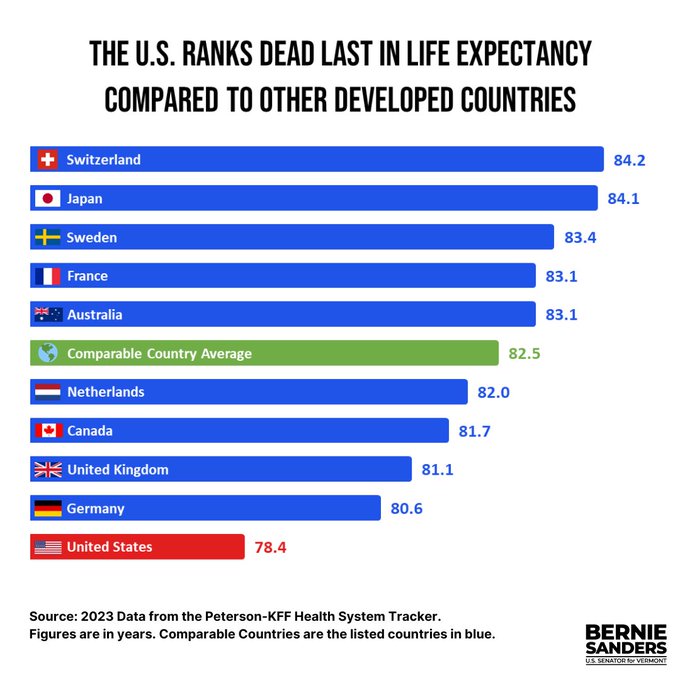
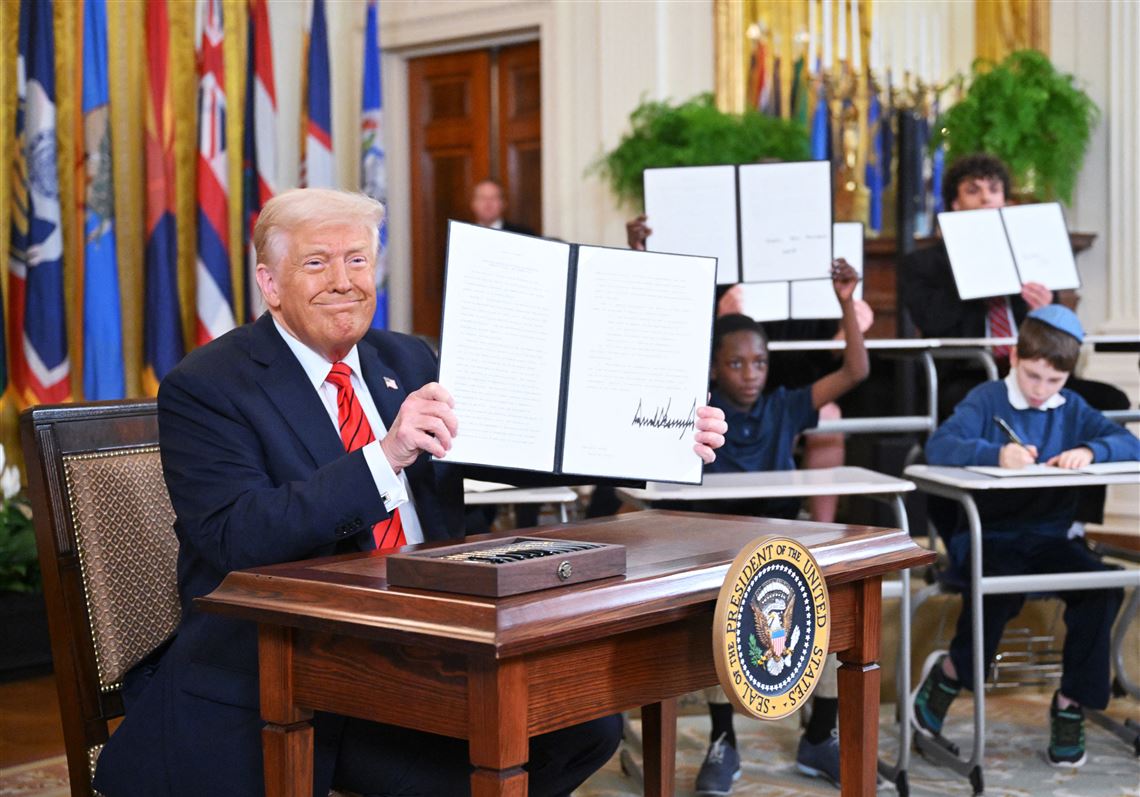




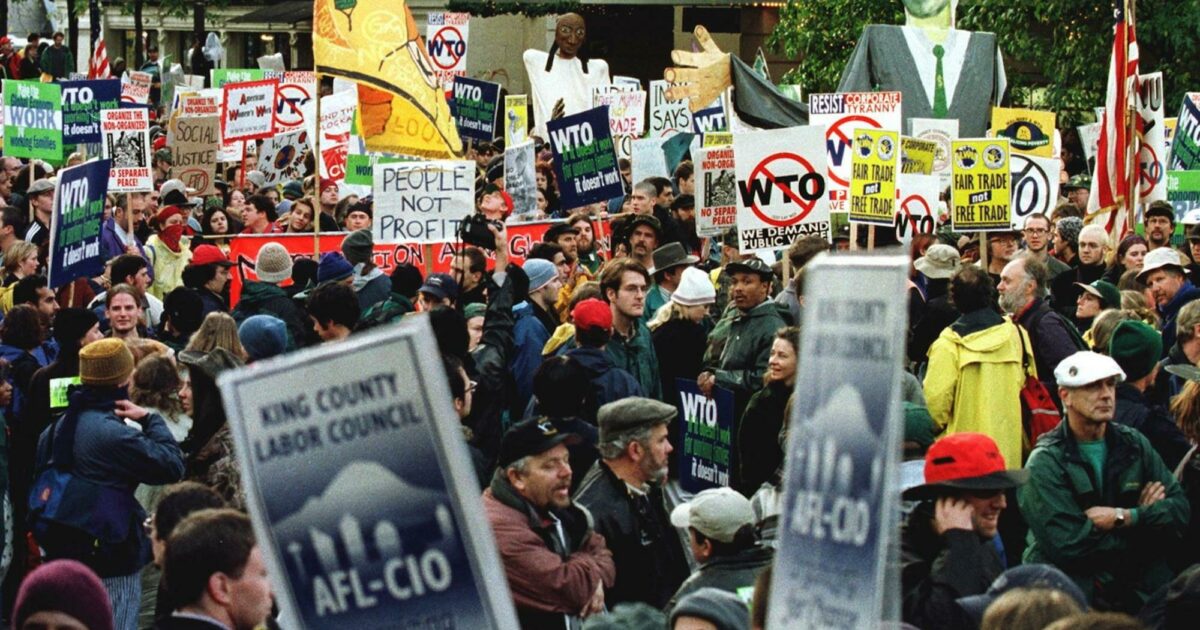


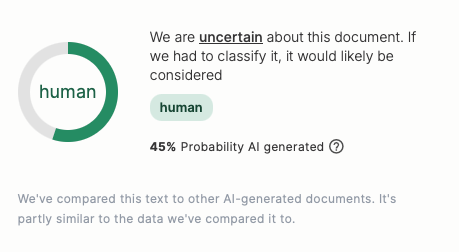
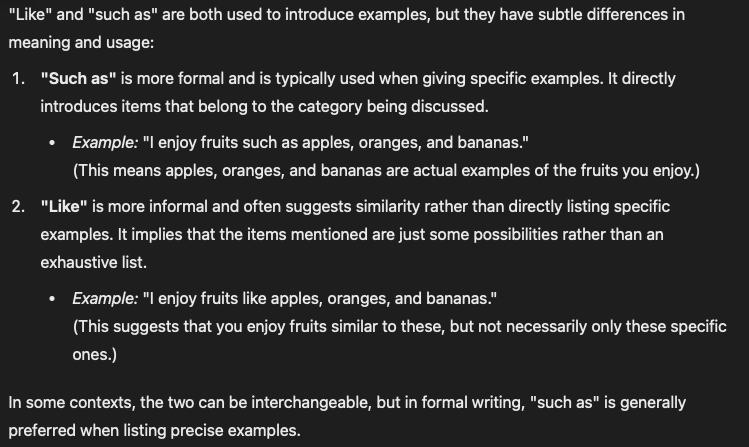


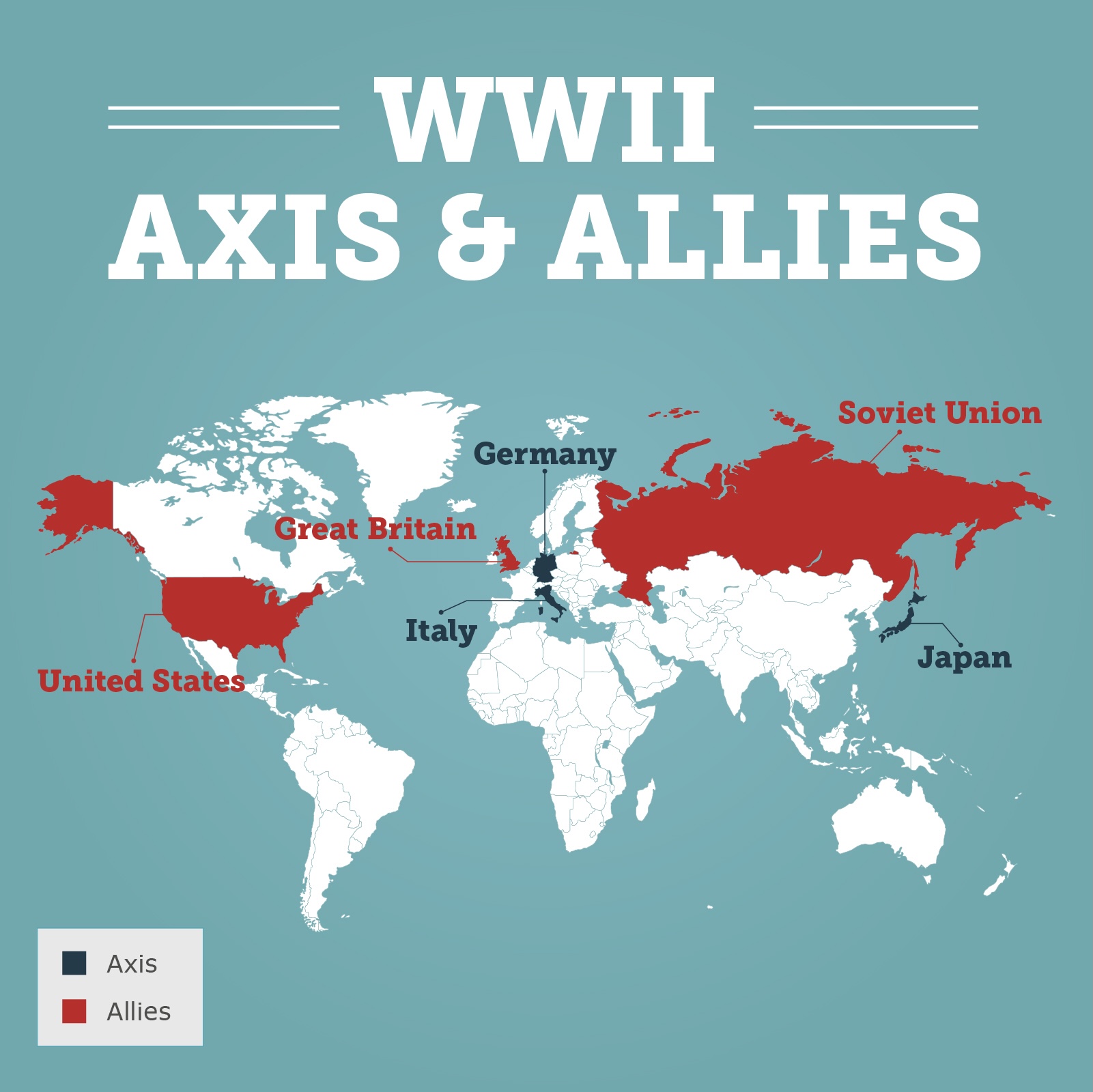



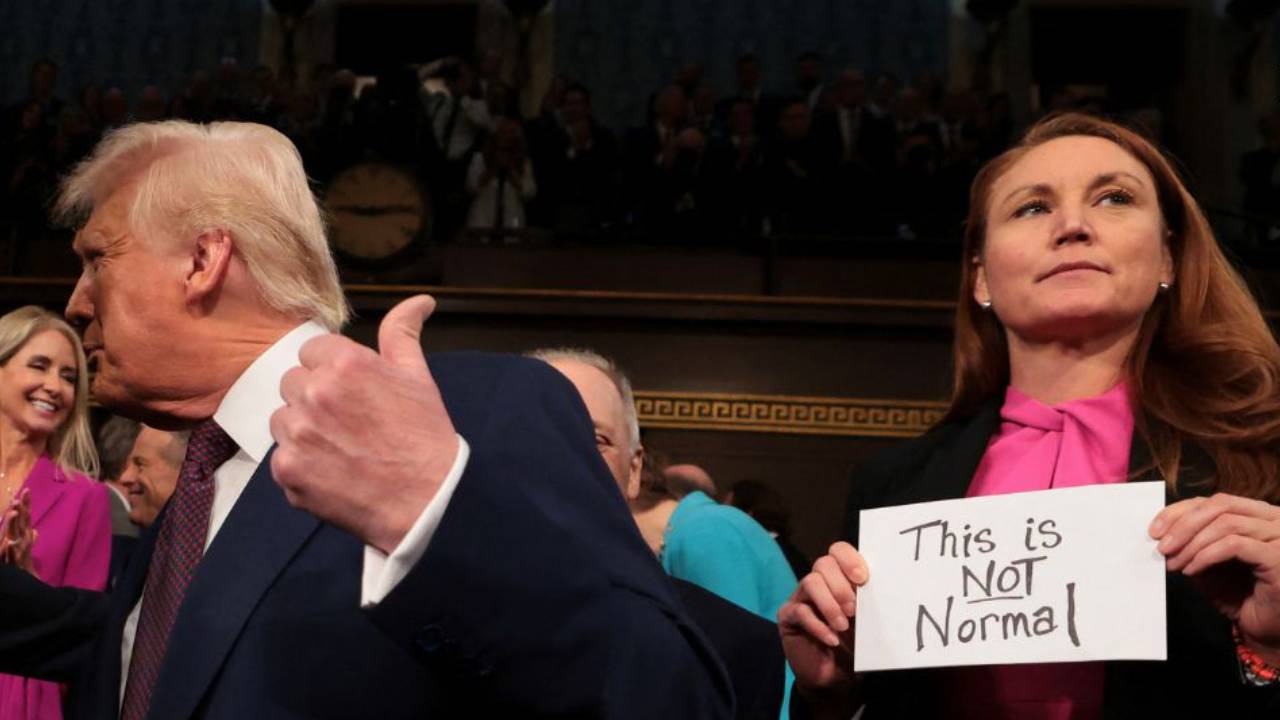
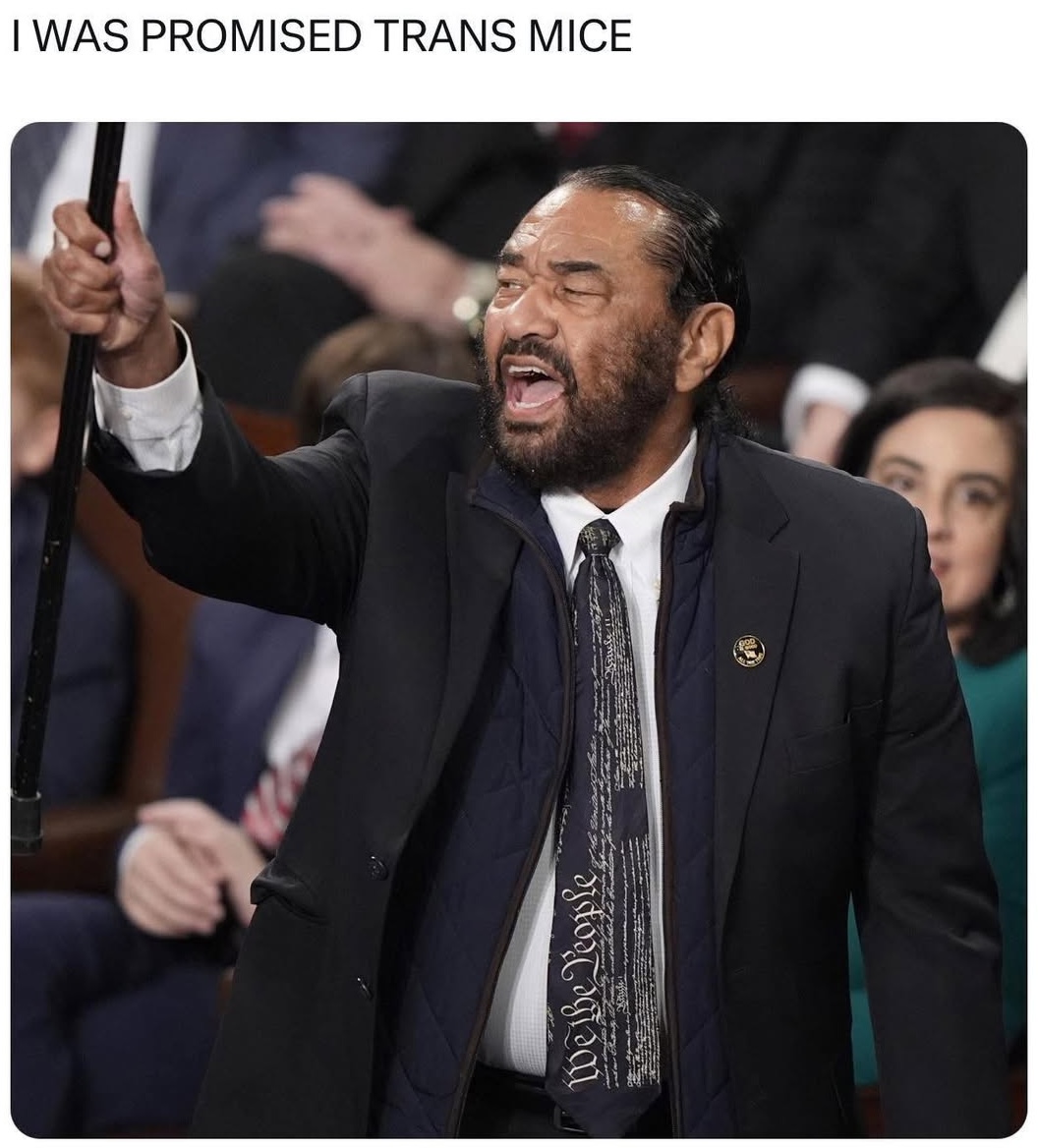
 freedom and reason