Marx the Accelerationist: Free Trade and the Radical Case for Protectionism

“To sum up, what is free trade, what is free trade under the present condition of society? It is freedom of capital. When you have overthrown the few national barriers which still restrict the progress of capital, you will merely have given it complete freedom of action. So long as you let the relation of wage labor to capital exist, it does not matter how favorable the conditions under which the exchange of commodities takes place, there will always be a class which will exploit and a class which will be exploited. It is really difficult to understand the claim of the free-traders who imagine that the more advantageous application of capital will abolish the antagonism between industrial capitalists and wage workers. On the contrary, the only result will be that the antagonism of these two classes will stand out still more clearly.” –Karl Marx, “On the Question of Free Trade” (1848)

I’ve come down on the side of protectionism. No news here. Many of my Marxist colleagues disagree. Some of the disagreement is kneejerk reaction to Trump. As with progressives, Trump derangement syndrome is rampant on the socialist left (see the CPUSA and the possible end of May Day). But some of it is accelerationist desire to hasten capitalism’s demise, which rightwing libertarians would do well to note; Marxists are right about free trade: it is destructive to capitalism.

Marxists don’t oppose protectionism because tariffs hurt working people—on the contrary: they oppose protectionism because it protects the worker’s standard of living. National capitalism forestalls the eventuality they desire, namely the socialist revolution and the establishment of world communism, and suffering towards that end is acceptable. The fate of workers is thus sacrificed on the altar of political ambition.
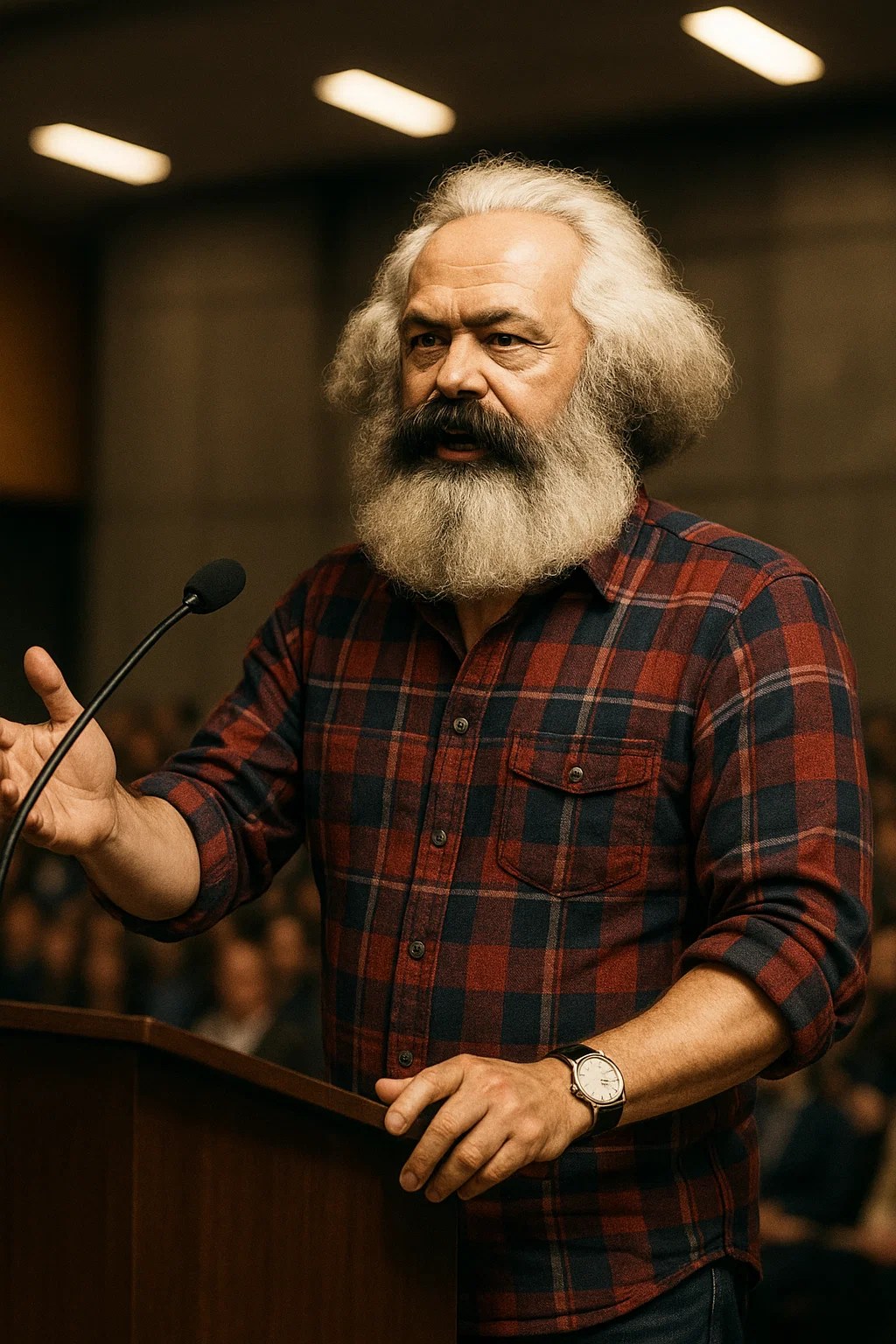
AI generated image (ChatGPT)

What did Karl Marx have to say about the matter of free trade and protectionism? Fortunately, we need not hunt through the corpus of his work for clues about his views. In 1848, before the Democratic Association of Brussels, Marx delivered a speech in which he makes his position on the protection versus free trade debate explicit. He comes down on the side of free trade. That’s because protectionism is, in relative terms to be sure, better for workers. Sounds paradoxical, I know, but stay with me here.

In his speech “On the Question of Free Trade,” Marx critiques not just the policies of his day, but the deeper economic structure underpinning them. Far from a technical economic treatise (he flashes expertise here and there), Marx’s speech uses the question of tariffs and trade to expose the contradictions of a society divided by class. His core thesis: free trade does not liberate workers; rather, it liberates capital. In doing so, it accelerates the internal contradictions of capitalism and hastens the conditions for revolutionary change.

So determined is Marx to see capitalism do itself in, he comes down on the side of free trade—not because he believes it helps the worker, but precisely because it makes the worker’s condition worse. “In general, the protective system of our day is conservative, while the free trade system is destructive,” Marx argues. “It breaks up old nationalities and pushes the antagonism of the proletariat and the bourgeoisie to the extreme point. In a word, the free trade system hastens the social revolution. It is in this revolutionary sense alone, gentlemen, that I vote in favor of free trade.” I confess I do not share his commitment to this end. Not at the suffering of fellow Americans. And given George Orwell’s observations, I am not sure I agree with the end.

Today’s free trader—the globalist—also seeks a revolution, but not a proletarian one. Communism is not the end sought in the ambitions of the global elite. Rather, it’s a top-down revolution, one that aspires to a post-labor economy governed by technocrats and the oligarchy they serve. The capitalist mode of production is reaching a terminal point: the elimination of necessary labor via artificial intelligence and robotics. But rather than allow this to necessitate a communist reorganization of distribution based on need, the global elite aims to preserve its privilege by overseeing a neo-feudalist world order, in which a shrinking laboring class is rendered permanently dependent and expendable, managed by a new aristocracy.

Thus, those of us for whom workers are the choice of comrades, and who care about their wellbeing, must advocate for the system that is in their best interests—even if it is one of the two types of capitalism Marx critiques. Protectionism is lesser of two evils in this regard.

While Marx rejects protectionism for its failure to bring about revolution, he openly acknowledges that it is better for workers than free trade. Realizing the implications of his argument, Marx hastens to deny that he is defending tariffs. “Do not imagine, gentlemen,” he says, “that in criticizing freedom of trade we have the least intention of defending the system of protection.” Yet, he admits that the “protectionist system” is “a means of establishing large-scale industry in any given country,” which liberates man from backwardness. This is an important concession: protectionism enables the bourgeoisie to challenge the aristocracy and modernize—conflicts and outcomes that advance the material position of workers under capitalism, while limiting the reach of capitalism globally.

Marx tells his audience that economic “freedom” is never neutral. Free trade, in practice, means the freedom of capital to move unimpeded in search of profit, not the freedom of labor to live decently. “It is freedom of capital,” Marx declares. “So long as you let the relation of wage labor to capital exist,” he argues, “there will always be a class which will exploit and a class which will be exploited.” True, but under the regime of free trade, their exploitation will be much greater. 

For Marx, removing trade barriers removes an illusion. “Let us assume for a moment,” he posits, “that all the accidental circumstances which today the worker may take to be the cause of his miserable condition have entirely vanished, and you will have removed so many curtains that hide from his eyes his true enemy.” Free trade exposes capitalism for what it is—a system of class domination. But it does nothing to mitigate the suffering of the working class. Marx admits that free trade intensifies the misery of the worker. It also moreover subordinates capital. Freeing capital from national boundaries “will make [the worker] no less a slave than capital trammeled by customs duties.” Better capitalism is subordinate to nations than to be free of them. 

Free trade does not liberate the worker; it simply accelerates the process by which labor is immiserated, and capital is accumulated, concentrated, and consolidated. As Marx puts it bluntly: “Gentlemen! Do not allow yourselves to be deluded by the abstract word freedom. Whose freedom? It is not the freedom of one individual in relation to another, but the freedom of capital to crush the worker.” Do Marxists really want to the see the worker crushed for the sake of a pipe dream? Worse—for something that may cast them into a lower level of Hell? It’s not as the world communists created was better than the world capitalists made. 

For Marx, liberal claims that free trade allows each country to specialize in its “natural” production role are disingenuous. This is a critique of the comparative advantage argument free traders have used for centuries Marx is equally contemptuous of the idea that free trade fosters global solidarity. “The brotherhood which free trade would establish between the nations of the Earth would hardly be more fraternal,” Marx writes. “To call cosmopolitan exploitation universal brotherhood is an idea that could only be engendered in the brain of the bourgeoisie.” Free trade globalizes class antagonisms—it does not abolish them. “All the destructive phenomena which unlimited competition gives rise to within one country,” Marx notes, “are reproduced in more gigantic proportions on the world market.”

Marx also dismantles the claim that cheap goods benefit workers: “You say, ‘Here is a law which raises wages by lowering the price of the things necessary for life.’ Yet the cheapness of commodities is but a momentary palliative, not a cure.” Far from a cure. “When less expense is required to set in motion the machine which produces commodities … labor, which is a commodity too, will also fall in price … and this commodity, labor, will fall far lower in proportion than the other commodities.” This illusion, he argues, leads to a cruel outcome: “The working class will have maintained itself as a class after enduring any amount of misery and misfortune, and after leaving many corpses upon the industrial battlefield.” 

If wheat prices and wages are both high, Marx explains, workers can save a little on bread and use those savings to enjoy other goods. But when bread becomes very cheap, and wages drop as a result, there’s hardly any room left for savings to spend on other things. When it costs less to operate the machinery that produces goods, the cost of maintaining the worker—the human component of that machinery—also decreases. Since all goods are cheaper, and labor is considered a good, too, the value of labor drops, and it tends to fall even more sharply than the prices of other goods. Free trade is a race to the bottom. 

Marx warns that economists will respond by acknowledging that competition among workers, which doesn’t lessen under free trade, pushes down wages along with falling prices. However, the cheaper goods will lead to higher consumption, which in turn boosts production, thereby increasing the demand for labor and eventually raising wages. This reasoning boils down to the belief that free trade enhances productive capabilities. As industry expands and wealth and productive capacity grow, labor demand and wages should theoretically increase. The best scenario for workers, it’s argued, is when capital is growing. If capital stagnates, industry shrinks, and workers suffer most, losing their livelihoods even before capitalists do. 

But even when capital grows—the best case for workers—the outcome is only relatively better. The growth of capital leads to its accumulation and concentration, which brings more division of labor and reliance on machinery. This strips laborers of their specialized skills and replaces them with easily replicable tasks, increasing competition among workers.

This is basic to the capitalist dynamic. As the division of labor elaborates, a single worker can do the work of several, intensifying competition. Machines magnify this effect even further. The expansion of capital compels large-scale production, pushing out smaller producers and turning them into wage laborers. Meanwhile, as returns on capital shrink, small investors can’t live off their dividends and are also driven into the labor market, adding to the growing working class. 

As productive capital continues to rise, it increasingly produces for markets without knowing actual demand (the problem of overproduction). Supply begins to dictate demand, leading to frequent and severe consumption crises. Each crisis accelerates capital centralization and expands the proletariat. Ultimately, as capital grows, worker competition grows even faster. Labor becomes less rewarding for all and more burdensome for many.

In modern terms, this dynamic obtains: as productivity rises—often through automation, outsourcing, and rationalization of labor—real wages for workers stagnate or decline (relative to productivity) and labor is made redundant. Policymakers and employers point to cheaper consumer goods as compensation, arguing that workers are better off because they can buy more with less. They tell the worker that tariffs bring higher prices that workers cannot afford. But this masks the fact that the share of value created by workers increasingly flows to capital, not labor.

Marx’s insight remains salient: cheap commodities are not a gift to the worker—they are a mechanism through which capital justifies the degradation of labor’s share in the economy. The availability of inexpensive goods is used ideologically to mask the deeper economic injury done to workers through wage suppression.

Marx is unwavering in his belief that protectionism is insufficient for advancing the proletarian struggle. “One may declare oneself an enemy of the constitutional regime without declaring oneself a friend of the ancient regime.” For Marx, both free trade and protectionism serve capital in different ways. But for those of us who do not seek revolution, who do not believe communism lies ahead, who do not wish to accept the immiseration of workers for the sake of an uncertain future, or do not seek this future, Marx’s argument flips in protectionism’s favor.

Marx makes it clear that the destructive nature of free trade is its chief appeal to revolutionaries. This is a crucial moment in the speech: “It breaks up old nationalities,” he declares. It “pushes the antagonism of the proletariat and the bourgeoisie to the extreme point.” But what if man does not want to dissolve nationalities, to break the bonds of culture, tradition, and sovereignty? What if he wishes to preserve the nation-state, the rule of law, and democratic control over society? The things he and his comrades cherish dissolve under globalization. 

And what if he does not desire to see poor nations suffer for the sake of globalism? Then he understands what the globalists pretend they do not. “If the free-traders cannot understand how one nation can grow rich at the expense of another, we need not wonder,” Marx observes, “since these same gentlemen also refuse to understand how within one country one class can enrich itself at the expense of another.” Why would workers wish to see class antagonisms projected upon the planet? And to the extent that has already, why would he want to see them entrenched—at his expense, no less. 

For Marx, the intensification of contradiction is the goal. For the patriot, it’s a danger. The collapse of domestic manufacturing, the offshoring of production, the destruction of rural economies, and the rise of post-national capital—all of this has indeed hastened inequality and alienation; but it has not, as Marx hoped, led to a worker-led revolution. It has led instead to cultural decay, political instability, and oligarchic control. All the immunities and privileges Americans claim as their birthright—free speech, religious liberty, privacy, and the vote—will be wiped away with the end of the modern nation-state. 

All those insisting that Marx was for free trade, does that mean that those on left should be, too? Are we taking marching orders from a dead man? Why not acknowledge his insight instead? Marx’s text makes clear that if revolution is not your goal, if you are uncertain that humanity will transcend capitalist relation, or worried about what barbarism awaits, free trade is not your friend. Transnationalism and multiculturalism are not your politics. For those committed to the welfare of workers, the preservation of community, and the defense of democratic self-government, protectionism becomes the only defensible position—not because it abolishes class conflict, but because it slows capital’s most destructive tendencies and gives nations room to defend a way of live, protect labor, and uphold sovereignty.

Marx understood the power of capitalism to transform the world, but he underestimated its capacity to survive by managing, rather than resolving, its crises—financialization, globe-trotting, etc. He was right about where free trade take us. He was wrong about embracing the outcome. And so, in the absence of worker revolution, or in the face of a fate worse than now, we must choose the form of capitalism that does the least harm and offers the most hope for the dignity and security of the working class. That is not the free trade regime of the transnational elite; it’s the protection of national economies and the defense of domestic industry, and especially the men and women who produce value with their labor, who uphold the community, who protect their families.

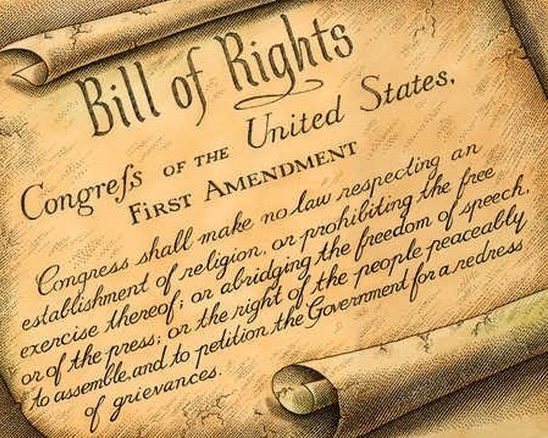
For those who still desire life under communism, the accelerationist stance articulated by Marx’s speech presumes communism inevitably follows the demise of capitalism. But in other writings, he does not make this presumption. While Marx often spoke of capitalism’s downfall and the rise of communism, he did not believe this outcome was historically inevitable. The materialists conception of history is not teleological; it identifies tendencies and contradictions within capitalism—such as crises of overproduction and the intensification of class struggle—that could lead to revolutionary change. Only through conscious political action by the working class could a better world be made. What would better empower the worker? A one world government beyond the reach of eight billion? Or a democratic republic with universal suffrage and a First and Second Amendment?

Marx rejected utopianism and eschatology, insisting that the future is not predetermined but shaped by material conditions and human agency. A charitable reading of his support for free trade is that it is not grounded in faith in progress, but rather in a strategic acceleration of contradictions that might expose capitalism’s exploitative core. Communism, for Marx, was a possibility—not a prophecy. But that’s risky. And nowhere in sight. Moreover, we should ask ourselves whether that is the world we want—or whatever else comes instead. Whether you fear communism or barbarism, free trade will take us to one or the other or something unimaginable. We must therefore oppose it. 

“Thus, of two things,” Marx warns: “either we must reject all political economy based on the assumption of free trade, or we must admit that under this free trade the whole severity of the economic laws will fall upon the workers.” For Marx the accelerationist, he hopes we admit to the latter. I reject political economy based on free trade. To be sure, the world has become substantially globalized. But we cannot stop the advance of transnationalization, or reverse its effects, until we understand the intent and the machinations of its operatives and oppose them.

It therefore becomes incumbent upon those who find wisdom in Marxian thought to align with the populist-nationalists who include the fortunes of workers in their political economic schemes. The choice is between capitalism and neofeudalism. Simply put, will we have liberty or slavery? 

AI generated image (ChatGPT)

Before leaving this essay, I need to explain in more depth Marx’s critique of political economy and its relationship to Alexander Hamilton’s vision of the American System. It is Hamilton’s American System that provides the left with the radical case for protectionism. By left, I mean here liberals and democrats who stand with the working class and rural communities over against the New Left (anti-Enlightenment proponents of identity politics) that serves the interests of the transnational corporate class.

I have written about this before, but rather than send you other essays, I will explain it here. Marx’s critique of capitalism centers on an internal contradiction that drives both its dynamism and its eventual crisis. Capitalism, in Marx’s view, is based on the extraction of surplus value from labor (wage and slave). As the father of liberalism John Locke understood, labor is the source of value in production, and capitalist profit arises from the difference between what workers are paid (variable capital) and the total value they produce. Surplus value is realized as profit when goods are sold in the market.

However, in seeking to maximize profit, the capitalist is driven to maximize surplus value by minimizing labor costs—either by suppressing wages or replacing labor with machinery (increasing the organic composition of capital). While this raises the rate of surplus value, it undermines the capacity of workers to consume the very goods they produce. This creates a contradiction: surplus value is generated in production that cannot be fully realized in circulation due to insufficient demand (overproduction). This tension contributes to capitalism’s systemic instability (boom and bust and its long waves) and, ultimately, its tendency toward crisis.

This contradiction is manifest in and confirms Marx’s formulation of the falling rate of profit amid the increasing rate of exploitation. As capitalists substitute machinery for labor, the amount of surplus value generated per unit of capital invested begins to fall, since only labor creates new value. At the same time, the exploitation of labor intensifies. The rate of exploitation—measured as the ratio of surplus value to variable capital (s/v)—rises, but so does the inability of the market to absorb the output of increasingly productive but poorly paid labor.

Though Alexander Hamilton did not share Marx’s analytic framework or revolutionary aims (Marx was not yet born), he anticipates it. Hamilton recognizes elements of this contradiction in his efforts to craft an economic strategy for the young American republic. In his 1791 Report on the Subject of Manufactures, Hamilton argues for a strong industrial base supported by tariffs, subsidies, and public investment. His objective was not only national independence but also economic stability through the balanced development of manufacturing alongside agriculture. Hamilton understood that, left unchecked, capitalists would import cheap goods from other industrialized and industrializing nations, undermining domestic production and driving down wages. To Hamilton, a purely laissez-faire system would erode the productive capacity of the nation and leave it dependent on foreign powers. Thus Hamilton was an early theorists of dependency theory.

Hamilton’s vision prefigures the problem that Marx would later formalize: the unchecked pursuit of profit can destabilize the very conditions of profitable production. Unlike Marx, Hamilton sought to resolve this contradiction not by abolishing capitalism, but by guiding it through protective and strategic policy. He believed that the state had a critical role to play in sustaining a productive domestic economy in which wage laborers could remain both producers and consumers.

Central to Hamilton’s plan was the idea of productivity. He viewed national strength as closely tied to improvements in productive efficiency. However, he did not account for the distributional consequences of that productivity in exactly the way Marx did. For Marx, productivity gains under capitalism do not benefit workers proportionally. They serve to increase the surplus appropriated by capital while wages remain stagnant or decline. Thus, productivity without redistribution intensifies exploitation. The capitalist benefits from an expanding rate of surplus value, but the system becomes increasingly unable to realize profits through market exchange due to weak demand. This is a problem that governments have been left to overcome.

This theoretical insight remains highly relevant in the age of globalization and can be tracked empirically through tools such as the Annual Survey of Manufactures (ASM) conducted by the US Census Bureau. The ASM collects data on employment, wages, capital expenditures, and value added—data that can be used to analyze contemporary forms of Marx’s exploitation metric. By comparing total wages (variable capital) with profits and other forms of gross operating surplus, one can observe whether productivity gains are translating into improved conditions for labor or merely higher returns to capital.

In the decades following the mid-twentieth century, US manufacturing productivity rose sharply while real wages stagnated. At the same time, firms increasingly offshored production or imported goods produced with cheap foreign labor, much as Hamilton had feared. This is the result of free trade for all the reasons Marx explains in his speech. This trend not only weakens domestic labor but also hollows out the consumer base necessary to sustain aggregate demand. Here, the contradiction becomes evident: firms achieve higher surplus value through cost-cutting, but face diminished capacity to realize that value in the market because of suppressed wages and deindustrialization.

Hamilton’s advocacy for protectionism can be seen, then, as an attempt to moderate this contradiction within a national framework. He sought to create a self-reinforcing loop between domestic production, decent wages, and national consumption. Globalization, in contrast, bypasses this loop, facilitating what Marx saw as an acceleration of capitalism’s internal crisis. When production is outsourced and wages are driven down domestically, the conditions for stable consumption—and thus for the realization of surplus value—are undermined. Global labor arbitrage functions as a modern form of wage suppression and labor displacement, replicating the contradiction on a global scale.

As we have seen, Marx welcomes this development—not because it was just, but because it hastens capitalism’s internal unraveling. In his support for free trade, Marx argues that globalization exposes and intensifies capitalism’s contradictions by eroding national boundaries and deepening class antagonism. In his words, free trade “breaks up old nationalities and pushes the antagonism of the proletariat and bourgeoisie to the extreme point.” Where Hamilton sought to contain and manage capitalism’s contradictions within the nation-state, Marx hopes to see them drive revolutionary change on a global scale. This can only be obtained by releasing the beast from its protectionist chains.

As quoted above, Marx tells his audience: “In a word, the free trade system hastens the social revolution. It is in this revolutionary sense alone, gentlemen, that I vote in favor of free trade.” Because the free trade system is bad for workers, I vote in favor of protectionism. I stand with Hamilton on this issue. Reflecting on this, Marx’s argument causes me to reconsider whether the proletariat is Marx’s real choice of comrades, or whether his vision of a communist future is to be sought at the risk of barbarism.

Over the Target: Progressives Lose Their Shit over an Irreligious Trump Meme

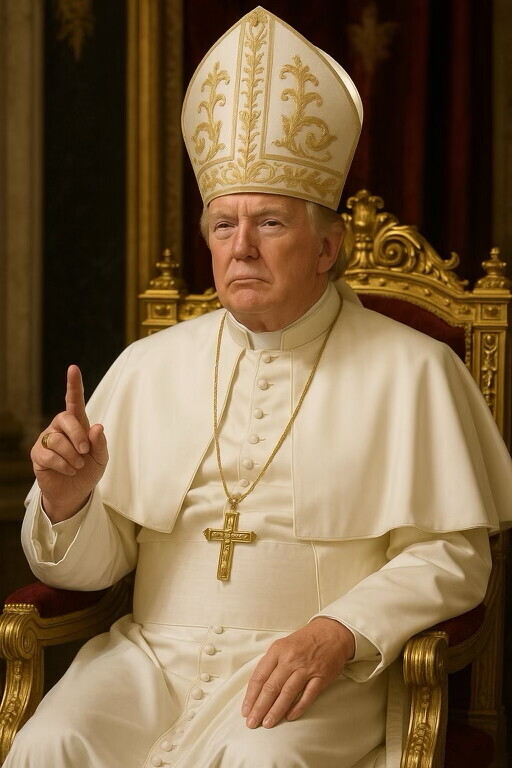
I don’t know whether this was another 4D chess move on his part, but Trump sharing an AI-generated picture depicting him as Pope—not doing anything perverted or provocative, just sitting there, decked out in gold—thus sparking the next hysteria among Democrats and progressives on social media (still ongoing as I write this), puts in stark relief the reaction of Democrats and progressives to the opening ceremony at the 2025 Summer Olympics in Paris mocking Di Vinci’s “The Last Supper.” There, the performers did mock Christianity, indeed, they mocked Jesus himself, turning the eve of the crucifixion into a pagan bacchanal. None other than the Greek god of ecstasy and transgression himself, Dionysus, made the grand entrance. He was the main course. Replete with drag queens, trans women, and symbolic cannibalism, it was truly French.

From the opening ceremony at the 2024 Summer Olympics in France, the birthplace of postmodernist nihilism and transgression

When Christians complained, not so much about the lame attempt at irreligious comedy (the production was inane) but rather the way their religion was being subverted to advance what they see as sexual perversion in the service of a transgressive agenda (and they’re not wrong), they were first told that what they thought they saw they hadn’t. The mouth breathers didn’t get it, progressives ridiculed. Then when it became clear that observers saw what they saw, they were told it was no big deal—that they were bigots.

Democrats and progressives did the same thing when Michigan governor Gretchen Whitmer (the figure of the priest) mocked the Eucharist ceremony by feeding a podcaster (the congregant) a Dorito (the hosts or communion wafer). Nothing to see here. No big deal. Trump shares an AI image of Trump as Pope and the left loses their fucking minds.

Michigan governor Gretchen Whitmer mocking the Eucharist

It’s typical of the progressive style to deny something is what it is and, when they can no longer deny that, tell the offended that it’s no big deal and that the hobbits are overreacting. Such pompous posturing is an expression of the elitist mentally that infects the progressive mind. It’s the same mentality that infantilizes them when Trump shares a meme.

As for the Olympics—an event that let male athletes punch women in the face for the sake of social justice—all I heard from the left was that Christians are silly and reactionary for letting such a thing trigger them. But, again, Christians understood that the performance was not disconnected from the project to undermine the family and sexualize children. You don’t have to be a Christian to care about that.

Trump shares this AI-generated image on TruthSocial

The meme is humorous (and showcases how far artificial intelligence has come). The reaction of the left to the meme in the context of the ongoing mass hysteria over his presidency? Not at all. It embodies the progressive spirit—knee-jerk and cynical.

Moreover, the reaction comes with peril. This is a man who had two assassination attempts on his life, one that resulted to a bullet wound to his head and the murder of two members of the audience, because of over-the-top political rhetoric. Comparing the man to Hitler and warning that, if somebody doesn’t stop him we’ll live in a fascist society—literally the plot of Stephen King’s Dead Zone—was an invitation to members of the public to sign up for special duty in the fight to save democracy. Now add religious passions to the mix.

People certainly have the right to say that the meme is blasphemous and sacrilegious, just as Trump has the right to engage in irreligious comedy—even irreligious criticism, for that matter. But danger lurks in the first. Remember when Muslims said Charlie Hebdo’s cartoons mocking their prophet Muhammad were sacrilegious and deadly riots broke out across the Muslim world and cartoonists were assassinated by Islamic extremists? The zealots couldn’t take a joke. Their zealotry inspired violence.

The cartoons, published in the Danish newspaper Jyllands-Posten a decade earlier, didn’t cause the violence. The reaction to the cartoons did. What did progressives do then? They weren’t exactly out in the streets condemning Islam and the consequences of its backwards aniconism. What are progressives doing today? The same thing the Muslims did over the cartoons—taking a ride on the Outrage Express. Yet another manufactured moral panic to call the President into disrepute. (Have progressives ever condemned the antisemitic cartoons one easily finds across the Muslim world?)

If these people could only find a sense of humor—which, fully developed, would involve taking jokes they perceive to be at their own expense—then the world would be a much more civil place. But, deep down, the hysteria on X is not about lacking a sense of humor (although progressives are certainly lacking in this area). It’s about construction a new panic to add to the continual stream of daily and weekly moral panics. Trump simply pushed the button that makes the monkeys fly. He did this intentionally, to be sure (and also because a lot of conservatives wish he were Pope, or somebody of his character were, e.g., Steve Bannon, who is a Catholic), but it’s on progressives that they took flight. They’re so predictable.

Debating Monty Python’s Life of Brian

Remember when Monty Python’s Life of Brian was called sacrilegious by members of the British clergy? Was the public supposed to say nothing critical about the zealotry? Worse, were they expected to side with the clergy who were indicting the comedy as blasphemous and sacrilegious? Or were we obligated to defend Monty Python’s brilliant comedy, not merely because of its brilliance (it is their best work), but because religious zealotry needed checking?

Irreligious comedy, like irreligious criticism more generally, is a necessary exercise in checking religion, which when too big for its britches determines our lives, which means our lives are much less self-determined. Lots of things must be kept in their place. Religion is arguably the paradigm.

Those who have little love for Catholicism took up the cause of Catholics who they supposed would—i.e., wanted to—be upset. The incessant posting chastises Christians for not condemning Trump’s blasphemy. “Aren’t you going to say something? What’s wrong with you? You’d say something if it were the other way around!” Ah yes, projection. The opening ceremony at the Paris Olympics wasn’t blasphemous?

Look, I’m not religious. During the controversy over the Paris Olympics, I posted this on this platform: “Mocking religion is fine. Free speech and all. We’re free to do that. I’m an atheist who has mocked religion many times. I have penned many essays on Freedom and Reason defending the ridiculing of religion.” This was in a context of a comprehensive analysis of the opening ceremony, titled “La Cène sur la scène sur la Seine” (translation: “The Last Supper on a scene on the Seine”) by its organizers. I didn’t condemn the Paris Olympics because they mocked God. Moreover, Trump isn’t mocking God. The image is aspirational.

Progressive hypocrisy is off the chart on this one. To note that left-wing criticism and mockery of Catholicism are robust undersells the profound anti-Christian sentiments on that side. It’s not as if the church isn’t in for some criticism, or that progressives don’t ever identify the things that need criticizing. Progressives view the Catholic Church as a conservative institution that upholds patriarchal structures and resists modern social reforms. They challenge the Church’s historical role in colonialism, its handling of sexual abuse scandals, and its influence on public policy, particularly in areas where Church doctrine shapes laws affecting reproductive rights and the queer people. There’s some stuff in here, for sure. (Yet they are at best silent on the prejudices and oppressions of Islamic doctrine and practice).

While some on the left support religious freedom (the support is highly selective), they argue, correctly (albeit not in good faith), that religious institutions, including the Catholic Church, should not impose doctrinal beliefs on secular governance or public life. So what explains the sudden allyship with the Catholic Church? I really don’t need to answer that questions, do I? We see this for what it is, don’t we?

The Barbarism of Belief: How Postmodernism Undermines Knowledge, Corrupts Medicine, and Denies Human Rights

Beliefs about the world are not coextensive with knowledge about the world. Indeed, sometimes beliefs are in opposition to knowledge. Knowledge is verified belief. Beliefs can encompass fictions. Knowledge seeks the truth. To be sure, it is provisional, because we must be open to new facts. But there are some matters that are settled.

Gender is an obvious example. Gender in mammals is binary and immutable, meaning that there are only two genders, and one gender cannot change into the other. Sexual dimorphism is thus characteristic of species of this class of animal (and, for the most part, other classes as well). Dimorphism means differences representing two distinct forms—in this case, female and male.

There are many such binaries in the world. One that is the subject of conversation on social media lately is parent and non-parent. A parent in biology is an individual who contributes genetically to the formation of a new organism, typically through egg or sperm. Necessary to the perpetuation of the species are parents and offspring. Opposite the parent is what one might call a non-biological parent, adoptive parent, stepparent, or foster parent. This is the person who assumes the social role of parent. Mammals assuming the social role of parent occurs across many species, but it does not make them parents in the scientific sense.

Keeping this distinction in mind is important, since, while non-parents can and often do assume the social and emotional role of a parent—particularly in cases where the biological parent is absent or poses harm—it remains important to distinguish between biological and non-biological parenthood for several critical reasons, including medical considerations. A child’s biological parentage can have significant implications for understanding genetic disorders, hereditary health risks, and predispositions that may affect diagnosis and treatment. Accurate family medical history can be vital in emergency situations, informing decisions about medications, procedures, and preventative care. Therefore, while social bonds and caregiving roles are central to a child’s well-being, maintaining clarity around biological relationships remains essential for ensuring comprehensive and informed medical care. We must therefore preserve knowledge.

The reason why this is being discussed on social media is because Deborah Frances-White, a British-Australian comedian best known for hosting The Guilty Feminist podcast, promoting her new book Six Conversations We’re Scared to Have, used parentage as an analogy on a recent episode of the podcast Triggernometry for why transwomen are women—that is, men who assume the role of women should be regarded as women. Some believe that men can become women by saying they. However, this belief is contradicted by knowledge. The definition of man is “an adult male human.” His gender is determined by gametes, karyotype, and reproductive anatomy, which, as noted above, is unchangeable in our species.

In many ways, this belief—and even the man who assumes the role of a woman—is unproblematic in the sense that belief, expression, and behavior may not harm anyone. I personally don’t care how a person dresses or even thinks of themselves. Why would I? I’m as libertarian. However, in other ways, actions and policies based on belief and practice are harmful. And while government cannot reach opinion, it can reach action. I am here paraphrasing President Thomas Jefferson in his 1802 letter to the Danbury Baptists of Connecticut “that the legitimate powers of government reach actions only, and not opinions.” This is the intent of the First Amendment, which I hold in great reverence.

If belief substitutes for knowledge in medicine and science, then it corrupts truth. If the belief is used to justify the dismantling of women’s rights, such as the right to gender-exclusive activities, opportunities, and spaces, it is harmful to girls and women—and to valid practices of gender segregation more generally (there is a reason that society is gender-segregated in particular ways: to achieve more fully the principle of equality through equity. If the justification for men entering women’s bathrooms is based on the belief that “transwomen are women,” then the belief becomes a harmful one, just as the belief that girls should undergo female circumcision—i.e., female genital mutilation—is harmful to girls, as a practice of male domination and the diminishment or removal of sexual pleasure and other functions.

AI generated image

As I watched the discussion unfold, I became increasingly frustrated by co-host Konstantin Kisin (co-host Francis Foster remained mostly silent during this part of the discussion). Why isn’t Kisin making the obvious rebuttals? I thought to myself. And why isn’t he identifying the postmodernist assumptions that underpin her arguments? She is denying that gender is binary because some indigenous peoples don’t work from the gender binary. Why would anybody accept an indigenous people as an authority on science? This is the nonsense of postcolonial studies. Instead Kisin implied that genocide of indigenous peoples was made possible by the technological superiority of the West, thus putting himself in a defensive position with an entirely unnecessary observation.

An obvious rebuttal? Since female genital mutilation (FGM) is practiced in some indigenous African cultures, is it therefore okay that these same cultures, when in the UK or in the US, continue the practice here? Does the fact that they practice genital mutilation in their culture mean that the practice is acceptable anywhere? Is not FGM an expression of misogyny?

The world community has made significant efforts to halt the practice of FGM wherever it occurs, recognizing it as a serious violation of human rights and a threat to the health and well-being of girls and women. The United Nations, through agencies like UNICEF and UNFPA, has led global initiatives (such as the Joint Program on the Elimination of FGM), working closely with governments, local communities, and civil society organizations to raise awareness, enact and enforce laws, and promote education and empowerment. Many countries have passed legislation banning FGM, while grassroots campaigns have been crucial in shifting cultural norms and encouraging abandonment of the practice. The Sustainable Development Goal targets ending FGM by 2030.

Deborah Frances-White is arguing from the standpoint of cultural and moral relativism. From her standpoint, FGM should be perfectly acceptable as an indigenous cultural practice. After all, she defends puberty blockers and gender-affirming care (GAC). More than this, she is advocating for adopting indigenous belief systems, such as those that deny the gender binary. These are pre-scientific societies with unenlightened beliefs and practices. The ideas held by indigenous peoples are backwards. Why would any advanced civilization accept the beliefs and practices of barbarians? This is a pressing matter because the barbarians are no longer external to the West; they are inside the gates. Modern nation-states now have to police the culture-bearers within their own borders who still cling to these backwards beliefs and destructive behaviors (often obstinately). Kisin might have asked Frances-White about human sacrifice? Is this acceptable?

It’s useful to put the question this way because that’s what GAC is: genital mutilation. It’s barbaric. And unlike hailing from backwards cultures, it appears in the context of the modern nation-state, the result of the corrupting effects of postmodernism, a philosophical stance that denies binaries—knowledge of which Frances-White obscures by claiming that all binaries recognized in the West are a product of white Christian doctrine and not the result of scientific reason and investigation. Denying the binaries that exist in nature lies at the core of poststructuralism and postmodernism, standpoints (from which queer theory and postcolonial studies hail) that find their origins in the project to deconstruct scientific knowledge while normalizing paraphilias such as autogynephilia and pedophilia, as well as profit generation in a corporatized medical industry.

Frances-White’s defense of the use of puberty blockers could have been successfully rebutted with a straightforward analogy—albeit this is less of an analogy and more a matter of pushing the use of puberty blockers to its logical conclusion. Kisin hinted at it, but he could have explicitly posed this problem: a child who does not wish to become an adult, grow to an average height, lose her baby teeth, etc. Perhaps she does not wish her brain to mature, so she can stay childlike. The child has anxiety about the natural developmental pathway—neurological maturation, psychosocial development, and so forth.

This is not a hypothetical (which is why this is not really an analogy). There are children who have extreme anxiety about becoming adults. They fear adult responsibilities, losing their childhood, body and identity changes, existential concerns such as aging, death, or what adulthood means in a broader sense. Children with anxiety disorders and OCD often catastrophize the future or feel unequipped to handle it. For them, adulthood seems like an uncertain, dangerous, even hopeless place.

Should doctors prevent children from maturing when this desire is present? Is it cruel to “force” the child to grow up? Is it compassionate to keep such an individual in a perpetual state of childhood? This isn’t science fiction. There are ways to prevent this baked-in developmental pathway. Would failing to intervene fate the child to the “wrong developmental pathway”? Or should those around the child instead help her overcome her anxiety, knowing that once an adult, a lot of these fears will resolve themselves? How could she know what being an adult is unless she experiences it? She might discover that it’s wonderful. She likely will. (There are children who can’t wait to grow up who are disappointed with adulthood once they arrive there.)

The concept of “wrong puberty,” which doctors use puberty blockers to prevent, would suggest all of this, since puberty is a crucial part of the developmental pathway. Indeed, it’s the core of the process I am describing. Why is it okay to give a child puberty blockers but wrong to prevent her from getting taller, elaborating her brain structures, developing the psychosocial skills of adulthood? Or is it wrong? Is the medical industry fine with, instead of helping a child through these difficulties, altering her body forever with drugs and surgical interventions—sterilizing her, even making her an eternal patient? Why not? They’re stopping puberty. They’re amputating breasts and drastically altering genitalia. Why not just keep her in Peter Pan’s Neverland forever?

Medicine is about treating disease and physical and developmental anomalies. If medicine is instead—or also—about engineering eternal adolescence, building androgynous bodies, turning people into something they otherwise would not be—and then only creating a simulation of the thing sought—is it really medicine anymore? Sounds more like something out of Aldous Huxley’s Brave New World, which horrifies sane and compassionate readers.

What is medicine if it is not a healing profession but a set of practices and techniques that produces customized bodies—simulacra of originals that cannot be possessed? Postmodernists may believe the copy is the original, but knowledge tells us that it is not and cannot be. The practice of medicine based on the postmodernist model no longer addresses problems but manufactures problems to address—for shareholder value. Postmodernism is a projection of the corporate desire to make fantasy a way of life, with all the dehumanization that entails, to generate exchange value.

I know the answer to the question (I have already answered it above), but I will ask it anyway: Why did it ever occur to doctors that, instead of treating anxiety and addressing delusions, the body should instead be modified to accommodate anxiety or delusion? How did it become widely socialized that we would all be required to accept such a practice as normal and good and affirm its results? How did those of us who find something troubling about this development come to be defined not as rightly concerned observers but bigots?

How is any of this compassionate? For sure it’s profitable. In 2022, in the US alone, gender reassignment surgery market was valued at over 2 billion dollars. This figure is projected to grow at a compound annual growth rate (CAGR) of 11.25 percent, reaching an estimated 5 billion dollars by 2030. The gender reassignment hormone therapy market was valued at around 1.6 billion dollars in 2023. It is anticipated to experience a CAGR of 5.3 percent from 2024 to 2032, driven by increasing acceptance and demand. But it’s not compassionate. It’s cruel and dehumanizing. This is the barbarism of belief.

Lawfare Against the People Continues. When is Congress Going to Act?

Listening to Democrats and legacy media (and the bot swarm on social media) over the last several weeks, I’ve been told that Donald Trump is changing America to fit his vision. He is, according to yet another rogue judge, attacking law firms he “doesn’t like.” US District Judge Beryl Howell (DC) just issued a permanent injunction barring the enforcement of any part of Trump’s order targeting the law firm Perkins Coie on the grounds that it constituted “an unprecedented attack” on the US judicial system. Such actions make Trump an authoritarian, and his presidency a cult of personality.

 Beryl Howell, senior district judge of the US District Court for the District of Columbia

They never say that Trump is changing America to fit the vision of tens of millions of Americans who voted for him (rhetorical question: does the popular will mean anything?)—who moreover stand on the shoulders of the hundreds of millions of Americans who came before them who wanted an America based on this vision. They don’t admit that, after a coordinated judicial effort—an unprecedented instance of lawfare against the leader of a broad and diverse social movement—to throw a former president in prison for his natural life and that it was the electorate who reelected him to a second term as President.

In many ways, what Trump is doing, as Abraham Lincoln before him, is restoring the founding vision of America, embodied in our Constitution and its Bill of Rights. What is that vision? Limited government rooted in democratic-republicanism and classical (deontological) liberal principles.  

Abraham Lincoln first appeared as a presidential candidate in 1860. He was nominated by the Republican Party and went on to win the election and become the sixteenth President of the United States. His campaign focused heavily on halting the expansion of slavery into new territories. After Democrats, representing the slavocracy, attacked the Union, Lincoln and Republicans went to war with Democrats. Lincoln suspended the writ of habeas corpus to deal with Confederate sympathizers and threats to the Union. Lincoln signed legislation that expropriated the property of slave owners. 

Lincoln is not the only president to suspend habeas corpus. Ulysses S. Grant, a Union general in the Civil War, suspended the writ of habeas corpus to suppress violence in South Carolina, allowing federal troops to arrest Democrats engaged in terrorism without judicial review. Moreover, Grant continued and expanded on expropriatory policies initiated under Lincoln after the war. He used federal power to suppress Democrat resistance and protect the rights of formerly enslaved people, which necessitated arrests, military intervention, and property seizures.

Can you hear Southern Democrats, representing the slavocracy, saying that Lincoln wanted to change Americas to fit his vision? Can you hear them saying that this made him an authoritarian and his presidency a cult of personality? I can. Of course I can. So can you. Democrats didn’t say that Lincoln and Grant were representing the will of the people who wanted to see an end of slavery and the enlargement and entrenchments of civil rights embedded in the Constitutional scheme. Why would they make their opponents’ arguments for them? They could only be expected to portray Lincoln and Grant as authoritarians and personality cults.

“The past is prologue.” Ever heard that powerful phrase? It originates from Shakespeare’s The Tempest (Act 2, Scene 1). It’s etched into the base of the National Archives Building in Washington, DC, there symbolizing that understanding history is essential to informed citizenship and governance. In the context of Lincoln, Grant, and the suspension of rights during national crises, the phrase conveys past uses of executive power sets precedents for future actions—patterns of federal intervention echo in modern policy debates and political struggles. The purpose of federal authority reverberates in American law and politics today.

In Ancient Greece, in the tradition of Hippocratic medicine, the term crisis (krisis) was used to describe the turning point in a disease—the turning point when the patient would either recover or die. It was a moment of critical decision in the body. We have reached a turning point. It’s not the first in our history. The Civil War was a critical decision in the body politic. Either the America Republic recovered or died. The actions Lincoln took during the crisis saved the Republic. 

Lincoln’s actions serve as a template for resolving the present crisis. The President’s authority affirmed the Founder’s wisdom in creating a strong national government with an Executive whose Article II powers gives the office wide latitude to act to preserve the republic and represent the Will of the People. Trump’s election represents the popular will that Democrats and the legacy media obscure, decrying his actions as authoritarian, and his popularity a cult of personality. 

Franklin D. Roosevelt’s presidency was transformational, reshaping the role of the US government and its impact on American society. His New Deal programs—Social Security, the WPA, the FDIC—addressed the economic devastation of the Great Depression, creating a social safety net and regulatory framework that continue to influence the nation today. FDR also expanded the power of the presidency, using emergency powers during both the Depression and World War II, thus setting new precedents for federal involvement in domestic and international affairs.

Roosevelt’s leadership during WWII, which transformed the US into a global superpower, solidified his legacy as one of the most influential presidents in American history. Democrats will tell you this themselves. Indeed, they celebrate it. In their eyes, Roosevelt was no authoritarian. And although he transformed the country in a way the Founders would not have accepted, he nonetheless represented the popular will in that moment, albeit deranged by world economic crisis.

The President’s constitutional authority properly exercised is not an expression of authoritarianism. To characterize appropriate actions as a cult of personality is a propagandistic effort to delegitimize the office. When this effort is aggressive and comprehensive, carried out by a judiciary exceeding their constitutional authority, the administrative apparatus (and its deep state), and the Fourth Estate, it tells us that a fraction of the capitalist class, the corporate oligarchy and its transnationalist ambition, is at war with the People. That’s the real source of the crisis the body politic must overcome. 

Perkins Coie commissioned the Steele dossier during the 2016 presidential campaign. Hired by Perkins Coie on behalf of the Clinton campaign and the Democratic National Committee, the research firm Fusion GPS, and subsequently former British intelligence officer Christopher Steele, compiled a dossier alleging connections between Trump and Russia. Howell supervised federal grand juries for the Mueller special counsel investigation into Russian interference in the 2016 United States elections, an investigation initiated on the basis of the Steele dossier.

The Steele dossier, ridiculous on its face, an obvious instance of lawfare waged not only against Trump but the American people, has been widely discredited. The dossier absurdly claimed links between Donald Trump and the Russian government, including allegations of collusion and compromising material. Investigations by Special Counsel Robert Mueller and the Department of Justice Inspector General—found that many of its core claims were unverified or false. The DOJ’s Inspector General found that the FBI relied on the dossier when seeking surveillance warrants. Thus we have the Democratic Party and the deep state, working with Perkins Coie, engaged in a disinformation campaign to derail an American president.

In March 2025, Trump issued Executive Order 14230, revoking the security clearances of attorneys at Perkins Coie, barring them from federal buildings, and seeking to terminate government contracts with its clients. The order accused the firm of “dishonest and dangerous activity,” including undermining democratic elections. The factual basis of the EO is accurate. Perkins Coie challenged the order in federal court, arguing it was an unconstitutional act of retaliation against the firm’s representation of clients opposing the administration.

The Trump administration is the democratically elected government of the United States. By issuing a permanent injunction against Trump’s EO, Judge Howell is once again performing a central role in defending agents working to undermine American democracy. It is not in only these two instances that Howell has performed this role. Howell also supervised investigations into alleged attempts to overturn the 2020 United States presidential election. These alleged attempts were in fact efforts to determine the integrity of the US elections, which are widely viewed as fraudulent. Howell needs to be removed from office.

Jobs and the Project to Re-Industrialize America

I published an analysis of the 2025 Q1 GDP report yesterday on Freedom and Reason. There were reasons in that report to be optimistic, but obviously a robust report would have been more welcome news. Now the April jobs report is out and it finds that employers added 177,000 jobs in April. This is on top of the 185,000 jobs the economy in March.

The unemployment rate remains unchanged at 4.2 percent. While this is a historically low number, keep in mind that unemployment is only a measure of who’s looking for work. For several years now we have had an increasing proportion of the American population disinterested in working. They don’t show up in the headline rate.

A more comprehensive measure is the U-6 unemployment rate, which includes discouraged workers who have stopped looking for work (and those working part-time for economic reasons). This broader figure has historically been several percentage points higher than the headline rate.

To illustrate the difference, consider that during the COVID-19 pandemic the official rate spiked to nearly 15 percent in April 2020; during the same month, the U-6 rate exceeded 22 percent.

Today the U-6 rate is 7.8 percent and labor force participation rate (LFP) stands at 62.6 percent. The LFP is the proportion of the working-age population aged 16 and older either employed or actively looking for work. There is an uptick in participation compared to recent figures, but readers should be cautious about reading too much optimism in that number. A fundamental alteration to the economic structure of the country must be made before making any real strides.

How did we get here? It isn’t Trump’s fault. As always, one has to take the long view. Concerns about the anemic economic growth during the early 2000s was somewhat muted following the Great Recession, when the job market steadily improved. But the bounce-back was an illusion that obscured a massive transfer of wealth upwards and weak underlying fundamentals. The reality is that labor force participation has declined since the 2000s.

AI-generated image

There are various reasons for this, but the most overlooked reason is deindustrialization, which has removed from communities across the nation the incentive that attracts citizens to work: high-wage value-added manufacturing. Manufacturing has been moved to, among other places, China. This is why re-industrializing America (the point of tariffs) and removing illegal aliens from the country are central to Trump’s policies.

Deindustrialization is a serious concern for workers. The anemic quarter century was set up by trends in the twentieth century. In the immediate postwar decades, the US (and Western Europe, with our assistance) saw a golden age of industrial growth. However, starting in the 1970s and accelerating in the 1980s and 1990s, the US experienced deindustrialization; manufacturing jobs declined due to the rising organic composition of capital (capital over labor—automation, etc.) and the offshoring of production to countries with cheaper labor.

This development is not a natural occurrence, but involves elite planning. It’s a strategy to combat something Karl Marx predicted, i.e., the falling rate of profit (which globalization has not stemmed), as well as undermine the strength of private sector labor unions, which depend on capitalism remaining largely within national borders for their actions to work. Globalization devastated organized labor. That was on purpose.

It was job losses and economic shifts in traditional manufacturing regions, particularly in the US Midwest, that created the “Rust Belt”—and the social pathologies that came with it. At the same time countries like China, and later Vietnam and India, embraced export-led industrialization and rapidly grew their manufacturing sectors. This has allowed them to dominate consumer markets in the West, their cheap commodities partially offsetting the relative loss in the standard of living in the deindustrializing West.

As I have written quite a bit about lately, there has been in recent years talk of re-industrialization, in part driven by concerns over supply chain resilience and national security. Those are important consideration, to be sure, but what should be at the forefront of the discussion is re-industrialization as a strategy to rebuild the American Dream. That we only hear populist-nationalists talking about the relevance of high-wage value-added manufacturing to raise the living standards of our citizens is an important tell.

Don’t be naive. The other side is not disinterested in such matters; they oppose re-industrialization because it represents an obstacle to globalization and the managed decline of the West. It’s the same motive that lies behind Democrat resistance to immigration control.

Democrat strategist James Carville summed up the party’s strategy in a nutshell when he said that he didn’t want America making T-shirts. The T-shirt is a metaphor for apparel manufacturing, which some of my Tennessee friends will remember was a source of good paying jobs in our state before the first big globalization push in the 1980s. The metaphor stands for other sectors, as well. Remember when electronic subassembly plants left Tennessee during that same period? I know I do.

Carville wants cheap Chinese goods. He doesn’t want good paying jobs for Americans. We’ve known this for a long time. It was the man he served, Bill Clinton, who played one of the major roles in deindustrializing America. NAFTA anyone? Etcetera.

It may not always be clear which party represents working class interests, but it’s very clear which party doesn’t.

Rodriguez Rules against Trump: Weaponization of the Judiciary Against the People continues

The Alien Enemies Act (AEA) has been invoked before in US history. While no direct precedent exists for using the AEA against cartel-affiliated foreign nationals, it is easy cite the historical use of the AEA against nationals of enemy countries and the broad statutory language to support a novel application. Thus the US District court in Texas ruling against Trump’s deployment of the AEA in combating foreign terrorism in the United States is not merely suspicious but is yet another data point confirming the pattern of judicial weaponization we have witnessed unfolding over the last several years.

The federal judge in this case is Texas is US District Judge Fernando Rodriguez Jr., a Trump appointee (which the media relishes noting). In his ruling, Rodriguez determined that the administration’s invocation of the act was unlawful in this context. He stated that the statute applies only during times of declared war or actual invasions by foreign nations, and that the activities of Tren de Aragua did not meet these criteria. We thus have another universal injunction (this one permanent), setting a significant precedent (at least for now) for how the statute may be applied in modern contexts.

US District Judge Fernando Rodriguez Jr. (Texas)

Rodriguez was recommended to President Donald Trump during his first term by Senator John Cornyn. Rodriguez was nominated in 2017 and confirmed the following year. In praising Rodriguez, Cornyn cited his work in combating human trafficking (Rodriguez served as a field office director for International Justice Mission in the Dominican Republic focusing on rescuing victims of child sex trafficking). As you read this essay, keep that in mind and ask yourself whether it’s odd for somebody praised for combating human trafficking to rule in a manner that makes it more difficult to remove human traffickers from US territory.

In his ruling against Trump’s deployment of the AEA, Rodriguez notes other tools the administration can use to remove aliens from American territories. But those other tools will hamper actions necessitated by an emergency situation—the threat posed by criminal aliens designated as terrorists, who were allowed alongside millions of other aliens to flood the country under the previous administration for purposes of distorting the Census, gaining electoral advantage, and advancing the transnationalist agenda. 

Elite machinations to one side, the judge’s ruling is fundamentally wrong for basic reasons of law. The legal basis for invoking the AEA is sound. It’s the position of administration that the statute provides sufficient authority, when interpreted considering contemporary national security concerns, to support executive action against foreign nationals who present a clear threat to public safety and national sovereignty through organized criminal activity that is, in any adequate interpretation of intentionality, perpetrated by the Venezuelan state, an enemy of the United States. 

The AEA states, in relevant part (I italicize critical clause): “Whenever there is a declared war between the United States and any foreign nation or government, or any invasion or predatory incursion is perpetrated, attempted, or threatened against the territory of the United States by any foreign nation or governmentand the President makes public proclamation of the event, all natives, citizens, denizens, or subjects of the hostile nation or government, being of the age of fourteen years and upward, who shall be within the United States and not actually naturalized, shall be liable to be apprehended, restrained, secured, and removed as alien enemies…”

Let’s unpack this. The provision, originally enacted in 1798, today codified at 50 USC § 21, empowers the President to take specific actions against nationals of a foreign adversary, contingent upon the following: the occurrence of war, invasion, or a predatory incursion; a Presidential proclamation of the event; the individual being a non-naturalized national of the hostile nation; and the action being taken for the public safety.

What is Tren de Aragua? It’s a Venezuelan-based transnational criminal organization involved in drug smuggling, extortion, human trafficking, and violent crime. The group has significantly expanded its operations into multiple US jurisdictions. According to federal law enforcement sources, individuals affiliated with Tren de Aragua have entered the United States unlawfully and have been implicated in activities that threaten public order. Nobody could reasonably deny that this is the case. 

Don’t expect terrorists to wear military uniforms. While not a formal military force, Tren de Aragua represents a hostile and organized foreign threat. The statute’s use of the phrase “predatory incursion” is intentionally broad and encompasses non-military but coordinated actions that endanger US territorial integrity and the safety of its residents. The group’s actions may reasonably be classified under this term. The Wilson Administration used the act detain and restrict German nationals inside the US. The Roosevelt Administration) used the act detain German, Italian, and Japanese nationals. Those arrested, detained, and deported by Wilson and Roosevelt were for the most part not in military uniforms or part of the armed forces of the relevant enemy nations. 

Although Tren de Aragua is a nonstate actor, its origin and national base of operations in Venezuela is critical—just as in the cases of Germany, Italy, and Japan. The Venezuelan government has demonstrated a persistent incapacity, or (charitably) unwillingness to suppress the organization, and credible intelligence indicates possible tolerance or complicity by elements of the Maduro regime. It expresses an extreme naivete to demand that Trump wait for confirmation of this. Indeed, confirmation of the intelligence reports is highly unlikely to be forthcoming. To protect the American people and the sovereignty of their nation, Trump must act based on what is likely. 

I teach this in every one of my criminal justice courses. Intentionality in criminal and other law isn’t limited to purposeful harm—it includes knowing actions, extreme carelessness, and reckless behavior that a reasonable actor would have avoided. Intentionality in criminal (and other) law refers to the mental state, or mens rea, behind a person’s actions. While many assume that only purposeful actions count as intentional, the law recognizes a broader range of mental states that can fulfill this requirement, including purpose (the actor wanted the outcome to occur), knowledge (the actor was aware that his conduct is likely to result in a particular outcome), recklessness (the actor disregarded substantial and unjustifiable risk but proceeded with the action anyway), and criminal negligence (an actor failed to be aware of a substantial and unjustifiable risk, but should have been). 

More than one of these criterions—all, in my view—are present in this situation. This makes Venezuela a de facto hostile nation in this context, insofar as it enables or permits incursions into US territory through its nationals, particularly those affiliated with criminal syndicates. Thus, Venezuelan nationals associated with this threat fall within the statutory definition of “natives, citizens, denizens, or subjects of the hostile nation.”

The act requires a public proclamation by the President, who is the chief executive of the federal government, which includes his roles as commander-in-chief and chief magistrate, acknowledging the incursion. The President oversees foreign policy and is charged with the duty to defend the sovereignty of the American Republic and its citizens. This procedural prerequisite vests the President with full authority under the statute as empowered by the Constitution. Upon issuance of such a proclamation, executive agencies may proceed with the following: designating the affected individuals as alien enemies; imposing appropriate restraints (such as arrest and detention); conditioning their continued residence upon specific security guarantees; and ordering their removal if they refuse to depart voluntarily.

Crucially, such a proclamation need not declare war or identify conventional military aggression but merely recognize that a hostile foreign threat has penetrated US borders in a manner consistent with the statutory language. The statute explicitly allows action “for the public safety,” underscoring that its scope includes not only wartime detentions but responses to modern asymmetric threats. The criminal activities of Tren de Aragua represent a coordinated incursion, with Venezuelan nationals serving as active agents of disruption inside the borders of the United States. The facts in this case fulfill both the letter and the spirit of the AEA.

Judge Rodriguez knows this and is willfully interfering with the Article II powers of the President of the United States. His ruling is connected to a concerted effort by the federal judiciary to usurp the authority of the Executive Branch, grabbing power that was never intended for the Judicial Branch by the Constitution. Article III is subordinate to Article I, which gives Congress control over the judiciary save the Supreme Court, but even here determining who sits on that court, as well as Article II, which gives the President the authority to administer the laws Congress passes and to nominate members of the federal judiciary. The priority of Article I and Article II has a very clear basis: the establishment of a democratic republic that represents the will of the People, i.e., citizens.

A democratic republic puts citizens central to its concerns. It is citizenship that comes with the immunities and privileges identified in the Constitution and its Bill of Rights. If you are a legal resident, you enjoy limited immunities and privileges, which is why, for example, legal residents who are noncitizens cannot vote. If you are illegally present in US territory, then you enjoy few immunities and privileges. The public is hearing a lot about due process these days, but determining whether a person is illegally in the United States is a straightforward manner. Is the person a citizen or a legal resident? No? Then promptly detain and deport. A protective order by a rouge court is not a valid reason for hesitation.

Judicocracy is not part of our constitutional scheme. On the contrary, the judiciary has a limited role in determining the fate of the nation. Federal courts are being weaponized against the citizens of the republic by those attempting to limit Executive authority to further an agenda: the managed decline of the American Republic, preparing its people for full incorporation in a transnational system run by global capitalists and financiers. We are in a struggle for our survival. Trump and the agencies under his authority need to take this threat seriously and act boldly. So does Congress.

The President takes an oath when he is sworn into office: “I do solemnly swear (or affirm) that I will faithfully execute the Office of President of the United States, and will to the best of my Ability, preserve, protect and defend the Constitution of the United States.” Did you think the phrase “against all enemies, foreign and domestic” was in there? So did I. But don’t worry, members of the House and Senate, federal judges, military officers and enlisted personnel, and civil service and executive agency employees take a similar oath but with a crucial difference:

“I, [name], do solemnly swear (or affirm) that I will support and defend the Constitution of the United States against all enemies, foreign and domestic; that I will bear true faith and allegiance to the same; that I take this obligation freely, without any mental reservation or purpose of evasion; and that I will well and faithfully discharge the duties of the office on which I am about to enter. So help me God.”

So where is Congress? Where is the bold and swift action from the body that establishes and oversees the federal judiciary? To be sure, the heads of the various executive agencies may also act against our domestic enemies, and thus this responsibility is baked into the President’s authority. But Congress can abolish and reign in these rogue courts. Why aren’t they? If only to lend more legitimacy to the administration trying to protect the public interest. This is suspicious. Call your elected representatives and ask them why they aren’t acting. Then primary them if they don’t move.

Q1 2025 GDP

The Rasmussen Reports daily Presidential Tracking Poll for Thursday (today) shows that 50 percent of likely US voter approve of President Trump’s job performance. Must be frustrating to hammer away at something and get the opposite results.

Source

Yesterday morning on Freedom and Reason, I reflected on Trump’s first 100 days of the second term. I said that there would be a lot that I’d leave out. Listening to Trump’s cabinet meetings later that morning, there was indeed a lot of things that I could have reported. If you can find video of that meeting—which was open to the press—you would benefit from the reports.

Last night, I spent several hours reviewing the economic data in light of the first quarter GDP (gross domestic product) report (Q1 2025). As reported in the media, GDP contracted 0.3 percent in Q1 2025. I’d rather not have seen that. I’m hopeful about things. But I’m a realist. I’m also curious—and have expertise in political economy. So I dug into the details to understand what happened. I share with you this morning what I found.

Before I do that, I don’t know how much you know about how GDP is measured, but it’s important to grasp the inputs to get a fuller understanding of the matter. A single number makes headlines flashy but, like crosstabs in polling data (Trump’s approval rating would be much higher if but for a single intersecting demographic), there’s more to this than a single number—maybe there’s even a little good news.

GDP is calculated as consumption + investment + government spending + (exports – imports). Imports are subtracted from GDP because they represent spending on foreign goods rather than domestic production. Perhaps obvious given the name of the measure, I know, but worth noting anyway.

Pay attention to government spending going forward. Budget cutting—necessary because of the massive deficits accumulated under the Biden regime—will negatively affect GDP. It’s hard to suss out how much expectations of budget cuts affect GDP (and Trump’s budget is months away from passing—and even then we will have months more to see its effects), but anticipatory concerns could have knock on effects across other measures.

More directly, even without a budget, federal government spending fell by just over 5 percent in Q1 2025, with estimates finding that this shaved about a third of a percentage point off GDP. This was the result of actions taken by the Department of Government Efficiency (DOGE). Musk did find considerable savings in his audit during this period, around 150 billion dollars—not the trillion he’d hope, but not insubstantial.

That’s what we voted for. And a lot more budget cutting needs to be done. At the cabinet meeting today, Trump suggested more coming for DOGE, perhaps as much as three times that amount. As I said months ago, there will be pain. But if we don’t get our fiscal house in order, the specter of a sovereign debt crisis grows ever larger.

Consumer spending, which accounts for about 70 percent of GDP, grew at a weaker 1.8 percent in Q1 2025, down from 4 percent in Q4 2024. The public is cautious. At the same time, consumer spending is usually strong at years-end (Christmas and all that), so the economy’s underlying strength may be exaggerated. On the plus side, private domestic investment rose by nearly 22 percent, driven by a surge in equipment spending. That’s promising for the midterm.

Imports can have a big impact on GDP. And boy did they. In Q1 2025—which covers the period January 1 to March 31—imports surged by more than 41 percent, driven by a more than 50 percent increase in goods. That’s the largest rise since 1974. This subtracted over 5 percentage points from GDP, making it the primary driver of the contraction. There’s most of the answer for the contraction—if we accept the preliminary number. Economists had expected a modest gain of around 0.4 percent, but a surge in imports (attributed to businesses stockpiling goods perhaps ahead of President Trump’s tariff policies) drove the decline.

Peter Navarro (a chief economic adviser to Trump) notes that removing the effects of imports and inventories reveals a core GDP growth rate of around 3 percent, which exceeds expectations (by quite a bit, actually). Core GDP is defined as final sales to private domestic purchasers, which grew at just under 4 percent. This metric excludes volatile components like inventories and trade. This shows solid underlying demand, so that good news.

One might consider this calculation a rationalization, but Navarro is not alone. Indeed, economist Jason Furman (economics professor at the Harvard Kennedy School and the Department of Economics at Harvard University) calculated a similar 3 percent annualized growth rate for core GDP. Furthermore, Furman cautions observers to keep in mind that the Q1 2025 GDP number, as it always is, will be revised many times in the coming years with better source data. There’s a significant chance that the overall number will be revised upward, he argues, putting it in positive territory—so, if a contraction next quarter, still no recession.

Tariffs weren’t in effect in Q1, so it is difficult to say what role this played in the contraction. Navarro says it didn’t any. But it’s possible, as noted above, that Trump’s campaign promises created economic uncertainty, which could have led to a behavioral shift, with companies building inventories to avoid future costs.

Consumer spending could also have been affected by Trump’s tariff promise, with consumers withholding purchases collectively not fully understanding the timeline. Moreover, the import situation could also have been a consequence of Trump’s promise to raise tariffs. We have evidence that importers began front-loading purchases, which would explain the record surge in imports.

A few points to consider or keep in mind.

– Navarro argues the GDP drop was due to a Biden overhang. But GDP growth was rather substantial in Q1 2024, at least compared to the average GDP during Biden’s term (around 3 percent). It is possible that Q1 2025 under Biden or Harris would have been sluggish, but that would be speculating.

– The 0.3 percent contraction doesn’t indicate a recession. A recession requires two consecutive negative quarters. The press will be waiting with bated breath for the Q2 report. They’re pining for a recession; all the negative press intends this outcome. But, again, as Furman points out, Q1 2025 GPD could be revised upwards.

– We’ll hear a lot of rhetoric tying slow growth to tariffs. Remember what tariffs do. Tariffs protect domestic industries by making imported goods more expensive, encouraging businesses and consumers to buy locally produced products. As I wrote about recently on Freedom and Reason, this boosts US manufacturing, preserves jobs in vulnerable sectors, and strengthen national economic security by reducing reliance on foreign supply chains. For example, tariffs on aluminum and steel imposed during Trump’s first term helped revitalize US mills (which is why Biden kept Trump’s tariffs in place).

– It will take a while for Trump’s economic plans to play out. Since the Senate couldn’t strip Trump’s tariff authority yesterday, we will see what those effects will be. I’m happy to see the experiment run.

– Remember that Trump put a 90-day pause on certain reciprocal tariffs for most countries, while maintaining a 10 percent baseline tariff on imports from nearly all nations and escalating tariffs on China. So with the return of the initial tariff structure (if it returns) and the budget, which won’t impact Q2 2025, the effects won’t likely be known until late this year.

– One might wonder whether spending cuts will hamper growth. Perhaps. There will be tax cuts. But these will largely be the continuation of Trump’s tax cut from the first term (which Biden continued). There will be new tax cuts—no taxes on tips, overtime, and Social Security—but I don’t know whether these will have modest or robust effects on consumption. I am hoping they will raise taxes on the top income earners, which is being discussed, but this might put a drag on things. At the same time, it may, along with budget cuts, help reduce the deficit. I’m also hopeful that external revenue generation from tariffs will reduce the deficit. I’m all for tariffs and eager to see what their effect will be in the long run across a range of metrics.

– I recognize that budget cuts will negative impact GDP growth, but I’m worried Congress won’t cut enough. To reiterate what I said earlier, we really need to tackle the budget deficit. We can’t keep adding 2 trillion dollars to the nation debt every year. (I wish they weren’t proposing an increase in the defense budget, but that will contribute to GDP growth.)

– Note that I have said nothing about Wall Street. Wall Street is a casino. I’ve never considered Wall Street to be the most significant metric of economic health. I focus on the fundamentals. Admittedly, I have only scratched the surface here.

My understanding is that we really haven’t had a new budget in decades. I would like to see Congress pass a “new generation” budget structure—a multi-decade plan rooted in economic nationalism that would contribute mightily to a restructuring of the world economy. That would give investors confidence about the direction of the nation’s economy. All this uncertainty is having a negative impact on optimism. And mass psychology plays a significant role in economic dynamics.

The Myth of DoJ Independence—and a Note on the Writ of Habeas Corpus

I recently had a person block me on X after she claimed that the DoJ is an independent branch of government. She isn’t the first person I’ve heard say this. I wish she had allowed me to educate her. Folks need a refresher in civics.

The First Cabinet. The Attorney General is seated on the far right.

The DoJ is not an independent branch of government but part of the Executive Branch. The Constitution establishes three branches—Legislative, Executive, and Judicial—and the DoJ operates under the executive branch, headed by the President.

As the head of DoJ, the Attorney General (AG) serves as the chief law enforcement officer of the federal government. The AG advises the President on legal matters and oversees federal law enforcement, including prosecuting cases on behalf of the United States. The AG is appointed by the President and confirmed by the Senate, and serves at the President’s pleasure, meaning that the AG can be dismissed by the President.

In addition to serving as Chief Executive Officer of the United States and Commander-in-Chief of the US armed forces, the President also Chief Magistrate—he is responsible for enforcing federal laws. This responsibility aligns with the President’s constitutional duty to “take Care that the Laws be faithfully executed” (Article II, Section 3).

The Presidency is a powerful office. It’s the one office elected by all the People. The only co-equal body of government is Congress. The Judiciary is not a co-equal branch. Article III only establishes the Supreme Court. All inferior courts are created by Congress, funded by Congress, and can be dissolved by Congress.

Even more than Top Cop, the Attorney General serves as a legal advisor to the President and the Executive Branch. In fact, when the office was created under the Judiciary Act of 1789, the AG’s primary role was to provide legal counsel to the President and represent the US in court.

When the DoJ was established in 1870, the AG’s role expanded to include broader law enforcement and prosecutorial responsibilities. But the AG still advises the President while simultaneously upholding the rule of law.

Readers might want to save this post and whip it out when people try to tell you that the DoJ is an independent branch of government. That the DoJ is an independent branch of government is a convenient myth for those trying to paint the President as a dictator.

The truth is that the Founders of the Republic established a strong national government. The Constitution is the Supreme Law of the Land, and the Office of the President is in charge of running the federal apparatus—and keeping the states in line. The People settled this matter in the 1860s at the cost of some three-quarters of a million lives.

Remember when President Eisenhower federalized the National Guard and turned the troops from keeping black students out of public schools in Little Rock, Arkansas, to protecting them as they entered the school building? Not just the National Guard. Eisenhower deployed the 101st Airborne Division, as well! Imagine that, a president using the National Guard and the Army to enforce federal law. That’s power.

* * *

While I have you, I need you to take a look at Article I, Section 9 of the US Constitution: “The Privilege of the Writ of Habeas Corpus shall not be suspended, unless when in Cases of Rebellion or Invasion the public Safety may require it.”

Rebellion and invasion are important caveats. Note the emphasis on public safety. Abraham Lincoln famously suspended the Writ of Habeas Corpus during the Civil War. But he wasn’t the only one. Ulysses S. Grant did it, too. So did Franklin D. Roosevelt.

Over the last several years the United States has been under invasion. The borders have been effectively sealed, but millions of illegal aliens—many of them criminal aliens—are now inside our borders. If rogue judges are going to prevent the removal of the invaders, then suspending the Writ of Habeas Corpus for those who illegally entered country over the last four years must be on the table.

I am not calling for suspending the Write of Habeas Corpus for US citizens and legal residents. I am suggesting that the President seriously consider using his constitutional power to remove undocumented noncitizens who represents a threat to democracy, our livelihood, and public safety.

Illegal immigrants drain public resources, perpetrate crime and violence, disorganize culture and communities, drive down wages, and distort the Census and the electoral map. It is way beyond time to do something about this. The administration must be more aggressive in its efforts to locate and remove illegal aliens. He has a lot of tools at his disposal to accomplish this. He needs to deploy them.

Trump can set an example for the peoples of Europe to rise up and demand the same from their governments. The globalist project must be halted.

Rethinking My Position on Educational Vouchers and Religious Schools

As past posts on social media and on this platform will show, I used to believe that the government providing vouchers or funding to allow parents to send their children to religious schools violated the principle of separation of church and state—that is, that vouchers run afoul of the Establishment Clause of the First Amendment, which prohibits the government from endorsing or supporting a religion.

Source

As I was driving home from Tennessee recently (I traveled there upon the death of my mother), arguing with myself as I do, I considered that the First Amendment is a double-edged protection: it forbids the establishment of a religion AND guarantees the free exercise thereof. When the government creates an education system funded by taxpayer dollars but restricts religious families from accessing those funds unless they forgo religious education, it isn’t maintaining neutrality—it is, in fact, discriminating against religious exercise.

Religious families pay the same taxes as secular families do. Yet they’re denied equitable access to public educational funds simply because they wish to exercise their religious freedom through their children’s schooling. In effect, religious parents are taxed to support a system that excludes their values, and then prohibits them from redirecting those funds toward an education that aligns with their deeply-held convictions.

Why isn’t this a form of taxation without representation? I argued back and forth but couldn’t articulate an adequate rebuttal.

It’s crucial to distinguish between government supporting a religion and government allowing citizens to freely exercise their religion. If vouchers or educational savings accounts are provided neutrally—available to all families regardless of religion or secular preference—then the government is not establishing religion; it is empowering private choice and enabling religious freedom.

It’s the parents, not the state, who choose religious schools. To tell religious families they cannot choose religious schools—which is effectively the case if they cannot afford to send their kids to those schools—is to discriminate against families on the basis of religion, which is forbidden by the Constitution.

Put another way, refusing religious families the ability to use public funds for religious schooling is itself a violation of the Free Exercise Clause. It treats religious conviction as a disqualifier for participation in public benefits—a move that demands religious individuals either compromise their faith or forego public support.

Public schools, while neutral with respect to religion in theory, necessarily reflect a particular philosophical worldview—often a secular or materialistic one. I’m secular and materialistic (in the philosophical sense). I agree that public schools should proceed on this basis and should not endorse a religion (which is why we need to root out ideologies such as gender ideology from them).

However, for religious families, this neutrality is politically interested; it is a philosophical position that conflicts with their own convictions. Thus, government neutrality on religion would allow religious families to use their educational funds to choose schooling that reflects their religious worldview, just as secular families can accept the materialistic worldview implicit in public education.

Public schools can have no religious content—or at least it should be neutral on the question of religion—because of the First Amendment. But the government cannot discriminate against citizens on the basis of religion. If children of religious parents are denied a religious education because of the structure of public funding guided by the First Amendment, then the government its discriminating against those children.

I have argued with myself several times about this over the last few days and I cannot save the position I previously held. Educational choice programs that allow funding to follow the student—including to religious schools—uphold both key mandates of the First Amendment: no establishment of religion and free exercise of religion. Far from violating the Establishment Clause, vouchers respect and empower the religious diversity of American citizens—while maintaining religious neutrality on the part of the government.

You may wish for a system that compels the children of religious families to receive a secular and materialistic education by denying those families access to educational funds to pursue religious education. But this is not your choice. The First Amendment guarantees religious liberty, which means that, while each of us enjoy freedom from religion, each of us also enjoy the freedom to religion.

Families should make such determinations for their children, not government, and they should enjoy access to resources that allow them to realize those determinations. It’s their money. These are their children. Religious families are also part of the public. In fact, they’re the majority.

Trump’s Second First 100 Days

I sat down last night to list several of Trump’s accomplishments in the first 100 days of his second term and it turned into an essay. It happens. I’m in a groove lately.

Some will read this and ask, “Where are the criticisms?” Seriously, are you really short on criticisms of this man? Nearly everything we hear from the media and progressives is criticism—unhinged criticism. (Did you witness Rachel Maddow’s nervous breakdown last night? I will share the video at the end of this post.) All the good stuff is ignored or warped to fit the media narrative, which is decidedly anti-Trump and anti-populist, and frankly anti-American.

This isn’t a perception. Content analyses of media accounts find that the coverage of Trump is over 90 percent negative. Even Fox News is down on Trump. The garbage polls—the same suppression polls that predicted a Clinton victory in 2016 and a Harris victory in 2024—etcetera. It’s a massive propaganda blitz.

This essay is interested in presenting a review of the facts that cuts through the propaganda.

Source of image: NBC

The first 100 days of President Donald Trump’s second term have been nothing short of a whirlwind, marked by bold actions and tangible results that have reshaped the nation’s trajectory. Populist-nationalism has globalism and progressivism on the run. Trump’s record is a model for rank-and-file Europeans to follow.

Despite a coordinated effort by the media to obscure these successes with negative spin, the facts—here drawn from widely available sources—reveal a remarkable period of progress in a short frame. I focus on the President’s decisive actions to dismantle bureaucratic overreach, secure the border, revitalize the economy, and restore cultural and national pride. While the list is extensive, it scratches the surface of what this administration has accomplished. I’m sure Trump and his associates can give you more.

Central to Trump’s agenda, and a key reason for my support during the election, was securing the southern border and addressing illegal immigration. I have written a lot about this, so you know how I feel about it. You also know that I couldn’t be more pleased with the outcome.

The results in this area have been staggering, with illegal border crossings plummeting to historic lows, with a 96 percent decline from the Biden administration’s peak. US Customs and Border Protection reports just over 7000 southwest border crossings in March 2025, the lowest on record. Construction resumed on the US-Mexico border wall, adding to the over 400 miles built during Trump’s first term. Yes, walls work.

These measures protect American workers by curbing corporate exploitation of cheap labor and thwart attempts to manipulate the Census for political gain, preserving the cultural and national integrity of the American Republic.

Trump achieved this not through contentious legislation but via executive action, declaring a national emergency to deploy the National Guard, Armed Forces, and Coast Guard assets to the newly designated Gulf of America. He ended catch-and-release policies, reinstated the Remain in Mexico program, rebranded the CBP One app as CBP Home for self-deportation, suspended the Refugee Admissions Program for 90 days, and terminated parole programs for nationals from Cuba, Haiti, Nicaragua, and Venezuela. We were told that we needed legislation to accomplish all this. We just needed a new president.

Within US borders, ICE arrests surged by over 600 percent compared to the Biden era, targeting criminal illegal immigrants like gang members and rapists, facilitated by an executive order designating drug cartels as foreign terrorist organizations to combat fentanyl trafficking and violent crime.

Despite interference from rogue judges, Trump’s high-profile focus on this issue has set the stage for large-scale deportations once legal obstacles are cleared. Recall my recent essay showing that Clinton, Bush, and Obama deported some thirty million illegal aliens. If Trump can check the runaway judiciary, he can add another ten million or more to that number.

Economically, Trump’s “America First” policies have delivered impressive results. Over one trillion dollars in private sector investments have poured into the country, bolstered by deregulation that saved Americans billions by rolling back Biden-era appliance efficiency standards. A sovereign wealth fund was announced to fuel long-term growth, and initiatives to boost domestic semiconductor production created thousands of high-paying jobs in states like Arizona and Ohio. Small business optimism has surged, driven by promises of tax relief and reduced compliance costs. Trump is liberating American business—and that means more jobs for Americans.

The media is trying to avoid admitting how dramatically the situation for ordinary Americans has improved under Trump. Remember when they made a big deal over inflation and egg prices? “Trump promised to bring them down!” They repeat this without telling you that he did.

The Consumer Price Index (CPI) fell in March 2025, the first monthly decline in nearly five years, with annual CPI dropping to 2.4 percent and core CPI to 2.8 percent, the lowest since March 2021. Gasoline prices fell more than 6 percent from February to March, wholesale egg prices dropped 44 percent by mid-March, and prescription drug prices for Medicare and low-income Americans were slashed with an executive order. Mortgage rates declined for seven consecutive weeks.

The elite do go on about Tariffs, don’t they? This is because they’re globalists. Democrats are the party of globalization. And the media is their propaganda mouthpiece. But tariffs and external taxation built the United States. That’s Alexander Hamilton’s American System. It’s what Republicans with Lincoln at the helm restored. And Democrats destroyed.

Trump’s tariffs on imports from China, Canada, and Mexico have sparked global negotiations, encouraged domestic manufacturing and protected and created opportunities for workers in the Rust Belt that Democrats and their RINO allies devastated with globalism. While critics claim tariffs raise costs, they overlook the long-term benefits of re-shoring high-wage jobs, decoupling from authoritarian regimes like China, and prioritizing American workers over transnational corporations. New data show that, far from being inflationary, tariffs are reducing commodity prices.

Trump’s commitment to dismantling the administrative state, another priority on my list during the campaign, saw significant progress through the Department of Government Efficiency (DOGE), led by Elon Musk. Musk is loathed by progressives, but the reality is that DOGE achieved tens of billions in savings by cutting waste, fraud, and federal programs. This is why progressives loathe Musk so. A hiring ratio of one new employee per four departures was implemented, and the Federal Executive Institute (training ground for bureaucrats and technocrats) was shuttered.

These moves, executed through a slew of executive orders, memorandums, and proclamations advanced the deconstruction of bureaucratic overreach and technocratic control. This is democracy in action.

Those who have followed me know that I have a long history as an environmentalist. I still am, but I have learned a lot about energy and the environment since then and have come to realize much of what I believed was naïve and, frankly, reactionary. A decade ago, I might have cringed when Trump expanded offshore drilling, opened Alaska for exploration, and ended Biden’s electric vehicle mandate and inefficient 7.5 billion dollar charging program, earning praise from the American Petroleum Institute (API) and automotive workers for boosting energy production, economic growth, and protecting American jobs.

Why would I care that the API would support Trump’s policy? Because we cannot be energy independent or run our society without fossil fuels. I came to this conclusion before Trump was elected. The reality is that we can’t replace oil and gas with windmills. And, while solar is promising, without advancements in batteries, tapping the sun is impractical. It may shock you to learn that I also believe in nuclear power, but that’s a long-range goal. Those take time to build. In the meantime, we must rely on gas and oil.

I have become a global warming skeptic, especially the goal of carbon-neutrality (humans breathe, after all, and the Earth is greener than it was twenty years ago). What the focus needs to be on is clean air, soil, and water. We must get forever chemicals out of our environment, and with Robert F. Kennedy, Jr. in the administration, we finally have the right focus.

Combating woke policies was a top priority for me, and Trump delivered by banning males from women’s sports and abolishing diversity, equity, and inclusion (DEI) initiatives, affirmative action, and critical race theory across federal agencies, fostering a merit-based, colorblind society. These reforms, alongside border security and economic revitalization, will be among Trump’s most significant accomplishments.

A big part of this is rededication to freedom of religion, speech, and the press. The reality is that, while Democrats have become ever more oppressive in these areas, the Republicans have become ever more devoted to the liberal principles to which I have always subscribed.

I confess, cryptocurrency is not something I’m up on, but like AI, I realize that the world is changing, and that instead of resisting the things we cannot reverse, it is better to lean into them and lead. In reviewing matters, I learned that, in the digital realm, Trump positioned the US as a global leader by lifting cryptocurrency restrictions, establishing a Strategic Bitcoin Reserve, creating a US Digital Asset Stockpile, hosting the first White House Digital Assets Summit, and forming a Presidential Working Group on Digital Asset Markets. This is the future, and I am impressed by how aware Trump is on such matters—at 78 years of age.

On a radical note, given that AI and robotization will in time replace human labor, if we can prevent the globalist regression into neofeudalism, liberation from necessary labor and the reorganization of society that will entail promises a new social order in which Maslow’s hierarchy becomes a reality for all. (To be sure, I have concerns, but as I noted above, that’s not the point of this review.)

And then there’s Trump’s cabinet, which was confirmed at a record pace with 11 nominees approved in just 16 days—including Marco Rubio (State), John Ratcliffe (CIA), Kristi Noem (Homeland Security), and Scott Bessent (Treasury). This is an impressive lot. Perhaps more impressively, Trump appointed prominent liberals like Tulsi Gabbard (Director of National Intelligence, or ODNI) and Robert F. Kennedy Jr. (Health and Human Services) to major positions in his administration. Democrats tried to stop it, but Trump created a twenty-first century “team of rivals.”

Gabbard restructured the National Counterterrorism Center to target terrorists and drug-smuggling gangs, referring over 1,000 individuals for arrest and deportation, ended DEI in the ODNI, and exposed operatives undermining the administration. Kennedy launched the “Make America Healthy Again” commission to prioritize wellness, engaging senators in data-driven health policy reforms. And he is engaged in a comprehensive review of food additives and vaccines.

Attorney General Pam Bondi reformed the Justice Department to address politicization of government and facilitated the deportation of over 20,000 illegal immigrants. Defense Secretary Pete Hegseth eliminated woke military policies, driving Army recruitment to a 15-year high, while supporting women in combat roles and outlining plans to counter China in the Indo-Pacific. Also, veterans benefited from Hegseth’s efforts to streamline VA healthcare.

And did you hear? Rubio has announced the closure of the State Department’s Counter Foreign Information Manipulation and Interference (R/FIMI) office, previously known as the Global Engagement Center (GEC), because it censored Americans. The office, which cost taxpayers over 50 million dollars annually, had shifted from its original mission of countering foreign disinformation—such as terrorist propaganda from groups like ISIS or state-sponsored narratives from Russia and China—to targeting domestic speech. It did so through a network of NGOs. (Musk told us how the scheme works.) The program spent millions to censor and silence citizen’s voices—government-sponsored censorship that violated free speech principles.

The office funded organizations and technologies that blacklisted conservative media outlets, such as The Daily Wire and The Federalist, impacting their revenue by pressuring social media platforms to deplatform them or suppress content. This has been known for a while. A lawsuit filed by these outlets and Texas Attorney General Ken Paxton in 2023 accused the State Department of funding censorship infrastructure (we need more Ken Paxton types in government). Mike Benz has been telling us about this for a long time. Finally we have a government in place that listen.

Additional achievements include releasing the JFK assassination files, restoring service members discharged over COVID-19 vaccine refusals, and designating English as the official language. Trump secured the release of American hostages from Afghanistan, Belarus, Russia, Venezuela, and Hamas, and facilitated the arrest of the terrorist behind the 2021 Abbey Gate attack that killed 13 US service members. His transition team brokered a Gaza ceasefire with plans to rebuild the region economically. And progress is being made in the Ukraine-Russia conflict. China is being isolated, and this weakens Iran.

Contrary to the psy-ops being run by the media and the Democratic Party, Trump’s first 100 days have been a masterclass in decisive leadership, delivering on promises to secure the border, revitalize the economy by restoring the American System, dismantle bureaucratic excess, and restore national pride. When one says Trump is playing 4D chess, he is often mocked. But this is because Trump is precisely doing that. There is a method to his madness.

Are there criticisms of Trump that one might form? Sure. But over against the accomplishments, it is hard to imagine how they could negate a remarkable 100 days. One would in any case have to admit to the accomplishments I have identified. Of course, there are those who wish the accomplishments did not occur; these are things progressives oppose (in part because it’s Trump who is accomplishing them). But these accomplishments were what the majority voted for on November 5, 2024.

Trump voters knew what they were getting—and they’re getting what they wanted. They are frustrated by the determined resistance of the establishment (and they should be), but the rhetoric that Trump voters are experiencing “buyer’s remorse” is a myth manufactured by a corporate propaganda apparatus desperate to drive down support for the man. The elite want you to focus on the negative, while ignoring the fact that Democrats are more unpopular than they have ever. If the election were held today, the outcome November 24 would be the same. The media dare not admit this.

As I noted in a post this morning, the Rasmussen Reports daily Presidential Tracking Poll for Tuesday shows that 47 percent of likely US Voters approve of President Trump’s job performance. Fifty-one percent disapprove. That’s just over half. Pretty normal given the political split in our country (and Independents tend to be volatile attitude-wise). Only last week Trump’s approval was over 50 percent. It will likely be that again. We’ll see.

I also point out this morning that, if you dig into the crosstabs, what you’ll find pulling down Trump’s numbers are college educated white women. It’s an interesting phenomenon in American society that working class people support a Republican president— and even college, educated white men, albeit not by much. But by double digits, college educated white women don’t like him. Who is more likely overrepresented in these polls? Even in Rasmussen polling? Who is more likely to take a phone call from a pollster? There is no buyer’s remorse.

It is important to ask whose opinion is more important. Professional white women and the credentialed class? Or working-class Americans? Trump represents the working class. Odd that he is so hated by those who claim the working class as their choice of comrades. I call bullshit on their announced sympathies. It’s just pretense. They think working people are hobbits. Deplorables. Mouth-breathers.

Oh, before I do, the matter of stock market volatility. Yes, it is volatile. Markets go up and they go down. Is the Wall Street crowd unhappy—the rich investors who control 90 percent of investments? Yes. They want a globalize economy. They hate the American System. That’s obvious; they’re the crowd that engineered free trade.

Yet we have the middle class throwing the stock market in our faces as Exhibit A in how awful Trump is. Yet another indicator that those who claim the working class as their choice of comrades don’t really view the worker as an ally. Manufactured working class affinity is a hegemonic strategy.

The credentialed class comprise the same strata that portrays working class resistance to lockdowns, mandatory mask wearing, and forced vaccination programs as backwards and ignorant. RFK, Jr gave children in Texas measles, you know. It’s the same strata that wants immigrants to clean their houses and landscape their lawns and babysit their kids. They don’t want a powerful industrial economy and safe neighborhood that benefit working families because they live in la-la land. Let them eat cake. They marvel at windmills. And virtue signal over race and gender. Trump is the embodiment of the thing they hate most: a rich man who stands with working class Americans.

* * *

This is the Rachel Maddow clip I noted at the outset of this video. This is a broken person talking. The Trump administration is not deporting American citizens. Yes, they arrested a judge—who broke the law. Nobody is above the rule of law. Not even judges. (I’d like to say especially judges, but that would suggest some degree of inequality before the law.)

Maddow has deluded herself into believing that the country is against Trump because paid protestors and lunatics are on the streets protesting him. Remember BLM? These days, there’s a mob looking for a reason to be seen. Narcissism is pathological in our society. TikTok. OnlyFans. “Look at me!” It’s the Century of the Self. These are the same people who celebrate Islamism and Hamas. The same people who think that through a kind of strange alchemy (slogans) men can become women.

Cluster B types and true believers now represents the American majority? I don’t think so. I think most Americans are grounded. God, I hope so. But an alarming number of them aren’t. Get ready to the threat to democracy those people pose. That’s the real peril we face.

You’re a “loser” if you don’t “stand up to Trump.” That’s what Maddow says. “You’re a loser.” How junior high. Apropos for the woman who likely sat at the mean girls table (at least I can picture her there). She thinks that lawfare is a barometer of justice. No, Rachel, thwarting the will of the people is antidemocratic. And Trump is doing what to Social Security?

Maddow suggests that the trans issue—which the majority of American agree with Trump on—will split the public from Trump. She thinks that immigration—which the majority of American agree with Trump on—will split the public from Trump. I don’t think so.

Maddow is nowhere near the real world. If you watched this and found yourself agreeing with Maddow, then bless your heart. Please come back to Earth. You’re leaving the planet. And you don’t have a rocket ship.

Meanwhile, the Rasmussen Reports daily Presidential Tracking Poll for Wednesday shows that 48 percent of likely US voters approve of President Trump’s job performance, up from his low of 47 percent. This may surprise you that his low wasn’t so low. It might also surprise you that, in the most accurate polling, Trump has been above 50 percent most of the time. That’s because the media hammered an engineered poll into your head yesterday to crowd out accurate reporting on Trump’s first 100 days. To use Democrat talking points, the first 100 days were “chaos” and “confusion” and “corruption.” Ah, alliteration.

(Are these folks unaware that when they all come on X and use the exactly same words that they confirm it’s a coordinated propaganda push? It’s not as if all their posts don’t appear in our timeline.)

* * *

As a sociologist (with considerable training in psychology), it’s a fascinating thing to watch this Trump derangement syndrome. Knowing what lies behind it makes it even more fascinating. That’s me being the objective rational observer. But I’m also politically interested. Obviously.

There are essentially two positions with respect to America’s fate. One is Americanism, i.e., the vision of the founders (and Lincoln) and the desire to preserve and advance the vision. The other is globalization, which rejects the founder’s vision and seeks to deconstruct the American Republic for the sake of transnational corporate power, privilege, and profit. Globalists want to erase the modern nation-state.

Trump is with the founders and Lincoln. Obviously. So if you’re pro-America, then you support his agenda. If you’re globalist, then you have to find a way to undermine the restoration project—since globalism was well on its way thanks to Democrats and RINOs—and that means finding ways to delegitimize him. Lie about him. Incite mob violence (right JB Pritzker?). Prosecute him (700 years in prison). Groom assassins even. Whatever, you can’t admit to wanting the managed decline of the American Republic. You can’t admit to globalism because people love their country and the idea of America and they don’t want to lose their way of life to the totalitarian Chinese model of social control—or Islamism. As long as the legacy media controlled the narrative, most Americans didn’t know it was happening. Now they do. (Thanks, Elon.)

The globalists can’t admit their agenda precisely because Americans love their country and that’s a huge problem for them. They have to separate the people from the leader who represents their interests and sentiments. So they try to make Trump out to be an authoritarian who lies beyond the bounds of the acceptable—as a threat to democracy. Remember? He’s “weird.”

But the people aren’t buying it. Even if you suppose that only a minority of Americans support Trump, it will still be a sizable minority, tens of millions of people (77 million as we saw in 2024), and while you can fool some of the people most of the time, you can’t fool them forever. (Okay, you can fool some of them forever.)

The attempt to sustain the ruse has reached a crisis point because everything they try fails. But they can’t stop, since that would have them admitting to their ambitions. They’re in a real pickle. Many of us know what their ambitions are, but they depend on a significant proportion of the population not getting it. But persistence in the bamboozle clues more and more of the population into their ambitions everyday. At this point, everything they do is counterproductive—it exposes them. That they thought a blue suit would be a rallying point tells us how deluded they’ve become. Or maybe they’re bubblized. In their circles, they have convinced themselves that lies are truths. Whatever. It’s one panic after another. They’re wrecking themselves. And with every panic, more Americans are saying to themselves, “Wait a minute. What? A blue suit?”

Remember Chicken Little? That.

Trump is really just a businessman from Queens who loves his country and believes in the American System. He’s been the same ever since we’ve known him. I’m sixty-three years old. I’ve been watching this whole time. I was never in the globalist crowd. Trump has always worn a suit (usually blue) and tie. He’s always done his spaz routine (he doesn’t mock disabled people). He’s the same person to everybody. He doesn’t put on a flannel shirt to condescend to the ordinary America. That’s why the people like him.

In retrospect, of course he was going to be president. He had future president written all over him. He was fine with elites until he ran for the office. Then, what he always told us he believed, became a problem. Because he genuinely loves America. And now he’s president—again. The globalists threw everything they could at him and the people still elected him—twice. And when they try to say that’s because a majority of Americans are stupid, they lose their claim to representing the people—and democracy (which of course they don’t believe in). They just alienate the masses they thought they had under their thumb.

Hillary Clinton called working class people “a basket of deplorables.” Remember that? She said the quiet part out loud. That’s what the elites think of ordinary Americans. Trump doesn’t think that about the people. He’s an American along with the rest of us. Clinton’s not. She is a globalist. She’s with the oligarchs. She’s not like the rest of us. Neither is Biden. Nor Harris. Or all the rest of the globalists. They’re alien to the Creed.

In the end, the globalists are delegitimizing themselves, and their attempt to re-legitimize themselves—to cover their agenda—just delegitimizes them further. At this point, they look insane. If you read the constant X postings of the Lincoln Project you only see crazy people now. See above: Rachel Maddow looks like a person who’s lost touch with reality. The anti-Trump posts on X are completely unhinged. And it is the same crowd that believes in the craziest things, such as “transwomen are women.” It’s an insane asylum on that side. Not just the rank-and-file. The people running the asylum.

Remember what Nietzsche said about insanity? That.

We might be kind and say that they’re not insane, that there’s some method to their madness, and to some extent there is (which means they’re psychopaths), but at this point they’ve worked their way so far into a corner that they can’t get out. They’re now just clawing at the air like Melanie Daniels in Alfred Hitchcock’s Birds—albeit Daniels derangement was temporary. I don’t think Maddow is ever coming home. Or Joy Reid. (Maybe Reid was never hooked up right to begin with—which tells you a lot about the folks who hired her.)

Trump derangement syndrome is a very real thing. That clawing at the air makes people dangerous. For some, like Daniels, it’s not permanent. So perhaps there’s hope. On the other hand, it means they were predisposed to bamboozlement, like those who called for lockdowns and mandates during the last pandemic (trust me, they’ll be another coming along sooner or later). Some will never regain their sanity, and any Trump-like figure that comes along will find them clawing at the air again. And we will see it for what it is.

Either way, these folks do not have what’s best for America in mind. We need to keep the lot of them away from power. Vote Republican in the midterms like the future of your country depends on it. Because it does.