Roy Bhaskar was a British philosopher best known as the founder of critical realism, a philosophy of science and social theory that aims to bridge the gap between positivism and interpretivism. Critical realism holds that reality exists independently of our knowledge of it; however, our knowledge of reality is always fallible, theory-laden, and socially conditioned. The standpoint critiques simplistic views of science and society, hence “critical”; “realist” because it insists that real structures and mechanisms exist whether or not we observe them. We do not believe that the world exists because we are observing it. What would explain the existence of a world before the emergence of human brains capable of interpreting the remains of that past world? The evolutionary process that produced thinking heads would have to precede the thinking head. Things do not cease to exist because a man who knew them dies. Many never consider him, yet he existed.
Bhaskar rightly rejected the idea that causation is merely regular patterns (constant conjunctions) of events (the Humean habit of expectation); instead, outcomes depend on context and interacting really-existing causes. Causation results from generative mechanisms, which operate in open systems, including in social life. Thus, Bhaskar extended his ideas beyond natural science to human society, where he argued that social structures (e.g., capitalism, bureaucracy) are real and pre-existing, yet reproduced or transformed by human action. This is known as the Transformational Model of Social Activity (TMSA). Critical Realism thus offers a middle ground between structural determinism, where structures are said to determine everything, and voluntarism, in which individuals freely choose their actions. At flush blush, I found this a very attractive position.

I first encountered Bhaskar’s work in the mid-1990s during my master’s program. A good friend of mine gave me a copy of A Realist Theory of Science, which graduate studies around the country were treating as a serious alternative to both positivism and postmodernism. As I was skeptical of both of these epistemological frames, I welcomed Bhaskar’s book. I joined a listserv (a mail-distribution tool, popular in the early days of the Internet) devoted to his work and began engaging with Bhaskar devotees around the world. I wanted to see how they used Bhaskar as a counterpoint to postmodernism and social constructionism. I was troubled by the practice, each in their own way, of elevating epistemology to an ontological position, which suggested to me something of a return to an absolute idealism. At the same time, in the ecosystem of graduate school, I could not deny that ideas exercised a pull on me, and while I was more impressed by the symbolic interactions (George Herbert Mead, for example), the phenomenologists fascinated me.
Many of the sociology professors in my master’s program were steeped in social constructionism of Peter Berger and Thomas Luckmann (especially their 1966 The Social Construction of Reality, which for them was something of a secular bible), which rooted in the phenomenology of Edmund Husserl through the interpretation by Alfred Schutz (which synthesized Husserl with Max Weber’s interpretationist sociology), and although my professors did not explicitly identify as postmodernists, I increasingly grew to suspect that their thinking drifted in that direction—particularly in the tendency in their lectures to collapse ontology into epistemology. A materialist my entire intellectual life, and I have never found that move convincing; postmodernism always struck me as an evasion rather than an advance.
Bhaskar’s appeal, at least initially, was clear. In his 1975 A Realist Theory of Science, he mounted a powerful argument for scientific realism that directly challenged both empiricism and idealism. His distinction between the real, the actual, and the empirical is compelling. The world, on this account, contains real structures and causal mechanisms that exist independently of our knowledge of them. Events may or may not occur depending on whether those mechanisms are activated, and our observations capture only a limited slice of that deeper reality. This was a direct rejection of the idea—central to postmodernism—that reality is constituted by discourse or knowledge claims. Bhaskar was explicit that ontology could not be reduced to epistemology. In other words, reality stood outside cultural and historical constraints, even if culture and history constrained human ability to comprehend that reality. In the end, reality pushed back, imposing its objective and mind-independent presence on those who observe it.
Where my doubts about Bhaskar’s work emerged was not in his philosophy of natural science, but in his treatment of social reality. In later works, especially his 1979 The Possibility of Naturalism, Bhaskar argued that social structures are real and causally efficacious, but also concept-dependent in a way that natural kinds are not. Society, in his view, exists only insofar as it is reproduced through human activity. He famously described social structures as both the conditions for and the outcomes of human practices. Formally, this position rejects postmodernism; Bhaskar repeatedly insisted that social structures are not reducible to beliefs or discourse. Capitalism constrains individuals regardless of whether they understand it; language governs speech even when speakers are unaware of its rules. In this sense, social structures possess real causal powers independent of individual consciousness.
And yet, there remained in his work for me a tension. Bhaskar’s insistence that social structures exist only through their reproduction in practice introduces a form of concept-dependence that sits uneasily with a robust materialism. While he does not collapse ontology into epistemology, he does tether social ontology more tightly to human conceptual activity than many materialists would accept, foremost Karl Marx (whom I will come to at the end of this essay). This is precisely where sociological social constructionists might find space to appropriate Bhaskar while blunting the realist edge of his argument. My concern was that Bhaskar’s account of social reality leaves itself open to misinterpretation—not because it is incoherent, but because it concedes too much to the idea that social existence is constitutively tied to meaning and practice rather than being fully grounded in material relations that persist regardless of belief. A harder realism would insist that once social structures are instantiated—class relations, economic systems, legal institutions—they exert causal force independently of how they are understood or narrated, and not merely insofar as they are conceptually reproduced.
In the Bhaskar listerv, I pursued a three-pronged strategy to suss all this out. First, I wanted to challenge what I saw as an uncritical admiration of Bhaskar that treated him as a kind of philosophical guru rather than as a thinker whose arguments required scrutiny. Second, I attempted to steel-man the strongest possible version of social constructionism by accepting its axioms and following them to their logical conclusions, then offering them up to scrutiny by the Bhaskar devotees. This involved deliberately collapsing ontology into epistemology—not because I believed this was correct, but because I wanted to see whether the position could sustain itself without contradiction. I did this while avoiding the problem of solipsism. Third, I treated the exercise as a test of my developing rhetorical skill: how persuasively could I advance a position I ultimately rejected among a group of scholars and students who should be able to rebut me?
What surprised me was how often interlocutors failed to recognize this as an immanent critique. Many assumed I was expressing a deeply held conviction rather than probing the internal logic of their assumptions about the concept-dependent piece of Bhaskar’s argument. To be charitable, this reaction is understandable. But the result was revealing. When pushed to its limits, critical understanding of Bhaskar’s position often lacked the conceptual resources to respond coherently, precisely because the distinction between what exists and what is known had already been surrendered. I could find nobody who, advancing Bhaskar’s argument, could dismantle my arguments from that standpoint. Of course, I was a young sociologist who may have had a higher opinion of my project than it deserved. Maybe it sounded incoherent to others. But even when I explained what I was doing, I was made to feel more like a troll than a good-faith interlocutor. I didn’t intend it, but I understand why others take it that way. It could also be that the fully steel-manned social constructionist position sounds incoherent—and, in retrospect, it does.
All that said, Bhaskar remains an important figure in the development of my thought. He successfully rescued scientific realism from idealism and positivism. He never fully disentangled social ontology from conceptual dependence, and as my understanding of the world progressed, I came to understand that this is hard to do without denying human agency. Admittedly, this is probably a humanist concern apart from science; at the same time, human beings are capable of resisting and transforming the structures around them, and this can be the subject of scientific inquiry. All that notwithstanding, for someone committed to a thoroughgoing materialism, residual entanglement remained a problem. At the same time, perhaps this is where Bhaskar could be embraced positively by sociologists whose intellectual instincts were drifting toward postmodernism. Time would prove my interest in such a project moot; in the following decades, sociology would give itself over almost completely to postmodernism. At that point, Bhaskar would be lost on them.
I still find Bhaskar’s arguments a powerful way of understanding human reality. In his favor, Bhaskar distinguishes concept-dependence from conceptual awareness more sharply than my initial critique acknowledged (as I remember it). For Bhaskar, social structures are activity-dependent, not belief-dependent. They require practices, not understandings, to persist. Capitalism does not exist because people believe in it—but because they engage in commodity exchange, wage labor, etc., whether or not they conceptualize these activities correctly.
However, while Marx does not claim that social structures are material in the same way as rocks or tables are material (he is not a crude physicalist), he explicitly rejects the idea that social structures are merely practice-dependent in the way Bhaskar does. For Marx, material relations are embedded in productive activity, enforced through coercion, law, property, and violence, inscribed not only in infrastructure and institutions, but in bodily necessity. As he stated in his 1845 The German Ideology, “The mode of production of material life conditions the social, political, and intellectual life process in general.” Workers do not reproduce capitalism because they recognize capitalism, or even because they intend to reproduce it; they reproduce it because they must eat.
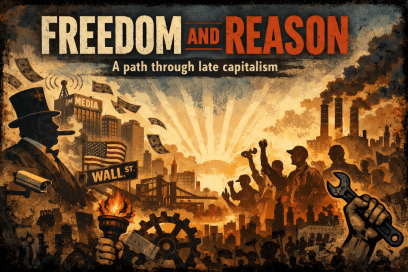
That’s a more robust materialism than Bhaskar’s. For Bhaskar, social structures are real, but they exist only through their reproduction in practice. For Marx, reproduction is forced, not enacted; social structures are real because material life is organized by them; and practice is constrained by pre-existing material relations. Marx does not deny agency; rather, he sharply limits it. In his 1852 The Eighteenth Brumaire of Louis Bonaparte, Marx writes, “Men make their own history, but they do not make it as they please; they do not make it under self-selected circumstances, but under circumstances existing already, given and transmitted from the past.” Social structures are material relations with objective force. Treating them as non-material risks idealism in another name. Marx is hostile to philosophy that treats meaning as foundational rather than derivative, practice as constitutive rather than constrained, and relations as conceptual rather than material. Social structures are material relations—more real than our concepts about them.

 freedom and reason