
When a person discovers that they are wrong about something—especially something of significance—they ought to ask a further question: What else might I be wrong about? A single error can be dismissed as an isolated lapse (everybody makes mistakes or misses something), but recognizing a substantial error should naturally prompt a broader self-examination.
Beneath that lies an even deeper question: Why was I wrong? For it is the “why” that reveals whether there is a flaw in one’s thinking, methods of reasoning, or habits of evaluating evidence. Identifying the cause of an error helps prevent the same underlying problem from quietly generating future mistakes.
Most people do not reach this deeper question until they have first checked whether they might also be wrong about something else (of course, some people never reach the deeper question). If they uncover a second (or more) significant error(s) and still fail to ask why their judgments are misfiring, the issue is no longer a simple mistake—it becomes a matter of cognitive integrity. A pattern of errors suggests that what requires scrutiny is not just one’s conclusions, but one’s intellectual process itself.
Realizing one was wrong about a single belief may be unremarkable. Realizing one was wrong about two or more important matters calls for a harder look at the structure of one’s thinking. Multiple false beliefs rarely occur by accident; more often, they signal a deeper problem in how a person forms, organizes, and justifies their views.
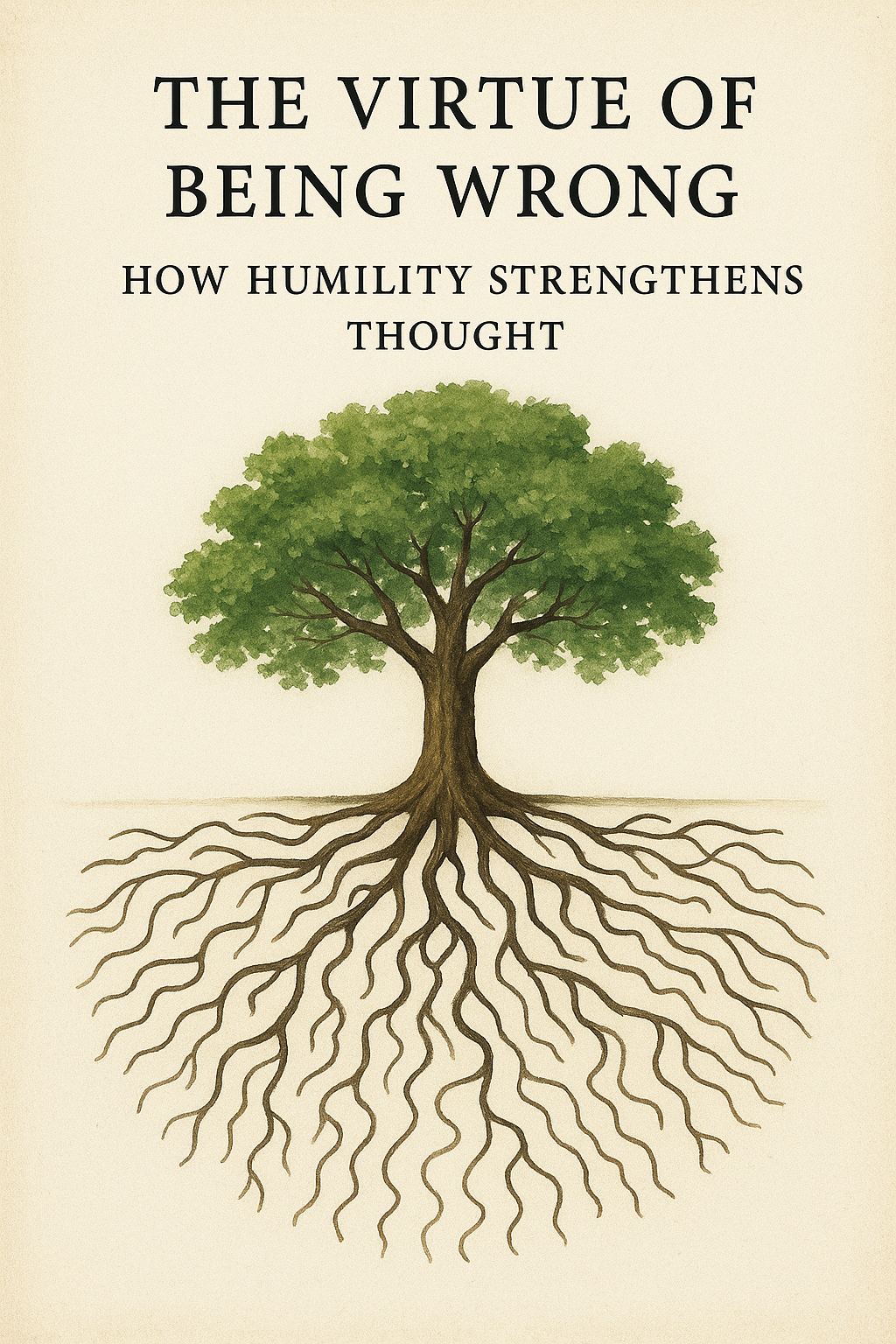
As mistaken beliefs fall away, the result can be a profound reordering of one’s worldview. But it may also result in recovering deep principles. Indeed, the ability to admit one is wrong, and to see that there is a reason they have arrived a wrong conclusions, itself points to deeper principles about which one may be unaware or have forgotten.
Epistemology concerns the nature and justification of knowledge, while ontology concerns what fundamentally exists or is true. The shift I am describing may ultimately reshape both epistemology and ontology: not only how a person acquires and evaluates knowledge, but also what he believes to be true about reality. When a person confronts the roots of his own errors, both dimensions of his thinking may undergo significant revision. At the same time, as I have suggested, it can result in the reclamation of a deeper understanding.
If the latter, then what explains the buried principle or lost understanding? Affinity and ideology play a central role here. By ideology, I mean a way of thinking that systematically distorts a person’s epistemological approach—assuming, of course, that a rational and undistorted approach is possible (which I believe it is, since I believe in objective truth). Ideology does not merely mislead someone about particular facts; it warps the framework through which facts are assessed. The warping corrupts not only the content of one’s knowledge but also one’s cognitive integrity. The individual’s sense of intellectual honesty, his standards for evidence, and his capacity for self-correction can all erode under the weight of an ideology that supplies ready-made answers and shields its adherents from uncomfortable truths.
Partisan loyalty and tribal affinity also play roles in keeping people away from reason and a clear assessment of evidence—even the evidence itself.
In 2018, when I discovered I was wrong about systemic racism in American criminal justice, I wondered what else I was wrong about—and why. I began taking long walks, during which I reconsidered the things I believed and which of these beliefs were worth keeping and which needed jettisoning. Critical self-examination led to a reflection on the deeper structure of belief-formation. This led me to recover something professional development had compromised: common sense. Of course, men can’t be women. There is no science there. Moreover, my commitment to women’s rights. What was I thinking? That was the problem. I wasn’t. I was following.
This is where humility becomes so important to intellectual development. Humility is the cornerstone of personal growth and meaningful relationships because it allows us to acknowledge that we are not infallible. It’s okay to be wrong. It is not okay to deny oneself the capacity to admit it. It is not fair to others. And it is unfair to oneself.
Recognizing that humans can be wrong requires courage, self-awareness, and a willingness to confront our own limitations. When we admit our errors, we not only correct misunderstandings but also foster trust and openness with others. Of course, we depend on others to extend charity in such situations. Alas, one discovers that some do not wish us to be wrong, especially when they relied upon us for their appeals to authority. If the authority changes his mind on some matter dear to others, it cannot be that he corrected an error, but that he has become misguided in his judgment. The error is what they want to continue believing in. They lose faith in something they should never have faith in: the infallibility of others.
Humility transforms mistakes from sources of shame into opportunities for learning, for getting closer to the truth. By embracing the possibility that one’s perspective may be flawed, a man cultivates empathy, deepens his understanding, and creates space for collaboration, ultimately becoming a wiser and more compassionate individual. Those around him with the same humility can grow with him, or at least acknowledge that opinions can differ. The stubborn can condemn the man for “switching sides.” But that’s their problem, not his.

 freedom and reason