
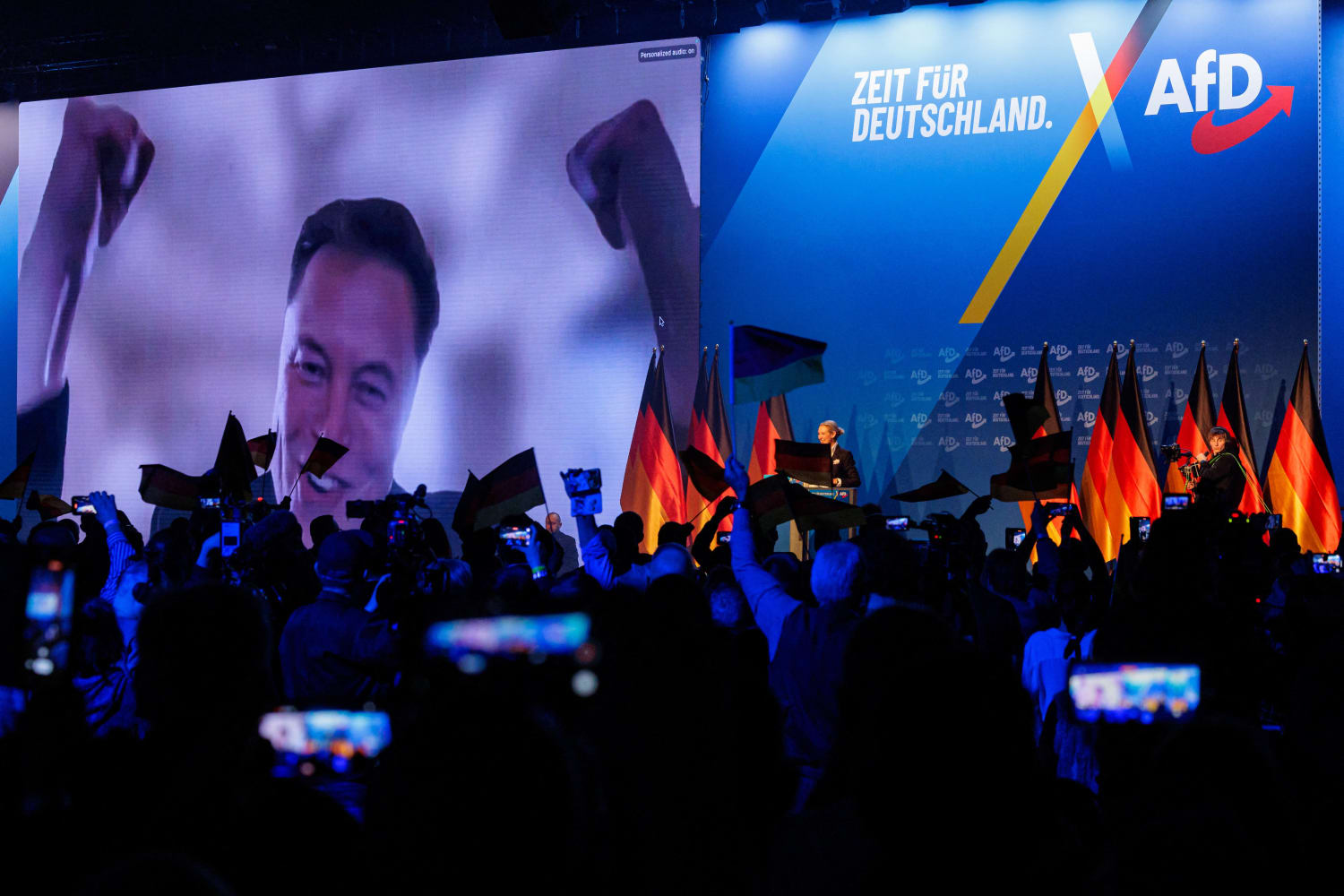
Have you watched Frontline’s The Rise of Germany’s New Right, posted a few days ago? You should (see link below). As you watch (if you watch), be aware of what shapes PBS’s framing of rightwing populism—the corporate progressive bias portrays the populist movement across Europe and North America as the politics of extremism. Yet tens of millions support populist politics, whereas outlets like PBS represent the interests of only a small number of elites and functionaries.
As I have noted on this platform (see, e.g., Am I Rightwing? Not Even Close), all my life, I’ve identified as a person on the left. I still do. Yet, over the last several years, I’ve found myself supporting movements such as Brexit, MAGA, the Sweden Democrats, and Germany’s Alternative für Deutschland (AfD)—all of which are routinely portrayed as far right. This shift isn’t the result of a sudden change in my core values, but rather a reaction to what has happened to the left itself over the past fifteen or so years, and indeed, to longer historical developments beneath the surface. Moreover, I haven’t so much “found” myself sympathetic to the rightwing position, as I have determined that it is the right position for a man of the left.
Over time, the cultural and epistemic framing of our sense-making institutions—academia, media, entertainment, and other organs of public meaning—has shifted steadily leftward. This transformation has redefined the ideological landscape, creating the perception that the political center has moved rightward when in fact it is the left that has migrated further left. However, this leftward tilt is an odd one—can it really even be described as left?—in that it has not deepened its commitment to the ideas of the Old Left, but rather fused New Left sensibilities (critical theory, postmodernism, queer theory) with corporate state power.
As globalization advanced in the background over the last several decades, gaining momentum under President Bill Clinton, although for the most part prepared by his predecessor George H. W. Bush (who gushed over the New World Order), it generated conditions of rising inequality and widespread resentment. NAFTA, completed and signed by Bush in 1992 (with Clinton’s role to secure congressional approval) and the Uruguay Round of GATT—which led to the creation of the World Trade Organization—sacrificed US sovereignty to transnational corporate power. The coup de grâce was Clinton paving the way for China’s entry into the WTO.
For the most part, the media, already shifting leftward in the 1970s, framed globalization as an unalloyed good. The left, instead of addressing the material roots of this discontent as it had traditionally, turned increasingly toward identity politics, heightening group antagonisms and fragmenting social cohesion. This deepened the angst of a nation devastated by globalization.
As a result of these developments, many who saw themselves as left-liberal began to feel politically homeless. Conservatives, embracing many of the tenets of liberalism, became seen as allies. The emergence of alternative media allowed people to step outside the hegemonic control of traditional outlets and to see these developments with greater clarity. Conservatives themselves began shifting away from the neoconservatism and neoliberalism that had corrupted the Republican Party. Lincoln’s Republican Party was making a comeback.
In light of these developments, the rise of right-wing populism appears less as a descent into extremism and more as a form of democratic resistance and the reclamation of democratic republicanism—a popular attempt to push back against a globalist order eroding national sovereignty and the Westphalian system of independent states in favor of a transnational, corporate, and technocratic regime. Liberals and conservatives could see that America’s decline was a managed one, and they forged an alliance to turn things around. This is how you get a Trump Administration with Robert F. Kennedy, Jr., as Secretary of Health and Human Services.
Unsurprisingly, the institutions dominated by progressive and social-democratic sentiment portray movements like the AfD in Germany and MAGA in the US as dangerous or regressive. From their vantage point, any assertion of national identity or popular sovereignty represents a threat to the globalist project. Predictably, they reinforce these narratives by linking right-populist movements and personalities to Russia or other perceived external enemies, as can be seen in the PBS documentary.
Across Europe—and indeed, across the Western world—the same pattern is unfolding: ordinary citizens, alienated by the elite consensus and frustrated with the failures—or more accurately the design—of globalization, are embracing political movements that the left condemns as “far right.” Yet these movements are not fundamentally about hatred or reaction; they are, in many respects, an expression of resistance to a global system that has stripped people of agency and their democratic voice.

 freedom and reason