
Today, the mainstream media routinely dismisses any discussion of a deep state as a conspiracy theory, a label meant to discredit the idea that entrenched elements within government operate with autonomy and secrecy. By “deep state,” I mean a network of covert operations and intelligence programs that functions outside the normal boundaries of democratic oversight, running covert operations against the American public in the same way intelligence services run covert operations against the populations of foreign countries. The Church Committee’s revelations of the mid-1970s, which I discuss below, showed that such activities are not the stuff of imagination but verifiable matters of record—if a government is so inclined to interrogate them. Yet modern journalists, once defenders of transparency, at least more so than now, treat any questioning of intelligence agencies as irrational or unpatriotic. This is an act of memory-holing what they know to be historical fact to obscure the contemporary fact that the deep state still exists.
When I was in middle school, in the 1970s, television brought the events of the nation straight into my den and bedroom—on the big color TV and my little black-and-white set. Information was much less censored in those days, and arguably less biased. To be sure, it was still corporate-state media, but there was a sense of integrity among journalists so scarce today. Moreover, postmodernist philosophy and its permutations had not yet fully corrupted the corporate intelligentsia—they still had one foot in reality and some commitment to truth-telling. Coverage of the Vietnam War was the most notable, and my parents would shoo my sister and me out of the room when the more graphic footage appeared on the screen. That coverage stood in stark contrast to CNN’s reporting of the Gulf Wars, prosecuted years later by George H.W. Bush and his son, George W. Bush.
Among the many historic moments I remember seeing unfold on TV were the Church Committee hearings, formally known as the Senate Select Committee to Study Governmental Operations with Respect to Intelligence Activities, chaired by Senator Frank Church of Idaho. The hearings were held from 1975 to 1976, beginning in the summer of 1975, when I was thirteen. I can still picture them vividly with my mind’s eye, memories clarified and reinforced years later by reviewing recordings and reports of the committee’s work (for those sessions not held in secret over classified materials).
The House of Representatives had its own oversight efforts, most notably through the House Select Committee on Intelligence (later the Pike Committee). The Pike Committee, like the Church Committee, examined intelligence activities and alleged abuses, though, unlike the Senate committee, President Gerald Ford’s administration blocked the publication of the Pike Committee report in 1976. I will leave readers to look into that. Perhaps it will suffice to say that Ford served as a commissioner on the Warren Commission that was charged with investigating the assassination of President John F. Kennedy. At the same time, the United States House Select Committee on Assassinations (HSCA) was established in 1976 to investigate the assassinations of Kennedy and Martin Luther King Jr. Its final report in 1979 concluded that Kennedy was probably assassinated as a result of a conspiracy. However, in that report, it said that it could not identify all the conspirators. Could not, or would not?
While much of its work was conducted in secret, the public Church Committee hearings were a spectacle. During the fall, winter, and spring, I would come home from school, turn on the television—back then, as my peers will recall, we had only the three major networks and PBS—and see senators questioning witnesses about the secret activities of the CIA, FBI, and NSA. The committee had been formed in 1975 to investigate abuses by US intelligence agencies, following revelations of assassination plots, illegal surveillance, and political interference. It was one of the most important congressional inquiries of the era, rivaling the Watergate hearings a few years earlier. I remember those as well (and am preparing to write about the removal of Nixon, one of America’s most popular Presidents, in the near future). I don’t recall a time when I wasn’t politically interested—looking back, that came naturally as my parents were politically engaged.

Again, although many sessions of the Church Committee were held behind closed doors for security reasons, a number of the hearings were televised. Public sessions aired during the day, and the networks or PBS would replay them later or show highlights on the evening news. PBS, in particular, offered gavel-to-gavel coverage, giving Americans an unfiltered look at the proceedings. Americans across the nation would watch senators asking pointed questions, and witnesses—often high-ranking officials—having to answer for activities that, until then, had been shrouded in secrecy. One moment that became famous was when the committee displayed the CIA’s so-called “heart attack gun,” a weapon that could fire a toxin dart meant to leave almost no trace. But many other revelations shocked the conscience of any American concerned about his beloved republic.
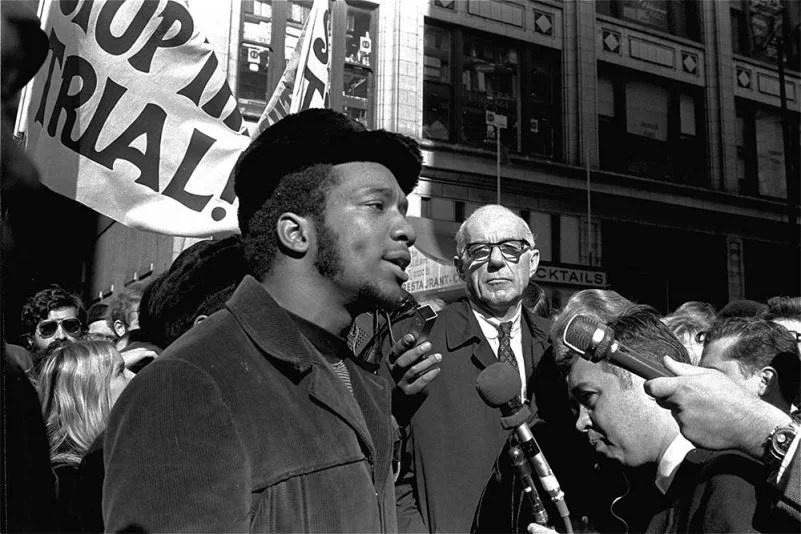
The Church Committee devoted significant attention to COINTELPRO, the FBI’s secret counterintelligence program that targeted domestic political groups, ostensibly dismantled in 1971 when it was exposed. I have written about this program in an academic outlet (Encyclopedia of Social Deviance) and on my platform, Freedom and Reason (see, e.g., The Black Panthers: Black Radicalism and the New Left). I frequently show the documentary FBI’s War on Black America in my criminal justice classes. The hearings and reports revealed how the FBI had surveilled, infiltrated, and disrupted civil rights organizations, antiwar activists, and political figures, including Dr. Martin Luther King Jr. COINTELPRO not only targeted black civil rights organizations, but also targeted many other groups, including the American Indian Movement (AIM). For example, the FBI surveilled AIM during events like the 1973 Wounded Knee occupation, orchestrated internal conflict, and manipulated media coverage against them. These activities involved unauthorized wiretaps, mail openings, and smear campaigns.
The committee’s investigation of COINTELPRO exposed serious violations of civil liberties and helped prompt the establishment of permanent congressional oversight of intelligence agencies, including the Senate and House intelligence committees. One reform of significance was the Foreign Intelligence Surveillance Act (FISA) Court, established in 1978 to provide judicial oversight for government requests to conduct electronic surveillance and collect foreign intelligence within the US. The Act aimed to balance national security needs with constitutional protections. However, the FISA process has, over time, become susceptible to misuse, with courts rubber-stamping surveillance requests, undermining its original role as an independent check on administrative power. For example, Trump and his supporters have argued that surveillance programs under FISA were improperly used to monitor his 2016 campaign and associates. What is alleged, and there is considerable evidence to support the allegations, is that officials within the Obama-era Justice Department and FBI sought FISA warrants—particularly regarding Carter Page and Russia-related investigations—based on questionable or unverified evidence (see The Conspiracy to Overthrow an American President).
The committee also investigated the CIA’s relationships with journalists and media organizations, activities often associated later with Operation Mockingbird. The hearings documented that the CIA had cultivated ties with members of the American and foreign press, providing funding, guidance, or cover identities for operations. These revelations raised obvious concerns about press independence and the influence of intelligence agencies on public information. While not as central as the COINTELPRO findings, the committee’s work on media influence, historians of the period tell us, highlighted the need for greater transparency and limits on intelligence operations that intersect with civil society. However, Operation Mockingbird should be recognized as a major finding of the committee’s work, especially as we witnessed something very much like it at work during Trump’s 2020 campaign and after during the Biden years, when agents of intelligence services worked with social media corporations—Facebook, Twitter, etc.— to censor user content by various means.
Looking back, I realize how significant those televised hearings were, and how important it is to return their significance to the minds of the living. They helped ordinary citizens like you and me understand what our government’s intelligence agencies were doing in our name, and they led to crucial reforms—such as the creation of permanent Senate and House intelligence committees and the passage of FISA in 1978, however corrupted those institutions have become. At the time, I didn’t fully grasp how deeply those hearings would shape my understanding of government power and accountability. As debates about secrecy and oversight have continued, I have often thought back to the Church Committee and how it made me aware that, even in a democracy, power can expand quietly unless someone is willing to ask hard questions in public. I wouldn’t expect such an event to happen again, of course (instead, we get fake congressional hearings orchestrated for television like the January 6 Committee). But I do expect that people like me will ask those hard questions.
Remembering this period is essential, because it reminds us that democracy requires constant vigilance, and that secrecy, once—and still, in the minds of agents of these agencies—justified as “national security,” can quickly become a shield for abuse. Today, it’s justified by the appeal “defending democracy.” But, as I have shown on Freedom and Reason, these services, nor the media that runs interference for them, are not defending democracy or civil liberties but ensuring that technocratic control over the American populace continues unconstrained by the right of the people to be free from government surveillance and intimidation.
Here’s the takeaway: The Church Committee hearings demonstrate that covert power within the intelligence community can and does act independently of public accountability. The committee documented CIA assassination plots, FBI domestic surveillance programs like COINTELPRO, and secret operations to influence the press, all carried out without congressional approval or public knowledge. There was evidence, testimony, and sworn admissions. It’s all a matter of public record. These findings, televised for the nation to see and for anyone to revisit today, left little doubt that what we now call a deep state truly existed, no matter how hard the corporate-state media tries to gaslight the public about such matters.
The deep state is not a conspiracy theory—not in the sense that the media wishes to convey. To be sure, there were, and are, conspiracies. And, as I often say, a rational mind can and should develop theories about them. After all, conspiracy is a category in criminal law. But the conspiracies revealed by the Church Committee, and the myriad of conspiracies currently in operation, aren’t the products of paranoid minds. Indeed, paranoia is warranted given the revelations, not only of the Church Committee, but also of contemporary work exposing the machinations of today’s intelligence services. The corporate-state media’s job is to obscure the conspiracies presently at work shaping the destiny of the American Republic by making citizens concerned about being labeled “conspiracy theorists.” They do this work to advance the ambitions of the globalist project: the managed decline of the West—which is the grandest conspiracy of them all.

 freedom and reason