
One can argue with people over ideas. It can be fun sometimes. But if one’s interlocutor has a cognitive style that is impervious to fact and reason, it can be a significant waste of time. It can also produce rage in people.
I prefer to explore why people come to believe what they do and why they are so resistant to facts and reason. Until one understands the problem of cognitive errors and ideological blinkering, it’s difficult to make progress in persuading people to adopt a more rational position.
It’s like the proverb: “You can lead a horse to water, but you can’t make him drink.” A teacher can explain a concept clearly, but a student must choose to learn it. A good teacher has to understand the obstacles that prevent the student from making that choice.
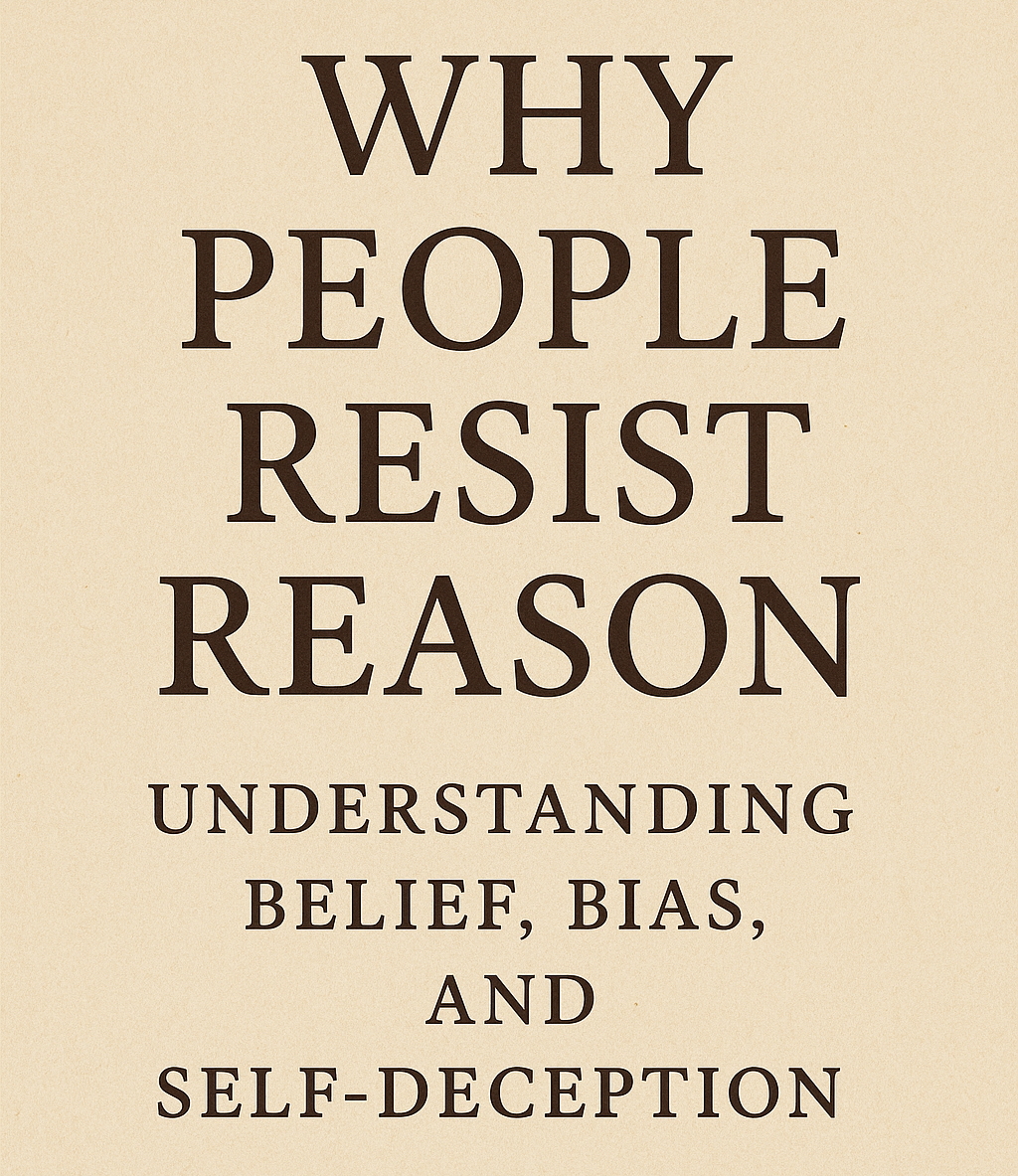
Understanding the reasons why people resist reason is also beneficial for one’s self-development. By understanding this in others, one can understand it in oneself. Like other animals, even equipped with sapience, human beings do not emerge from the womb capable of clear reasoning. One must learn it. And the socialization process can install obstacles that are very difficult to overcome. It takes awareness, practice, and self-reflection.
One problem in such a pursuit is that helping people overcome their resistance to reason is often perceived by resisters as an ad hominem attack. One can come across as arrogant when pointing out errors and flaws. This is because, while not everybody is reasonable, almost everybody believes they are, and when one criticizes their cognitive style, they take offense.
I have received, over the last several years, anonymous emails from Proton mail accounts, angry with me because I sound like a know-it-all—from those who clearly think they know it all.
Other problems are occupational security and tribal affinity. Upton Sinclair puts it well when he writes, “It is difficult to get a man to understand something when his salary depends on him not understanding it.” People often cling to ideas that protect their group membership, professional identity, and social status, even when those ideas are demonstrably flawed. Challenging these beliefs can feel threatening, not just intellectually but socially, which makes reasoned persuasion all the more difficult.
I have been writing a lot lately about this problem on Freedom and Reason (cognitive dissonance, motivated reasoning, and so forth). It’s a pressing problem given the polarization we are currently experiencing. It becomes dangerous when resistance to reason becomes a source of frustration, since this can result in harassment, intimidation, and violence directed at those who challenge cherished beliefs. (see When Thinking Becomes Unthinkable: Motivated Reasoning and the Memory Hole; Living with Difficult Truths is Hard. How to Avoid the Error of Cognitive Dissonance; Bluesky and the Progressive Practice of Cerebral Hygiene; Abigail Spanberger is “Horrified”—How Can Illegally Crossing the Border Be a “Criminal Act”?
I tell my students that my purpose as a teacher is not to tell them what to think, but rather to demonstrate how to think. Although that is my professional role, I do think this approach is generally applicable. But, I confess, it is no less frustrating (beyond the classroom, where it is the task) than arguing points, since people seem to understand that losing an argument calls their worldview into question.
They’re right about this. The structure of a worldview rests on a set of common assumptions; if one assumption goes, the entire structure may collapse. They don’t hear you because they can’t hear you. It’s a defense mechanism. People fear losing their certainty in things they think they know—and what those around them will do to them if they lose faith in doctrine.
This is why, for the most part, I avoid going to other people’s social media pages and engaging them in discussion. I prod people on X, but it is never productive, only a pastime. It’s also why I don’t seek out opportunities to publicly debate issues (besides not wanting to get beaten or shot at). I do recognize that it is the audience that matters more than the opponent. But public debate has become more spectacle than enlightenment. (And it has become dangerous.)

 freedom and reason