
In 1896, the Supreme Court decided Plessy v. Ferguson, upholding a Louisiana law that required railroads to segregate passengers by race. It was one of the darkest moments in the Court’s history, a ruling that it took America, in court decisions and legislation, more than half a century to reverse. But amid the majority’s acceptance of segregation, one justice refused to go along with the majority. John Marshall Harlan wrote a dissent that would echo through the ages: “Our Constitution is color-blind and neither knows nor tolerates classes among citizens.” (See Colorblindness and Blindness to Color; The Constitution is Colorblind—So Why Do Democrats Insist that the Country is White Supremacist?)
Harlan’s lone opinion was more than an act of moral courage (although this it certainly was—and remains so today). It was a defense of the core logic of the American Constitution—that equality and liberty belong to individuals, not racial categories. When the law divides citizens by color (or other arbitrary characteristics), it denies that principle. Only when it treats them as equal bearers of rights, of immunities, liberties, and privileges, does it fulfill it. “There is no caste here,” Harlan writes of United States, “In respect of civil rights, all citizens are equal before the law.”
That simple but profound insight is worth recalling today, as the Supreme Court debates the meaning of equality and race under the Voting Rights Act, which was signed into law in 1965, a year after the passage of the 1964 Civil Rights Act that ended de jure segregation. On October 15, the Court heard arguments in Louisiana v. Callais, a case testing whether Section 2 of the Voting Rights Act (VRA) permits race-based districting to remedy vote dilution. The justices’ questioning suggested to observers that the Court’s conservative majority is prepared to narrow the scope of the Act, focusing on how long race-conscious remedies can persist and whether they must meet stricter constitutional scrutiny. This is a welcome development to those who believe in the founding principles of the American Republic.
Section 2 of the VRA “[p]rohibits any voting qualification or prerequisite to voting, or standard, practice, or procedure, that denies or abridges the right of any citizen of the United States to vote on account of race or color.” Section 5, which required certain jurisdictions with a history of discrimination to obtain federal preclearance before changing voting laws or practices, was effectively invalidated by the Supreme Court in 2013 in Shelby County v. Holder. It seems logical that Section 2 is the next to fall in the Court’s project to align state law with the US Constitution and democratic republican principle.
The hearing has drawn intense public attention, with many observers warning that weakening Section 2 could undermine one of the last major federal protections for minority voting rights. But what we should be asking is why the VRA is allowed to stand at all in light of the fact that the People already have the Fifteenth Amendment to the US Constitution, which states, “The right of citizens of the United States to vote shall not be denied or abridged by the United States or by any State on account of race, color, or previous condition of servitude.” From this, it follows that any “voting qualification or prerequisite to voting, or standard, practice, or procedure, that denies or abridges the right of any citizen of the United States to vote on account of race or color” (the language of the VRA) should be ruled unconstitutional based on the Reconstruction Amendment. In the immediate aftermath of the contentious 1964 Civil Rights Act, the VRA may have been necessary. But today? It is hard to see why.

Amid the promising tone of the hearing on Wednesday, there was a moment that stood out in particular. During questioning, Justice Ketanji Brown Jackson drew a comparison that shocked many of those listening. It certainly got my attention. In discussing the Act’s Section 2, Jackson likened the position of black Americans to that of disabled Americans who cannot climb stairs. The law, she suggested, must recognize that both groups face barriers to equal participation—and therefore require differential treatment to achieve genuine equality. She thus invoked the principle of equity as it is currently conceptualized in the woke progressive epistemic.
“Going back to this discriminatory intent point, and the fact that remedial action, absent discriminatory intent, is really not a new idea in civil rights laws. And my paradigmatic example of this is something like the ADA,” Jackson said. “Congress passed the Americans with Disabilities Act against the backdrop of a world that was generally not accessible to people with disabilities. And so, it was discriminatory, in effect, because these folks were not able to access these buildings, and it didn’t matter whether the person who built the building, or the person who owned the building, intended for them to be exclusionary. That’s irrelevant.”
She continued, implicitly and conveniently shifting to the original meaning of the equity principle: “Congress said the facilities have to be made equally open to people with disabilities, if readily possible. I guess I don’t understand why that’s not what’s happening here.” She shifted back to the woke meaning when she interpreted Section 2 to mean that the government “is responding to current-day manifestations of past and present decisions that disadvantaged minorities,” and to “make it so they now have equal access to the voting system, right? They’re disabled.” Here she collapses the analogy into the thing itself. Black Americans are disabled.
That last line about black Americans being “disabled” is what caught everyone’s attention. But the argument is, in its entirety, fallacious. It commits something I have written about many times on this platform, what in informal logic is known as the fallacy of misplaced concreteness, that is, the error of mistaking an abstraction for a concrete fact. We see this in the antiracist rhetoric about “white privilege” and “systemic racism,” which manufactures the illusions that all whites enjoy the advantages suggested by average group differences—and that all blacks are the victims of racism based on the same statistics. (See Race and Democracy; The Origin and Character of Antiracist Politics; Committing the Crime it Condemns; Equity and Social Justice: Rationalizing Unjust Enrichment; The New Left’s War on Imaginary Structures of Oppression in Order to Hide the Real Ones; Critical Race Theory: A New Racism.)
For people with physical disabilities, the barrier is specific and universal. A set of stairs excludes every person who cannot climb them. No matter one’s education, social standing, or wealth, the obstacle is concrete. Equity—in its original, legal sense—demands an accommodation, such as an elevator or a ramp, to ensure equal access. Thus, an accommodation is made to achieve equality of opportunity under circumstances of a preexisting and categorical inequality: a disability. Equality of opportunity is a species of substantive equality, which, in the case of disability, involves treating people differently to achieve equality. Contrast this principle to formal equality, which means treating everyone the same under the law without regard for individual differences or social situation. While other expressions of substantive equality may be impermissible, for instance, the goal of equality of outcome (see Kurt Vonnegut’s short story “Harrison Bergeron” for an illustration of the perils of such attempts), a good society would make such an accommodation for the disabled to make any claim to decency.
Race is not like that. There is no inherent incapacity attached to being black or white, nor any uniform barrier that exists today that affects all members of one race in the same way. When disparities arise—for example, in voter ID possession rates, a favorite argument of progressives—they reflect complex social factors, not a shared intrinsic limitation. Some black Americans face real obstacles; others do not. The same is true for whites. Think about it: if poverty or lack of education and information affect poor blacks, these also affect poor whites. To assume that what is statistically true of a group is concretely true of every individual within it is to confuse demographics with destiny, abstraction with concrete individuals. Moreover, if states are to consider complex social factors, why would they focus on race and not the social factors themselves? Would not, in the case of voter ID, all races benefit from a policy that helped the economically disadvantaged obtain the necessary proof required for securing our elections? (Of course, but opposition to voter ID is not about electoral integrity, but about making it easier to rig elections.)
The critical question is whether voting rights is a case where equity even applies. Equity, properly understood, is about correcting for relevant, material differences. It recognizes that strict uniformity can sometimes produce injustice—as when identical treatment ignores a physical limitation that makes equal participation impossible. We see this also in the necessity of gender-segregation in sports (another matter that I have devoted considerable time to on this platform). Given the intrinsic and categorical differences between females and males in a sexually dimorphic species that has reached sapience, it has been recognized that it is discriminatory to treat women and men the same. Equality, in contrast, is about treating individuals the same where there is no relevant concrete difference. The challenge of justice is knowing when to invoke one principle rather than the other. Jackson’s analogy applies the logic of equity—appropriate to disability or gender—to a realm where equality, not accommodation, is the governing ideal. This was Justice Harlan’s argument. This is why his dissent resonates down through history. And should for all time.
Jackson’s confusion carries profound constitutional implications. As I explain to my students in the first lecture of my course Freedom and Social Control, the American system, as well as classical liberalism more generally, is grounded in what philosophers call negative liberty: freedom from government-imposed barriers or classifications. Individuals are not free to make of themselves what they will under the rule of law if the government shapes decisions for them on the basis of race or some other supposed difference that has no basis in material fact. The Reconstruction Amendments, particularly the Fifteenth, embody that idea. The Fifteenth Amendment declares that the right to vote shall not be denied or abridged on account of race. It does not require proportional outcomes; it forbids racial exclusion. It is a bulwark against interference, not a tool for engineering representation. Putting this another way, the Amendment forbids manufacturing proportional outcomes for a suspect category.
What is a “suspect category”? This is a legal term used in US constitutional law to describe a class of people who have historically been subjected to discrimination and are, therefore, entitled to heightened judicial protection when laws classify or discriminate against them. This is understandable and, in terms of the logic of our constitutional republic, it means ensuring that there are no discriminatory barriers placed before citizens who have suffered past discrimination that would harm their life chances in the present and future. It does not mean that the role of government is to disadvantage those who did not suffer past discrimination. Ibram X. Kendi’s formulations, in his book How to Be an Antiracist, that “[t]he only remedy to past discrimination is present discrimination” and that “[t]he only remedy to present discrimination is future discrimination,” are antithetical to the principles that established the American Republic. This is the logic of antiracism, an Orwellian inversion that Justice Jackson smuggles into her cross-examination.
Consider that the Voting Rights Act of 1965 was written to enforce the constitutional command of the Fifteenth Amendment. The section at issue, Section 2, was meant to stop states from imposing voting rules that would discriminate by race, which was a problem at the time. But over time, with the growing influence of woke progressive ideology in legal theory, interpretations of the statute drifted toward a different goal: ensuring racial groups elect candidates of their choice in approximate proportion to their population. That shift transforms the Act from a guarantor of individual access into an instrument of racial balancing. It changes a law against discrimination into a law of electoral design. That is flatly unconstitutional.
That is why Jackson’s analogy matters. By equating racial disparities with physical disabilities, she implies that race itself is a condition the state must always accommodate through special privileging, in this case through race-conscious districting or representation. The failure of the state to do this is prima facie discrimination. The logical end of that reasoning is a political system permanently organized by color—the very thing Harlan warned against. Harlan understood that the law cannot be neutral toward racial classification if it is to remain neutral toward citizens, which is the demand of the Constitution.
Harlan’s vision is not naïve. He did not believe that prejudice would vanish from private life. But he rightly insisted that the law must stand above it. Indeed, prejudice (an attitude) is not the same as discrimination (an action or inaction, under specific and unjust conditions). The Constitution, Harlan writes, “neither knows nor tolerates classes among citizens.” In that simple declaration lies a whole philosophy of government—our philosophy of government: that the state’s duty is to secure equal rights, not to equalize outcomes. It must remove barriers, not rearrange voters into racial blocs. Indeed, to arrange voters into racial blocs is a manifestation of the separate-but-equal principle that Harlan exposes as racially discriminatory in his dissent!
Hence, Jackson’s unclever and fallacious analogy. When Jackson likens black Americans to disabled Americans, she shifts the moral terrain from one of equal treatment to one of special treatment, that is, to an exclusive privilege wrapped in the rhetoric of civil rights. It is not that special treatment is intrinsically wrong, but it must apply in relevant cases where there is a need for an accommodation, not to ideological or political projects seeking to engineer outcomes. The goal of any accommodation is to create equality of opportunity, not equality of results, the latter being the goal of the ideological redefinition of equity.
The problem with applying the equity principle for ideological reasons is not only philosophical but practical. It invites the state to decide which groups are in the abstract “disadvantaged.” In the conscious use of racial classifications in decision-making, this necessarily negates colorblindness, which, in the present-day project of addressing historical wrongs, systematically disadvantages whites—admittedly the goal for many who take this position. This is what lies behind the claim that colorblindness is by default discriminatory (yet another Orwellian inversion). “We all see color,” we’re told. Yes, but the principle of colorblindness is not asking us to ignore color, but demanding that we don’t use color as a basis for privileging some over others. To privilege some over others based on race is the definition of racial discrimination.
The just path for America is, therefore, the one Harlan outlines in his dissent: to regard every citizen as a bearer of the same rights and the same dignity before the law. That doesn’t mean ignoring the history of discrimination or the persistence of inequality. It means addressing those wrongs and current-day problems through remedies that respect the individual rather than reify the group. It means ensuring that every person, regardless of race, can register, vote, and have their ballot counted, not guaranteeing that each racial group will have representation in proportion to its numbers. To do the latter constitutes racial balkanization, i.e., the fragmentation of a society into often—and almost guaranteed—antagonistic groups based primarily on race or ethnicity, rather than shared civic or national identity. This is why the principle of “separate but equal” in the case of race was (one would have thought) finally recognized as an intrinsically unequal standard in practice. Such a principle can only be applied to material categories such as disability and gender without being unjustly discriminatory.
The distinction may seem technical to many, but it speaks to the heart of the American promise. The Constitution was designed to protect freedom by limiting the reach of government classifications. Again, its liberty is largely negative in that it forbids coercion, restrains power, and draws lines the state may not cross. The VRA, interpreted in that light, interpreted in the light of the Fifteenth Amendment, remains a notable achievement of American democracy—a law that expanded opportunity, not one that rearranges seats. But when it became a vehicle for race-based districting or quota-like expectations, it betrayed the very colorblind ideal it was meant to secure. And, in light of its misuse and guaranteed future misuse, much of it should be gutted by the Court. This must be done to prevent states from racially gerrymandering districts for partisan political advantage. This must be done to end the Democratic practice of racially antagonizing the American population through policies of racial separation, an antagonism the Party has used since its founding in 1828.
Again, Harlan foresees this tension (after all, he had history in his rearview mirror). In his dissent, he warns that “[t]he thin disguise of ‘equal’ accommodations for passengers in railroad coaches will not mislead anyone, nor atone for the wrong this day done. Such a system is inconsistent with the equality of rights which pertains to citizenship, and tends to keep alive a feeling of race hostility and distrust between large classes of our fellow-citizens.” He writes that this is “as obnoxious as the legislation that imposed the badges of servitude upon the colored race rather than the white.” These words are prophetic. Segregation did not foster harmony; it entrenched division. A modern jurisprudence that sorts voters by race, even in the name of fairness, repeats the same mistake in a new form. It tells Americans that political identity begins with color—that representation must be measured by pigmentation, not persuasion. It allows Democrats, contrary to the principle of “one person, one vote,” to exploit black Americans as servants in a partisan project to amass political power.
Perhaps, then, a deeper irony in progressive desire, if we accept the rhetoric of its politics on its face, is that this approach undermines the moral authority of the civil rights movement itself. The triumph of that movement lay in its appeal to a universal principle: equal treatment under law. When Martin Luther King Jr. dreamed that his children would be judged not by the color of their skin but by the content of their character, he wasn’t calling for equitable accommodations by race (at least not in the dream he articulated in his famous 1963 speech at the feet of the Lincoln Memorial). He was reaffirming Harlan’s colorblind ideal in moral terms. Some readers may find it odd that it’s the conservative and not the so-called liberal in this argument that is respecting the principle of colorblind equality, but, as I have explained on this platform, today’s conservative is, in many respects, yesterday’s liberal. The progressive has generally abandoned liberalism altogether. Indeed, progressives, corrupted by postmodernist philosophy, have rejected the idea that any principle can be universal.
To uphold Justice Harlan’s vision today—and it is a vision rooted in the American way—is not to deny history or injustice; it is to insist that the remedy for unjust discrimination is not more classification but its abolition in its entirety. The state has no legitimate interest in considering a citizen’s race when it allocates benefits, draws district lines, or guards the ballot box. Its only duty is to guarantee that every citizen can participate on equal terms, and to apply the equity principle only where there are firm material grounds to do so, such as in the case of disability. On what grounds districts are to be drawn is a problem for state legislatures, as the Constitution permits, but the solution cannot be based on race, which the Constitution forbids.
We might be charitable and excuse Justice Jackson’s intentions as decent and honorable. She seeks a society in which racial inequality no longer distorts opportunity or political power. So do I. But good intentions do not guarantee sound reasoning—and, frankly, I don’t believe her intentions are good in the first place. Based on everything I’ve heard from Jackson, she is firmly grounded in the injustice sought by progressive and racial reordering of American life. And she seeks this at the same time she agrees with the queer activist that women’s rights should yield to the doctrine of gender identity! By conflating concrete disabilities with abstract demographics, Jackson turns a principle of access into a policy of racial engineering. And she does so for the sake of her ideological and partisan commitments.
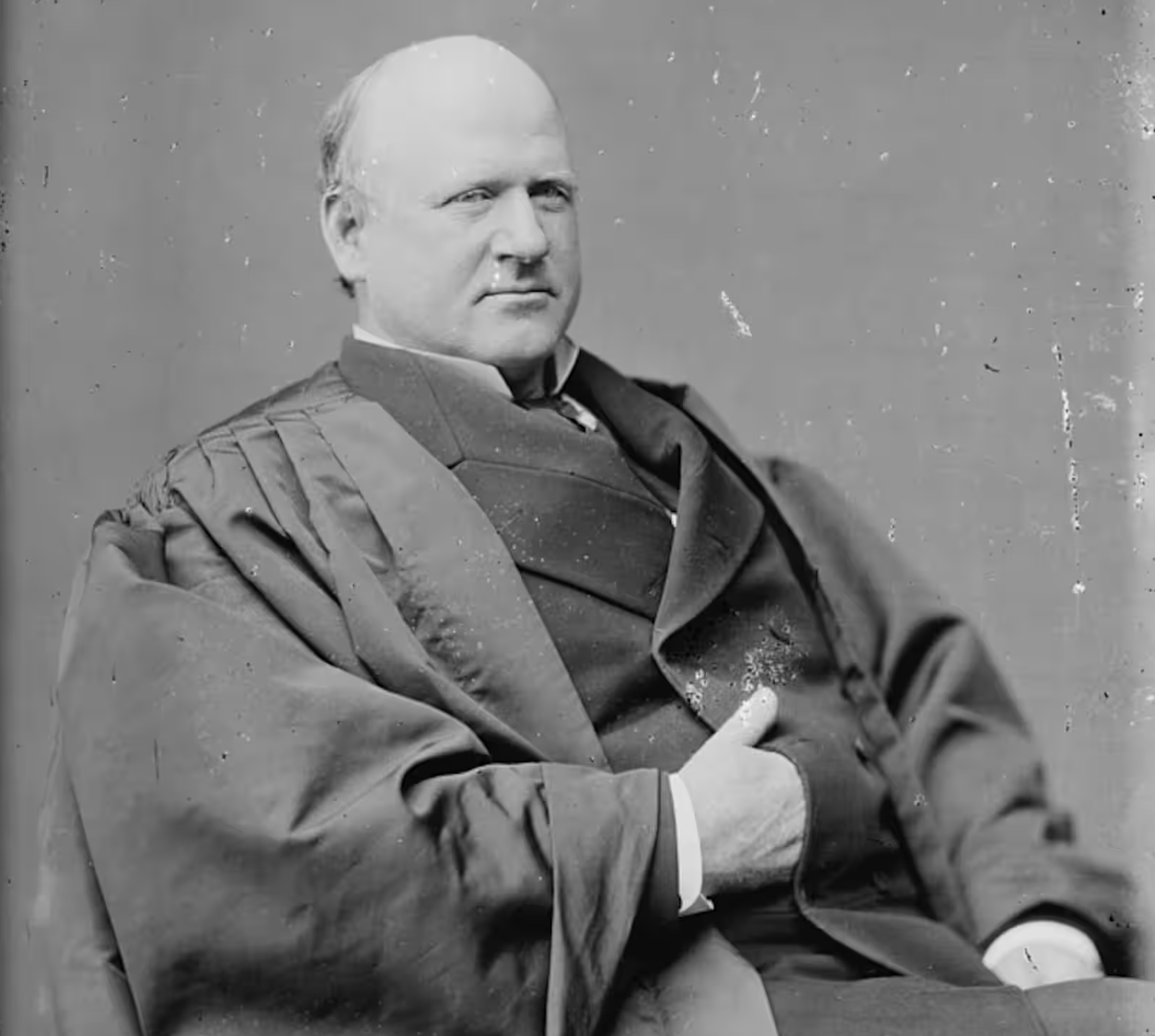
Justice Harlan understood this better than most. His dissent in Plessy is not just a protest against one law but a defense of an enduring truth: that in a free republic, the rights of citizens do not depend on their race. That truth should and must still guide us if we seek a just society. Failing to follow that truth is the source of injustice found in the history of racial discrimination, an injustice that has for too long kept the nation from the promise of the Constitution and the Declaration of Independence, which stated as self-evident truths “that all men are created equal, that they are endowed by their Creator with certain unalienable Rights, that among these are Life, Liberty and the pursuit of Happiness.” The Constitution Harlan accurately describes—colorblind and focused on individuality—remains the best hope for genuine equality in a diverse nation.
In the end, Jackson was correct when she said, “I guess I don’t understand why that’s not what’s happening here.” They teach her confusion in our nation’s law schools, curricula corrupted by the fallacious logic and racism inherent in critical race theory, which is the basis of antiracism, a euphemism for anti-whiteness, preached by Kendi and his ilk. Such teachings are designed to produce legal scholars who feign not to understand why the ADA is entirely different from the VRA (who conflate Title VII with Title IX, as I showed in my last essay), who confuse categories based on universal conditions versus abstract categories based on ideological reifications. For many, such is the depth of their indoctrination, they are not pretending to grasp the difference; they genuinely believe that there is an analogy to be found there.
I want to close with the words of Justice Harlan, words Justice Jackson and her ilk should consider and, ideally, take to heart: “The destinies of the two races, in this country, are indissolubly linked together, and the interests of both require that the common government of all shall not permit the seeds of race hate to be planted under the sanction of law.” It’s time to move beyond the attempt to revise the past that progressives believe the VRA still represents. The past cannot be changed. And we are several decades beyond it. Its legacy cannot be repaired by present-day discrimination. Whatever effects history has on today’s situation, these effects can only be overcome by recommitting ourselves to the principle of colorblindness in law and policy. The moment for guttig the VRA is now.

 freedom and reason