
Floyd Mayweather is unquestionably one of the best fighters of his era. His defensive genius, ring IQ, and ability to adapt to any opponent cement his place in boxing history. In terms of ring generalship, he was one of the finest practitioners of the sweet sport in history. High-profile struggles notwithstanding, Mayweather commanded his space. His pristine 50-0 record is impressive, but it should not be mistaken for the ultimate benchmark for boxing greatness. Numbers, after all, tell only part of the story.
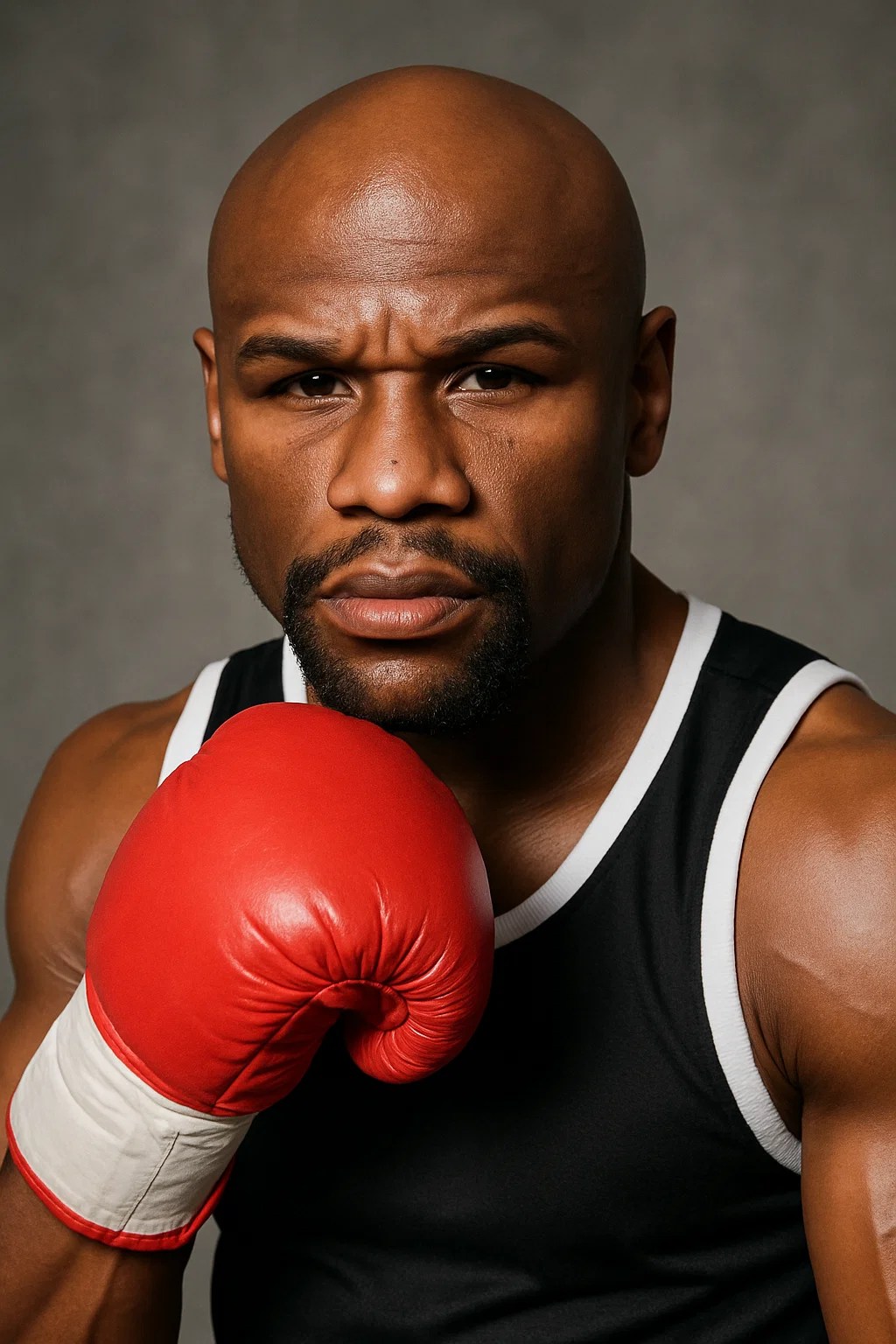
Julio César Chávez was undefeated in his first 87 fights before tasting defeat. Had Chávez retired before his draw to Pernell Whitaker, his perfect record would have dwarfed Mayweather’s. Would that make him better than Mayweather? Not for that reason alone. What makes Chávez great is that he took on the best of his era when they were in their primes: Ruben Castillo, Rocky Lockridge, Juan LaPorte, Edwin Rosario, José Luis Ramírez, Hector Camacho, Meldrick Taylor, and many others. Chavez had the most total world title bouts (37) and the most title-fight victories (31) of any boxer in history. Chavez is a truly legendary fighter.

Featherweight Willie Pep won his first 62 bouts before losing to lightweight Sammy Angott (he bit off more than he could chew), only to string together another remarkable run of 72 victories. Willie Pep won the world featherweight title in 1942, beginning what would become one of boxing’s most celebrated careers. He successfully defended the title multiple times, showcasing his unmatched defensive skill and agility. He accomplished this against remarkable odds. In January 1947, during his first reign as champion, Pep survived a serious plane crash in New Jersey that left him with fractures to his back and leg. They never thought he would box again. Remarkably, he recovered and returned to the ring later that year to defend his title. Pep eventually lost the championship to Sandy Saddler (an all-time great in his own right) in 1948, ending his first reign, but demonstrated his resilience by regaining the title in 1949, outboxing the tall and dangerous Saddler in a dazzling display of boxing prowess.

Sugar Ray Robinson, widely regarded as the greatest pound-for-pound fighter of all time (that is certainly my opinion), won his first 40 fights, suffered a loss to middleweight Jake LaMotta (Robinson was a welterweight at the time), and then embarked on a staggering 91-fight unbeaten stretch, capturing the World Middleweight Title by stopping LaMotta in the 13th round. Before this, Robinson had held the World Welterweight Title for many years with several successful title defenses, including a 15-round decision against future world champion Kid Gavilan. After beating LaMotta, Robinson would go on to win the middleweight championship four more times, posting victories over Randy Turpin, Rocky Graziano, Gene Fullmer, and Carmen Basilio.
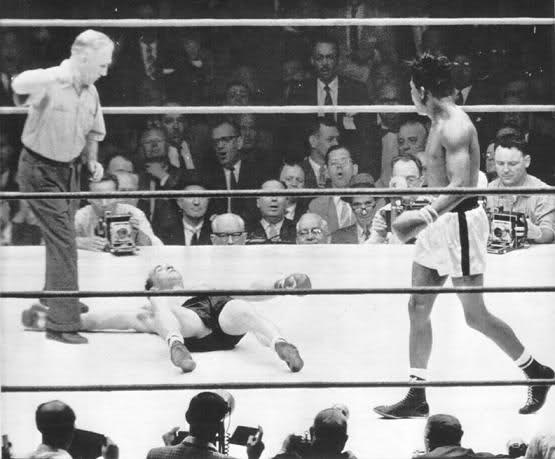
These fighters—Pep, Robinson, and many other great fighters of the past—fought more often, frequently against elite competition, and in multiple weight divisions without the careful matchmaking that defined much of Mayweather’s later career.
The mystique of Mayweather’s 50-0 record owes much to Rocky Marciano. Marciano retired at 49-0, an unbeaten heavyweight champion in an era when retiring undefeated was almost unheard of. Marciano fans pin the greatness of their fighter on his unblemished record. That number became something of a sacred benchmark in boxing, a measuring stick for perfection. Marcino’s grit, determination, and high knockout percentage added to the legend of the Brockton Blockbuster. When Larry Holmes came close to eclipsing Marciano’s record in the 1980s—only to lose to Michael Spinks in his 49th fight—the mythology surrounding that number grew even stronger. Holmes didn’t help with his bitter remarks at the post-fight press conference. Holmes became a heel in the public mind.

Mayweather’s eventual 50th win, over UFC star Conor McGregor in what was more spectacle than sport, felt like a symbolic breaking of a curse. But the fetishization of “the zero” overlooks the nuances of competition and risk: it is far easier to remain unbeaten when opponents are handpicked and activity levels are lower, as opposed to the relentless schedules faced by fighters of previous generations.
Even within Mayweather’s spotless record, the claim of perfection carries caveats. His first fight against José Luis Castillo in 2002 is still debated. Many observers scored the bout for Castillo, arguing that Mayweather was outworked and outlanded. The official decision went to Mayweather, but it was hardly decisive. I had Castillo winning, in fact. The scorecards for that fight—a resounding unanimous decision for Mayweather—were obscene. Mayweather won the rematch, but no one can take Castillo’s performance in that first fight away from him. To my mind, Mayweather is not undefeated.
Mayweather’s 2007 split-decision victory over Oscar De La Hoya was close, and while Mayweather’s defensive skill was on display, some ringside experts felt the fight could have gone the other way. That was my feeling on fight night. Even his mega-fight with Manny Pacquiao in 2015, though a clear unanimous-decision win on the cards, was closer and less dominant than the scorecards suggested. Mayweather benefited from a lot of charity from judges over his career. The charity of judges towards Ray Leonard mars his legacy in mind, to cite another case. Mayweather wasn’t the first golden boy in boxing. Many argue that Muhammad Ali enjoyed charity in some of his bouts, as well.
None of this diminishes Mayweather’s brilliance. He is a generational talent and a master of his craft. His defensive skills were on the level of Pernell Whitaker (though not quite at the level of Willie Pep). But when Mayweather proclaims himself “The Best Ever,” the history books invite a more tempered judgment. True greatness in boxing is measured not just by perfection on paper but by the depth, frequency, and audacity of the challenges faced—and by that measure, Mayweather, for all his genius, stands a step below the legends who built their legacies the hard way.
I’m not sure where I would put Mayweather in my all-time rankings, but he certainly wouldn’t be in my top ten. My top ten: Robinson, Henry Armstrong, Roberto Duran, Muhammad Ali, Pep, Sandy Saddler, Chavez, Marvin Hagler, Roy Jones, and Salvador Sanchez. There are others that push Mayweather out of the next several slots.

 freedom and reason