
The matter of the President’s use of the National Guard should not be misunderstood. There is a great deal of bluster from the neoconfederates of today’s Democratic Party about the President’s so-called “power grab.” Governors like Newsom and Pritzker, along with numerous Blue City mayors, are misinforming the public about the Constitution and the powers of the federal government.
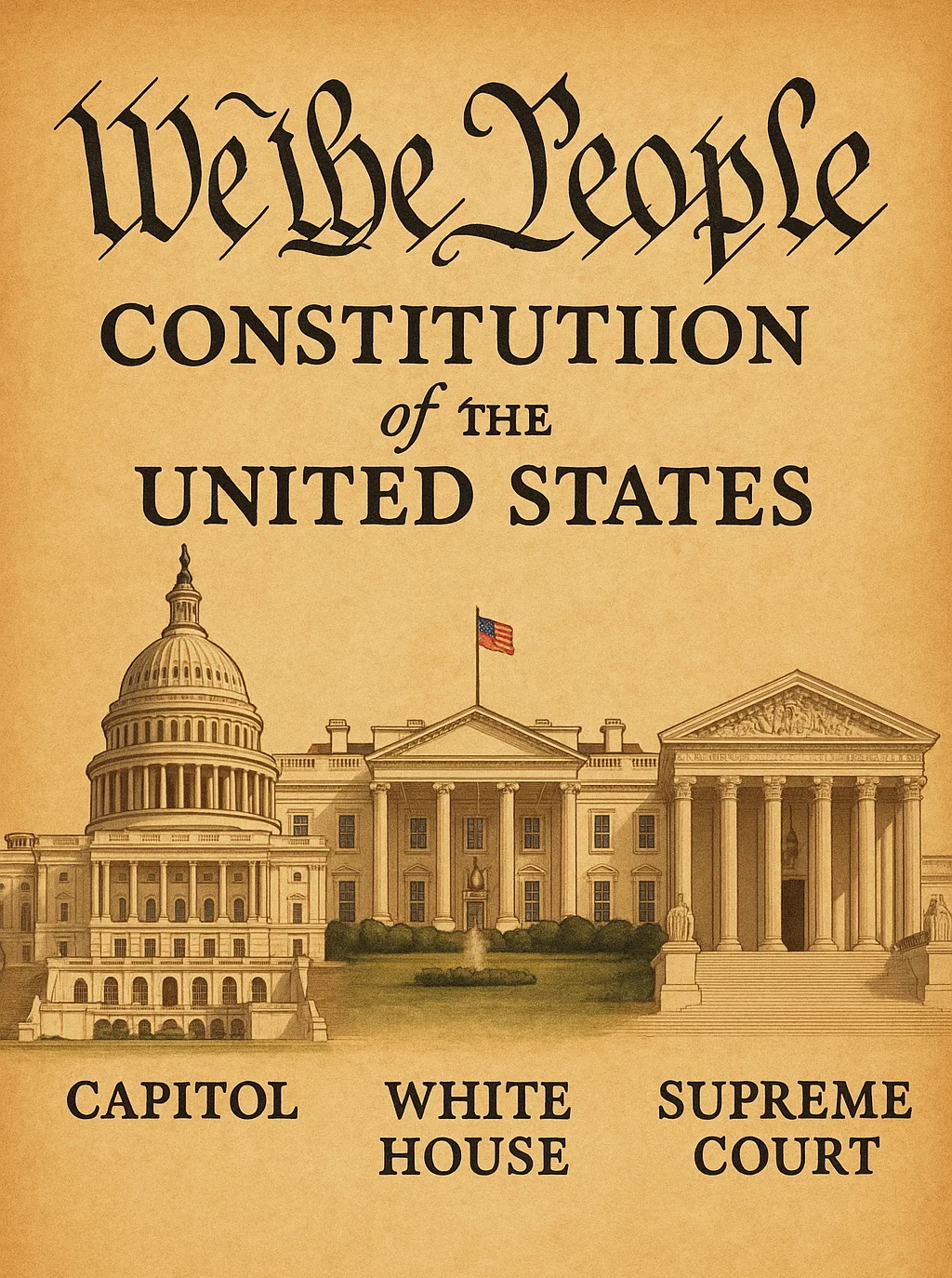
Article I, Section 8 of the U.S. Constitution grants Congress several powers related to the militia: it authorizes Congress to call forth the militia to enforce federal laws, suppress insurrections, and repel invasions. One complaint I have about Donald Trump’s first term is that the President did not use the National Guard more aggressively during the George Floyd riots.
Article I, Section 8 also gives Congress the power to organize, arm, and discipline the militia, while leaving the appointment of officers and the training of the militia to individual states, subject to federal standards. When not deployed by the federal government, state governments retain control over the National Guard.
Under Article II, the President serves as Commander-in-Chief of the armed forces, including state militias when called into federal service—authority he possesses explicitly. This power allows the President to direct the militias during times of war, national emergencies, or when federal law must be enforced.
The Second Amendment to the US Constitution (the Bill of Rights) is closely tied to Article I, Section 8, as well as Article II. It addresses the concept of a citizen militia and the balance of power between the federal government and the states.
As noted, Article I gives Congress the authority to organize, arm, and regulate the militia; Article II gives the President the authority to command those forces; and the Second Amendment protects the right of the people to keep and bear arms as a safeguard for the security of a free state. Together, Article I, Article II, and the Second Amendment reflect the Founders’ intent to maintain a well-regulated militia that can be mobilized for defense and other purposes, while preventing the federal government from disarming the populace.
What about Posse Comitatus? The Posse Comitatus Act of 1878 is a federal law that generally prohibits the use of the US Army and, by later extension, the Air Force, to execute domestic laws—except where explicitly authorized by the Constitution or Congress. It was later extended to include the Navy and Marine Corps through Department of Defense regulations, but the law itself primarily applies to the Army and Air Force.
The idea behind the law was to prevent the military from acting as a domestic police force after Reconstruction, when federal troops had been used in the South to enforce civil rights and suppress rebellions. This law was secured by the Democrats to thwart the Union’s efforts to protect newly freed slaves, while advancing the cause of black liberation. In other words, it was a move to limit federal authority to allow Redemptionists to continue their program of racist terrorism.
Today’s Democrats are not only defying the authority of Articles I and II, but they are also seeking to negate the Second Amendment by disarming the populace. They do this by treating guns as if they have agency, when in truth guns are merely tools—effective means for self-defense and the defense of the homeland (among other purposes, such as hunting and sport).

Militias are not moribund, as we are often told. Over time, through legislative acts and reforms, state militias evolved into what is now the National Guard. The Militia Act of 1903 formally organized state militias into the National Guard, integrating them more closely with the federal military structure while preserving limited state authority. Subsequent laws, such as the National Defense Act of 1916, expanded federal oversight by providing equipment, funding, and training, and required Guardsmen to meet regular Army standards.
This transformation modernized the militia concept, creating a flexible force that serves both state and national interests. It did not abolish the militias or the powers of Articles I and II, nor did it cancel the Second Amendment; rather, it clarified and strengthened the foundational law of the Republic.
Thus, when the President, under his Article II powers, calls forth the National Guard to enforce federal laws, suppress insurrections, or repel invasions, he is acting fully within the scope of the Constitution. This is not a “power grab.” It is a legitimate exercise of authority granted to the President by the Constitution—the contract between the people and the government to establish a more perfect Union.
From where does federal authority derive? Beyond natural law, the power of the federal government over state governments is enshrined in the Supremacy Clause, found in Article VI, Clause 2 of the US Constitution. It establishes that the Constitution, federal laws made pursuant to it, and treaties are the “supreme Law of the Land.”
This means that when state laws conflict with federal laws, powers, or constitutional provisions, federal law and power prevail. The Supremacy Clause ensures a unified legal system across the country, preventing states from undermining national authority. Otherwise, we would be a loose confederacy—an arrangement the Constitution explicitly abolished when it superseded the Articles of Confederation. The Supreme Court has consistently reinforced the principle of national supremacy, emphasizing that states cannot interfere with or contradict valid exercises of federal power.
The neoconfederates of today’s Democratic Party are defying the Supremacy Clause not because they do not appreciate the power it gives the President—they relish that power. They are defying federal supremacy now because they do not like the current President.
The same holds true for the federal judiciary, its judges refusing to stay in their lane. Like Democrat governors and mayors, rogue judges are thwarting federal policies because Trump is President. They are engaged in judicial insurrection.
Article III of the Constitution creates only one court—the Supreme Court—and that Court has no enforcement power, as powers are separated by the Constitution. Every federal court below the Supreme Court is created by Congress, funded by Congress, and subject to Congressional oversight and discipline. The power of the federal judiciary is a new development in American history. The Founders were very concerned about this possibility.
The rhetoric about “three coequal branches” of government is misleading. Nowhere in the Constitution is this phrase used. Nowhere in the Constitution is the judiciary given explicit power of judicial review beyond the Supreme Court. That power was later recognized by the Supreme Court in Marbury v Madison (1803), a highly problematic precedent.
Thomas Jefferson and other Republicans at the founding and in the early years of the Republic were deeply concerned about the unchained power of the judiciary, particularly the potential for even the Supreme Court to become too strong and override the will of the people and their elected representatives. Jefferson feared that judicial review could allow unelected judges to nullify laws passed by Congress or actions taken by the President, upsetting the balance of power among the branches. He warned that this could create an oligarchy of lawyers, with life-tenured justices dominating both the Legislative and Executive branches.
This fear was well-founded. Marbury v Madison tilled the soil for the growth of a judicocracy—panels of judges who could thwart the popular will. The Republic is fundamentally a representative democracy, answerable to the people. The Founders understood the peril of an all-powerful judiciary. The Supreme Court has much work to do in cleaning up precedent in this area, but Congress can act today by defunding and reorganizing the judiciary.
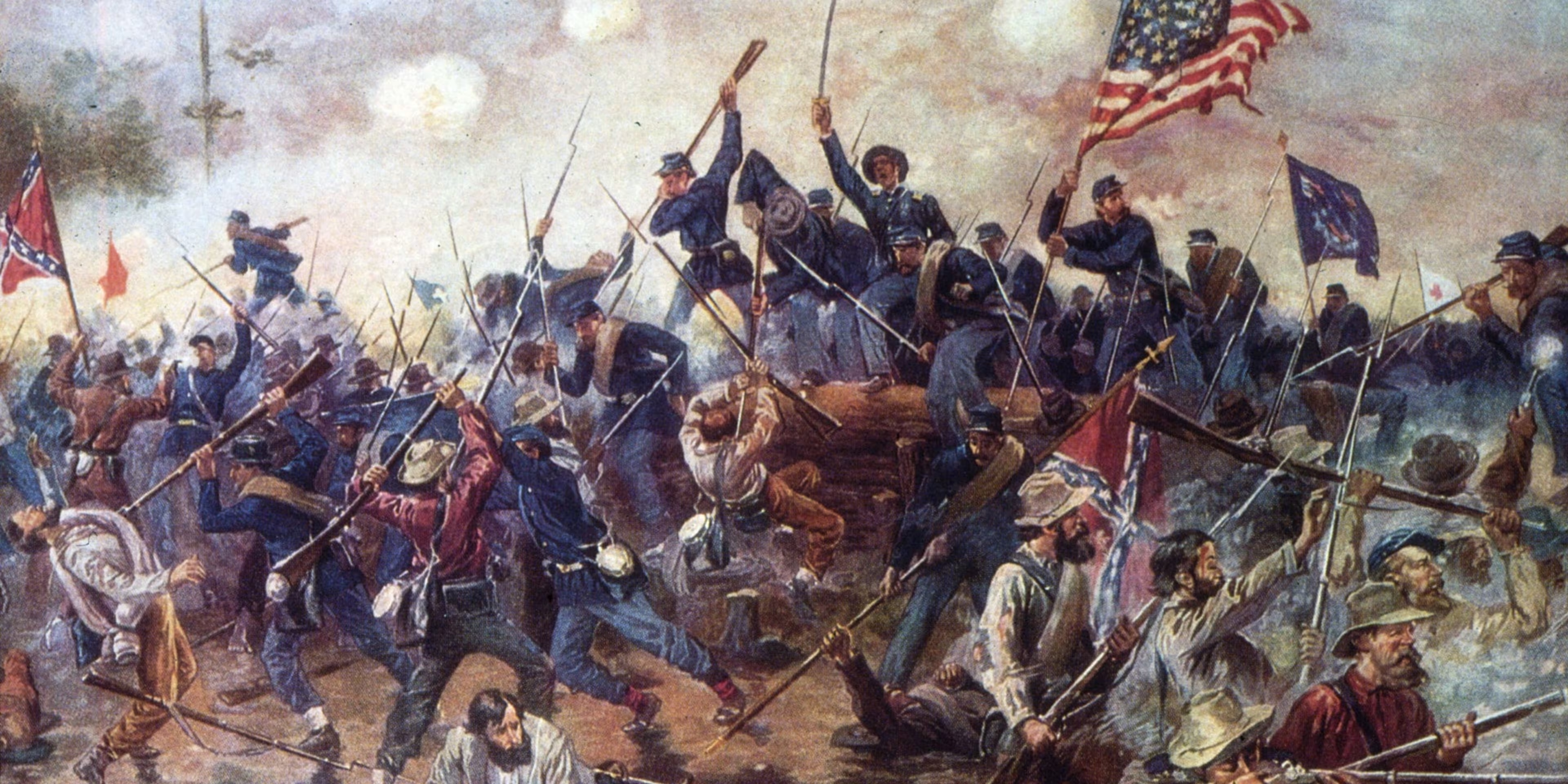
What about “states’ rights”? This matter was settled in the 1860s, when breakaway states under the control of the slaveholding Democratic Party, which had organized themselves into a sovereign confederation, surrendered on the battlefield and rejoined the Union, each required to provide their citizens with a republic form of government.
Crucially, in resolving this question, the Ninth and Tenth Amendments were not violated. Yet another myth has been constructed around these amendments.
The Ninth Amendment safeguards unenumerated rights—those not explicitly listed in the Constitution. It declares that listing certain rights should not be interpreted to deny or disparage other rights retained by the people. This amendment addresses the scope of individual liberties, not “states’ rights.” States have not rights, only powers, and these powers are delegated to them by the people and the Constitution.
The Tenth Amendment reinforces federalism by stating that powers not delegated to the federal government, nor prohibited to the states, are reserved to the states or the people. While, to be sure, it was intended to limit federal authority and protect state sovereignty, the federal government remains supreme under the Constitution. The Civil War, costly as it was, clarified this principle once and for all. It is a shame that three-quarters of a million or more lives were lost settling that issue.
Together, the Ninth and Tenth Amendments underscore the Founders’ vision of a government with limited powers, protecting both individual freedoms and state autonomy within the federal system. They do not give states the power to thwart legitimate actions by the federal government.
What we are seeing today are state governments and a runaway judiciary claiming powers they were never intended to possess. We have a President asserting the authority of his office to bring renegade governors and judges to heel, as Abraham Lincoln did before him. President Trump is a republican in the truest sense of the term. He is not an authoritarian dictator seeking more power than he possesses; he is reestablishing the authority the Constitution bestows upon his office.

 freedom and reason