
I get asked a lot by progressives why I care so much about “gender affirming care,” or GAC. Sometimes, I’m accused of “obsessing over genitals”—an ironic accusation given the left’s obsession over reproductive anatomy inherent in the transhumanist desire to escape natural history. My standard answer is that any decent person with a functioning moral capacity should care about medical atrocities. I cannot disregard my knowledge of the history of such injustices.
The obvious example of historical injustice that moves my objection to GAC is the body of medical atrocities associated with the Nazi period in Germany—at Auschwitz, Dachau, Ravensbrück. GAC bears not merely similarities to these atrocities; there are direct points of contact. I have written an essay on this topic before (see The Persistence of Medical Atrocities: Lobotomy, Nazi Doctors, and Gender Affirming Care), but the importance of the subject deserves revisiting. In today’s treatment, I focus on how the scientific veneer of professional legitimacy shields perpetrators from justice. As readers will see, that veneer is in a major way provided in the current moment by artificial intelligence.
Decades ago, I read Robert Jay Lifton’s 1986 book The Nazi Doctors: Medical Killing and the Psychology of Genocide and was horrified by what I encountered on those 500-plus pages. Lifton, an American psychiatrist, investigated how physicians—trained to heal — became perpetrators of atrocities. (See also Vivien Spitz’s 2005 Doctors from Hell: The Horrific Account of Nazi Experiments on Humans and Richard Weikart’s 2009 Hitler’s Ethic: The Nazi Pursuit of Evolutionary Progress.)
Lifton analyzes how physicians psychologically adapted to the situation by splitting their identities: one part as a healer in some contexts, another as an agent of the corporate state. This is the idea of “doubling,” the psychological mechanism allowing a person to divide into two selves. He uses this concept to explain the corruption of medicine and how ideology transforms professional ethics.

The Nazi human experiments were an ideological project, overseen mainly by the SS medical hierarchy, in particular Reichsführer-SS Heinrich Himmler. The central figure coordinating these across camps was SS-Obergruppenführer Dr. Ernst-Robert Grawitz, the SS Chief Medical Officer (Reichsarzt SS und Polizei). Grawitz had authority over all SS doctors and medical operations in the camps, and he approved experiments on prisoners. There were several doctors under his command. I will discuss two of them here: Dr. Josef Mengele (the “Angel of Death”) and Dr. Erwin Gohrbandt.
At Auschwitz, as part of his eugenics research, Dr. Josef Mengele carried out surgical procedures on twins, including genital mutilation. These surgeries were done without consent (I discuss the problem of consent in the context of GAC in concluding this essay) and caused immense suffering, permanent disfigurement, and sometimes death. The experiments had no legitimate medical value, at least according to those who condemned them, and were later prosecuted as crimes against humanity during the 1946-47 Nuremberg Doctors’ Trial (formally United States of America v. Karl Brandt et al).

Using false papers, Dr. Mengele fled Europe in 1949 and lived out his life in South America, supported by a network of former Nazis and sympathizers. Mengele lived openly under his name at times and worked as a businessman and farmhand. In 1979, while swimming off the coast of Bertioga, Brazil, Mengele suffered a stroke and drowned. In this way, he escaped justice. He wasn’t the only one to avoid death by hanging or life in prison. Himmler was captured by British forces in May 1945. However, he committed suicide by biting a cyanide capsule before he could be put on trial. Dr. Grawitz avoided trial by blowing himself up (along with his family) with a grenade in April 1945, shortly before Germany’s surrender.

Perhaps the most remarkable case of escaping justice, and this bears directly on the matter of GAC, is that of Dr. Gohrbandt, whom I have written about before (see Fear and Loathing in the Village of Chamounix: Monstrosity and the Deceits of Trans Joy). Gohrbandt conducted human experimentation at the Dachau concentration camp. Gohrbandt was a German surgeon and Luftwaffe medical consultant. At Dachau, he was connected to the camp’s hypothermia experiments, in which prisoners were forcibly submerged in ice water or exposed to freezing outdoor conditions to study survival and rewarming methods, often resulting in death or permanent injury.
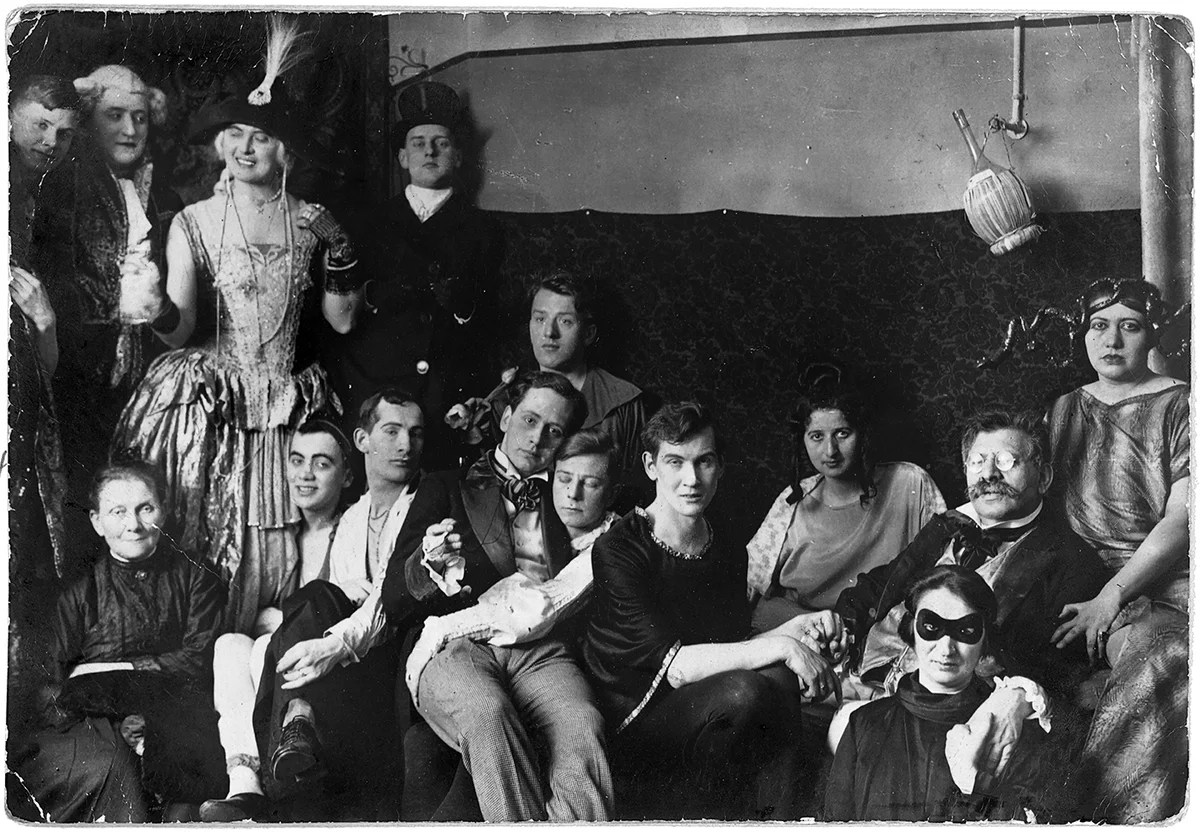
Before the Nazi era, in 1931, Gohrbandt—then a prominent Berlin surgeon—performed one of the first documented male-to-female vaginoplasties at the Institute for Sexual Science (Institut für Sexualwissenschaft) in Berlin. The Institute was founded and directed by Magnus Hirschfeld, a pioneering sexologist and LGBTQ rights advocate. Hirschfeld was not a surgeon himself; rather, he provided the medical, psychological, and social framework for GAC, while Gohrbandt (and other surgeons) carried out the operative procedures. Hirschfeld is a celebrated figure in the queer camp and its allies (see Scientific American’s treatment of him in The Forgotten History of the World’s First Trans Clinic). In truth, he was a monster.

The 1931 operation Gohrbandt and Hirchfeld performed on Rudolf (Dora or Dörchen) Richter is well known among queer scholars and activitists. Richter is celebrated as the first complete vaginoplasty of its kind. Richter worked as a housekeeper at Hirschfeld’s Institute. Richter wasn’t the only victim of so‑called “gender affirming care.” The Institute employed many like him and Hirschfeld facilitated many such surgeries in the late Weimar Republic, attracting patients from across Europe. The queer narrative laments that this “progressive work” ended abruptly in 1933 when the Nazis raided and destroyed the institute, driving Hirschfeld into exile.
The characterization “progressive work” is how ChatGPT put the matter when I inquired to determine whether and how much it knew about the case. To be sure, ChatGPT confirmed all my claims. However, the fingerprints of queer theory were all over the framing of its answers. In an extraordinary rationalization, when challenged about Gohrbandt, ChatGPT noted that “Gohrbandt’s career has this striking duality.” It then elaborated without prompting: “In the early 1930s, he was involved in groundbreaking gender-affirming surgery alongside one of history’s most famous advocates for sexual minorities; a decade later, he was connected to unethical Nazi human experiments at Dachau.” This is an instance of Lifton’s doubling. Here, ChatGPT is doing reputational work for a psychopath.
As I have explained in previous essays, ChatGPT scrapes the Internet, where content on this subject is dominated by queer theory and the medical industry, the latter appealing to queer ideas to justify highly lucrative medical atrocities. Progressives long ago captured the sense-making institutions of Western society. It’s therefore expected that the biography of a villain like Gohrbandt would be explained away by an apparent contradiction.
But there is no contradiction. GAC is, at its core, a set of medical atrocities—from puberty blockers and cross-sex hormones to radical surgeries, such as phalloplasty and vaginoplasty. The theory justifying these atrocities—that the nonfalsifiable claim of a subjective identity at odds with the karyotype, gametes, and reproductive anatomy is the real stuff of gender—is a paradigm of the destructive practice of fusing ideology with medical science. (For more on this topic, see the essay previously cited: Fear and Loathing in the Village of Chamounix. See also Thomas Szasz, Medical Freedom, and the Tyranny of Gender Ideology.)
It might interest the reader to know that Gohrbandt is not only known for his work on genital mutilation but also for his published material based on the data collected at Dachau, despite its unethical origins and lack of scientific validity. Of course, at the time, the experiments were considered warranted and valid, just as they are today in the GAC field, so really it’s no surprise that these were openly shared in the scientific community in the context of a legitimizing regime. Curiously, however, after the regime was dismantled, unlike some other Nazi physicians, Gohrbandt was never prosecuted at the Nuremberg Doctors’ Trial and instead resumed a prominent medical career after the war, serving as director of Moabit Hospital in Berlin and continuing academic work. He died in 1965, a renowned surgeon and scholar.
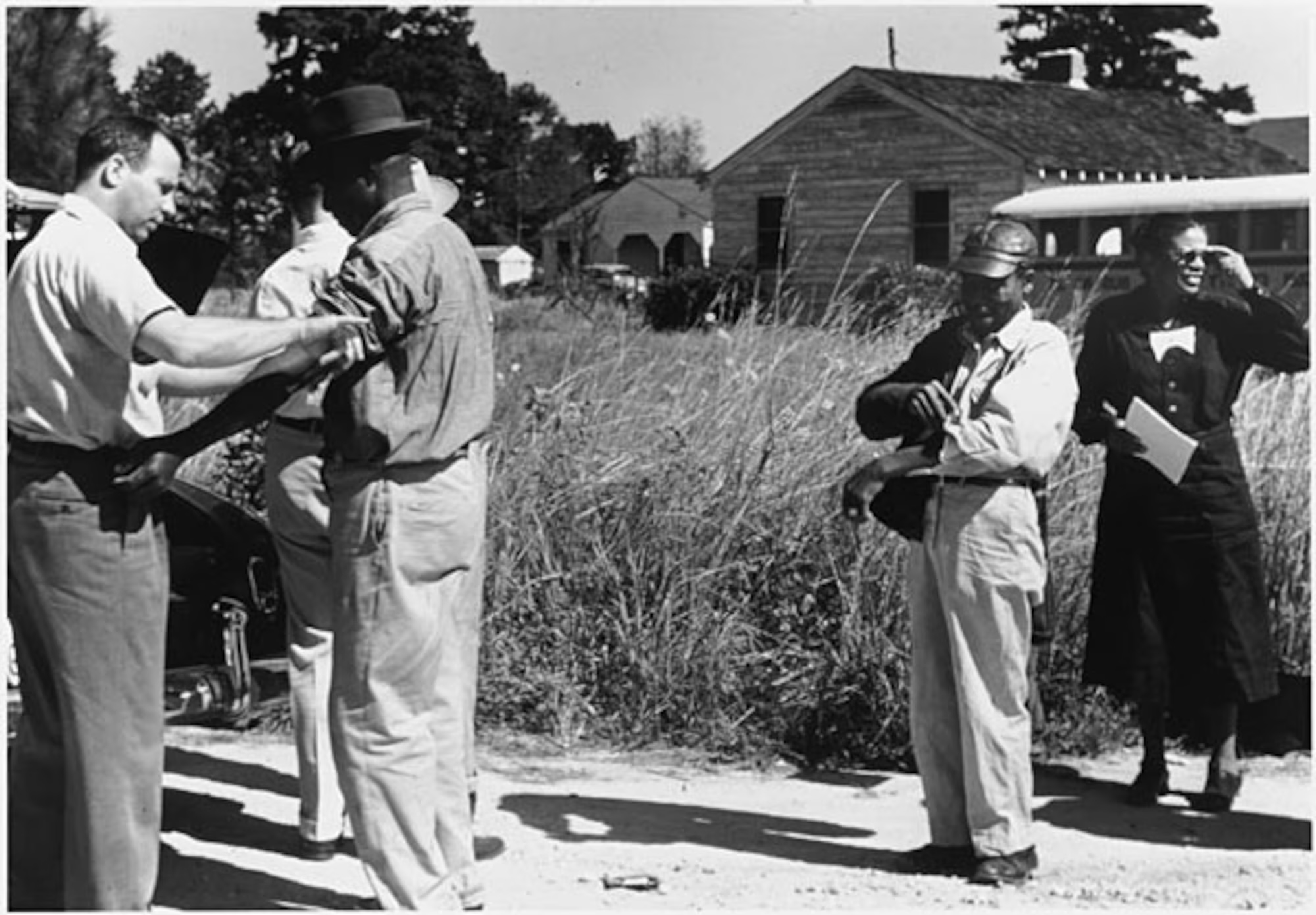
There is an analog to the Nazi medical atrocities in the United States during the same time frame. The Tuskegee Syphilis Study, conducted by the US Public Health Service from 1932 to 1972, produced multiple published medical articles during its run, often in respected journals, which reported on the progression of untreated syphilis in black men without informing them of their diagnosis or offering effective treatment even after penicillin became available in the 1940s. By my count, some sixteen articles and reports were published during the period, normalizing the study in medical literature at the time. Despite the severe ethical violations and public outrage after the study was exposed in 1972, no one was ever prosecuted.
Why no prosecutions? The answer is straightforward, as well as instructive: the study had been conducted by government agencies and endorsed by professional medical associations, including the AMA and the NMA (the latter the leading association for black doctors), under policies that, while unethical, were not clearly illegal under US law at the time. There were no federal statutes explicitly criminalizing nonconsensual medical research on civilians, and the norms for informed consent that exist today were not yet codified into binding law. Instead, the federal government opted for an out-of-court civil settlement in 1974, paying 10 million dollars to survivors and families, and instituted reforms in research ethics oversight rather than seeking legal punishment. (See Harriet A. Washington’s 2006 Medical Apartheid: The Dark History of Medical Experimentation on Black Americans from Colonial Times to the Present.)
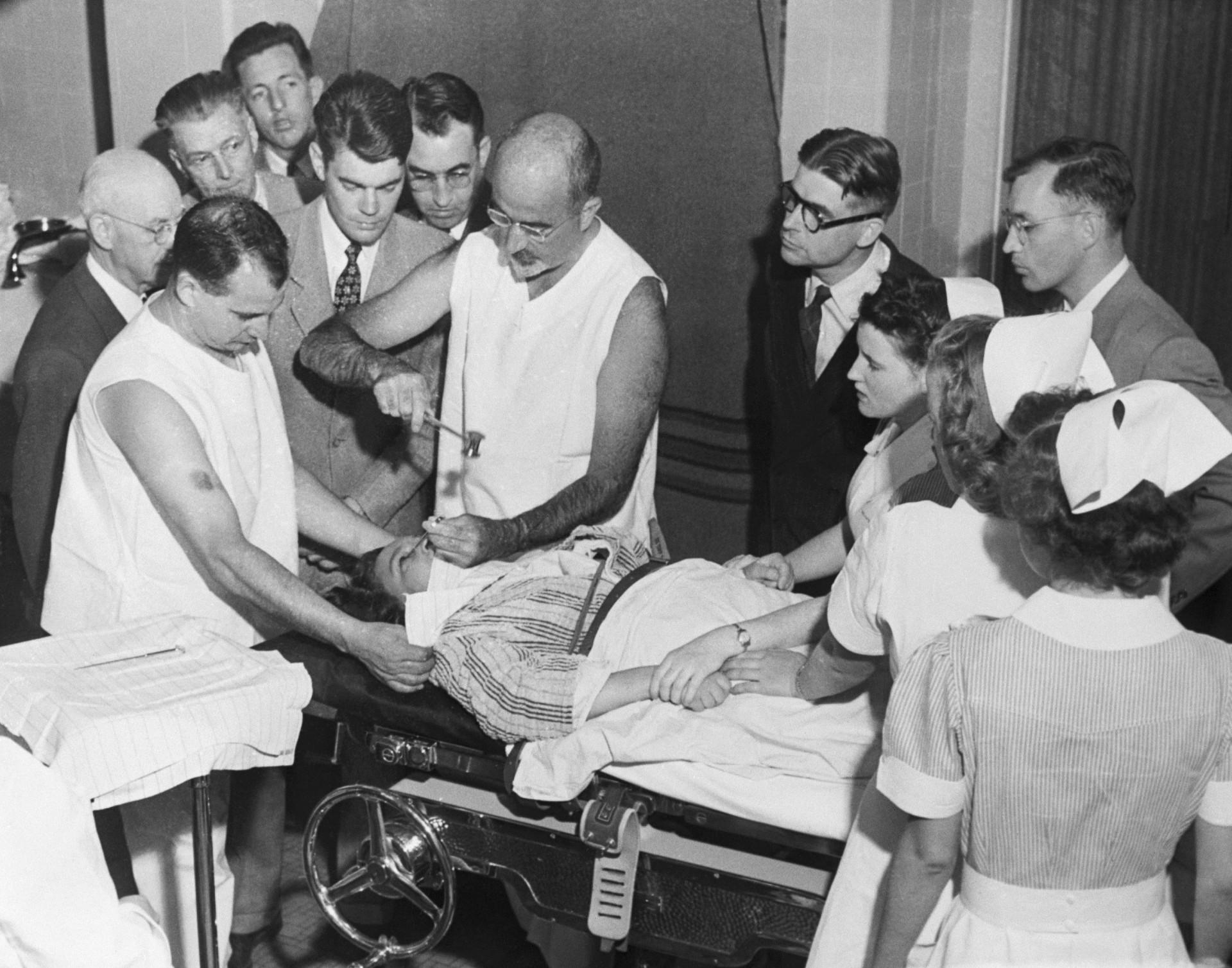
Similarly, there were no prosecutions of doctors for the now‑discredited neurosurgical procedure known as the lobotomy, in which connections between the brain’s prefrontal cortex and other regions are severed. The Lobotomy was used to treat severe mental illness such as depression, obsessive‑compulsive disorder, and schizophrenia (disorders that also afflict trans patients). First developed in the 1930s by António Egas Moniz and later popularized in the United States by Walter Freeman, the procedure could involve drilling holes in the skull or inserting an instrument through the eye socket (the “transorbital lobotomy”) to cut brain tissue. As a result, while making patients calmer, many suffered permanent cognitive deficits, emotional blunting, seizures, or profound personality changes.
At the time, lobotomy was considered a legitimate medical treatment. Surgeons like Moniz and Freeman operated within the medical and legal norms of their era, and in some cases even received honors—Moniz was awarded the 1949 Nobel Prize in Physiology or Medicine for developing the procedure. While later decades saw lobotomy condemned as harmful and unethical, its use was phased out through changes in medical standards rather than through criminal trials or legal accountability. Moniz’s Nobel Prize was never rescinded. None of those damaged by the procedure ever saw the perpetrators punished for their actions.
I asked ChatGPT how Gohrbandt avoided prosecution—or even reputational damage. The chatbot explained: “He had been a respected Berlin surgeon since the 1920s and had performed pioneering procedures, including early gender-affirming surgery. This gave him a veneer of professional legitimacy that may have helped shield him after 1945.” In other words, the fact that Gohrbandt mutilated the genitalia of delusional men—men who falsely believed they were women—made him a sympathetic figure, instead of the psychopath he truly was. The surgeons performing GAC today likewise operate with a veneer of professional legitimacy. It is this veneer that allows them to perpetrate crimes against humanity with impunity.
ChatGPT summarized the psychopath’s infamy in this manner: “Erwin Gohrbandt was a significant figure intertwined with the unethical medical research at Dachau, especially related to hypothermia and altitude experiments. Though not prosecuted, his association with Rascher [Sigmund Rascher, a Nazi SS doctor, executed by the Nazis in 1945] and dissemination of the results implicate him in the broader tapestry of Nazi medical crimes.” The chatbot added a moral observation: “His legacy is a sobering reminder of how science can be twisted when ethics are abandoned.” Indeed. But what about gender affirming care? Is there not a more obvious example of twisted science? ChatGPT cannot see the parallel because the data it scrapes is embedded in the veneer of professional legitimacy.
As for the monster Hirschfeld, ChatGPT describes him thusly: “His legacy as a groundbreaking researcher and human rights pioneer endures, despite the tragic destruction of his institute and suppression of his work under the Nazi regime.” The language used here—“human rights pioneer” and lamenting the “tragic destruction of his institute”—tells us what we are up against in the actual human rights project to raise awareness of medical atrocities being committed in hospitals across the United States.
As readers are becoming aware, this essay has a twin purpose. While it is mainly concerned with medical atrocities, my interaction with ChatGPT in checking my information (gathered from several decades of research on the topic) reveals the real danger of AI becoming the source of narrative generation. If—or, more accurately, when—AI becomes the chronicler of our common history, the past will be recollected in such a way that sanitizes identical ideologically driven medical atrocities, depending on whether they are embraced or rejected by the prevailing ideology of the day. It’s already putting the history of medical atrocities associated with GAC in a positive light while admitting that the same procedures are recognized as human rights abuses through a historical lens. Today, genital mutilation is framed as “affirming health care,” but condemned as “crimes against humanity” when practiced under illegitimate regimes.

One irony I cannot let pass is that eugenics was a key piece of the progressive movement at its inception. Consider the case of Margaret Sanger, a birth control activist and founder of organizations that became Planned Parenthood. Sanger was an influential figure in the early twentieth‑century Progressive Era, a time when “reformers” sought to apply science and social planning to improve society, i.e., to advance an ideological project. Sanger advocated for women’s access to contraception as a means of public health, a project that engaged the eugenics movement, which promoted selective breeding to “improve” the human population. She argued that birth control could help prevent the reproduction of those deemed “unfit.”
Curious, I asked ChatGPT about this, too. Predictably it put the matter this way: “Her work illustrates how strands of humanitarian reform, public health, and eugenics often overlapped in Progressive Era thought, blending genuine concern for social betterment with beliefs that are now recognized as ethically problematic.” Once again, ChatGPT is incapable of seeing parallels when it exposes the inherent authoritarianism of progressivism. But the more one studies the worldview of the Nazis, the more one becomes aware of the parallels between Nazi ideology and progressivism. Both are paradigms of scientism—ideologies pulling about themselves scientific jargon and enjoying the authority of the state and prominent medical institutions. (This essay is getting long, so I will follow up on this point in a future essay.)
Earlier I noted that one of the problems with the work Nazis did is that it did not meet the consent requirement in human subjects research. Consent is central to the ethical system governing the use of human subjects in medical and scientific work. The most obvious example of medical and scientific work using human beings is forced participation. However, some populations and circumstances present a high risk that consent—while seemingly given—does not truly meet the ethical standard of being voluntary, informed, and ongoing in human subject research. These include vulnerable groups such as children, individuals with cognitive impairments, and people in coercive or dependent relationships (e.g., institutionalized patients, military personnel, and prisoners).
If it’s unclear whether participants in these situations grasp the nature, risks, and implications of the study, then consent is problematic. In these contexts, the appearance of consent may mask subtle coercion, compromised autonomy, or insufficient comprehension, meaning extra safeguards—independent advocacy, repeated confirmation of willingness—are ethically essential. The inability of children to consent to GAC should be obvious to everybody. Given the significant correlation of mental disorders and trans desire, the inability of adults to consent to life-altering medical procedures is equally problematic.
But even if we presume such adults can consent, this does not relieve the doctors who mutilate them of their complicity in crimes against humanity. After all, surgeons who remove arms and legs from mentally disordered patients who wish themselves amputees are rightly seen as monsters (see The Exploitative Act of Removing Healthy Body Parts). Heaven help those patients if this stops being true. But I fear it will. The term “apotemnophilia,” which the medical profession now refers to as body integrity dysphoria (BID) or body integrity identity disorder (BIID), was coined by John Money and his colleagues in a 1977 article in The Journal of Sex Research. Who is John Money? The man who oversaw the mutilation of a boy’s genitals so he could raise him as a girl (see Fear and Loathing in the Village of Chamounix for details).
This is why it is imperative we learn the lessons of history. This is why I care so much about so-called “gender affirming care.”

 freedom and reason